

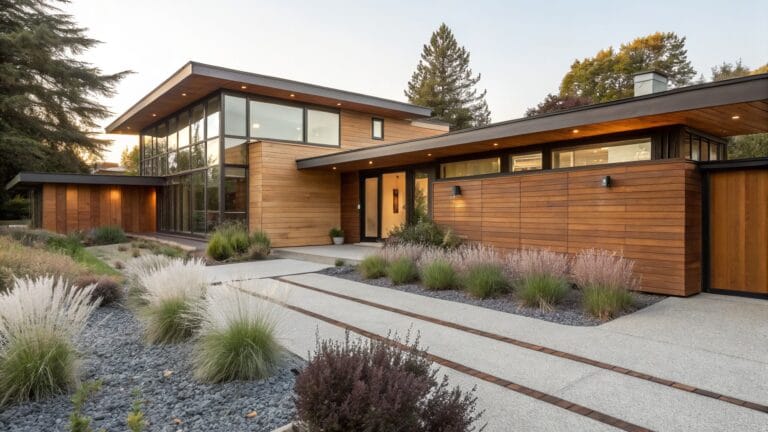
I’ve spent enough time tending my own yard to know that garden edging matters more than most people think. It quietly shapes how the whole outdoor space feels, drawing eyes along paths or holding back weeds without fanfare.
What works best usually comes down to picking materials that echo the natural surroundings, like weathered wood or smooth river rocks.
Ornamental metal or mismatched pavers tend to look forced after a season or two, especially if they fight the soil’s color. I ended up borrowing a low-key stone border idea for my side yard, and it still looks right a couple years later.
Ornamental Grasses for Pathway Edges
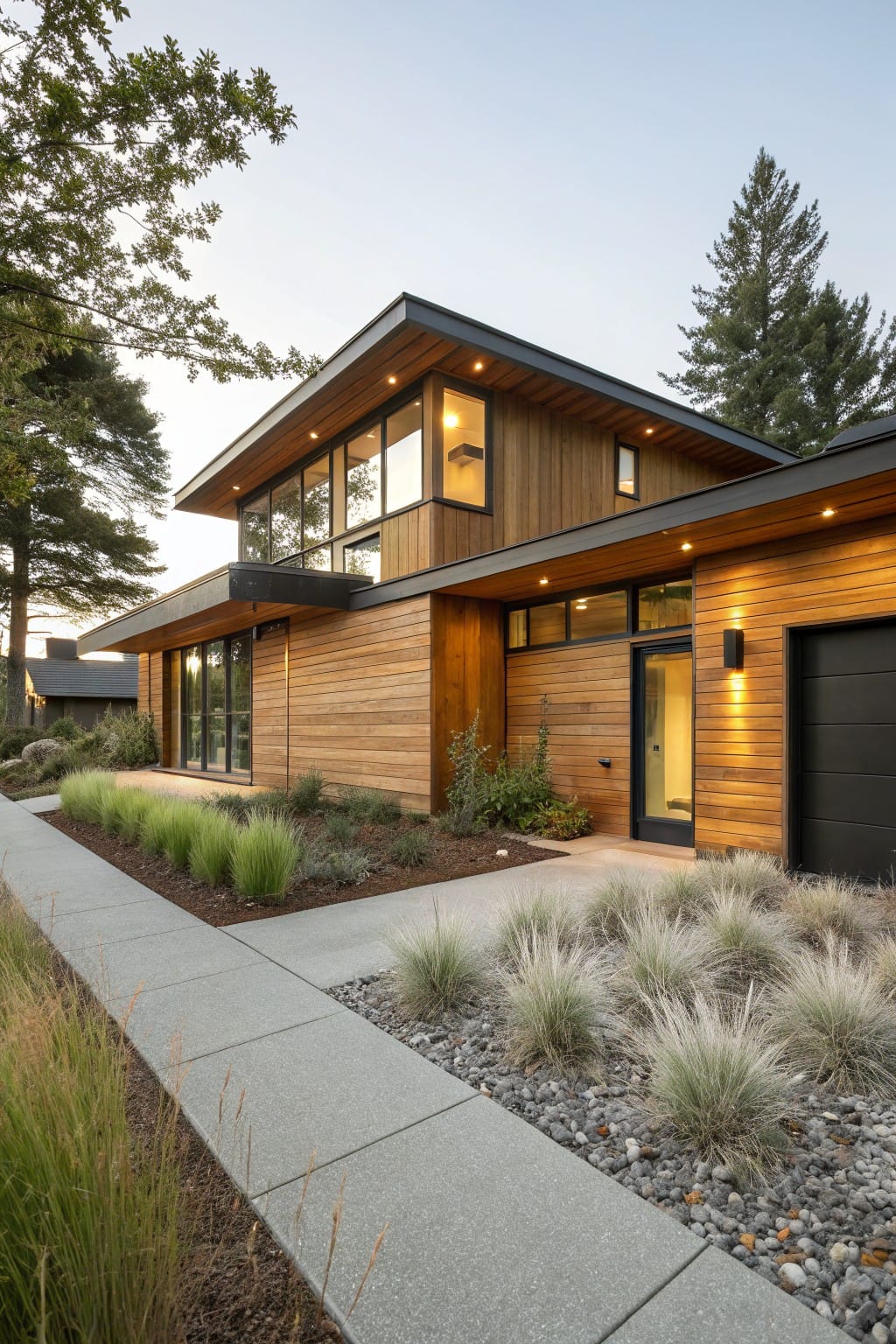
One straightforward way to edge a walkway is planting ornamental grasses right along the side. They soften the straight lines of concrete without much upkeep, and they sway nicely in the breeze. Folks like how it blends the path into the yard naturally.
Set the grasses in a row next to your path, maybe add pebbles underneath for better drainage. It fits modern homes or any spot with tall trees around. Just pick varieties that stay upright, or they might lean into the walking space.
Low Brick Garden Edging
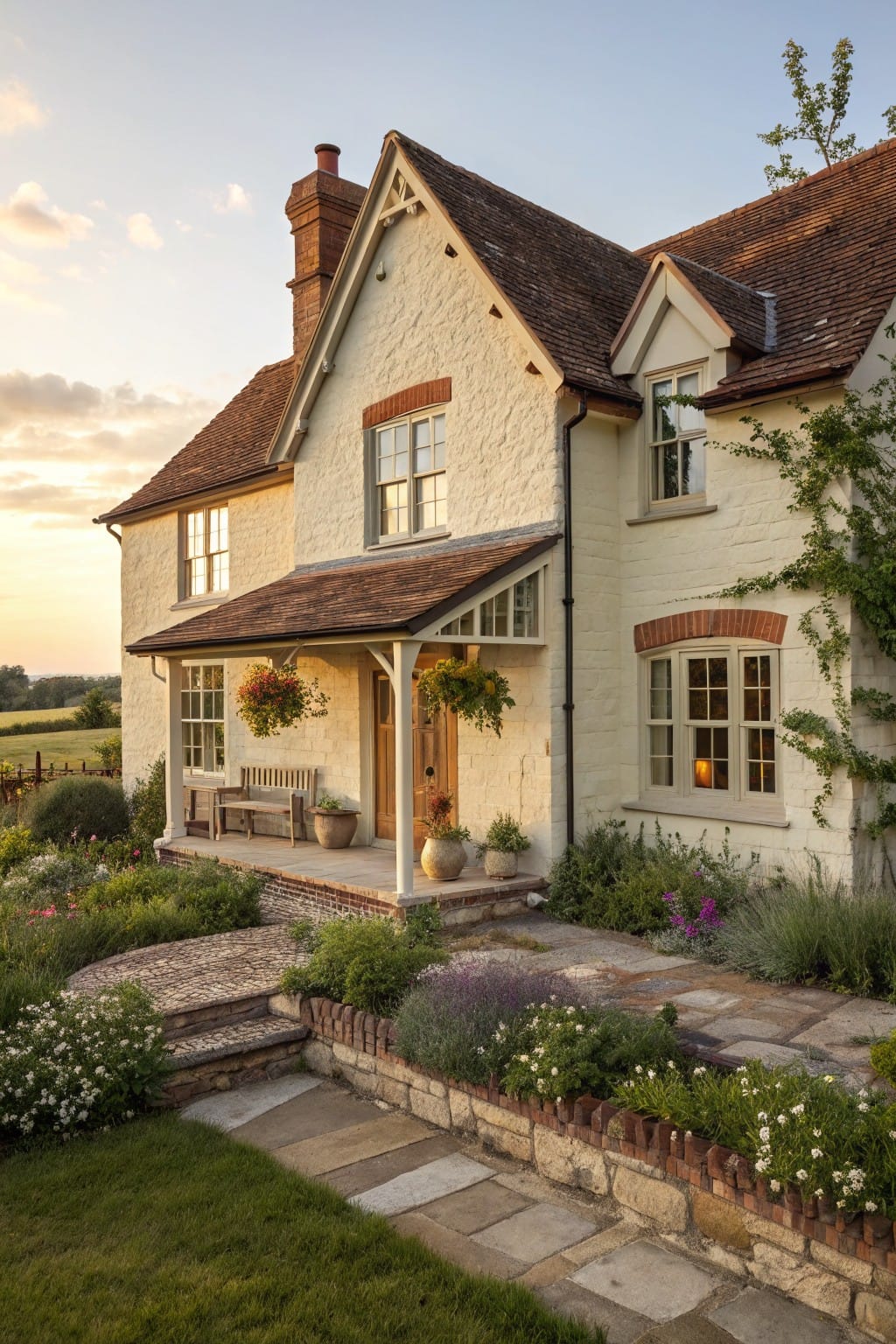
One straightforward way to edge your garden beds and paths is with low brick walls. They hold back soil nicely and give that settled-in look, especially when you plant lavender or other perennials right along the top. Here, the bricks run beside a stone walkway up to the house porch. The plants soften everything without much fuss.
This edging works best around cottage-style homes or any yard with a bit of slope. Stack reclaimed bricks two or three courses high, mortar them loose if you like the aged feel, and tuck in tough bloomers like catmint or alyssum. Keep it simple. Watch the drainage so water does not pool behind.
Stone Walls for Sloped Garden Edges
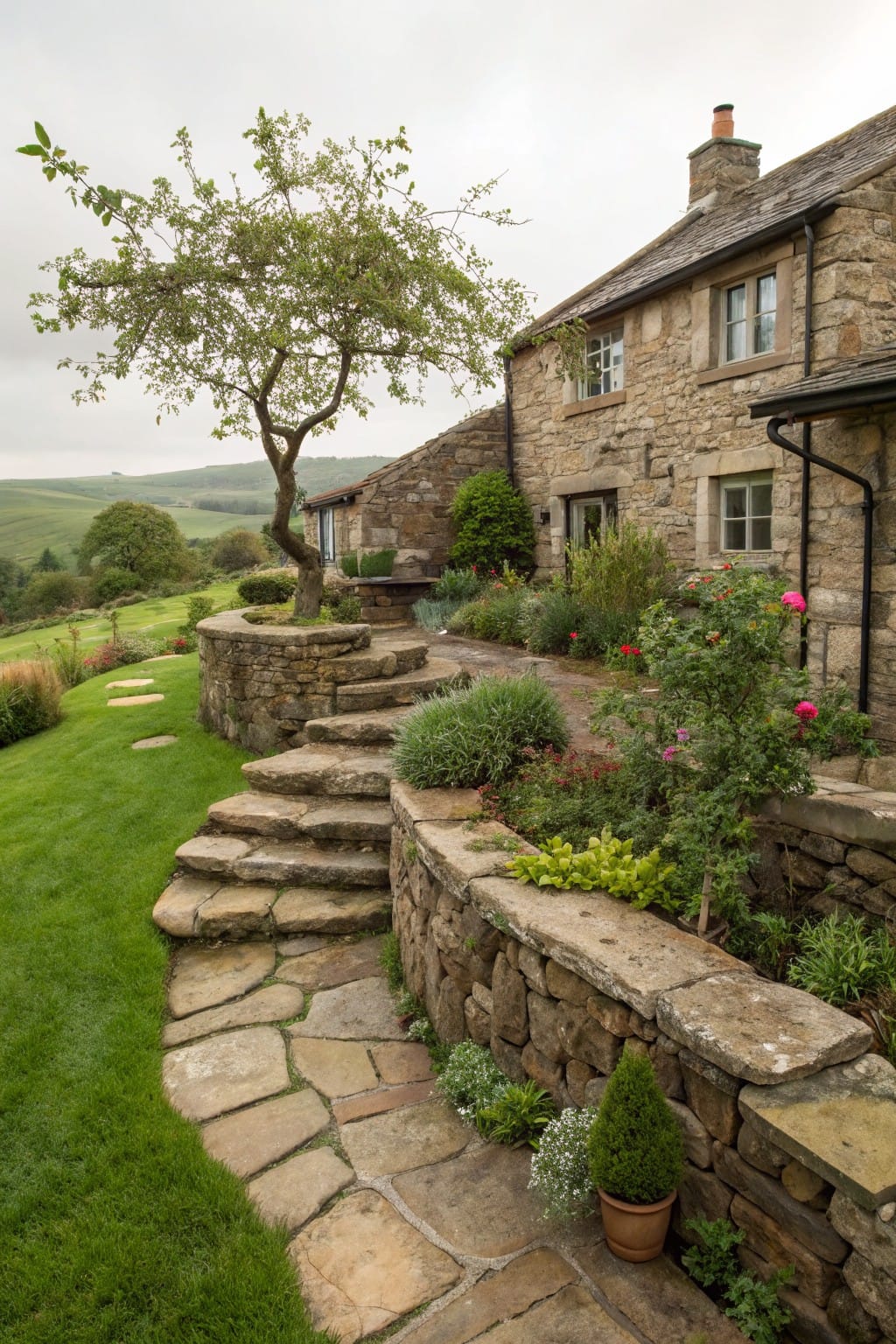
One simple way to handle a yard that slopes toward your house is with low stone retaining walls. They hold back soil, make flat spots for plants, and turn a tricky hill into usable garden space. In this setup, the walls double as steps and borders, keeping everything neat without looking too fussy. Roses and other plants spill right over the top, which softens the stone just enough.
These walls work best on moderate slopes around older homes made of similar stone, so it all ties together. Source local fieldstone or reclaimed pieces to match your area, and stack them dry without mortar for that natural look. Keep them under three feet high unless you add reinforcement. Steep hills or formal yards might need something else, but this fits country or cottage styles perfectly.
Raised Beds Edge Garden Paths
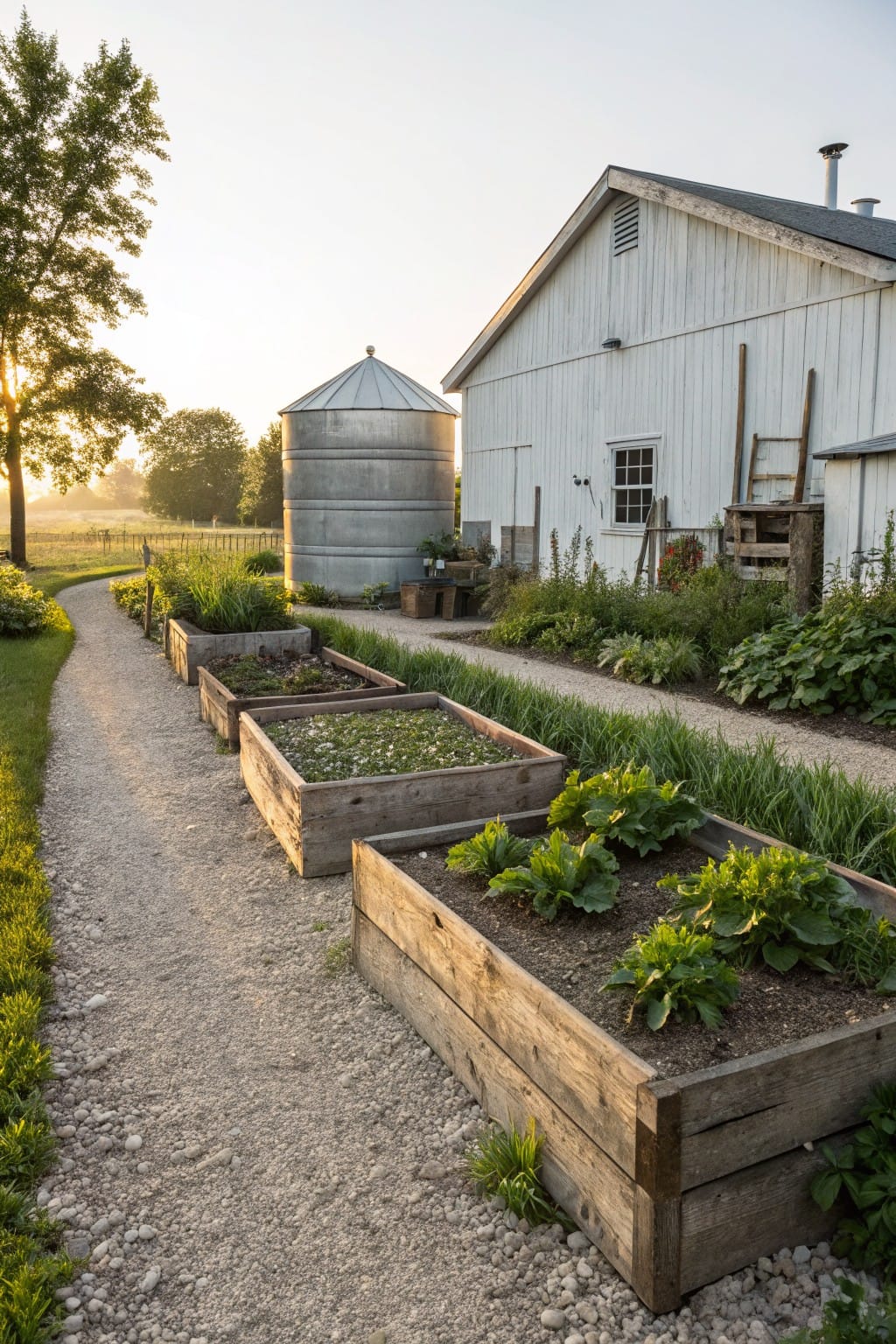
One straightforward way to edge a garden path is with raised wooden beds on both sides. They keep soil and plants off the walkway, making it tidy and practical for everyday use. In this yard, the beds hold veggies like greens and squash, turning the path into a defined route through the growing space.
These work well in bigger backyards or near outbuildings like a barn. Build them from rough lumber for a natural fit, keeping heights around knee level so you can tend the plants without bending too much. Skip treated wood if you want to avoid chemicals near edibles.
Stepping Stone Paths Set in Pebbles
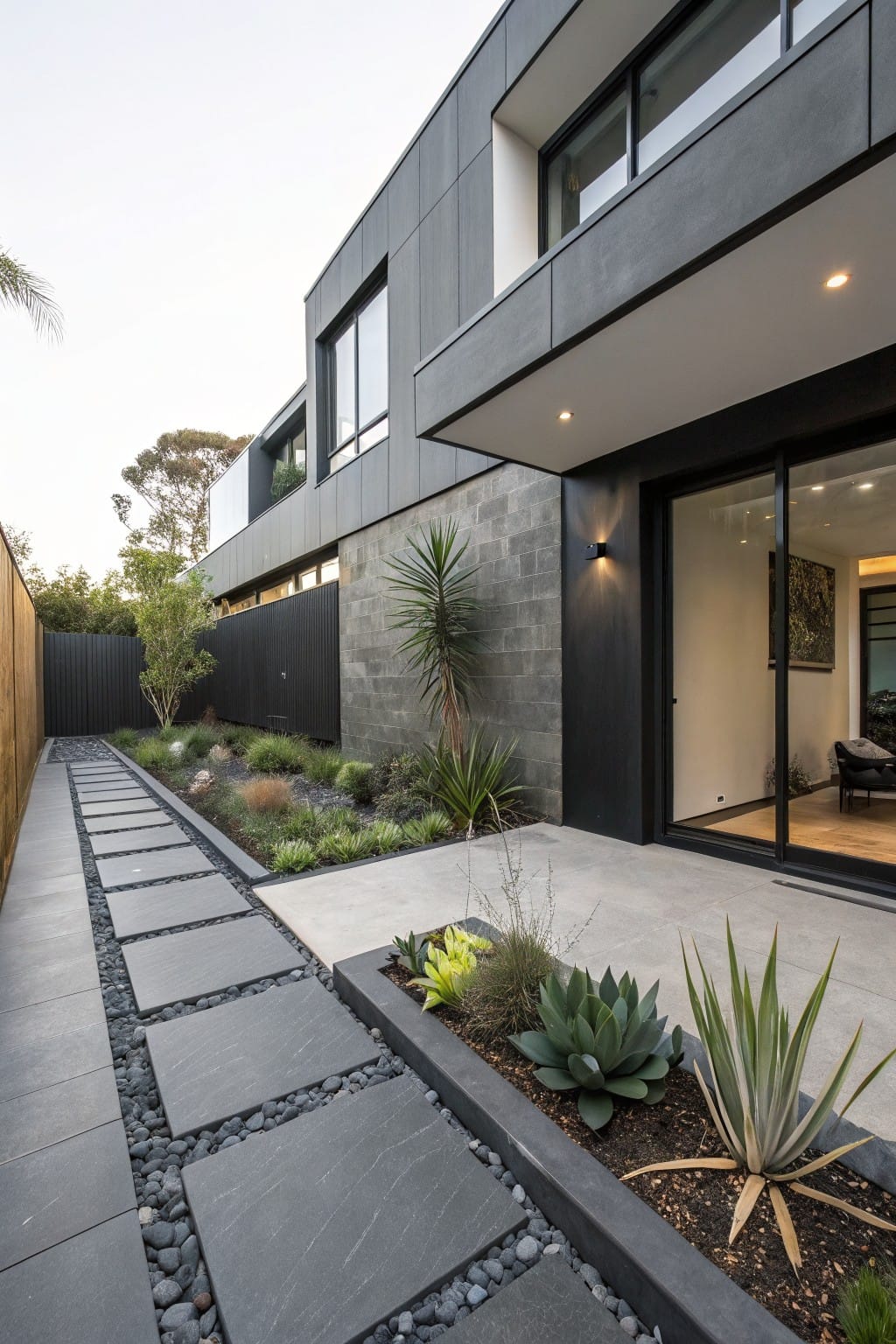
A path like this uses big flat stones laid right into a bed of smooth pebbles. The dark slabs stand out clean and simple, especially next to a house with black walls and stone accents. Pebbles keep it loose and easy on the eyes, plus they let rain soak in without puddles.
Try this in a narrow side yard or leading to a back door. It suits modern homes or any spot with poor soil, since gravel drains fast. Add a few succulents along one edge for color. Watch the stones don’t shift over time, maybe tamp them down well at first.
Boxwood Edging Along Pathways
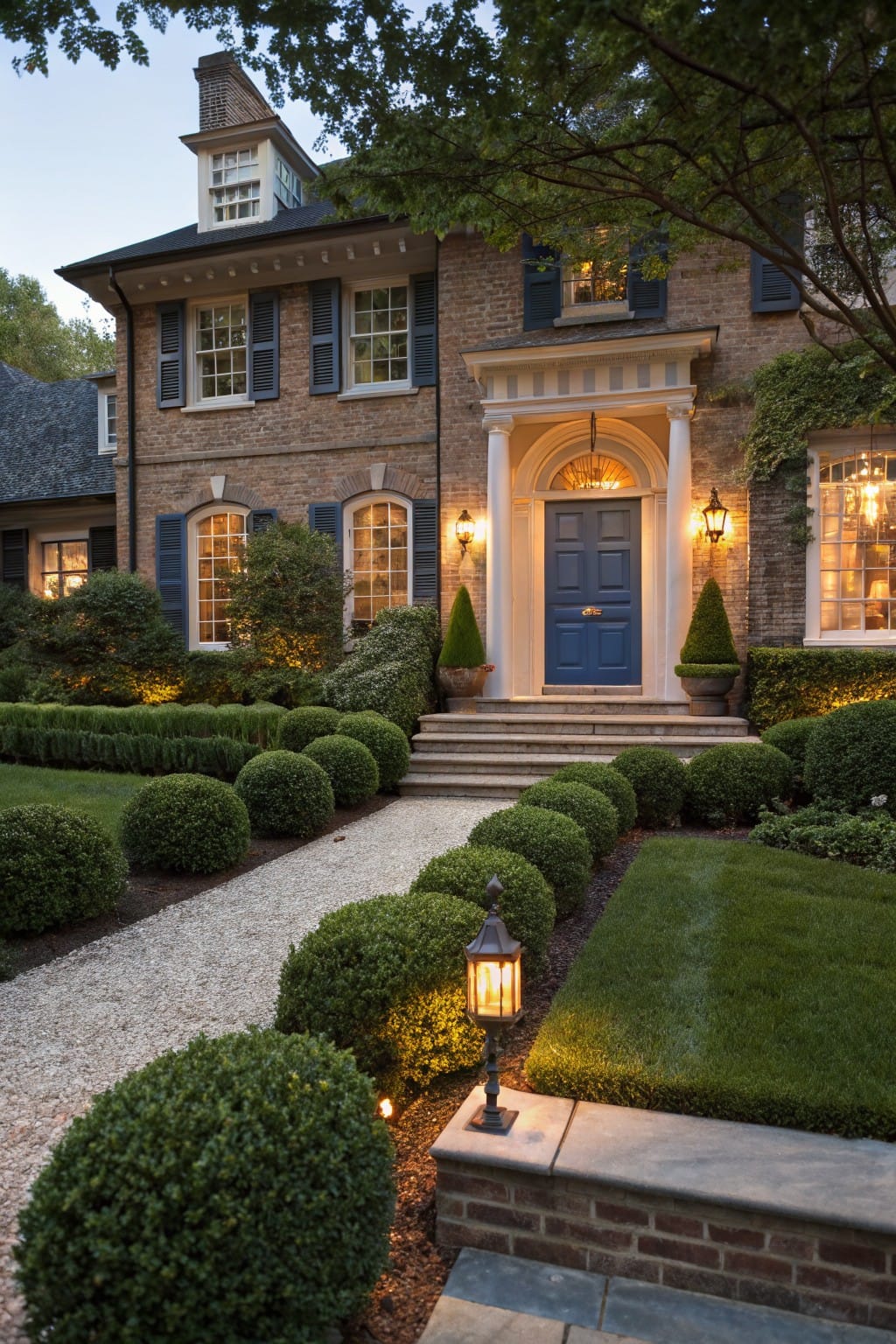
A row of clipped boxwood spheres makes a simple, sharp edge for garden paths. They line this gravel walk from the street to the front steps, keeping everything neat and pointing the way to the door. That clean green border stands out against the stone and lawn, and it fits right with the house style.
Boxwoods work best in formal yards or older homes where you want low upkeep. Plant them close together for a solid hedge effect, then shear into balls or mounds a few times a year. They handle shade okay and stay green through winter, but watch for pests in humid spots.
Rustic Wooden Raised Beds
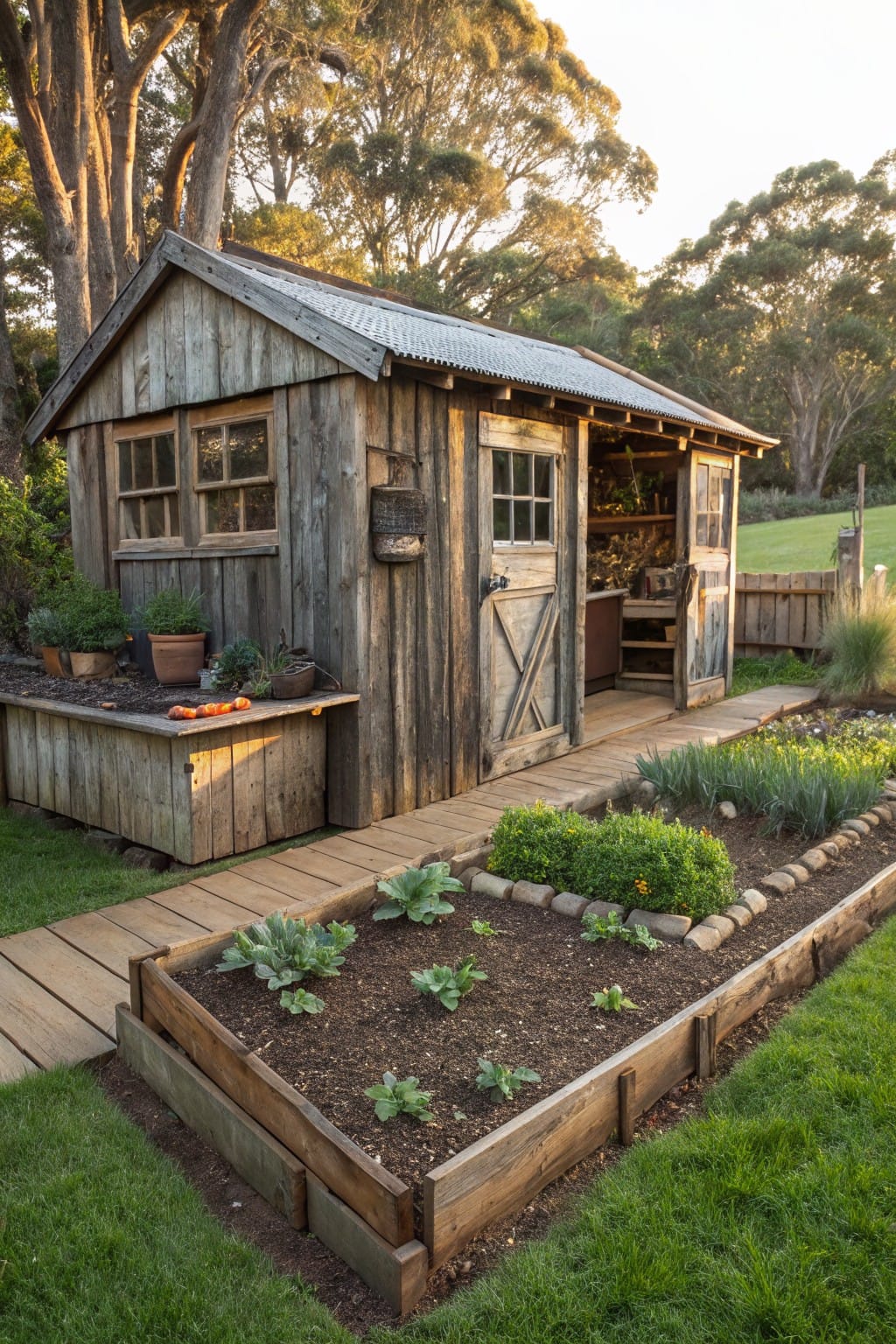
Raised beds built from old timber planks like these keep things practical and pretty in the garden. They frame young greens and soil neatly, right by that weathered shed. Folks like how they blend right into a yard without looking too new or forced. It’s an easy way to tidy up plantings.
Put them along a path or near a toolshed in a backyard plot. They work best in cottage gardens or any sunny spot for veggies. Stack rough-cut planks a foot high, line with mesh if critters are around, and fill with decent soil. Treat the wood yearly to hold up.
Concrete Planters for Sidewalk Edging
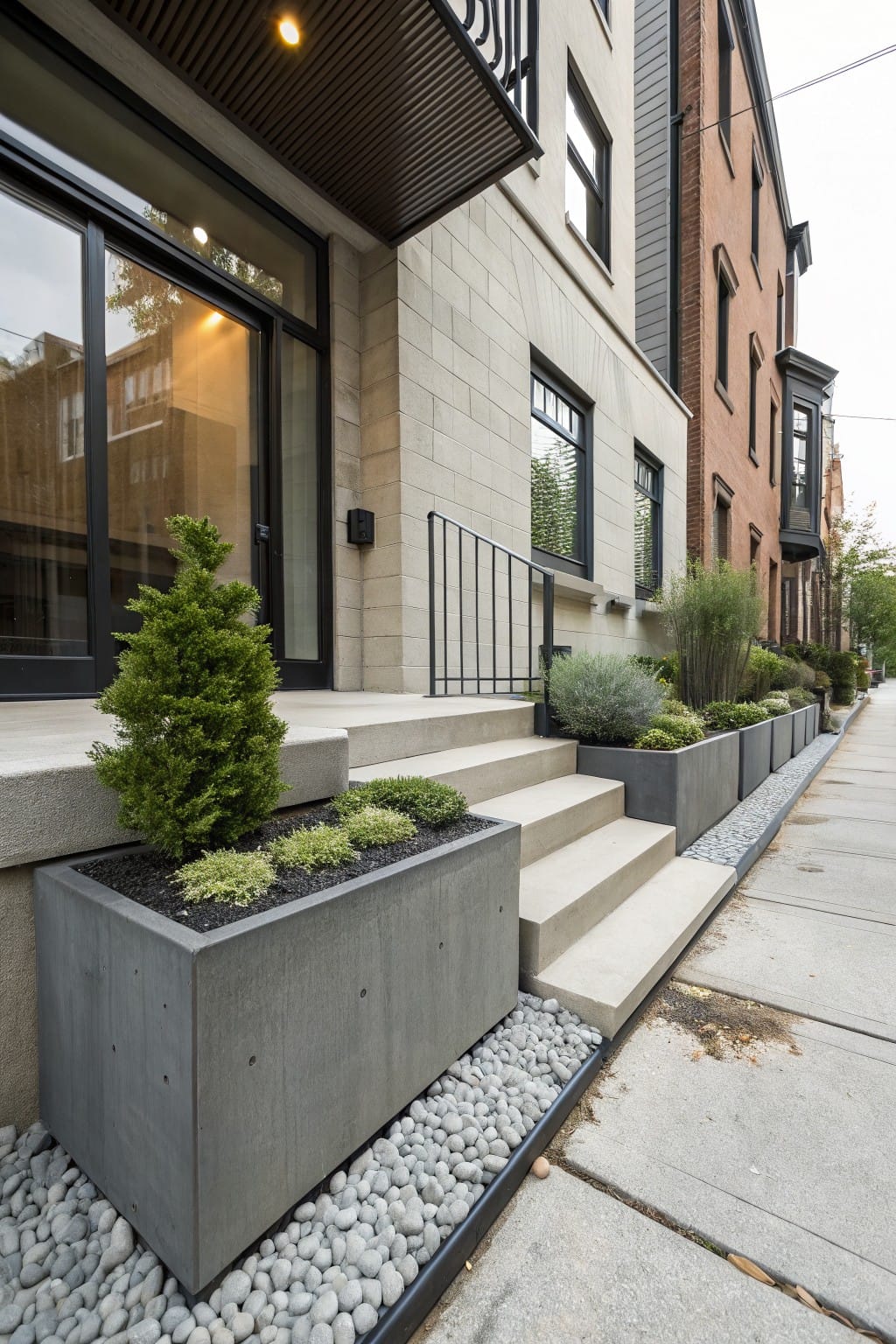
Big concrete planters like these make a solid edge right along the street. Filled with low plants such as conifers and succulents, they hold everything in place without sprawling into the walkway. The pebbles around the bottom add a clean finish that looks sharp year-round.
Set them up in urban yards or townhouse strips where digging beds isn’t practical. They suit modern homes with stone or brick fronts. Pick ones with drainage holes, and group a few together for that lined look… just refresh the gravel now and then.
Stone Retaining Walls for Garden Edging
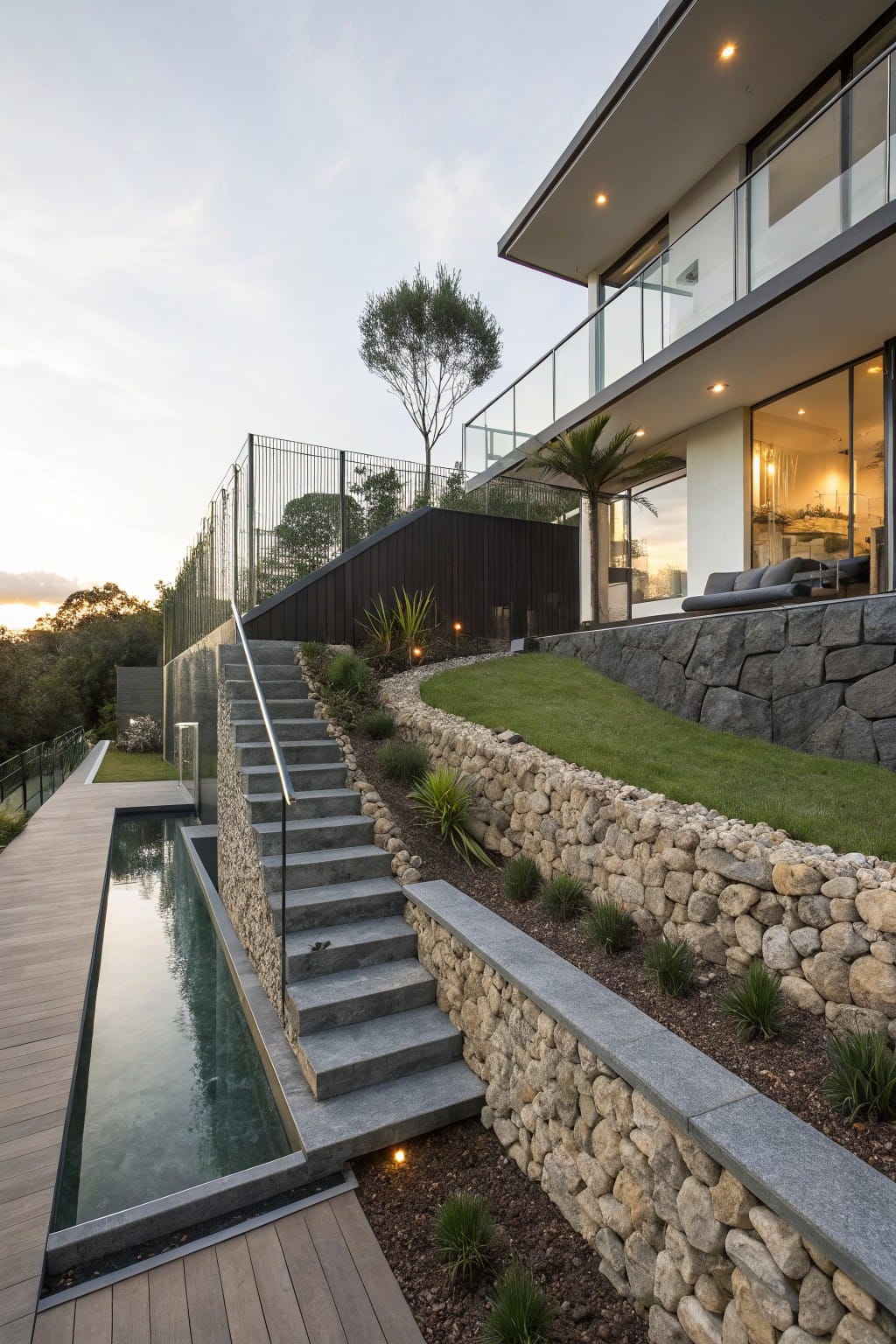
Rugged stone walls make solid garden edging, especially on slopes. They keep soil in place while looking natural and sturdy. Here, the rough gray stones hold back grass and low plants, giving the yard a layered feel without much upkeep.
Use these walls where your yard drops off or needs terracing. They fit homes with a clean modern look or rustic yards too. Stack local stones for best match, and add steps nearby for easy walking. Watch the drainage so water doesn’t pool behind.
Garden Edging with Stone Slabs
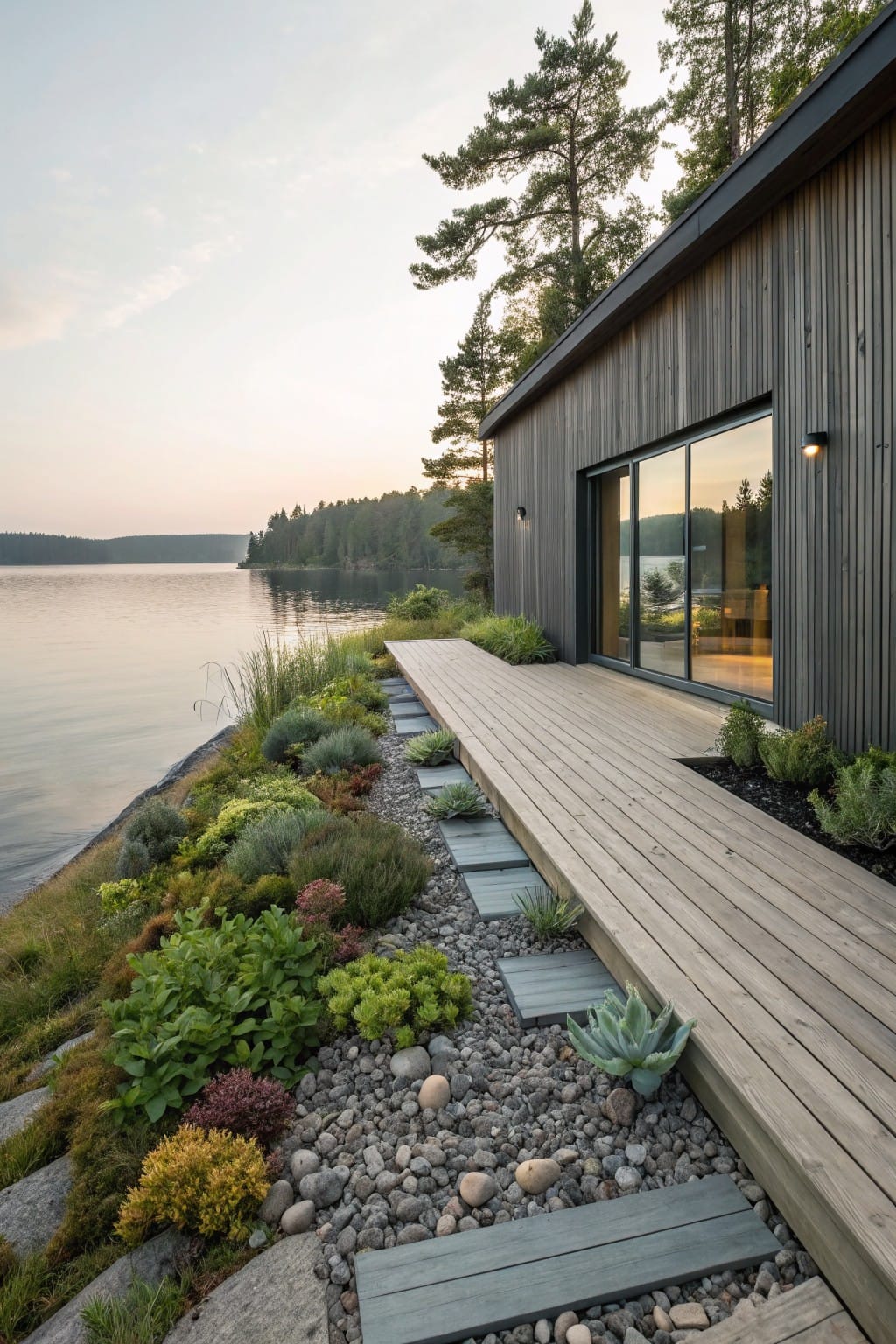
Flat stone slabs make a solid edging choice for gravel beds next to paths or decks. They sit flush with the ground here, lining a walkway down to the water amid rocks and low plants. This setup holds back soil and mulch without much upkeep, and it blends right into rough terrain.
Try it where your yard slopes or meets a patio. Pick slabs in gray or local stone for a natural fit, space them a foot apart over gravel, and add drought-tolerant stuff like sedums between. Suits cabin-style homes or lakeside lots best. Just level the base good, or they’ll shift over time.
Mosaic Tile Edging Along Paths
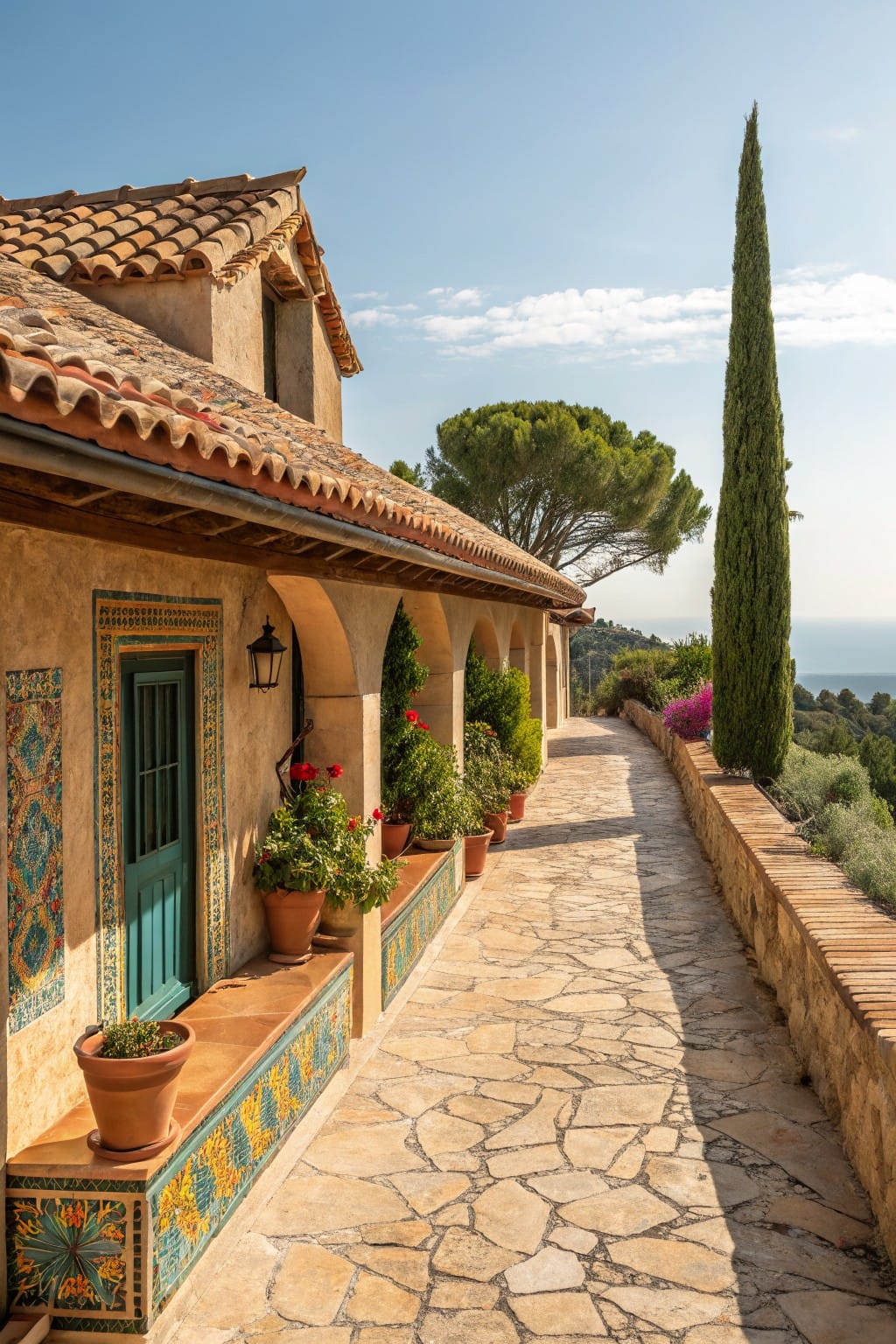
One simple way to edge a garden path is with colorful mosaic tiles set into low walls or benches. In this setup, the tiles form patterns on built-in seats right next to the stone walkway. They pick up the warm earth tones of the house while adding spots of blue and green that make the path feel alive. It’s a practical touch that keeps plants in place and gives walkers something nice to rest on.
You can add this kind of edging to any side yard path or patio border, especially where space is tight. It suits older stucco homes or dry climates best, since the tiles hold up in sun. Pick frost-proof ones if winters get cold, and keep the patterns simple so they don’t clash with your plants.
Stone Retaining Walls for Sloped Yards
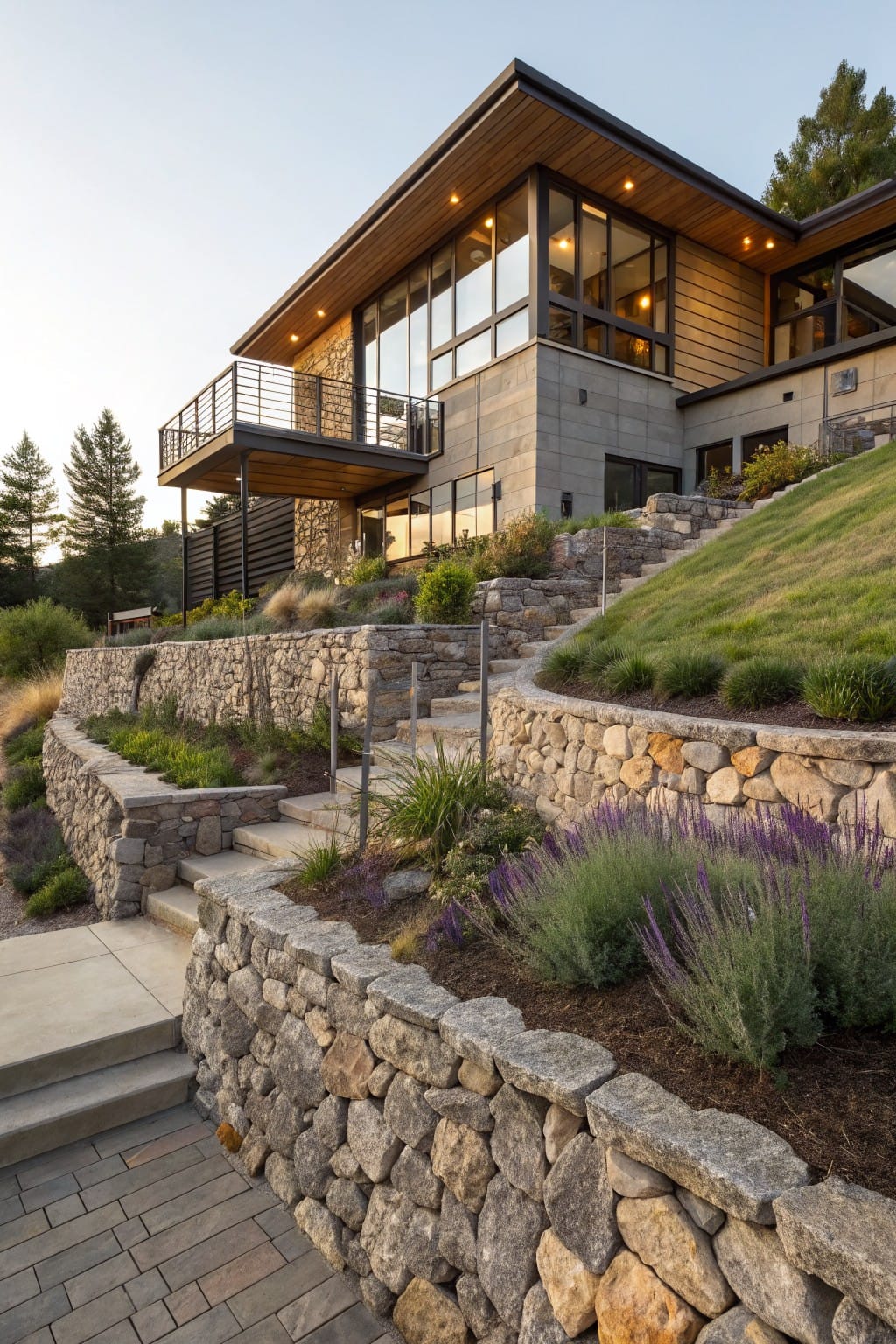
Stone retaining walls make sloped yards workable and pretty at the same time. They hold back the earth, form planting pockets, and give you steps to get around without slipping. Here, rough local stone stacks up in curves, with tough grasses and lavender tucked along the edges. It looks like it grew there.
Put these walls on any hillside where erosion is a problem or you want terraced beds. They suit homes with a natural or modern vibe, especially if you’re blending house and yard. Stack dry or use mortar, but add drainage rock behind to keep water from pushing things over. Start small if you’re doing it yourself.
Concrete Paths with Metal Edging
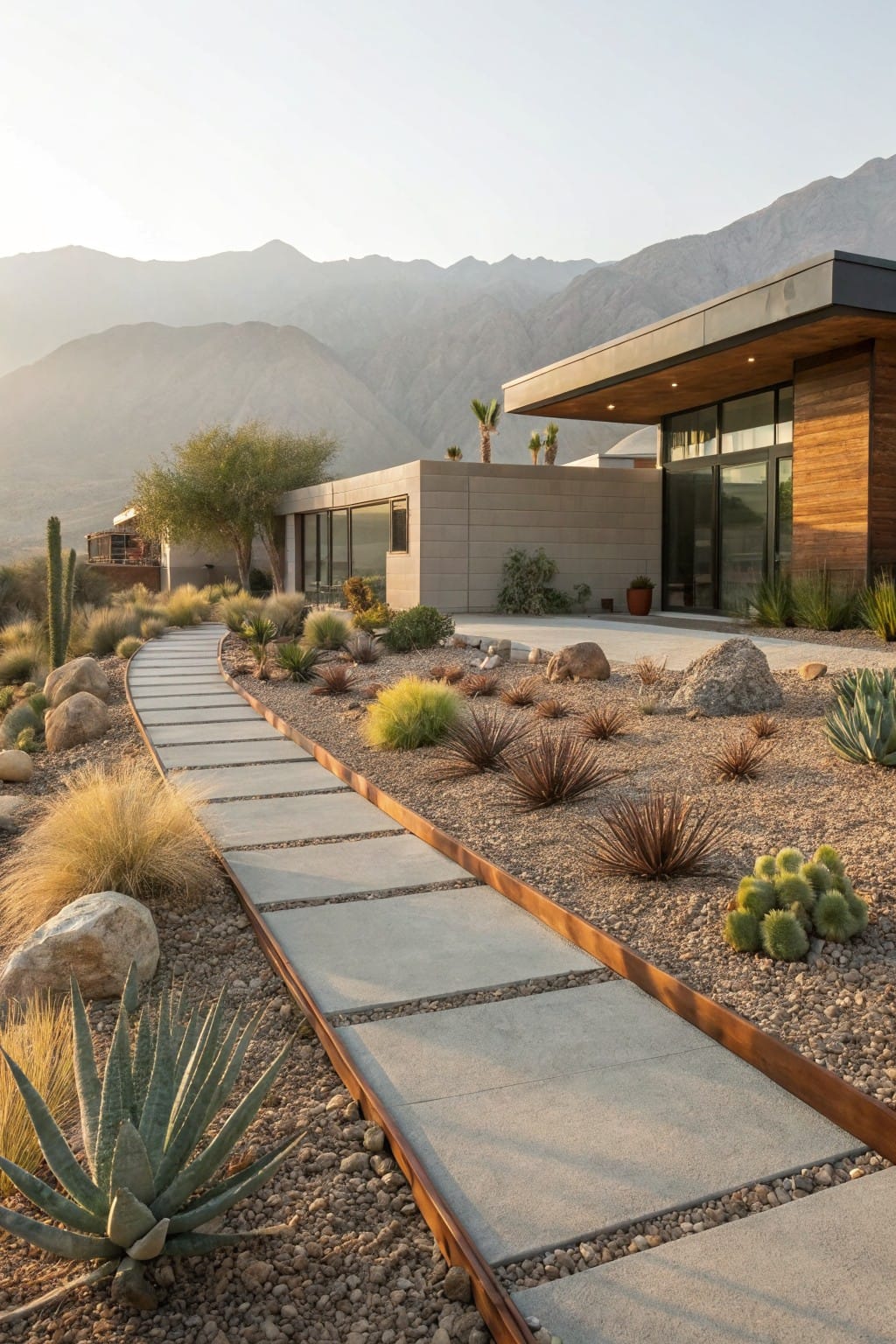
One simple way to define a garden path is to set concrete slabs into gravel or dirt, then border them with slim strips of weathered metal. That reddish-brown edge keeps everything neat without much upkeep. It stands out in dry yards because the color echoes the earth tones around it, like with those agave and cactus plantings.
You can pull this off in any sunny spot where grass won’t grow anyway. Line up the slabs in a gentle curve to guide folks to your door, and fill gaps with gravel. It suits low-water setups best, especially modern houses or ranch styles. Just make sure the metal is the kind that rusts on purpose, so it ages right.
Lavender-Topped Low Walls
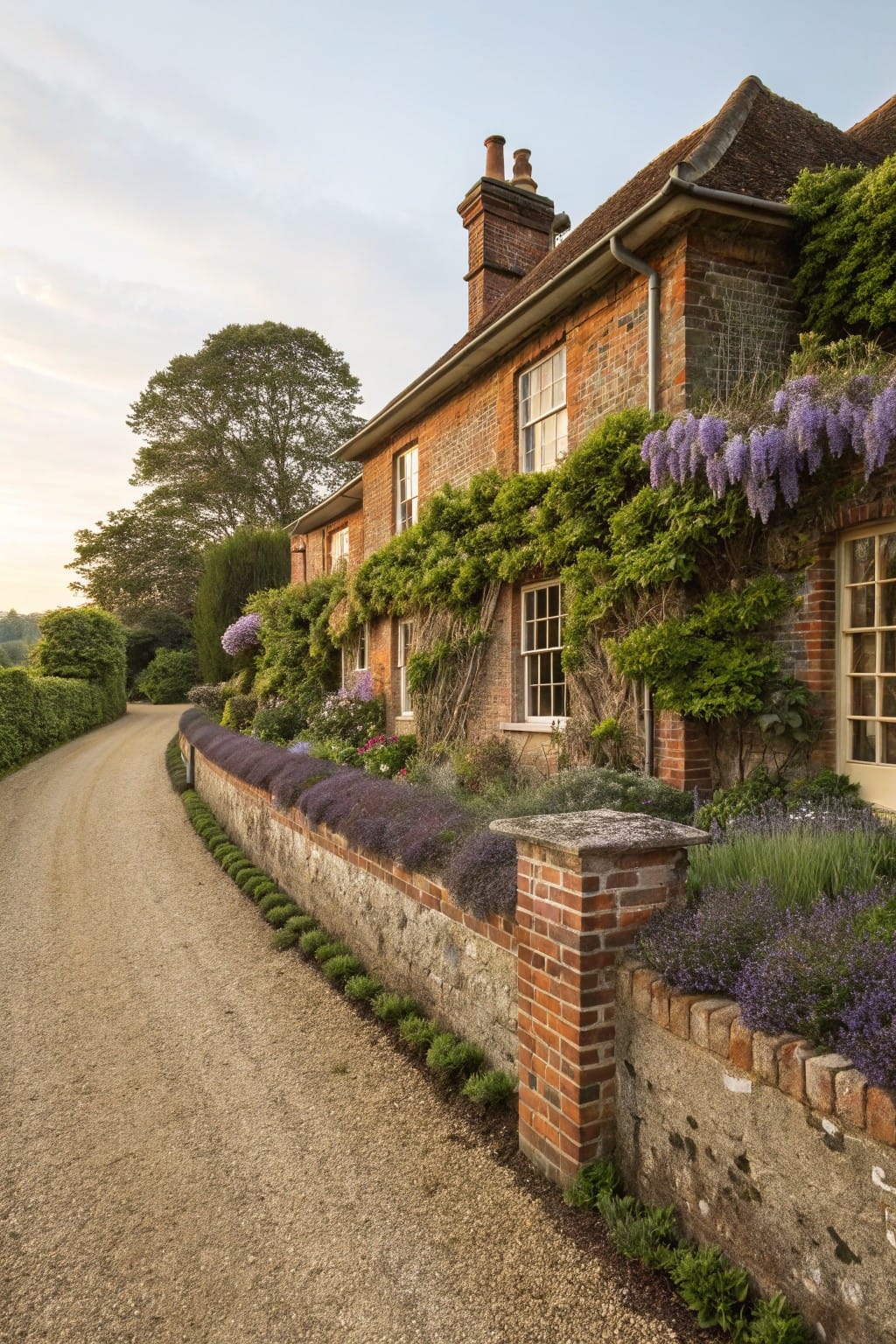
A low wall like this one, running right along the driveway and topped with rows of lavender bushes, makes a clean edge that ties the garden to the house. The purple flowers soften the gravel path without crowding it, and they pick up nicely on the brick walls nearby. It’s a simple way to add color and structure at once.
You can try this in front yards with country-style homes or cottages, especially where you have a drive that meets a planting bed. Use lavender varieties that stay compact, plant them snug along the wall top, and shear them lightly after blooming to keep the shape. Just make sure the spot gets full sun, or it might get leggy.
Flagstone Paths Edged with River Rocks
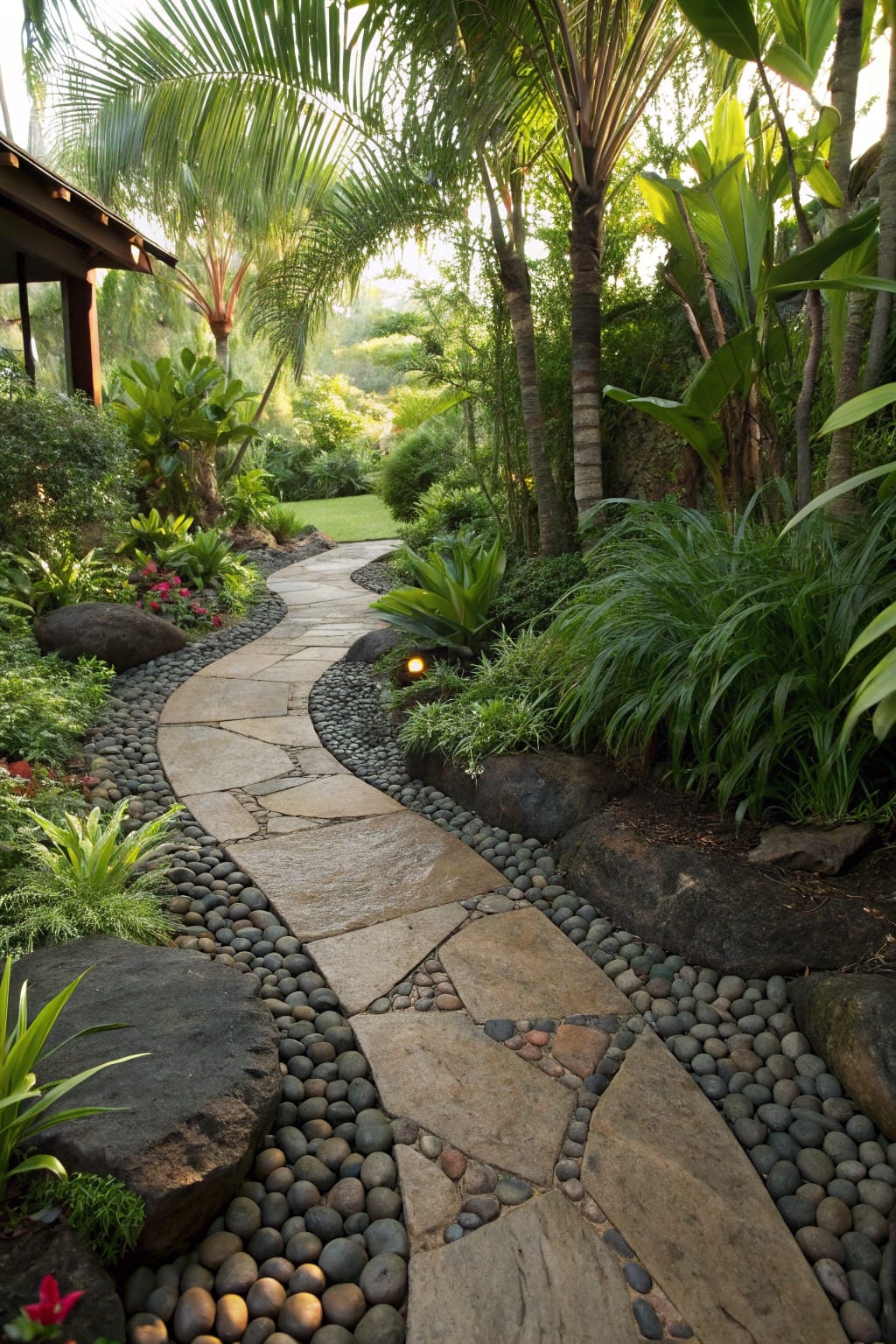
A simple flagstone path like this one curves gently through the garden, with smooth black river rocks tucked along both edges. The irregular stones fit together just right, and the pebbles keep everything looking neat without a lot of upkeep. It’s a natural way to connect different yard spots, and it blends right in with the plants around it.
Put this in a shady backyard or along a side entrance where you want a low-key trail. It suits homes with tropical touches or mixed greenery best. Watch the stone spacing so feet don’t slip, and use bigger pebbles to hold the line steady over time.
Paver Paths Through Grass
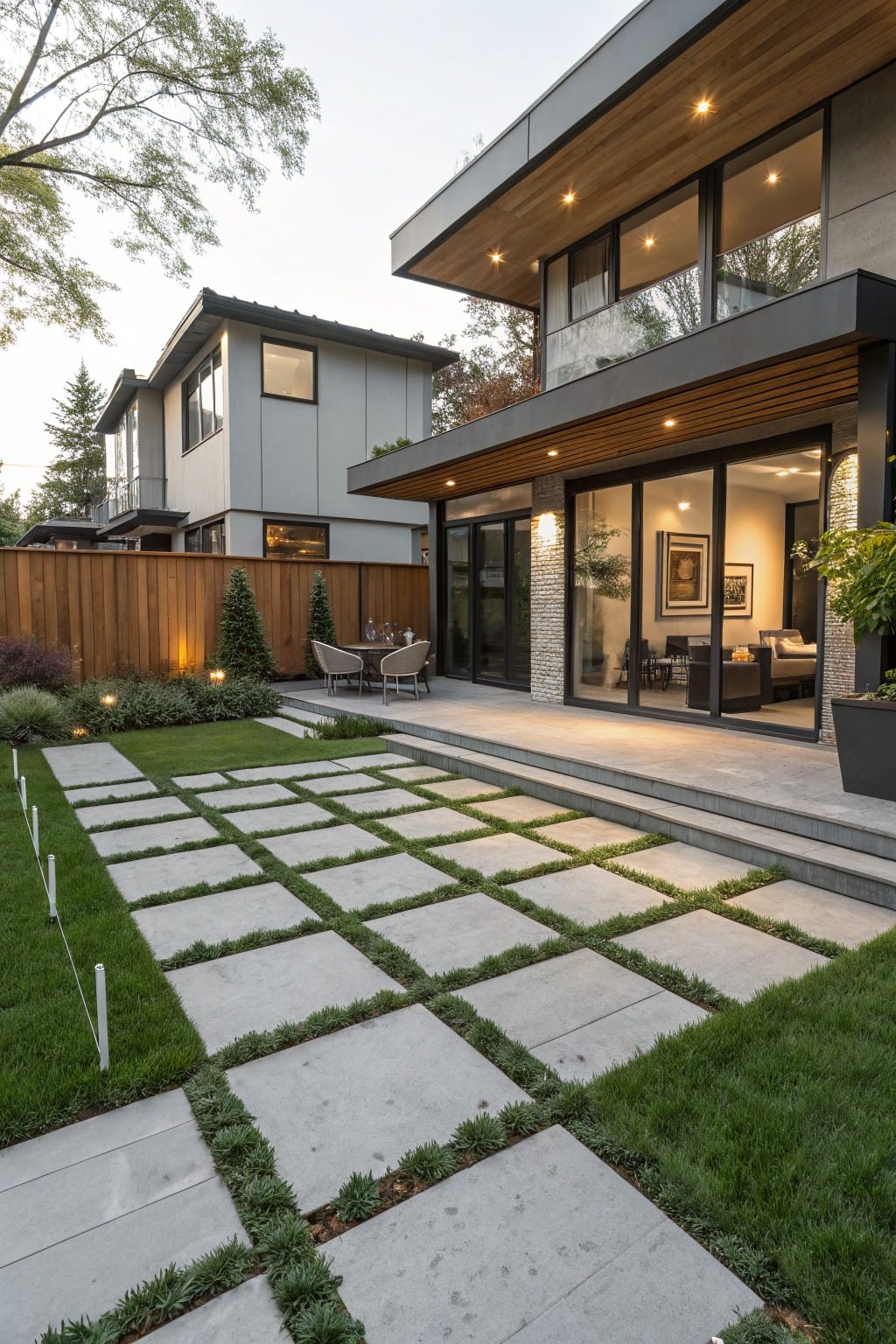
One simple way to edge a path without losing your lawn is to set large concrete pavers right into the grass. They form a clean route to the back door or patio, like in this yard where the squares line up neatly and let green peek through the joints. It keeps things open and natural, no narrow borders needed.
This works best in bigger yards where you want to direct foot traffic without paving everything over. Go for slabs at least two feet square so they feel substantial, space them for easy steps, and plant low groundcover in the gaps if grass alone seems sparse. Suits modern houses especially, but any home with a straight-shot backyard path.
Gravel Paths with Grass Edging
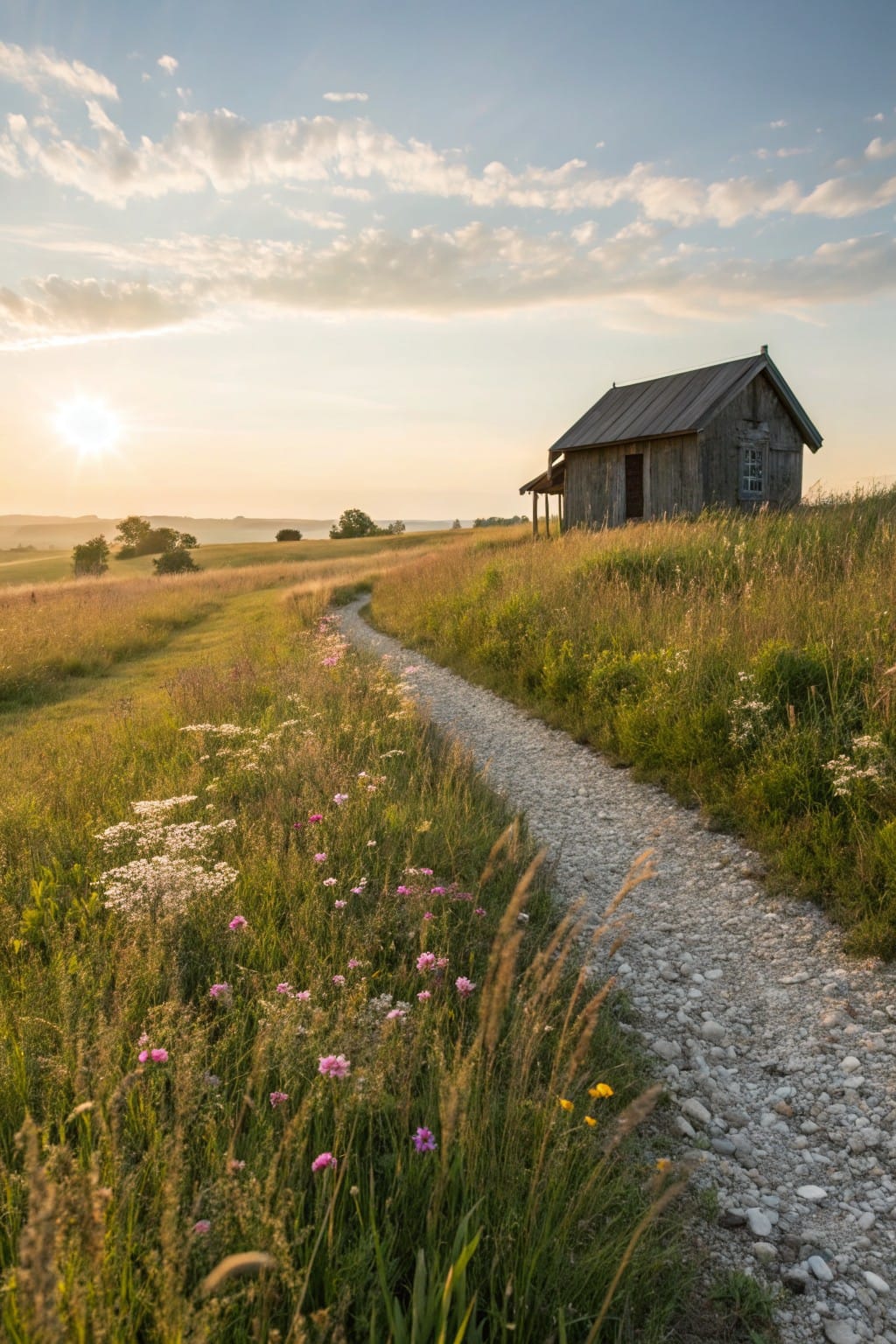
A gravel path edged in tall grasses keeps things simple and natural. You see it here winding through a meadow toward a little cabin, with pink wildflowers popping up along the sides. Folks like this look because it blends right into the yard. No fussy trimming needed. The grasses hold back the stones a bit and add some movement on breezy days.
Put this edging around back paths or side yards where you want a country feel. It suits older homes or sloped lots best. Start with a layer of gravel, then plant tough grasses like switchgrass along the edges. Watch that the path stays walkable. Over time, it fills in on its own.
Natural Stone Garden Edging
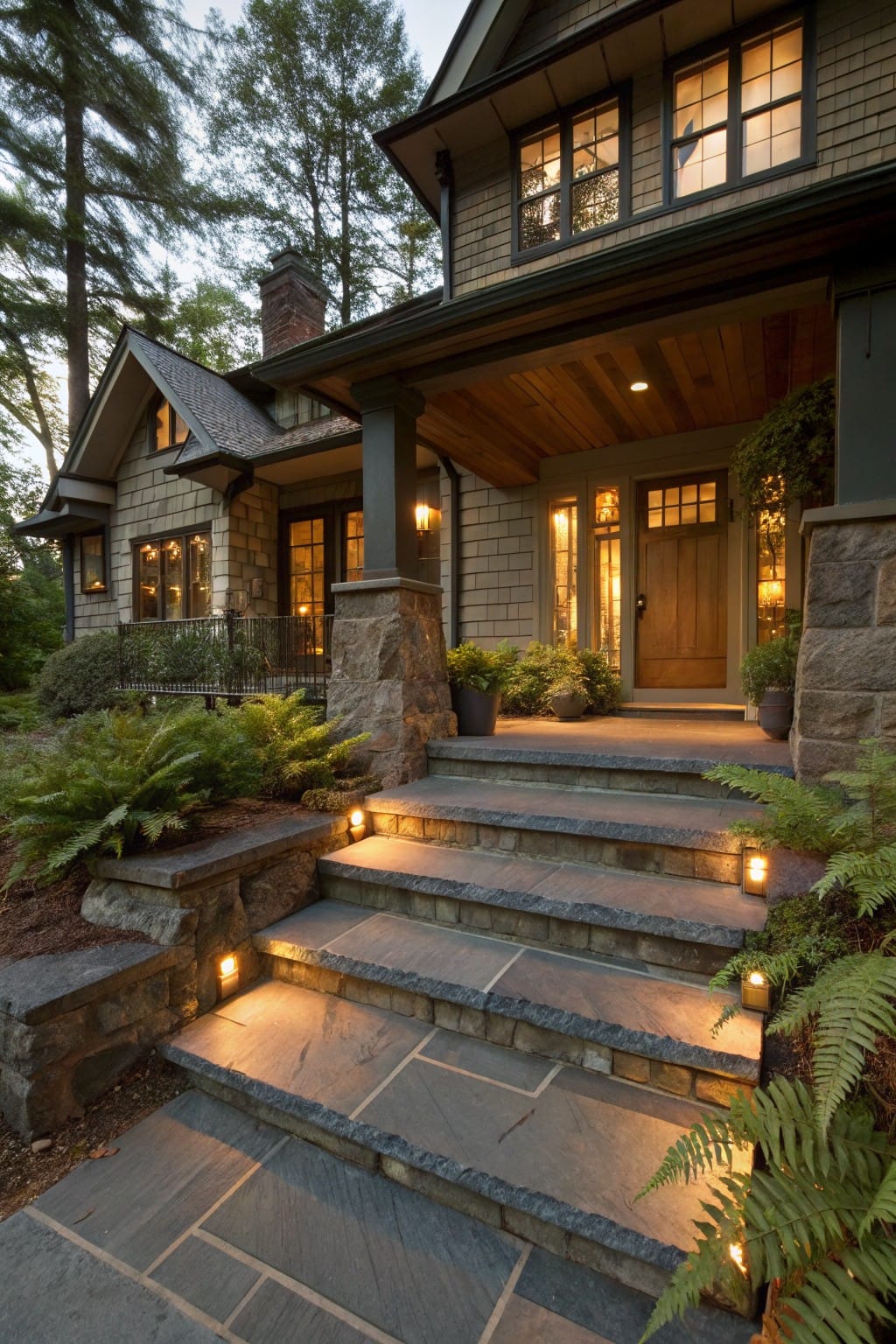
One straightforward way to edge your garden beds comes from using low retaining walls made of rugged natural stone. These walls keep soil in place while letting plants like ferns spill over the top. That soft overhang makes the edge look less harsh. It blends right into the landscape around a house entry, especially where steps meet the yard.
You can add this edging along paths or around porches on sloped lots. It suits homes in wooded or rural spots, where the stone looks at home among trees. Pick stones from a local quarry if you can. Just make sure the wall is sturdy enough for the soil height… no wobbles there.
Concrete Planters for Terrace Edges
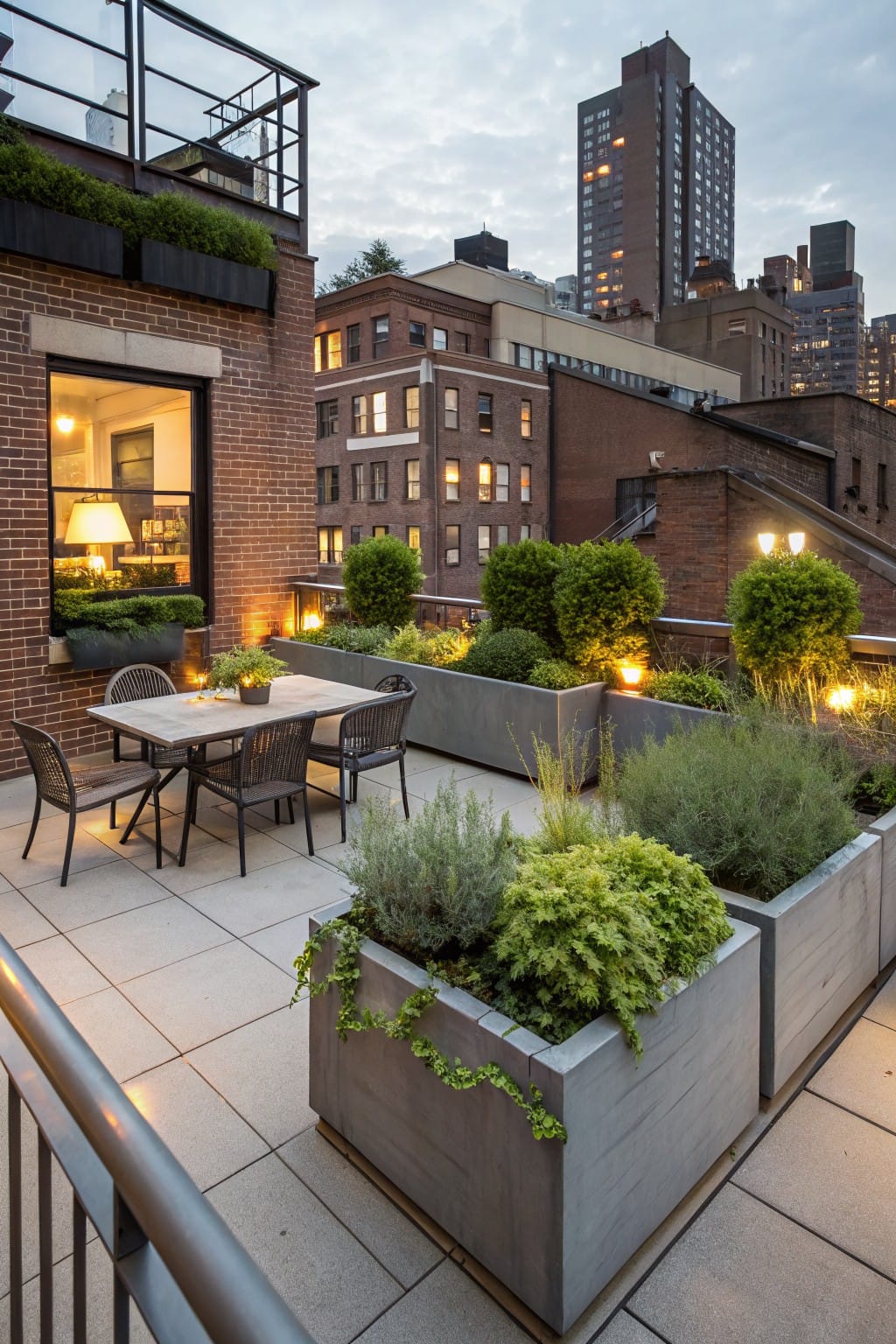
Large concrete planters make solid garden edging for rooftops or balconies. They hold plants in place without spilling over onto the walking area. Boxwoods and herbs fill these ones neatly, framing the dining table without taking up much room.
You can use them on any hardscaped patio where soil isn’t an option. Line them along railings or walls to build instant beds. They suit city homes best, since they’re tough against wind and weather. Pick ones with good drainage, though.
Frequently Asked Questions
Q: Do I need to dig a deep trench for these edging ideas?
A: Dig just a few inches deep to sink the edging halfway in. This anchors it firm against shifting soil. Lay flat stones or logs skip the trench altogether.
Q: How do I stop grass from invading my garden beds?
A: Tuck a strip of landscape fabric under the edging before you set it. Top with thick mulch to block light and smother sprouts. Pull any breakthroughs right away…they give up fast.
Q: What’s the fastest edging for a tiny yard?
A: Grab precut plastic or rubber strips. They flex into curves and push right into soil.
Q: And if my yard slopes, which edging holds best?
A: Stack bricks or stones; they lock together tight. Pin them with stakes driven deep into the hill. Wood logs work too if you bury the downhill side extra.
