


I’ve spent enough time reshaping my garden beds to know natural stone edging creates that effortless tie between plants and paths.
I gravitate to the rough fieldstones around my place since they weather into the soil without looking staged.
They succeed most when you scale them to the bed size and let plants spill over casually.
Big mistakes happen with oversized rocks crammed into narrow borders that end up looking cluttered.
Two or three here nail it enough to adapt for your yard.
Stone Path Edging with Plants
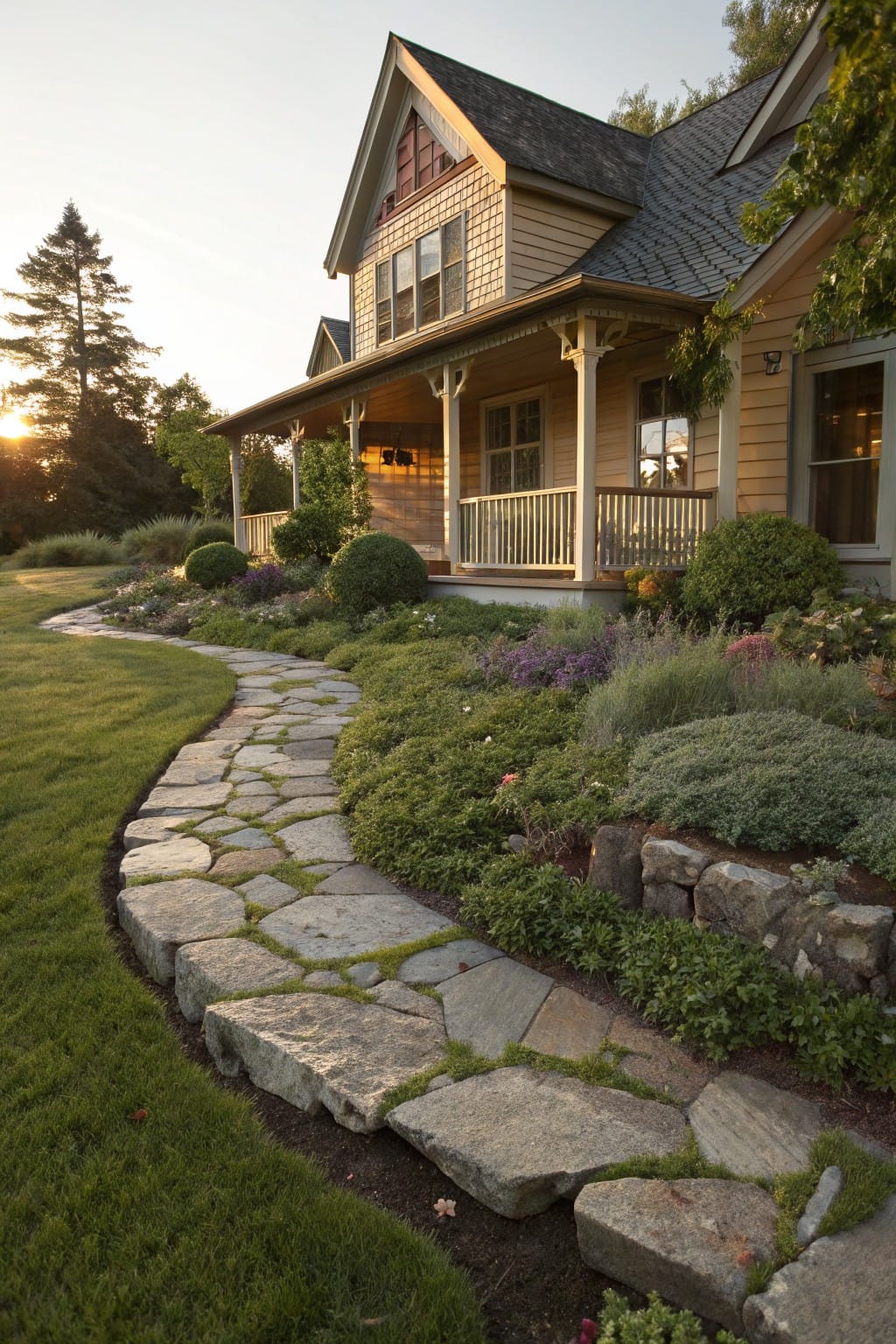
A simple way to edge a garden path is with flat, irregular stones set into the ground, then bordered by low plants and a short stone wall. It keeps the path clear while letting greenery spill right up to the edges. The look stays natural, like the path just grew there along with the garden.
This works best in front yards or side paths where you want to guide people to the house without straight lines. Suits sloped spots, too, since the wall holds back soil. Pick stones from nearby quarries for that local feel, and stick to tough, low-growing plants that won’t flop over the walking area.
Rock and Pebble Edging for Garden Paths

A simple path edged with pebbles and rocks keeps things looking natural and tidy. Here, flat stepping stones sit in a smooth bed of dark pebbles, with larger rocks tucked along the border amid some grasses. It pulls the walkway right into the garden without any fussy lines.
This edging suits narrow side yards or spots leading to a back entry. Go for it on homes with brick or wood siding, where you want low upkeep. Pick rounded pebbles that won’t shift too much, and add plants that spill over a bit for that lived-in feel.
Stone Retaining Walls Edged with Lavender

One simple way to edge a garden or terrace is to plant lavender right along the top of a low stone retaining wall. It softens the rough stone edge and brings in that natural, planted look folks like for yards with a slope. The purple flowers stand out against the light-colored stone, and the plants spill over just enough to feel relaxed.
This setup works great on sunny terraces or patios next to a stone house. Plant the lavender in a row, keeping it trimmed back a bit so it doesn’t flop onto the path. It suits dry climates best… lavender hates wet feet. Add a few pots nearby if you want more green without the commitment.
Beach Pebbles for Garden Edging

One easy way to get that organic outdoor feel is lining your garden or house base with beach pebbles. These rounded stones work great because they look like they belong there naturally, especially near the shore. In this setup, they sit right against the foundation and mix with the dune grass without much fuss. No sharp lines or fancy cuts needed.
You can use them around any casual home with a yard that backs to sand or grass. Just pile them a foot or so wide where you want a border, maybe add some beach grass for hold. They handle salt air fine and let water drain right through. Skip it if your spot floods a lot, though. Keeps things simple.
Irregular Flagstone Patios Around Fire Pits
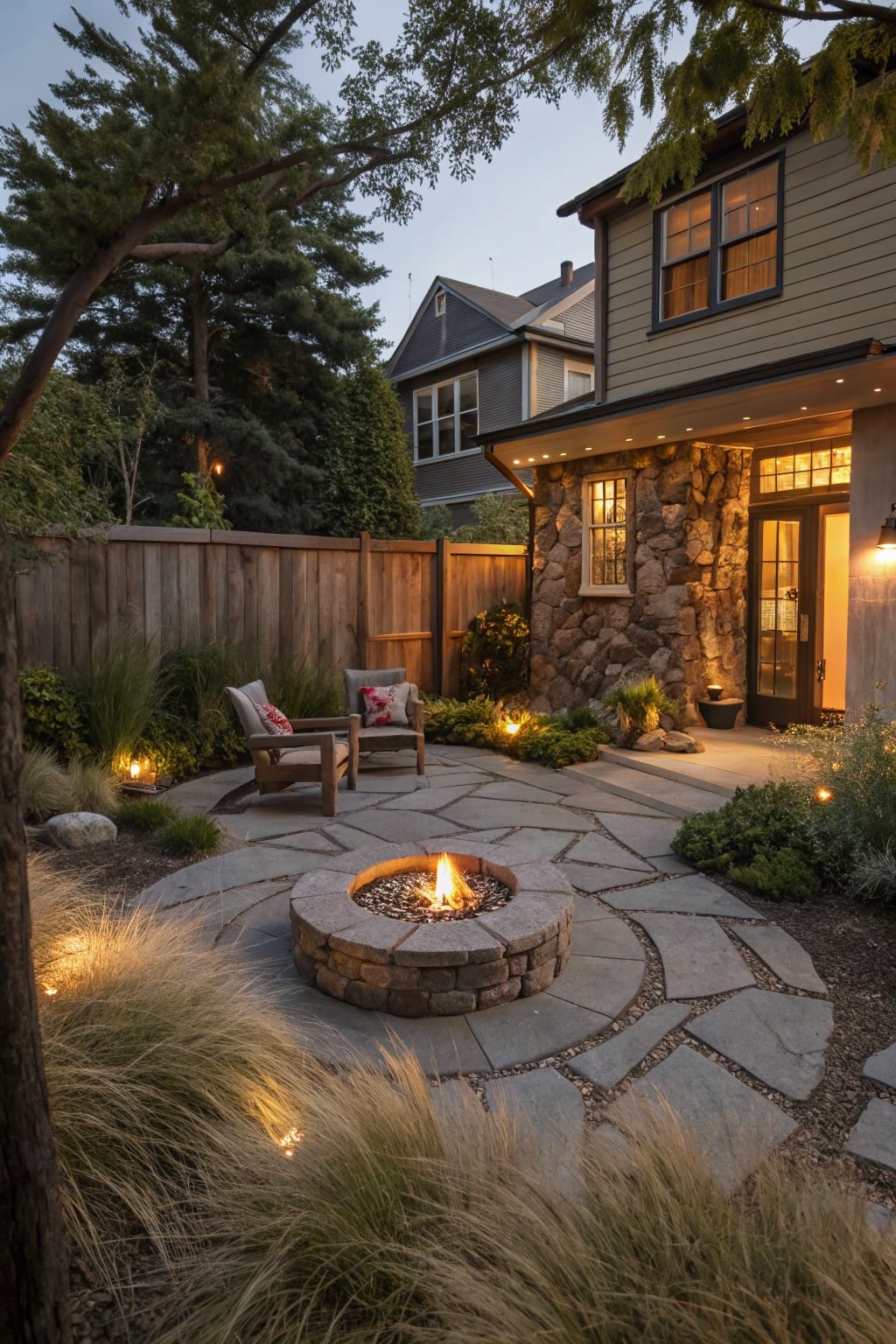
One nice way to handle a backyard gathering spot is with big pieces of flagstone laid out in loose curves around a fire pit. Those uneven stones fit together without looking forced, and the tall grasses right at the edges keep everything from feeling too hard. It pulls the patio into the yard naturally.
You can do this in most any backyard size, especially where you want low upkeep. Lay the stones on sand or gravel base for drainage, then plant tough grasses like feather reed along the borders. Suits homes with wood siding or stone details. Just make sure the fire pit sits level.
Stone Slab Paths with Moss Edges

A straightforward garden edging idea uses large, rough-cut stone slabs laid right into gravel beds. Moss fills in around the edges and between the stones for a soft, lived-in feel. It’s low fuss because the moss spreads on its own in damp spots, and the gravel keeps weeds down.
Try this along a side yard or to a back door where space is tight. It fits shady areas best, next to a fence or wall maybe. Watch the stones don’t shift over time. Add a lantern nearby if you want a little accent.
Large Boulders for Garden Edging
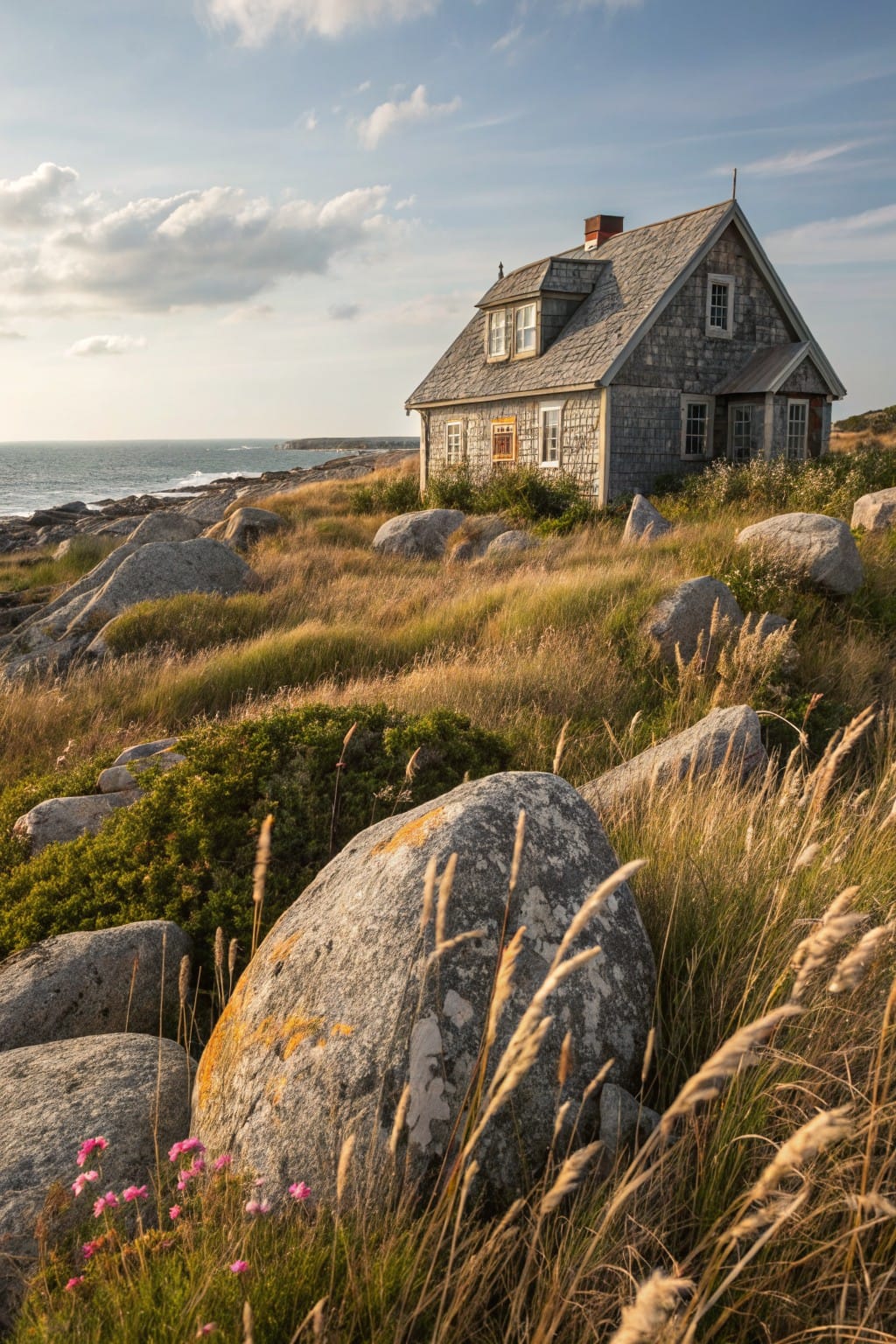
One simple way to get that organic outdoor feel is to use big natural boulders around your garden beds. These rocks look like they belong there, especially when they’re lichen-covered and tucked into spots with tall grasses. They hold back plants without looking forced, and they fit right into rough yards where everything grows a bit wild.
This works best around homes in rocky areas or seaside spots, where you can gather stones from nearby fields or the shore. Just place a few large ones to outline paths or beds, maybe two or three feet apart, and let grass and flowers fill in. Keep an eye out for spots that drain well, since water can pool behind big rocks if the ground slopes wrong.
Stone Retaining Walls for Sloped Gardens
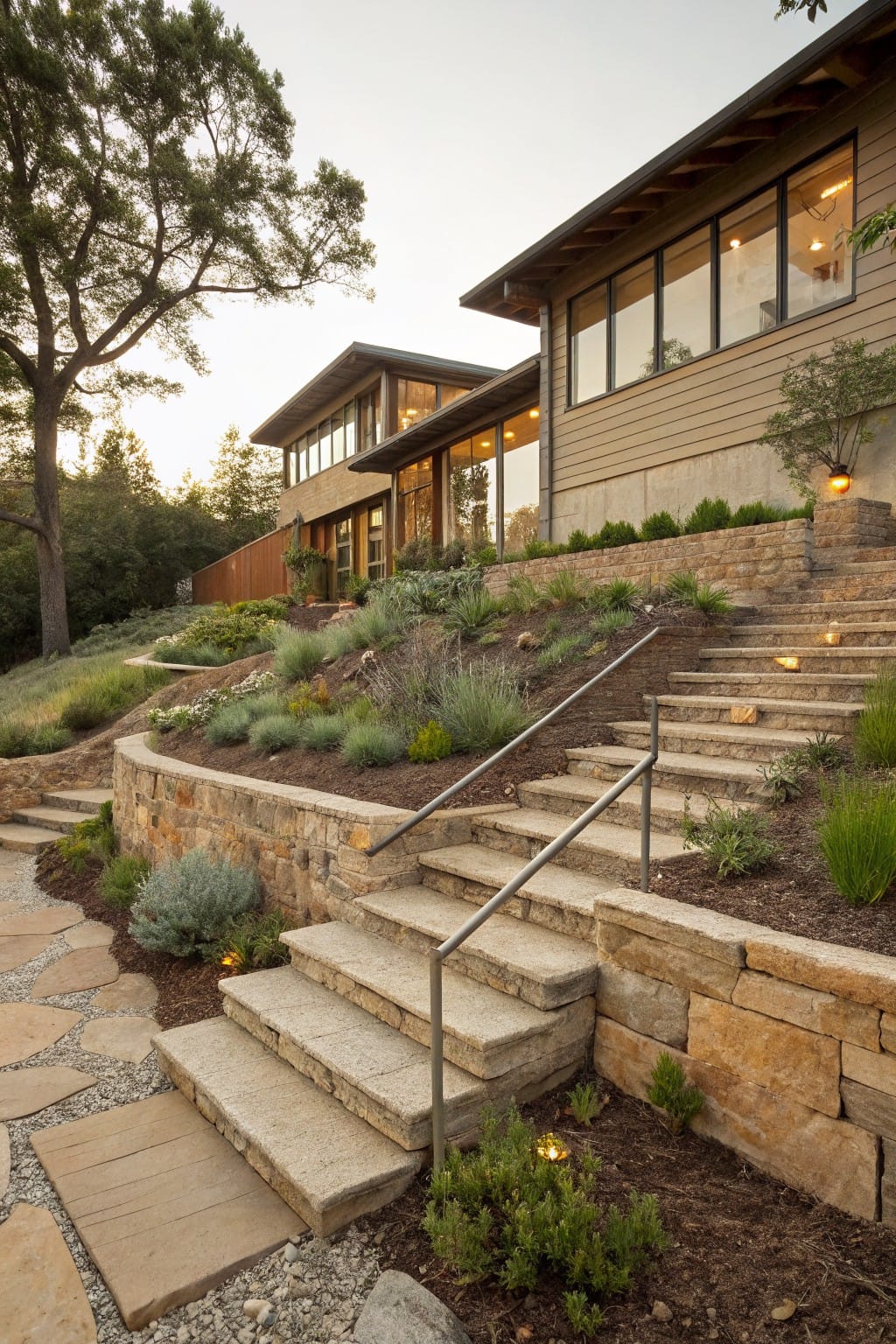
One solid way to handle a hillside yard is with natural stone retaining walls. They create level terraces that hold back the soil and give you spots for plants and paths. In this setup, the rough limestone blocks stack up nicely, looking like they grew right out of the ground. It keeps everything from washing away in rain and makes the walk up to the house feel steady.
These walls work best on lots with a good drop, say 4 to 10 feet, where you want usable space instead of just scrubby slope. Pick stone from nearby quarries to match your area’s rocks and save on hauling. Tuck in tough grasses or shrubs along the edges… they fill the gaps without much water. Just make sure the base is wide and drained well, or you’ll have shifting stones after a wet winter. Suits modern homes or cabins tucked into the hills.
Dark Stone Pool Edging
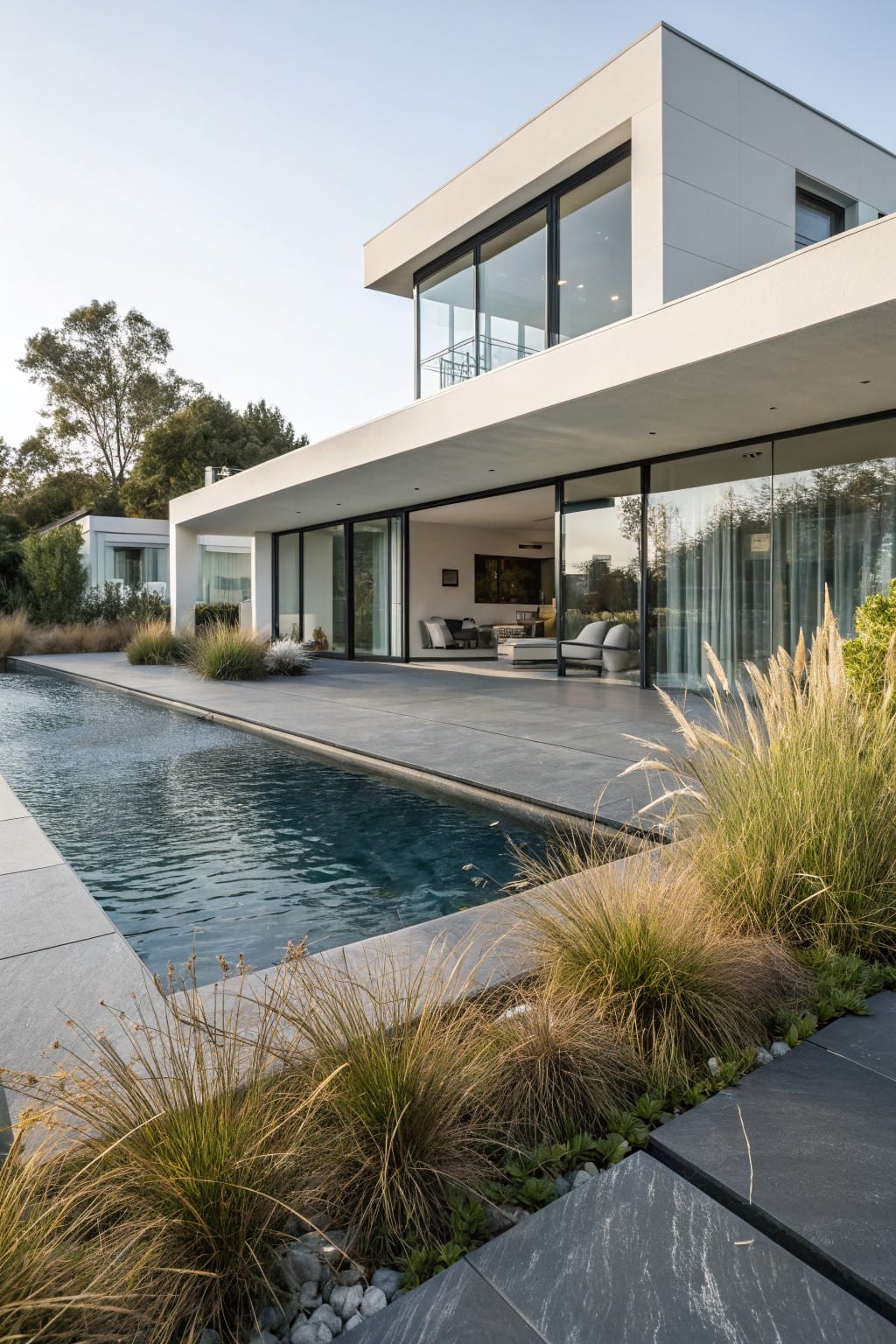
Dark stone slabs make a strong edge for this pool deck. They keep everything looking sharp and modern, especially next to the water and those big glass doors. The grasses tucked along the sides bring in some natural movement. It softens the hard lines without much fuss.
This works well around modern homes with clean yards. Lay the stone flush with the deck for easy walking, then plant tough grasses like pampas that handle sun and dry spells. Skip it if your yard floods a lot. The stone holds up, but water can shift things over time.
Stone Pedestals for Garden Urns

Stone pedestals like these make great accents for edging garden beds. They lift urns with plants up a bit, so the greenery spills over nicely against low hedges. That setup gives borders a solid feel without being too rigid. The aged stone looks right at home in a damp English garden, tying into the gravel path.
Put them at the ends of hedge lines or spaced along walks leading to the house. They suit older brick homes with formal yards, especially where you want some height without big walls. Keep the stone natural, maybe a little mossy. Skip them if your space is too small… they need room to stand out.
Mossy Boulder Edging for Paths
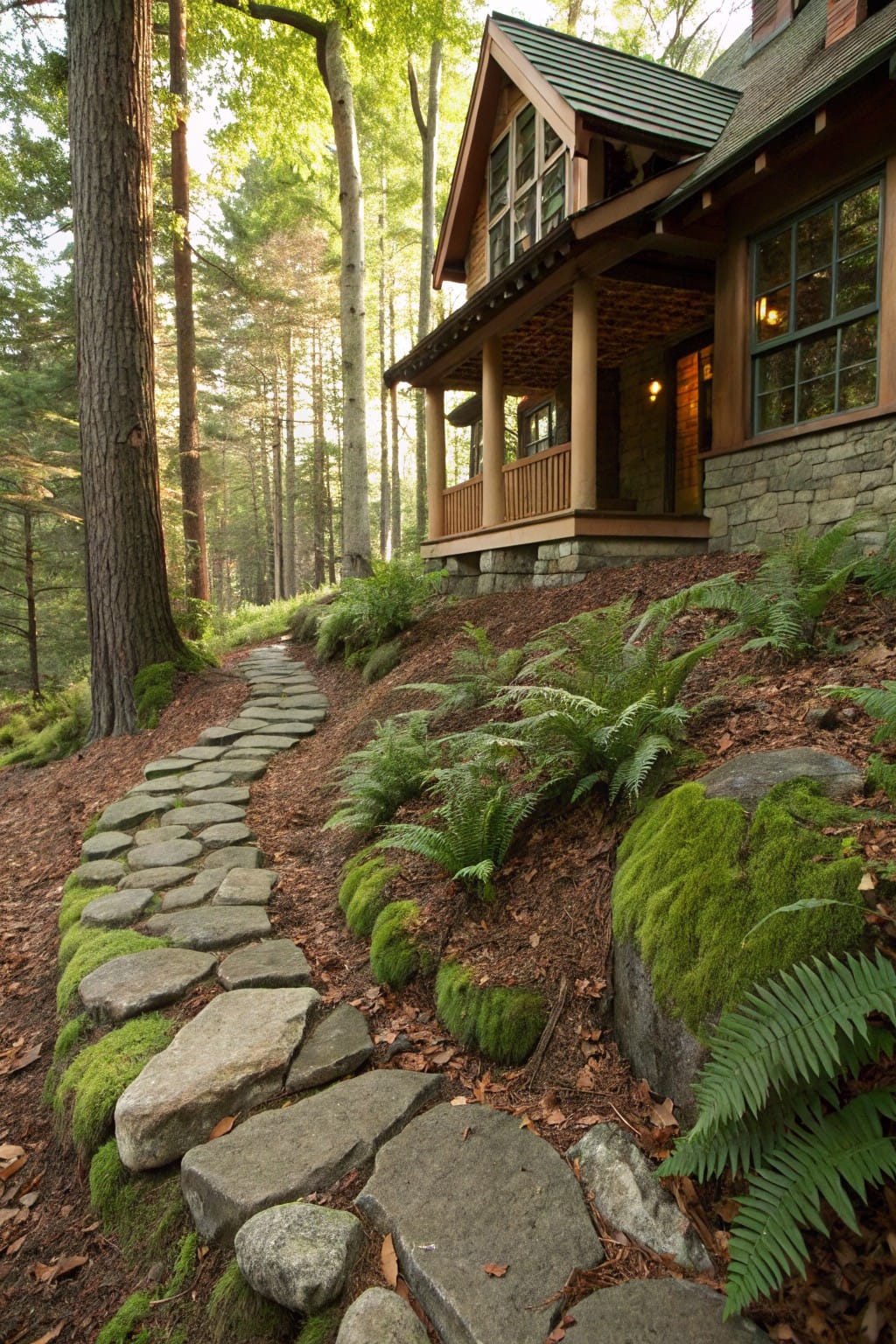
One simple way to edge a garden path is with moss-covered boulders set into the soil. They hold back mulch and plants without looking forced. In this setup, the boulders mix right in with ferns and forest floor, keeping the path clear while the edges stay soft and wild.
Use bigger boulders where the slope drops off, smaller ones for tighter spots. It suits wooded yards or cabins best, especially on hillsides. Watch that water drains well so moss doesn’t get too slippery.
Natural Stone Edging for Courtyard Beds

One nice way to define garden beds outdoors is with low natural stone edging. In this courtyard, a rough circle of stones sets off plants around a stone fountain. It keeps things tidy without looking stiff, and pairs well with gravel mulch and flagstone paths. That organic shape blends right into the space.
Try it around patios or entry courtyards on homes with stucco or adobe looks. Source stones from nearby quarries to match your soil and style. Keep the height under a foot so it stays out of the way. Works best where you want definition but not a hard barrier.
Stepping Stone Paths in Gravel
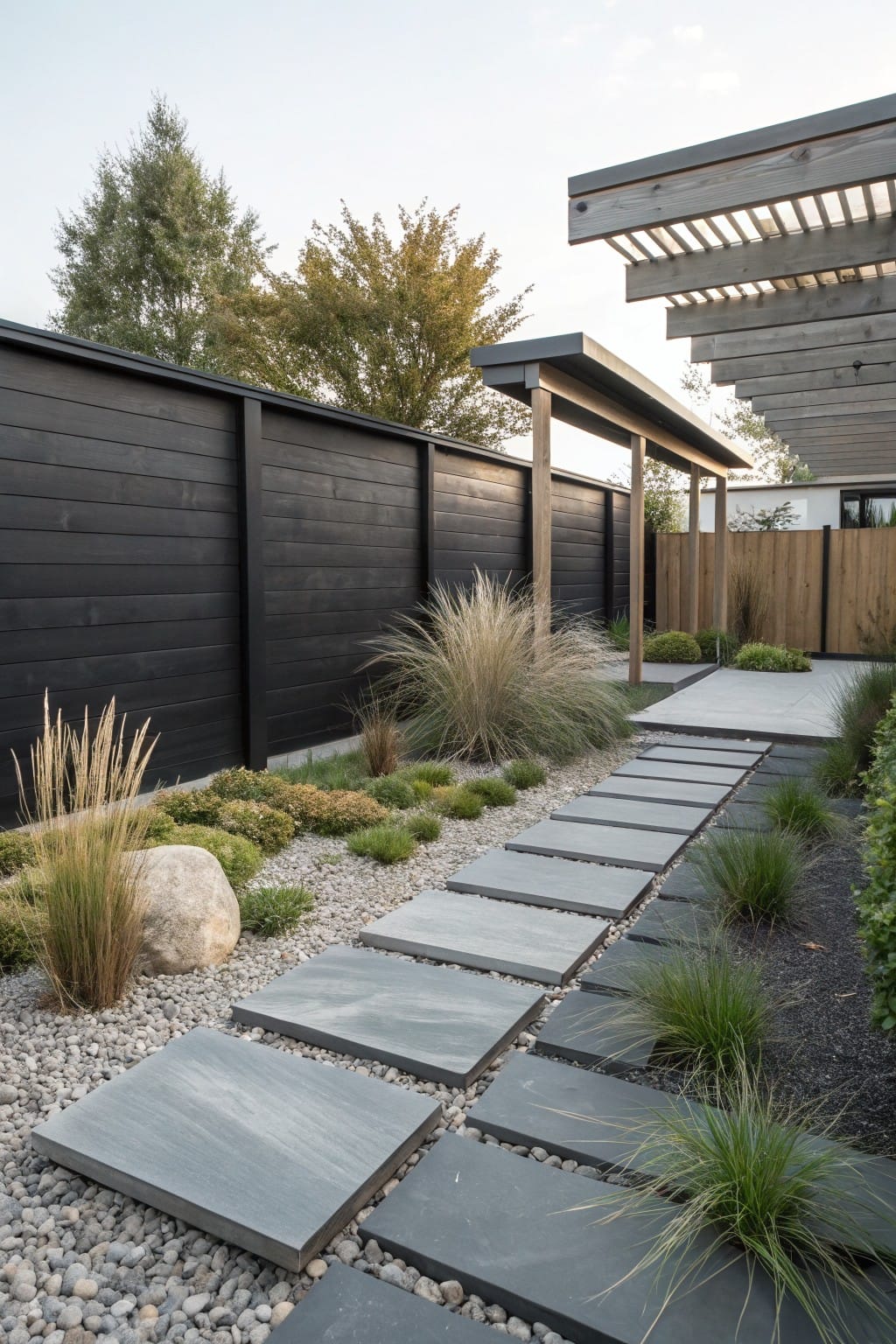
Big flat stones laid right into gravel make a clean path that feels part of the yard. You get steady steps where you need them. The loose gravel and grasses around keep things from looking too rigid. It suits a simple modern yard like this one with its dark fence backdrop.
Put these in narrow spots to connect patio to gate or garden beds. Gray slate like here blends with most stonework. Go for thicker slabs so they stay level over time. Skip it on slopes unless you add edging to hold the gravel. Low upkeep once planted in.
Stone Edging for Raised Garden Beds
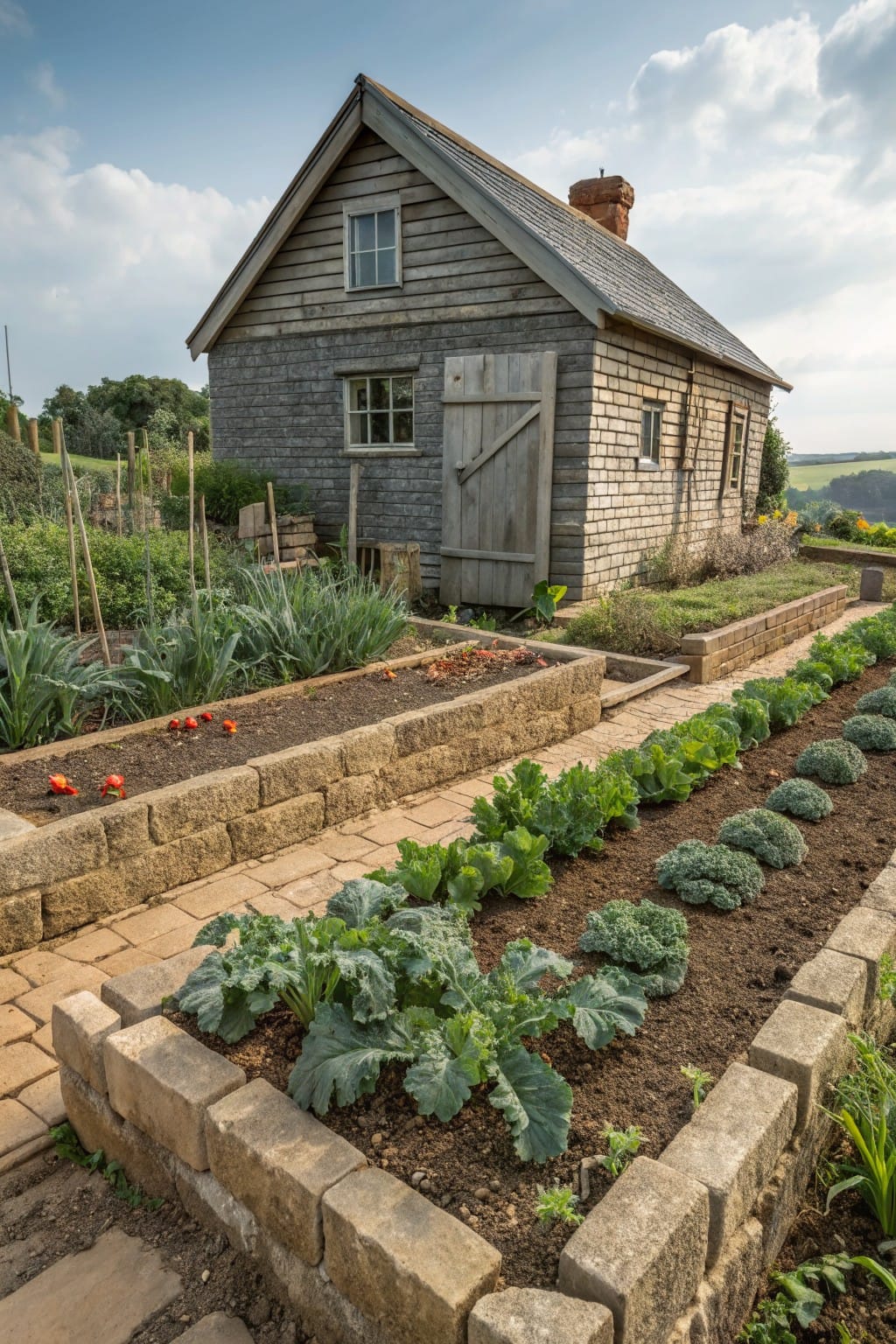
Stone edging for raised beds gives your garden a sturdy, natural border that holds soil in place and looks right at home outdoors. The rough blocks stack up neatly around the plants without any fuss, and they let roots breathe while keeping weeds out. Folks like how it ties into the earth, especially next to a simple wooden shed.
This works best in veggie patches or cottage yards where you want low upkeep. Grab local stone to match your spot, stack it two or three courses high, and fill with good soil. Skip mortar if you might rearrange beds later. It suits sloped land too, since the weight keeps things stable.
Winding Stone Path with Planted Edges
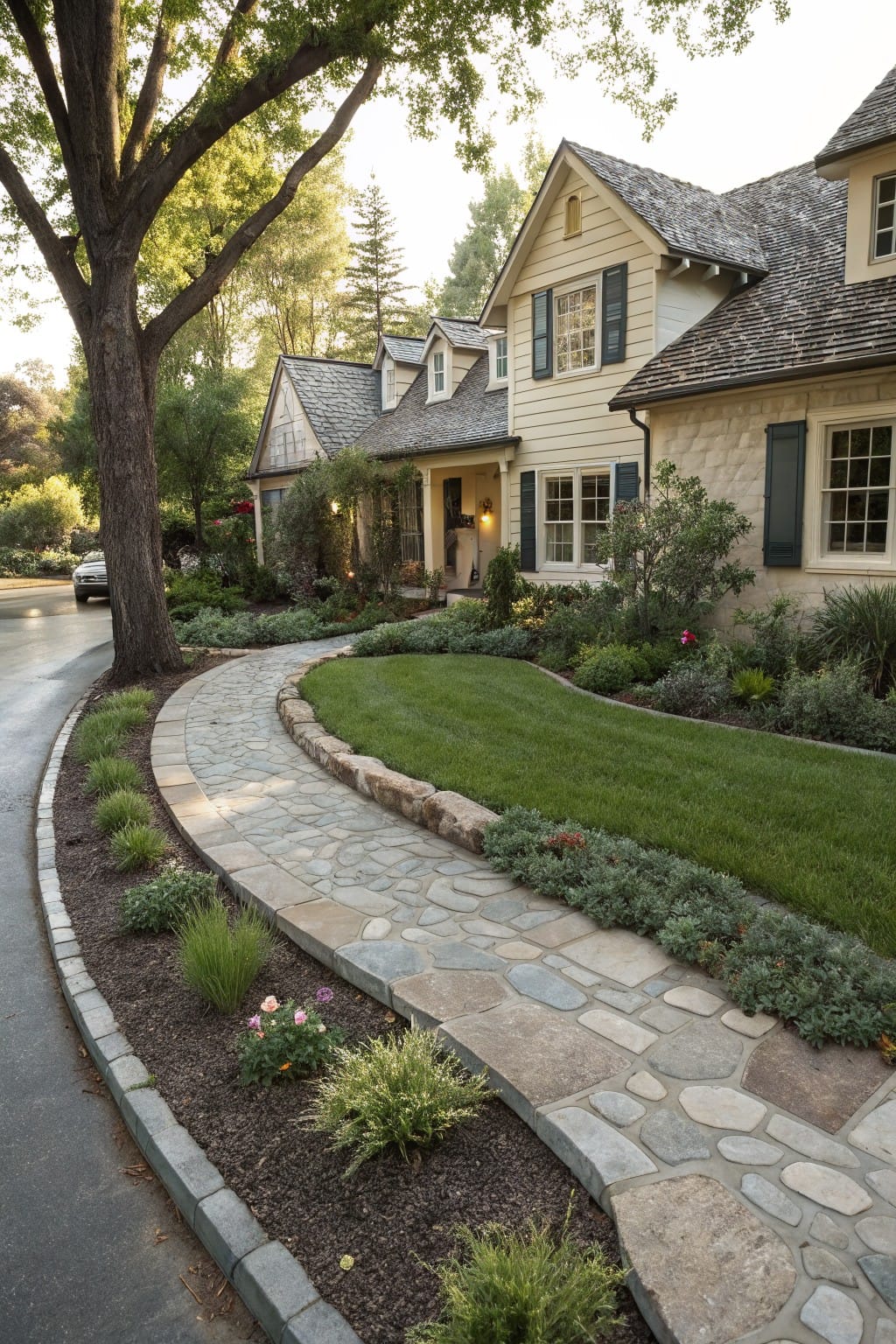
A winding flagstone path like this one softens the walk from the street to your front door. The irregular stones fit together casually, and the edges blend into garden beds with low plants and mulch. It feels organic, not stiff, and pulls the eye along the curve without much fuss.
Try this in a front yard with room for curves, especially around mature trees or a sloped lawn. Lay the stones on a sand base for drainage, then tuck in drought-tolerant grasses or sedum along the borders. It suits craftsman or cottage homes, but keep the plants trimmed so the path stays clear for foot traffic.
Stone Steps on Slopes
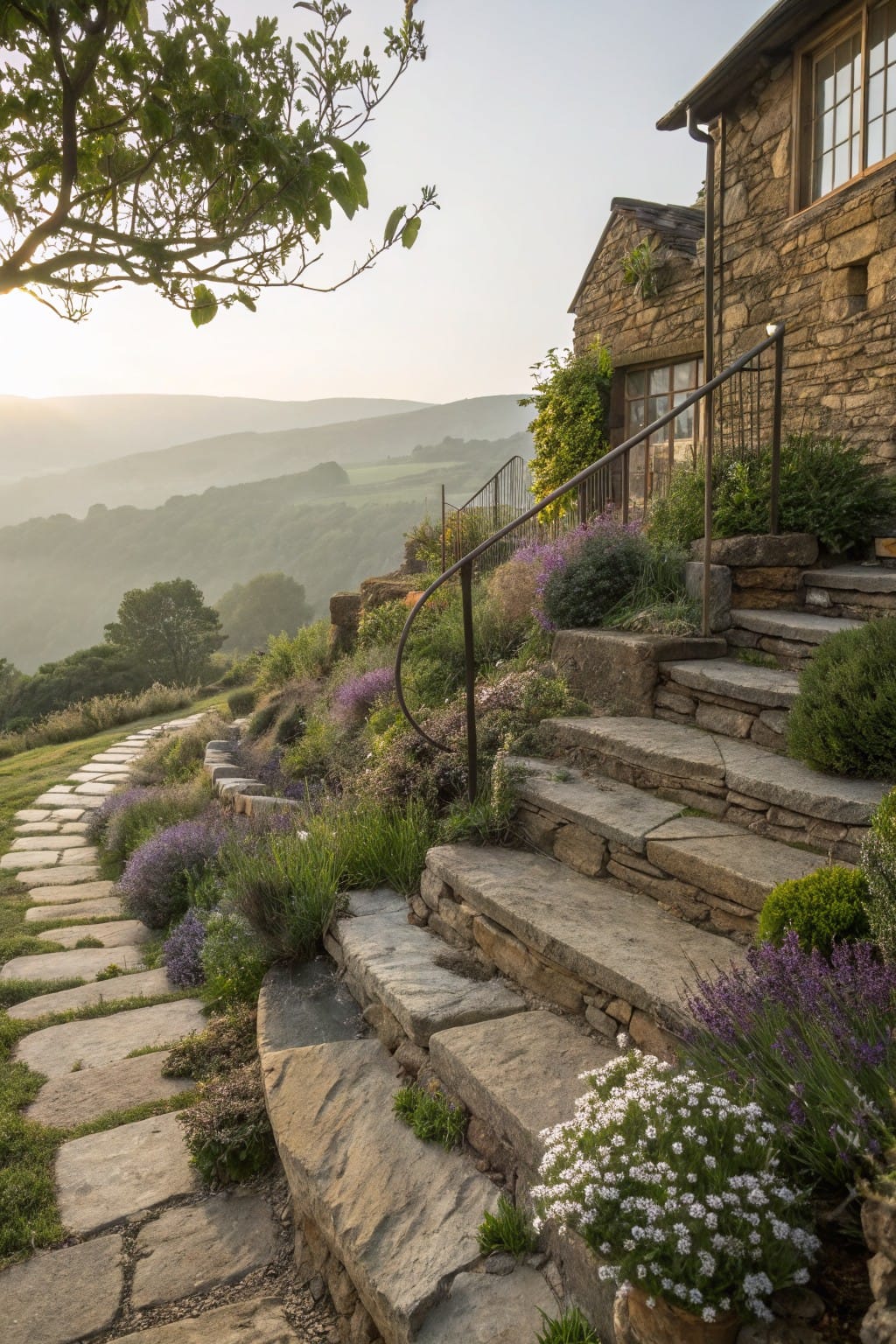
Rough-cut stone steps like these turn a steep hillside into usable garden space. They follow the natural contour of the land, with plants spilling over the edges to soften everything up. It’s a simple way to connect the house to the yard without fighting the slope.
These work best around older stone homes or any place with a drop in grade. Stack local fieldstone for low walls between steps, then tuck in tough plants like lavender that won’t mind the dry spots. Just make sure the steps are wide enough to walk comfortably, or you’ll regret it on rainy days.
Natural Stone Balcony Edging
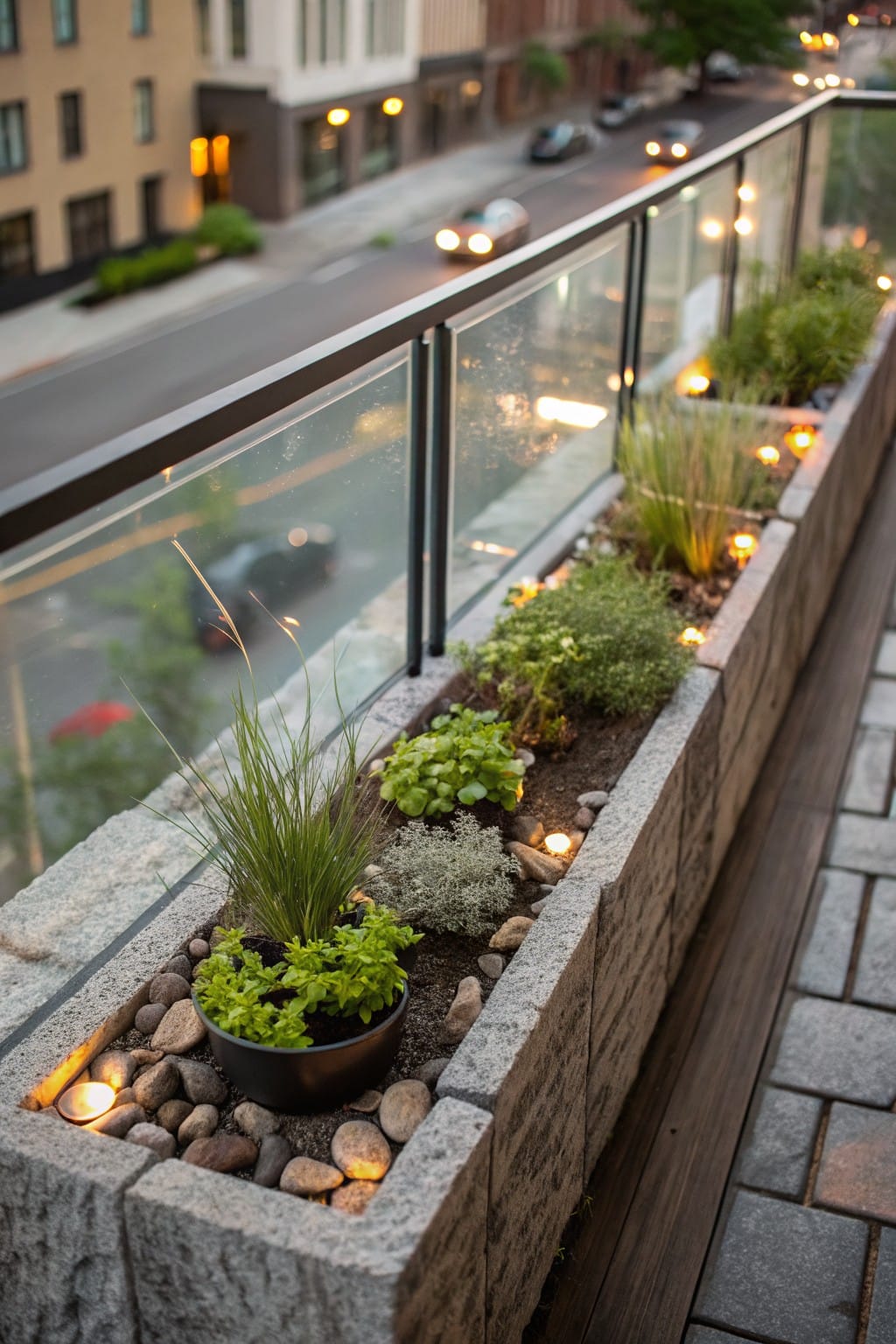
Stacked natural stone blocks make sturdy edging for balcony planters. They create a long raised bed right along the rail, perfect for tucking in herbs, grasses, and a few succulents. Those rough edges and pebbles mixed in give it an organic look that blends with the plants… no fussy borders here.
You can pull this off on any apartment balcony or terrace overlooking a street or yard. It suits smaller spaces where you want green without taking floor room. Go for local stone to keep costs down, and add low LED lights in the rocks for evenings. Watch the weight though, especially up high.
Natural Stone Edging Around Fire Pits
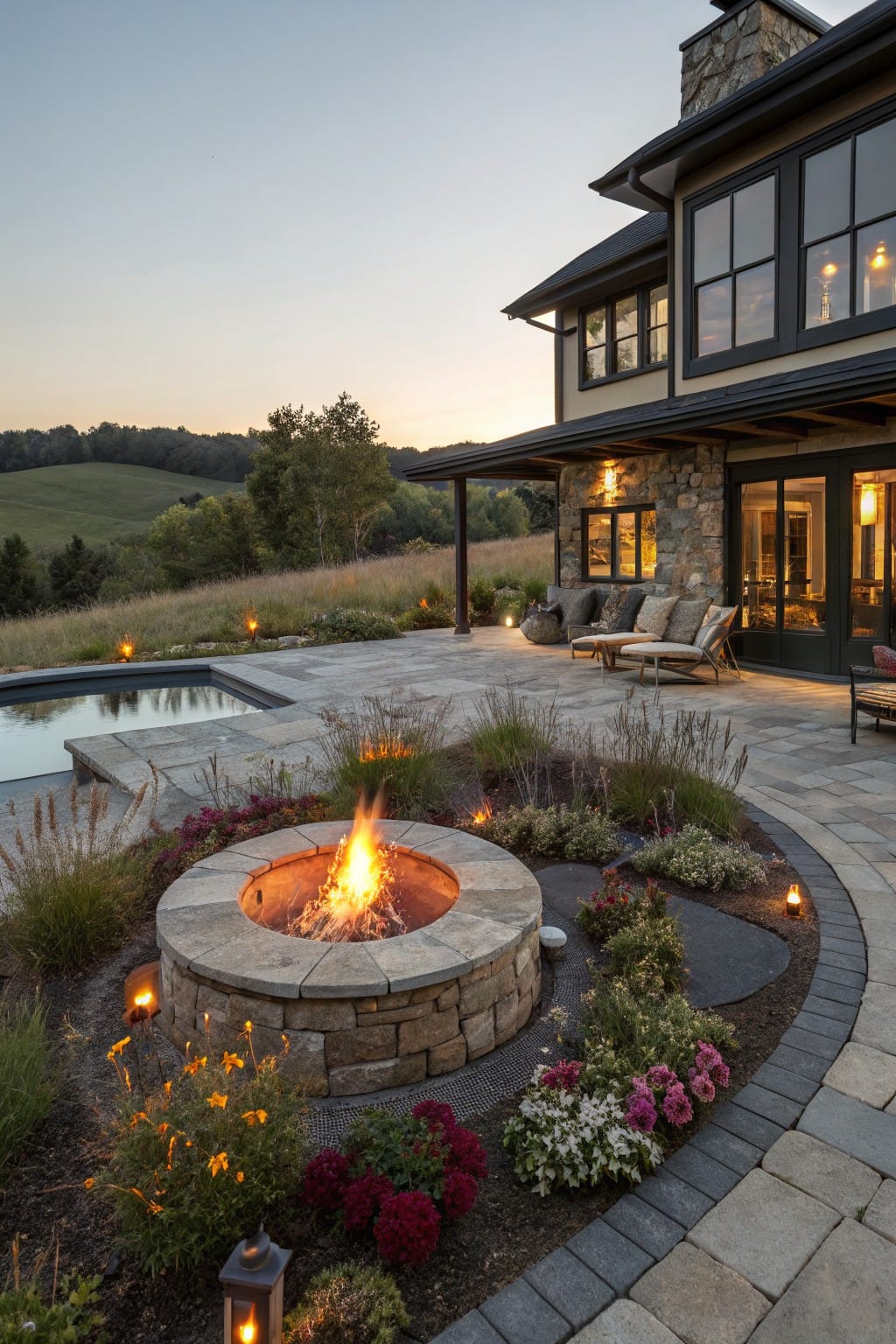
One simple way to edge a garden area is with natural stone around a fire pit. It keeps plants in place while letting them spill over just a bit for that natural look. In this setup, the stacked fieldstone forms a low wall that holds back grasses and flowers, making the whole patio feel tied together. Folks like it because it looks rugged and real, not too fussy.
You can pull this off in most backyards with a flat spot for the pit. Use local stone to match your region, and set it right into the paver patio like here. It works best on sloped yards or near pools to define edges without sharp lines. Just make sure the stones are stable so nothing shifts over time.
Winding Stone Paths Through Grasses
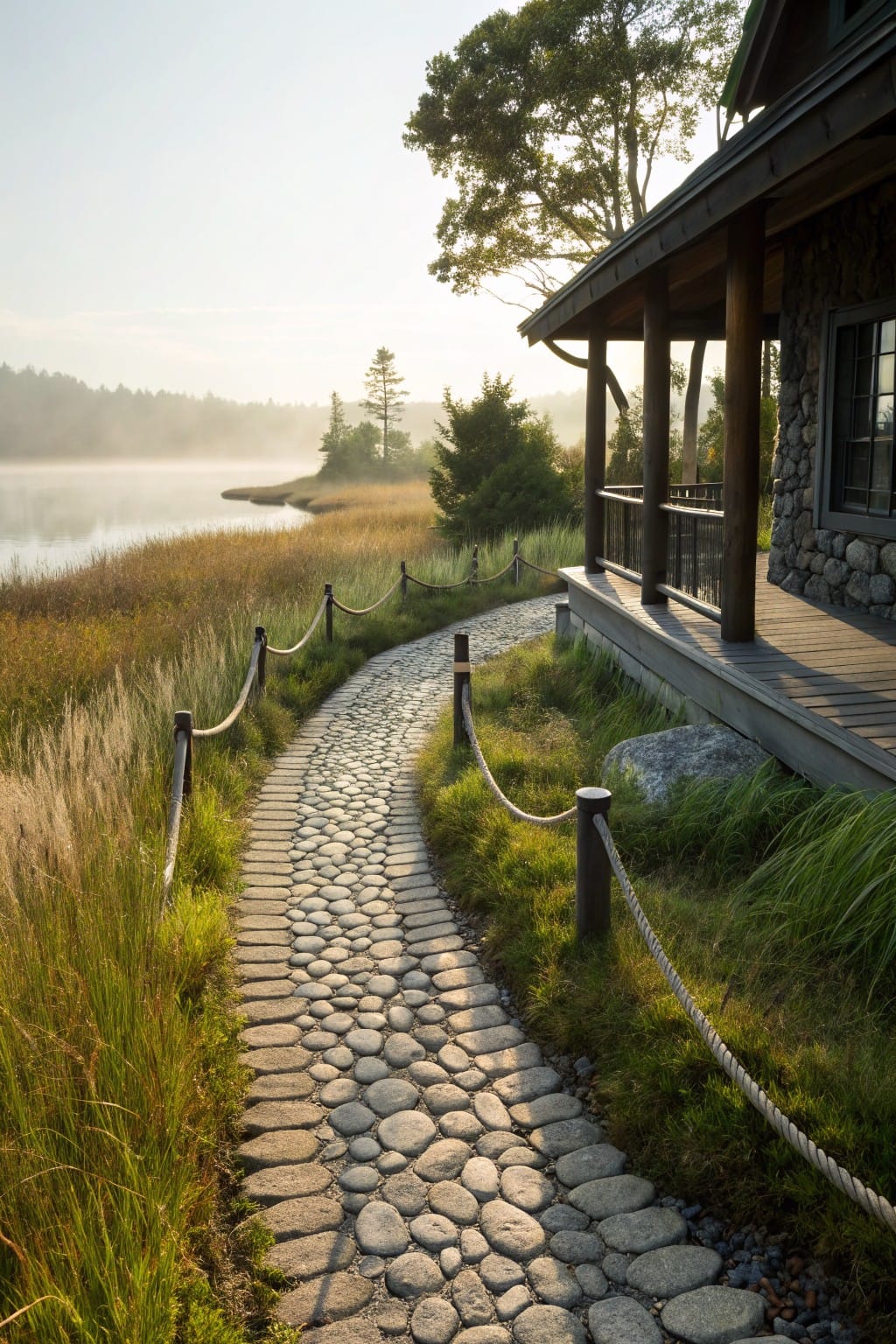
A path like this, built from rounded natural stones, pulls your eye right through the yard in the most natural way. It fits so well with tall grasses and reeds because the stones look hand-placed, not poured concrete. That organic shape keeps it from feeling too formal, especially near water or woods.
Lay one down where you need a walkway to the house or deck. It suits cottage-style homes or cabins with wilder yards. Go for local stones to match your area, and add rope on posts if the path curves near drops. Watch the spacing so feet don’t catch.
Stone Edging Along Garden Paths
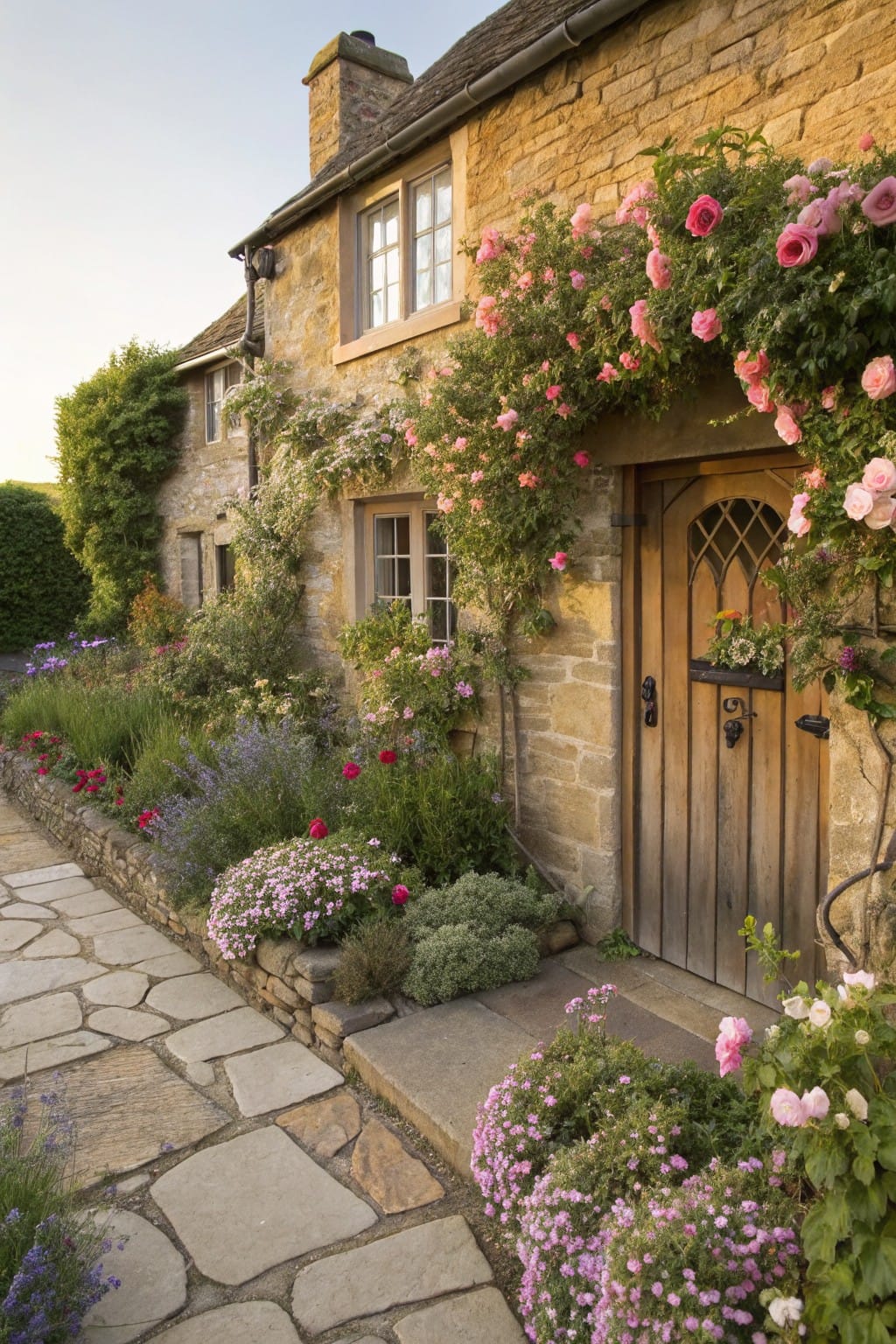
One simple way to edge a garden path is with low walls made from the same natural stone as your house. Here the honey-colored stone from the cottage walls continues right into the yard, holding back flower beds full of roses and herbs. It keeps everything neat without looking too fussy, and plants like those pink roses spill right over the top for a soft touch.
This works best in front yards leading to a door, especially on older homes with stone or brick. Stack the stones dry without mortar for that aged look, or use some for stability if your soil shifts. Suits sloped spots too, since the walls help with drainage. Just clear weeds from the joints now and then.
River Rock Garden Edging
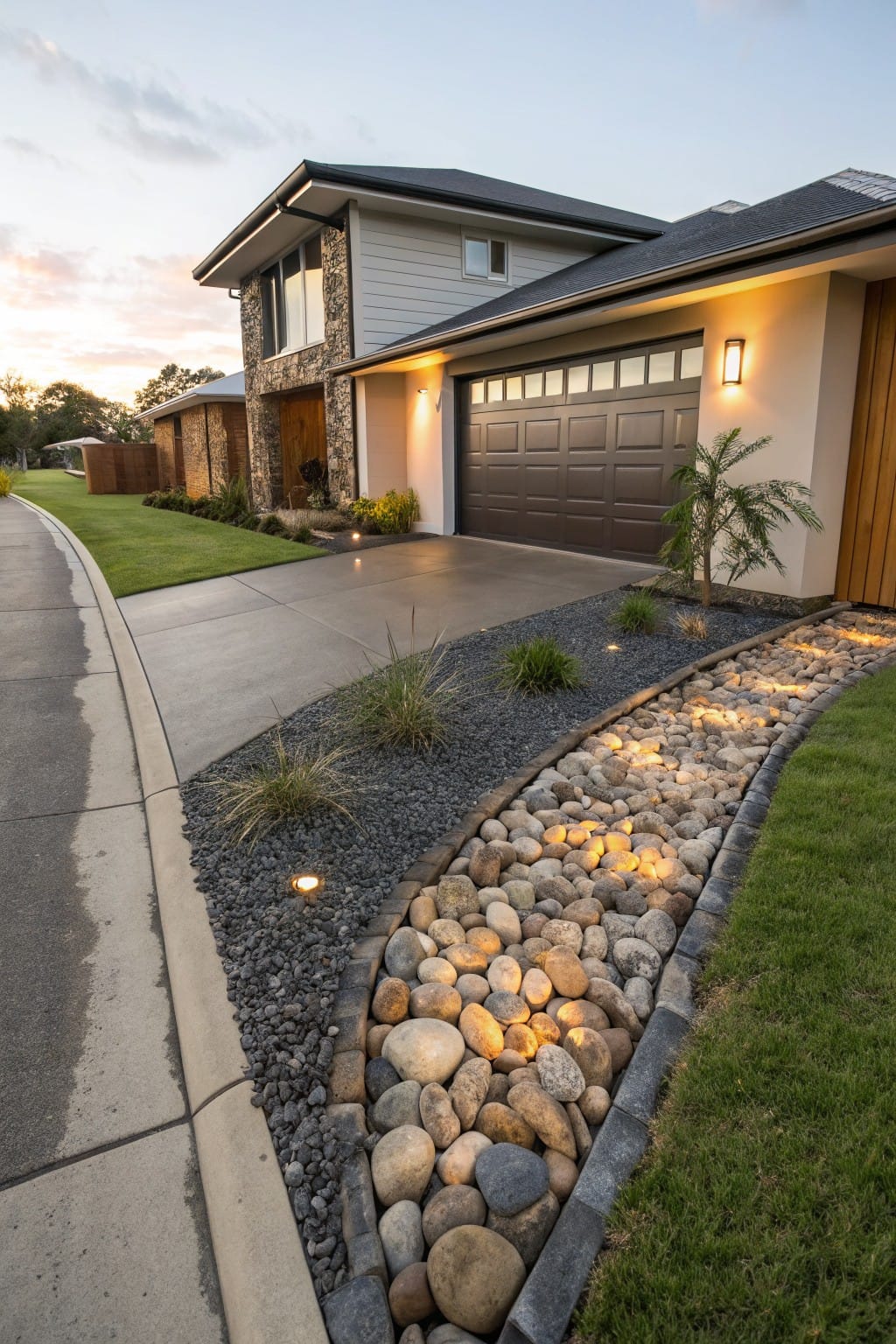
River rock edging like this runs along the driveway in a gentle curve. It mixes smooth pebbles with darker gravel and tall grasses for a natural border that softens the concrete edge. The low lights tucked under the rocks make it glow at dusk, which helps it stand out without being too much.
This works best next to driveways or paths where you want some organic shape. Pick rounded stones in a couple sizes for easy drainage, and edge it with blocks to hold everything in place. Suits modern homes or yards with clean lines, but watch the weeds. Mulch helps there.
Concrete Raised Planters for Rooftop Gardens
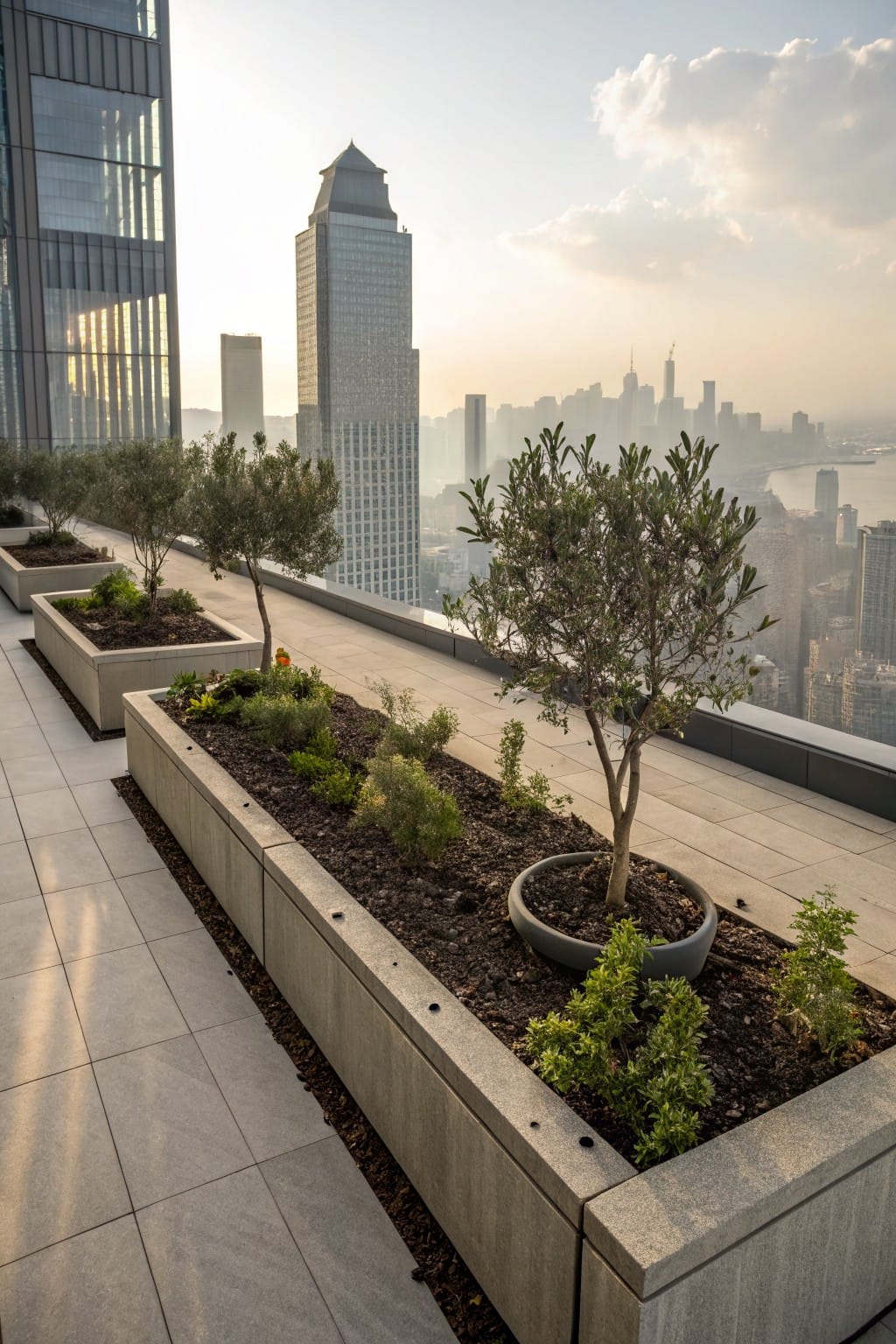
Concrete raised planters like these work well on rooftops or high balconies. They create a sharp, modern edge for your plants while letting soil and roots settle in deep. Olive trees and herbs fill them out, blending right into the setup without spilling over. It’s a simple way to add green where space is tight.
Put these along walkways or borders to keep things neat. They suit city apartments or contemporary homes best, especially if you want low upkeep. Watch the weight though, roofs have limits. Good drainage holes help too, so water doesn’t pool.
Flagstone Walkways with Grass Edging
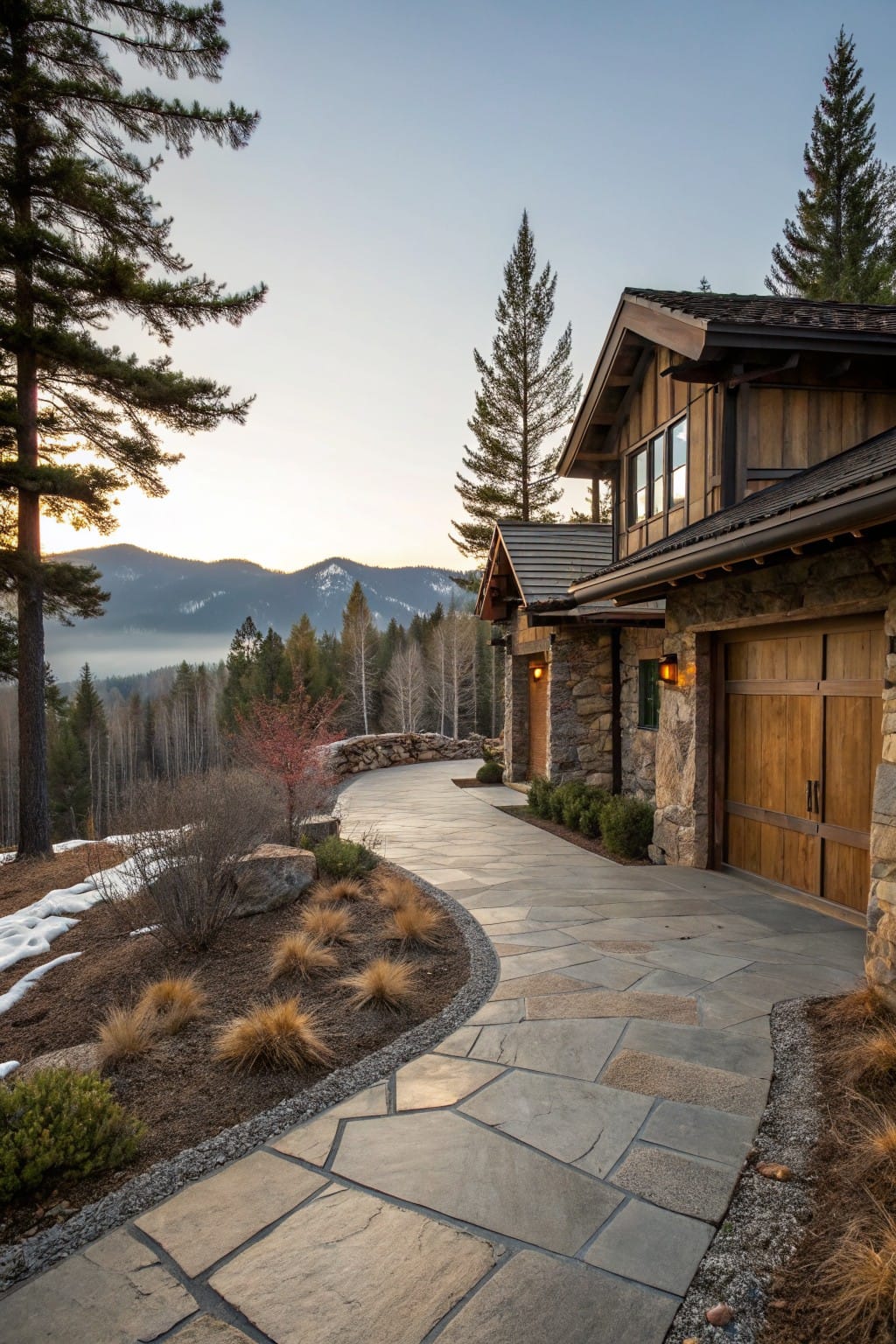
A curved flagstone walkway like this one uses big irregular slabs set in gravel, edged with low grasses and shrubs. It pulls the path right into the yard without looking forced. Folks like how it wanders naturally up to the house, blending stone and plants in a low-key way.
Put this to work on a side path or driveway approach, especially where the ground slopes a bit. It suits cabin-style homes or wooded lots. Pick drought-tough grasses… they fill in over time. Just avoid tight mowing along the edge to keep that organic feel.
Frequently Asked Questions
Q: How deep do I dig the trench for these stones?
A: Dig 4 to 6 inches deep, matching your stone height. Line the bottom with a thin layer of sand or gravel. This keeps everything stable and drains water away.
Q: Can beginners handle installing this without hiring help? A: You bet, start with a shovel and level. Set stones one by one, tapping them down with a mallet. Take your time on the first row, and it gets quicker.
Q: How do I keep weeds from sneaking in?
A: Tuck landscape fabric under the stones before you set them. Sprinkle gravel on top inside the beds. Spot-check weekly and yank strays.
Q: Should I mix stone types or stick to one kind? A: Mix similar colors and sizes for that wild, natural vibe. Lay out a test row nearby first. It blends right into your yard that way.
