

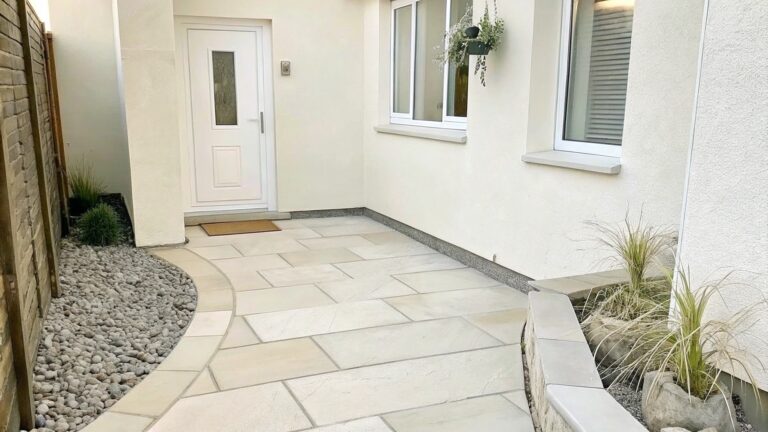
I have noticed that the ground cover in a garden sets the tone long before any plants fill in.
Gravel spreads out the weight of foot traffic and keeps mud from forming near the edges where people actually walk.
Boulders anchor the whole arrangement.
I would try laying out a few sizes on the lawn first to see how they read from the main windows.
That way the final shape feels like it grew from the site instead of being added on later.
Paths Made With Large Pavers And Gravel Strips
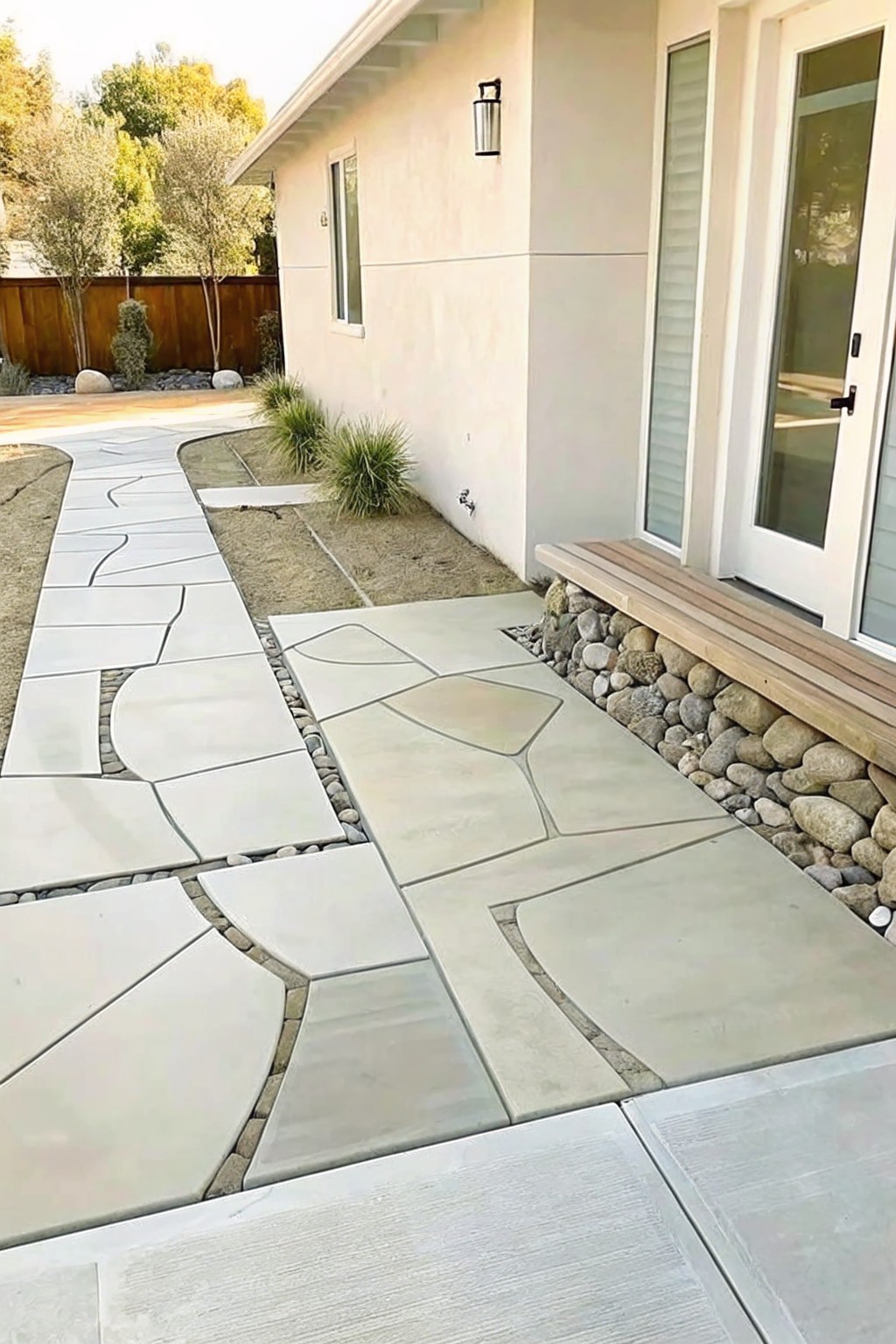
Large pavers with narrow gravel lines between them give a path real texture while keeping the surface easy to walk on. The mix lets the rocks stand out without covering the whole area, and it pairs naturally with bigger stones along the edges.
This setup works best next to a house where you need a solid walkway but want to keep some rock garden character. Use it in dry climates or low-water yards, and make sure the gravel stays contained so it does not scatter onto the pavers over time.
Gravel Beds Along Steps And Paths
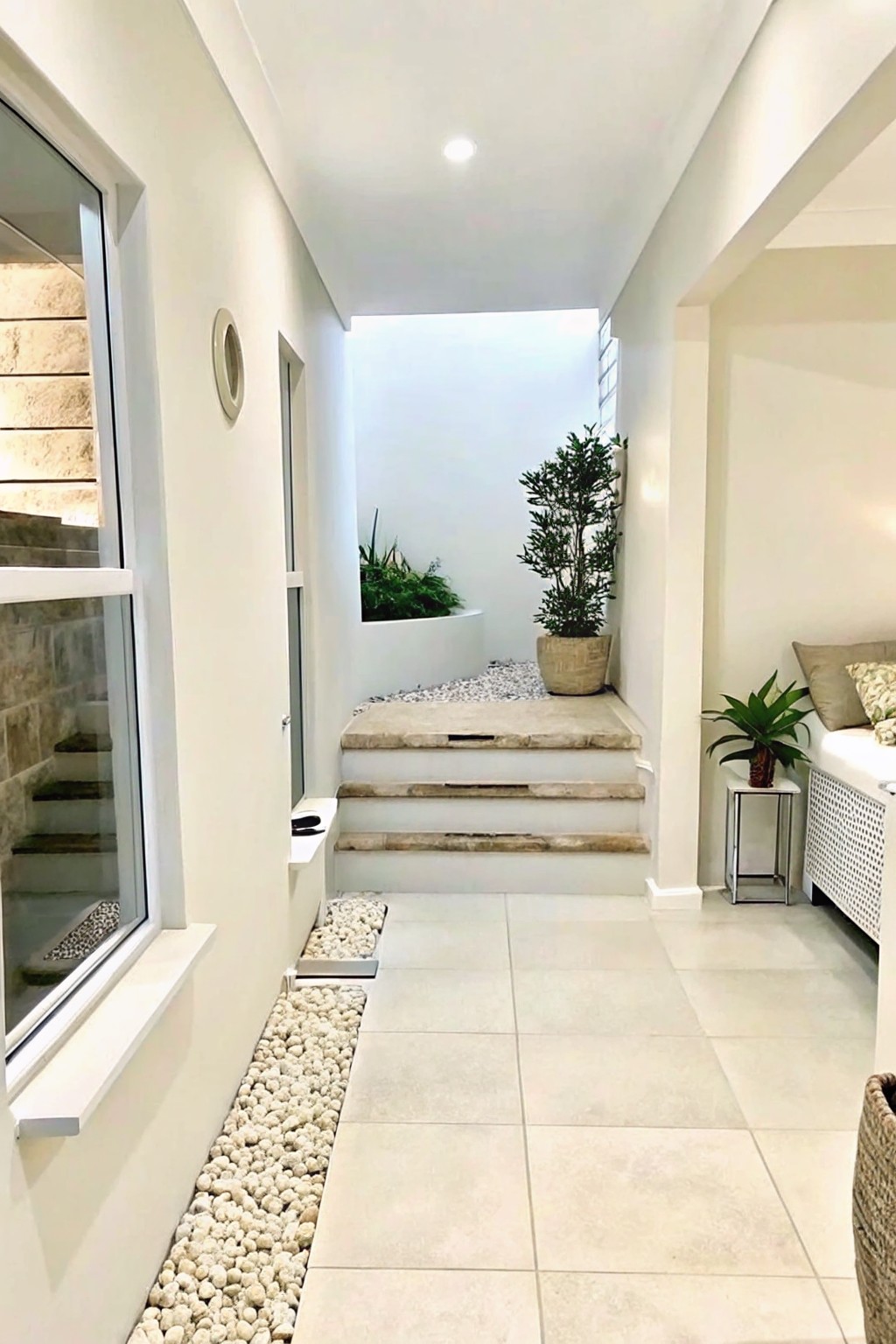
One simple way to add texture is to run narrow gravel beds right beside steps and paths. This creates a clean line that feels intentional and helps with drainage at the same time.
It works best in modern homes where you want the indoor and outdoor areas to connect without a lot of fuss. Keep the beds straight and low, and use pots for any plants so the gravel stays the main feature.
Gravel Borders Define Narrow Paths
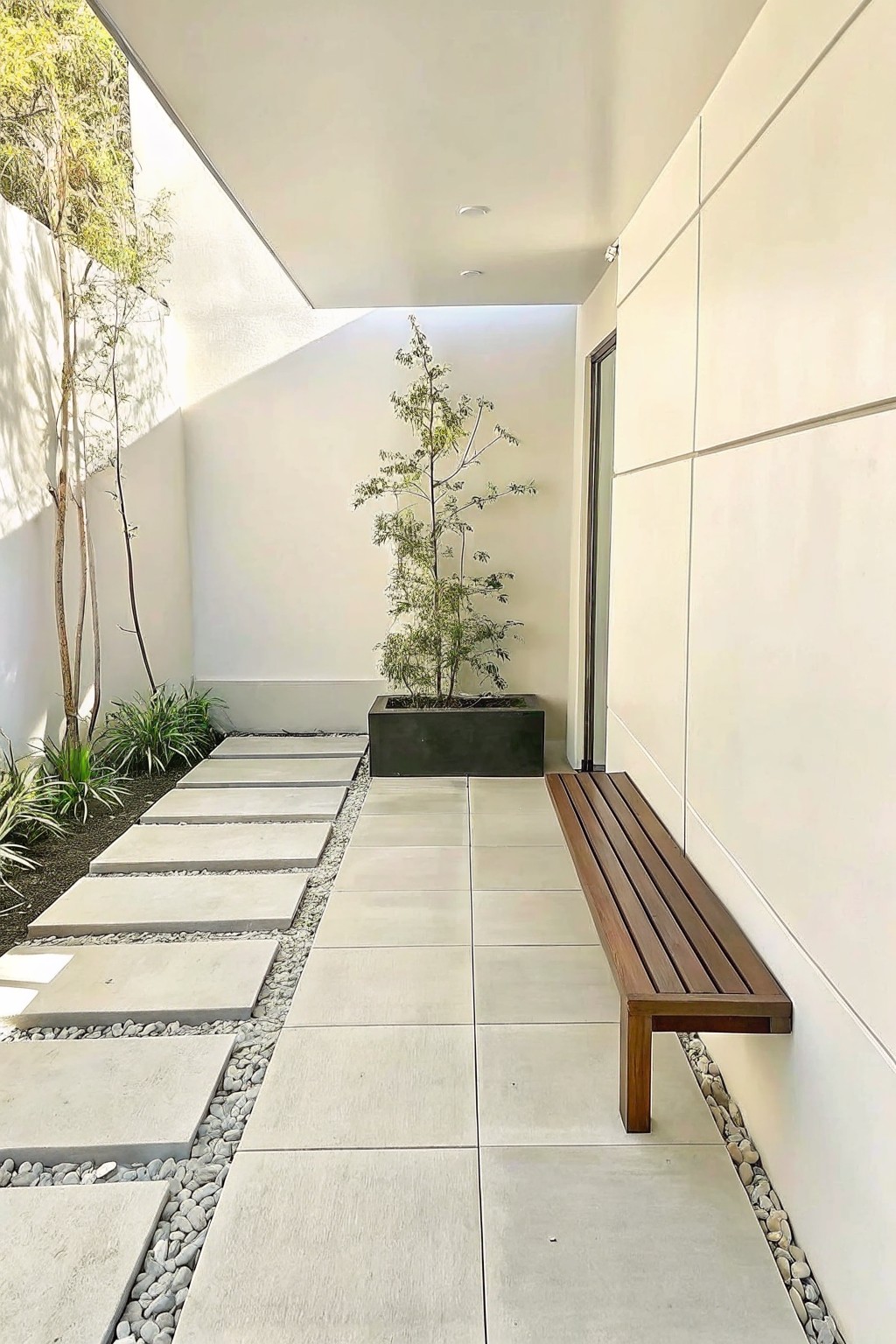
Gravel works well as a border because it adds texture and a clear edge without crowding the space. In tight side yards or corridors it separates the walking surface from planting areas and helps water drain away from the house.
This setup suits modern homes that want a simple low maintenance look. Lay a strip of gravel along both sides of concrete pavers and keep the plants minimal so the path stays open and easy to walk.
Gravel Paths With Stepping Stones
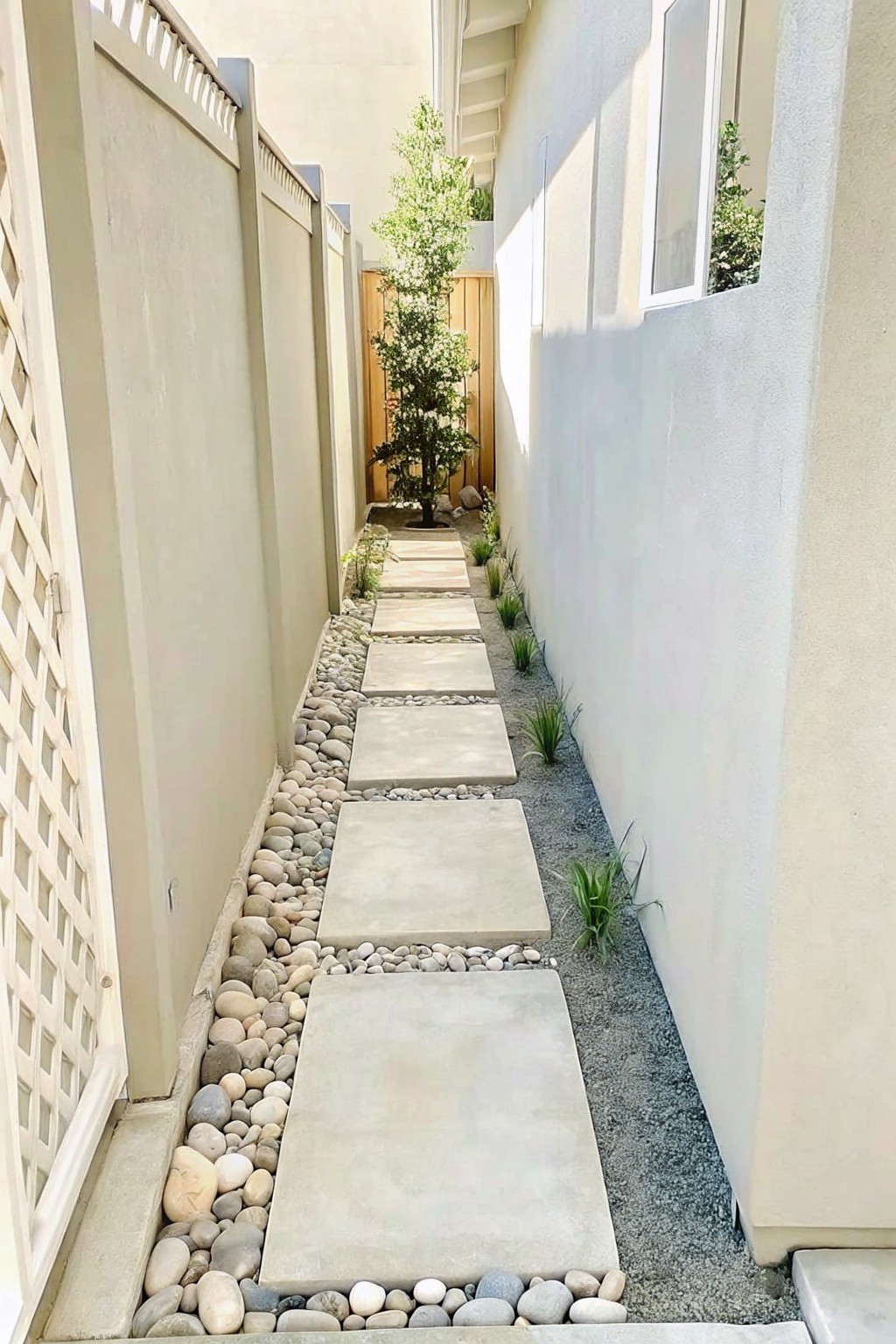
A gravel path lined with large concrete stepping stones works well in narrow side yards where you need a clear route without crowding the space. The rocks keep things simple and drain easily, while the flat pavers give solid footing and break up the texture.
This approach suits homes with tight passages between walls or fences. Keep the gravel layer thin so it stays level, and choose pavers that are wide enough for comfortable steps. Avoid overplanting right along the edges if the path sees regular use.
Gravel Beds Along Narrow Walkways
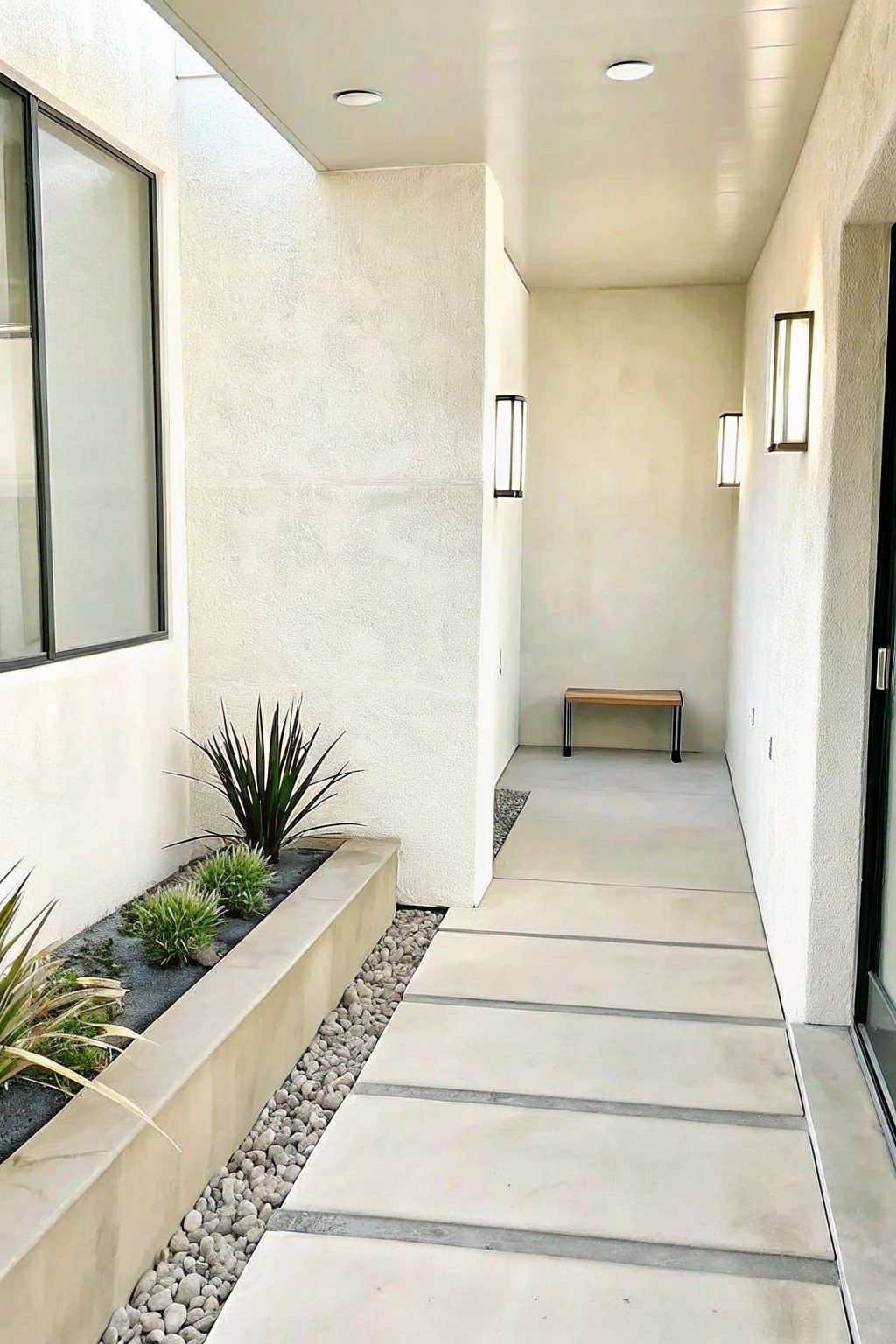
A gravel bed next to a concrete path gives a side yard or walkway a clean edge without a lot of work. The contrast between the light pavers and the darker gravel makes the space feel more finished while keeping maintenance low.
This setup works best on narrow lots where you need planting but do not want to lose walking room. Use low plants that stay contained and choose gravel that drains well so the bed stays neat over time.
Painted Wainscoting Brings Texture To Plain Walls
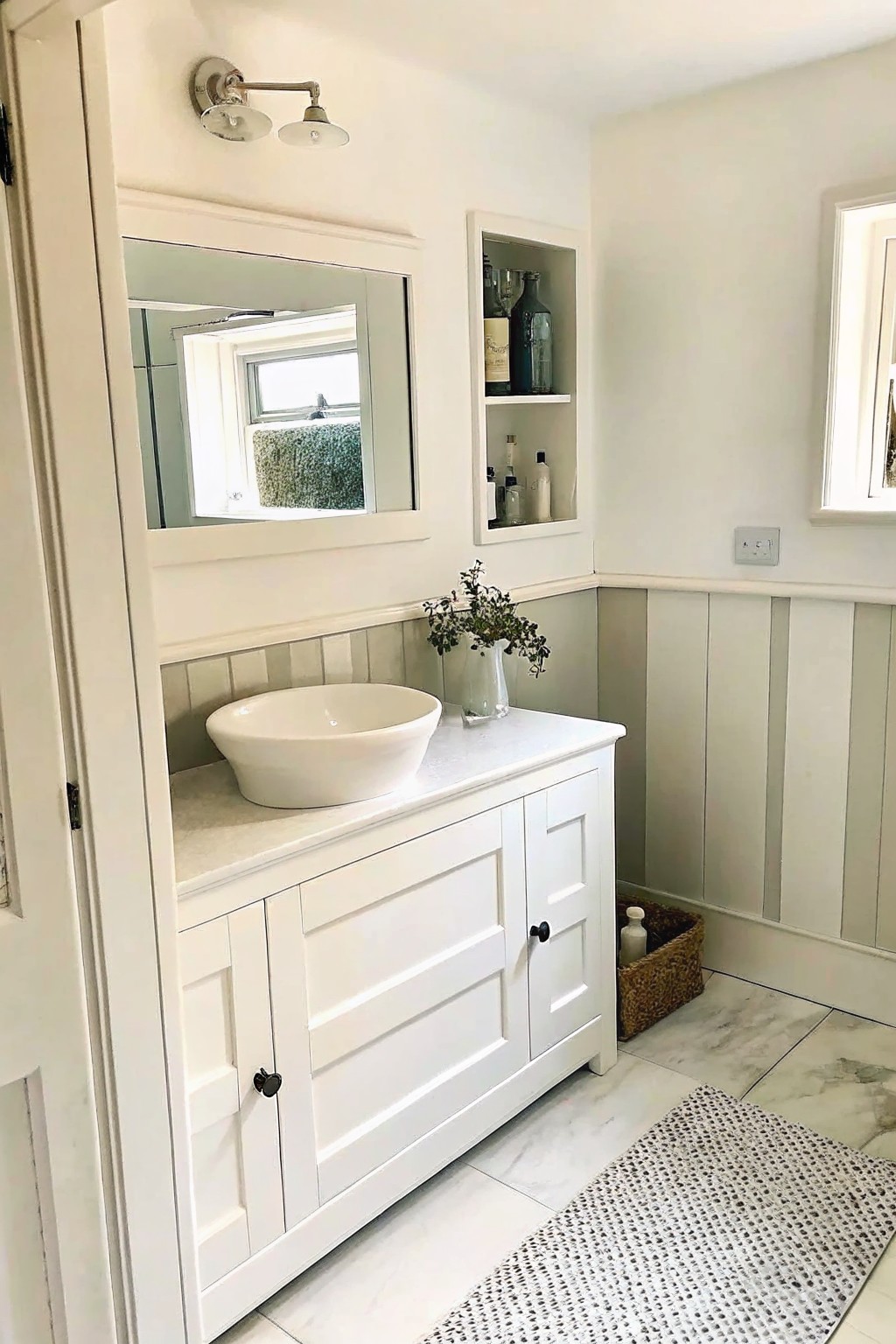
Wainscoting on the lower half of the walls gives a bathroom a bit more depth without much fuss. The vertical lines add quiet texture, and the chair rail keeps the look tidy while protecting the paint from daily wear.
This works especially well in small spaces where you want some interest but still need easy cleaning. It suits older homes or any bathroom that could use a simple upgrade to feel more finished.
Gravel Between Pavers Adds Simple Texture
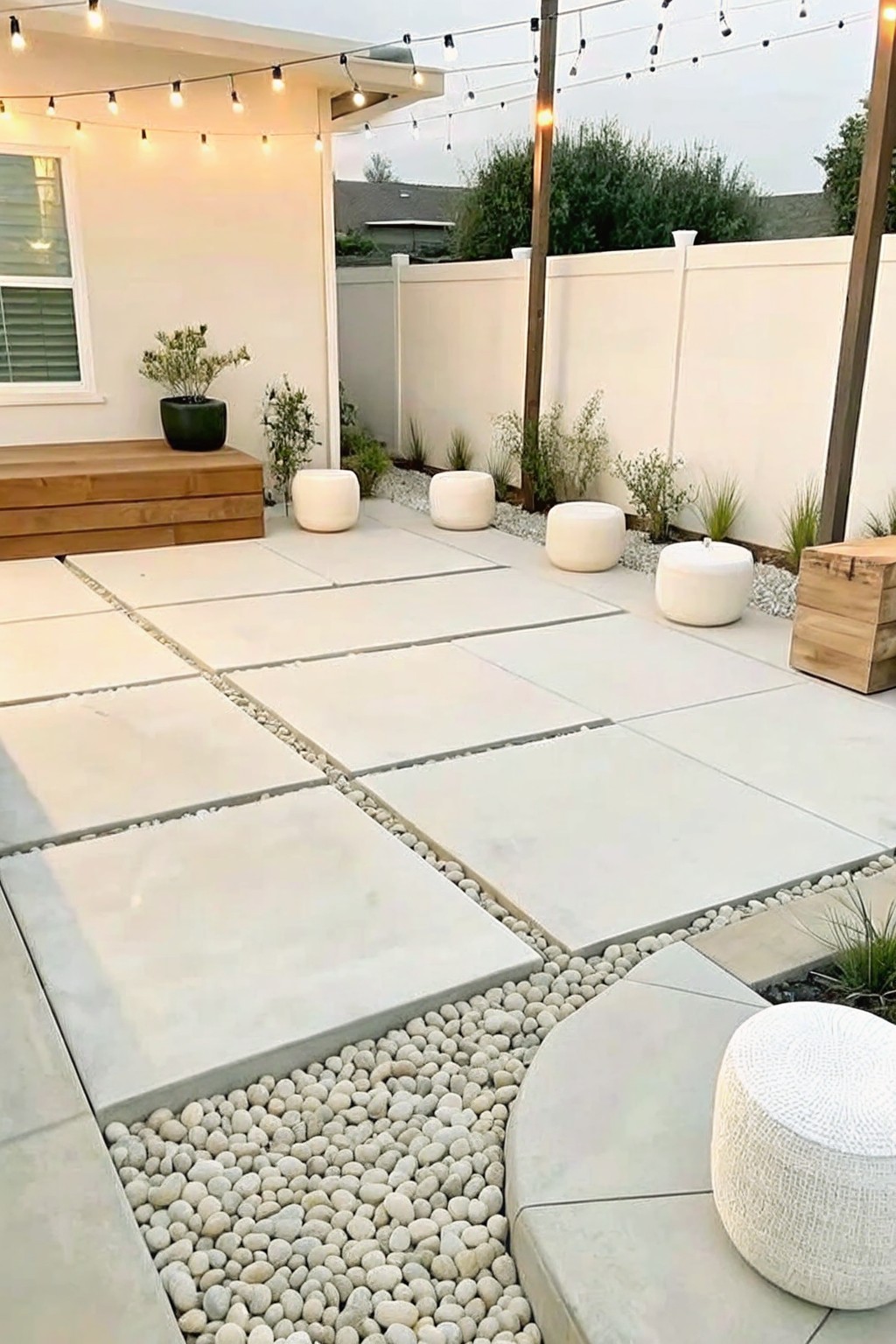
Filling the gaps between large square pavers with gravel gives a patio a textured look while keeping the surface practical. It breaks up the flat stone without adding much cost or upkeep.
This approach works best in side yards or small back patios on homes that already use clean lines. Keep the gravel layer thin so it stays in place and does not spill into nearby planting areas.
Gravel Borders Along Paved Paths
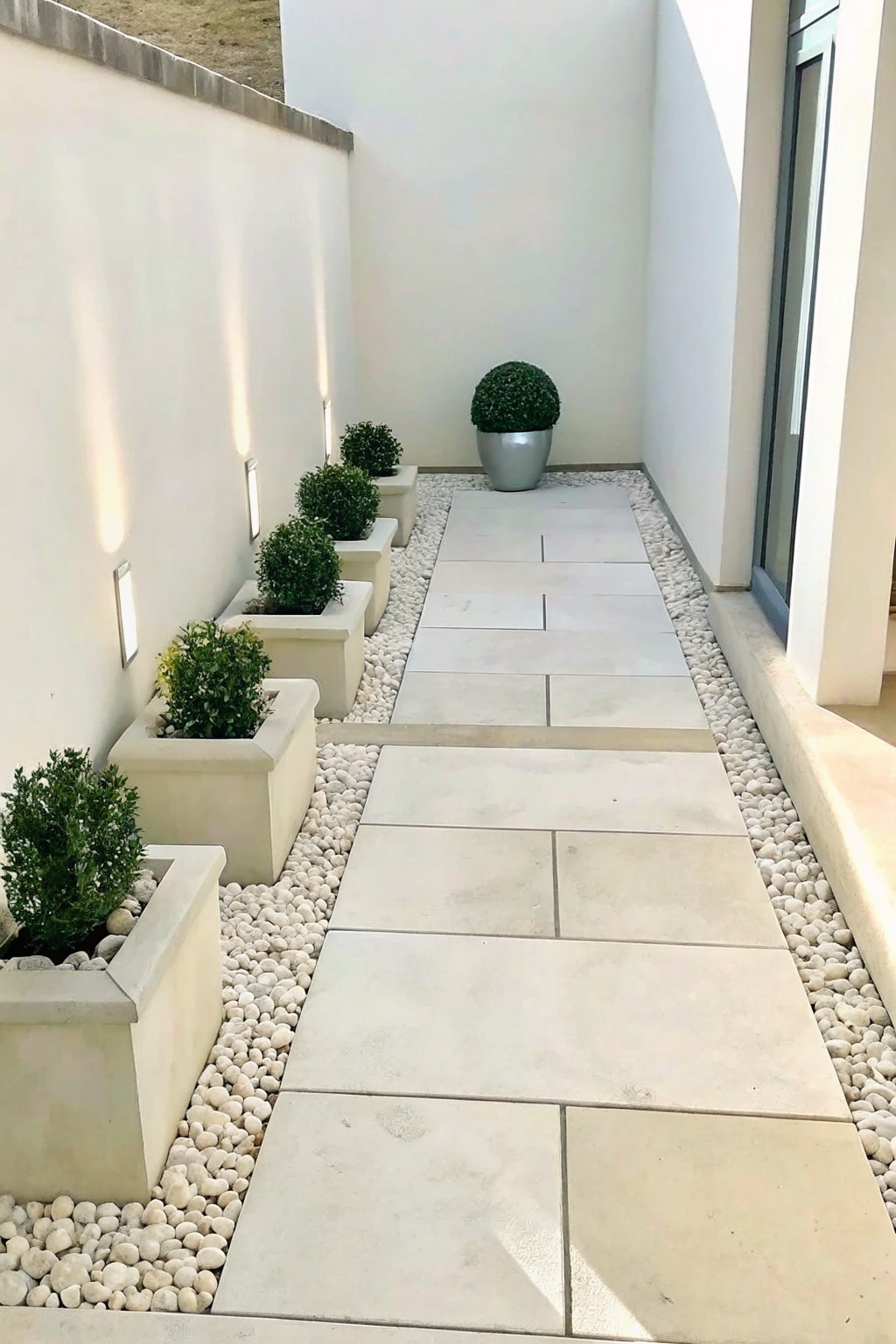
Gravel works well as a simple border next to large pavers because it fills the gaps, keeps the path edges clean, and adds a different texture without needing much planting. The light gravel also helps the path stand out while making the whole area feel wider than it really is.
This approach suits narrow side yards or passages between walls and the house. It stays low maintenance as long as you keep the gravel raked level and choose pavers that match the color of the gravel. Raised planters along one side can hold a few shrubs if you want some green without crowding the walkway.
Set Large Pavers Into Gravel For Clean Paths
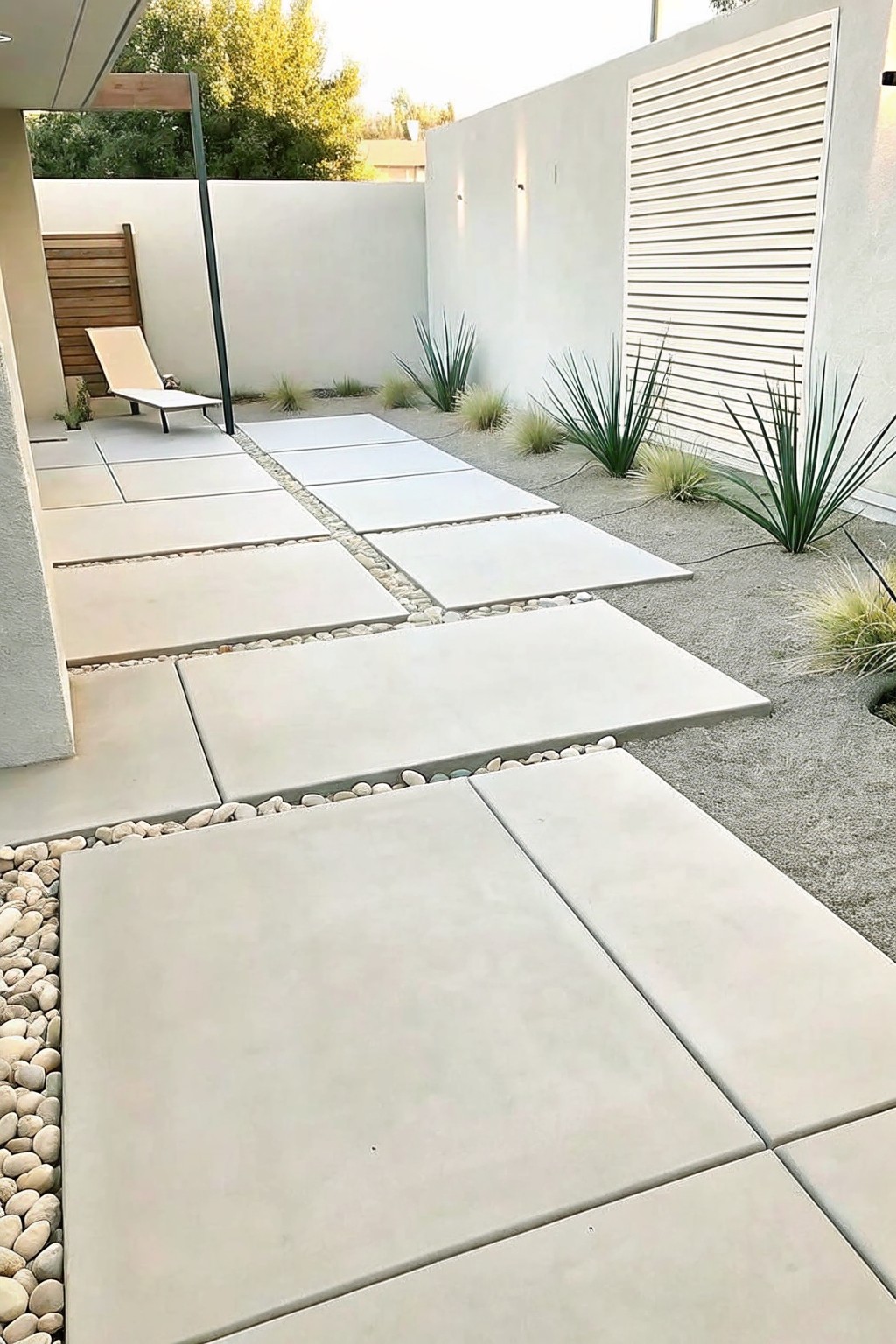
Large pavers set into gravel make a path that feels solid underfoot and needs very little work to keep looking neat. The flat slabs give you a clear walking surface while the gravel around them drains well and keeps weeds down.
This approach suits modern homes with small yards or side areas where you want something simple and low maintenance. Place the pavers in a straight run and add a narrow border of pebbles to hold the gravel in place.
Gravel Borders Give Planter Beds Clean Lines
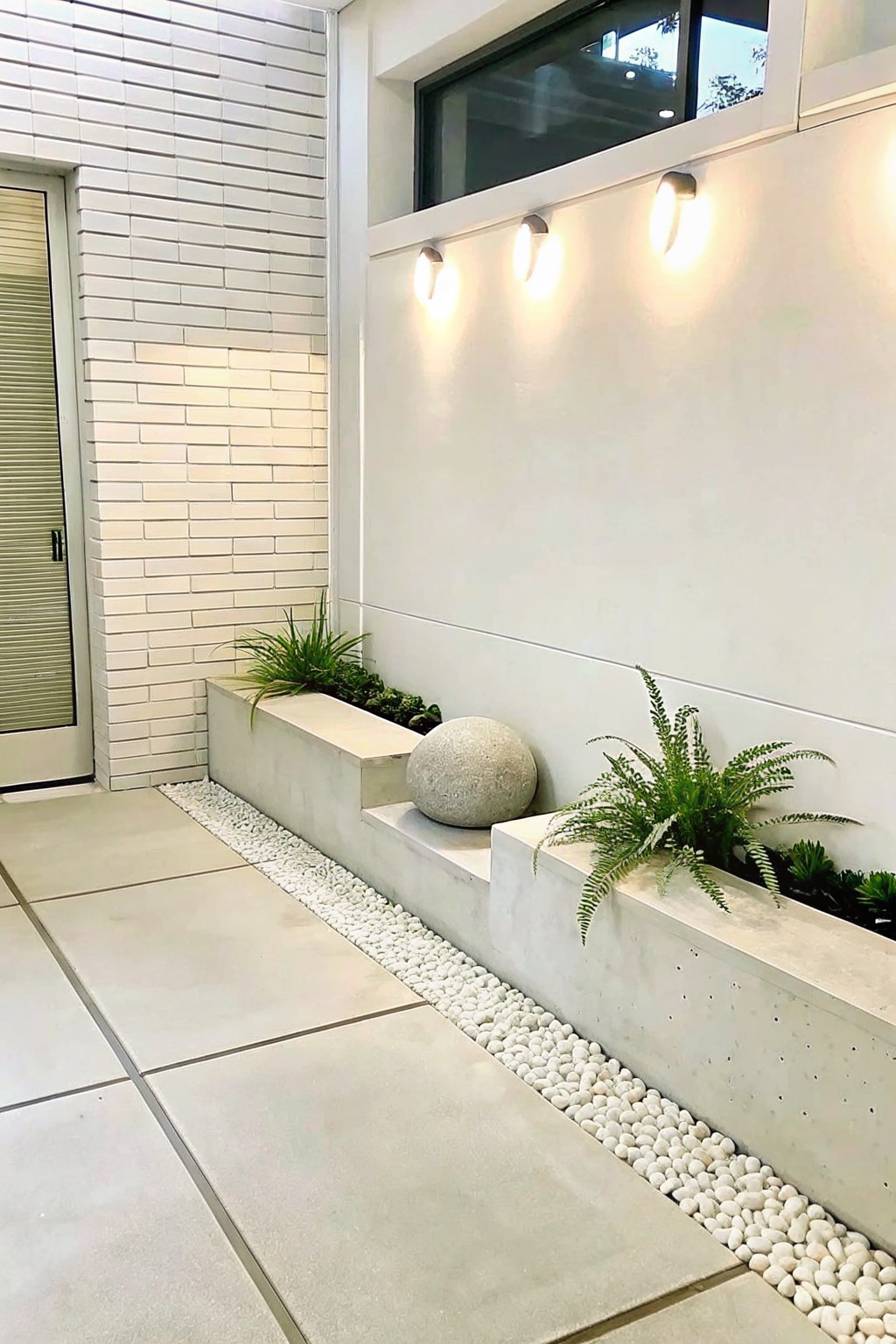
Running a strip of white gravel along the front of a raised concrete planter keeps the whole bed looking deliberate and easy to maintain. The gravel creates a simple separation from the paving and gives the space a bit more texture without extra colors or materials.
This approach works well in narrow side yards or entry areas where you want some planting but still need the space to feel open. A large boulder placed right on the gravel adds weight and interest while keeping the look low maintenance overall.
Low Stone Walls With Gravel Beds
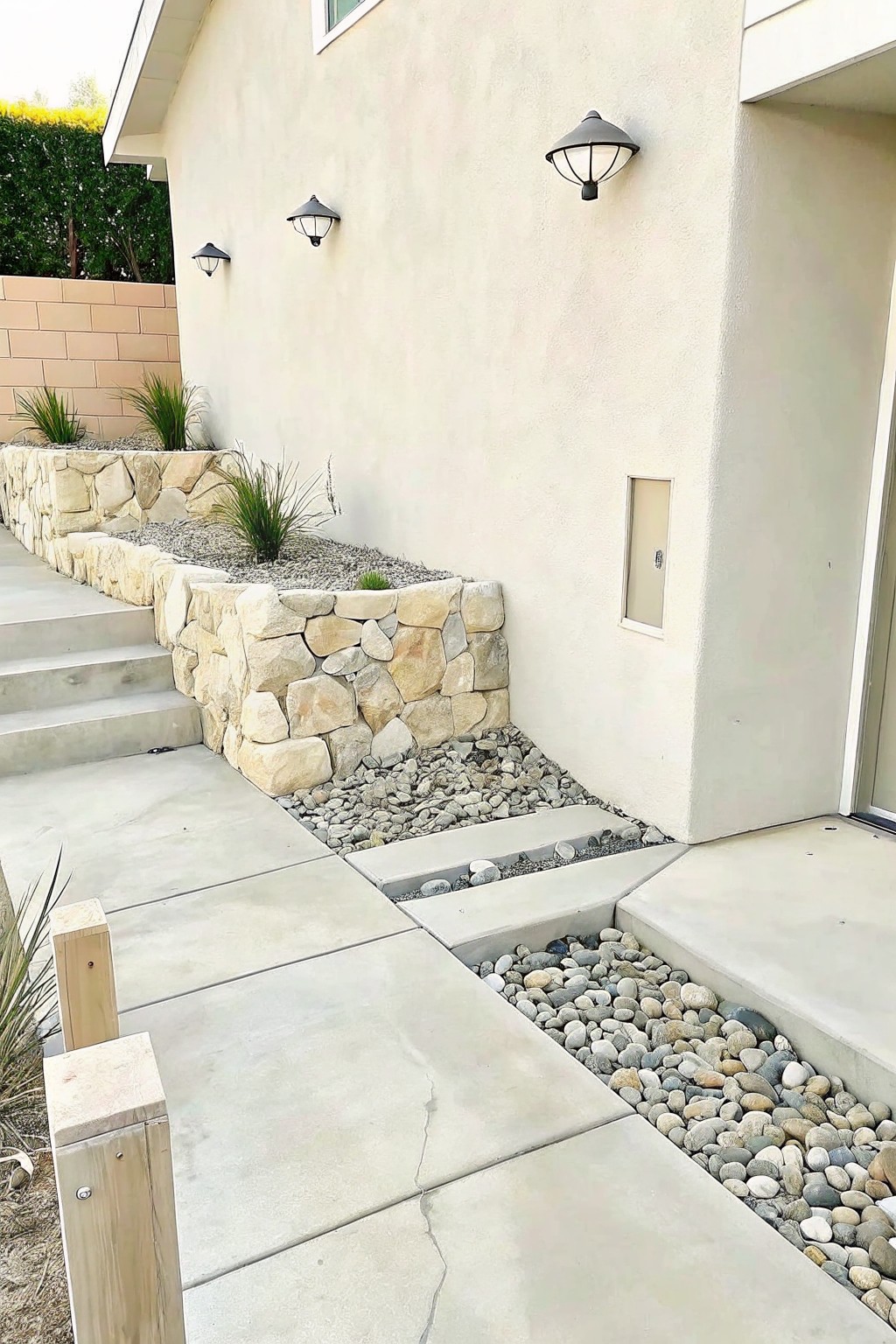
A low stone wall gives gravel beds a solid edge that keeps everything in place, especially on a slight slope or next to flat paving. It creates a clean break between the planting area and the walkway without looking too formal.
This setup works best on homes where the ground drops a little near the foundation. Run the wall along the house, fill behind it with gravel, and keep the plants simple so the stone and gravel stay the main features.
Add Height With a Tall Metal Obelisk
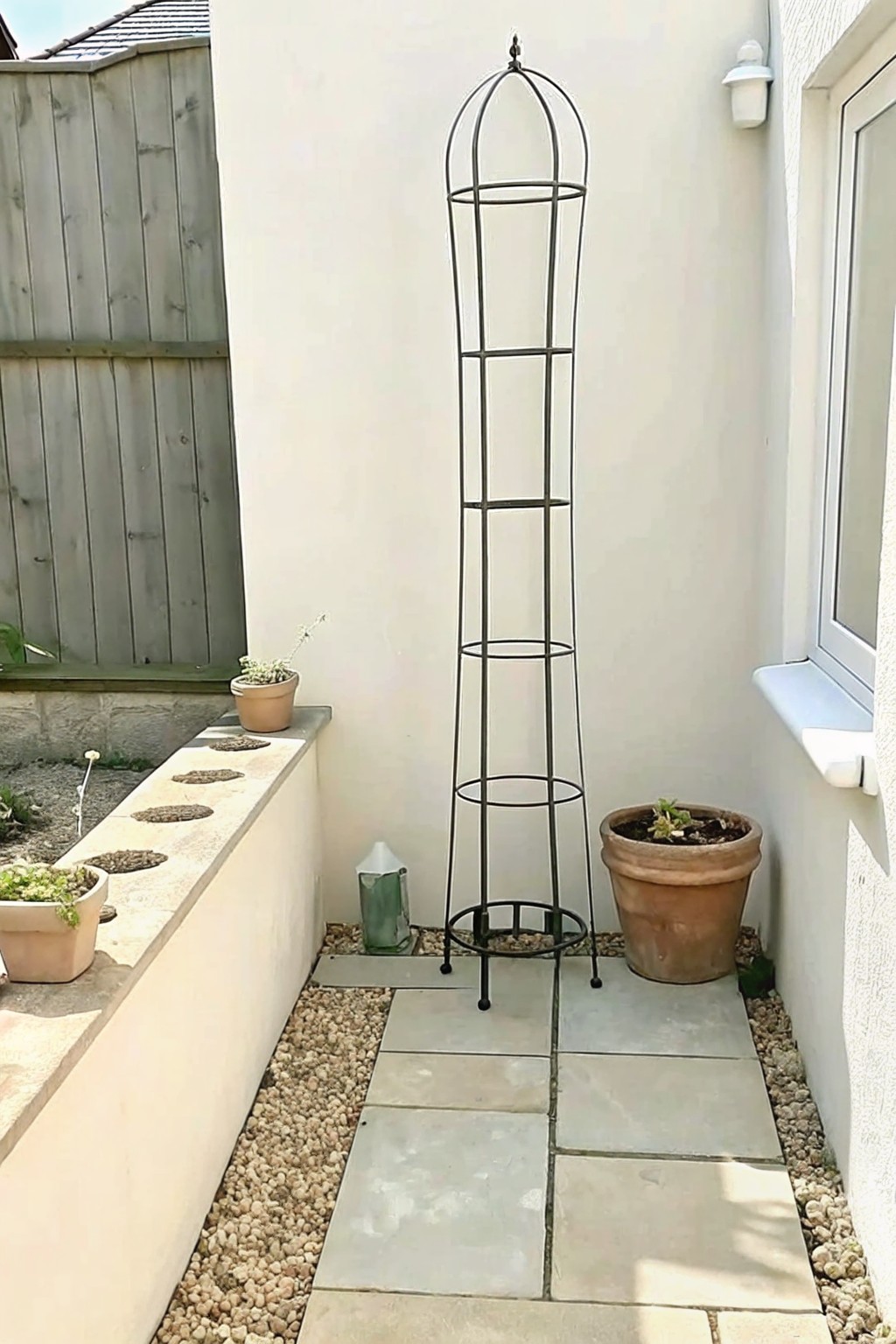
A tall open metal obelisk gives a gravel garden some needed height without taking over the ground space. It works because the frame stays light and lets the eye move through it while still marking a clear spot in the layout.
This kind of structure suits narrow side yards or tight paths where low plants alone can feel flat. Set it where the gravel meets pavers so it stays stable and the surrounding rock stays the main surface.
Gravel Strips Along Planter Edges
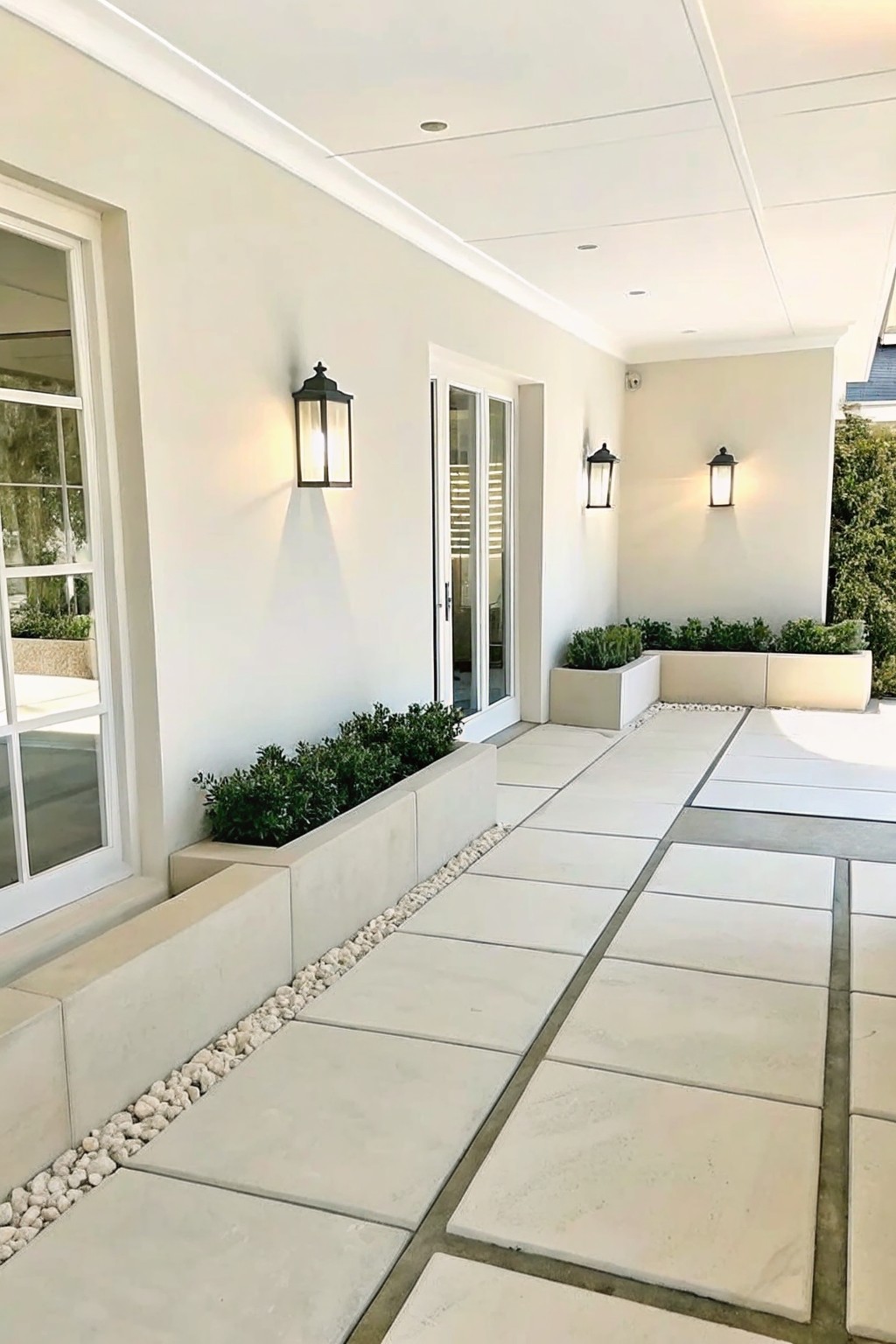
A narrow band of gravel next to raised planters gives the whole area a finished look without much effort. It separates the planting from the paving and keeps things from looking messy over time.
This approach works best on walkways or side yards where you want low maintenance. It suits homes with simple hardscaping and lets the plants stay the main focus while the gravel handles drainage and edge control.
Pebble Edging for Narrow Side Paths
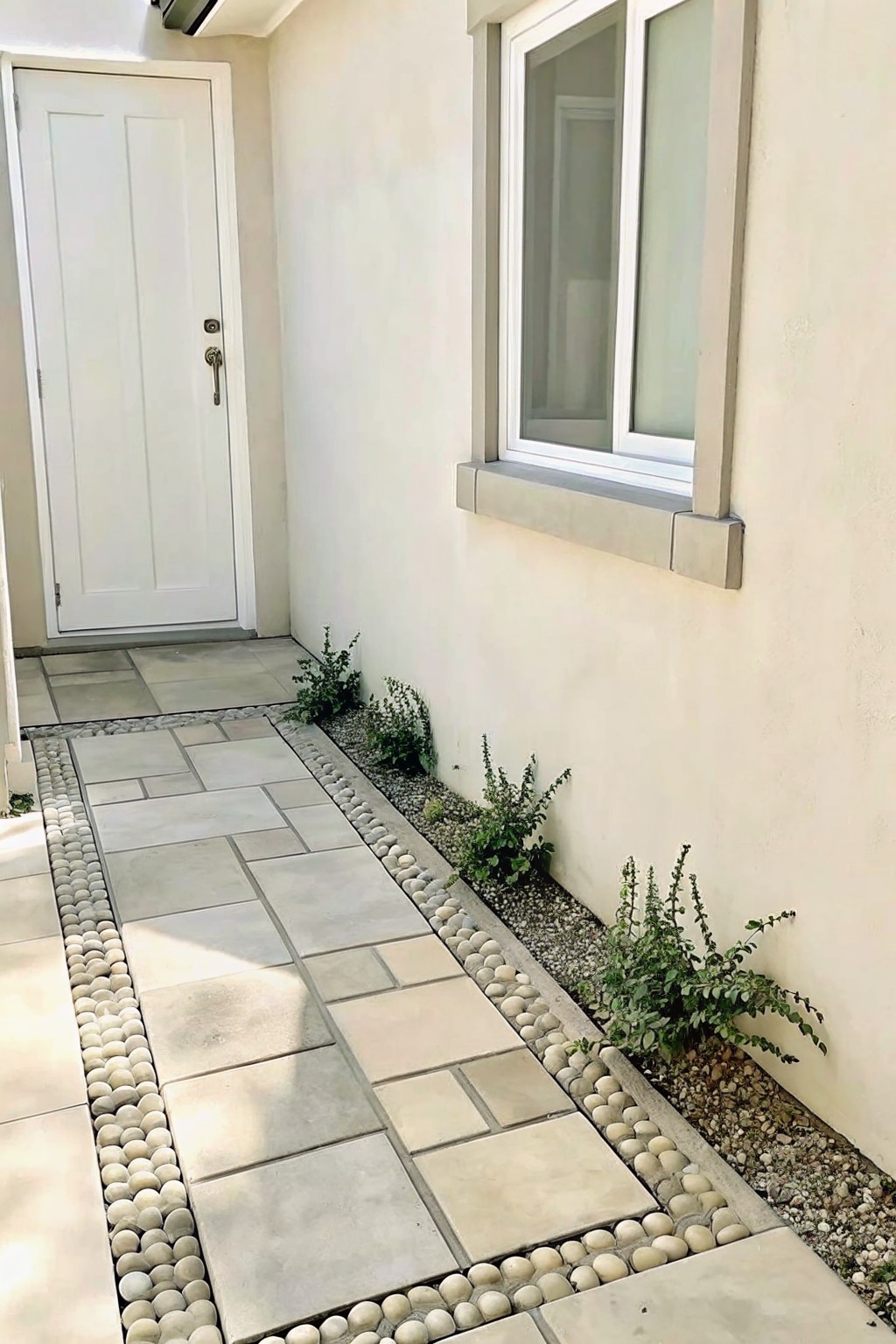
A simple line of smooth pebbles makes a paved path feel more defined. It creates a clear edge that keeps loose gravel from drifting onto the walking surface and gives the whole strip a tidy but natural finish.
This works well in tight side yards where space is limited. Place the pebbles along both sides of the pavers and fill the adjacent strip with gravel and a few low plants. The look stays low maintenance and suits homes with plain stucco walls or similar simple exteriors.
Pavers Over Gravel Create Easy Garden Paths
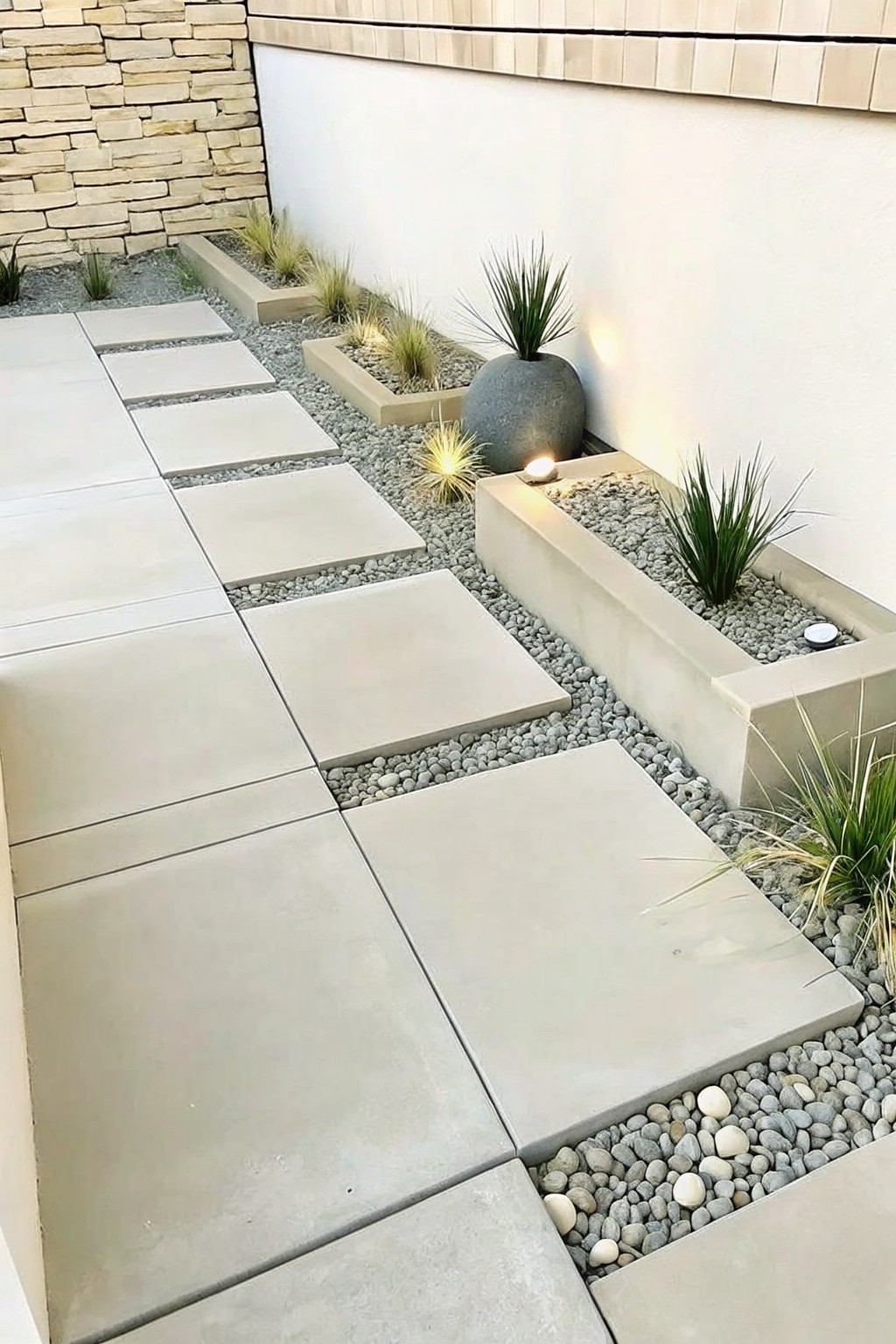
Large square pavers set into gravel give you a firm walking surface that still feels open and simple. The gravel handles drainage and keeps the whole area low maintenance, while the pavers stop you from tracking mud or sinking into loose stone.
This works best along the side of a house or in a narrow yard where you need a clear route but do not want a solid slab. Keep the pavers large and evenly spaced, and add one or two raised planters if you want a bit of height without crowding the space.
Gravel Strips Along Concrete Paths
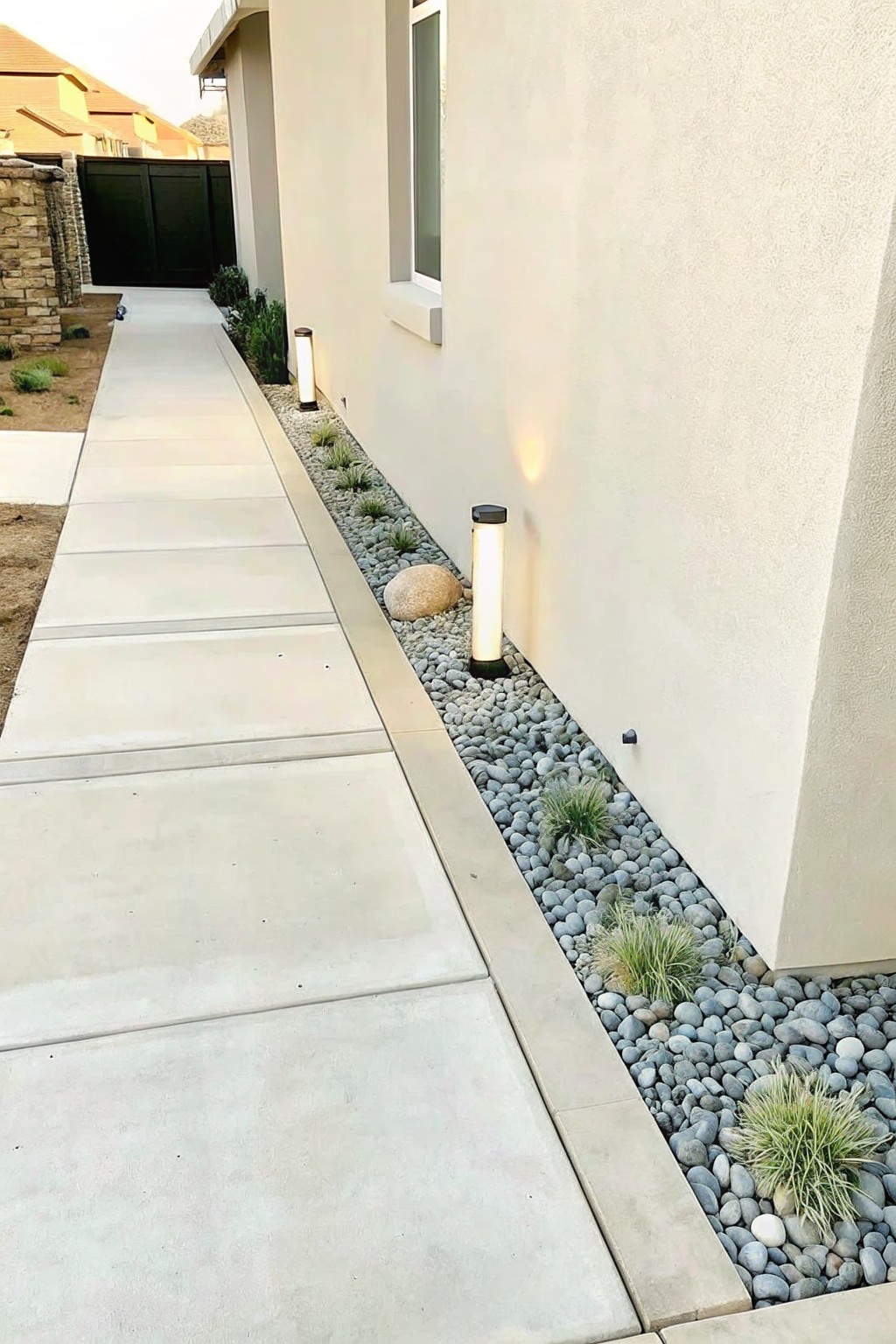
A narrow gravel strip next to a walkway creates a simple edge that stays neat without constant trimming. It also gives room for a few small plants while keeping the path clear and easy to walk on.
This setup works best on homes where the path runs right against the wall. Use it on straight runs, add a couple of low grasses for texture, and keep the gravel color close to the path so the whole area feels connected.
Gravel Beds In Raised Planters
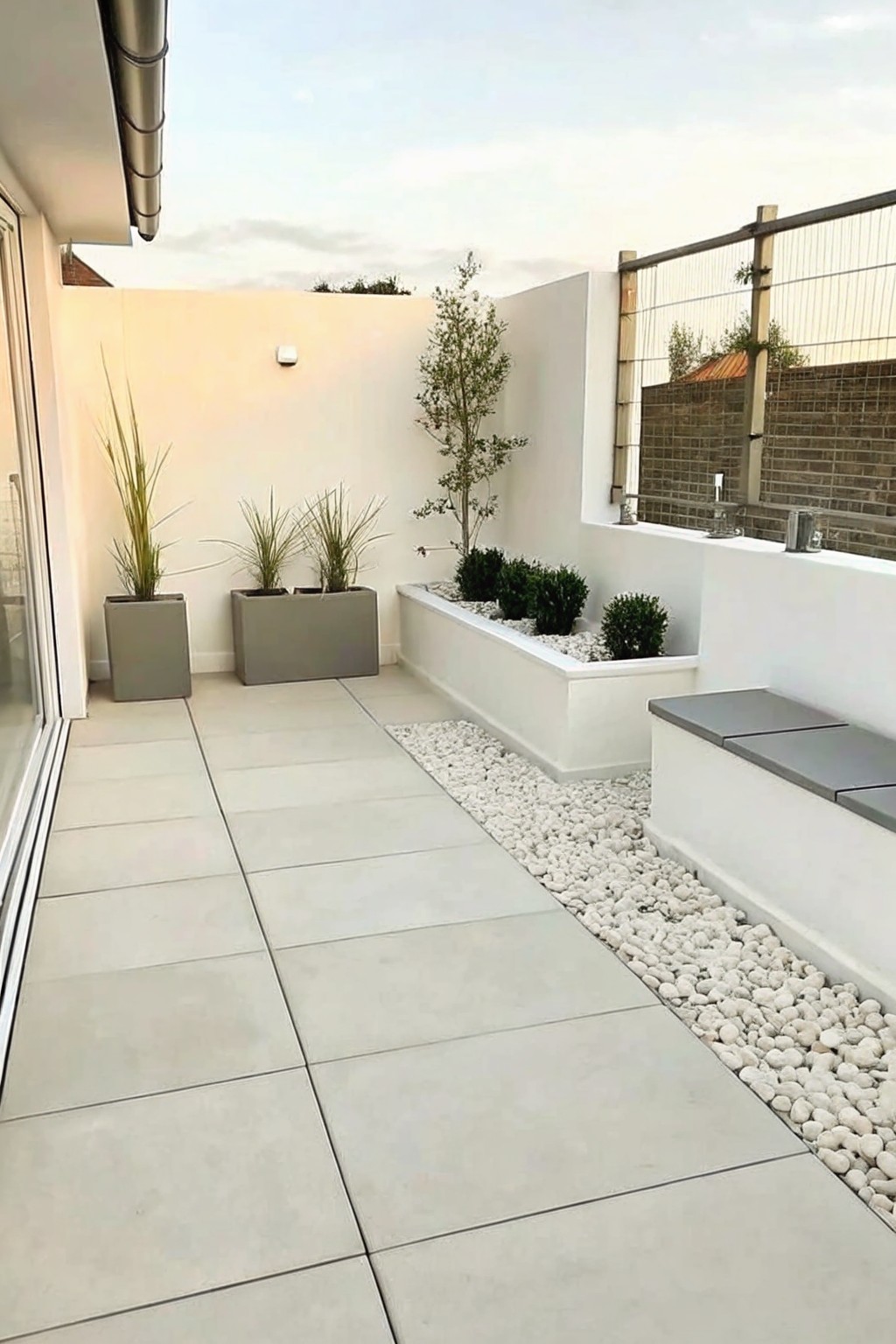
Many people like adding a strip of gravel inside a raised planter because it keeps the look clean and cuts down on weeding. The white pebbles also reflect light, so the space feels a bit brighter even on cloudy days.
This works best on a small patio or terrace where you want some planting without a lot of soil or upkeep. Keep the bed narrow, choose low shrubs that do not need much water, and make sure the gravel layer sits a few inches deep so it stays in place.
Boulder Edging Works Well Along Gravel Paths
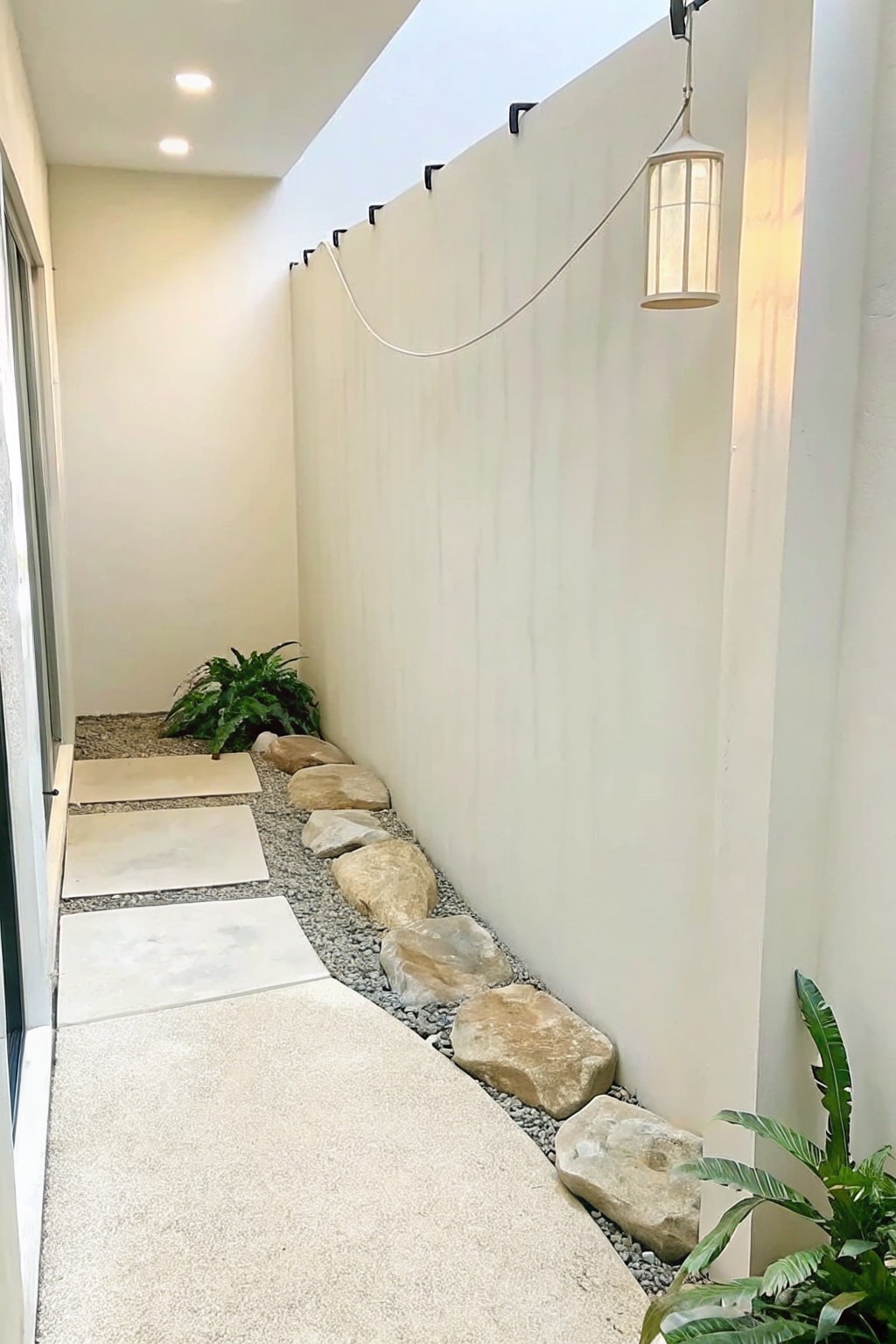
Boulders give gravel paths a clean edge without looking too formal. They hold the gravel in place while letting the material feel natural, which works especially well in narrow side areas where a straight wall meets the ground.
This approach suits homes with tight passages or long runs beside a fence or house wall. Set the boulders in a loose line so the gravel settles around them, and keep the path width consistent for easy walking.
Frequently Asked Questions
Q: How do I stop weeds from taking over the gravel areas?
A: Lay down a solid weed barrier fabric first before spreading any gravel. Then add at least three inches of gravel on top to block sunlight. Check near the boulders every couple of months and yank any new sprouts right away.
Q: Where should I put the biggest boulders first?
A: Set the largest boulders in place early while the ground is still open. Build the gravel and smaller rocks around them to create layers of texture. This keeps the whole layout from feeling scattered later.
Q: Will rain move the gravel around?
A: Pick gravel pieces with rough edges so they settle and lock in place. Rake it lightly after heavy storms to smooth any small shifts. Most gardens stay put once the base firms up.
