


I often notice that garden lights placed too high end up casting hard shadows across the foliage and flattening the layers I worked to create.
The glare tends to pull attention away from the paths and edges that give the yard its shape after dark.
I wonder if softer placements could help the planting beds hold their form instead of fading into the background.
Over time these small choices seem to matter more than I expected when first setting things up.
A few ideas here feel worth testing in my own beds this year.
Lanterns Tucked Low Into Garden Beds

Placing lanterns right down among the plants keeps the light soft and close to the ground. It avoids the sharp glare that comes from lights mounted higher up, and the glow stays gentle on the foliage instead of washing everything out.
This approach works best along paths or near the edge of beds where you need just enough light to walk safely. Use simple lanterns with warm bulbs and keep them partially hidden by the greenery so the focus stays on the plants.
Low Lights In Gravel Beds

Placing small lights right down in the gravel keeps the glow soft and close to the ground. It lights the bases of grasses and low plants without sending bright beams upward or creating spots that hurt the eyes at night. The effect feels calmer than taller fixtures and works especially well along the edges of a patio or path.
This approach suits modern homes where the garden sits right against the house. Keep the lights spaced evenly and choose warm bulbs so the light blends with the stone rather than standing out. Avoid overcrowding the bed with too many fixtures or the softness gets lost.
Wall Lanterns for Softer Garden Light

Wall lanterns work well when you want light in a garden space without shining it straight onto leaves and stems. They sit higher on the structure and send a downward glow that spreads out more evenly across nearby plants and trees.
This approach suits homes with stucco walls or garden boundaries where you need some light for safety and atmosphere. Keep the fixtures at a moderate brightness and angle them so the light hits the ground or trunks first rather than the plant tops.
Low Mushroom Lights Along Paths

These low mushroom lights sit right at ground level and spread a soft downward glow. That placement keeps the light from hitting plants at eye level or creating sharp bright spots that feel harsh after dark.
They work especially well along stepping stone paths in coastal or naturalistic gardens. Space them a few feet apart near the edge of the path so the light guides feet without washing over the surrounding grasses and shrubs.
Hide Lights Behind The Planting
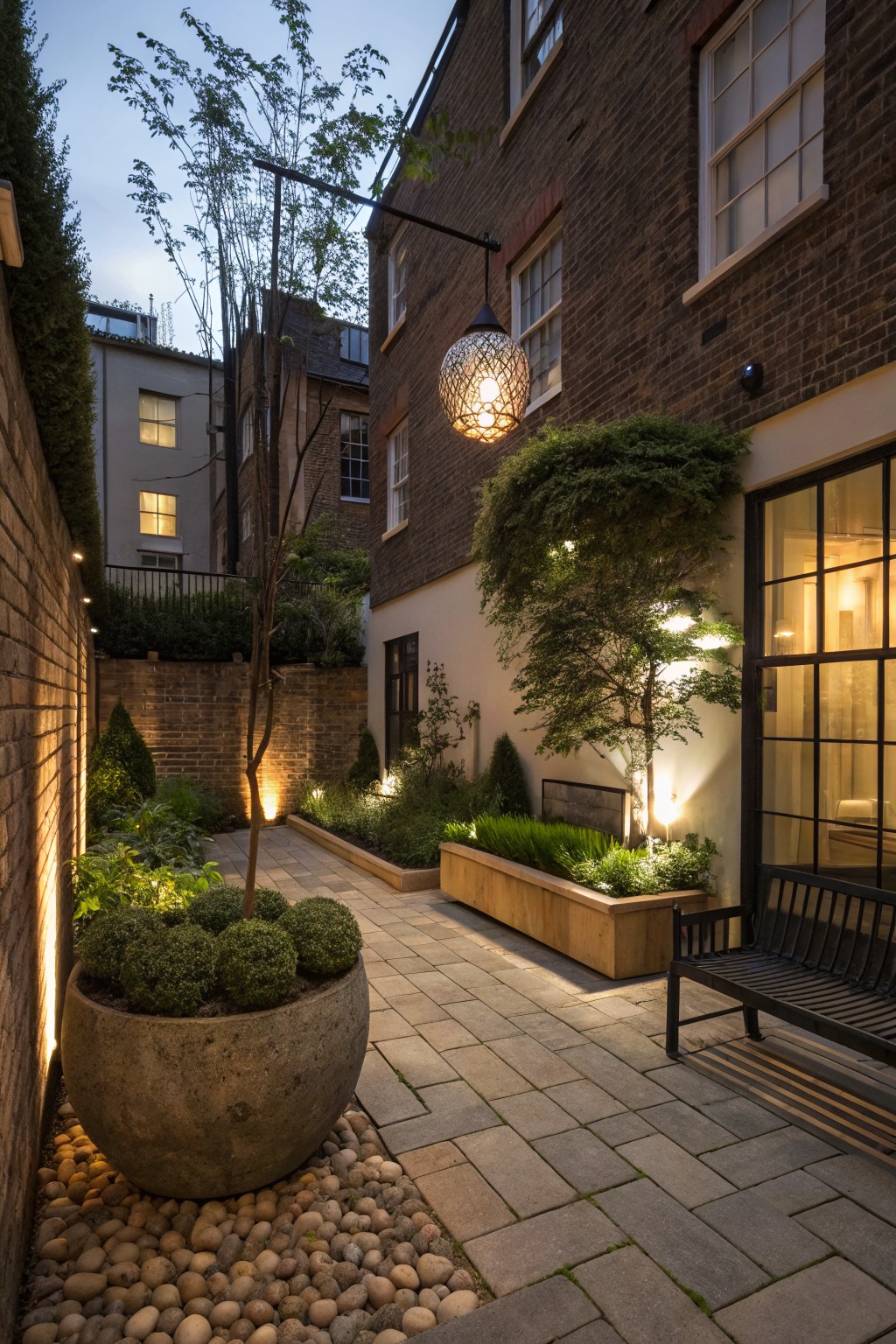
One simple way to soften garden lighting is to place the fixtures low and tuck them behind shrubs or trees. This creates a gentle wash of light that highlights the leaves and branches instead of beaming straight at them. In the photo the uplights sit right at the base of the greenery so the glow feels natural rather than harsh.
This approach works well along paths or beside seating areas where you want enough light to walk safely but still keep the mood calm. It suits small courtyards and narrow side gardens especially, since the plants do most of the shielding. Just check the beam angle so it stays low and does not spill into windows.
Low Lights Along Garden Steps

Small fixtures set low to the ground give just enough light to see the steps at night. They stay tucked near the edges so the glow stays soft and does not wash over the nearby plants or create bright spots in the dark.
This works best on natural paths in wooded gardens where you want to keep the setting calm. Space the lights evenly and choose warm bulbs so the light stays gentle and does not compete with the surrounding greenery.
Low Stone Walls Along Garden Paths

Low stone walls give a garden path a clear edge without making the space feel closed in. They sit low enough to let plants spill over naturally, and they create a simple base where soft lights can sit or tuck behind without pointing straight at the foliage.
This setup works well on homes with gentle slopes or long walkways where you want to avoid bright spots. Place small fixtures behind the wall so the light washes along the gravel or stone rather than hitting leaves directly. It suits older properties or cottage-style gardens where you want the lighting to feel part of the structure instead of an add-on.
Use Low Orbs for Gentle Water Edge Lighting

Placing rounded lights low to the ground near a pond or planting bed spreads the light evenly and cuts down on sharp glare. The orbs sit right at the edge of the water and among the grasses, so the glow stays soft instead of shining straight into the leaves.
This approach works best in smaller gardens or along narrow paths where you want light without overpowering the plants. Keep the orbs in groups of two or three and match their size to the scale of the beds so the effect stays calm at night.
Low Lanterns Along Garden Paths

Placing small lanterns directly on the ground keeps light low and even along a path. This setup cuts down on the harsh spots that overhead fixtures often throw onto leaves and stems, especially in tighter garden spaces.
It works best in side yards or along the edge of a house where you need steady footing at night without washing out the plants. Use warm bulbs and keep the fixtures simple so the glow stays gentle and the path feels natural underfoot.
Low Mounted Lights Along Garden Paths

Low lights tucked near the edge of a path or bed give enough glow to walk safely at night while leaving the plants themselves in softer focus. This approach avoids the bright overhead spots that can wash out foliage and create hard shadows across the ground.
It works especially well in gardens with mixed grasses and shrubs where you want the lighting to feel like part of the planting rather than added on top. Keep fixtures close to the ground or aimed downward from a fence and choose warm bulbs so the light stays gentle on leaves and flowers.
Low Path Lights That Blend Into Planting Beds
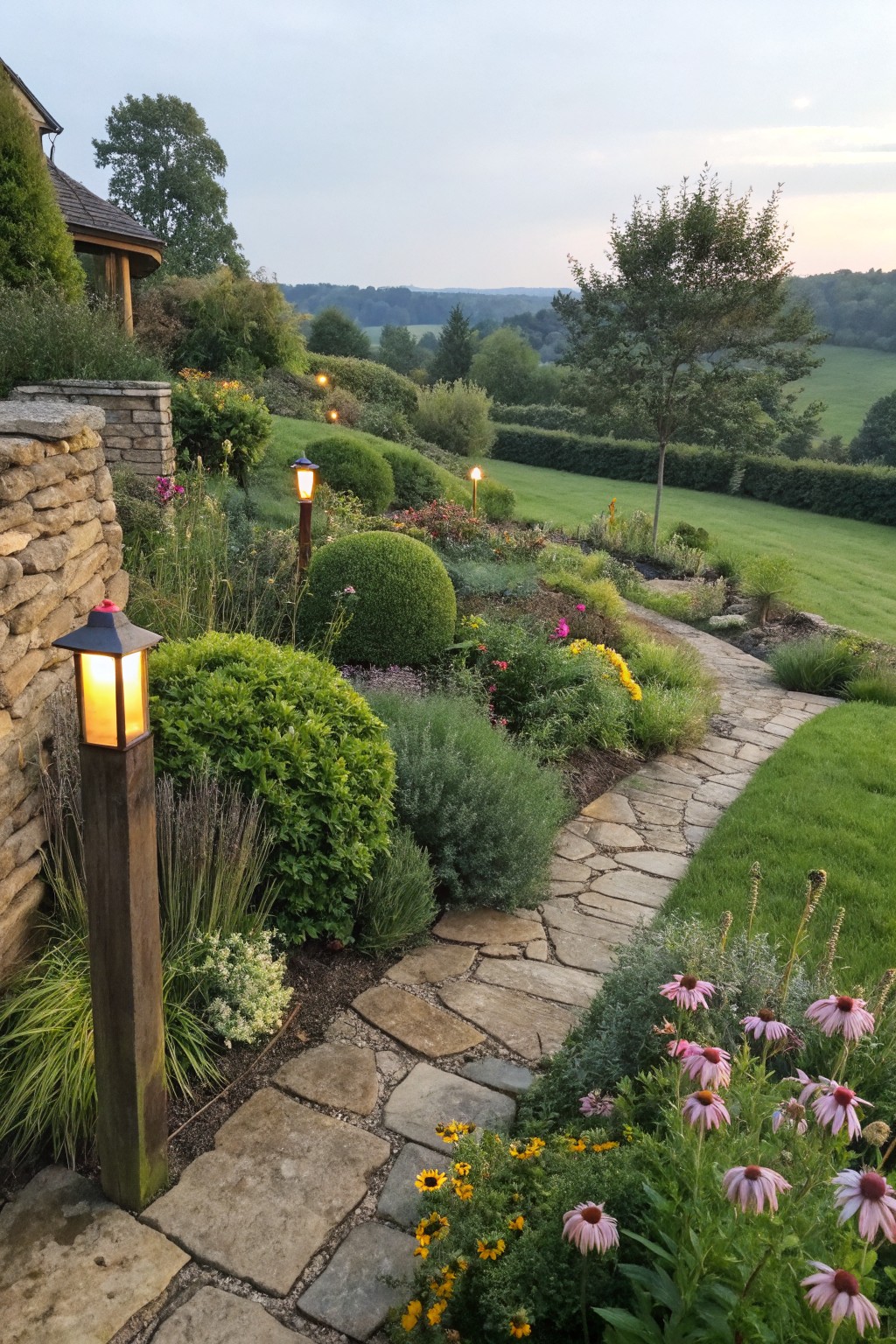
Low wooden post lights with small lanterns work well because they keep the glow close to the ground and right among the plants. The light stays soft instead of shining upward or creating bright spots on leaves.
Place them along the edges of a stone path so the path stays easy to follow while the surrounding shrubs and flowers get only gentle light. They suit gardens that already have layered planting and work best with warm bulbs that do not overpower the greenery at night.
Soft Wall Sconces for Plant Edges

Wall sconces work well in small garden spaces because they throw light upward and outward instead of straight down onto leaves and stems. This keeps the glow even and avoids the bright spots that make plants look washed out at night. In tighter courtyards the lights can sit right on the walls so they do not take up ground space or block paths.
Place them every six to eight feet at about eye level or slightly higher, and choose fixtures with a warm bulb that stays under 2700K. They suit homes with brick or stone walls where vines already grow, since the light can graze the surface without needing extra poles or spikes in the beds. Keep the output low so the surrounding plants stay in soft shadow rather than full spotlight.
Lighting Tucked Into Stone Steps

Placing small lights directly into the sides of stone steps gives a soft glow that stays close to the ground. It marks the path clearly without throwing bright beams up into the plants or creating spots of harsh glare.
This approach works best on sloped gardens or terraced yards where stairs connect different levels. Use warm bulbs and keep them slightly shielded so the light spreads gently across the stone and nearby foliage.
Line Paths With Low Ground Lights
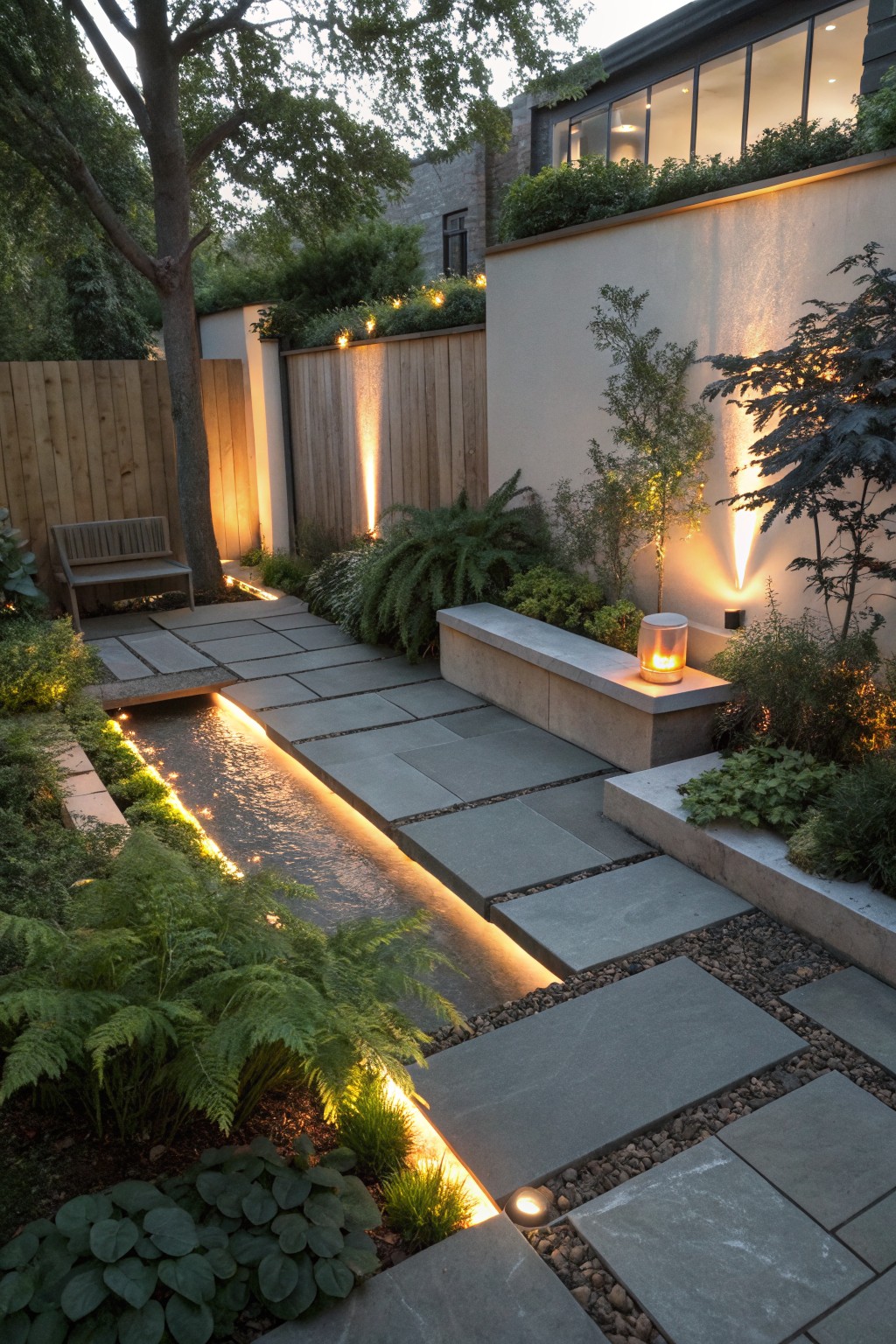
Low lights set right at the edge of a path give enough light to walk safely while keeping the glow soft and close to the ground. This approach avoids the harsh beams that come from taller fixtures and lets plants stay in shadow instead of getting washed out.
It works well in smaller gardens or along narrow side paths where you want light without clutter. Place the fixtures in the planting beds so the light washes across the path surface rather than straight up into leaves. Stick to warm bulbs and keep the spacing even so the effect stays calm at night.
Keep Lanterns Low Among the Plants

Placing lanterns low and close to the ground helps the light spread gently instead of casting a harsh beam. The glow stays softer when it has to pass through leaves and flowers first.
This approach works well along garden paths or in cottage borders where you need just enough light to move around safely. It suits older homes with mixed plantings and gives a calmer feel than taller fixtures.
Lights Built Into Garden Walls

Placing lights right into the face of a retaining wall lets the glow spread through the plants instead of shining straight at them. It keeps the light low and even, so nothing looks spotlit or harsh.
This works well along pool edges or on sloped sites where you need some height but still want a calm look. Keep the fixtures small, space them evenly, and aim them slightly downward into the foliage.
Add Soft Lights to a Garden Pergola

Mounting a few low lanterns along a pergola gives just enough light to follow a path at night without shining straight into the plants. The fixtures sit up on the structure so the glow spreads downward and stays even instead of creating hot spots on leaves or flowers.
This works best on paths that curve through beds or lead to a bench or seating spot. Use warm bulbs and keep them modest in strength so the light feels calm and does not compete with the plants around it.
Low Ground Lights Along Garden Paths

Small lights set right at ground level give just enough glow to follow a path without throwing harsh beams across leaves or stems. They sit low among gravel and rocks so the light stays gentle and the plants keep their natural shape at night.
This approach suits dry or gravel gardens where you want the focus on the planting rather than on bright fixtures. Space the lights a few feet apart and use warm bulbs so the path feels calm rather than stark.
Hang Lanterns At Different Heights

Hanging lanterns give off a softer glow than most fixed fixtures because the light passes through the sides and gets broken up. In a patio setting this keeps the light from hitting plants directly and creating that sharp glare that can wash out foliage at night.
Place them at staggered heights so the light spreads out instead of coming from one strong source. This works well on covered patios or in small courtyards where you already have overhead beams or tree branches to work with. Keep the bulbs warm and low wattage and avoid clear glass shades if you want the effect to stay gentle.
Line Paths with Low Ground Lights

Low path lighting tucked into gravel or pebble beds gives just enough glow to see where you are walking without shining directly into plants. The light stays close to the ground and spreads softly, which cuts down on that harsh spotlight effect many people try to avoid in gardens.
This approach works well along side yards or front paths where you want a gentle guide at night. It suits homes with simple landscaping and helps keep the focus on the plants rather than the fixtures themselves. Keep the lights spaced evenly and choose warm bulbs so the effect stays calm.
Hang Lanterns Overhead to Soften the Light

Hanging a few large paper lanterns from a pergola or overhead beam spreads light evenly without creating bright spots right on the plants. The fabric or paper shades diffuse the glow, so the lighting feels calmer and less harsh on leaves and flowers nearby. This approach works especially well on decks or terraces where you want usable light after dark but still want the greenery to look natural.
Place the lanterns at different heights and space them out rather than clustering them all in one spot. It suits rooftop gardens or small patios with built-in seating, and it keeps the focus on the plants instead of the fixtures themselves. Just make sure the bulbs inside stay low wattage so the diffusion does the work.
Low Path Lights That Reduce Glare

Low lights placed right along the ground give gardens a softer look at night. They light the way without sending bright beams straight into leaves and flowers. Many people find this approach easier on the eyes than taller fixtures that glare across the beds.
Set the lights close to the edges of paths and borders so the glow stays low and contained. This style works best on properties with winding walks or gentle slopes where you need steady guidance without overlighting the plants.
Frequently Asked Questions
Q: Where do I start when placing lights around a mix of shrubs and flowers?
A: Start by aiming low fixtures toward the ground rather than straight at the plants. Move them around at dusk until the light feels even. Walk the path yourself to check for any spots that still pop too bright.
Q: Can these ideas work with string lights over a seating area nearby?
A: Hang the strings higher up so they cast a broad wash instead of direct beams down. Keep the bulbs dim and spaced out. This way the garden glow stays separate from your seating light.
Q: How often should I adjust the lights after setting them up?
A: Check them once a month as plants grow. Shift any that start to hit new growth too directly.
