


When I walk out to the garden after dark the steps between levels always feel a bit uncertain underfoot if there is no light to mark the edge.
I have learned that good lighting here does more than look nice because it actually shapes how safely and comfortably people move through the space over time.
Small fixtures tucked along the path can make a big difference.
In my yard I plan to test a couple of these options near the deck first to see how they handle wet weather and daily use.
Over the years the details that guide the eye along a walkway end up mattering more than any single bold feature.
Edge Lighting For Deck Level Changes
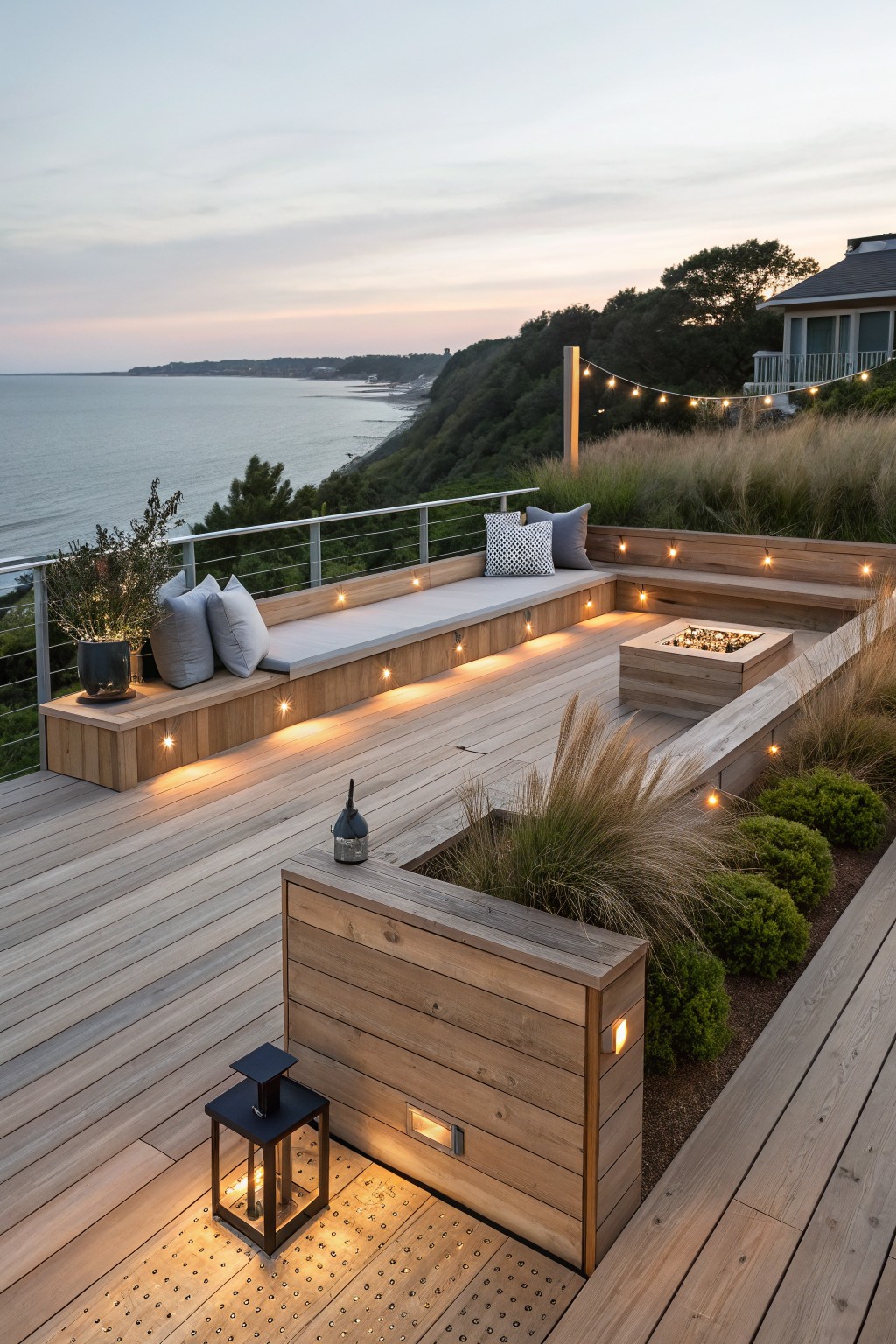
Many decks include built-in benches and raised sections that create small drops or steps. Running low lights along those edges marks the change in height and keeps people from tripping once the sun goes down.
This approach works best on wood decks that connect to grass or another surface. Place the lights close to the floor so they stay out of the way and do not block the view from the seating area.
Low Lights Along Steps Improve Safety On Slopes

Small lights set into the side of each step give just enough glow to show where the tread ends. This works especially well on wooden steps that climb a slope, since the wood can look flat in low light and people often misjudge the height.
Place them every two or three treads so the path stays easy to follow without extra fixtures. They suit homes with gravel paths or planted beds at the base, and they need to be rated for outdoor use so they hold up through rain and winter.
Patterned Tiles on Garden Steps
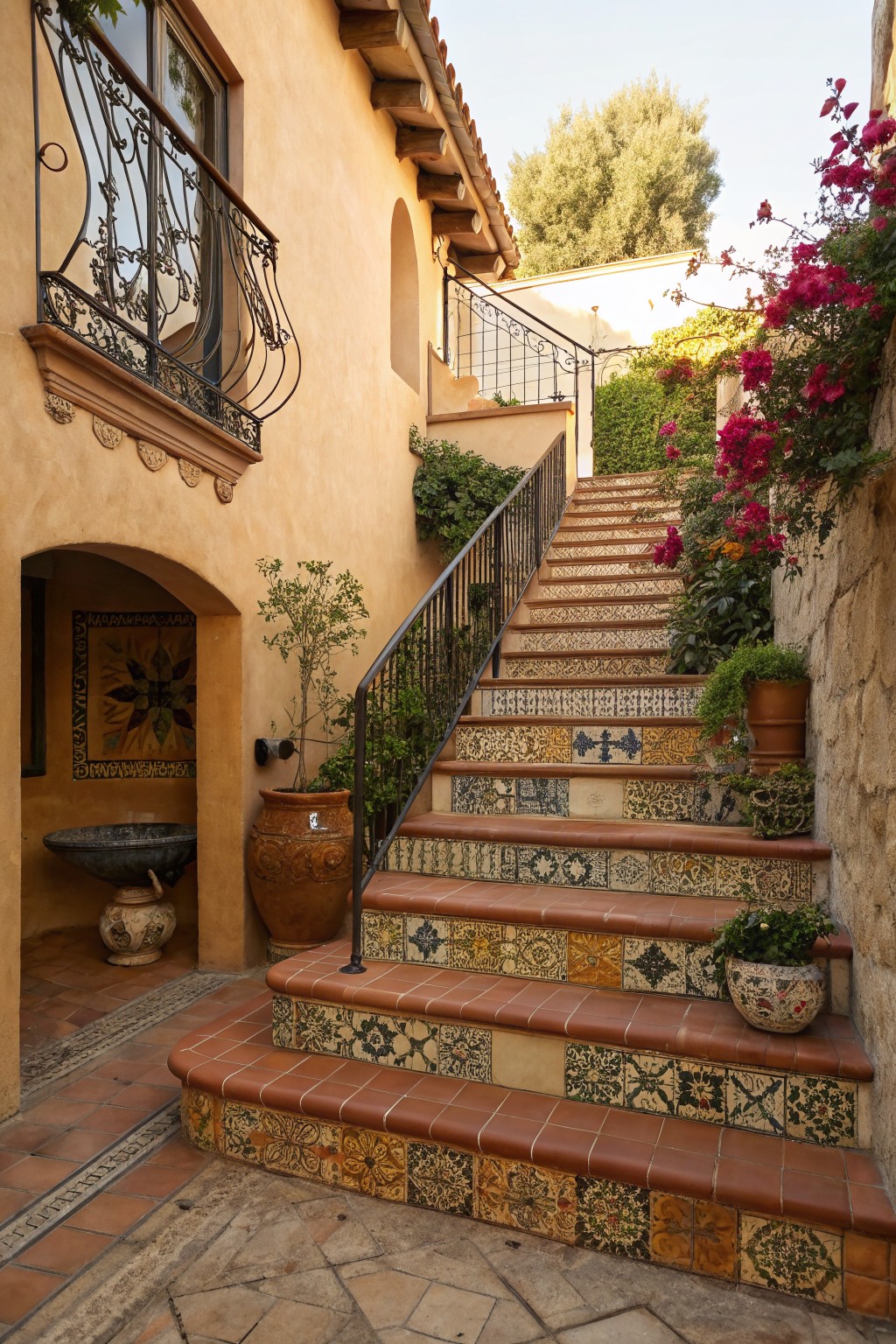
Patterned tiles turn ordinary garden steps into something more interesting without much extra effort. The mix of colors and designs on each riser adds character while the solid treads keep them practical for daily use. This approach works especially well when the steps connect different levels in a yard or lead up to a house entry.
It suits homes with warm stucco walls and a Mediterranean or Spanish feel. Keep the planting simple with a few large pots along the sides so the tiles stay visible. The same idea can be adapted to smaller changes in level on a deck or path.
Light The Front Edge Of Each Step
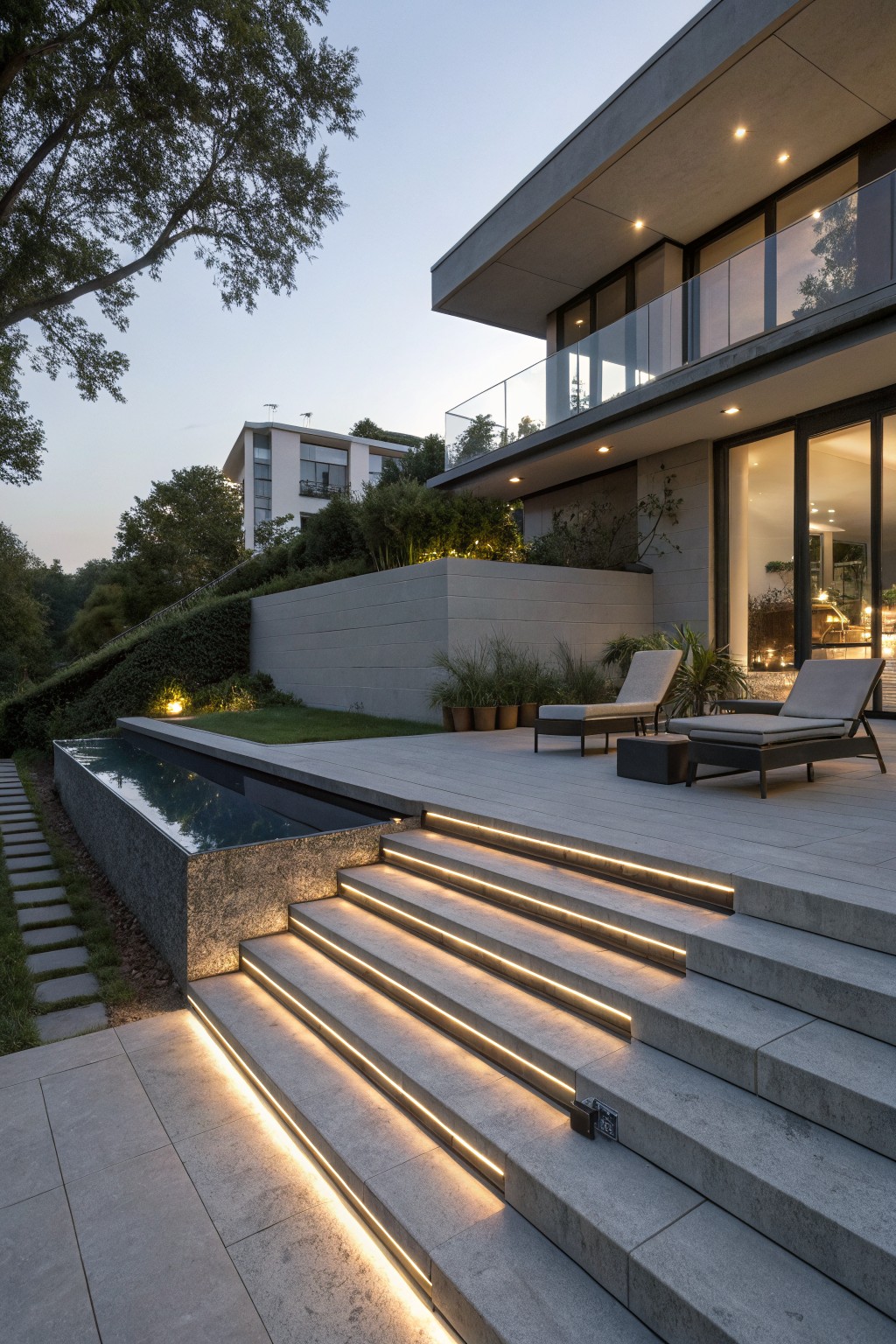
Lighting the front of each step makes it much easier to move between deck levels after dark. The glow shows the edge clearly without needing tall fixtures that clutter the view or get in the way.
This approach works best on homes with one or two changes in elevation near a patio or seating area. Use low-profile LED strips set into the riser or tread so they stay protected and give a steady line of light without shining into anyone’s eyes.
Recessed Lights Along Deck Stairs

Deck stairs often sit in shadow once the sun goes down, and small recessed lights built into the side of each tread make the change in level easy to see. The lights stay low and close to the surface so they mark the edge without throwing glare across the whole deck.
This approach suits wooden decks that already have a simple, natural look. Space the lights evenly along the outer edge of each step and match the bulb color to any other low outdoor lighting you use nearby.
Lighting Deck Steps With String Lights
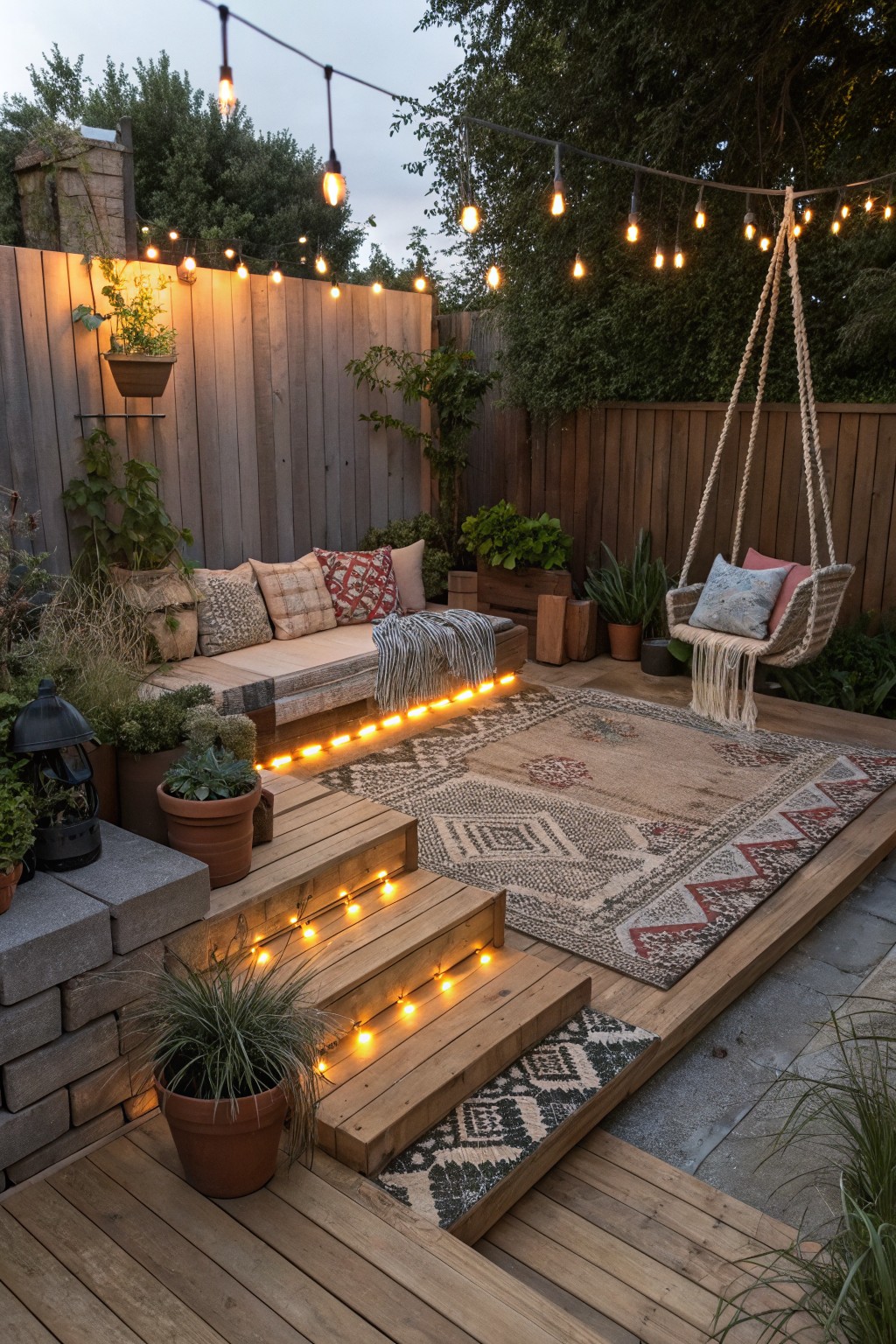
String lights along the edges of steps make a simple way to handle level changes on a deck or patio. The small bulbs trace the rise and fall so the steps stay easy to see after dark, without needing tall posts or heavy fixtures.
This setup works best on wooden steps that connect different parts of an outdoor seating area. Run the lights close to the tread edges on both sides, and keep the spacing even so the path stays clear. It suits decks where people gather in the evening and want the space to feel usable rather than overly bright.
Edge Lighting on Garden Steps

Running a thin line of light along the front of each step makes the change in level easy to see after dark. It avoids the need for separate lamps that can get in the way or look cluttered on narrow stairs.
This approach suits stone or concrete steps that connect a patio to the rest of the garden. Keep the light warm and low so it guides feet without shining into seating areas nearby.
Add Lighting Along Garden Steps
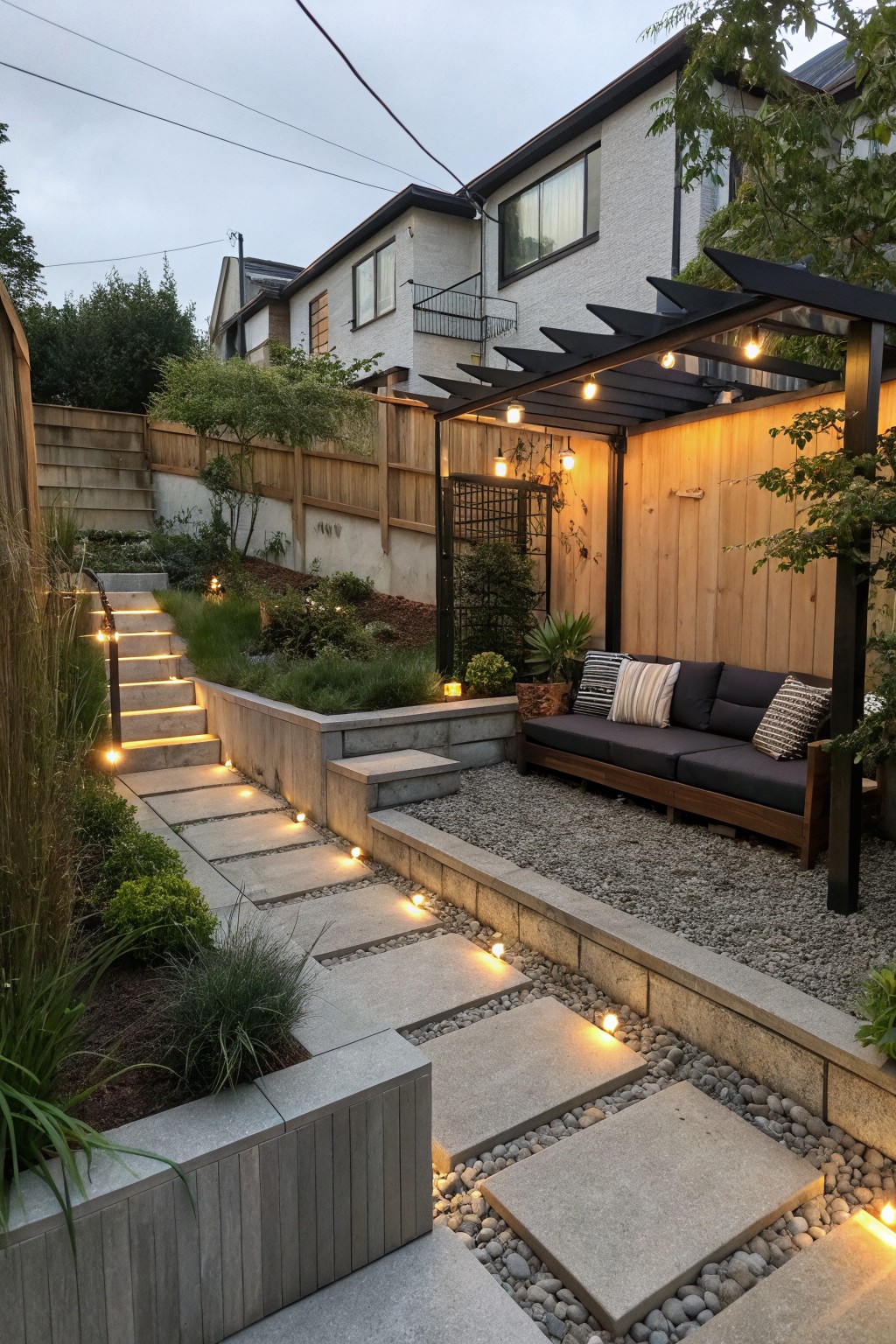
Many gardens sit on slopes that need steps, and running small lights along the edges makes those changes safer to use after dark. The lights mark each tread clearly so people can move through the space without tripping or feeling unsure.
This approach suits homes with backyard drops or terraced beds where the path needs to stay visible at night. Tuck the fixtures low and close to the steps so they highlight the route without brightening the whole garden.
Edge Lighting On Garden Steps
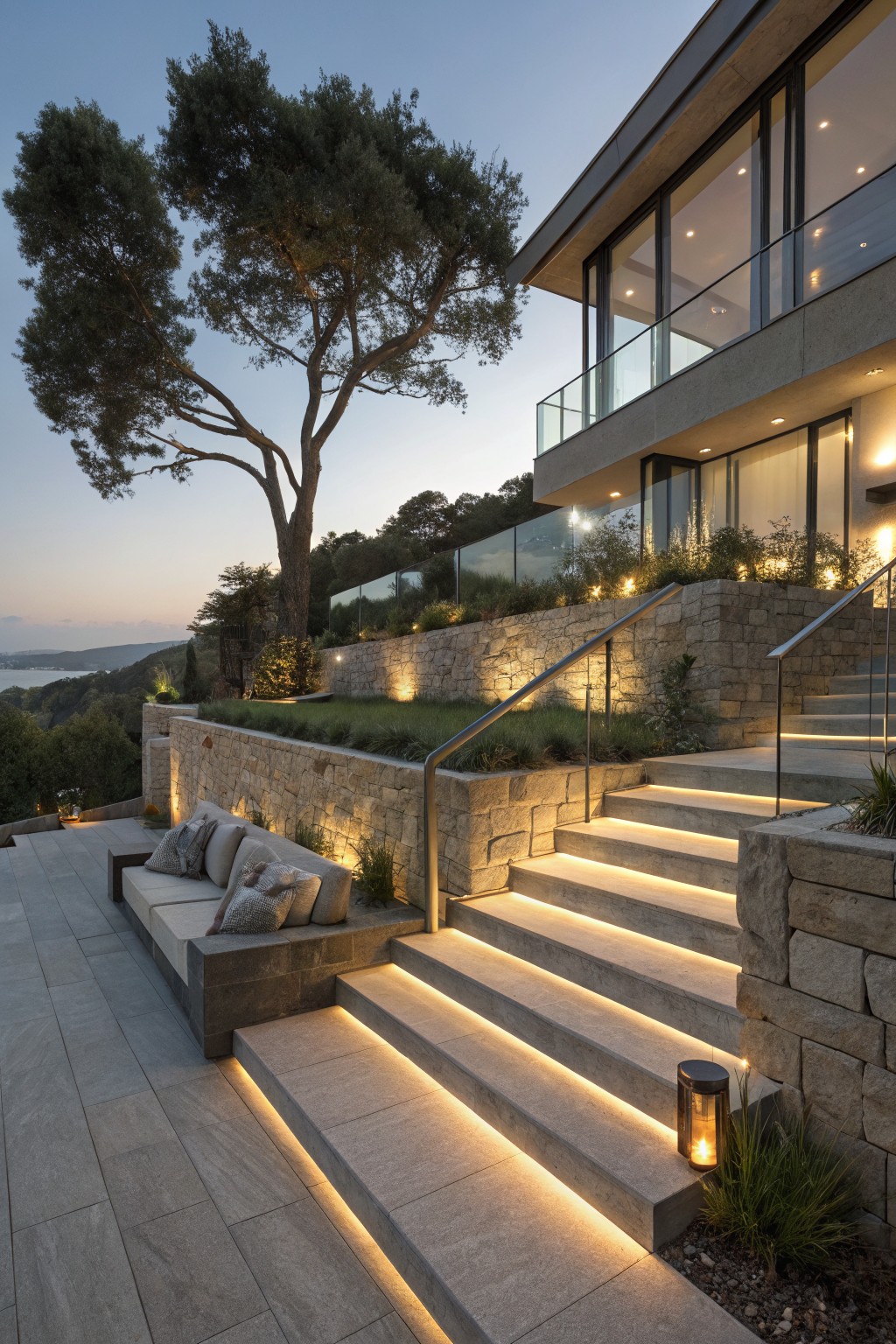
Running a thin line of light along the edge of each step makes the change in level easy to see after dark. It removes the need for tall lamps that can clutter a terrace and instead turns the steps themselves into the light source.
This approach suits homes with stone or concrete stairs that connect a deck to the garden below. Keep the lights warm and low so they guide people without shining into the house or washing out the surrounding planting.
Stone Steps That Work With the Slope

Natural stone steps make a gentle transition on a sloped garden without looking forced. They sit low to the ground, follow the lay of the land, and let the surrounding plants and walls carry the design. The mix of larger slabs and smaller fillers keeps the path practical while it still feels like part of the landscape rather than something added on top.
This approach works best on modest hills where you need to move between levels but want to keep the garden feeling open. Use the same local stone for any low retaining walls so everything ties together, and leave room along the edges for planting to soften the edges over time. Avoid straight runs if the slope curves, since a slight bend usually feels more comfortable to walk.
Recessed Lights On Garden Steps

Recessed lights built into the front edge of each step give just enough glow to show the change in level. This keeps the path safe after dark while avoiding tall fixtures that would interrupt the view of the surrounding planting.
The approach works especially well on stone or concrete steps in a sloped garden. Place the lights evenly, use warm LED bulbs, and choose fixtures rated for wet locations so they hold up over time.
Lighting Along Tiered Garden Steps

Placing small lights right along the edges of stone steps helps mark changes in level without needing tall fixtures. This works well on slopes where steps curve around a hill, since it keeps the path clear while still showing the shape of the retaining walls.
It suits homes with uneven yards and pairs easily with gravel or stone surfaces. Try to keep the lights low and warm so they guide people safely without competing with the surrounding plants.
Edge Lighting For Concrete Steps

Putting lights along the edges of steps is a straightforward way to handle level changes in an outdoor space. It keeps the stairs visible at night and gives the hardscape a clean look without adding bulky fixtures or extra poles.
This works well on concrete steps that connect a deck to garden areas or different ground levels. It suits homes with multiple outdoor zones where safety and simple lines matter more than dramatic effects.
Step Lights Built Into Stone Stairs

Small lights set into the front edge of each step give a soft, steady glow that marks the way clearly after dark. This approach keeps the lighting low and simple instead of adding poles or big fixtures that can clutter the entry. It works especially well with wide stone steps because the light reflects off the surface without creating harsh spots.
This kind of lighting suits homes with sloped entries or garden paths that change level. Place the fixtures evenly and choose ones made for outdoor use so they hold up in rain and cold. It adds safety without overpowering the natural look of the stone.
Light Garden Steps With Side-Mounted Path Lights

Garden steps often need more than just a single overhead light. Side-mounted path fixtures keep each tread visible at night while blending into the surrounding plants and trees.
These lights work best on sloped yards or wooded sites where the stairs connect different levels of the garden. Space them evenly along the railing or low posts, and choose warm bulbs so the path feels natural instead of overly bright.
Edge Lighting On Deck Steps
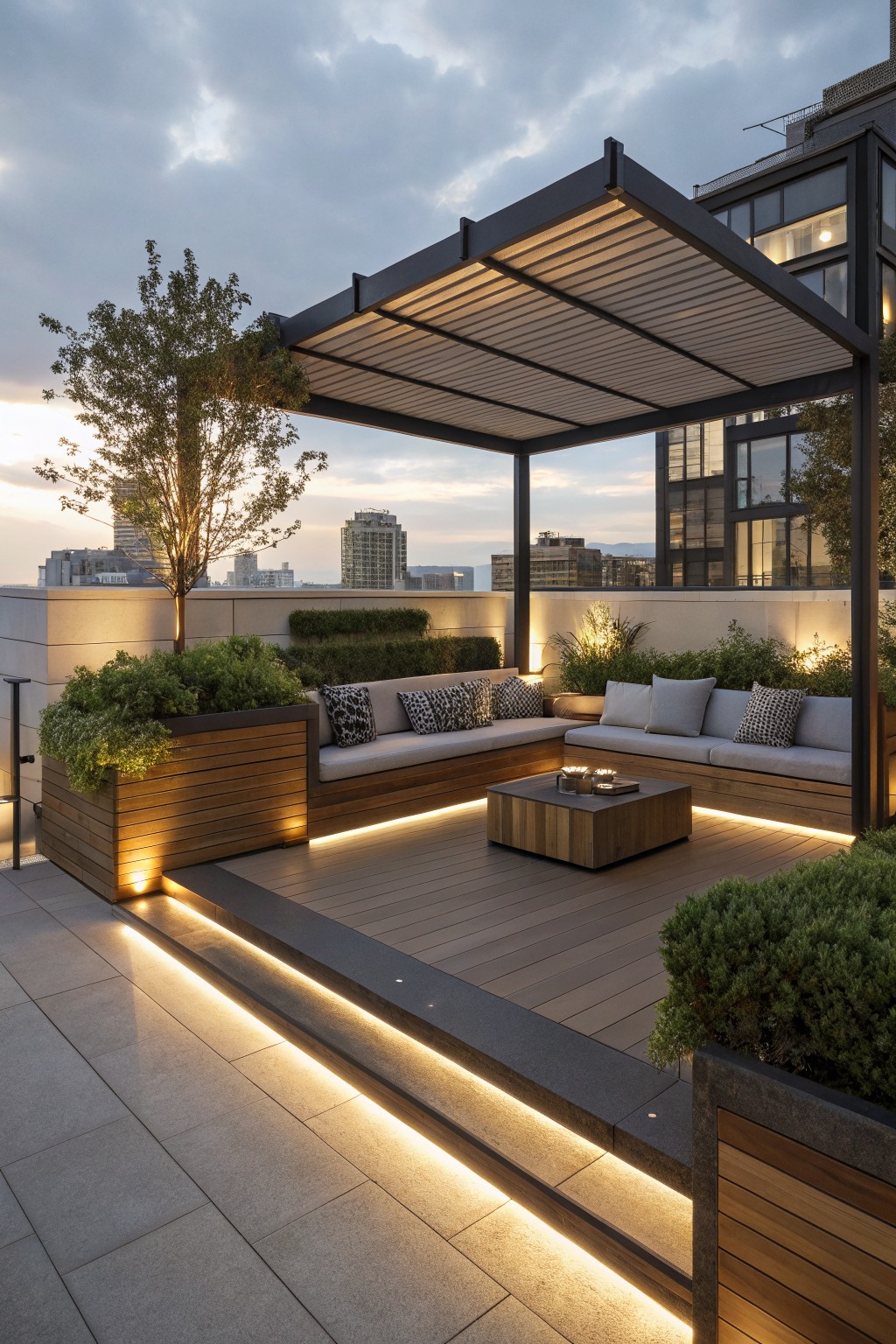
Running a thin strip of light along the edge of a deck step makes the level change easy to see at night without adding extra fixtures that stand out. It keeps the surface clean and gives just enough glow to guide people safely while the rest of the space stays softly lit.
This works best on wood decks where the strip can sit in a shallow channel along the tread or riser. It suits modern outdoor living areas that already use built in seating or planters, and it avoids the clutter of post lights or separate path lamps.
Recessed Lights Along Deck Steps

Recessed lights built into the edge of steps make a deck safer and easier to use after dark. They mark the level change clearly without adding extra fixtures or cluttering the surface.
This works best on decks that connect to lower garden areas or patios. Set the lights low and evenly spaced so they guide people without creating glare. Composite or concrete steps make installation straightforward, and the result stays simple and low maintenance.
Linear Lighting Along Outdoor Steps

Linear lights tucked into the edges of steps give a clean way to mark level changes without adding extra fixtures. This approach works especially well on stairs that connect a pool deck to the main house or garden areas above it. The steady glow outlines each tread so people can see the height difference at night while keeping the overall look simple.
It suits homes with gentle slopes or multiple outdoor levels where safety matters as much as style. Run the lights on a timer or motion sensor so they come on only when needed, and choose warm white LEDs to match other garden lighting. Avoid over-bright strips that can create glare on light-colored stone.
Lanterns Work Well On Garden Steps
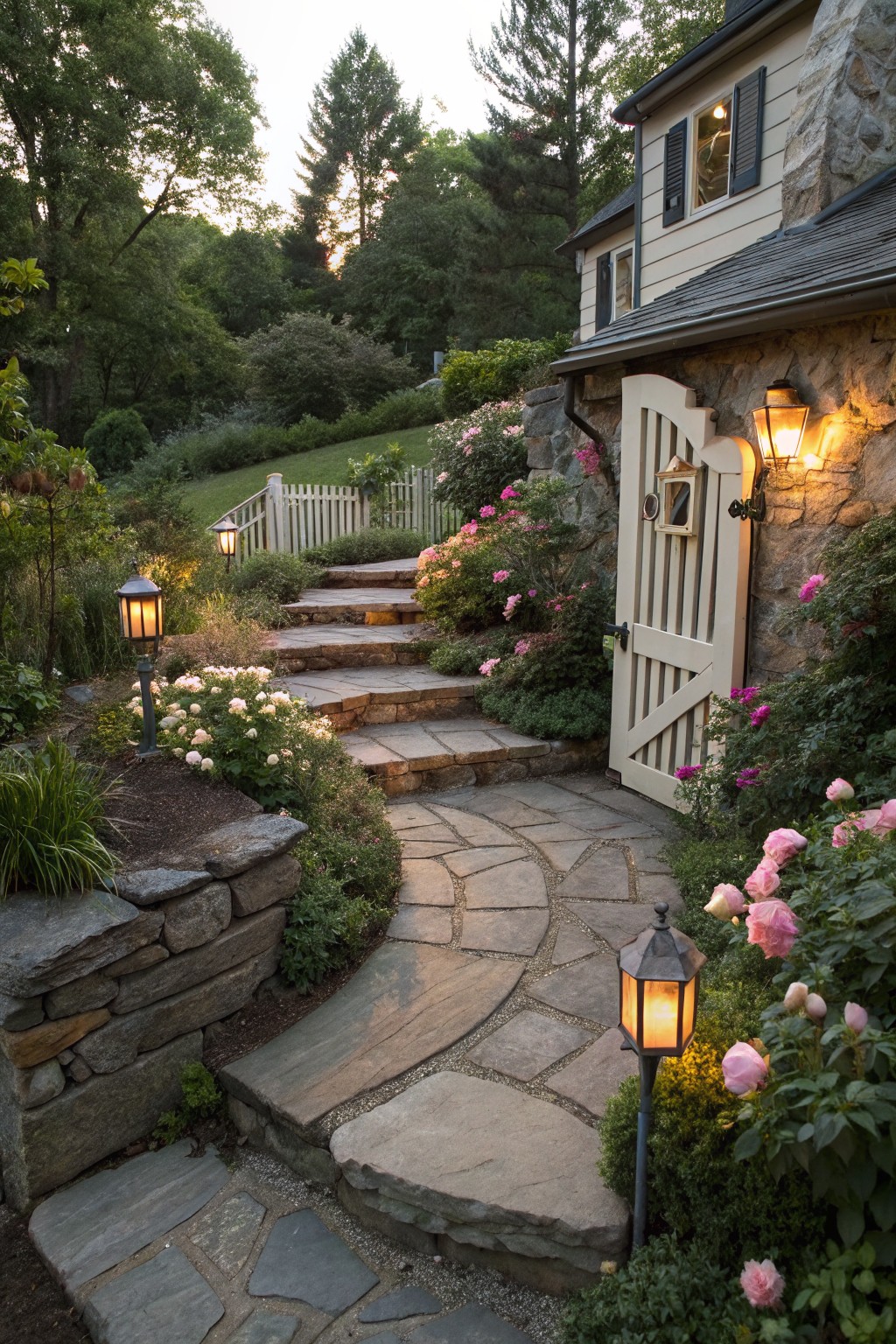
Lanterns set low beside stone steps help mark changes in level without flooding the whole garden with light. They give enough glow to walk safely while keeping the evening feel soft and natural.
This setup works best on sloped yards or homes with terraced beds. Place the lights every few steps on the outer edge of the path and choose warm bulbs so the light does not wash out nearby flowers or shrubs.
Line Step Edges with Warm LED Lighting

Lighting the front edge of each step makes it much easier to move between levels once the sun goes down. The glow stays low and focused, so it guides feet without flooding the whole yard with light.
This approach works well on concrete or stone steps that connect a patio to the garden below. Tuck the strips into a shallow channel so they sit protected, and keep the color temperature warm to match other outdoor lights. It suits homes with modest level changes where safety matters more than drama.
Frequently Asked Questions
Q: How do I pick lights that won’t blind people walking up at night? A: Aim for soft warm bulbs and place them to graze the surface instead of pointing straight out. Walk the steps after dark and tweak the angle until the light feels gentle.
Q: Will battery powered options last through a whole season without constant swaps? A: Rechargeable solar versions handle most setups fine if you clean the panels now and then. They charge during the day and give you several hours of light once evening hits.
Q: What about adding lights to existing concrete steps without much hassle? A: But stick with adhesive backed strips or clip on models that need no drilling. They hold up well and come off clean if you change your mind later.
