

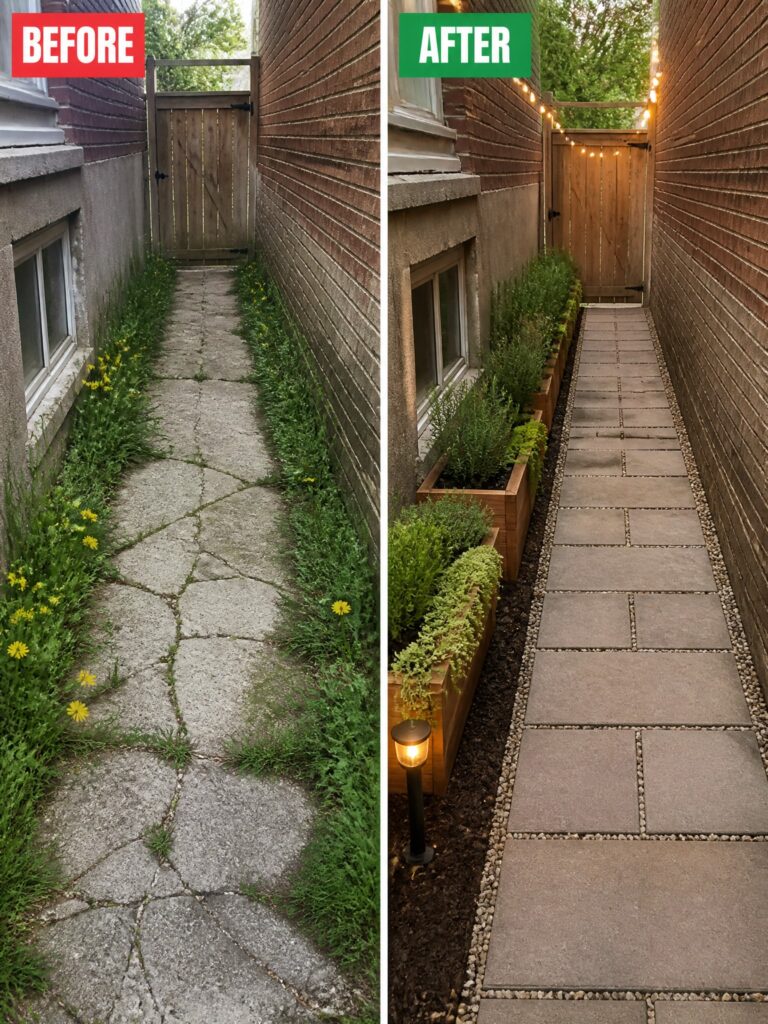
I often notice that narrow garden spots end up as forgotten corners because they lack any clear layout to begin with.
When I tried adding a low border and a couple of repeated plants along one cramped walkway last spring, the area started to feel like part of the yard instead of leftover space.
Working in stages with simple edging and a few sturdy choices usually gives better results than trying to fill everything at once.
Those are the adjustments I test first in small areas.
Seeing the ground look cared for rather than bare makes the whole place feel more usable without needing big spending.
Add Planters And A Raised Bed To A Narrow Side Entry
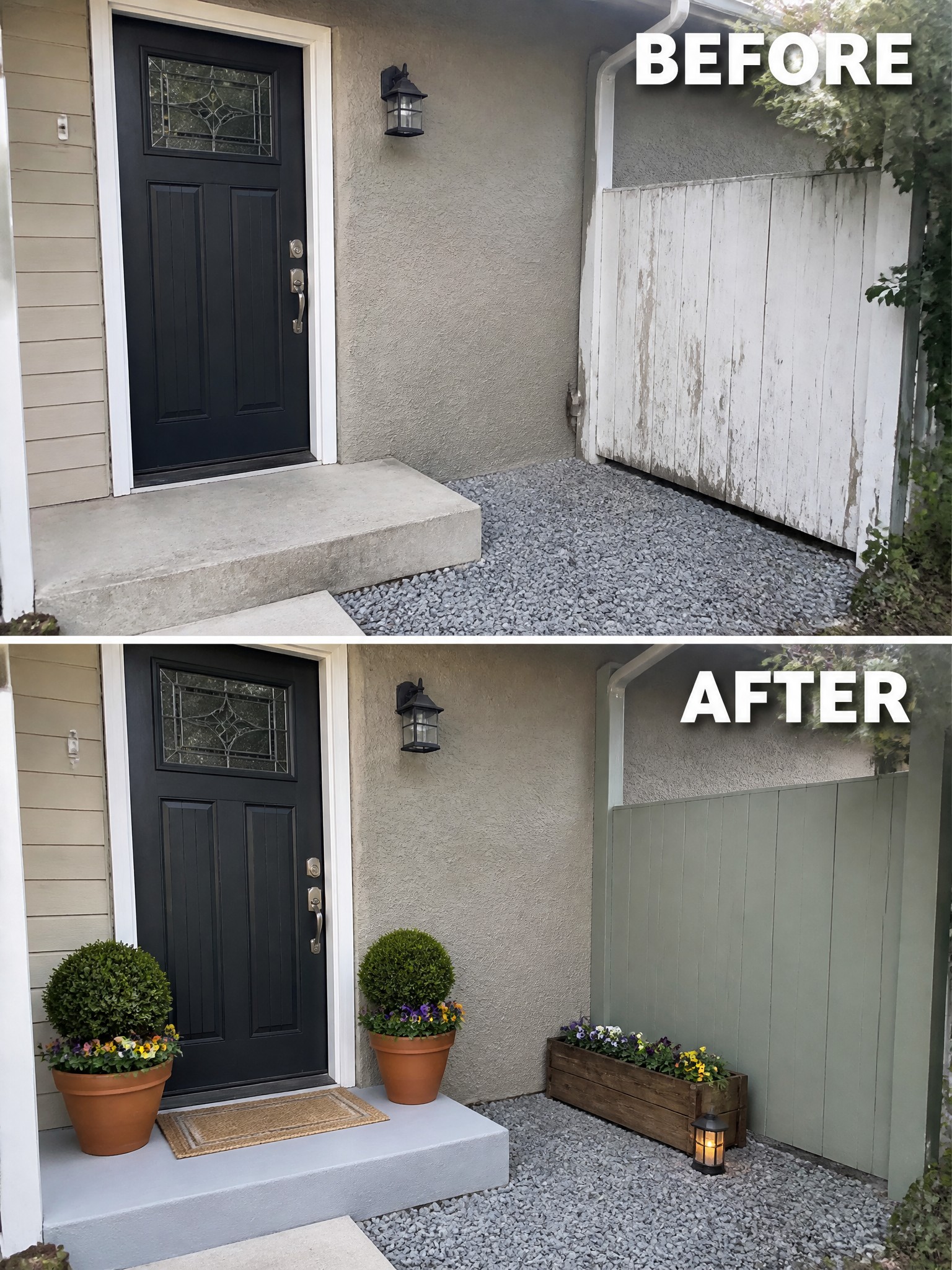
A small gravel side area next to the entry often gets ignored because it feels too tight for anything useful. In this case the change came from adding two large pots on the step and one long wooden planter box along the fence. The plants give the space a finished look without taking up much room, and the fence color helps tie everything together.
This idea works well on homes where the side path is mostly gravel or concrete. Start with a couple of big pots near the door and one raised bed against the fence if you have the space. Choose hardy plants that can handle sun or shade, and keep the number of containers low so the walkway stays cl
Turn A Bare Patio Into A Cozy Seating Area
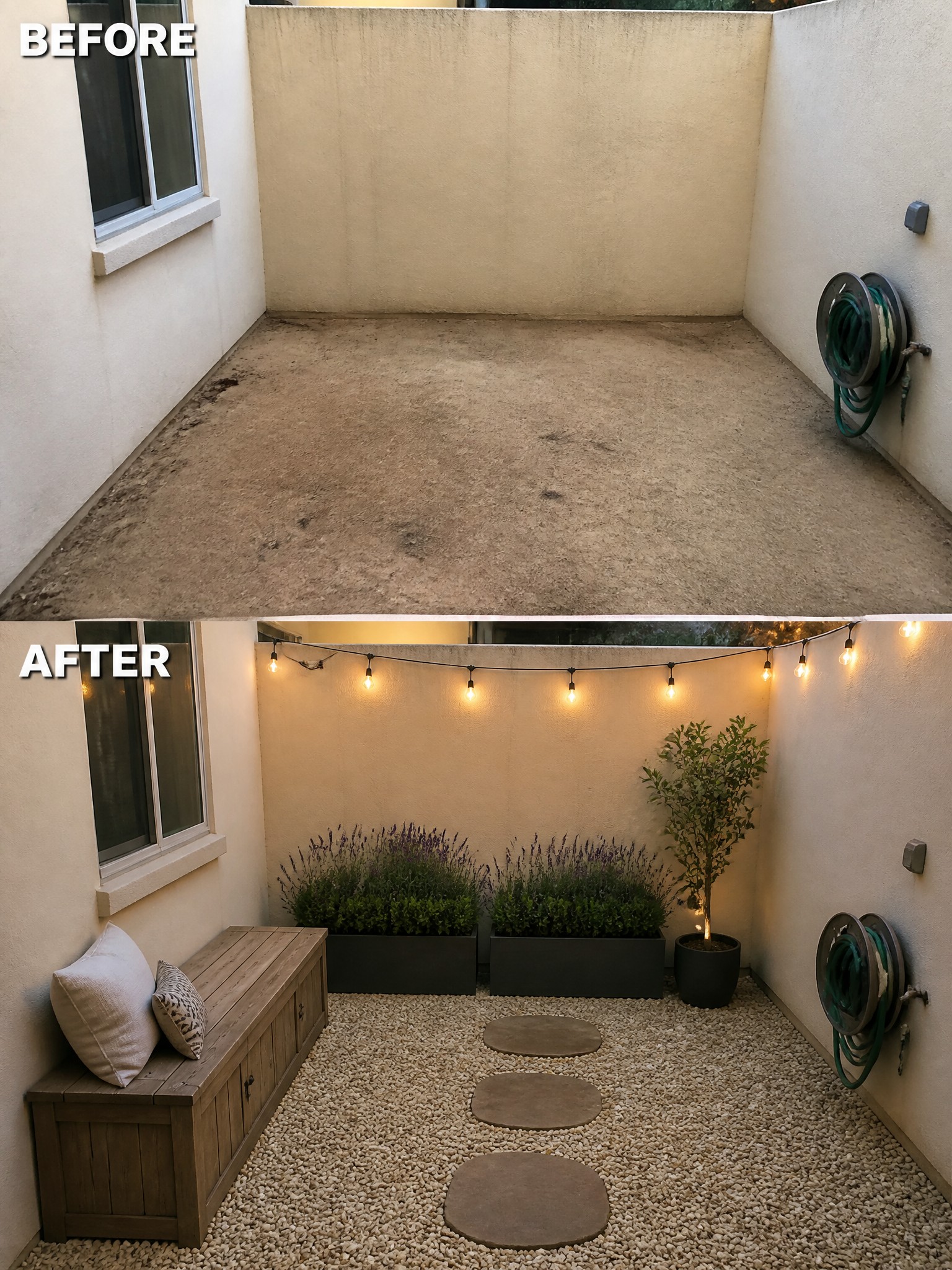
An empty concrete courtyard often feels like dead space in a small yard. Laying down gravel, adding a few stepping stones, and hanging string lights overhead makes the area feel finished and usable right away.
This approach works best in tight enclosed patios where furniture alone would look lost. Start with the ground cover and lighting, then add a bench and a couple of planters. Keep the rest simple so there is still room to walk through.
Add Defined Garden Beds To A Narrow Strip
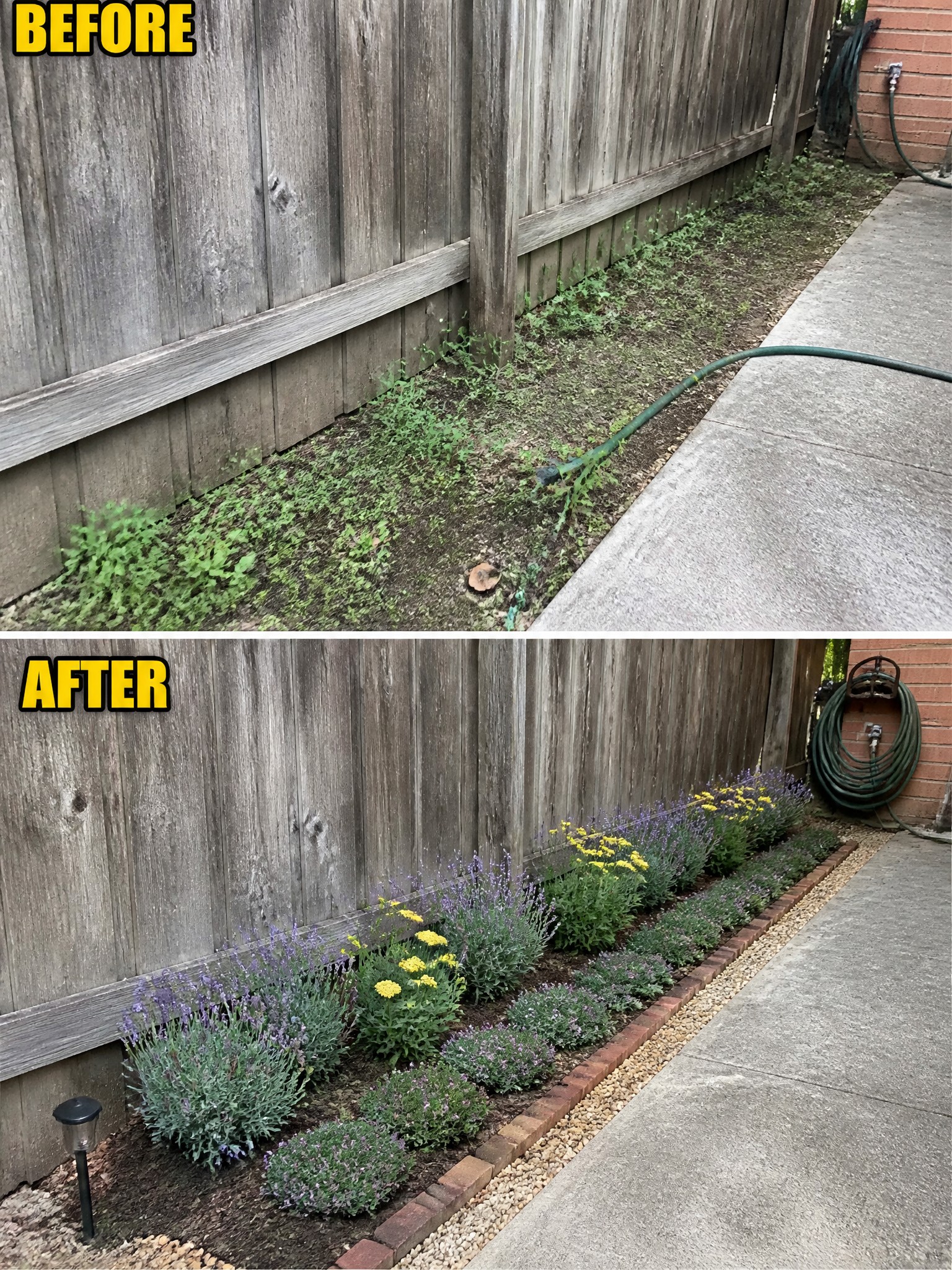
A weedy dirt strip next to a fence often gets ignored because it feels too small to bother with. Adding brick edging and a row of plants turns that same space into something that looks intentional instead of neglected. The edging keeps the soil and mulch in place, while the plants fill the area without crowding the walkway.
This approach works well along side yards or fence lines where space is tight. Start with cleanup and a simple border material that matches your budget, then choose low shrubs and perennials that stay in scale. Leave a little breathing room between plants so they can fill in without constant trimming.
Turn A Bare Backyard Into An Outdoor Seating Area
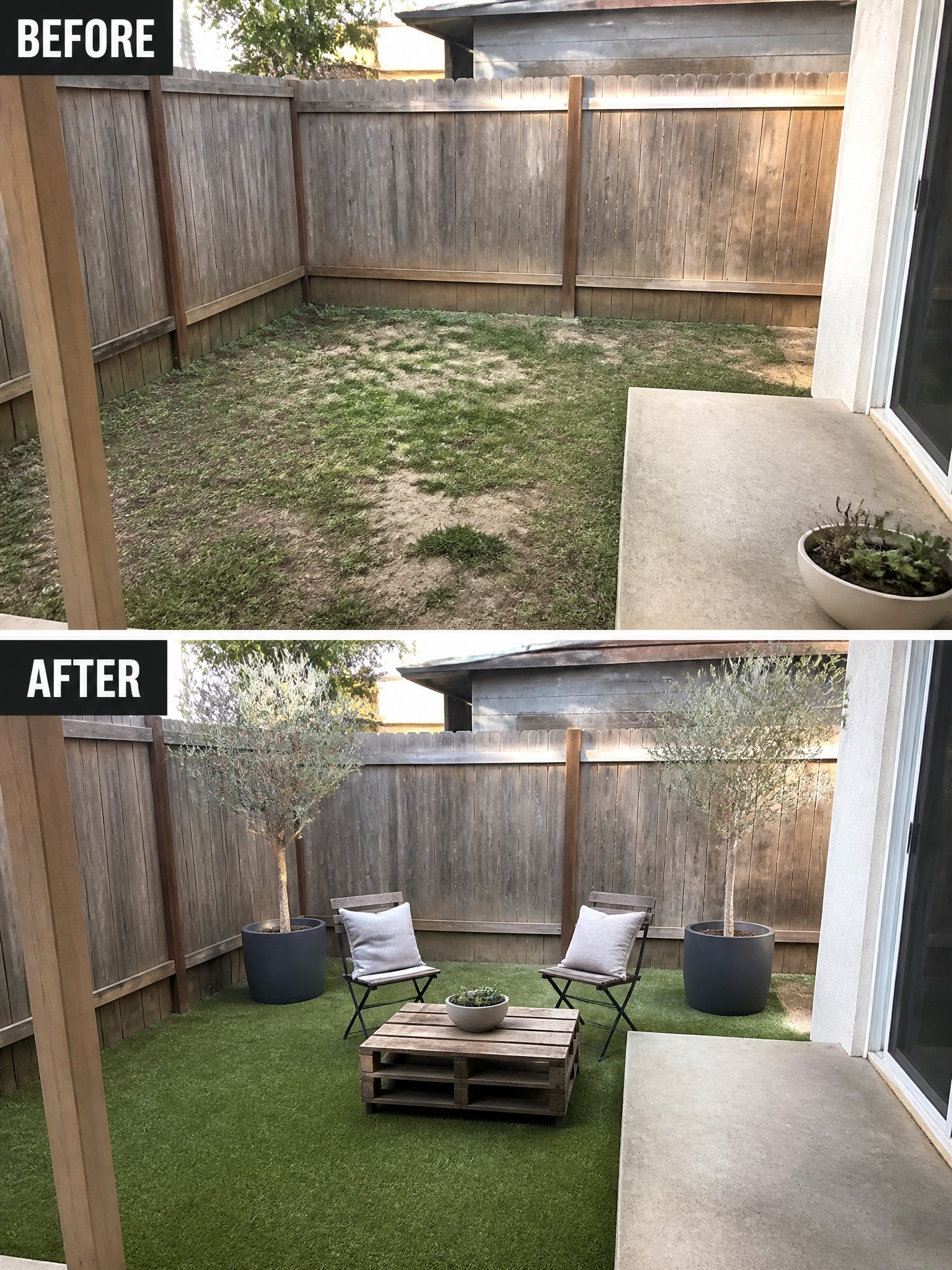
A patchy lawn with uneven grass often leaves a small backyard feeling unfinished and hard to use. Adding artificial turf creates a clean, level surface that instantly makes the space feel like a real room. Placing a couple of simple chairs and a low table in the middle gives the area a clear purpose without crowding it.
This approach works well in tight yards where real grass struggles. Start with the ground cover first, then add weatherproof seating that can stay out year round. Keep the furniture light so you can move it around as needed.
Turn A Weathered Deck Into A Seating Area
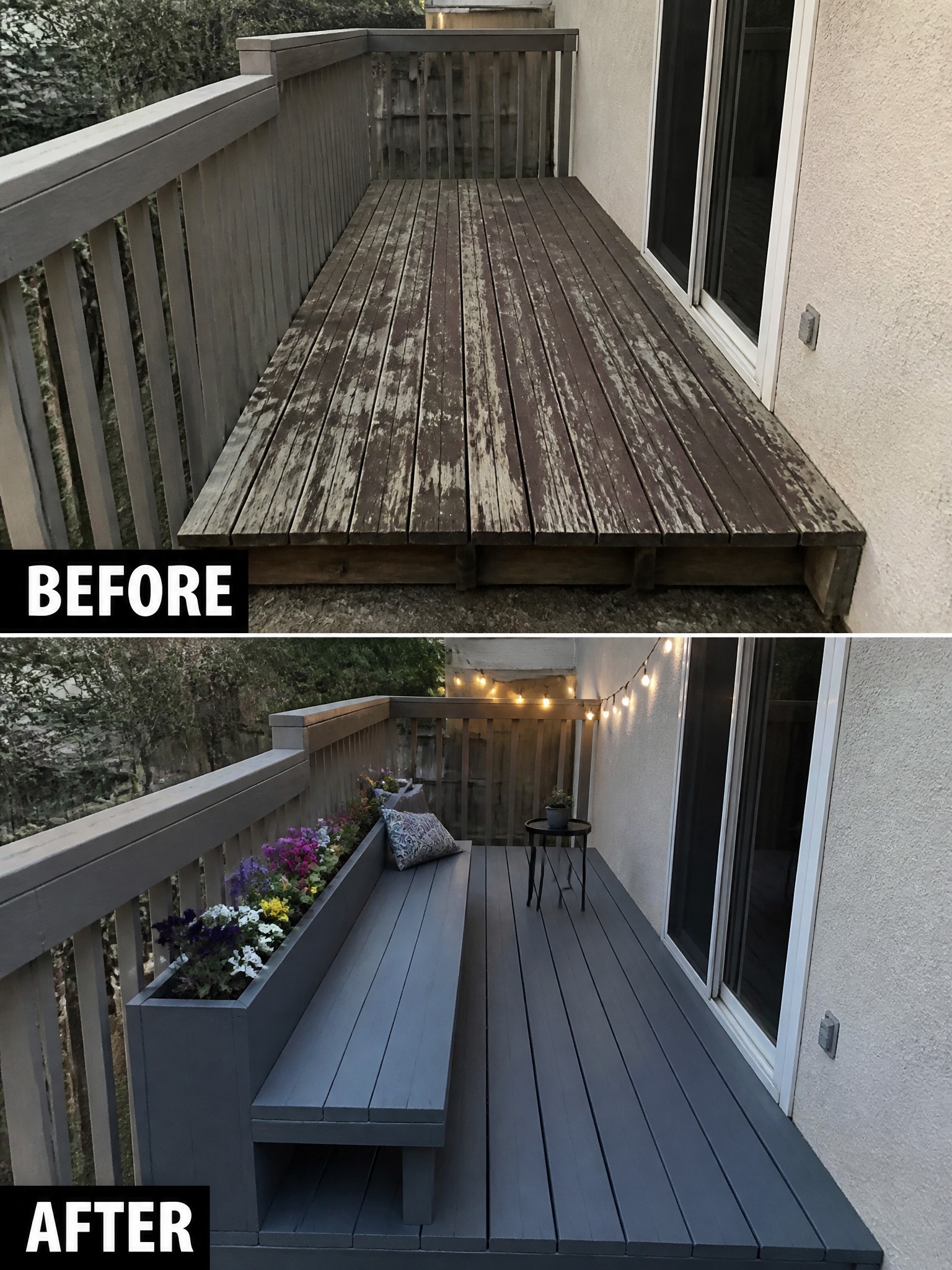
A tired wooden deck often gets ignored because it feels unfinished and hard to use. A coat of solid paint and one long built-in bench with a planter box give the space a clear purpose and make it comfortable right away.
This approach suits small decks or balconies where full furniture sets would crowd the floor. Keep the seating along one side, add simple lighting overhead, and leave the rest open so the area stays easy to walk through.
Turn A Bare Patio Into A Seating Area
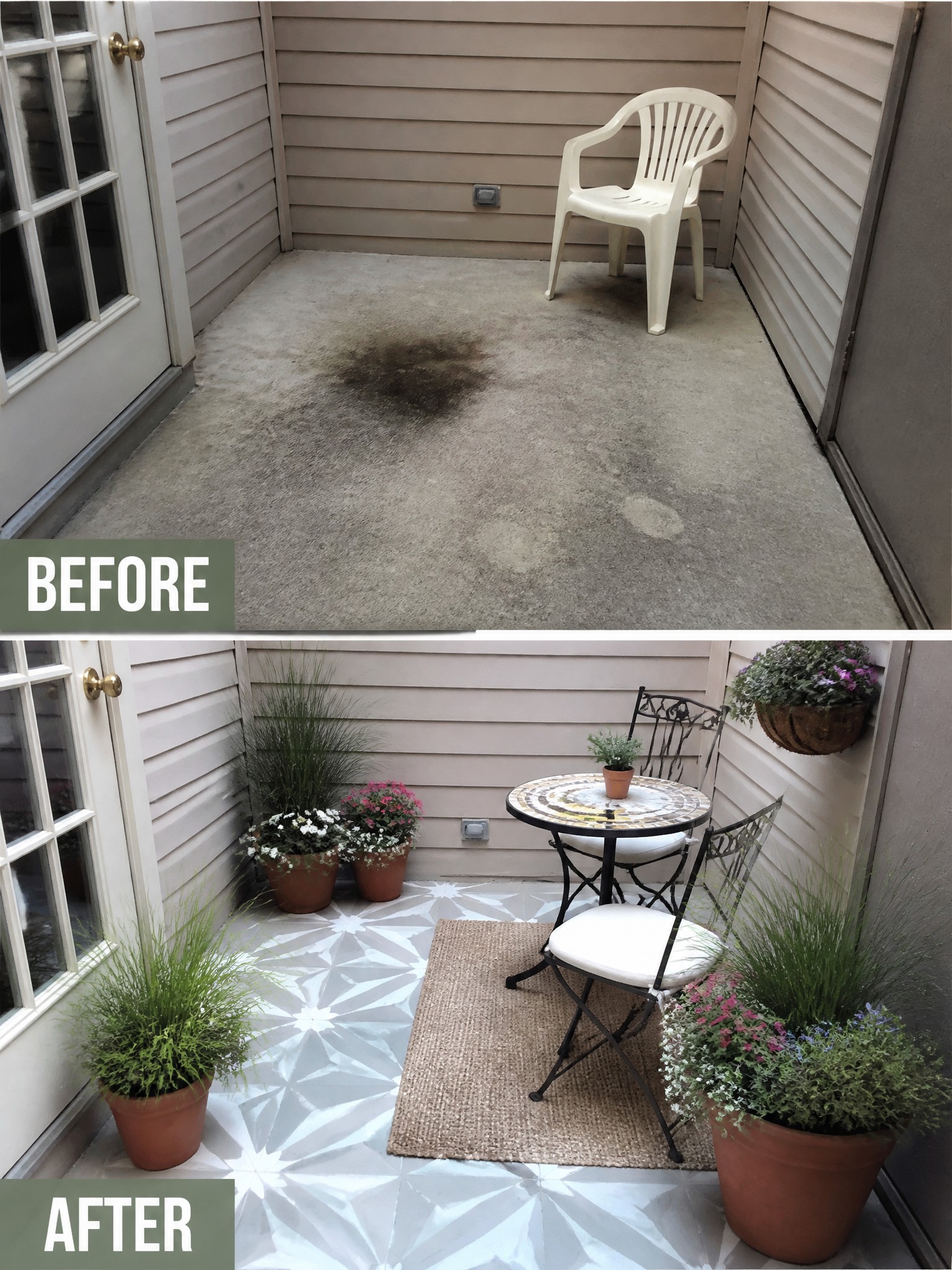
A small concrete patio can feel like wasted space when it has nothing on it but a single chair. Adding a simple floor treatment, a compact table and chairs, and a few pots of plants turns the same area into a place where you can actually sit and spend time.
This approach works best in tight side yards or small courtyards where every inch counts. Keep the furniture scale modest, use one rug to mark the seating zone, and bring in plants that can handle the local weather. The goal is to make the space feel intentional without crowding it.
Mount Planters On A Fence For Vertical Greenery
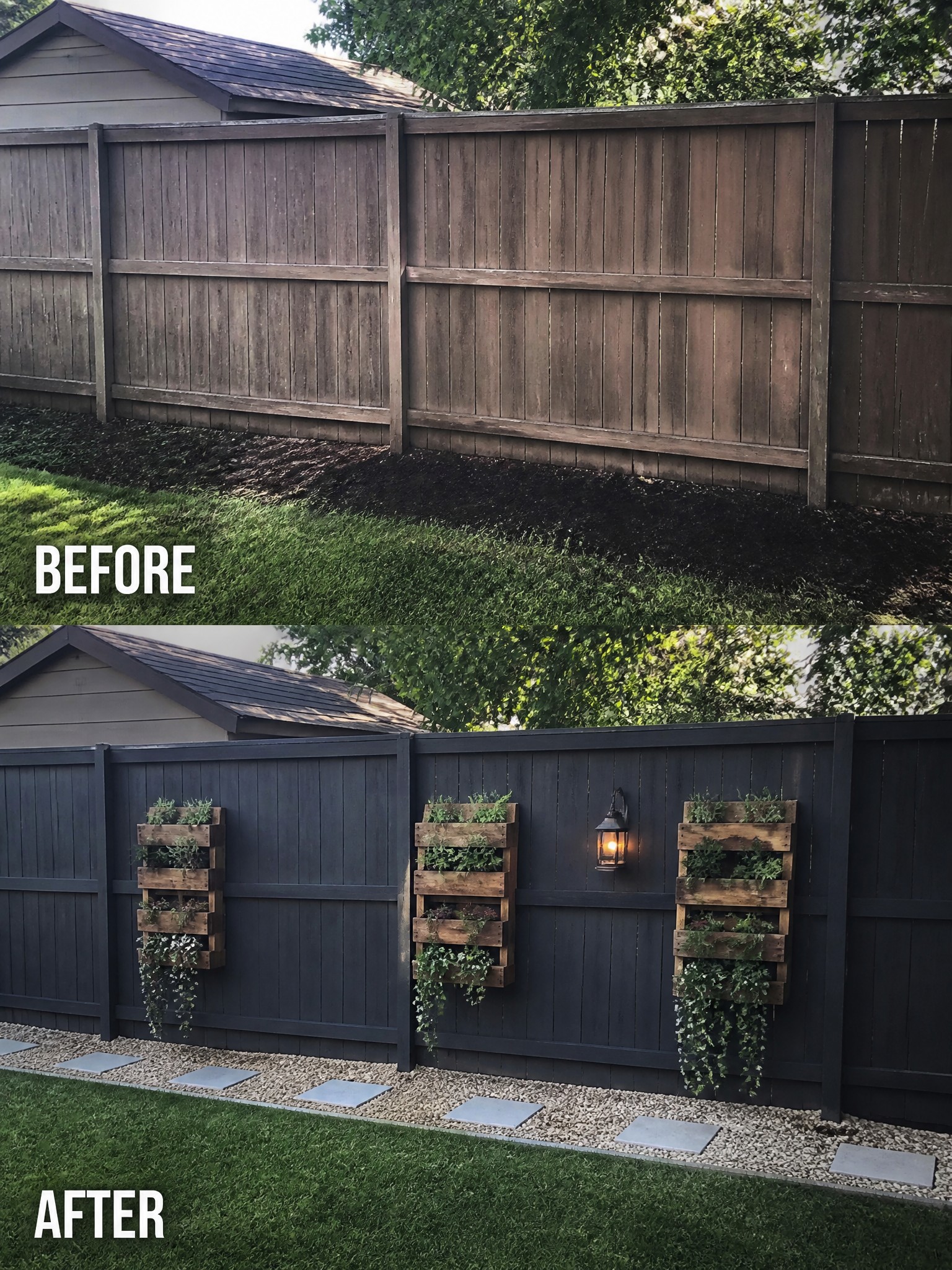
A plain fence can leave a long stretch of yard feeling empty. Mounting a few wooden planters directly on the fence adds layers of plants without taking up ground space, and a simple gravel edge with pavers keeps the base clean and defined.
This approach works best in narrow yards or tight side areas where ground beds are limited. Choose weatherproof planters, space them evenly, and mix trailing vines with smaller upright plants so the display stays full but easy to maintain.
Define A Tight Border With A Raised Planter
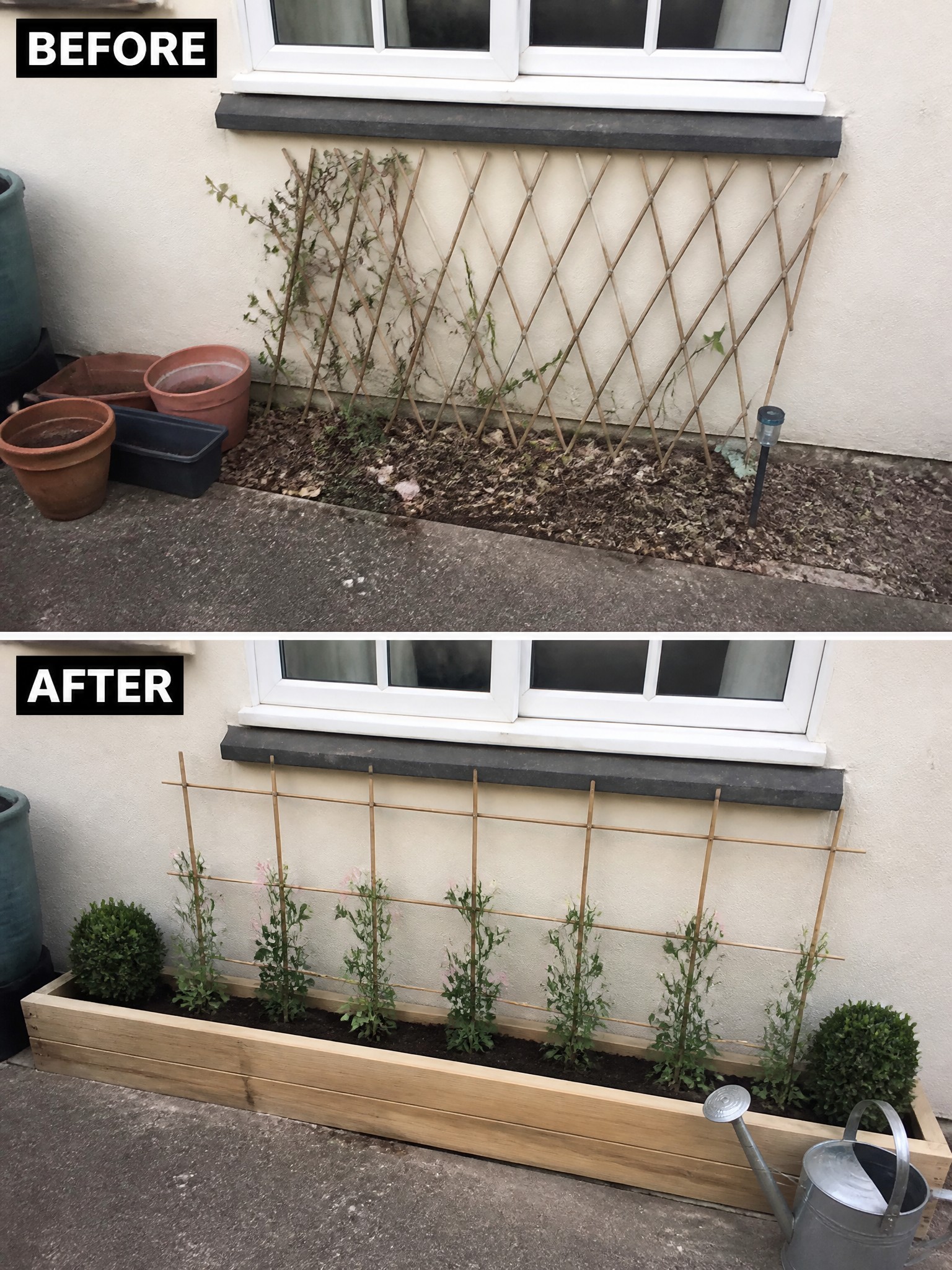
A narrow strip of ground along the house often ends up looking messy because there is no clear edge or support for plants. The simple fix is to add a raised wooden box with a basic grid trellis inside it. This keeps soil contained, gives climbing stems something to hold onto, and turns the space into an orderly row instead of scattered pots and dying stems.
The same approach works well on any slim patch next to a wall or path. Use straight boards for the box, run a few vertical and horizontal canes across the back, and plant young climbers at the base. Keep the box a comfortable width so you can reach everything without stepping on the soil.
Add Vertical Planters To Make The Most Of A Small Balcony
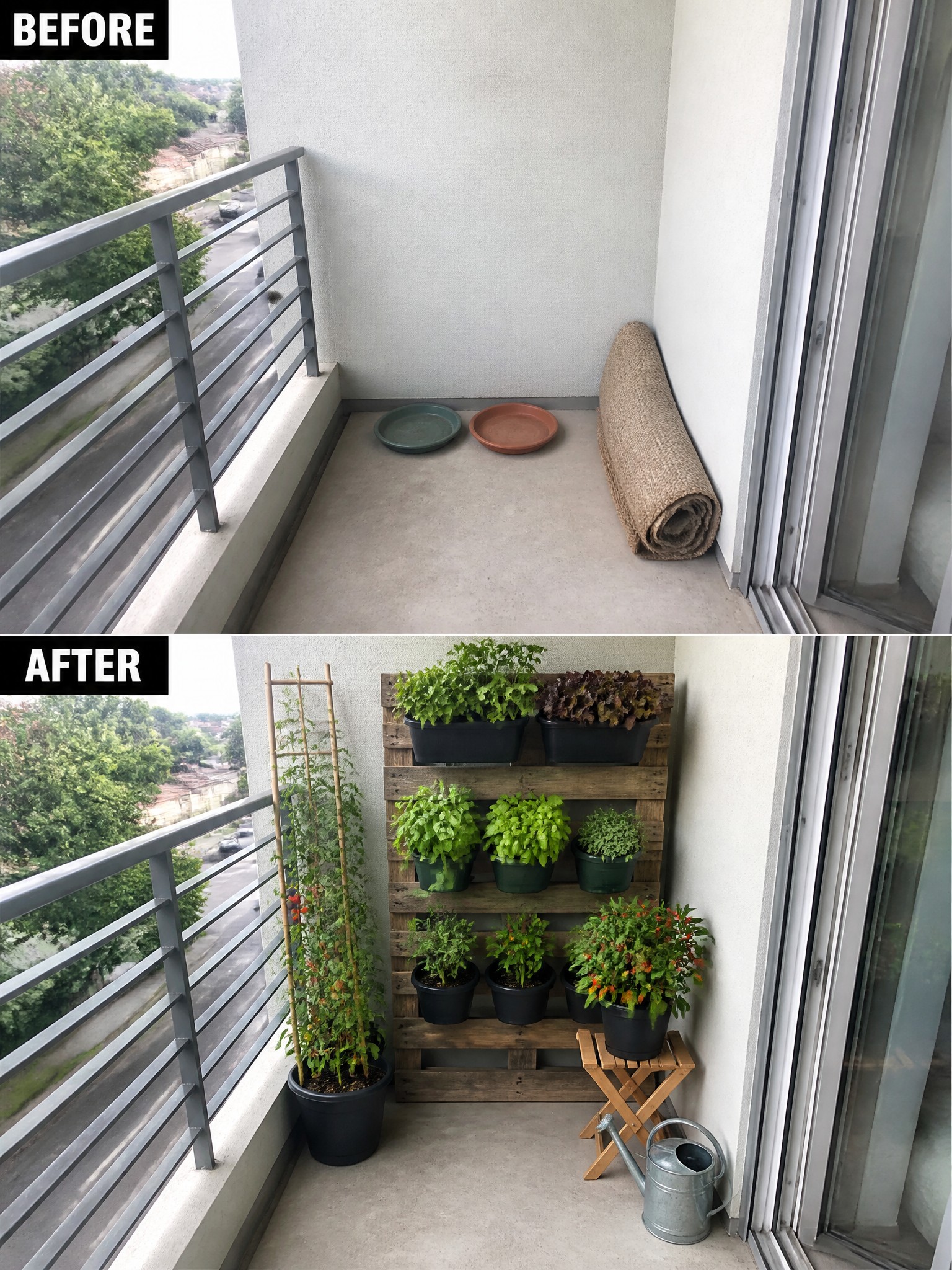
A bare balcony often stays empty because there is little room to spread out. Mounting a simple pallet planter on the wall and adding a few pots at different levels turns the same space into a working garden without taking over the floor.
This idea suits any small outdoor area with a solid wall and limited square footage. Use one vertical structure as the main feature, keep the pots a consistent size, and choose plants that grow upward so the area stays easy to move around in.
Turn A Muddy Corner Into A Gravel Garden Bed
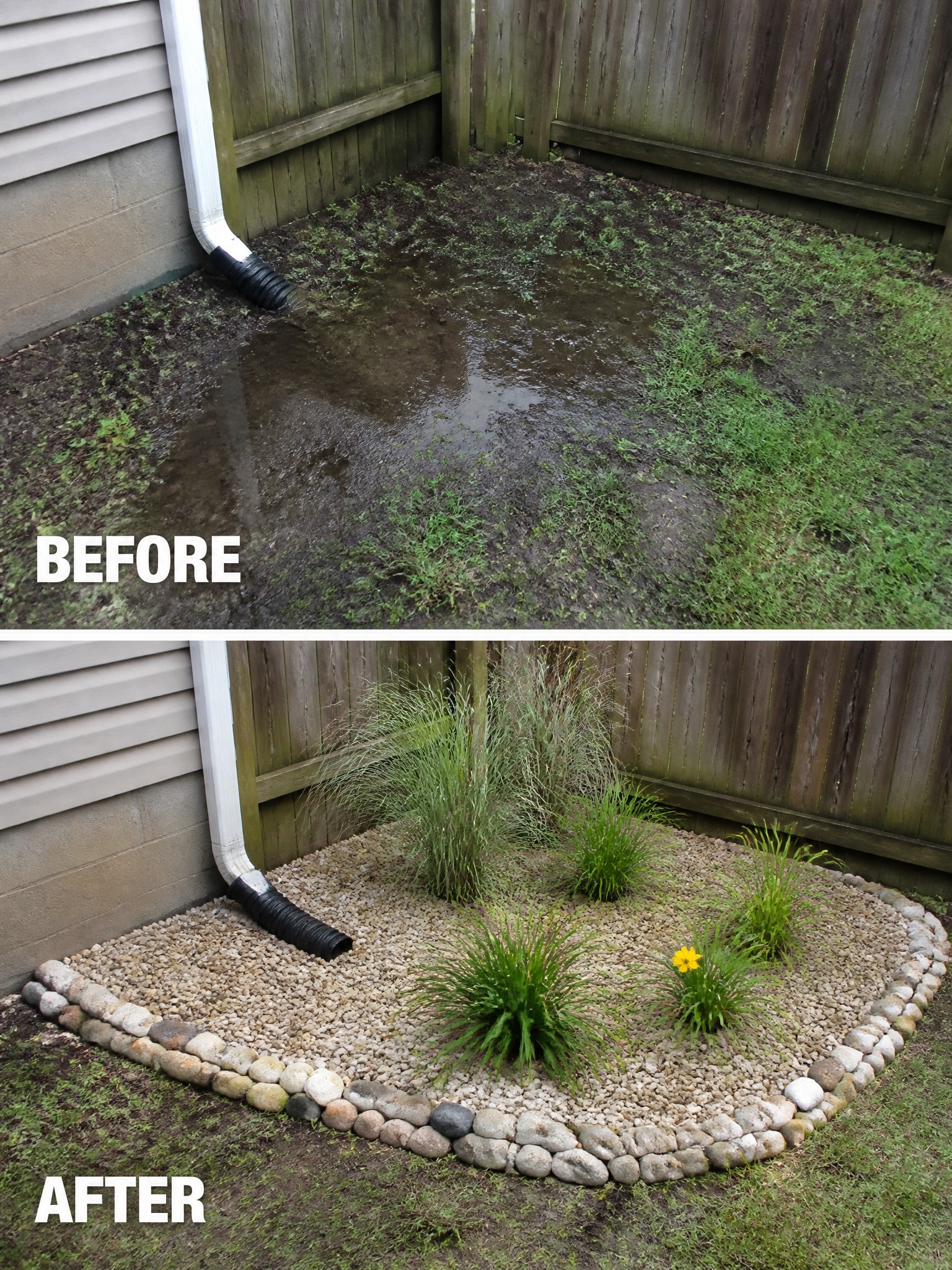
A wet spot near a downspout often stays soggy and weedy because water has nowhere to go. Adding a contained gravel bed with a rock border gives the water a place to drain while keeping the area looking tidy instead of neglected.
This approach works well in narrow side yards or back corners where grass refuses to grow. Start by clearing the mud, lay down a simple edge of stones, then fill with gravel and choose a few tough plants that can handle occasional moisture. Keep the planting light so the bed does not feel crowded.
Frequently Asked Questions
Q: Where do I start if my space feels too cramped for any changes?
A: Measure the area first and clear out clutter. Then pick one simple idea like hanging planters to free up floor room.
Q: How do I keep weeds from taking over after I set things up?
A: Lay down newspaper or cardboard before adding soil. It blocks weeds naturally and breaks down over time.
Q: What happens if the plants I choose don’t match the after photos?
A: Swap them out for similar growing habits that fit your light. Small tweaks like this keep the look fresh without much cost.
