

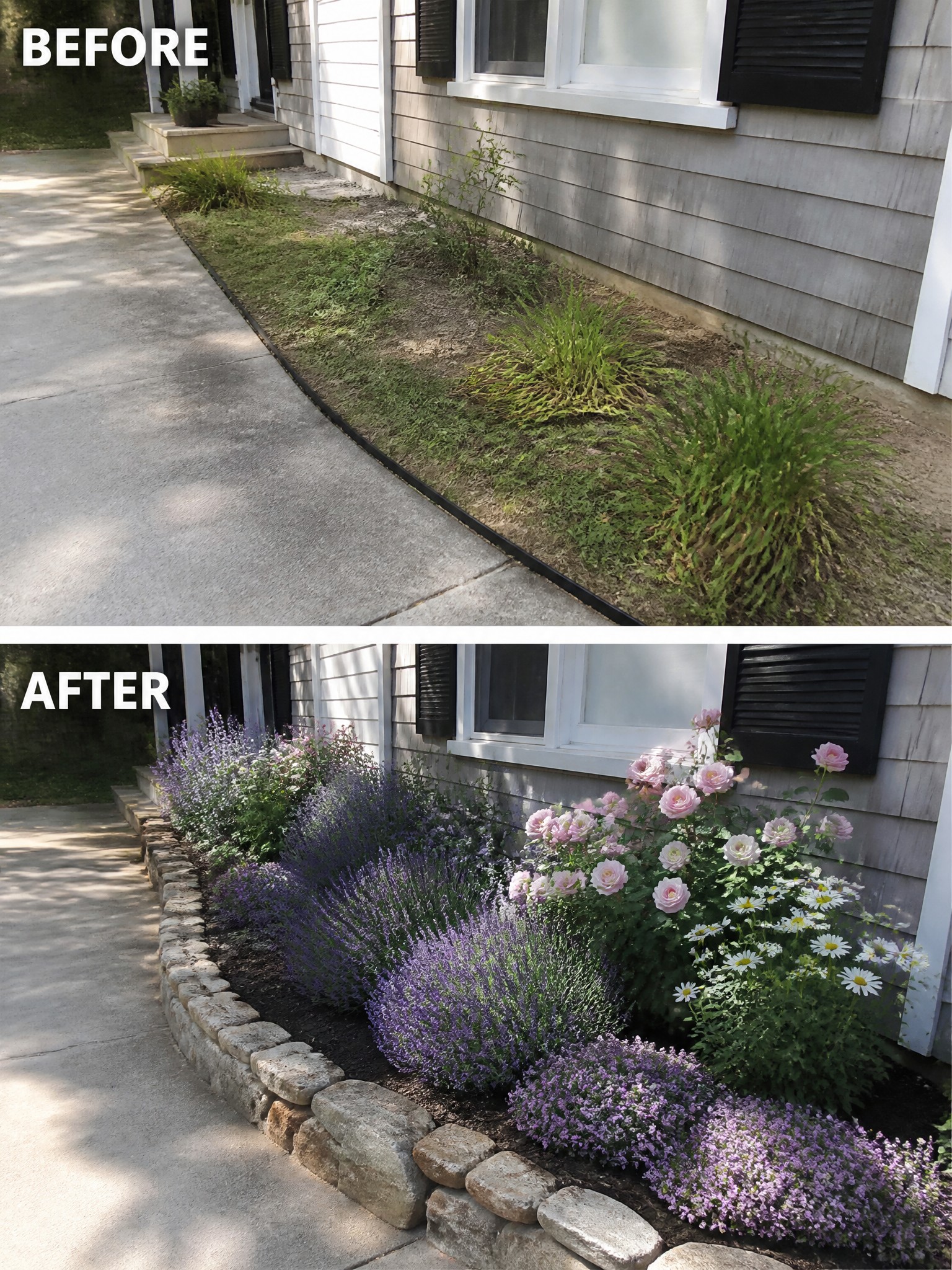
I’ve noticed that flower beds tend to lose their shape when weeds creep in and the planting lacks any clear edges or layers.
Adding a simple border or rearranging a few clusters of plants often brings back a sense of order without requiring major work.
The difference shows up quickly once the basic layout settles.
In my yard I would focus on edging first since it makes the rest of the space look intentional even before new flowers go in.
Cottage style suits this kind of gradual improvement because it favors soft mixes that can fill gaps over a season or two.
Add Edging To Define A Flower Bed
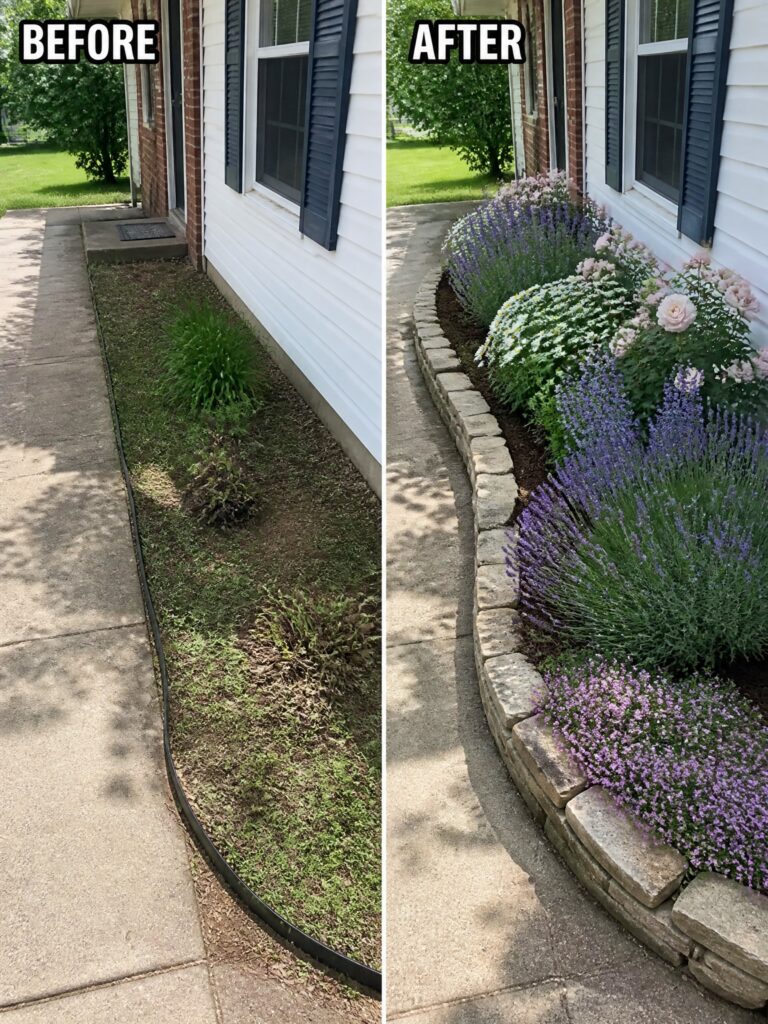
A narrow strip of weeds and bare soil along the house can look neglected even when the rest of the yard is fine. Adding a low stone edge and filling the space with plants turns that same strip into a clear garden bed that stays tidy and separates the path from the siding.
This idea works best on foundation lines or sidewalk borders where you need structure more than a big redesign. Use a simple edging material that matches your house, clear out the overgrowth first, and pick compact plants that will not spill onto the walkway. The result feels finished without requiring a full landscape overhaul.
Add Layered Planting To Foundation Beds
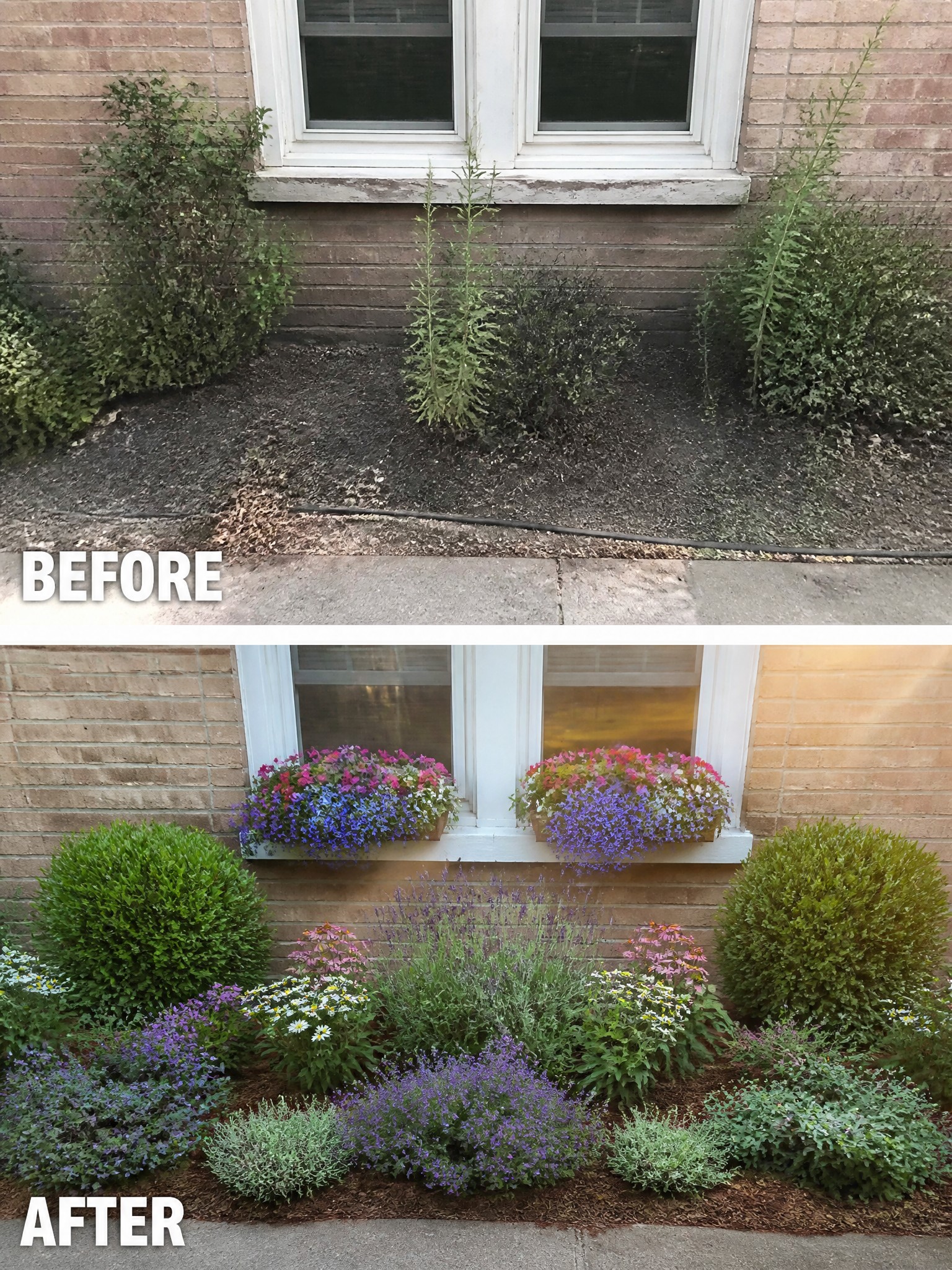
Clearing out the tall weedy growth and bare soil first made room for a much simpler layout. Rounded shrubs now frame the window while lower flowers and perennials fill in the front, giving the bed a finished look without crowding the house.
This approach works well along any foundation where the original shrubs have grown wild. Start with a few larger shrubs for structure, then add mid-height and low plants in groups so the bed stays easy to maintain and still shows color through the seasons.
Define A Bare Border With Gravel Edging
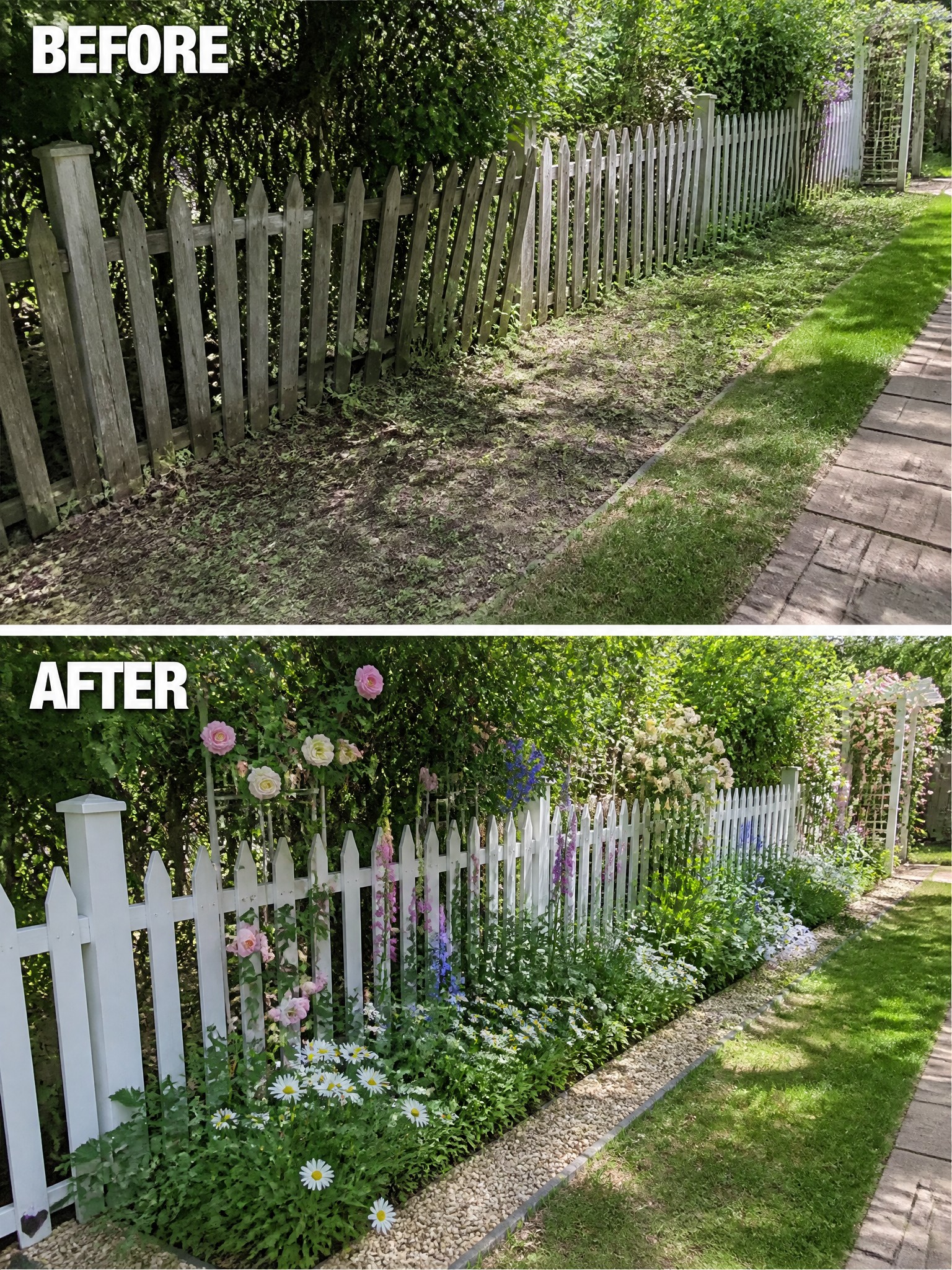
A bare strip of weeds and dirt next to a fence does not do much for the yard. Adding a simple gravel edge creates a clear boundary, and filling the bed with layered plants turns the space into something useful and attractive. The fence also got a fresh coat of paint, which helps the whole area feel more intentional.
This approach works well along fences or property lines where the ground has been left open. Start by cleaning up the area and laying down edging before planting. It keeps the bed from spreading into the lawn and makes routine maintenance easier over time.
Add Defined Borders To Foundation Beds
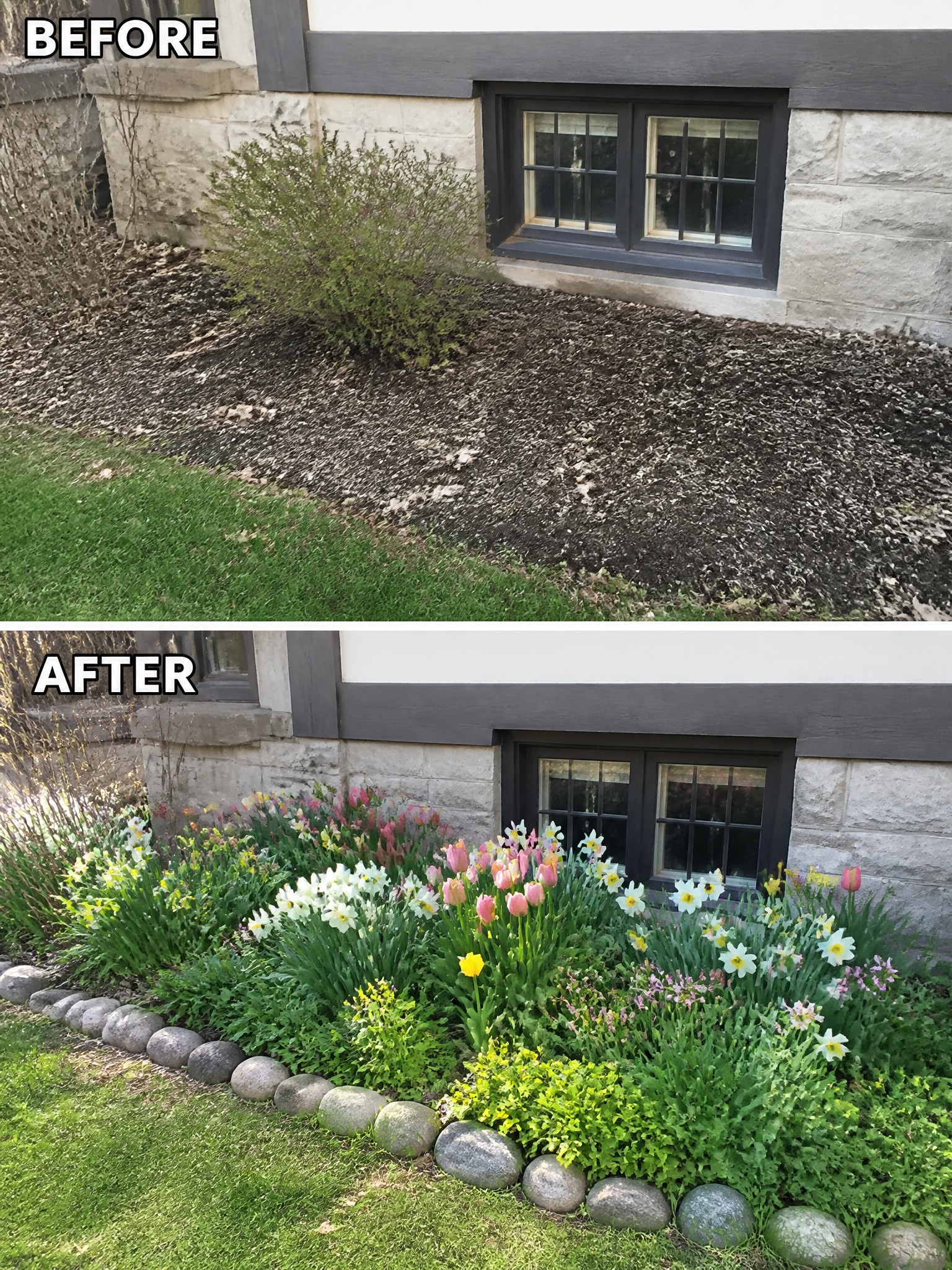
A bare strip of mulch along the house often looks unfinished, even when it is tidy. Adding a simple rock edge and filling the bed with layered flowers turns that empty space into a clear garden border that feels intentional and cottage-like.
This approach works well along any foundation where you want structure without blocking windows. Start by laying out the edge with stones or pavers, then plant in groups of varying heights so the bed looks full from the start. The same idea can be used on a small scale in front of a single window or stretched along an entire side of the house.
Use Brick Edging To Define A Garden Bed
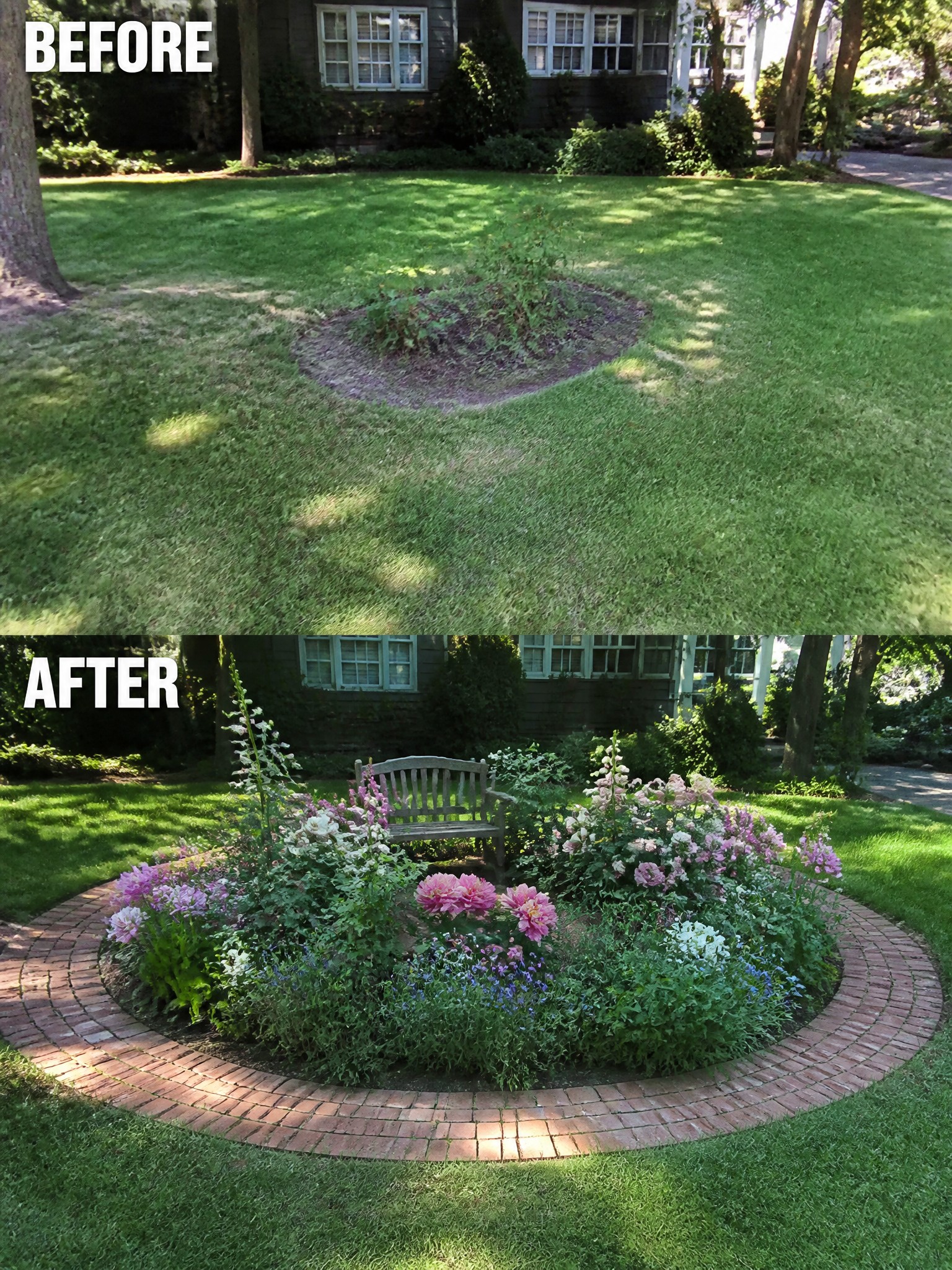
A plain lawn can look unfinished when there is no clear spot for planting. Adding a brick border turns an open area into a planted bed that feels intentional and easier to maintain. The before photo shows a small, ragged patch of weeds with no edge, while the after shows a full circle of bricks holding flowers, shrubs, and a bench in place.
This works well in a medium or large lawn where you want one focal point without breaking up the whole yard. Start with the edging first so the shape stays clean, then fill in with plants that match your cottage style. Keep the circle or shape simple and leave enough grass around it for mowing.
Add Structure To An Overgrown Side Yard
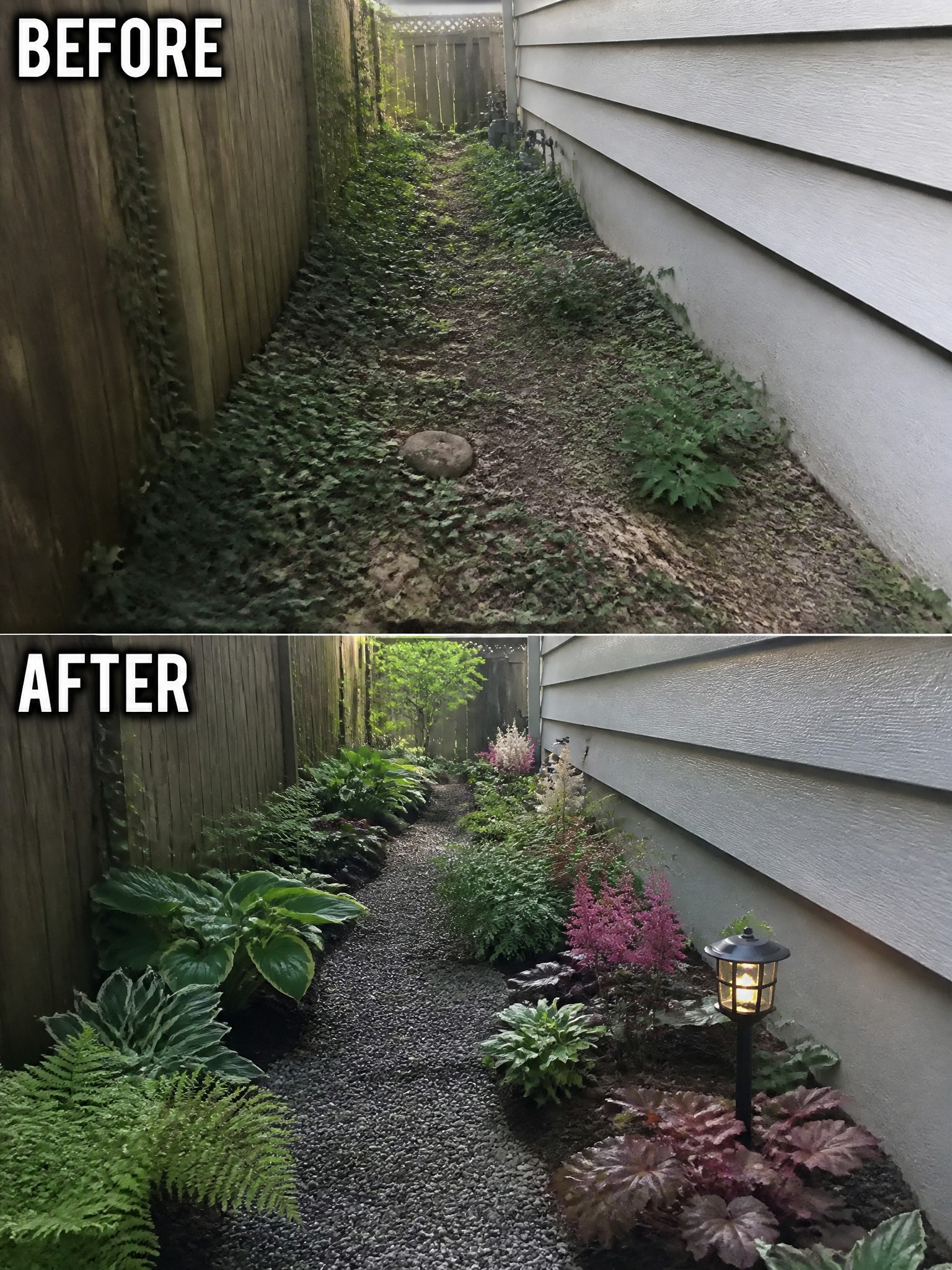
A narrow space between a fence and the house often turns into a weedy mess when left alone. Clearing the overgrowth and laying down a gravel path with planted borders on both sides turns the area into something usable and easy to maintain. The gravel keeps the ground neat while the beds give the plants room to fill in without taking over the walkway.
This approach works well along the side of a house or in any tight passage where you need access but still want greenery. Start by removing the worst of the weeds, then add a simple edging or just dig beds along the edges. Choose shade-tolerant plants that spread nicely and keep the path wide enough to walk through comfortably.
Define A Flower Bed With Stone Edging And Layered Planting
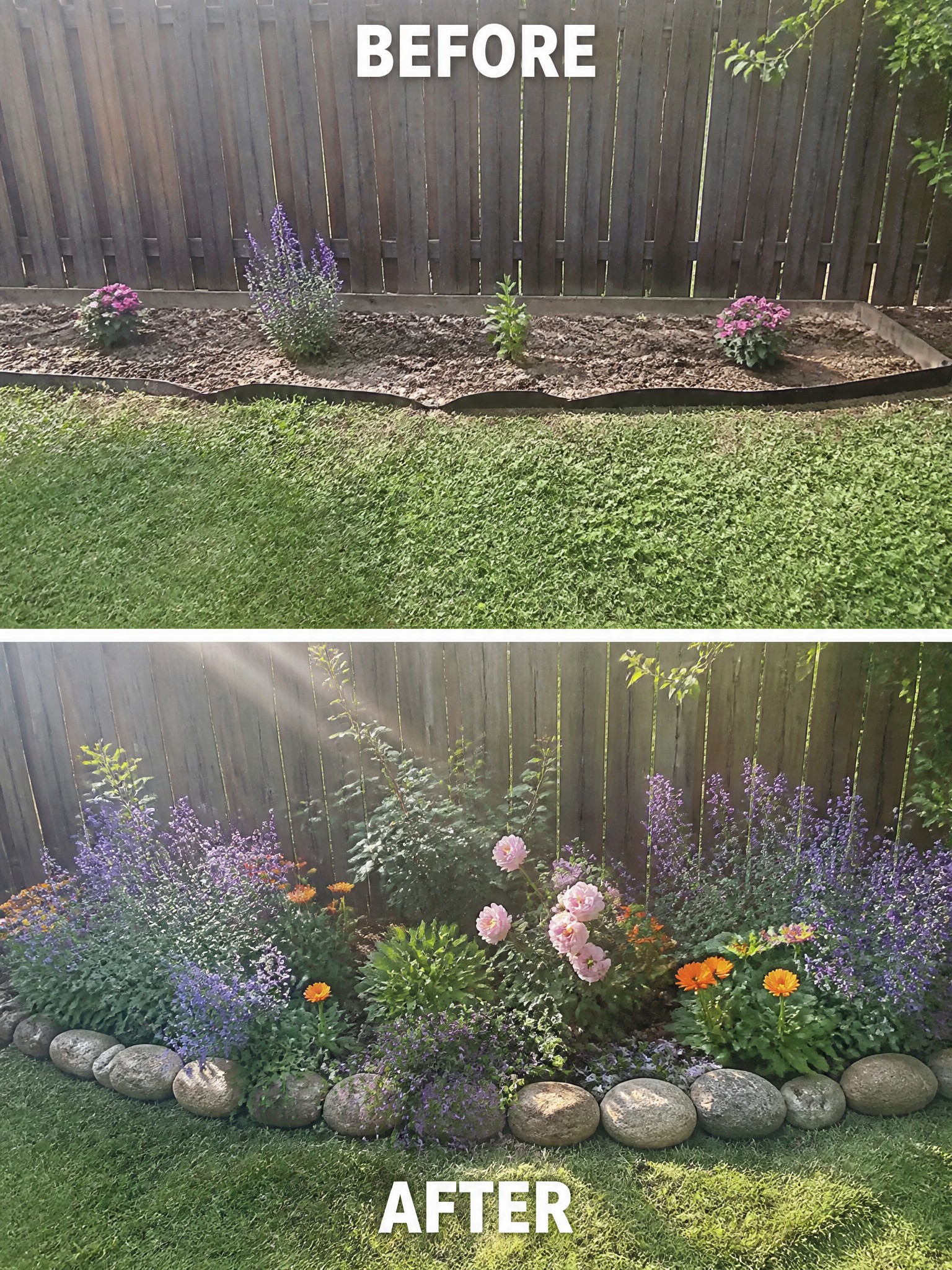
The before photo shows a thin strip of soil with a few scattered plants and a wavy metal edge that did little to contain anything. The after photo fills the same space with dense layers of flowers in different heights, plus a simple row of large rocks that gives the bed a clear shape against the lawn.
This approach works best along fences or property lines where you want a soft look without a lot of hardscaping. Start by cleaning up the soil and setting a basic edge with rocks or similar material so the bed reads as intentional. Then plant in layers, mixing taller perennials toward the back with shorter annuals and ground cover in front. Keep the plant list simple and repeat a few colors so the border feels full without looking crowded.
Add A Flower Border Along A Fence
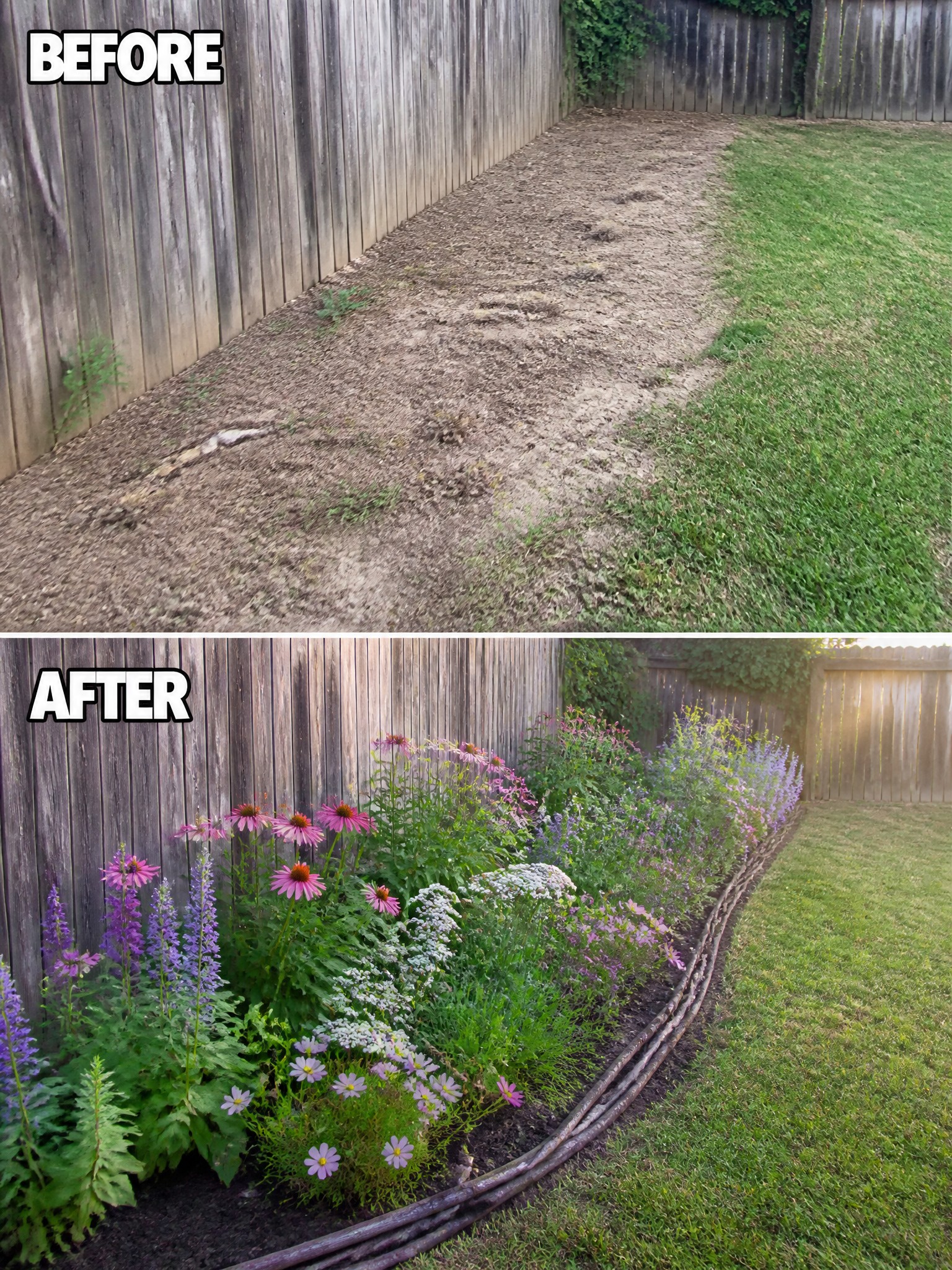
A long bare strip of dirt next to a fence often looks unfinished and hard to maintain. Adding a defined flower bed fills that space with color and structure while keeping the lawn edge clean and easy to mow.
This works best in narrow side yards or along property lines where you want some interest without taking up much room. Start by clearing weeds and adding a simple border, then choose a mix of taller perennials in the back and shorter flowers toward the front so everything stays visible from the lawn.
Frame A Garden Entry With An Arched Gate
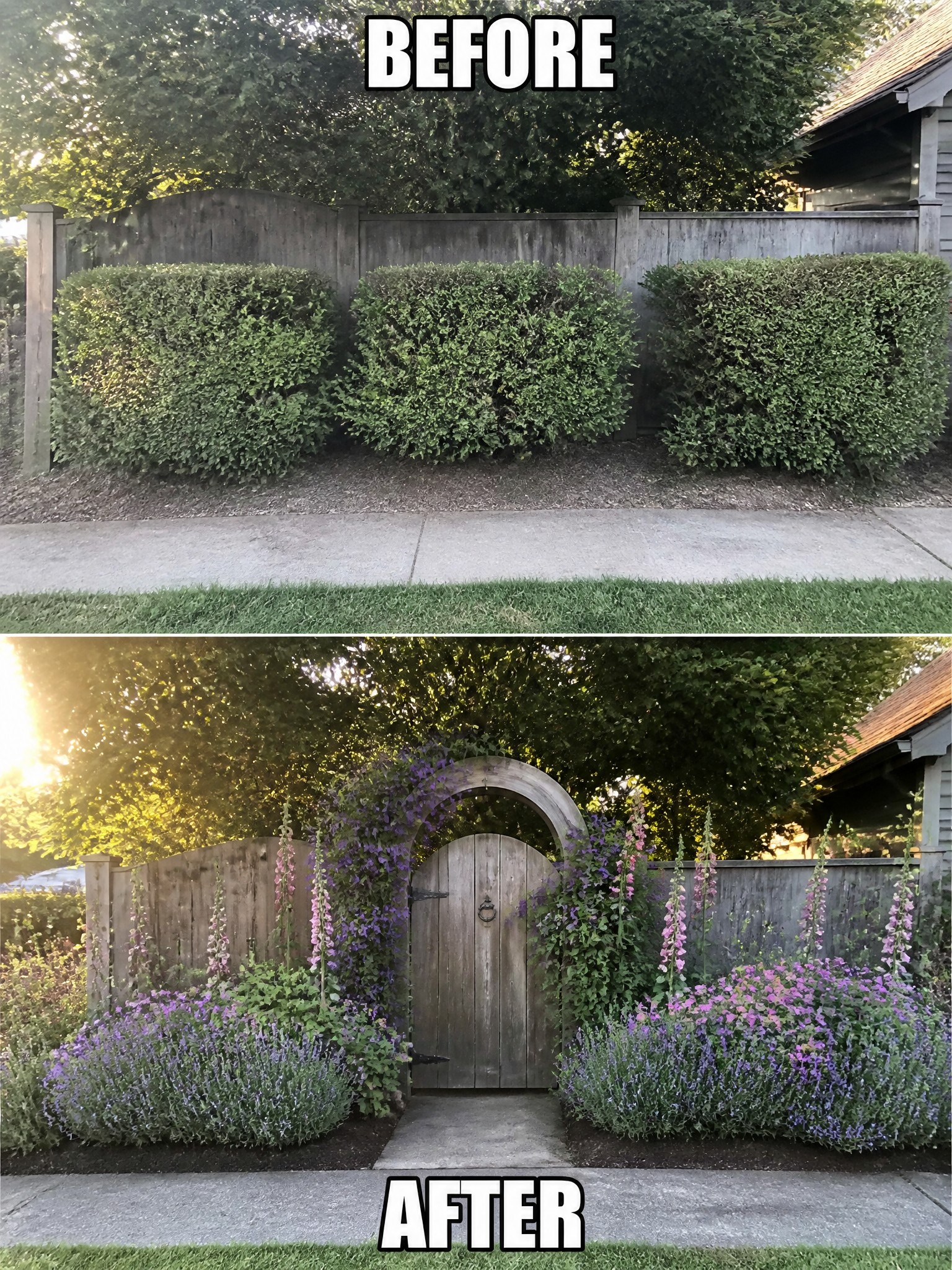
A plain row of shrubs along a fence can look flat and forgettable. Adding an arched gate in the center gives the space a clear focal point and turns the border into something more intentional. The after version shows how the gate, paired with tall climbers and lower flower beds on each side, creates structure without needing a full redesign.
This idea works well along a side yard or back fence where you want a bit more definition. Start with a simple gate and arch, then layer in a mix of heights in the planting so the entry feels welcoming rather than closed off. Keep the beds fairly narrow so the path stays easy to walk through.
Use A Brick Path To Define A Narrow Side Border
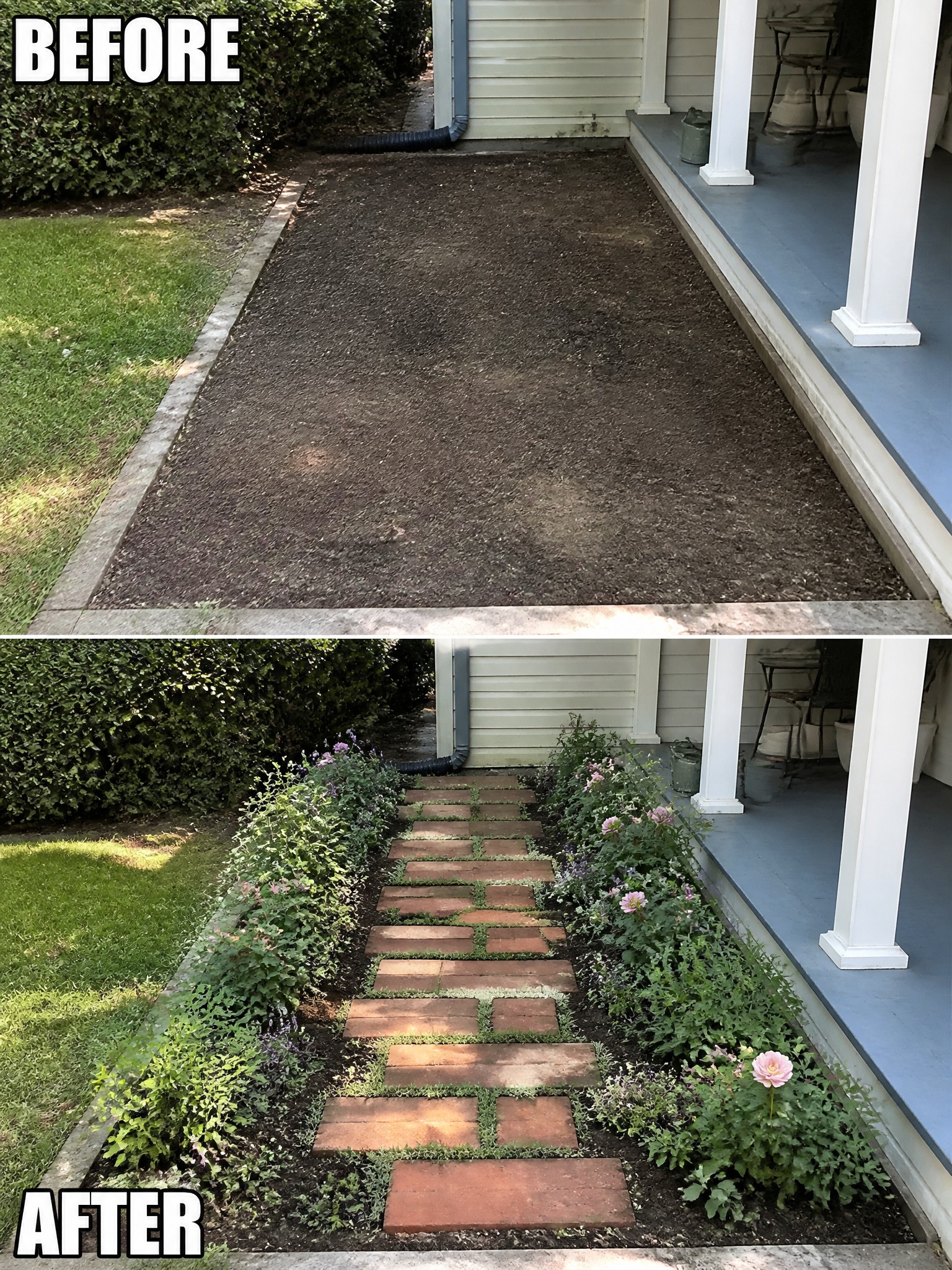
A bare strip of dirt or mulch beside a porch rarely feels intentional. Adding a brick path down the center gives the space a clear purpose and creates natural edges for planting on both sides.
This idea works best on long, narrow borders where you want foot traffic without losing garden space. Keep the beds reachable from the path so they stay easy to maintain, and repeat a few plant shapes rather than filling every inch.
Build Retaining Walls To Terrace A Sloped Yard
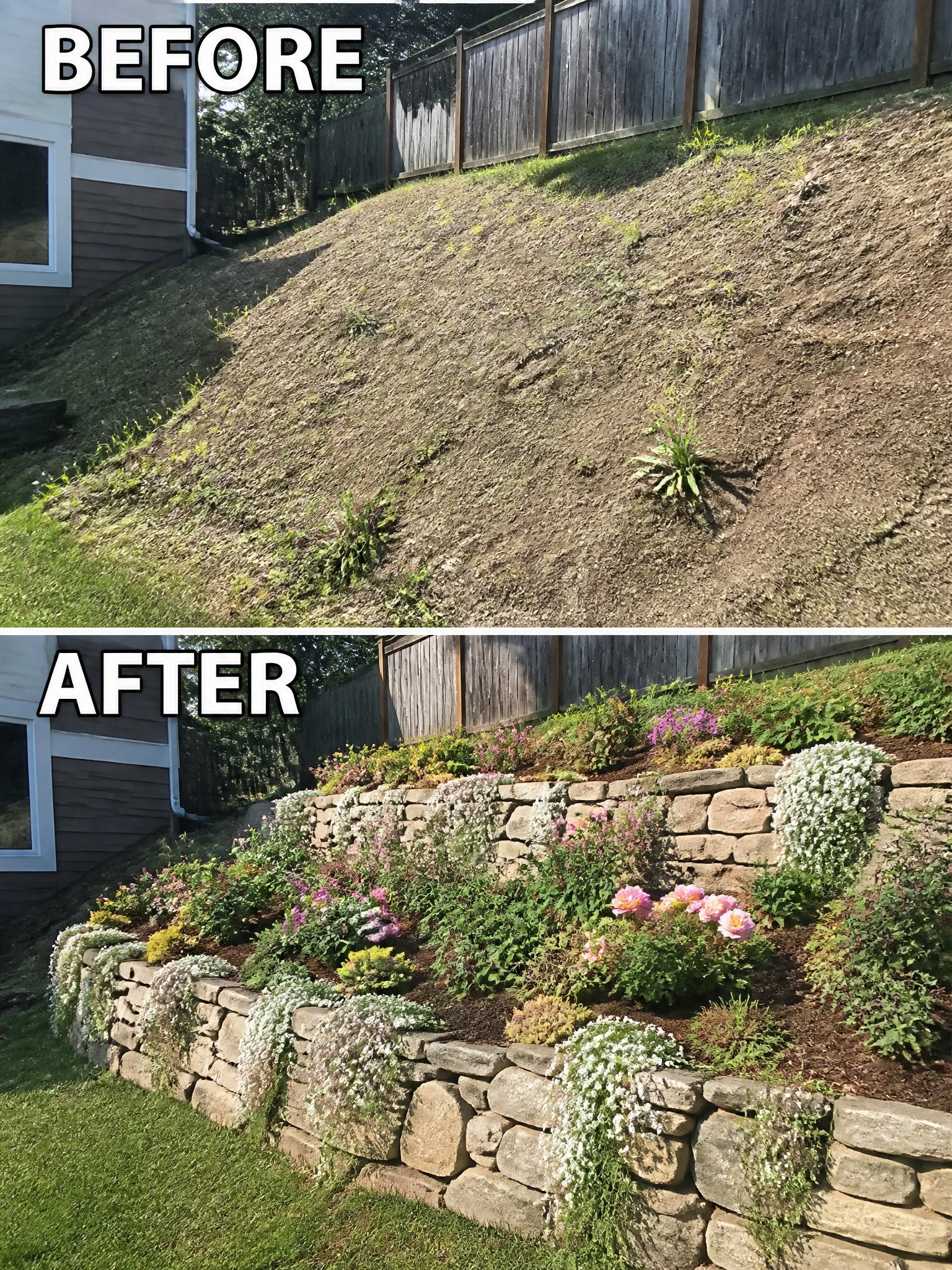
A bare slope is difficult to plant because water runs off and soil keeps shifting. Low stone retaining walls fix this by creating flat beds that hold everything in place and give plants room to grow.
This idea works on any yard with a noticeable grade. Put the walls in first to shape the space, then add soil, mulch, and plants that match your conditions.
Create A Defined Flower Bed Along The Foundation
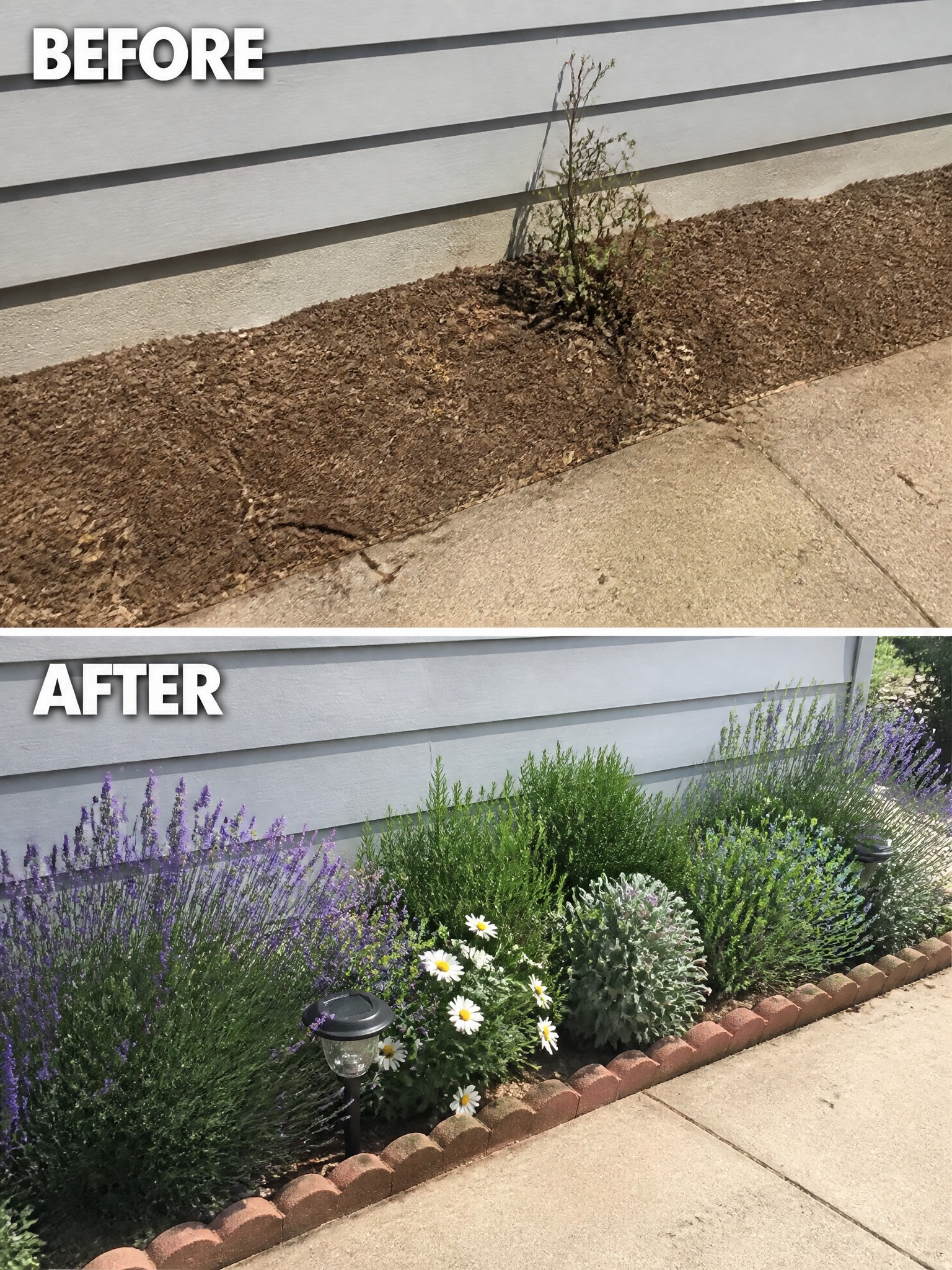
A bare strip of mulch right against the house often looks unfinished and can make the whole side of the yard feel neglected. In this case the simple fix was to add a clear border and fill it with a mix of low shrubs and flowering plants that give the area shape and color without crowding the walkway.
This approach works well on any home where the foundation meets a path or lawn. Start by laying down a simple edging material to hold the bed in place, then choose a few repeating plants that stay in scale with the space. Keep the bed narrow enough that it does not block movement, and add a light or two if the area stays shaded in the evening.
Replace Matching Shrubs With A Layered Flower Border
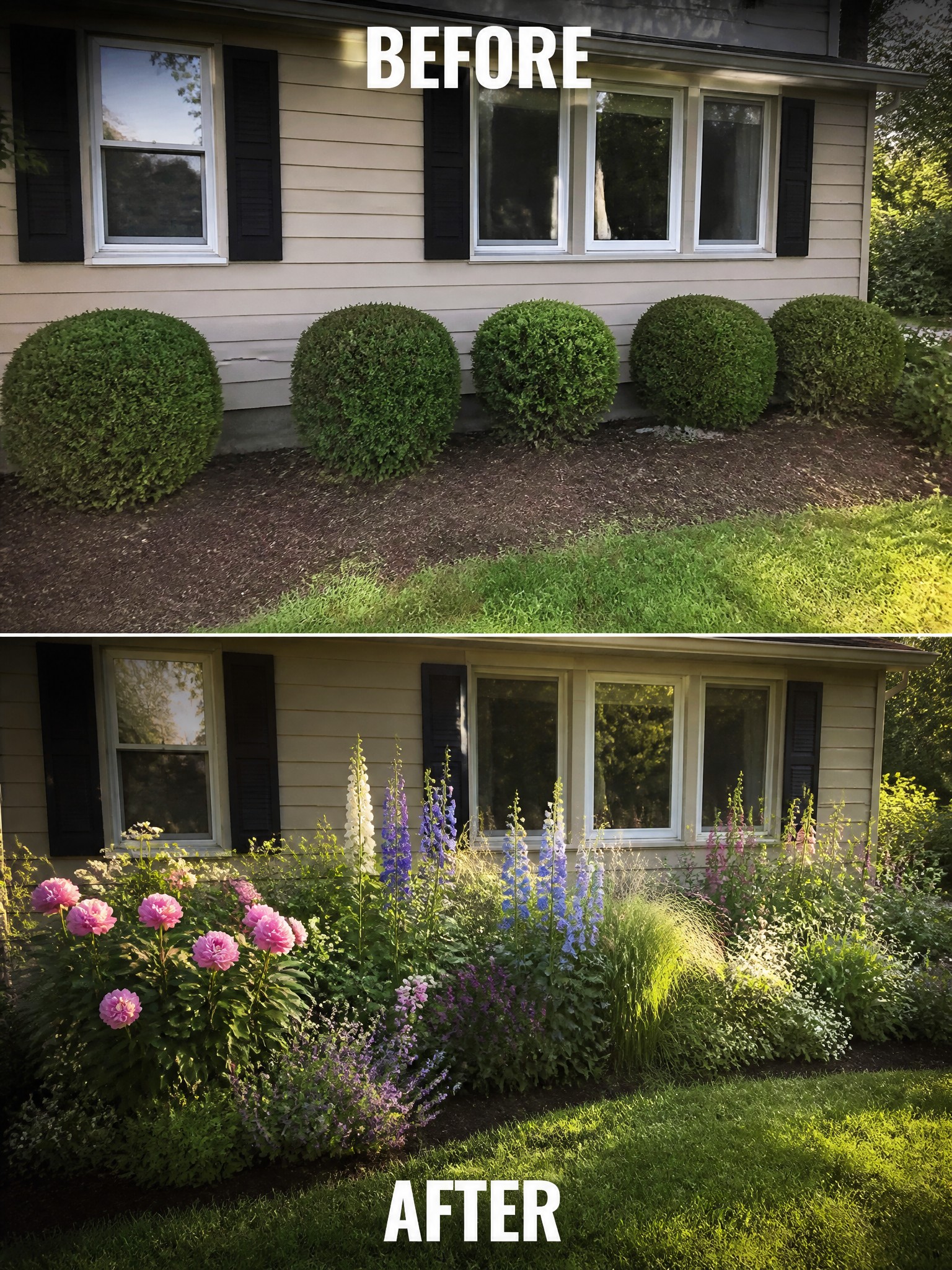
A straight line of identical round shrubs can make the front of a house look flat and repetitive. Removing them and planting a mix of perennials in different heights and bloom times gives the same space more shape and color without needing major construction.
This approach works well along a foundation where the ground is already prepared. Choose a few taller plants for the back, midsize flowers in the middle, and lower growers near the edge. Keep the lawn line clean so the bed stays easy to maintain.
Add An Arch And Curved Beds To A Bare Corner
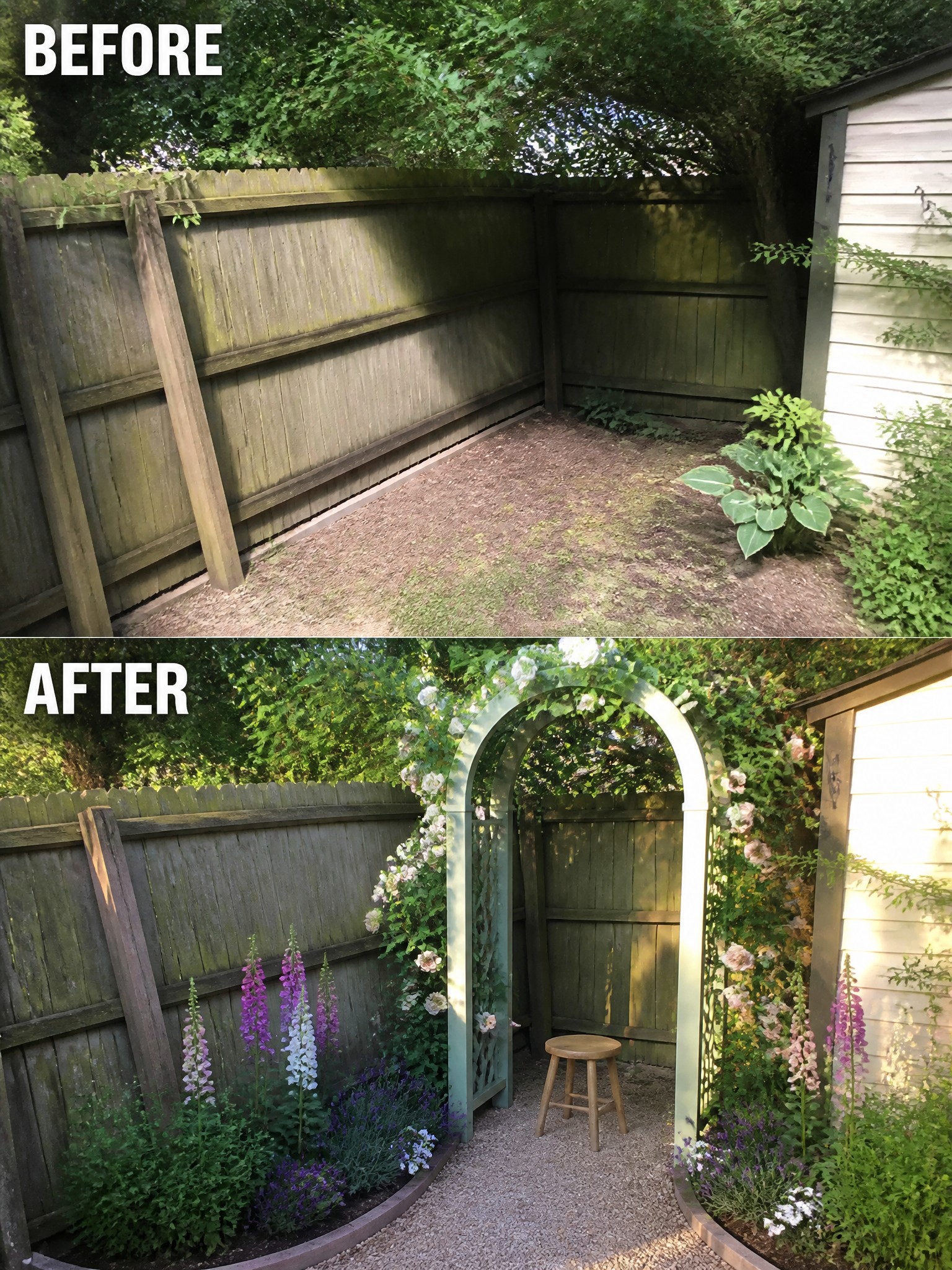
A plain dirt corner next to a fence can feel like wasted space until you give it clear shape. Adding a garden arch as the main focal point and wrapping curved beds around it turns the area into a small cottage garden room. The gravel underfoot keeps the space practical while the planting softens the fence and creates depth without crowding the area.
This idea works well in small backyards or side yards where you want structure without a full redesign. Start with the arch and the bed edges first so the layout feels intentional, then fill the beds with a mix of tall and low plants that repeat along both sides. Keep the path width comfortable for walking and choose gravel or mulch that drains well.
Define A Garden Border With Simple Stone Edging
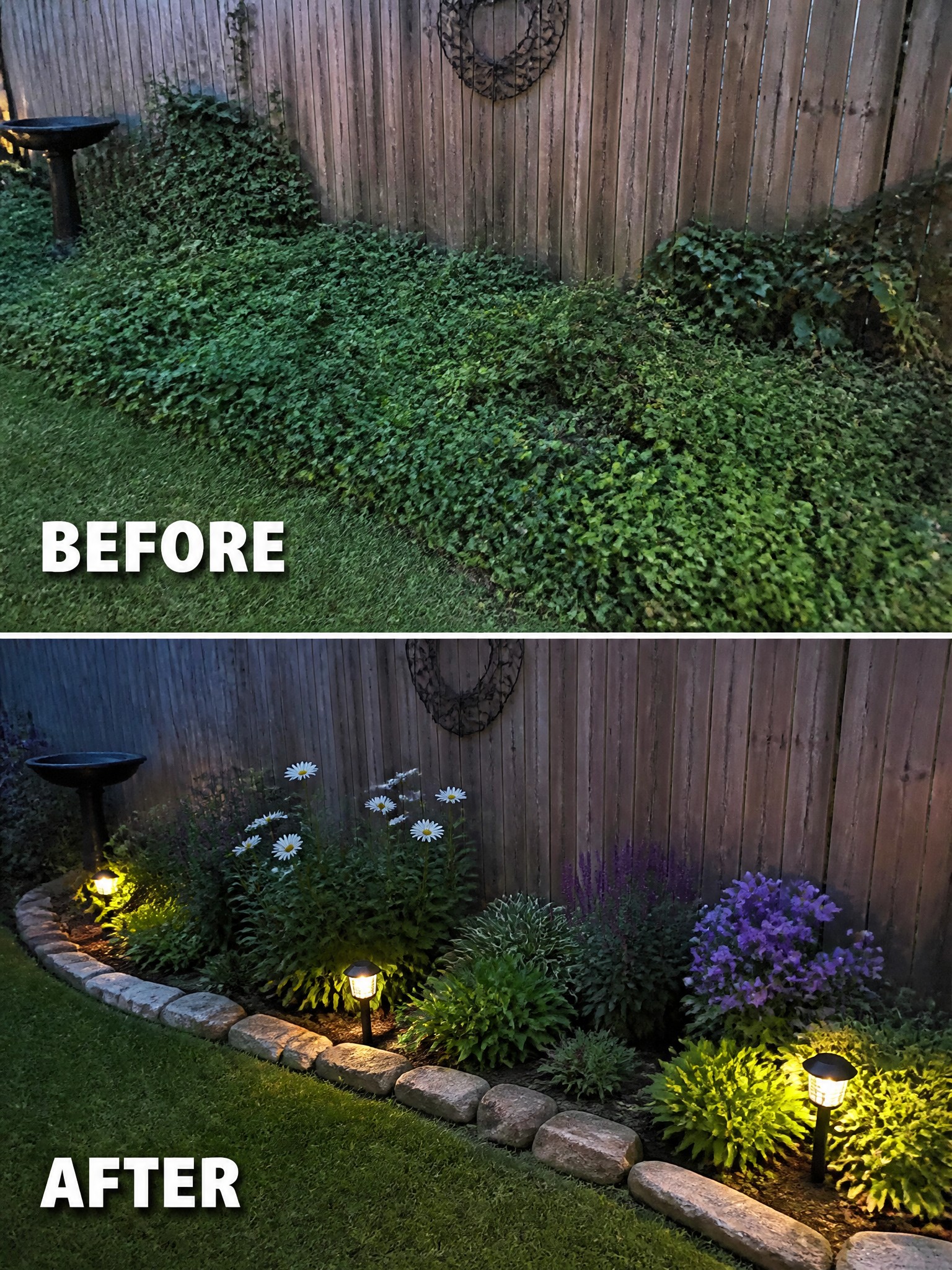
One of the quickest ways to fix an overgrown garden edge is to add a clear border first. The thick ivy was pulled back and a low line of stones was set to mark where the bed starts and the lawn ends. That one change turned a shapeless patch into something that looks intentional.
This idea works especially well along fences or property lines where plants tend to spread. Lay the edging before you plant so you know exactly how much space you have. Fill the bed with a few taller plants at the back and shorter ones toward the front, and you end up with a tidy cottage style border that stays manageable.
Define A Plain Entry With Simple Planters
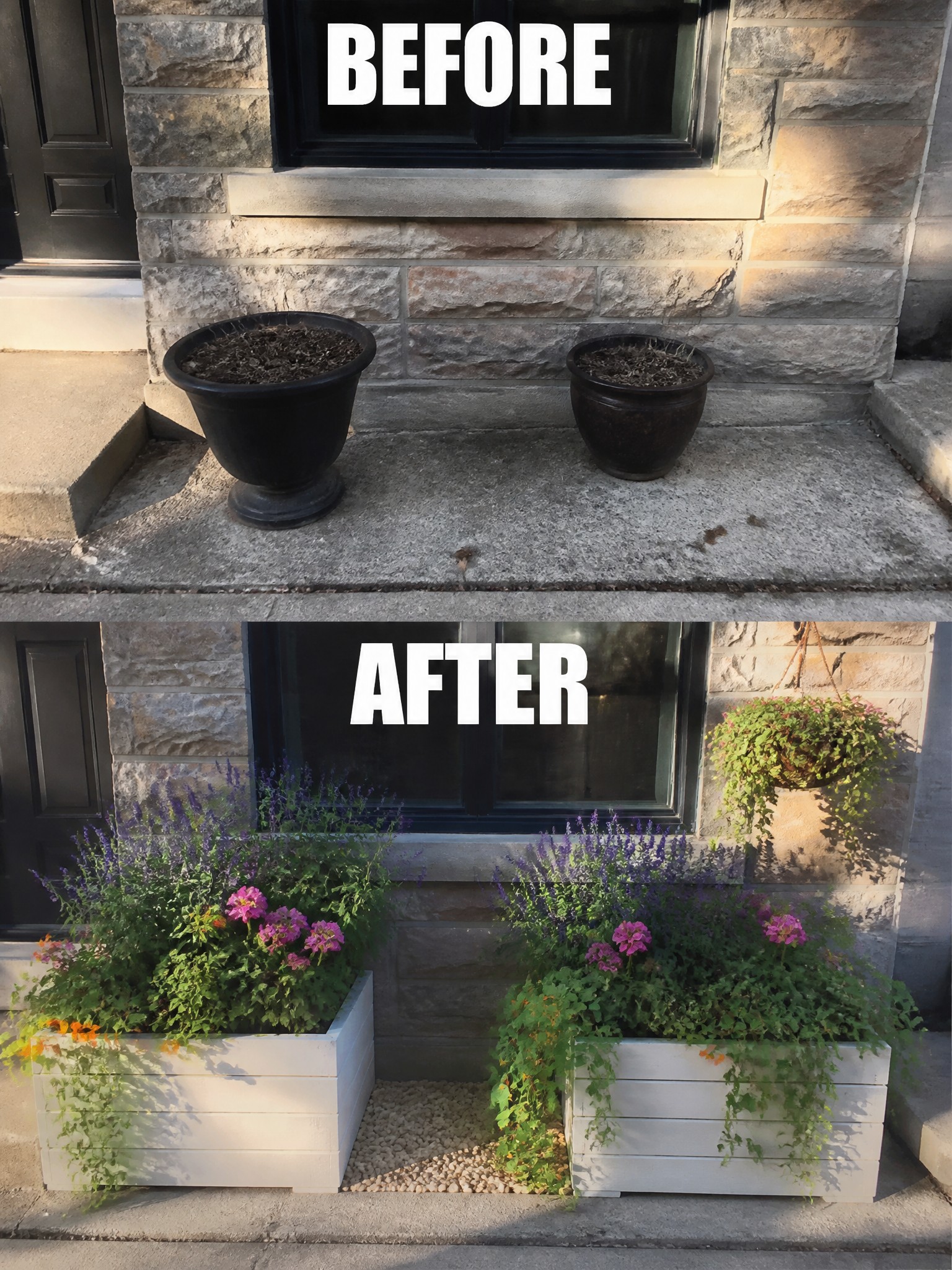
Empty steps and a couple of tired pots do little to welcome people at the front of a house. Switching to low white planters filled with a mix of flowers and trailing plants gives the area clear shape and makes the entrance feel more intentional. The white boxes also stand out nicely against the stone without competing with it.
This approach works well on small landings or narrow walkways where a full garden bed would not fit. Keep the planters the same size and color so the look stays tidy, and choose plants that spill over the edges to soften the hard surfaces. A hanging basket above can add height if the space feels flat.
Define An Overgrown Border With A Neat Flower Bed
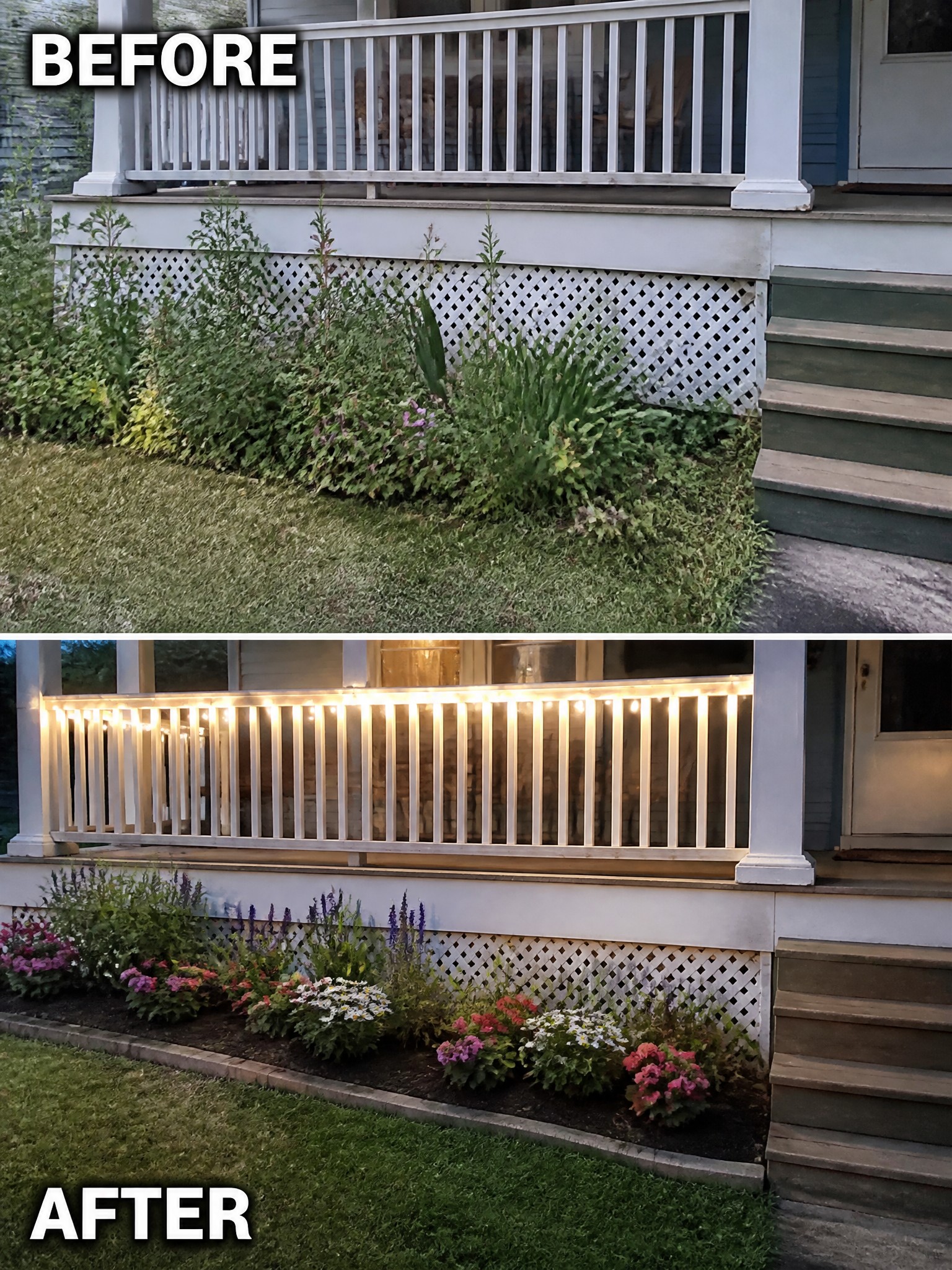
The before photo shows a jumble of tall shrubs and weeds spilling out from under the porch with no clear edge. In the after photo, that same strip has been cleared and replanted with low, colorful flowers in a straight line, giving the whole front a tidy, cottage look. The main change is the shift from random growth to a simple, repeated planting pattern.
This idea works well on any older home where the foundation planting has gotten away from you. Clear the old growth first, then lay out one or two rows of easy annuals or perennials along the edge. Keep the bed narrow enough to reach from the lawn so it stays easy to maintain.
Define Flower Beds With Edging And Layered Planting
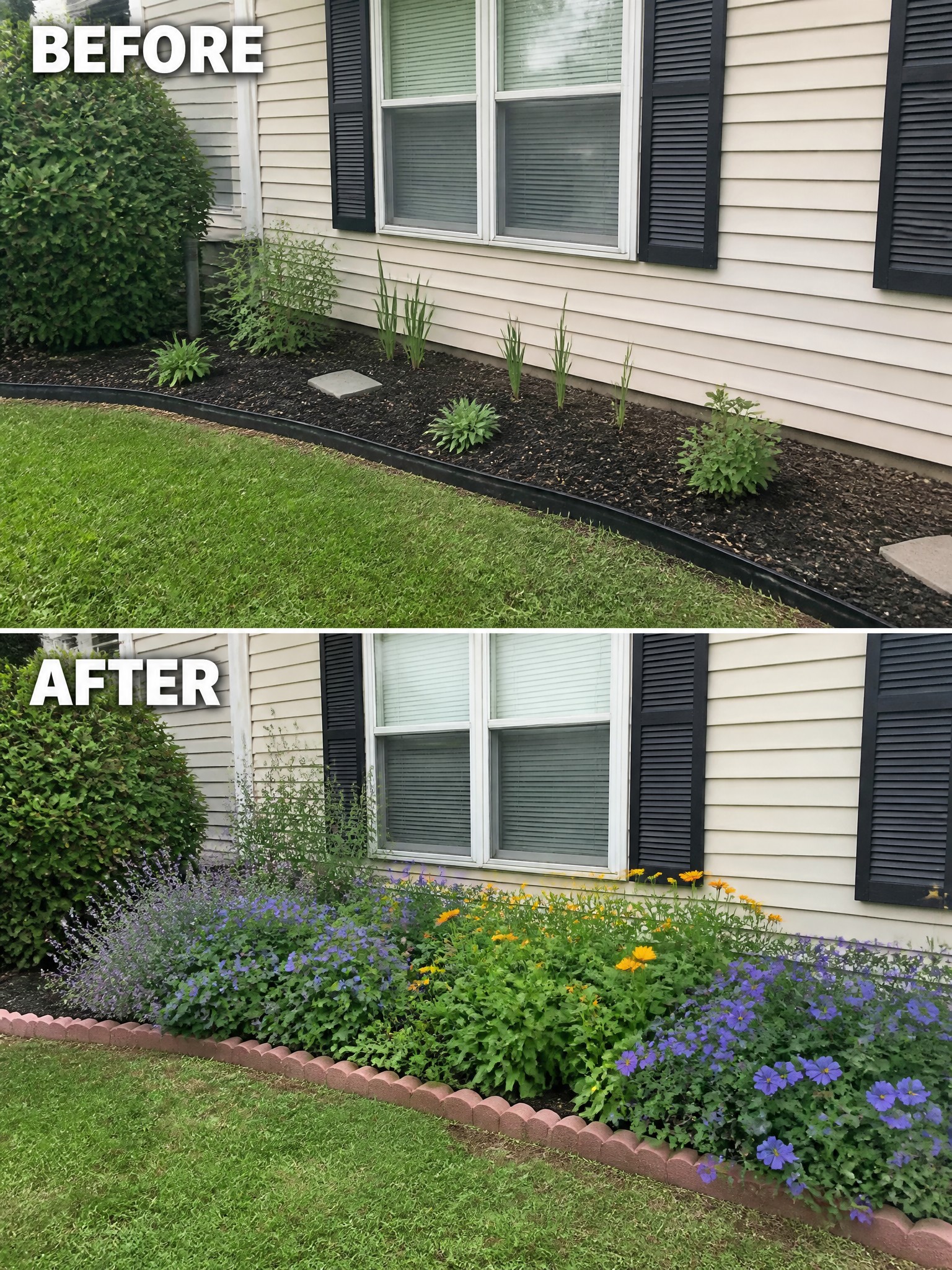
A plain strip of mulch along the house can look unfinished when it only has a few scattered plants. Adding a clear edge and filling the bed with layered flowers gives the area structure and makes the whole front look more intentional. The simple black border was replaced with a scalloped concrete edge, and the sparse plants were swapped for dense groupings of purple, blue, and yellow blooms that create a fuller look right away.
This idea works best along a foundation where you want to soften the line between lawn and siding without a big redesign. Choose an edging material that holds its shape, then plant in clusters instead of spacing everything out evenly. It suits most homes with a front lawn and helps the bed stay looking neat even as plants fill in over time.
Use Rocks To Frame Simple Flower Beds
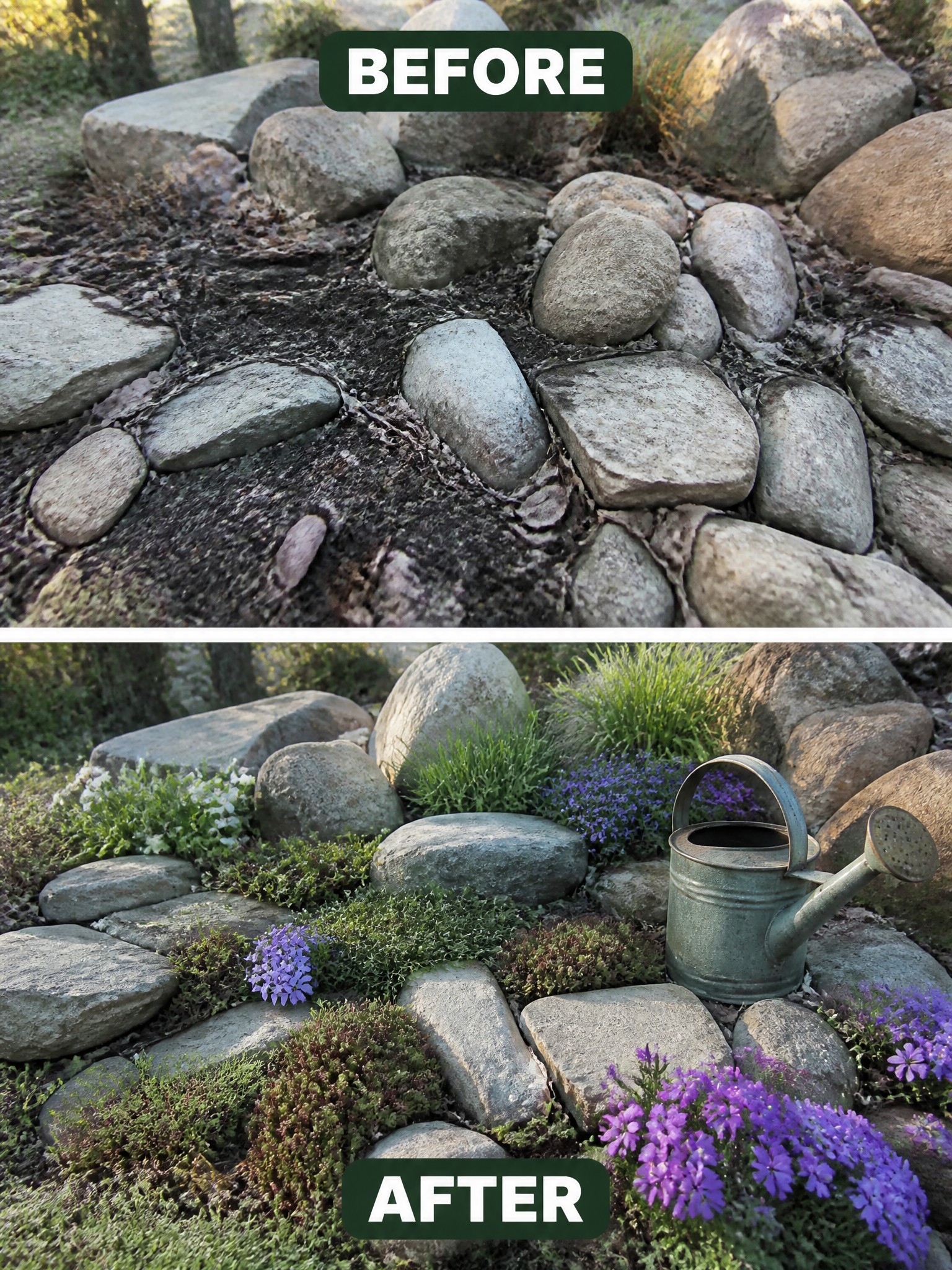
Rocks already sitting on the ground can work as natural edging if you fill the gaps with plants instead of leaving the dirt bare. The change here comes from adding low ground covers and clusters of flowers between the stones so the area reads as intentional beds rather than scattered rock.
This approach suits cottage style yards where you want soft planting without removing existing hardscape. Start by clearing debris, then choose compact perennials and spreading ground covers that stay low enough to show the rock outlines. Keep the number of plant varieties small so the beds stay easy to maintain.
Add Layered Planting To A Bare Fence Line
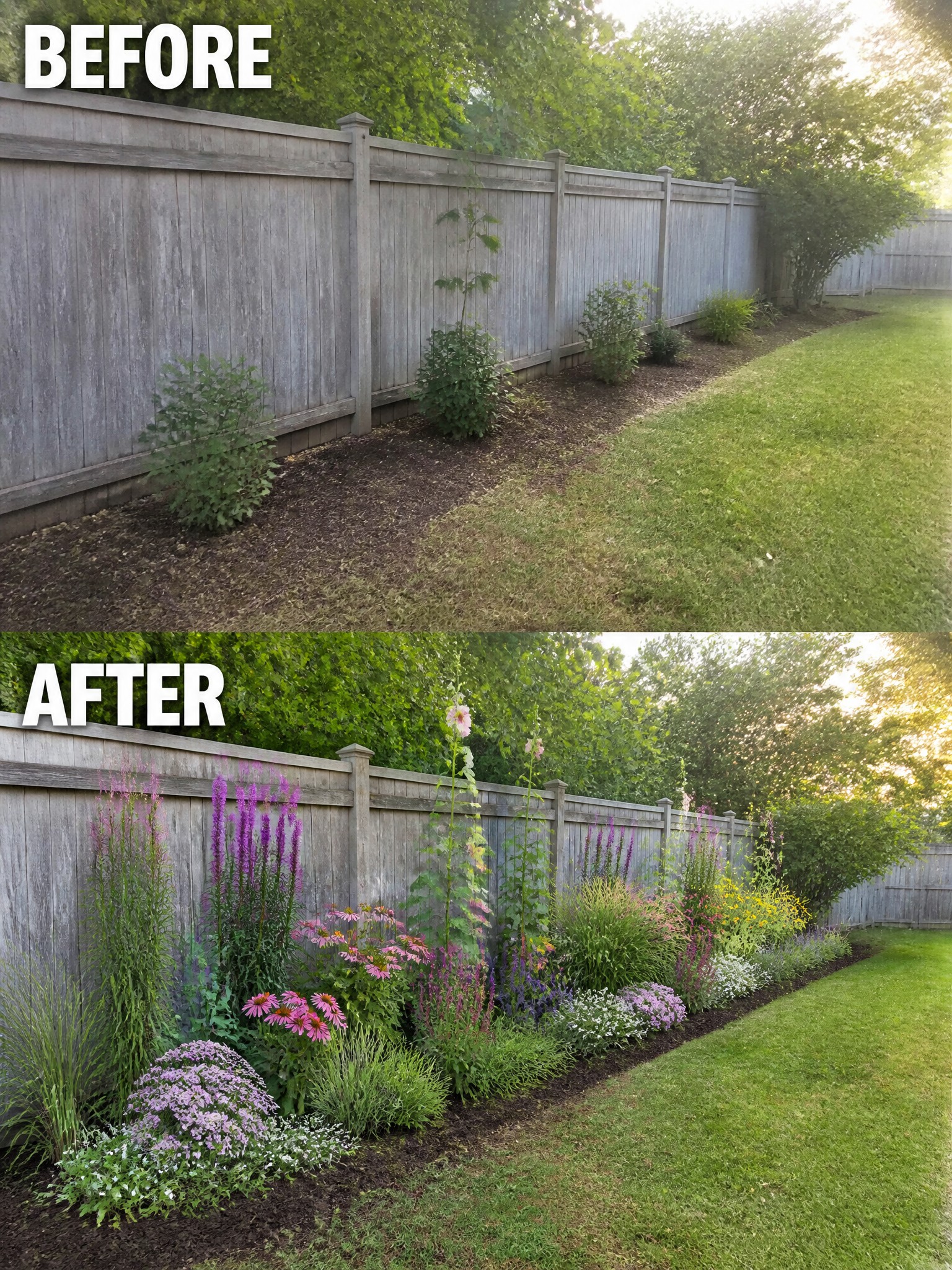
A long fence with just a strip of mulch and a few scattered plants often looks unfinished. The change here comes from filling that same space with different heights and textures so the border feels full and intentional instead of empty.
This approach works best along straight property lines where you want color without blocking the view. Place taller plants toward the fence, mid-height flowers in the middle, and lower spreading plants along the lawn edge. It keeps the bed looking balanced as the plants grow and makes mowing easier since the edge stays clean.
Add Layered Planting To Front Flower Beds
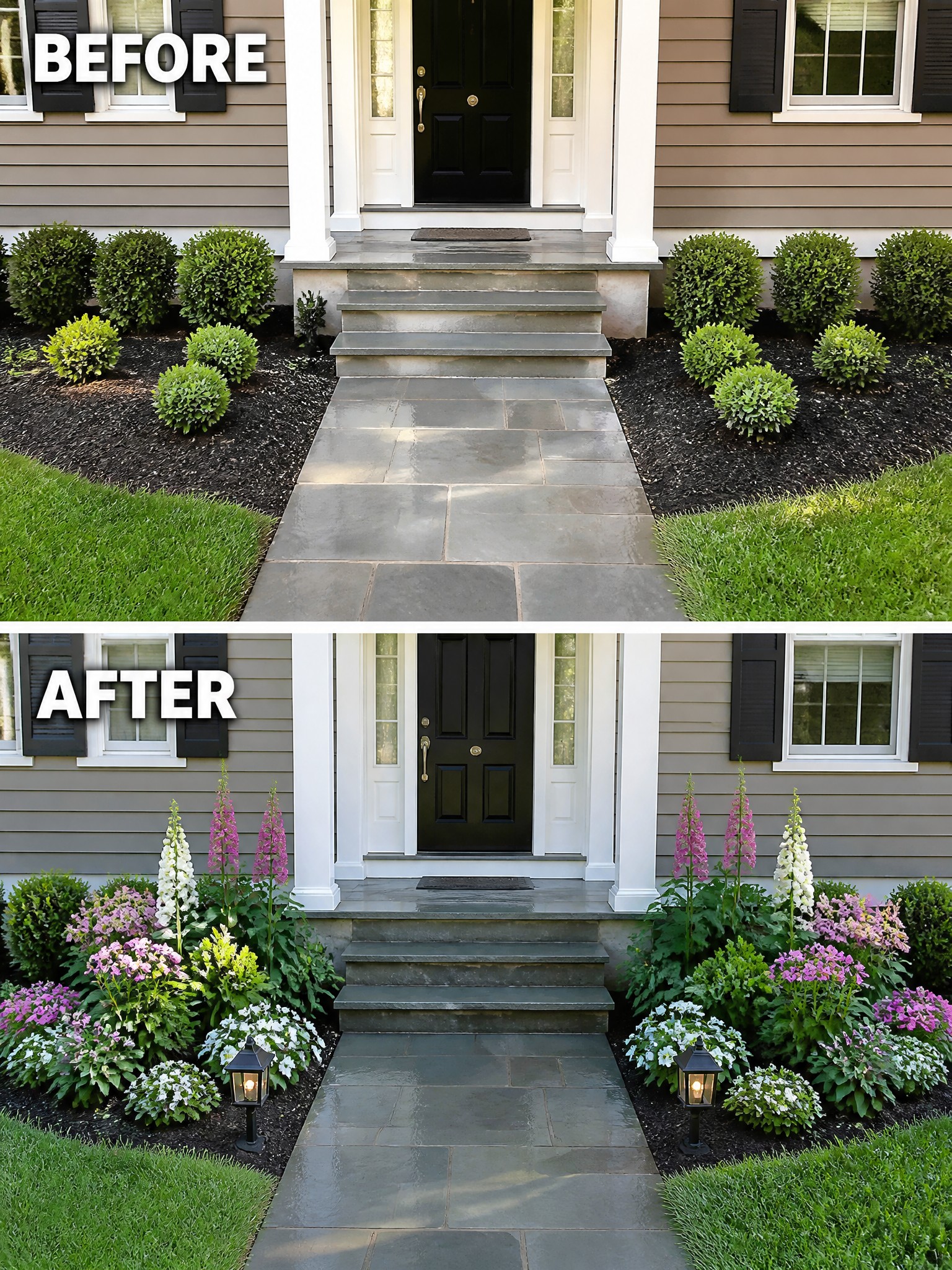
The biggest shift here comes from replacing low, rounded shrubs with a mix of tall perennials and lower fillers. The before beds sat flat against the house and path. The after version brings in height with foxgloves and clusters of color closer to the ground, which makes the whole entry feel more finished and welcoming.
This approach works best along a front walk or porch where you want to soften the foundation without blocking windows. Start by clearing out anything that has grown too round or sparse, then plant in layers so the tallest flowers sit toward the back. Keep the bed edges clean so the walkway stays open and the path lights can do their job at night.
Clear Overgrown Beds Before Adding New Plants
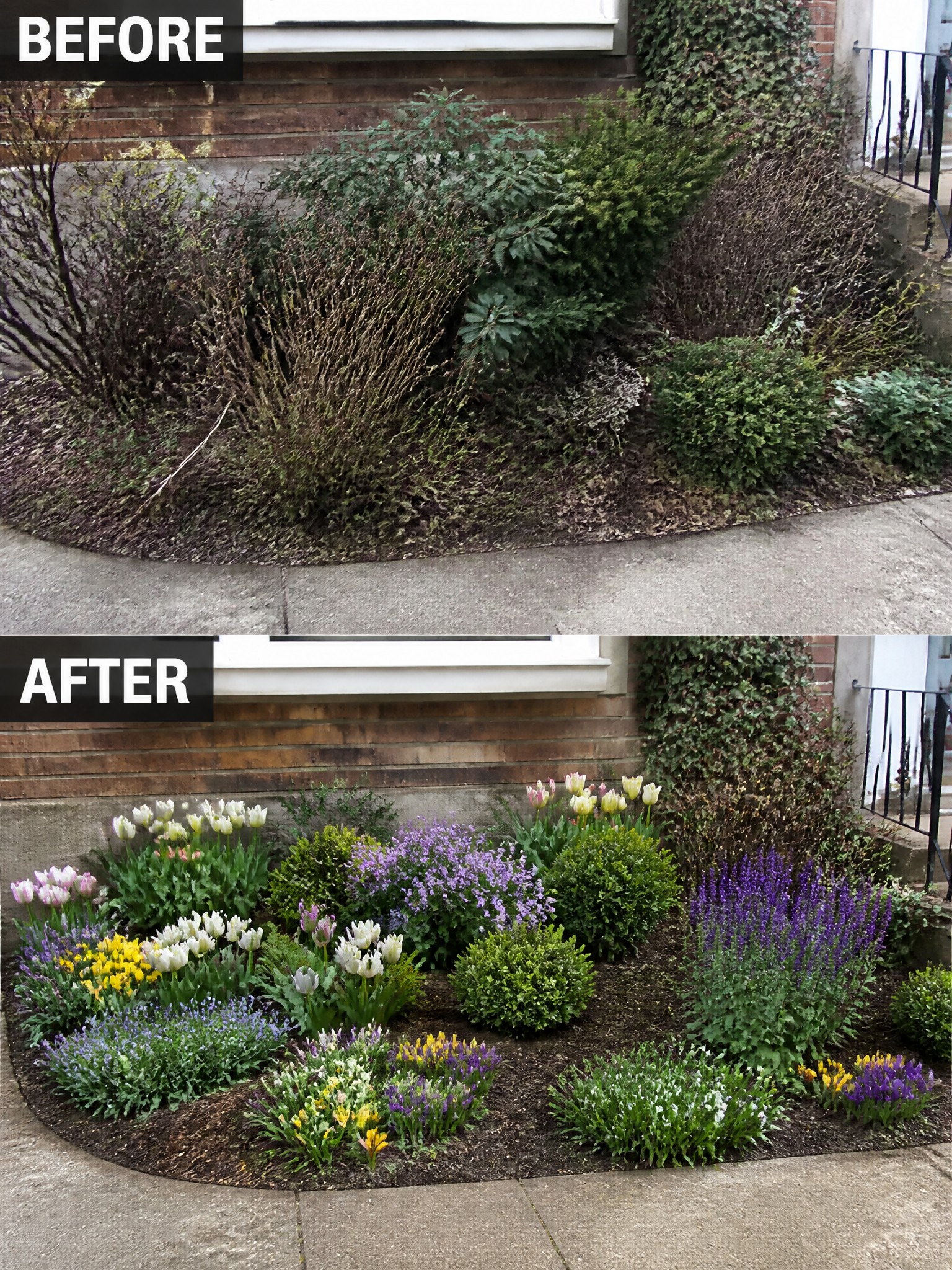
The biggest change here came from removing the tangled, half-dead shrubs first. Once the old growth was cleared, the new planting could be arranged in clear layers with room to breathe and mulch keeping everything neat. That simple order made the whole bed look intentional instead of crowded.
This approach works best along a front walk or foundation where you want color without constant trimming. Start by cutting everything back hard, then group plants by height and bloom time so nothing gets lost. Keep the bed edge clean and use mulch to hold the soil in place through the first season.
Add Structure To Bare Foundation Areas
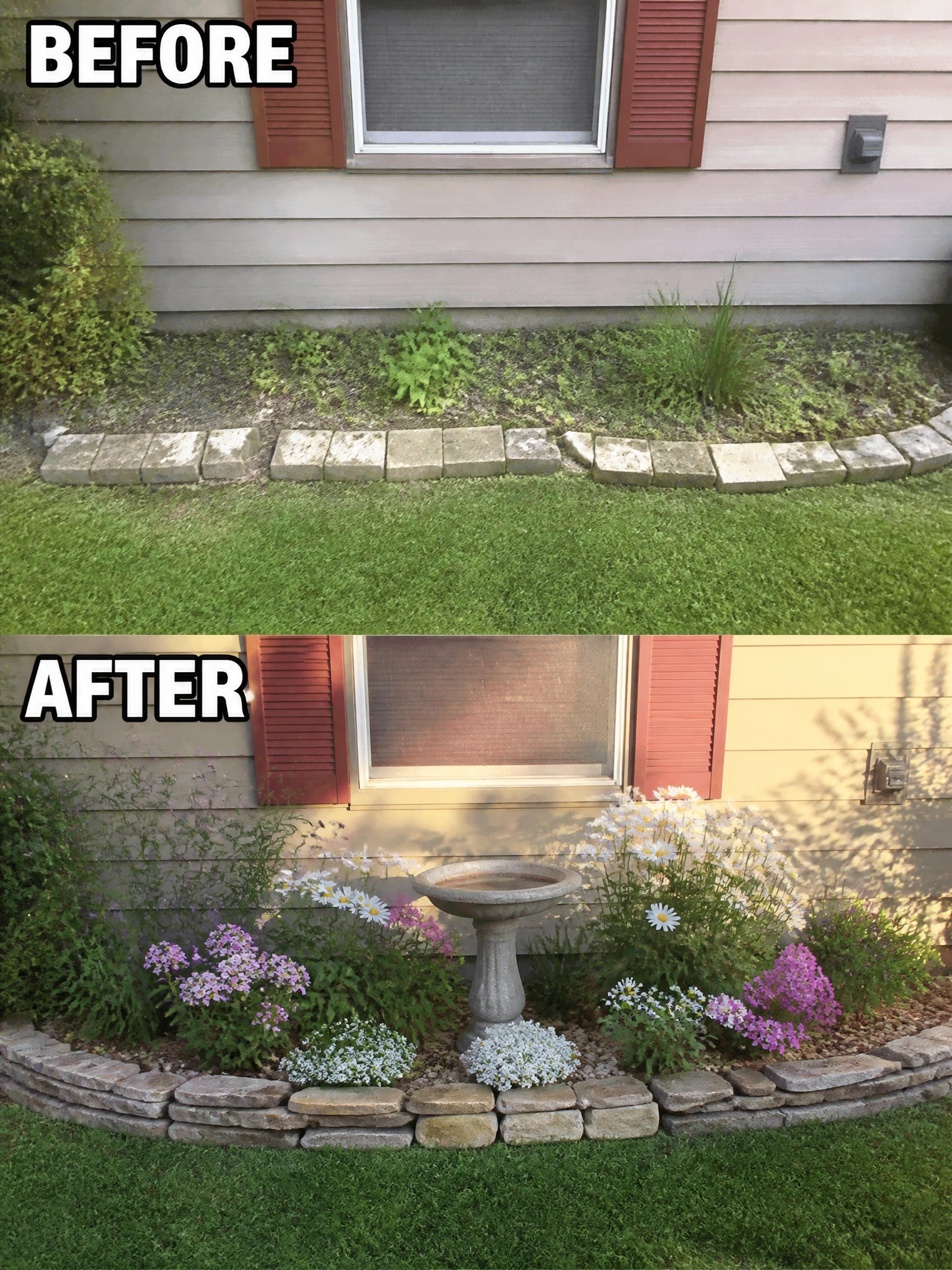
A bare strip of ground along the house often looks unfinished even when the lawn is mowed. In this case the simple fix was to stack the existing edging stones higher, add gravel inside the border, and fill the bed with layered plants plus one clear focal point. The result turns a thin weedy edge into a defined garden that actually belongs with the house.
This approach works best on small foundation strips where you want cottage style without crowding the siding. Start with cleanup and solid edging first, then choose a mix of low, mid, and tall plants so the bed looks full from the start. Keep the center open enough for one accent like a birdbath or small shrub so the whole area stays easy to maintain.
Frequently Asked Questions
Q: Which flowers should I start with if I want that cottage look but hate weeding? A: Go with tough perennials like lavender and daylilies that spread and crowd out weeds naturally. Toss in a few self-seeding annuals such as cosmos to fill bare spots fast. They settle in after the first year and cut down on extra work.
Q: My soil is mostly clay. Will any of these flower bed makeovers work? A: Work in compost and a little sand to loosen it up before planting. Build small raised mounds for better drainage and set the plants on top. The loose cottage style hides the mounds so everything still looks relaxed.
Q: I only have room for one small bed. Which idea scales down easiest? A: Choose a simple mix with one focal rose and soft edging plants that trail over the sides. Add layers gradually each season instead of trying to copy a big layout all at once.
