

Side yards often end up as narrow strips of packed dirt or patchy grass that no one quite knows what to do with.
Laying pavers in a simple pattern gives the area a usable walkway while mulch fills in the gaps to cut down on weeds and mud after rain.
I have noticed that once the ground has some order to it, the whole side of the house stops feeling like an afterthought and starts working with the rest of the yard.
Over a season or two the combination settles in, softens around the edges, and makes the space feel finished without needing big plants or structures.
Small tests with these materials are usually enough to show what actually fits the spot.
Use Pavers And Mulch To Shape A Side Yard Path
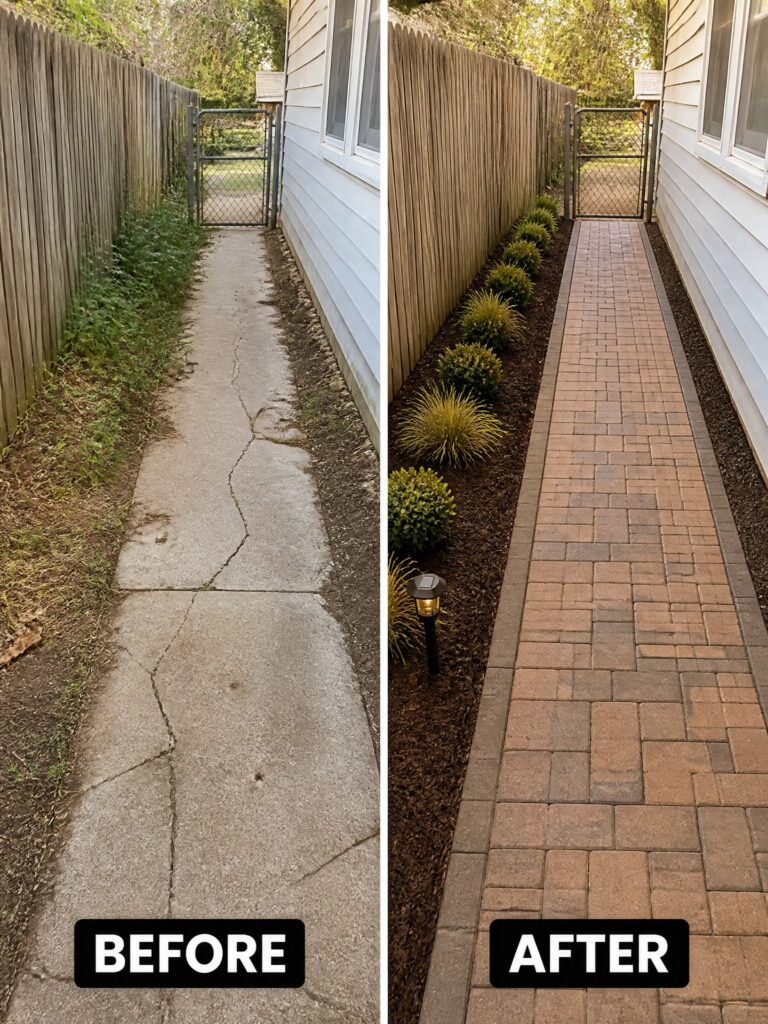
A cracked concrete path with weeds along the edges makes a side yard feel neglected and unfinished. Replacing the slab with pavers and adding mulch beds on both sides gives the space clear lines and turns a narrow walkway into something that looks planned.
This idea works best in tight areas where you want a usable path without losing planting space. Remove the old concrete first, set the pavers level, then use mulch to create simple borders and keep the plants from spreading onto the walkway.
Use Pavers To Create A Defined Path In A Side Yard
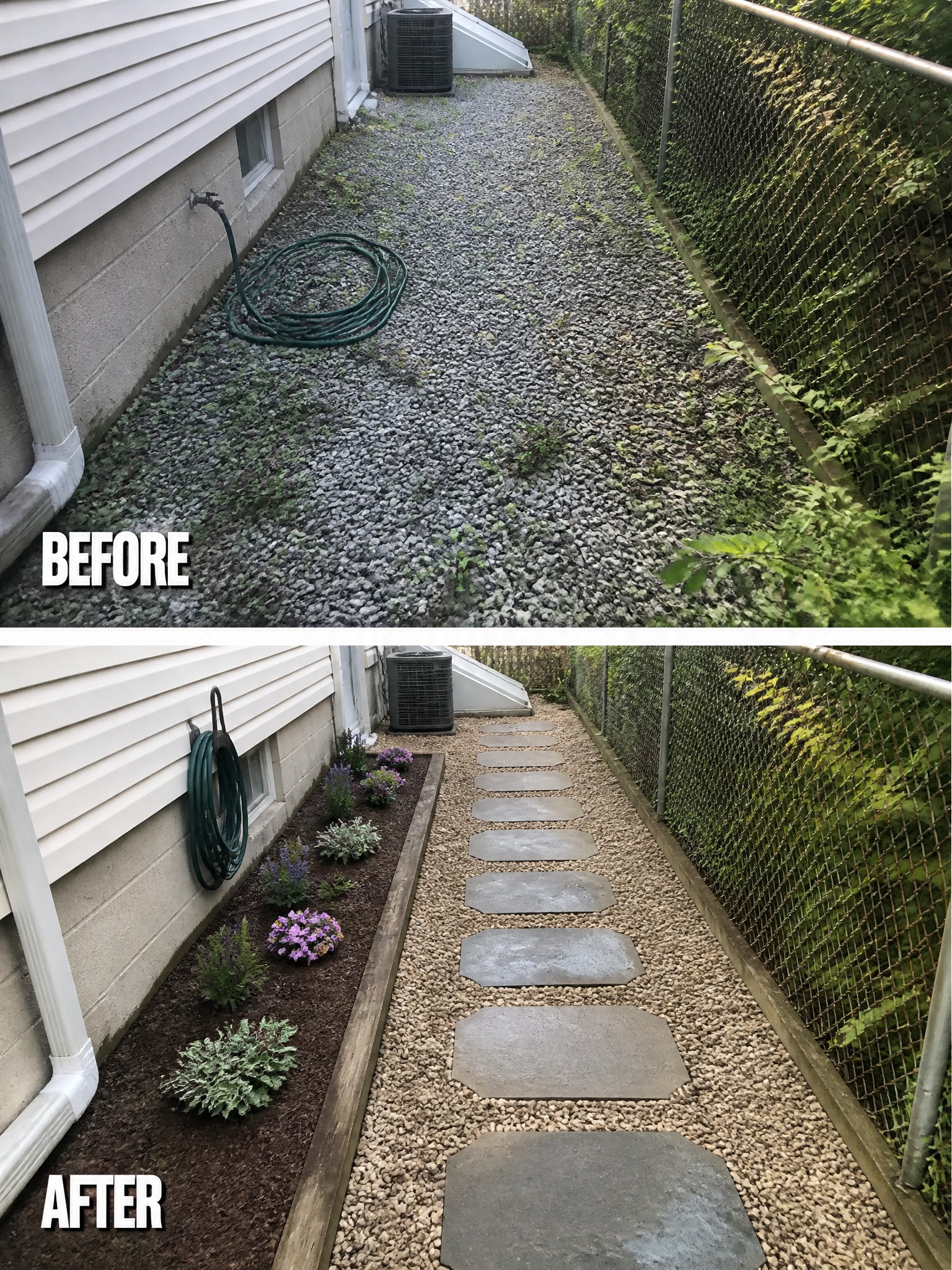
A narrow side yard often turns into an overgrown strip of gravel that feels more like a problem than a usable space. Laying down a line of pavers gives the area a clear walking path while mulch beds along the house edge hold plants in place and cut down on weeds.
This setup works best in tight corridors where you need to keep things simple and low maintenance. Lay the pavers first to set the route, then add a wood border and a few easy-care plants in the beds so the whole area stays tidy without constant work.
Use Pavers To Create A Simple Patio In A Side Yard
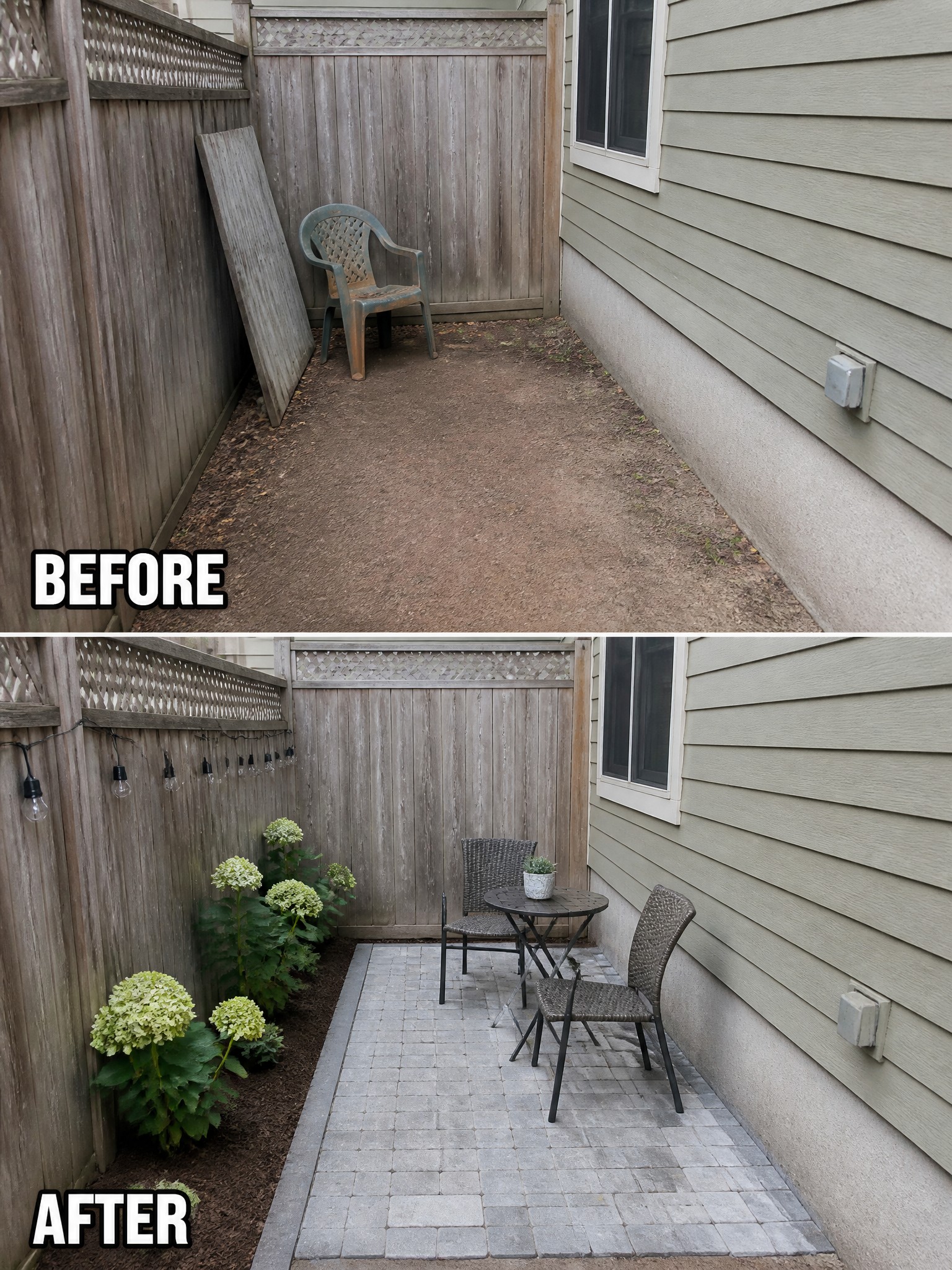
A narrow side yard with just bare dirt often ends up as wasted space. Laying down pavers creates a clear, walkable surface that turns the area into something you can actually use. Adding a small table and chairs right on the new patio makes the space feel finished without needing a lot of room.
This approach works well on tight lots where you want both function and a bit of planting. Keep the paver area modest so there is still space for mulch beds along the fence. Simple plants like hydrangeas stay low and neat while the mulch gives the beds a clean edge that holds up over time.
Add Structure To A Narrow Side Yard
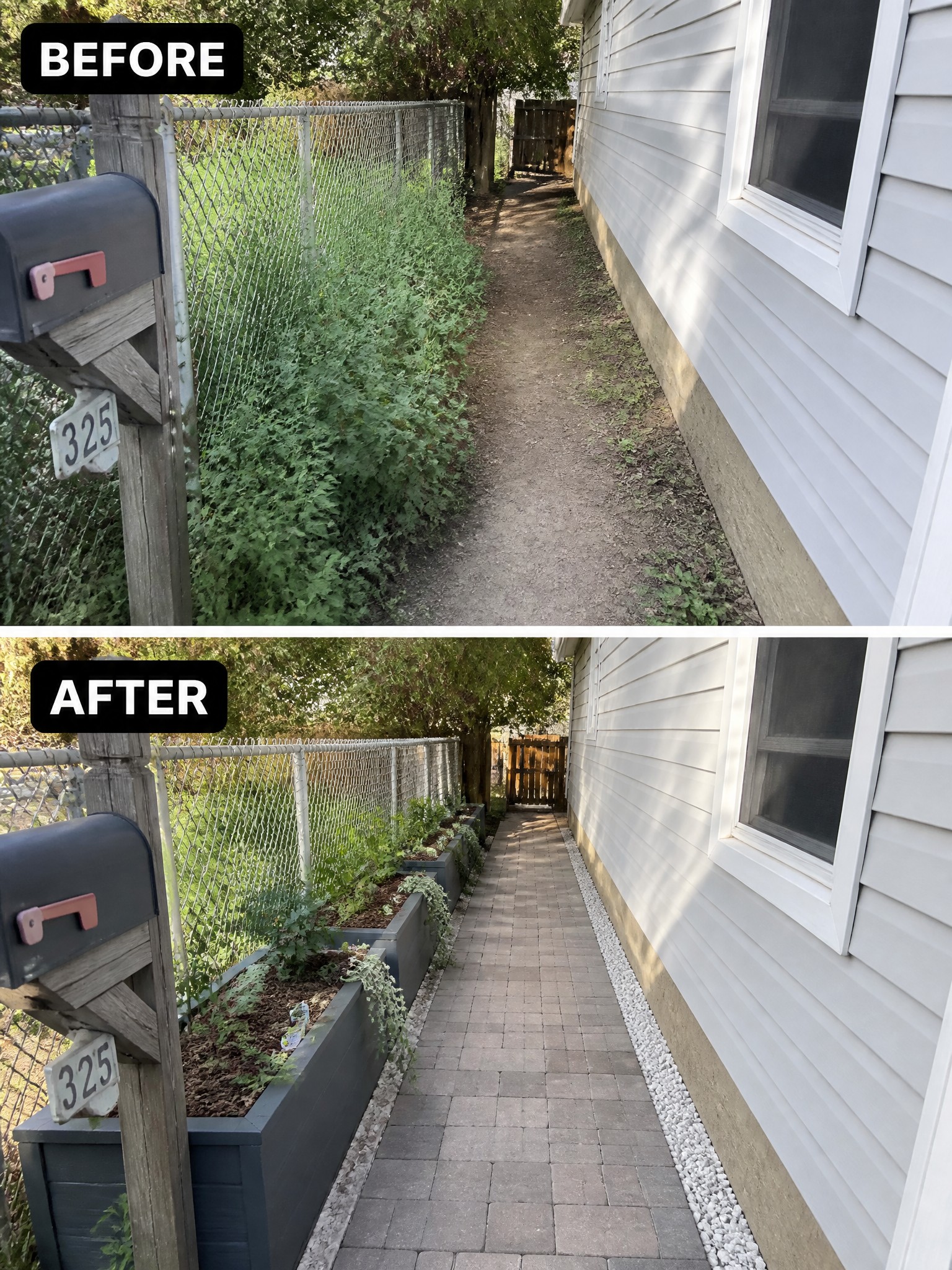
An overgrown side yard often ends up as wasted space because the path feels messy and hard to maintain. Adding a row of raised beds along one side and laying pavers down the center gives the area a clear shape. The beds keep plants contained while the pavers create a solid walking surface that stays dry and easy to sweep.
This approach works well on narrow lots where you still need access to the backyard. Start with the path itself so the layout stays practical, then fill the beds with low-maintenance plants. Keep the beds the same width and color to avoid crowding the space.
Use Pavers And Mulch To Give A Side Yard Clear Structure
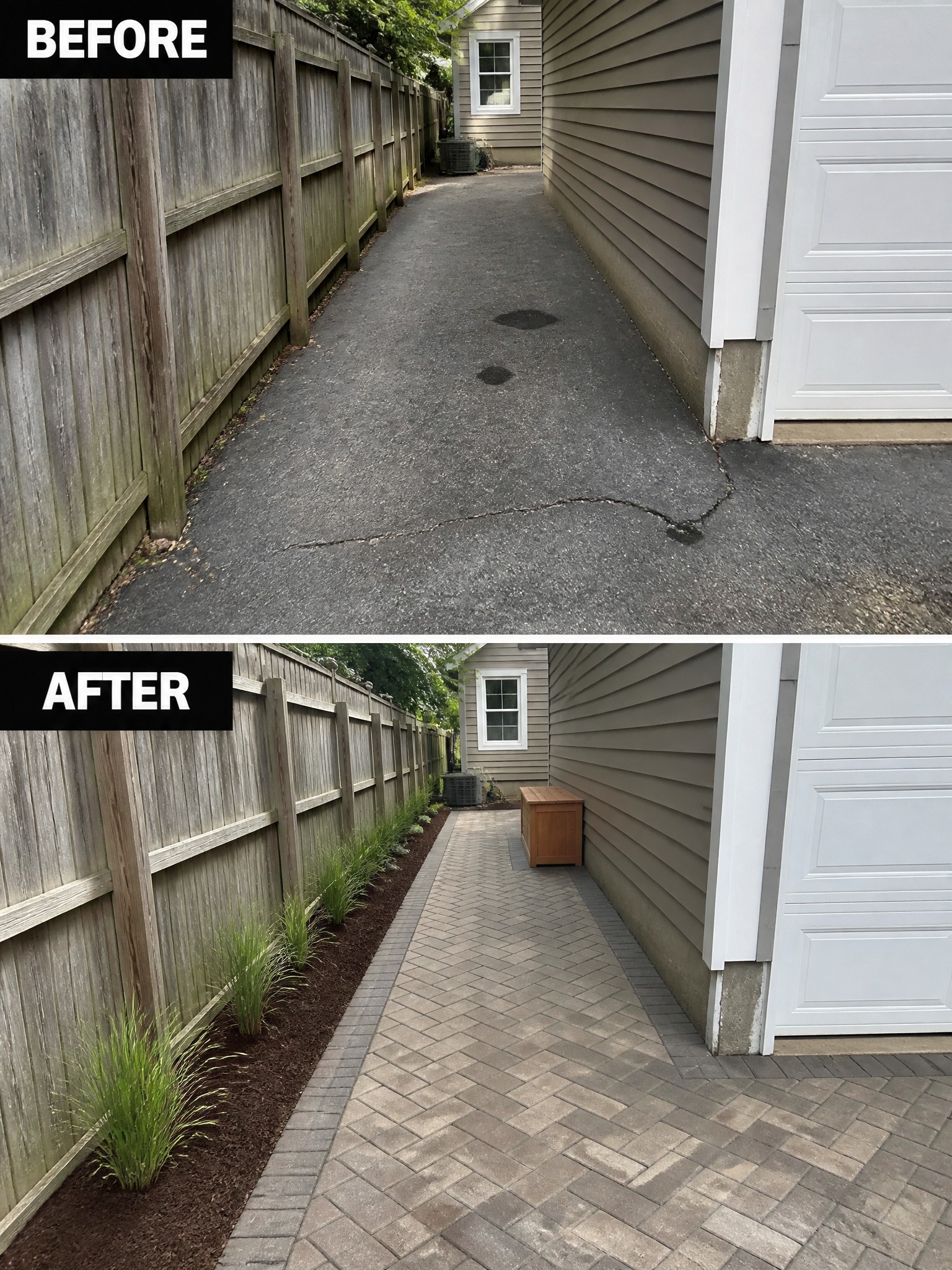
A cracked asphalt path next to the house usually feels like leftover space. Swapping it for pavers creates a solid walkway that looks finished and makes the narrow area feel more intentional.
Mulch beds along the fence with simple grass plantings add clean edges without taking up walking room. This works best on homes where the side yard is used for access or storage. Keep the path width practical and choose pavers that match the driveway or patio so everything connects.
Use Pavers To Create A Path In A Narrow Side Yard
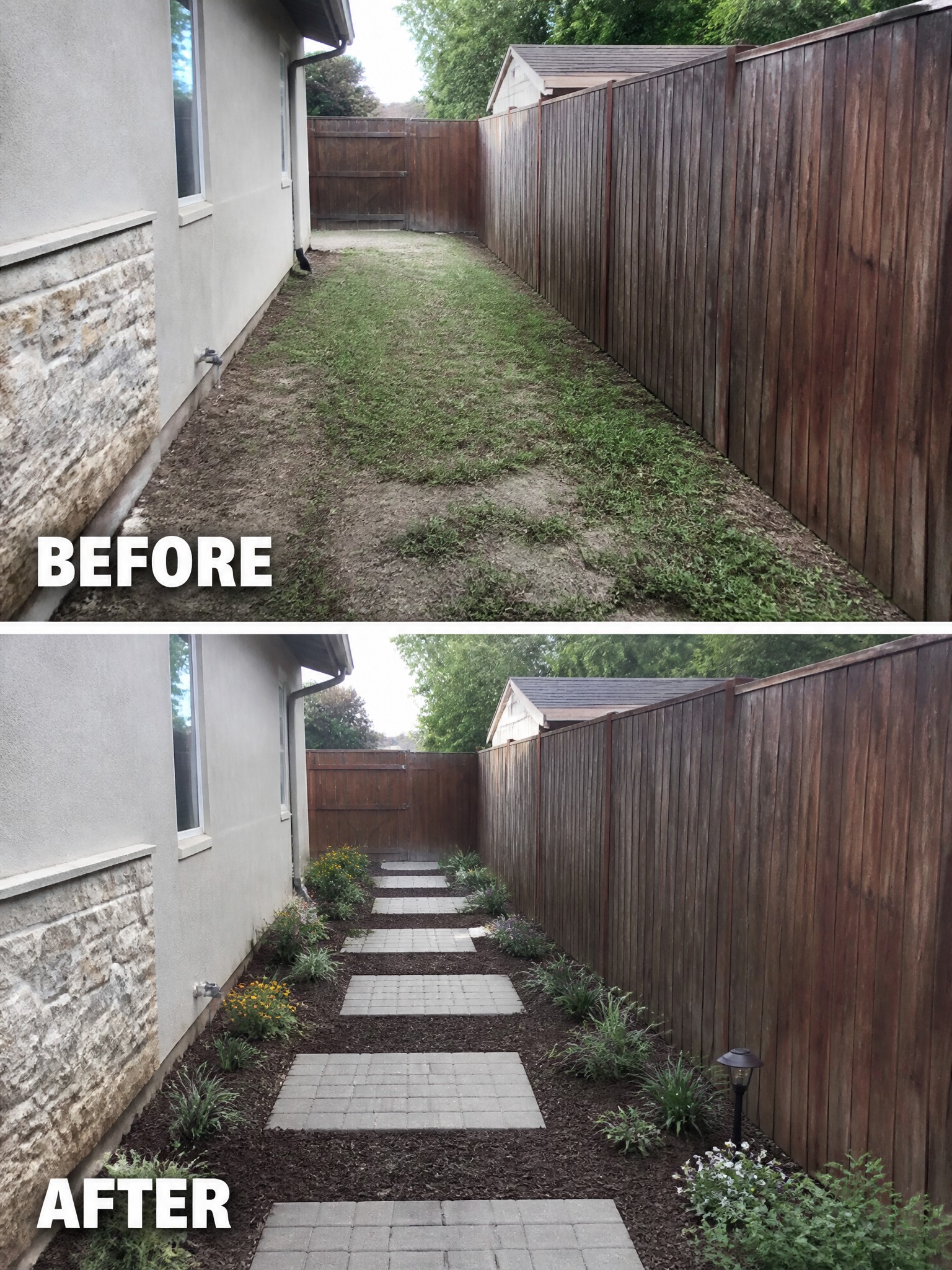
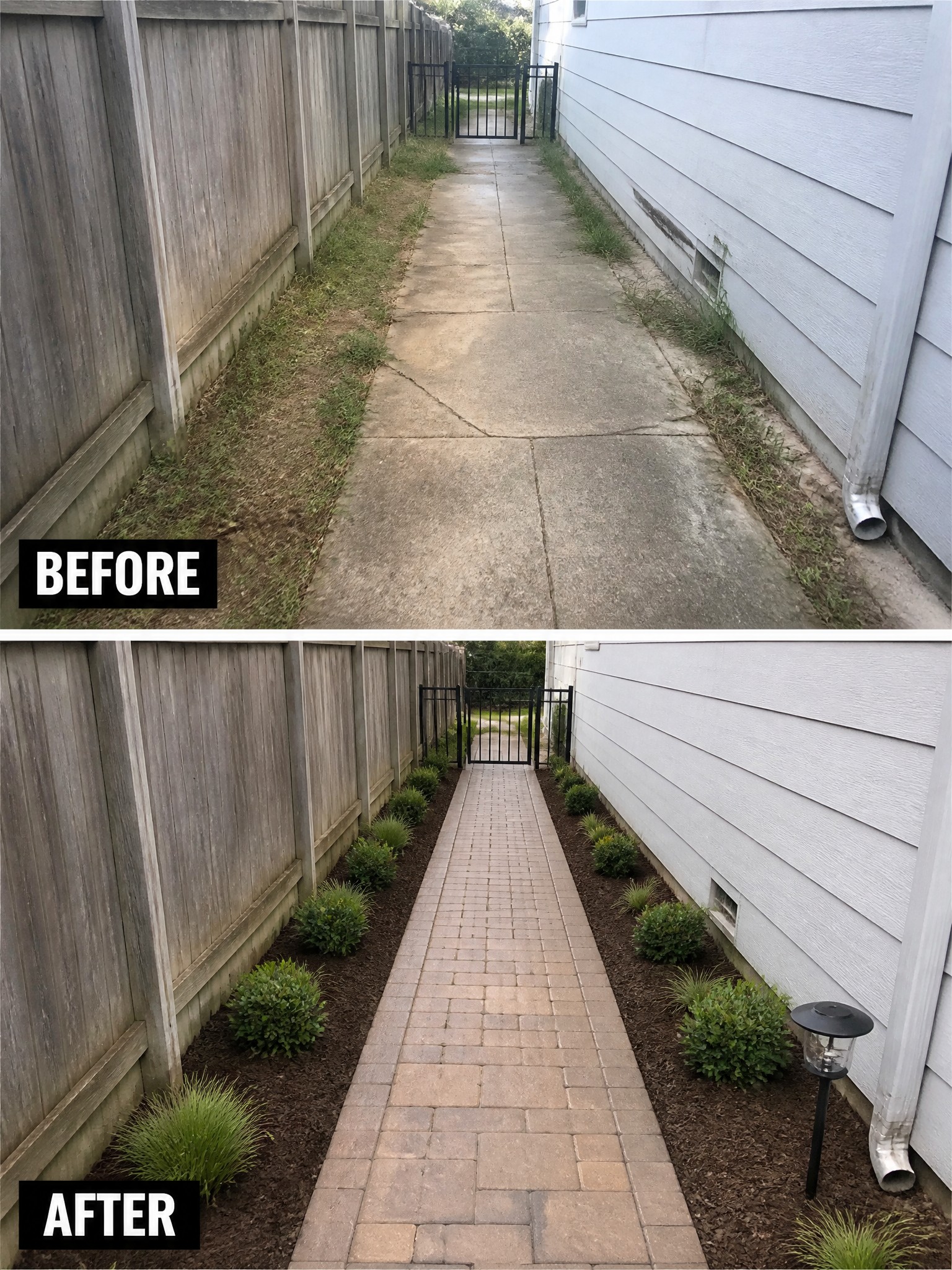
A narrow side yard often turns into an overgrown strip that is hard to walk through and easy to ignore. Laying down a line of pavers gives the space a clear route while mulch on both sides keeps the beds neat and cuts down on weeds.
This idea works best in tight areas between a house and a fence where you need simple access without adding much width. Clear the ground first, set the pavers level, and add a few plants along the edges so the whole strip stays low-maintenance.
Use Pavers And Mulch To Give A Narrow Side Yard Clear Structure
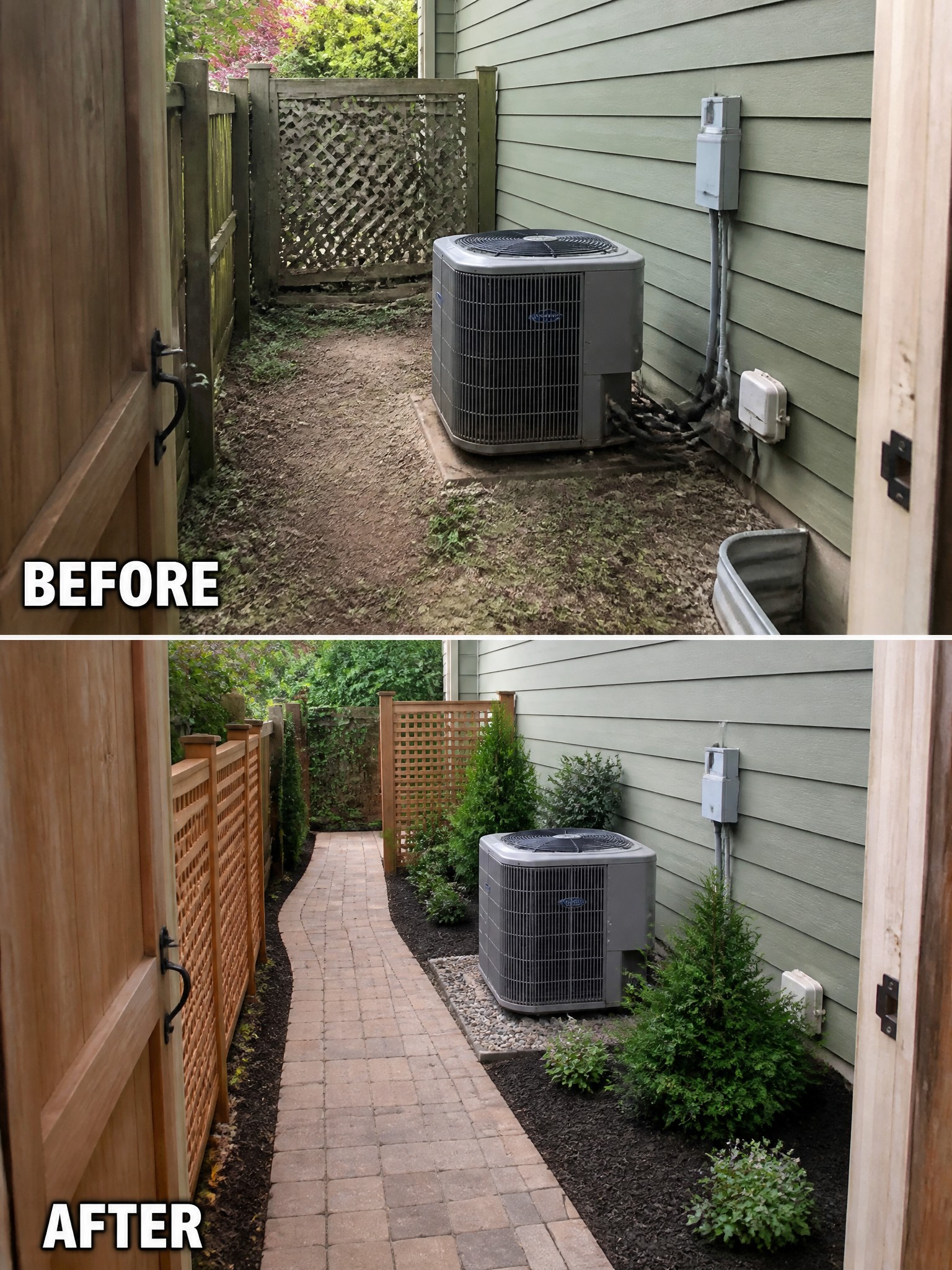
A narrow side yard often ends up as a muddy strip that gets ignored because nothing feels defined. Laying a simple paver path and adding mulch beds around the edges turns that leftover space into something you can actually walk through without tracking dirt everywhere. The change from bare dirt to a solid walkway with planted borders makes the whole area feel intentional instead of neglected.
This approach works best on tight lots where you need a functional route but still want some greenery. Start with the path so you know exactly where to place the beds, then keep the planting simple so the mulch stays visible and the space does not feel crowded. It is an easy project for most homeowners since both materials are affordable and the layout stays straightforward.
Use Pavers And Mulch To Shape A Narrow Side Yard
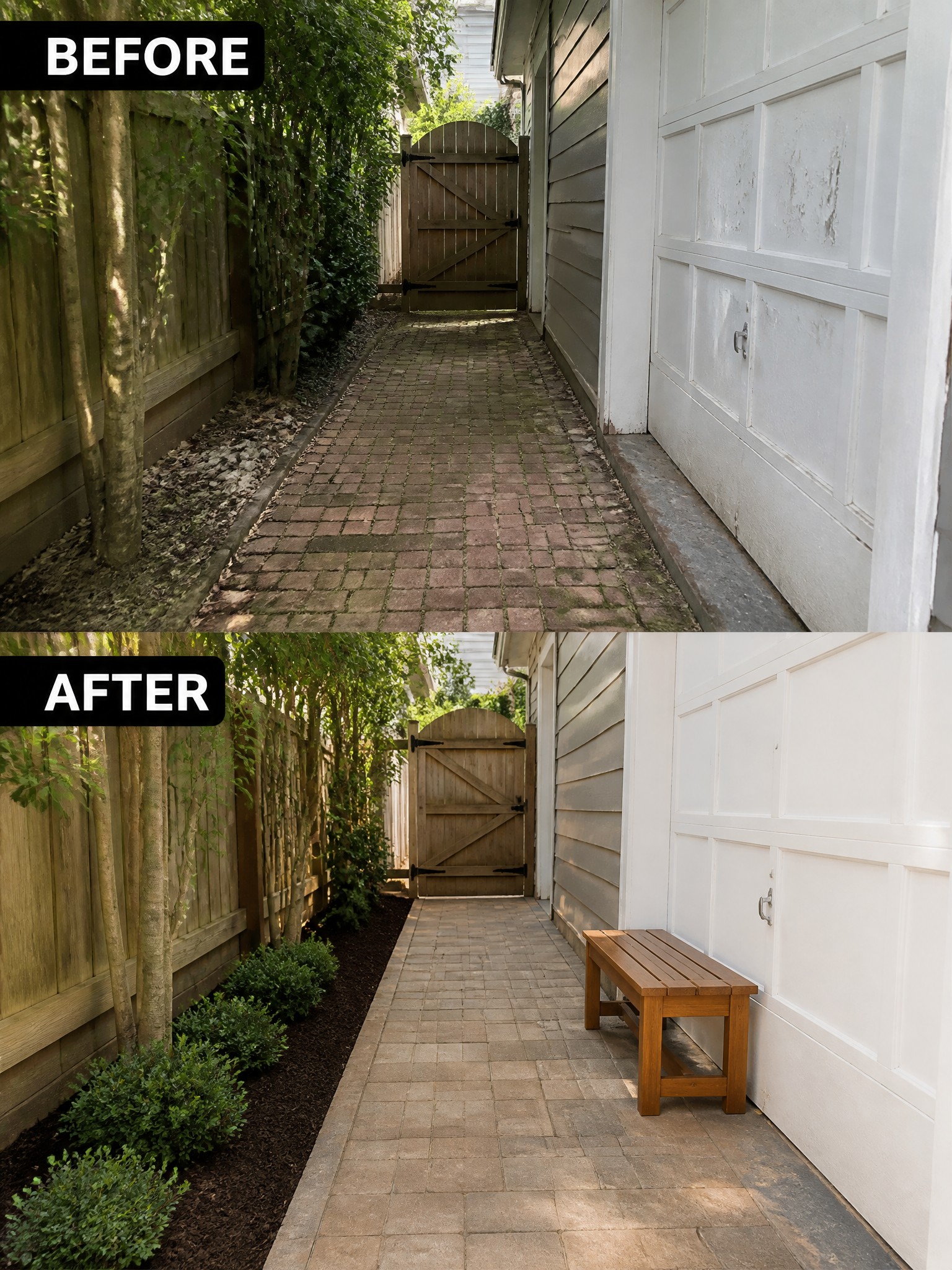
A narrow side yard often ends up as a forgotten strip that collects weeds and looks messy. The change here comes from refreshing the paver path and adding clean mulch beds along the fence line. That single step gives the space clear edges and makes the whole area feel intentional instead of leftover.
This approach works best on tight lots where you need the path to stay open but still want planting. Start by power washing the pavers and laying a fresh base of mulch in the beds before adding any shrubs. Keep the plantings low and simple so the walkway does not feel crowded.
Define A Narrow Side Yard With Pavers And Mulch
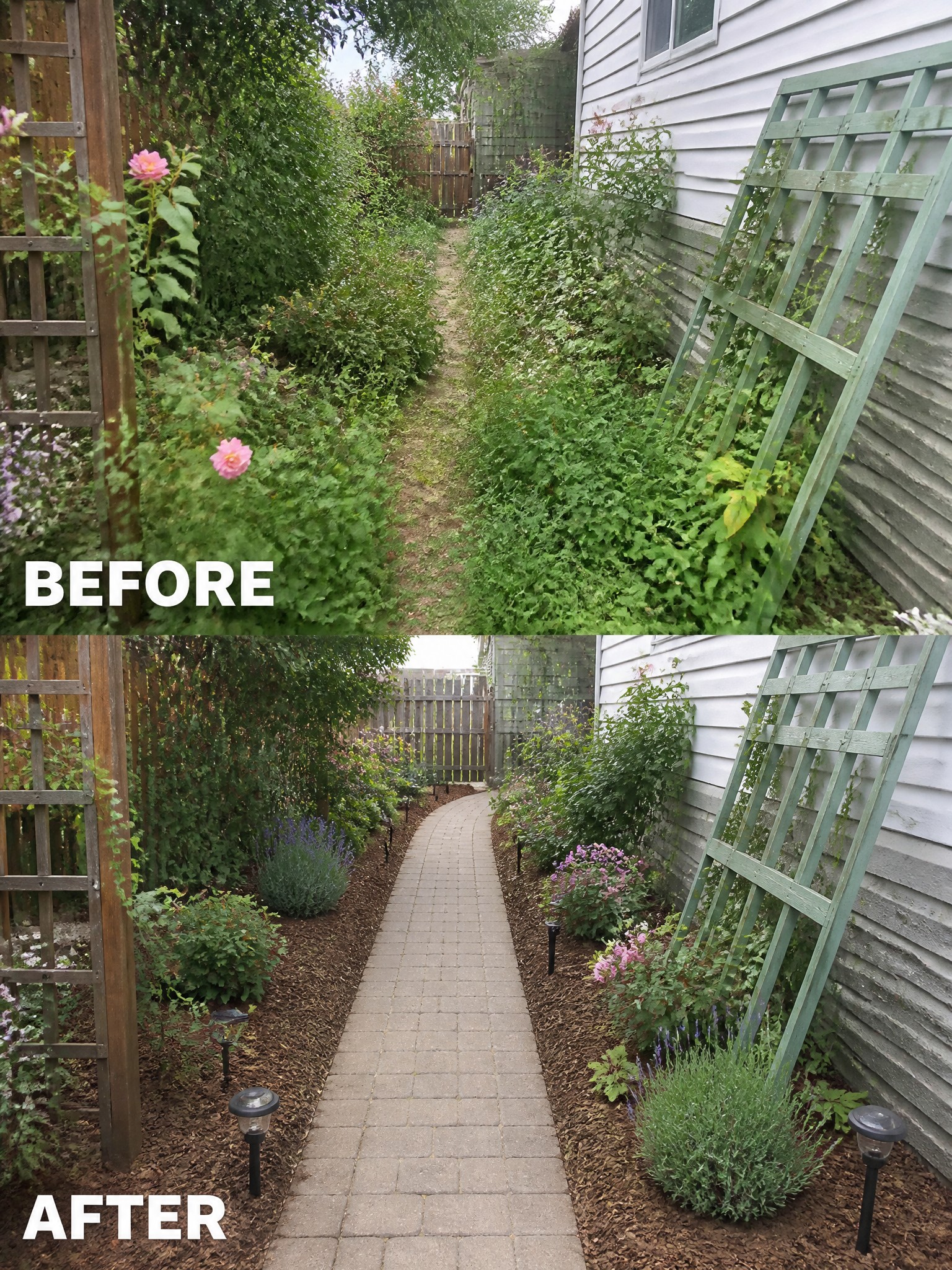
The side yard had turned into an overgrown mess with just a dirt track running between the houses. Adding a paved path gave the space a clear route while mulch in the beds pulled the planting together and made the whole area feel intentional instead of neglected.
This idea works especially well in tight side yards where you still need access to the back. Clear the overgrowth first, lay the pavers to set the main line, then use mulch to cover the beds so the plants stay contained and the path stays easy to walk.
Use Pavers And Mulch To Define A Side Yard Path
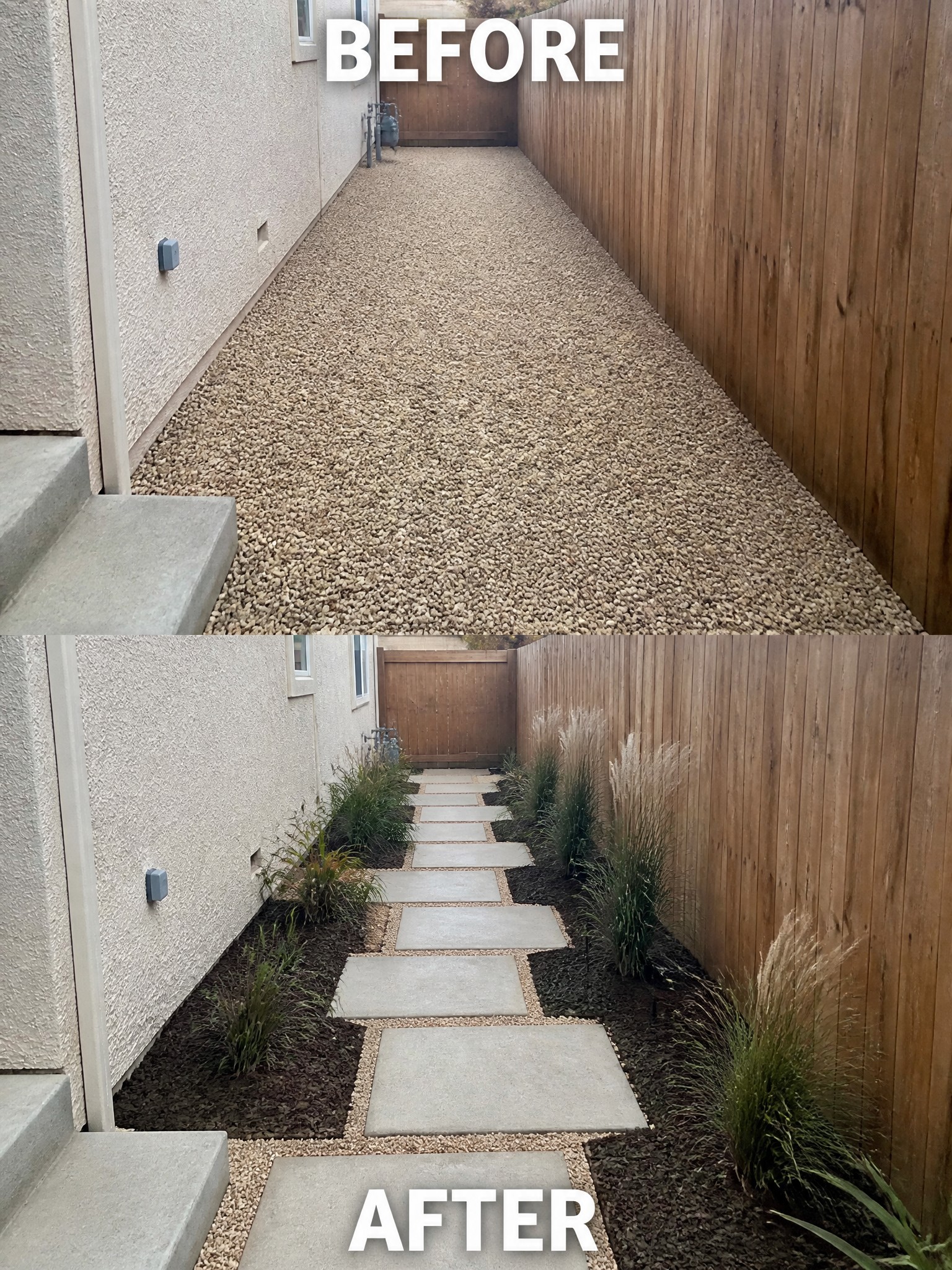
A long, narrow side yard covered in loose gravel often feels more like leftover space than a usable area. Adding a row of concrete pavers down the center with mulch beds on either side gives the space a clear route and makes it feel intentional instead of empty.
This approach works well on homes where the side yard is mainly a walkway between the front and back. Keep the pavers simple and level, then fill the beds with mulch to control weeds and hold moisture. A few clumps of tall grass along the fence add height without crowding the path.
Define A Narrow Side Yard With A Paver Path
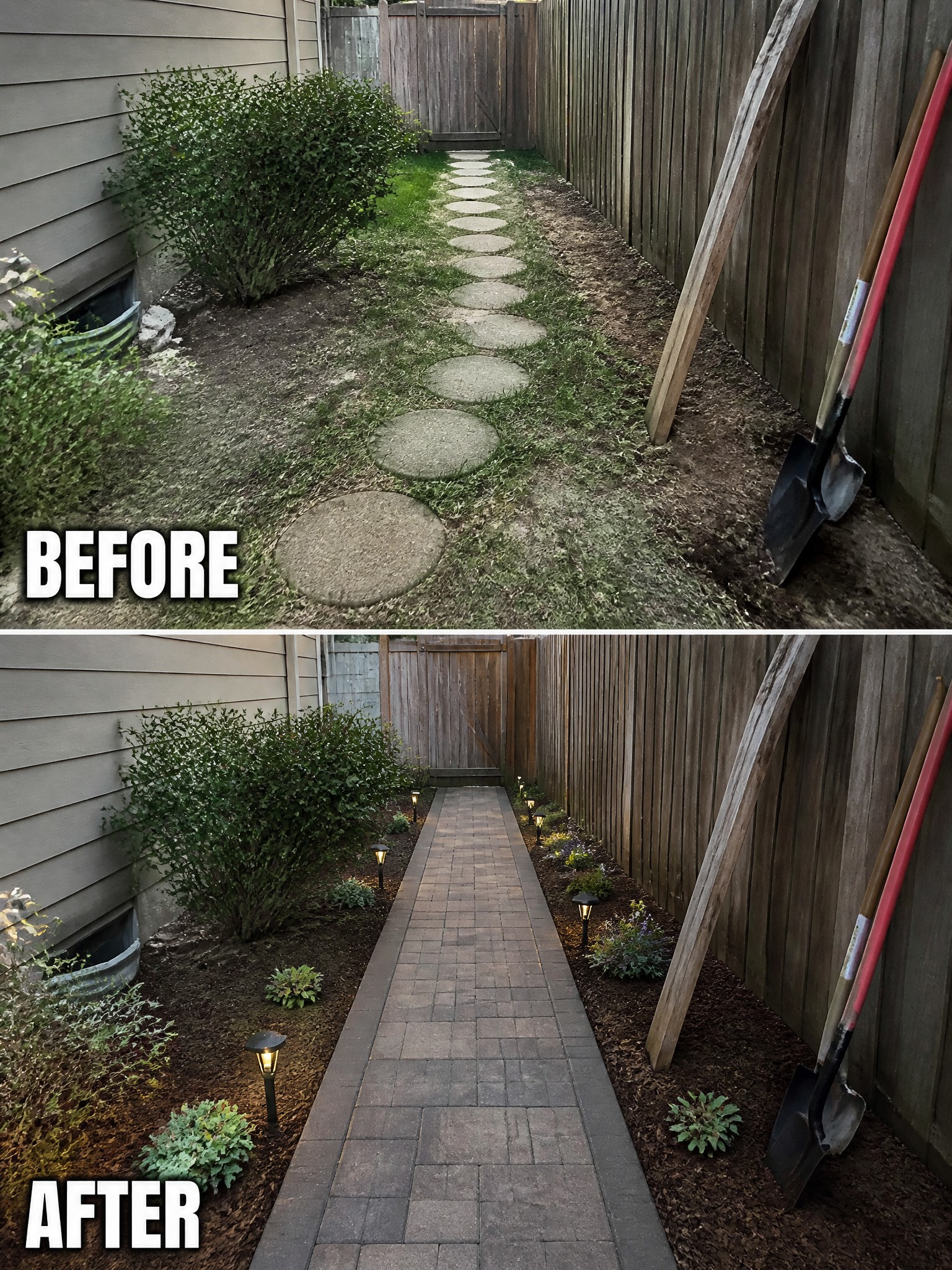
The original stepping stones sat in a strip of dirt and weeds that made the side yard feel unfinished and hard to walk through. Laying a full paver path and adding mulch beds on each side gave the space a clear route and kept the edges tidy.
This idea works best in tight areas between a house and fence where grass struggles to grow. Start by removing the old stones and leveling the ground, then choose pavers that match the scale of the space. Mulch helps control weeds and gives you room to add a few low plants along the sides without crowding the walkway.
Define A Narrow Side Yard With A Paver Path
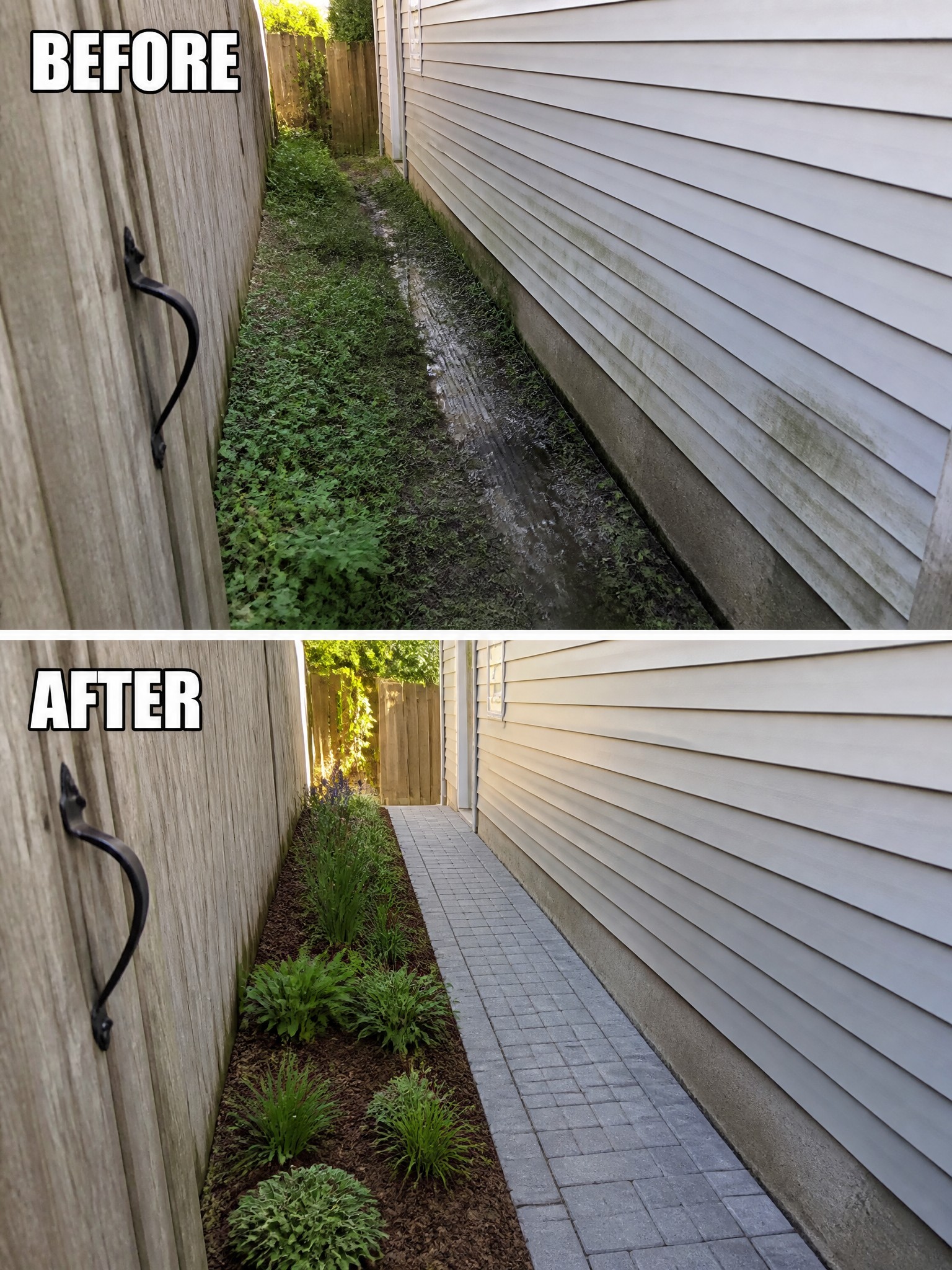
A narrow side yard often ends up as a muddy strip of weeds that no one wants to walk through. Laying down a simple paver path gives the space clear edges and turns it into something usable instead of just leftover ground.
This idea works best on homes where the side yard serves as the main walkway between the front and back. Keep the planted beds narrow, use mulch to hold down weeds, and choose tough, low-growing plants that can handle the shade and tight space.
Use Pavers To Create Structure In A Narrow Side Yard
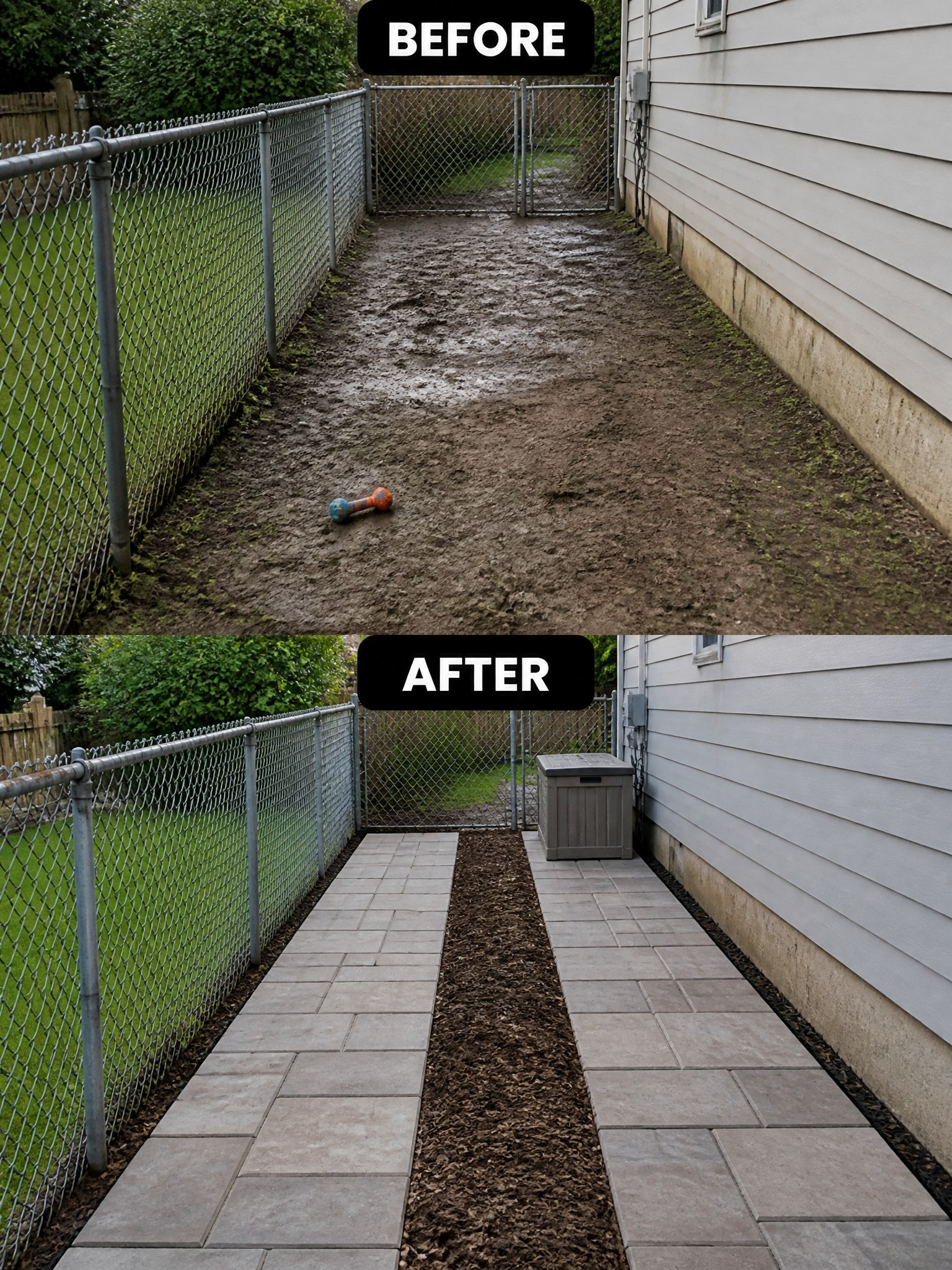
A muddy side yard quickly turns into wasted space that stays wet and hard to walk through. Adding pavers on each side with a strip of mulch down the middle gives the area clear paths and keeps the ground from turning to mud after rain.
This idea works best in tight spaces between a house and a fence where you still need access. Focus on the pavers first to set the shape, then fill the center with mulch for a simple finish that stays low maintenance.
Shape A Narrow Side Yard Path With Pavers And Mulch
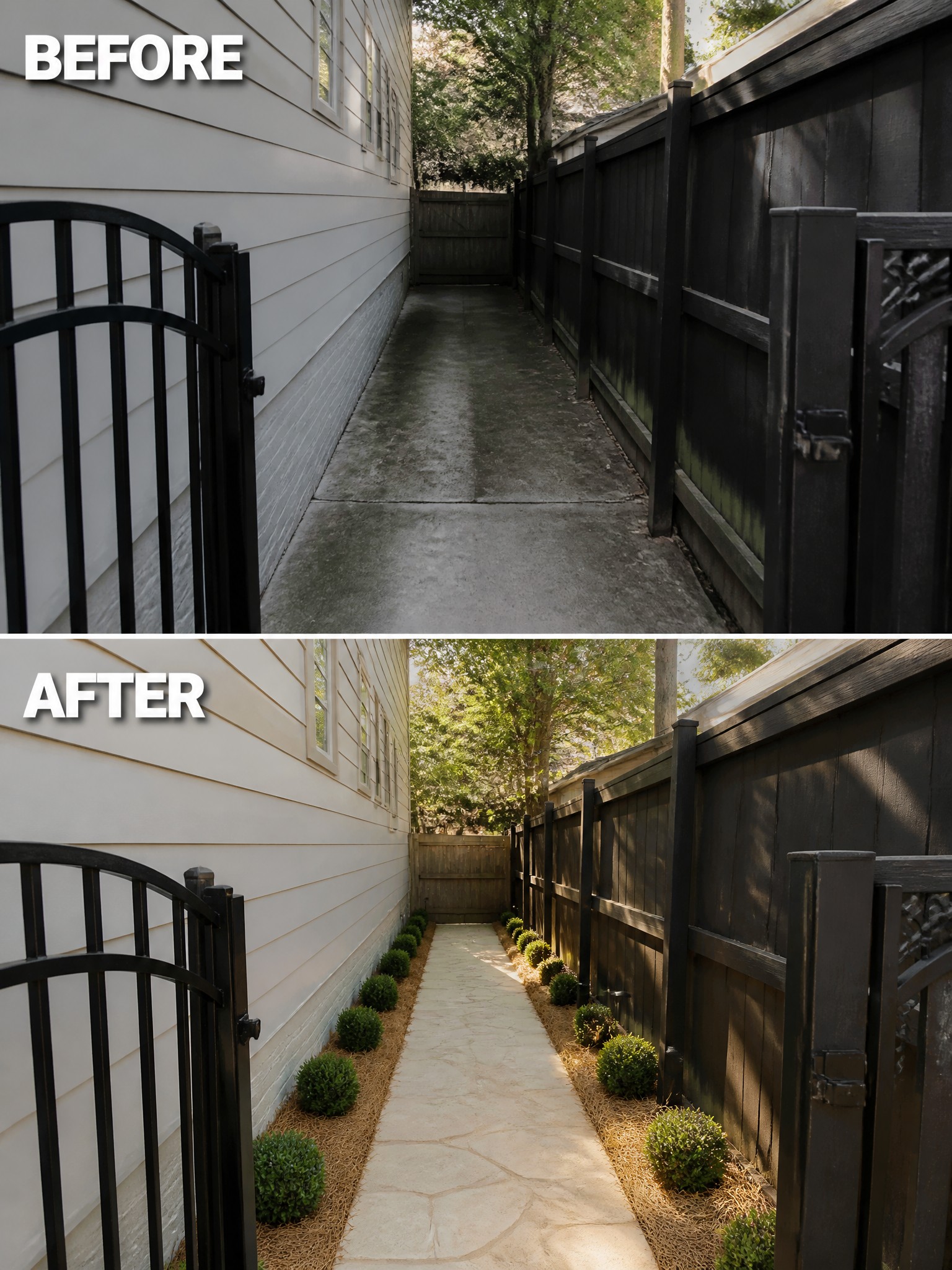
A plain concrete walkway often feels unfinished when it runs between a house and a fence. Switching to pavers gives the path better texture and a settled look, while mulch beds along the edges add clear borders and room for simple planting.
This approach works well in tight side yards where space is limited. Start by lifting the old concrete if needed, then lay pavers for the main walk and spread mulch in the new beds before adding a row of shrubs. Keep the beds narrow so the path stays easy to walk through.
Define A Narrow Side Yard With Pavers And Raised Beds
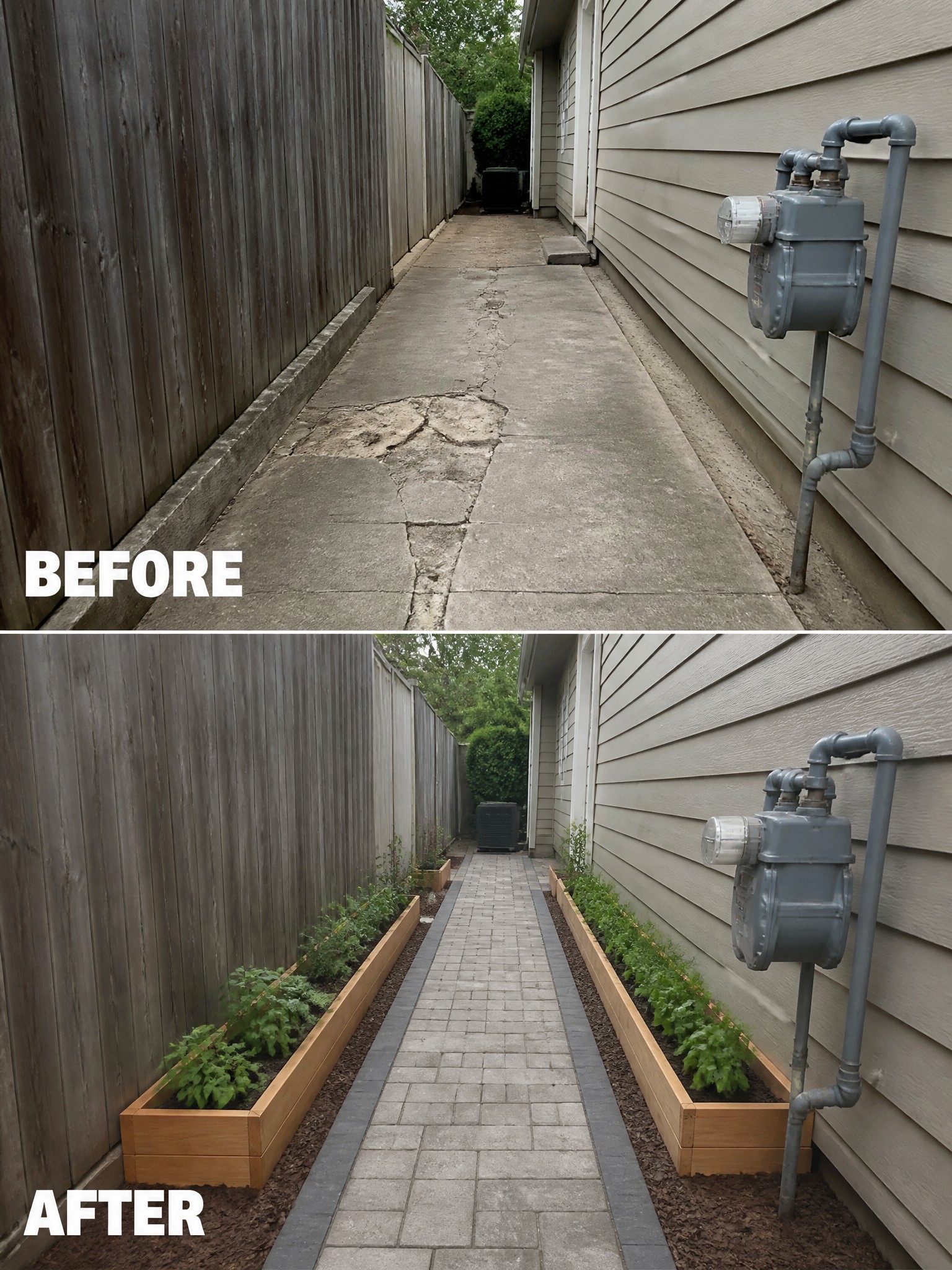
A cracked concrete path often leaves a side yard feeling like leftover space. Replacing it with pavers and adding raised beds on both sides gives the area a clear purpose and makes the whole walk feel more intentional.
This idea suits narrow yards where you still need a usable path. Lay the pavers first to set the main line, then add simple wooden beds along the edges and mulch the gaps to keep the planting neat and easy to maintain.
Add Pavers And Mulch To Give A Side Yard Structure
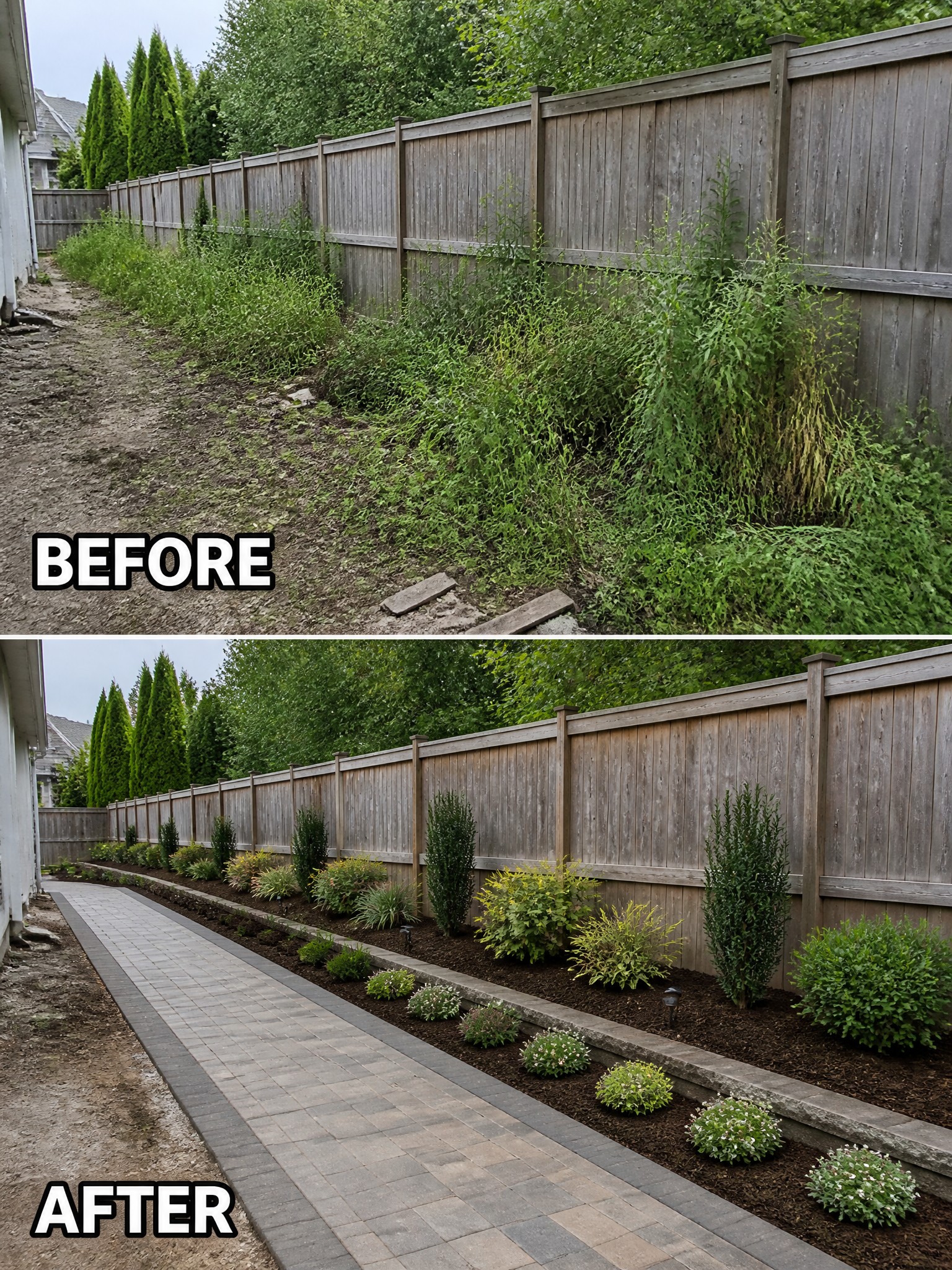
An overgrown strip next to a fence quickly turns into a weedy mess that feels like wasted space. Adding a paver path and mulched beds along the fence creates clear edges and turns the area into something you can actually walk through and keep up. The change from dirt and tall weeds to a defined walkway and planted beds makes the whole side yard feel planned instead of neglected.
This idea works best in narrow side yards where you need a path anyway. Put the pavers down first to set the route, then build simple beds on either side with mulch and low shrubs. It keeps the area looking tidy with less weeding and gives you room to add a few plants without crowding the space.
Add Structure To A Steep Side Yard Slope
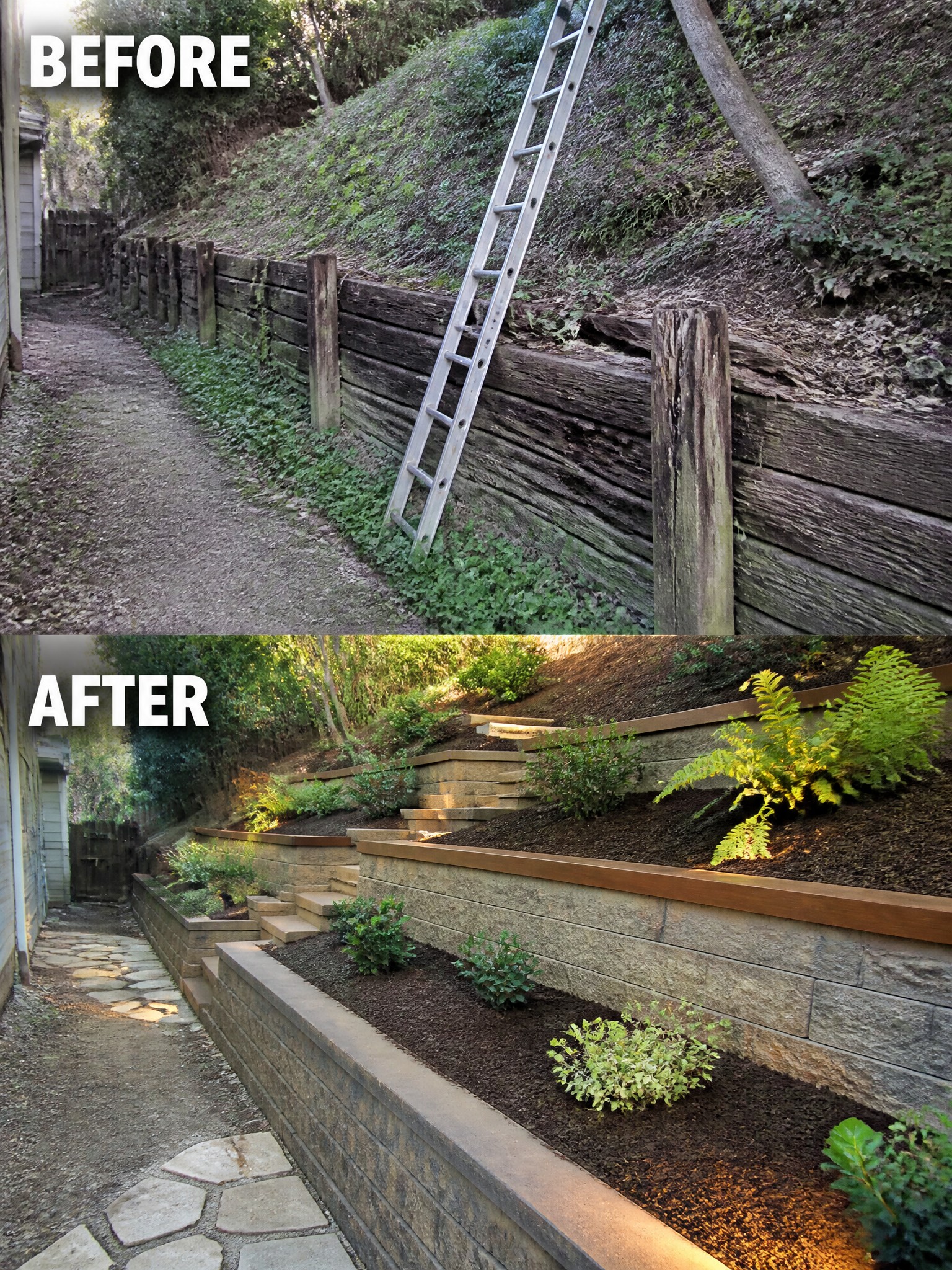
A steep side yard often turns into an overgrown strip that is hard to maintain. Terracing the slope with retaining walls creates flat beds that hold mulch and plants, while the paver path gives a clean, usable walkway along the house.
This approach works best in narrow side yards where the ground drops sharply. Start with the walls and mulch to define the beds, then add plants that fit the space. Keep the path width practical so it stays easy to walk through.
Use Pavers To Give A Side Yard Better Structure
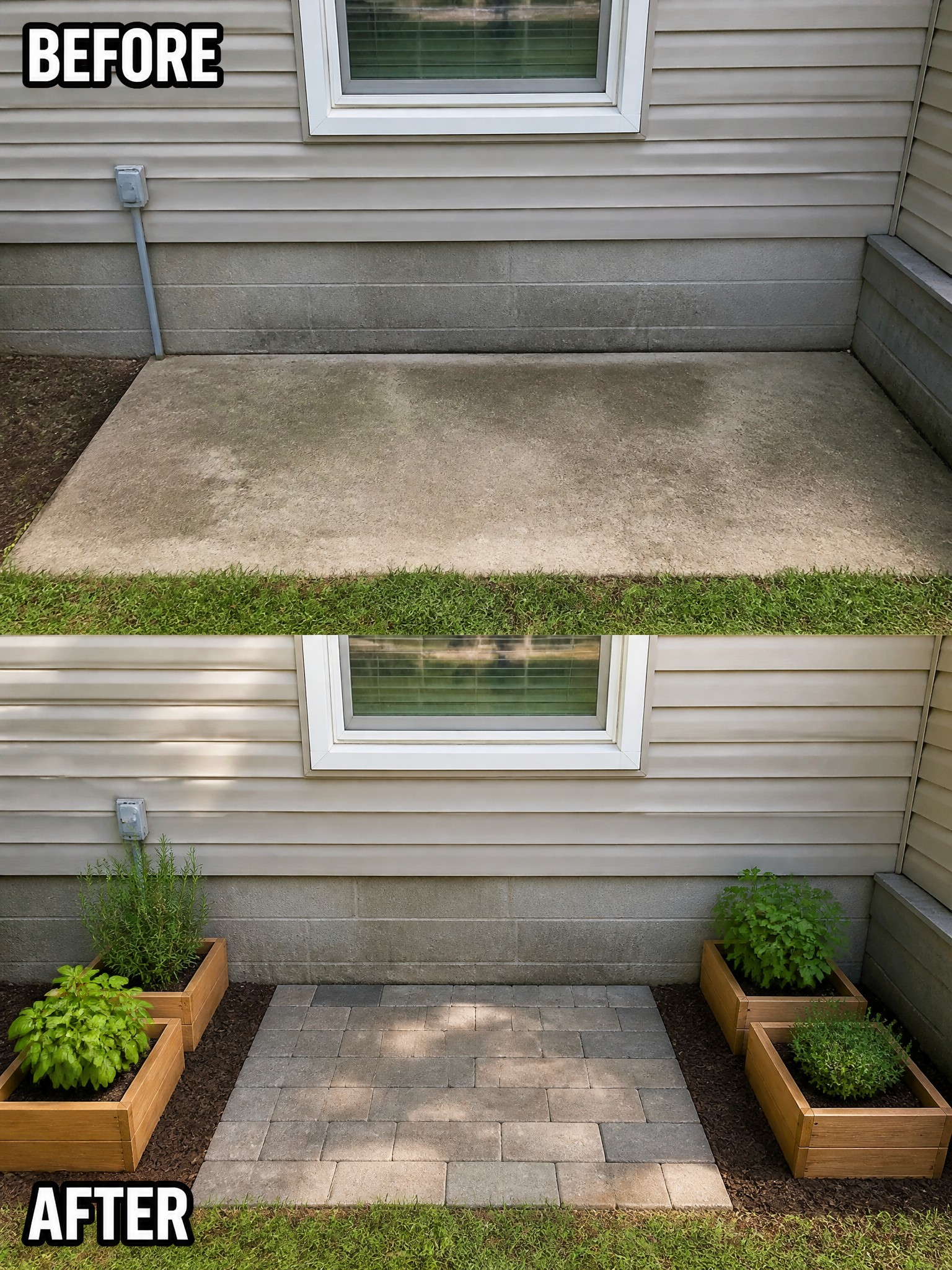
A bare concrete slab next to the house often looks unfinished and hard to work around. Laying pavers in a simple grid creates a defined area that feels purposeful while the mulch and planters along the edges keep the space from feeling too stark.
This idea suits homes with narrow side yards where you want function without crowding the area. Keep the paver section modest in size, add a few raised beds for herbs or small shrubs, and let the mulch handle the rest so the whole spot stays low maintenance.
Define A Side Yard Path With Pavers And Mulch
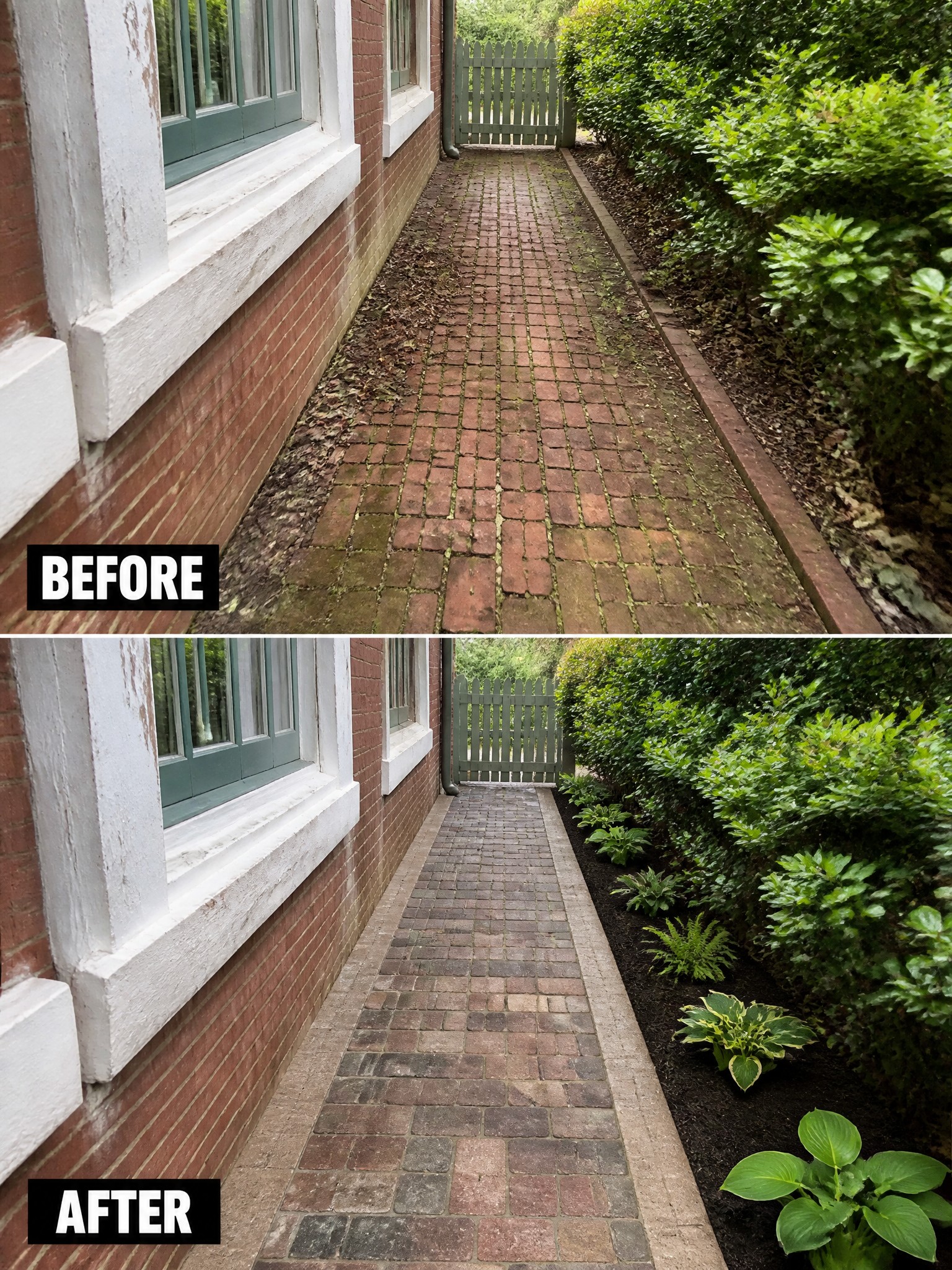
A neglected side path often becomes a catch-all for leaves and weeds because it lacks clear edges. Cleaning the existing bricks and adding a simple border gives the walkway a finished look and makes the whole strip feel intentional rather than leftover space.
Mulch in the adjacent bed keeps weeds down and lets new plants settle in without fighting overgrowth. This approach suits narrow passages between a house and a fence or hedge where you want function without spending much on new materials.
Create A Defined Path With Pavers In A Narrow Side Yard
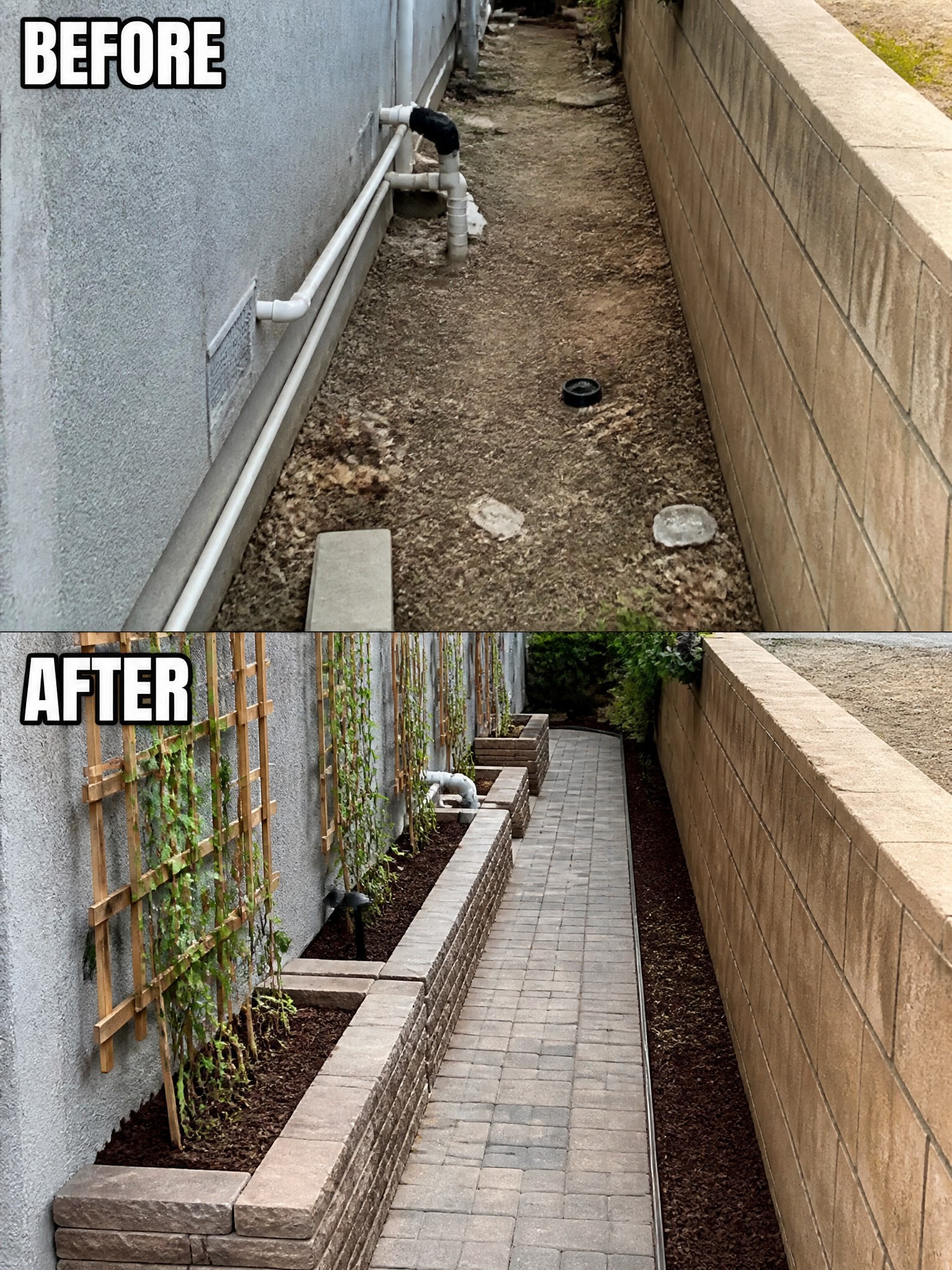
A narrow side yard often ends up as wasted space because it lacks clear structure. Adding a paver path gives the area a purpose and makes it easy to walk through without tracking mud. Raised beds along the edges keep the soil contained and give you room to add plants without crowding the walkway.
This approach works well on lots where the side yard is the main connection between front and back. Start with the path first so you know how much room is left for planting. Mulch in the beds helps control weeds and gives everything a finished look even before the plants fill in.
Use Pavers And Mulch To Shape A Narrow Side Yard
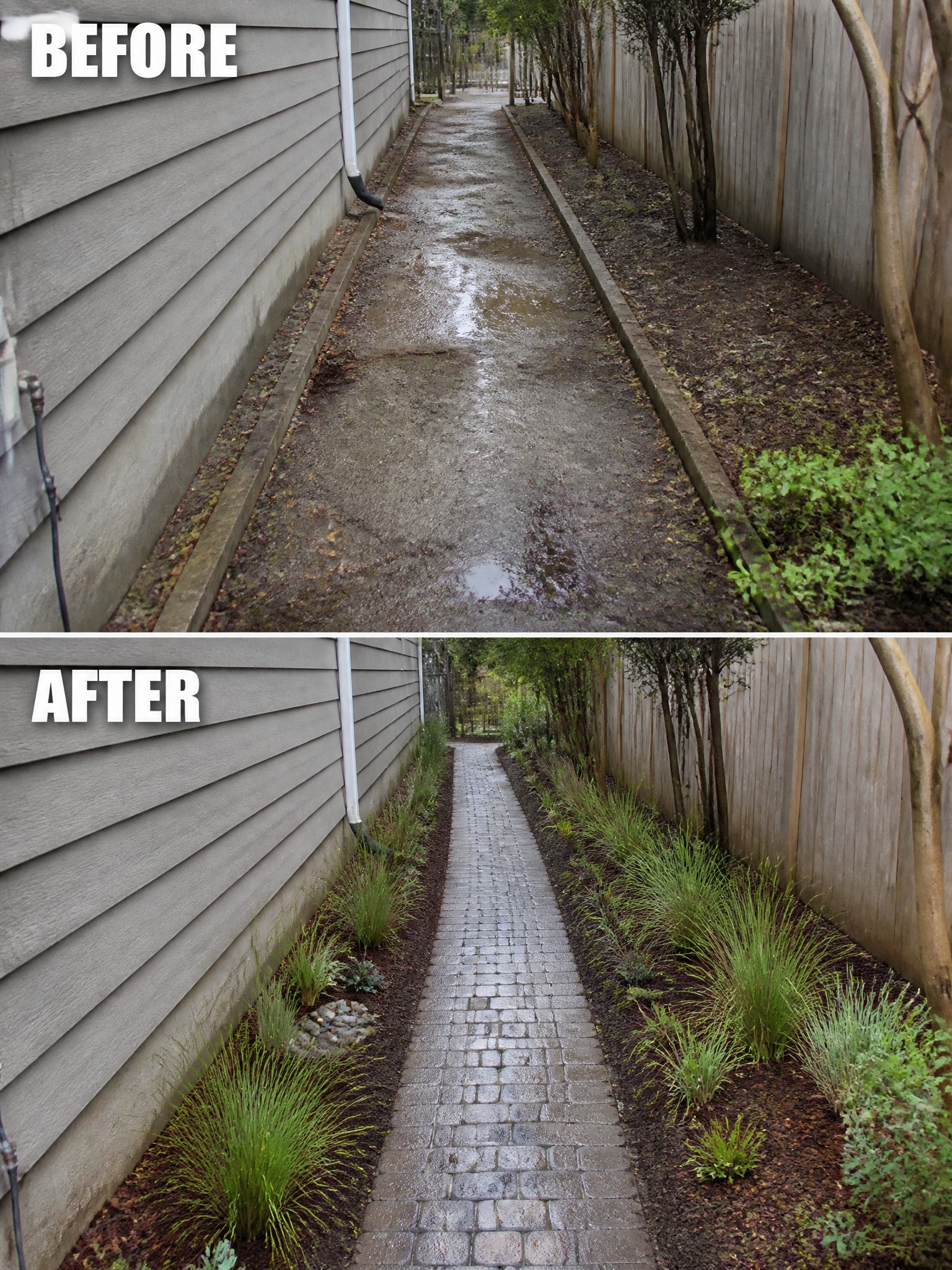
A muddy, uneven side path often stays unused because water pools and nothing feels stable underfoot. Laying pavers in a simple running pattern gives the walkway a firm surface that drains better, while mulch beds on both sides keep the planting areas tidy and separate from the walking space.
This approach works well on long, narrow lots where space is tight. Start with the path layout first so the beds have clear edges, then fill them with easy-care grasses and ground cover that can handle the shade most side yards get. Keep the beds narrow enough for easy reach during weeding.
Frequently Asked Questions
Q: Should I lay pavers first or spread the mulch?
A: Put the pavers down first so you can set them level. Then add the mulch around the edges. This keeps the pavers from shifting when you rake the mulch into place.
Q: How do I stop weeds from growing between the pavers?
A: Lay landscape fabric under the pavers before you set them. The fabric blocks most weeds while still letting water drain through to the soil.
Q: What if the side yard stays damp most of the year?
A: Choose pavers with wider gaps and fill those gaps with gravel instead of sand. The gravel lets extra water move away from the mulch areas faster.
Q: Do I really need edging around the whole space?
A: Yes, install simple metal or plastic edging along the mulch borders. It holds everything in place and keeps the mulch from spilling onto the lawn.
