

Side yards often end up with uneven paths and stray growth that make the route from front to back feel more like an afterthought than a working part of the yard.
Clearing debris and setting a firmer edge usually opens up the space enough to walk without brushing against plants or stepping around puddles.
Small layout tweaks matter most.
I have found that testing one new border material at a time shows quickly whether the path stays tidy through the seasons or needs another adjustment later.
These layered fixes tend to keep the walkway usable while the rest of the side yard settles into a shape that fits how the house is actually used.
Define A Narrow Side Yard With A Simple Paver Path
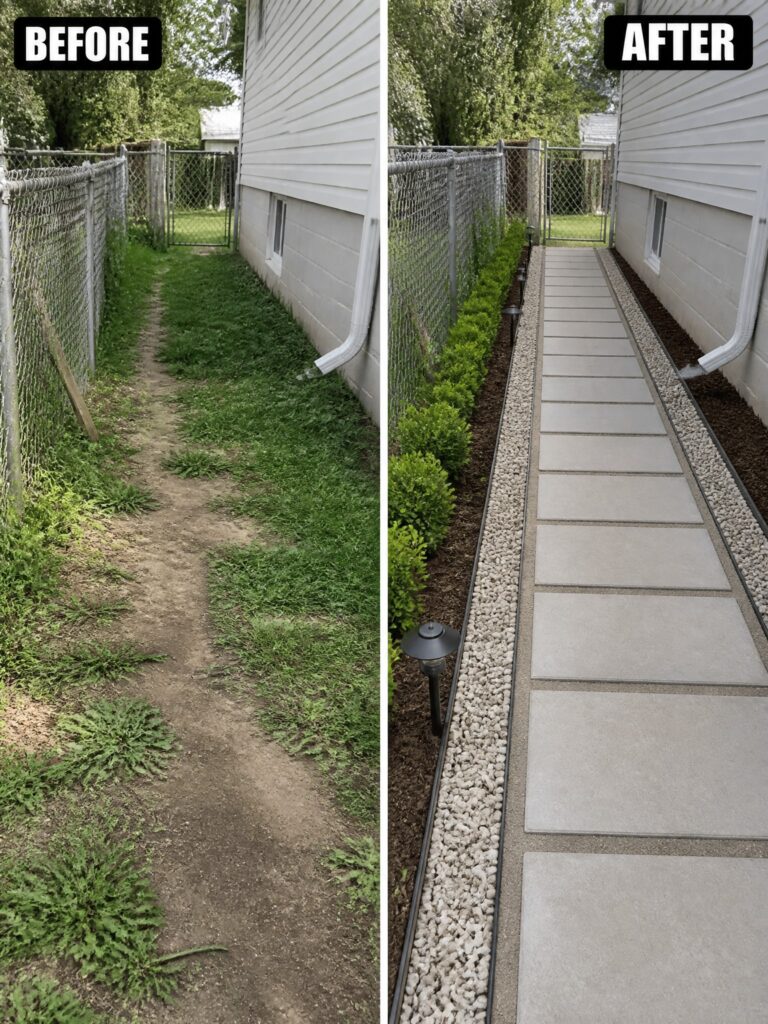
A dirt path lined with weeds makes a side yard feel neglected and hard to use. Laying concrete pavers down the center with gravel on both sides gives the space a clear route and stops the mud from tracking everywhere after rain.
This idea works best in tight areas between a house and a fence. Clear the overgrowth first, add edging to hold the gravel, then place the pavers so the walkway stays level and easy to maintain. Low shrubs along one side help soften the look without crowding the path.
Stamp Concrete To Improve A Side Yard Path
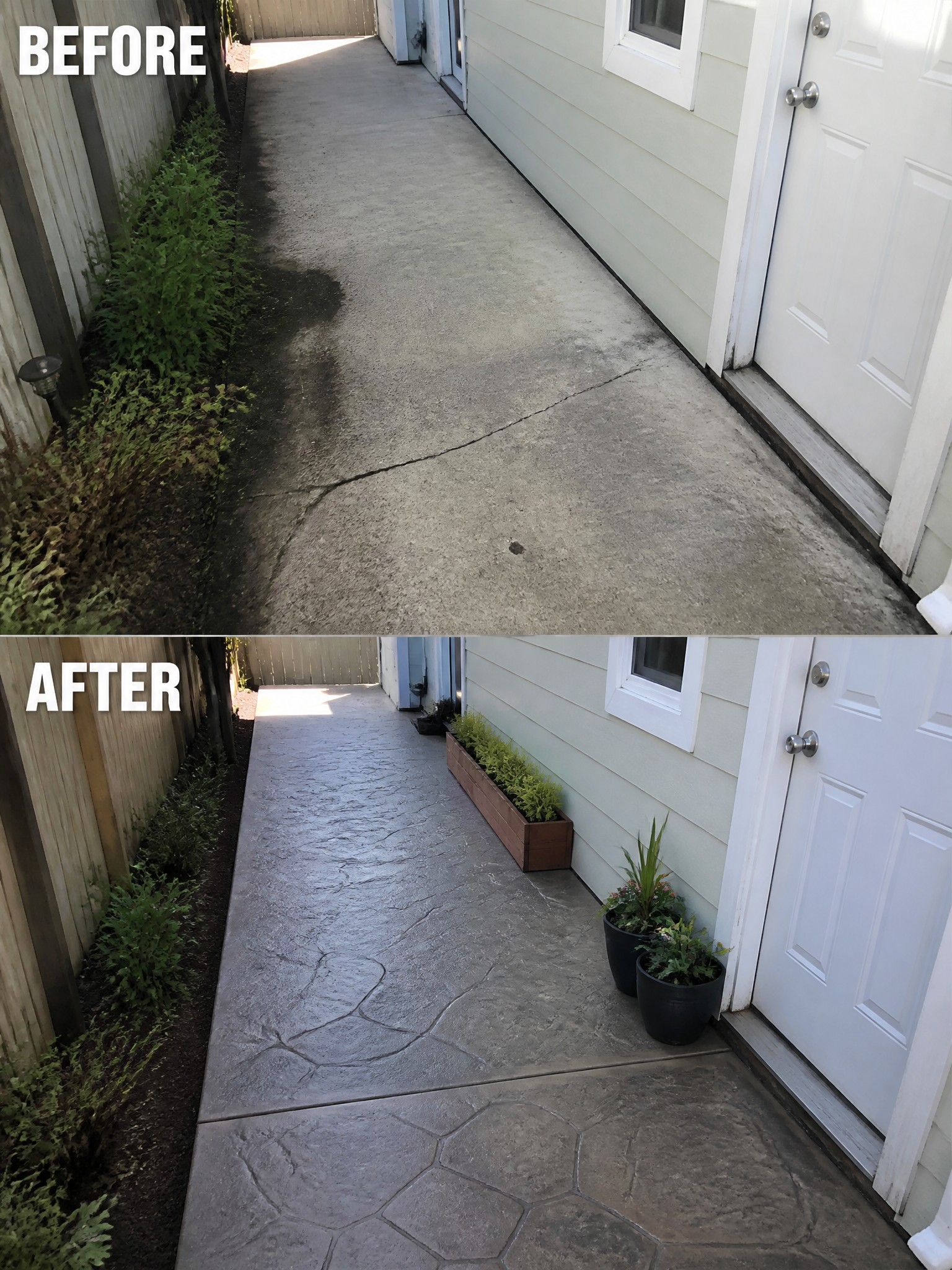
A plain concrete walkway often looks unfinished and collects dirt quickly in a narrow side yard. Stamping the surface with a stone pattern adds texture that breaks up the flat look and makes the path feel more intentional without changing its width.
This approach works well when the main goal is better flow rather than adding seating or decor. Start with a thorough cleaning of the existing slab, then choose a stamp pattern that matches the scale of the space. Keep planting simple on one side so the walkway remains the clear main feature.
Add Stepping Stones For A Cleaner Side Yard Path
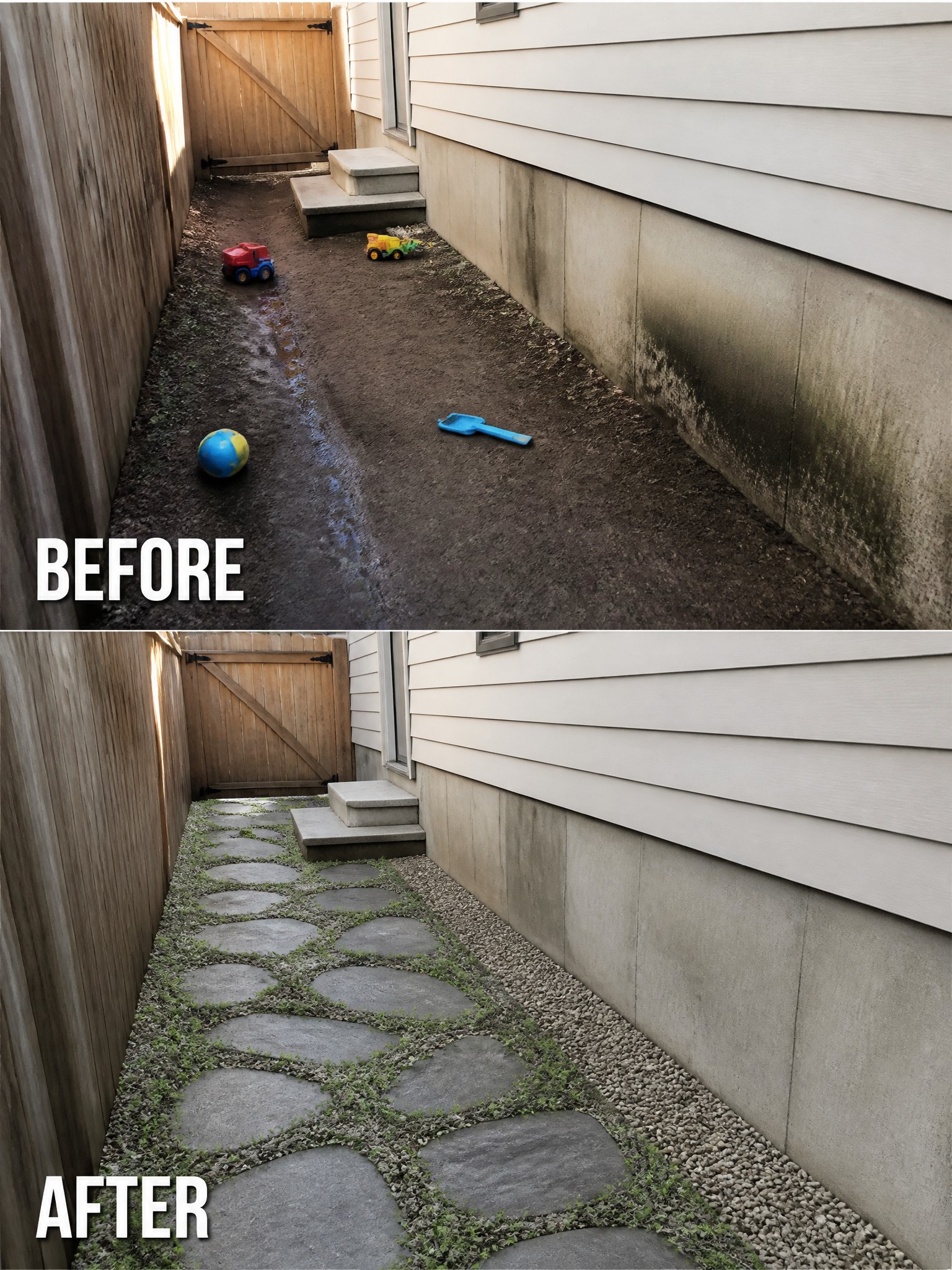
A narrow side yard often turns into a muddy strip that gets little use. Laying down stepping stones with gravel between them gives the space a clear walking surface and stops the dirt from turning into a mess every time it rains. The simple change makes the area feel intentional instead of forgotten.
This approach works well in tight spaces where a full patio would feel too big. Start with a solid base under the stones so they stay level, and choose gravel that packs down firmly. It keeps the path practical while still leaving room for plants along the edges if you want a bit more green.
Clear Overgrowth Before Adding A Defined Path
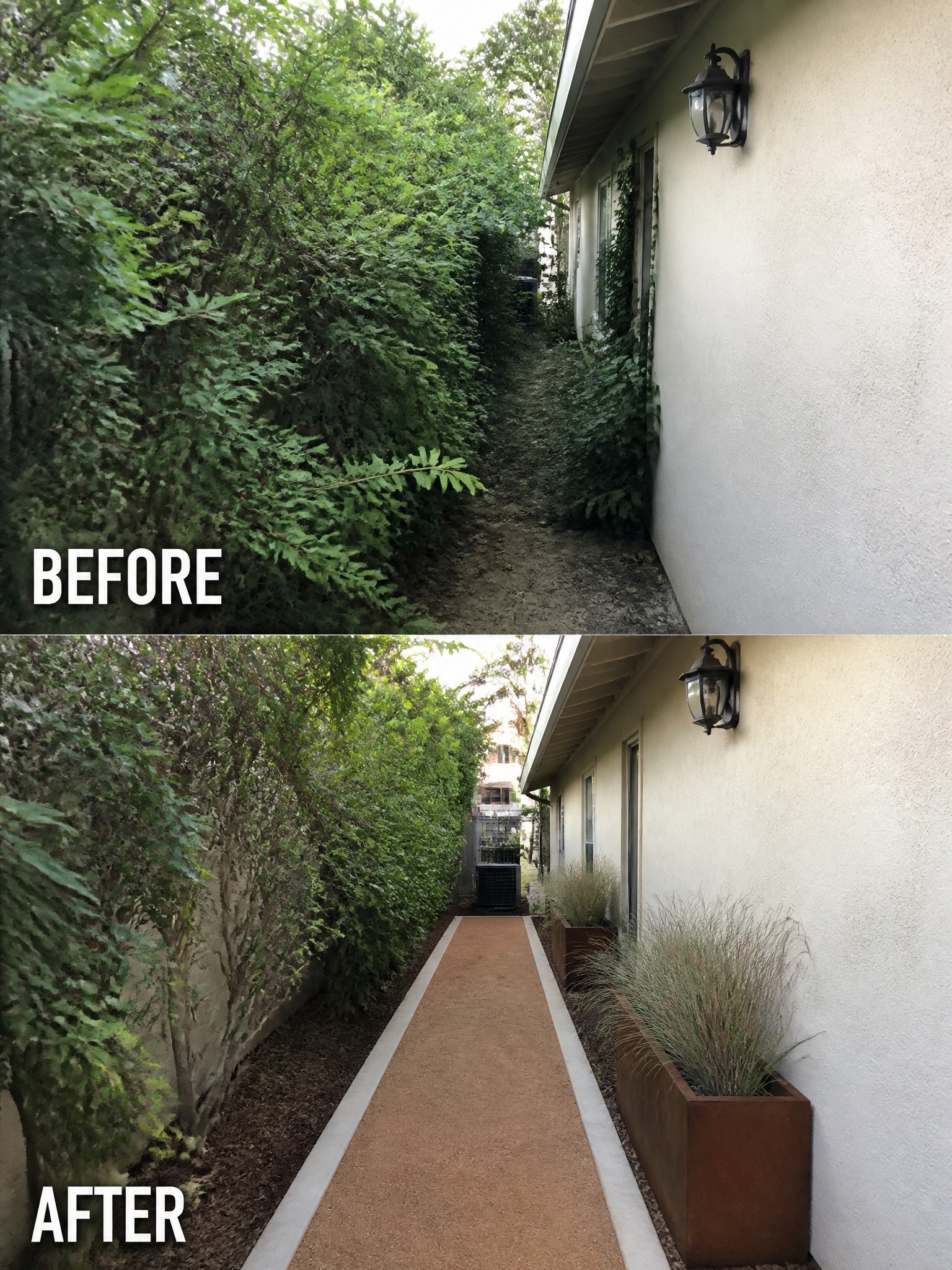
An overgrown side yard quickly becomes hard to use when plants spill across the walkway and block the route. Cutting back the thick growth and installing a simple gravel path with clean edging opens up the space and makes it feel intentional rather than neglected.
The practical step is to focus on the path first, then add a couple of long planters along the house to keep the planting contained. This works especially well on narrow lots where you still need regular access to the back of the house.
Add A Shed For Tool Storage In A Narrow Side Yard
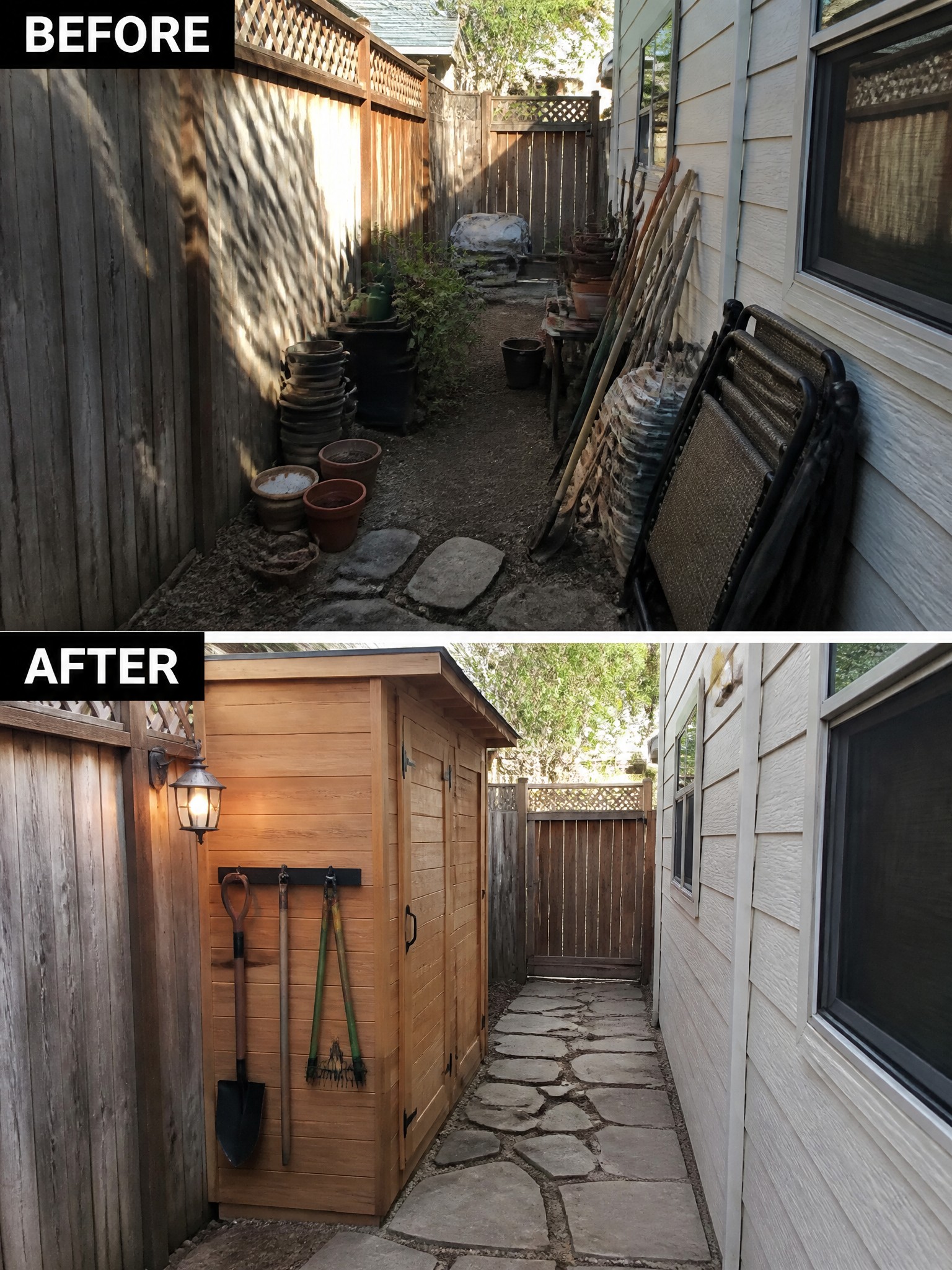
A narrow side yard walkway tends to collect tools, pots, and chairs until the path becomes hard to use. Adding a simple wooden shed along the fence gives those items a dedicated spot and keeps the walkway open for regular foot traffic.
Mounting tools on the outside wall of the shed keeps them handy without taking up floor space inside. This idea works best on homes where the side yard serves mainly as a passage rather than a seating area. Focus first on clearing the clutter, then add the shed so the path stays functional.
Add Lighting To Make A Side Yard Path Usable At Night
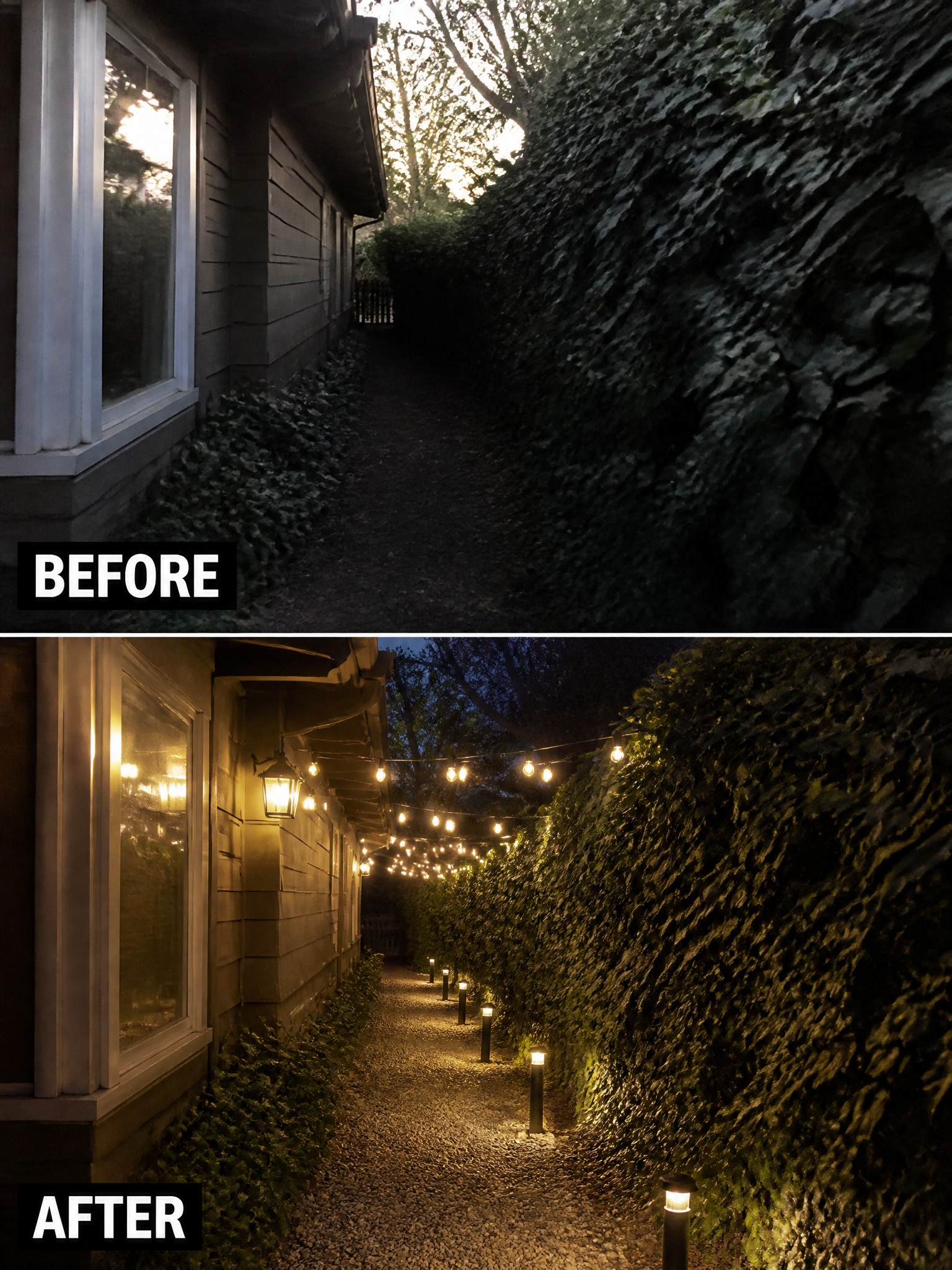
A narrow side yard path often stays unused after dark because it feels hidden and unsafe. Simple overhead string lights paired with low pathway lights give enough visibility to walk comfortably while keeping the space from feeling closed in.
This works best on homes where the side path serves as a shortcut or access route. Place the lights close to the ground and along the edges first so the walkway stays clear and you avoid tripping hazards in a tight space.
Add A Paved Path To Clean Up A Narrow Side Yard
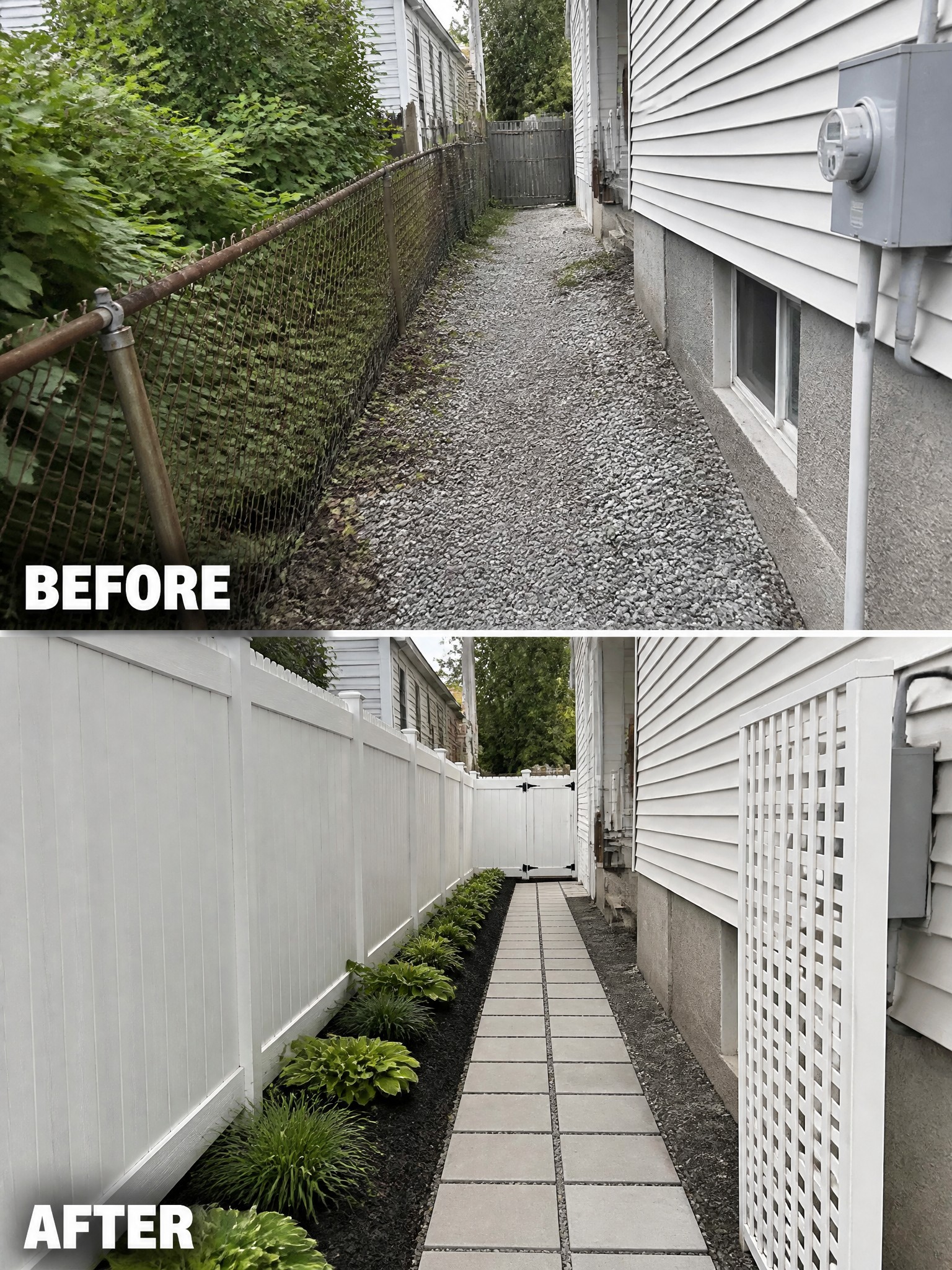
A gravel side path tends to scatter and look unfinished once plants start creeping in from the edges. Switching to pavers gives the walkway a firm surface that stays put and makes the whole strip feel like a deliberate route instead of an awkward leftover space.
This idea suits homes where the side yard is mainly used for access rather than seating. Keep the planting beds narrow so the path remains easy to walk, and use mulch to hold the soil in place. Low, contained plants along the fence help frame the walkway without narrowing it further.
Use Pavers To Structure A Side Yard Walkway
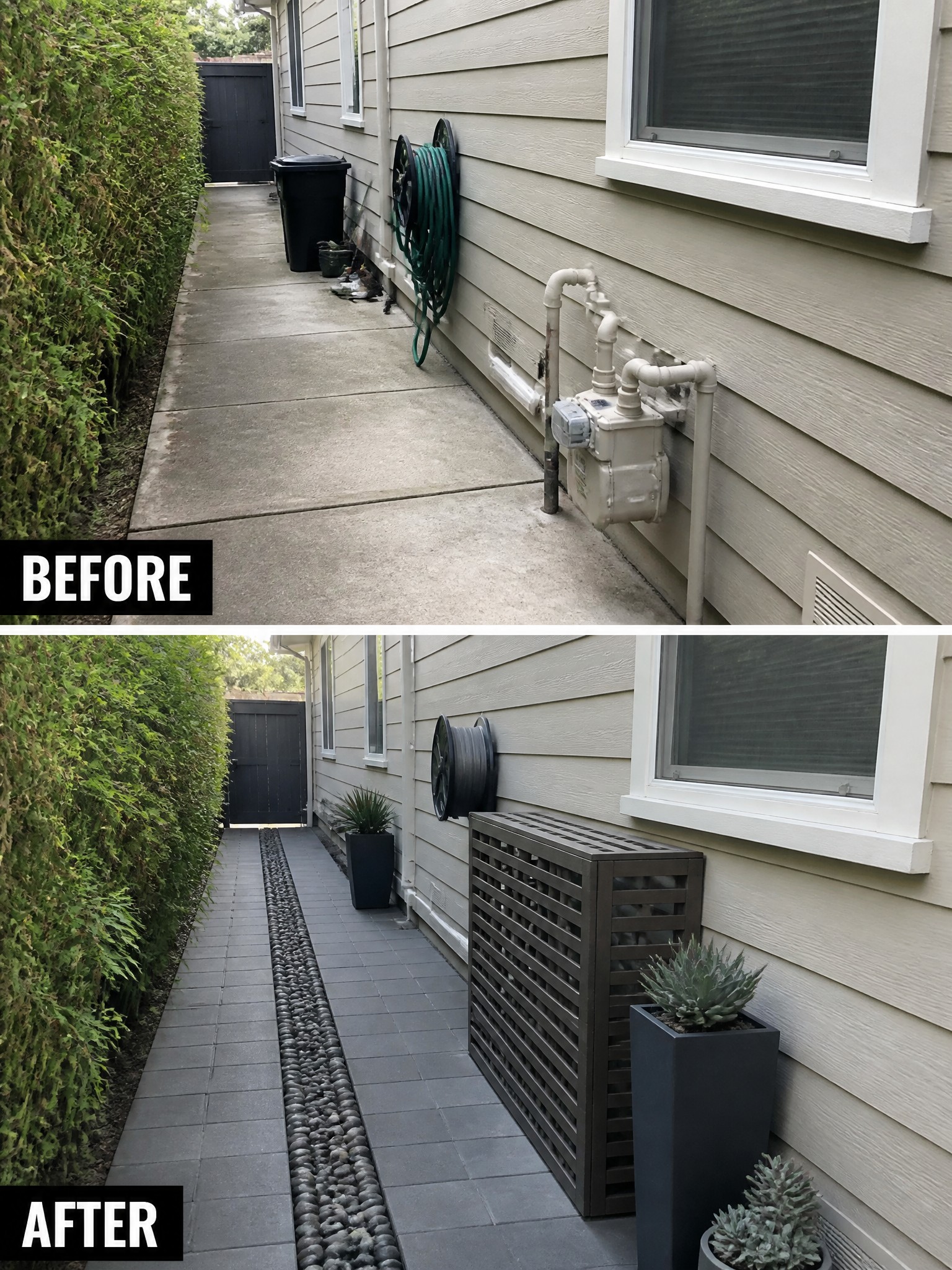
A plain concrete path next to the house often ends up looking messy, especially when utilities sit right along it. Switching to pavers with a narrow gravel channel down the middle gives the walkway clear edges and a place for water to drain. The simple slatted screen also hides the meter without blocking access.
This approach works well in tight side yards where you need to keep the path usable but still want it to look intentional. Start with the hardscaping first, then add a few large planters so the space feels finished without crowding the walkway. It suits homes with narrow side access that still needs regular foot traffic.
Define A Narrow Side Yard With Gravel And Stepping Stones
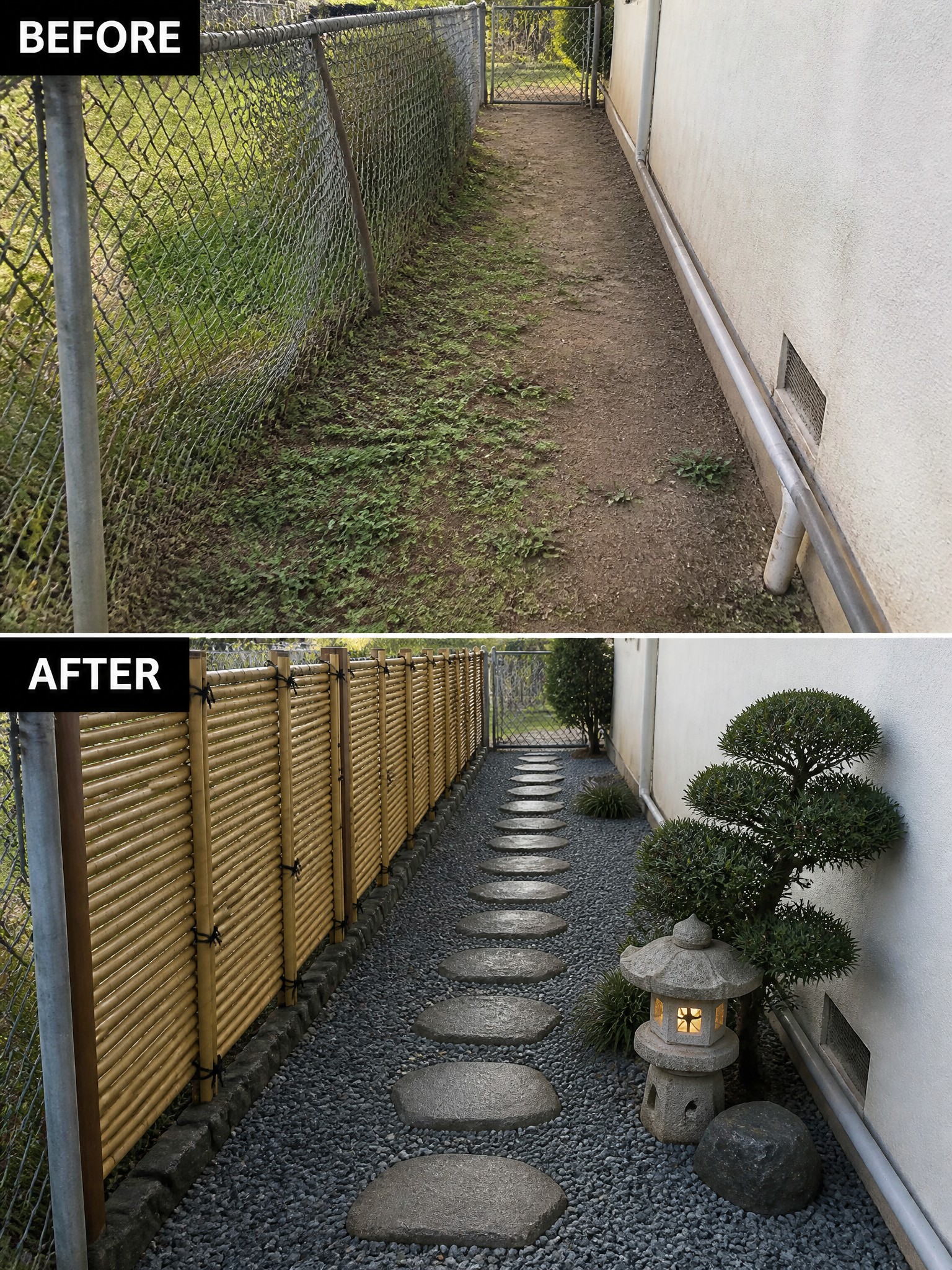
A narrow side yard often ends up as a forgotten strip of dirt and weeds. Replacing the bare ground with gravel and laying down stepping stones gives the space a clear path that feels intentional instead of neglected. The simple addition of a bamboo screen along one side also blocks the view of the fence and adds privacy without taking up much room.
This approach works well on any tight walkway between a house and a property line. Start by clearing the overgrowth completely, then lay landscape fabric before adding gravel so weeds stay down. Keep the planting light, such as a few shrubs and a single lantern near the house, so the path stays easy to walk.
Refresh An Overgrown Side Path With Fresh Paving
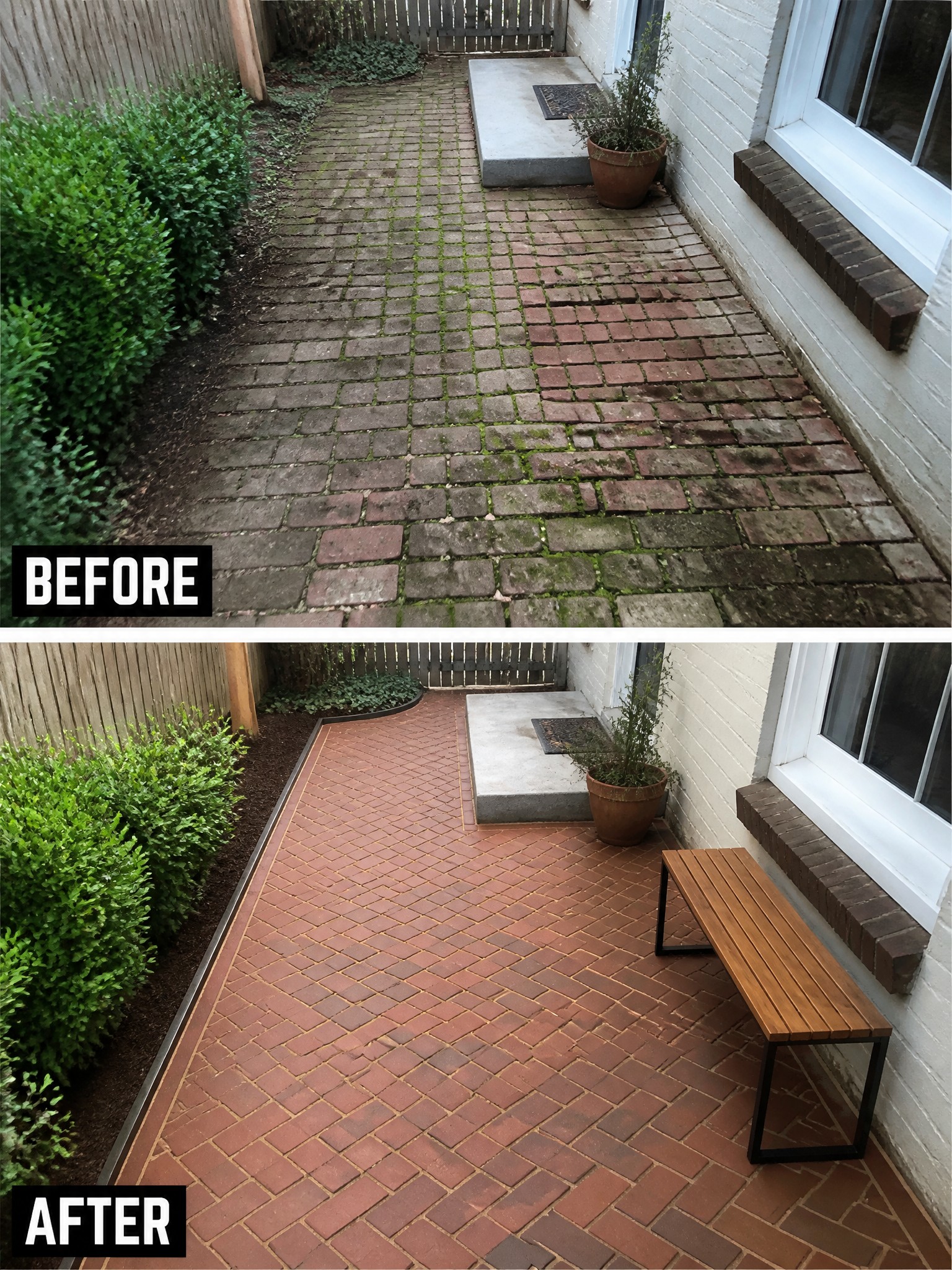
Side paths often get ignored until the bricks sink, moss takes over, and the surface feels uneven underfoot. Laying a new, level brick surface with clean edges turns the same narrow strip into a walkway that is actually pleasant to use.
This idea suits homes where the side yard is mostly functional rather than a seating area. Focus first on the paving and metal edging to keep the borders sharp, then add simple mulch along the sides so the path stays clear and low-maintenance.
Turn A Muddy Side Yard Into A Clean Walkway
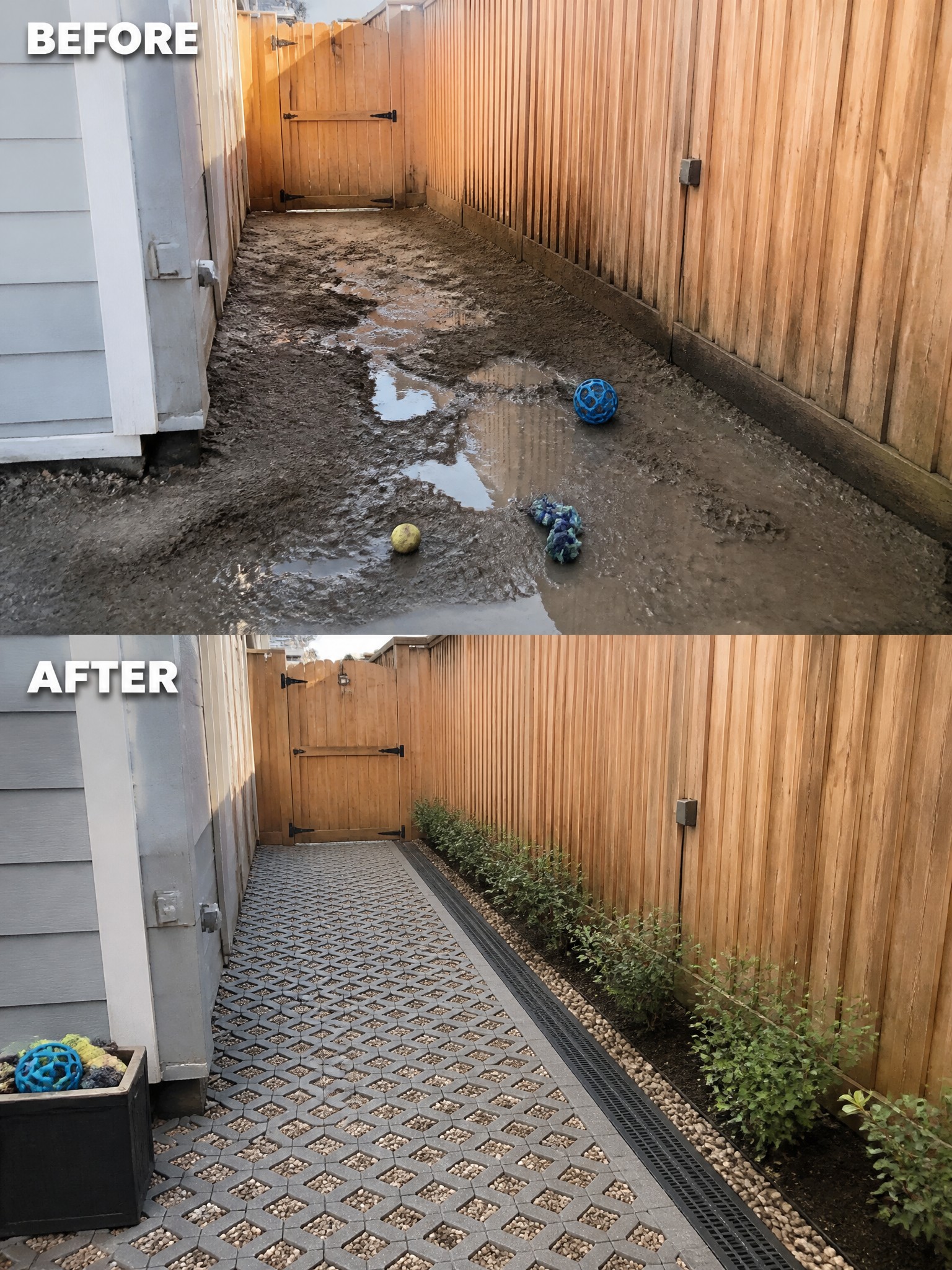
A narrow side yard often turns into a soggy mess after rain, with puddles that make the path hard to use. Laying down a grid of pavers and adding a narrow drainage channel along one edge solves the water problem while giving the space a finished look. Gravel on the sides keeps everything neat and helps water drain away instead of pooling.
This approach works well on long, tight spaces where grass never thrives. Start with the drainage and base before adding plants along the fence so the walkway stays clear. The same idea fits most homes with similar side access that needs regular foot traffic.
Add Structure To An Overgrown Side Yard
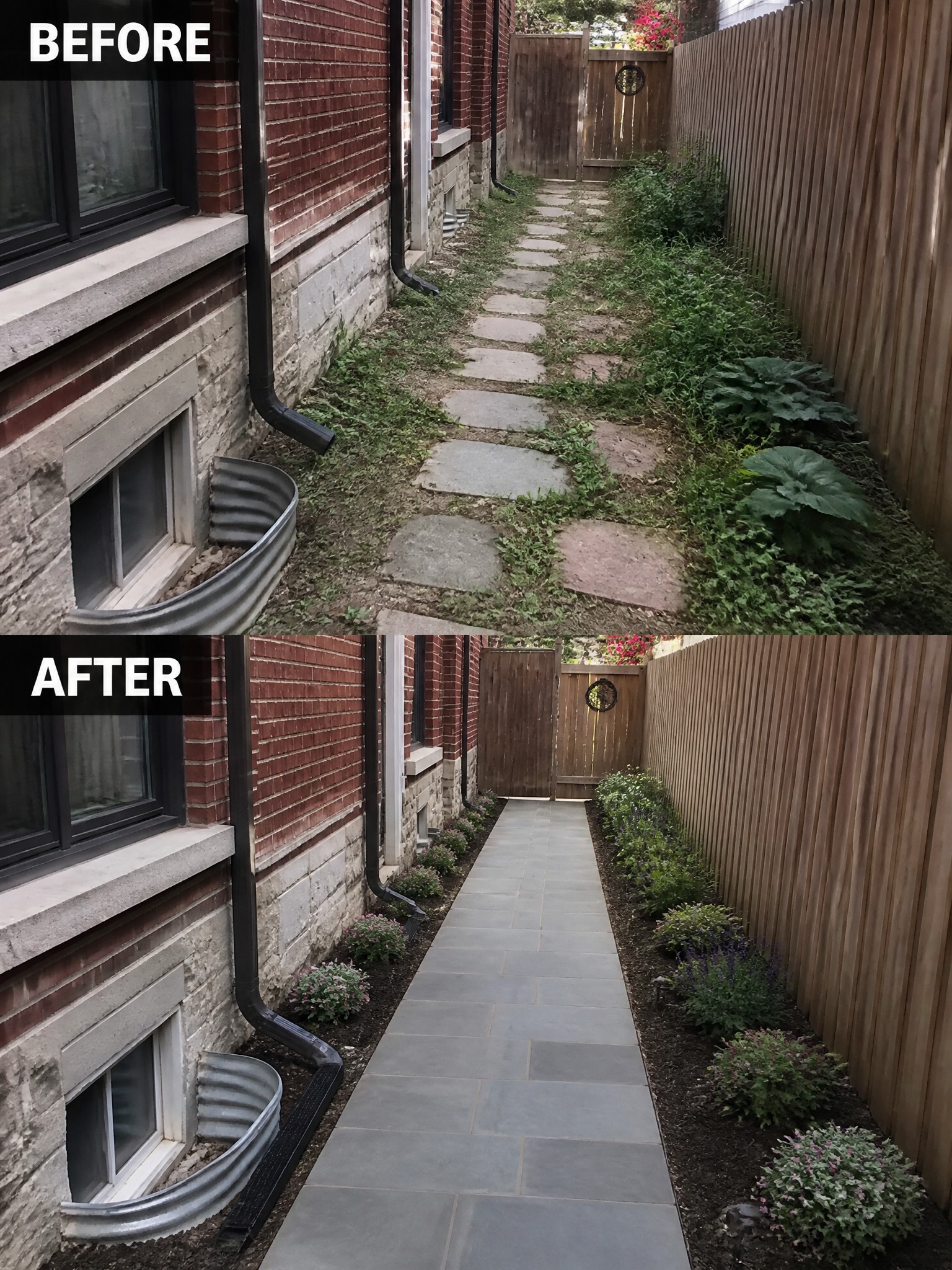
A narrow side yard often ends up neglected because it feels too tight for much planting or use. Replacing scattered stepping stones with a continuous paved path gives the space a clear purpose and makes it easier to walk through without fighting weeds.
This works best when you keep the new beds narrow and line both sides with the same low shrubs. The result stays practical for access while still looking planned instead of random. Focus on a solid base under the pavers so water moves away from the house, then add simple edging to hold the mulch in place.
Add Raised Beds And A Gravel Path To Organize A Side Yard
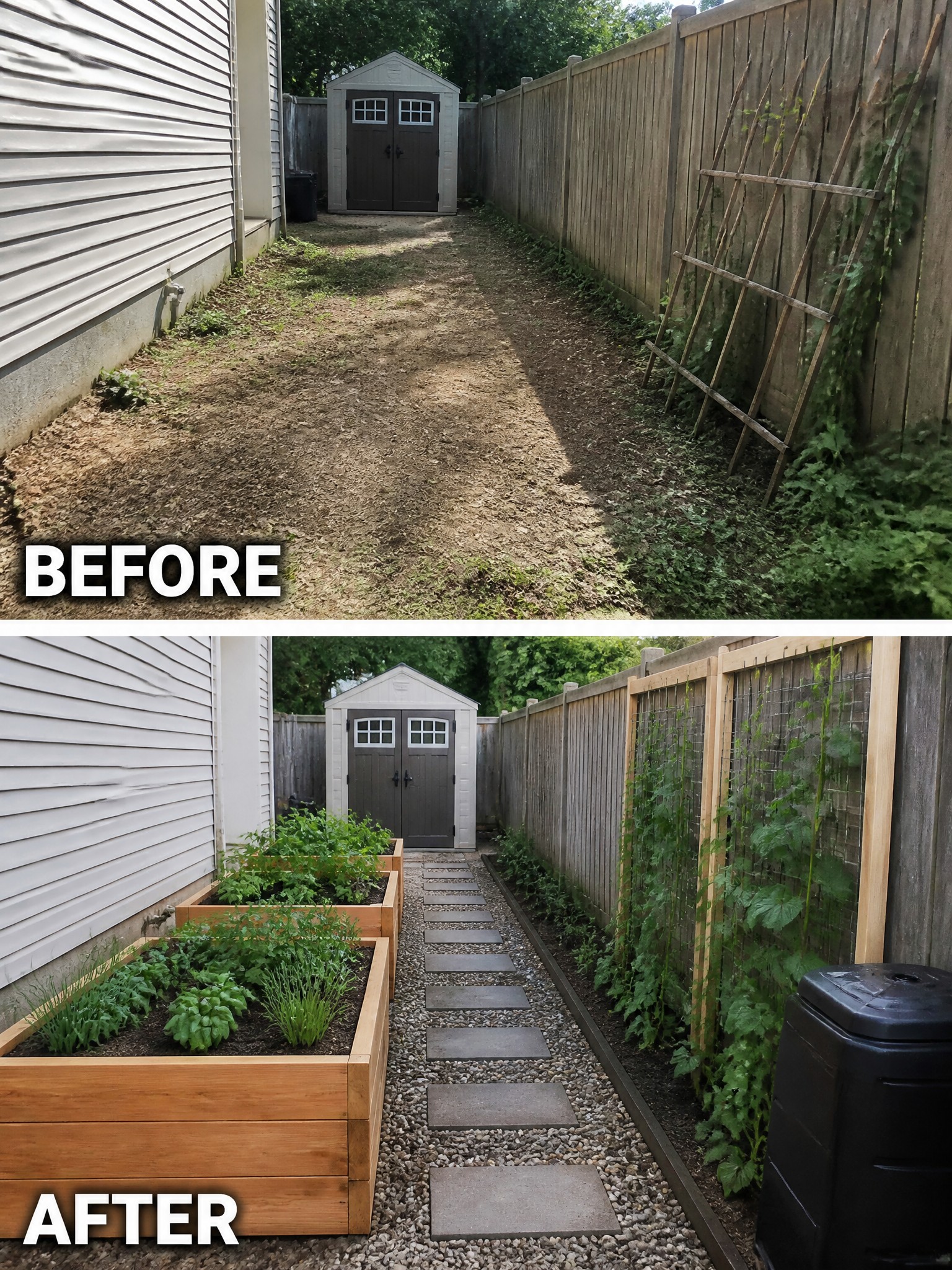
A bare dirt path with weeds along the fence makes a side yard feel neglected and hard to use. Raised beds on one side and a gravel path with stepping stones give the space clear shape so it stays dry underfoot and easy to walk through.
This works best in narrow areas between the house and fence where you need both planting room and a functional walkway. Keep the beds simple and rectangular, use gravel to control mud, and add a few trellises if you want vertical growth without crowding the path.
Add Edging To Shape A Side Yard Path
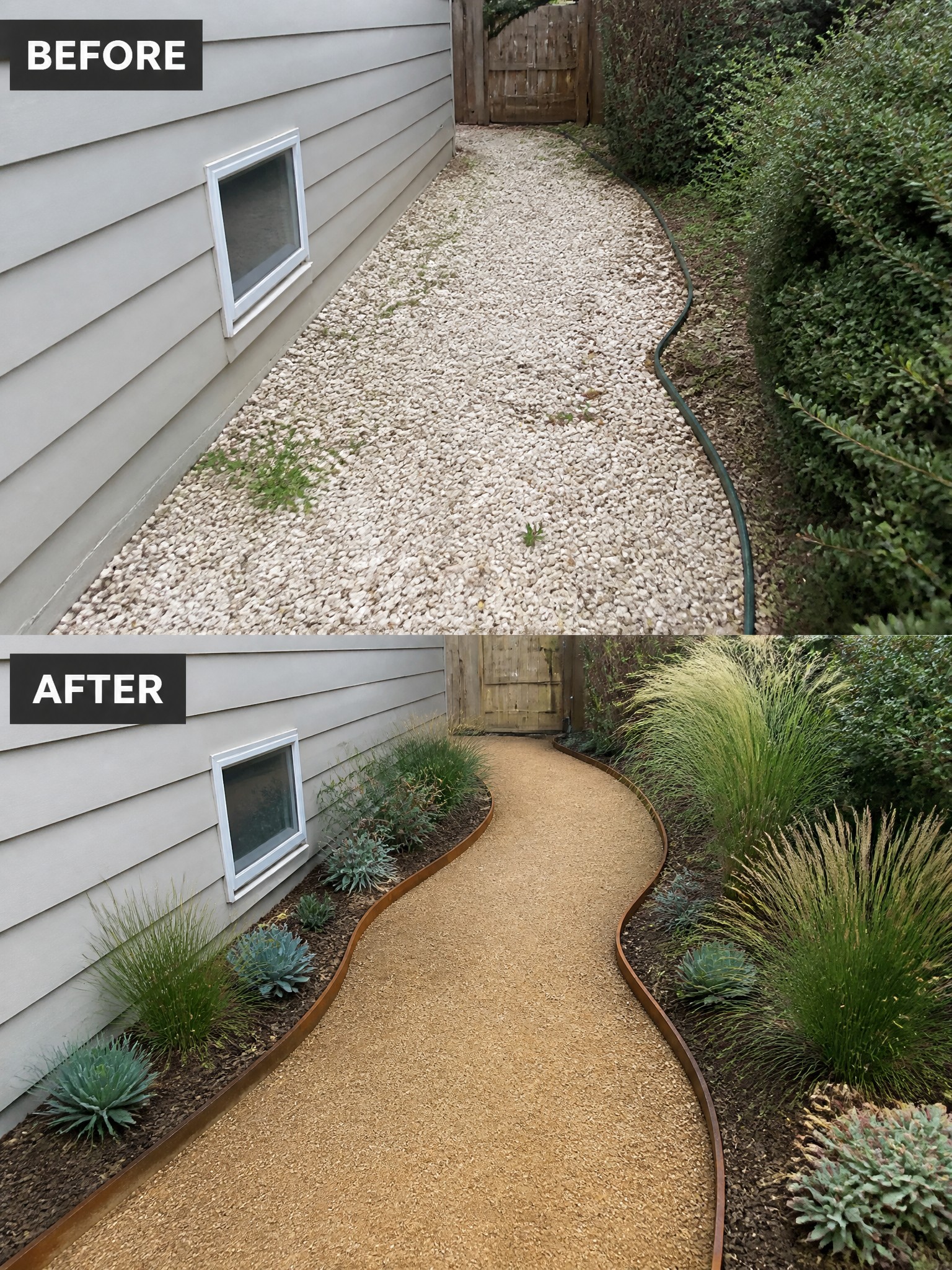
A loose gravel path often looks unfinished when it just runs along the house with nothing to hold the edges. Adding a simple metal border turns the same path into something that feels planned and much easier to maintain. The plants then have a clear place to sit without spilling onto the walkway.
This idea works especially well in narrow side yards where space is tight. Install the edging first so the path stays contained, then add a few clusters of low-water plants along the border. It keeps the gravel from migrating into the beds and gives the whole area a cleaner look with minimal effort.
Refresh Concrete Steps With Paint For A Cleaner Walkway
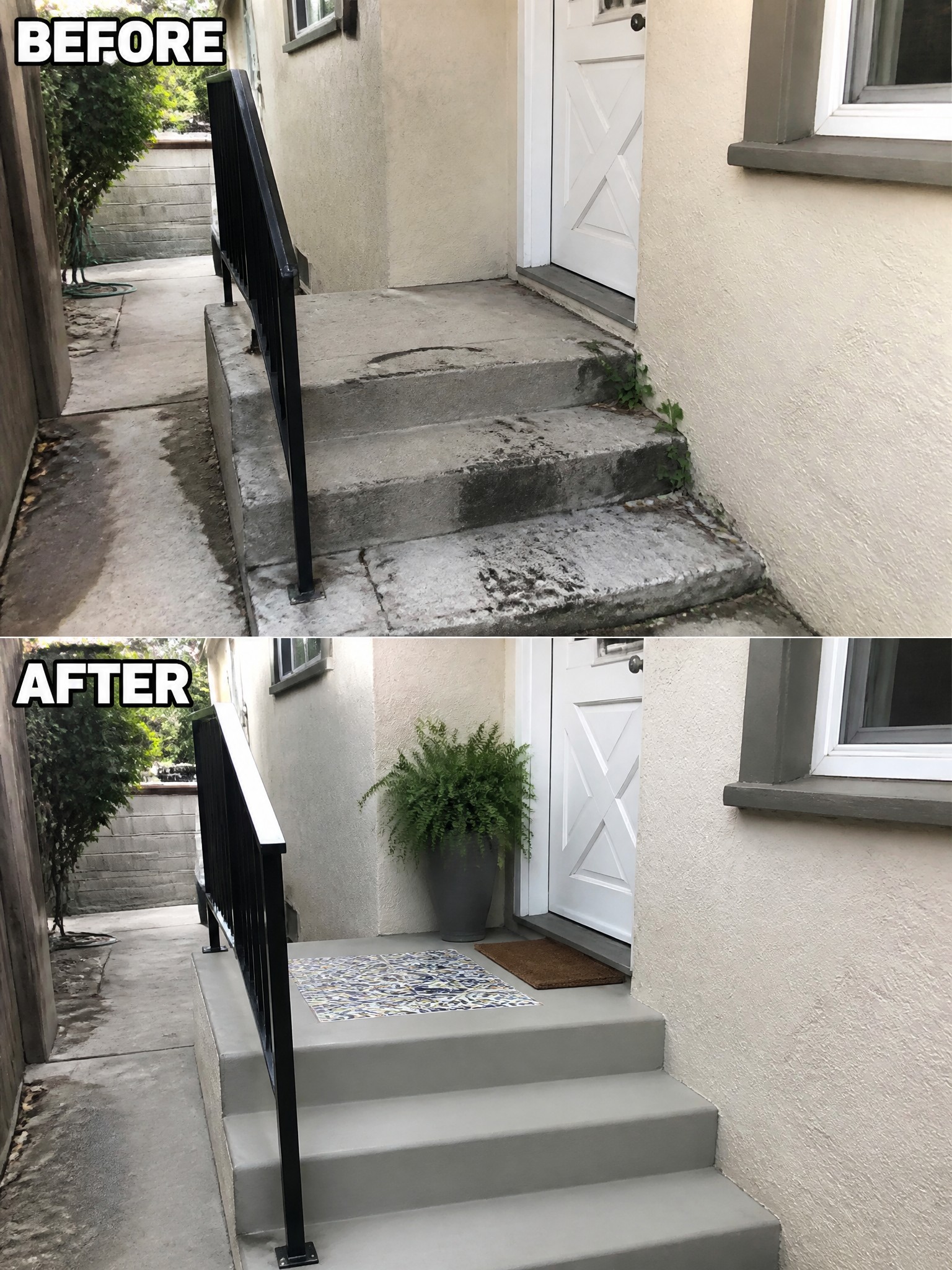
Painting worn concrete stairs a lighter color makes the whole side entry feel brighter and more cared for. Adding a small rug at the top helps define the space and keeps dirt from tracking inside right away.
This works well on narrow side yards where the stairs double as the main path. Start with a good cleaning and a porch paint made for concrete, then keep accessories simple so the walkway stays easy to use.
Add Structure To An Overgrown Side Yard
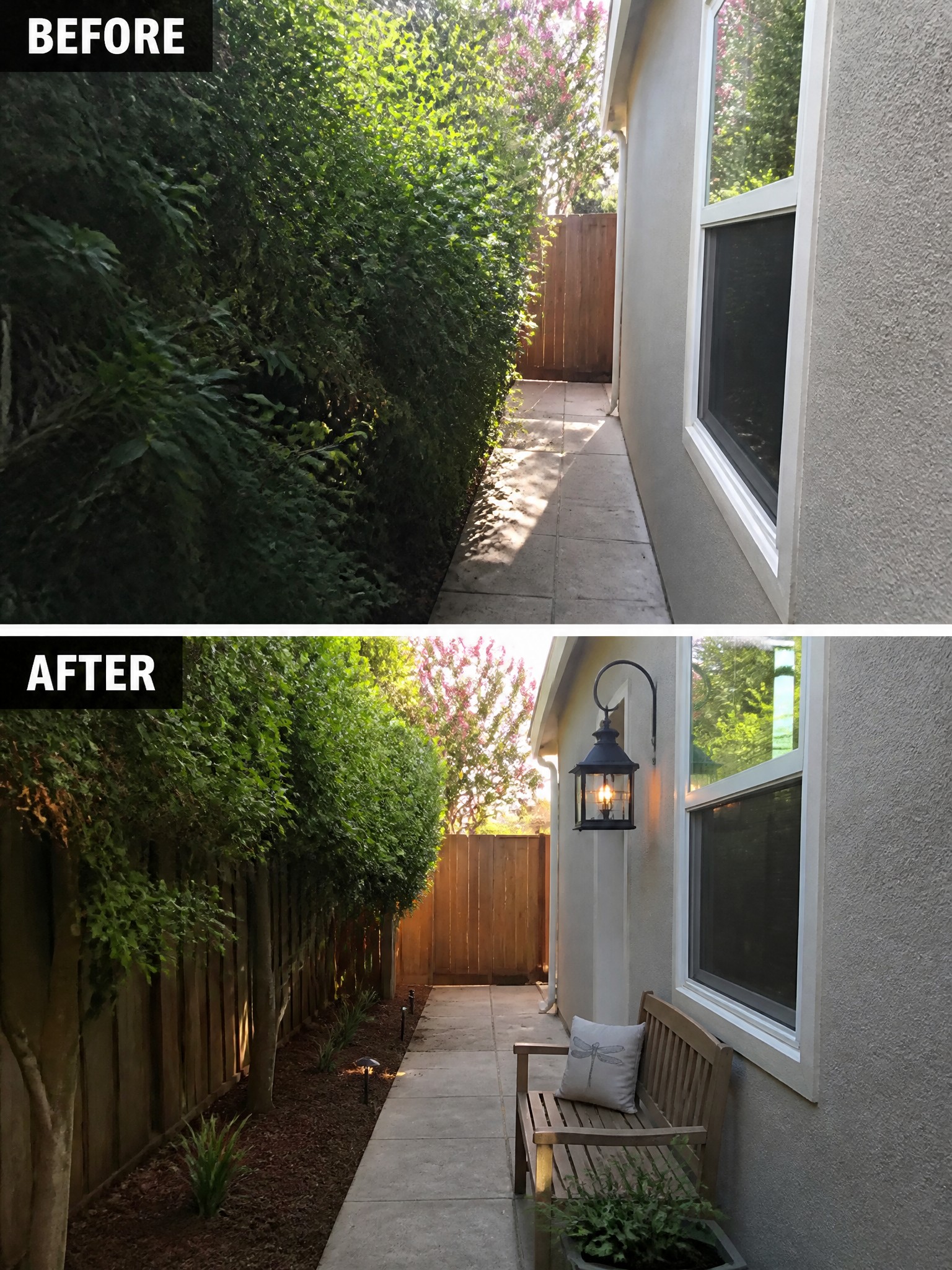
An overgrown side yard often turns a simple walkway into a cramped, messy corridor. Cutting back the heavy growth and adding clear edges makes the space feel intentional and much easier to maintain. Here the tall bushes were trimmed hard, a fence was added along the property line, and mulch beds with low plants replaced the bare dirt.
This idea works best on narrow side yards where you still need regular access. Focus on cleanup and basic edging first before adding anything decorative. Mulch and simple planting keep the look tidy while leaving room to walk through without constant trimming.
Lay Pavers To Fix A Muddy Side Yard Path
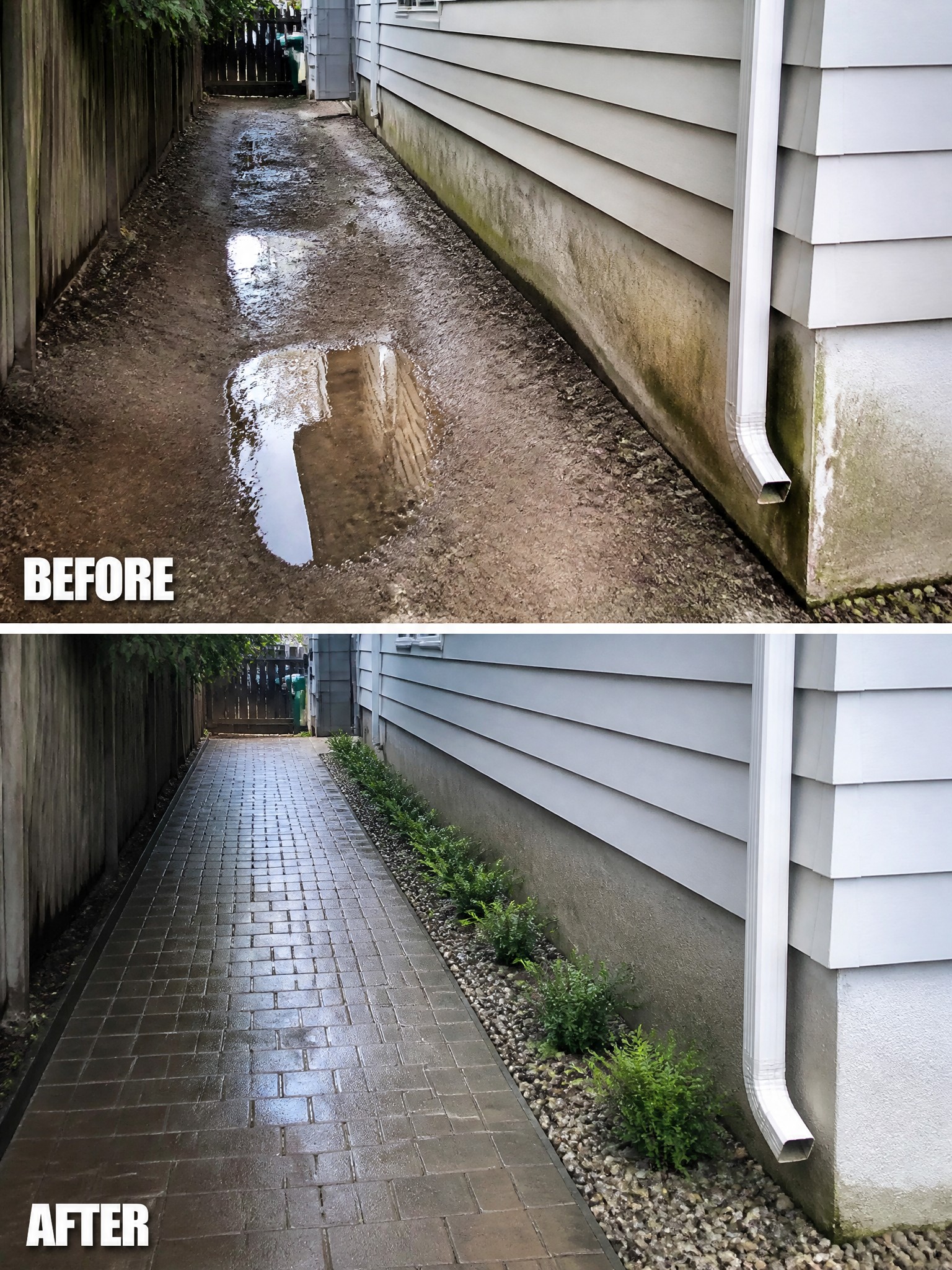
A narrow side yard often turns into a soggy mess after rain because there is no proper surface. Laying pavers creates a firm, level walkway that lets water drain away instead of pooling. The simple addition of gravel along the edge keeps the planting strip neat and stops mud from splashing onto the house.
This approach works well on any tight passage between a house and a fence where foot traffic is needed. Start with a solid base and slight slope so water moves off the path. Keep the plantings low and sparse so the walkway stays open and easy to maintain over time.
Use Gravel And Pavers To Define A Side Yard Path
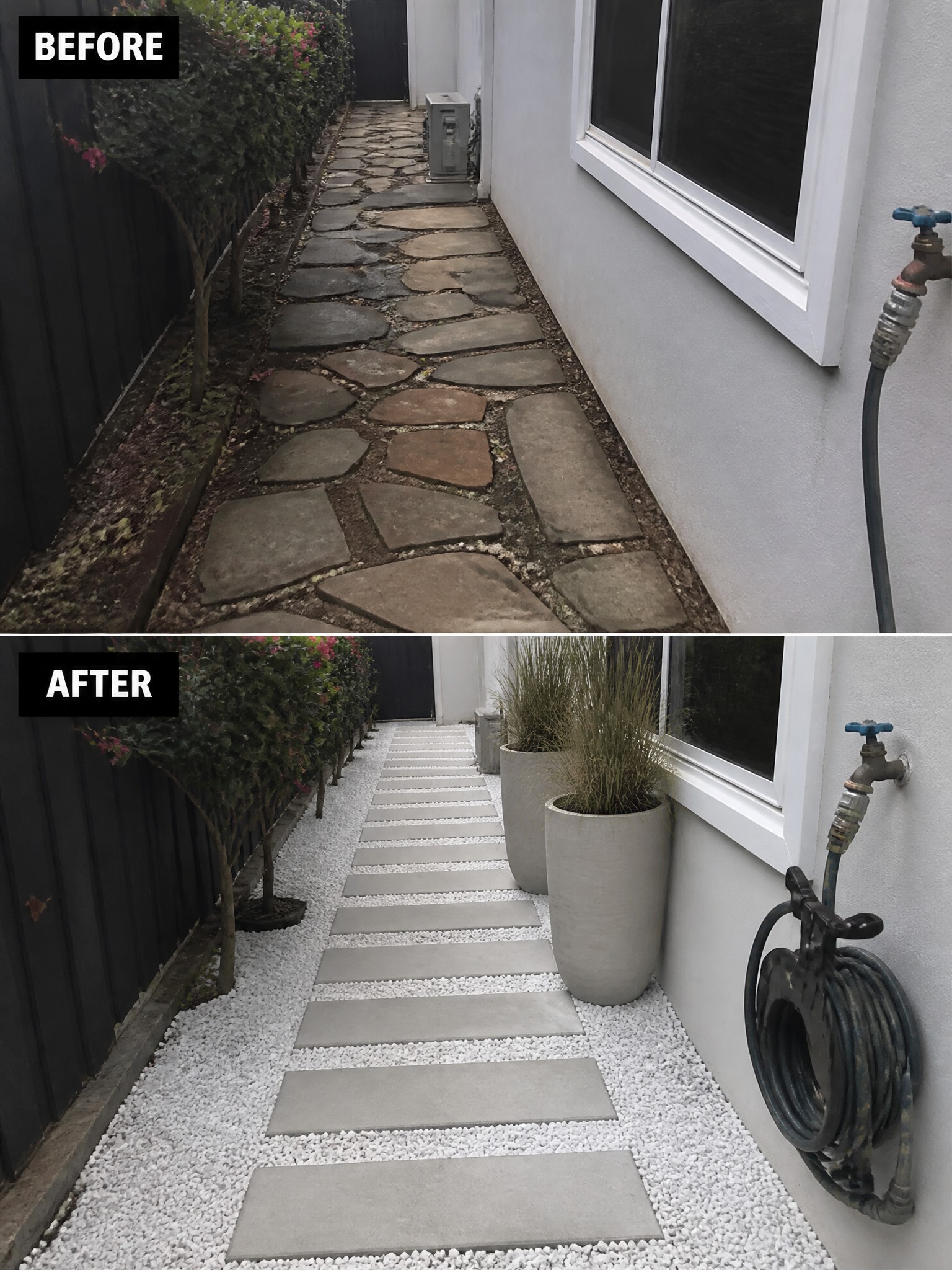
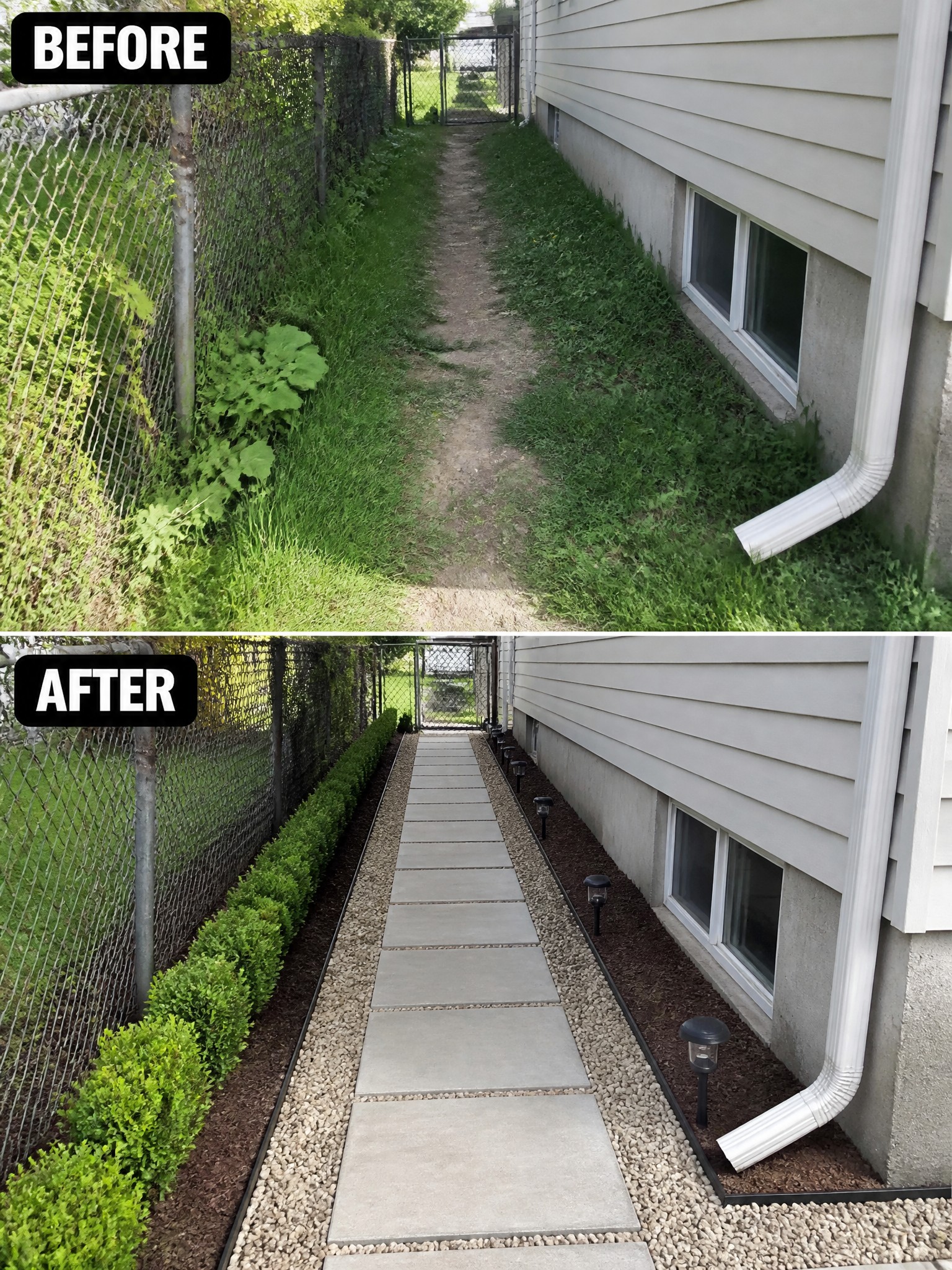
A narrow side yard often ends up as a messy strip of uneven stones and bare dirt. Switching to straight concrete pavers set in white gravel gives the space a clear, finished look while making the walkway much easier to keep clean.
This approach works well in tight spaces because gravel fills the gaps and keeps plants from creeping in. Place a few large planters along one side to soften the edges without narrowing the path. The same idea suits any long, awkward side yard where you want a simple route that still feels intentional.
Clean Up An Overgrown Side Yard Path
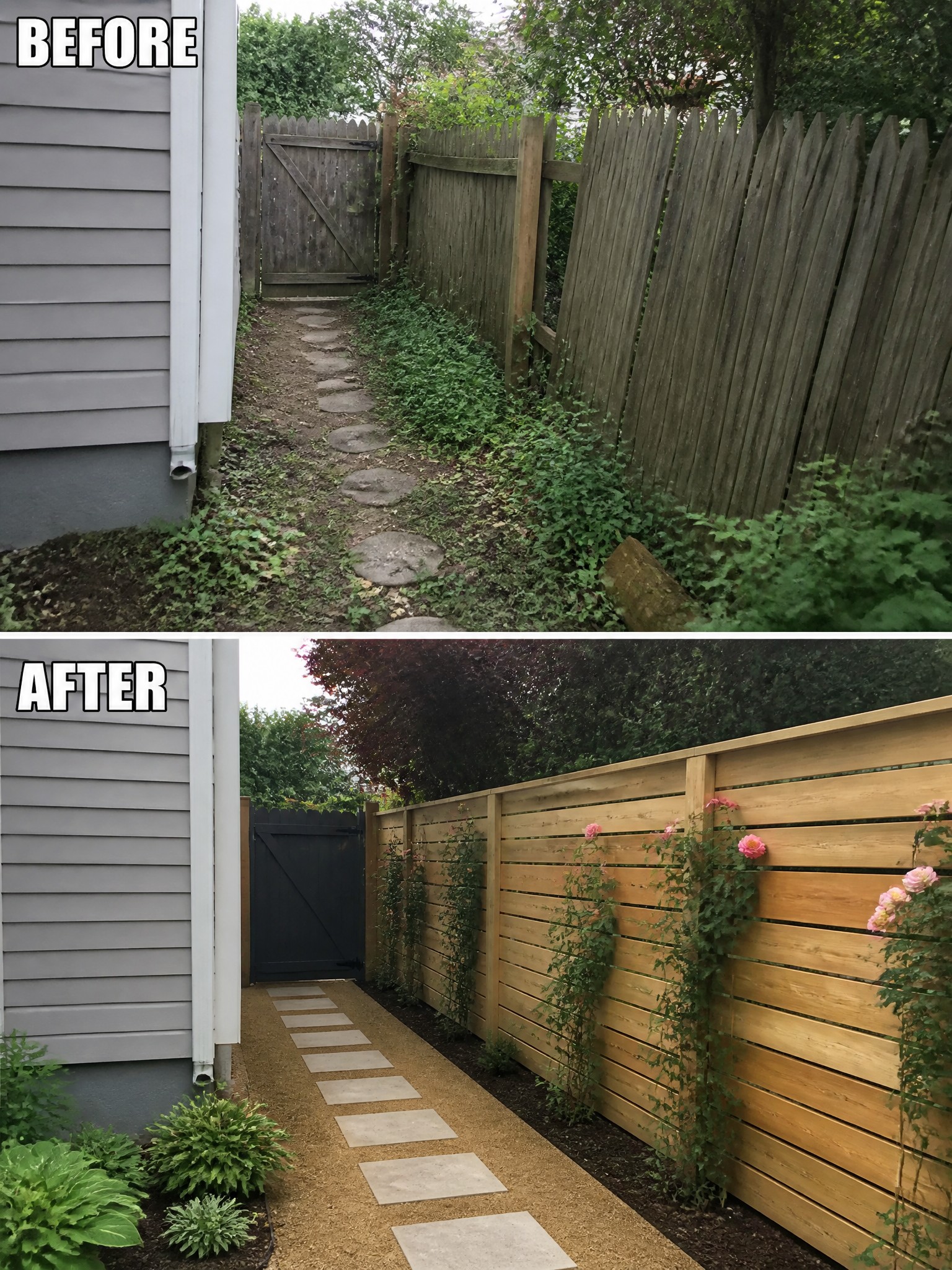
An overgrown side yard often starts with weeds taking over and an uneven path that feels more like an afterthought than a real walkway. Clearing the mess and laying down gravel with rectangular pavers turns the space into something you can actually walk through without getting muddy or tripping.
This approach works best in narrow side yards where space is tight and you mainly need a clean route from front to back. Start with weeding and leveling the ground first, then add a simple border or fence refresh so the path feels intentional instead of just patched together.
Line A Narrow Walkway With Potted Plants
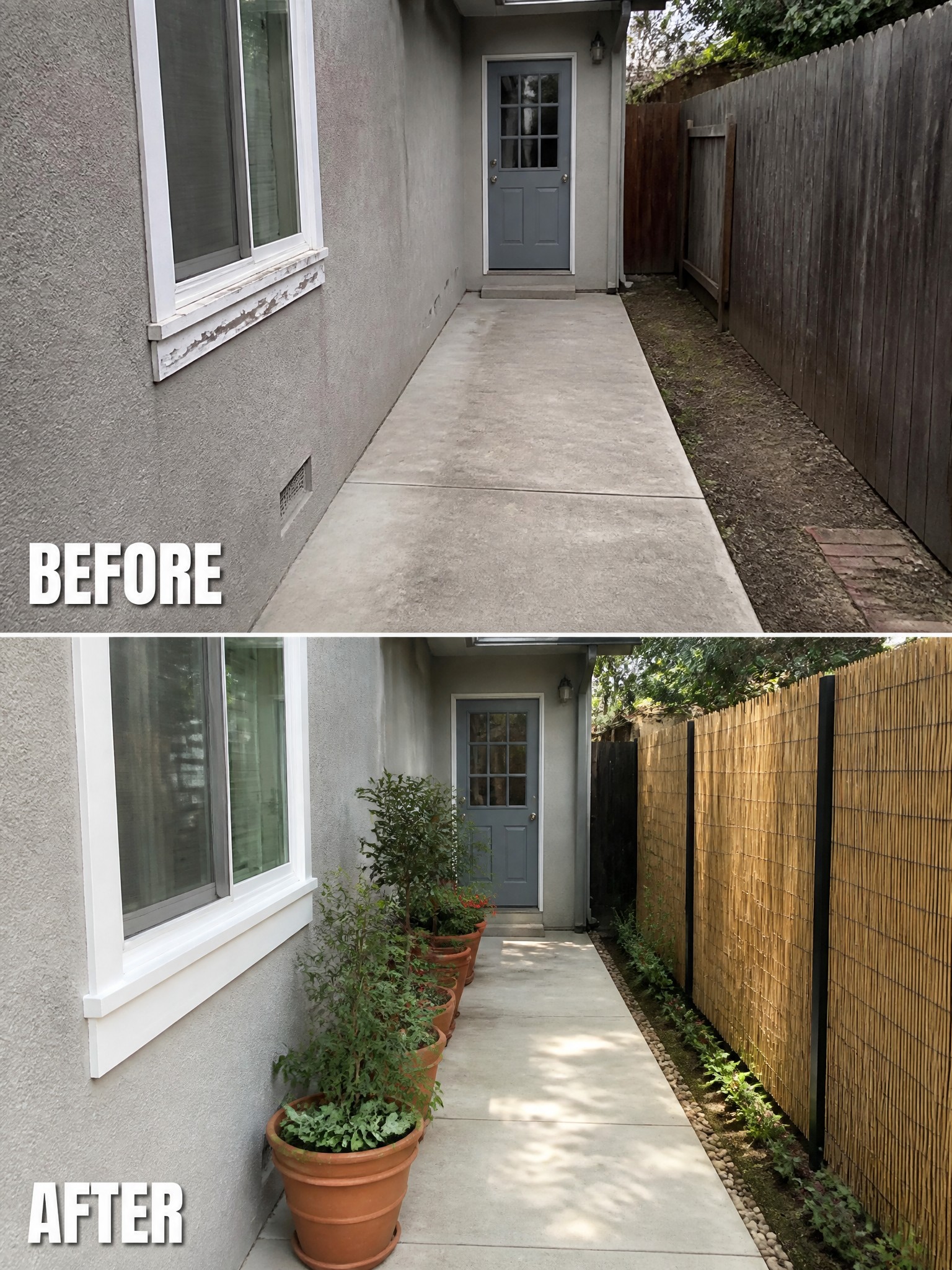
A plain concrete path next to the house often feels like wasted space until you add a row of pots. In this case the before photo shows bare walls and an old fence, while the after shows a line of terracotta pots with greenery running down one side. That single change makes the walkway feel intentional instead of leftover.
This approach works well on any narrow side yard where you want movement without blocking the path. Start with large, weatherproof pots and repeat the same style and color so the line stays clean. Keep the opposite side open for walking room and choose plants that can handle the light you actually have.
Use Gravel And Stones To Define A Side Yard Path
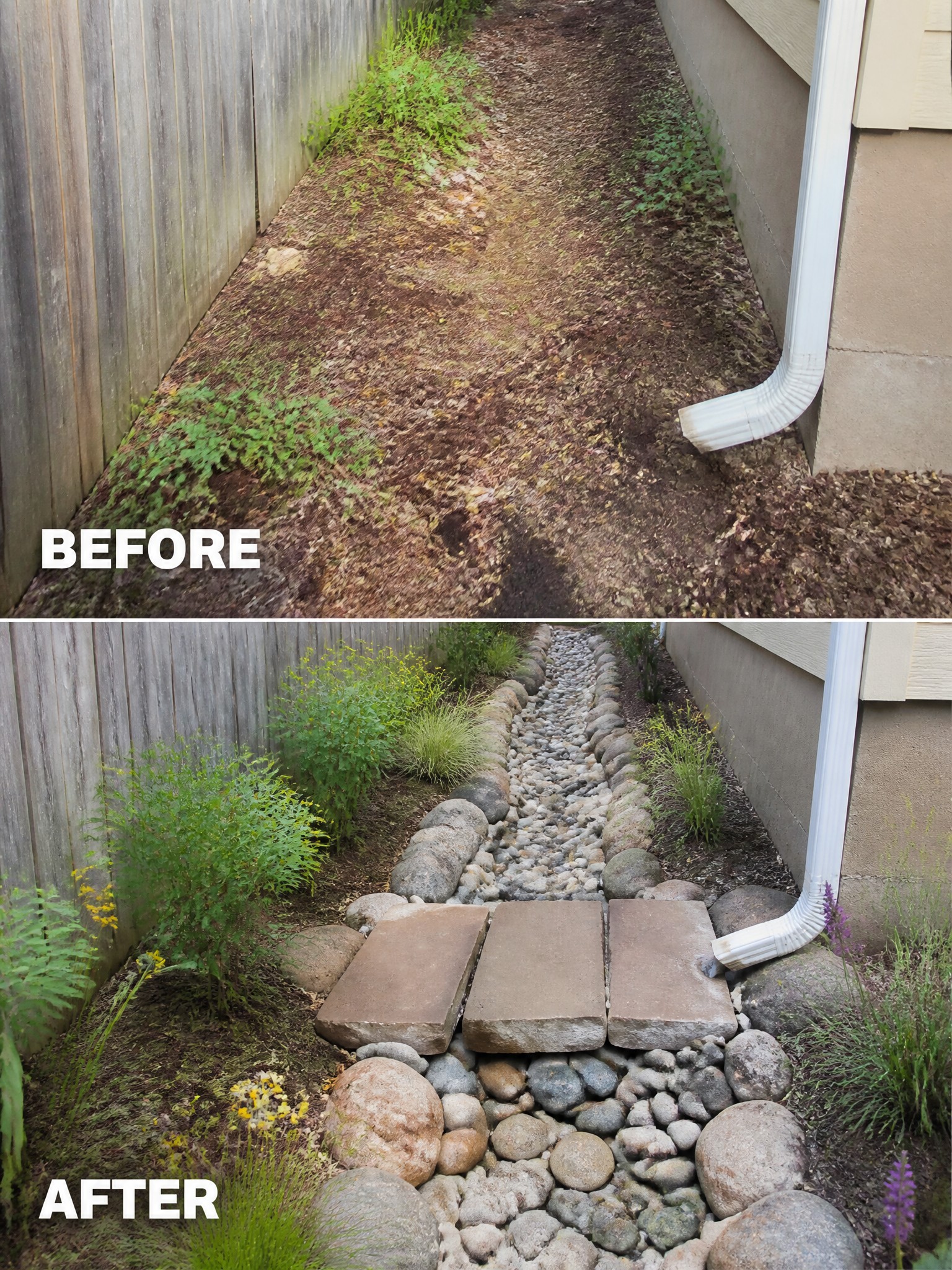
A narrow side yard often turns into a weedy strip that no one wants to walk through. In this case the simple fix was clearing the mess first, then laying down a gravel path edged with larger rocks and adding a few flat stepping stones where feet actually land. The result feels intentional instead of neglected.
This approach works well on any tight space between a fence and the house. Start with good drainage and a weed barrier under the gravel so the path stays clean longer. Keep the planting simple on the sides so the walkway remains the main feature instead of fighting for attention.
Add A Brick Path To Give Shape To A Side Yard
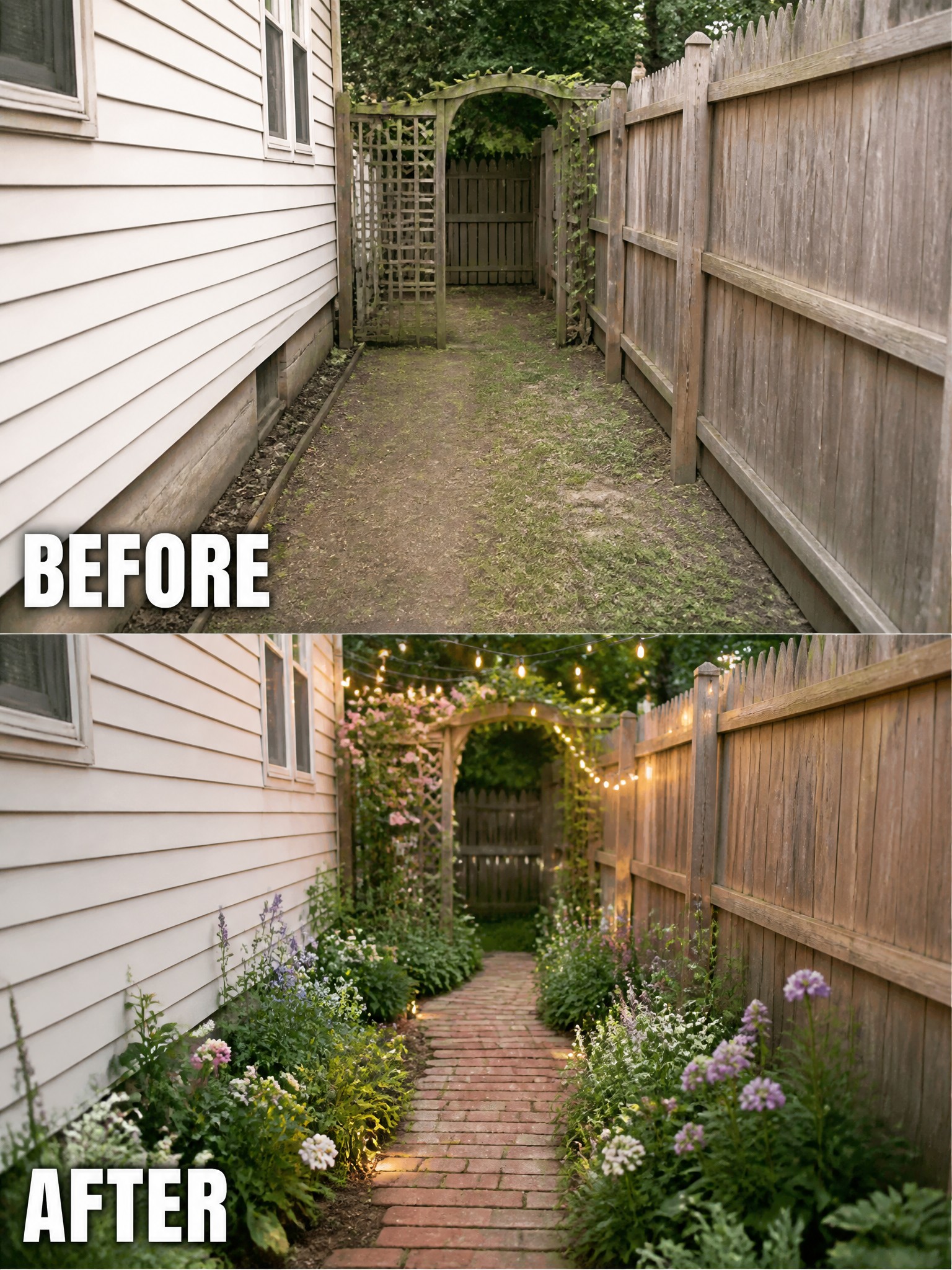
A narrow side yard often stays a strip of dirt and weeds because nothing defines where to walk. Adding a brick path creates a clear route that feels finished and keeps feet out of the mud.
Planting beds on both sides of the path add structure without crowding the space. String lights overhead make the walkway usable after dark. The same idea works on any long side yard where you want simple order instead of constant cleanup.
Create A Defined Walkway With Pavers In A Side Yard
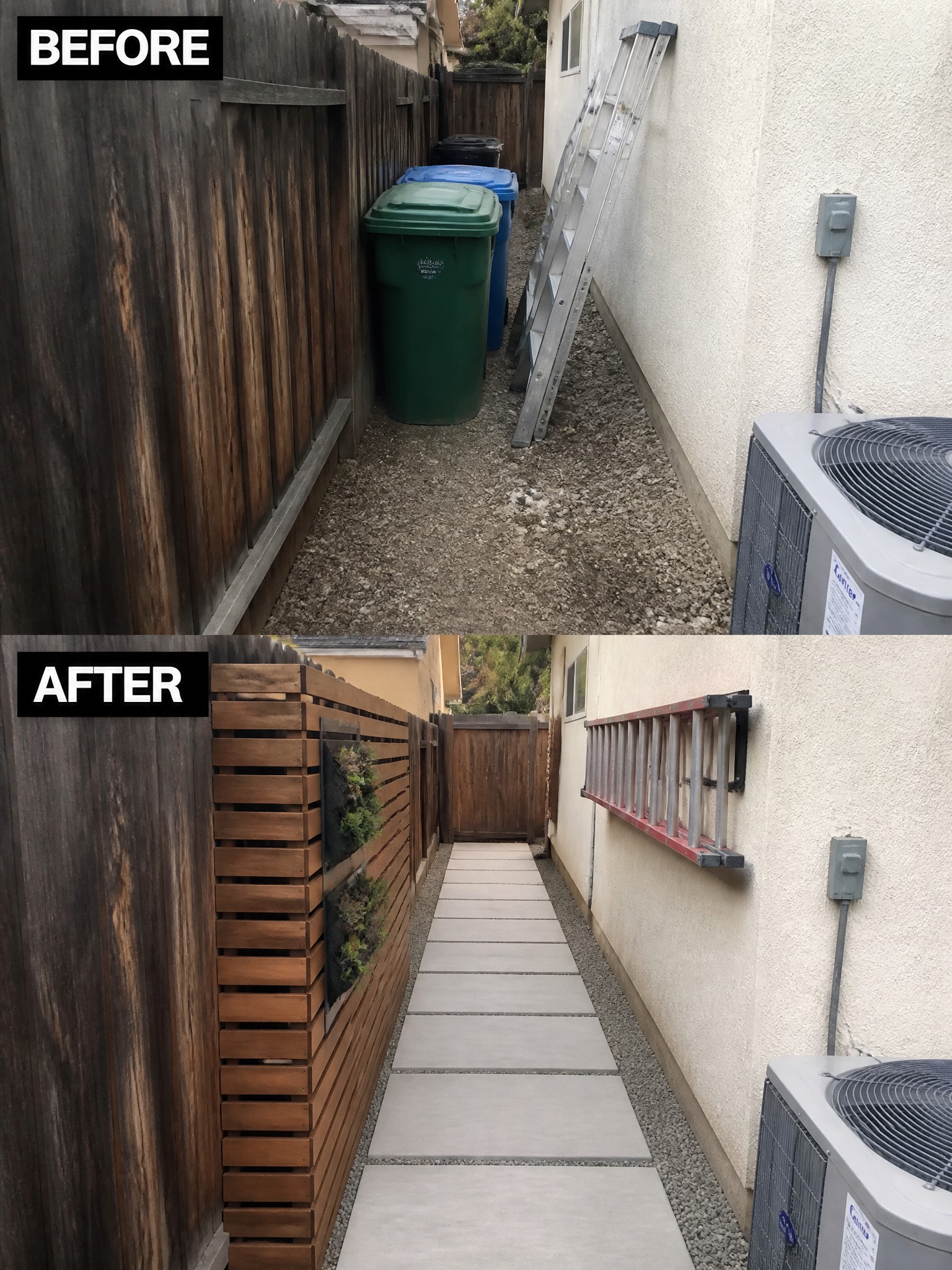
A narrow side yard often turns into an afterthought filled with gravel and whatever gets stored there. Laying concrete pavers in a straight line gives the space a clear purpose and turns a loose path into something that feels finished.
This idea works best on homes where the side yard is the main route between the front and back. Keep the pavers simple, leave enough room on each side for walking, and avoid adding too many extras that could crowd the space.
Frequently Asked Questions
Q: What if tree roots keep pushing up my path? A: Dig around the roots carefully and lay flexible pavers that can shift a bit. Top them with a thin gravel layer to smooth things out. Check the area once a season and adjust as needed.
Q: How do I stop mud from tracking into the house? A: Add a strip of stepping stones right by the door. Sweep or rinse them off after rain. This catches most of the dirt before it gets inside.
Q: Can I refresh the walkway myself in a weekend? A: Clear the old surface and lay down landscape fabric first. Then spread mulch or set a few stones. Focus on one section at a time so it stays manageable.
