

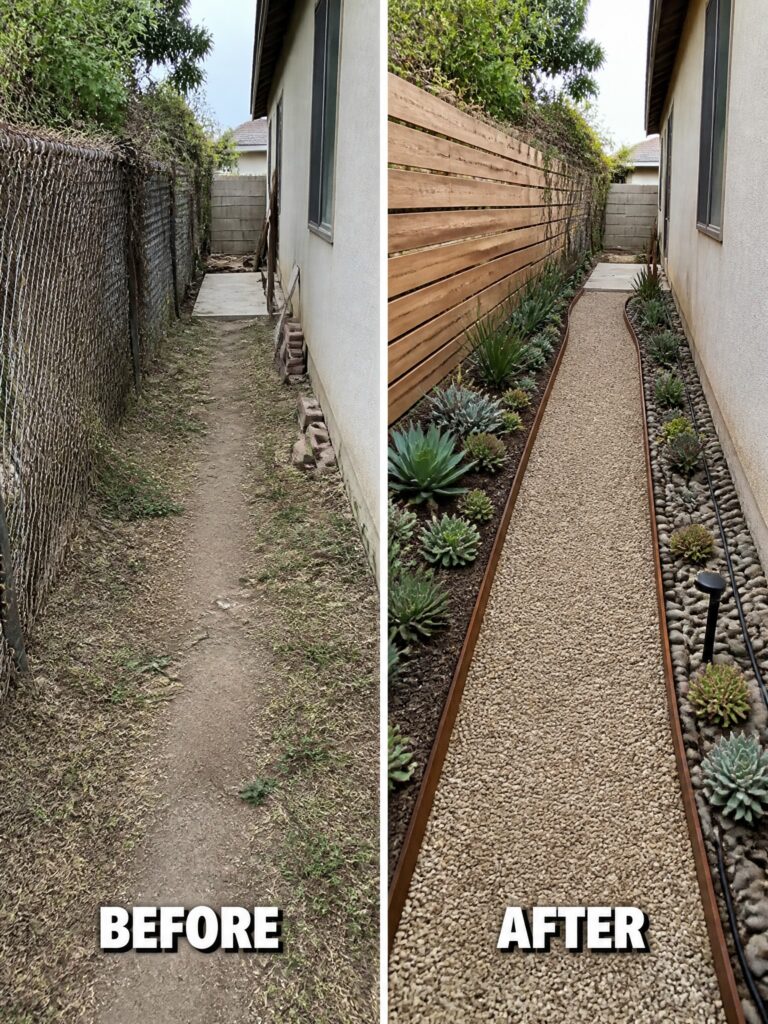
Side yards tend to collect clutter and weeds because they are hard to reach and easy to overlook in daily routines.
I found that focusing first on edging and a basic path layout created a cleaner foundation before adding any plants.
Low shrubs and ground cover then filled in nicely without much watering once established.
The whole area started to feel like part of the yard instead of leftover space.
One idea at a time.
Define A Tight Side Yard With Gravel And Edged Beds
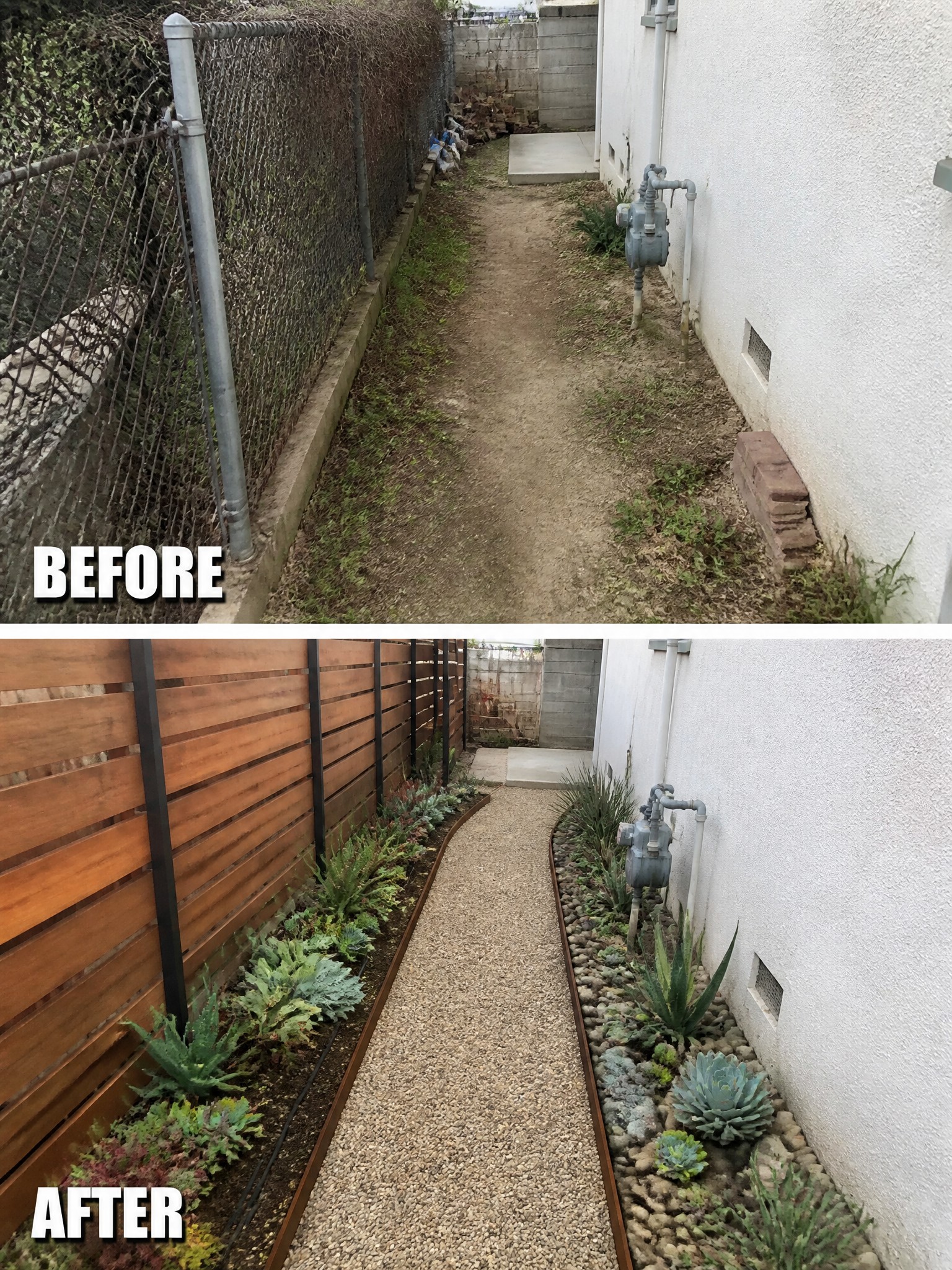
A narrow side yard often ends up as nothing more than a dirt path lined with weeds. Adding a layer of gravel and simple metal edging instantly gives the space shape and makes it feel intentional instead of forgotten. The change from bare ground to a clean path with planted borders turns the area into something usable rather than just a gap between fences.
This approach works especially well in tight spaces where you want low maintenance. Gravel drains well and keeps the path from turning muddy, while the edging keeps soil and plants from spilling onto the walkway. Succulents and similar tough plants hold up without constant watering or trimming, so the look stays neat with little ongoing effort.
Add Defined Paths To Narrow Side Yards
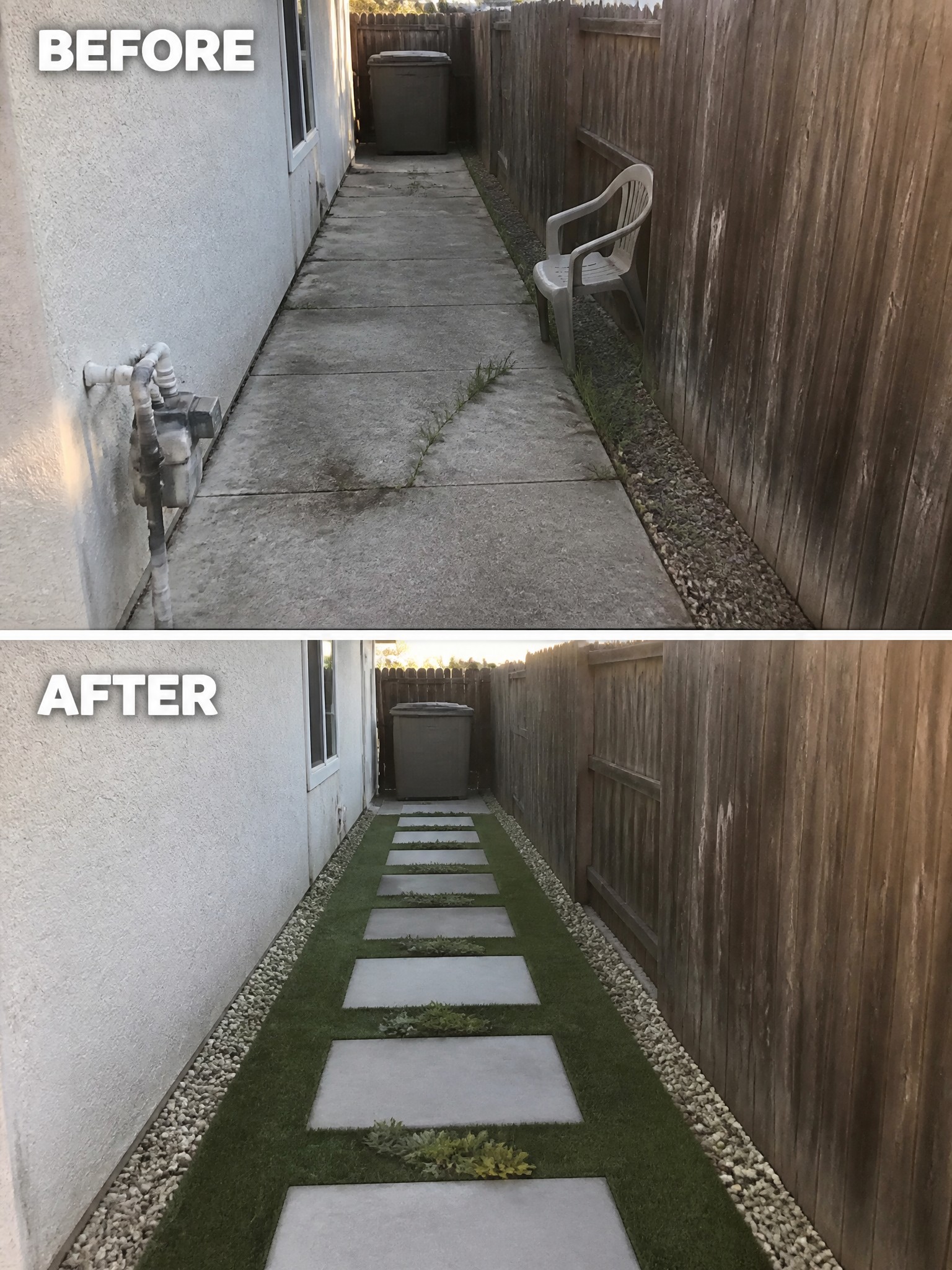
A narrow side yard with nothing but old concrete often ends up ignored because it feels bare and hard to maintain. Laying pavers in a straight line through artificial turf with gravel on both sides gives the space a clear path and stops weeds from taking over.
This approach works best in tight spaces between a house and fence where real grass would struggle. Keep the path width consistent so it still feels open, and use a solid base under the turf to avoid sinking over time.
Turn An Overgrown Side Yard Into A Gravel Seating Area
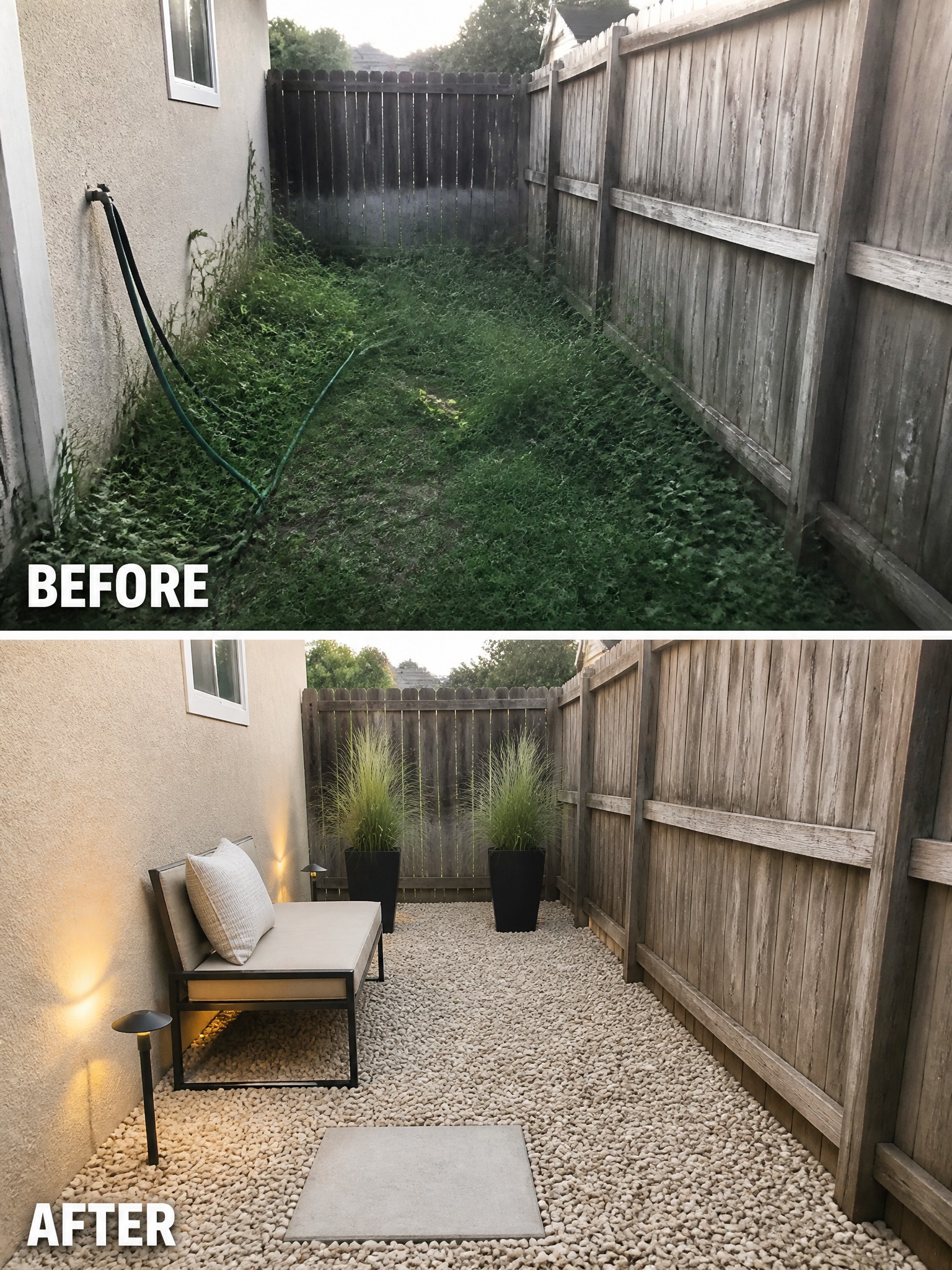
Clearing out thick weeds and replacing them with gravel gives a narrow side yard a flat, usable surface without constant mowing or watering. The before photo shows how quickly the space can become unusable, while the after shows a simple lounge chair and a few large planters placed directly on the gravel to create a spot to sit.
This idea suits homes with tight side yards that get little foot traffic but could serve as extra outdoor space. Lay down landscape fabric first to keep weeds down, then choose sturdy outdoor furniture that can stay out year round. Keep the layout minimal so there is still room to walk through.
Add A Vertical Garden To A Narrow Side Yard
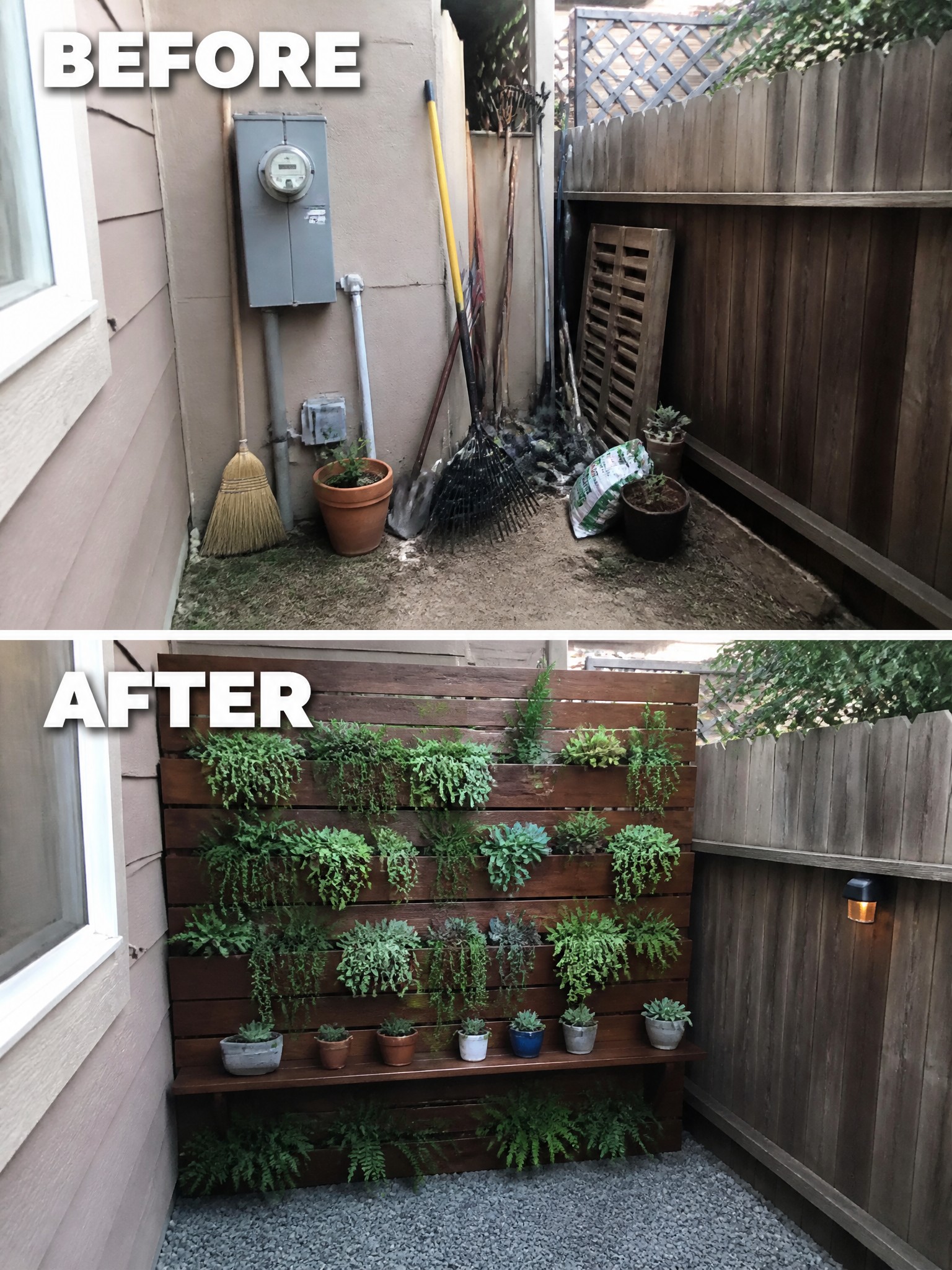
A vertical garden turns a narrow side yard from a cluttered storage spot into a useful green feature. The wood frame holds multiple plants at different heights, while the gravel base replaces bare dirt and scattered tools for a cleaner look that stays low maintenance.
This approach works best in tight spaces where ground planting is limited. Clear out what you do not need first, then build the frame against an existing fence or wall and choose hardy plants that do not require daily care.
Add Raised Beds To A Narrow Side Yard
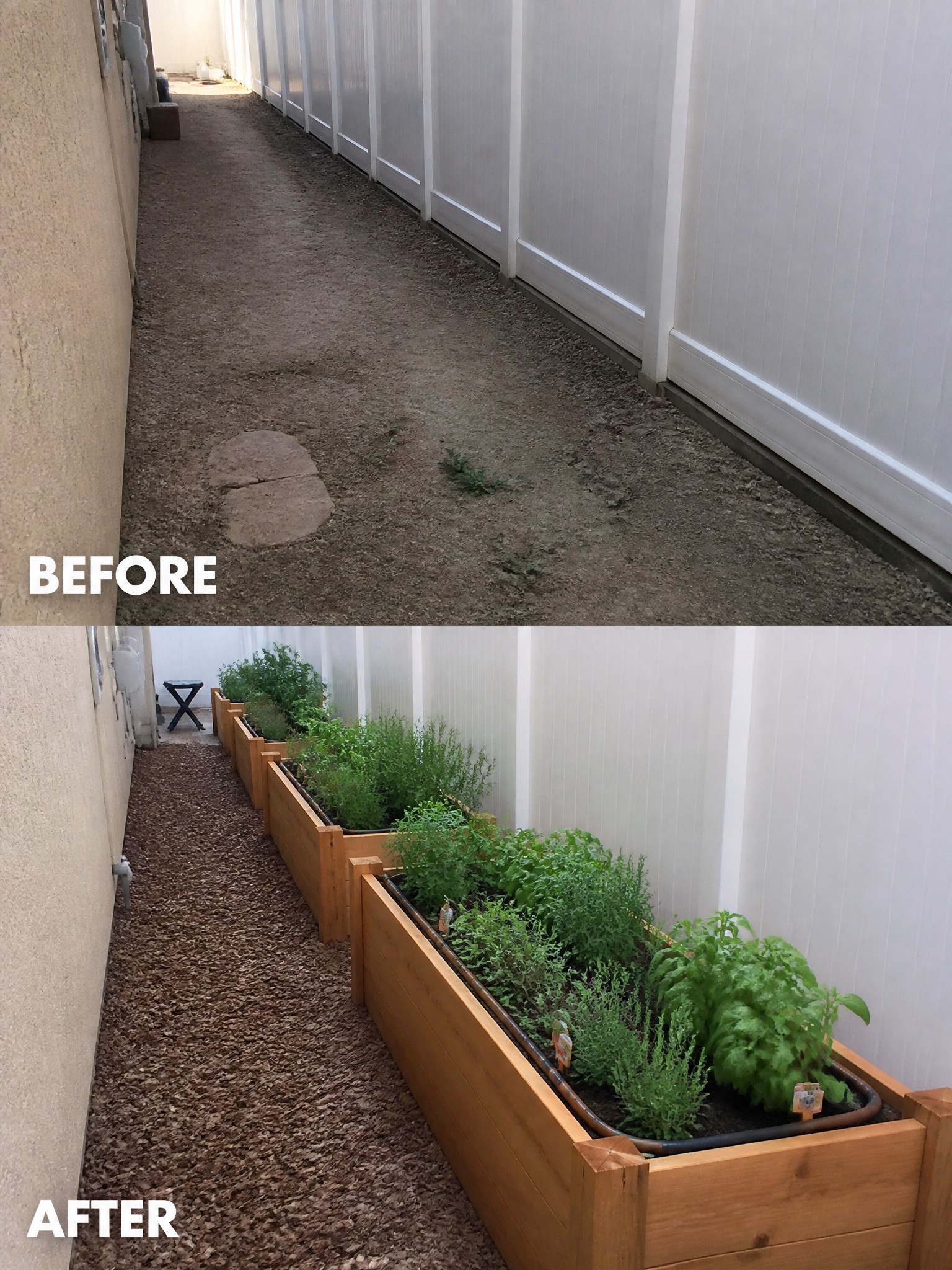
A narrow side yard often stays bare because it feels too cramped for regular planting. Here the before view shows just dirt and a few random weeds along the fence line. Installing a line of raised wooden beds creates a clear growing area while leaving a simple path beside the house.
Raised beds keep the soil neat and make it easier to water and reach the plants in a tight space. Gravel on the ground helps with drainage and keeps the area low maintenance. This setup works best in side yards that get at least a few hours of sun and gives you usable garden space without crowding the walkway.
Add Defined Planting Beds To A Narrow Side Yard
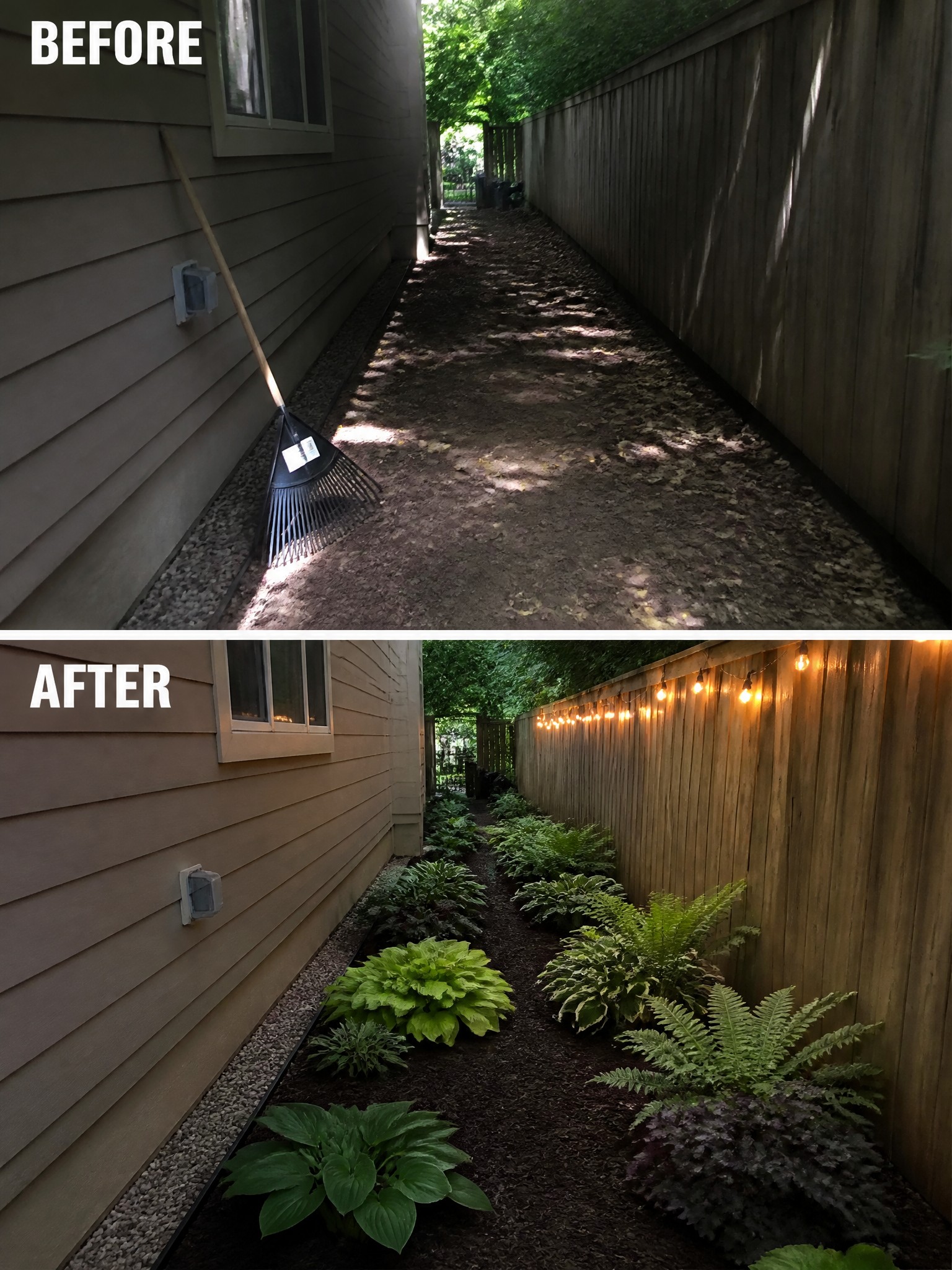
A bare side yard often ends up as a forgotten strip of dirt and leaves. The change here came from adding simple garden beds along both sides, filled with shade plants like ferns and hostas, then finished with mulch and a light layer of gravel along the edge. The string lights along the fence give the space a gentle evening feel without any extra structures.
This approach works well in tight spaces where you want something low maintenance but still structured. Choose plants that handle shade and stay contained, keep the beds narrow so the path stays clear, and add mulch to cut down on weeds. It turns the area into something that feels intentional instead of leftover.
Use Pavers To Give A Narrow Side Yard Clear Structure
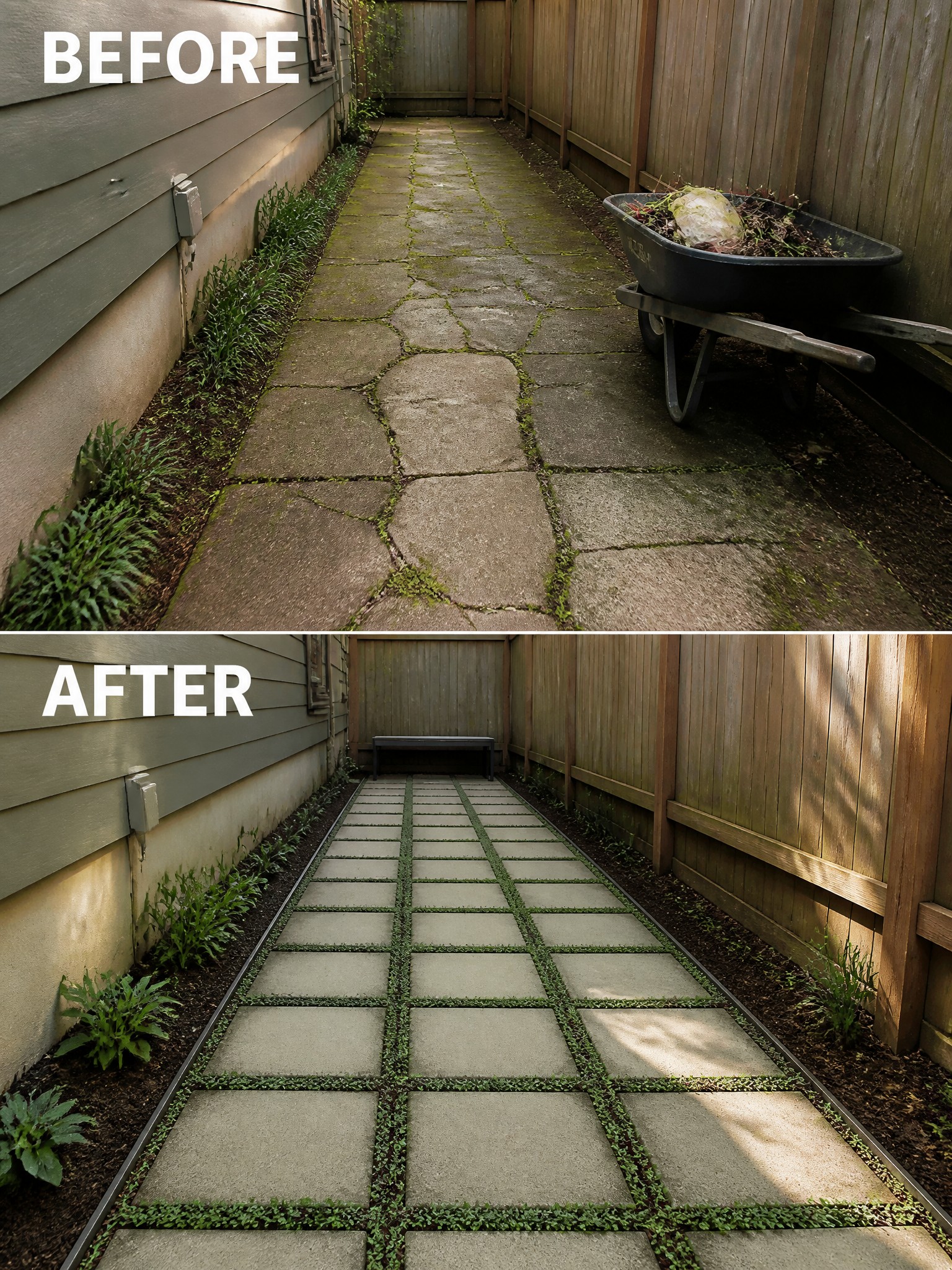
A tight side yard path can easily look neglected when the stones are uneven and moss takes over the gaps. Switching to a simple grid of pavers with low groundcover between them creates straight lines and turns the space into a defined walkway instead of an afterthought.
This idea suits homes where the side yard is mainly a passage rather than a seating area. Start with solid edging and good drainage so the pavers stay level, then keep the planting low along the borders to avoid crowding the narrow space.
Use Gravel And A Storage Bench In A Narrow Side Yard
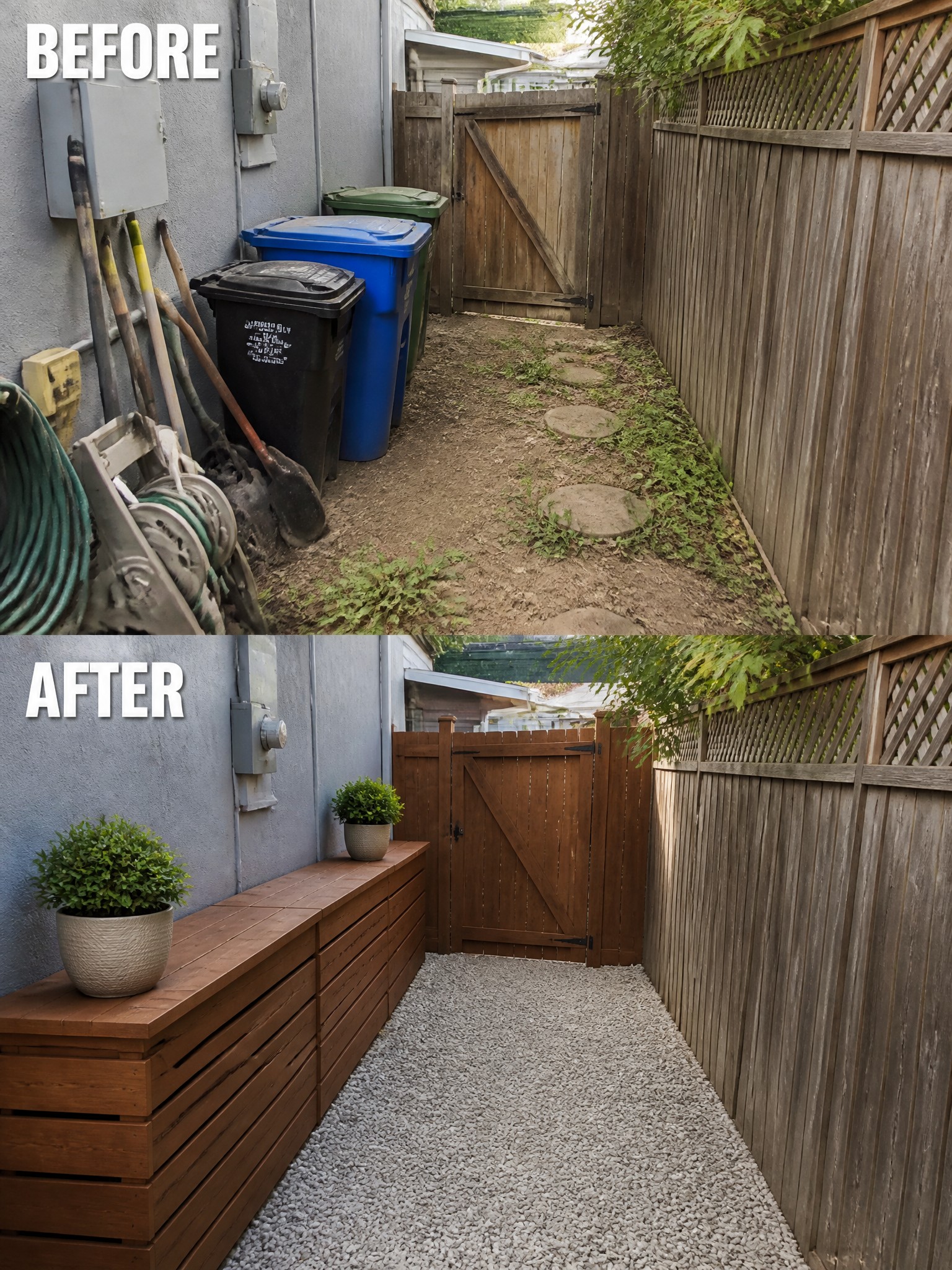
Side yards often collect tools, bins, and random clutter because they feel too narrow for anything useful. Laying gravel over the dirt creates a firm walking surface that stays clean and stops weeds from taking over. A long wooden bench along the wall adds storage while keeping the space open enough to walk through.
This idea works best in homes with a tight passage between the house and fence that still needs regular use. Start by clearing out everything that does not belong, then add the gravel and bench before worrying about plants or decor. The bench can hide smaller items and give the area a finished look without taking up much width.
Attach Planters To A Fence In Tight Spaces
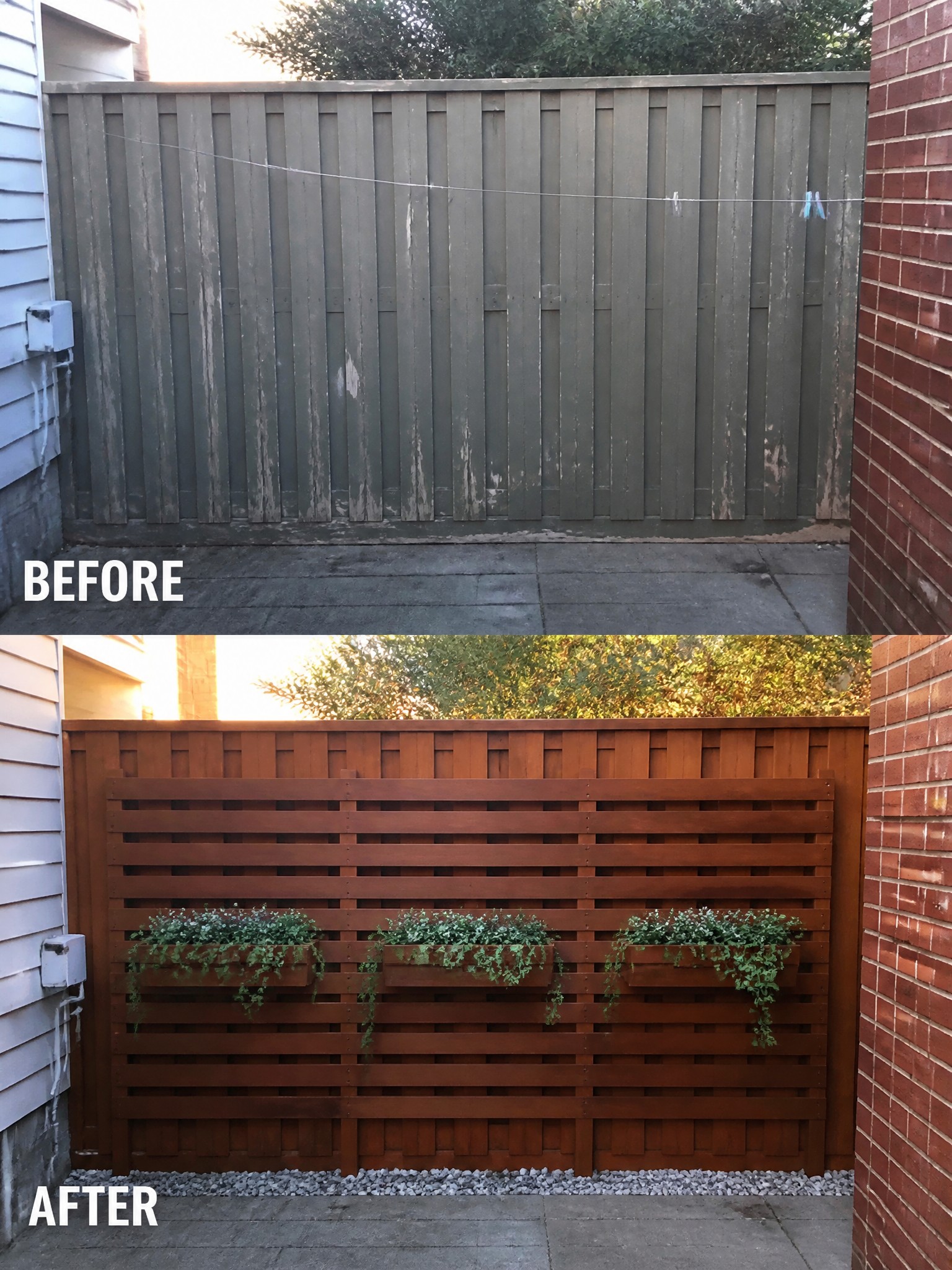
A plain fence often makes a narrow side yard feel even tighter. Switching to horizontal slats and mounting planter boxes directly on the fence adds greenery at a comfortable height without taking up floor space.
This idea suits homes where the side yard is mostly a walkway. Use a simple wood stain that holds up outside, pick low-water plants for the boxes, and keep the ground clear with gravel so the area stays easy to maintain.
Add Gravel And Planting To Define A Narrow Side Yard
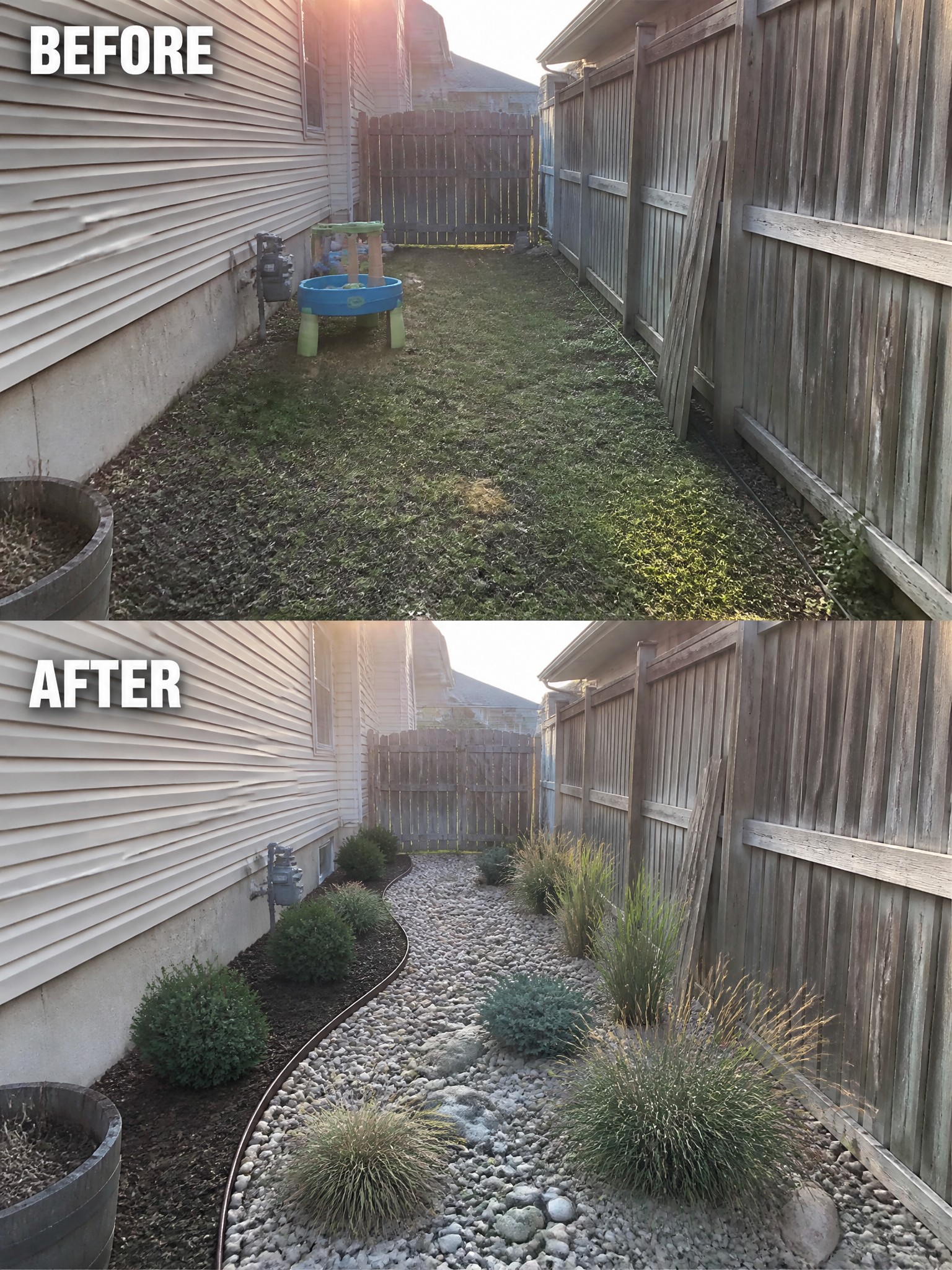
Replacing patchy grass with a simple gravel path and adding a few low-growing shrubs and grasses gives a tight side yard clear shape and makes it much easier to maintain. The curved border keeps the space from feeling like a leftover strip while still leaving room to walk through.
This approach suits homes with narrow side yards or areas between fences and the house. Clear the existing growth first, then use gravel for the main path and mulch with a handful of tough plants along the edges so the area stays neat without constant mowing or weeding.
Add Path Lighting To Improve A Narrow Side Yard
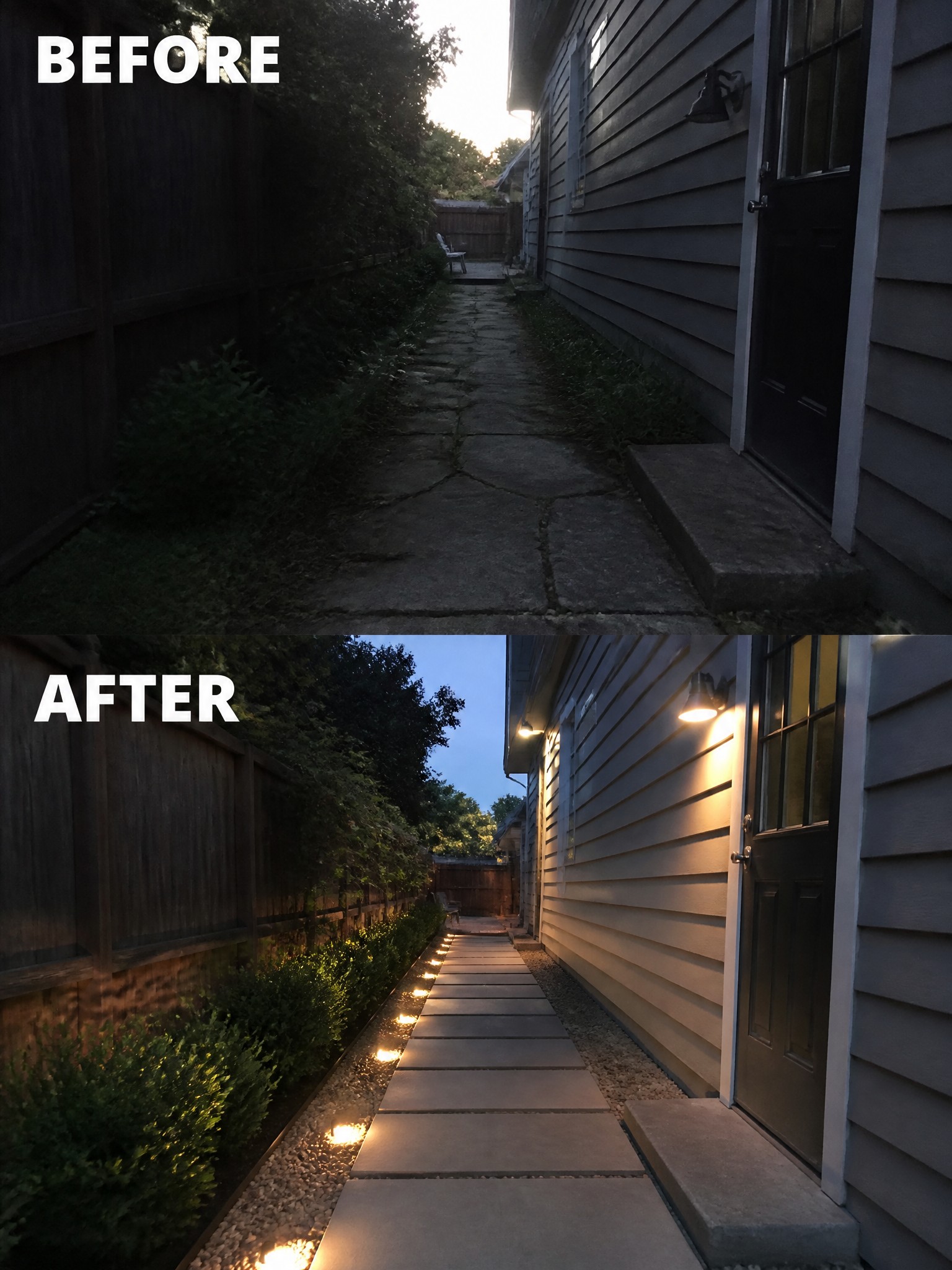
A narrow side yard often stays dark and hard to use when plants grow unchecked along the edges. Adding a row of low path lights gives the space a clear line to follow and makes walking through it feel much safer at night.
This idea works especially well in tight areas where bigger changes are not practical. Keep the lights simple and focused on the path itself, then use gravel or a low border plant to hold the sides in place without extra upkeep.
Create A Low Maintenance Gravel Path In A Narrow Side Yard
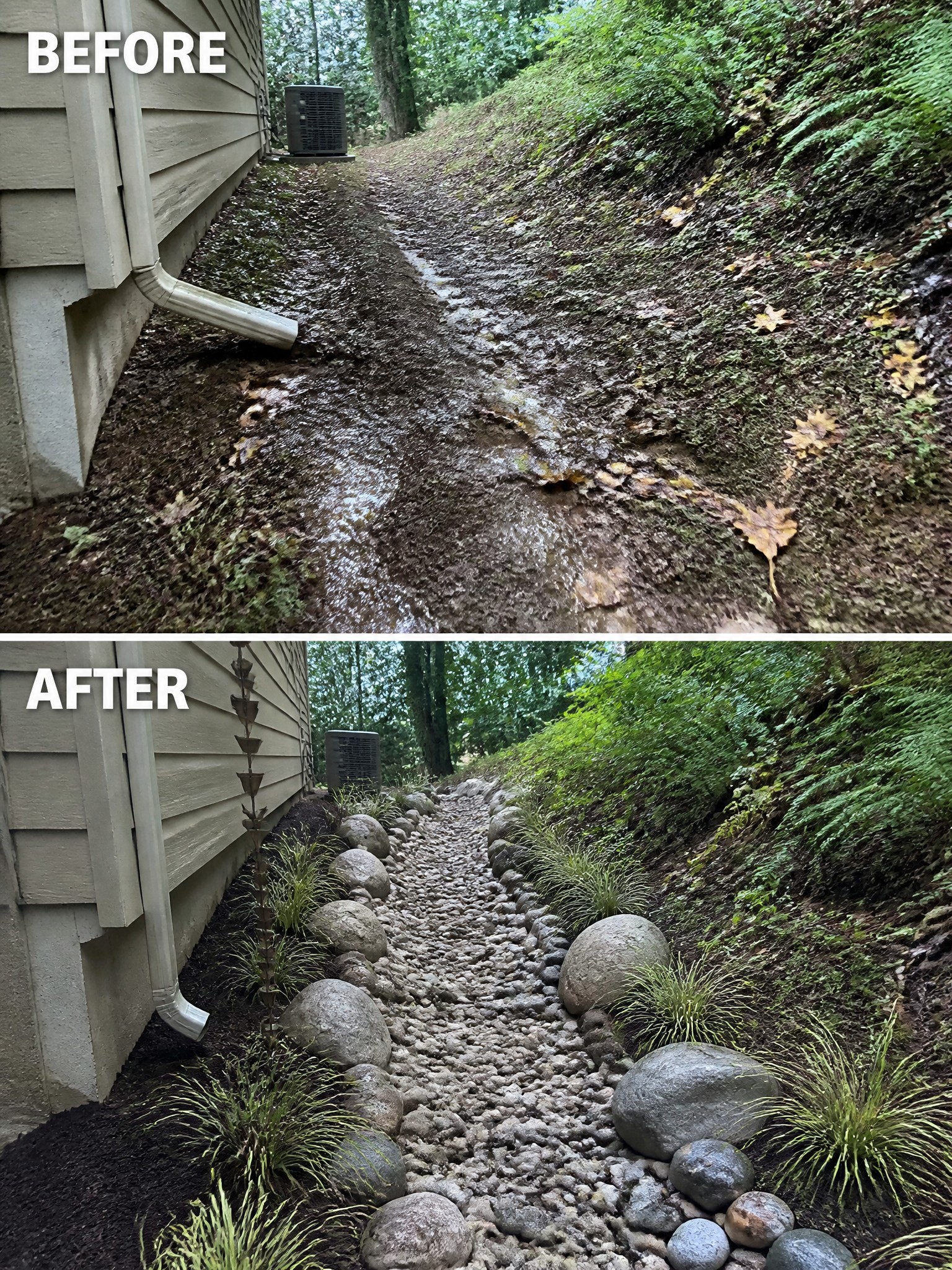
A muddy, eroded side yard like the one in the before photo often comes from poor drainage and lack of structure. Adding a gravel path with larger rocks along the edges gives the water somewhere to go and stops the soil from washing away. The rocks also keep the gravel in place so the path stays clear after rain.
This approach works well in tight spaces next to the house where grass will not grow and full landscaping feels too much. Start by grading the slope slightly, lay down landscape fabric, then add gravel and border it with boulders or large stones. Keep the planting simple with tough grasses along the sides so the whole area stays easy to maintain.
Add Structure To A Narrow Side Yard
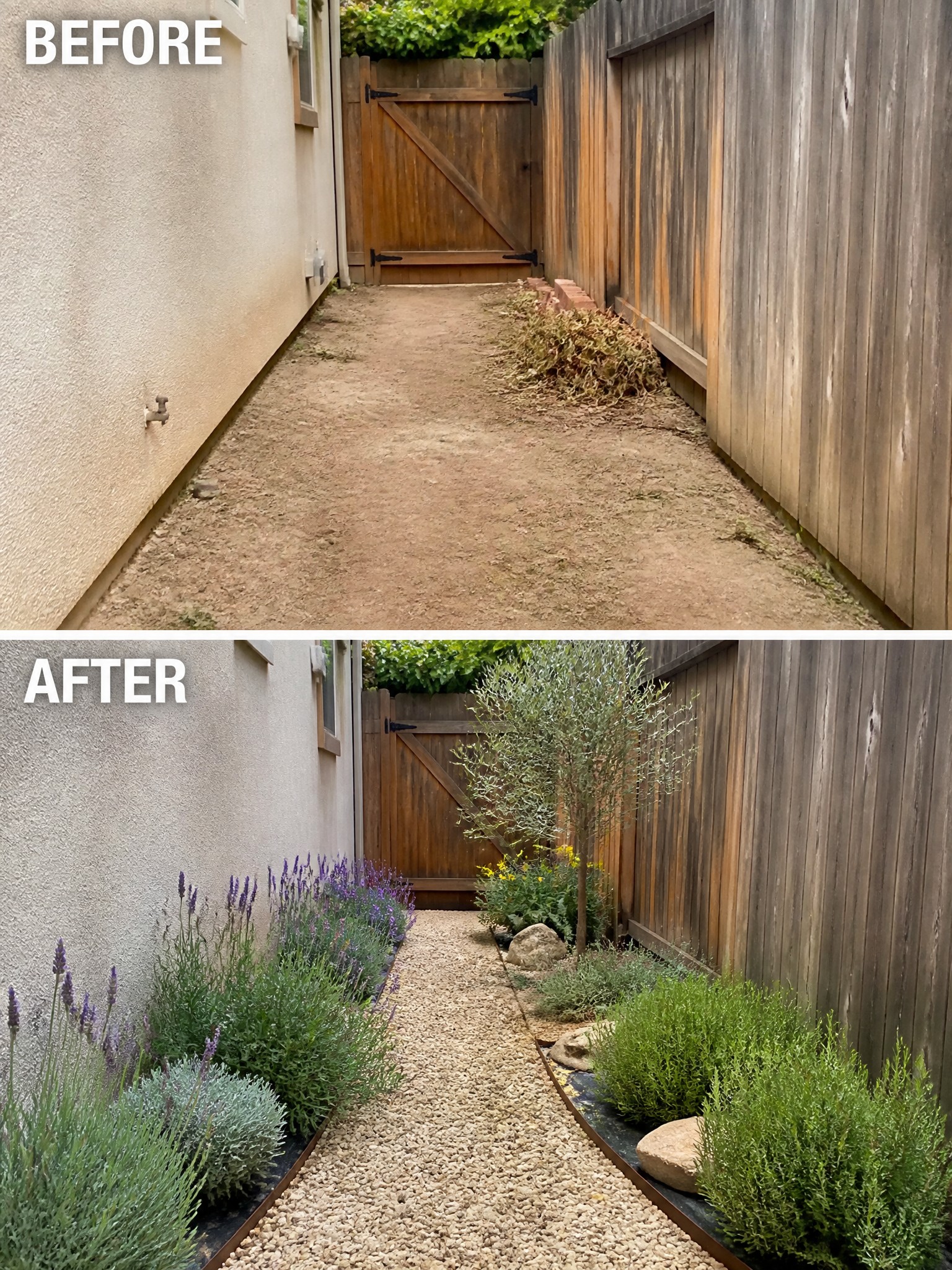
A narrow side yard often ends up as just a strip of dirt between the house and the fence. The fix starts with adding clear edges and a simple path material so the space feels intentional instead of leftover. In this case, a gravel walkway replaced the bare dirt while metal edging created neat borders for planting on both sides.
This approach works well in tight spaces where you need low maintenance and easy access. Keep the plant choices simple and repeat a few varieties so the beds look full without crowding the walkway. Focus first on the edging and path, then add plants that can handle the conditions rather than trying to fill every inch at once.
Line A Narrow Side Yard With Matching Pots And Gravel
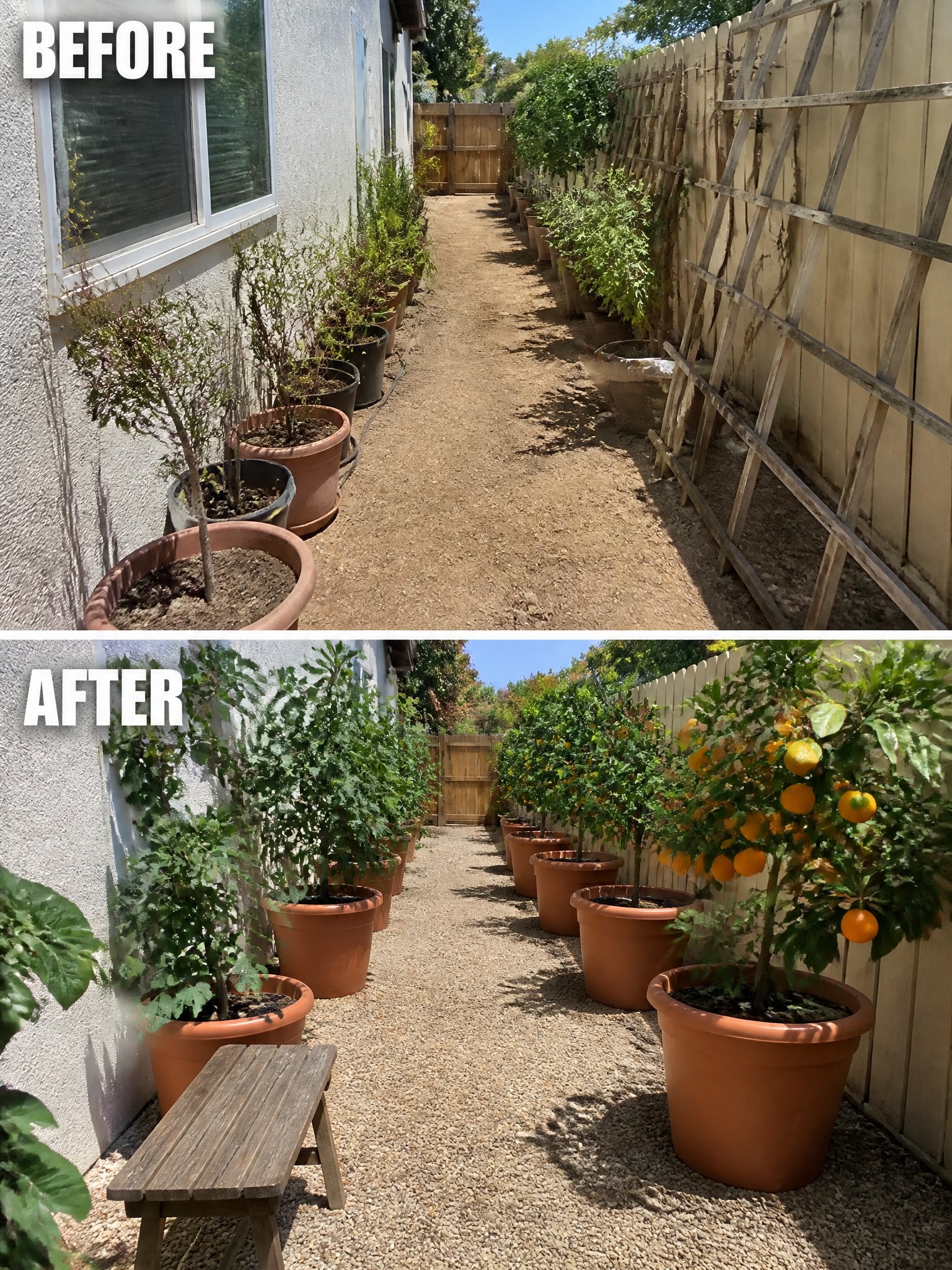
A narrow side yard often ends up as a forgotten strip of dirt between the house and the fence. In this case the fix started with laying down gravel to cover the bare ground and switching to a row of matching terracotta pots. The plants filled out nicely once they had consistent containers and better soil, and the repeated pot size gives the whole space a tidy, intentional look instead of a random collection of containers.
This approach works well in tight passages where a full garden bed would feel cramped. Stick to one or two pot sizes, choose plants that stay roughly the same height, and keep the gravel a few inches thick so weeds stay down. Add a simple bench only after the pots are in place so the path stays clear for walking.
Turn A Narrow Side Yard Into A Seating Area
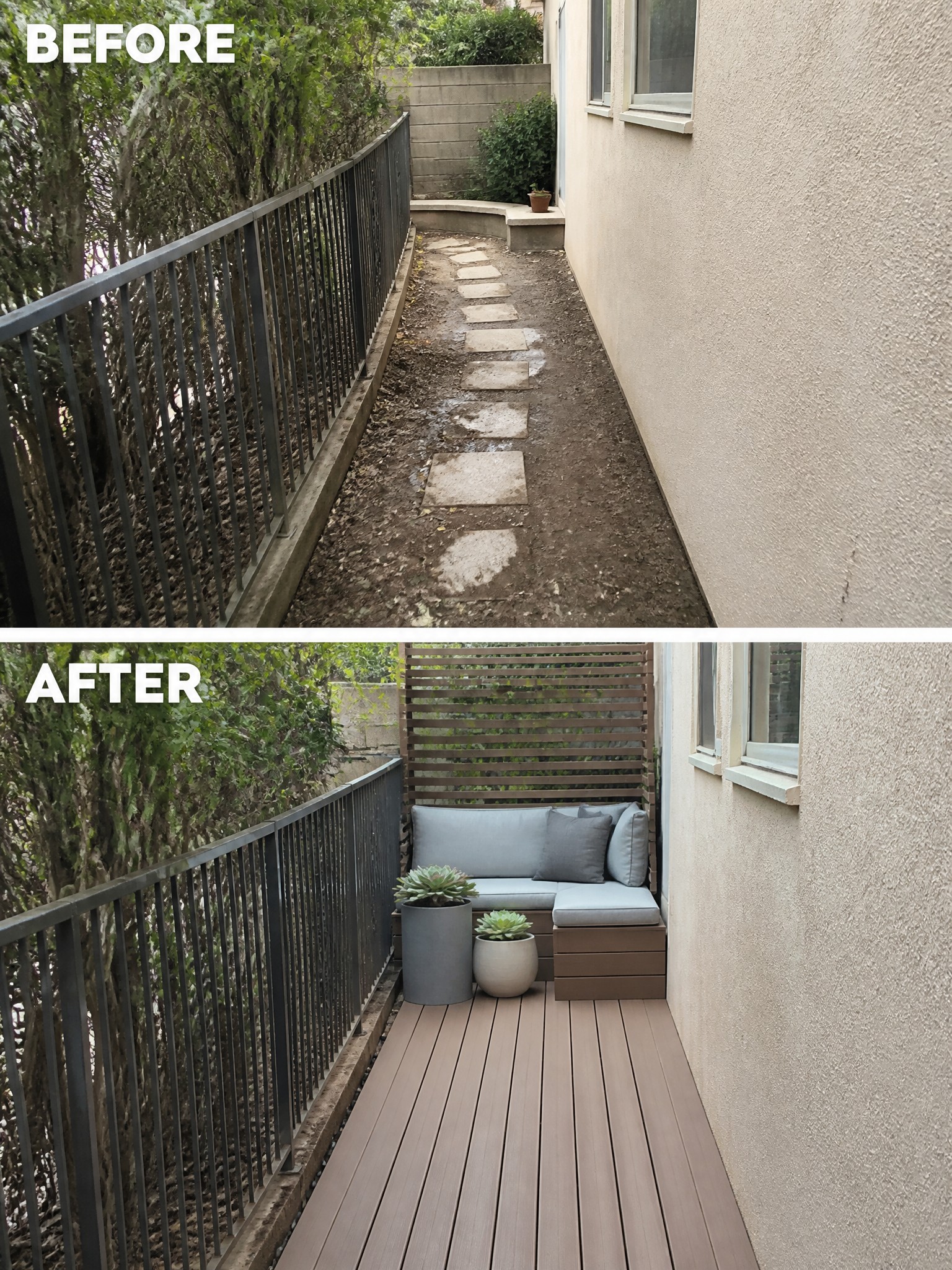
A narrow side yard often ends up as wasted space because it feels too tight for normal furniture. Adding decking over the dirt and placing a built-in bench along the back wall turns the area into a spot where you can actually sit and relax.
This idea works best in homes where the side passage is long but narrow. Keep the furniture low and built-in so it does not block movement, and use a privacy screen or plants to make the space feel more enclosed. It suits smaller lots where the only outdoor room available is along the side of the house.
Use Retaining Walls To Create Steps In A Steep Side Yard
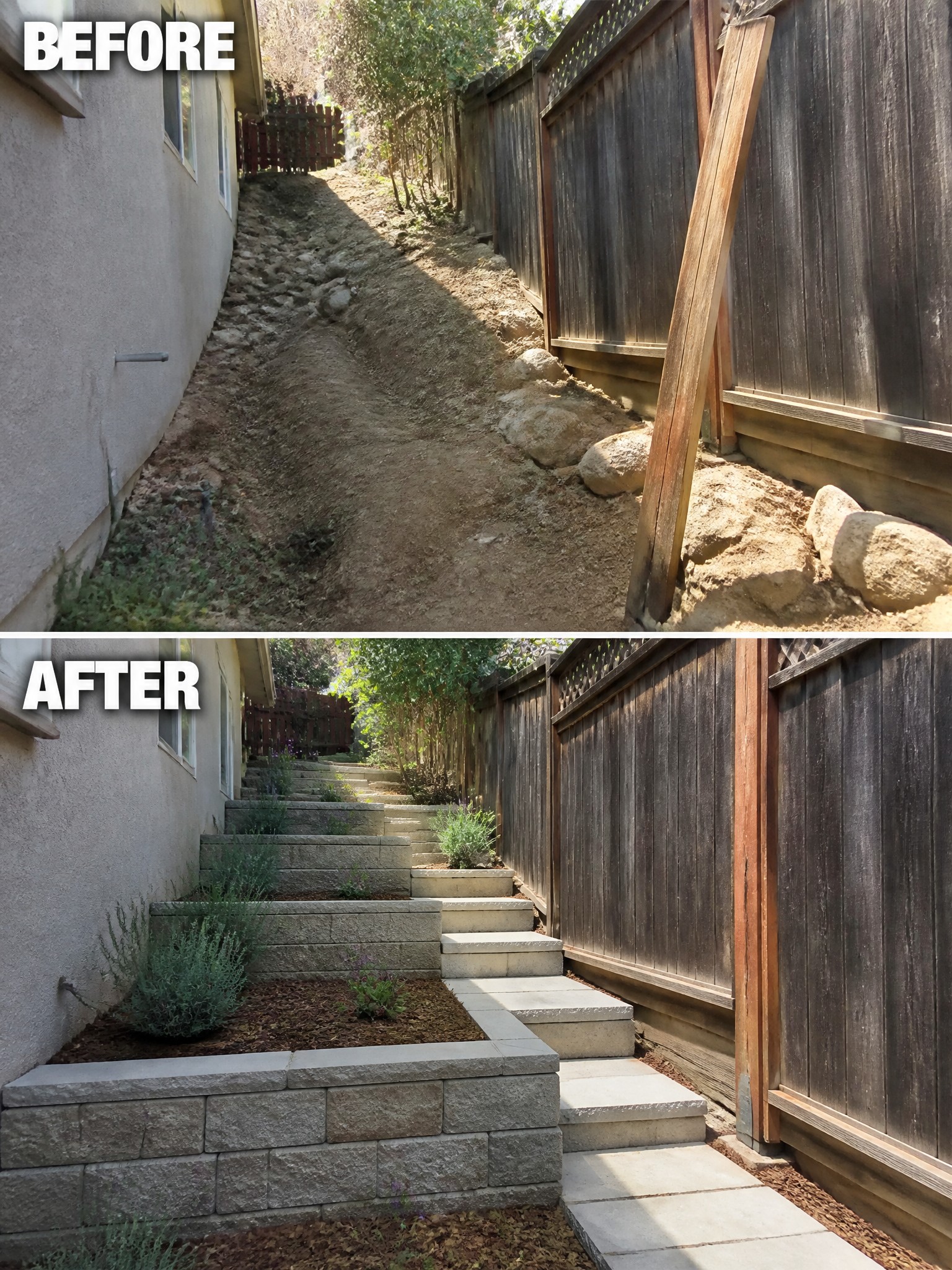
A steep dirt slope between the house and fence makes a side yard almost impossible to walk through. Adding low retaining walls turns the slope into a series of flat stone steps that are easy to use and give the space a clear structure.
This idea works best in narrow yards where you need both access and some planting room. Keep the walls low, choose materials that match the house, and fill the new beds with simple shrubs that do not need constant care. Focus on drainage first so the steps stay solid over time.
Turn A Narrow Side Yard Into A Low Maintenance Lawn
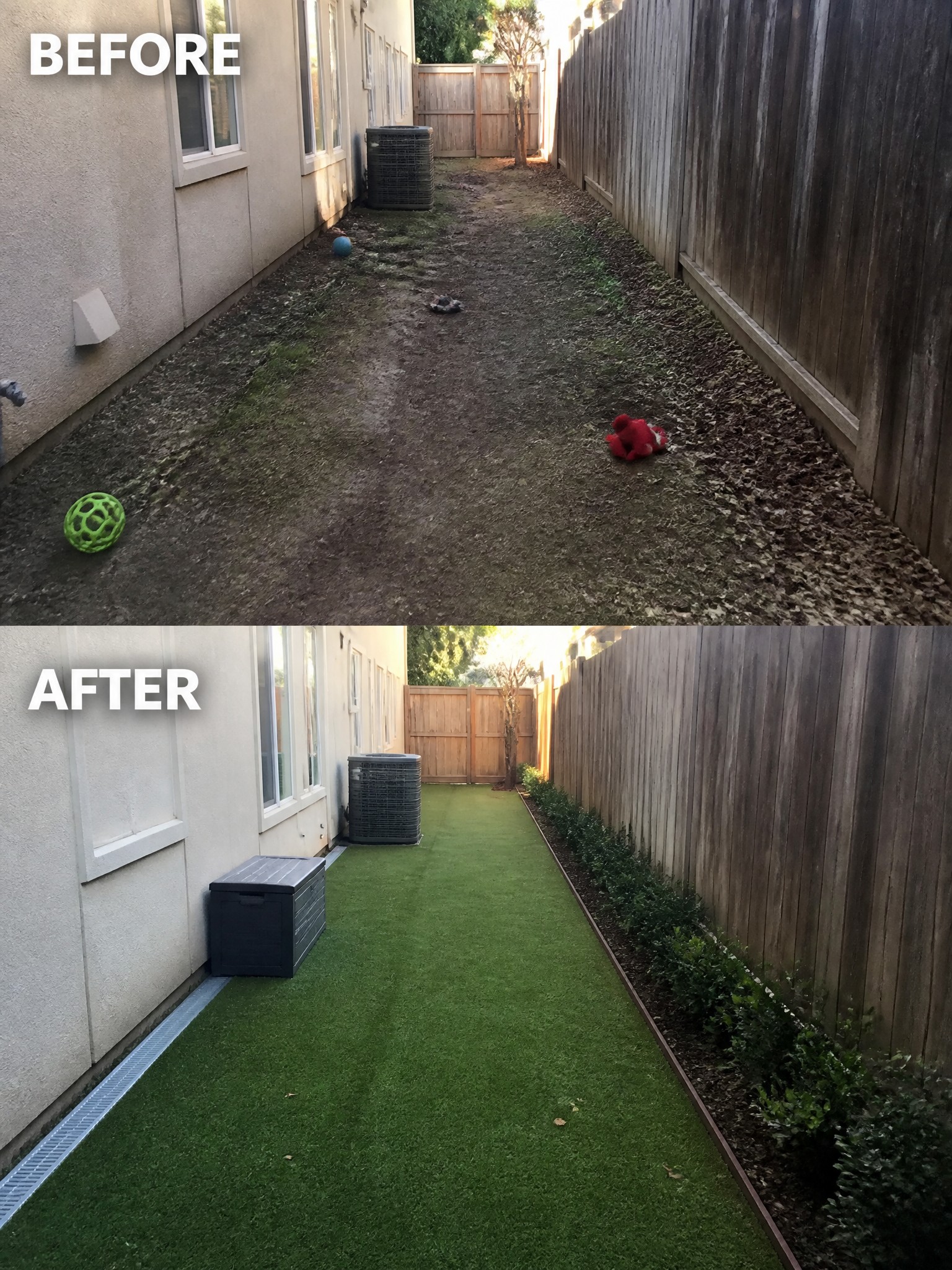
A dirt side yard often ends up as wasted space because it stays muddy, collects leaves, and never feels inviting. Laying down artificial turf gives the area a clean, even surface that stays usable year round and cuts down on weeding and mowing.
This approach works especially well in tight spaces where real grass struggles. Keep the design simple with one storage piece along the house and a narrow planted strip along the fence so the path stays open and easy to walk through.
Add Stepping Stones To Shape A Narrow Side Yard Path
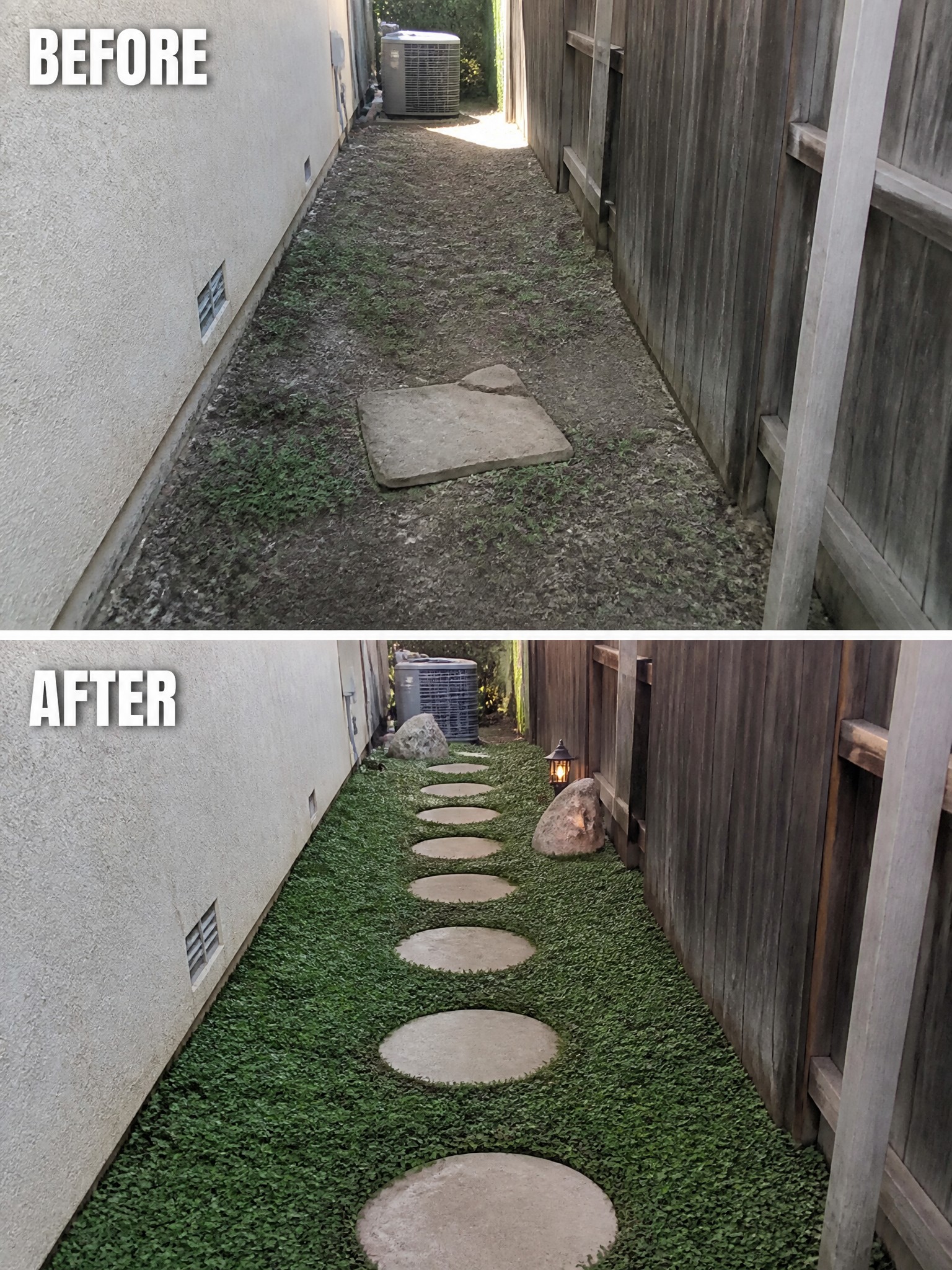
A narrow side yard often ends up as bare dirt because it gets little sun and sees constant foot traffic. Laying down a row of round stepping stones with low ground cover between them gives the space a clear path while keeping it simple to maintain. The change turns a spot that felt neglected into one that is easy to walk through without tracking mud.
This idea works best in tight areas between a house and fence where full lawn is not practical. Place the stones first to set the route, then fill around them with something tough like clover or a similar ground cover. Add a light or two if the path sees use after dark, but keep the rest minimal so the walkway stays the main feature.
Screen Off Utility Areas In A Side Yard
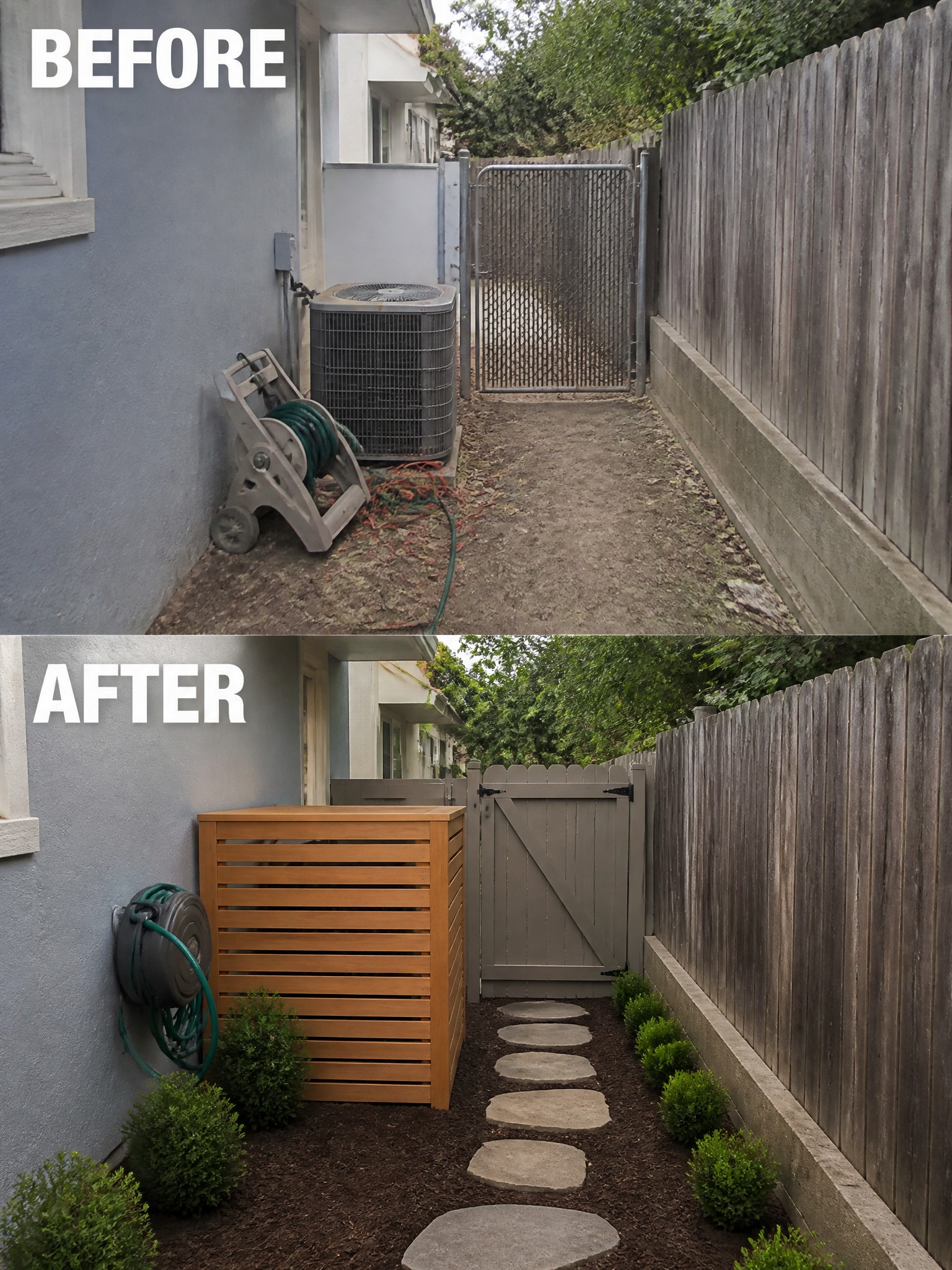
A narrow side yard often ends up as leftover space where the air conditioner and hose sit out in the open on bare dirt. Adding a simple slatted wood enclosure around the equipment and laying down a stepping stone path with mulch makes the whole area feel intentional and much easier to walk through.
This approach works well in tight spaces because the enclosure takes up little width while hiding the clutter. Focus on one main screen first, then add a basic path and a few low shrubs along the edges. Keep the planting simple so it stays low maintenance over time.
Frequently Asked Questions
Q: Will gravel paths stay in place or do they scatter everywhere? A: Edge the path with wood or metal strips to hold the gravel tight. Rake it smooth every few months and add a bit more if low spots form. Most people find it stays put after the first year.
Q: My side yard is only three feet wide. What fits without crowding? A: Stick to a single row of potted plants or a slim bench along one fence. Vertical elements like a trellis with vines use height instead of width. This keeps the walkway clear and easy to maintain.
Q: How do I handle drainage if the yard slopes toward the house? A: Dig a shallow trench along the fence and fill it with river rock. Slope the soil gently away from the foundation before planting anything. This moves water out without extra work later.
Q: Do I need to replace the soil or can I plant straight into what is there? A: Mix in compost where you plan to add plants so roots get a good start. Most low maintenance ideas work fine with existing dirt as long as you pick tough varieties. Test a small spot first if the ground looks compacted.
