

Over the years I have noticed that keeping a large lawn often leaves the yard looking flat because there is little room for layers of plants or defined edges that actually shape the space.
Reducing the grass lets planting beds expand in ways that create better flow through the garden and give perennials and shrubs room to grow without constant mowing around them.
Lawns shrink fast once you start planning beds around them.
I usually try one new bed at a time near the house or along a path so I can see how the layout holds up through a full season before making bigger changes.
That approach helps avoid the common problem where new beds end up too narrow or poorly placed for the way people actually walk through the yard.
Define Planting Beds With Metal Edging

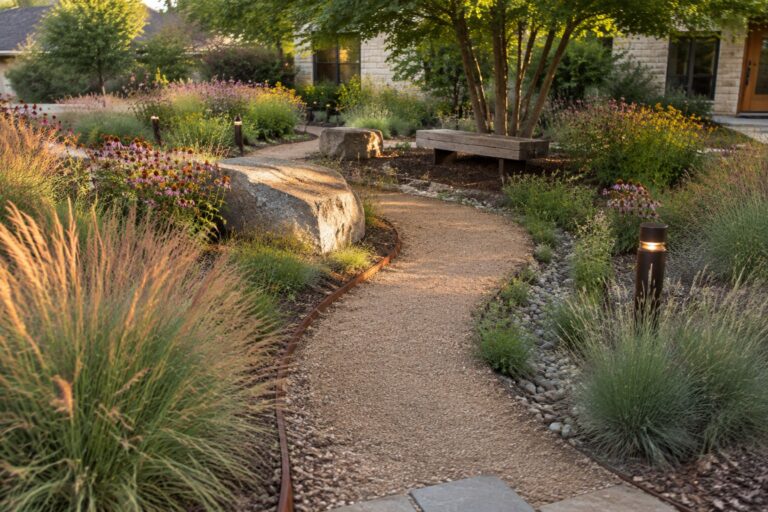
Metal edging gives you a clean way to shrink the lawn and let planting beds take over more space. It holds a firm line so the beds can curve and widen without looking messy or spilling onto the path.
This approach suits homes where the yard already has some trees or rocks to work around. Run the edging along the path edge, keep the curves soft, and fill the beds with layers of grasses and perennials that need little mowing.
Raised Metal Beds To Expand Planting Areas

Raised metal beds give you a simple way to add more planting space without fighting a patch of lawn. They sit right against the house or along a walkway, turning what used to be grass into deep soil for shrubs and flowers. The metal edges keep everything tidy and stop the beds from spreading into paths or gravel.
This setup works best in front yards where the ground slopes or space is tight. Fill the beds with soil that drains well and pick plants that stay in scale with the house. The metal lasts for years with almost no upkeep once it is in place.
Gravel Strips To Expand Planting Beds

A gravel strip between the driveway and the main beds gives you more planting room without leaving odd strips of lawn. The rocks help with drainage and keep the edges clean, so the beds can run longer and hold more grasses and perennials.
This setup works best on homes where the driveway sits right next to the house. Keep the gravel narrow enough to read as a border rather than a path, and use the extra bed space for taller grasses that soften the hard edge of the pavement.
Terraced Stone Walls Expand Planting Areas

Building low stone retaining walls turns a sloped yard into several flat planting levels instead of one big lawn. The walls keep the soil from washing away and give you more room to add shrubs, ground covers, and flowers without crowding everything together.
This setup works best on hills where a single lawn would be hard to mow or would just sit unused. Keep the beds fairly narrow so you can reach everything from the edges, and mix in some drought-tolerant plants to cut down on watering.
Gravel Surfaces To Shrink Lawn And Expand Planting Beds

Many homeowners are replacing grass with gravel to cut back on maintenance and open up more space for actual plants. The gravel lets trees and shrubs sit right in the middle of the yard without needing big stretches of lawn around them.
This setup works best in smaller yards or drier regions where grass is hard to keep. You can add raised beds or large pots along the edges for herbs and flowers, and the whole area stays low-water once the gravel is down.
Use Layered Planting Beds To Shrink Lawn Areas

Layered planting beds work well because they turn open lawn into useful garden space without needing a full redesign. The mix of heights and textures keeps the area interesting while cutting down on grass that needs constant mowing and watering.
This approach suits homes with existing patios or seating zones where you want more planting without crowding the layout. Start with a simple border of low shrubs, then add taller perennials behind them, and use clean edging to keep the beds defined and easy to maintain over time.
Stepping Stone Paths Through Planting Beds
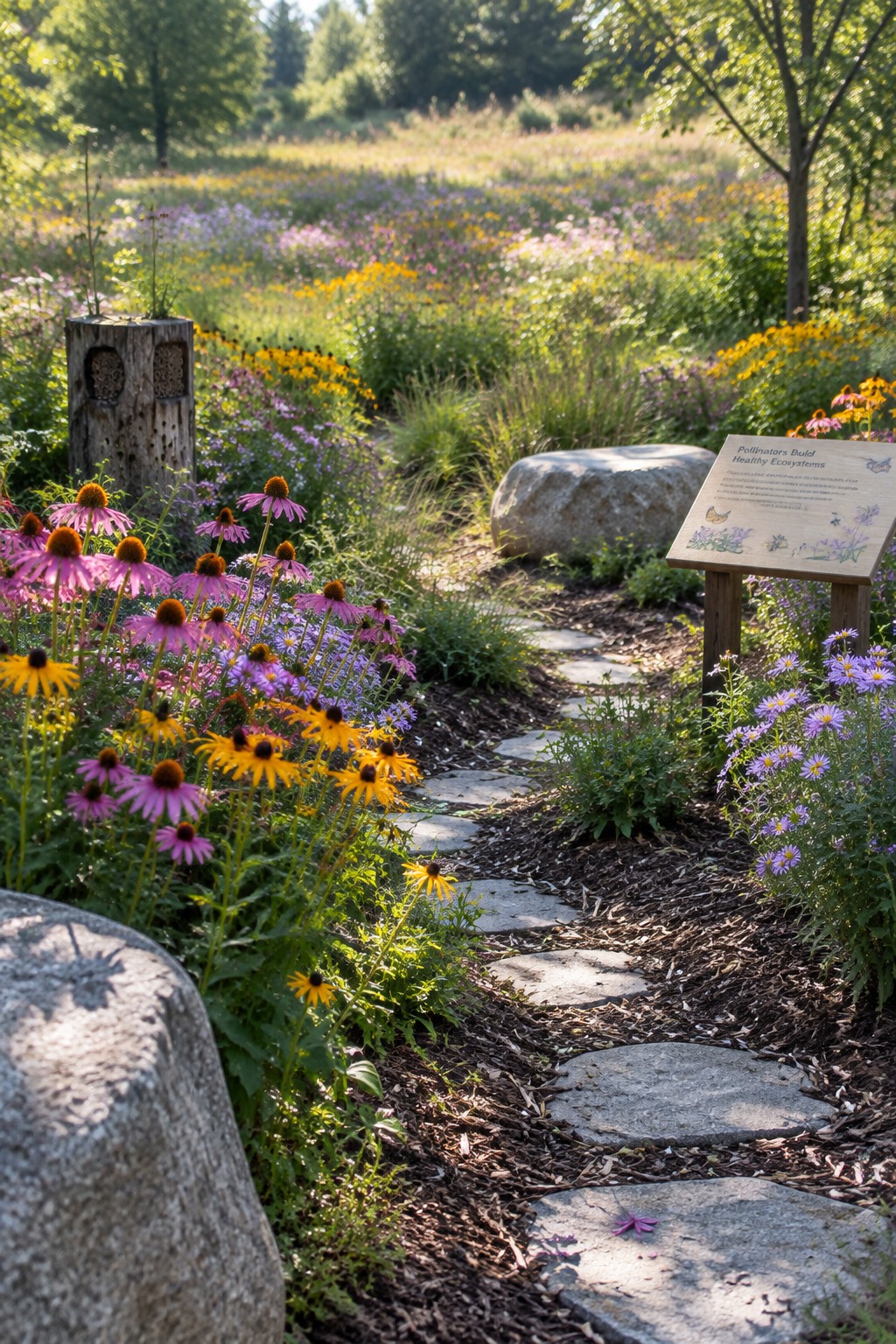
Stepping stones give you a way to keep planting beds wide and full without losing access through the yard. The flat stones sit low in the soil so the flowers can grow right up around them and the whole area still reads as one garden instead of separate patches.
This layout works best in front or side yards where you want to cut back on grass but still need a clear route for walking or mowing around the edges. Set the stones a comfortable stride apart and keep the beds mulched so everything stays low maintenance over time.
Raised Beds Along Gravel Paths

Many homeowners are swapping out lawn for raised beds set beside simple gravel paths. This approach gives you more room to grow vegetables and herbs while cutting down on mowing and watering.
It works well in narrow side yards or along fences where grass often struggles anyway. The wood frames keep everything neat and the gravel provides an easy walking surface that drains well after rain.
Gravel Beds Expand Planting Space

Gravel beds work well when the goal is to cut back on lawn while still keeping the yard looking full. They let you shape larger planting areas that stay neat without constant mowing or watering. The big agave plants add height and structure right away, so the beds feel intentional instead of empty.
This approach suits homes in drier regions where grass struggles anyway. Keep the gravel layer thick enough to block weeds, and choose a few bold plants that can handle the sun. The main thing to watch is drainage so water does not pool near the house foundation.
Brick Edging For Expanded Planting Beds

Brick edging gives planting beds a clear edge so they can take up more ground without looking messy. It turns what might have been lawn into deeper beds that hold more flowers and shrubs.
This approach works best along paths or beside walkways where you want the garden to feel full. Keep the curve gentle and match the brick height to your soil level so mowing stays simple.
Add a Dry Creek Bed to Shrink the Lawn
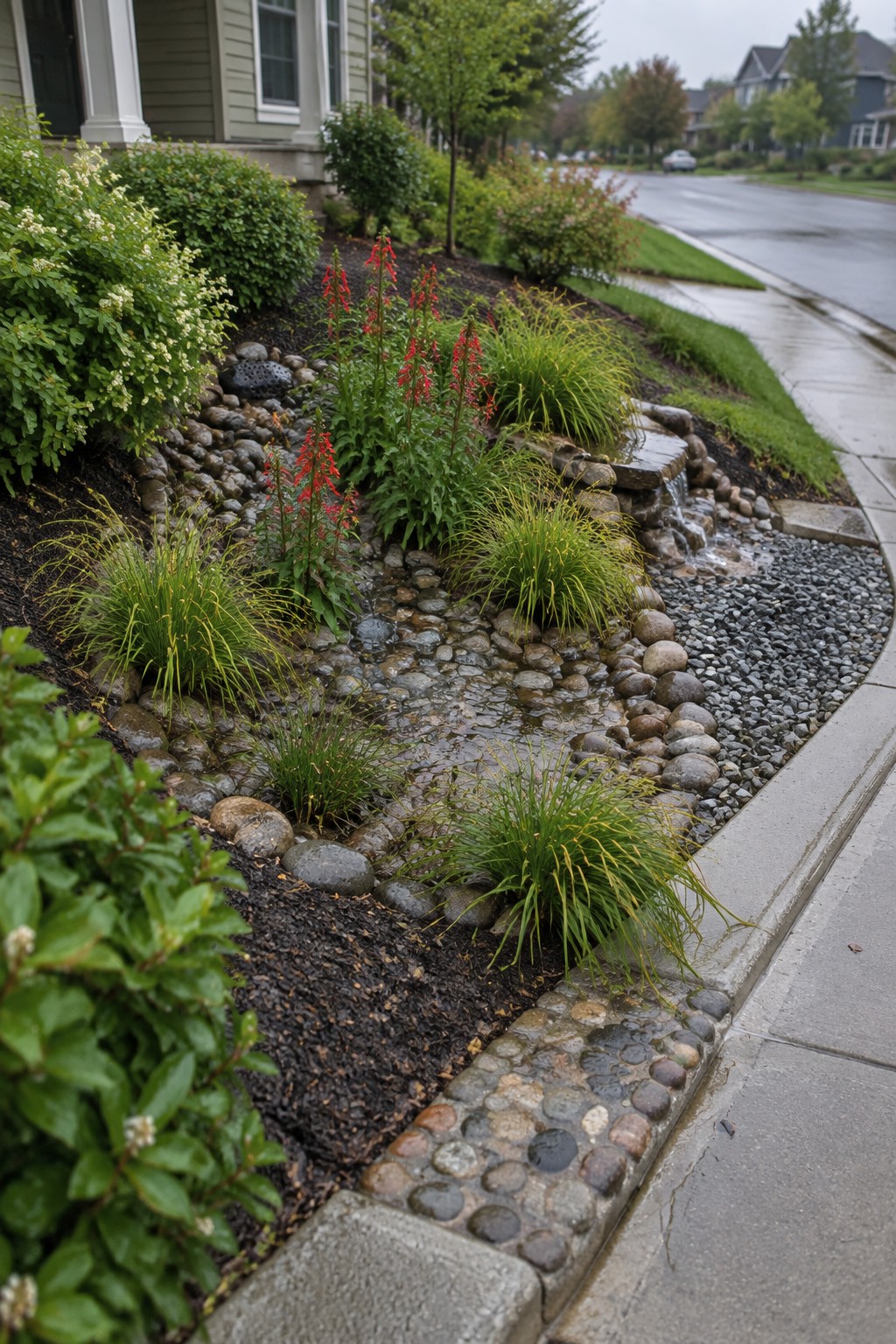
A dry creek bed gives you a simple way to replace a strip of grass with rocks and planting beds. It handles runoff while letting you add more shrubs and perennials without needing extra lawn to mow.
This setup works well along the front of the house or beside the driveway on lots that slope toward the street. Keep the rock channel narrow and line the edges with mulch so the beds feel connected rather than scattered.
Stepping Stones In Gravel Beds

Stepping stones laid through gravel give you a solid path without needing a big stretch of lawn. The gravel fills the space between the stones and keeps the ground covered, which leaves more room along the edges for shrubs and trees.
This approach works best in side yards or smaller gardens where grass is hard to maintain. Keep the stones large enough to walk on comfortably and add a simple border so the gravel stays put over time.
Gravel Paths With Pavers Shrink Lawn Space
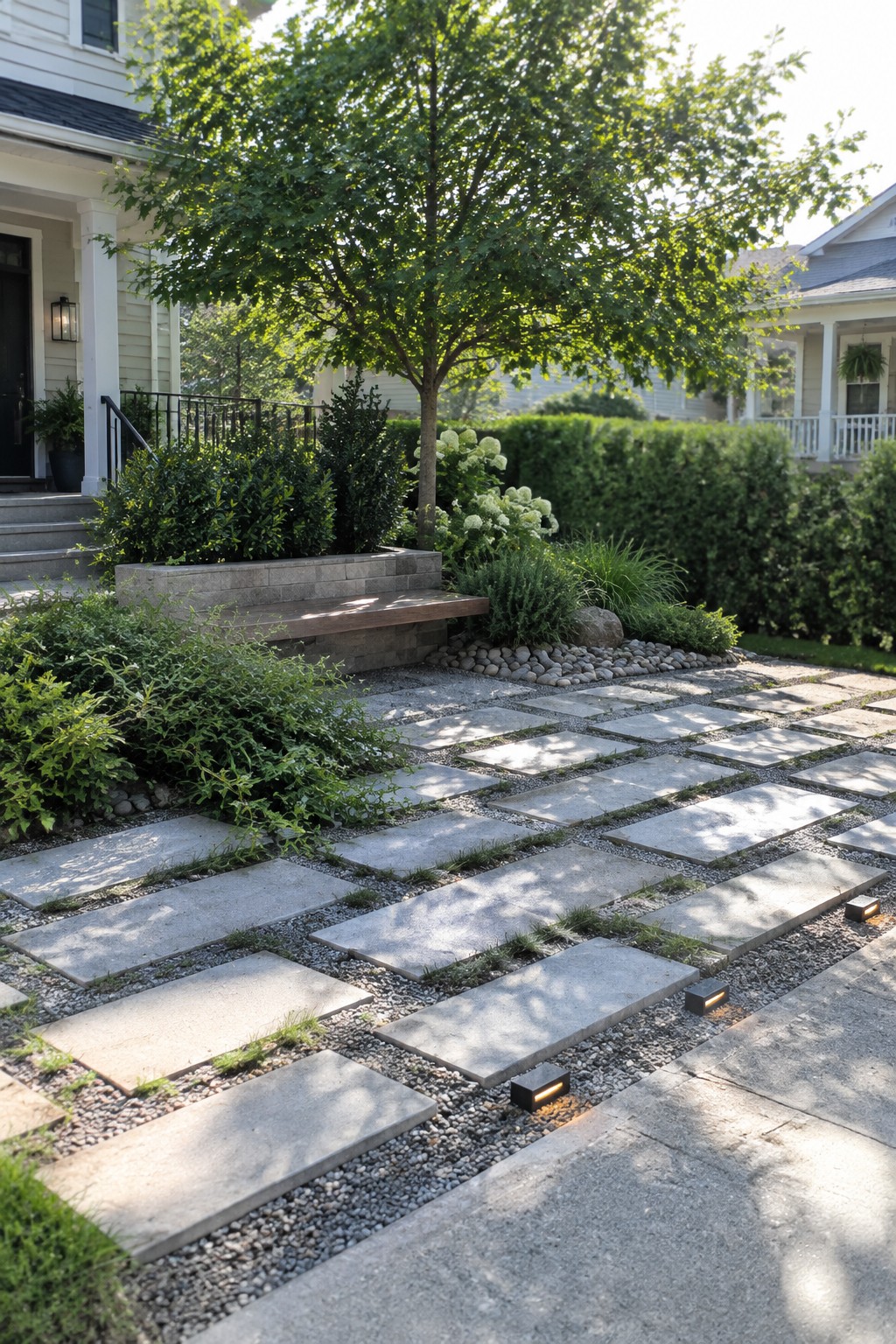
Many homeowners are swapping strips of lawn for paths made of large pavers set in gravel. The gaps between the stones let rain soak in and give you extra room to run planting beds right up to the edges.
This layout suits side yards or front walkways where a solid path feels too wide. Keep the gravel a bit lower than the pavers so it stays put, and choose plants that can handle the reflected heat from the stones.
Lay Log Rounds As Stepping Stones
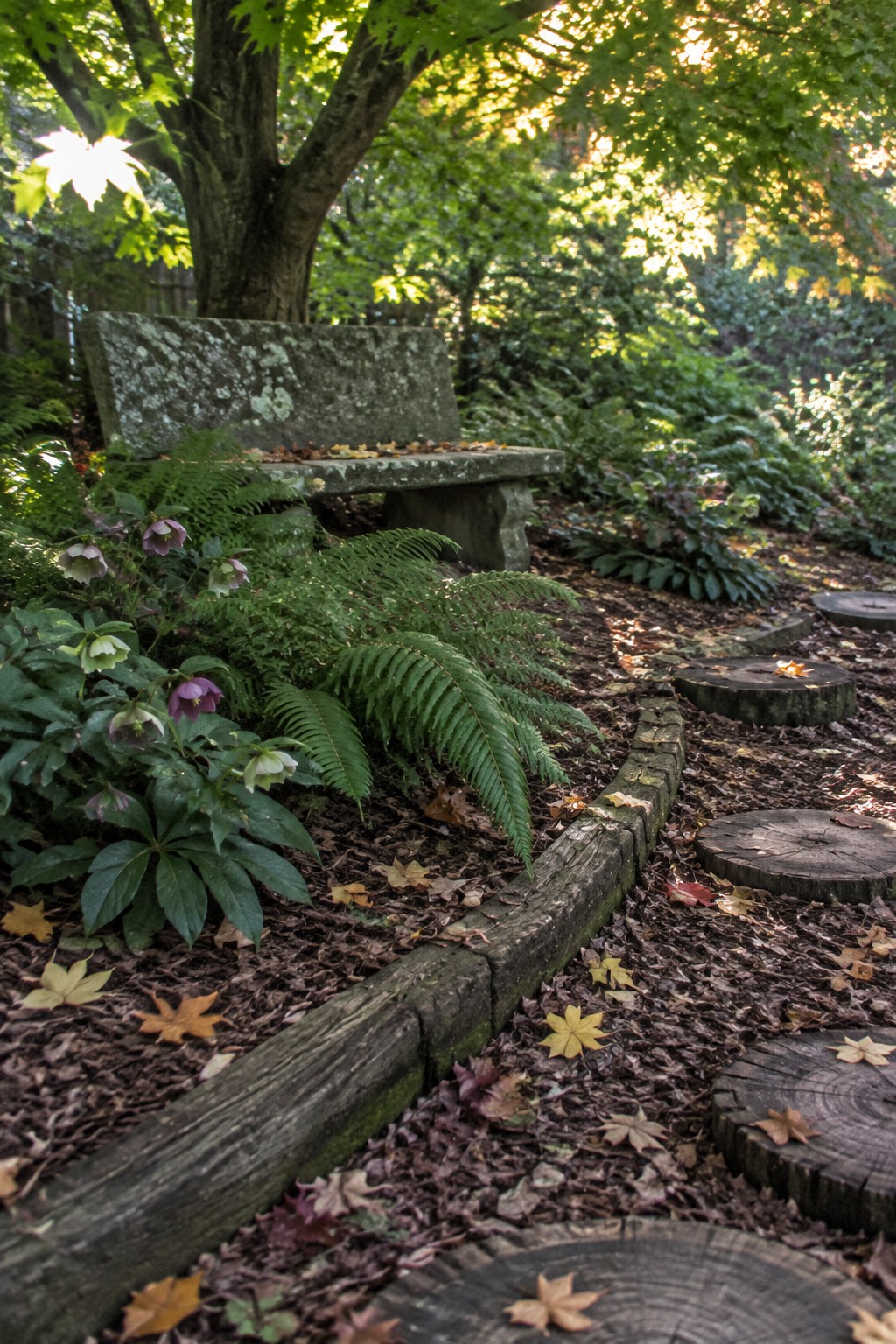
One simple way to cut back on lawn is to run a path of log rounds straight through the planting beds. The rounds keep feet off the mulch and let you expand the beds without worrying about grass taking over the edges.
This approach suits shady yards where turf thins out anyway. Set the rounds level with the soil, keep a low wood border to hold the mulch in place, and let ferns and other shade plants grow right up to the path.
Stepping Stones Through Gravel
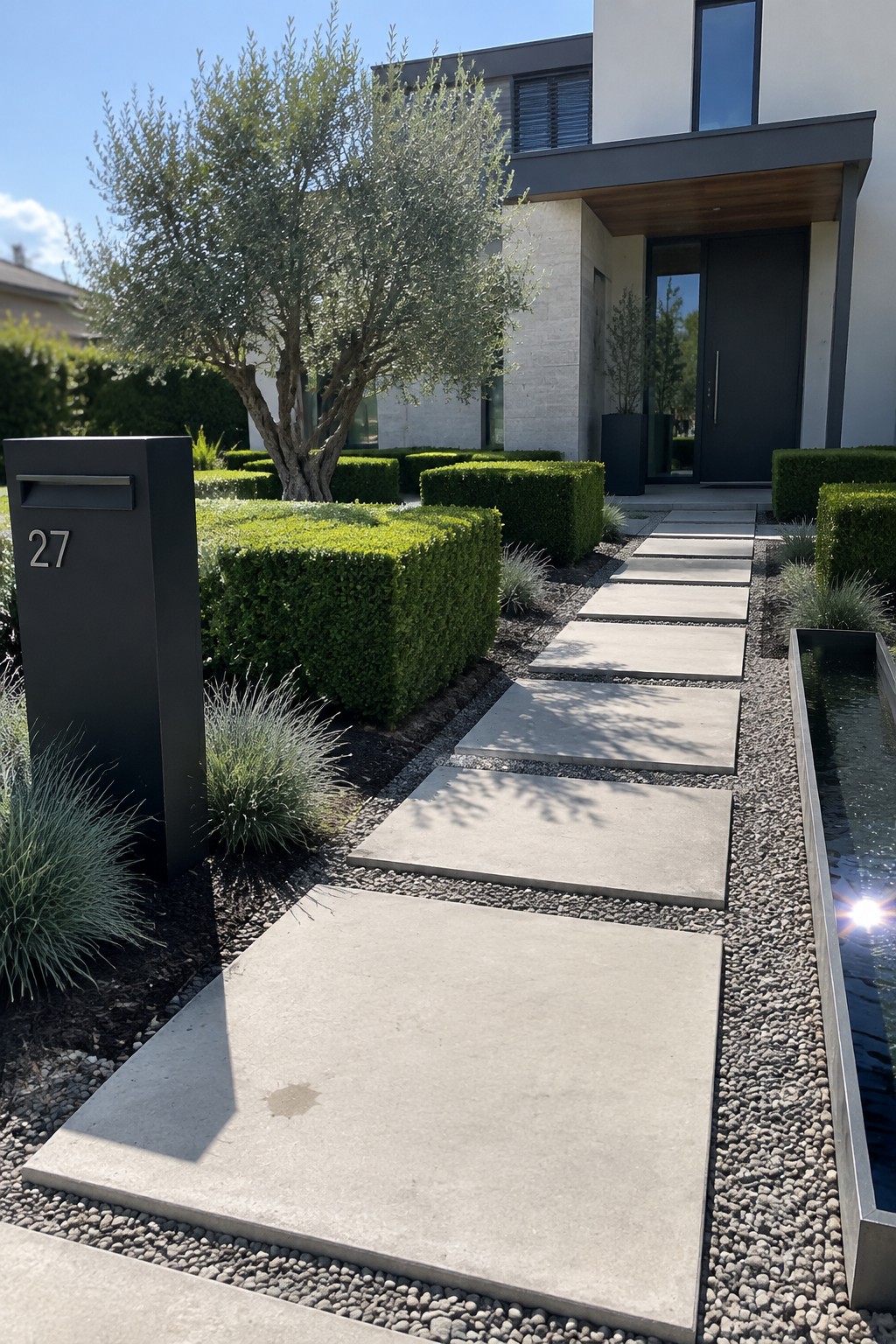
Stepping stones set into gravel make a simple way to reduce lawn while keeping a clear path to the door. The look stays neat because the stones sit low and the gravel fills the gaps, so there is less grass to mow and more room for hedges and beds along the sides.
This works best on flat front yards or side paths where you want low upkeep. Keep the stones large and evenly spaced so walking feels natural, and use the extra bed space for clipped shrubs or small trees that frame the route without crowding it.
Replace Narrow Lawn Strips With Planting Beds
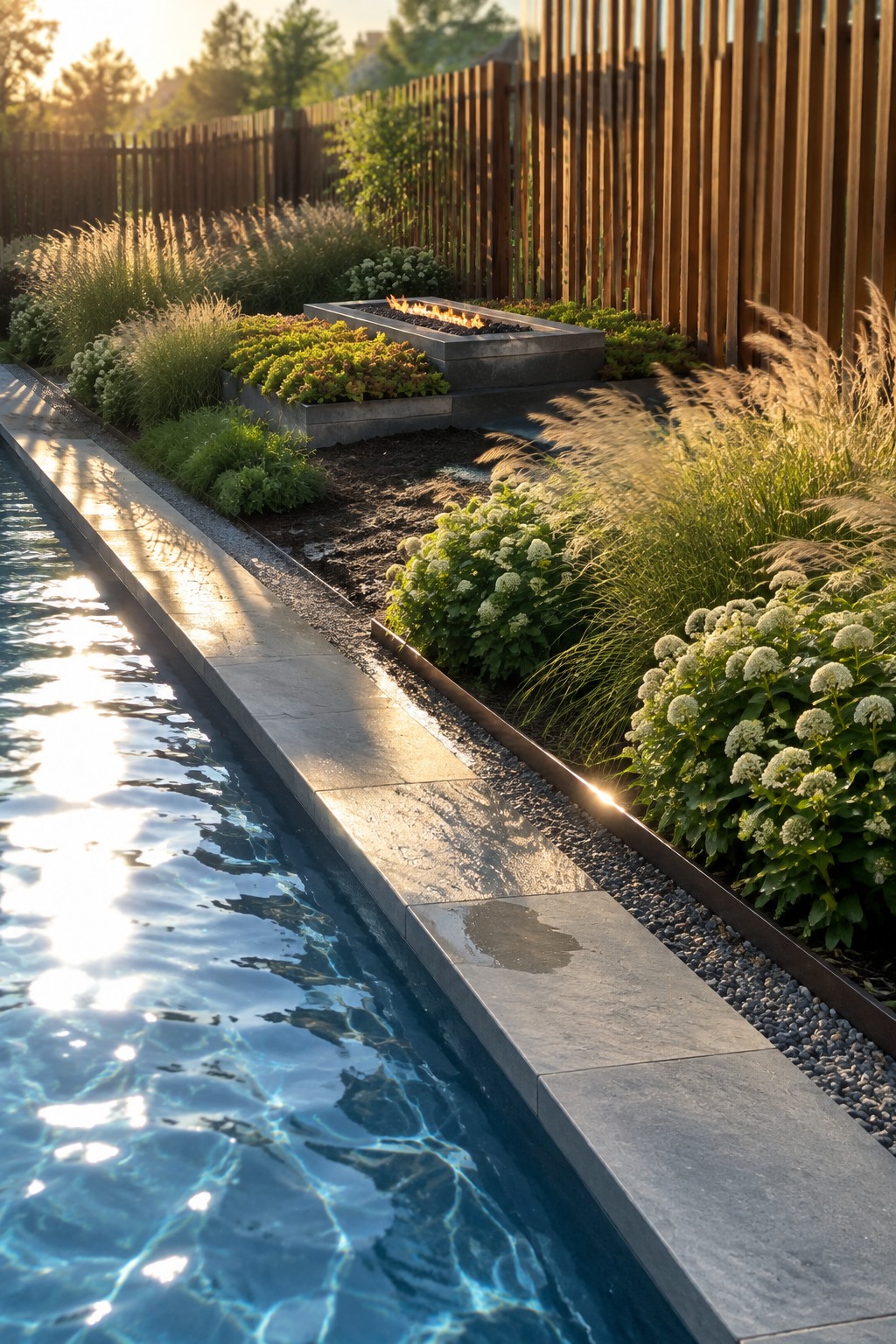
Many yards have awkward strips of grass right next to pools or patios that are tough to maintain and add little value. Switching those areas to planting beds lets you cut back on lawn while creating a softer, greener edge that feels more intentional.
This works best along straight hardscape lines where you can run a simple metal border and fill the bed with a mix of taller grasses and lower shrubs. It keeps the space open but reduces the amount of turf you need to mow and water.
Large Pots Expand Planting Along Stone Steps

Large pots placed along stone steps give you a simple way to add more plants without removing hardscaping or adding lawn. They create instant planting pockets that break up the stone and bring in greenery where digging beds would be difficult.
This works well on sloped yards or around existing paths. Fill the pots with trailing plants that spill over the edges, and the whole setup stays low maintenance while giving you extra planted space.
Extend Planting Beds With Built-In Seating
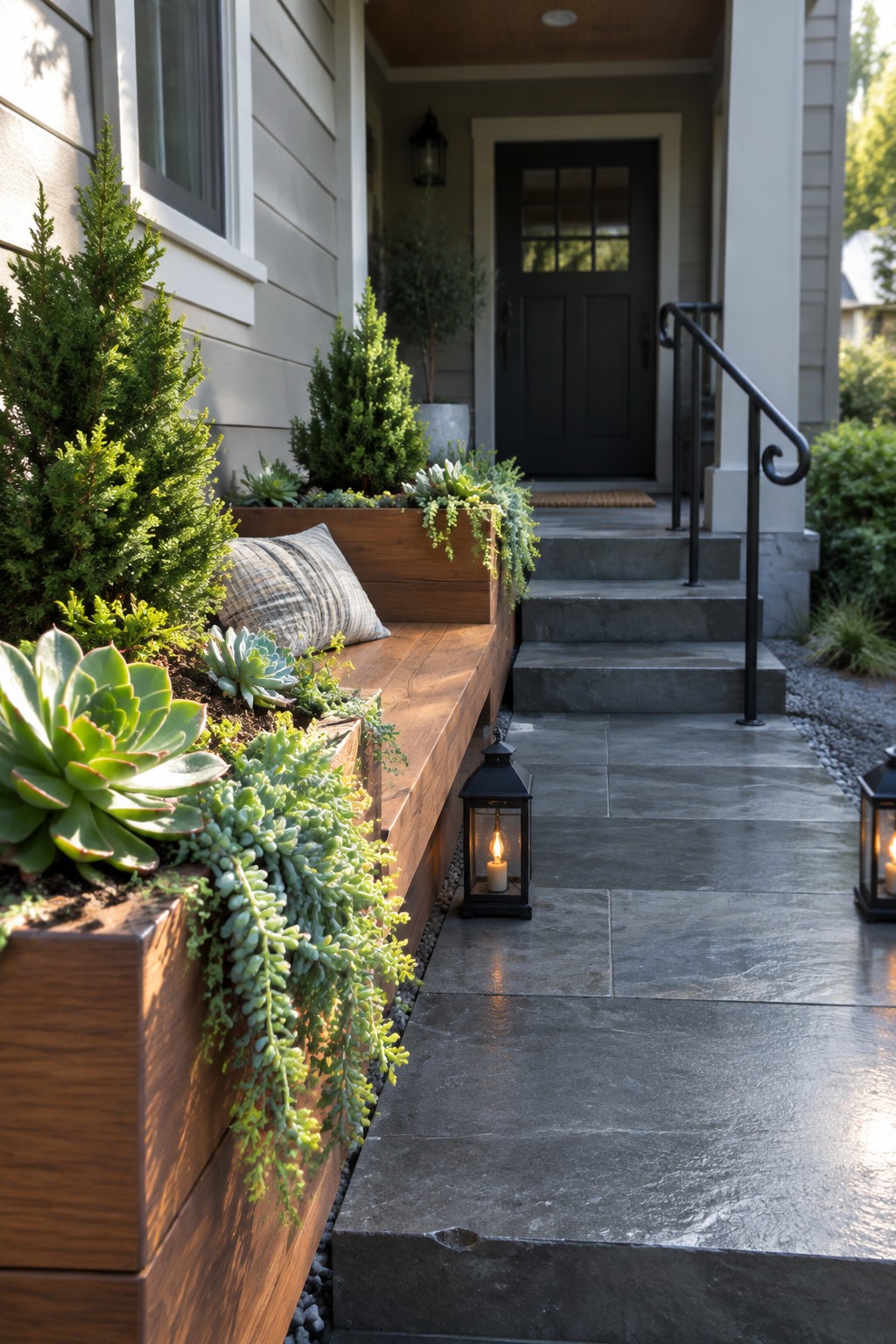
Running a long wooden planter bench along the front walk lets you expand your planting beds without giving up seating space. The bench itself becomes part of the garden, holding soil for succulents and trailing plants while still offering a place to sit.
This setup works best along straight paths or near entry steps where lawn is hard to maintain. Choose rot-resistant wood, keep the bed depth shallow enough for good drainage, and pick plants that stay compact so the bench stays usable.
Widen Planting Beds With Simple Wood Edging
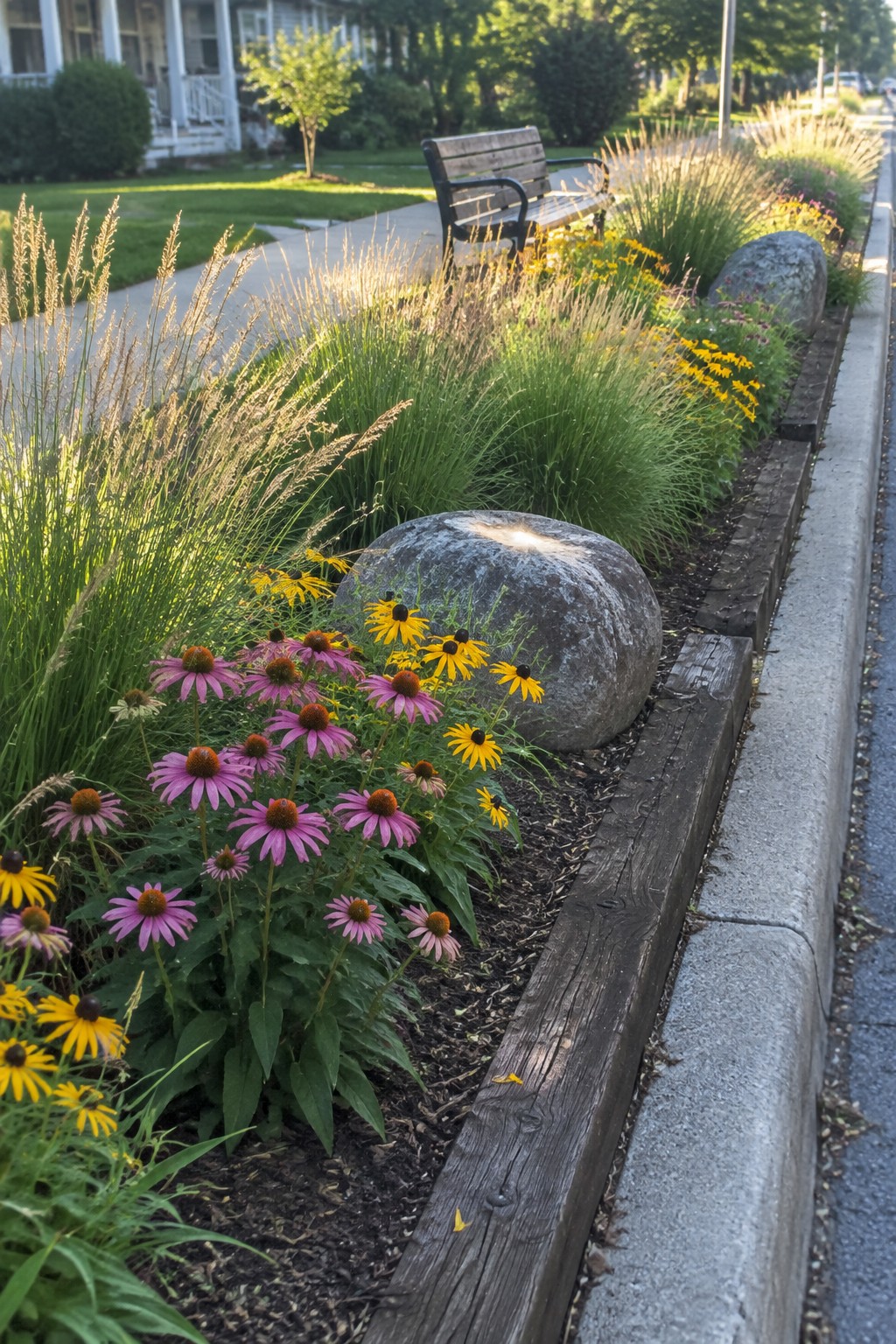
Expanding the planting beds is one of the easiest ways to shrink the lawn without losing much usable space. The long bed here runs right along the walk and curb, filled with flowers and grasses that take over what used to be grass.
Wood edging like this holds the mulch in place and gives a clean edge that is easy to mow around. It works best along sidewalks or driveways where grass tends to struggle anyway, and you can fill the new area with perennials that need little care once established.
Raised Beds That Double As Seating

Raised beds made from wood can do more than just hold plants. When you build them at the right height and top them with a flat surface, they turn into built-in seating while giving you extra growing space right where you need it.
This works especially well in narrow yards or along the side of a house where a regular lawn feels like a waste. Keep the beds deep enough for vegetables or flowers, and add a simple water feature nearby if you want the sound of water without losing planting room.
Frequently Asked Questions
Q: How do I get started if my whole yard is grass right now?
A: Mark off one bed at a time and cover the grass with cardboard followed by a thick layer of mulch. The grass dies underneath while you get the new plants ready. This approach keeps the soil in good shape without heavy digging.
Q: Do the planting beds need constant weeding once the grass is gone?
A: Spread mulch right after you plant and pull any early weeds by hand before they drop seeds. The mulch blocks most new growth so you spend less time on upkeep after the first season.
Q: What happens to the water bill if I replace lawn with beds?
A: Switch to plants that match your local rainfall and water them deeply but less often while they settle in. Your usage drops once the roots take hold.
