

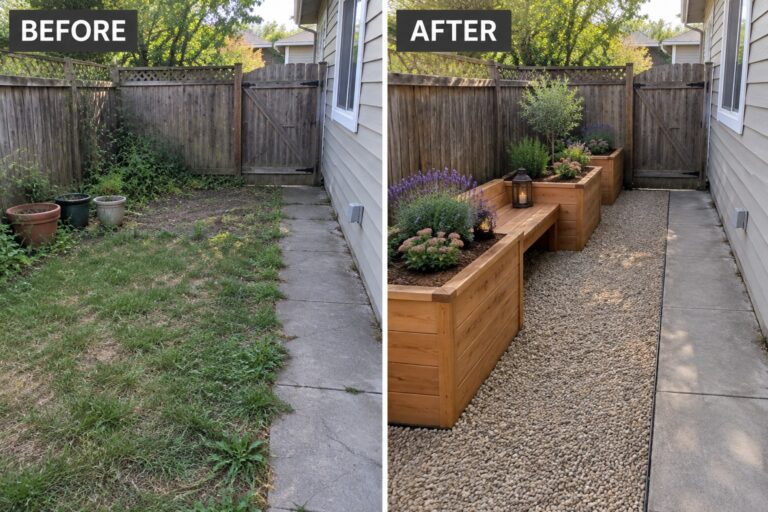
Many backyards end up looking a bit empty because the ground stays flat and there is no easy way to keep plants contained or organized.
Raised planting beds solve that by creating defined areas that can hold soil and roots at a better height while also giving the whole space more visual weight.
I have thought about starting with just two or three beds in the corner of my yard to test how they affect the way I use the space day to day.
Structure matters more than people think.
A few of the setups here look like they could work in smaller yards too without requiring a full redesign of the lawn.
Use Raised Beds To Structure An Overgrown Backyard
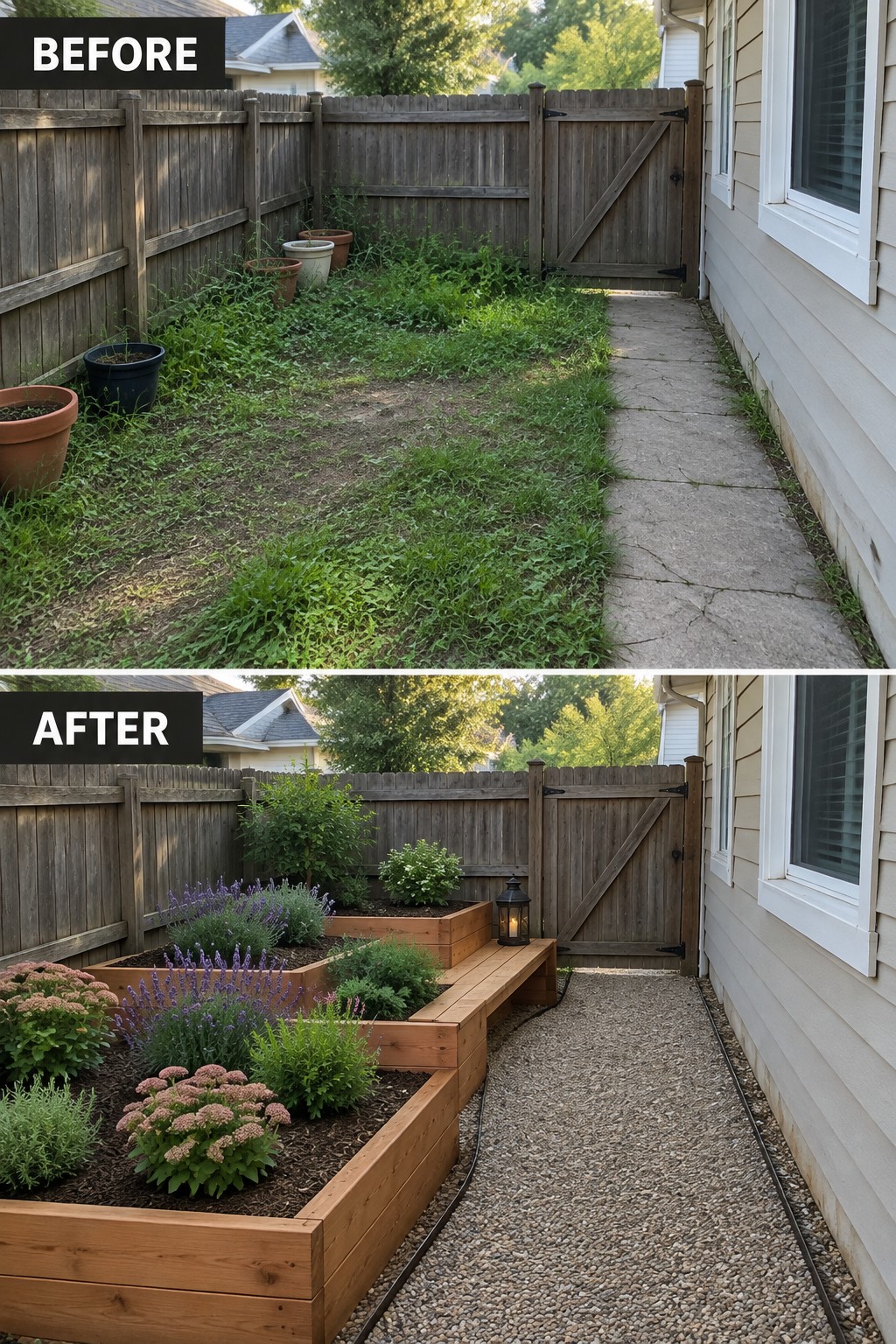
Raised beds turn a weedy strip of dirt into a real garden without needing a full redesign. The before photo shows scattered pots and nothing holding the space together. After, the wooden beds create clear lines, hold the soil, and let plants take over while the gravel path keeps the walkway practical and low maintenance.
This approach works well along a fence or house wall where space is narrow. Start by clearing the worst of the overgrowth, then build or place beds that follow the natural path. Keep the plantings simple at first so the structure does the main work.
Add Raised Beds To Handle A Sloped Backyard
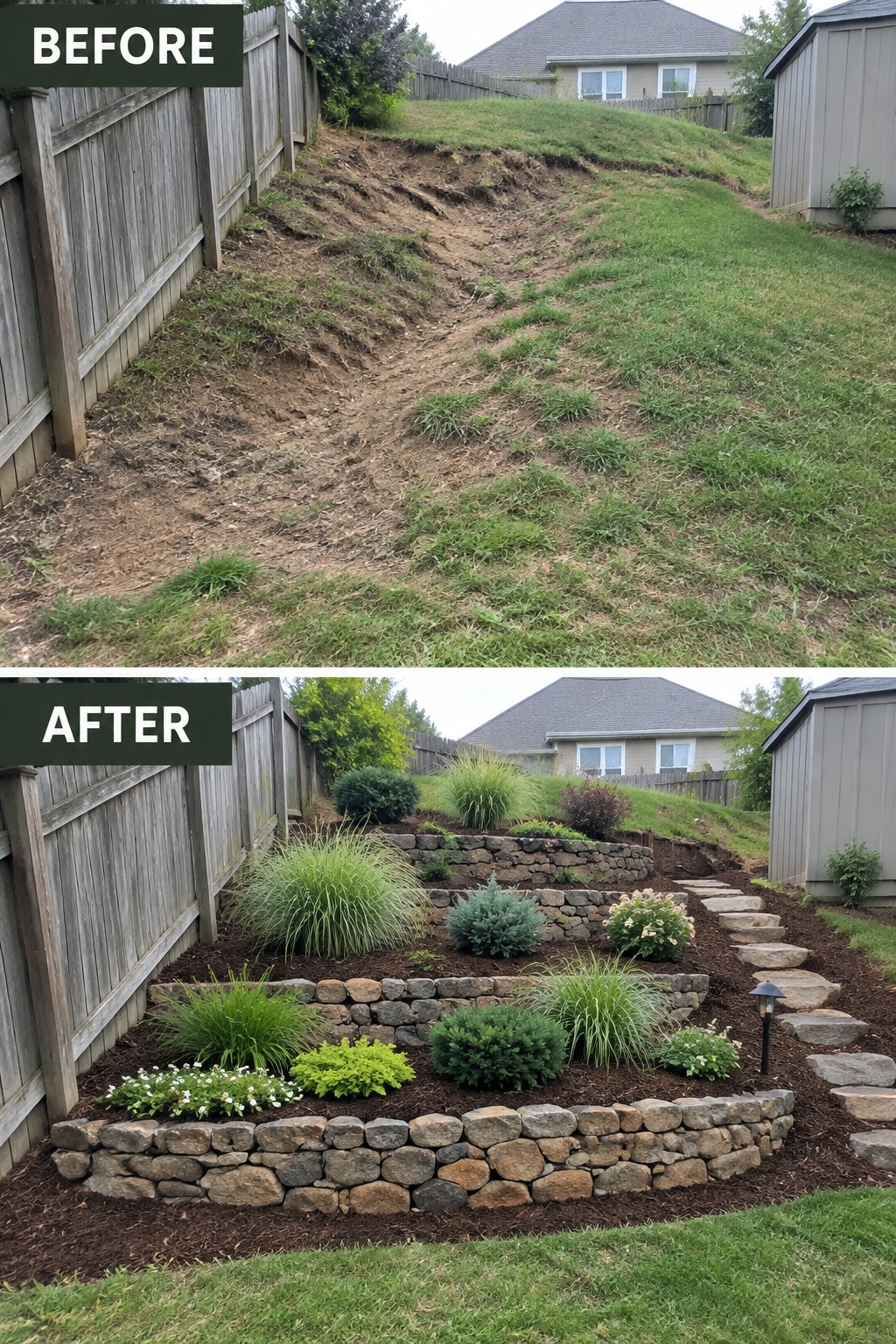
A steep slope often leaves a backyard looking bare and hard to use. Building low stone walls to create stepped raised beds turns the hill into a series of level planting areas that stay in place and do not wash out.
This approach works well in any backyard with a noticeable grade. Start at the bottom and work upward so each bed sits flat, then fill with soil and mulch. The result gives you room to plant without fighting the slope every season.
Add Raised Planting Beds To Define A Patio Edge

A flat concrete patio next to an empty yard often feels unfinished. Adding raised planting beds along the edge gives the space clear boundaries, brings in greenery, and creates a simple transition between the hard surface and the rest of the yard.
This approach works best on homes where the backyard is mostly paved and you want planting without major excavation. Match the bed material and height to the existing patio or house siding, keep the plant choices simple and suited to your sun and climate, and add lighting only where you actually use the space at night.
Add A Raised Bed To Define An Overgrown Border
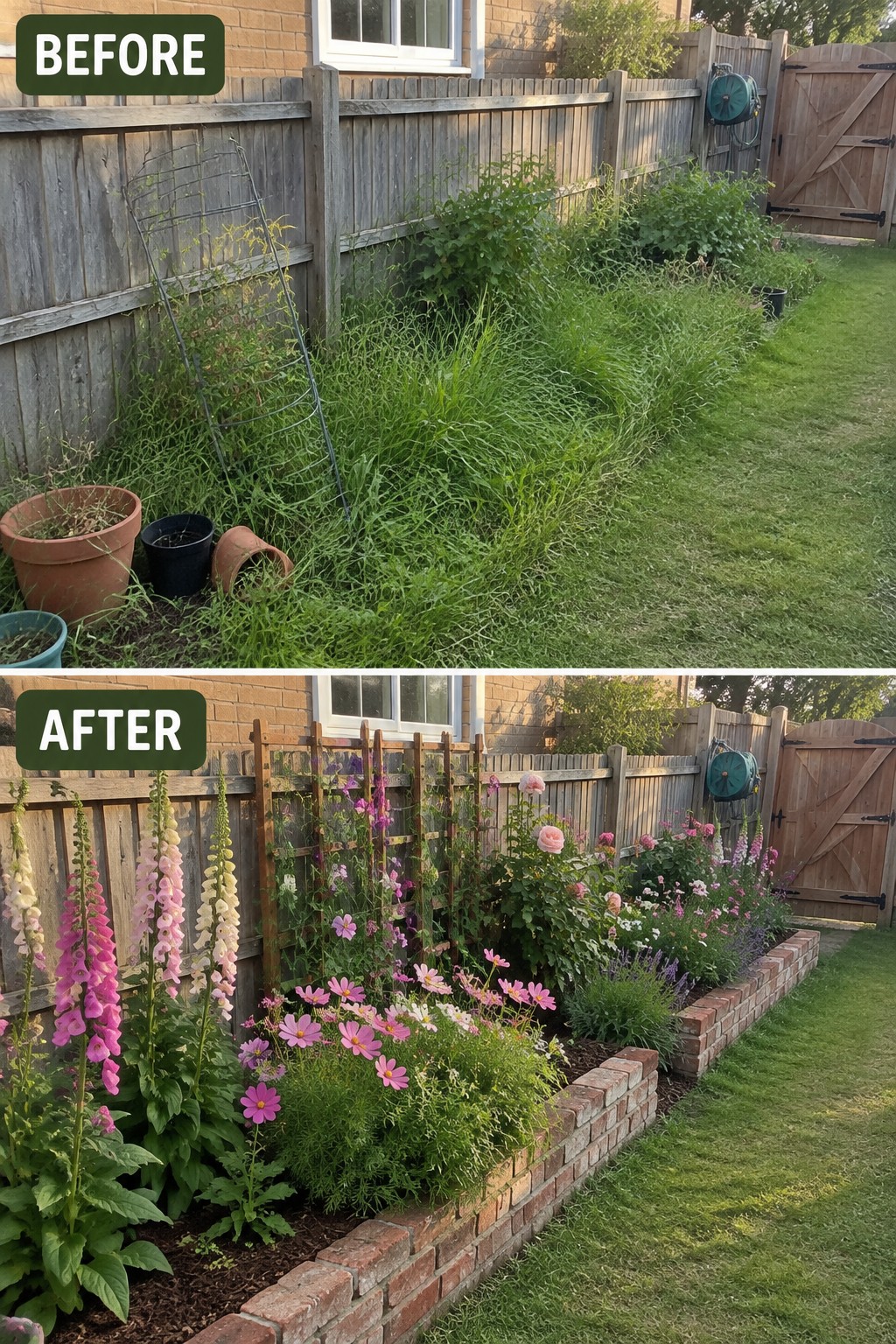
A raised bed with a solid brick edge turns a weedy strip along a fence into a proper garden. The before photo shows the usual problem: grass and weeds running wild with no clear boundary. Once the raised brick bed is built, the planting area has shape, the lawn edge stays clean, and the flowers actually show up instead of getting lost in the overgrowth.
This idea works best along fences or house walls where the space is narrow and hard to maintain. Keep the bed width easy to reach from one side, use a material that matches your existing hardscaping, and plant taller flowers toward the back with shorter ones in front. The structure does most of the work, so the garden stays looking intentional even as plants fill in.
Use Raised Beds To Bring Order To A Narrow Yard
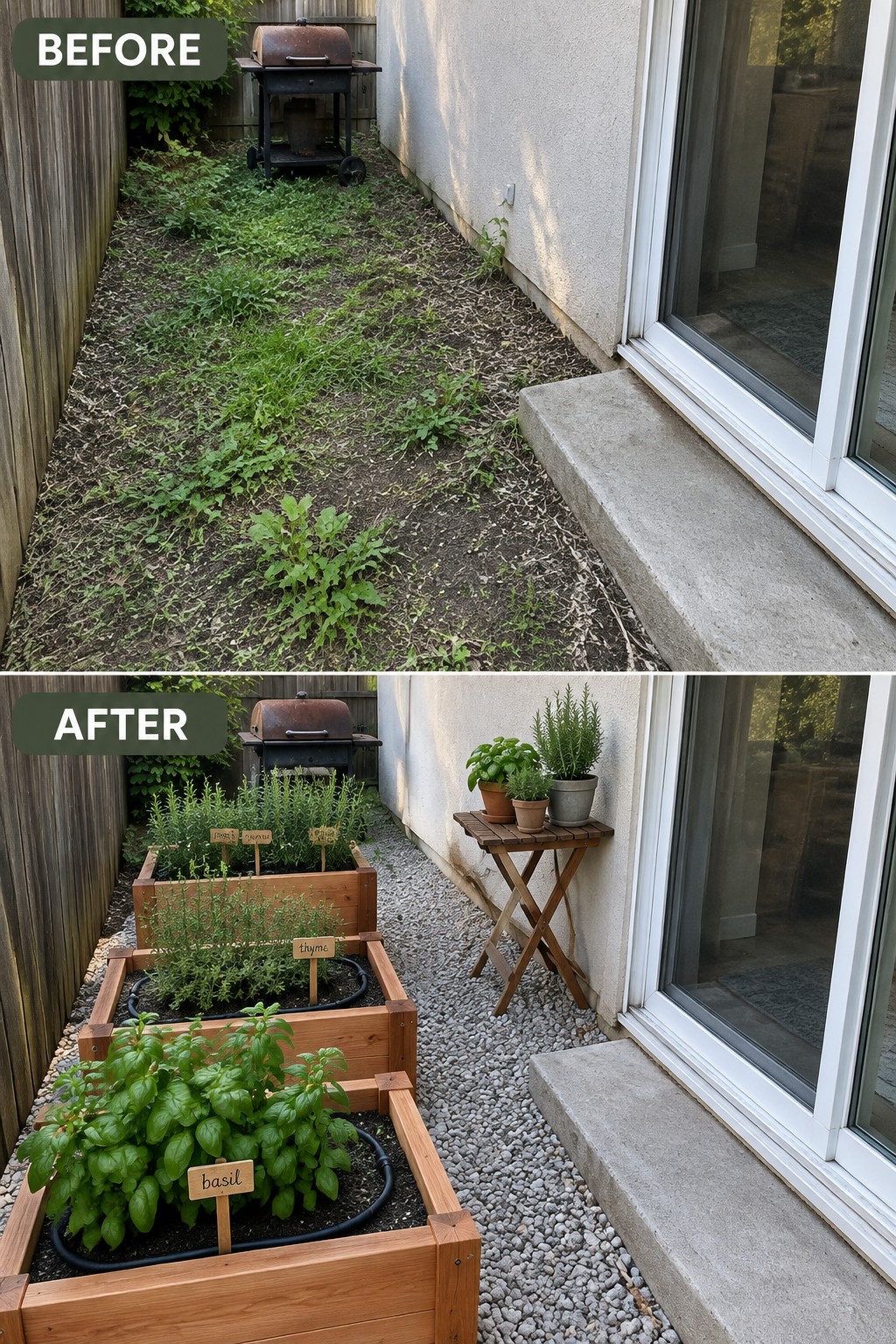
A weedy strip of ground next to the house can feel like wasted space. Raised beds fix that by turning the same area into a clear, usable garden. The wooden boxes keep the soil contained, give the plants room to grow, and make the whole side yard look planned instead of neglected.
This idea works especially well in tight backyards or along a house wall where digging a regular bed is not practical. Place the beds in a simple row, fill them with herbs or vegetables, and cover the remaining ground with gravel. The beds stay easy to reach and water, and the gravel keeps the walkway clean and weed-free.
Use Raised Beds To Bring Order To An Overgrown Yard

Raised beds solve the problem of messy, hard-to-maintain strips along fences and paths. In this case, the before photo shows a narrow side yard taken over by weeds and volunteer plants. The after shows how a few simple wooden boxes turn that same space into something you can actually manage.
This idea works best in small or awkward backyard areas where a regular garden bed would spill everywhere. Clear the overgrowth first, then set the beds along the fence line so the path stays open. The boxes keep soil in place, make watering easier, and give you room to grow without the constant battle against weeds.
Add Raised Planting Beds To Define A Bare Yard
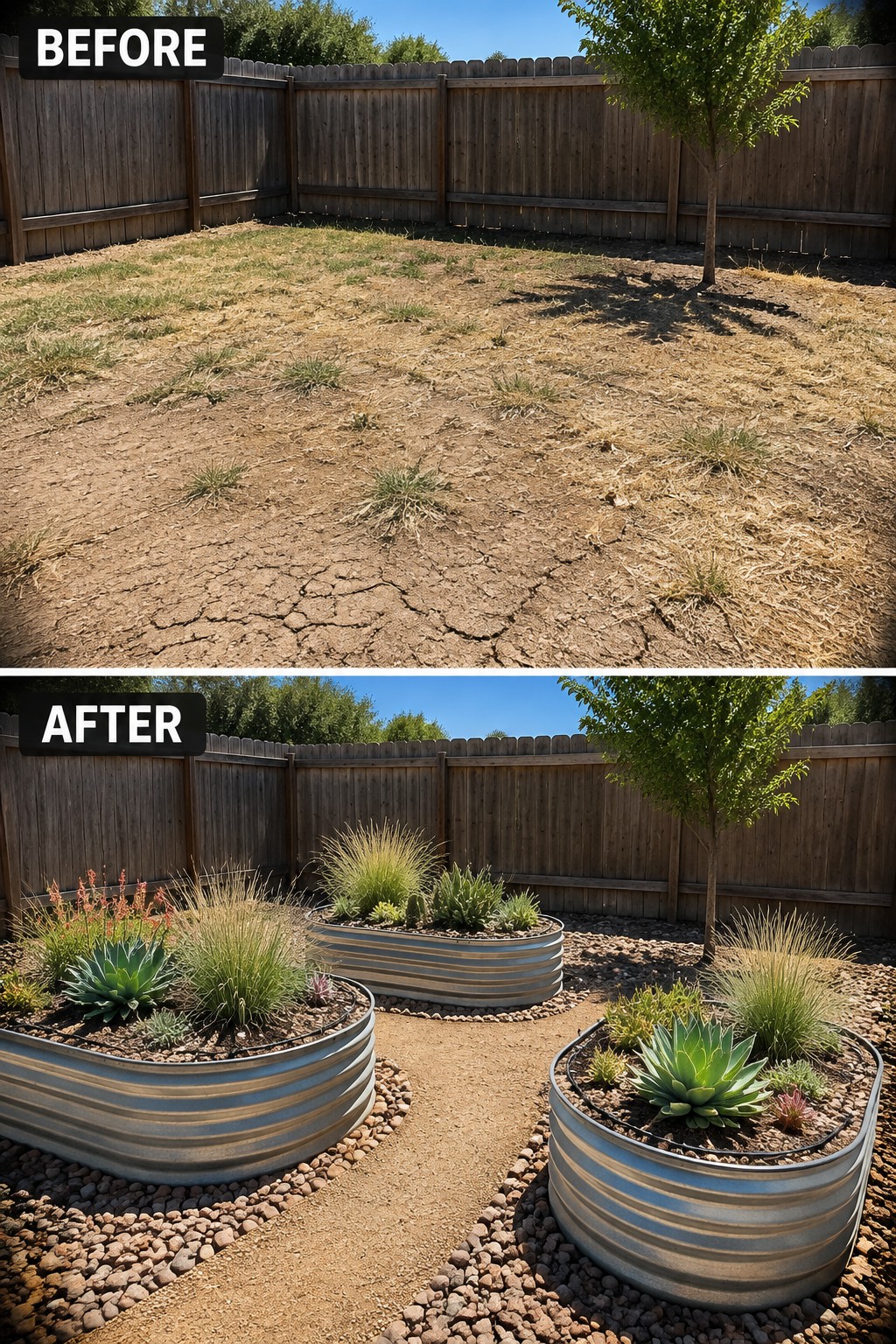
A dry cracked backyard often feels like wasted space because there is no clear place to plant or walk. Raised beds solve this by giving the yard edges and height so plants stay contained and the ground stays usable.
Metal beds like the ones in the photo work especially well on hard or poor soil since you can fill them with better dirt. Keep the layout simple with gravel paths between them so the yard stays easy to maintain and does not feel crowded.
Use Raised Planting Beds To Frame A Backyard Fire Pit
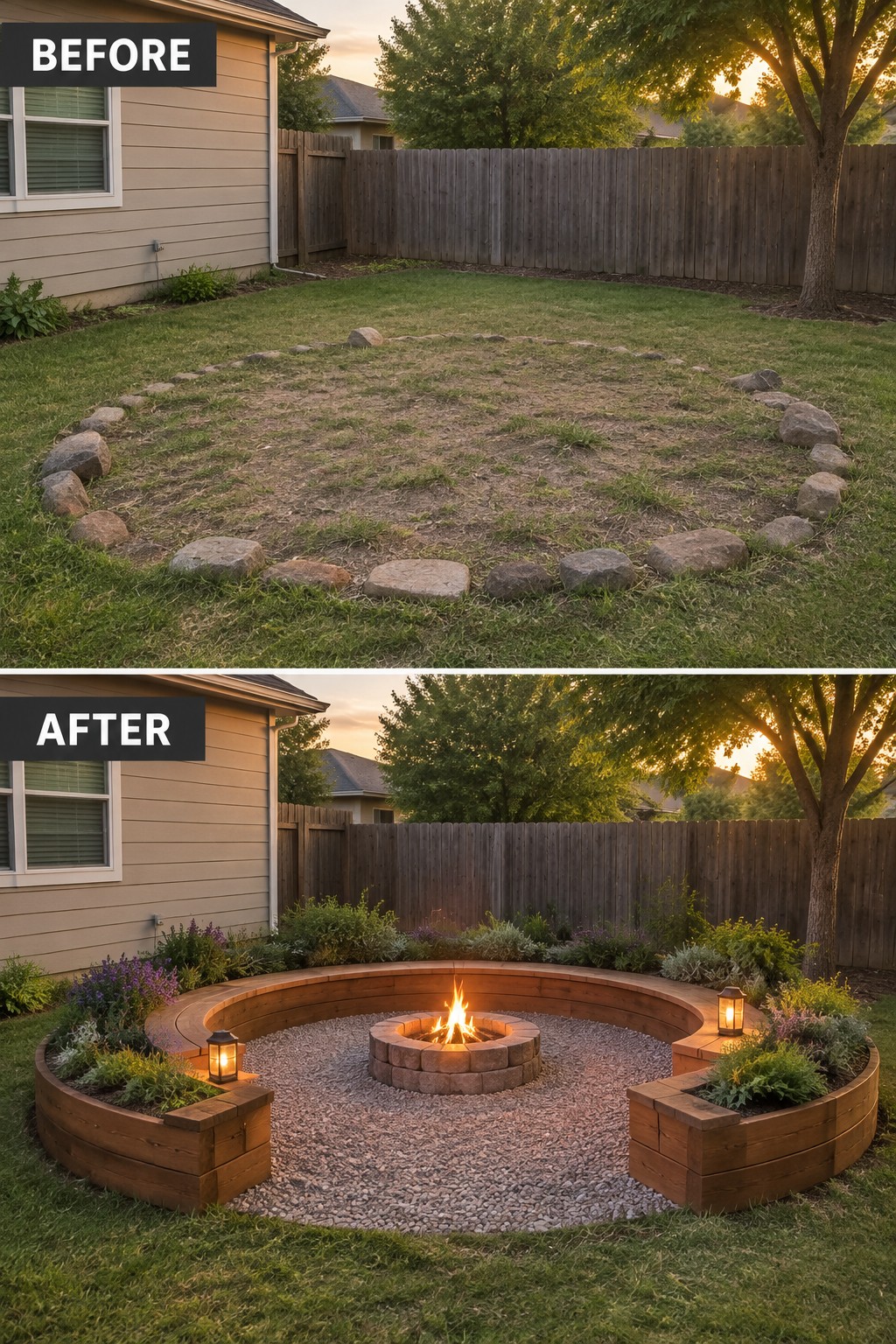
A loose circle of rocks on patchy grass does little to make a backyard feel usable. Adding curved raised beds around a central fire pit and gravel area gives the space clear edges and turns it into a real gathering spot without needing a full patio.
This idea works best in yards that already have a focal point like a fire pit or open lawn. Build the beds low and wide enough to double as seating ledges, keep the curve gentle so it does not crowd the center, and choose wood that matches nearby fences or decks. It keeps planting neat, defines the zone, and leaves the rest of the yard open for grass or simple ground cover.
Add Raised Planting Beds To Give A Backyard Clear Structure

Raised beds turn a patchy, hard-to-manage yard into a space that actually works for growing. The wooden frames keep soil contained, create straight paths, and make it easier to reach plants without compacting the ground.
This idea suits smaller or mid-size yards where you want a productive garden without losing the whole lawn. Lay out the beds first with enough room to walk between them, then fill with good soil and repeat the same bed style so the layout feels planned rather than scattered.
Frame A Patio With Raised Planting Beds
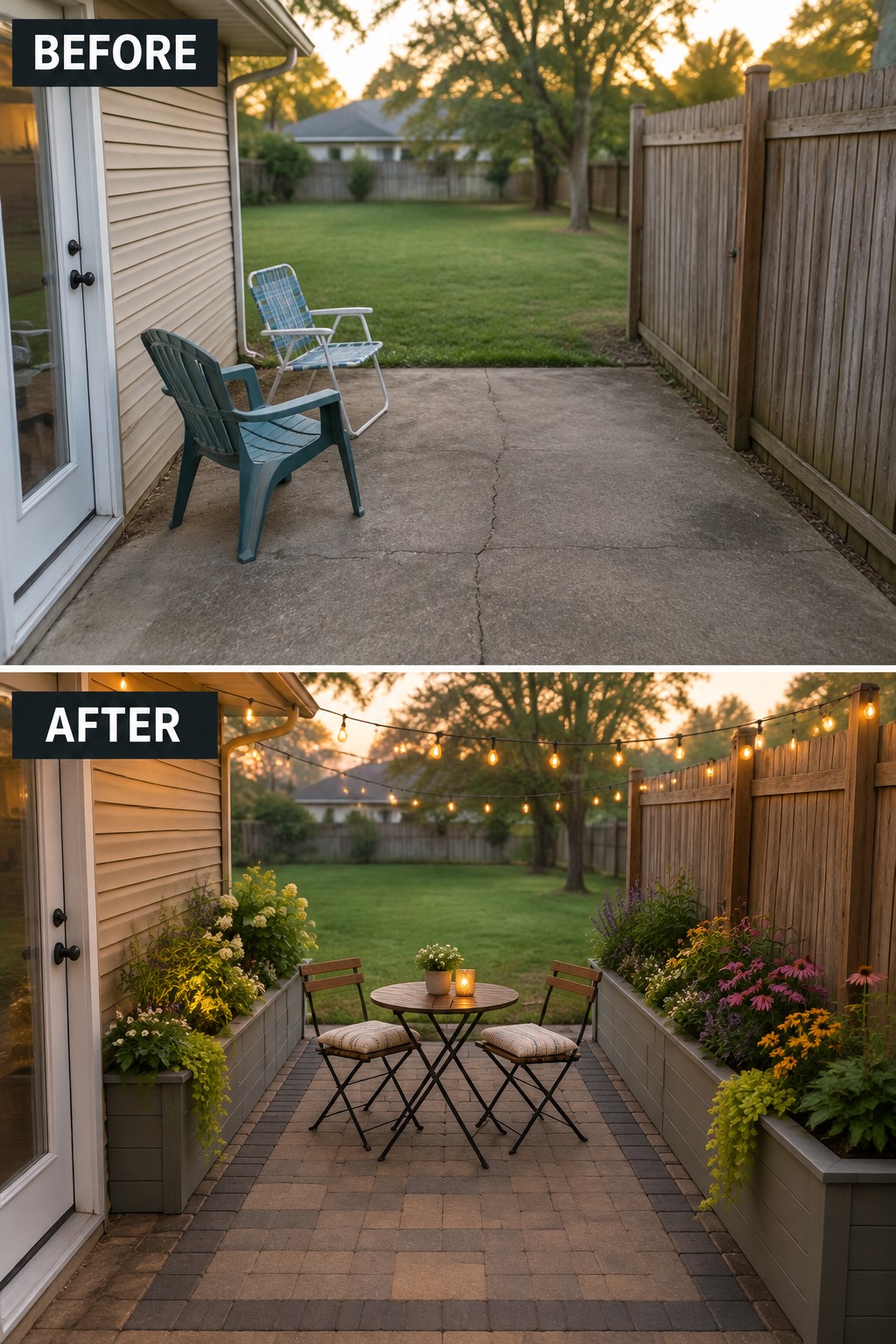
The before photo shows a plain concrete slab with nothing but two plastic chairs and a bare fence line. The after adds long raised beds along both sides, filled with flowers and greenery that turn the space into something you actually want to sit in.
Raised beds give you clean edges and keep the planting from spilling onto the walking area. They work especially well on patios or side yards where you need structure without losing space. Use the same bed height and material on both sides so the layout feels balanced, and choose plants that can handle the sun exposure in your yard.
Use Raised Beds To Frame Steps On A Slope
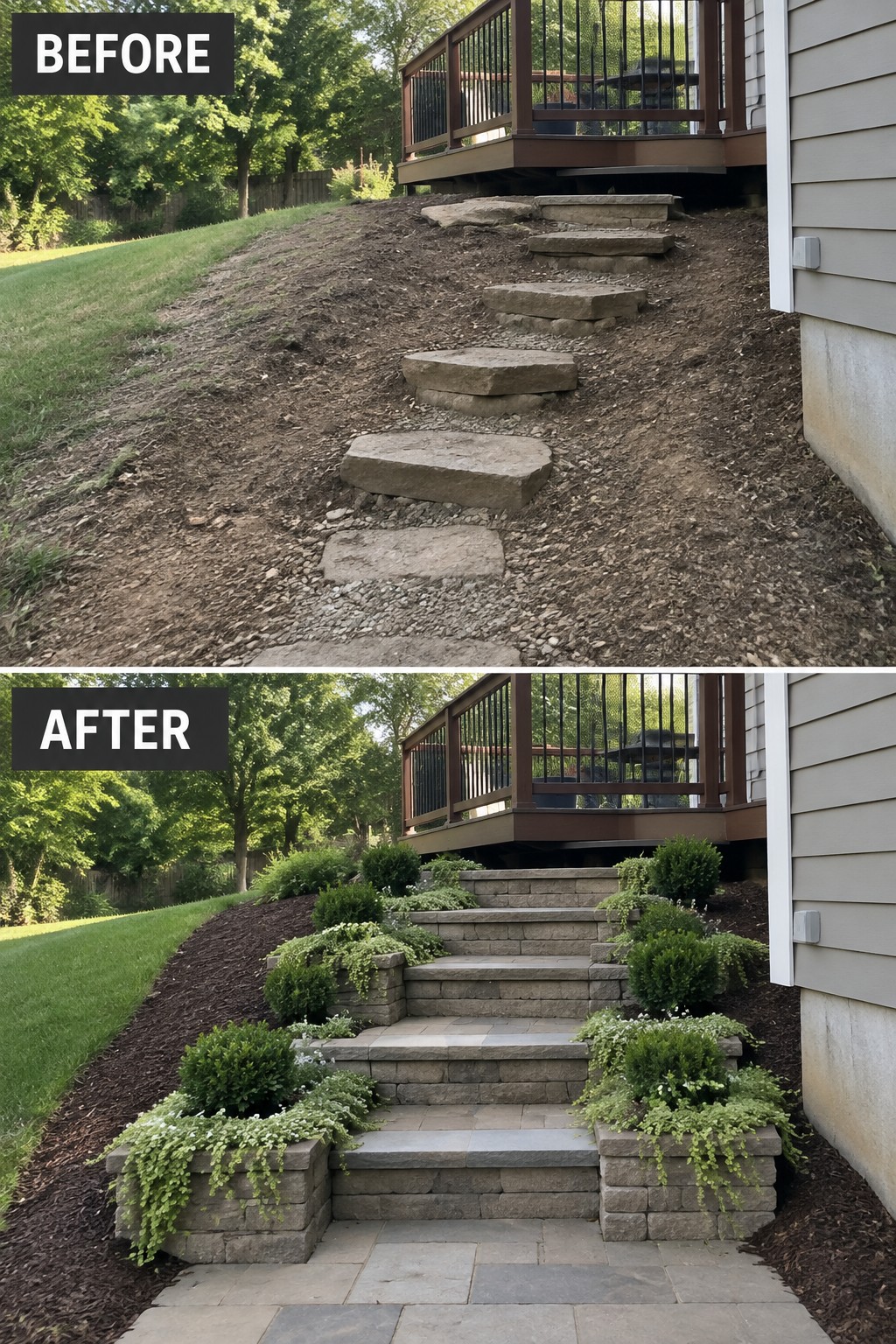
A steep dirt slope with loose stones makes any backyard feel unfinished and hard to use. Stacking stone into raised beds along both sides of the path turns the hill into solid steps while holding the soil in place. The beds give the slope structure and create natural spots for planting right next to the walkway.
This idea works best on yards where the grade drops sharply from the house or deck. Build the beds first so they act as low retaining walls, then fill them with soil and plants that can handle the slope. Keep the center path clear and wide enough for easy movement.
Add Raised Beds To Give A Messy Border Clear Shape

A long weedy strip along a fence is one of the hardest areas to keep tidy. Building a simple raised bed turns that neglected edge into a contained planting zone that looks intentional instead of forgotten. The wooden frame and fresh mulch immediately separate the garden from the lawn and make the whole backyard feel more organized.
This idea works best on narrow side yards or back fence lines where regular beds would spill into the grass. Keep the bed width easy to reach from one side, use rot-resistant timber, and mulch deeply so weeds have less chance to return. Once the structure is in place you can add plants gradually without the whole area looking half-finished.
Add Raised Planting Beds To A Fence For Extra Growing Space

A plain fence next to bare concrete often leaves a backyard feeling empty and underused. Mounting rows of raised planters directly on the fence creates a full growing wall that adds plants without eating into the limited ground space. The shift from one lonely tub to a structured grid of beds makes the whole area feel more intentional and productive.
This approach works best in small or narrow yards where floor space needs to stay open for seating or walking. Use heavy-duty brackets, keep the soil mix light, and choose crops like herbs, strawberries, and salad greens that stay compact. Leave a little room in front of the beds so the plants can be reached easily for watering and harvesting.
Use Raised Planting Beds To Give A Fence Line Clear Structure

The main improvement comes from adding raised wooden planter beds along the fence. The before photo shows scattered shrubs and bare dirt that made the whole edge feel messy and unplanned. Once the beds go in, the planting stays contained, the line looks intentional, and the built-in lights keep the area usable at night without extra fixtures.
This idea suits homes with a long fence next to a path or patio where the ground feels too open or overgrown. Start with the beds themselves, keep the planting simple with a few rounded shrubs and some seasonal color, and make sure the wood matches any nearby decking or fencing. It turns an awkward strip into something that feels finished and easy to maintain.
Use Raised Planting Beds To Frame A Pond
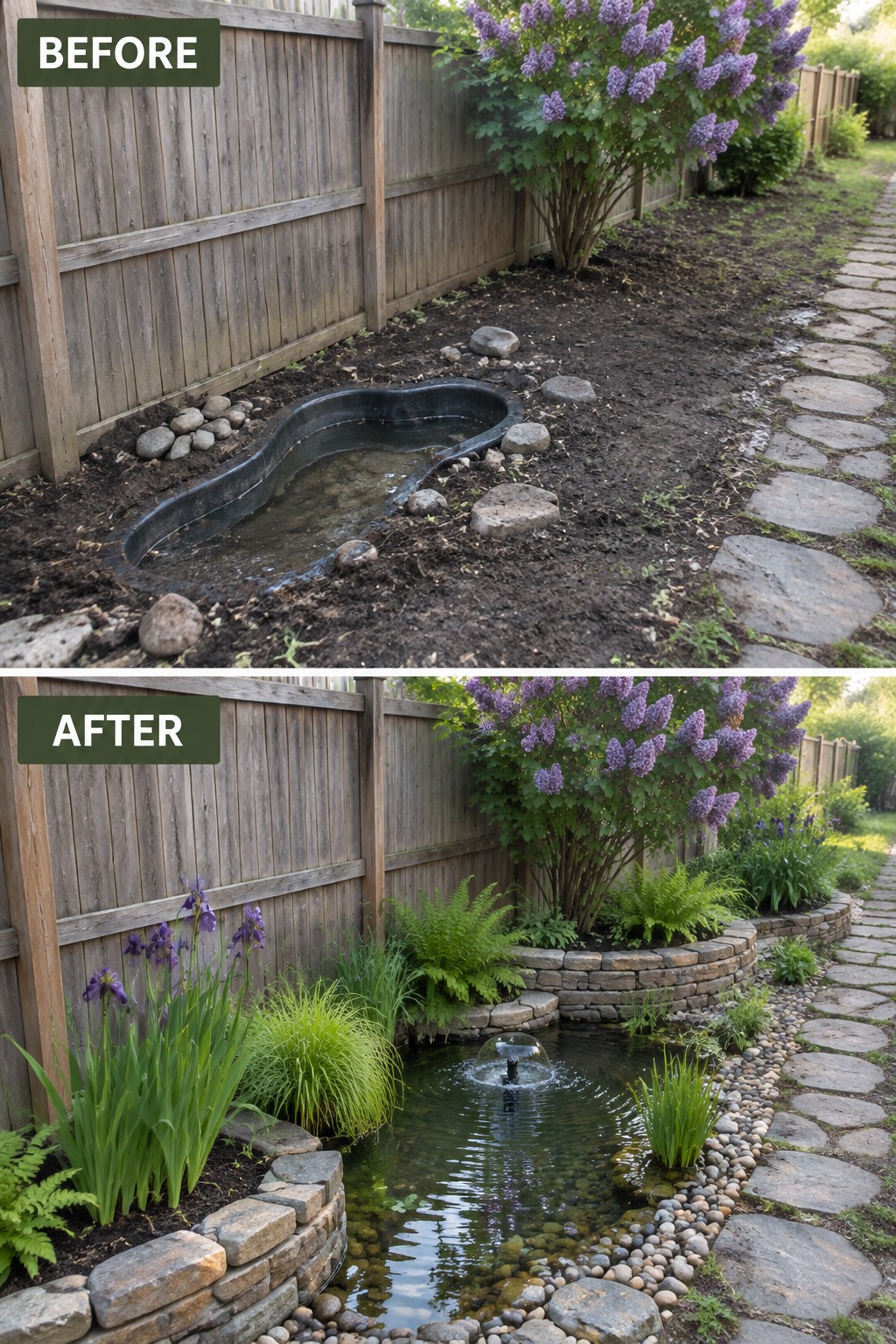
A small pond can easily look unfinished when the edges are just dirt and an exposed liner. Building low stone beds around it gives the water a clear border and turns the whole spot into a garden feature instead of an afterthought. The change from scattered rocks to contained planting makes the area feel intentional and easier to maintain.
This idea works best in narrow yards or along a fence where you need to keep planting neat. Set the stones first to follow the shape of the pond, then add soil and moisture-loving plants like ferns and irises. Keep the beds low enough that they frame the water without hiding it.
Use Raised Planting Beds To Give A Backyard Clear Structure
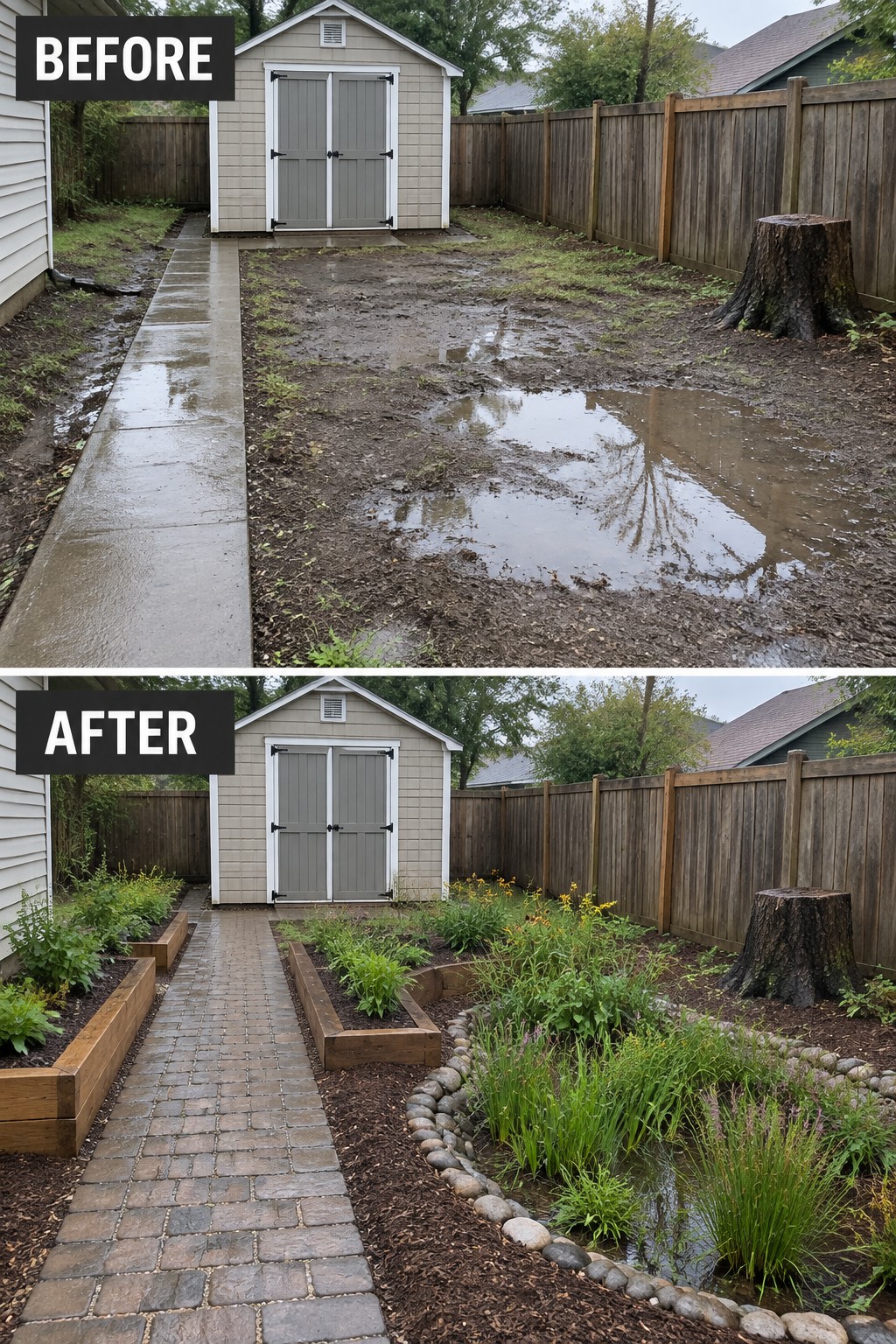
A muddy backyard with standing water and no real layout is hard to use. Adding raised wooden beds, a paver path, and simple borders turned the same space into something you can actually walk through and maintain. The beds create edges that keep mulch in place and give plants room to grow without taking over the whole yard.
This approach works well in small or medium backyards that feel chaotic after rain or years of neglect. Start with a few beds placed along a path rather than trying to fill the whole space at once. Keep the beds narrow enough to reach across, and use the same material for the path so the whole area feels connected instead of scattered.
Define A Backyard Corner With A Raised Bed
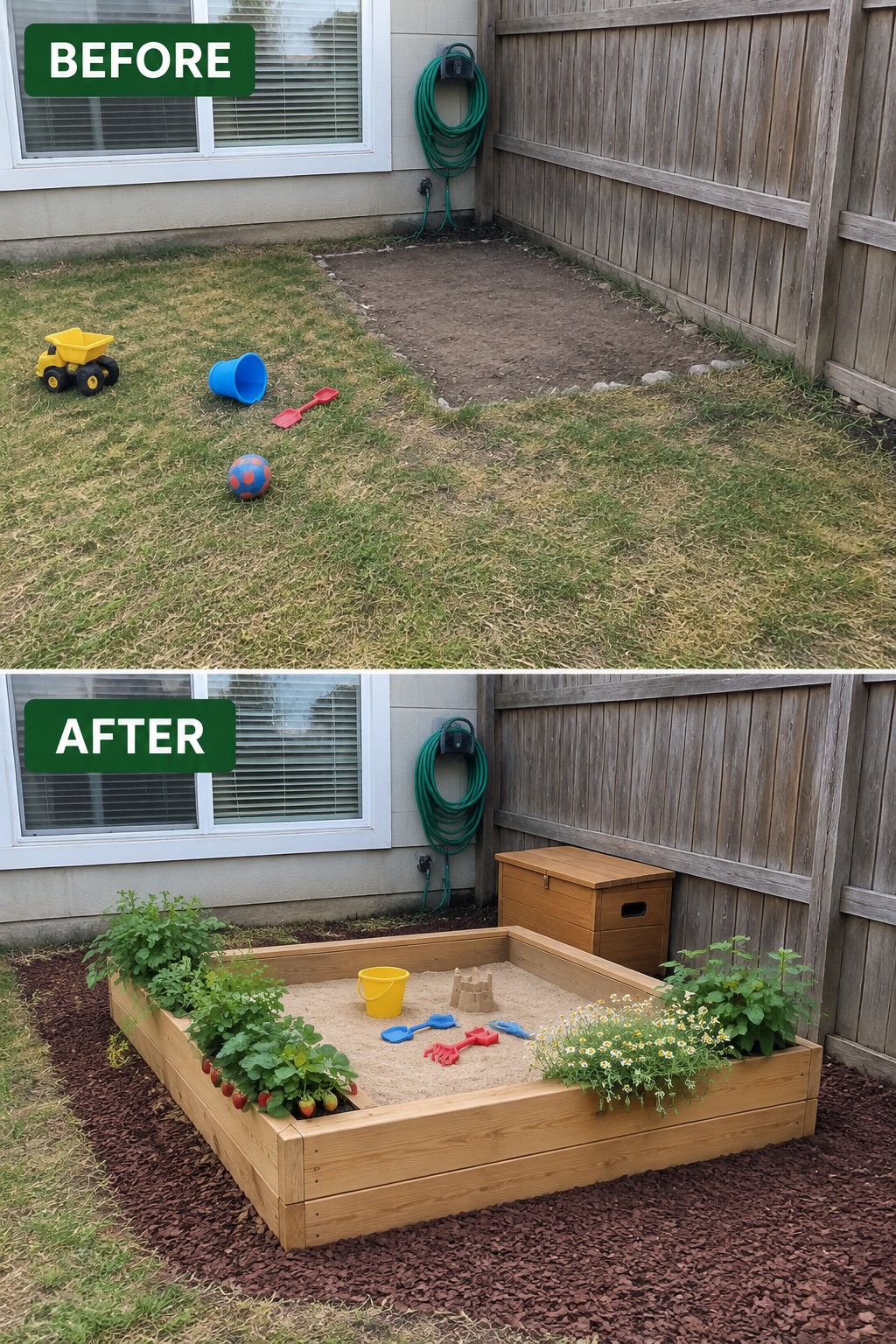
A raised bed can turn an open patch of grass and dirt into something that actually feels planned. In this case the bed creates a clear play zone while the surrounding mulch keeps the rest of the yard looking tidy instead of scattered.
This approach works well in smaller backyards where you want one spot that serves two purposes. Build the bed at a height kids can reach, leave planting pockets along the edges, and keep the center open for sand or soil. The frame itself becomes the boundary, so you avoid needing extra fencing or edging.
Frequently Asked Questions
Q: Do I have to replace the dirt every year? A: You can refresh the top few inches with compost each spring. That keeps nutrients up without a full overhaul. Most beds stay productive for several seasons this way.
Q: What size works if I only have a tiny patio? A: Start with a couple of smaller boxes around two feet square. Tuck them along the edge so they do not block walking space. You still get fresh herbs or flowers without crowding the area.
Q: How do I stop the sides from bowing out over time? A: Use thicker lumber or add corner braces when you build. Check the joints after the first winter too.
