

When the back edge of a yard sits open, the whole space can feel less private no matter how you arrange the middle.
I have learned to focus on layered plants that grow at different heights because they fill in gaps over a couple of seasons without looking too heavy right away.
That boundary makes a bigger difference than most people expect.
Mixing heights and textures along the line keeps the area from feeling closed off while still cutting down on direct views.
A few of these ideas seem worth testing based on how much they improve daily use without big costs.
Add Privacy With A Fence And Border Planting
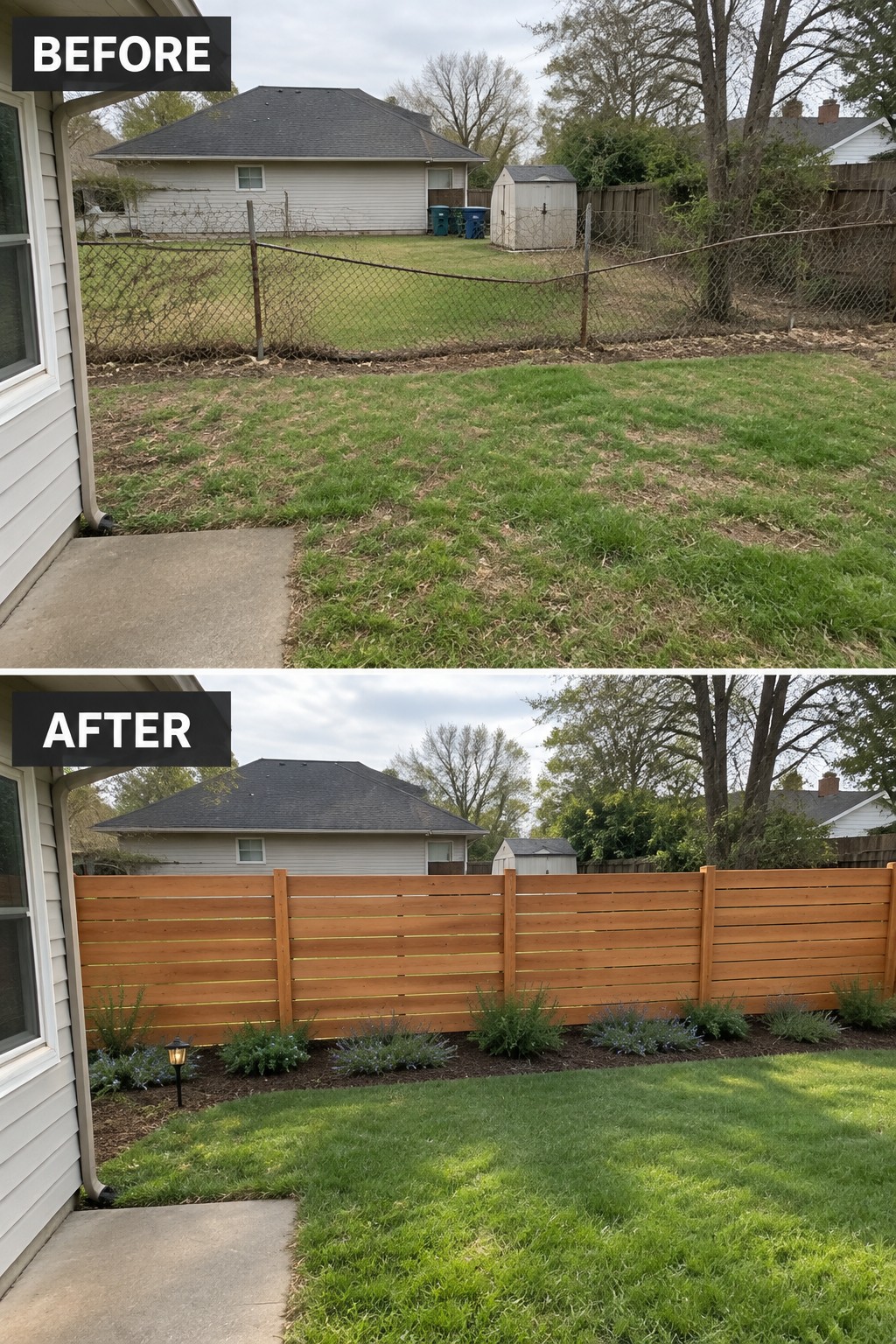
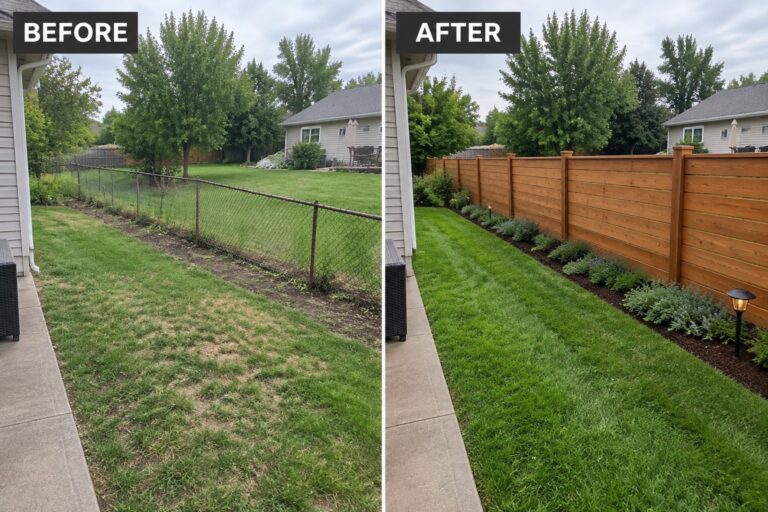
Replacing an open chain link fence with a solid wood one instantly changes how private a backyard feels. The horizontal slats block the view from neighboring yards while the narrow bed of shrubs and mulch in front keeps the fence from looking too harsh. This combination gives both structure and a bit of softness along the property line.
The idea works best in average sized suburban yards where you need screening but still want to keep some connection to the lawn. Choose a fence height that meets local rules, then plant low growing shrubs that will not outgrow the space or hide the fence completely. A simple mulch bed keeps the planting looking neat without adding much extra work.
Plant Hedges To Create Privacy Along Property Lines
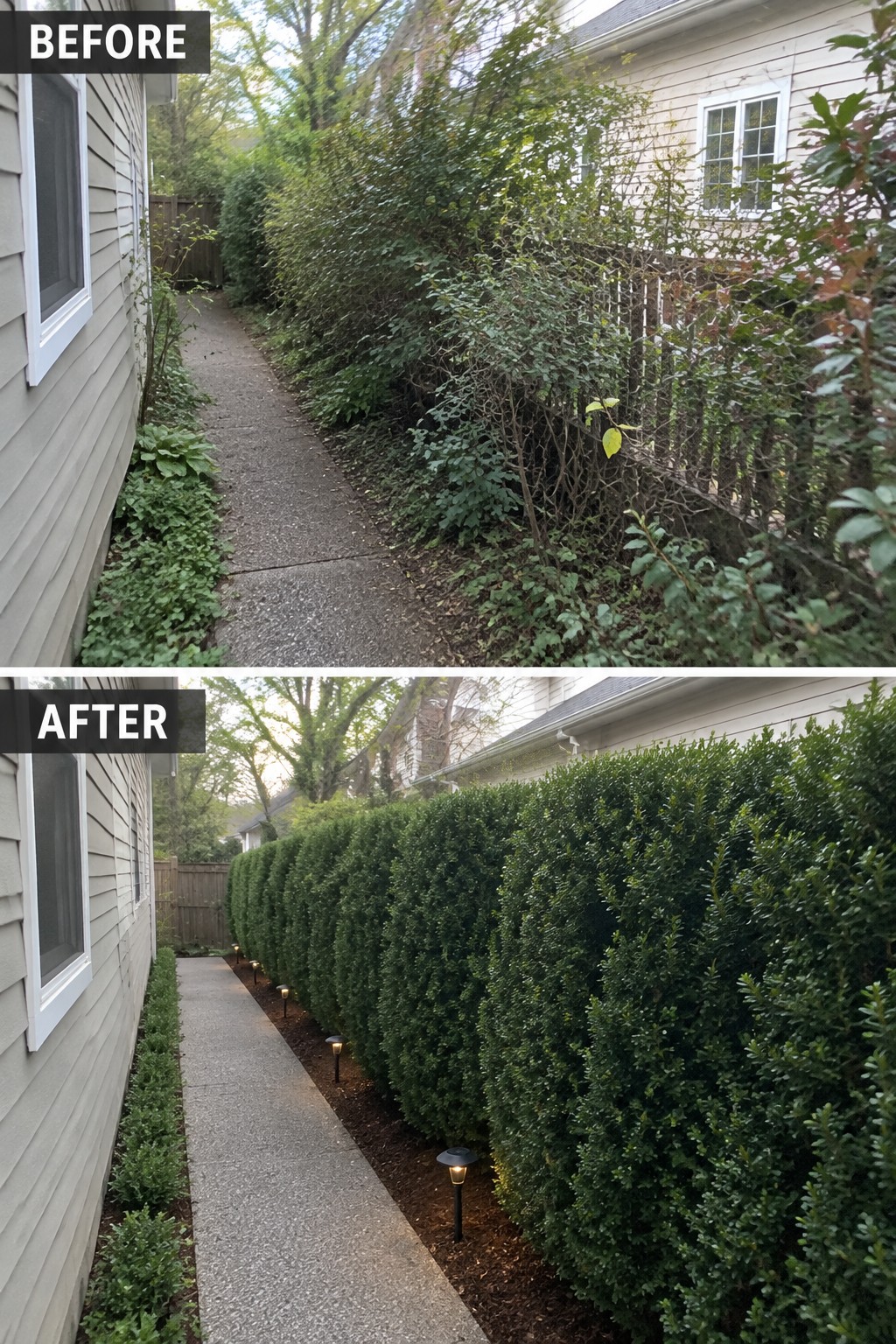
A messy row of mixed shrubs along a side path can leave the whole area feeling exposed. Replacing that overgrowth with one continuous hedge gives the space a clear edge, blocks the view from next door, and makes the walkway feel more intentional without narrowing it further.
This idea suits narrow side yards where you need screening but do not have room for trees. Pick an evergreen variety that grows dense and stays under control, then plant them close enough to fill in within a couple of seasons. A few low lights along the base make the path safer at night without adding extra fixtures.
Add A Planted Border Along The Fence For Privacy
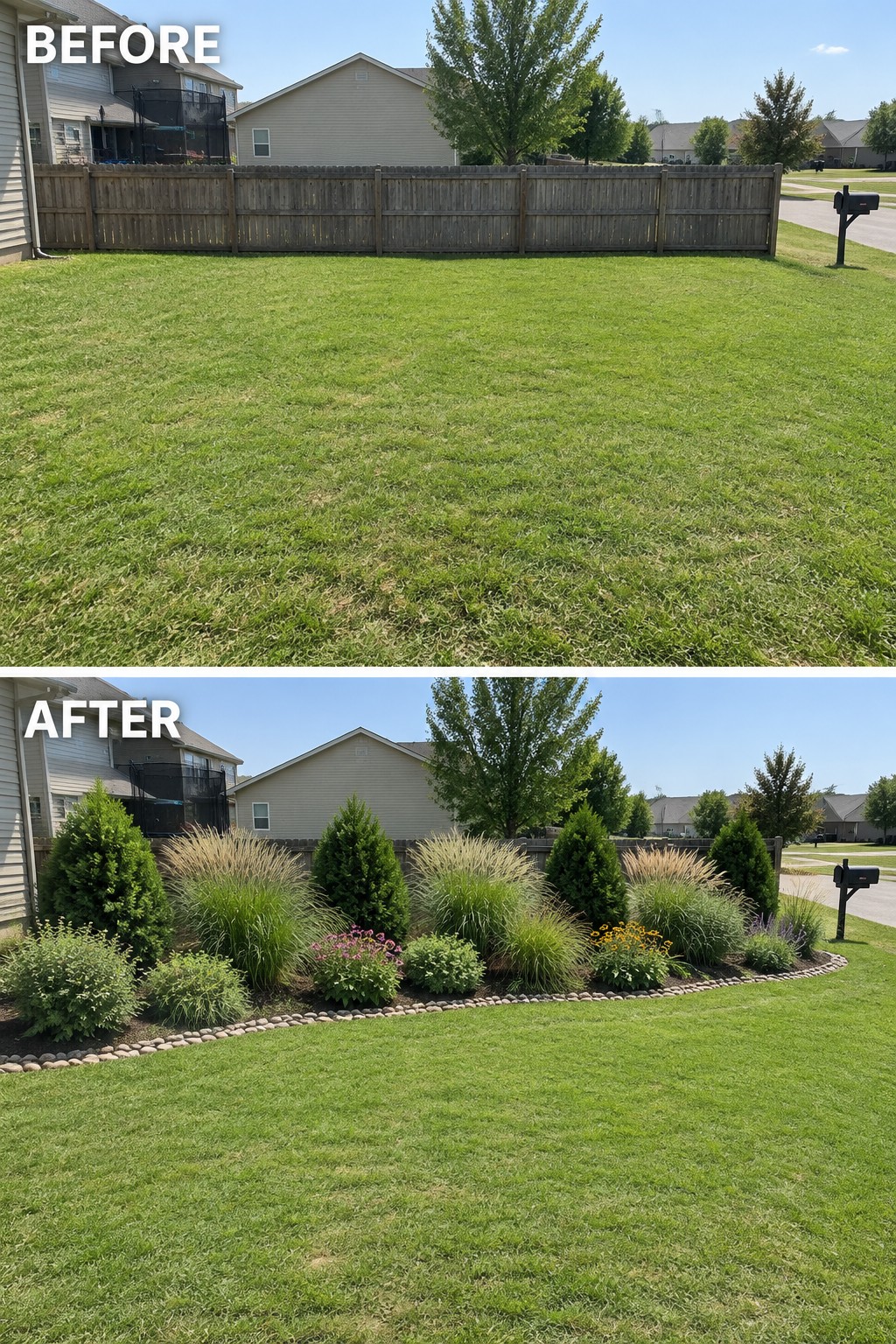
A wide open lawn next to a plain fence leaves the yard feeling exposed. Adding a curved garden bed with a mix of evergreens, tall grasses, and lower shrubs creates a living screen that blocks views from the street and neighbors while keeping the rest of the lawn open and usable.
This idea works best in suburban yards where full fencing feels too closed in. Space a few taller shrubs first for year-round coverage, then fill gaps with grasses and smaller plants. A simple rock or paver edge keeps the bed neat and makes mowing straightforward.
Add Lattice And Climbing Plants For Fence Privacy
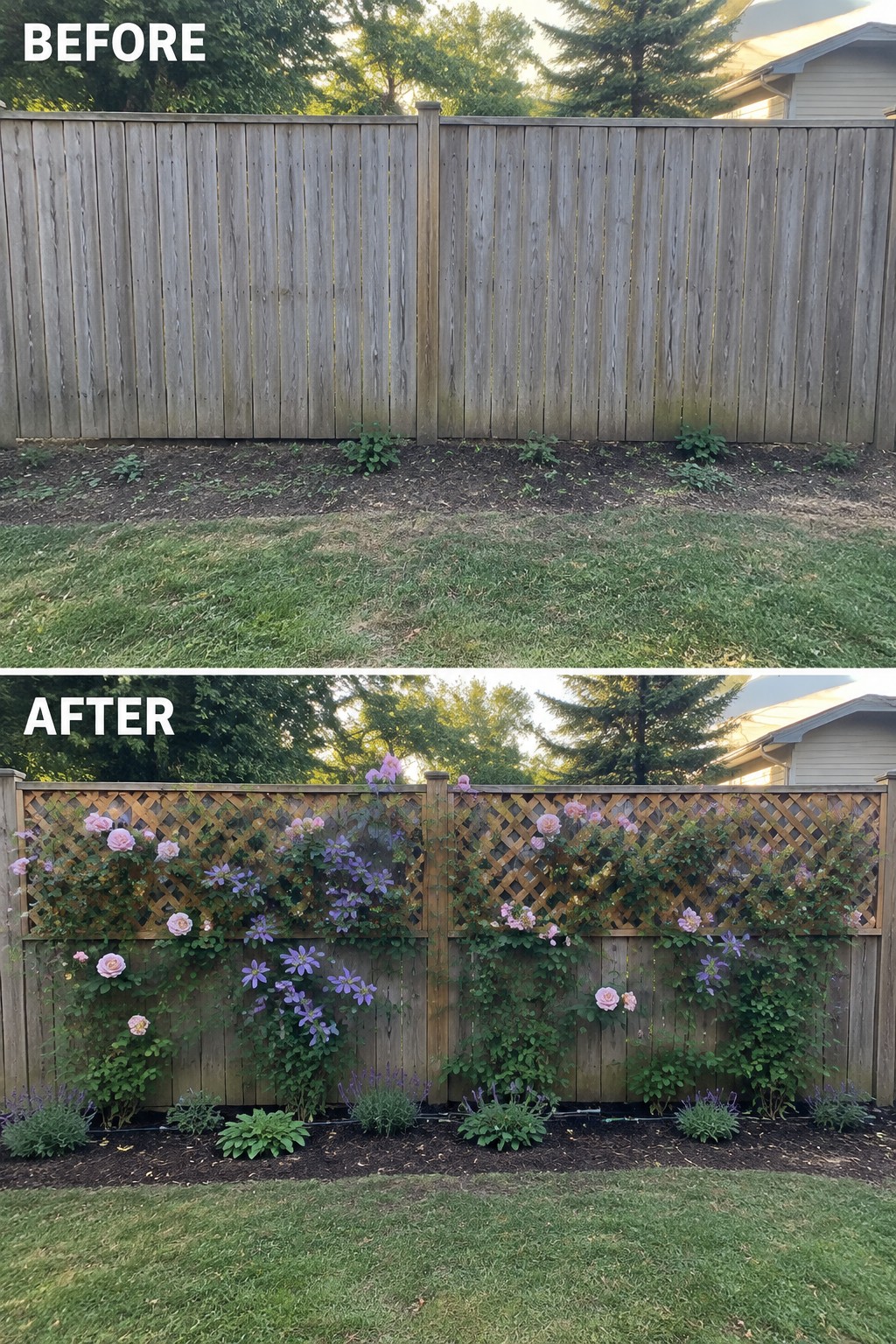
A plain fence can leave a backyard feeling exposed, especially when the ground below it is just dirt and patchy grass. Adding lattice panels to the upper half and training climbing plants like roses and clematis across them softens the look and creates a living screen that blocks the view from both sides.
This works best along straight property lines where you already have a fence but need more height and coverage. Attach the lattice first, then plant a mix of vines and low shrubs at the base so the lower section fills in quickly. The result feels more like a garden border than a barrier, and it stays practical because everything stays within the existing fence line.
Build Privacy With A Gabion Wall Along Property Lines
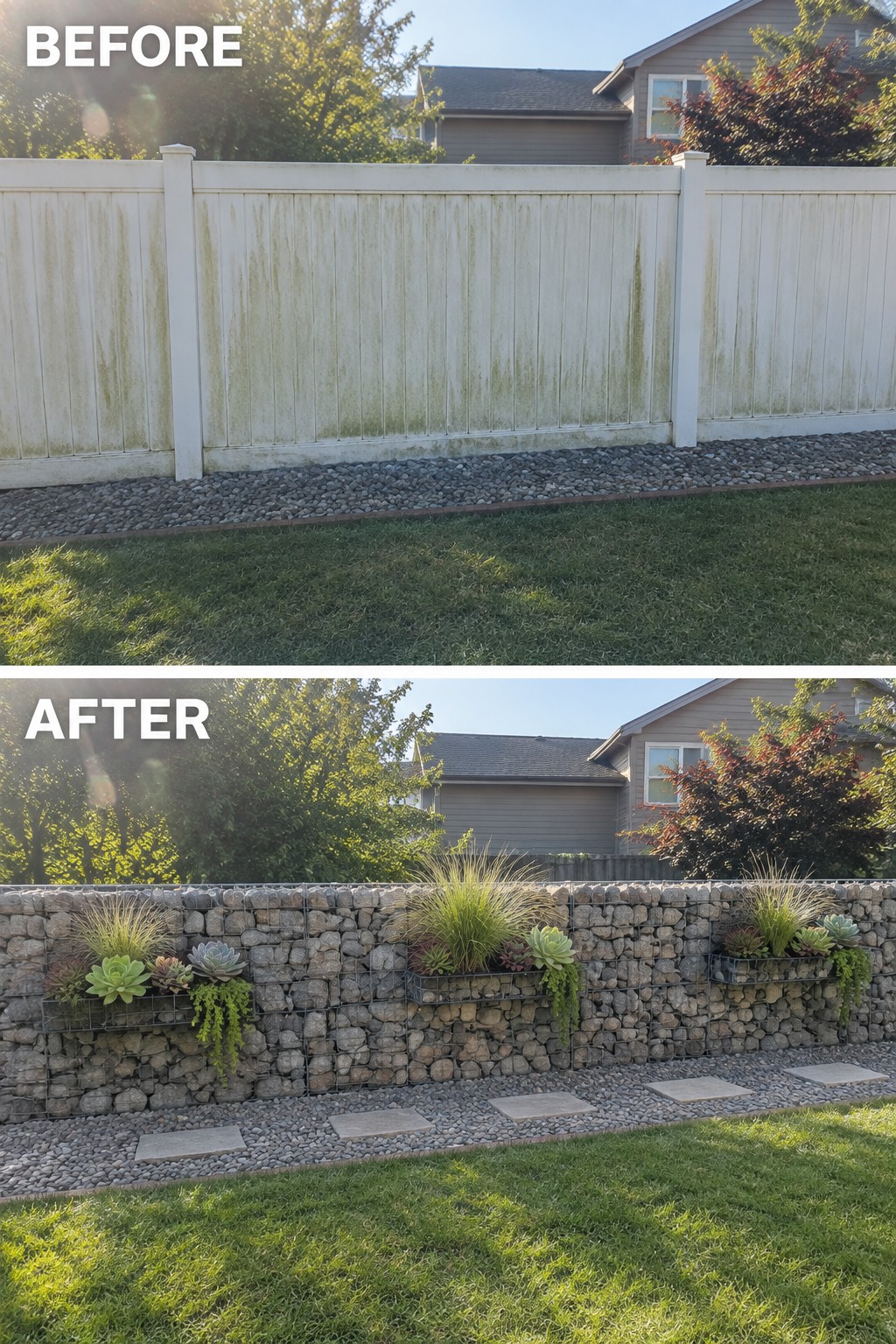
A plain fence can start to look tired fast, especially when it sits right on the property line and gets hit with weather and mildew. Swapping it for a gabion wall filled with stone gives the boundary real weight and structure while leaving room for planting right in the wall itself. The wire baskets hold the rock steady and create pockets for succulents and grasses that soften the look without taking up much ground space.
This approach works well on lots where you want a solid screen but still need some greenery. Keep the wall height reasonable so it does not feel like a fortress, and choose plants that can handle the reflected heat from the stones. The gravel base and simple stepping stones keep the ground clean and make it easy to walk along the edge for maintenance.
Create Privacy With Tall Bamboo In Raised Planters
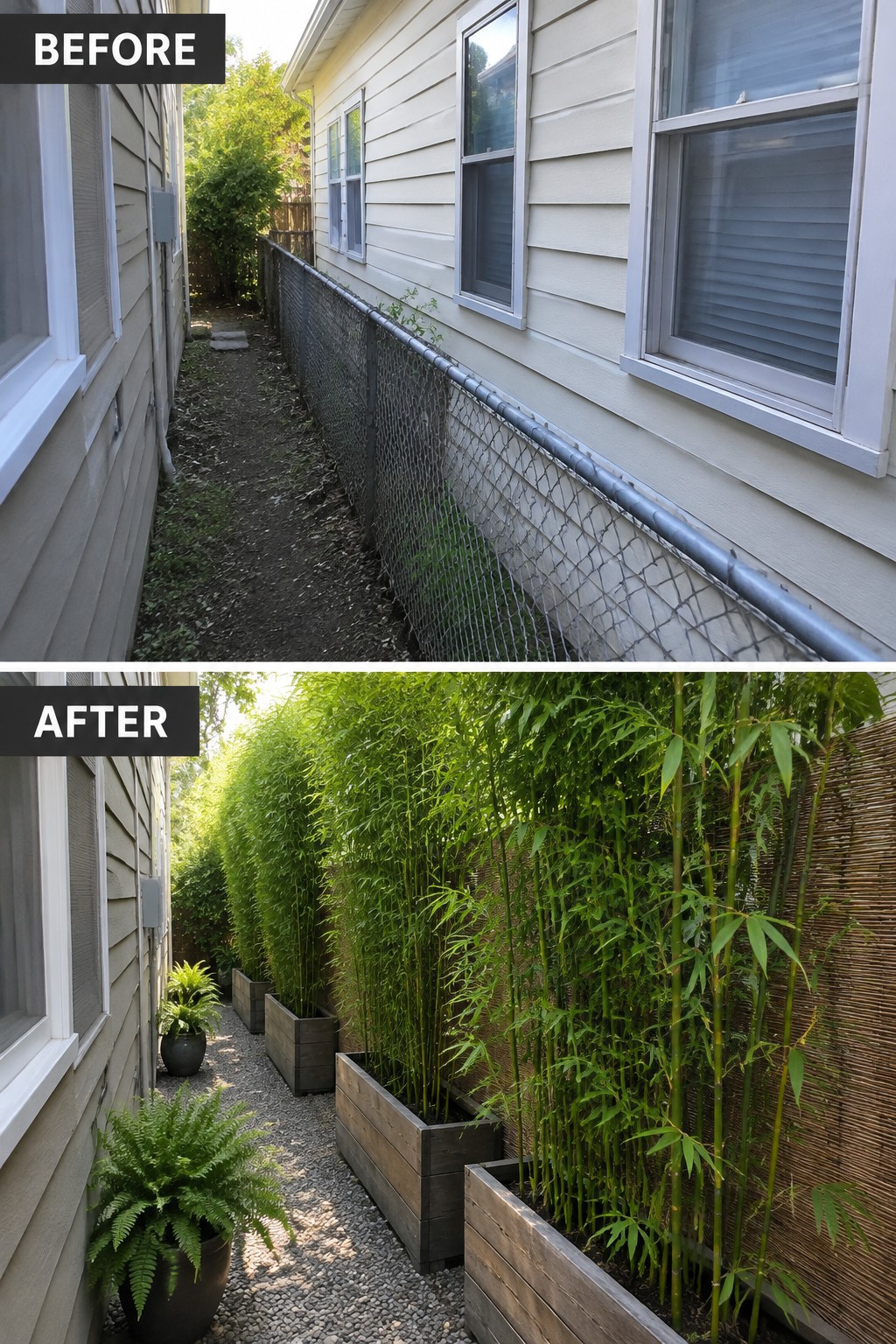
A chain link fence along a narrow side yard leaves everything open and visible from the neighboring property. Tall bamboo planted in simple wooden raised beds creates a dense living screen that blocks the view quickly while still letting light through.
This idea works best in tight spaces where you cannot dig permanent beds or want to avoid major construction. Use clumping bamboo varieties, place the planters right against the fence line, and water consistently the first season so the plants fill in fast.
Add Slatted Screens And Curtains For Patio Privacy
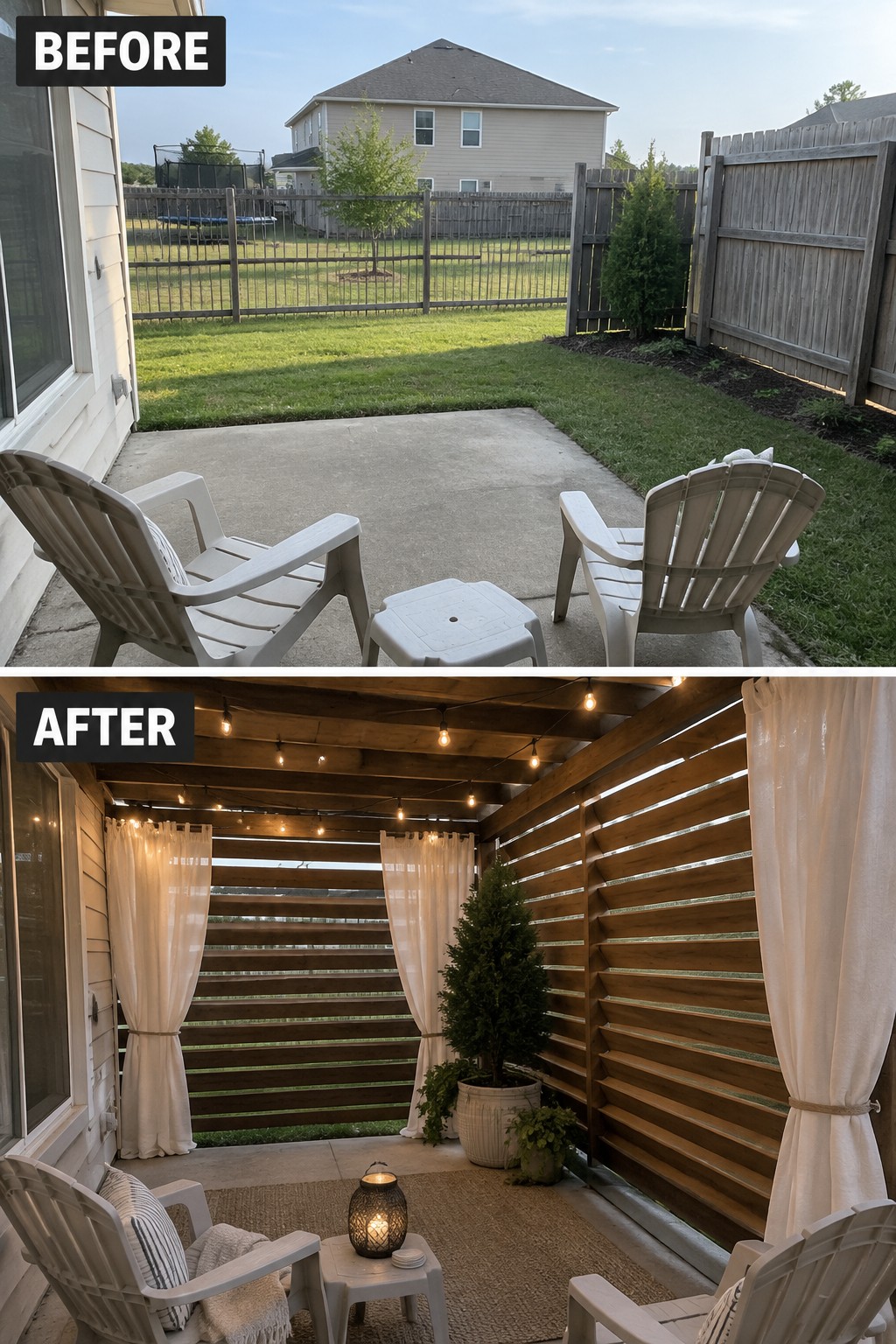
An open concrete patio often feels exposed when it sits right along the property line. The before photo shows two plastic chairs sitting on bare concrete with nothing between the seating area and the yard beyond. Adding vertical wood slats along the sides and hanging simple curtains creates a screen that blocks the view while still allowing air and light to pass through.
This idea works best on patios that back up to neighboring homes or shared fences. Build the slat screen first to give the space clear boundaries, then add curtains you can open or close depending on the time of day. The result is a usable outdoor room instead of a spot that always feels on display.
Grow Climbing Vines On A Fence For Privacy
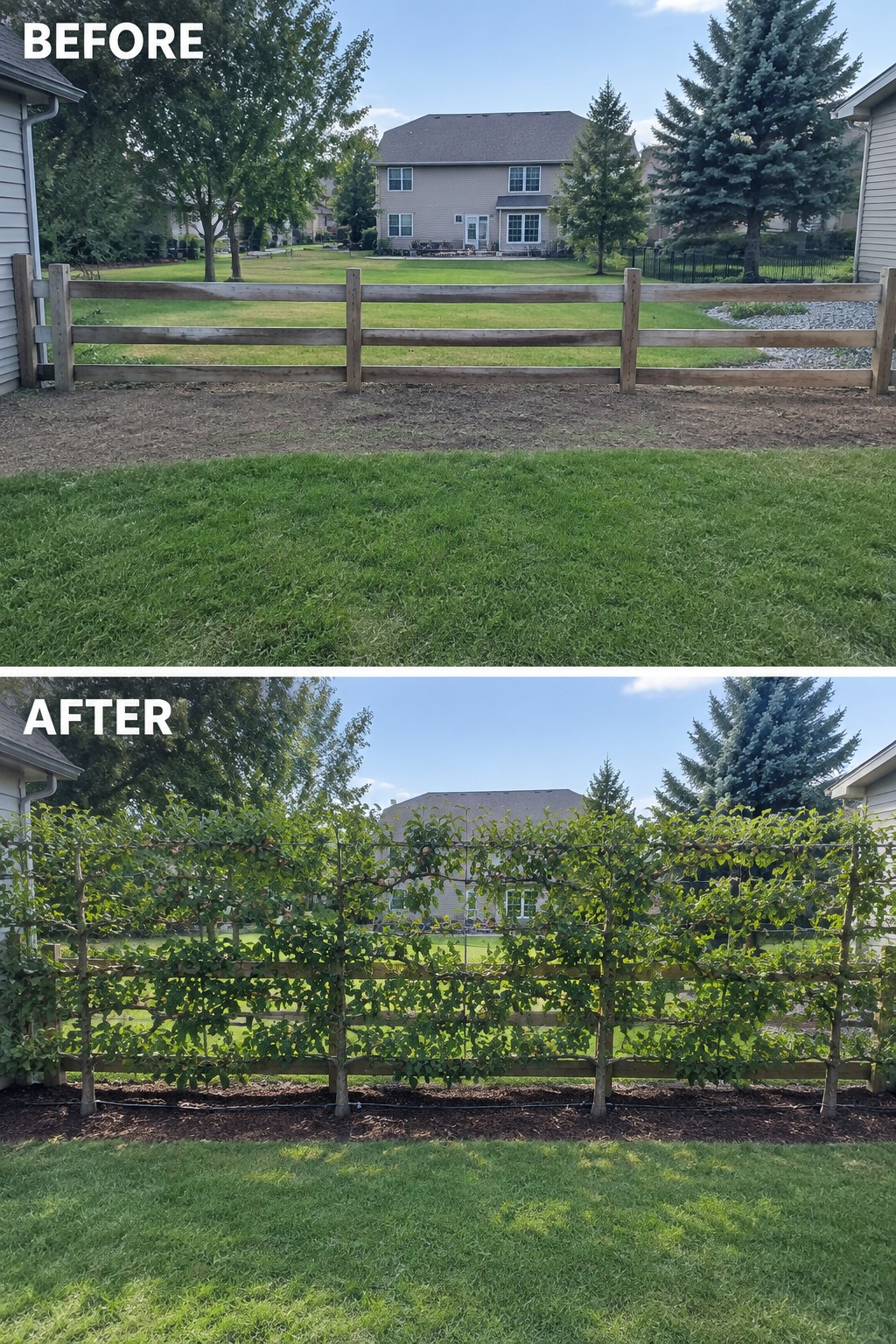
A simple fence can start to feel like a privacy screen once you add climbing plants. Here the bare rails went from open and plain to mostly hidden under a layer of vines that fill the gaps and soften the line between yards.
This works best along side or back property lines where you already have a fence but want more coverage without building higher. Choose vines suited to your area, run a few horizontal wires if needed, and keep the base mulched so the plants establish quickly. It takes time to fill in, but the look stays low cost and natural.
Use Raised Planters To Add Privacy Along The Fence
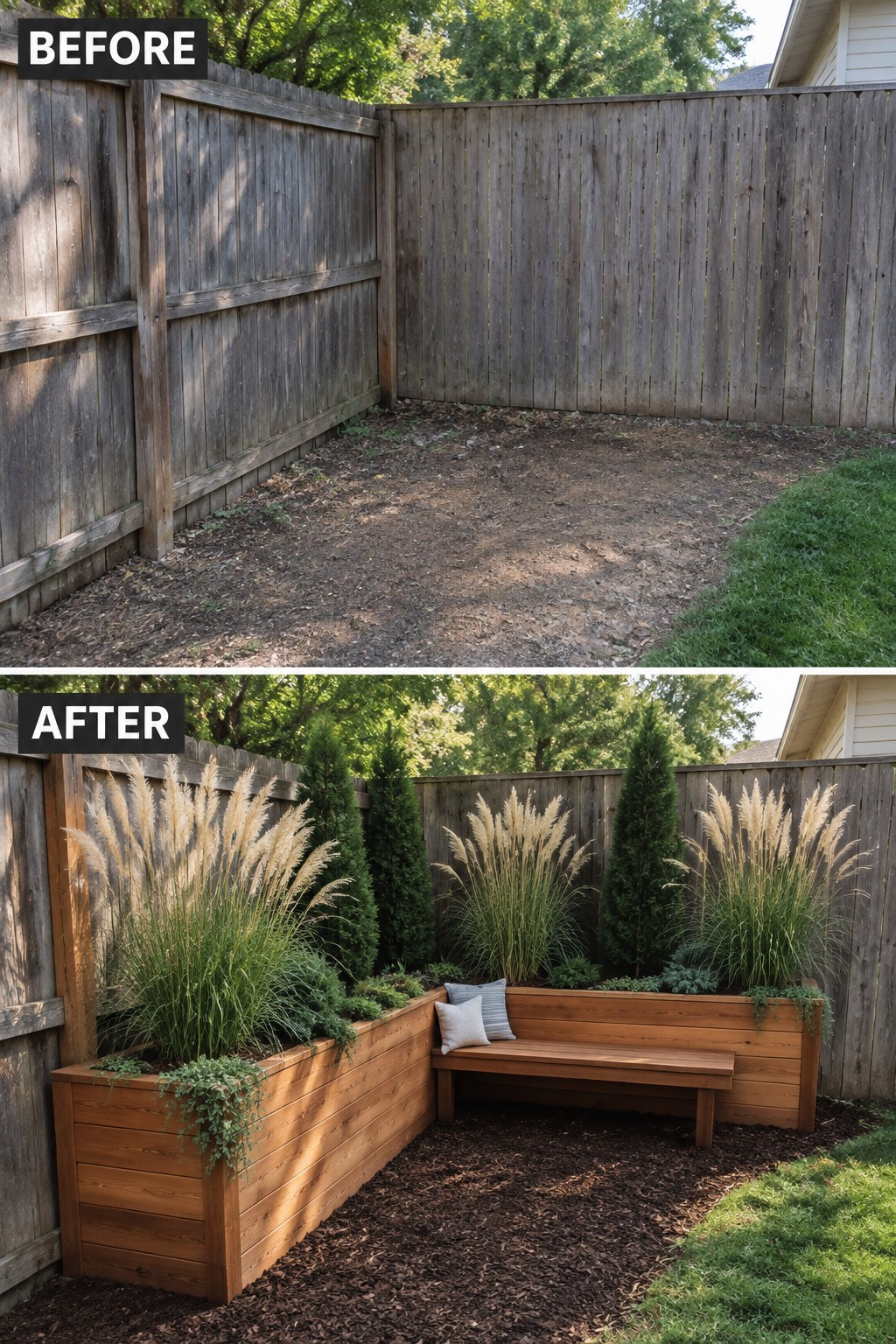
A bare dirt backyard with nothing but fence and open ground feels exposed. The fix here was simple. They built L-shaped raised planters against the fence line and filled them with tall grasses and evergreens. The plants now block the view from outside while the planters themselves give the space clear edges and a place to sit.
This approach works well in small yards where you want privacy without losing ground space. Start with sturdy planters that can handle weather, then pick tall grasses that grow fast and evergreens for year-round cover. Keep the bench or seating area inside the planter shape so everything feels connected and the whole corner becomes usable instead of just empty.
Add Structure To A Sloped Backyard With Tiered Beds
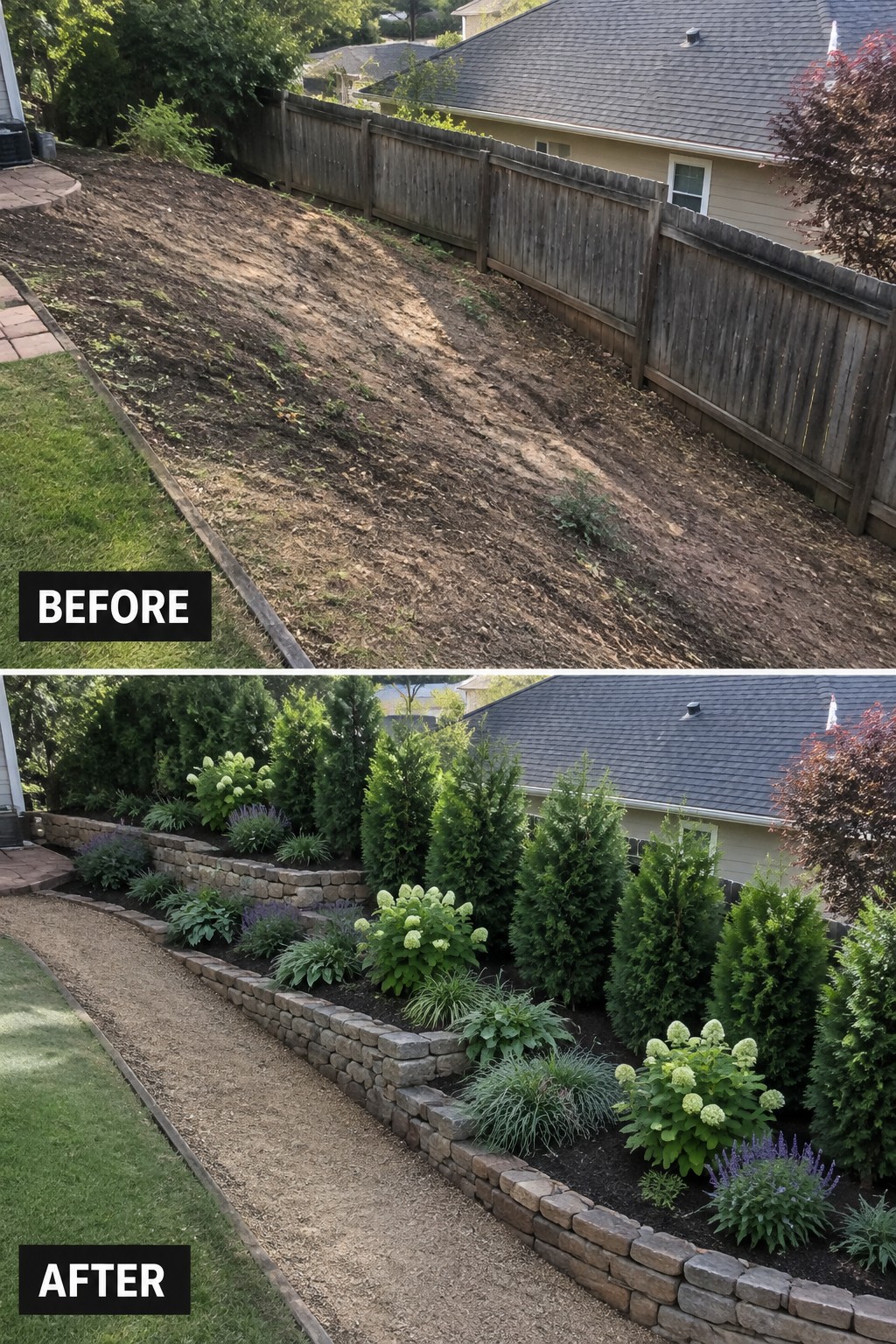
A bare, weedy slope next to the fence gives little privacy and feels unfinished. Adding low stone retaining walls turns the hill into a series of flat beds that hold soil in place and create room for layered shrubs and small trees. The evergreens and flowering plants now form a living screen that blocks the view from the neighboring yard while keeping the space looking neat.
This approach works well on properties with a noticeable drop along the property line. Start with the walls to give the beds a clear shape, then fill them with a mix of tall evergreens at the back and lower plants in front. The gravel path in front keeps the beds easy to reach for watering and trimming without turning the whole area into mud after rain.
Add Layered Shrubs For Privacy Along The Fence Line
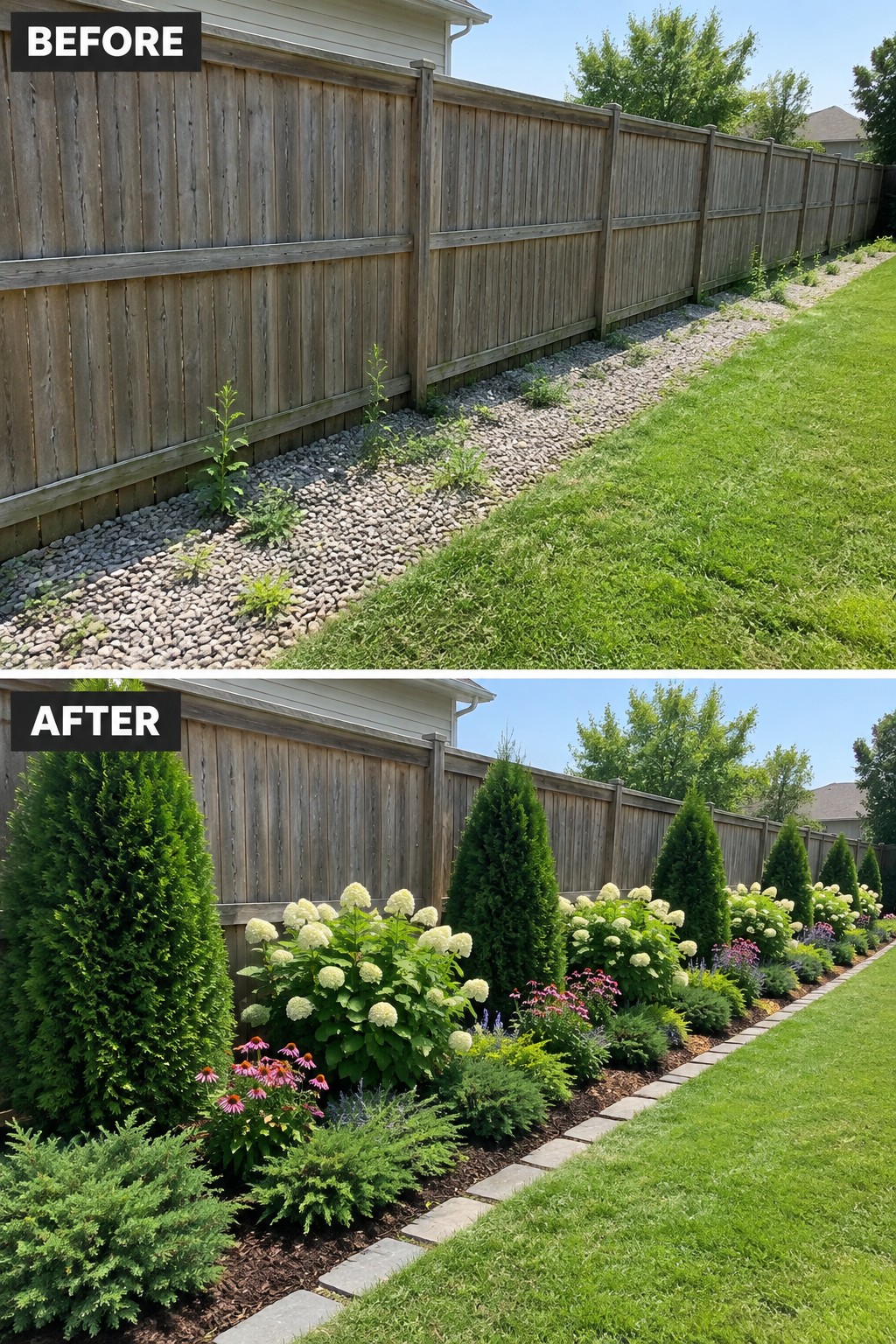
A bare strip along the fence often leaves the yard feeling exposed. The before photo shows mostly gravel and scattered weeds under the fence, which did little to block the view. After the change the same line now holds a mix of tall evergreens and lower flowering shrubs that create a living screen without looking heavy.
This idea works best on straight property lines where you want steady coverage year round. Space the tallest evergreens first, then fill gaps with mid-height and shorter plants so the bed stays full from top to bottom. Mulch and a simple edge keep it tidy and make future weeding easier.
Add Vertical Planters To A Fence For Privacy
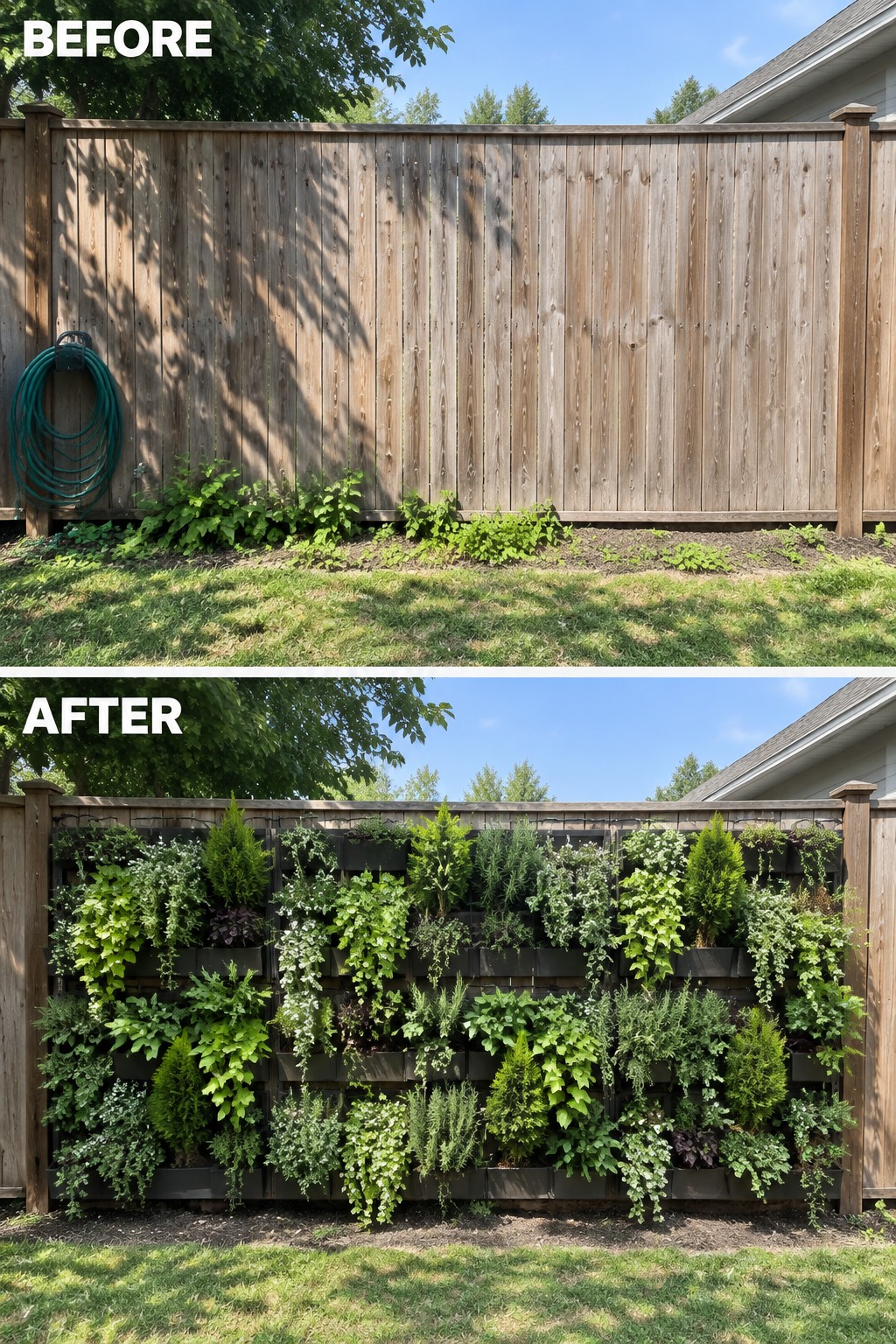
A plain fence often leaves the edge of a yard feeling open and exposed. Mounting rows of simple planters directly to the fence turns that same line into a dense green screen that blocks views from outside without taking up ground space.
This works best in narrow yards or along shared property lines where a full hedge would crowd the lawn. Start with a sturdy mounting system, choose a mix of upright evergreens and trailing plants, and water consistently since the soil in wall planters dries out faster than ground beds.
Add A Trellis With Climbing Vines For Privacy
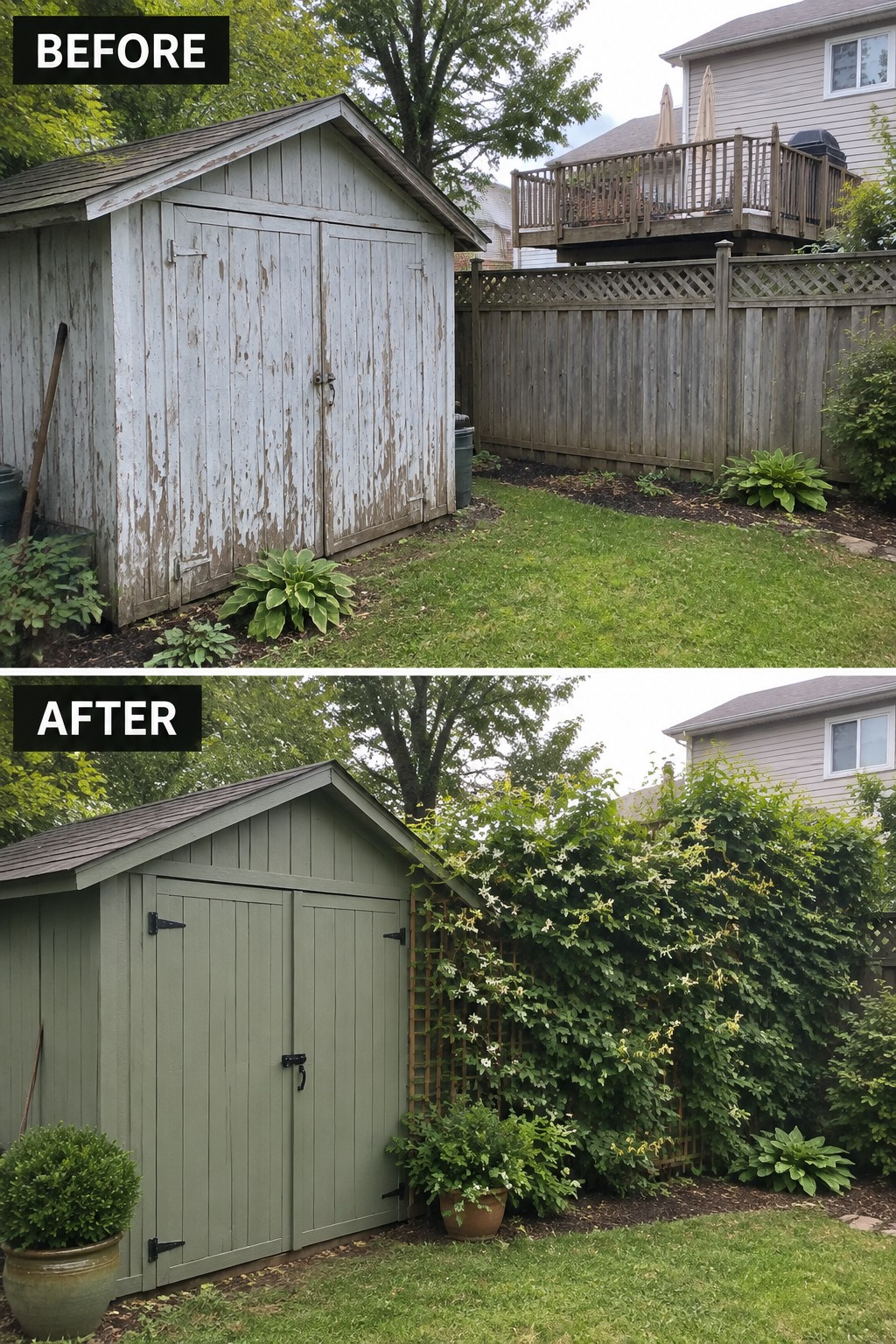
Painting the shed helped, but the real change came from adding a trellis right next to it and letting vines grow up and over. That strip along the fence went from open and bare to a solid green screen in one season. It blocks the view from the neighbor’s deck without making the yard feel closed in.
This works well along side or back property lines where you already have a shed or fence. Put the trellis where you need coverage most, choose a fast climber that handles your climate, and keep the bed mulched so the vines have room to spread. It gives privacy without a tall solid fence.
Add Planting Beds Along The Fence For Privacy
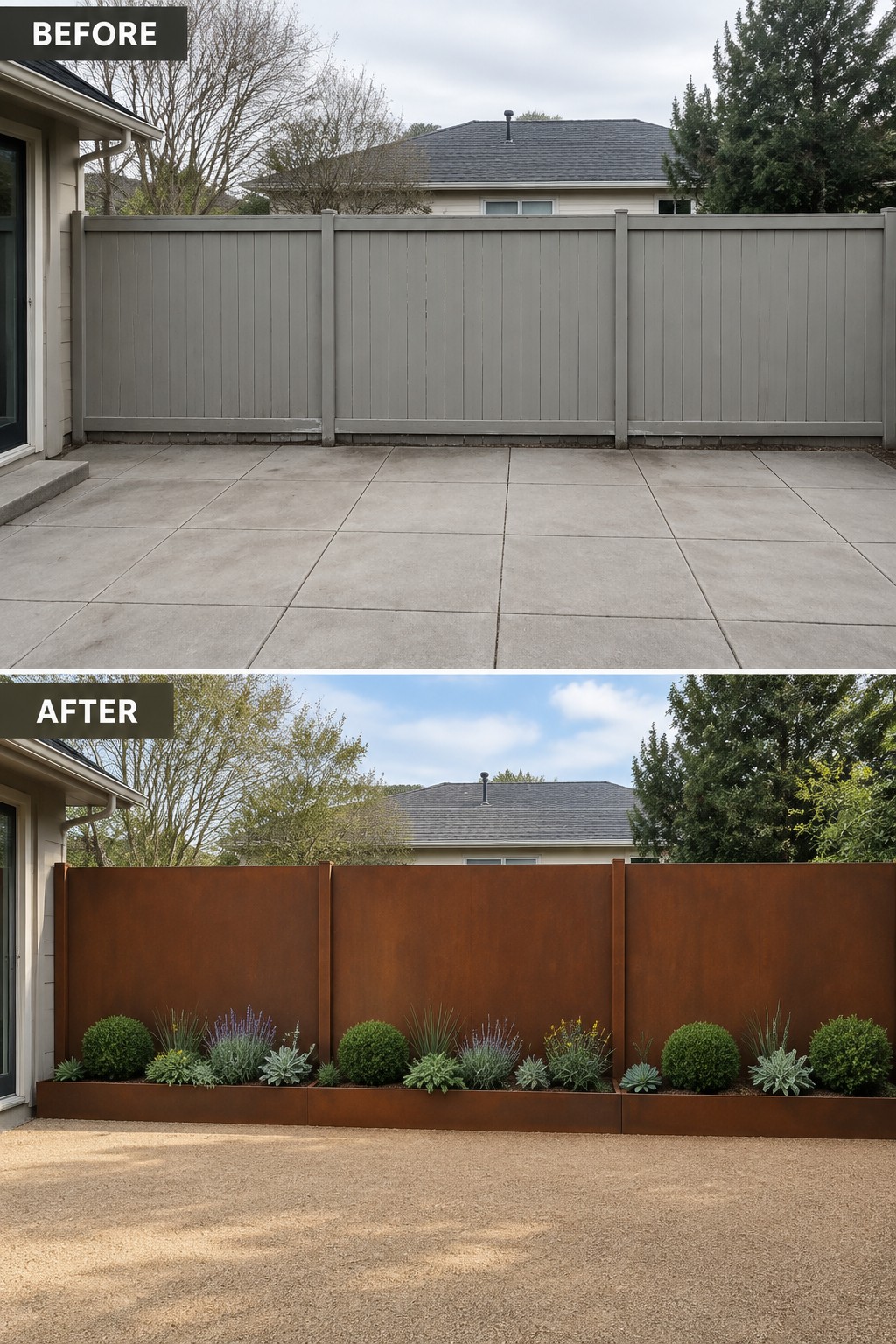
A simple way to gain privacy along a property line is to add a long raised planting bed right in front of the fence. The before photo shows a bare fence with nothing but concrete below it. The after shows how one continuous planter filled with shrubs and perennials creates a living screen that blocks the view without needing tall trees.
This works best when you already have a fence in place and just need to soften the base. Use a mix of evergreen shrubs for year-round coverage and add a few flowering plants for interest. Keep the bed at least a foot deep so the plants have room to grow, and leave a little space behind them so they do not push against the fence.
Plant Tall Evergreens Along The Property Line
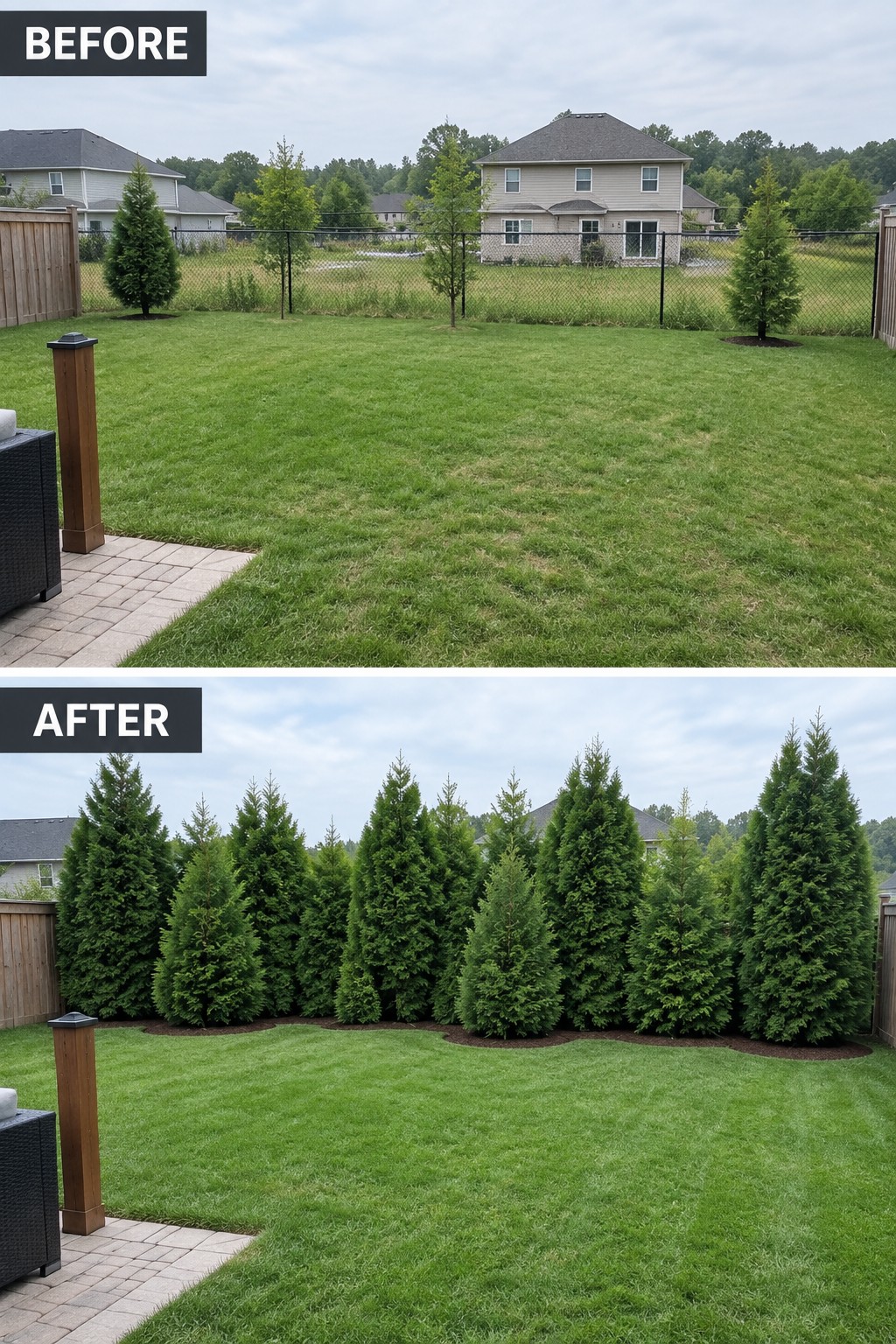
One of the most straightforward ways to add privacy to a backyard is to plant a continuous row of tall evergreens right along the fence. The before photo shows a wide open lawn with only a chain link fence and a few scattered trees. After the change, a solid line of dense evergreens blocks the view behind the yard and makes the space feel much more private without closing it in completely.
This idea works best in suburban yards where homes sit fairly close together. Pick varieties that grow tall and stay green through winter, and give them enough room so they fill out without crowding each other. Keep the rest of the lawn open so the yard still feels usable instead of boxed off.
Screen Utility Equipment Along The Fence
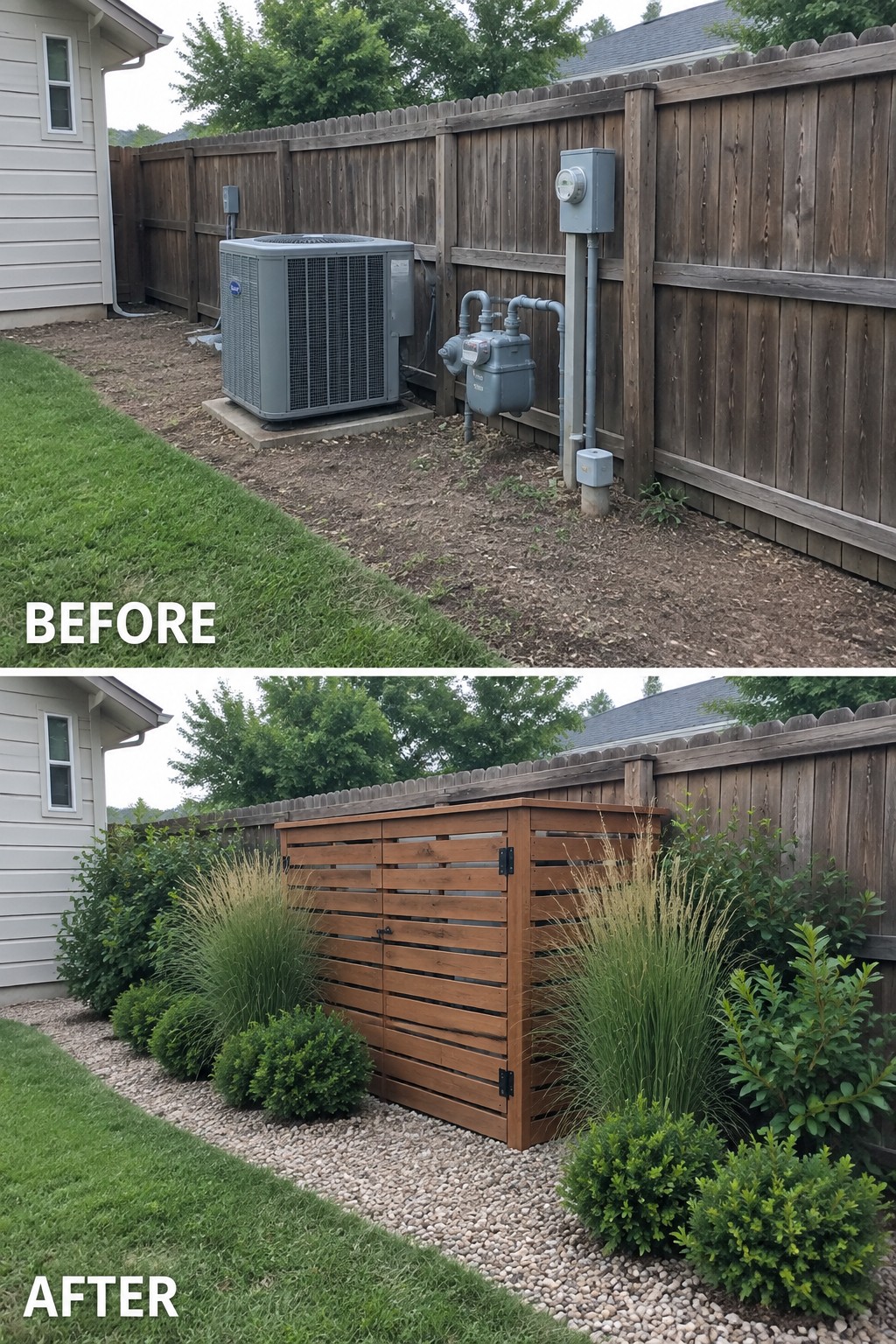
Exposed air conditioners and gas meters along a property line tend to make the whole area feel unfinished. Building a simple wood slatted screen hides the equipment while still allowing airflow, and the gravel base with layered plants cleans up the ground and softens the view from the yard.
This idea works best in side yards or along back fences where utilities sit out in the open. Measure the equipment first so the screen is tall enough and has room for service access. Use plants that grow tall enough in front to blend the structure into the rest of the border without crowding the fence.
Plant A Dense Hedge For Privacy Along Property Lines
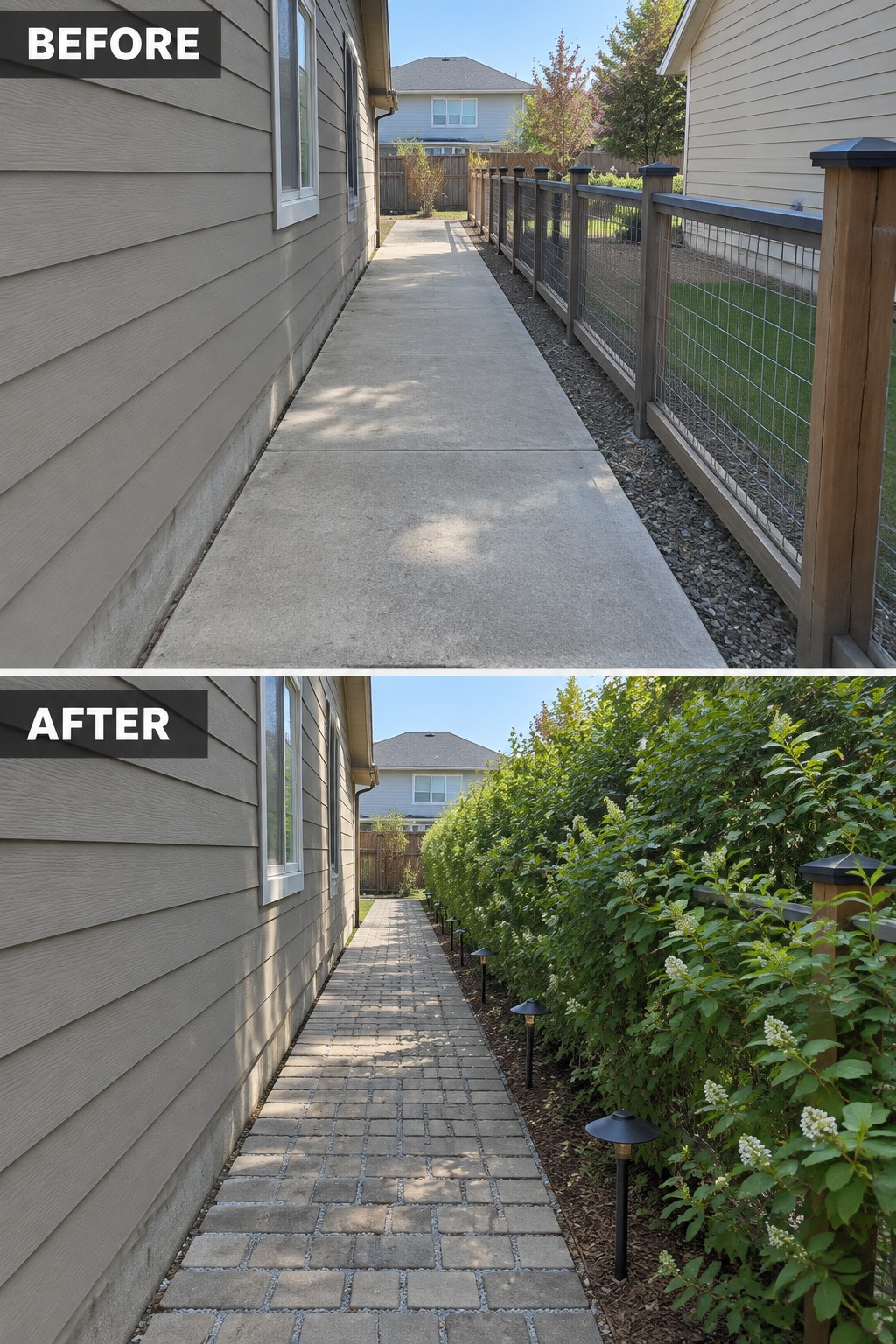
A bare fence and plain concrete path leave a side yard feeling exposed. Adding a thick row of shrubs right along the fence turns the open line into a solid green screen that blocks the view from next door while still leaving room to walk.
This approach works best in narrow side yards where trees would feel too big. Pick evergreen shrubs that grow quickly and stay full, and space them close enough to fill in without crowding the path. Keep the planting bed mulched so the area stays neat and the hedge has room to thrive.
Add Layered Planting For Privacy Along The Property Line
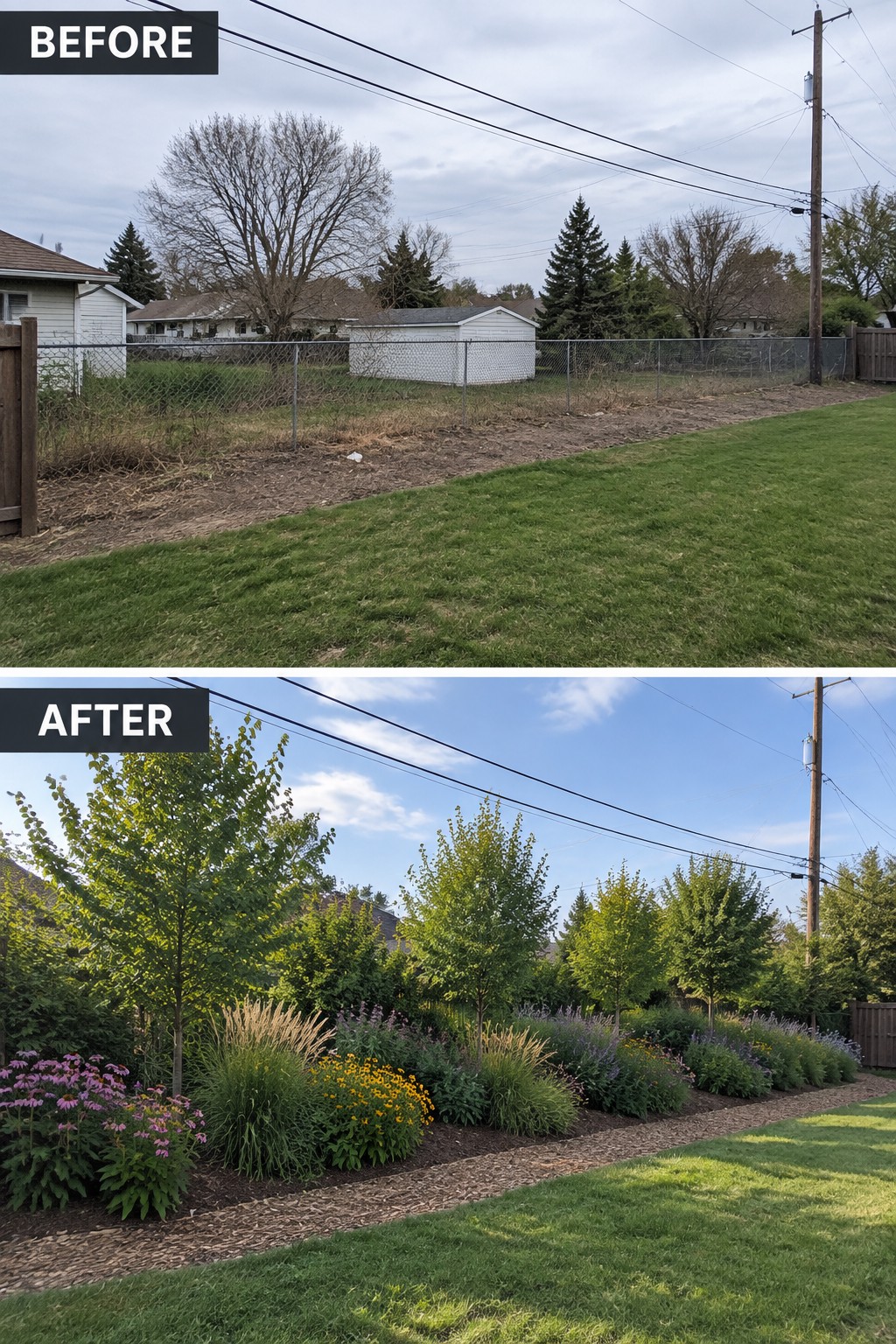
The before photo shows a wide strip of weeds and bare dirt behind a chain link fence. The after fills that same line with trees at the back, mid-height shrubs in the middle, and lower flowering plants in front to form a living screen.
This works best in yards where you want privacy without a tall fence or wall. Clear the ground first, then plant in layers so the taller trees block the view while the lower plants add color and softness. Mulch keeps the beds looking neat as everything grows in.
Create Privacy With Tall Planters Along The Fence
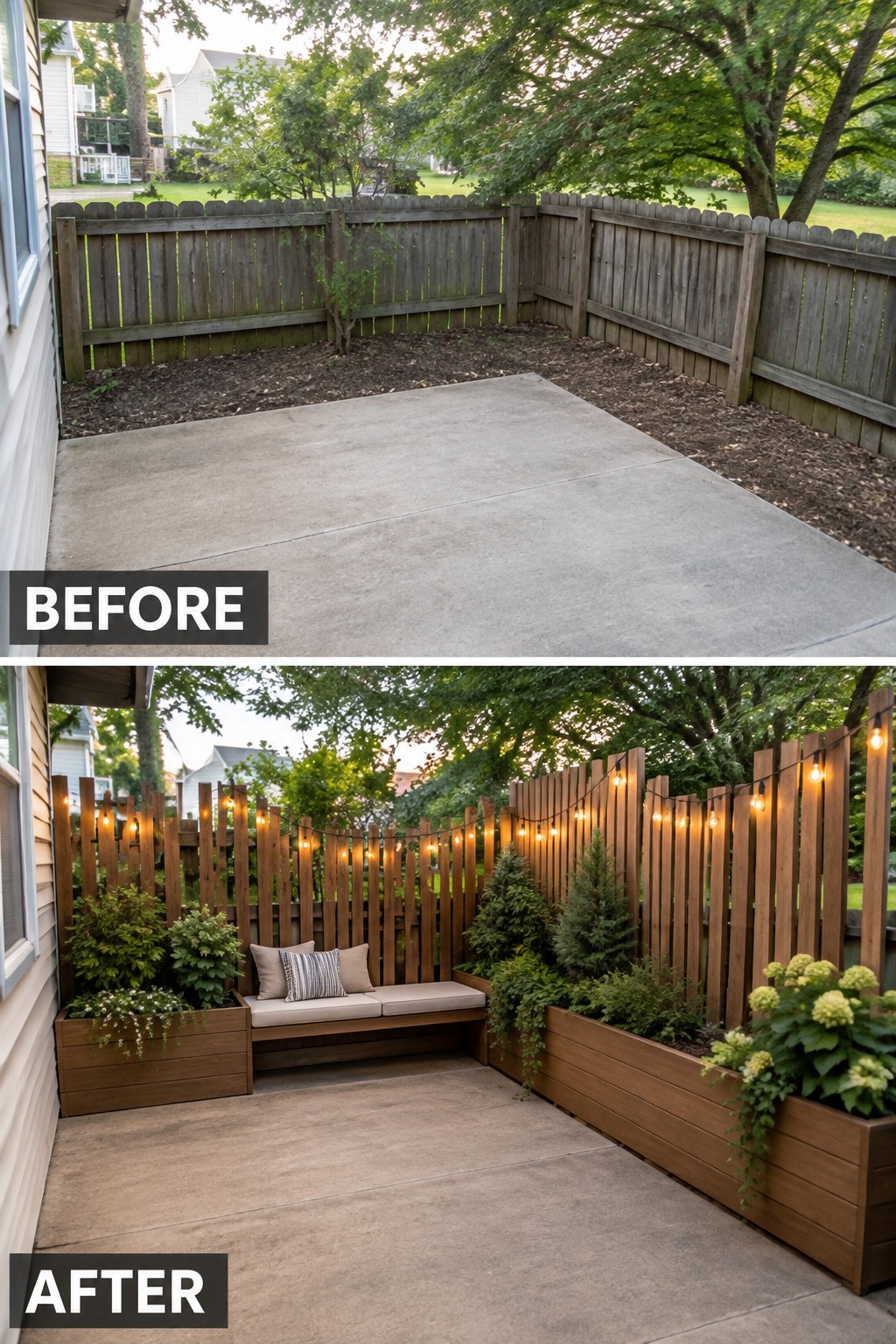
A bare concrete slab next to a plain fence often feels exposed and unused. Adding tall wooden planters filled with evergreens and flowering shrubs along the fence line instantly creates a living screen that blocks views while softening the space. The bench tucked between the planters turns the area into a quiet spot to sit without feeling on display.
This approach works well on small lots where you need height without building a new fence. Start with planters that match the fence height, choose a mix of dense evergreens and seasonal plants, and add simple seating. Keep the rest of the patio open so the area stays easy to move through.
Plant Tall Screening Plants Along Property Lines
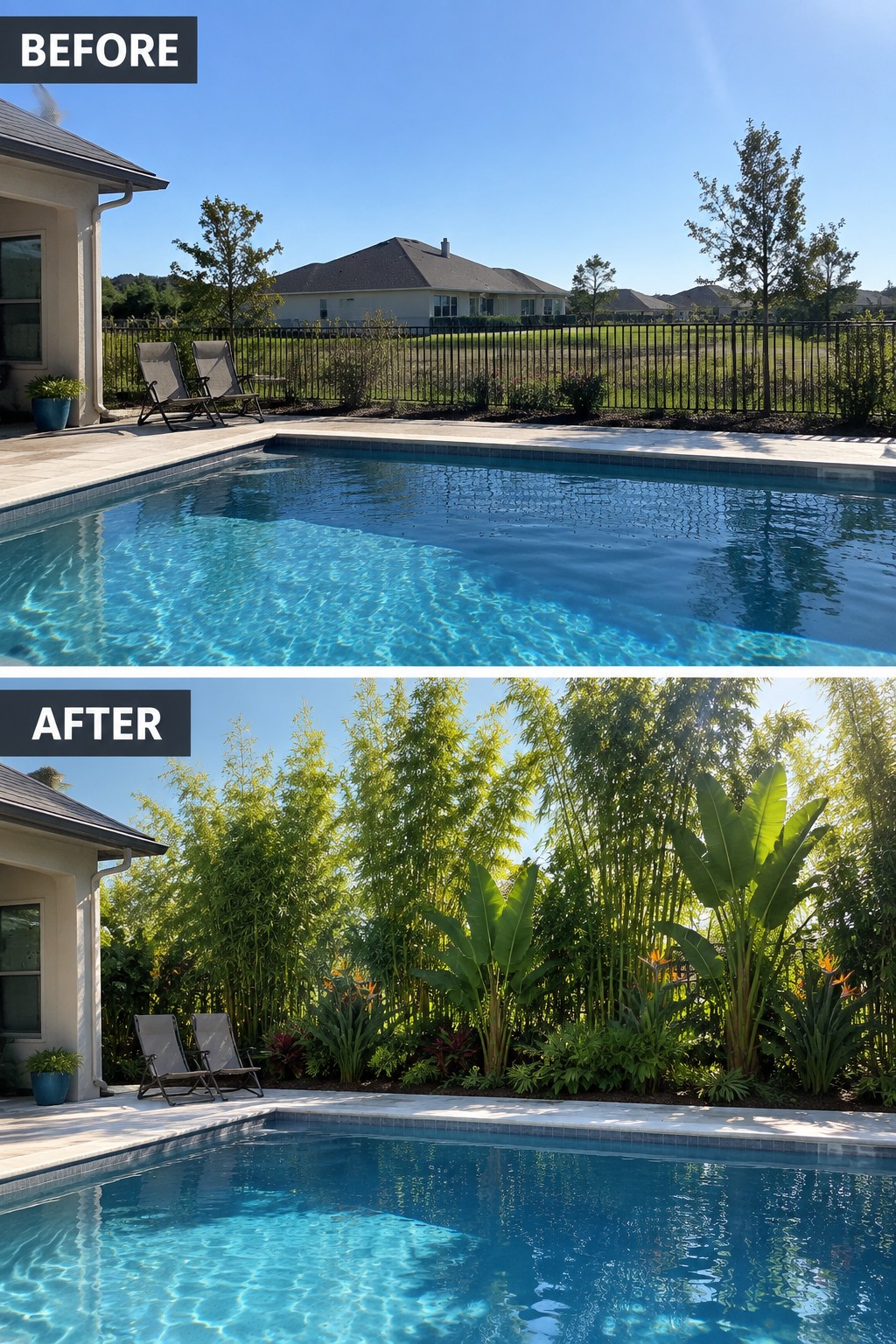
The open fence in the before photo left the pool area exposed to neighboring houses. The after shows how a dense row of tall bamboo mixed with broad-leaf plants completely hides the view and turns the space into a private retreat.
This approach works best along back or side property lines where you need height without losing all the light. Choose fast-growing screening plants first, then layer in a few lower shrubs and flowers at the base so the border feels full and natural instead of thin or patchy.
Plant A Hedge For Natural Privacy Along The Fence
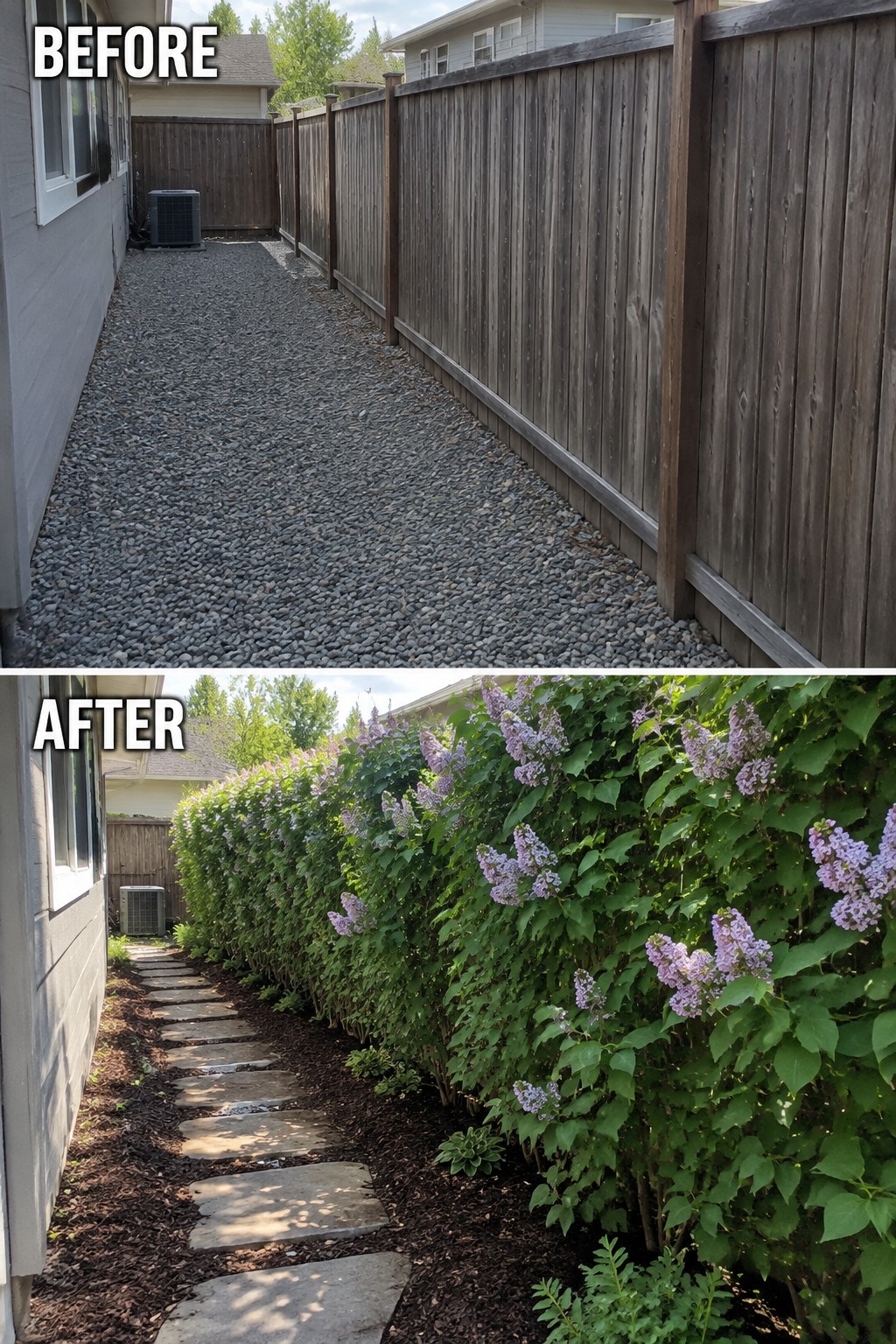
The before photo shows a bare gravel path running right next to the fence with no screening at all. In the after photo, a thick row of flowering lilacs fills the same space, turning the narrow side yard into a private green wall that blocks the view from the other side.
This idea works best in long, narrow strips where a fence alone feels too stark. Pick shrubs that grow dense and reach at least six feet tall, space them evenly, and keep the bed mulched so the plants have room to fill in over a few seasons.
Add Climbing Vines To A Fence For Privacy
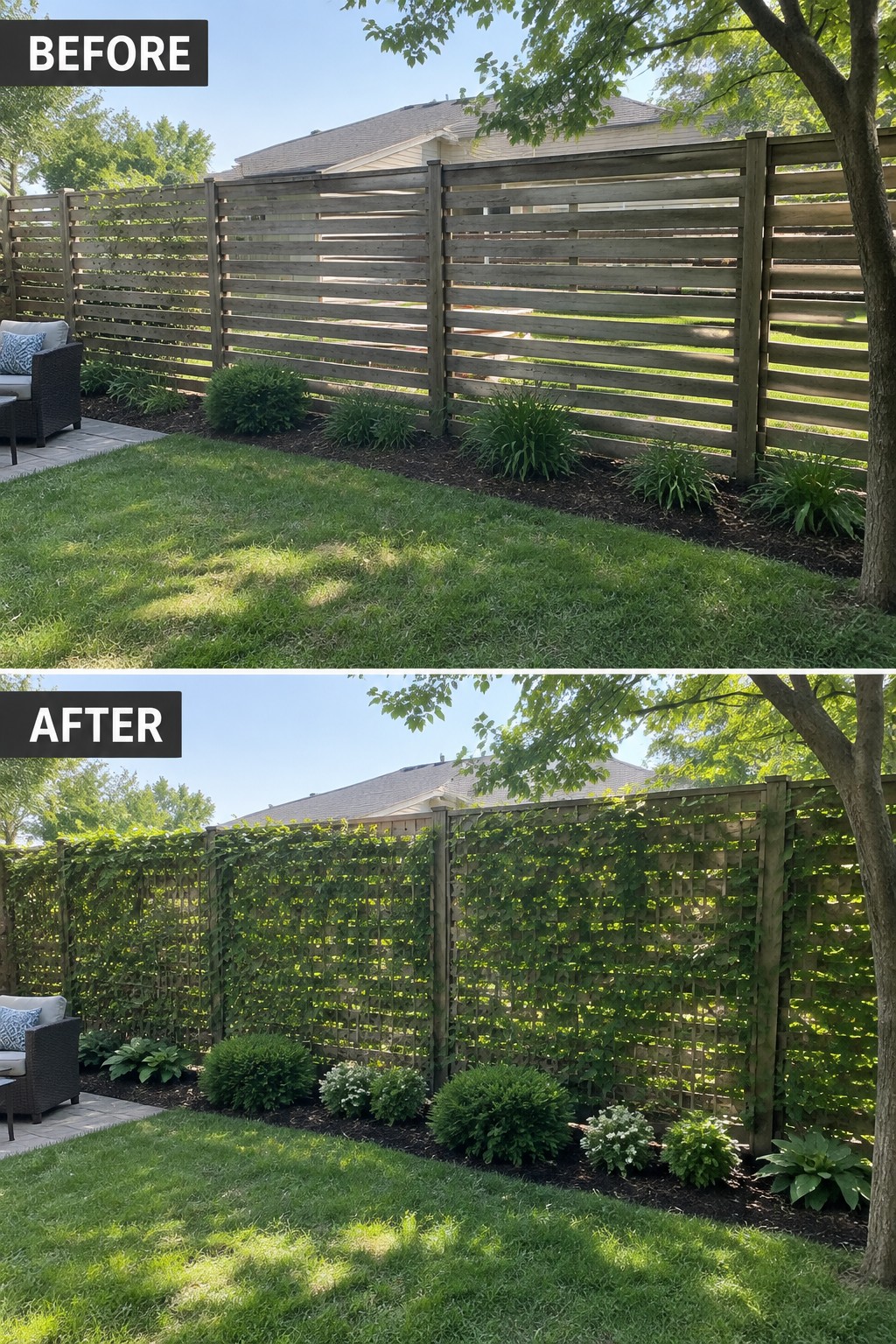
One easy way to boost privacy along a property line is to let climbing vines cover an existing fence. The before photo shows a plain wood fence with only scattered shrubs at the base, while the after shows the same fence nearly hidden behind a full layer of green growth.
This idea works well when you already have a fence but want a softer screen. Pick vines suited to your area, add simple trellis panels if needed for support, and keep the ground plantings low so the vines can spread upward without crowding. Over time the foliage fills in and gives you a living border that feels more natural than solid wood alone.
Add Privacy With A Fence And Planter Wall
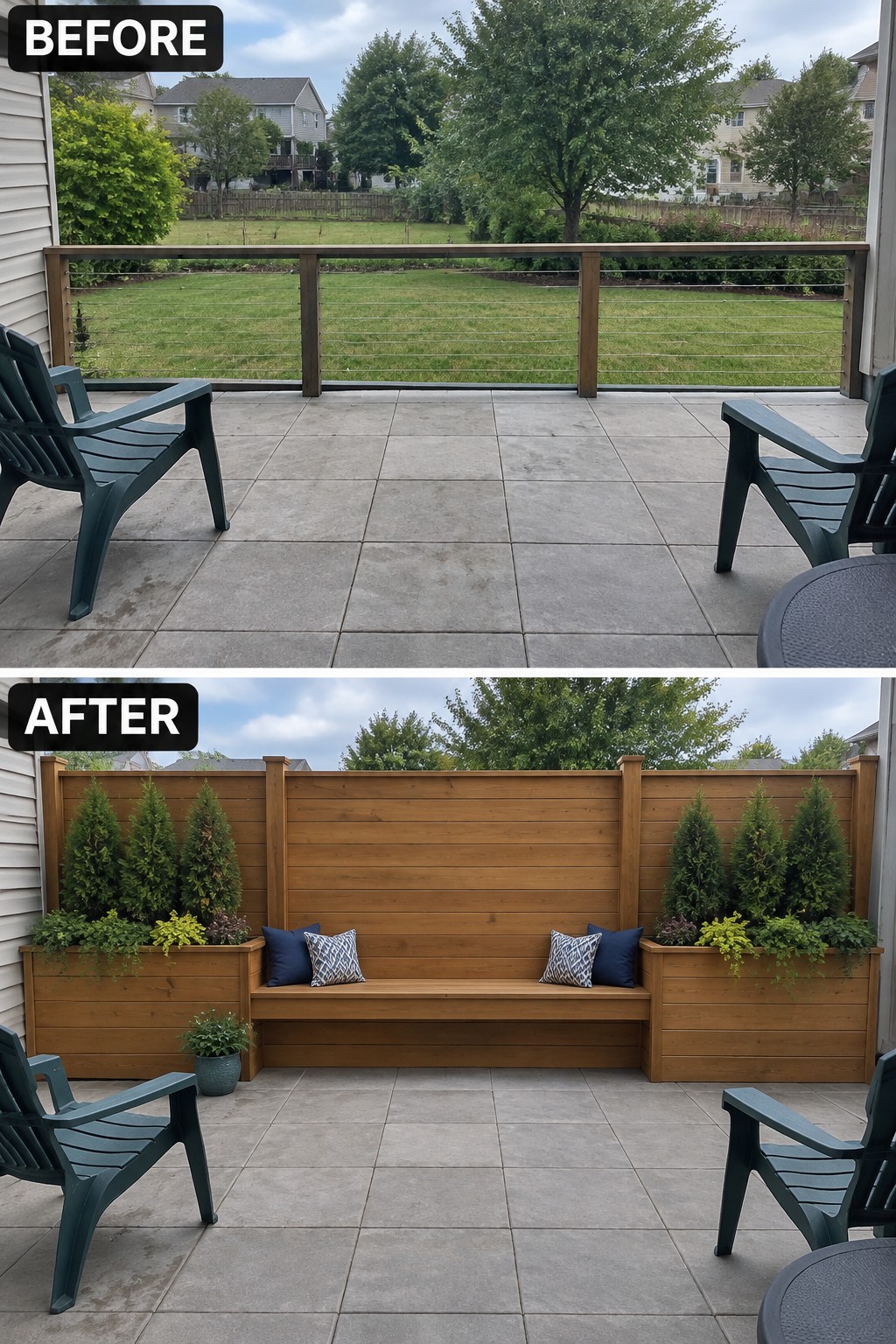
The open cable railing left the patio fully exposed to the yard and neighboring homes. A solid wood screen with built-in planters on each end and a bench in the middle created a clear boundary that blocks the view while still leaving room to sit comfortably.
This idea works best on patios or decks that sit close to property lines. Use a few taller evergreens in the planters for quick coverage, keep the bench against the new wall, and make sure the overall width still leaves walking space on the sides.
Use Tall Shrubs And Trellises For Privacy Screening
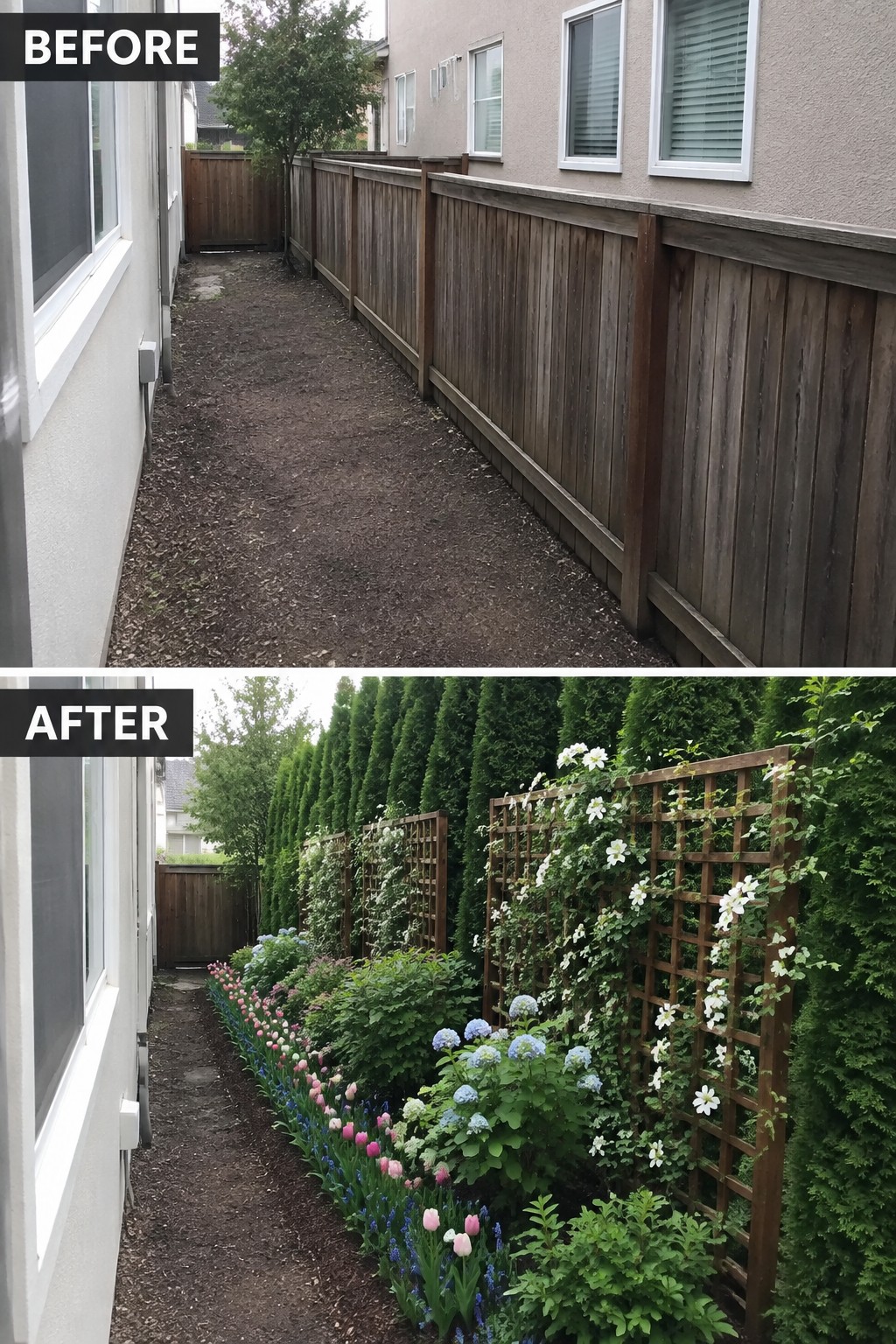
A bare fence line next to the house leaves the yard feeling exposed. The after photo shows how a row of tall evergreens planted behind flowering trellises quickly blocks the view while still looking neat. The layered planting softens the fence and turns the narrow strip into a defined border instead of just empty dirt.
This approach works well along side yards or back fences where you need height without taking up much width. Start with the tallest evergreens for the main screen, then add a lower layer of shrubs and flowers in front. Trellises give the vines something to climb and add structure right away. Keep the beds mulched and the plants pruned so the path stays clear.
Frequently Asked Questions
Q: How tall should the plants get before they block the view from next door?
A: Go with evergreens that hit at least six feet in two or three years. Set them in a staggered row so gaps fill faster and the row looks thicker from the start. Water new plants well the first season so they do not stall.
Q: What if my narrow strip along the fence gets almost no sun?
A: Pick shade tolerant choices like certain hollies or ferns that still grow dense. Add a few taller pots on your side of the fence to lift the screen without digging much. The mix gives coverage without fighting the light.
Q: How do I stop a new fence from sagging at the corner after the first winter?
A: Dig post holes deep and set them in concrete right away. Check the top rail for level before the ground freezes and add a diagonal brace if the run feels long. But skip cheap lumber that warps fast in wet soil.
