


Petunias can brighten a bed quickly, but they look best when their color has a clear place in the garden layout.
I like pairing them with edging or low-growing plants so the flowers soften the borders without hiding the shape of the bed.
Sunlight, spacing, and a practical watering path matter too, especially as plants fill out through summer.
A simple color scheme can help connect the beds to nearby paths, steps, or the front of the house.
Some combinations are worth trying in a small patch before repeating them across the yard.
Use Petunias To Fill Raised Garden Beds
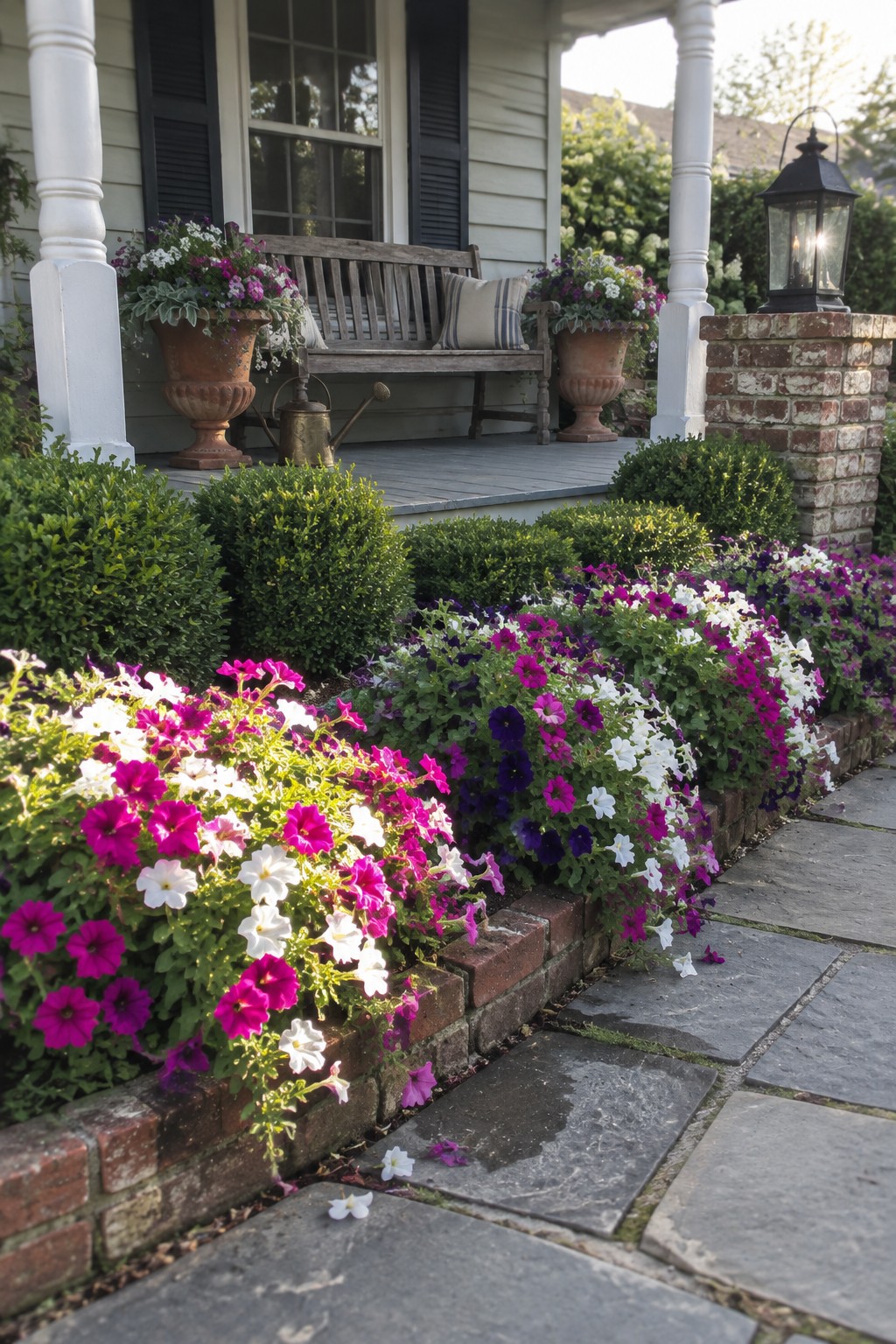
Petunias work well along a raised bed’s edge, where their flowers can spill over the brick and soften the border. A mix of white, pink, and purple blooms gives the bed a full, colorful look without needing a complicated planting plan.
Plant them near the front of the bed so they have room to trail, and leave space between plants for airflow. They suit sunny paths and porch gardens, but regular watering and deadheading help keep the flowers coming through summer.
Grow Petunias in Raised Planters

Raised planters make petunias easy to use along a front walk, especially when you want flowers close to the edge without changing the whole garden bed. Letting some blooms spill over the sides gives the planting a fuller look.
Choose planters with drainage holes and use a good potting mix. Petunias do best with regular watering and deadheading, so place the boxes where you can reach them easily.
Plant Petunias Along a Garden Path

Petunias make a garden path feel more colorful and cared for, especially when they fill the edge of a raised flower bed. Their low, spreading growth lets the flowers spill slightly toward the path without blocking it.
Plant them along the front of the bed where they can get plenty of sun, and leave enough room to trim them back if they spread too far. White petunias are an easy choice for a shaded or leafy garden because they stand out against darker foliage.
Use Petunias In A Layered Flower Bed

Petunias make a bright front layer for a flower bed, especially when their color is set against quieter foliage. Here, the silvery plants break up the blocks of pink and help the planting feel varied without taking attention away from the flowers.
Try this approach along a walkway or in a raised bed near the house, keeping the petunias toward the front where their blooms are easy to see. Leave enough room for them to spread, and trim them back if they begin to spill over the edging.
Plant Petunias Along a Coastal Cottage Border

Petunias can make a cottage garden border feel full and colorful without needing a formal layout. Let them spill around the edge of a flower bed, where their bright blooms stand out against taller grasses and leafy plants.
This approach works well beside a walkway or along the foundation of a casual coastal home. Give petunias room to spread, and leave enough space between plants for airflow so the bed stays easier to care for.
Plant Petunias Along Stone Garden Steps
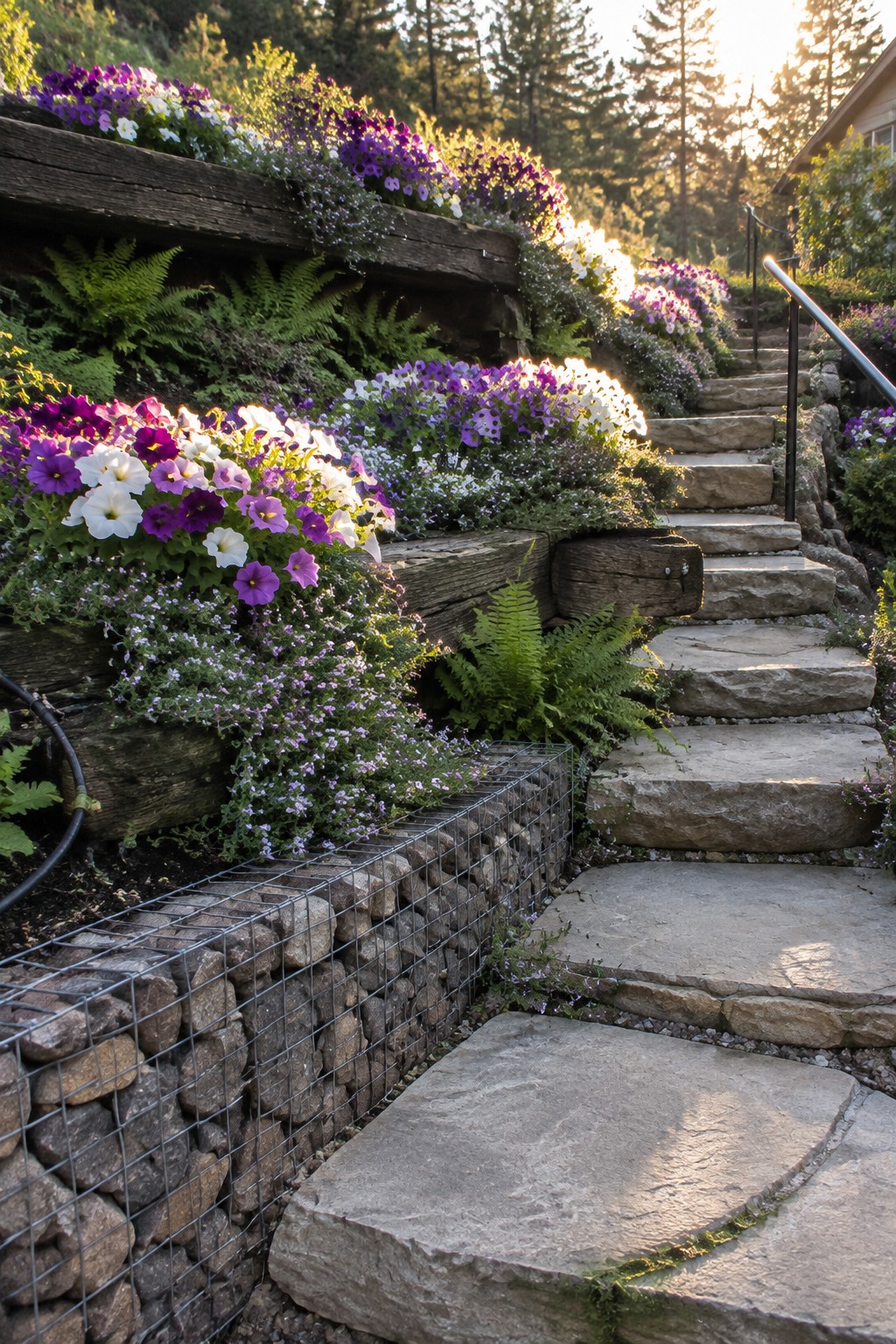
Petunias can make a garden stairway feel like part of the flower bed rather than just a way to get from one level to another. Planting them along the sides adds color close to the path without taking up the steps themselves.
This works especially well on sloped yards where stone steps pass through planted areas. Let petunias spill near the edges, but keep enough room clear for safe footing and easy maintenance.
Use Petunias in a Stone Garden Bed

A low stone bed is a simple way to give petunias a clear place in a courtyard garden. The raised edge keeps the planting contained, while a mix of white and coral blooms makes the bed easy to notice.
This works well in a small paved yard where there isn’t much room for wide borders. Choose a bed size that leaves enough space to walk around it, and water regularly since raised soil can dry out faster.
Let Petunias Spill Over a Patio Bed

Petunias can turn the edge of a raised patio bed into a bright, full border. Letting them trail over the sides gives the planting a softer outline without taking up space on the patio itself.
This works well beside a dining area or along a walkway where the flowers can be enjoyed up close. Give petunias room to spread, and leave enough space around the bed for people to pass comfortably.
Create Curving Petunia Borders Along a Garden Path
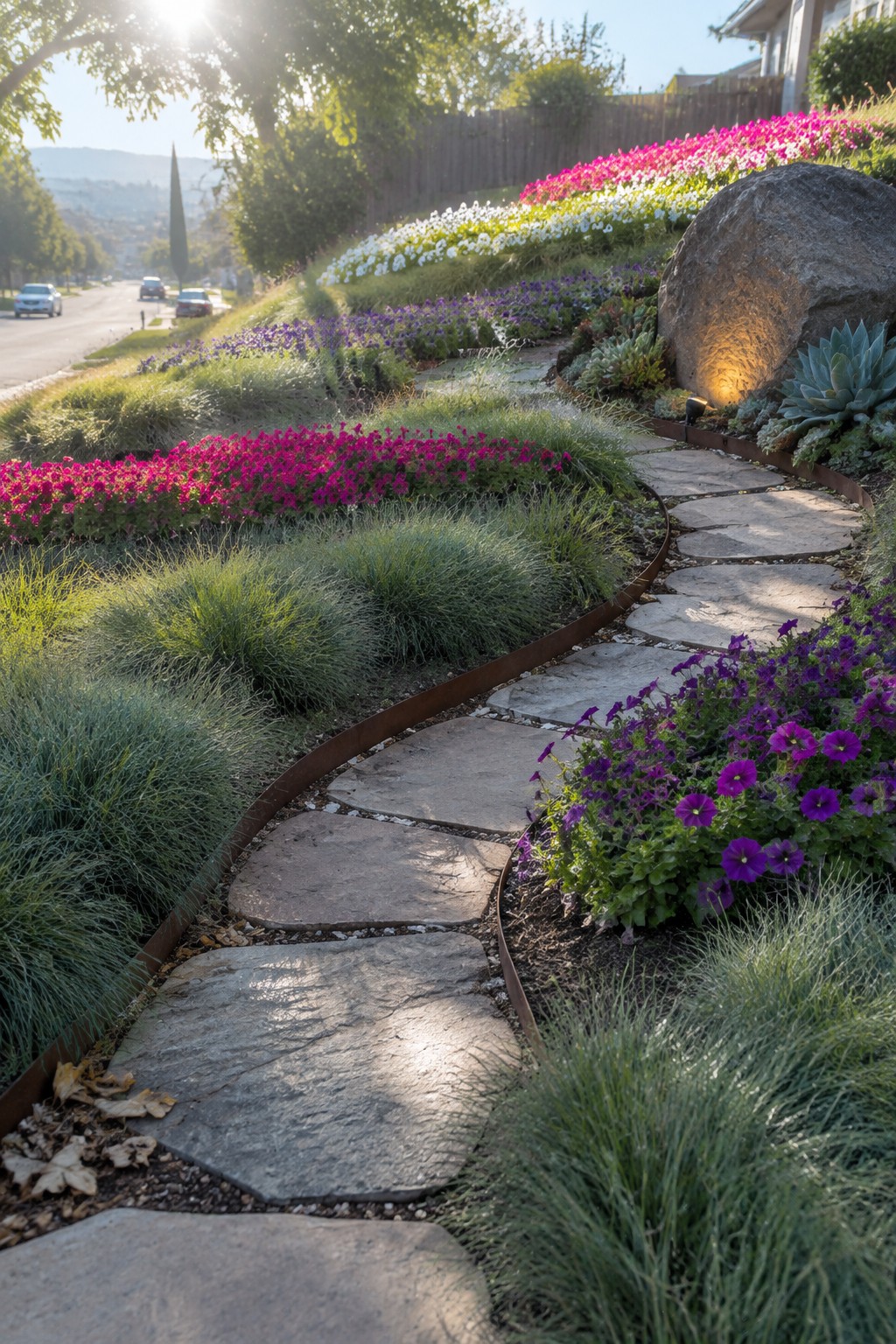
Curved planting beds can make a garden path feel like part of the flower bed instead of a route cut through the yard. Petunias planted in broad bands bring bright color along the bends, while the path still has room to stand out.
Use metal edging to keep the border shape neat and stop plants from creeping onto the stones. This approach works well on a sloped front yard, but leave enough space for petunias to spread without narrowing the walkway.
Add Petunias to a Kitchen Garden

Petunias can bring a cheerful splash of color to a kitchen garden without taking space from the vegetables and herbs. Plant them in a separate raised bed near the growing area, where their blooms can brighten the garden through summer.
White petunias look especially fresh beside orange marigolds, as shown here. Leave enough room for the flowers to spread, and keep them within easy reach for watering and deadheading.
Grow Petunias Along a Garden Path

A narrow path through a flower bed gives petunias a clear place to spill toward the walkway while taller flowers add height behind them. This layered planting makes a simple garden path feel colorful without needing a large lawn or a formal layout.
Use petunias along the path’s edge, leaving enough room for people to walk and for the plants to spread. They work well in cottage-style gardens, especially beside a fence or other vertical support for climbing flowers.
Use Petunias Along a Stepping-Stone Path

White petunias can bring a bright strip of color to a simple garden path. Planting them in a long raised bed keeps the flowers easy to see and gives the walkway a clear, tidy edge.
For a similar look, choose a sunny path and leave enough room for people to walk comfortably as the flowers spread. A mix of white petunias and grasses works well beside a modern home, but avoid crowding the path with plants.
Plant Petunias Along a Poolside Border

A narrow flower bed beside a pool can bring color right up to the water without taking over the deck. Petunias work well along the edge, where their blooms can spill slightly over the planting bed and brighten the hardscape.
Use low-growing petunias near the pool coping, leaving enough room for people to walk and for pool maintenance. A mix of blue and purple blooms suits a lush border, but keep soil and fallen petals out of the water with a clear, easy-to-clean edge.
Plant Petunias in a Circular Mailbox Bed

Petunias can make a small island bed feel full and colorful without needing a complicated planting plan. A compact evergreen shrub gives the flowers a simple center, while pink blooms around the edge bring color close to the street.
This layout works well around a mailbox or other small yard feature. Plant petunias in a broad ring, leaving enough room for them to spread, and use a low stone edge to keep gravel or mulch in place. Don’t crowd the center shrub, so the flowers still have space to grow.
Grow Petunias in Balcony Rail Planters
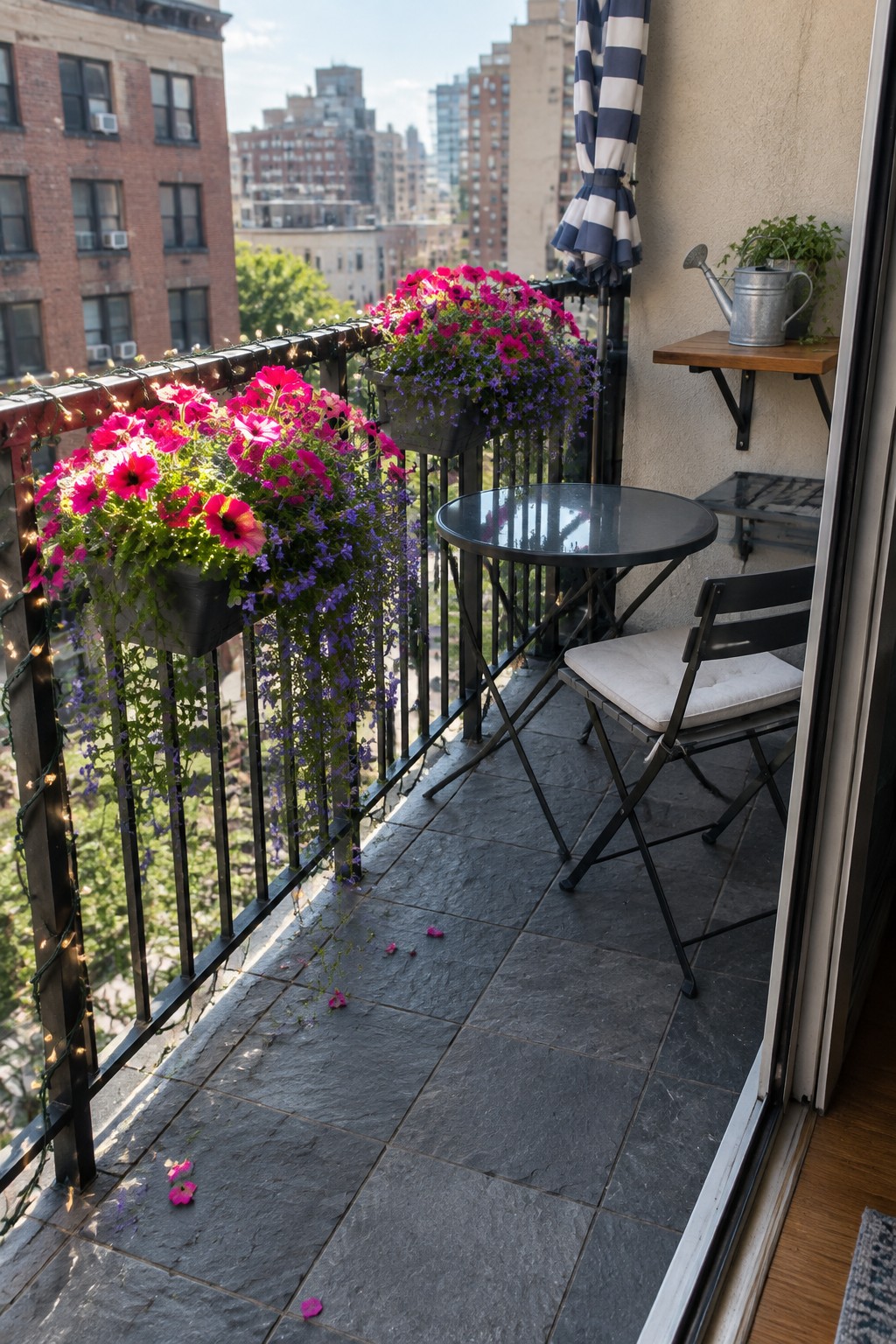
Rail planters are a handy way to grow petunias when there’s no garden bed to work with. Letting bright blooms spill over the edge makes use of vertical space, while trailing purple flowers can fill in beneath them.
Choose sturdy planters that attach securely to the railing, and check that they have good drainage. This idea suits small balconies, but the plants may dry out quickly in summer, so plan on watering them regularly.
Plant Petunias Along a Garden Entrance

Petunias can help mark a garden entrance without needing a formal bed. Let them spill over a low stone wall beside the gate, where their bright flowers make the path feel cared for and easy to find.
This works well near a cottage gate or along a gravel drive. Plant them where they can trail over the edge, but leave enough room for the gate to swing and for people to pass comfortably.
Let Petunias Spill Over Raised Garden Beds
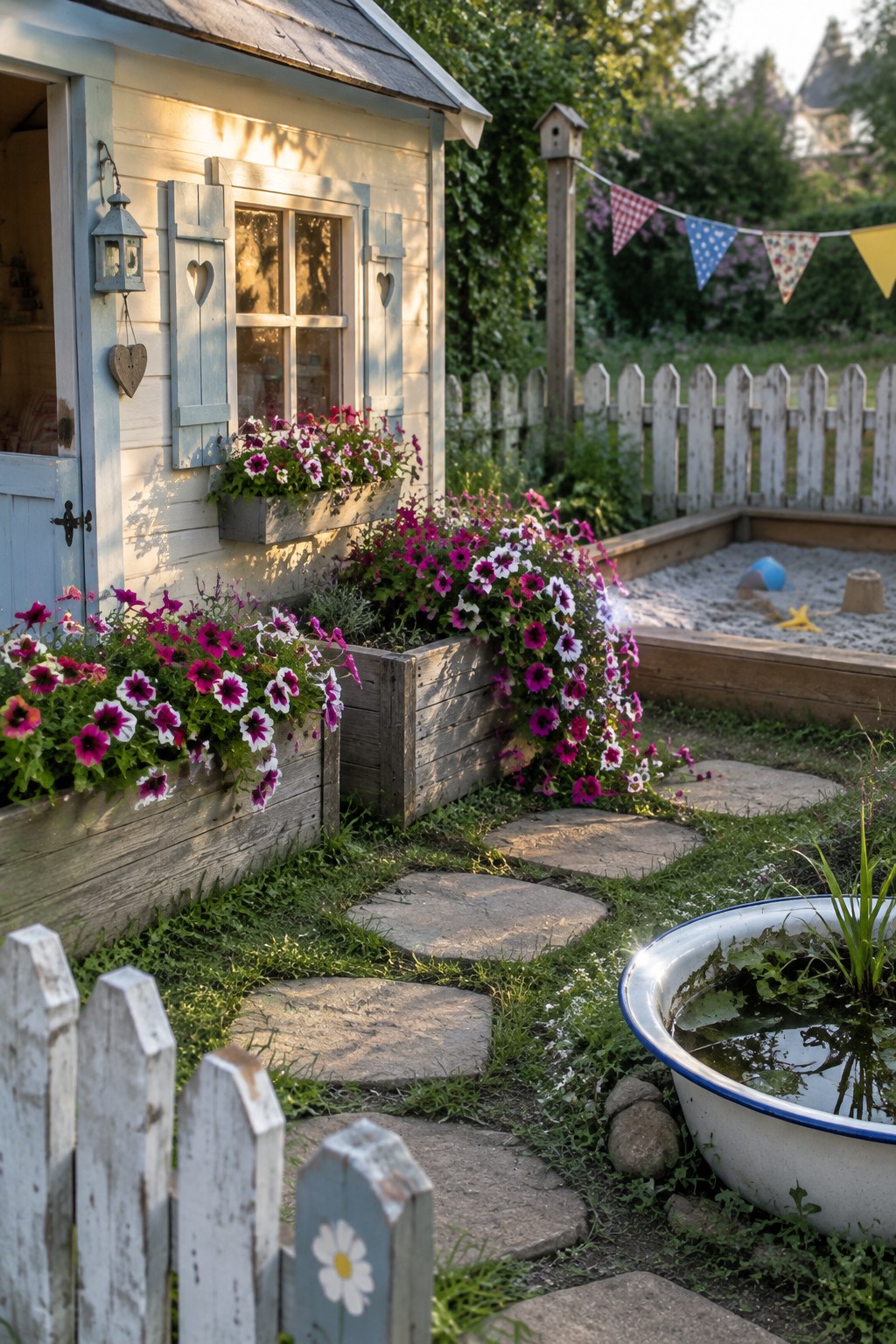
Petunias are a good choice for raised beds because their trailing stems can tumble over the edges and fill out the planting. The flowers bring plenty of color without needing a complicated garden layout.
Use this approach beside a path or near a small shed, where the blooms can be enjoyed up close. Leave enough room around the bed for the plants to spread, and trim them back if they start to cover the path.
Mix Petunias Into a Layered Garden Border
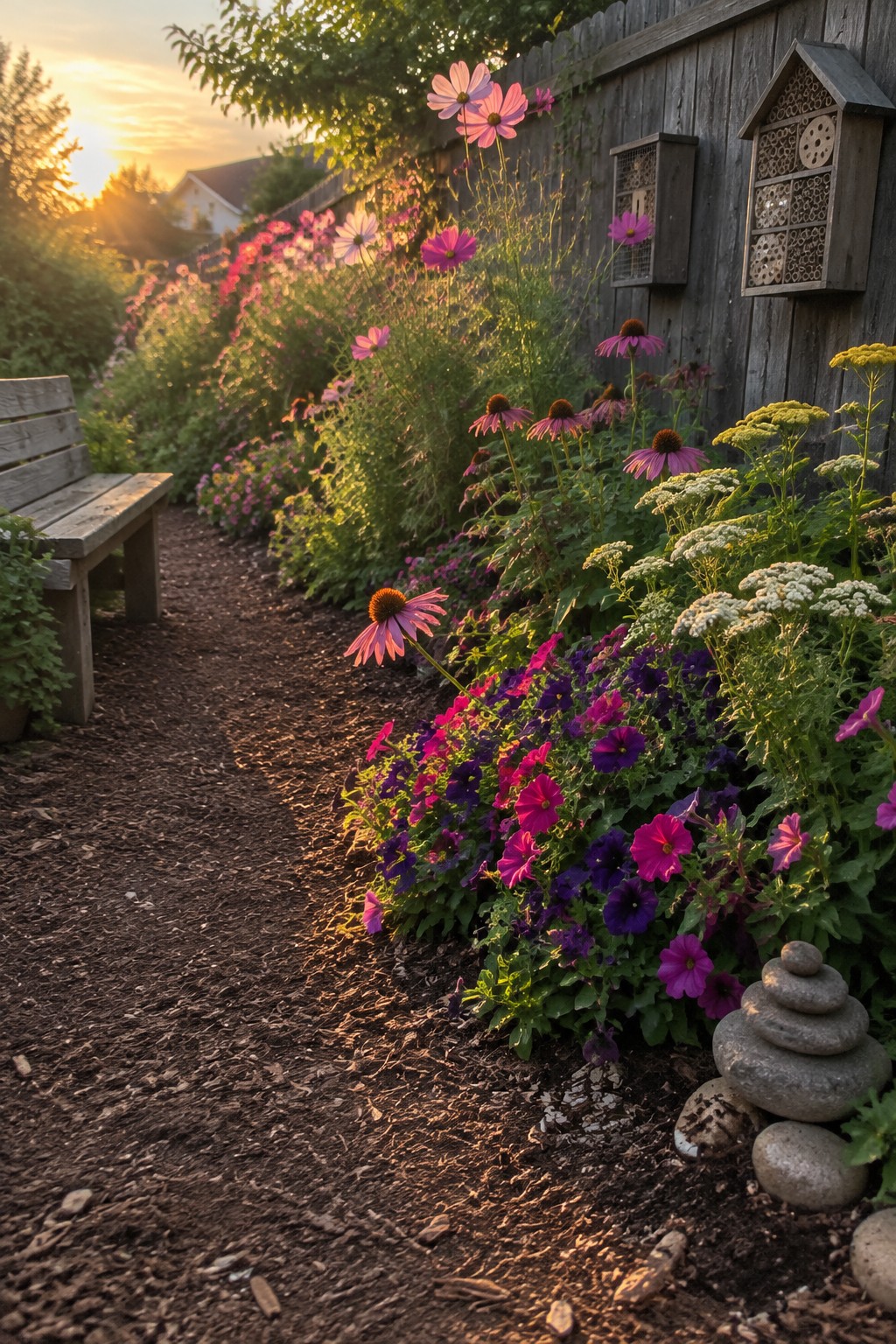
Petunias work well at the front of a mixed flower bed, where their low, spreading growth can fill gaps beneath taller blooms. The mix of bright petunias and upright flowers keeps the border colorful at different heights.
Use petunias along a fence or garden path, planting them in small groups near the edge so they can spread without crowding taller plants. Leave enough room between clumps for airflow and easy watering.
Hang Petunias Along a Narrow Garden Walk

Hanging baskets are a useful way to bring petunias into a narrow side yard without taking up walking space. Set along a fence, the flowers add color above a simple gravel path, while trailing stems help fill the space between the baskets.
Use sturdy brackets and choose petunias that spill over the basket edges. This approach works well where the ground area is limited, but leave enough clearance so the flowers do not crowd the walkway.
Use Petunias in Large Terracotta Pots

Large terracotta pots make petunias easy to place where a garden needs a bright patch of color. The wide blooms spill over the rim, so a single container can stand out beside stone steps or a low garden wall.
Choose a pot with good drainage and give the plants room to spread. This approach works well in a courtyard or on a terrace, especially if you want flowers without reworking the beds. Water regularly, since containers dry out faster than garden soil.
Plant Petunias Along a Raised Garden Bed

A raised flower bed lets petunias spill over the edge, so their color shows from both the garden and the nearby steps. This works especially well when the bed sits beside a walkway or entry, where trailing blooms can soften the straight lines of the stone.
Plant petunias near the front edge and leave enough room for them to spread. Combine them with upright flowers farther back, but avoid crowding the bed so the plants still get good airflow.
Frequently Asked Questions
Q: How often should I water petunias in a summer flower bed?
A: Check the soil with your finger and water when the top inch feels dry. Petunias in containers may need water more often than those planted in the ground, especially during hot, windy weather.
Q: Can I plant petunias with other flowers?
A: Yes. Pair them with flowers that enjoy plenty of sun, such as marigolds or salvia, and leave enough room for air to move between plants.
Q: How do I keep petunias blooming through summer?
A: Give them full sun and regular water, and pinch off faded blooms if your variety benefits from deadheading. If the plants get leggy, trim them back a little to encourage fresh growth.
Q: Are petunias good for a flower bed that gets afternoon shade?
A: They’ll usually bloom more in a sunny spot, but a bed with a few hours of afternoon shade can still work. Expect fewer flowers if the shade is heavy.
