

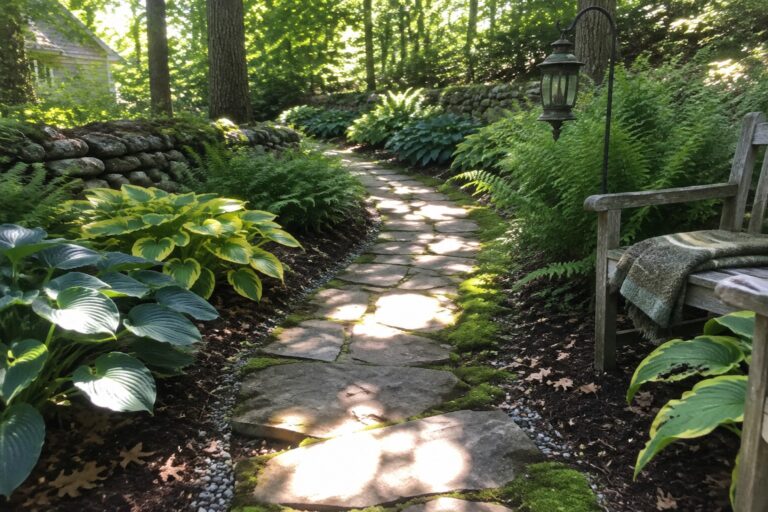
Deep shade can make a garden feel difficult to plant, but hostas bring useful texture and structure to spots where many flowers struggle.
I find that the beds look best when leaf sizes and shapes vary, rather than relying on one hosta variety repeated across the whole space.
A path, clean edging, or a few taller plants can help define the layout and keep broad leaves from making the garden feel crowded.
Color also matters, since blue-green, gold, and variegated foliage can brighten a dim corner in different ways.
These ideas offer practical details to borrow or adapt as your shade garden grows.
Use a Stone Path to Lead Through Shade
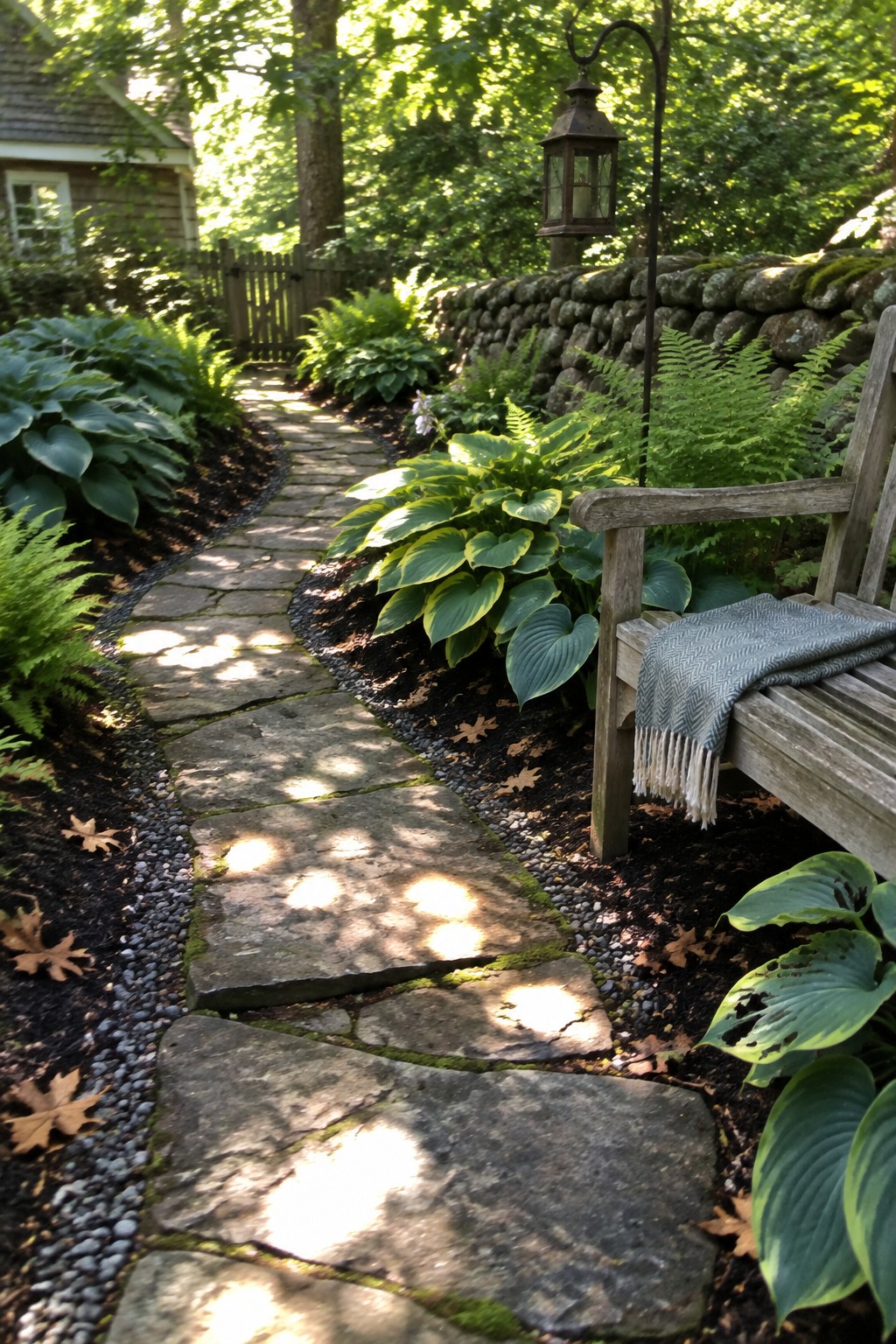
A stone path gives a shady garden a clear route without taking space away from the planting. The irregular slabs feel at home among hostas, and their gaps can hold a little moss for a softer edge.
Set the stones firmly and leave enough room to walk comfortably, especially where the path curves. This works well in a woodland-style bed, but avoid placing slabs so close to large hostas that their leaves spill across the walking surface.
Use Brick Paths to Guide Shade Garden Beds
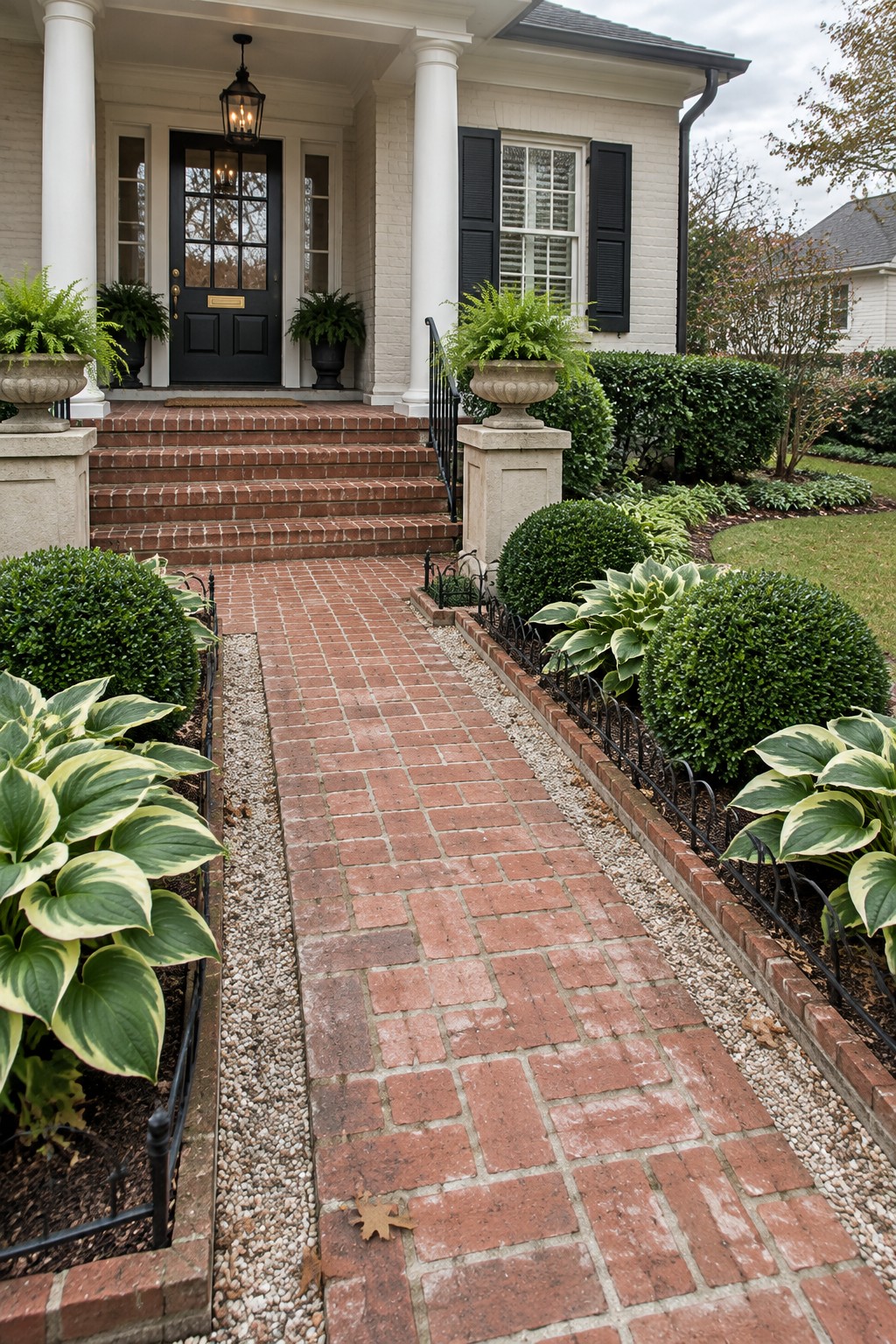
A brick path gives a shade garden a clear route while keeping planting beds neatly contained. It works especially well with hostas, whose broad leaves can spill toward the edge without taking over the walkway.
Use brick for a main garden route or a path leading to the front door, and keep the layout wide enough for comfortable walking. A narrow gravel border can help separate the path from the plants and make edging easier to maintain.
Use Hostas Along a Shaded Garden Path
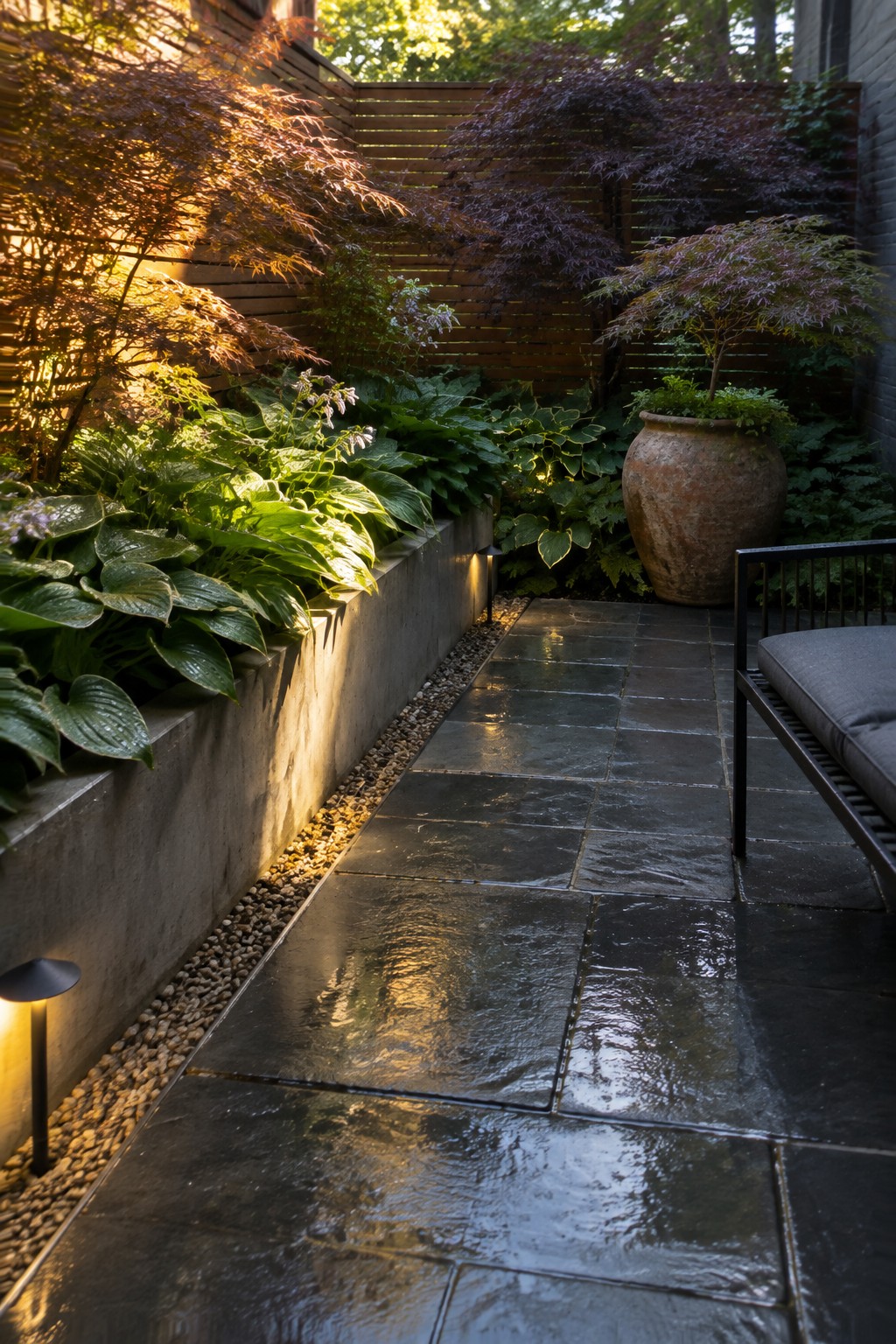
A clear path can make a deep-shade garden easier to enjoy without taking space away from planting. Hostas work well along the edge because their broad leaves create a full, leafy border, while the paving keeps the route easy to follow.
Try this in a narrow side yard or a small enclosed garden, and leave enough room for hostas to spread without crowding the walkway. Large, simple pavers are practical here, especially where the ground stays damp.
Use Stepping Stones to Lead Through a Shade Garden
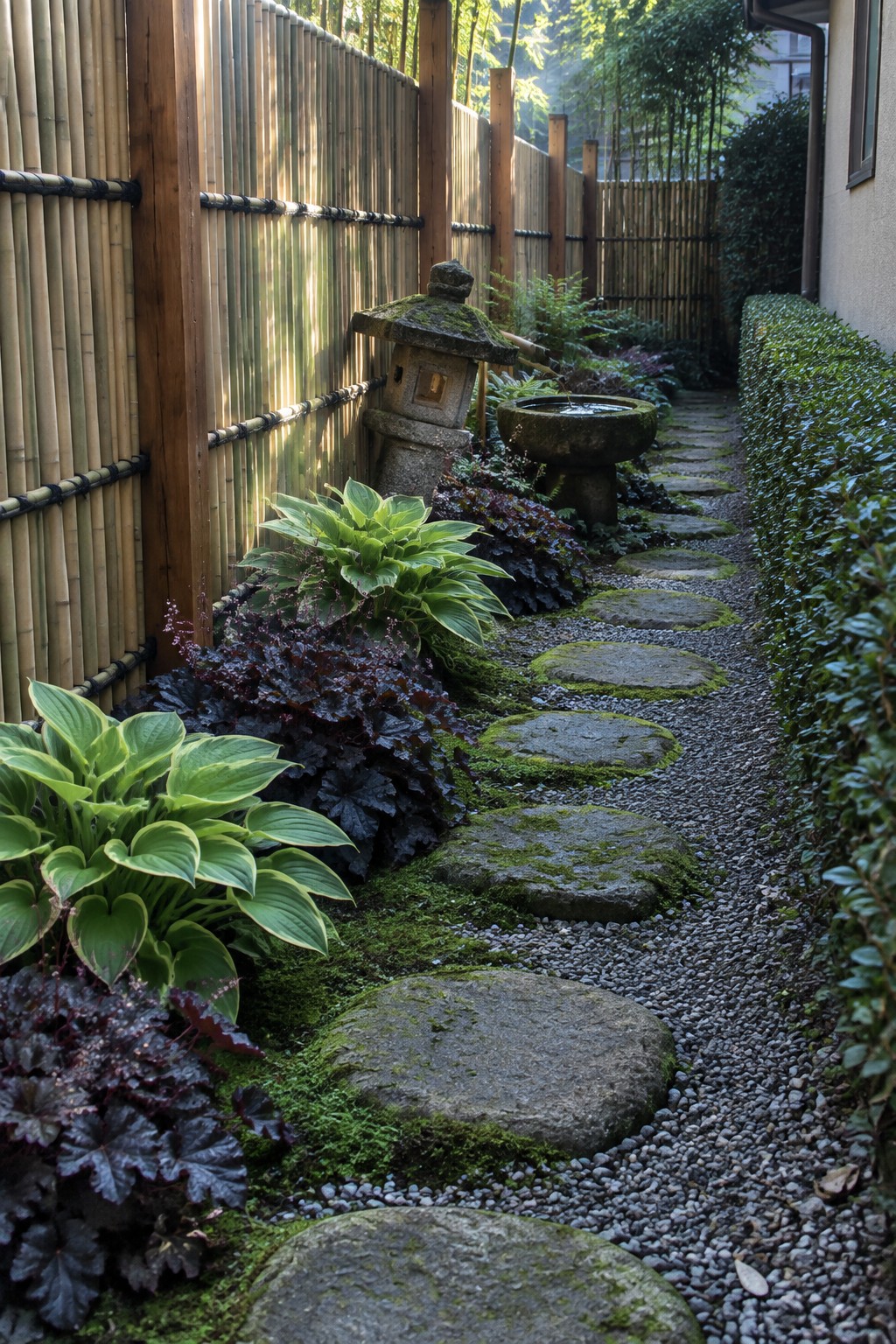
A stepping-stone path gives a narrow shade garden a clear route without taking up much planting space. Here, broad stone slabs sit among moss and small gravel, while hostas grow along the edges.
This idea works well in a side yard or other tight spot where a solid paved walkway might feel too heavy. Set the stones far enough apart for comfortable steps, and keep hostas close to the path for a leafy border. A level, stable surface matters, especially when stones are damp or mossy.
Create a Layered Hosta Border Along the Path
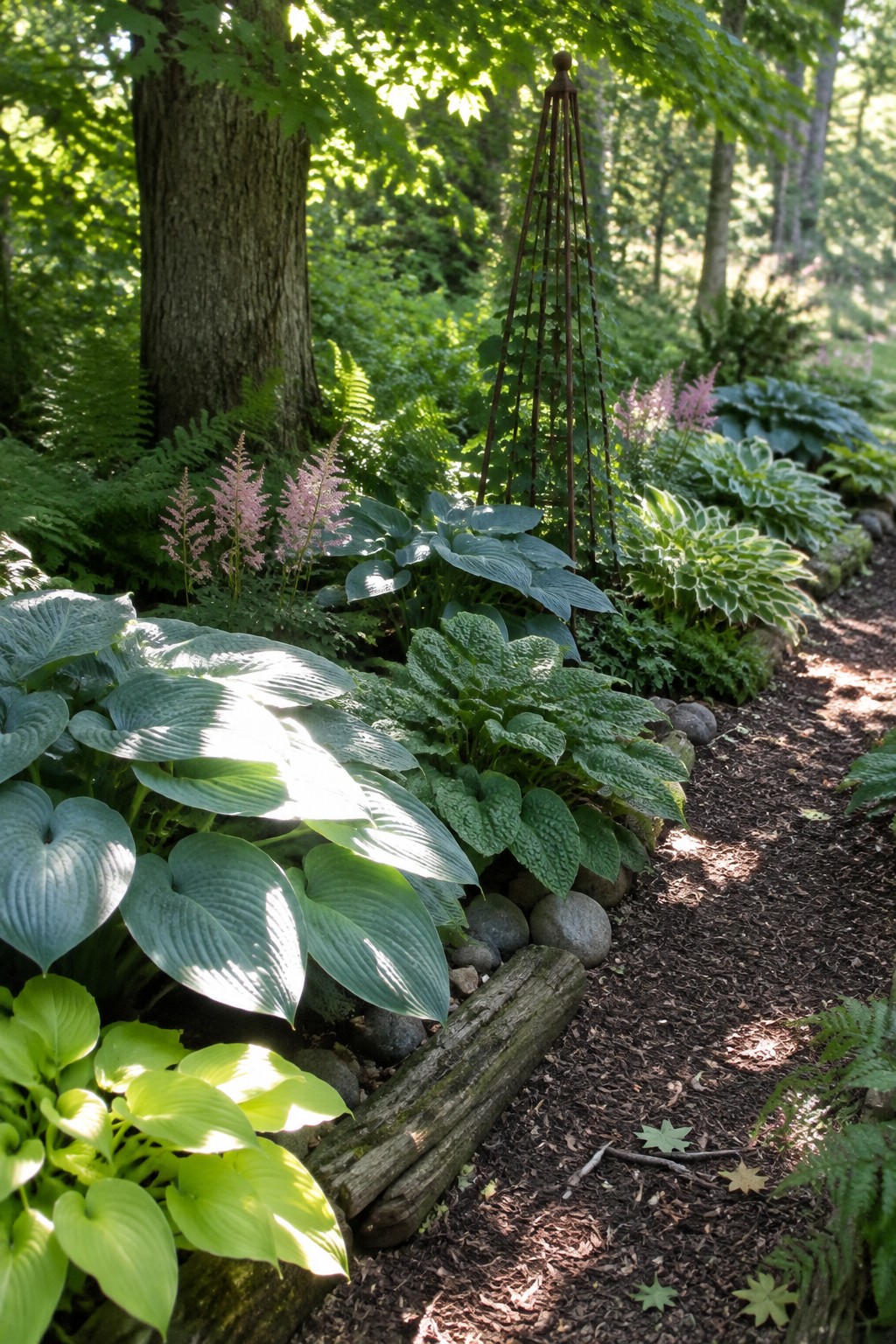
A shaded path feels more settled when hostas fill the planting bed beside it. Their broad leaves make a clear edge, while smaller plants can fill gaps and add a little variety.
Use hostas in groups, choosing different leaf sizes to keep the border from looking too uniform. Leave enough room for mature plants so they don’t spill over the path or crowd nearby flowers.
Make a Shaded Patio Part of the Garden
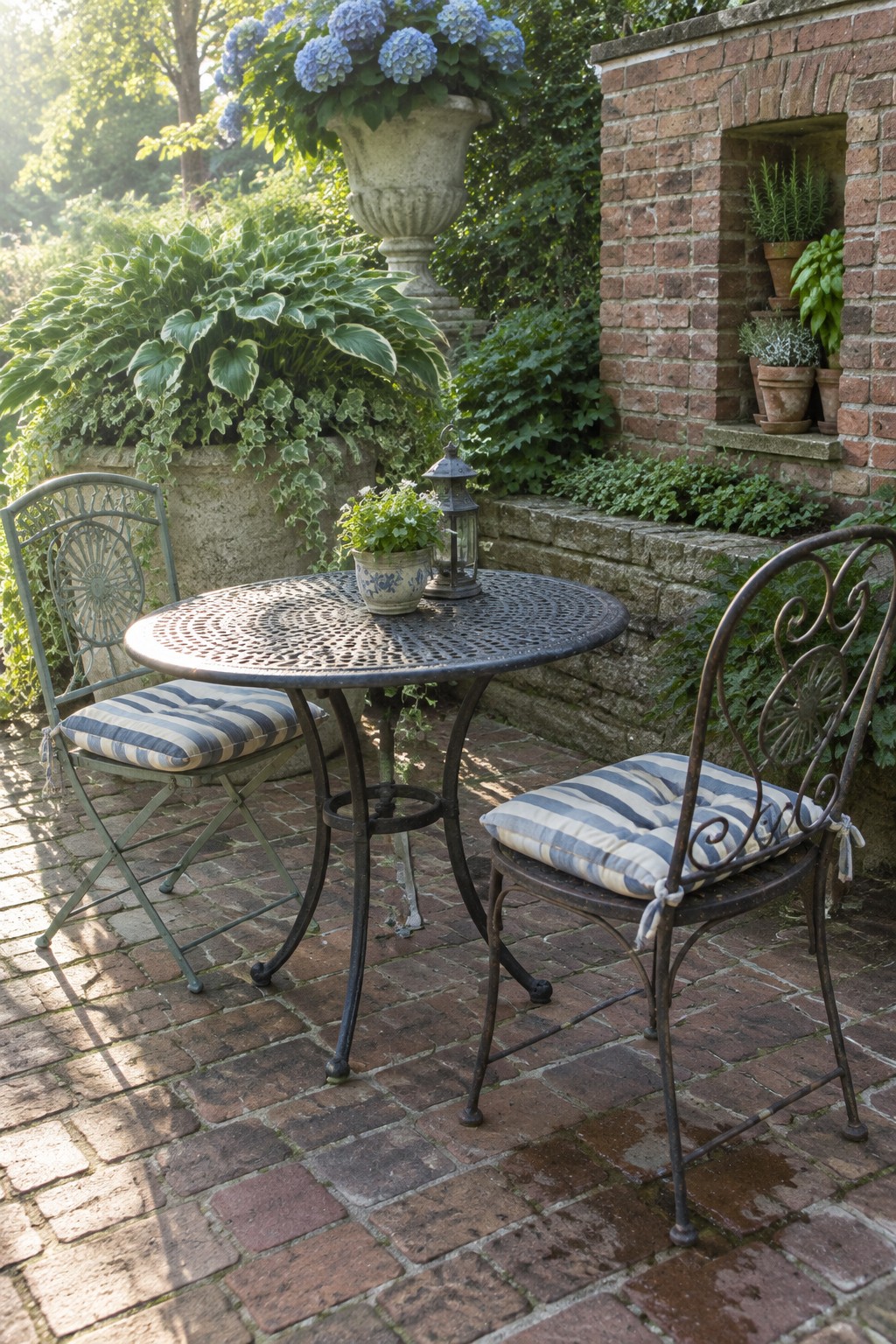
A small seating area can feel tucked into the garden when leafy hostas grow around its edges. The plants give the patio a softer boundary without blocking the way in or out.
This approach suits a brick courtyard or another shady corner where you want room to sit without clearing away all the greenery. Leave enough open space around the chairs, and choose hostas that fit the available light and mature size of the bed.
Build a Shaded Garden Around Terraced Beds

Terraced beds make a sloped shade garden easier to plant and easier to enjoy. Low stone walls hold the soil in place while giving hostas room to spread across each level.
Use this approach where a slope would otherwise be hard to maintain. Keep the walls low, and leave enough room for a gravel path or steps so you can reach plants for watering and trimming.
Use Hostas to Edge a Shaded Pool Garden
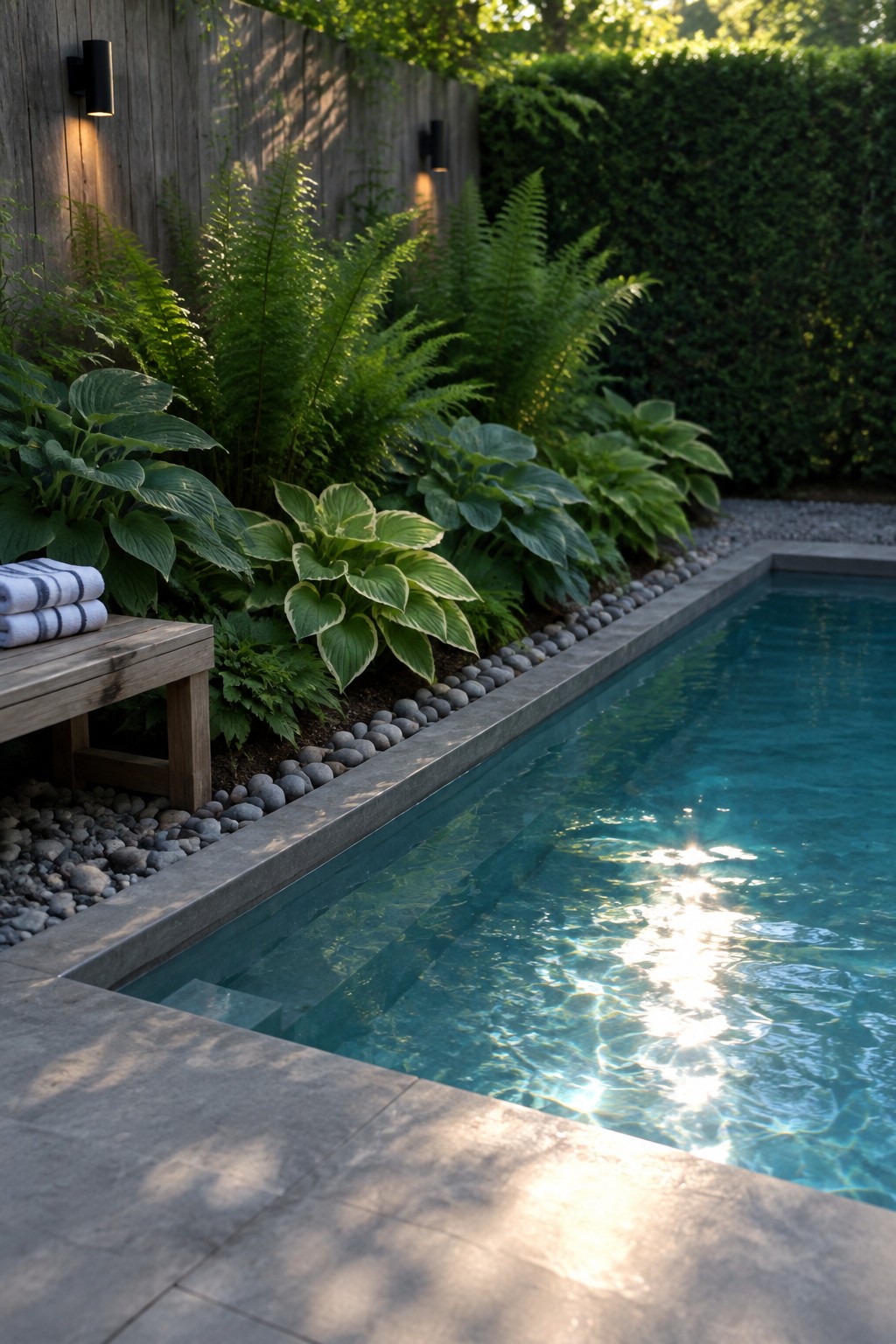
Hostas make a shady garden bed feel full without needing a long list of different plants. Their broad leaves work especially well along a hard edge, where they help the planting feel connected to the surrounding space.
For a similar look, plant hostas in loose groups beside a pool or patio, and use a narrow strip of smooth stones to keep soil away from the edge. Choose a spot with enough room for the leaves to spread, and leave a clear path around the pool.
Use Large Hostas to Fill a Shady Garden Bed
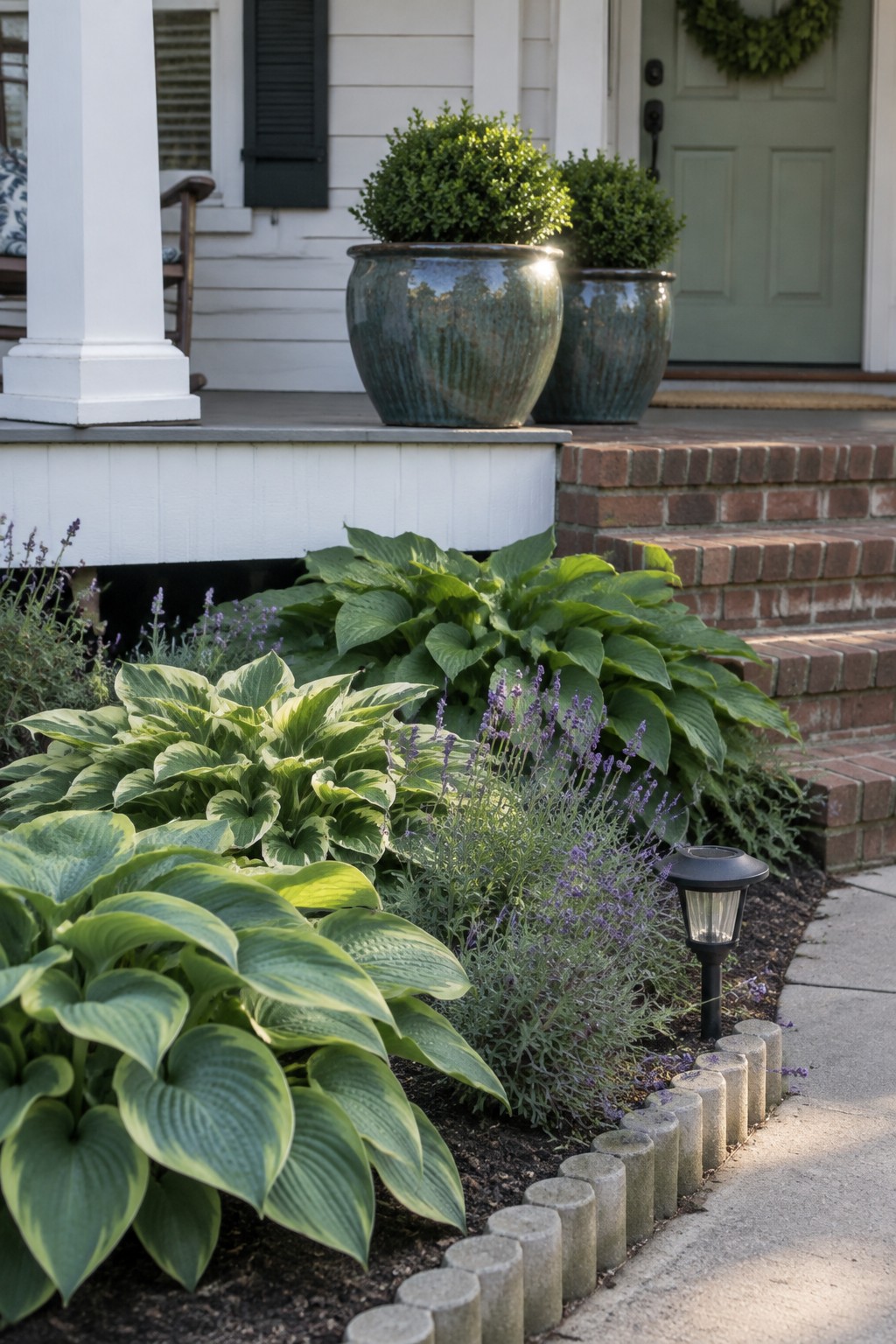
Large hostas make a useful foundation for a deep-shade garden. Their broad leaves cover open ground and give the bed a full, leafy look, while smaller plants can add interest around the edges.
Choose varieties in a mix of green and cream, and leave enough room for each plant to spread. Hostas work well beneath a porch or beside steps where sun-loving flowers may struggle, but avoid crowding them too closely.
Use Planters to Build a Shady Garden Border
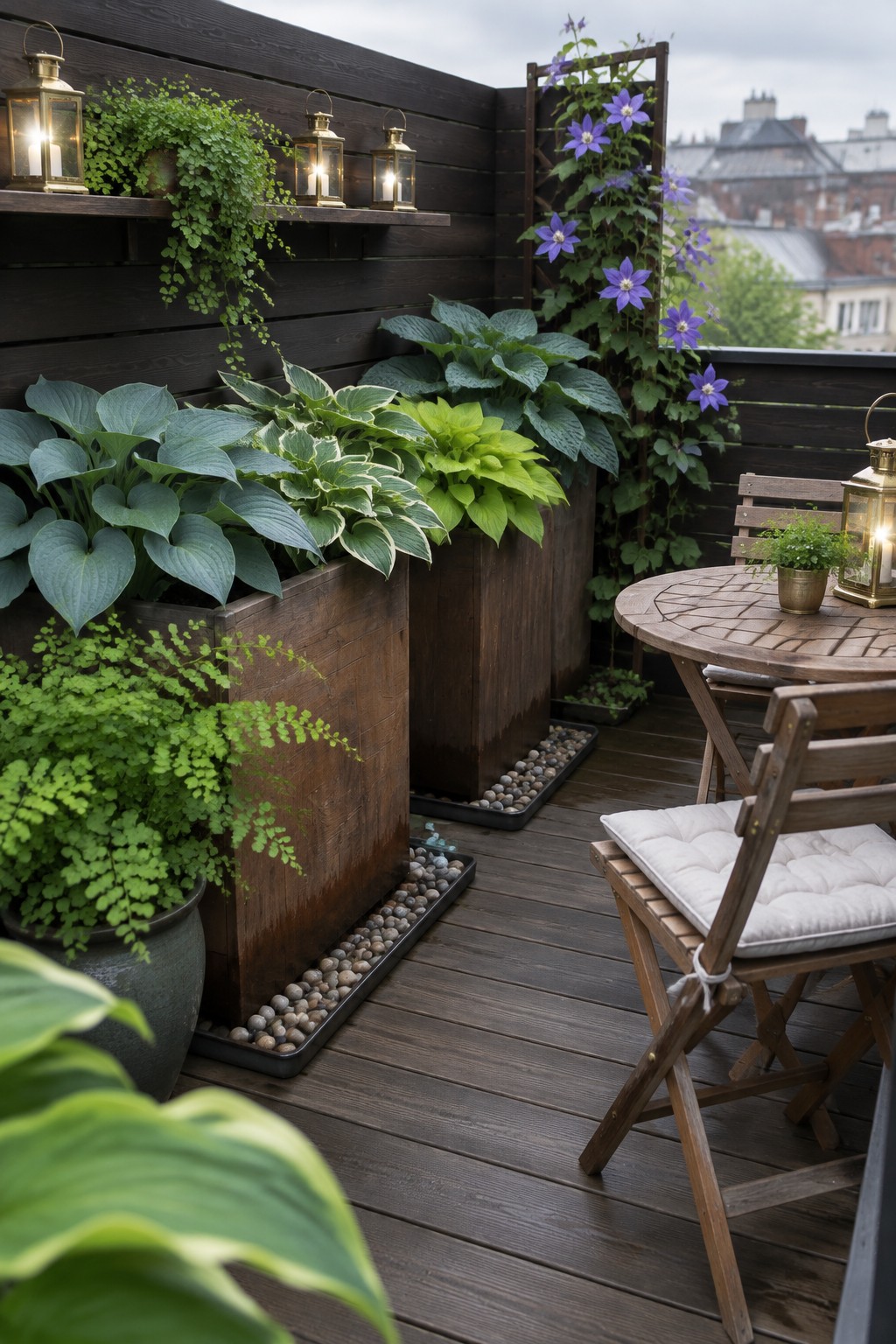
Tall wooden planters make it easier to grow hostas and other shade plants on a deck or small patio. Their height gives broad hosta leaves room to spread while keeping the garden contained.
Plant hostas in groups, with smaller foliage near the edges, and check that the planters have good drainage. This approach suits balconies and compact outdoor spaces where there isn’t much room for garden beds.
Use Curved Brick Paving in a Shaded Garden
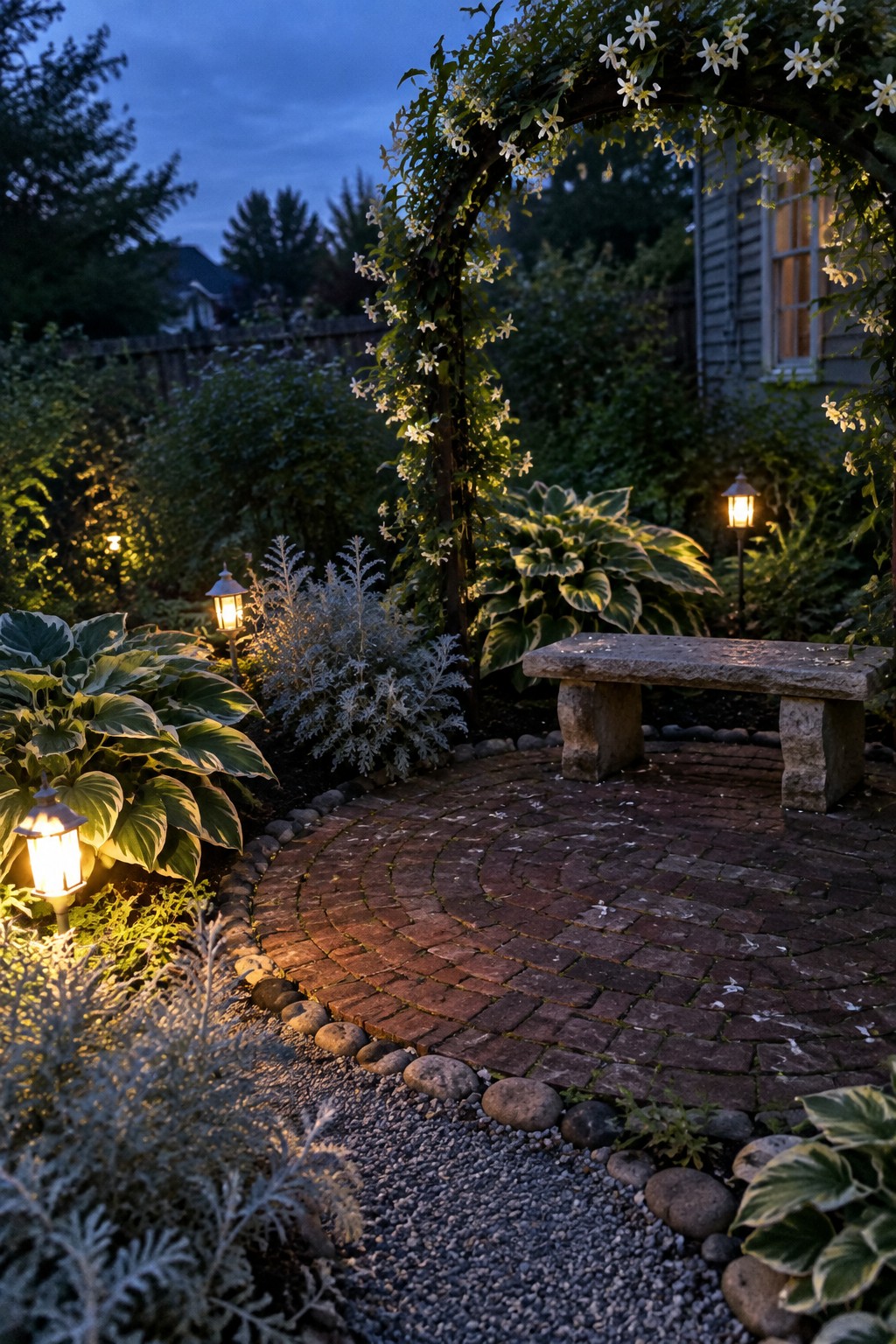
Curved brick paving gives a shade garden a clear place to walk or sit without taking over the planting. The rounded layout feels at home among leafy plants, and it can make a small garden nook feel more settled.
Use this idea where you want a simple spot to pause, such as beside a garden bench. Hostas can edge the paving, but leave enough room for them to spread without covering the bricks.
Use Hostas to Fill the Edges of a Garden Path
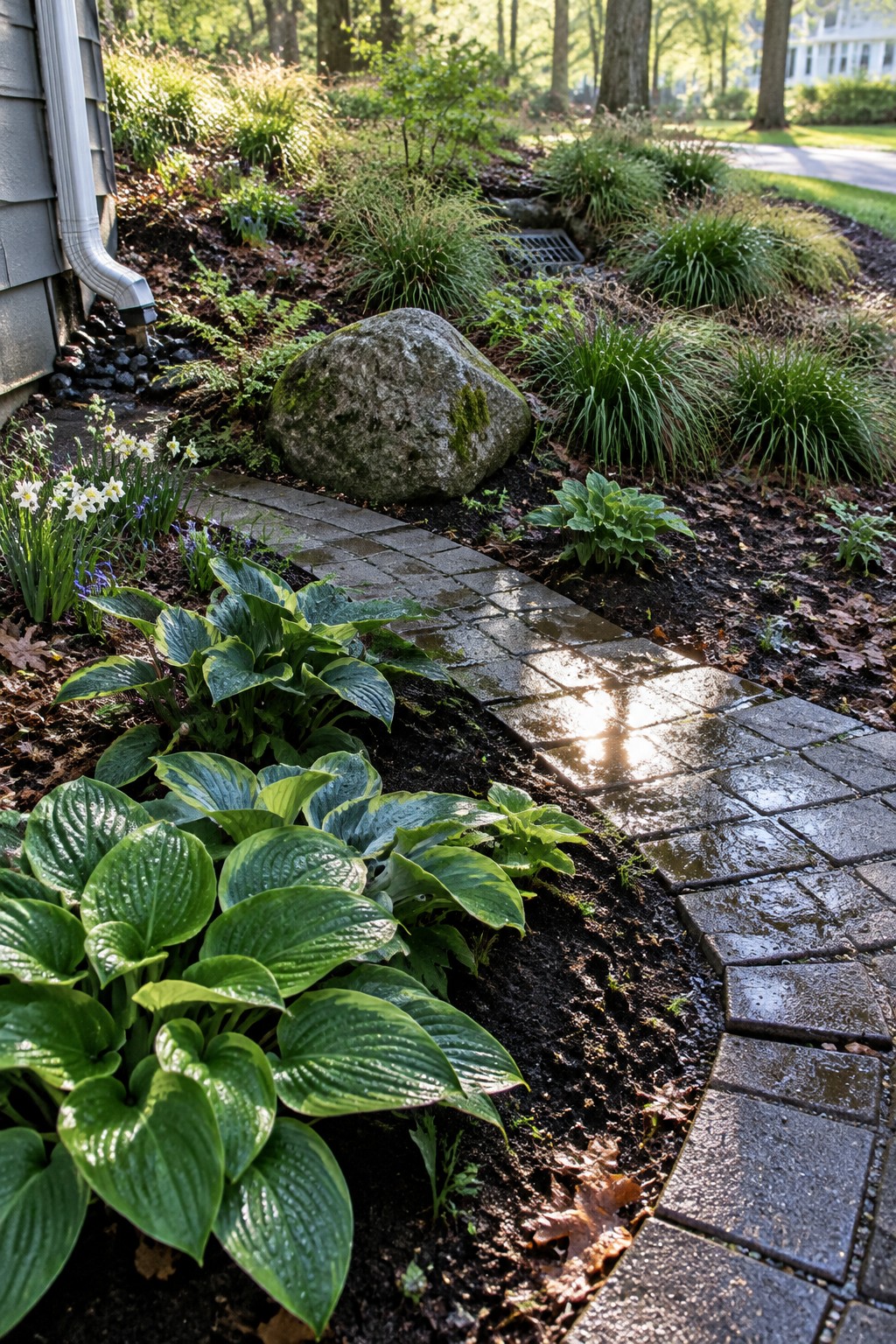
Hostas make a shaded path feel settled into the garden rather than cut through bare soil. Their broad leaves form a clear edge along the pavers and bring useful ground cover to spots where many sun-loving plants struggle.
Plant hostas in loose groups beside a path, leaving enough room for mature leaves so they do not spill across the walking surface. This works especially well along a shady side yard or a narrow walkway near the house.
Use a Brick Path to Shape a Shaded Garden
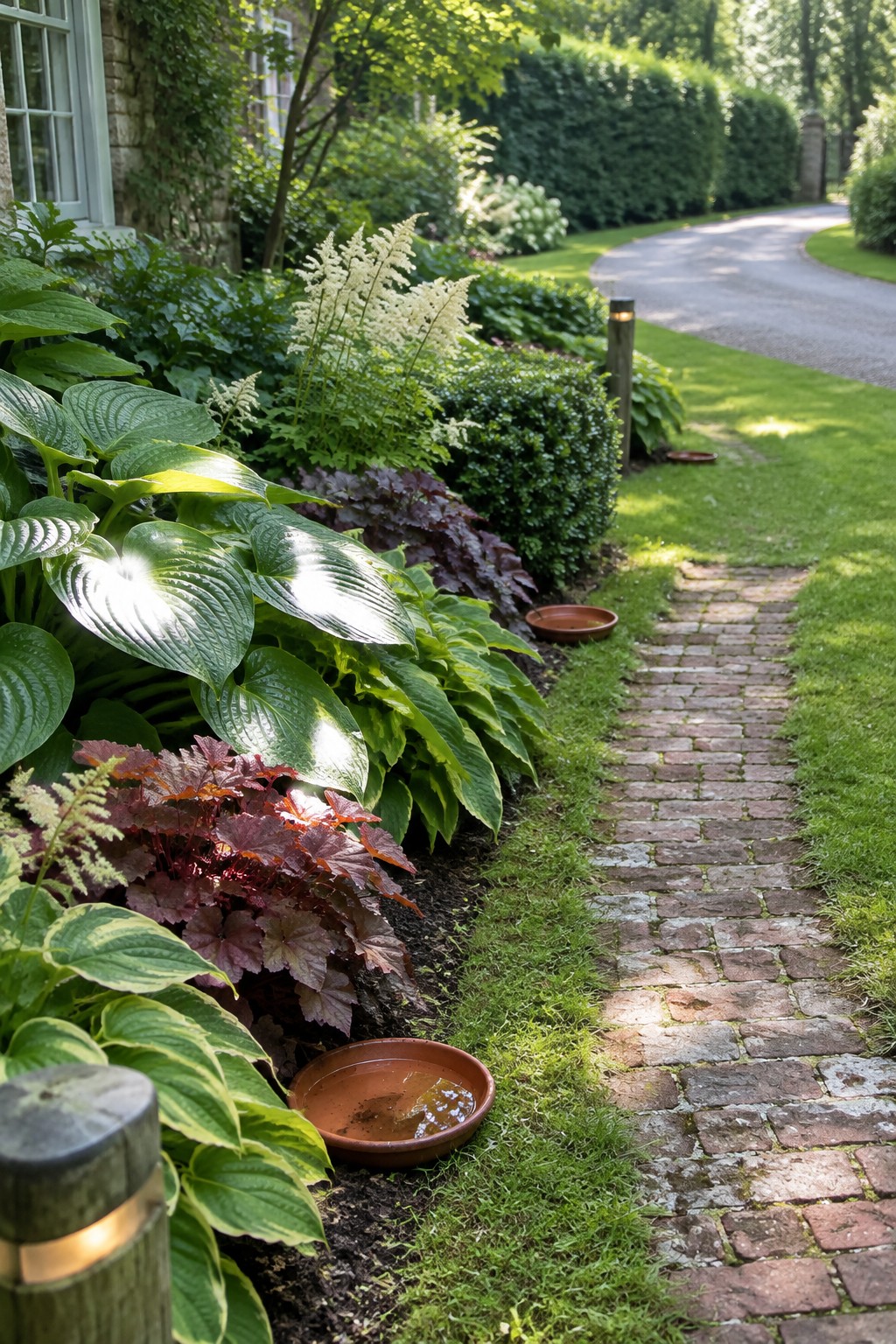
A brick path gives a shade garden a clear route through dense planting. It also makes a narrow bed feel like part of the garden rather than a strip of plants along the edge.
Hostas are a good choice beside the path because their broad leaves fill in the border without needing much sun. Leave enough room for the leaves to spread, and keep the bricks level so the path stays easy to walk on.
Use Stepping Stones to Make a Shaded Garden Path
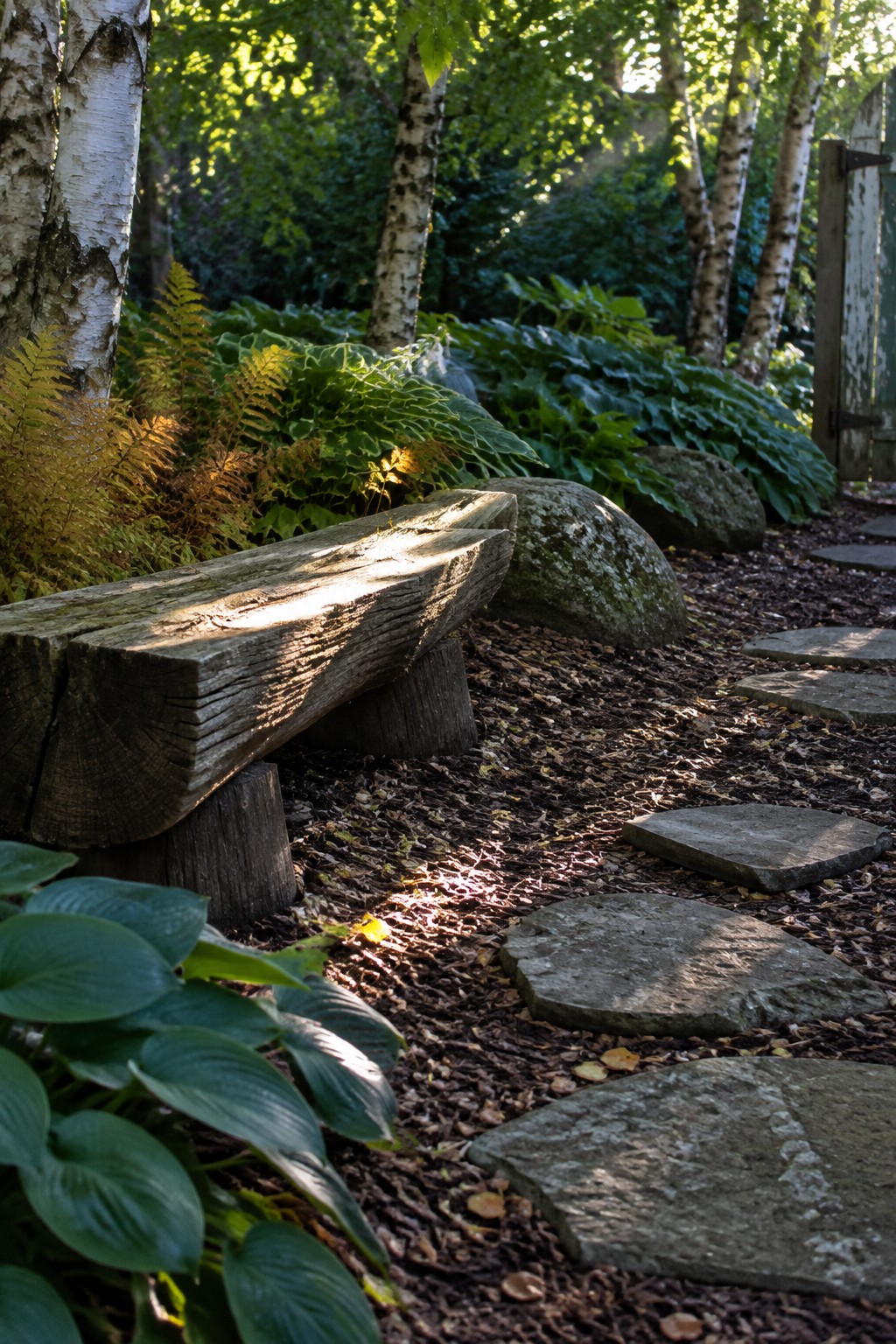
Stepping stones give a shade garden a clear route without covering the whole area in paving. Set among leaf mulch, they leave room for hostas and other groundcover to fill the edges, so the path feels part of the planting.
For a natural look, use stones with enough space between them for a comfortable stride, and keep them level and stable underfoot. This works well in a woodland-style garden where a full paved path would feel too formal.
Use Raised Hosta Beds Along a Shaded Walkway
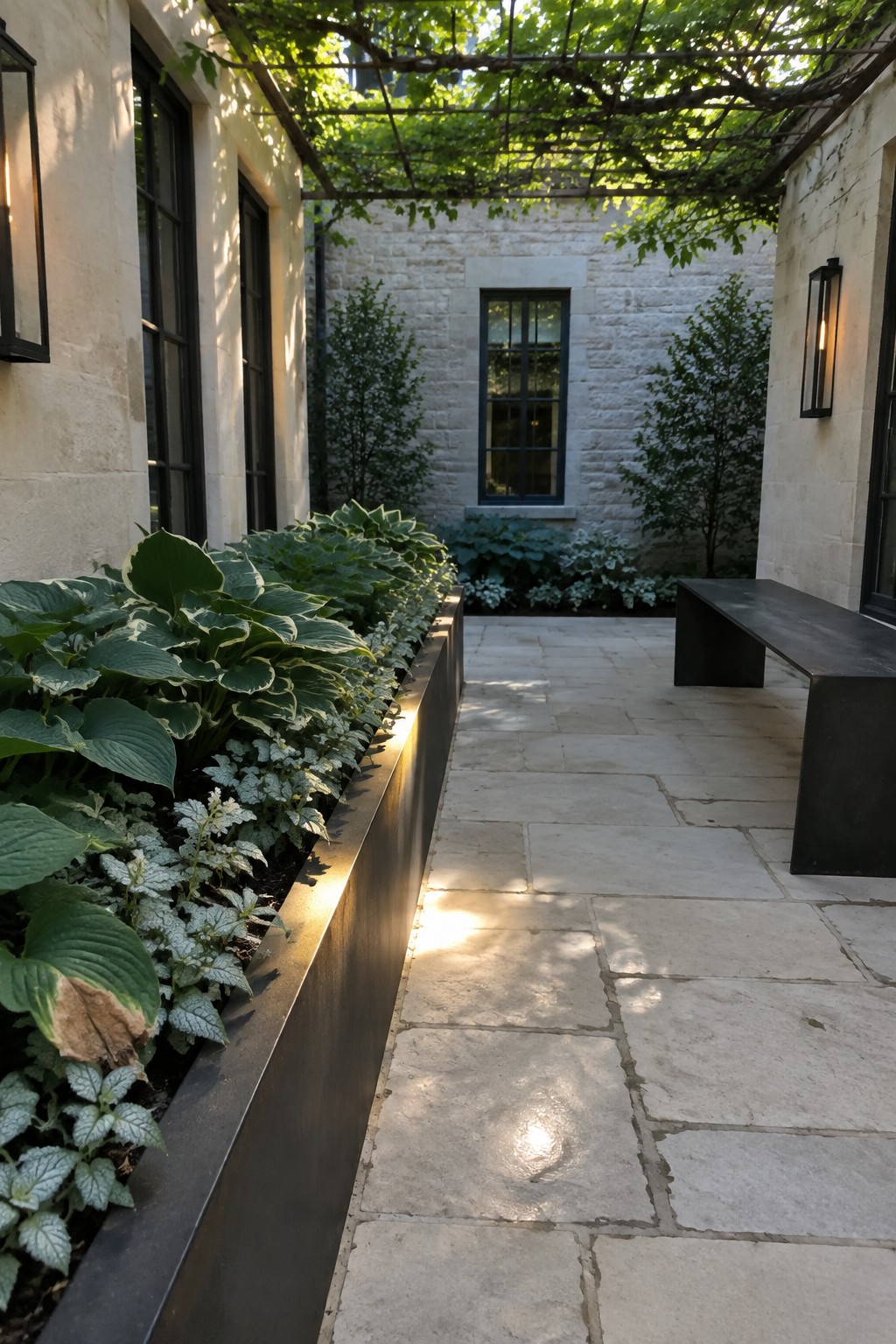
A long raised planter is a practical way to give hostas a clear place to grow along a shaded path. The metal edge keeps the planting bed neat, while the broad leaves fill it in without crowding the walking space.
This approach works well in narrow courtyards or beside house walls where ground-level beds may be hard to maintain. Plant hostas toward the front for a fuller edge, and leave enough room for the plants to spread as they mature.
Use Hostas to Fill a Shady Entry Garden
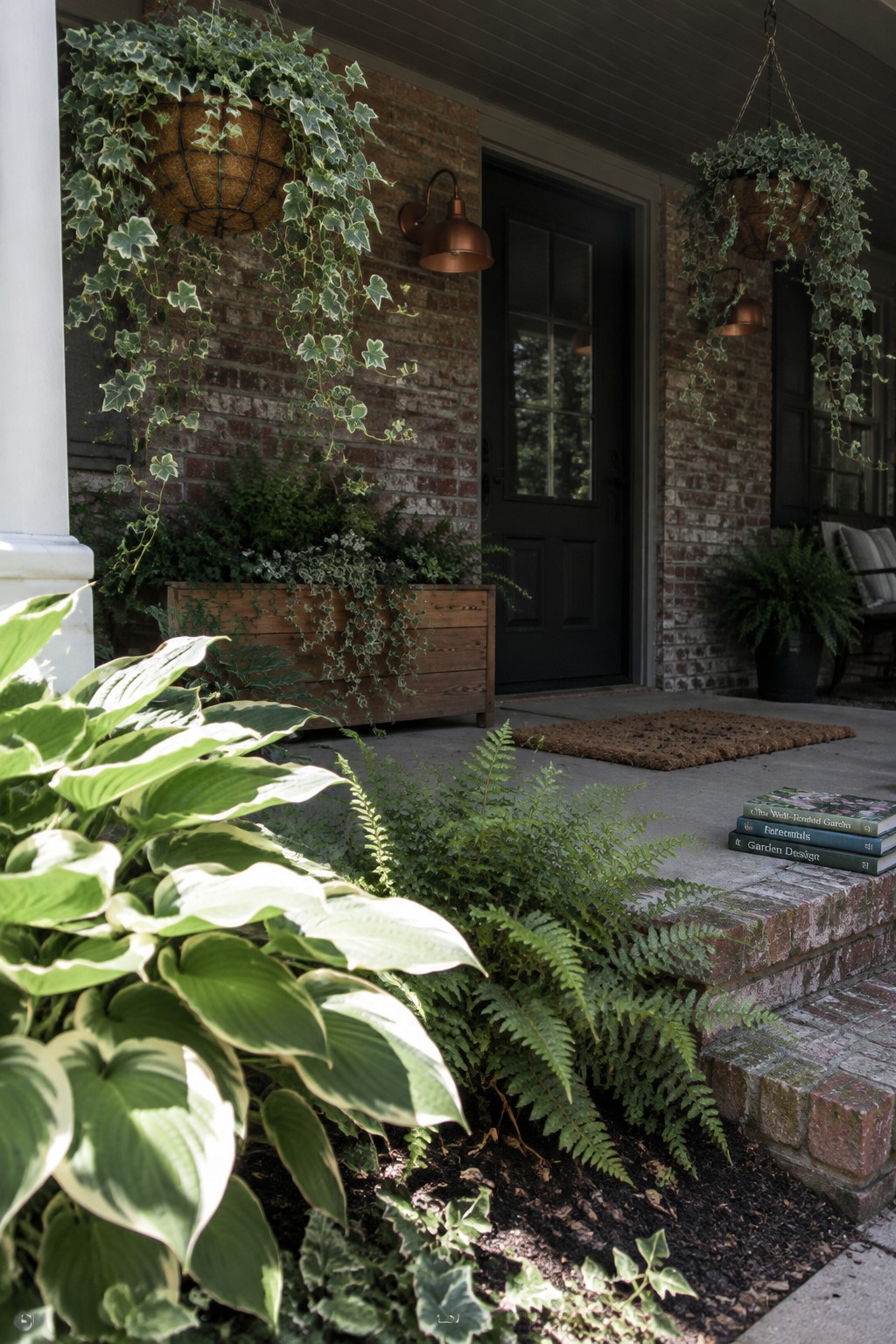
Hostas are a good way to make a shaded entrance feel planted and settled. Their broad leaves fill space near the ground, while smaller plants such as ferns can add variety without crowding the bed.
Use hostas along a porch or walkway where trees or the house block strong sun. Leave room between plants for them to spread, and choose varieties with different leaf sizes or colors to keep the planting easy to read.
Use a Dry Creek Bed to Guide the Garden
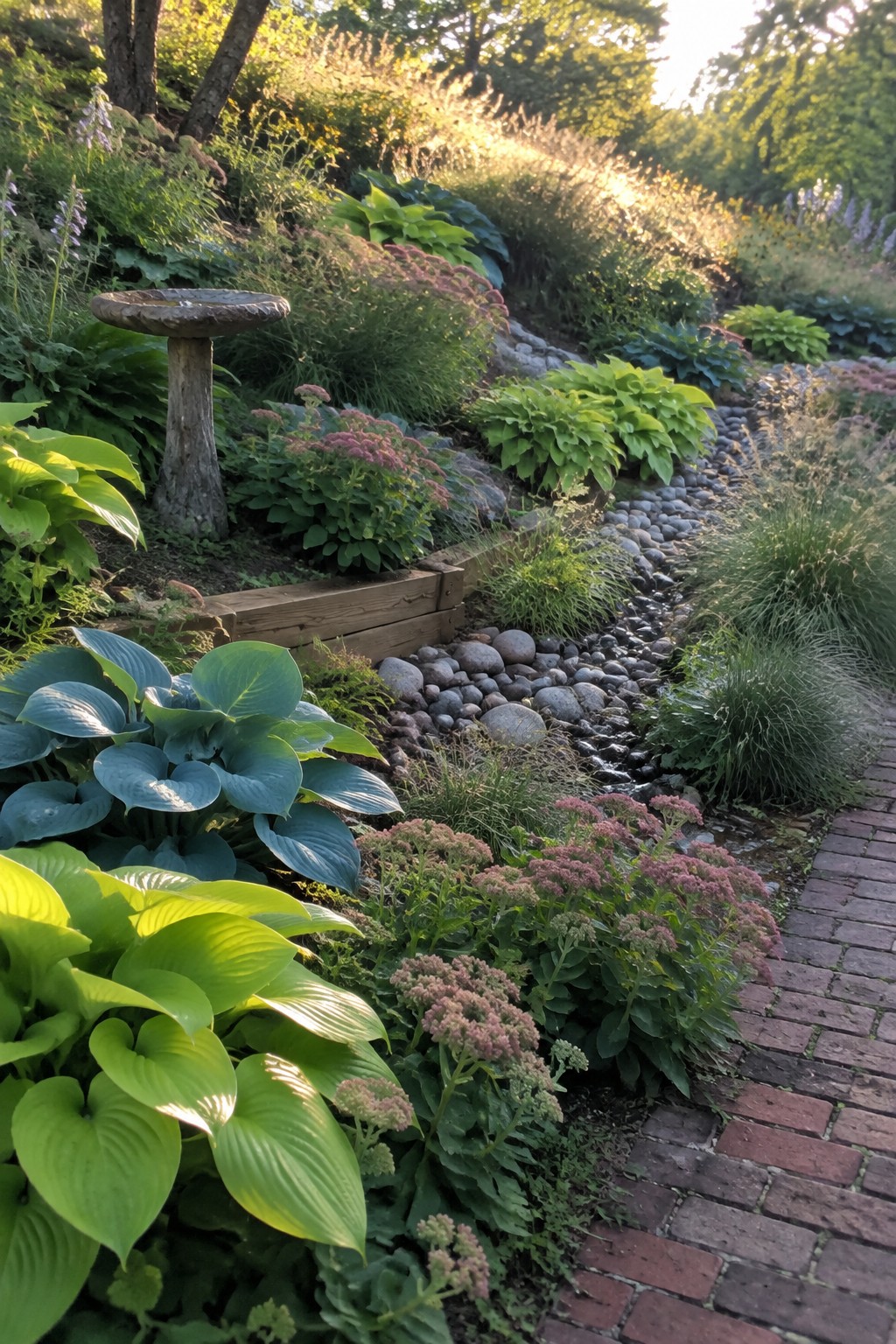
A dry creek bed gives a shaded garden a clear route through dense planting. Rounded stones define the channel, while hostas and other leafy plants can grow along its edges without making the space feel crowded.
Use this idea where rainwater naturally runs or where a garden needs a visual path between planting beds. Choose stones in a range of sizes, and keep the channel shallow and easy to maintain.
Use Hostas to Plant Around a Garden Fountain
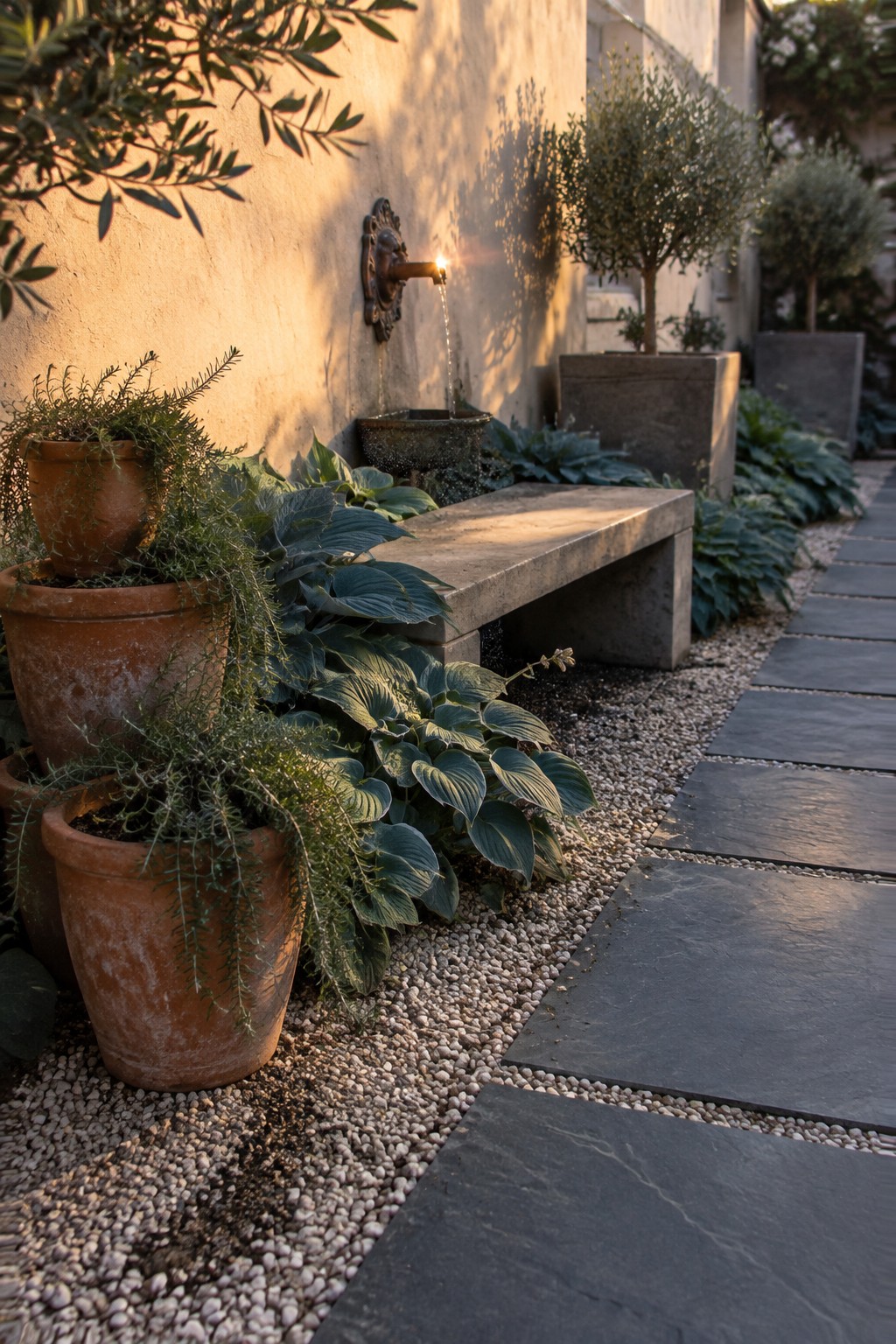
A small fountain can give a shady garden bed a clear focal point. Hostas planted around its base bring broad leaves close to the water, while the sound of a gentle trickle makes a quiet corner feel more pleasant to spend time in.
Keep the hostas far enough back that they do not crowd the basin or block access for cleaning. This idea works well in a narrow side garden or along a wall, where a fountain can make use of space that might otherwise go unnoticed.
Add a Bench Along a Shaded Garden Path
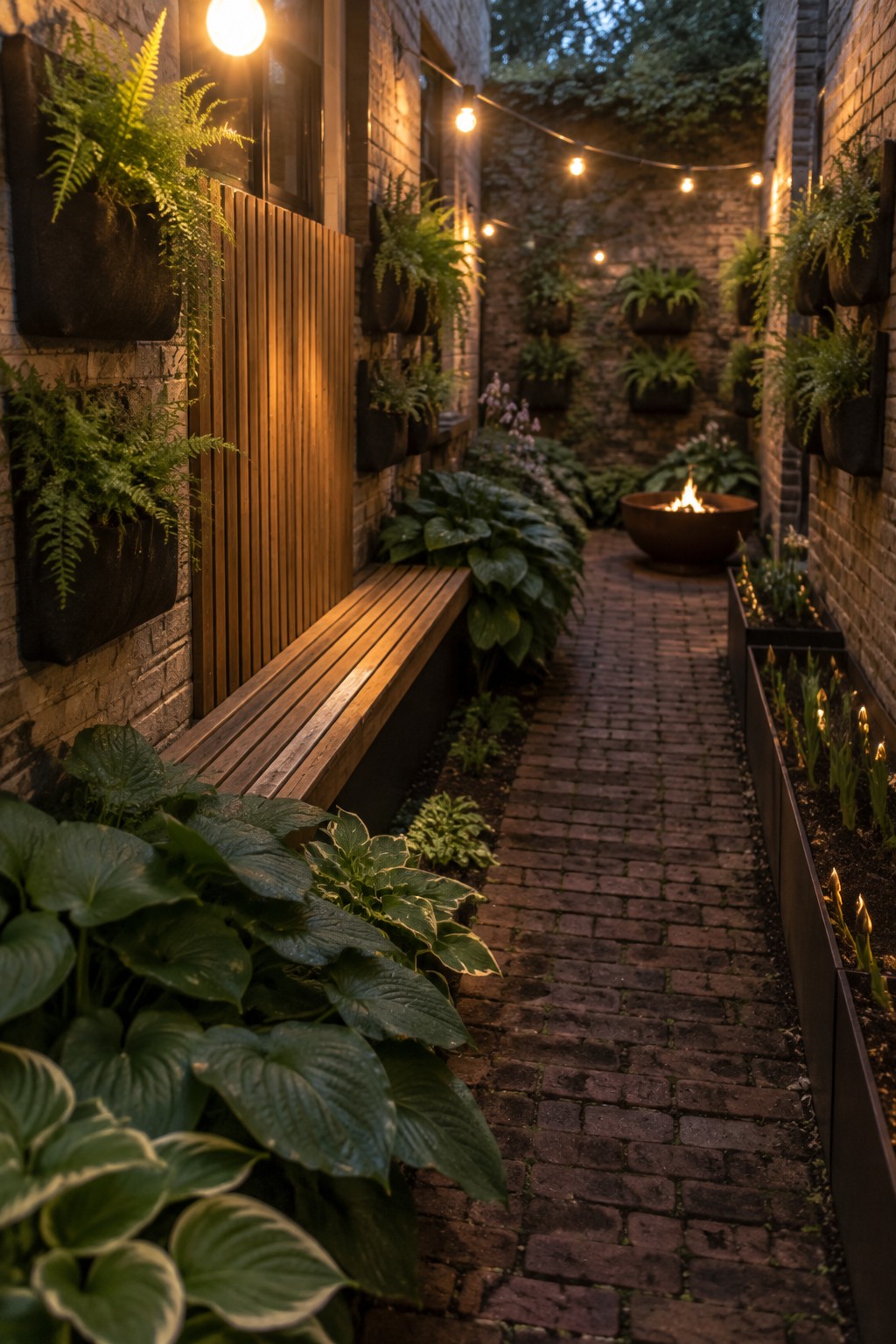
A narrow bench built beside a garden path makes a small shaded space more useful. It gives you a place to sit among the plants without taking up the walkway, and it can make a long, enclosed garden feel like somewhere to pause.
A simple wood bench works well along a wall or fence where the path has a little extra width. Keep the planting low around its legs so the seat stays easy to reach and the walkway remains clear.
Use a Timber Edge to Define a Shaded Hosta Bed
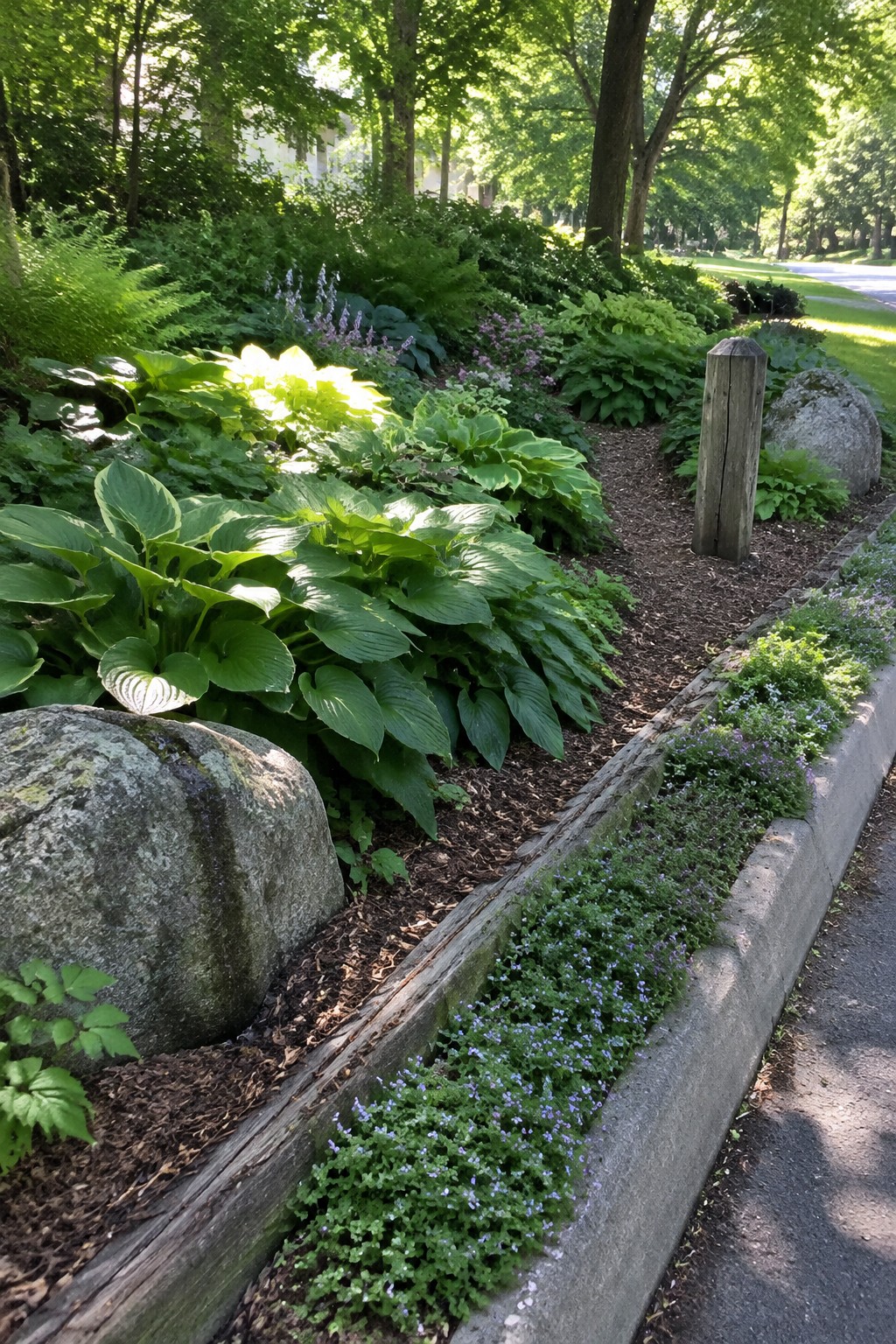
A low timber edge gives a shady planting bed a clear shape and keeps it distinct from the path beside it. Here, broad hosta leaves fill the bed, while the wood edging follows the garden’s curve.
This approach works well where a garden borders a walkway or driveway. Use durable, ground-contact-rated timber, and keep the bed wide enough for hostas to spread without spilling over the edge.
Use Hostas to Shape a Shaded Pool Garden
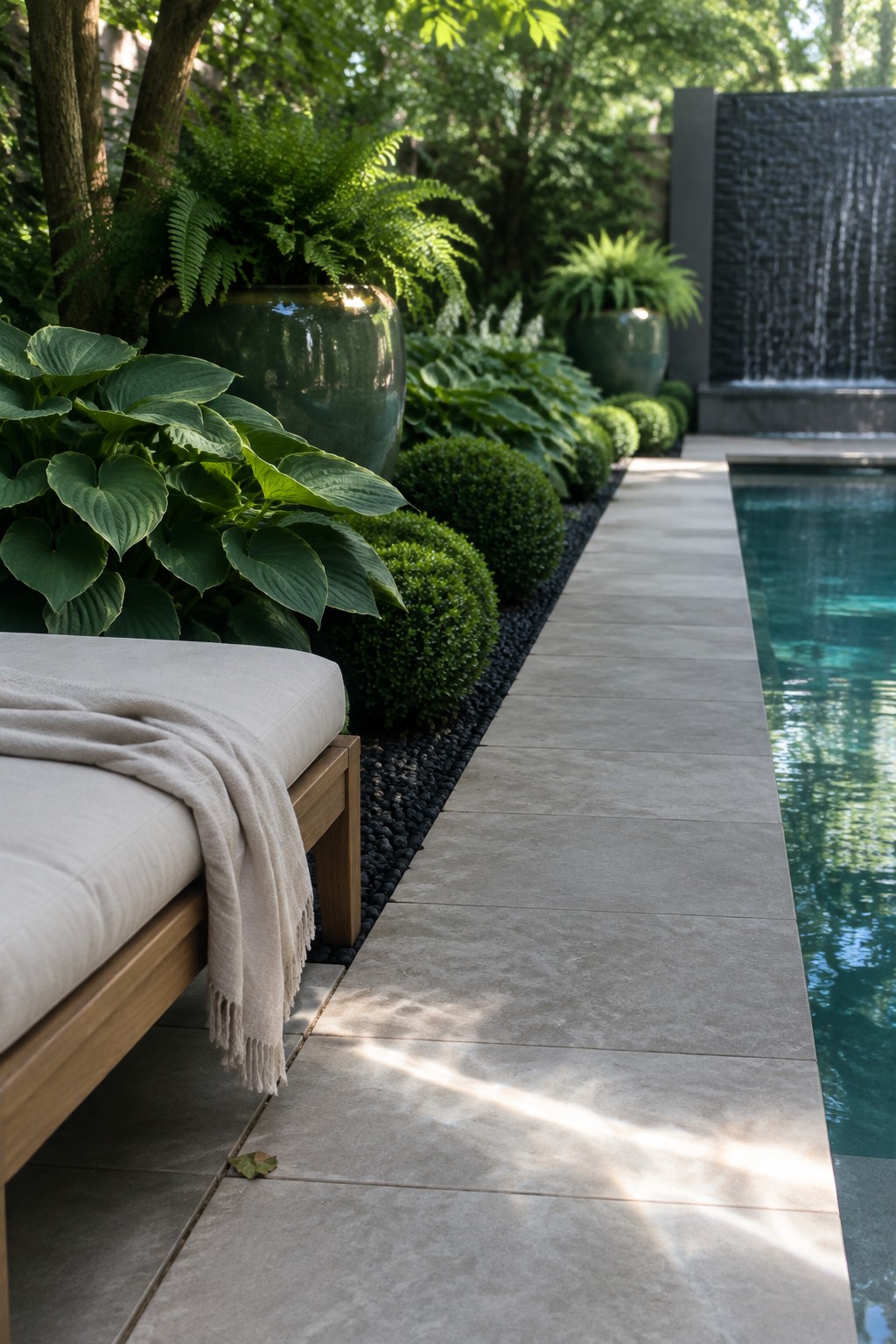
Hostas can make the edge of a pool feel like part of the garden rather than a separate hardscape. Their broad leaves fill the low planting beds, while rounded shrubs give the border a tidy shape.
Use hostas in a shaded poolside bed where they can grow without crowding the walkway. Leave enough room for mature leaves and keep the plants back from the pool edge so they do not spill onto the paving.
Frequently Asked Questions
Q: Can hostas grow in deep shade with very little sun?
A: Yes, hostas do well in deep shade, though they may grow more slowly and produce fewer flowers. Variegated varieties usually need a little filtered light to keep their leaf markings bright.
Q: How often should I water hostas under trees?
A: Check the soil with your finger, since tree roots can soak up water quickly. If the top inch feels dry, give the plants a deep drink, especially during hot, dry spells.
Q: What can I plant with hostas to keep a shade garden from looking flat?
A: Pair their broad leaves with fine-textured plants like ferns or woodland grasses. A few stepping stones or a simple garden ornament can add interest without crowding the planting.
Q: How do I stop slugs from chewing holes in hosta leaves?
A: Water in the morning so the soil surface is less damp overnight, when slugs are most active. Clear away soggy leaves and debris around the plants, too.
