


Shady garden beds can feel lush and layered, but they need enough contrast to keep all that greenery from blending together.
I find that azaleas bring color and shape while hostas fill the ground with broad leaves, so the two can work well together when their sizes and spacing suit the bed.
The first thing I notice in a planting like this is how the taller shrubs frame the space and whether paths, borders, or nearby trees leave the plants room to grow.
Some combinations also need more care than they appear to at first, especially when light, soil moisture, and mature plant size vary across the yard.
I’d save the ideas that fit your garden’s conditions and adapt the layout to make the shade feel intentional rather than crowded.
Use A Stone Path To Shape A Shade Garden
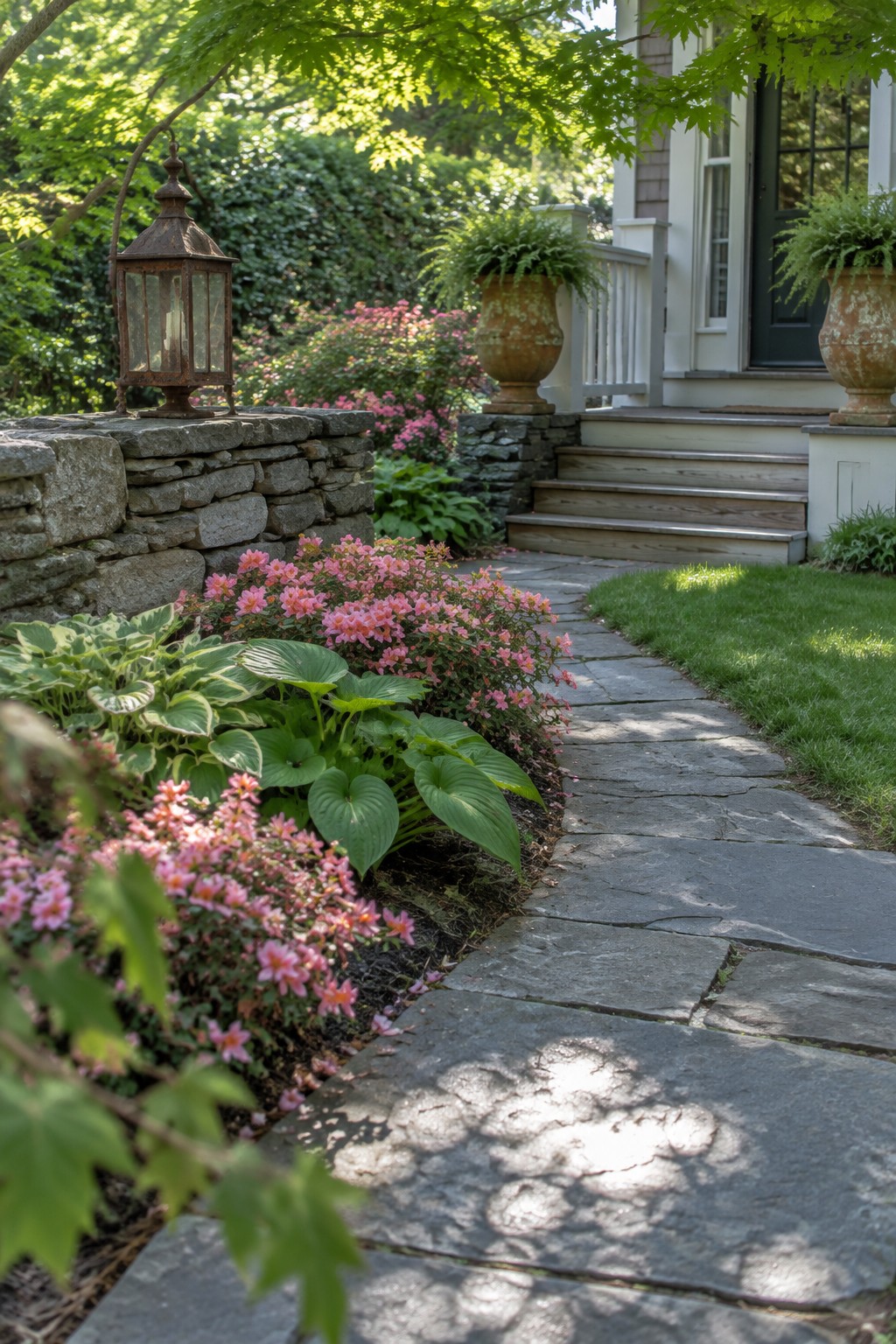
A gently curving stone path gives a shade garden a clear route through the planting. It also lets flowers and leafy groundcover fill the space beside the walkway without making the yard feel crowded.
Use larger, irregular stones for a relaxed look, and leave enough room between the path and flower beds for plants to spread. This approach works especially well in a small garden leading to a porch or front door.
Build a Shady Garden Around a Stepping-Stone Path
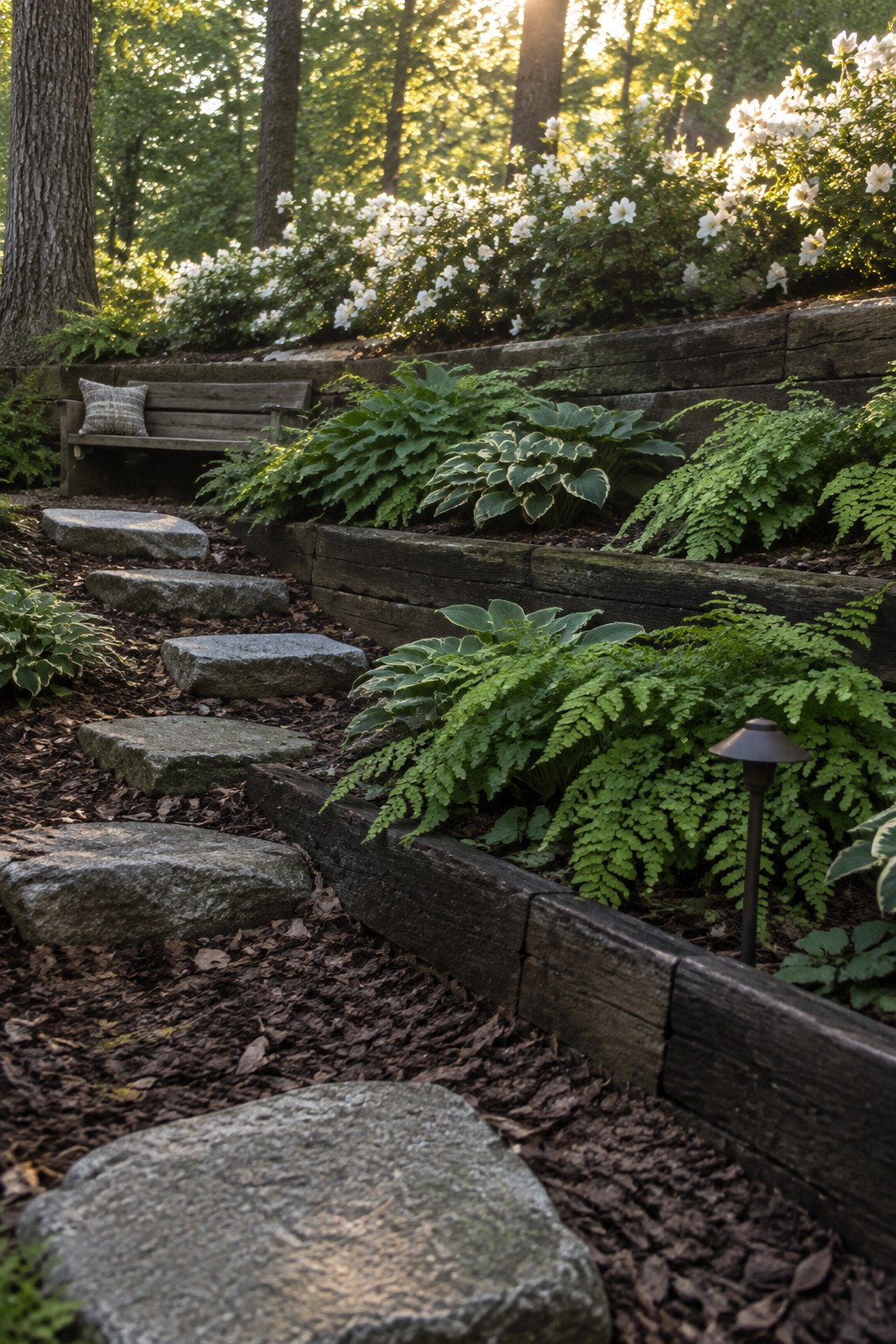
A stepping-stone path makes a sloped shade garden easier to walk through while giving the planting beds a clear shape. Broad, irregular stones feel at home among leafy plants and look less formal than a straight paved walk.
Set the stones firmly and keep each step comfortable to reach. Use sturdy ground cover or mulch between them, and leave enough room along the path for hostas and azaleas to spread without taking over the walking surface.
Use Stepping Stones to Lead Through a Shade Garden

A simple stepping-stone path gives a shade garden a clear route without taking up space with a solid walkway. The stones feel at home among low plants, and the gaps let moss and ground cover spread around them.
Set stones firmly and keep the spacing comfortable for walking. This approach works well in a small garden where you want to reach a focal point without disturbing the planting. Pair it with shade-loving hostas and azaleas, but leave enough room for them to grow without covering the path.
Use a Brick Path to Guide the Garden

A brick path gives a shade garden a clear route through the planting without taking up much room. Its simple, familiar look suits a cottage-style yard, and hostas and azaleas can grow along the edges to keep the walkway connected to the garden.
For a narrow side yard, lay the bricks in a straight line or a gentle curve, leaving enough space to walk comfortably. Choose bricks with a slightly textured surface, and keep nearby plants trimmed back so the path stays easy to use.
Make a Fire Pit the Center of a Shady Patio

A fire pit can give a shaded patio a clear place to gather. A round concrete fire pit makes a natural center for the seating without taking up the whole space.
Keep the chairs close enough for conversation, but leave a clear walking route around them. This layout works well in a garden where trees and planting provide shade, as long as the fire pit is installed and used with proper clearance from foliage and the pergola.
Use Low Hedges to Define a Garden Path
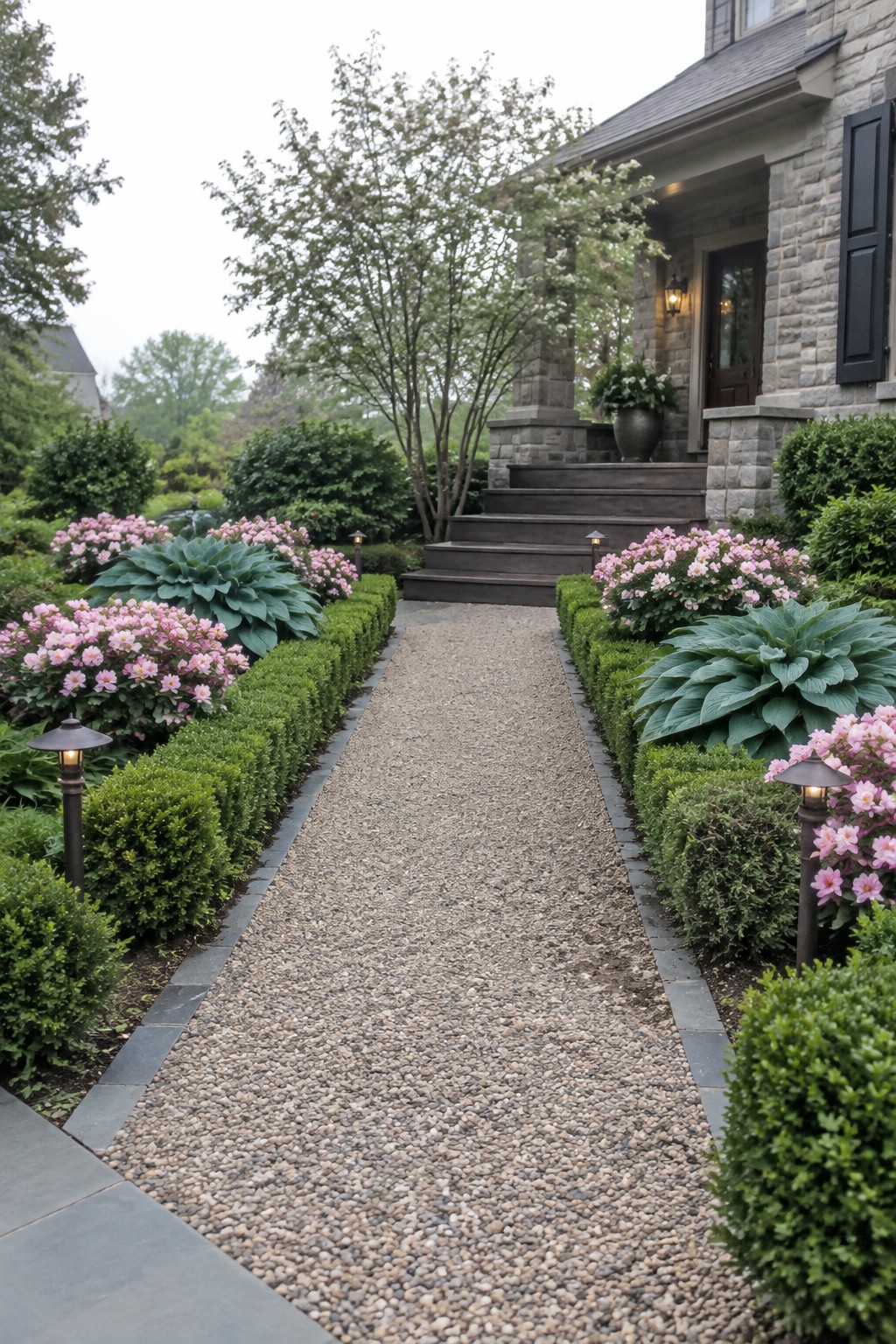
Low, clipped hedges give a garden path a clear edge and help the planting feel orderly without making it stiff. In a shade garden, they also set off leafy hostas and flowering azaleas, so each bed has room to show.
Use compact hedging along a straight walkway to a front entry or through a narrow side garden. Keep it low enough that flowers and foliage remain visible, and leave enough space for the plants to mature without crowding the path.
Plant Azaleas and Hostas Along a Garden Path
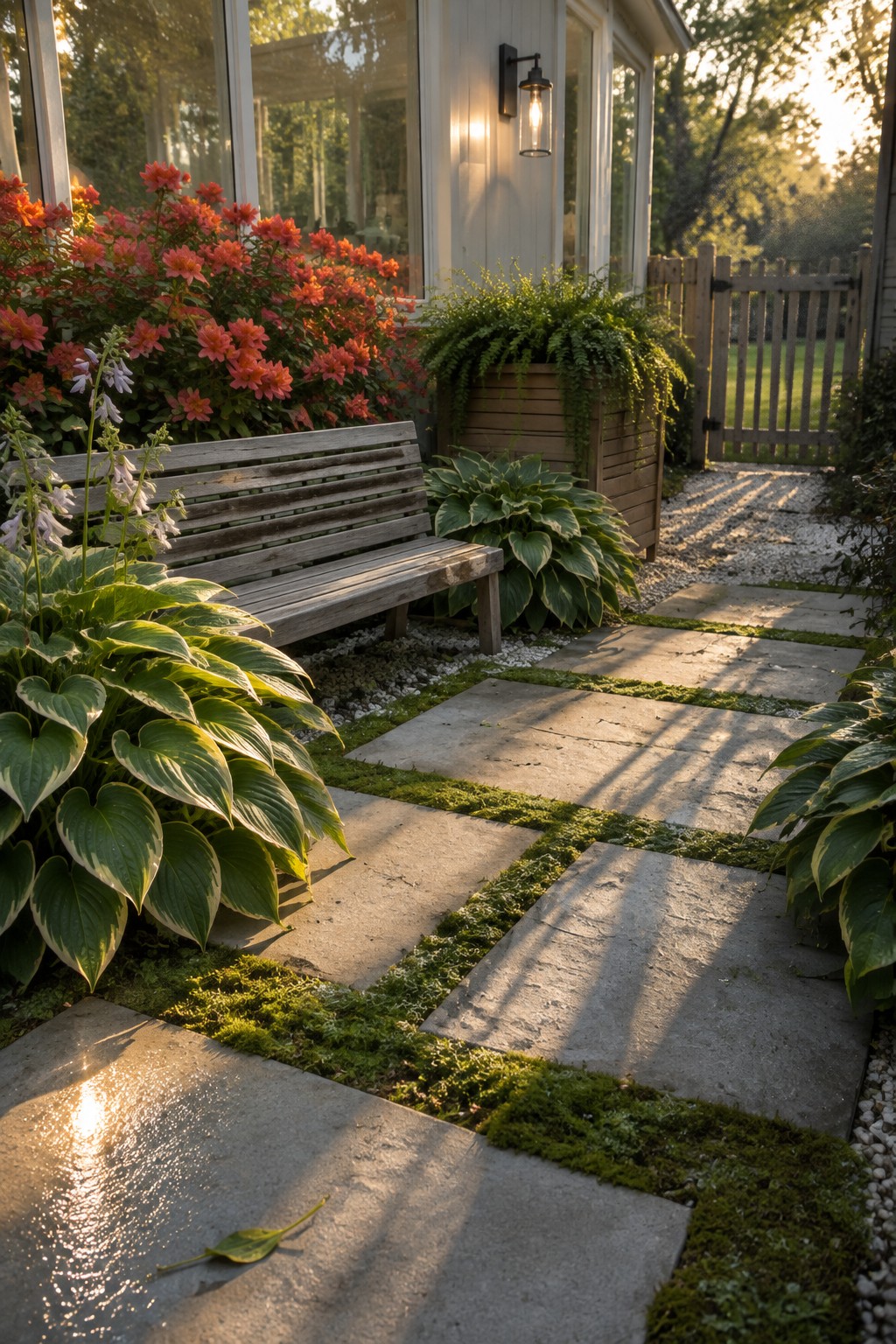
A simple path can give a shade garden a clear route without taking space away from planting. Broad stepping stones set among low greenery leave room for azaleas and hostas to fill out the edges, so the walkway feels part of the garden rather than a strip through it.
Leave enough space between stones for easy steps, and keep the planting low near the walking surface. Hostas work well along the path, while azaleas can sit farther back where their flowers have room to show. Check that the stones stay level, especially in a damp or mossy garden.
Layer Shade Plants Along a Mulched Garden Path

A narrow path through a shade garden works best when the plants rise in layers along its edges. Low hostas near the path and taller azaleas farther back keep the route clear while making a small garden bed feel full.
Use mulch to define the path if you want a softer, less formal look. Leave enough room for the hostas to spread, and keep branches trimmed back so the path stays easy to walk.
Use Warm Lighting Along a Garden Fence

Warm lights mounted along a fence can make a narrow shade garden easier to enjoy after dark. They also help the fence feel like part of the garden rather than just a boundary.
Try small, downward-facing fixtures or low-voltage lights spaced along the fence, keeping the glow gentle so it does not overwhelm nearby plants. This works well beside a path, where steady light can help guide the way without shining directly into the house.
Build a Small Bridge Into the Garden
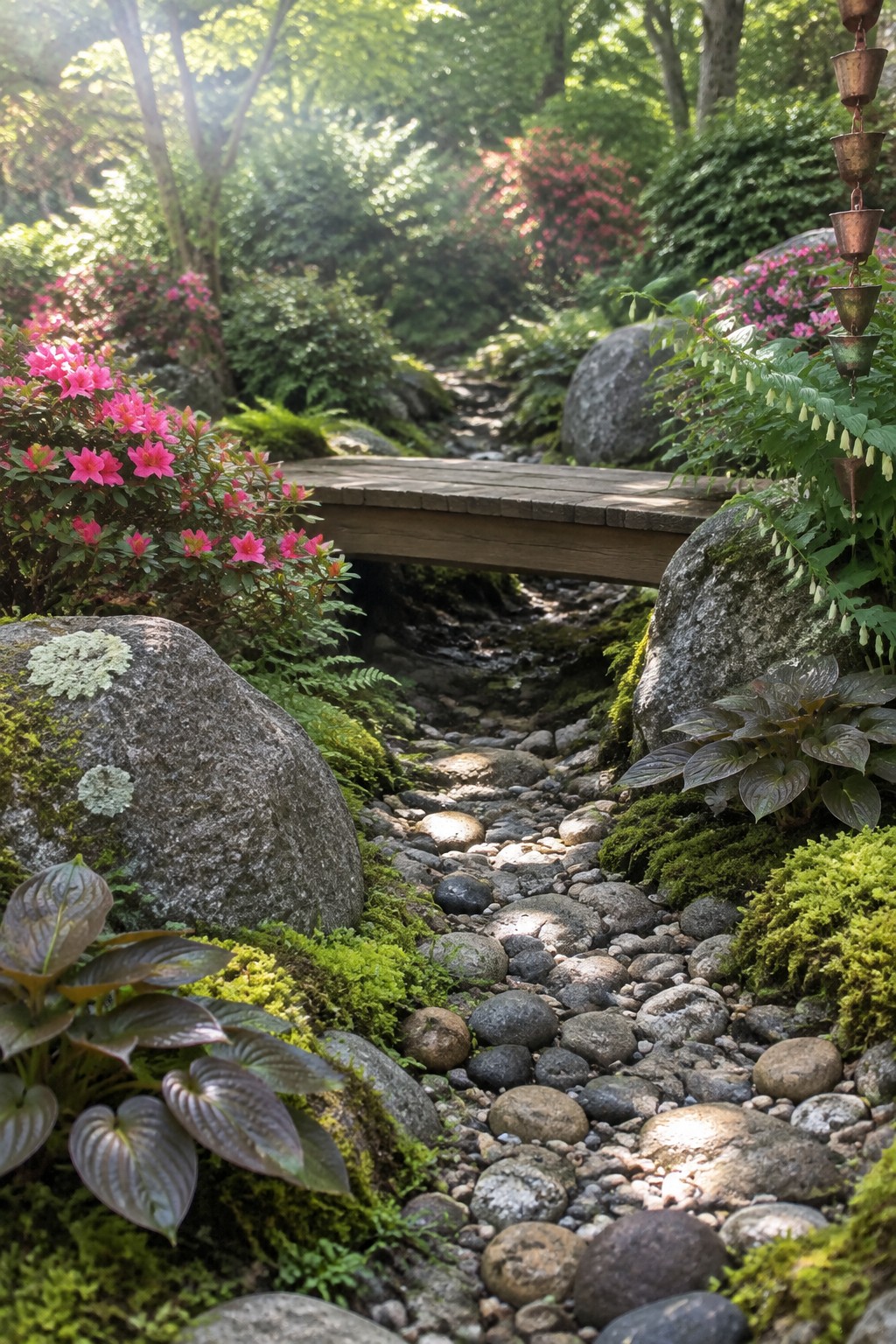
A simple wooden bridge can make a shade garden path feel like a destination, even when it crosses a dry creek bed. The change in level gives the route a little purpose and lets nearby azaleas and hostas feel like part of a planned garden rather than separate plantings.
Use a bridge where a path crosses a shallow drainage channel or a rocky garden feature. Keep it wide and sturdy enough for comfortable walking, and make sure the approach stays clear of spreading plants.
Use a Narrow Pool Edge to Shape the Garden

A slim water feature can give a shade garden a clear line without taking over the planting. Here, the long pool edge runs beside clipped shrubs and flowering plants, making the garden feel orderly while leaving room for lush foliage.
This approach works best where there is space for a simple, straight layout. Use plants such as azaleas and hostas along the edge, and leave enough room for paving so the pool remains easy to reach and maintain.
Layer Hostas Along a Garden Path
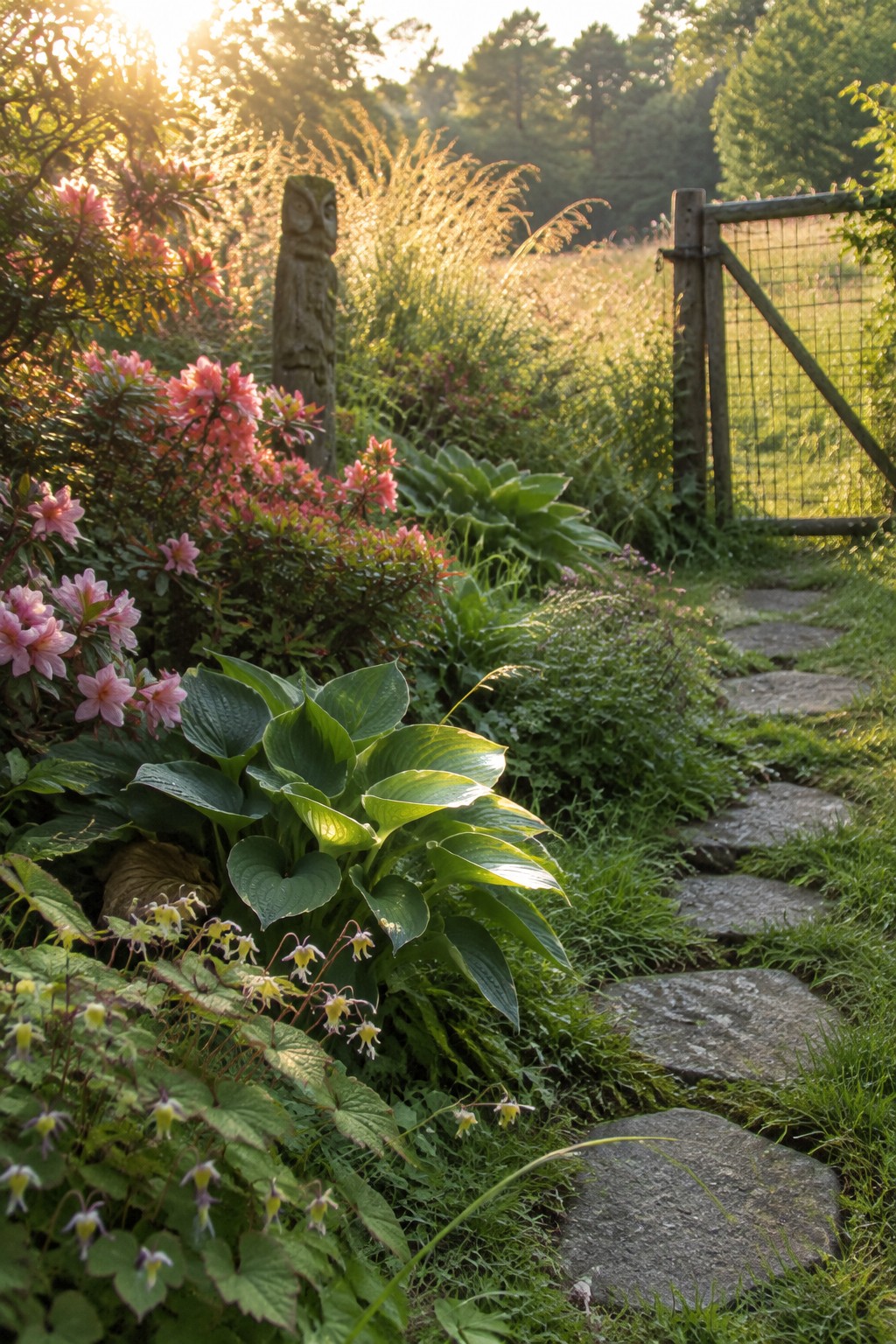
A stepping-stone path feels settled into a shade garden when leafy plants grow close along its edges. The broad hosta leaves give the stones a softer border without hiding the route.
Use this approach where you want a clear way through a dense planting bed. Leave enough space for hostas to spread, and keep their leaves from covering the stones as they mature.
Define a Shade Garden With Low Hedges
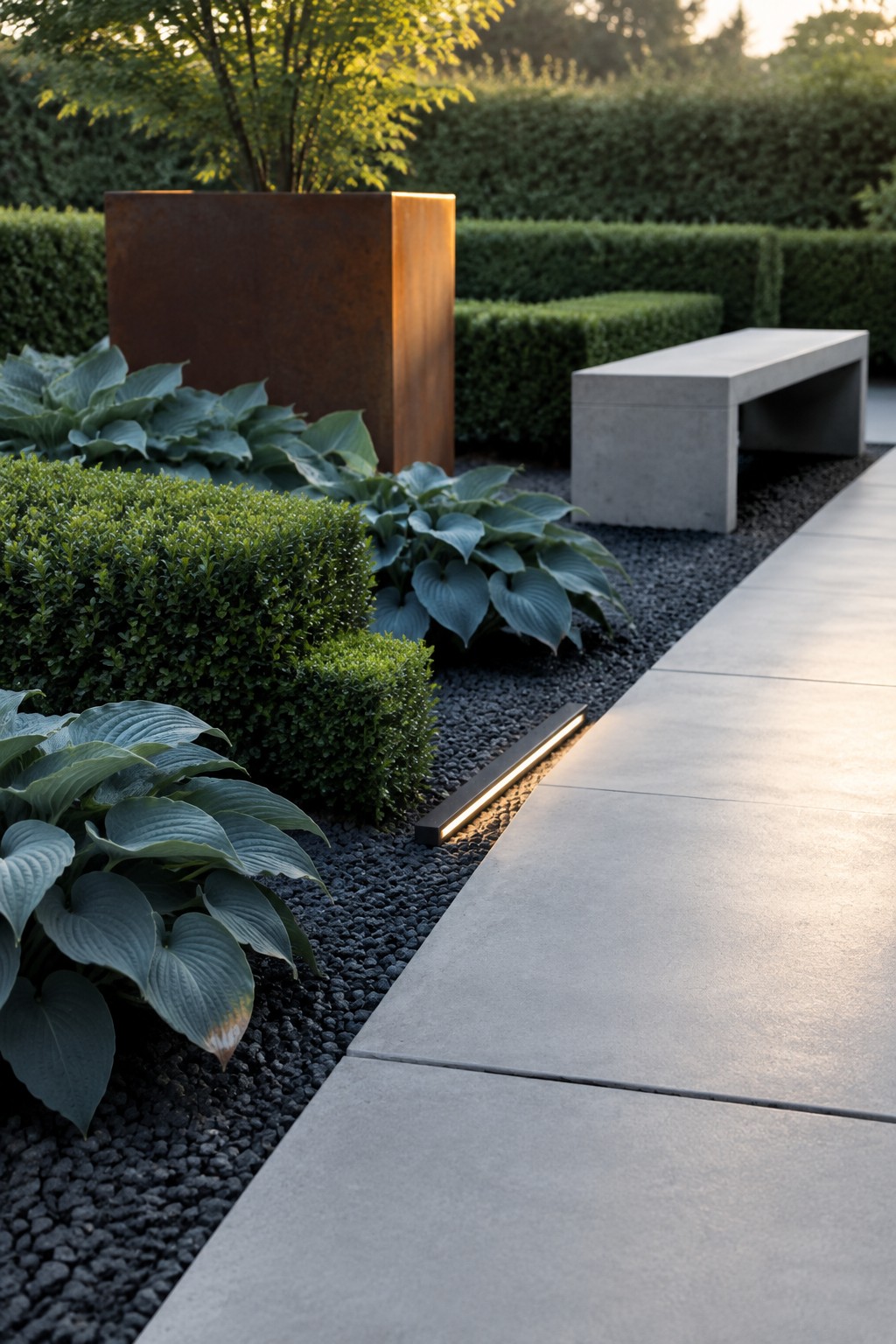
Low, neatly clipped hedges can give a shade garden a clear shape without blocking the view of larger plants. They make the planting beds feel intentional, while broad-leaved hostas bring a looser texture alongside the tidy edges.
Use this approach to separate a gravel bed from a paved walkway or to outline a small garden area. Choose hedge plants that suit the shade and leave enough room for them to grow, so they do not crowd nearby hostas or azaleas.
Use Raised Beds to Organize a Shady Garden

Raised beds give a shade garden a clear structure and make it easier to group plants with similar needs. They also lift leafy plantings above the path, so the garden feels organized without needing formal borders.
Use timber beds where you want defined growing areas and easy access for planting or weeding. Leave enough room beside them for a comfortable path, and add hostas or azaleas along the edges for a softer transition.
Add Curves to a Shade Garden Path
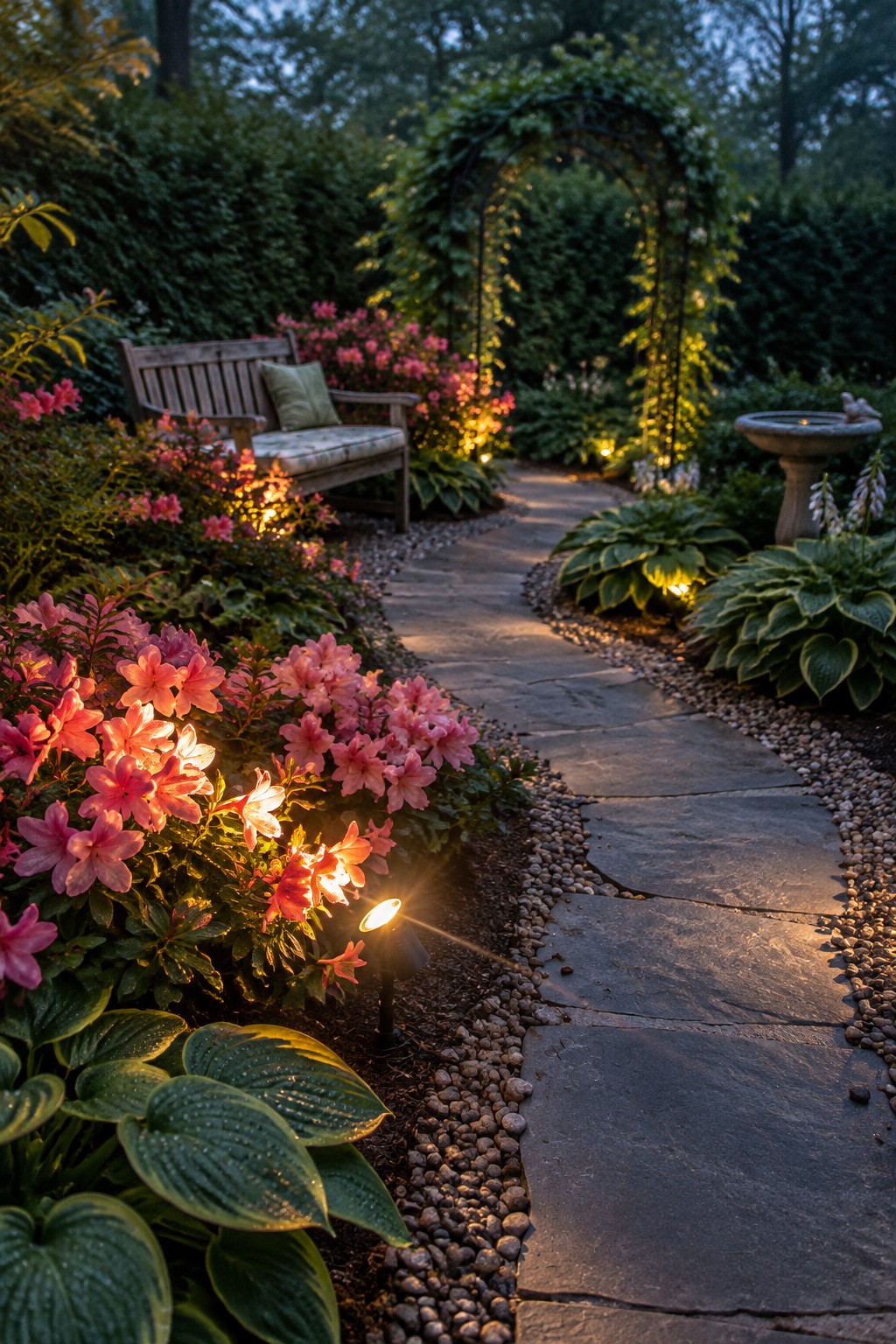
A gently curving stone path gives a shade garden a natural flow and makes the planting feel like part of the route. Azaleas and hostas can spill along its edges, while the turns keep the garden from reading as one straight strip.
Use broad, stable stones and leave enough room to walk comfortably, especially where the path bends. This layout works well in a tucked-away garden, but avoid crowding the edges so plants do not creep onto the walking surface.
Frequently Asked Questions
Q: How much shade do azaleas and hostas need to grow well together?
A: Hostas handle deep shade, while most azaleas bloom better with a little gentle morning sun. A spot with afternoon shade and evenly moist soil often suits both.
Q: How far apart should I plant azaleas and hostas?
A: Give each plant room to reach its mature width so air can move between them and the hostas don’t crowd the azaleas. Check the plant tags, then leave a little extra space if you want an easy-to-maintain bed.
Q: What should I plant between azaleas and hostas while they fill in?
A: Try a low groundcover such as sweet woodruff or add a few shade-loving ferns. Keep new plants clear of the azalea stems, where crowding can trap moisture.
Q: Can I mulch around both plants?
A: Yes. A layer of pine bark or shredded leaves helps keep roots cool and soil moist, but leave a small gap around the stems and crowns.
