

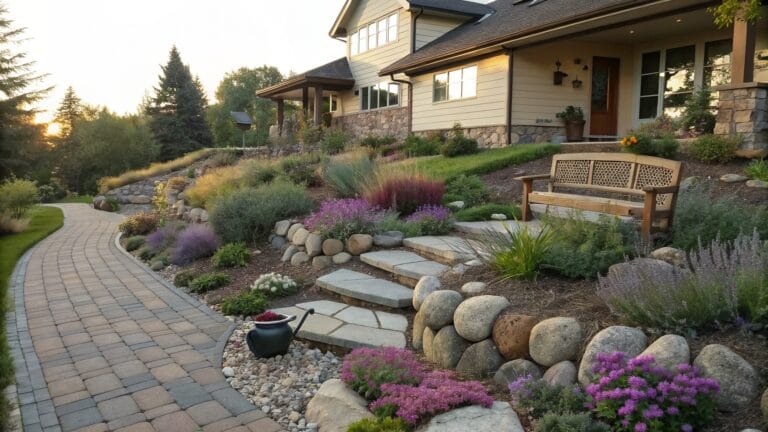
I’ve noticed over the years that gardens without clear structure often end up feeling messy as plants spread and seasons shift.
Rocks provide that reliable backbone for flower beds, holding everything in place while colors pop against them.
In my backyard, swapping out mulch for stones around a few perennials made the whole area look more intentional and easier to maintain.
People usually spot those vibrant rock-framed beds first when walking up a path, drawing them into the yard.
Some of these setups are practical enough to adapt right away, especially if you’re reshaping borders or edging.
Rock Walls Filled with Purple Flowers
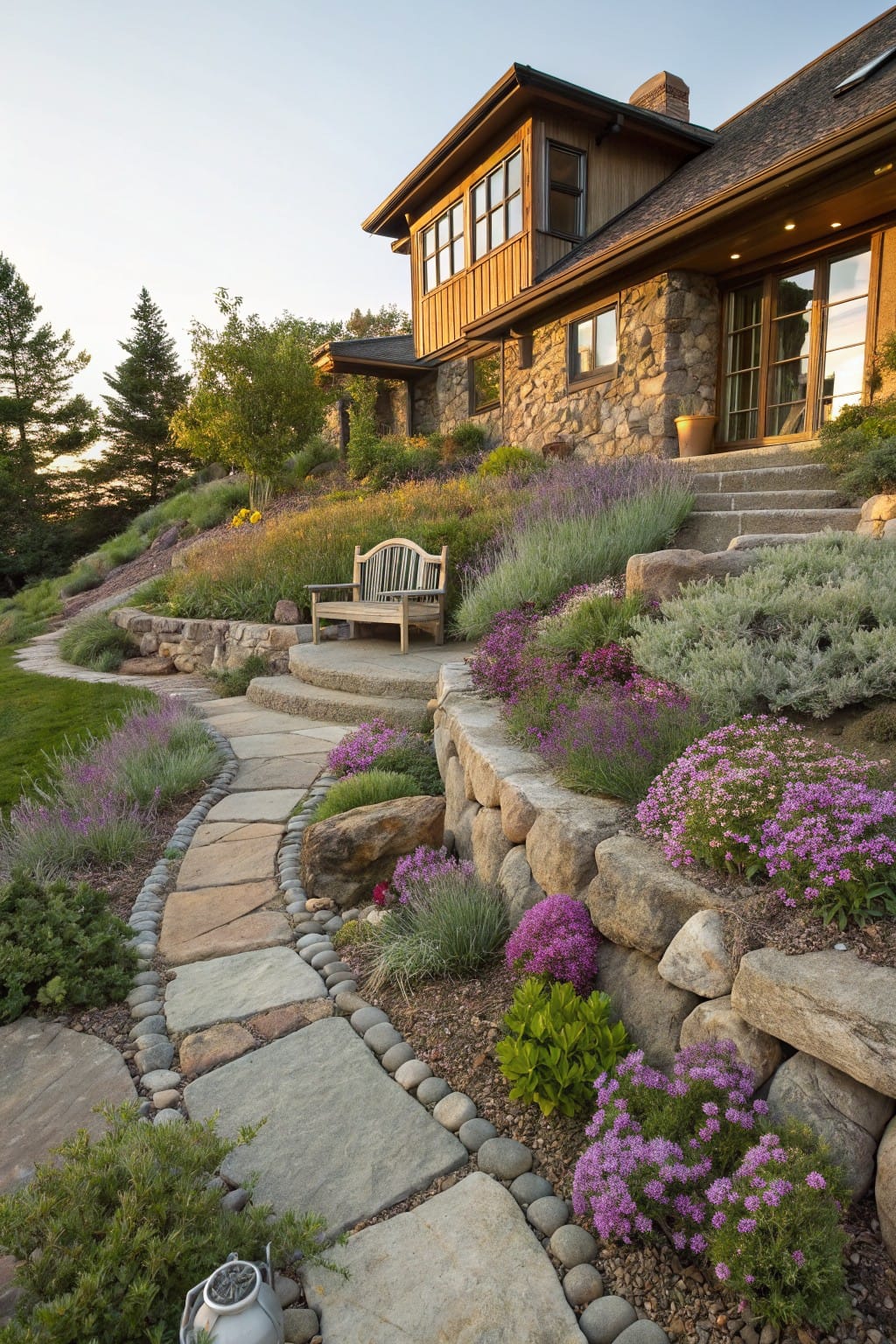
Slopes can be tough to garden on. But here stone retaining walls turn that hillside into tidy raised beds bursting with lavender and similar purple bloomers. The colors pop against the rocks and gray path stones. A simple wooden bench nearby gives a spot to sit and enjoy it all.
This works best on uneven ground where you want low upkeep. Pick tough plants like lavender or thyme that handle dry spots well. Line them up along a curving path to draw folks toward the house entrance. Just make sure the walls drain right so roots don’t rot.
Lining Paths with Colorful Flower Beds
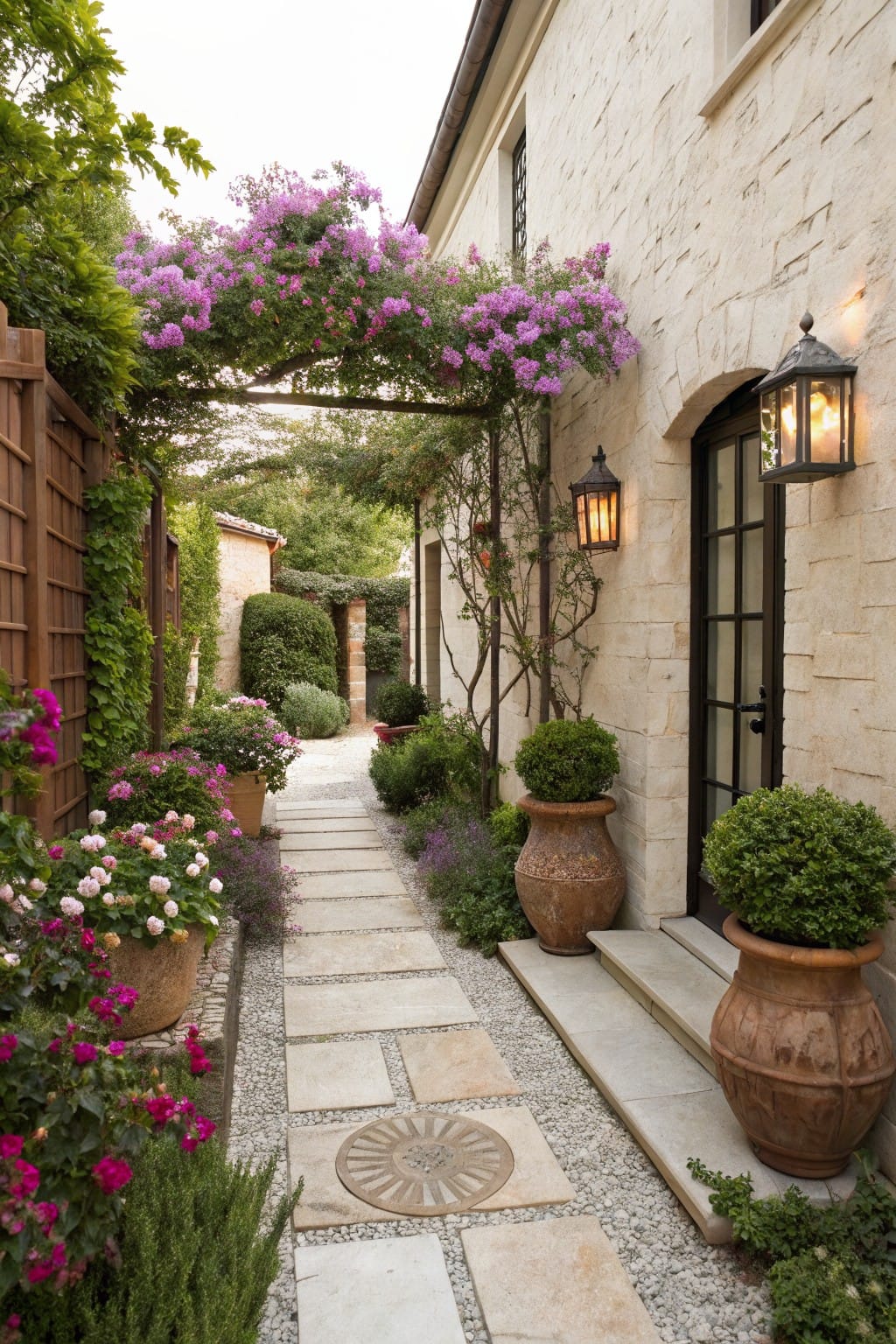
A gravel-edged stone path like this one makes a garden walk feel special without much fuss. It runs straight to the door, with big terracotta pots of pink and white flowers tucked right along the edges. The gravel keeps things tidy, and those bursts of color from the blooms pull your eye right through the space. It’s a low-key way to add life to a plain walkway.
You can pull this off in a side yard or courtyard where you want to guide folks to the entry. Use drought-tolerant flowers in pots so it’s easy to swap them out seasonally. Stick to earthy pots and neutral gravel to let the plants shine, and it works on most home styles. Just keep the path wide enough to walk comfortably.
Pebble Paths Through Colorful Flower Beds
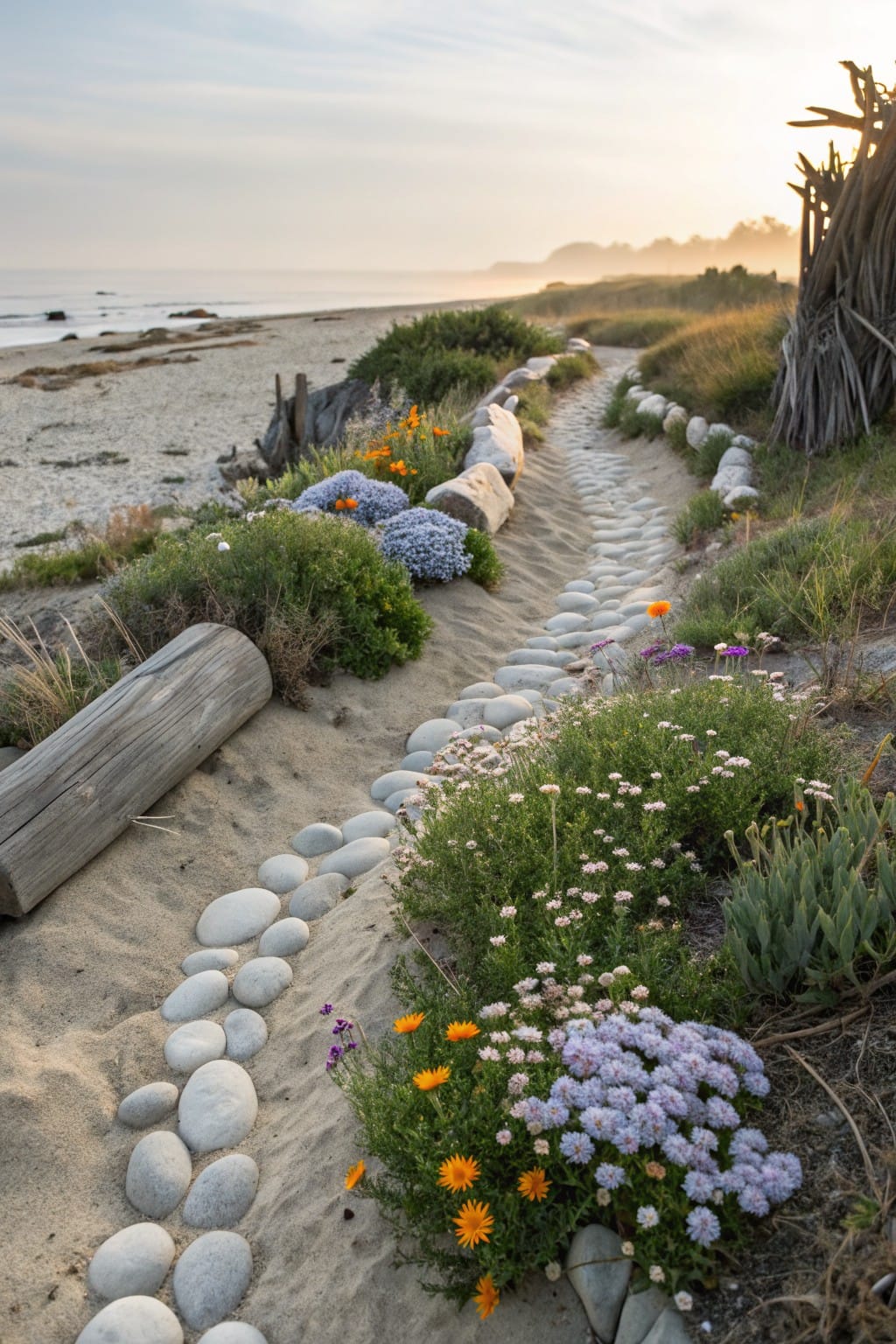
A simple winding path made from smooth white pebbles cuts right through low flower beds on sandy ground. The rocks form a clean edge that lets colorful blooms like orange flowers and blue clusters spill over naturally. Driftwood logs nearby add a rugged beach feel without trying too hard. It pulls the garden together and makes walking easy.
This works best in coastal spots or dry sandy yards where regular lawns struggle. Lay down the pebbles in a loose curve to follow the land’s shape, then tuck in tough plants that handle salt and wind. Keep the beds narrow so everything stays reachable for weeding. One nice thing… it stays pretty year-round with minimal work.
Stepping Stone Path in Succulent Rock Beds
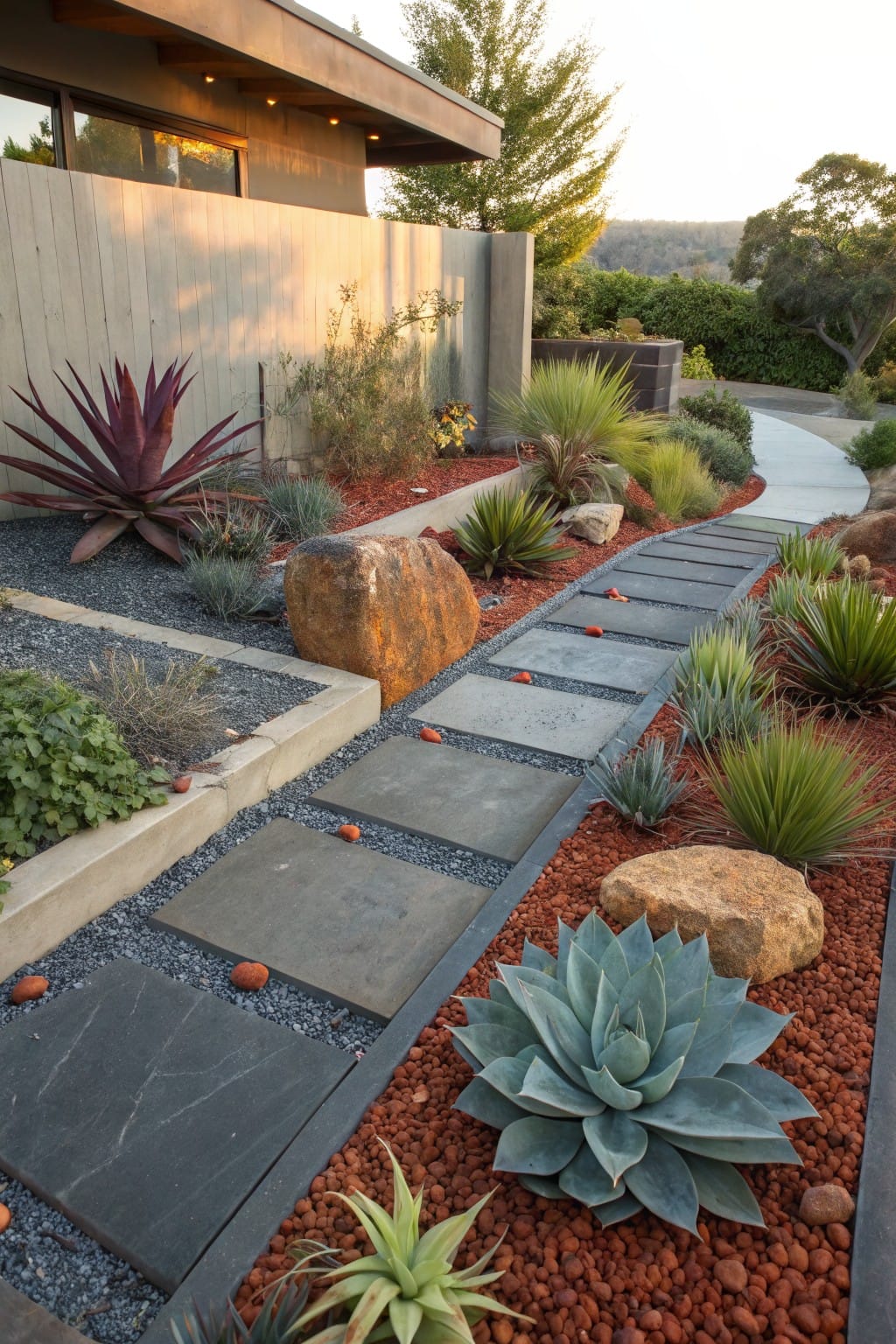
Dark stepping stones set right into beds of bright red gravel make a simple walkway that pulls your eye straight to the house door. Big succulents like agaves and aloes fill out the beds, and a few large boulders add some weight. The red gravel ties it all together without much upkeep, and the dark stones keep things from getting too busy.
This works best in sunny, dry spots where you want low-water plants that still look bold. Lay the stones loose in the gravel so water drains easy, and curve the path a bit for interest. Suits modern homes or any place needing curb appeal without fussy mowing.
Purple Flowers in Rock Retaining Walls
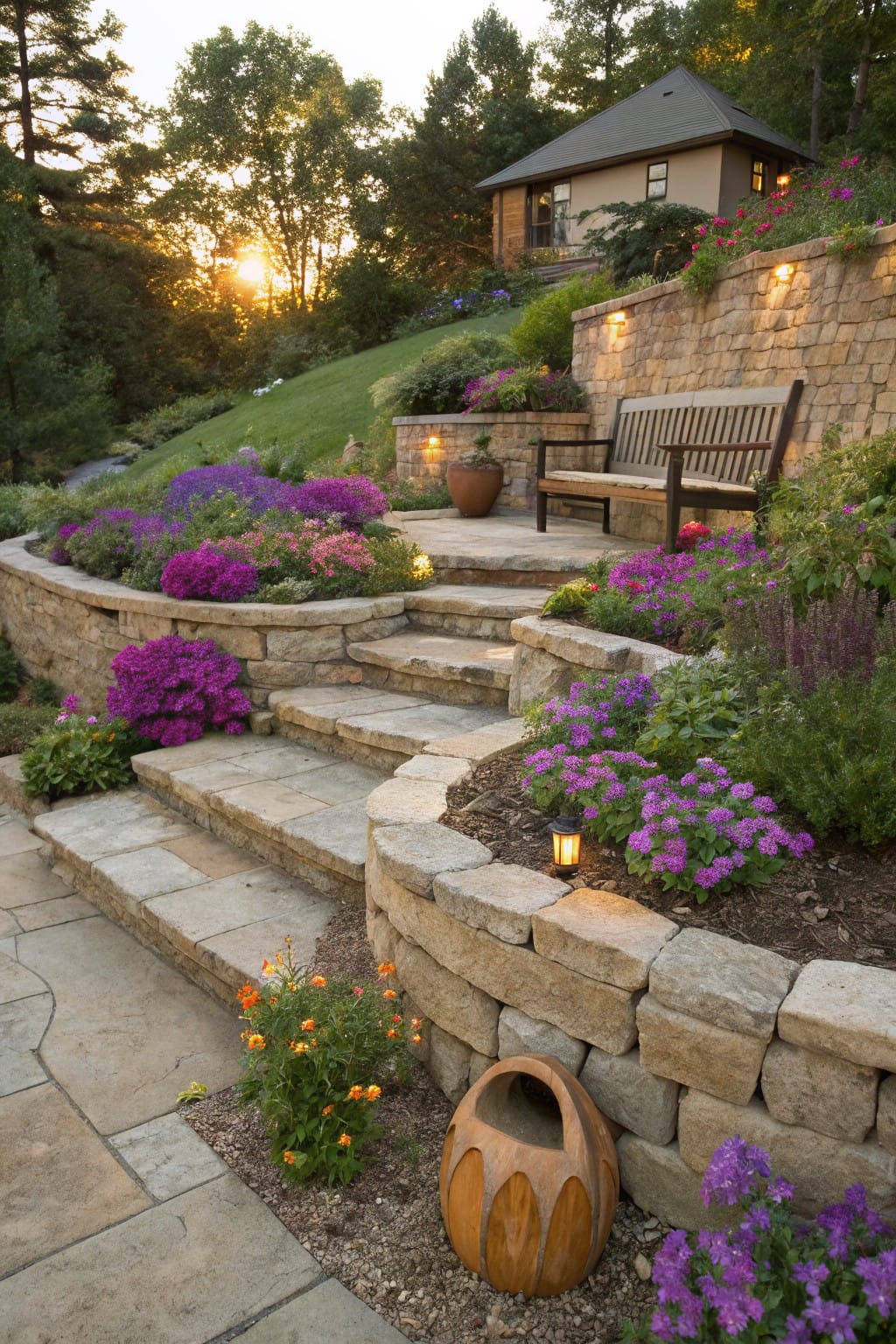
Slopes can be tricky in a yard, but filling stone retaining walls with purple flowers turns them into something pretty and useful. The deep purples stand out nice against the natural stone, and the terraced setup keeps soil in place while letting plants spill over just right. It’s low fuss once established.
Try this on any hillside or embankment around your home. Use tough perennials like phlox or veronica that handle sun and some dry spells. Add steps between levels for walking up, and tuck in a bench or lanterns to make it a spot you actually use. Works best where you want color without flat ground.
Winding Gravel Path in Flower Beds
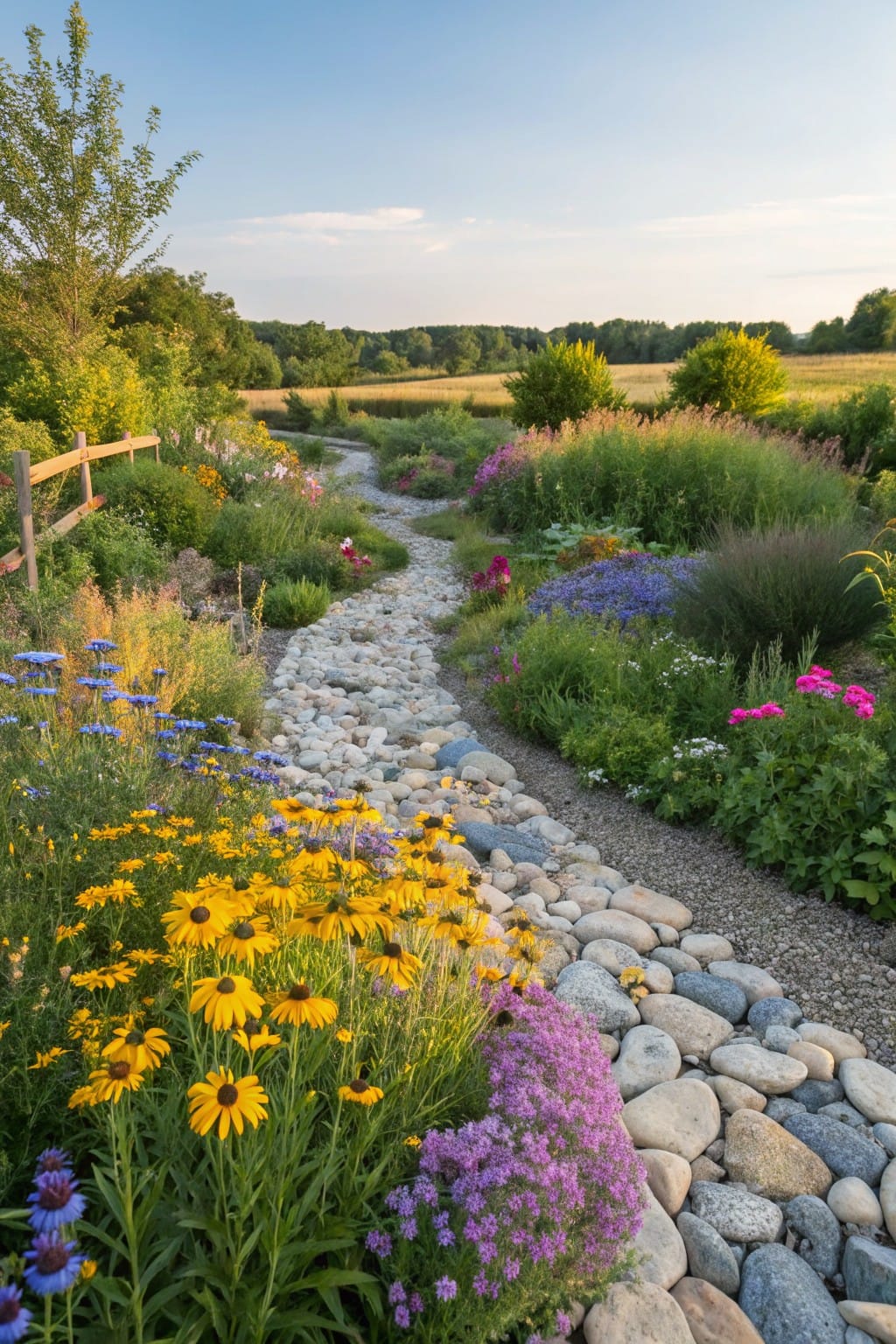
A gravel path that winds gently through the garden makes for an easy way to enjoy your plants up close. Here, smooth pebbles form the base, edged with larger rocks that keep everything neat while letting flowers spill over naturally. Bright yellow black-eyed Susans and blue delphiniums hug the sides, giving color all season without much fuss. It’s that simple flow that turns a plain yard into something you want to walk every day.
This setup works best in cottage-style gardens or along the side of a house where you need a low-key path to the backyard. Use it to connect seating areas or just link flower beds. Go for drought-tolerant perennials so it stays pretty with little water. One thing… keep the gravel topped up every couple years to avoid weeds sneaking in.
Succulent Rock Beds for Entryways
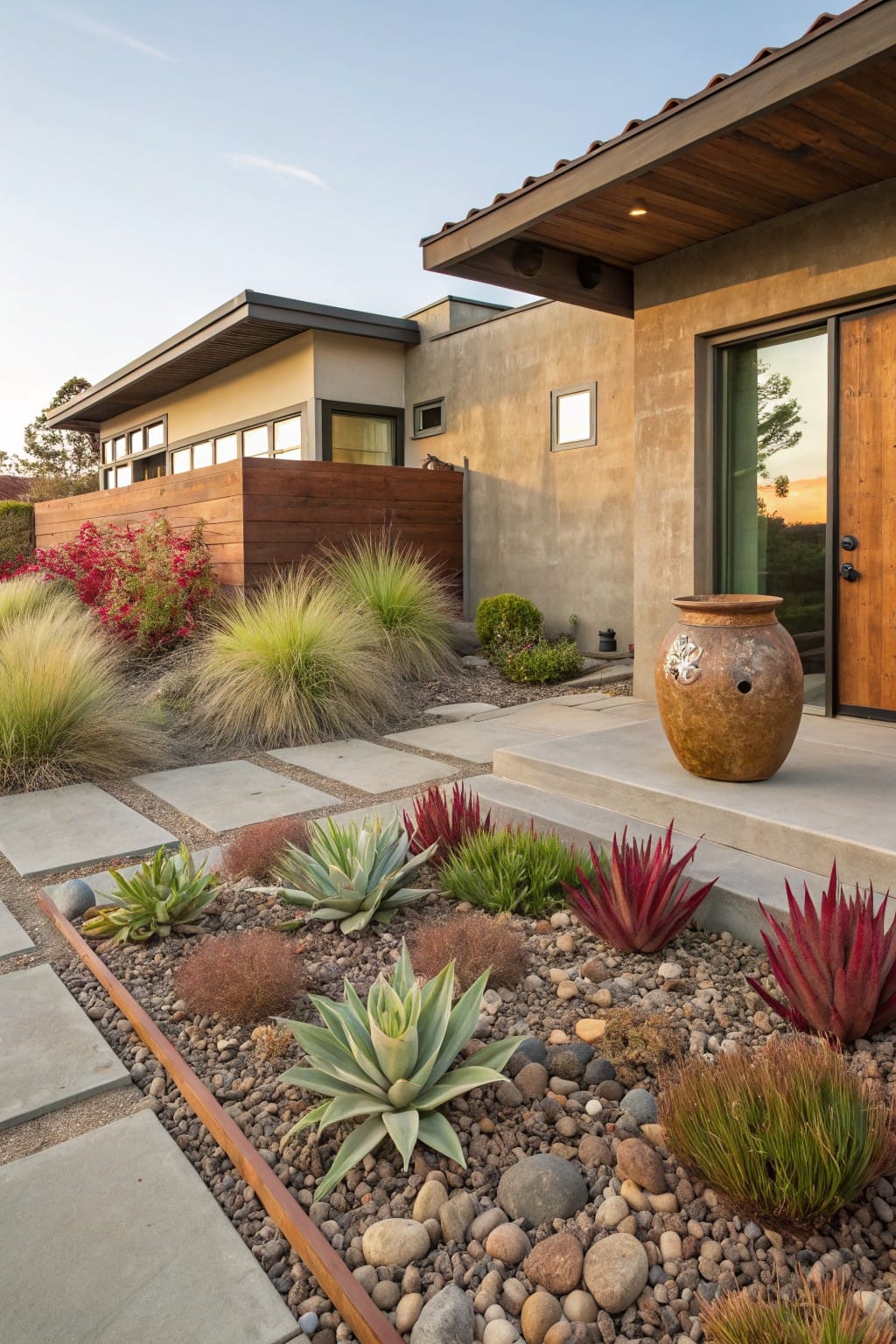
Big agaves and red-tipped plants tucked into pebble beds make a strong statement here. The mix of textures from spiky leaves, fluffy grasses, and smooth stones gives the front yard some life without needing constant care. It’s a simple way to tie the garden right into the house steps.
Put these beds along a stone path to your door, especially if you have full sun and want low water use. They suit modern homes or dry areas best. Just make sure the edging keeps everything neat, and pick bigger plants up front for that welcoming feel.
Zen Gravel Patterns in Rock Gardens
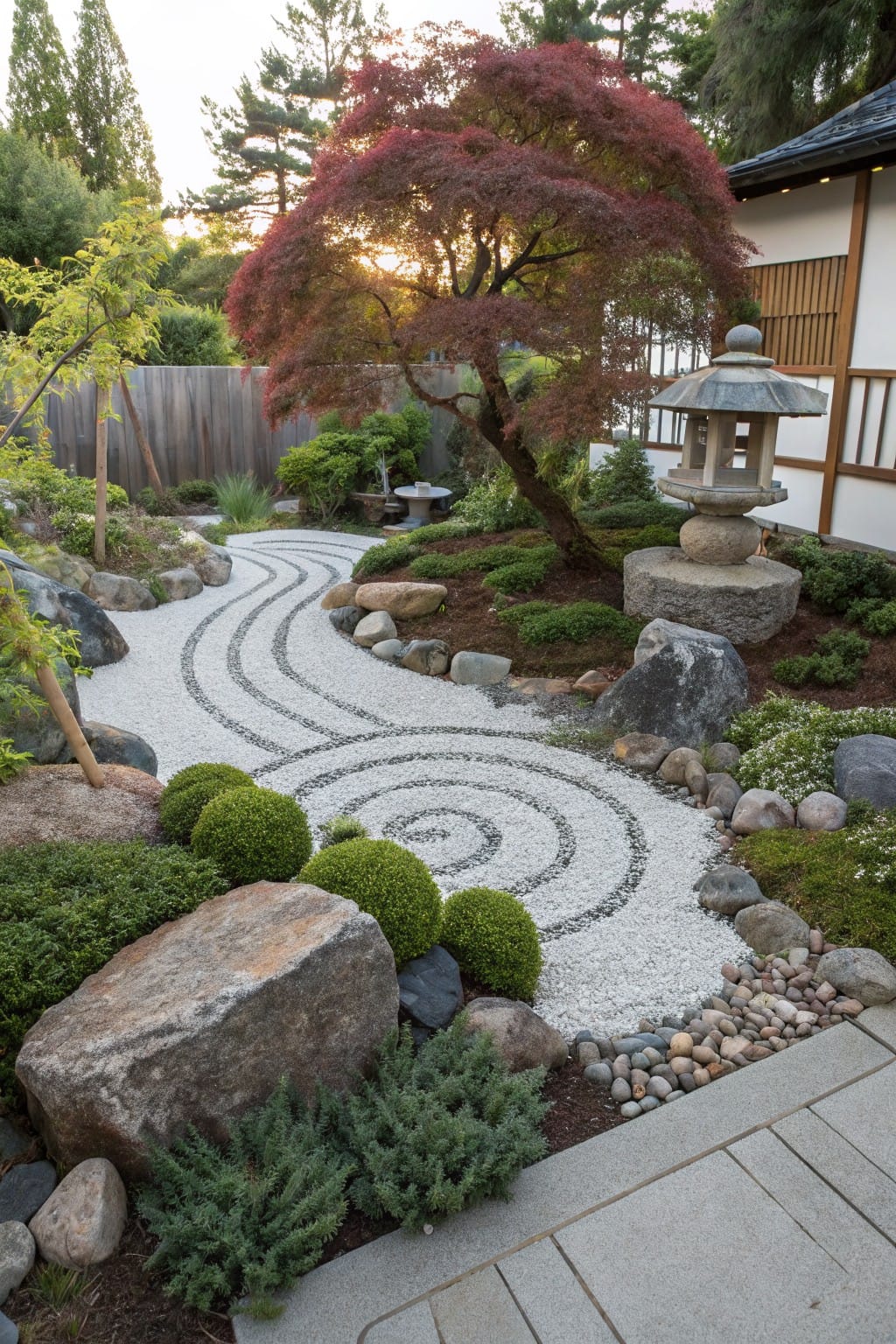
White gravel raked into flowing waves and spirals gives this rock garden a peaceful, water-like feel without any actual water. Large boulders sit right in the patterns, and low green shrubs like boxwoods edge everything neatly. It’s a simple way to add movement and calm to a yard that might otherwise feel plain.
You can pull this off in a sunny corner or along a fence. Pick fine pea gravel in white or light gray, then rake the designs fresh every few days or after rain. It suits smaller spaces near a patio or house entry, especially if you want low upkeep. Just keep the gravel beds clear of weeds.
Stone Steps with Terracotta Pots
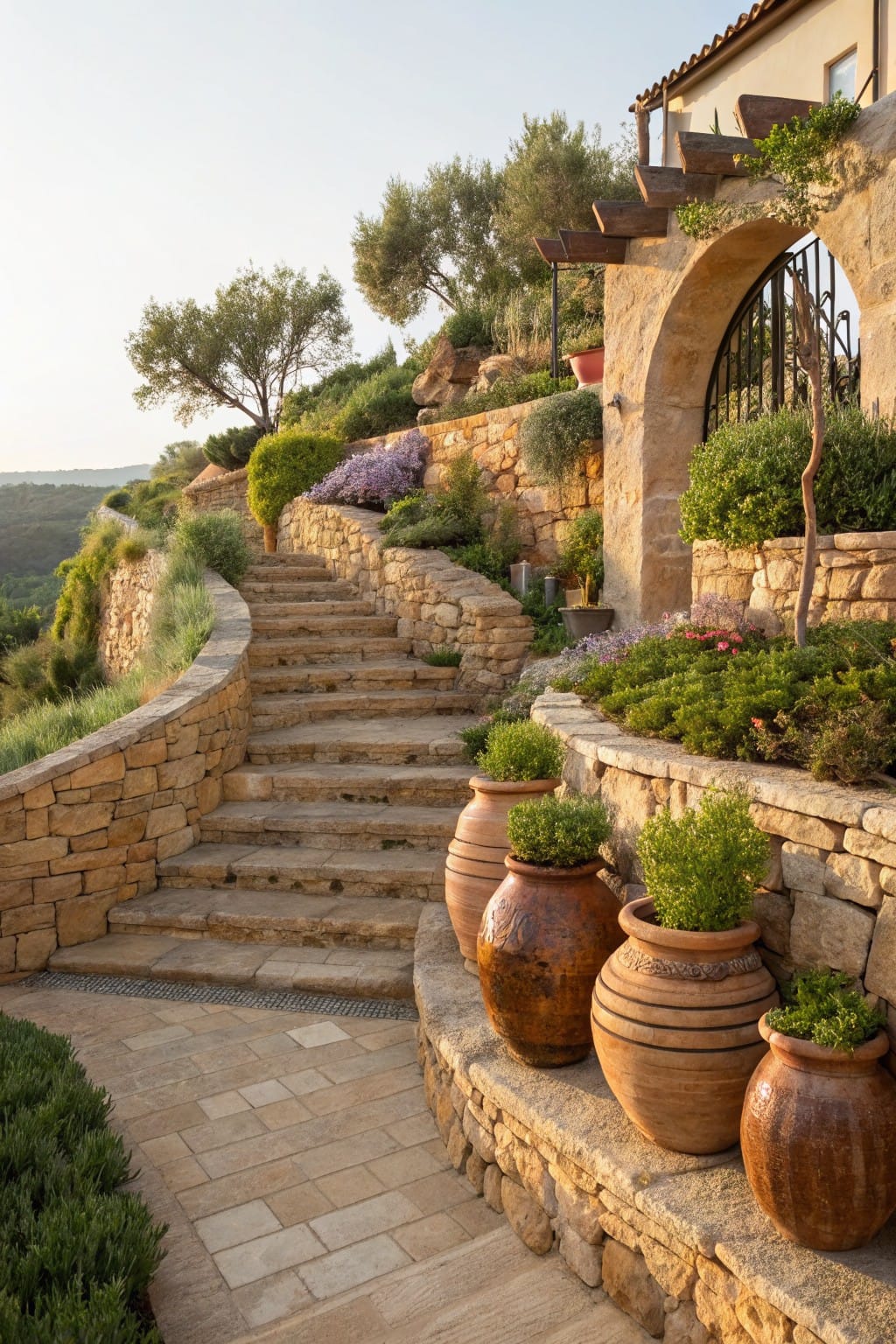
Big terracotta pots like these add a warm pop of color to plain stone steps and walls. They sit right at the base, filled with simple green plants that soften the hard edges of the rock. It’s a natural way to make a hillside path feel less stark and more like a real garden spot.
Put them where steps meet flat landings or turns. They’re perfect for sloped lots with retaining walls already in place. Go for earthy pots in a cluster of sizes to keep it casual. This fits older homes with a rustic yard, and the plants stay tidy without much watering once they’re settled.
Colorful Gravel Beds Along Driveway Edges
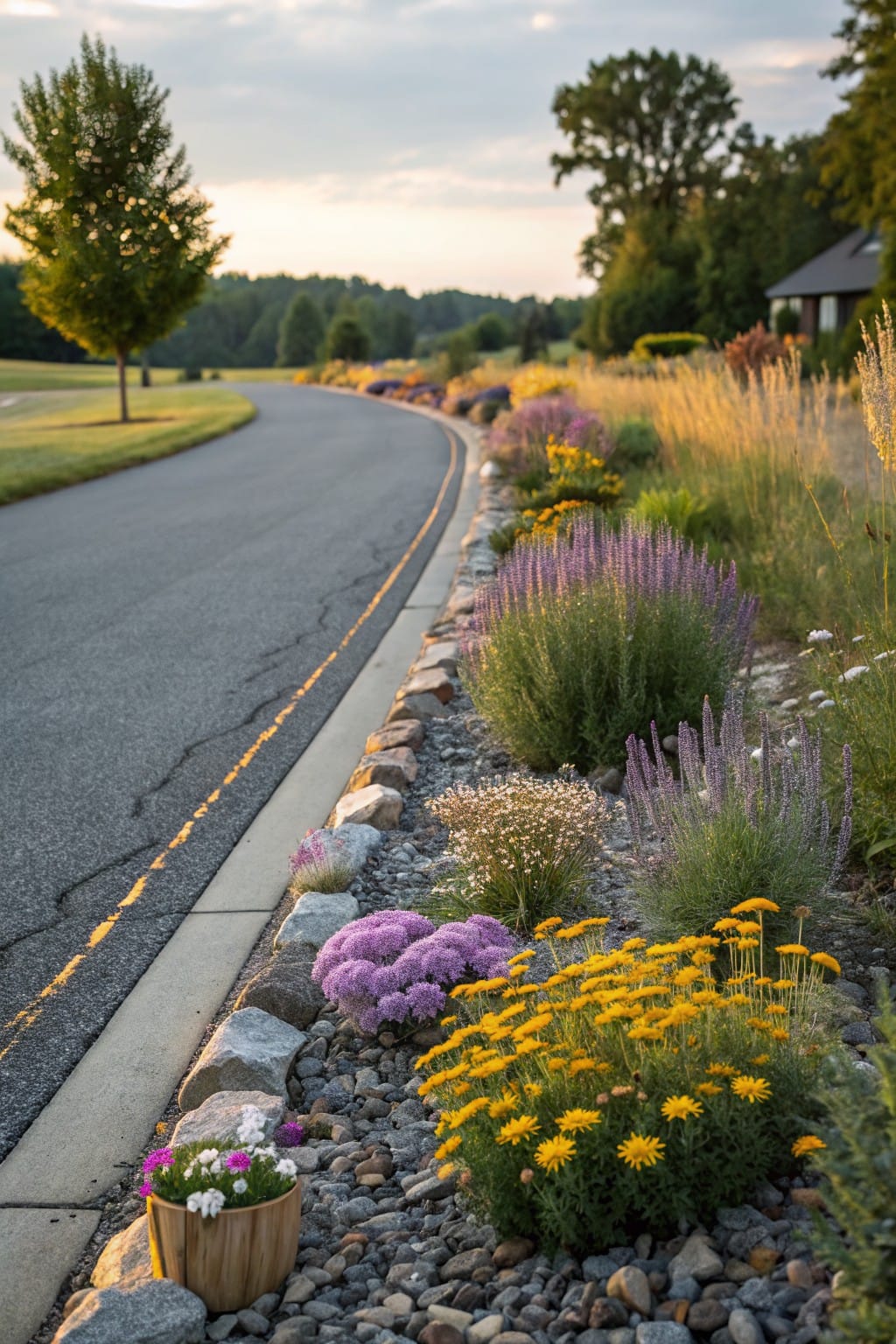
Gravel and rock mulched flower beds like this one make a driveway or path edge pop without a lot of upkeep. The mix of purple lavender spikes, pink sedum mounds, and yellow daisy clusters flows nicely with the curve of the road. It keeps things colorful through late summer and fall, and the stones help hold moisture in dry spells.
These beds shine in sunny, open spots where you want curb appeal on a budget. Pick tough perennials that match your zone, layer shorter plants in front, and top with larger gravel for drainage. They suit most any home style, from ranch to cottage. Watch the edges so rocks don’t spill onto the pavement.
Stone Steps Through Gravel-Edged Beds
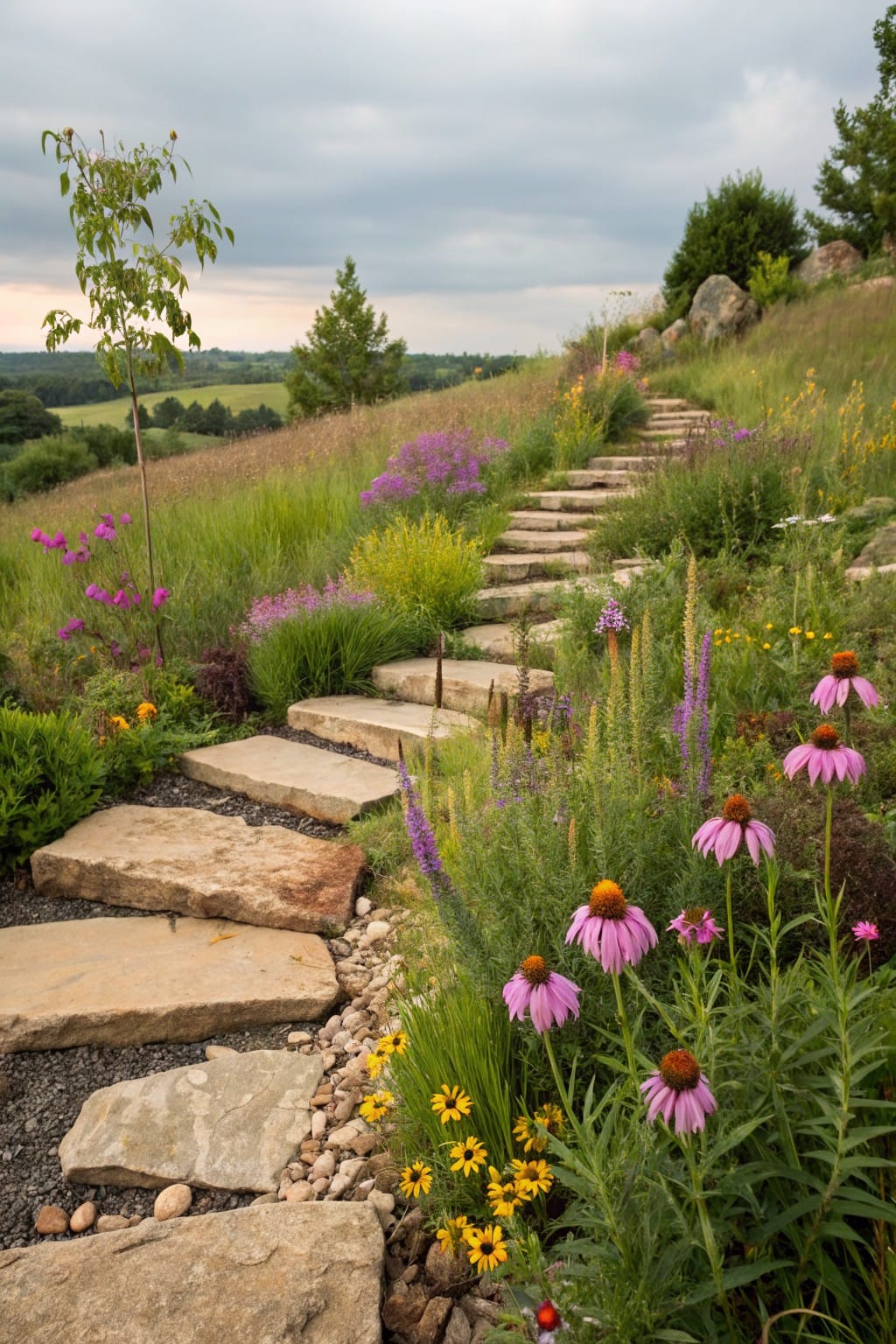
One simple way to handle a sloped yard is with wide stone steps set right into flower beds. The big slabs fit the natural terrain, and the gravel strips along the edges keep things tidy while letting plants spill over. Those tall pink coneflowers and black-eyed Susans add color that lasts into fall.
Put this on a hillside path to your house or seating area. It works best in sunny spots with tough perennials. Skip it for flat ground, where regular paths make more sense. Just source local stone to match your soil.
Gravel Paths with Stepping Stones Through Flower Beds
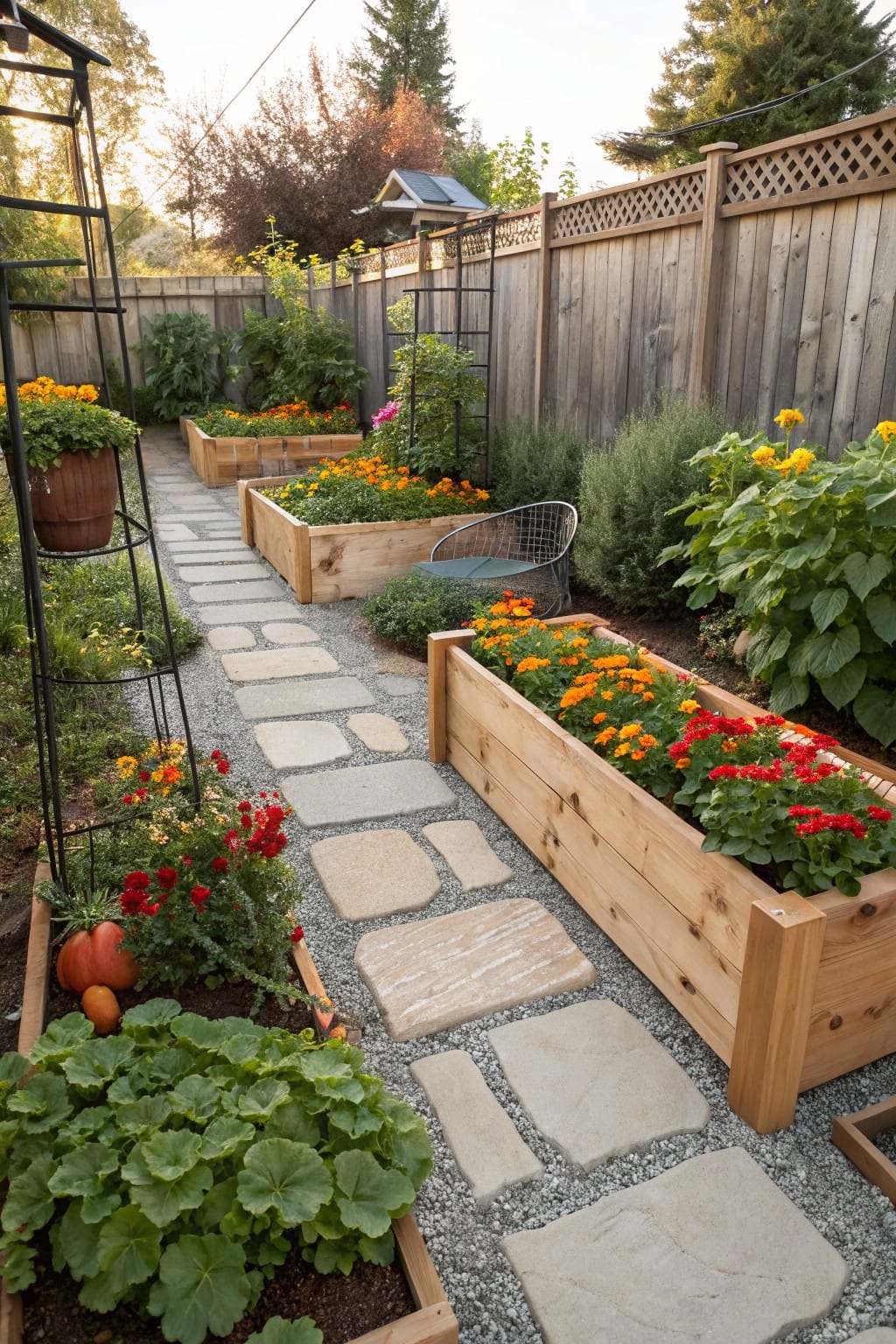
Gravel paths like this one make walking through a garden feel easy and natural. Paired with those big flat stepping stones, they keep mud off your shoes while letting water drain right through. The raised wooden beds overflow with marigolds and other bright flowers, so the path pulls your eye right along without stealing the show.
You can set this up in a narrow side yard or backyard corner where space is tight. Start with 4-inch gravel over landscape fabric, drop in stones spaced for your stride, and build simple cedar beds around them. It suits cottage-style homes best… just make sure the beds aren’t too tall if you have back issues.
Winding Stone Path in Colorful Rock Beds
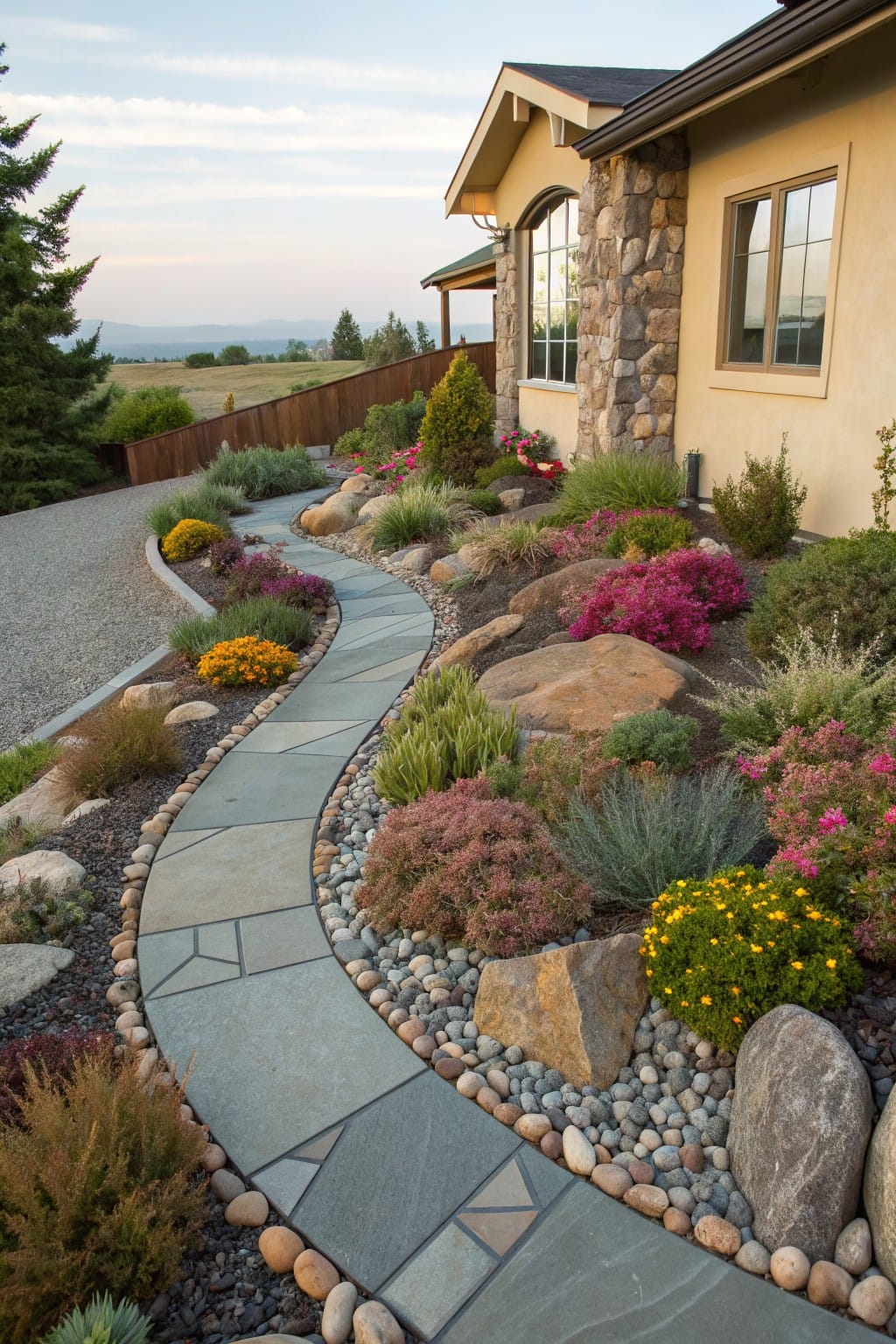
A simple winding path like this makes a yard feel bigger and more interesting right away. The gray flagstone steps curve gently through beds packed with rocks, gravel, boulders, and spots of color from pink heathers, yellow coreopsis, and other low-growing flowers. It pulls your eye along without being too straight or formal, and the mix of textures keeps things lively even when not much is blooming.
You can pull this off in a side yard or entry approach where space is tight. Use larger boulders for structure, then fill in with gravel and tough plants that handle dry spots well. Keep the path wide enough for two people, about four feet. It suits sloped lots or modern homes with stone details, but watch the weeds in gravel, they pop up fast.
Natural Stone Steps in Shaded Gardens
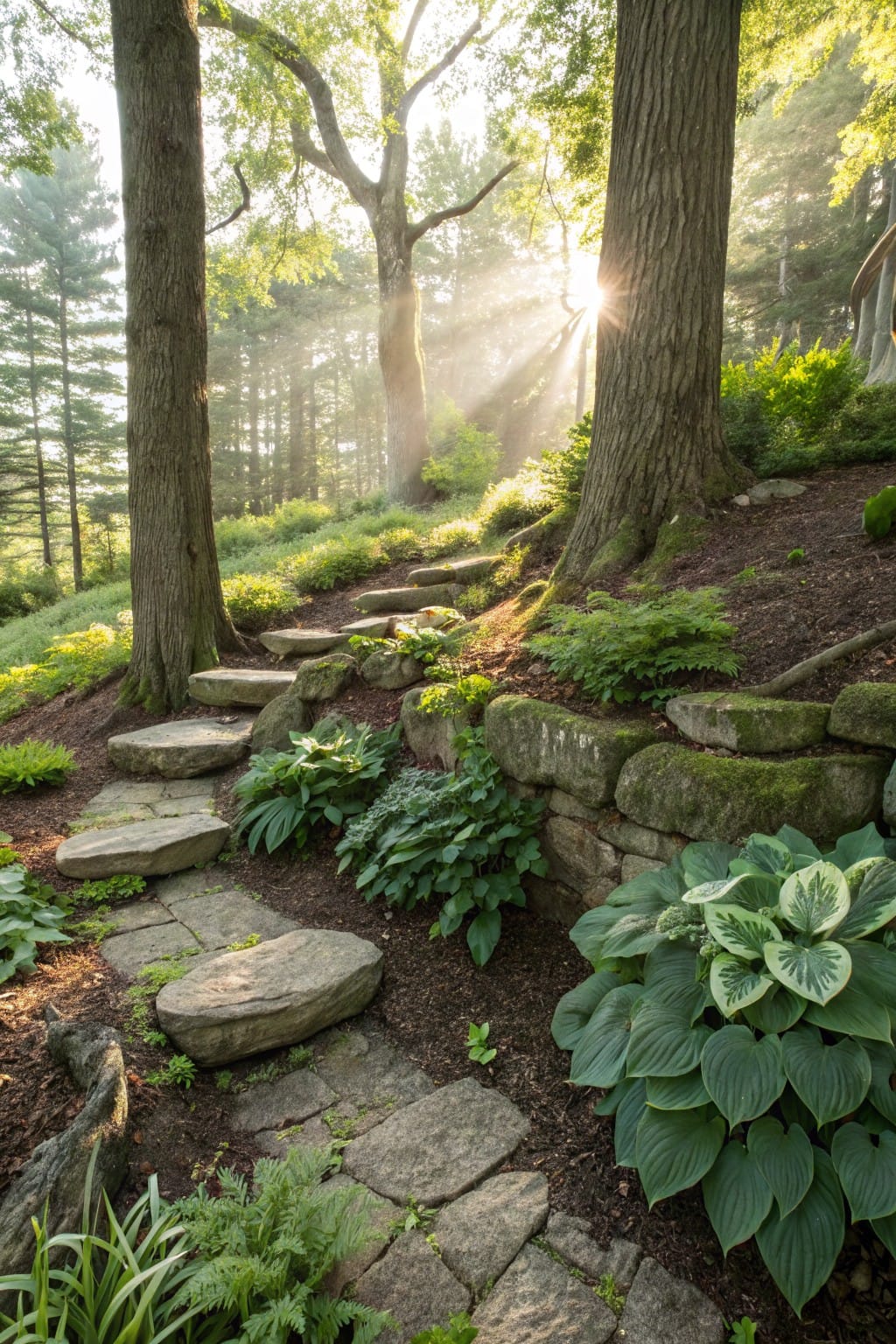
Rough-cut stone steps like these make a simple path through a wooded slope. They fit right into the landscape, with moss starting to grow on the edges and big hosta leaves spilling over nearby. The sunlight filtering through the trees keeps it from feeling too dark, and the plants add that bit of green color without much fuss.
You can use this on any shady hillside where you need to get from one level to another. Pick stones from a local quarry so they blend in, then fill the beds around them with hostas, ferns, or other shade plants. It works well for bigger lots with trees already… just keep the steps wide enough to walk comfortably.
Colorful Flowers Edging a Stone Path
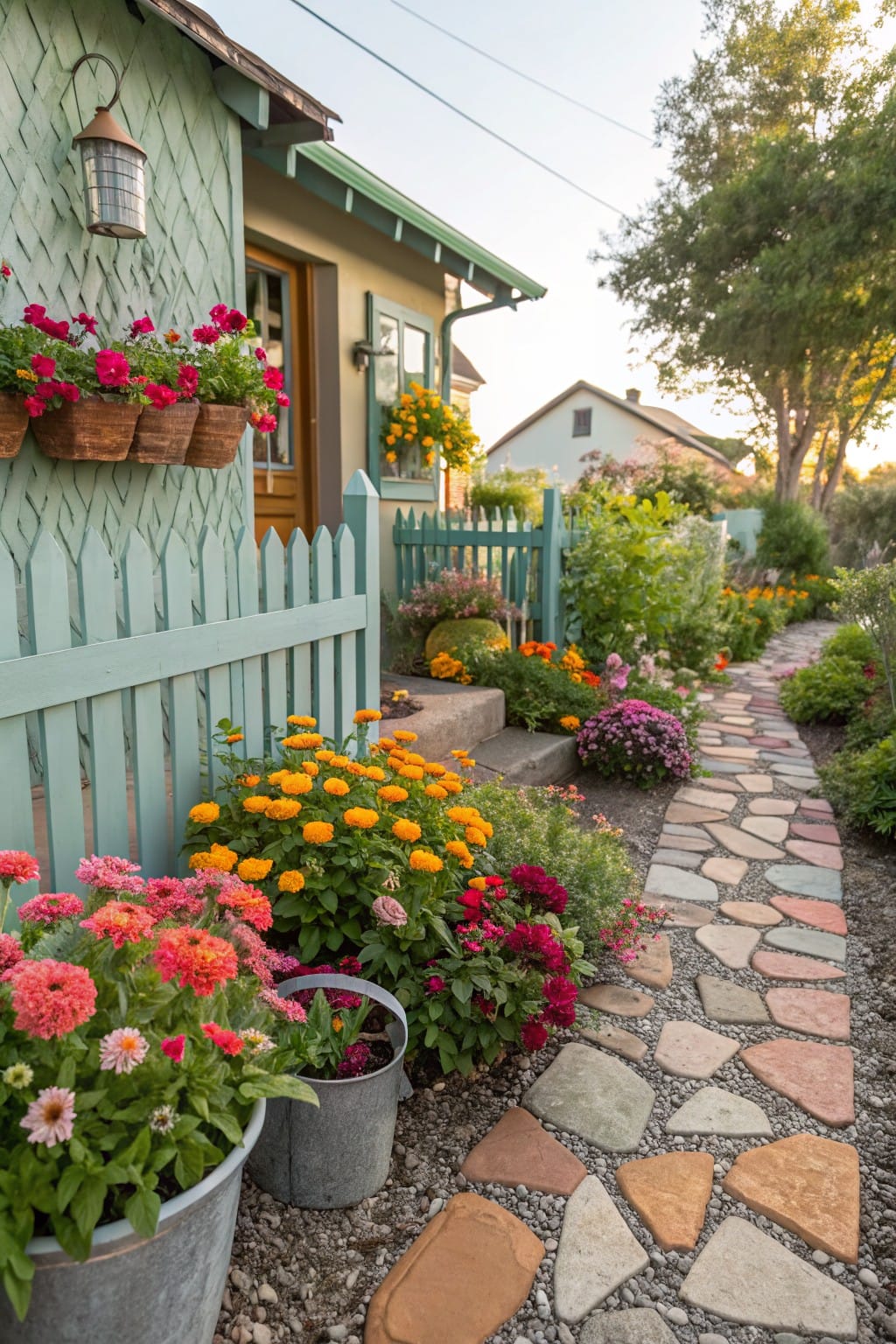
A winding path made from flat stones in soft earth tones leads right through thick plantings of zinnias and marigolds. The flowers come in reds, oranges, and pinks, packed close in beds and even spilling from metal buckets along the way. It’s a straightforward way to make a garden walk feel alive and friendly, especially toward the end of the day when the colors pop.
This works best in a front yard where you want to draw folks to the door. Stick to tough annuals like these for easy color all summer. On a smaller lot, keep the path narrow… it won’t overwhelm. Pair it with a simple fence to hold everything in place.
Dry Creek Bed Path with Colorful Flowers

A gravel path shaped like a winding dry creek bed works well here, edged by big boulders and filled out with bright yellow coreopsis, pink sedums, and lavender shrubs. It pulls the eye along naturally and mixes hard rocks with soft blooms for easy color without much fuss.
Try this on a hillside or entry walk where water might run sometimes. It suits cabin-style homes or any spot needing low-water plants that still look lively. Go for rounded river rocks in the bed to keep the flow smooth, and layer shorter flowers near the edge.
Poolside Flower Beds with Rock Edging
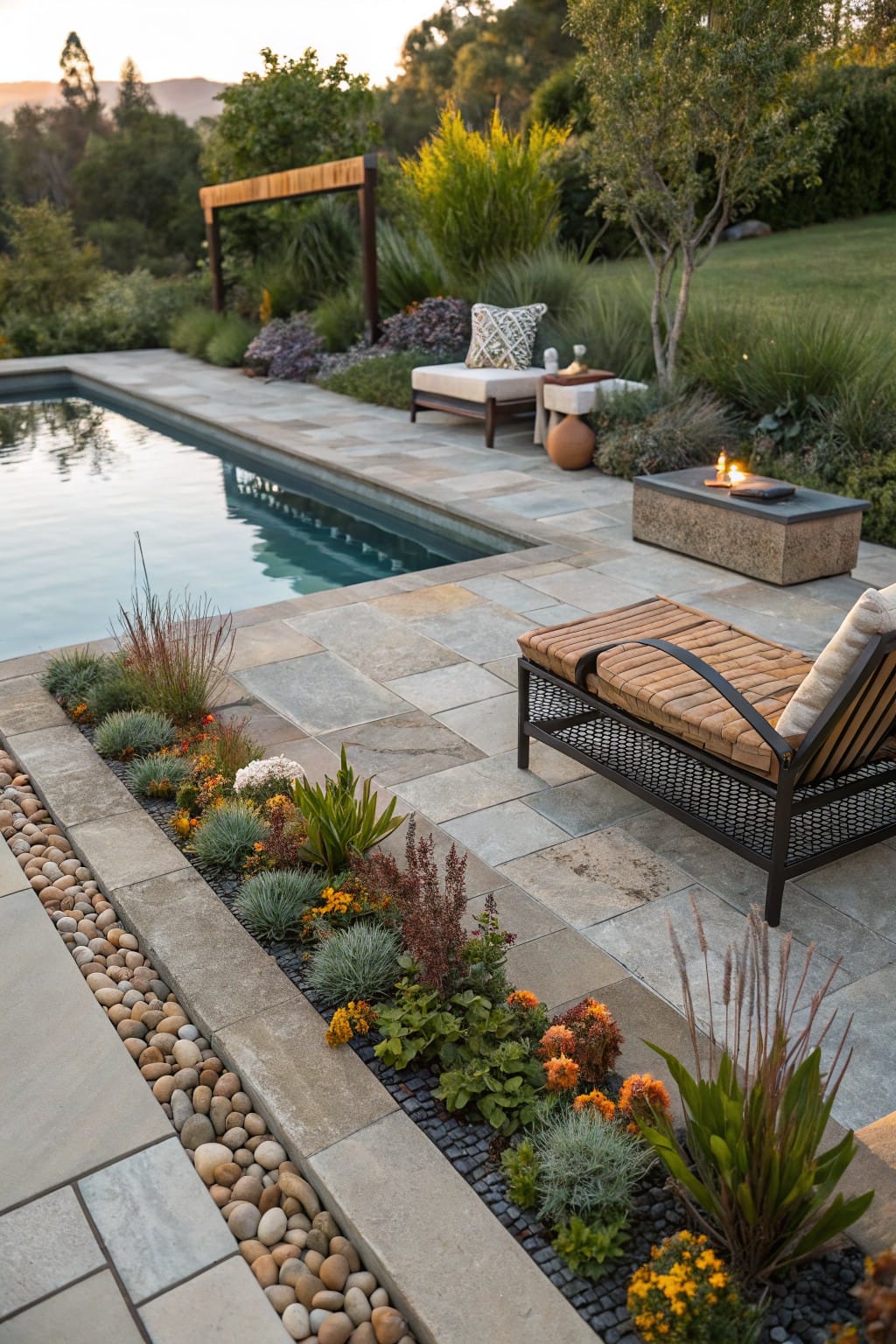
Smooth pebbles and larger rocks form clean borders around these flower beds right next to the pool pavers. Packed with orange blooms, feathery grasses, and tough succulents, the beds bring color and texture without spilling over. It’s a simple way to dress up hard edges.
This works best in sunny, dry yards where low-water plants thrive. Line beds along pools, patios, or walkways, keeping them one to two feet wide. Layer small pebbles at the edge with black gravel mulch inside… easy to refresh, and it holds up to foot traffic.
Frequently Asked Questions
Q: How do I pick the right colorful rocks for my flower bed?
A: Head to a local nursery and grab rocks in shades that pop against your flowers, like reds with yellow blooms or blues near whites.
Mix sizes for texture. That simple contrast makes your garden glow.
Q: What’s the easiest way to lay out a rock flower bed?
A: Dig a shallow trench first, then dump rocks in loose piles around your plants.
Rake them smooth and nudge bigger ones into place for curves. Step back often to check the flow.
Q: Do these rock beds work in shady spots?
A: They sure do. Go for hostas or impatiens tucked among slate grays or deep purples.
Skip bright lava rocks there, though.
Q: How do I stop weeds from popping up in my rock bed?
A: Lay landscape fabric under the rocks before planting.
Top it with two inches of rocks to block light. Pull any strays early and your bed stays tidy.
