


I’ve seen plenty of yards where water pools in the wrong spots after rain, ruining pathways and washing out edges no matter how carefully you plant.
Rocks give you a solid way to guide that flow, shaping the land over time without constant upkeep.
In my side yard, stacking gravel along a slope stopped the mudslides that used to track inside, and it still looks natural years later.
Folks notice the puddles first, right where they walk or gather.
These rock ideas hold up in real weather, so pick a couple to test in your setup.
Dry Creek Bed Path with Stepping Stones

One smart way to handle yard drainage is this kind of curving path made from gravel and river rocks, with big flat stones as steps. Water runs right through the loose gravel instead of pooling up, and the larger boulders slow it down to prevent erosion. It fits right into the landscape here, winding past tough plants like lavender and grasses that don’t mind the dry spots.
You can put this in any sloped area near the house or along a driveway. Just dig a shallow trench, line it with landscape fabric, add gravel and rocks, then set the stones so they stay level. It suits homes in dry climates or rocky terrain… keeps things looking tidy without much upkeep. Watch the stone sizes so they don’t shift over time.
Terraced Rock Walls for Sloped Yards
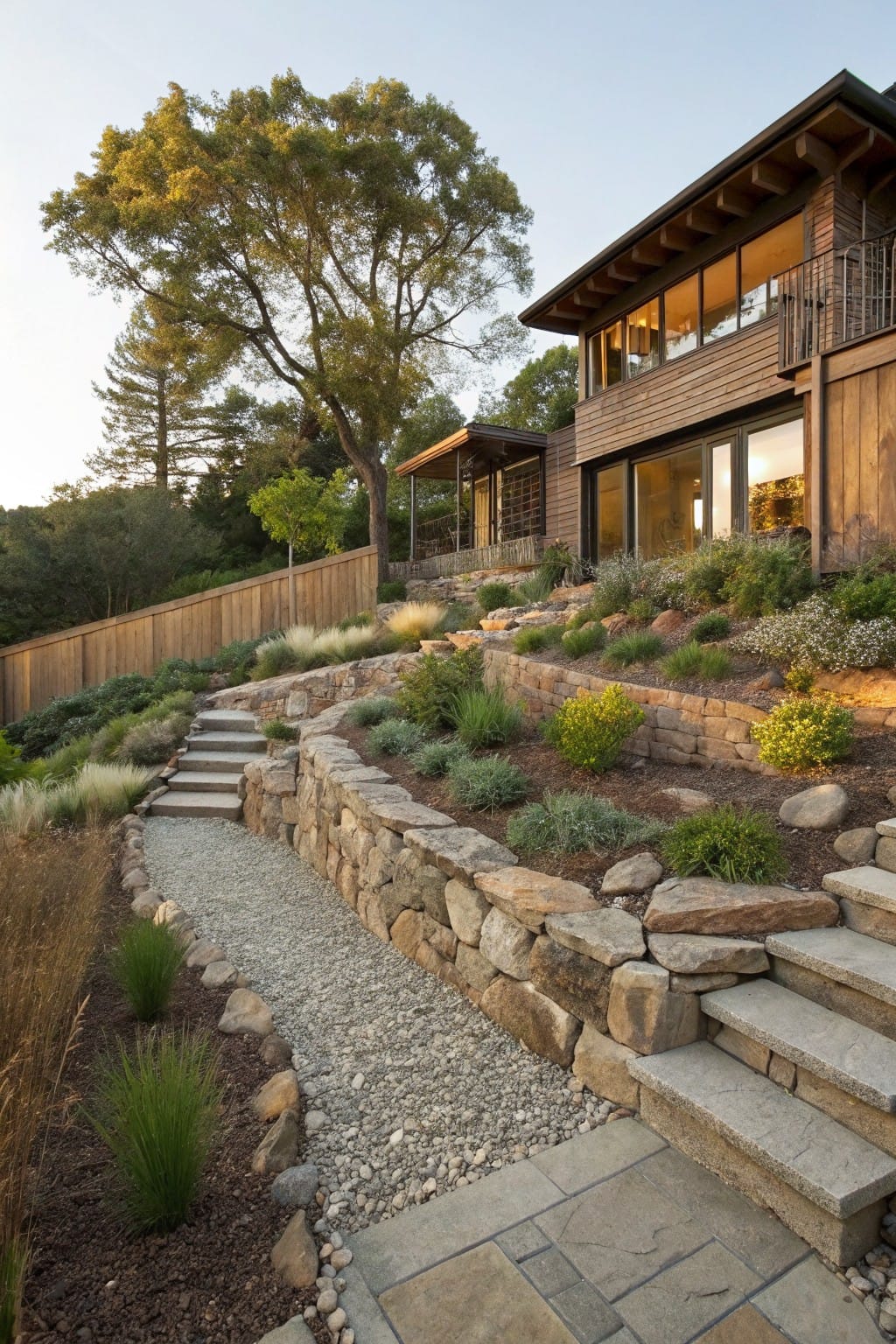
Sloped yards can be tricky with water running off and eroding everything. Terraced rock retaining walls fix that by breaking the hill into flat steps. Built from dry-stacked local stone, they let drainage happen naturally through the gaps. A gravel path winds alongside with concrete steps tucked in, and plants fill the pockets for a finished look that holds soil in place.
This setup shines on hills behind houses, especially where you want low-maintenance gardens. Pair it with drought-tolerant shrubs and grasses that won’t clog the drainage. It suits wooded spots or modern homes like the one here… just keep walls under three feet high unless you add reinforcement. Simple and effective.
Slate Walkway with Trench Drain
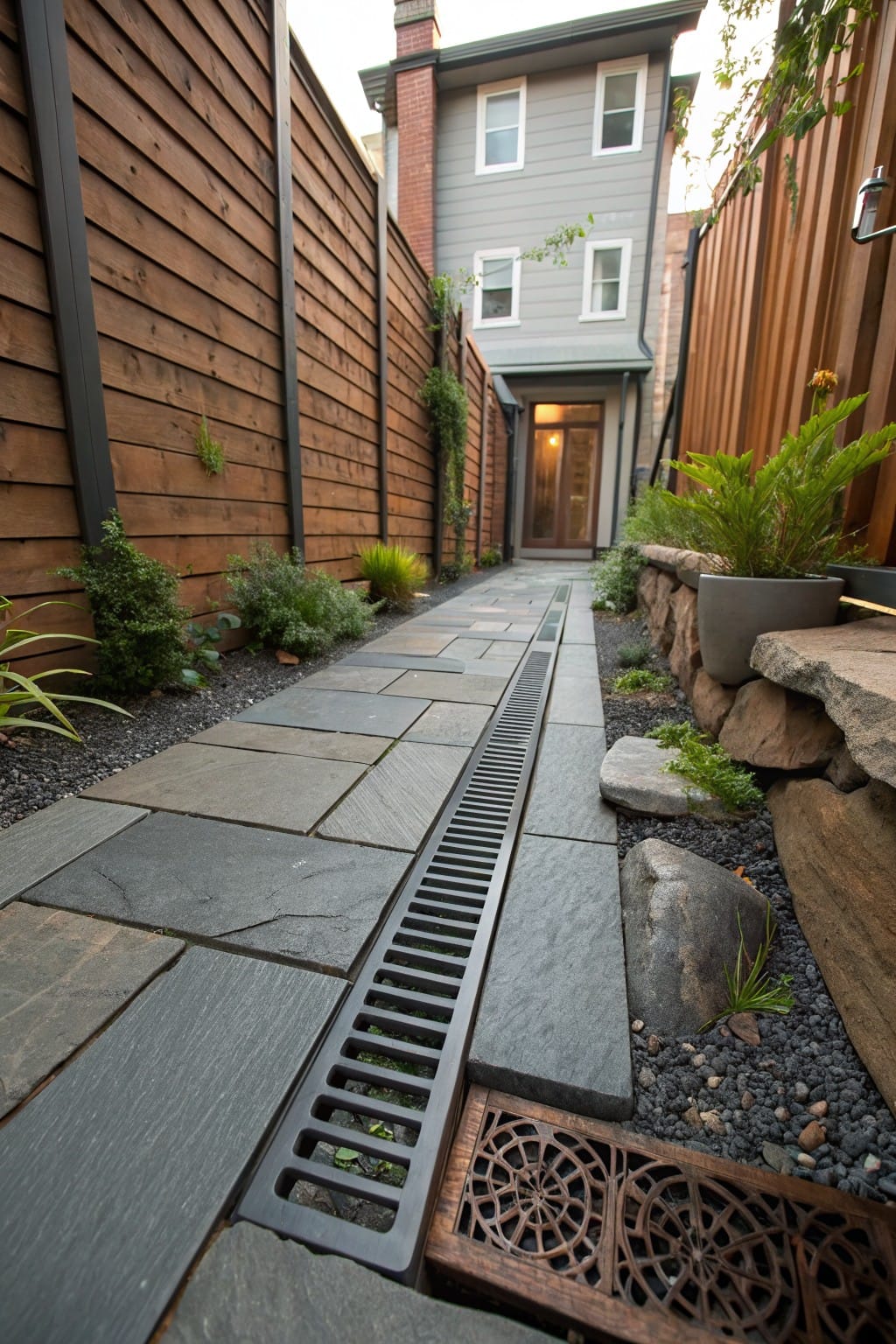
One smart way to handle water in tight side yards is this linear trench drain running right down the center of a slate paver path. The grated channel catches runoff before it pools, and the surrounding gravel and rocks let excess water soak in quick. It keeps the walk dry even after heavy rain, without looking like a plain ditch.
You can pull this off in any narrow passage to a gate or back door. Pair large flat stones with finer gravel beds for that clean flow. Works best where space is slim… just make sure the grate is sturdy enough for foot traffic.
Rock-Lined Pebble Path for Drainage

One straightforward way to handle water runoff in a yard is a dry creek bed path made with smooth pebbles and edged by bigger boulders. It looks like a natural stream that dried up, but really it’s directing rainwater right where you want it, away from the house foundation. The pebbles let water seep through fast while the rocks keep everything in place, and drought-tolerant plants along the sides make it low fuss.
This setup works great on sloped lots near the coast or anywhere drainage is an issue. Line it with grasses and shrubs that don’t mind wet feet now and then, and use it to connect your patio to the street or garden spots. Just make sure the boulders are sturdy so they don’t shift over time.
Rock Retaining Walls Along Driveway Edges

One smart way to handle drainage near your driveway is with low stacked stone walls like these. They terrace the slope just off the path, using rocks and boulders to trap soil while letting water seep through gaps or run off into gravel beds below. It’s low fuss and ties right into the entry without looking forced.
Put this to work on any lot with a gentle drop from house to street. Pick rugged local stone so it blends, then fill pockets with tough plants like grasses or sedum. Watch the wall height though. Keep it under two feet or it starts feeling like a barrier instead of a helper.
Natural Rock Retaining Walls Around Pools
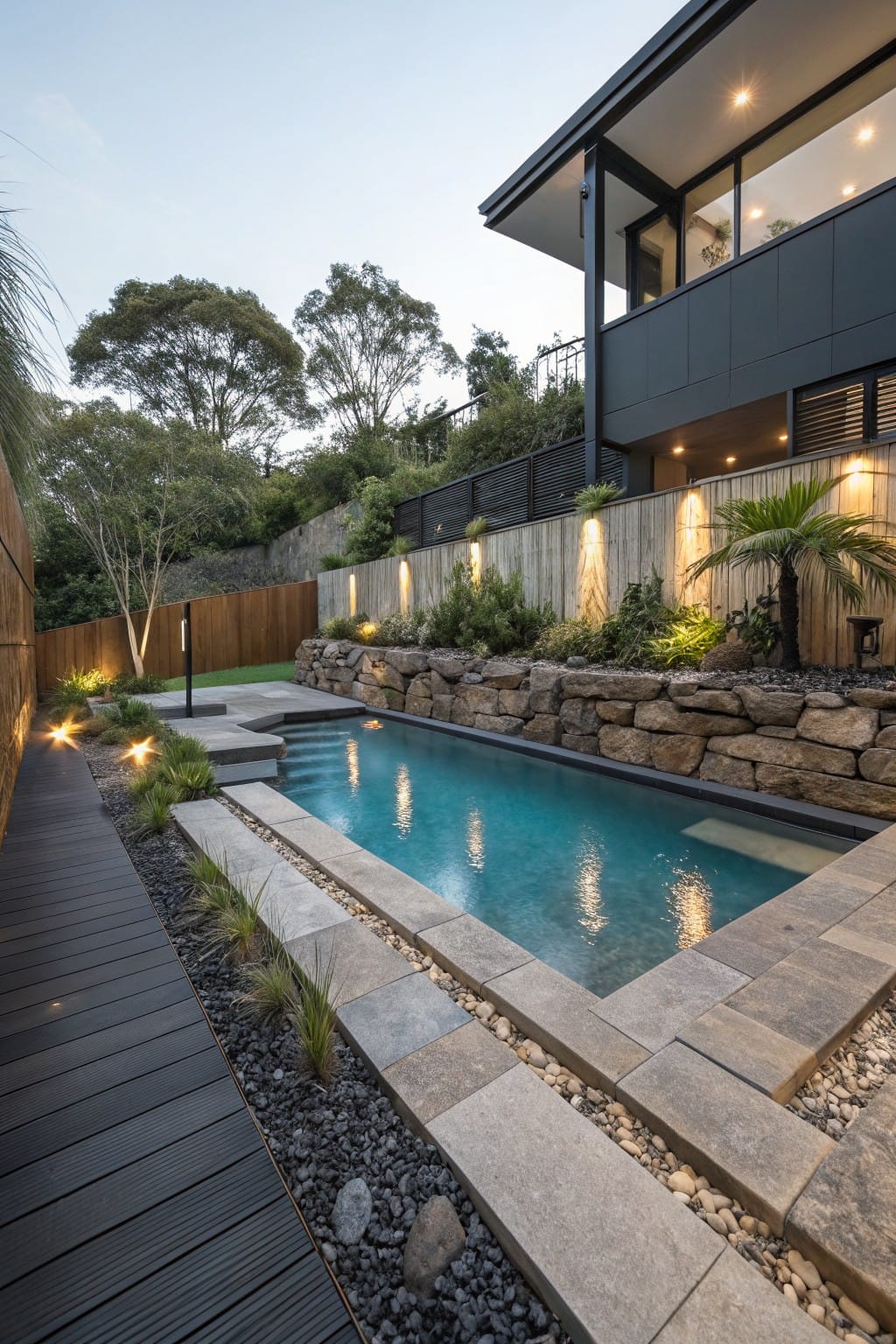
When you’ve got a sloped backyard, stacking natural rocks into retaining walls can solve drainage issues without much fuss. These walls hold back the soil while letting water seep through the gaps, keeping things stable around the pool. The irregular stones here blend with the pool edge and add some texture that doesn’t fight the water view.
This setup works best in hilly lots where you need to level out space for lounging or swimming. Pick rocks from nearby quarries to match your area’s look, and tuck in low plants for extra hold. It suits modern homes with clean lines, but watch the height, nothing too steep or it’ll need engineering.
Stepping Stones Set in Gravel for Drainage
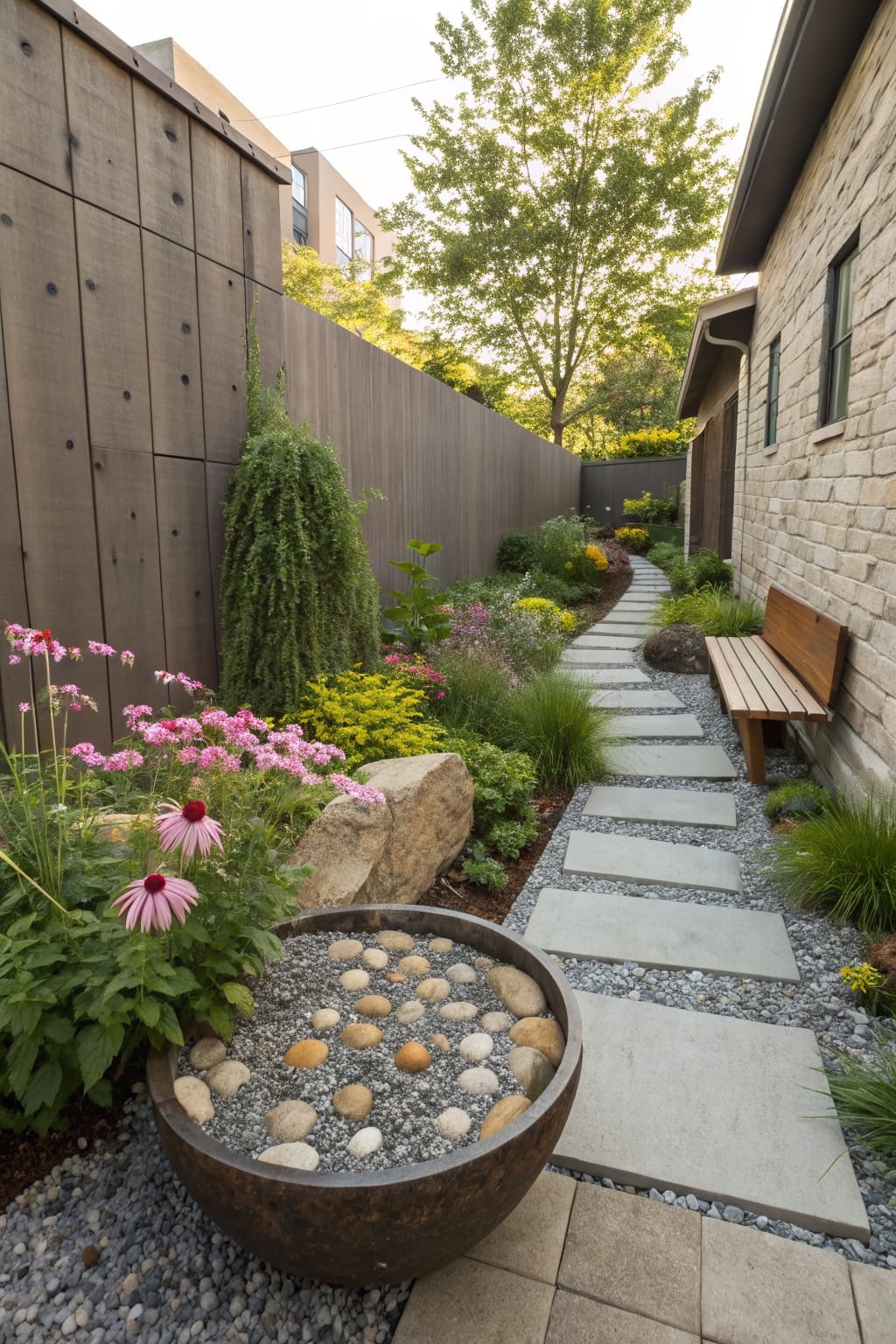
A simple path like this uses wide flat stones placed with gaps filled by pea gravel. It lets rainwater seep straight down instead of running off or puddling up. The gravel around plants and that big bronze bowl packed with smooth river rocks do the same job. Keeps everything dry and the soil from washing out during heavy rains.
Put this in tight side yards or along fences where water likes to collect. Works best on sloped ground or clay soil that holds moisture. Just level the base well and add edging to hold the gravel in place. Low upkeep too… no mud after storms.
Stone Retaining Walls with Built-In Steps

One solid way to handle a steep slope near your driveway is a natural stone retaining wall with steps worked right into it. The big, irregular boulders stack up dry to hold back the soil, while low plants tuck into the pockets for a natural look. At the base, a gravel strip and metal grate catch runoff before it pools, keeping things dry even after heavy rain.
This works best on lots with elevation changes leading to the garage or house entry. It gives easy access without long switchbacks, and the rocks blend with wooded surroundings. Just get a pro to check stability and drainage slope so it lasts without settling.
Rock Beds for Curb Drainage

One straightforward way to manage water along your street edge is piling rocks into a shallow bed, mixed with tall grasses. Here the mix of smooth and rough stones sits next to a grate that pulls runoff right into the storm drain. It keeps mud from washing onto the sidewalk after rain. Plus these grasses sway nicely without much care.
This works best on suburban lots where the curb meets a slope or low spot. Pick local grasses that handle wet feet, and layer rocks from big at the base to smaller on top for stability. Skip it if your area’s too shady, since grasses need some sun. Just refresh the rocks every couple years if weeds poke through.
Curved Stone Path Through Rock Beds
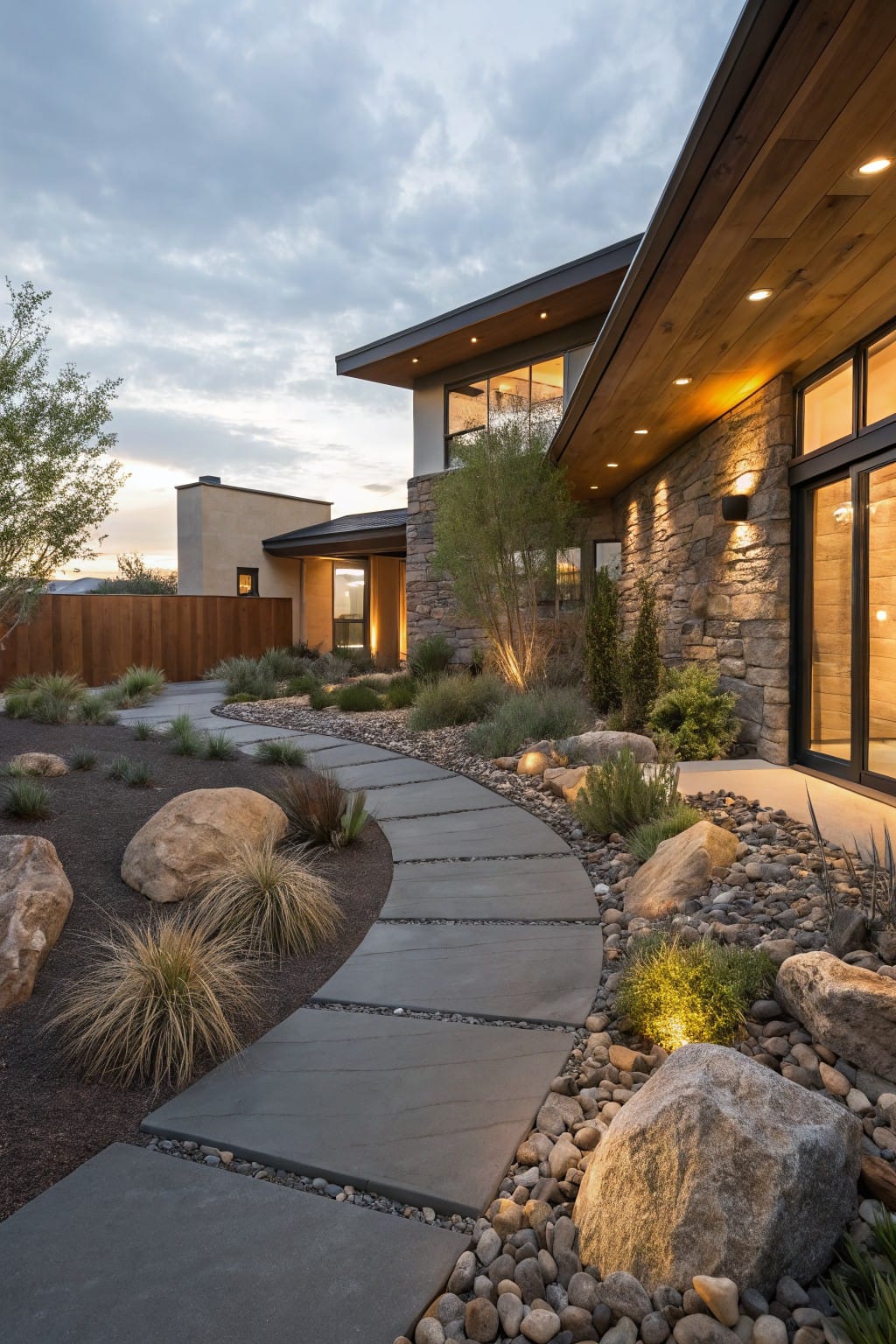
A curved path like this made from wide slate stepping stones set right into gravel and rock mulch does a solid job handling water runoff. The loose gravel and bigger boulders let rain soak in quick instead of pooling up or washing soil away. Paired with tough desert grasses it keeps things low fuss while guiding you smoothly to the entry.
You’ll want this on a gentle slope or anywhere drainage is an issue around the house foundation. It suits modern homes or drier spots best. Go for deeper gravel base under the stones to avoid shifting over time… and skip sod or heavy plants that hold water.
Stone Steps with Stream for Slope Drainage
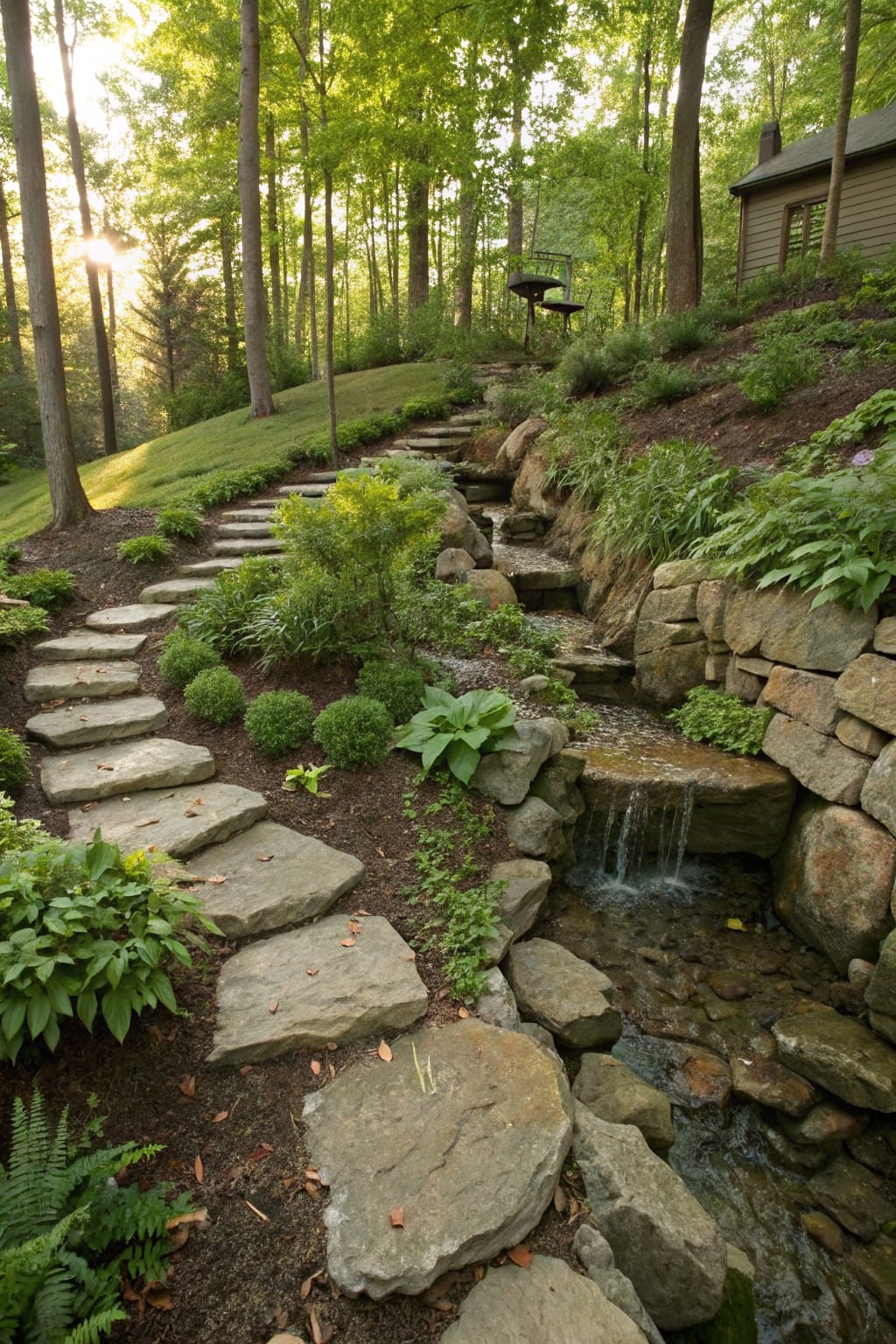
One smart way to handle water on a hillside is to build winding stone steps right alongside a shallow rock-lined stream. The irregular flagstones fit the natural slope, and the stream carries runoff down without washing out the path or plants. It turns a drainage problem into a feature that feels right at home in a wooded yard.
This works best on moderate slopes near a house or cabin, where you want access without mud after rain. Pick flat-ish stones for safe steps, line the stream with larger rocks to slow the flow, and add low plants along the edges. Just route the water to a safe spot at the bottom… easy upkeep too.
Stone Retaining Walls for Slope Drainage
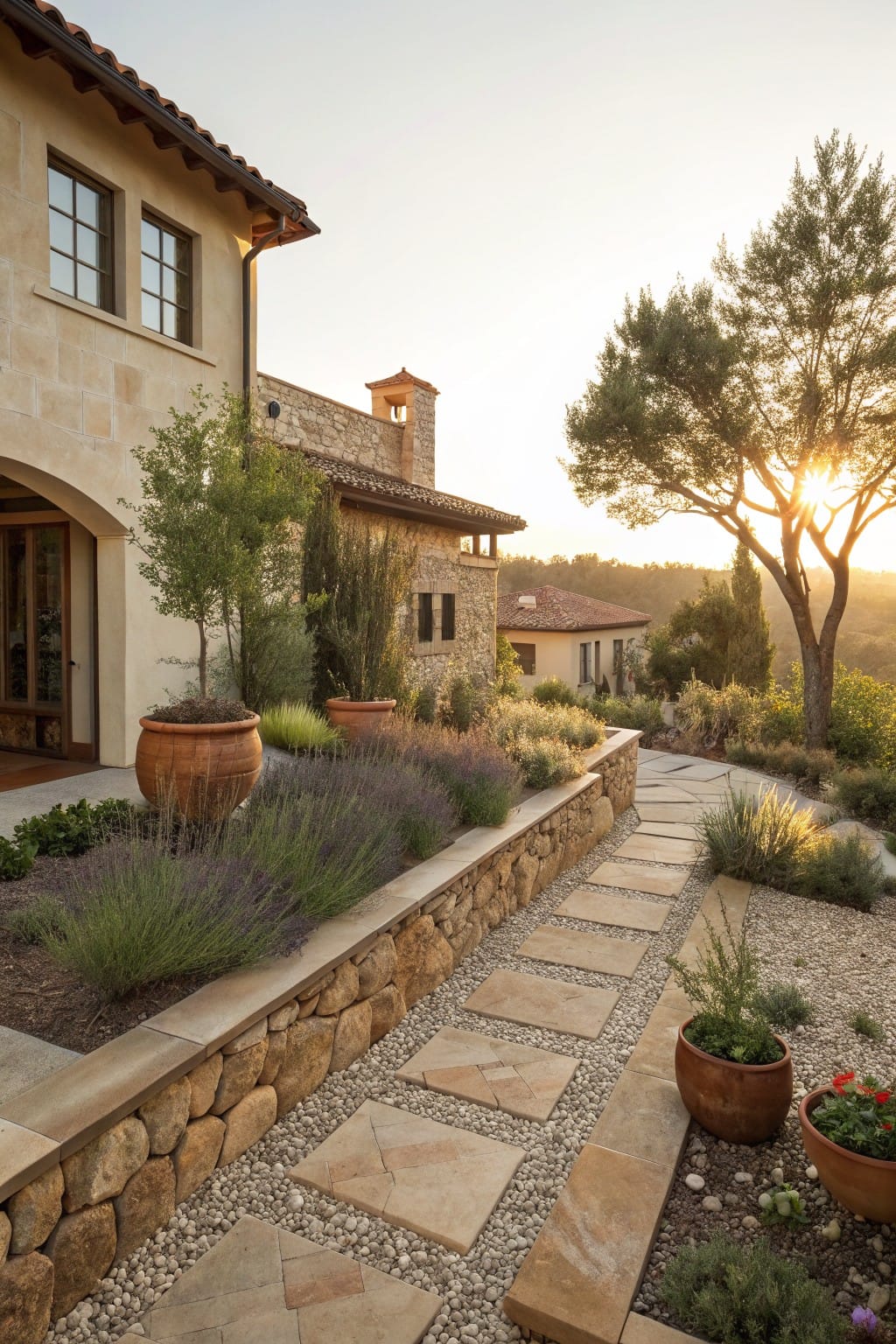
A simple dry-stacked stone wall like this one holds back soil on a gentle slope while letting water drain right through the gaps and gravel fill. It keeps everything stable without looking forced, and the rough stones blend into the hillside naturally. Add some gravel mulch around plants, and you’ve got a setup that handles rain without pooling or erosion.
This works best in drier spots or where you want low upkeep. Use it near house entries or along paths, especially on homes with a rustic or Mediterranean feel. Go for local stone to match your area, and keep the wall under three feet high unless you add reinforcement. Plants like lavender tuck in nicely and don’t need much water.
Dry Creek Bed for Yard Drainage

A dry creek bed like this one channels rainwater right through the yard using smooth river rocks and big boulders. It keeps water from pooling near the house or patio, and the plants along the edges make it look like a natural stream instead of a ditch. No more muddy paths after a storm.
You can set one up in any yard with a slope or low spot. Dig a shallow trench, line it with gravel for drainage, drop in the rocks and stones for steps, then add tough grasses or sedges. It fits right next to outdoor seating areas… just keep the boulders from blocking the flow.
Terrace Pebble Beds for Drainage
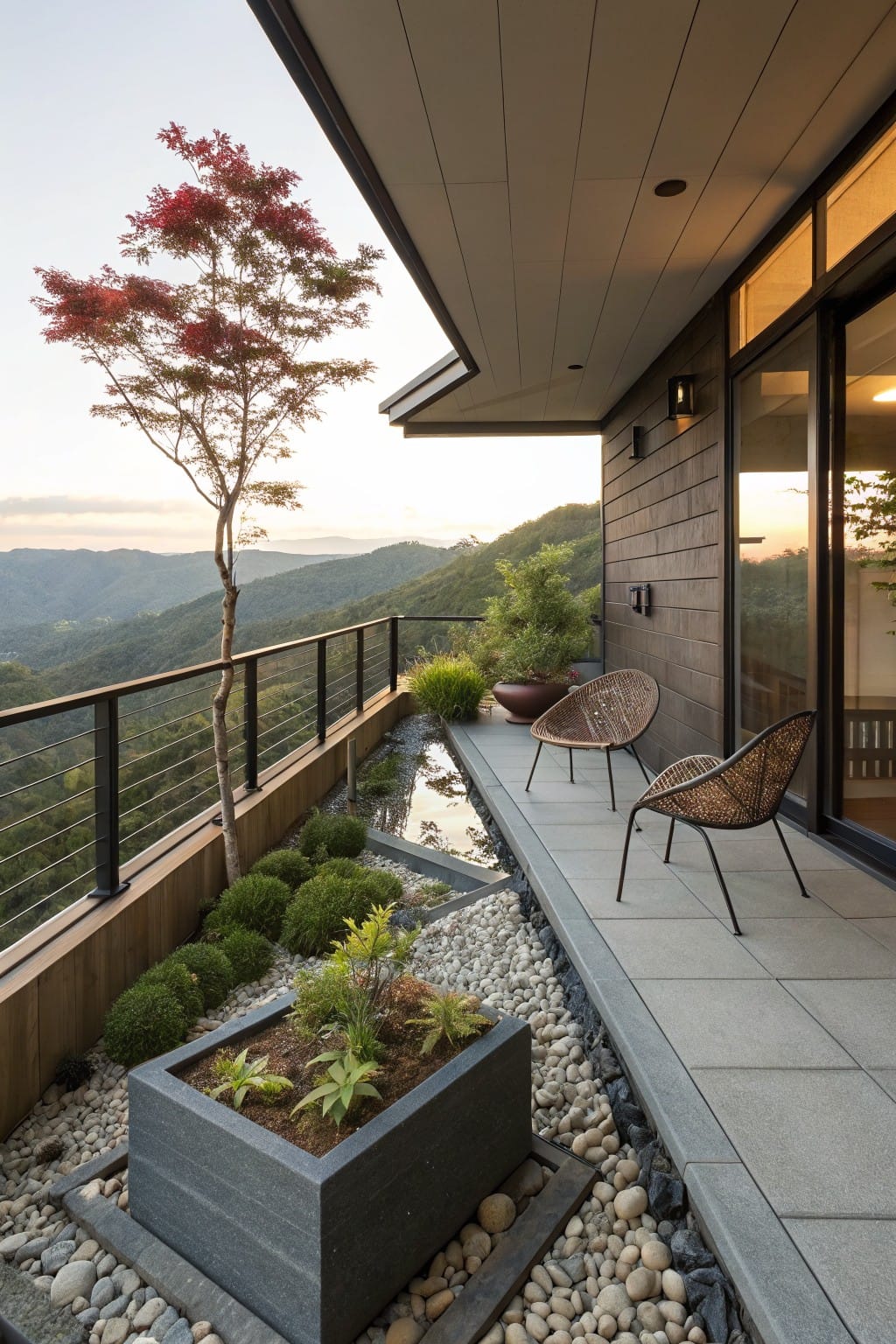
One smart way to handle water on a terrace or balcony is to surround your plantings with beds of smooth pebbles and gravel. You see it here around the low boxwoods and that big stone planter, where the rocks let rainwater seep right through instead of pooling up. It keeps everything looking neat even after a storm, and pairs well with hard surfaces like stone decks that don’t soak up moisture.
This setup works best on sloped outdoor spots or anywhere runoff is an issue. Just layer larger rocks at the base, then smaller pebbles on top around your plants, and edge it with wood or metal to hold it in place. Go for rounded river rocks if you want a softer look. Skip it in super-windy areas, though, or the stones might scatter.
Terraced Rock Walls for Sloped Yards
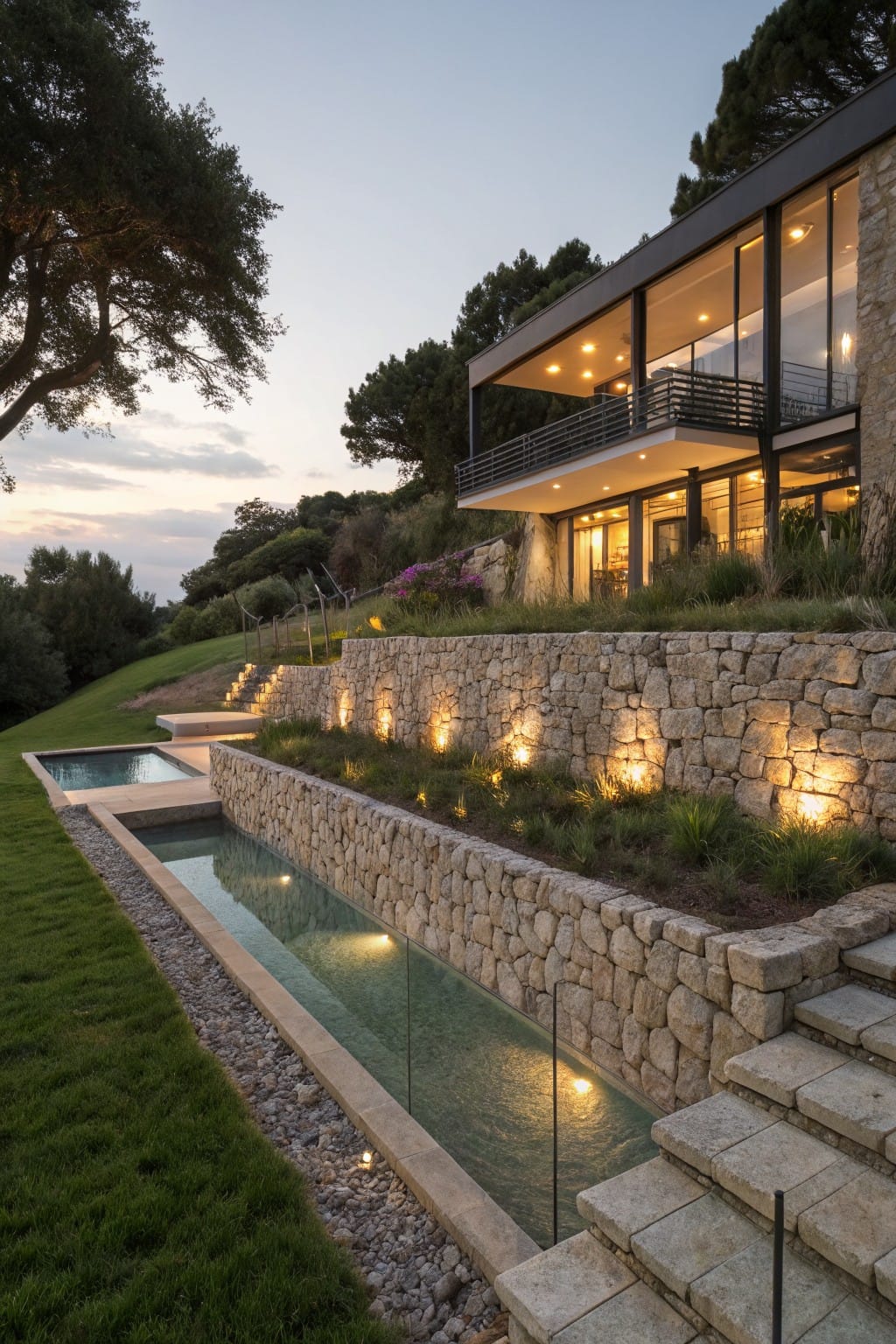
One smart way to handle a steep drop in your yard is terraced rock walls like these. They hold back soil while letting water drain right through or into built-in channels. Here, rough stone walls step down the hill, with a narrow pool running alongside one section. That setup keeps everything stable and turns runoff into a quiet feature. It works because natural stone blends with the slope instead of fighting it.
You can pull this off on any hillside lot, especially where erosion is a problem. Stack local rocks for walls about two to three feet high between terraces, and add gravel at the base for extra drainage. Plant grasses or low shrubs in the flat spots to soften things up. Just make sure the walls are solid, maybe with some mortar hidden inside if needed. It suits modern or rustic homes that sit right on the grade.
Stepping Stone Path with Gravel Drainage
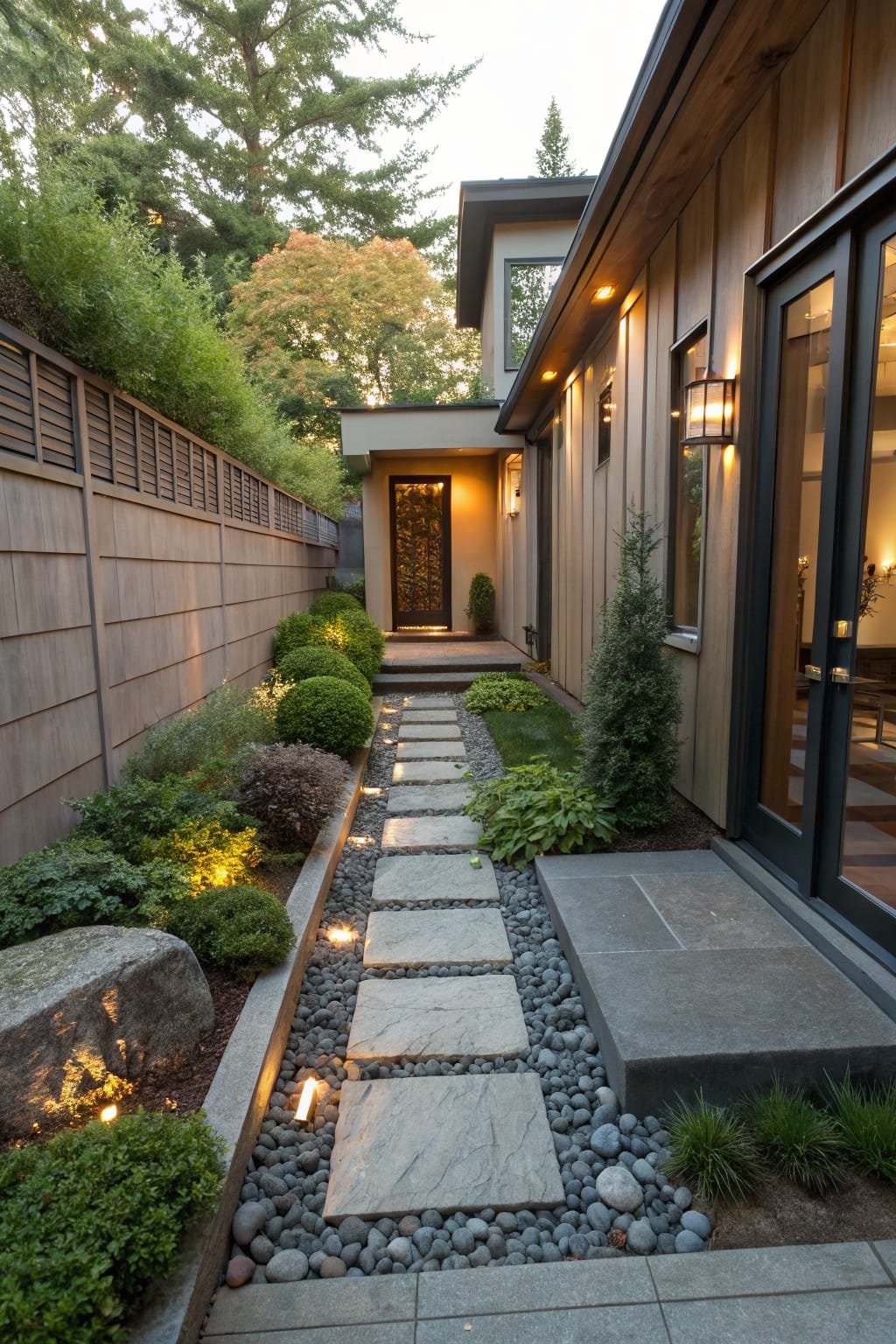
One straightforward way to handle water around walkways is lining them with gravel beds full of river rocks. This setup lets rainwater seep right through instead of pooling up or washing soil away. You see it here with wide stone steps set into a gravel strip, edged by low plants and a big boulder for that natural feel. It keeps things dry underfoot, especially in rainy spots.
Try this in side yards or entry paths where space is tight and drainage matters most. It fits modern homes with wood siding like this one, and it’s low fuss since rocks don’t need mowing. Just make sure the gravel layer is deep enough, say 4 inches, over fabric to block weeds. Works great where mud turns into a mess after storms.
Rock and Gravel Edging for Walkway Drainage
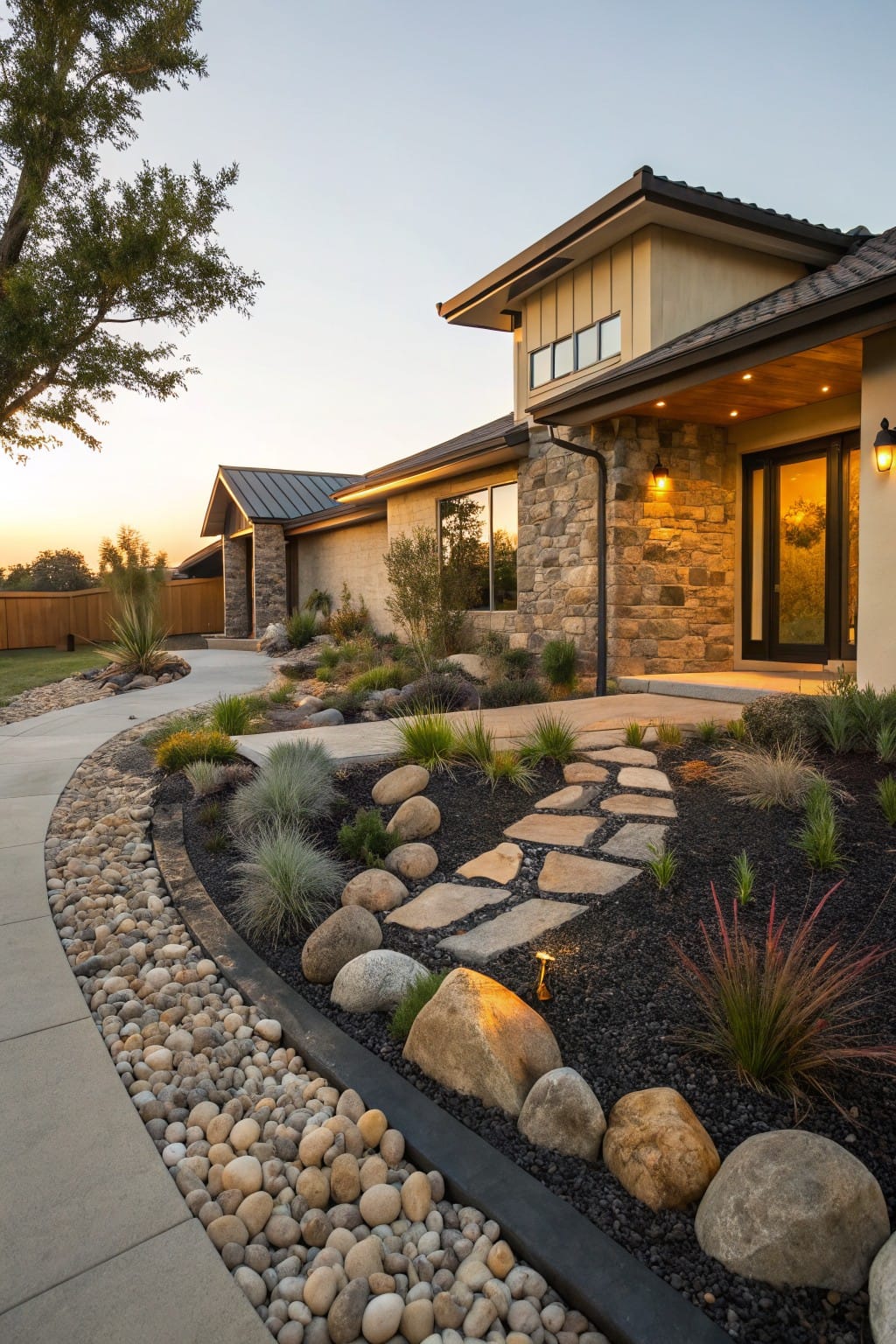
One straightforward way to handle water around your front path is to edge it with gravel and larger rocks. Here the concrete walkway curves gently toward the entry, bordered by smooth river rocks and bigger boulders set into dark mulch beds. Water runs off fast through the loose gravel, keeping things dry even after rain. It fits right with the house stonework too, without much upkeep.
You can pull this off in any yard with some slope, especially drier spots where you want low-water plants like grasses and agaves. Lay gravel two inches deep next to the path, toss in a few oversize rocks for weight, and it holds soil back while draining runoff. Works best on modern or ranch-style homes… just keep the gravel topped up every couple years.
Frequently Asked Questions
Q: Do I need landscape fabric under my rock drainage trench?
A: Yes, lay it down first to block soil from mixing with the rocks. Water still flows free, but your setup lasts years longer without clogging. Just overlap the edges a bit.
Q: What size rocks work best to channel water away from my house?
A: Go for 1- to 2-inch gravel in the main trench. It packs tight but lets water rush through fast. Edge it with bigger boulders to keep the shape sharp.
Q: Can I handle a rock dry creek bed myself in a weekend?
A: Sure, if your yard isn’t huge. Dig the path, drop in fabric and rocks, then rake smooth. And wet it down after to settle everything nice.
Q: How do I stop weeds from popping up in the rocks?
A: Sprinkle a thin layer of crusher fines on top after placing rocks. It fills gaps and smothers seeds before they sprout. Refresh it once a year.
