

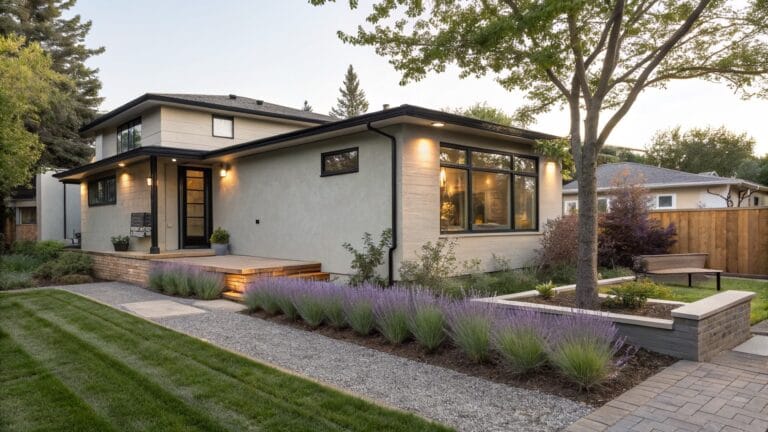
I’ve noticed how a good garden border quietly shapes the whole yard, turning chaos into something orderly.
Too many bargain options crumble fast from frost or just shift out of place over time.
Smarter ones lean on sturdy recycled stuff like bricks or pipes that you sink deep and forget about.
I went with flat stones along my walkway last summer because they match the house without screaming for attention.
A handful here could save you the usual redo next year.
Concrete Block Garden Borders
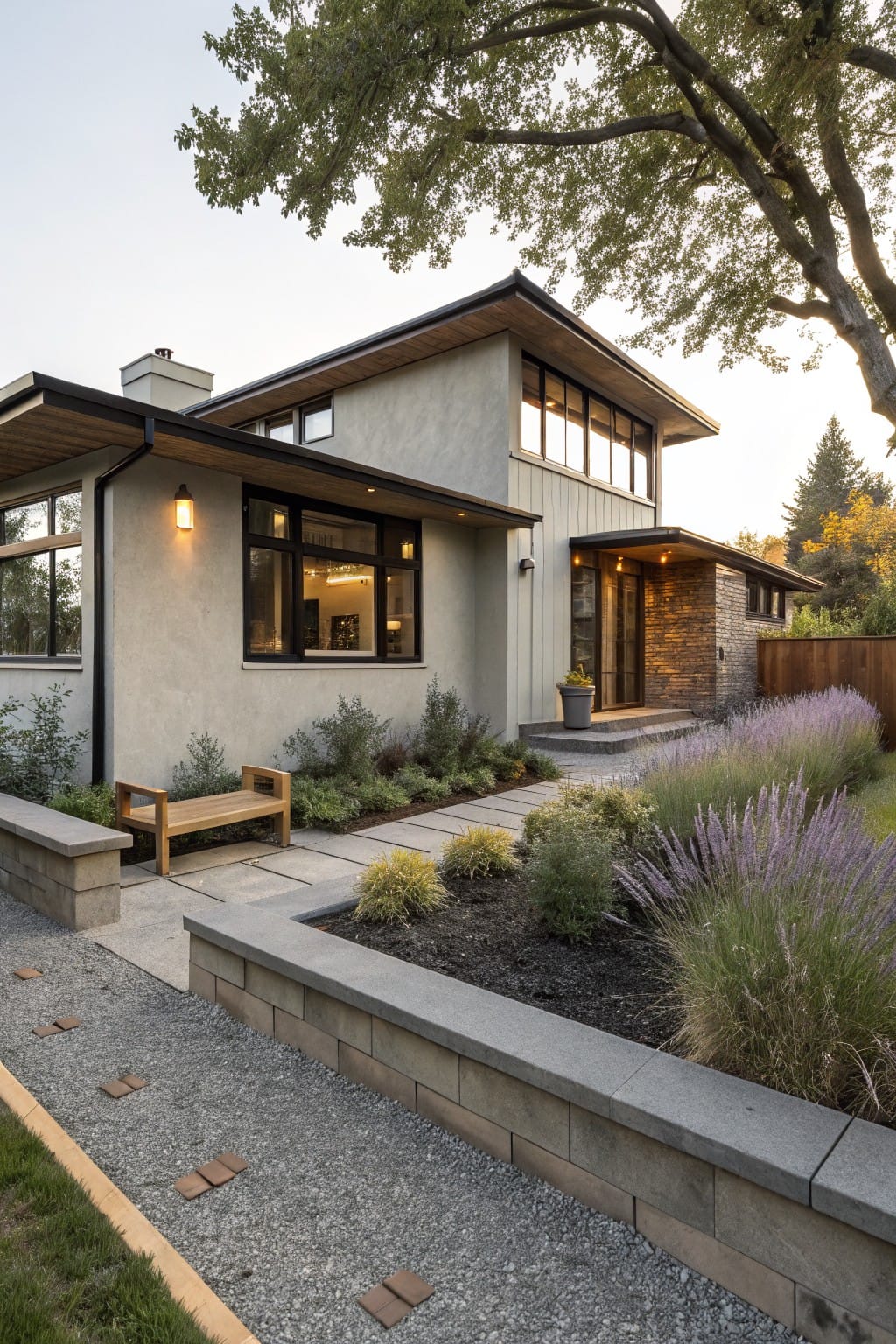
One easy way to edge garden beds that lasts is stacking low concrete blocks into a short retaining wall. Here, it neatly holds back a gravel mulch bed planted with lavender and grasses, keeping the path clear while letting plants soften the edge. Blocks like these cost little, stack without mortar if you want, and shrug off years of rain and freeze-thaw.
Put them to work along walkways or sloped spots to separate lawn from beds. They fit older homes or modern ones, especially yards with drought-tough plants. Level the base good first. Skip if your soil shifts a lot.
Flagstone Pathway Garden Borders
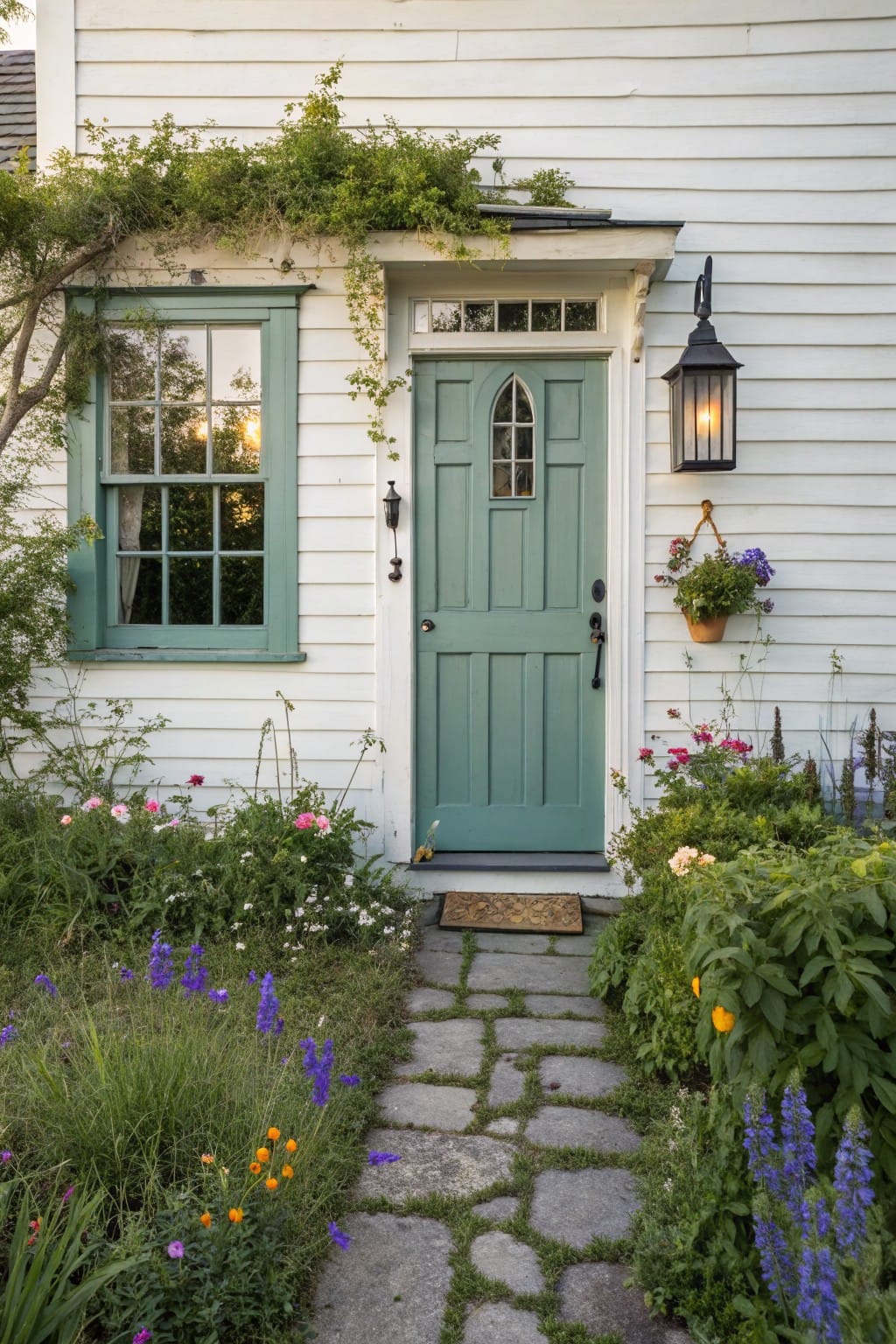
One straightforward way to edge garden beds that holds up over time is a simple flagstone path running right through the middle. It keeps the flowers in check without needing fancy metal strips or bricks that rust or shift. Here you see it winding up to a cottage door, with delphiniums and roses spilling over on both sides. The uneven stones give it a natural look that fits right in with the plants.
This works best in front yards or side paths where you want low upkeep and a bit of charm. Lay the flat stones in soil or gravel, leaving grass or mulch between them for that soft edge. It suits older homes or casual gardens. Just space them so you don’t trip, and add more plants as they fill in.
Raised Beds for Path Edging
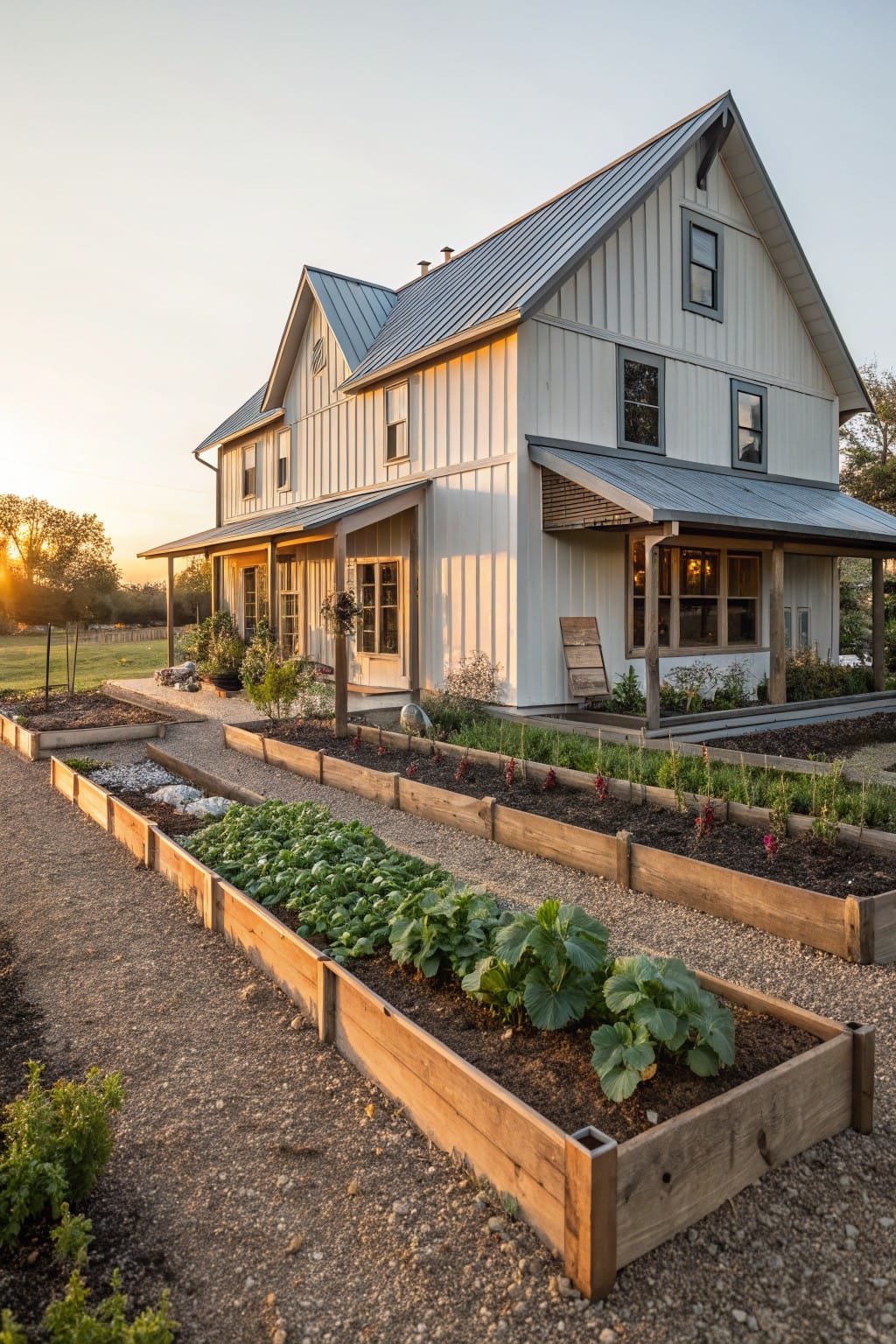
Raised wooden beds like these make sturdy borders for garden paths. They’re simple to build and hold up year after year without much upkeep. The straight lines keep gravel or mulch in place, and you can plant right in them for extra use.
Put them along walkways to homes with a country look, like farmhouses or cottages. Use rot-resistant wood and make sure they drain well. Skip paint if you’re growing edibles… just let the wood weather naturally.
Curved Concrete Borders for Lawn Edges
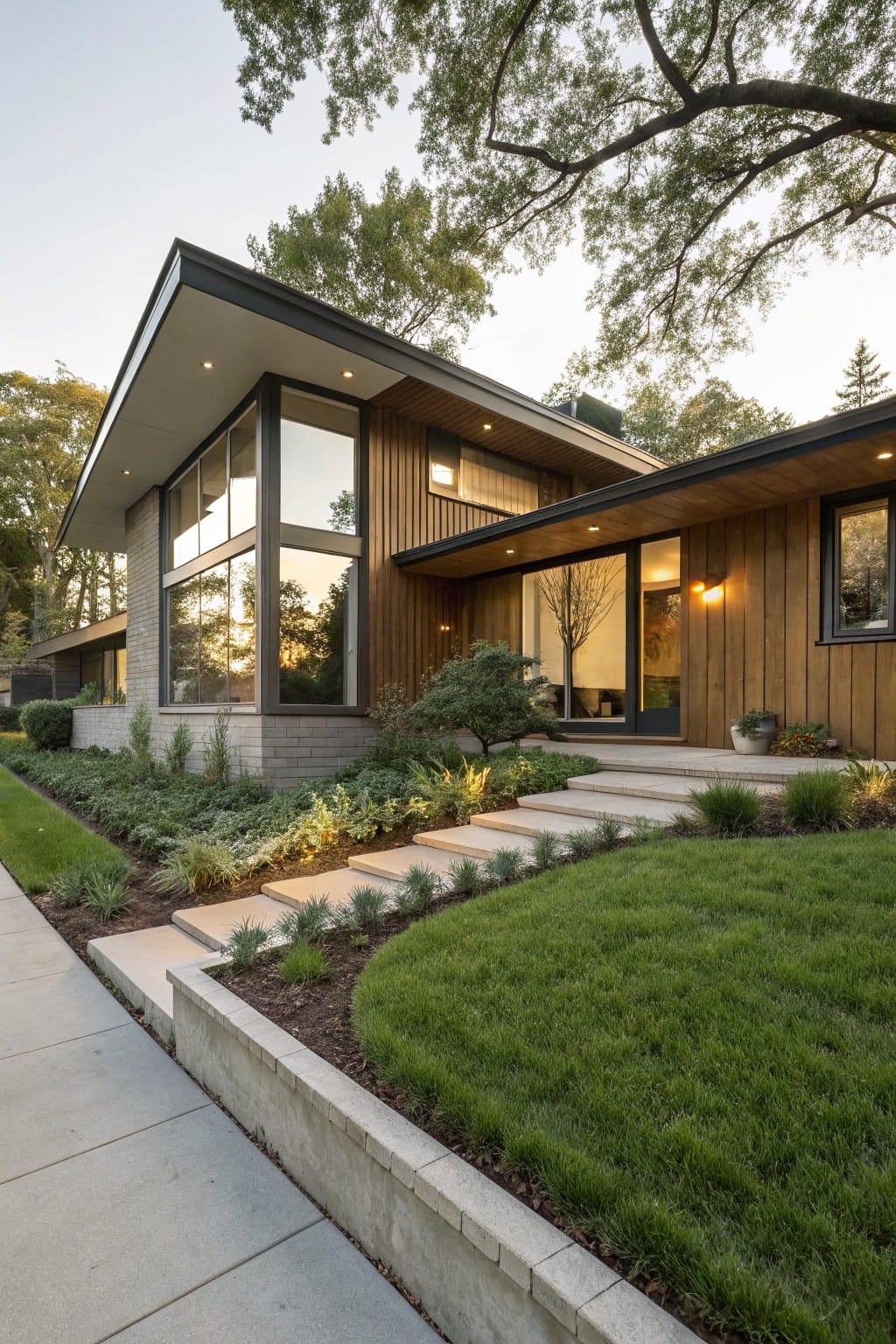
One straightforward way to edge a front yard is with low curved concrete borders like this. They run right along the sidewalk and up to the house steps, keeping the grass neatly in place while letting plants spill over just a bit. It’s a clean look that holds up year after year without much fuss, and the curve softens everything up nicely.
These work best on gently sloped lots where you need a little retaining without going overboard. Pour your own with basic forms or buy precast sections… either way, they’re cheap and tough. Just make sure the drainage slopes away from the house, or you’ll end up with soggy spots.
Plant Borders for Garden Paths
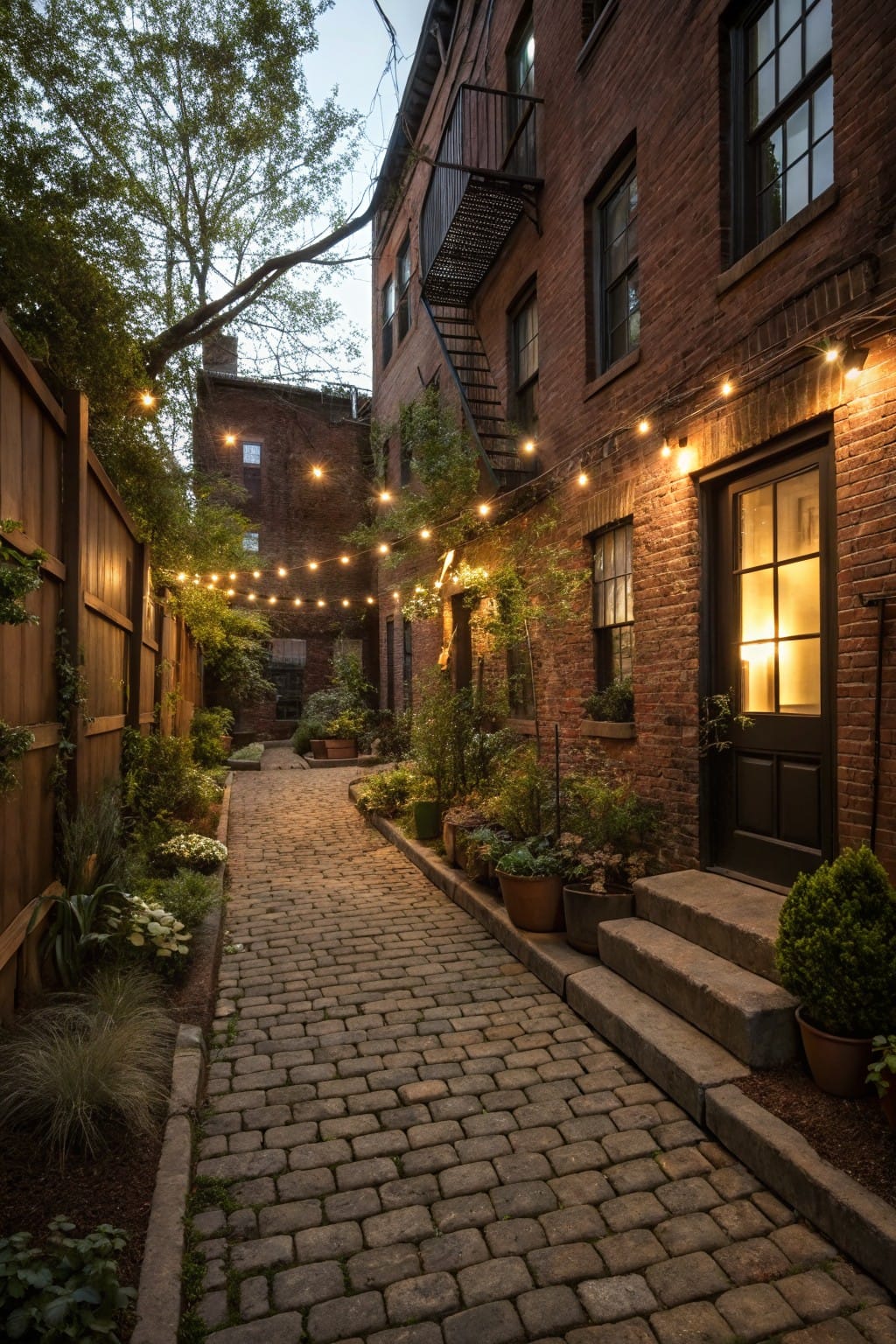
One straightforward way to edge a garden path without spending much is to plant low-growing perennials and grasses right along the sides. Here, ornamental grasses and white flowers hug the cobblestone walkway, creating a soft border that lasts season after season. It’s cheap to start with nursery pots or divisions from friends, and once established, these plants fill in nicely without much upkeep.
This approach suits narrow side yards or alleys behind urban homes, where space is tight. Tuck the beds against fences or walls, add a few terracotta pots for color, and choose tough varieties like daylilies or sedges that handle shade or poor soil. Just trim back in spring to keep the path clear.
Stepping Stones in Gravel Beds
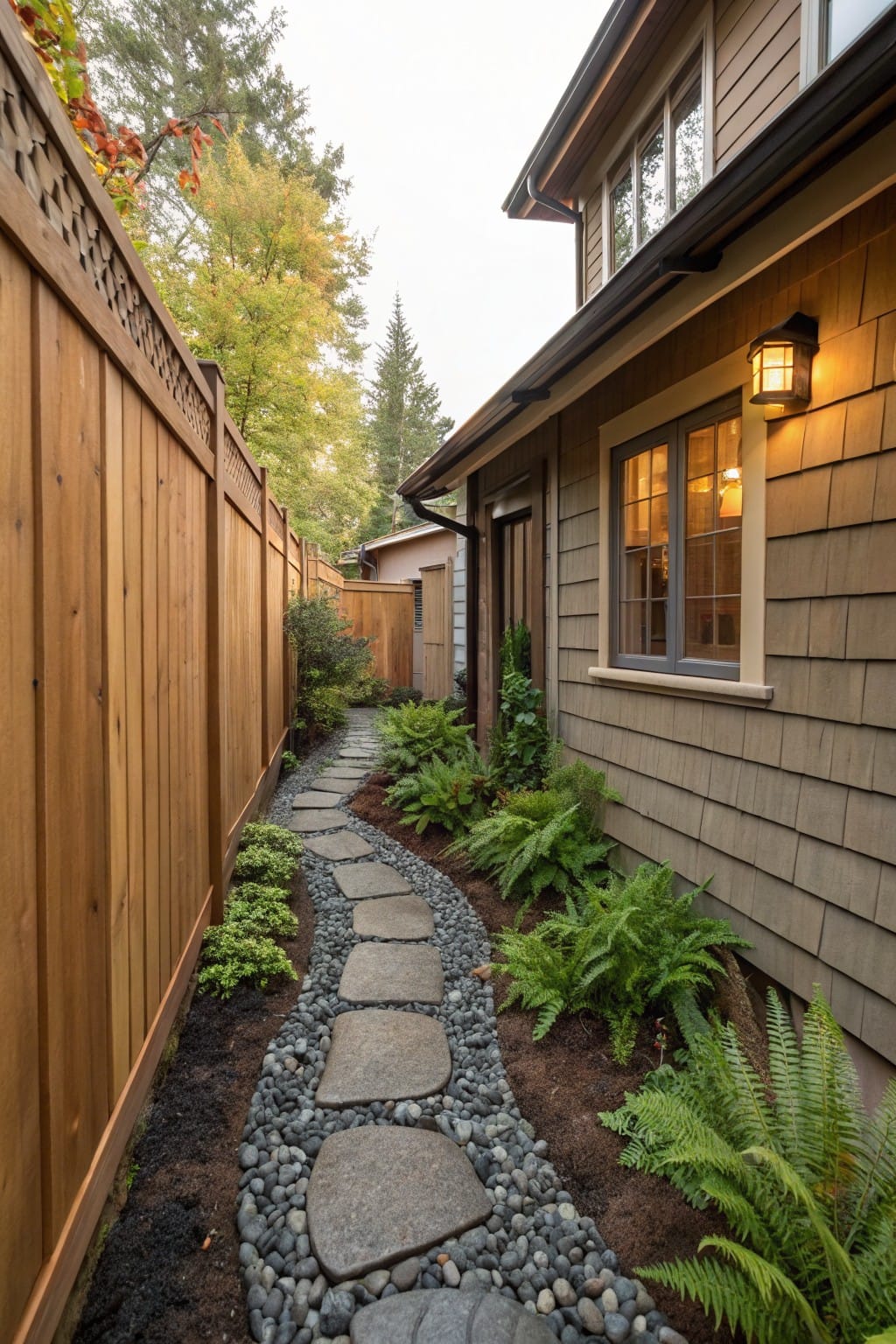
One straightforward way to edge a garden path is setting irregular stepping stones into a wide gravel bed. It creates a clean border that keeps mulch and plants in place without needing bricks or plastic strips. The gravel fills gaps around the stones and lets water drain right through. In this setup, ferns hug the edges for a soft look that stays put.
This works best in narrow side yards or along house foundations where space is tight. Use larger stones for stability and pea gravel to avoid shifting. It suits most homes, especially with wooded fences or natural siding. Just top up the gravel every couple years to keep it fresh.
Green Glass Bottles as Garden Edging
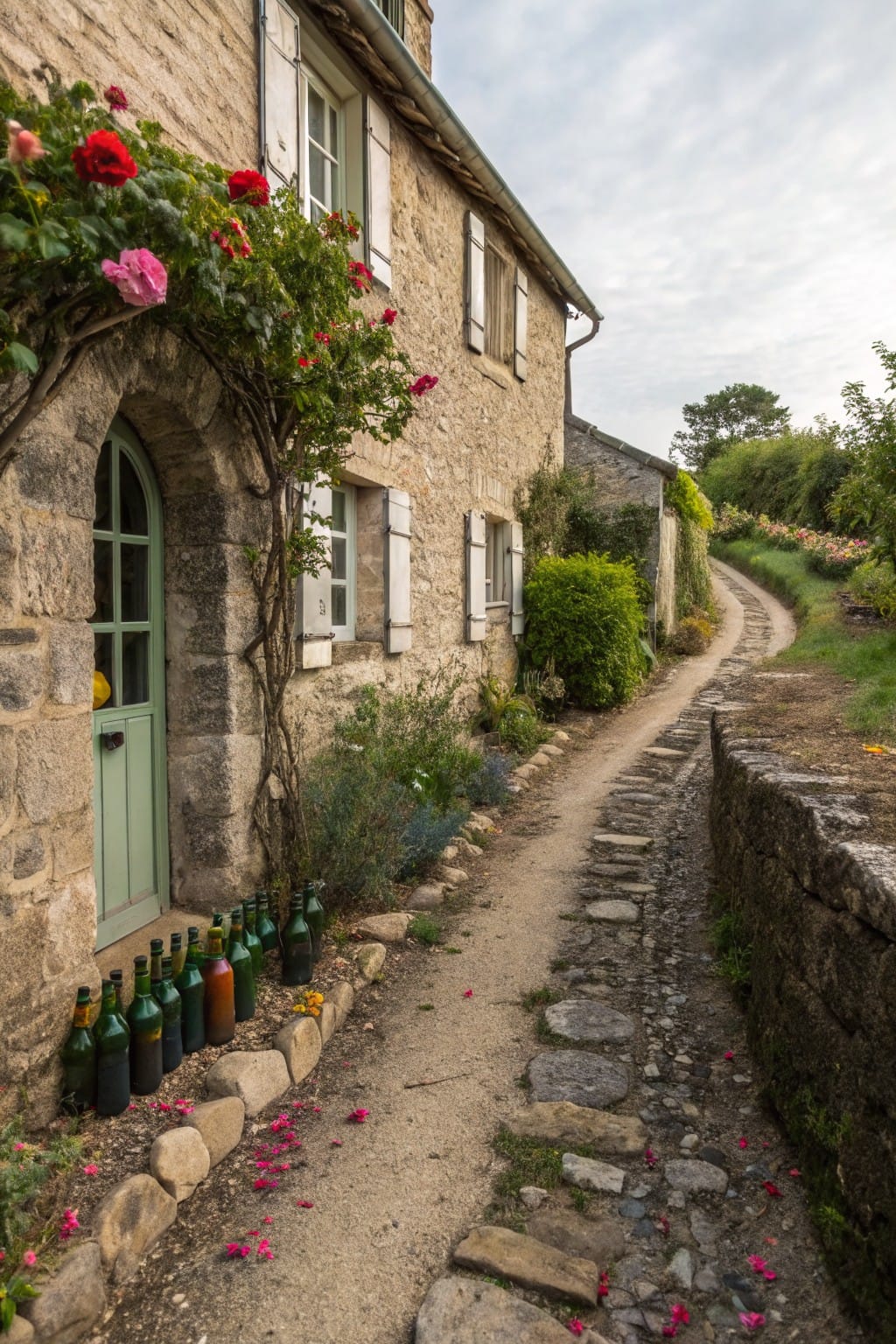
Old green glass bottles make a sturdy border for garden beds and paths. They’re cheap to source from recycling or garage sales, and they hold up year after year without rotting or washing away. Here, a row of them lines the edge near the house, giving a pop of color against the stone.
This edging suits cottage-style yards or rural spots with winding paths. Push the bottles halfway into the soil, necks down, spaced close for a neat line. It works best where you want low upkeep. Skip it in high-traffic areas, though… feet might kick them loose.
Gravel Strips for Garden Borders
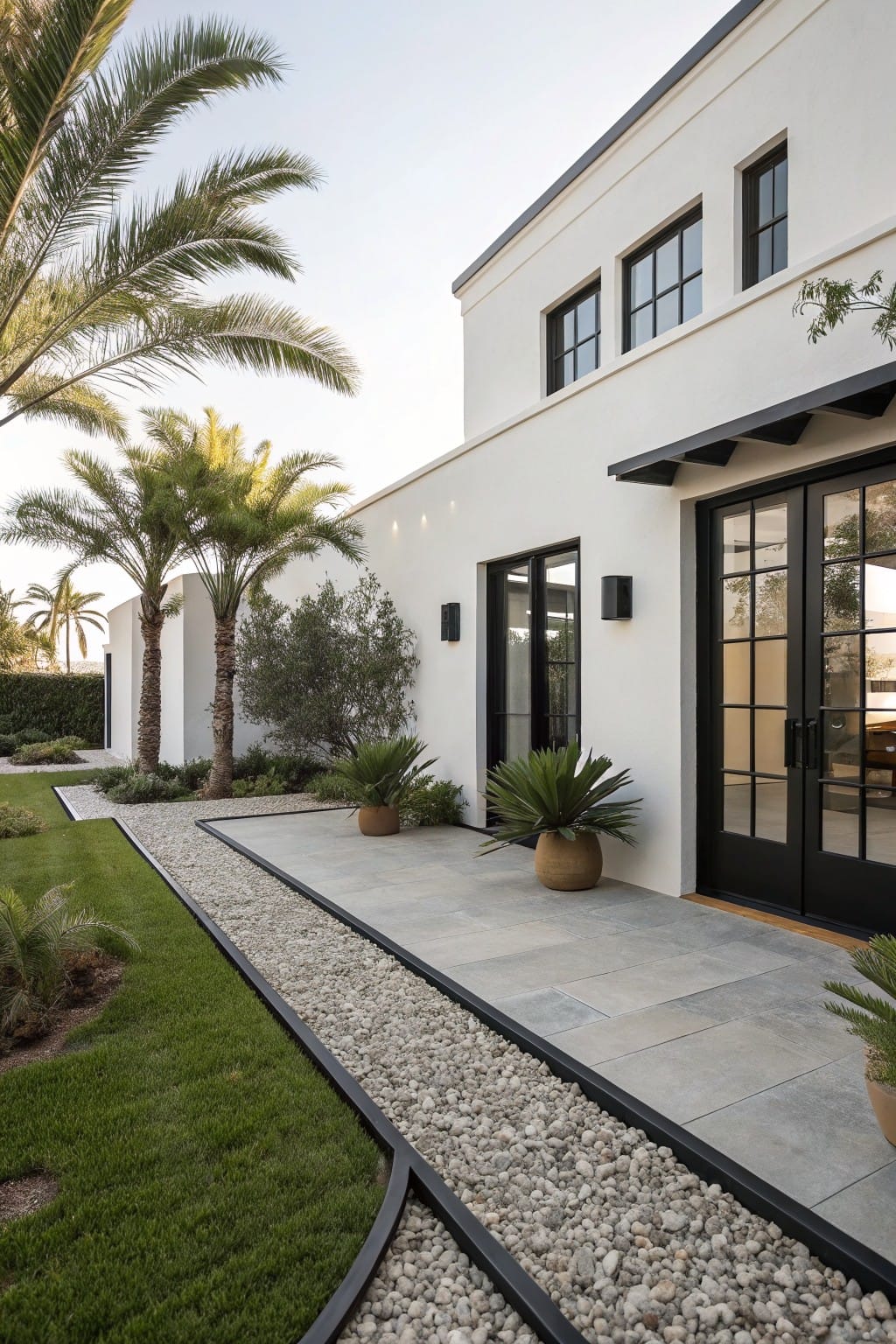
A simple strip of white gravel runs right between the lawn and those slate patio tiles. It makes a clean break without any fuss. That black edging keeps the pebbles right where they belong, so nothing spills over.
This works great next to patios or walkways in sunny yards. Cheap materials, easy to put down yourself. Suits modern houses or older ones too. Just rake it now and then to stay sharp.
Low-Growing Plants for Path Edges
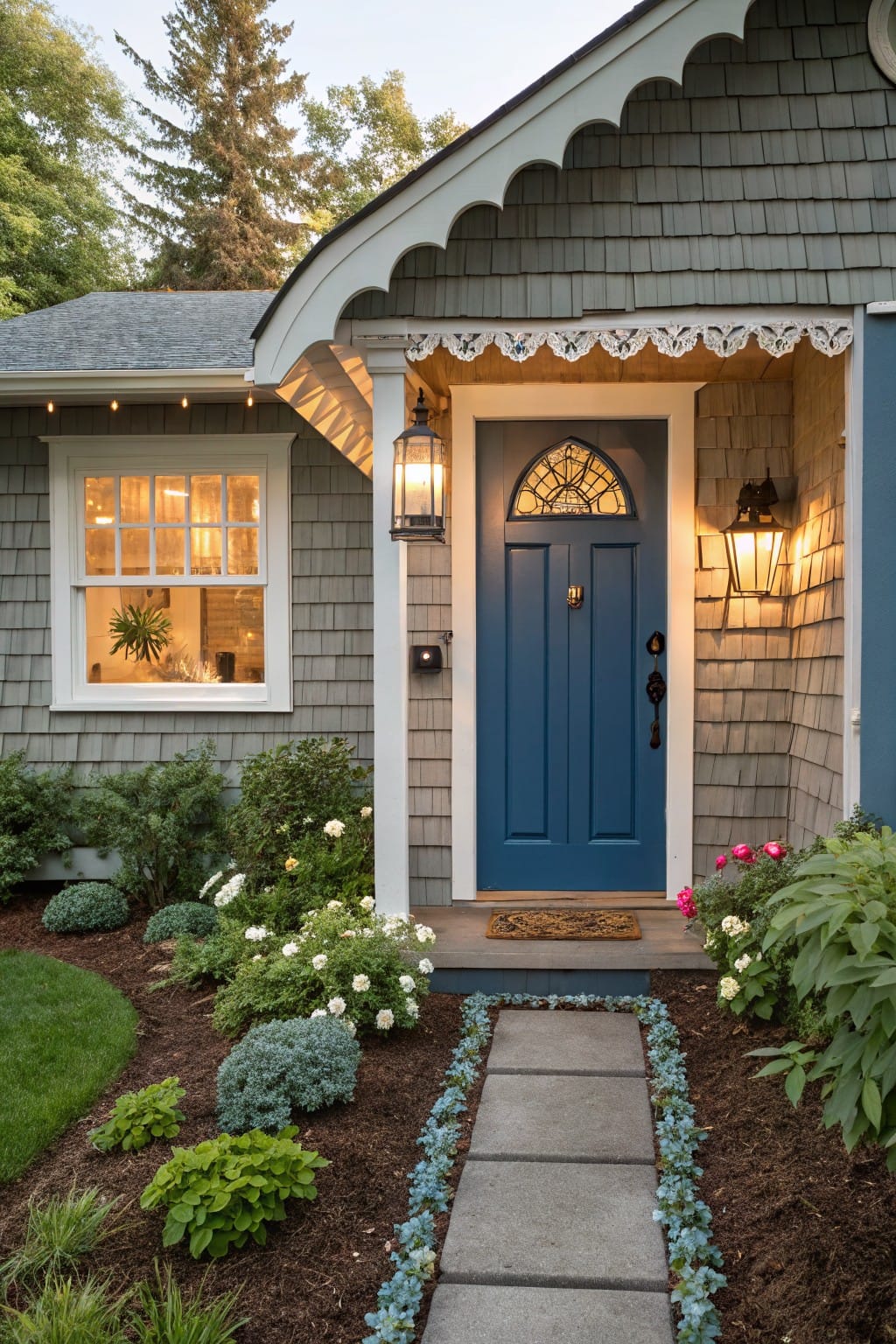
One easy way to edge a walkway is lining it with low plants that spill over just a bit. In this yard, blue flowers run right along the stone pavers, keeping mulch in place and adding color without fancy materials. It’s cheap and holds up year after year.
Try it leading to your front door or side gate, where foot traffic is light. Pick spreading types like lobelia or sedum that fill in fast on cottage or bungalow homes. Watch they don’t creep onto the path… a quick trim keeps it tidy.
Terracotta Tile Garden Borders
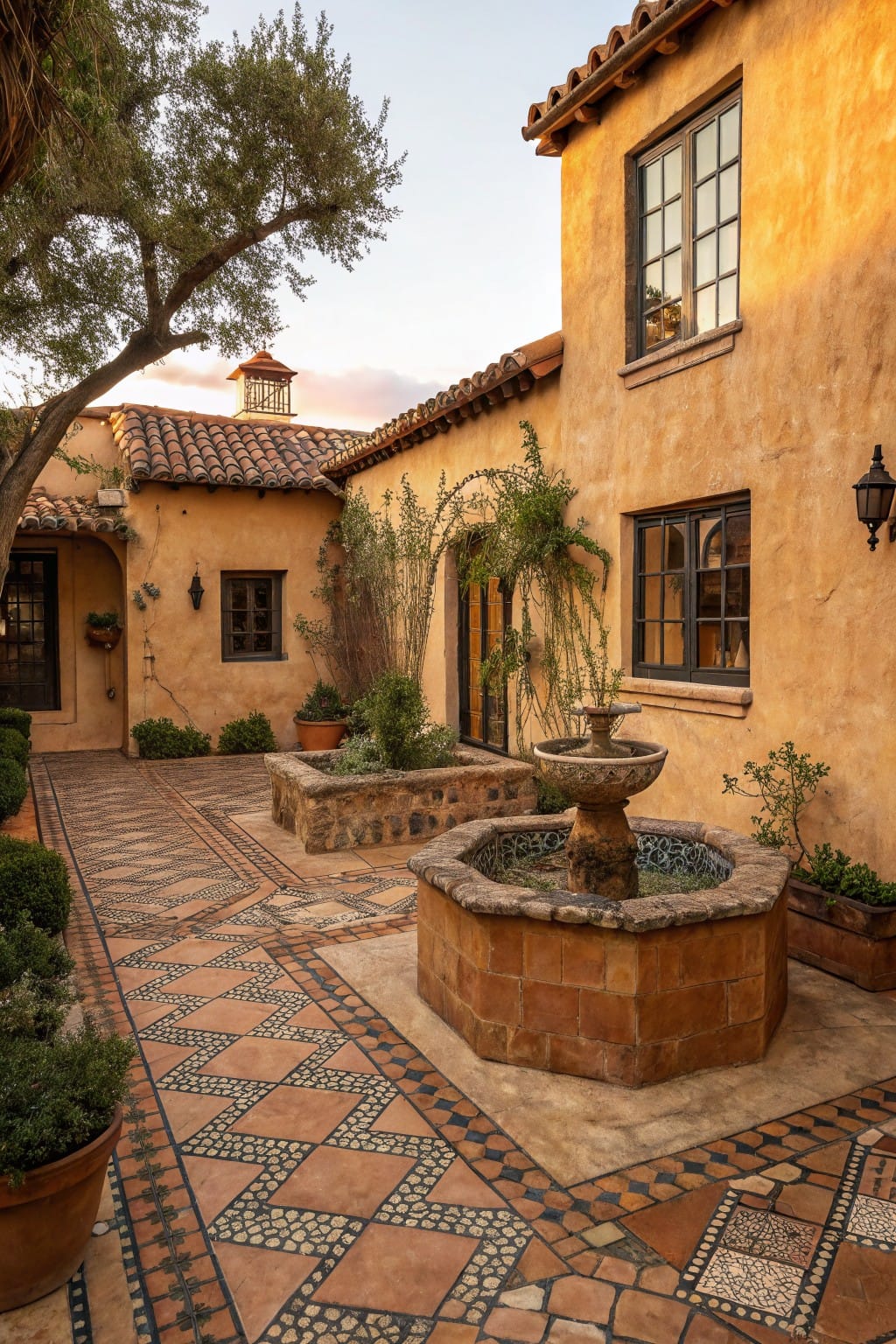
Terracotta tiles work well as garden borders because they hold up over time and add some pattern without much fuss. You see them here forming clean edges along paths and around beds, with those diamond shapes and zigzags that guide your eye right to the center fountain. It’s a simple way to keep things neat in a yard, and the earthy color blends with plants and stucco walls.
Put these borders around walkways or planting areas in full sun spots, where they won’t crack from frost. They fit older homes with a Southwest feel, or any casual backyard patio. Just seal the tiles now and then to fend off stains, and source affordable ones from salvage yards if you can.
White Brick Raised Beds for Garden Borders
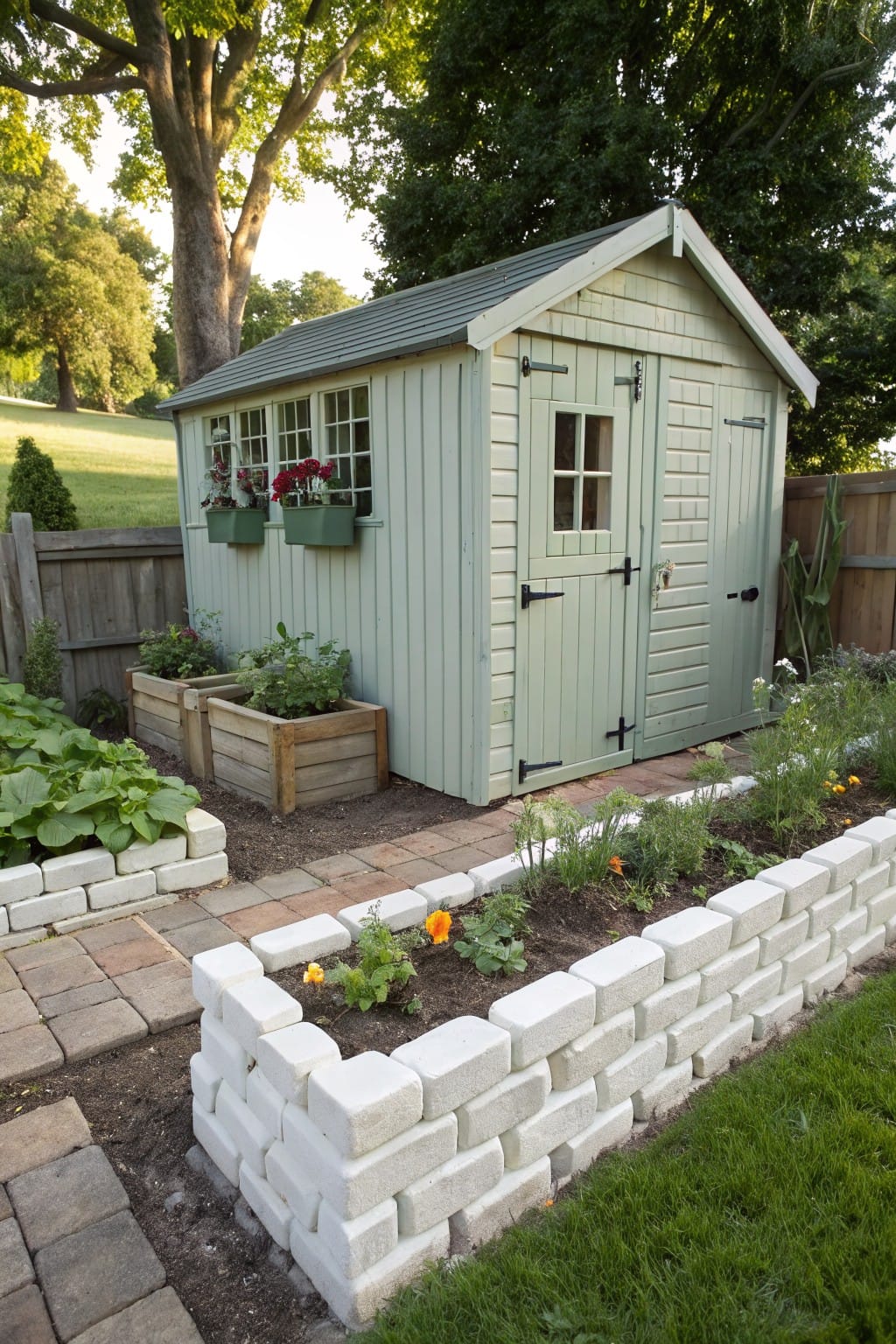
One straightforward way to edge your garden beds is with white bricks stacked into low raised borders. They give a clean, crisp line that keeps soil in place and makes planting areas look neat without much fuss. In this setup, the white bricks stand out nicely against the green shed and dark soil, and they last for years since they’re concrete blocks that won’t rot or warp like wood might.
These work best in backyard veggie patches or flower gardens where you want defined spaces that are easy to tend. Stack them just one or two courses high around your beds, fill with good dirt, and plant right up to the edge. They suit most any yard size, even small ones, but watch that they don’t get too tall or they’ll need mortar to stay steady.
Concrete Block Edging for Garden Paths
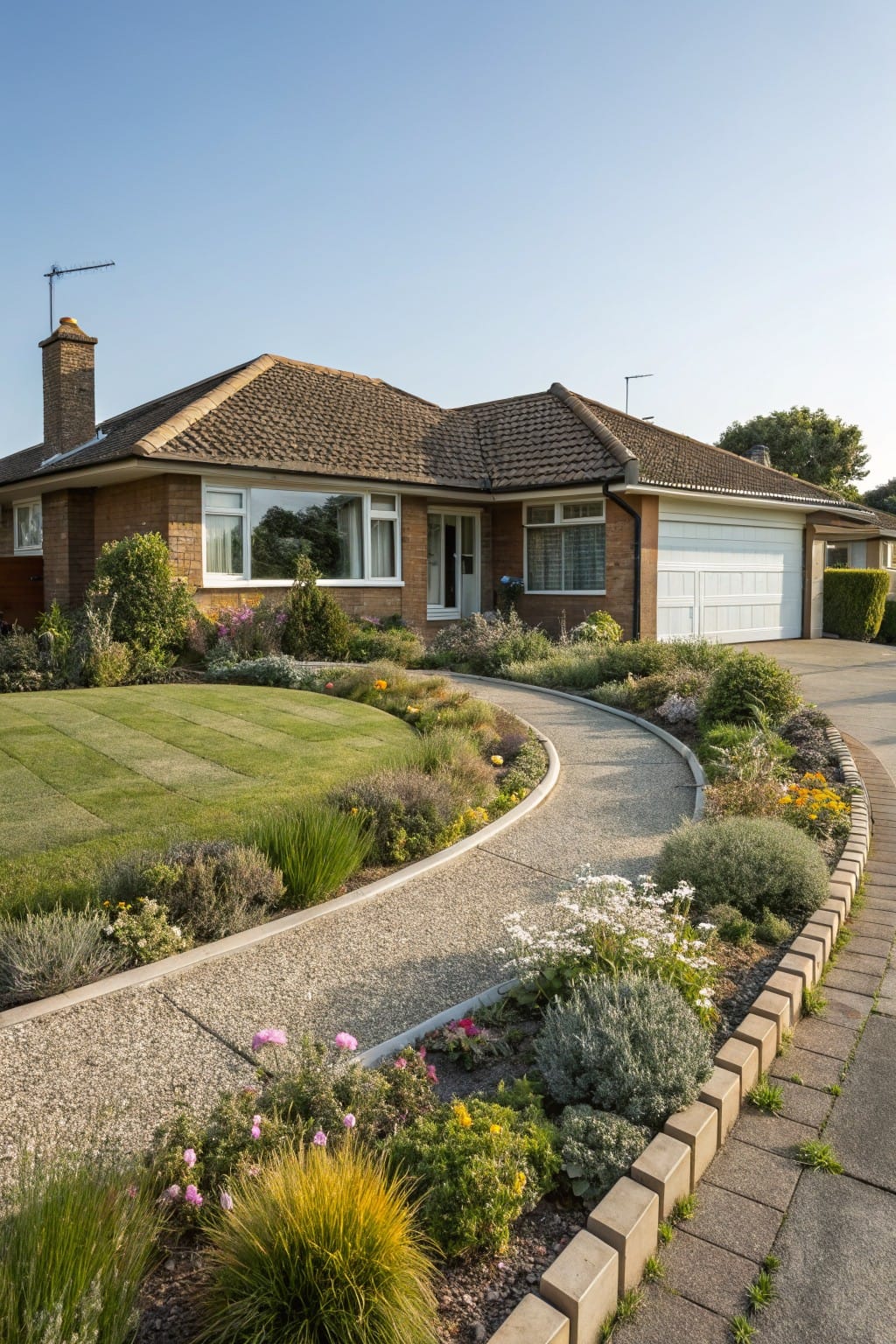
Concrete blocks make a solid choice for edging garden borders around paths. They’re inexpensive, tough against weather, and keep plants from spilling over onto the walkway. Here they run along a curved gravel path, framing beds full of grasses and flowers without looking fussy.
Set them along any front path or driveway edge where you want clean lines that last. They fit older homes with lawns and mixed plantings best. Lay them flat on the soil, butt them tight, and backfill with dirt. Skip mortar to save time… they stay put anyway.
River Rock Borders for Pathways
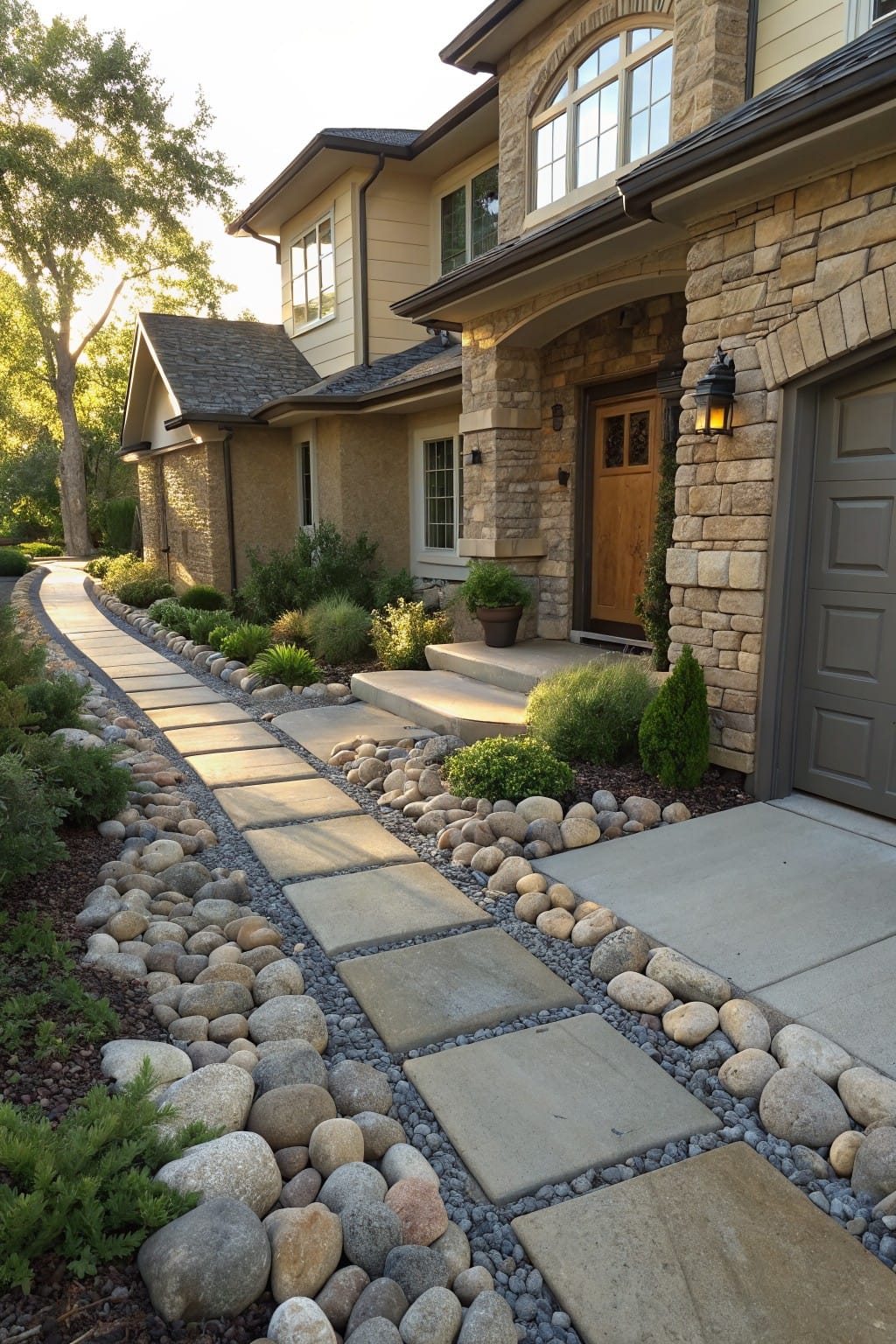
River rocks piled along a gravel base make a solid edge for garden beds next to walkways. Here the big concrete pavers sit right in the gravel, with smooth river stones holding back the plants and mulch. It’s cheap to put together, stays put through seasons, and gives that clean line without fancy materials.
Use this along any front path to the door, especially where you want low upkeep. Suits homes with stone or siding like this one. Start with fabric under the gravel to keep weeds down… and refresh the rocks now and then if they shift.
Raised Timber Garden Borders
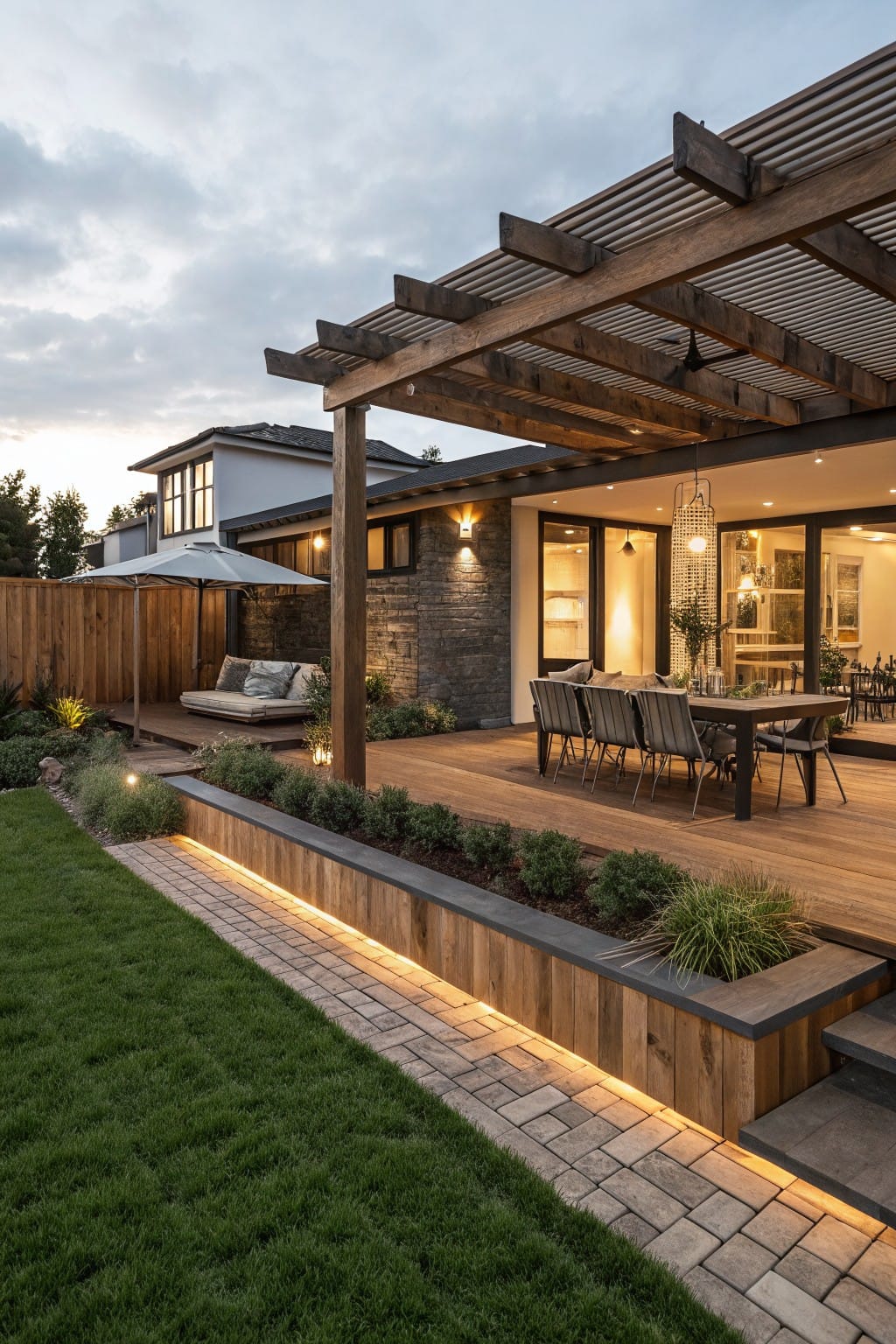
Raised timber borders make a solid edge for lawns and patios. They hold back soil and plants while giving your yard a clean line. In this yard, the wood boxes run along the deck edge, planted with grasses and low shrubs. It’s cheap to build and tougher than plastic or stone for everyday use.
Put them where you need to separate grass from hardscape, like next to a deck or walkway. Pressure-treated lumber keeps them from rotting fast. Tuck LED strips underneath for light at night. They fit most homes with a bit of yard space. Watch the drainage so water doesn’t pool.
Boxwood Hedges for Pool Borders
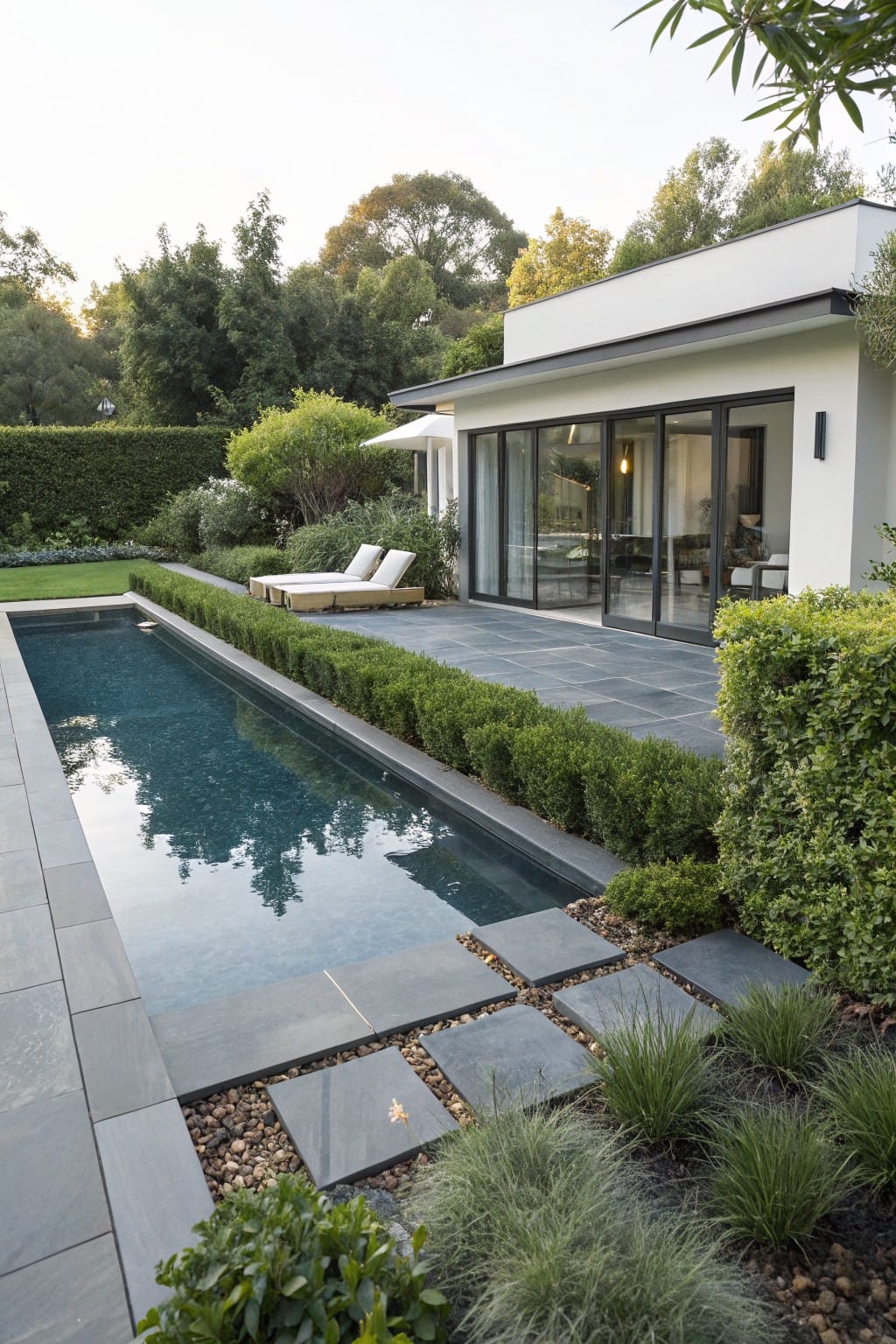
Boxwood hedges make a solid choice for edging pools or paths. In this setup, the low trimmed bushes run tight along one side of the narrow pool, framing the water with a clean green line. They soften the hard slate edges without taking up space, and since boxwoods are tough evergreens, the border holds up for years with basic care.
Set these hedges where they get some sun and good drainage. They fit right into modern backyards or neater traditional yards, especially next to stone or tile. Trim them twice a year to stay sharp. One thing. Pick disease-resistant varieties if your area has wet spells.
Brick Edging for Garden Paths
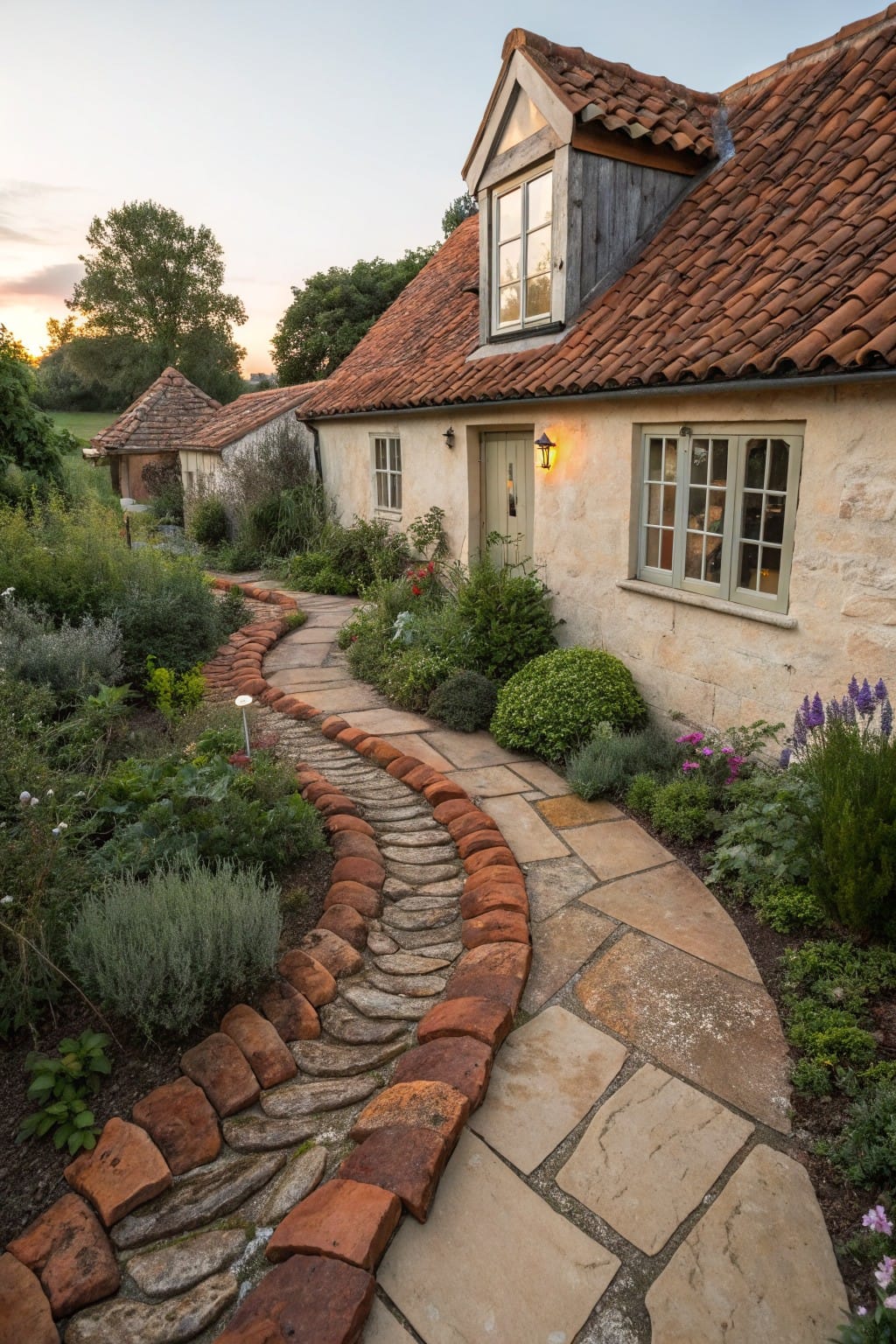
One straightforward way to edge a garden path is with bricks cut in half and laid along the sides. In this setup, the red bricks follow the curve of a stone walkway right through plant beds, keeping soil in place and giving a clean line that doesn’t shout for attention. It’s cheap if you use old bricks, and they weather nicely over time.
This works best in cottage-style yards or anywhere you have winding paths instead of straight lines. Line them up tight against the path edge, maybe add gravel inside for drainage. Suits most home gardens, just make sure the bricks sit level so no one trips. Lasts years with little upkeep.
Corten Steel Slabs for Garden Edging
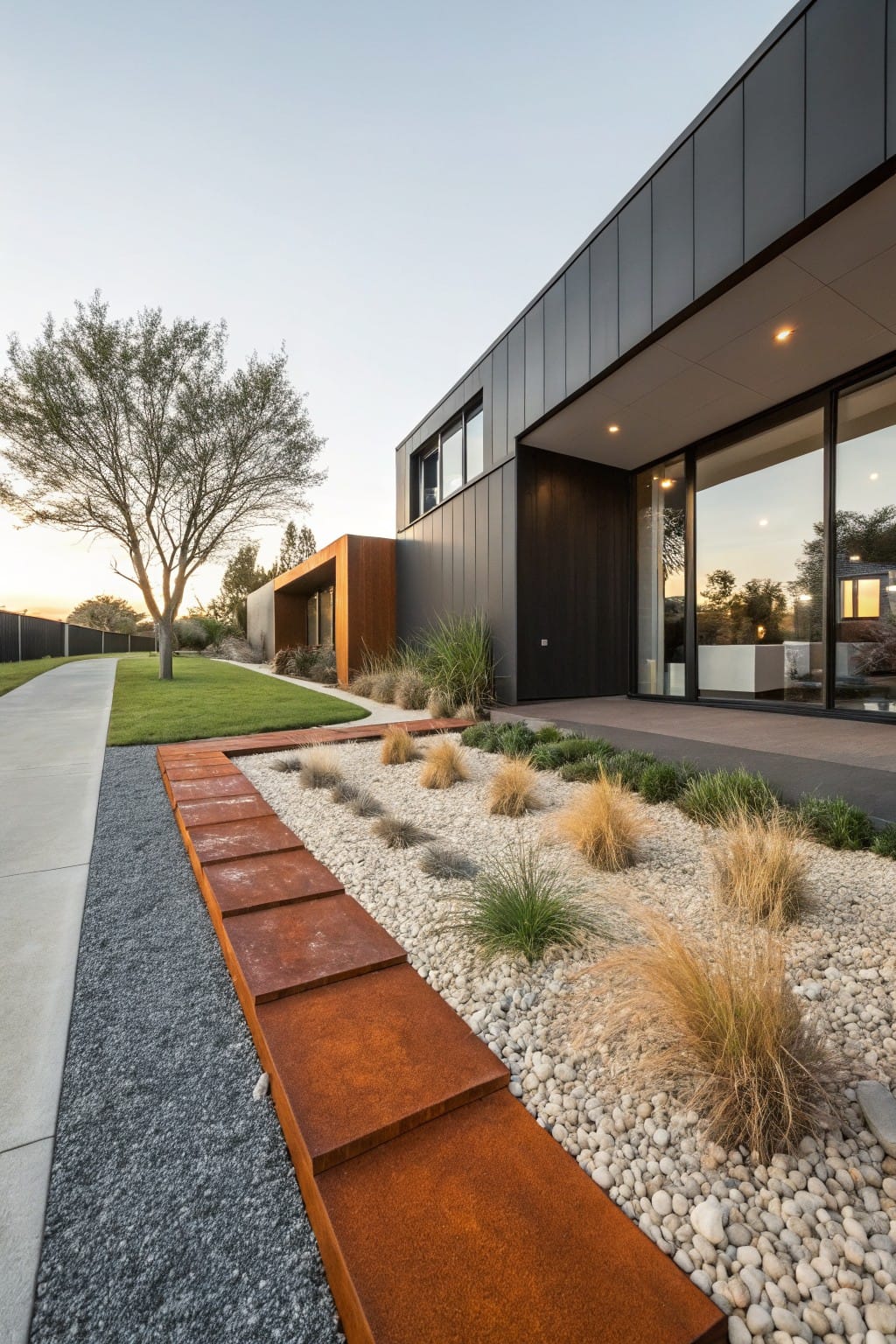
Corten steel slabs make solid garden borders that hold up for years without much fuss. Here they’re laid flat into a gravel bed with clumps of grass poking through, forming a simple path right up to the house entry. The rusty patina blends with dry landscapes and gives that weathered look people want without waiting decades for it to happen.
You can use these on gravel or pebble beds around lawns or patios, especially in sunny spots where you want low-maintenance plants. They’re cheap to source at metal yards, easy to cut with a grinder, and suit modern homes best. Watch the drainage though… poor soil can make the rust spread funny.
Vertical Garden Edging with Wooden Crates
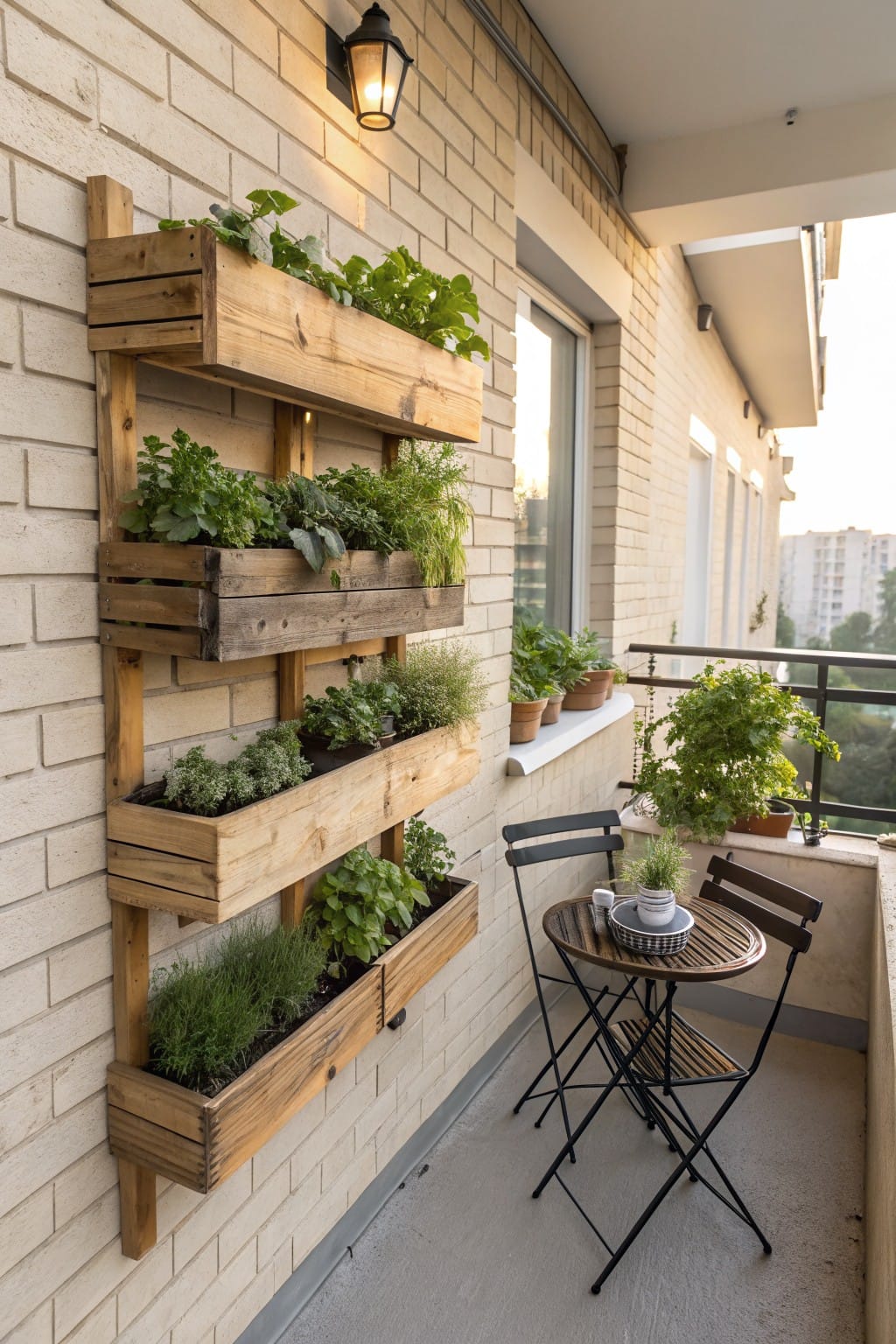
Stacking wooden crates vertically along a balcony wall makes a simple garden border that punches above its weight. You get a lush row of herbs and plants right where space is short, and it uses cheap recycled wood that holds up outdoors. Folks like it because it turns bare walls into something useful and green without taking floor room.
Mount the crates with brackets on brick or stucco walls, line them for drainage, and fill with easy herbs like basil or thyme. It suits small balconies on apartments best. Treat the wood with sealant first, or it might rot in a few years. Keeps things tidy around a little table setup too.
Low Stone Walls for Garden Borders
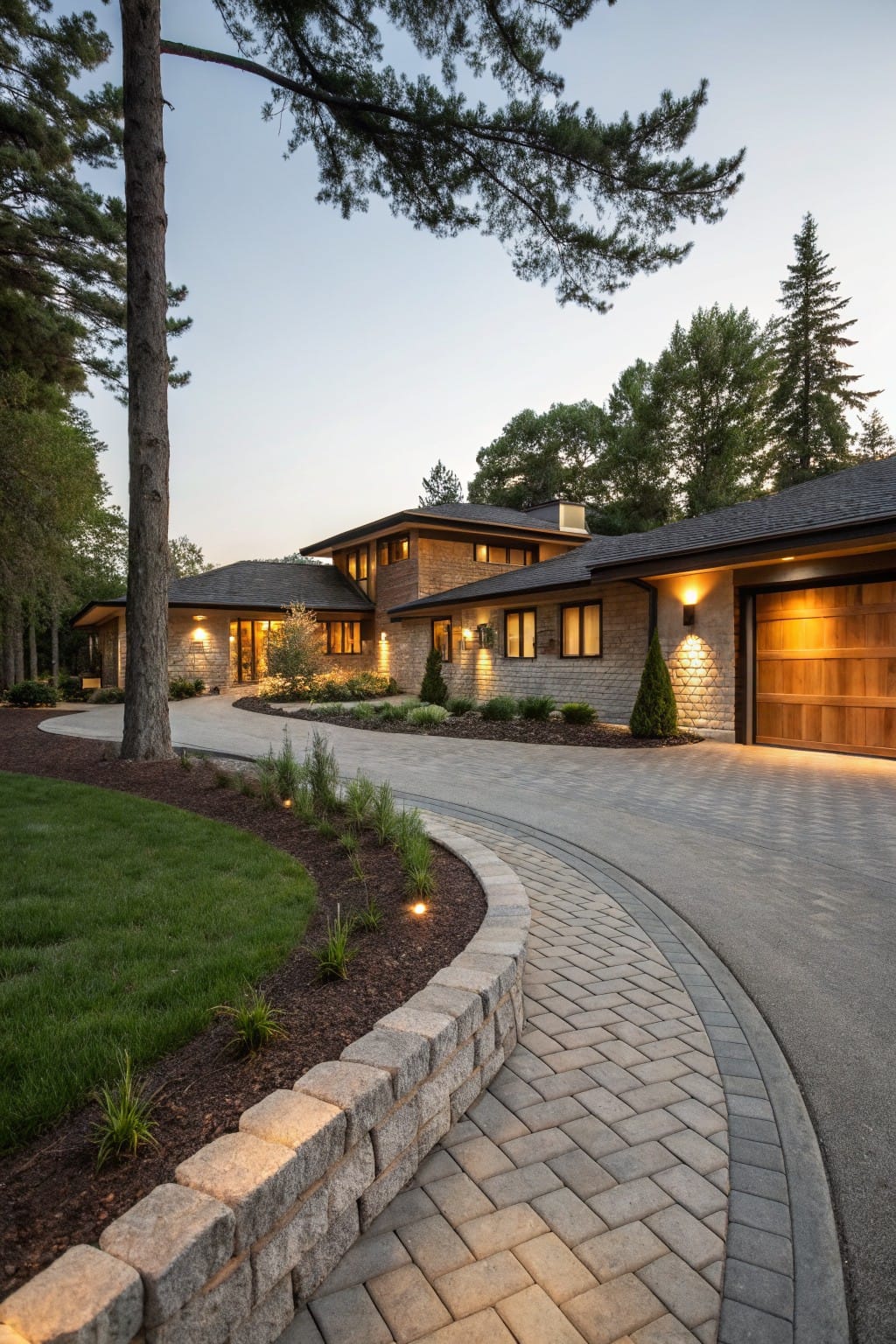
One sturdy way to edge garden beds is a low dry-stacked stone wall. It holds back soil and mulch without much fuss. In this setup it curves neatly along the driveway with grass inside and plants poking out. Folks like it because stone lasts through years of freeze and thaw. No rot or cracking like plastic or wood.
Put these walls where you need to separate lawn from driveway or path. They fit older homes or new ones with a natural look. Grab fieldstone from local spots to keep costs down. Just stack firm and level the base. Skip mortar if you want that rustic feel. Watch the height though. Keep it under two feet or it starts looking like a barrier.
Terracotta Pots Line the Garden Path
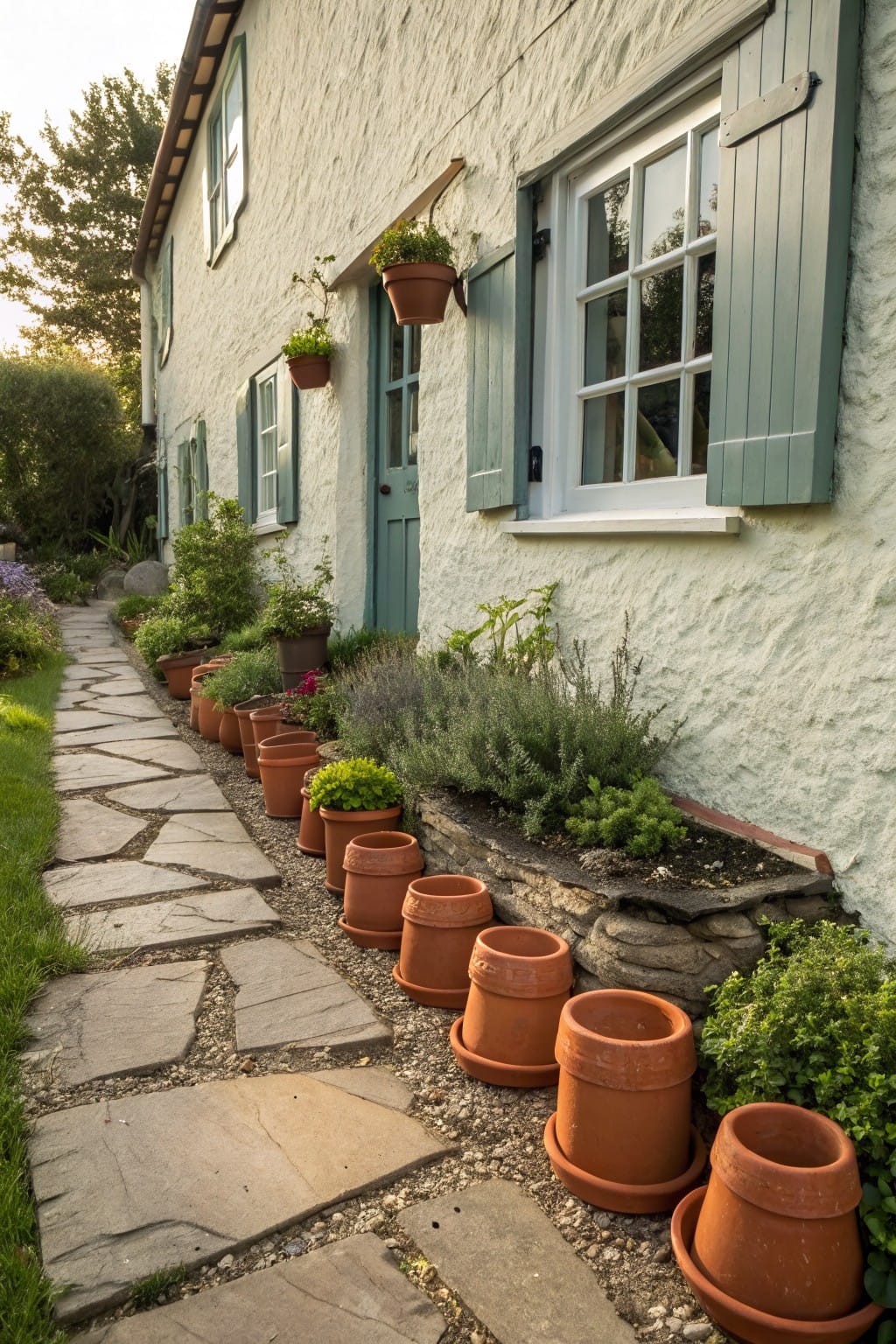
One easy way to edge a garden path is to line it with terracotta pots. You see them here in a neat row along a stone walkway, leading right up to the house door. They’re cheap to buy, hold all kinds of herbs and flowers, and give a clear border without much work. Plus, they last for years if you pick sturdy ones.
Set them tight along one side of the path, like this setup next to the house wall. It works great in small cottage yards or anywhere you want a soft edge that changes with the seasons. Just make sure the pots drain well so roots don’t rot, and group taller plants at the back.
Natural Stone Garden Borders
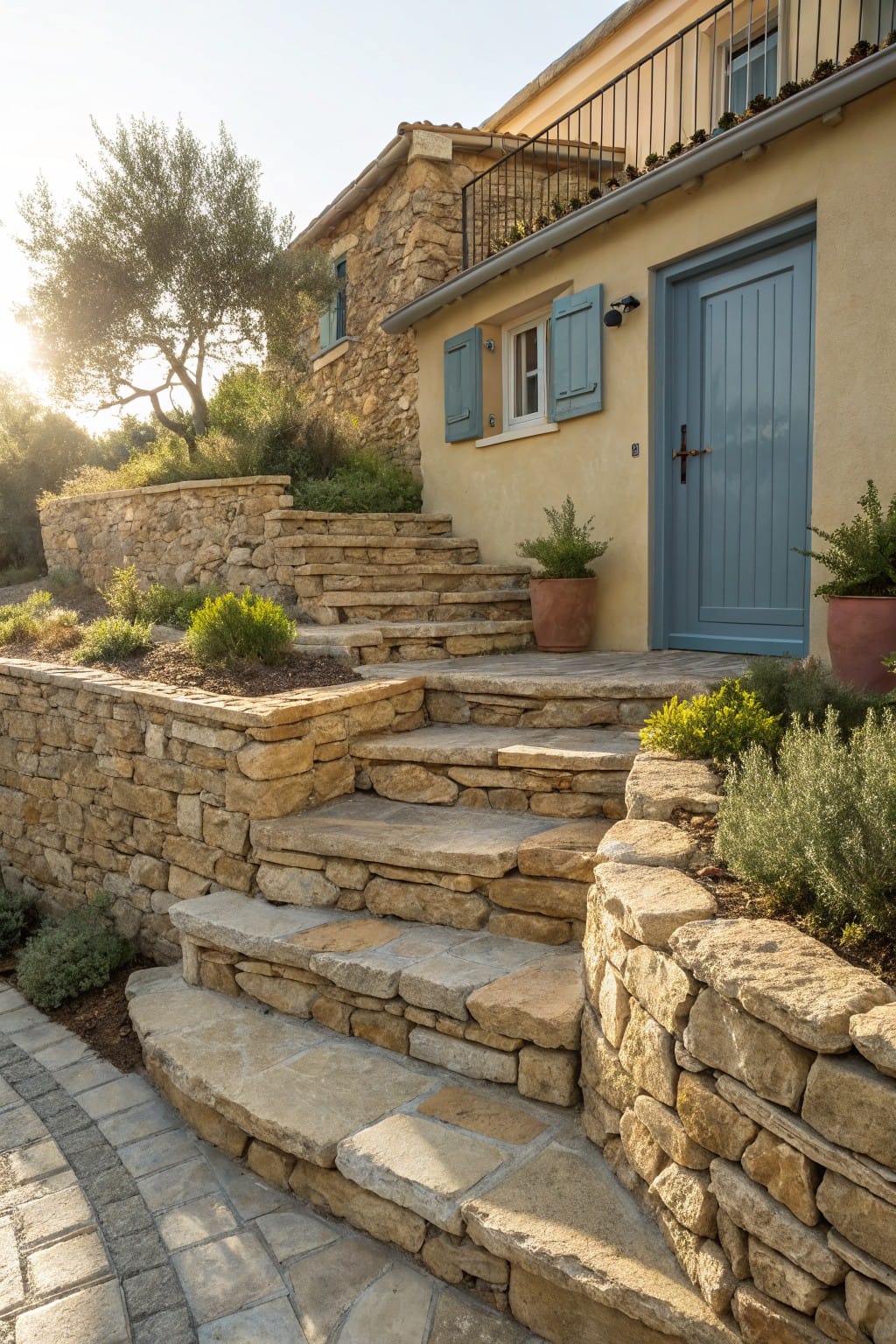
Nothing beats natural stone for edging garden beds that need to hold up over time. You see it here holding back soil along those steps, with plants poking out from the cracks. It’s cheap if you gather rocks from nearby, fits any rustic spot, and won’t rot or shift like wood does.
Stack the stones dry without mortar on slopes or level ground. Plant low growers like herbs or sedum in the pockets for a lived-in look. Works great around older homes or cottage yards. Skip it if your soil is super sandy, though. Might need a gravel base first.
Fire Glass in Raised Bed Borders
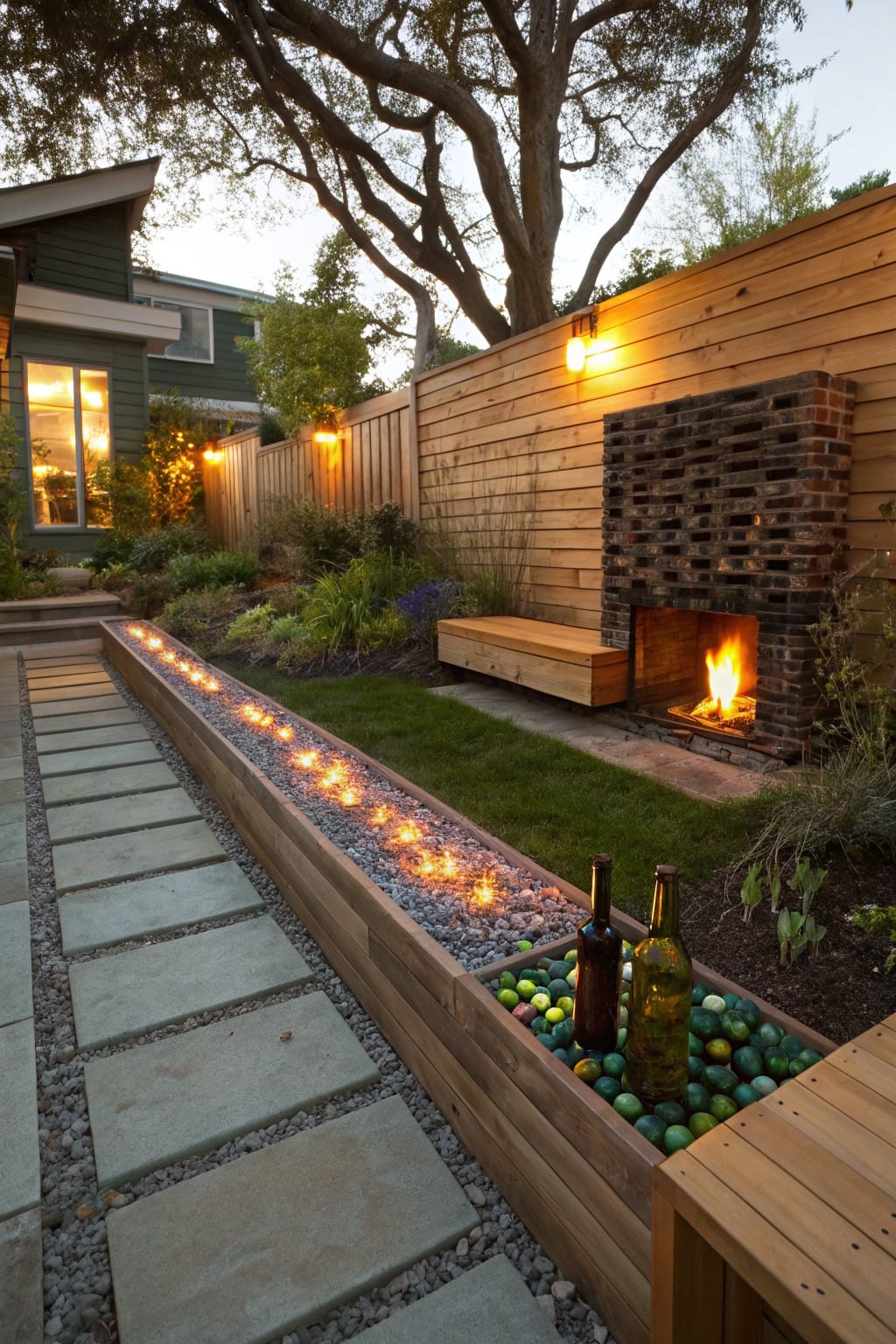
One clever way to edge a garden path is filling a simple raised wooden bed with fire glass. Those small glowing flames run right along the walkway, lighting things up at night without taking up extra space. It’s a practical border that adds warmth and keeps the area defined, especially nice in backyards where you want to sit outside longer.
Build one with treated wood for the frame, then layer in the fire glass over a gas line if you can run it. Works best along straight paths in moderate yards, not too fancy homes. Skip it if fire codes are strict in your area, but otherwise it’s low-cost and holds up well over time.
Stepping Stones in a Gravel Strip
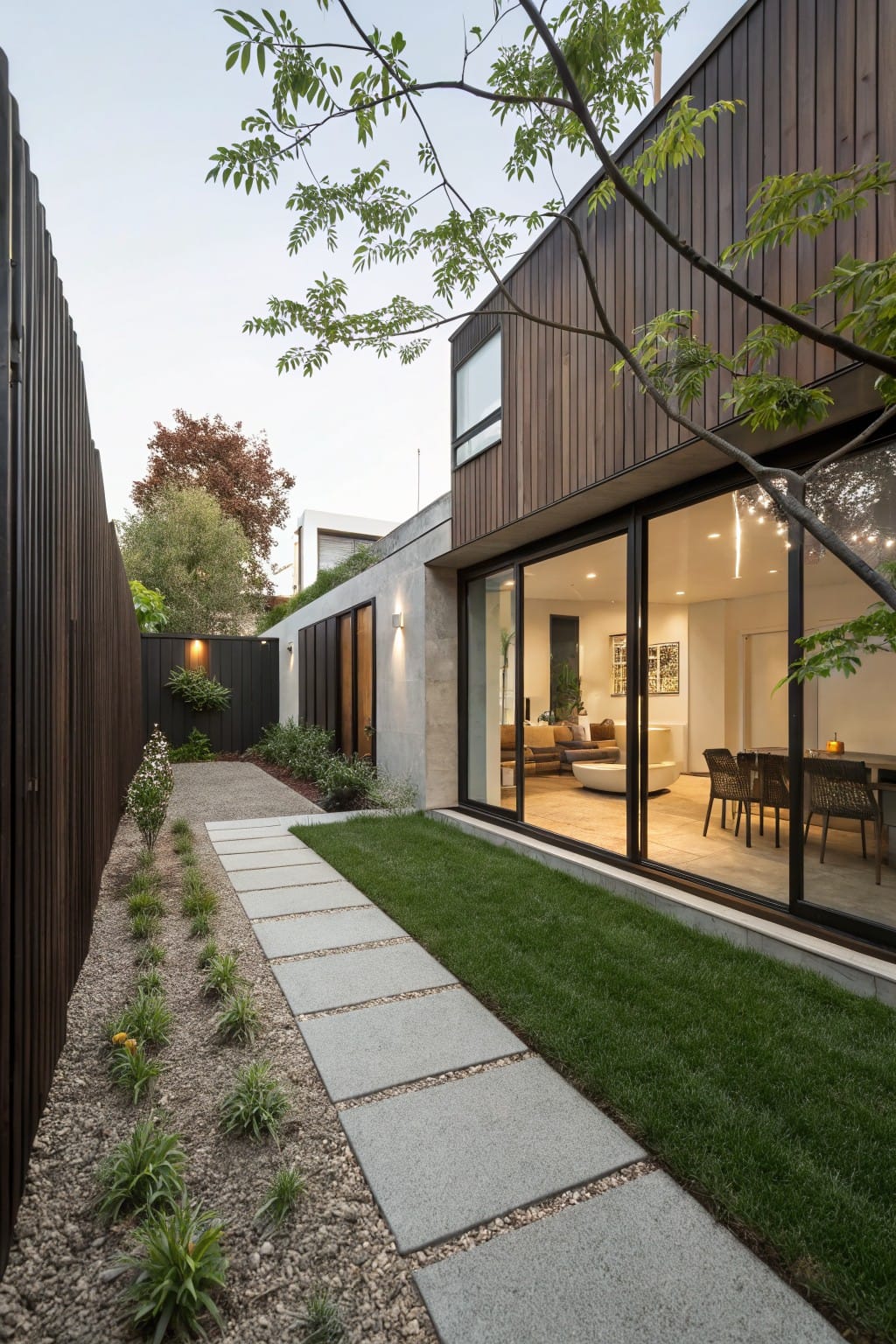
One straightforward way to edge a garden path starts with a narrow gravel strip along the fence. Drop in a few large concrete stepping stones to guide the way. In this yard, the stones lead right to the house doors, with low plants filling the gravel gaps. It keeps things defined without much work or cost, and the straight lawn edge next door stays sharp when you mow.
This works best in side yards or narrow back paths where you want access but not a big paved area. Pick stones bigger than your foot for stable steps, about 18 inches square. Layer gravel 3 inches deep over landscape fabric to stop weeds. Suits most homes, especially modern ones with clean lines. Just refresh gravel every couple years.
Brick Edging for Raised Garden Beds
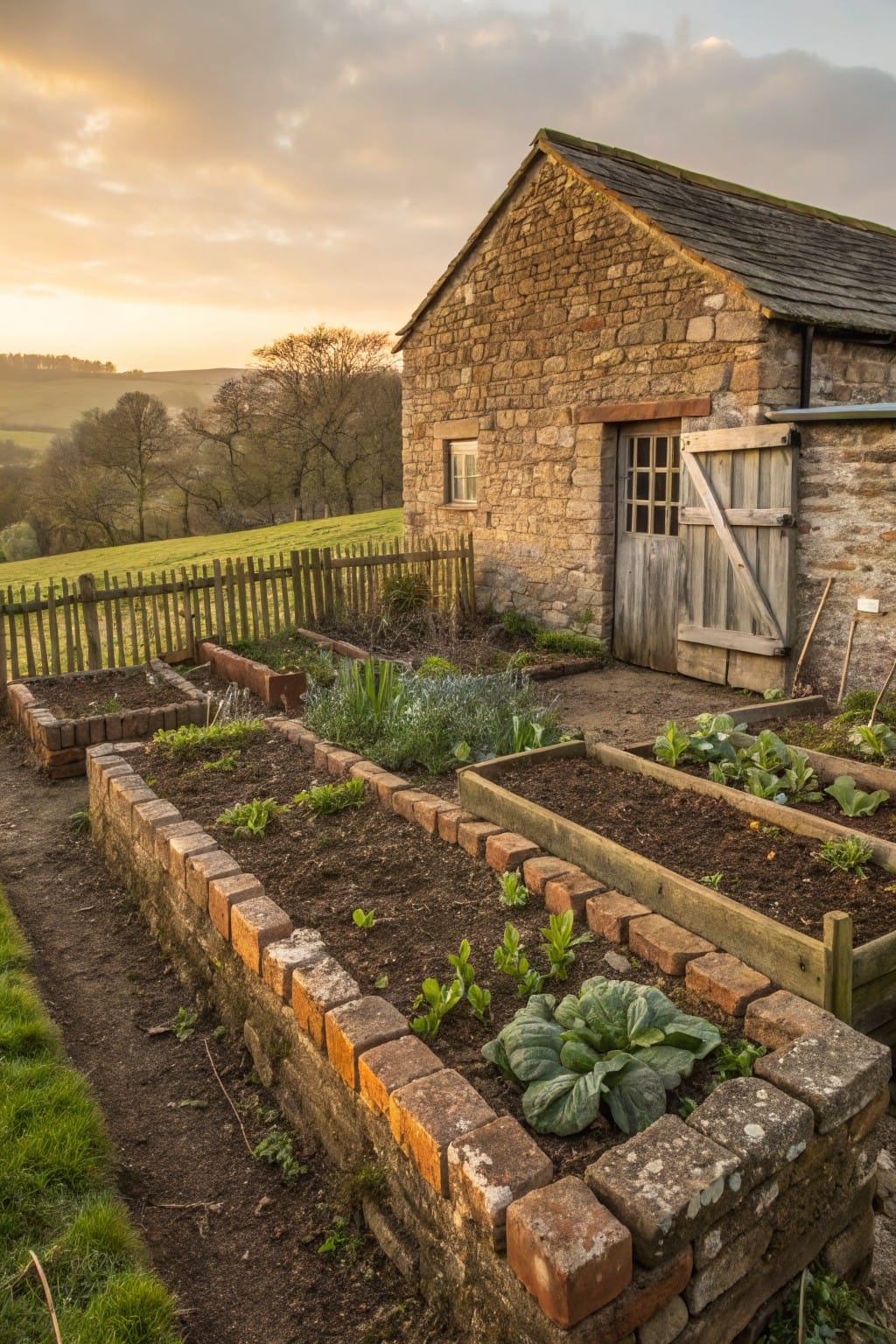
Brick edging like this makes raised garden beds sturdy and neat without much cost. You see it here holding back soil for young veggies, right up against an old stone wall. It lasts years because bricks handle weather well and won’t rot like wood.
Try it in a sunny spot near your house or shed, especially if you have a cottage or farmhouse yard. Stack reclaimed bricks two or three high for beds about a foot deep. Fill with good soil and plant things like cabbage or greens. Skip it on steep slopes though. Keeps things tidy.
Frequently Asked Questions
Q: How deep do I dig the trench for these edging ideas?
A: Aim for 4 to 6 inches deep across most options. That grips the soil tight and fights frost heave. Pack the bottom with sand or gravel for extra hold.
Q: Will cheap stuff like bricks or bottles really last years?
A: They hold up fine if you set them right. Bury half underground so wind and rain can’t budge them. Refresh the soil behind every spring to keep things sharp.
Q: What’s the easiest way to cut pavers or stones for curves?
A: Score the line with a masonry blade on a circular saw. Tap along it with a chisel and mallet until it snaps clean. Practice on scraps first.
Q: How do I stop weeds from popping up between the edging?
A: Lay landscape fabric under everything before backfilling. Top it with 2 inches of mulch. Pull strays by hand weekly at first, then they quit.
