


When I walk through a garden at dusk the way the space holds together often depends on how light follows the lines of the beds and paths rather than fighting them.
Modern LED fixtures tend to work best when they reinforce the existing structure instead of trying to create a whole new one after dark.
A few simple placements can make all the difference.
I have found that lights set low along edges and borders keep the planting beds looking intentional even when the sun is gone.
In my yard I would test a couple of path lights first to see how they shape the evening layout before adding anything else.
LED Lighting Along Stone Pathways
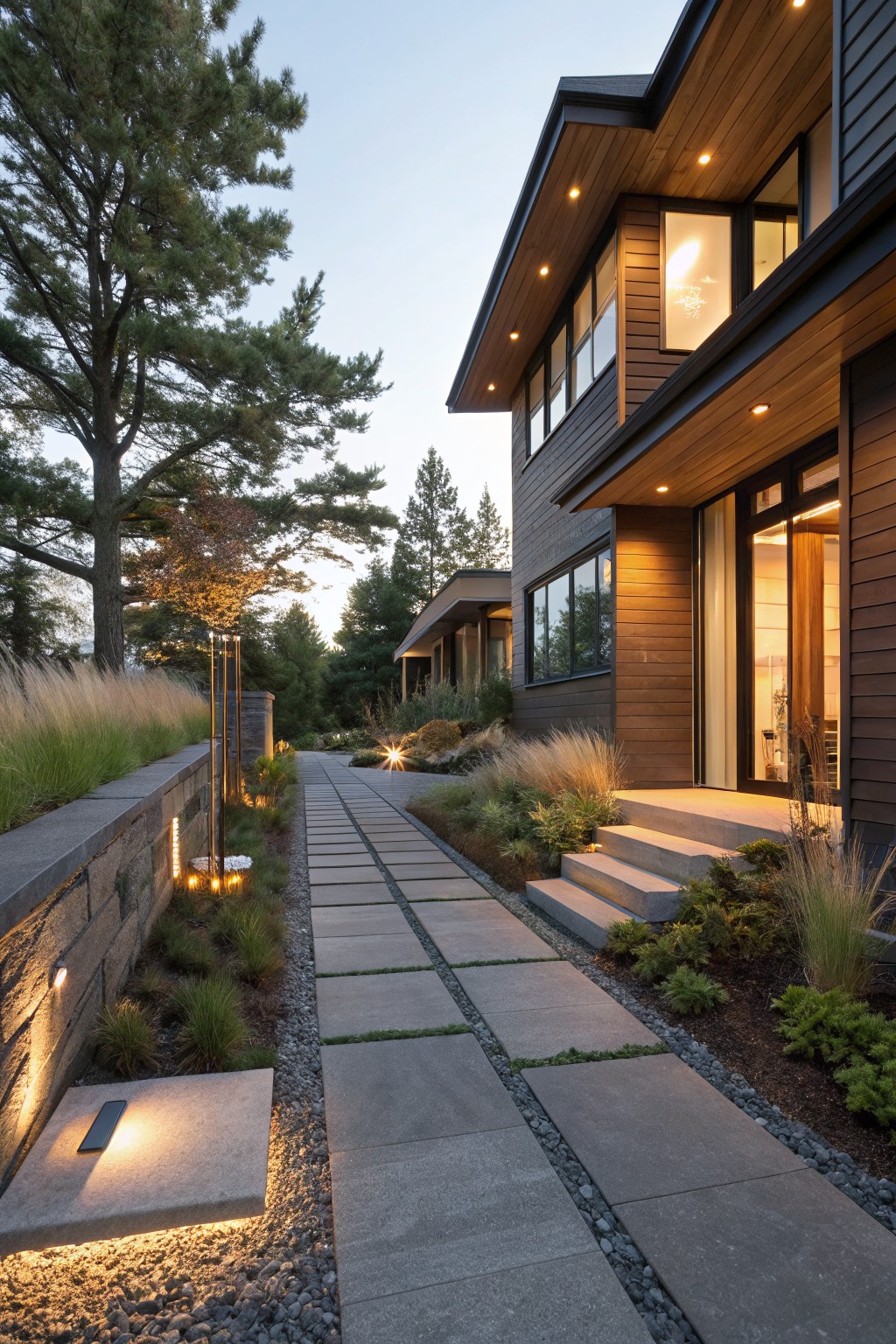
One of the simplest ways to keep a garden path looking clean is to run low LED lights right along the edges instead of using tall fixtures. This approach highlights the path itself without adding extra objects that break up the view. It works especially well with stone or concrete pavers set in gravel, since the lights can sit low and stay out of the way.
This kind of lighting suits modern homes that already use natural materials and straight lines. Place the LEDs in the edging or recessed into low walls so they cast a soft wash across the surface. Just make sure the spacing stays even so the path does not end up with bright spots or dark gaps.
Recessed Lights For Garden Paths

Embedding small LED lights directly into paving stones gives a garden path a quiet, steady glow without adding poles or fixtures that break the line of the space. It works especially well in tight modern courtyards where every surface needs to stay simple and uncluttered.
This approach suits homes with clean hardscaping and low planting. Place the lights along the edges of the path so they mark the route at night while the daytime surface stays neat. Just check that the fixtures are rated for outdoor use and set flush so they do not catch on shoes or garden tools.
Led Strips Under Pergolas

Running LED strips along the underside of a pergola or overhang gives the whole patio a steady, even light at night. It avoids the look of separate lamps and instead makes the seating area feel like a natural extension of the house.
This works best on modern homes where the outdoor space includes dining or lounge zones right next to the building. Keep the strips on a dimmer so the light stays soft rather than harsh, and place them where they will not shine directly into seating spots.
Recessed Path Lights For Clean Lines

Recessed lights tucked into the edges of a path give just enough light to walk safely without adding extra poles or fixtures that break up the view. This approach keeps the focus on the planting and the hardscape instead of the lighting hardware itself.
It works especially well on sloped sites where steps and narrow walkways need steady guidance. Place the lights low and close to the surface so they wash across the tread without glare, and choose warm tones that match any nearby wall washers. This setup suits contemporary gardens with simple materials like stone, gravel, or concrete.
Recessed Lighting Built Into Steps

Many people like the way recessed lights sit right inside the steps and paths. They give off a steady glow that marks the way without adding poles or fixtures that break up the clean lines of the landscape.
This approach suits homes with lots of hardscaping and simple plantings. Place the lights low and evenly spaced so they light the surface without shining into eyes, and choose fixtures made for wet outdoor conditions.
LED Path Lighting in Gravel Beds

Many homeowners use low LED fixtures along stone paths set in gravel because the lights stay out of the way while still guiding you through the garden at night. The setup keeps the overall look simple and modern without adding clutter.
This works especially well in narrow side yards or along the edge of a contemporary house. Keep the fixtures low to the ground and use warm tones so the path feels calm rather than overly bright.
LED Strips Along Garden Steps
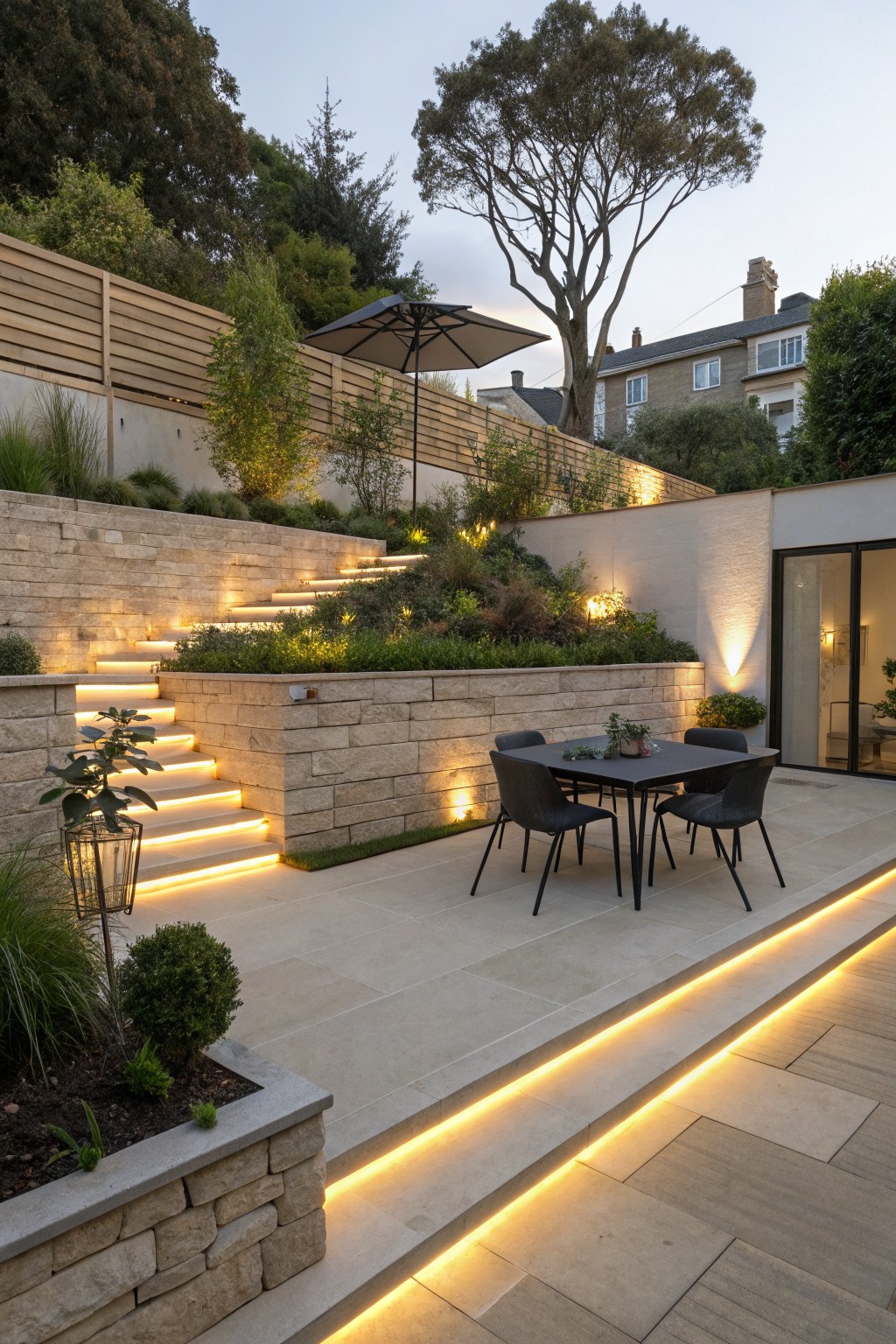
Running a thin line of LED lighting along the edge of each step gives the garden a clean look at night while making the stairs safer to use. The light stays low and follows the stonework without needing extra fixtures that might clutter the space. It works especially well when the steps connect different levels of planting.
This approach suits homes with terraced yards or sloped lots where you want the hardscaping to feel intentional. Keep the color temperature consistent with any other garden lights so the whole area reads as one zone. Avoid placing the strips too close to the planting beds if you want to limit glare on the leaves.
LED Columns In Landscape Beds

A tall LED column placed inside a planting bed gives modern gardens a strong vertical accent without adding another tree or structure. The light glows from both the top and base, which helps the column stand out at night while the surrounding pebbles and low plants keep the look simple and balanced.
These columns work best in clean contemporary yards that already use gravel, stone edging, and minimal planting. Keep the bed fairly open around the base so the light remains the main feature rather than getting lost in dense foliage.
Linear LED Lighting Along Deck Edges

Many people like running low LED strips right along the edge of a deck or raised planter. It gives a clean line at night without needing tall fixtures that clutter the space. The light stays low and functional, marking where the walking surface ends and the planting begins.
This works well on rooftops or terraces where you want the area to feel defined after dark. Keep the strips simple and warm in tone, and place them so they are hidden from view during the day. It suits modern homes that already use straight lines in the hardscaping.
Low LED Lights Along Gravel Paths

Placing small LED fixtures right in the gravel next to a stone path gives a clean, modern look without adding clutter. The lights stay low so they guide the way at night while highlighting plants and the edge of the walkway. This approach works especially well in narrow side yards where taller fixtures would feel out of place.
It suits contemporary homes with simple hardscaping and works best when the lights are spaced evenly and aimed slightly toward the planting rather than straight up. Keep the fixtures matte black or dark gray so they disappear during the day.
Built-In Lighting Along Raised Garden Beds

Many people add LED lights directly into the edges of raised beds because it keeps the look clean and avoids extra poles or fixtures in the garden. The light follows the line of the bed and gives a soft glow to both the plants and the lawn edge without cluttering the space.
This approach works best on homes with simple modern landscaping where you want low maintenance and a tidy night view. Use weatherproof strips rated for outdoor use and test the angle so the light stays on the beds rather than shining into windows or across the grass.
Edge Lighting Along Garden Paths

Running a thin line of LED lighting right along the edge of a path or raised bed gives the garden a neat, modern shape after dark. The light stays low and follows the hardscape, so the walkway feels clear and intentional without extra lamps scattered around.
This approach suits homes with straight lines and simple materials like stone pavers or concrete. Keep the strips tucked into the side of the planter or path border so they highlight the route without shining into windows or creating glare.
Recessed LED Lighting Along Pool Edges
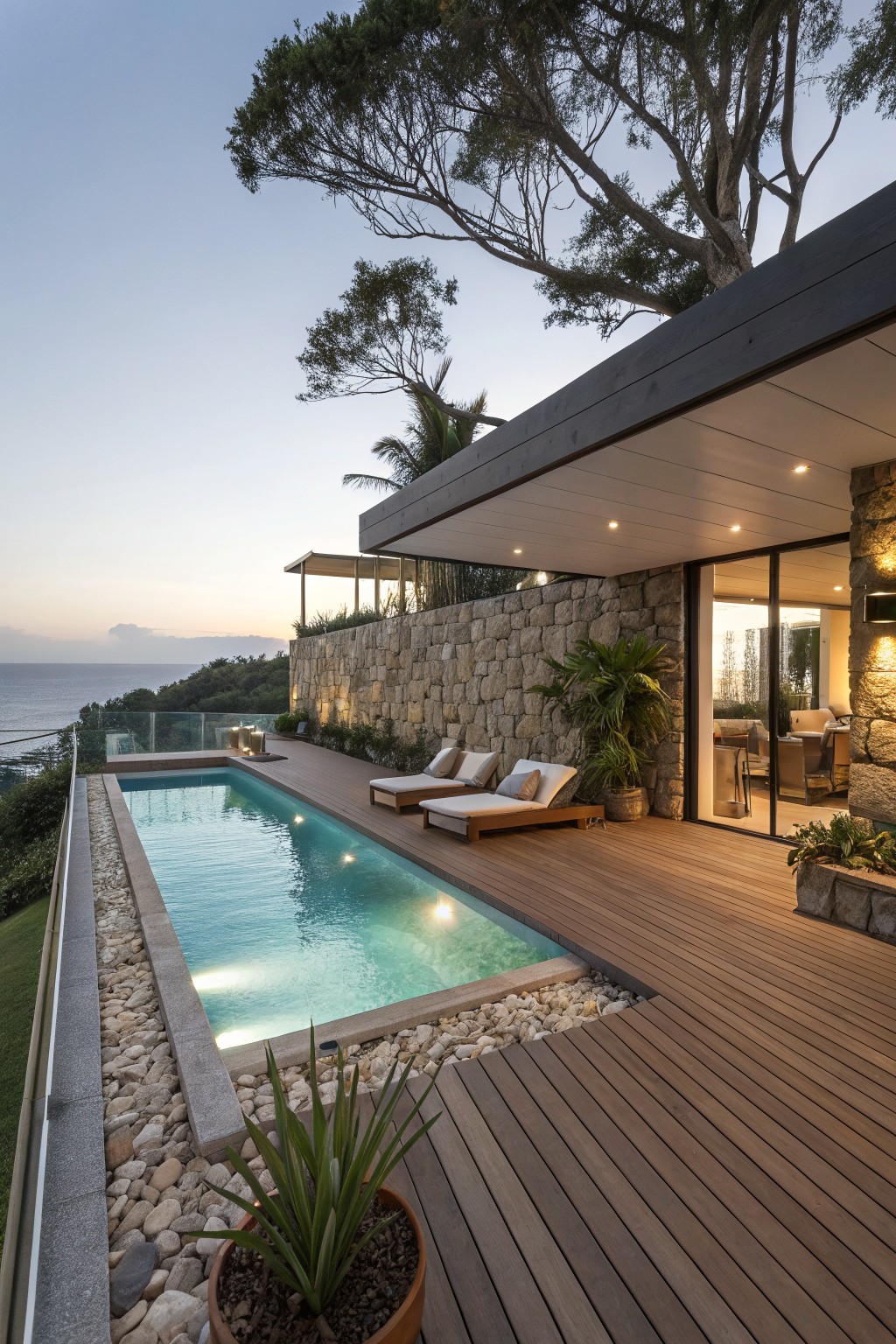
Recessed LED lights set right into the pool coping give a quiet glow along the waterline without any visible fixtures. This keeps the whole area looking clean during the day and softly lit at night, which works especially well on decks that sit close to the house.
The same low-profile approach can be used along deck edges or steps where you need just enough light for safety. It suits modern homes with simple materials like wood and stone, and it avoids the cluttered look that comes from adding separate lamps or strings.
Built In Lighting For Garden Steps

Many people like tucking LED strips right under the front edge of each step. It gives a clean line of light that shows the way without adding poles or fixtures that break up the view.
This approach works best on straight concrete steps that run through gravel or pebble beds. Keep the lights warm and low so they highlight the path while letting the surrounding plants stay the main focus.
Built-In LED Strips Along Seating

One simple way to light an outdoor space is to run LED strips right under the edge of a bench or along the base of a wall. The light stays low and even, so it shows the seating area without adding extra lamps or clutter.
This approach suits modern patios where the goal is a clean look that still feels usable after dark. Just choose weatherproof strips and keep them tucked where feet and furniture will not hit them.
Curved Paths Shape A More Natural Garden

A curving gravel path keeps the layout from feeling too stiff or formal. It guides movement through the beds in a relaxed way and lets the grasses and rocks sit comfortably beside the open lawn.
This approach works best on larger properties where you want gentle transitions between zones. Use a simple wooden or metal edge to hold the gravel in place and plant low enough along the sides so the path feels part of the planting rather than a separate feature.
Linear LED Strips Along Planter Edges

Running a simple line of LED lights along the top edge of a raised planter gives an outdoor deck a clean border at night. It marks the edge without adding poles or extra lamps, and the light stays low so it does not glare into the seating area.
This approach works best on long, narrow decks next to the house where you need both path lighting and a modern look. Choose warm white LEDs rated for wet locations and keep the strip slightly recessed so it stays protected while still casting light downward onto the deck surface.
Using Linear LEDs Along Garden Paths
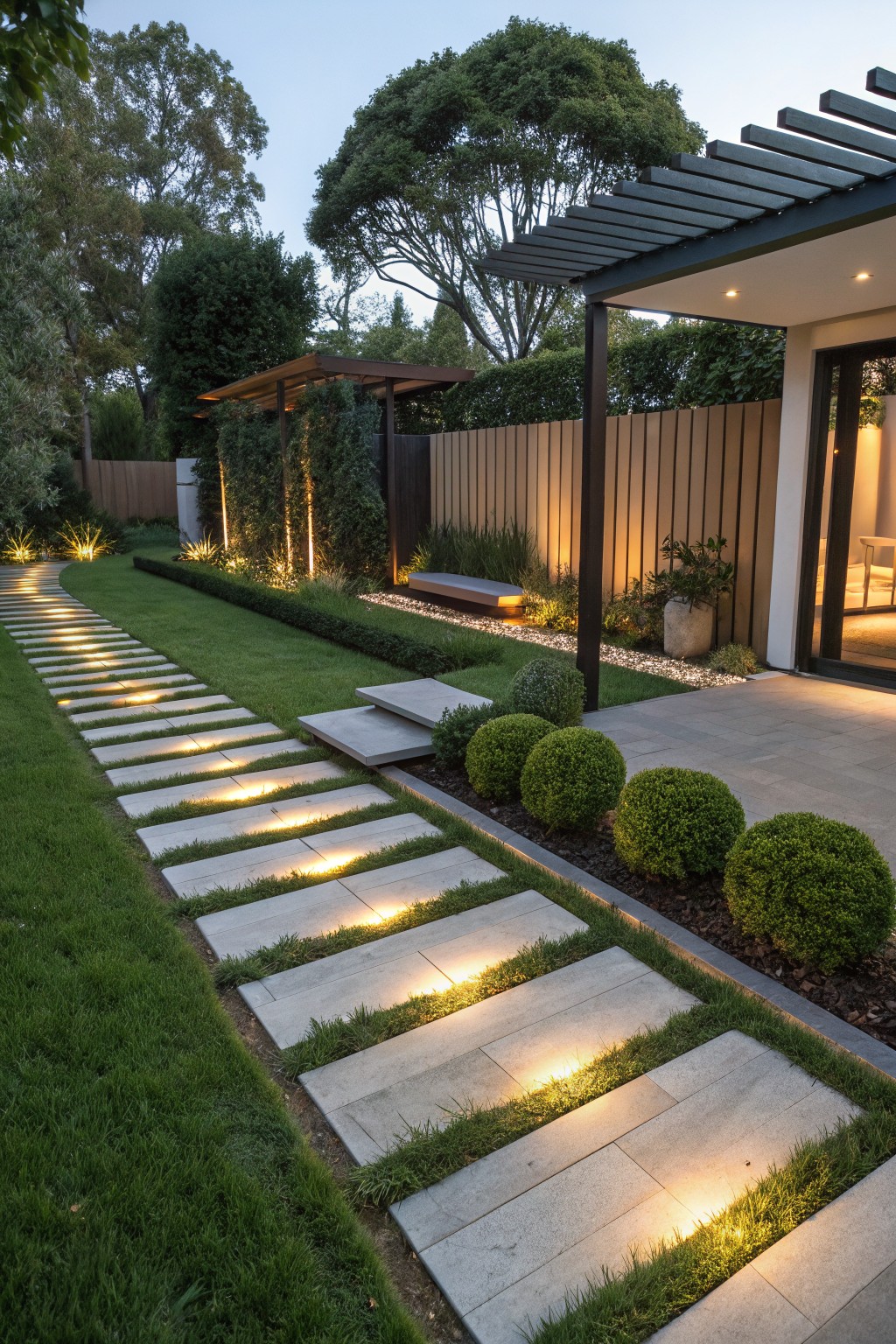
Linear LEDs tucked under the edges of stepping stones give a garden path a quiet, modern feel without adding visible fixtures. The light stays low and follows the line of the walk, which helps the path stand out at night while keeping the planting and lawn looking natural during the day.
This approach works best in contemporary landscapes where the hardscape already has clean lines. It suits homes with simple paving and low planting beds. Just make sure the lights sit flush so they do not catch on mowers or feet, and choose a warm tone that does not wash out the green of the grass.
Recessed Lights in Retaining Walls

Recessed LEDs built into the face of a retaining wall give a steady wash of light without adding extra fixtures or clutter. The effect is especially useful on sloped sites where you need to mark changes in level while keeping the overall look simple and modern.
This approach works best with clean stone or concrete walls and low plantings that benefit from gentle uplighting. Place the lights at even intervals so the glow stays consistent, and test the spacing at night before final installation. Avoid over-lighting; a few well-placed fixtures are usually enough to define the edge without turning the garden into a runway.
Use LED Lights To Edge Stone Paths
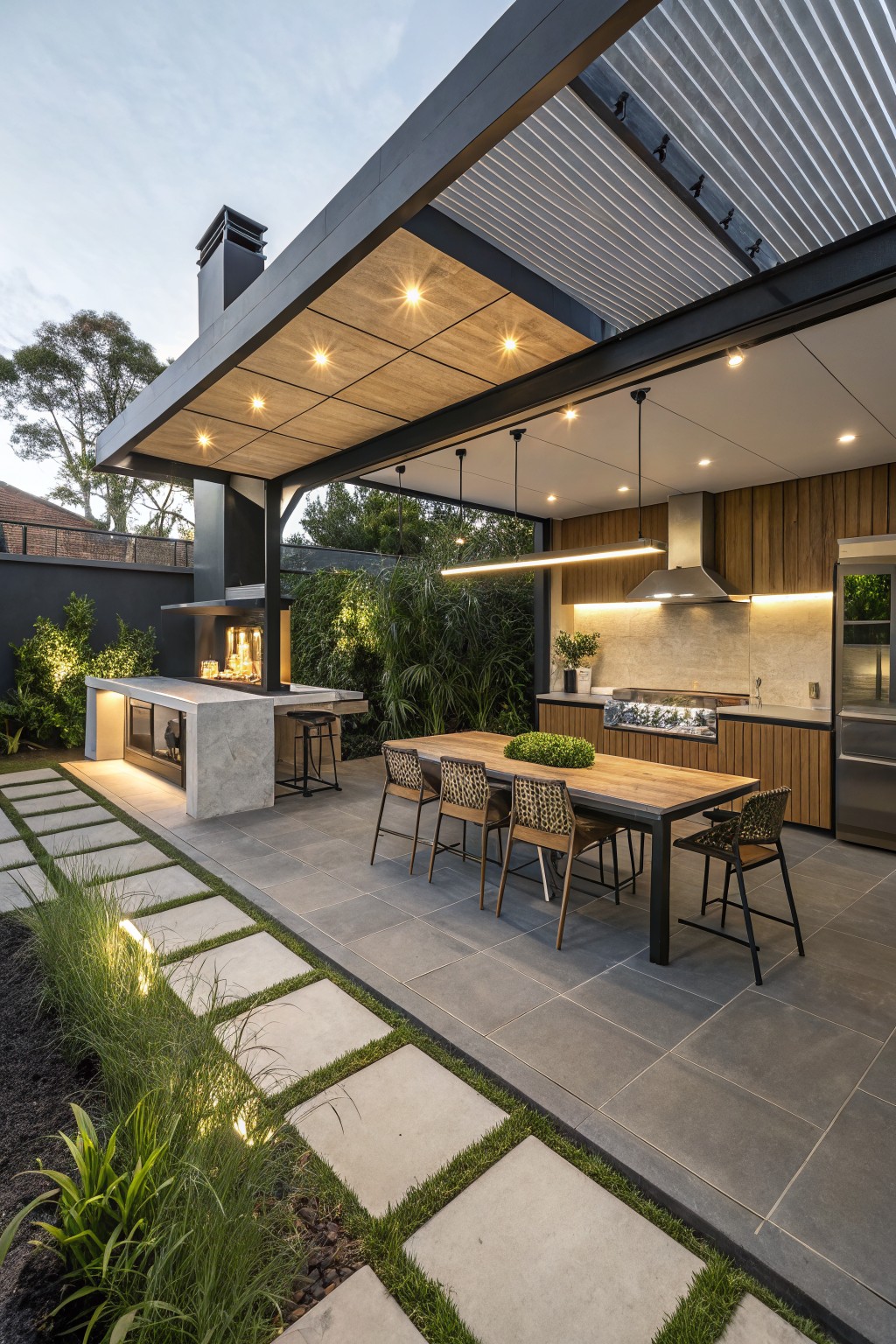
LED path lighting works well because it stays low and focused. It marks the route clearly at night while keeping the overall look clean and simple. In this setup the lights sit right at the edge of the pavers, so the grass and stone stay visible without extra fixtures sticking up.
This approach suits homes with straight, modern paving and open garden beds. Place the lights on a timer or sensor so they come on only when needed. Avoid spacing them too far apart or the path will feel patchy after dark.
Recessed Lighting Along Pool Steps

Recessed LEDs built right into the steps and pool edge give a clean outline at night without any extra fixtures showing. The light stays low and focused, so the area feels calm rather than lit up like a stage.
This works best on flat modern homes with hardscape around water. Space the lights evenly along the treads and coping, and keep the color temperature consistent with any overhead lights so the whole zone reads as one.
Vertical LED Lights Along Stone Walls
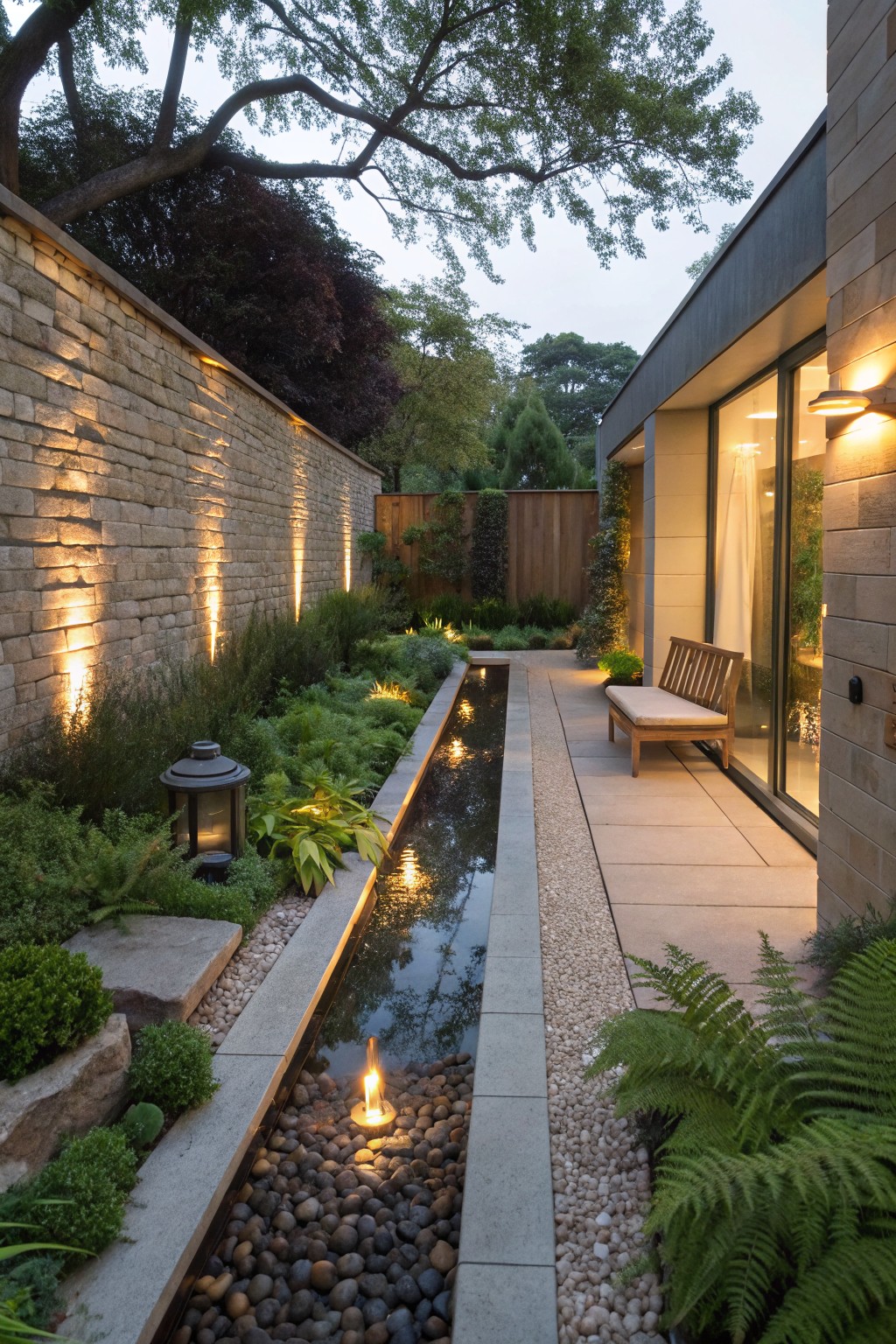
Vertical LED lights mounted on a garden wall give a clean look that works especially well in narrow spaces. They cast soft upward glows that mark the edge of the planting without adding extra fixtures or clutter along the ground.
This approach suits modern homes where the garden runs tight against the house or a boundary wall. Space the lights evenly and keep the planting low in front so the lines stay visible at night.
Lighting a Linear Water Feature

Running a strip of LED lights along the base of a narrow water channel gives a garden a clean, modern line at night. The effect is simple but effective because the light stays low and follows the water instead of spreading out in all directions.
This approach works best in contemporary landscapes where the garden has straight edges and connects to the house. Keep the lights warm and dim so they highlight the water without overpowering the planting on either side.
LED Lights Along Steps And Retaining Walls

Built in LED strips work well on sloped sites because they mark changes in level without adding extra fixtures. The lights follow the edges of the steps and sit inside the stone walls, so the shape of the garden stays clear after dark. This approach keeps the hardscape looking clean instead of cluttered with visible lamps.
It suits modern homes with terraced yards or retaining walls that need definition at night. Place the strips on the vertical face of each step and add a few low recessed spots in gravel beds to avoid glare. Keep the output warm and even so the plants stay the focus.
Frequently Asked Questions
Q: How do I decide where to place path lights so they guide people without creating a runway effect?
A: Space them unevenly along curves and edges. Aim the beams downward and slightly inward so light falls on the ground rather than straight ahead.
Q: What happens if I want to add more lights later?
A: Start with a low voltage system that has extra capacity in the transformer. You can connect new fixtures to the same line without rewiring the whole garden.
Q: Do solar LEDs give enough light for seating areas?
A: They work well if you pick models with larger panels and place them where they get direct sun most of the day. One fixture per seating spot is usually enough to read or eat outside.
Q: How often do these lights need cleaning?
A: Wipe the lenses a couple times a year with a damp cloth. Leaves and pollen build up fast and cut the brightness more than most people expect.
