

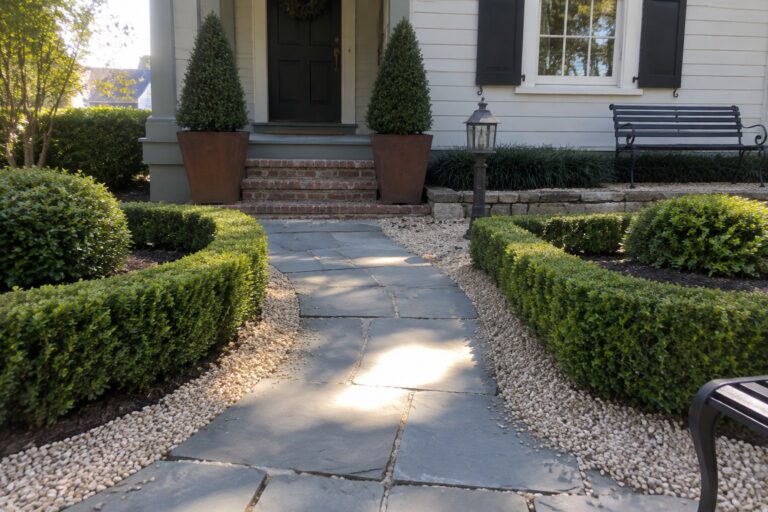
Over the years I have noticed that gardens often lose their sense of order once the growing season ends and there is nothing left to hold the layout in place.
I keep coming back to the same question when I look at my own yard which plantings will still show clear lines and shapes when everything else has died back.
Evergreens change the whole feel.
Placing them with intention from the start means the paths and beds stay readable even in the middle of winter and I spend less time wondering what went wrong.
That kind of structure also tends to make the low maintenance part actually work instead of turning into another set of chores.
Evergreens Along Garden Paths
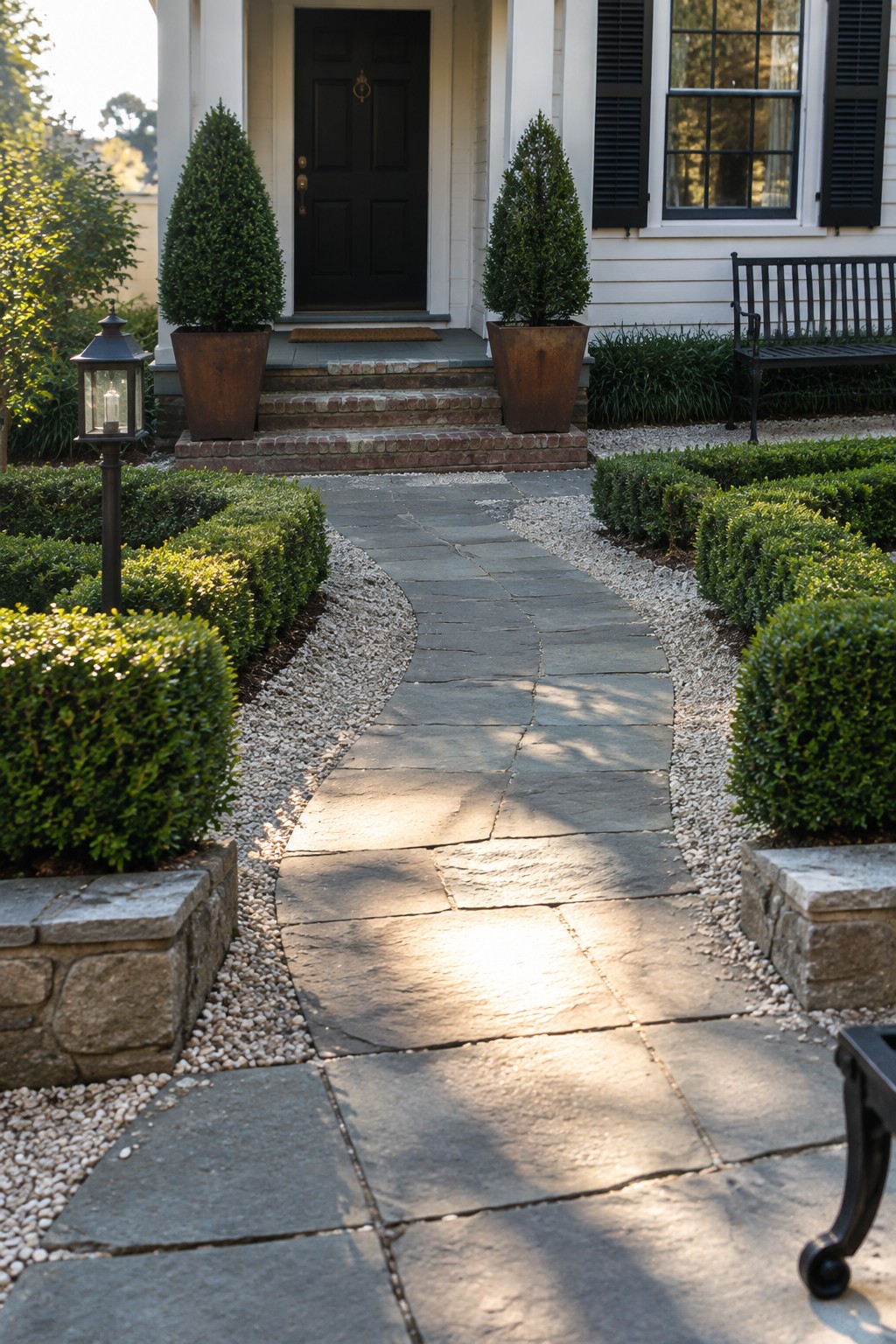
Evergreens planted in simple pots and low beds give a garden path a clear shape that holds up all year. They add height and order without needing much trimming or seasonal swaps once they settle in.
This approach suits homes with straight or gently curving walkways where you want low upkeep. Set a pair of larger shrubs near the start of the path and keep smaller ones along the edges to hold the line.
Plant Tall Evergreens for Strong Year-Round Form
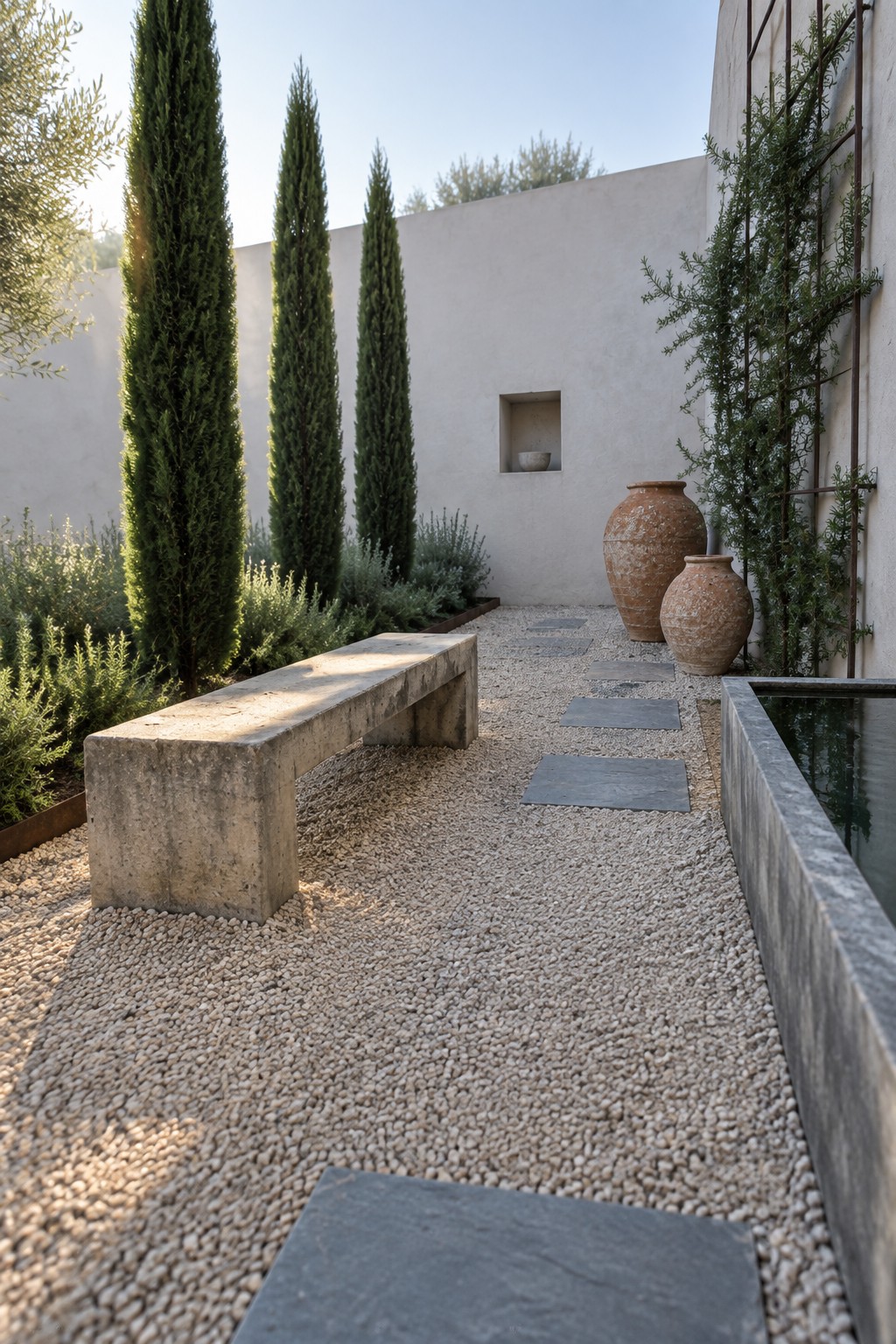
Tall evergreens give a garden its backbone without much work once they are in the ground. They hold their shape through every season, so the space still looks intentional even when other plants go dormant or lose their leaves. In this garden the row of cypress trees creates a clear vertical line that makes the whole layout feel settled.
Place them where you want to mark an edge or guide movement, such as along a gravel path or at the back of a bed. They work especially well in smaller or simple gardens because they need little pruning and stay green all year. Just give them room to reach their full height and keep the ground cover low so the trees remain the main feature.
Frame Garden Paths With Evergreen Shrubs
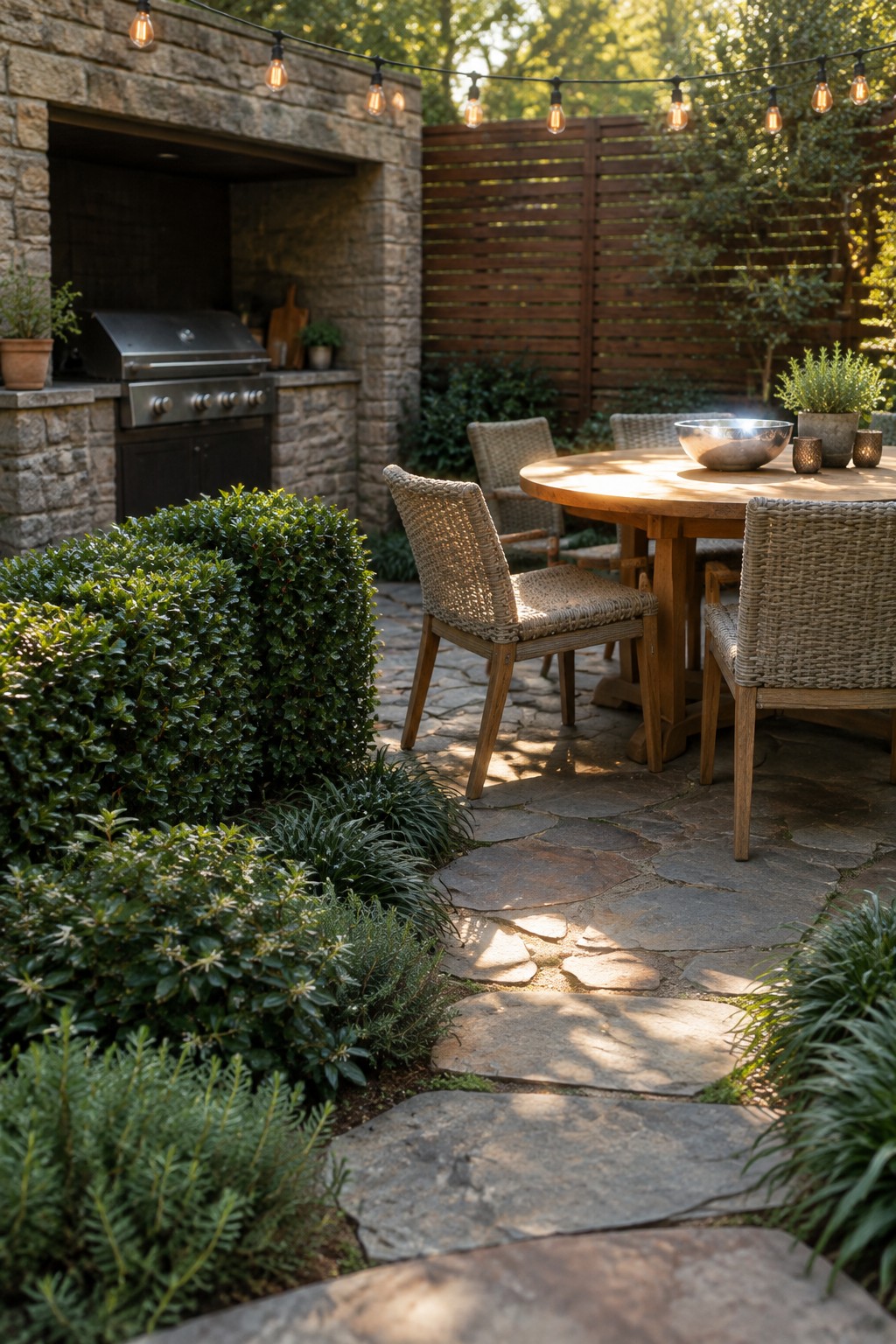
Evergreen shrubs planted along a path give the garden a clear shape that stays in place through every season. The rounded forms hold their look without constant work and help the space feel organized even when other plants go dormant.
This approach suits smaller yards or patio edges where you want low effort but steady structure. Stick with compact varieties that stay under three feet wide and let them grow into soft mounds rather than shearing them into boxes.
Edge Paths With Rounded Evergreens
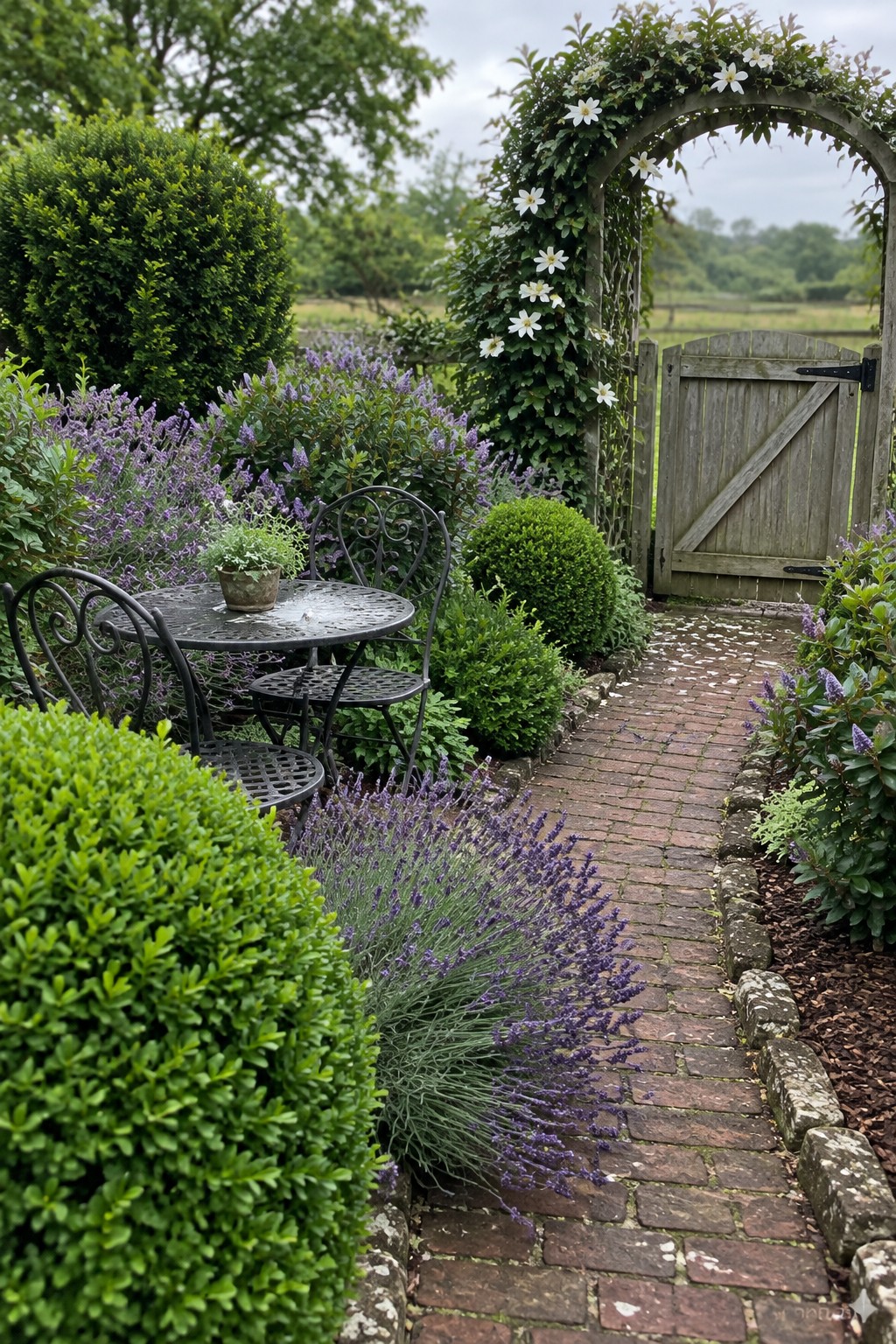
Evergreen shrubs give a garden its basic shape no matter the season. Placing rounded forms along a brick path creates clear lines that stay neat without much work once the plants are established.
This approach suits smaller gardens or narrow side areas where you want structure but not a lot of upkeep. Choose compact varieties and let the path itself do most of the defining work.
Evergreens Give Structure to Gravel Gardens
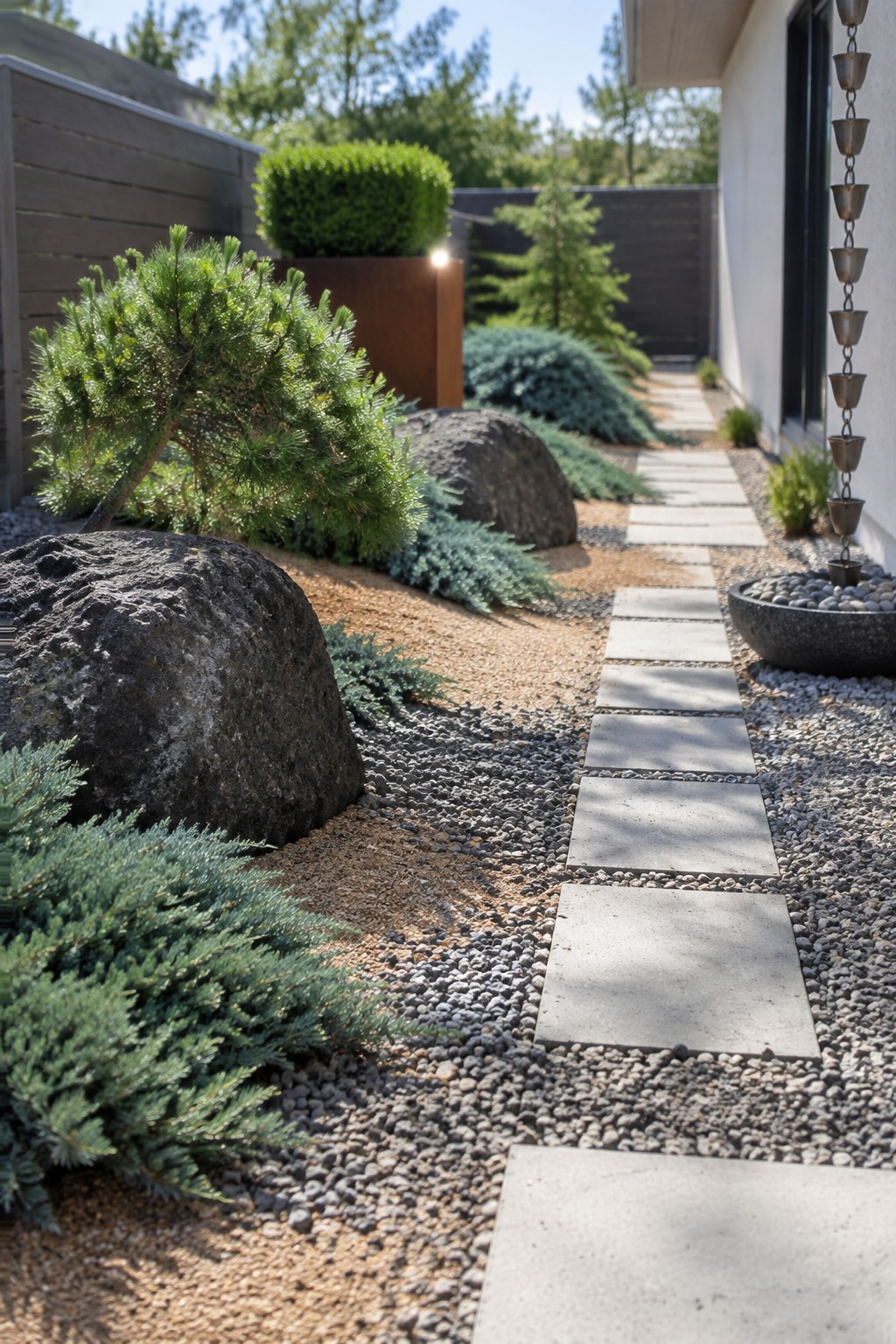
Evergreens keep a garden looking solid even when other plants go dormant. A few taller pines mixed with lower spreading shrubs create a natural backbone that does not need constant trimming or replanting.
This approach works best along paths or in narrow side beds where you want year-round shape without high maintenance. Gravel and simple stepping stones let water drain easily and reduce weeding, so the whole area stays neat with little effort.
Use Evergreen Shrubs for Steady Garden Form
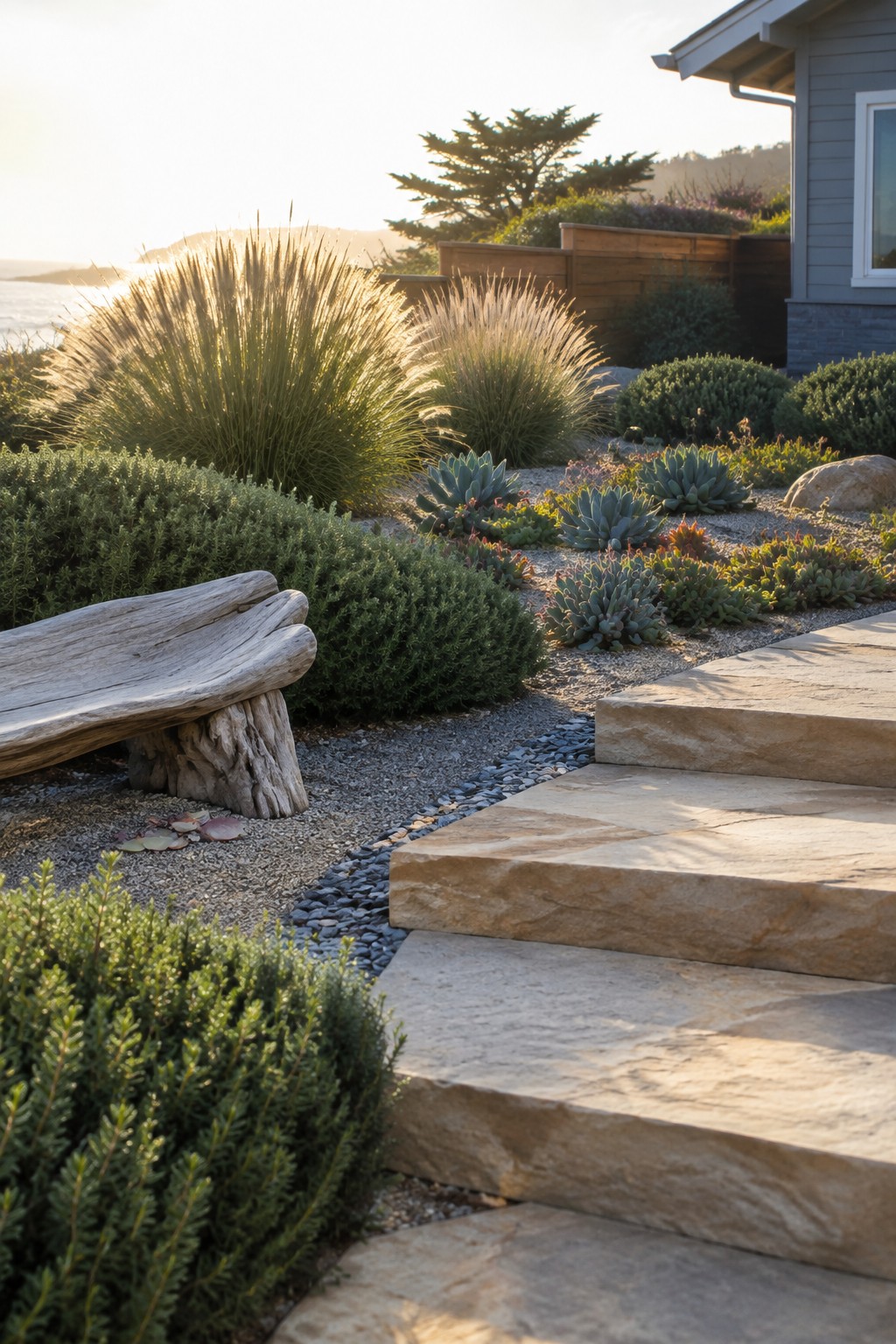
Evergreen shrubs hold the shape of a garden through every season. They give structure when flowers fade and make the whole space look intentional even in winter.
Place them along paths and beds to mark the edges clearly. Gravel works well around them because it cuts down on weeding and keeps the focus on the plants themselves.
Use Potted Evergreens to Build Simple Garden Structure
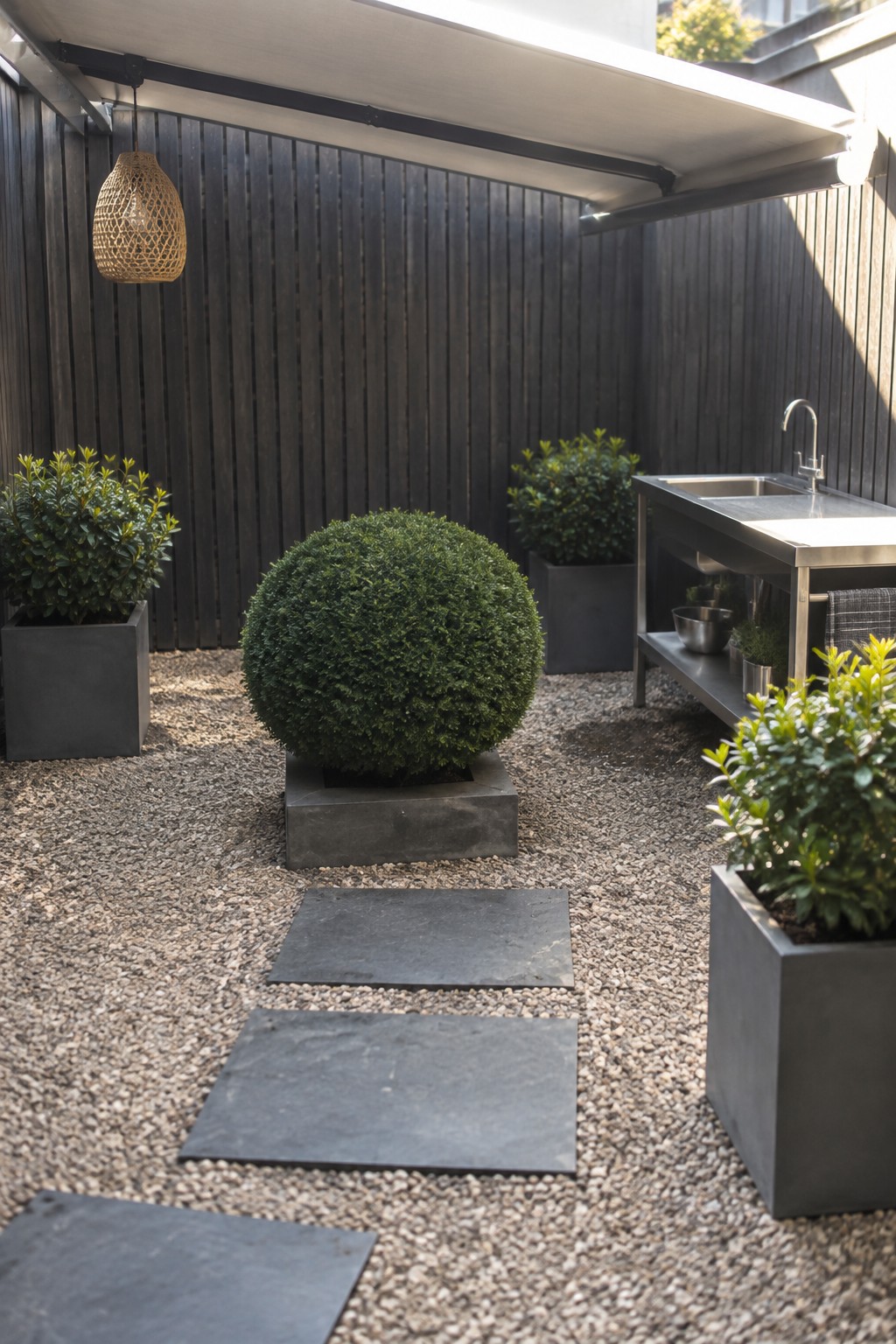
Large square pots filled with clipped evergreens give a garden clear shape without needing constant work. The round form in the middle and the matching boxy ones along the sides hold the space together even when everything else is bare. Gravel underfoot and a few flat stepping stones keep things practical and neat.
This approach works well in small yards or side areas where digging beds is not an option. Place the pots where they get the right light for the plants you choose, and keep the shapes simple so they stay easy to maintain over time.
Evergreen Arches Give Paths Year-Round Form
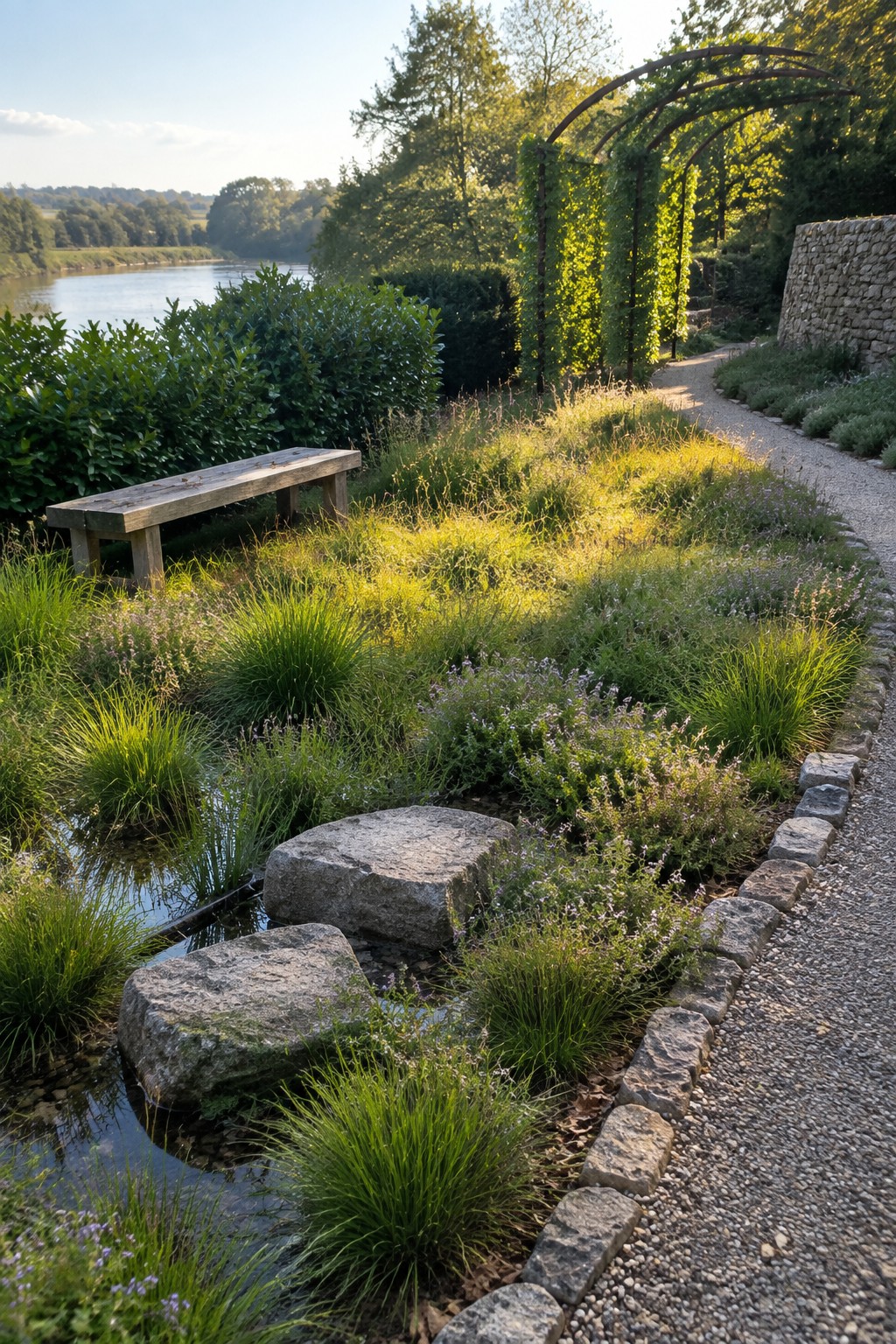
An evergreen arch over a path holds the garden together even when flowers fade. It creates a clear line that guides movement and keeps the layout readable through winter.
This works best in mid-size to larger gardens where a path needs a focal point. Set the arch at a natural turn or entry and choose a sturdy evergreen climber that tolerates pruning. Keep the surrounding beds simple so the arch stays the main structural element.
Plant Evergreens Around Seating Areas for Year-Round Shape
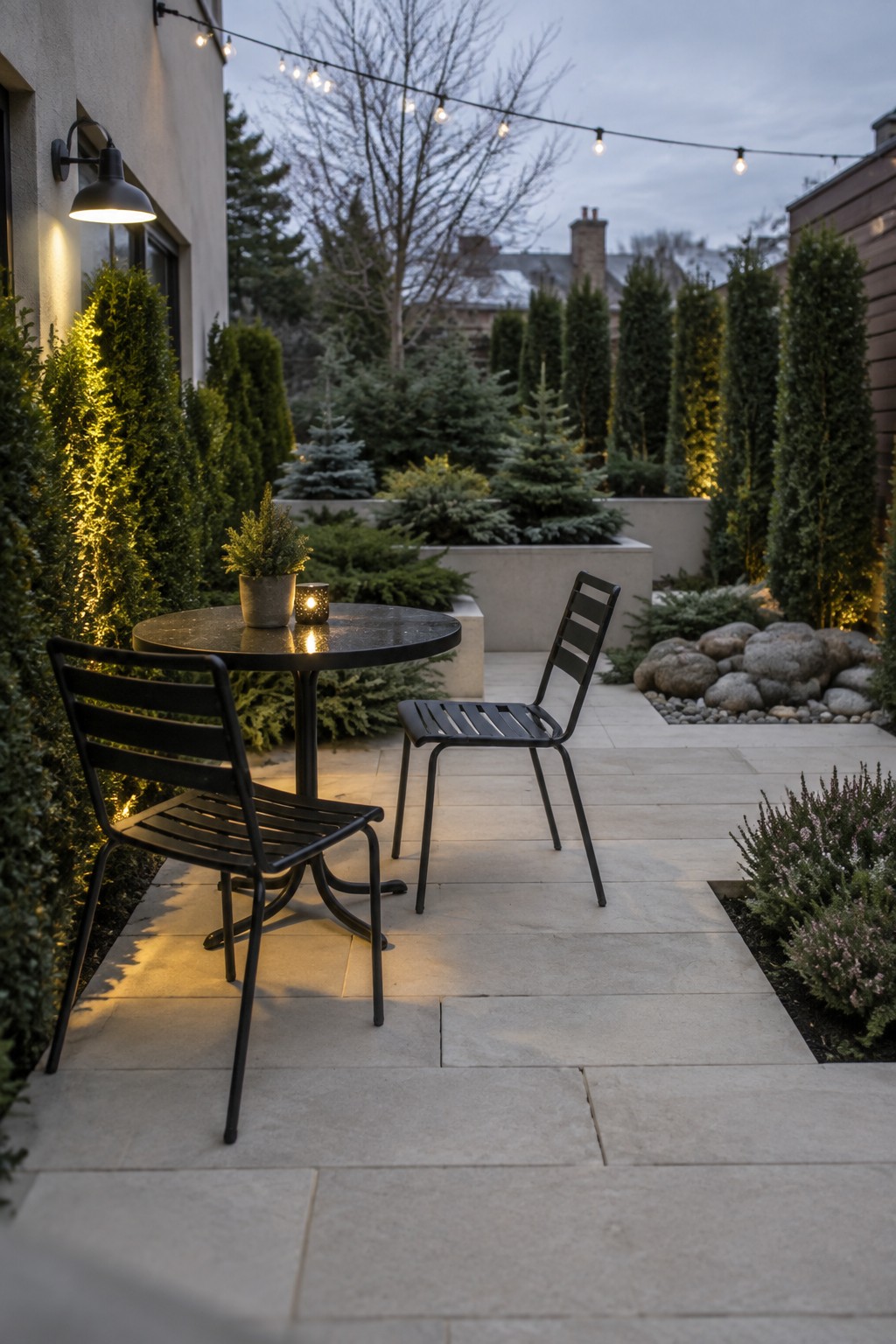
One simple way to give a patio lasting structure is to line the edges with tall evergreens. They hold their form through winter and create a clear boundary without needing much care once established.
This works best on smaller paved spaces where the shrubs add height and privacy while the seating stays the main focus. Space them evenly along the sides and let the lower growth fill in naturally over time.
Gabion Walls Give Gardens Lasting Edges
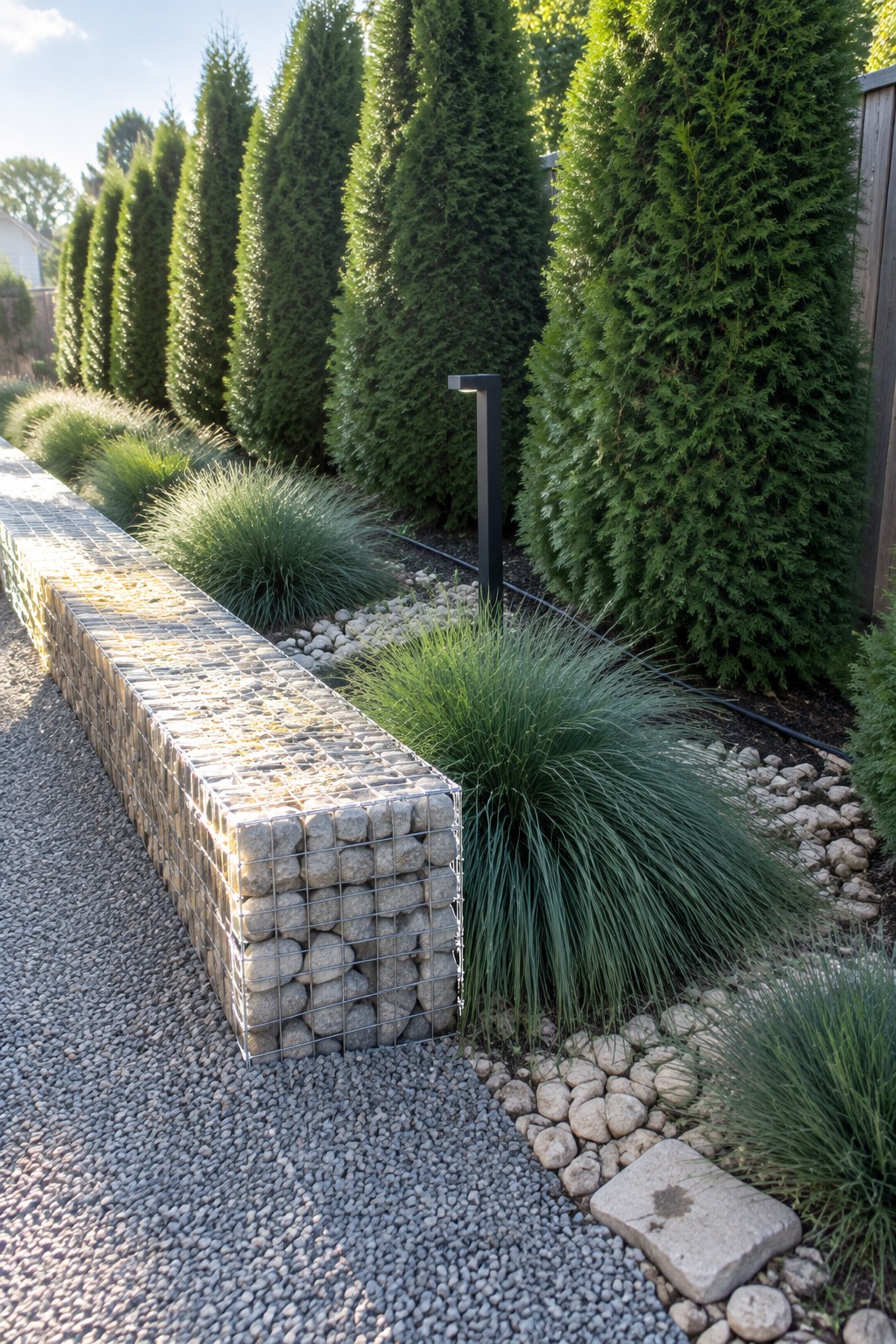
Gabion walls made from wire cages and filled with stone create a firm edge that holds its shape without much work. They stand up to weather and keep the garden lines clean through winter when plants go dormant.
This approach suits homes with gravel paths or larger beds where you want something more permanent than wood or loose rock. Level the ground first and choose a tight mesh so the fill stays in place over the years.
Evergreen Hedges In Raised Beds
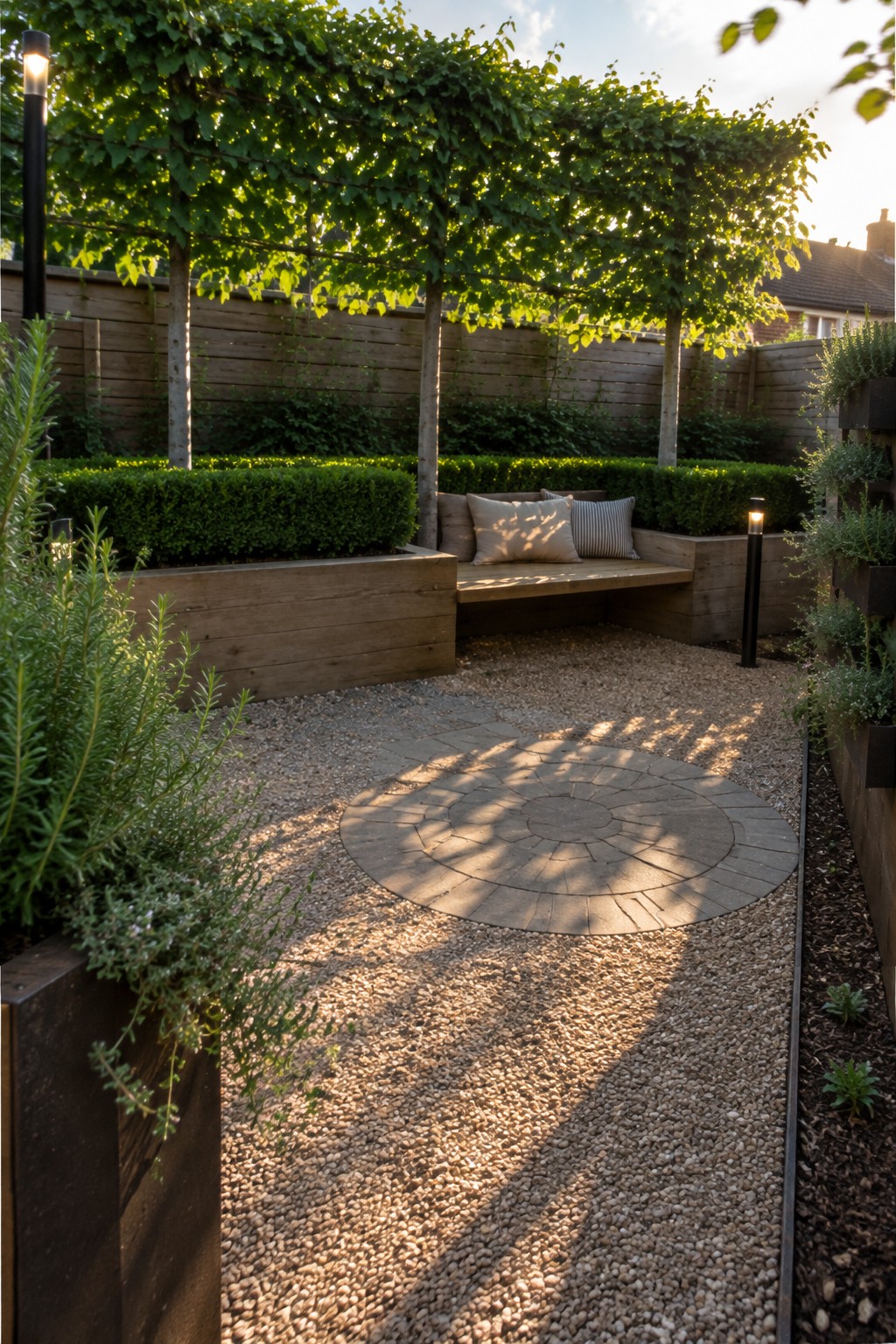
Evergreen hedges planted in raised beds give a garden clear shape that lasts through every season. The clipped lines stay neat with only a couple of trims a year and they hide the messier parts of the planting behind them.
This setup suits smaller gardens or narrow side areas where you want structure without constant work. Gravel paths and simple paving help keep the whole space low-maintenance while the hedges do the main job of holding the design together.
Use Raised Planters With Evergreens For Lasting Form
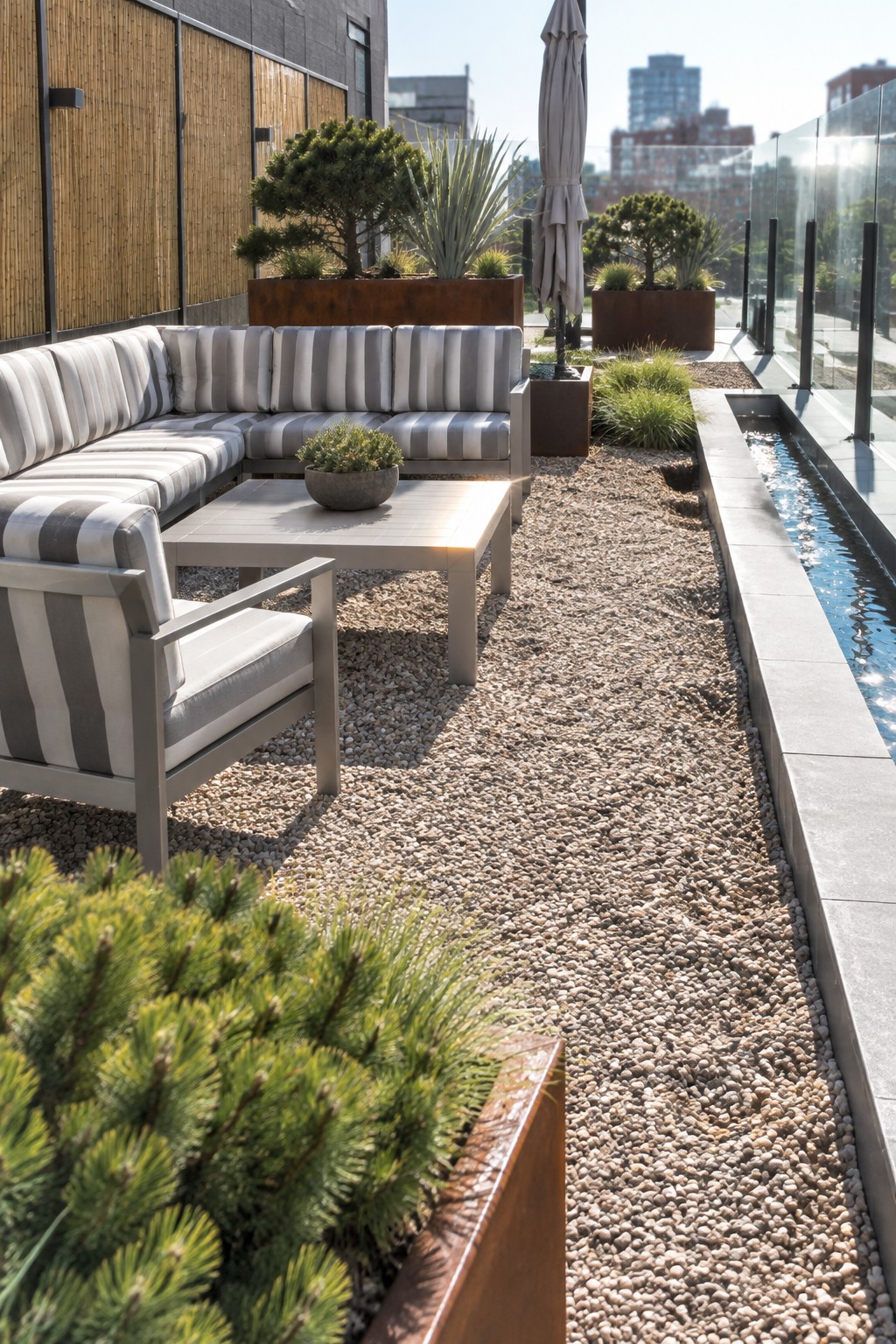
Raised planters make it easy to add evergreen structure without a lot of fuss. They keep plants contained, give you clean lines, and let you mix different heights and textures while still keeping the overall look simple and orderly. In spaces with gravel or hard surfaces, this approach adds greenery that stays green all year and needs little trimming or watering once established.
This works well on rooftops, side yards, or modern patios where soil is limited. Choose slow-growing evergreens that suit your climate, and place the planters to frame seating areas or walkways. Just watch the drainage and make sure the planters are sturdy enough to handle the weight.
Potted Evergreens Create Lasting Garden Form
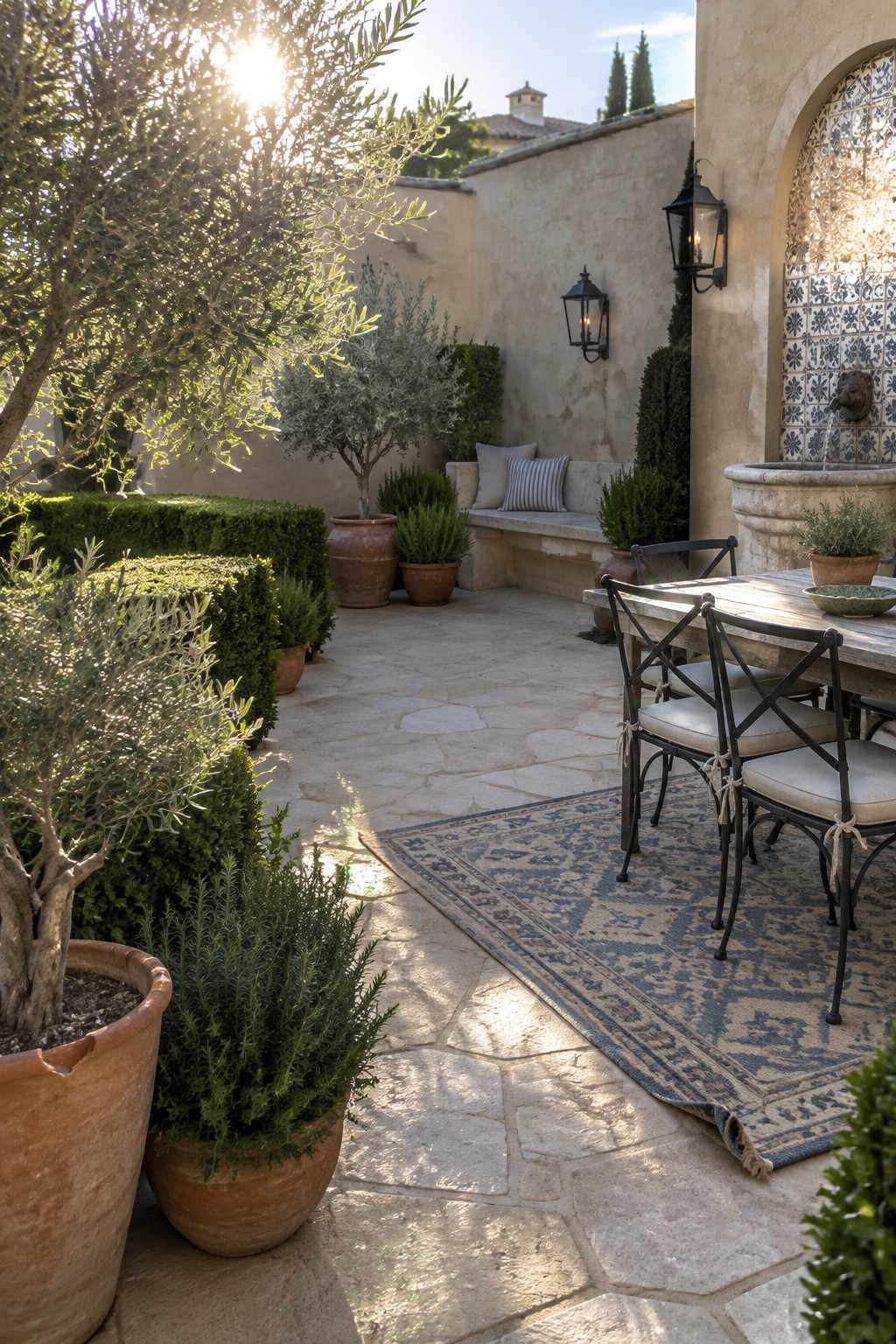
Evergreens in large pots give a garden solid shape that stays in place all year. They work especially well in paved courtyards where planting beds are limited, and the containers let you move things around if needed. The mix of taller trees and lower clipped shrubs builds layers without much daily work once the plants are settled.
This approach suits small urban gardens or side yards where you want structure but cannot dig big beds. Choose tough varieties that handle your climate, and group pots in odd numbers for a natural look. Check drainage in the containers each season so roots stay healthy.
Raised Beds With Layered Shrubs For Evergreen Structure
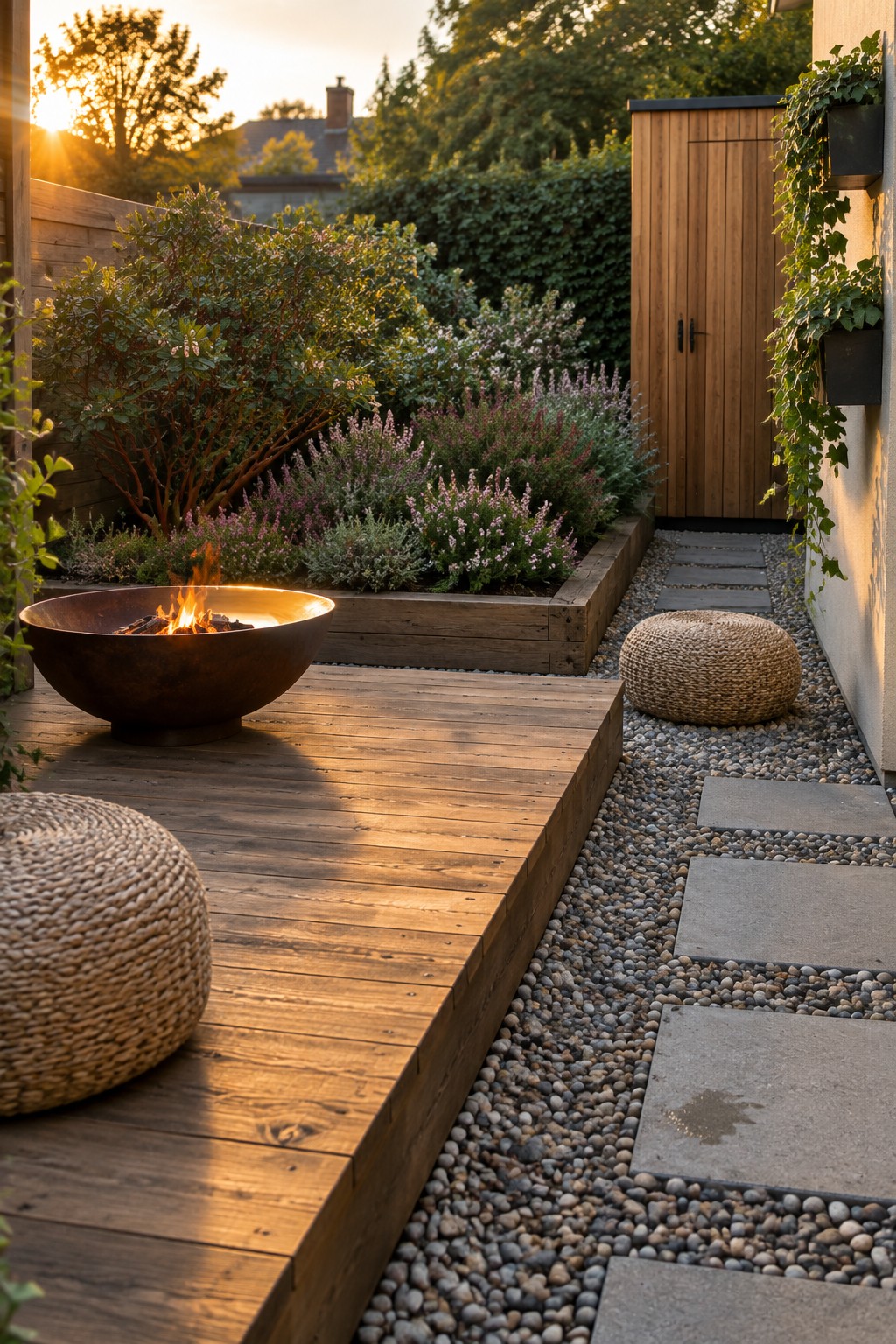
Raised beds give shrubs a clear edge so they can build real structure without spreading everywhere. The mix of heights and textures inside the beds keeps the garden looking full even after blooms drop, and the wood border makes mowing and weeding simpler.
This setup works best along paths or beside a deck where you want low upkeep. Use evergreens as the main planting and add just a few seasonal shrubs for color. The gravel and stepping stones between beds cut down on mud and trimming.
Layer Evergreens Along Paths For Steady Structure
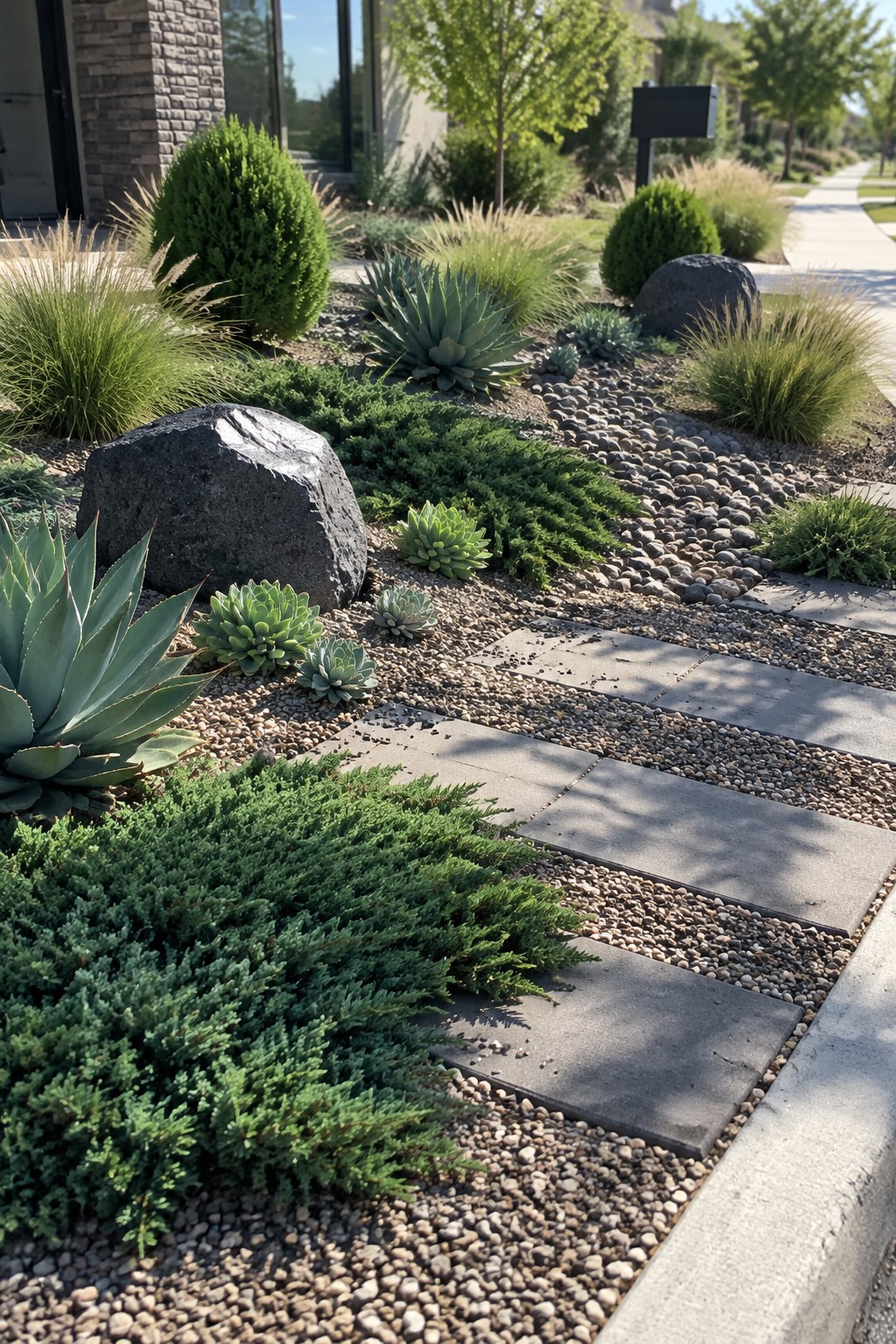
Many gardens lose their shape once flowers fade, but a simple mix of evergreen shrubs and low plants keeps beds looking full through every season. The plants hold the layout in place without needing constant replanting or heavy care.
This works best beside walkways or near entries where you want clear lines but little upkeep. Choose a few different heights and textures so the bed feels full without crowding the path.
Frame Garden Paths with Potted Evergreens
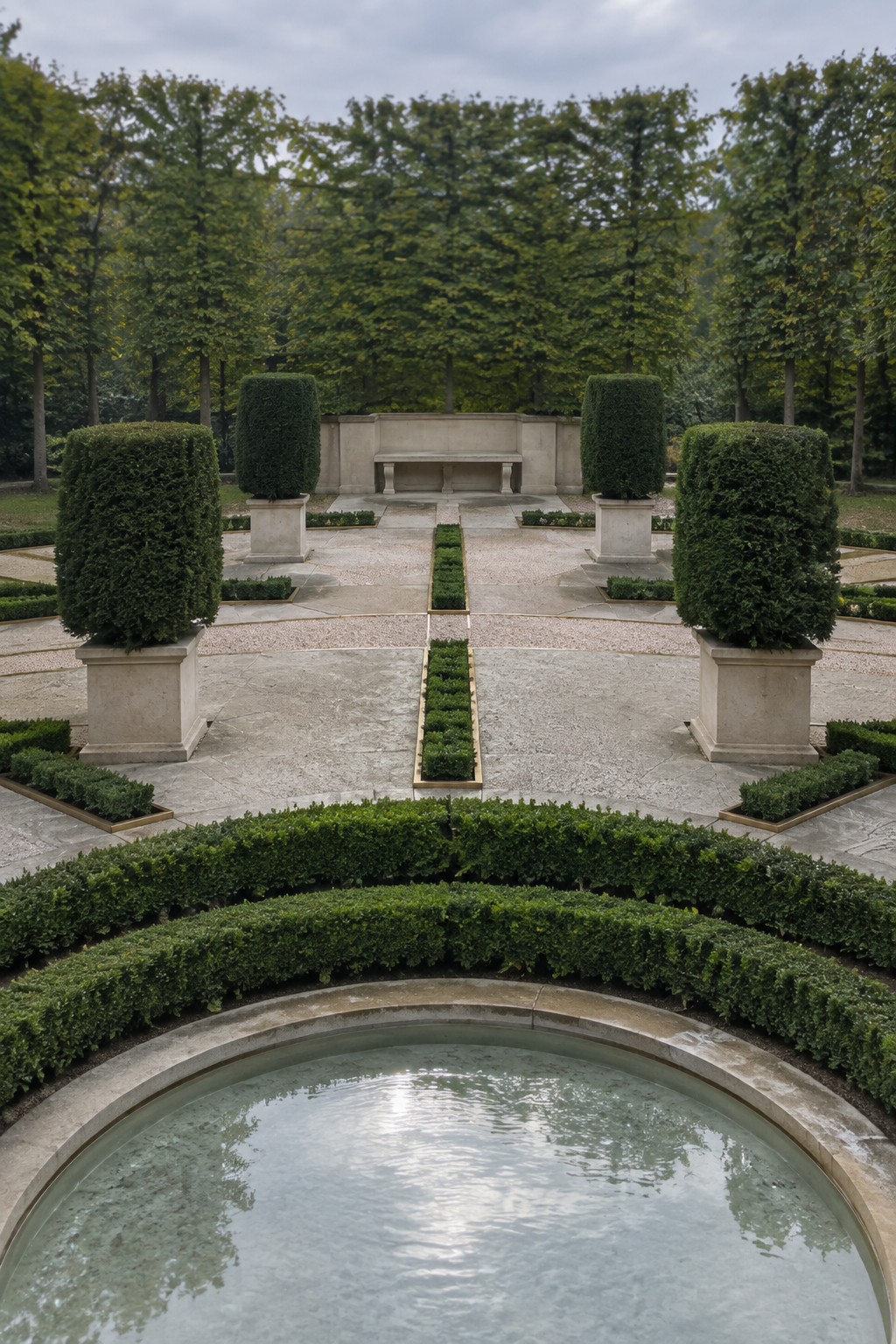
Many gardens gain a lot from simple evergreen structure that holds its shape through every season. Setting large clipped shrubs in matching stone pots along a path creates clear lines and keeps the space looking tidy with very little work.
This approach suits both formal layouts and more relaxed yards where you want some order without heavy planting. Pick varieties that grow slowly, match the pot size to the path width, and space them evenly so the rhythm stays balanced as the garden matures.
Raised Beds For Clear Garden Lines
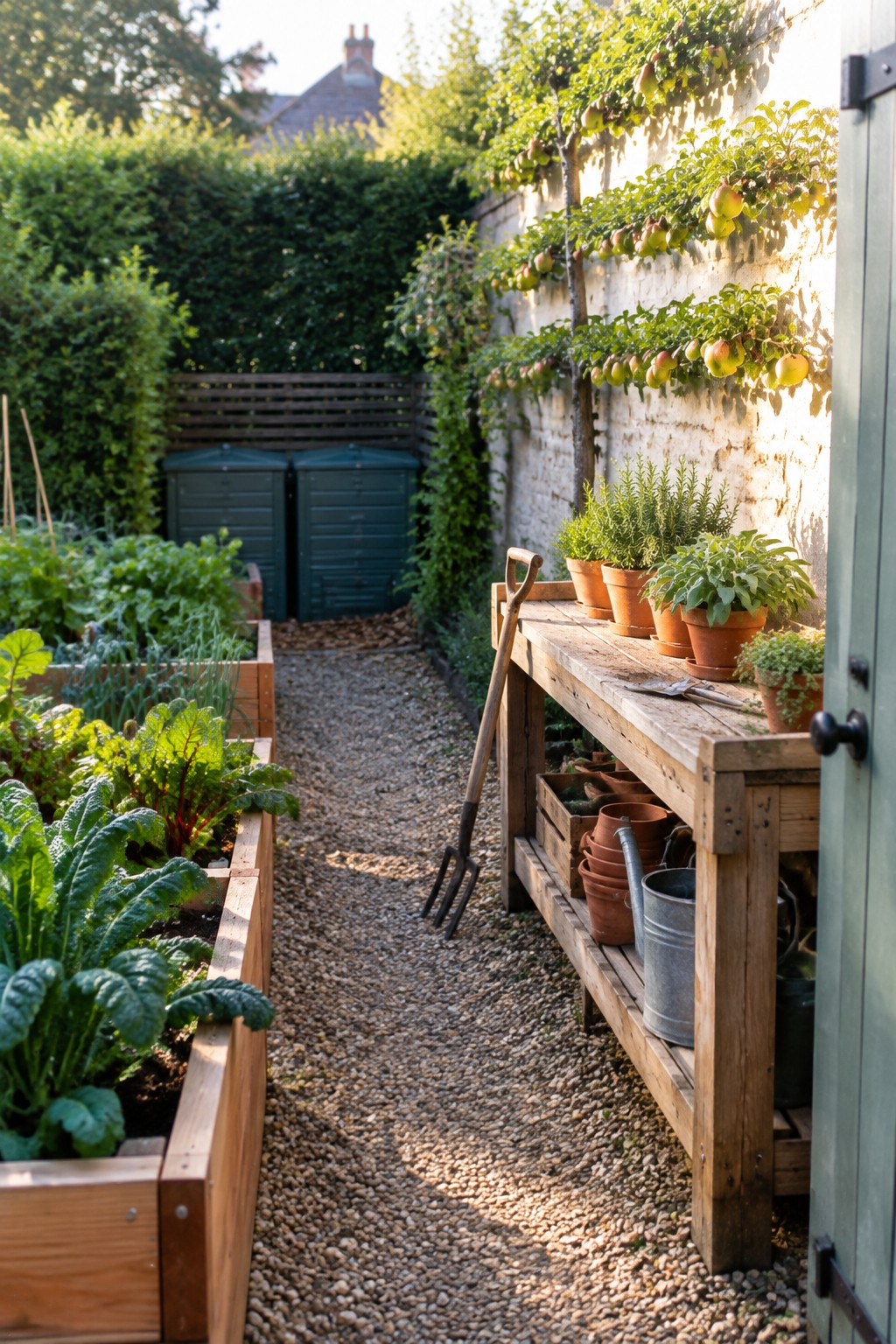
Raised beds give a garden a finished look without constant work. The wood frames hold the soil in place, keep paths tidy, and let plants grow in neat rows that stay visible even in winter.
They work well in narrow side gardens or small yards where you want order without high hedges. Keep the wood untreated or lightly sealed so it ages naturally, and choose a simple gravel path beside them to cut down on weeding.
Large Evergreen Pots for Poolside Structure
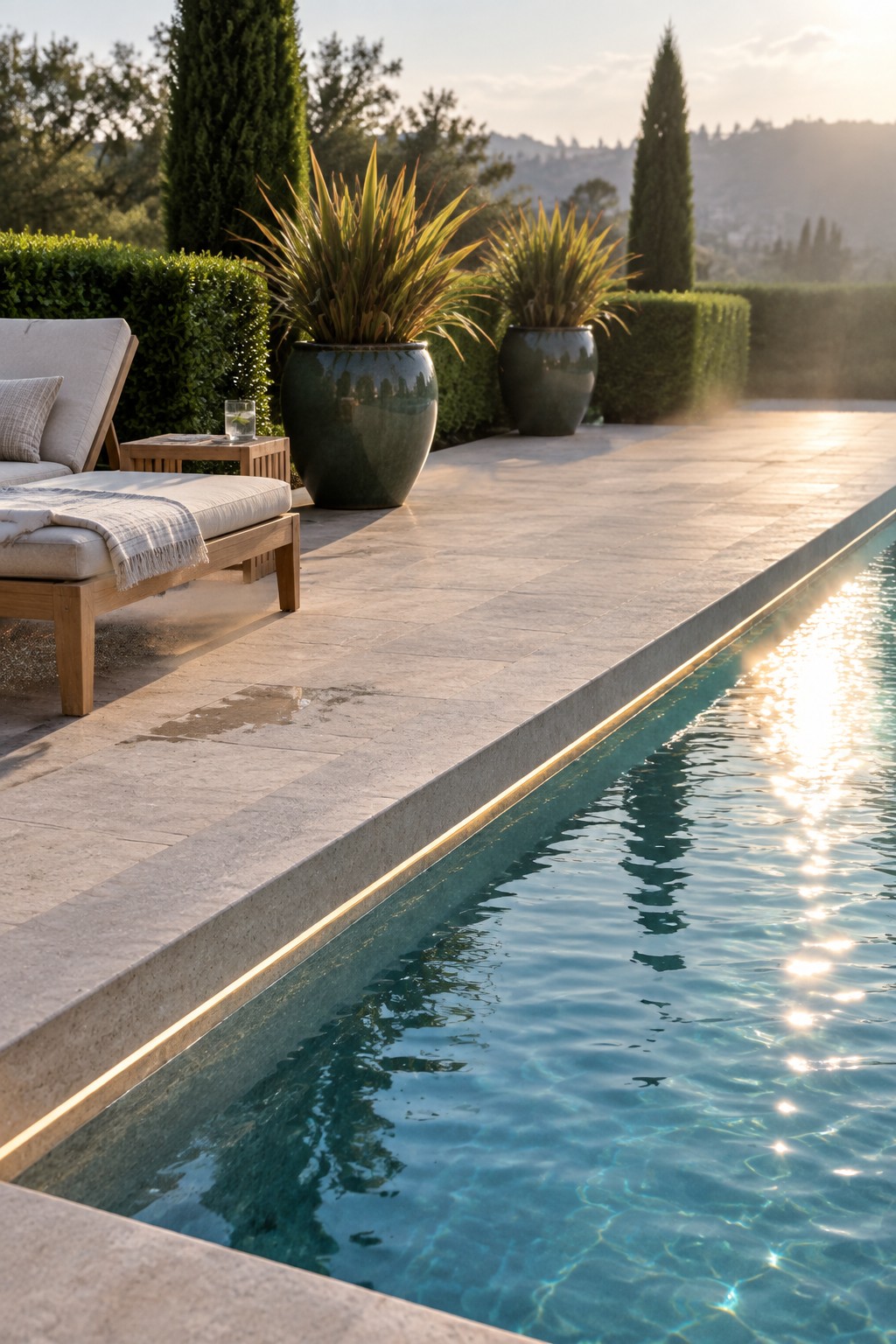
Large pots of evergreens give a pool deck steady shape without much work. They hold their form through winter and summer alike, so the space never looks bare even when flowers fade.
Place them along the water’s edge where the paving is wide and flat. This approach suits simple stone decks and works best when the pots are big enough to balance the open space around them.
Frequently Asked Questions
Q: Will these evergreens work if winters get really cold where I live?
A: Choose hardy types suited to your zone like junipers or pines. They hold up without extra protection once planted. That way the structure stays strong through snow and frost.
Q: How often do I need to trim them to keep the shape?
A: Trim most of them once a year in spring. That keeps the form without extra work.
Q: What if some plants start looking sparse after a few seasons?
A: Add a bit of compost around the base each spring. It boosts health without much effort. The evergreens soon fill back in and maintain that steady form.
