


I learned early on that a yard only stays manageable when the plants and layout match the amount of time you actually have.
Reducing lawn size changes how the whole space functions because you stop fighting grass in spots where it never wanted to grow anyway.
Edging and simple borders keep beds from turning into constant cleanup projects once the seasons shift.
Some of these ideas I would test first near the back fence.
Watching how the space holds up after the first year tells you more than any plan on paper ever could.
Gravel Paths With Hardy Borders
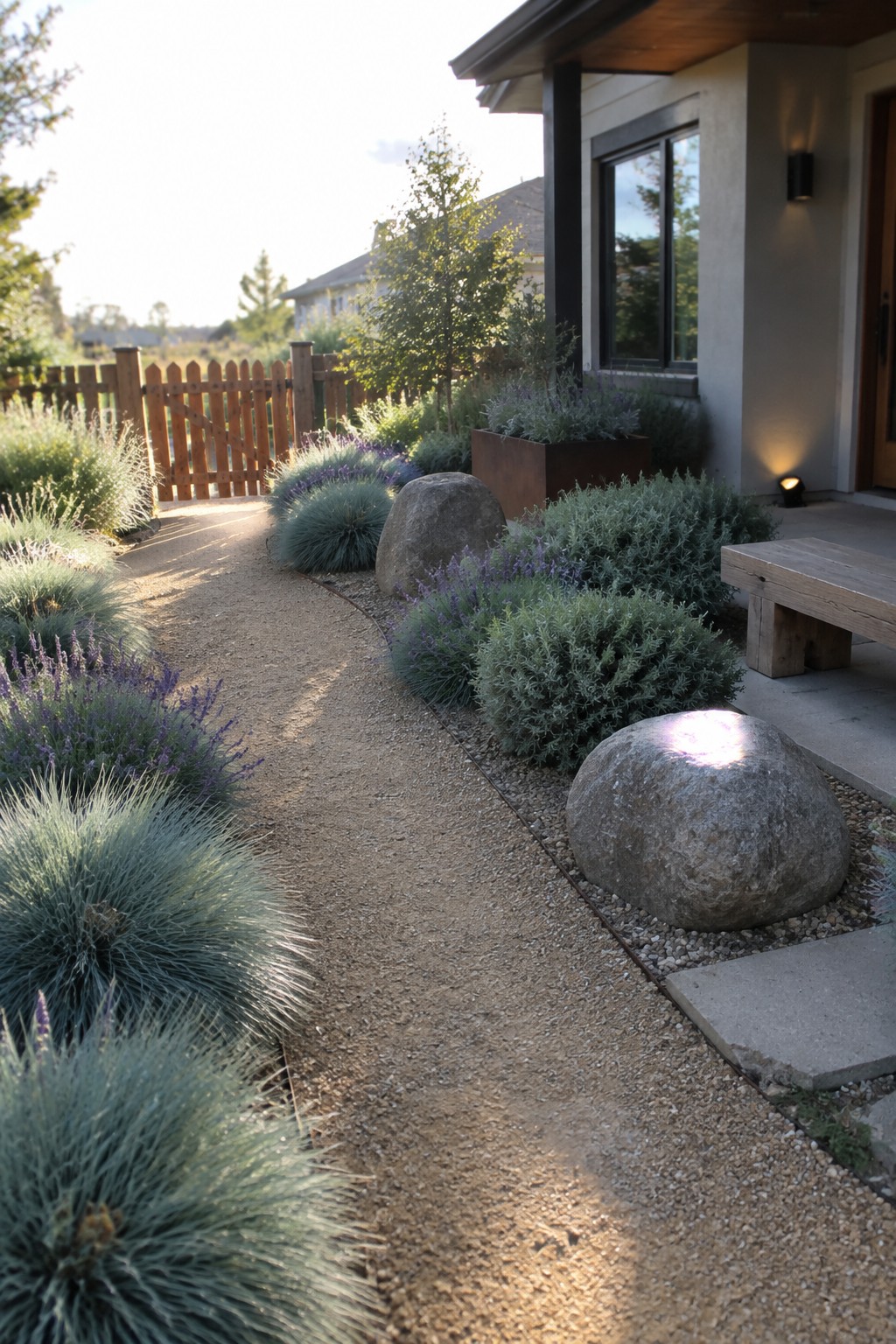
Gravel paths edged with tough plants make a simple swap for sections of lawn that need constant care. The setup keeps things looking neat without regular mowing or heavy watering, and it handles foot traffic well in side yards or along a house.
This works best on homes with existing garden beds or entry routes where you want lower upkeep. Pick spreading perennials that stay compact, add a few larger rocks for structure, and use metal edging to hold the gravel in place over the years.
Paver Paths With Ground Cover

Replacing strips of lawn with large pavers and low plants between them cuts down on mowing and watering. The gaps stay green without needing much care, and the whole path still feels soft underfoot.
This setup works best in sunny spots where grass struggles anyway. Keep the surrounding beds simple with drought-tolerant plants so the whole area stays easy to manage year after year.
Stepping Stone Paths With Gravel
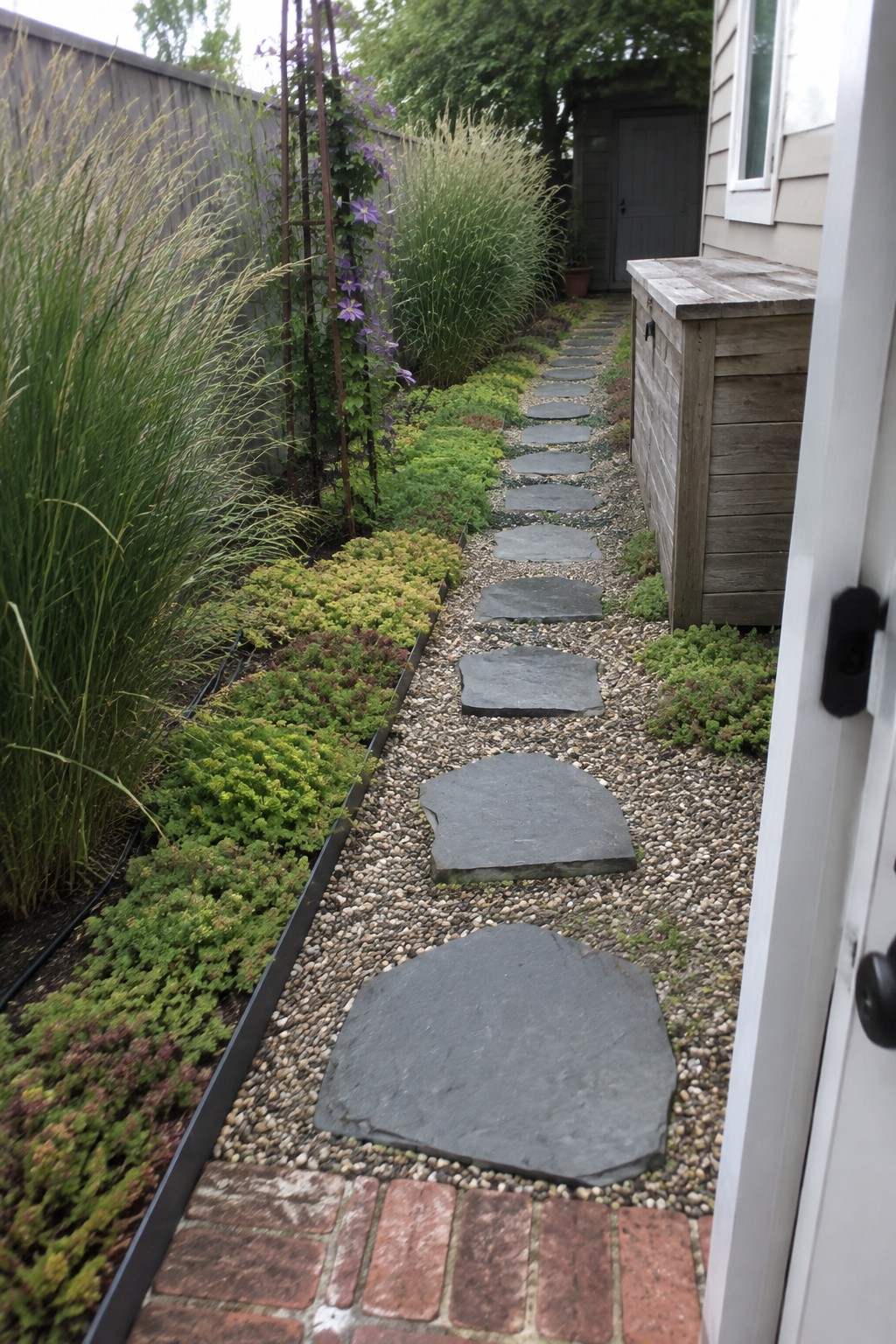
A gravel path with stepping stones cuts down on lawn care because it removes the need to mow or water a strip of grass. The stones give you a solid place to walk while the gravel fills the gaps and drains well after rain.
This layout works best along the side of a house or in a narrow side yard where grass tends to struggle anyway. Choose stones that are large enough to step on comfortably and let low ground covers spread along the edges so the beds stay full with little trimming.
Gravel Paths With Log Borders

Gravel paths edged with simple logs or timbers make it easy to cut back on lawn area without losing access through the yard. The gravel stays put with minimal weeding, and the logs give a soft edge that blends into meadow-style planting instead of creating sharp lines that need constant upkeep.
This approach suits larger yards or side areas where grass is hard to reach with a mower. Lay landscape fabric first, add the gravel, and use the logs to keep the beds defined. It keeps things looking intentional while letting the flowers and grasses do most of the work.
Gravel Paths Between Raised Beds
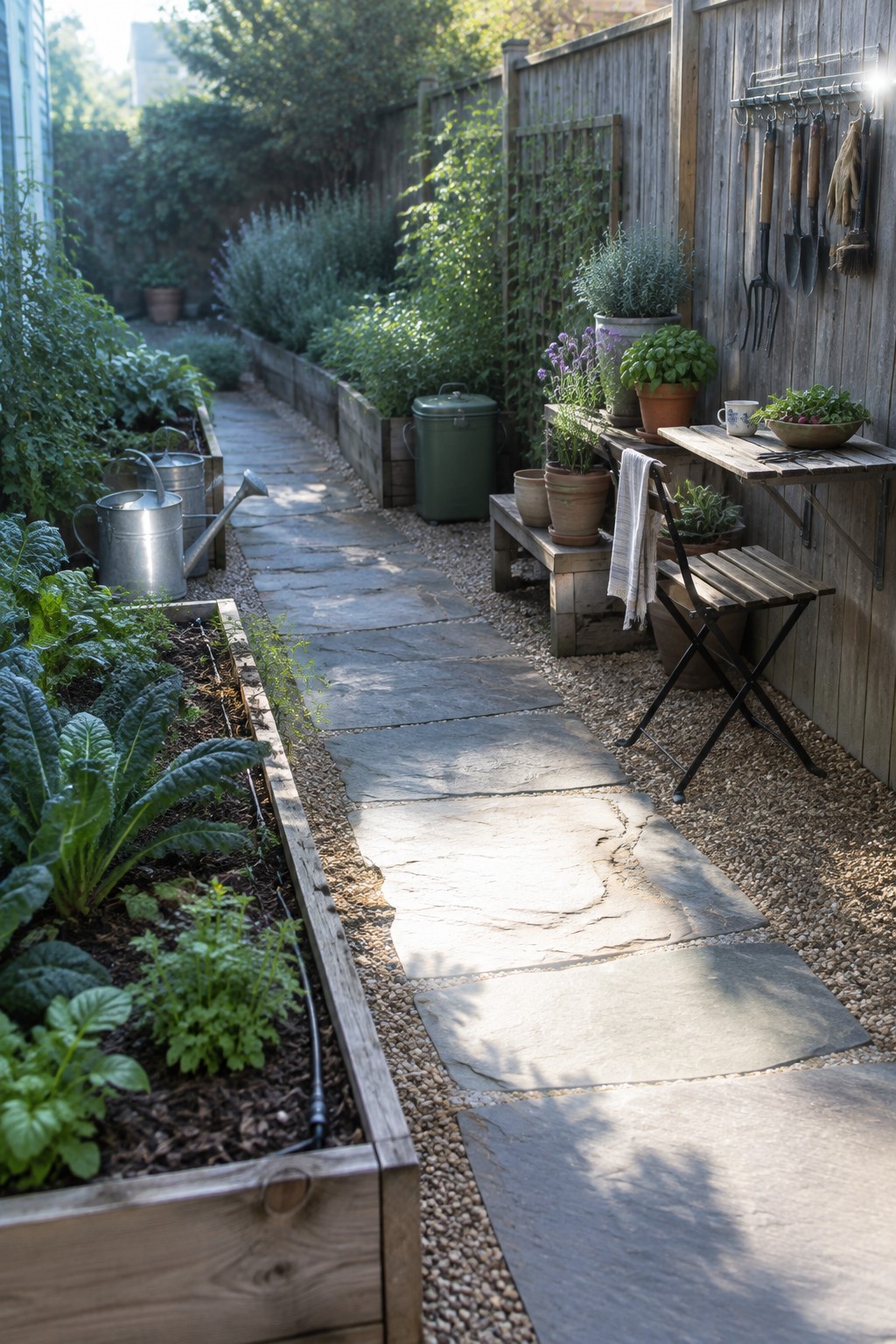
Gravel paths paired with raised beds cut down on mowing and weeding in small gardens. The loose gravel drains well and stops weeds from spreading, while the beds keep soil contained and easy to tend. This setup works especially well in narrow side yards or urban plots where grass is hard to maintain.
It suits homes that want a simple vegetable or herb garden without constant upkeep. Keep the paths at least two feet wide so a wheelbarrow fits, and edge the beds with wood or stone to hold the gravel in place over time.
Terrace Slopes With Stone Retaining Walls

Stone retaining walls turn a sloped yard into flat planting beds that need almost no mowing. The terraces hold soil in place and let you fill the levels with shrubs and ground covers instead of grass.
This approach works best on hillsides where a lawn would be difficult to keep up. Choose durable local stone and keep the plantings simple so the beds stay low maintenance over time.
Use Concrete Planters to Shrink Lawn Areas
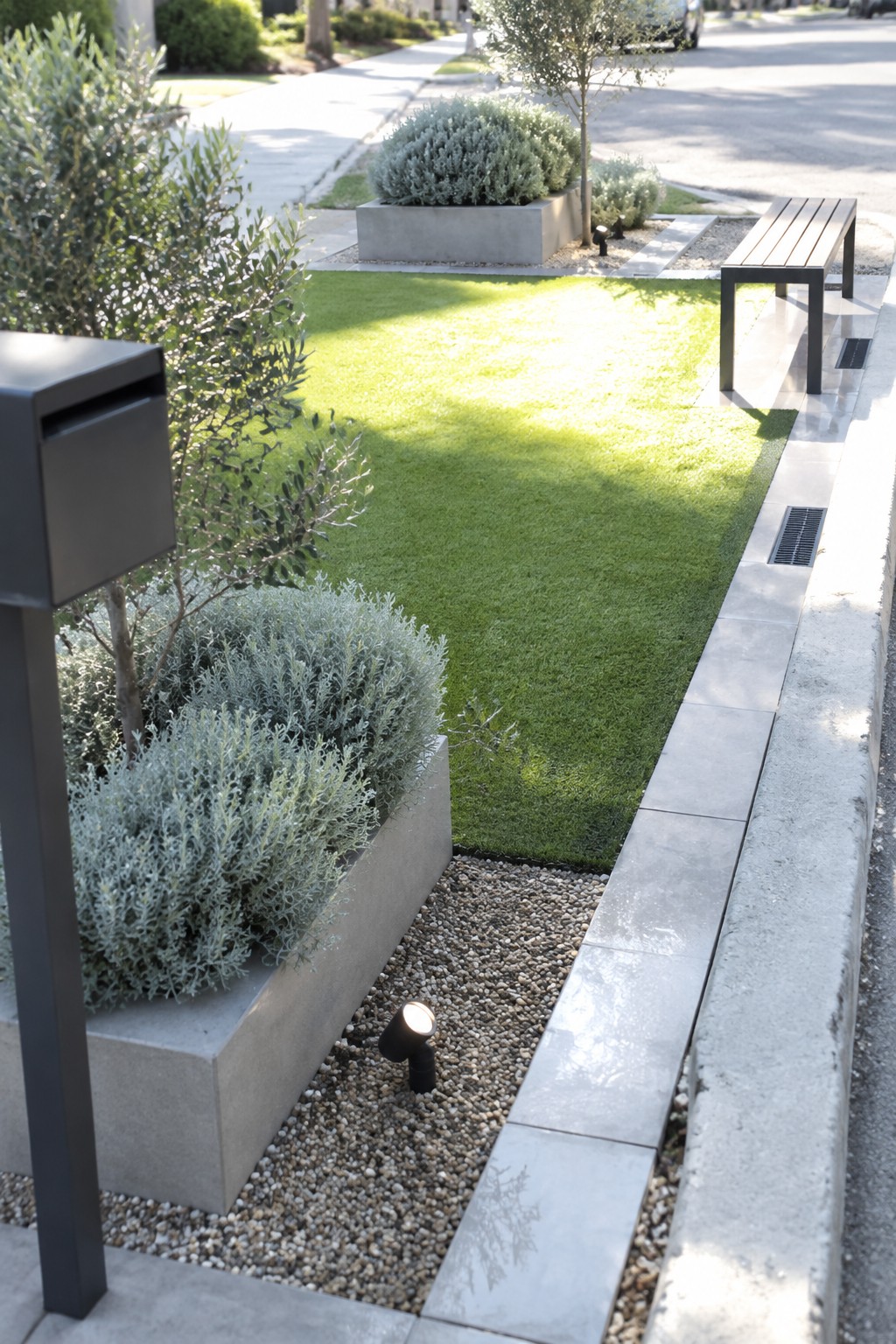
Many people turn to concrete planters when they want less grass to mow and water each week. The raised beds keep plants contained and give the yard a clean edge without needing constant trimming or edging work.
This approach fits best along the front of a house or next to a walkway where you still want some open lawn but do not want it to take over the whole space. Stick with tough shrubs that handle dry spells and add a layer of gravel around the base so weeds stay down.
Gravel Beds With Potted Plants

Gravel beds paired with large pots give you greenery without the constant mowing and watering that comes with a lawn. The setup keeps the ground covered and drains well, so you spend less time on upkeep overall.
This approach works best in sunny side yards or small courtyards where grass struggles anyway. Stick with drought-tolerant plants in the pots and choose a gravel that matches the surrounding hardscape so the whole area feels cohesive.
Stepping Stones Over Gravel For Simple Paths

Many homeowners are moving away from full lawns in favor of gravel beds with large concrete stepping stones. This setup cuts down on mowing and watering while still giving you clear routes through the garden.
It works especially well along the side of a house or in a back area where you want defined walking space without a lot of upkeep. Keep the gravel layer deep enough so it stays in place, and choose a few low-water plants to fill in around the edges.
Plant a Pollinator-Friendly Border
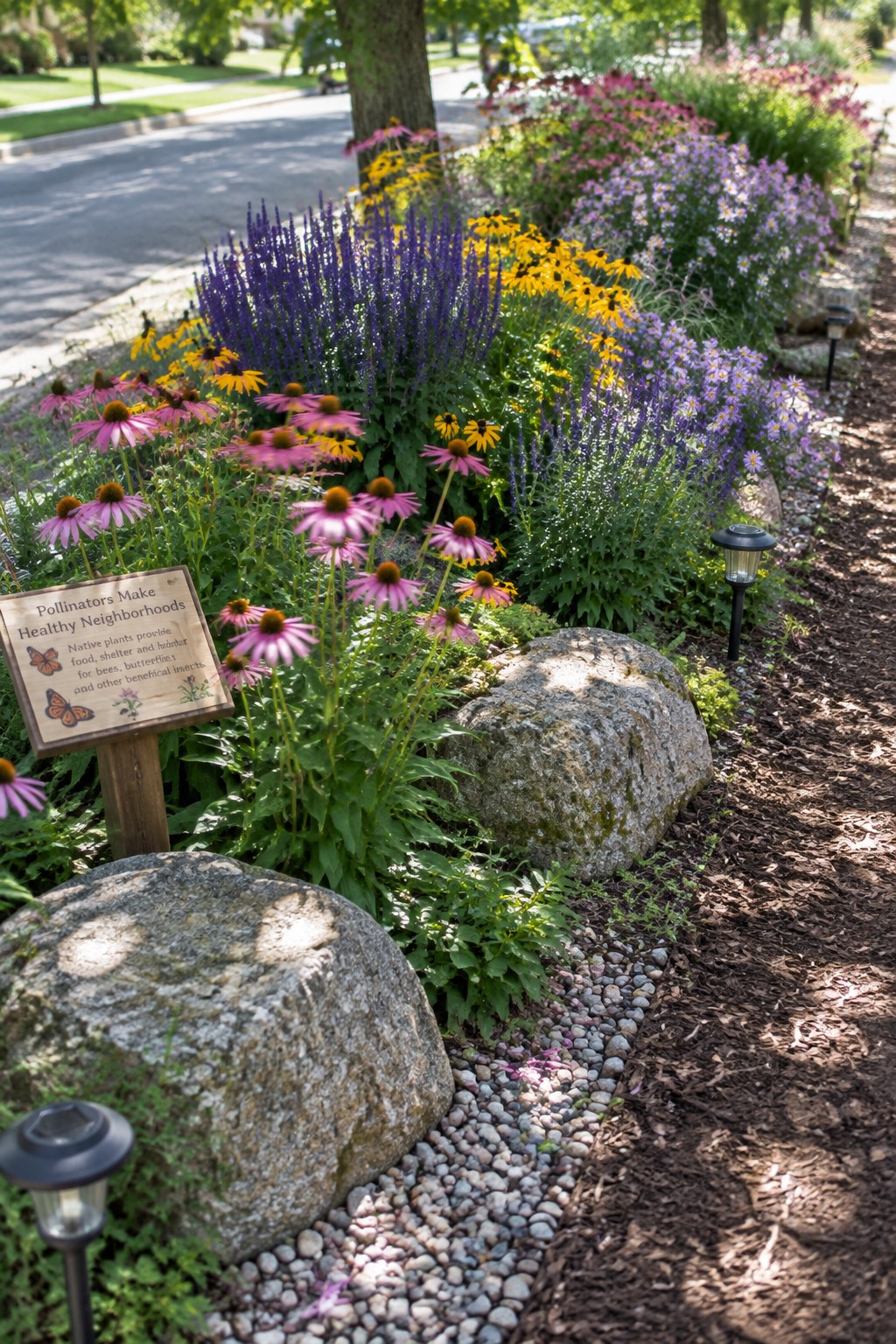
Native plants in a mulched bed cut down on mowing and watering because they grow well without much help once established. The flowers draw bees and butterflies while the rocks and ground cover keep weeds in check and hold moisture in the soil.
This works best along a driveway or sidewalk where grass is hard to maintain. Choose a few reliable perennials that fit your climate and let them fill in over a season or two.
Create a Dry Creek Bed for Simple Drainage
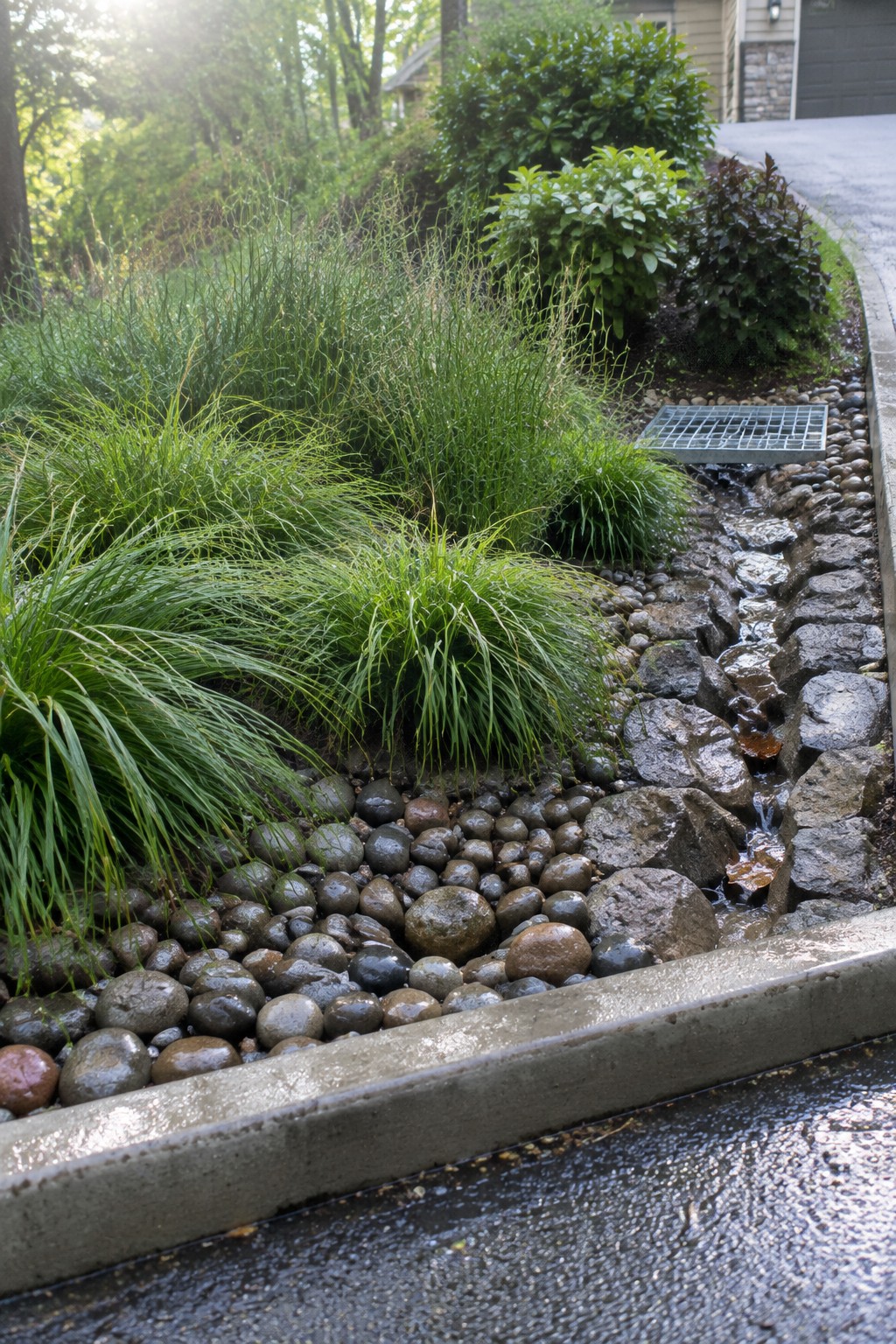
A dry creek bed gives water a clear path during heavy rain while keeping the rest of the yard looking neat. The mix of larger rocks and smaller pebbles slows the flow, and the tall grasses along the edges help hold the soil in place without much extra work.
This setup works well along driveways or at the base of a slope where water tends to collect. It cuts down on lawn care because you skip mowing in that strip and only need to clear debris from the grate once in a while.
Pave Sections of the Yard to Shrink the Lawn

Adding a paved area like a patio or fire pit zone lets you replace big stretches of grass with something that needs almost no regular care. The hard surface handles foot traffic and seating without watering or mowing, while the plants stay in narrow beds along the edges.
This setup suits homes with medium or large yards where the goal is less weekend upkeep. Keep the paved zone practical in size and choose plants that stay low without much trimming so the whole area stays simple to manage year after year.
Stone Steps With Hardy Plants

Stone steps combined with tough ground covers make a simple swap for grass on slopes. They cut down on mowing and watering while still giving a clear path through the yard.
This works best on hills where regular lawn care gets tricky. Use drought tolerant succulents and low spreading plants between the stones so the area fills in on its own with little extra work.
Brick Edging For Neat Planting Beds
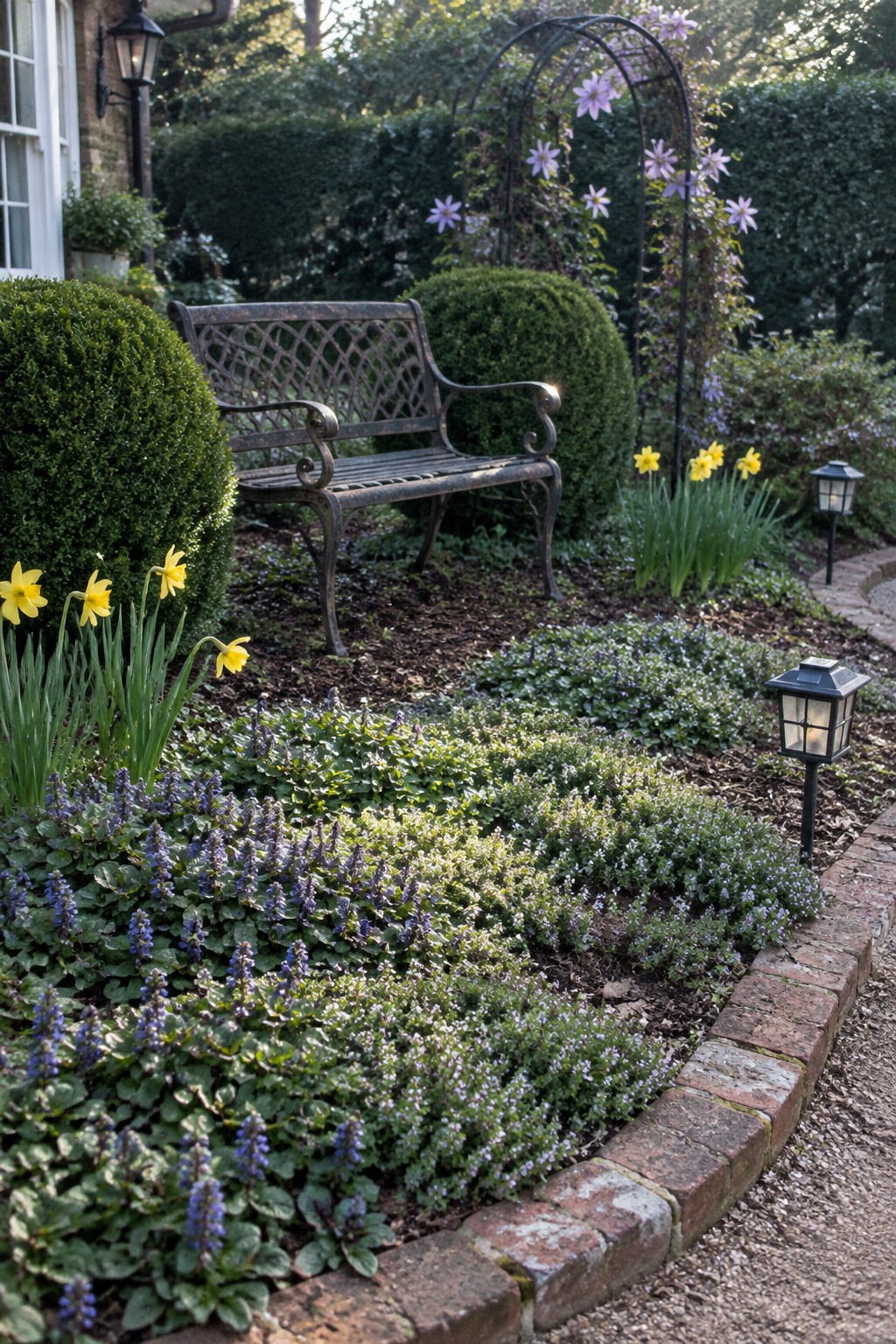
Brick edging keeps garden beds looking tidy with very little work after the first setup. It stops grass from spreading into the planted areas and gives a clear border that does not need constant trimming or redefining each season.
This approach works best in smaller front or side yards where you want to swap out patches of lawn for ground cover and seasonal flowers. Lay the bricks level with the soil so mowing stays simple if any grass remains nearby.
Gravel Beds With Hardy Plants

One way to cut down on lawn care is to swap grass for gravel beds planted with tough, low-water plants. These beds need almost no mowing or frequent watering once they settle in, and the gravel helps keep weeds from taking over.
This setup works best along pool edges or patios in sunny spots where grass tends to struggle. Pick plants that match your climate and add a solid base layer so water drains properly instead of sitting on top.
Stepping Stones Through Mulched Beds

Stepping stones give you a clear walking route without the work of laying a solid path or keeping grass trimmed along the edges. They sit right in the mulch so the beds stay neat and you avoid the constant mowing that comes with a traditional lawn strip.
This works especially well along the side of a house or in narrow front yards where you still need access but want less grass overall. Space the stones about a normal step apart, keep the mulch deep, and add a thin gravel border to hold everything in place and make edging simple.
Stepping Stone Paths With Gravel
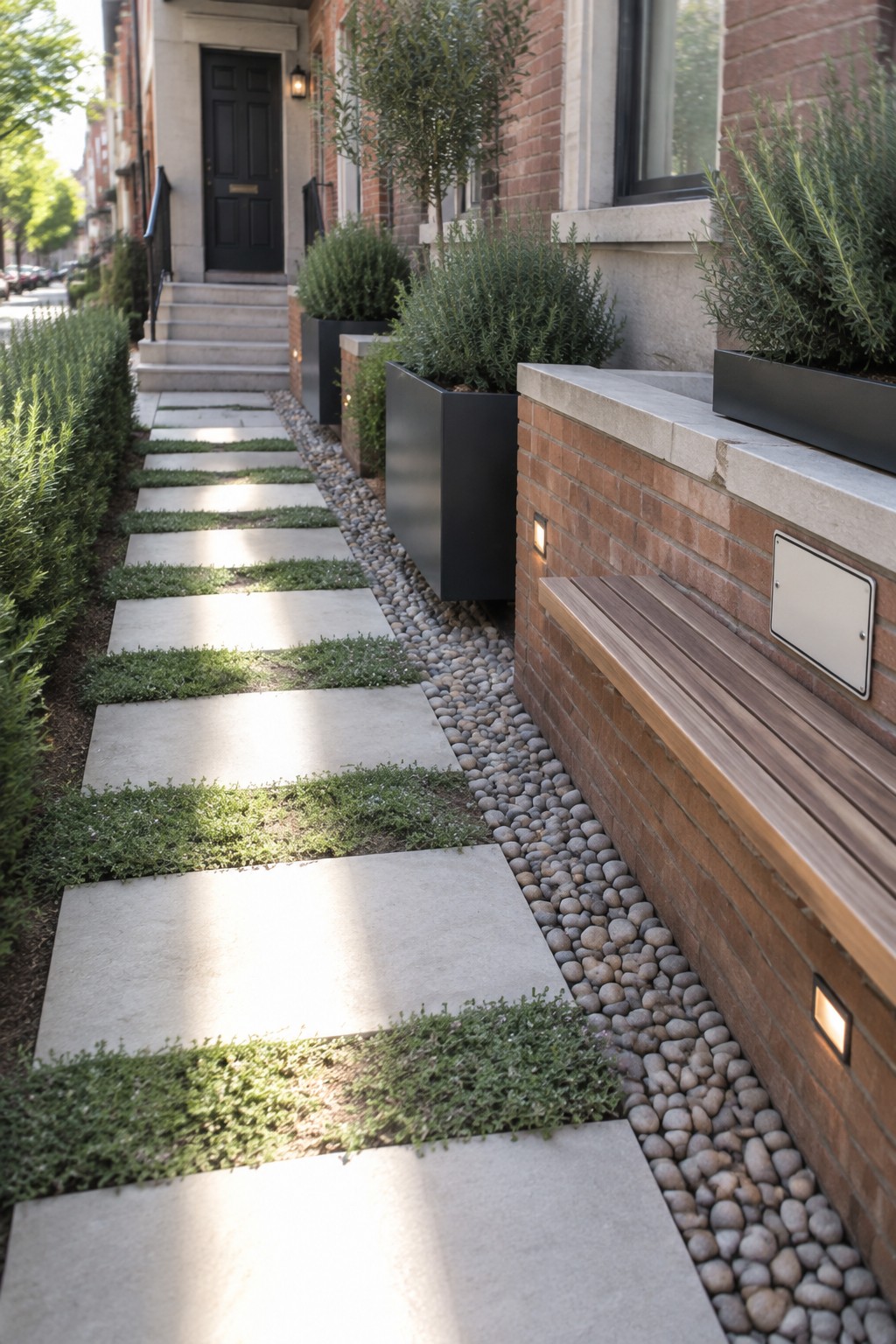
Stepping stones set in gravel make a simple path that avoids the work of a full lawn. The large slabs give steady footing while the gravel lets water drain and keeps weeds from taking over easily.
This setup suits narrow side yards or front entries on brick homes. Use a few container shrubs along the edge to soften the look without adding much to trim or mow.
Line Beds With Metal Edging And Gravel

Metal edging paired with gravel and river rock gives planting areas a sharp border that stays in place without constant trimming. The setup works especially well along sidewalks or driveways where grass would otherwise creep in and need frequent cutting. It also lets you keep a few clumps of low-water grasses without the whole strip turning into a mowing headache.
This approach fits homes that want fewer lawn sections to care for while still keeping the ground covered and looking intentional. Just make sure the edging is set deep enough so it does not shift over time, and choose gravel that packs down firmly rather than loose pebbles that scatter onto the walk.
Frequently Asked Questions
Q: How do I pick plants that match my yard’s soil?
A: Test your soil with a simple kit from the garden store. Choose native options that already like your conditions. They grow better without much fuss.
Q: What if my area gets really hot summers?
A: Go for drought tolerant choices like sedum or lavender. They handle heat without constant watering once they root in.
Q: Can pets dig up the new ground cover?
A: Some plants recover fast from minor damage. Start with sturdy varieties in pet areas and give them time to spread.
Q: When should I expect to see real results from these changes?
A: Most setups look decent after the first season. Full coverage takes a bit longer but saves time in the long run.
