

I have watched a few yards turn patchy after just one dry summer because the original planting never accounted for water limits.
When I plan changes to my own space I always start by checking how the soil drains and where the sun hits hardest through the day.
Some ideas only prove themselves after a full year.
I would test a couple of these ideas on a small section first before committing the whole yard.
Over time the right choices create structure that needs little extra care and still gives the yard shape through every season.
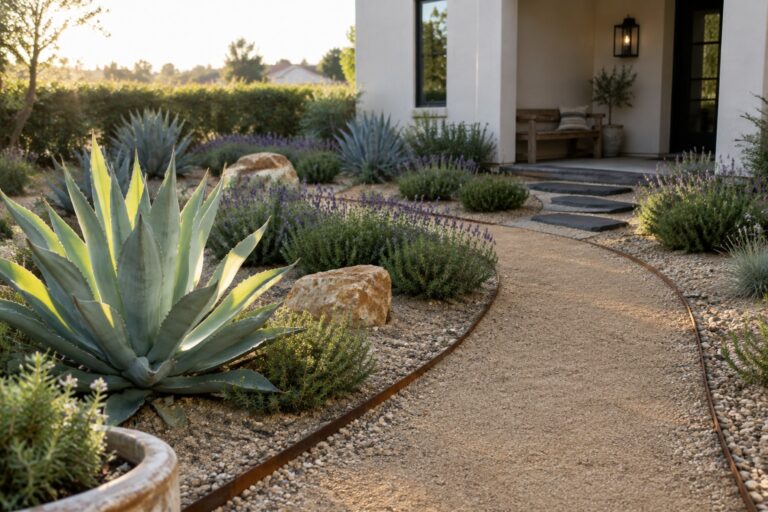
Metal Edging For Gravel Paths

Gravel paths work well in dry gardens because they let water soak in quickly and stay cooler than paved surfaces. Metal edging holds everything in place and gives the beds a clear edge so the gravel does not spill into the planting areas.
This approach suits homes in dry climates where you want a low-water walkway that still looks tidy. Set the edging a few inches into the ground so it stays straight, and keep the path width comfortable for walking.
Large Clay Pots For Dry Gardens
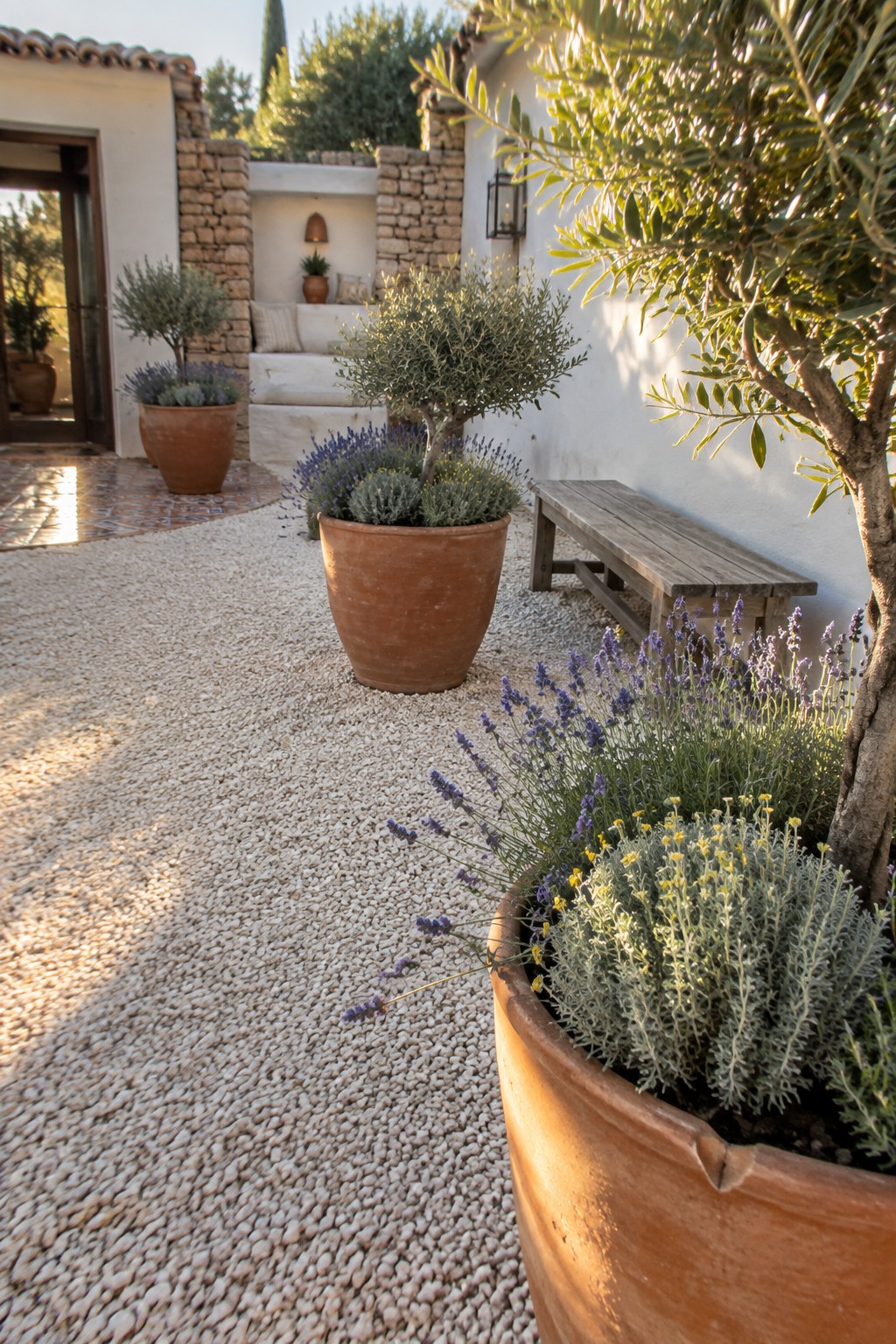
Large clay pots make it easy to grow drought tolerant plants in a controlled way. They work well on gravel because they keep roots contained and let you choose the right soil mix without worrying about the native ground conditions.
This style suits sunny yards in warm regions where water is limited. Group a few pots of different sizes along paths or walls, and stick to plants like lavender or small olive trees that handle heat and dry spells without extra care.
Gravel Paths With Stepping Stones

Gravel paths with stepping stones work well in dry climates because they let water drain straight through instead of pooling or running off. They also cut down on the amount of planted surface that needs regular care.
This setup suits narrow side yards or tight spaces next to the house. Use succulents and low grasses along the edges so the path stays neat without extra watering or mowing.
Terrace Slopes With Stone Retaining Walls

Stone retaining walls turn a sloped yard into usable planting space without needing much extra water. The walls hold soil in place and create level beds where drought-tolerant plants can settle in and stay healthy.
This setup works best on hillsides or properties with uneven ground. Keep the walls modest in height and fill gaps with gravel so water drains properly and the beds stay low maintenance.
Plant Groundcovers Between Pavers

One simple way to lower water use is to let small groundcover plants grow in the gaps between patio pavers. The plants fill those narrow strips naturally and cut down on the amount of bare gravel or exposed soil that would otherwise need extra care.
This approach works best in warm, dry regions where you already have a stone or concrete patio. Pick tough, low-growing varieties that tolerate some foot traffic and long dry periods, then let them spread on their own.
Gravel Beds With Succulents For Low Water Yards

Gravel works well as a mulch because it lets water drain fast while keeping the soil from drying out too much underneath. Pairing it with succulents and tough grasses creates a front yard that stays green with very little irrigation, even in long dry spells. The look stays clean without feeling bare.
This approach suits homes with sunny entries or sloped yards where grass would struggle. Keep the gravel layer at least two inches deep and choose plants that match your zone so they fill in without extra water. Watch the edges near walkways so the stones do not scatter onto pavement.
Stone Paths Fit Well in Low-Water Gardens
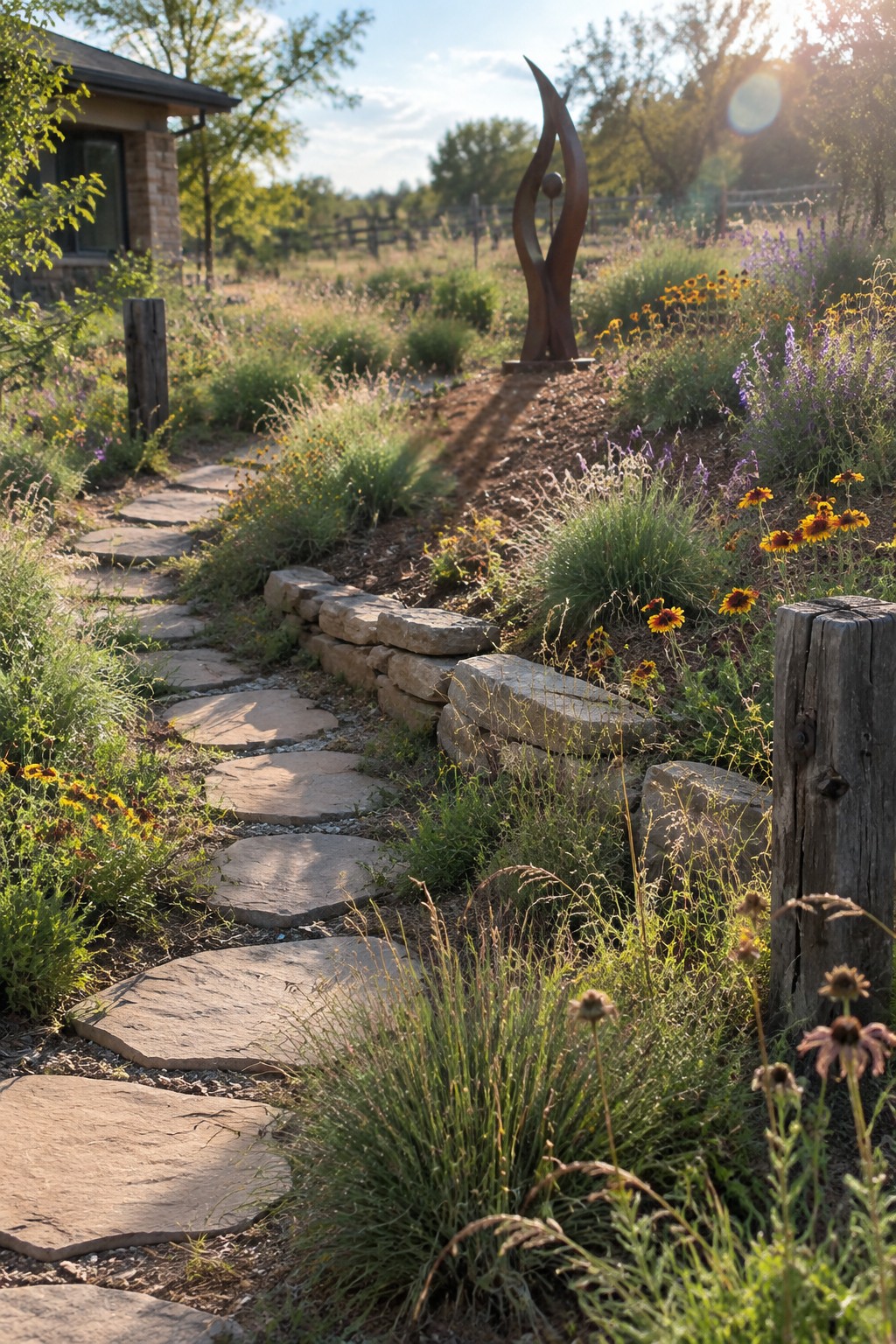
A path made of flat stones lets you walk through plantings that need little water. It keeps the focus on the garden itself instead of on grass that would require constant care.
This works best in larger yards where the beds can spread out naturally. Set the stones on a gravel base so water drains away and the path stays solid through the seasons.
Container Planting Keeps Water Use Low

Many people turn to pots when they want plants but need to keep water use down. Succulents and similar choices handle dry spells well and look good grouped together in different sizes of containers.
This works best on balconies, patios, or any spot without much ground for beds. Pick pots with good drainage and place plants that need the same amount of water near each other so care stays simple.
Layer Plants in Narrow Strips Along Pools
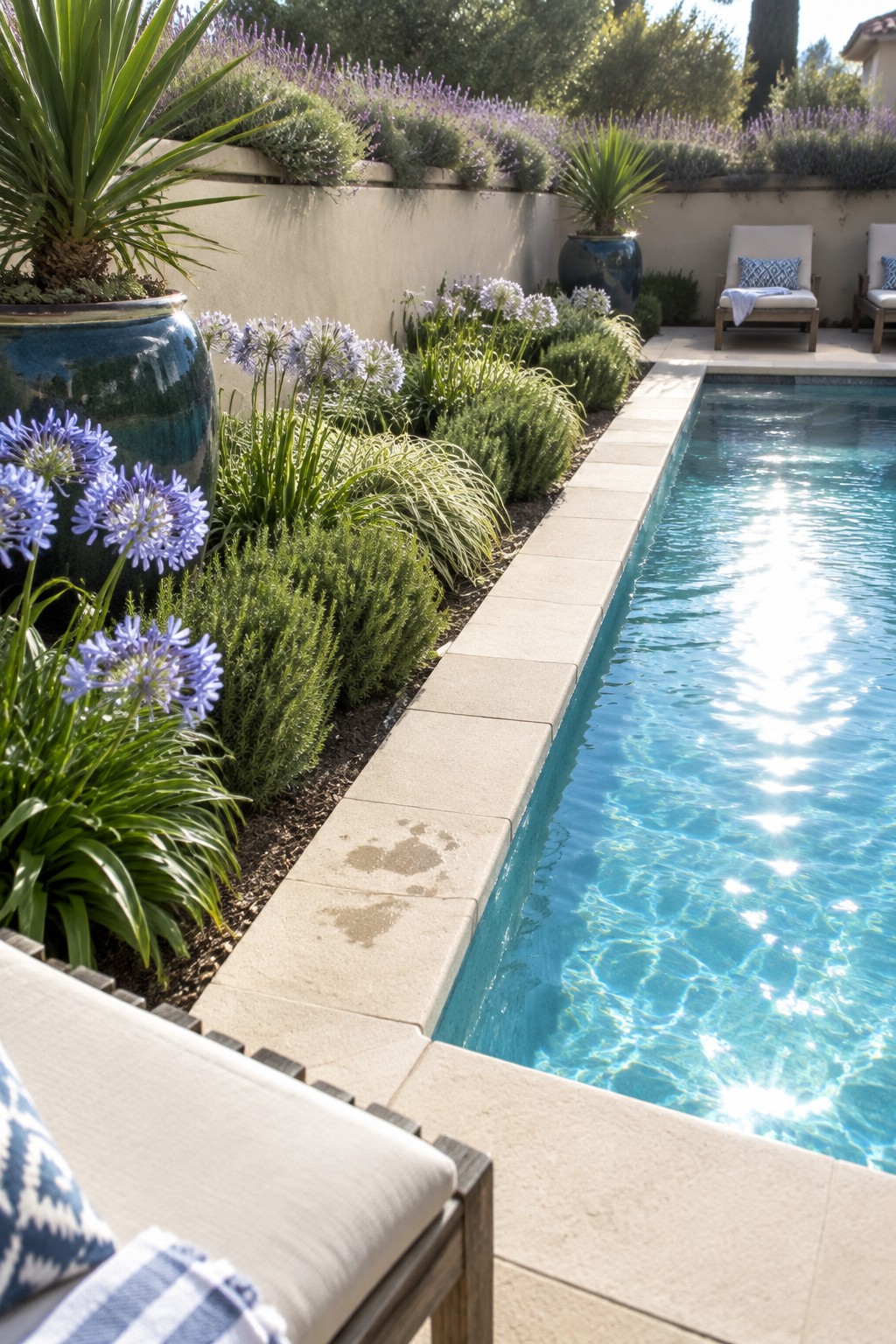
A narrow planting bed right next to the pool edge gives you room for several heights and textures without taking up much space. The mix of low shrubs, taller grasses, and flowering perennials creates interest while keeping the water use low.
This approach works best on sunny sites where the pool coping already defines a clean line. Pick plants that handle reflected heat and stay compact so they do not drop debris into the water. A simple drip line tucked under the mulch keeps everything thriving with minimal effort.
Gravel Mulch And Stone Edging Cut Down On Watering
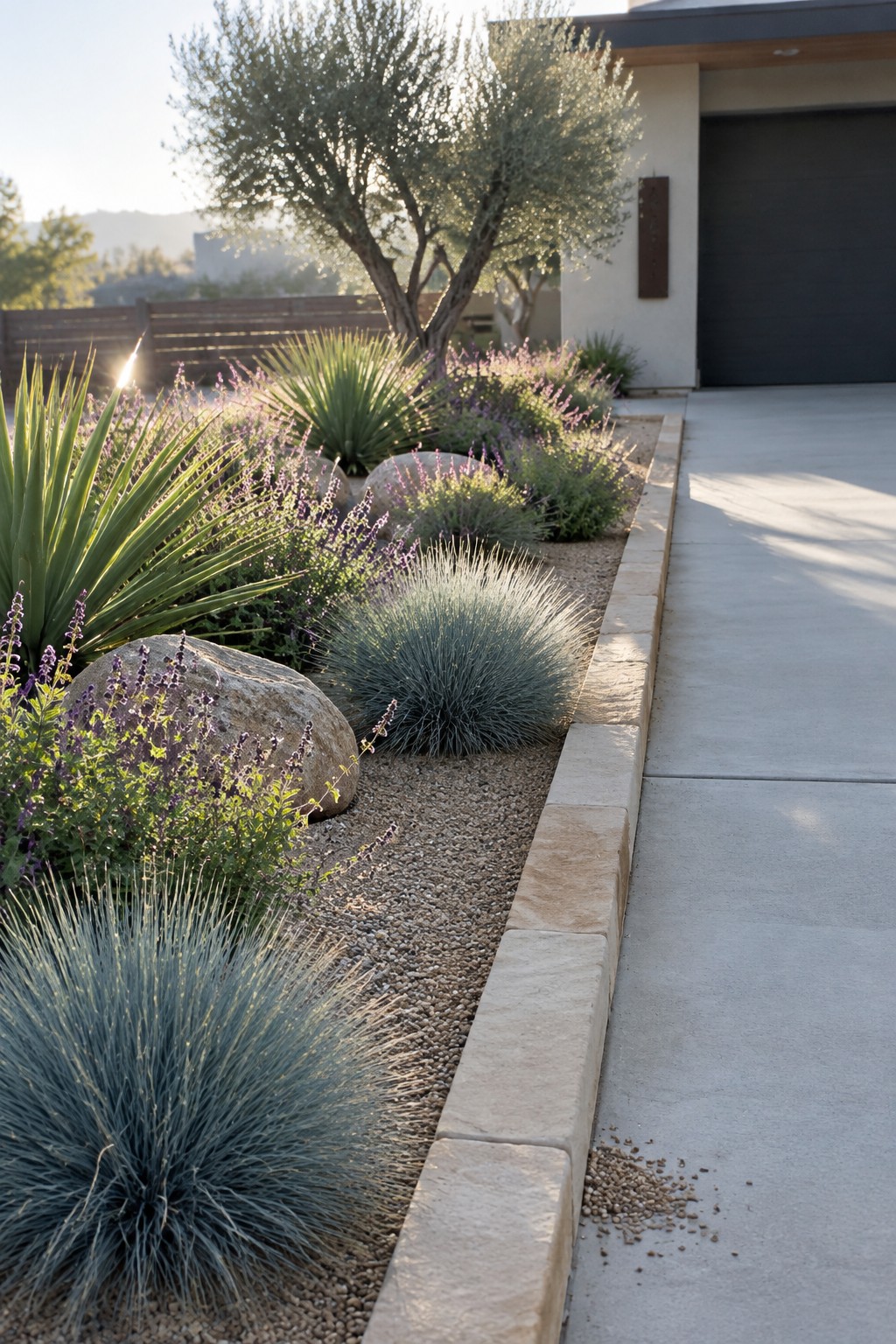
Gravel mulch is a simple way to keep soil cooler and hold what little moisture is there. It also gives the beds a finished look without needing constant weeding or extra irrigation.
This setup works well along driveways or front borders on homes that get full sun. Choose plants already adapted to dry conditions and keep the stone edging low so water can still reach the roots when it does rain.
Large Containers Simplify Low-Water Planting
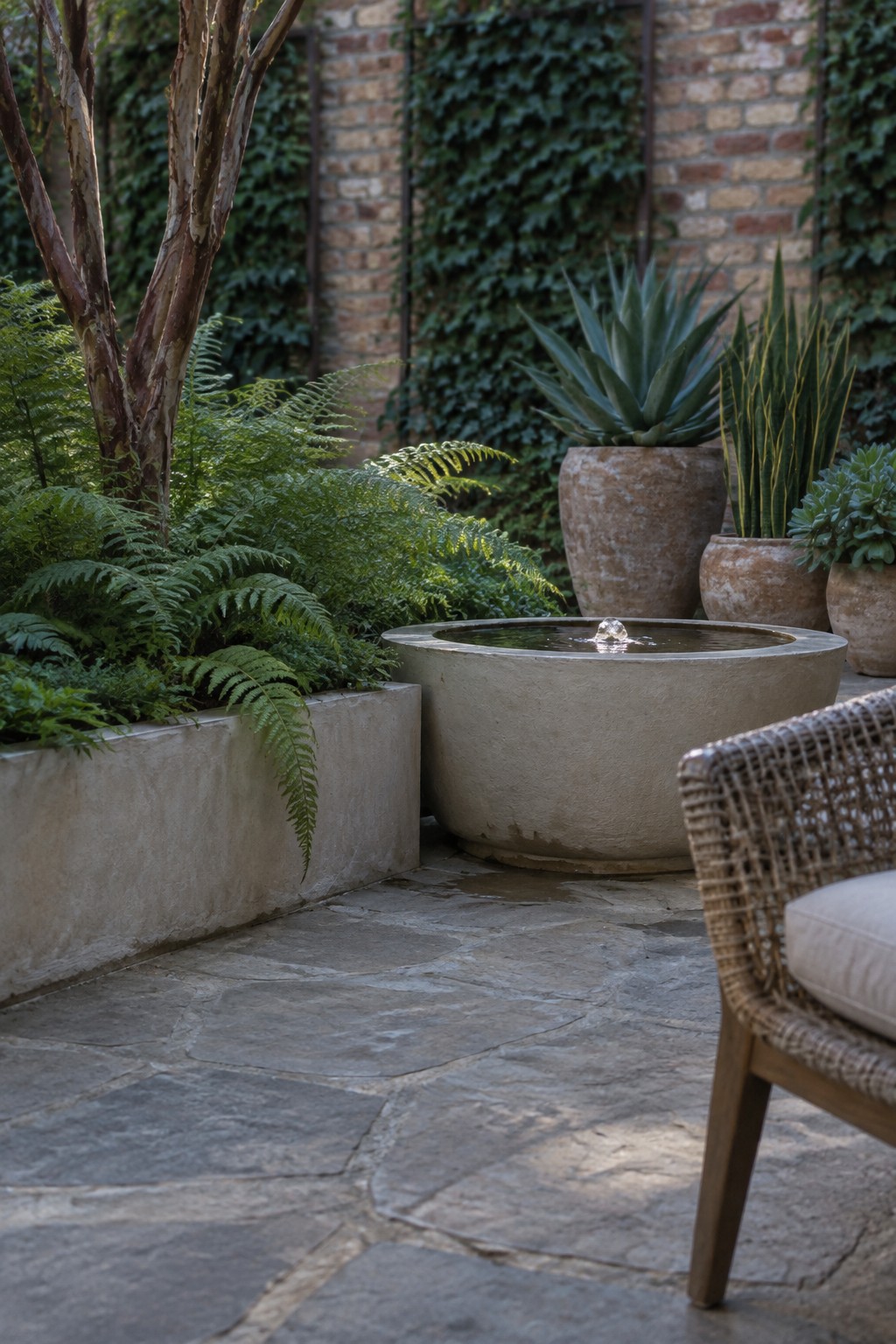
Planting in big containers lets you control water use more tightly than open beds. You can group just a few tough plants together and avoid spreading moisture across a whole yard.
This approach suits paved patios or small yards where digging new beds is not practical. Choose succulents and similar plants that handle dry spells, and set the pots where they catch the right amount of sun without extra irrigation.
Dry Creek Beds Add Structure With Little Water
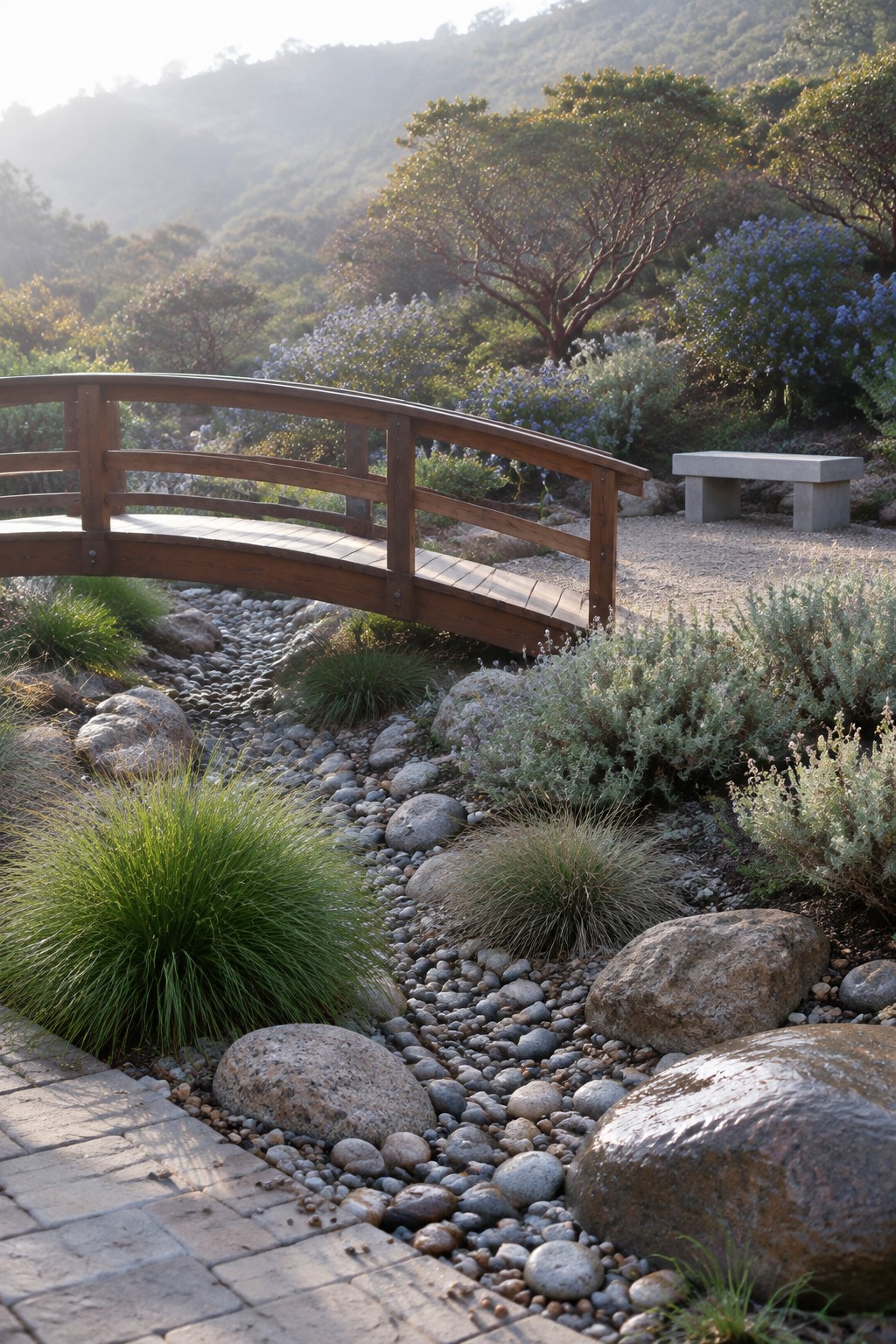
A dry creek bed gives a garden clear shape and direction while using almost no water once it is built. The rocks and gravel handle drainage naturally and keep the space looking finished even in the driest months.
This idea works best on sloped lots or in areas where runoff needs a place to go. Keep the bed simple, line it with local stone, and plant the edges with tough shrubs and grasses that stay green on rainfall alone.
Fill Paver Grids With Low-Water Plants
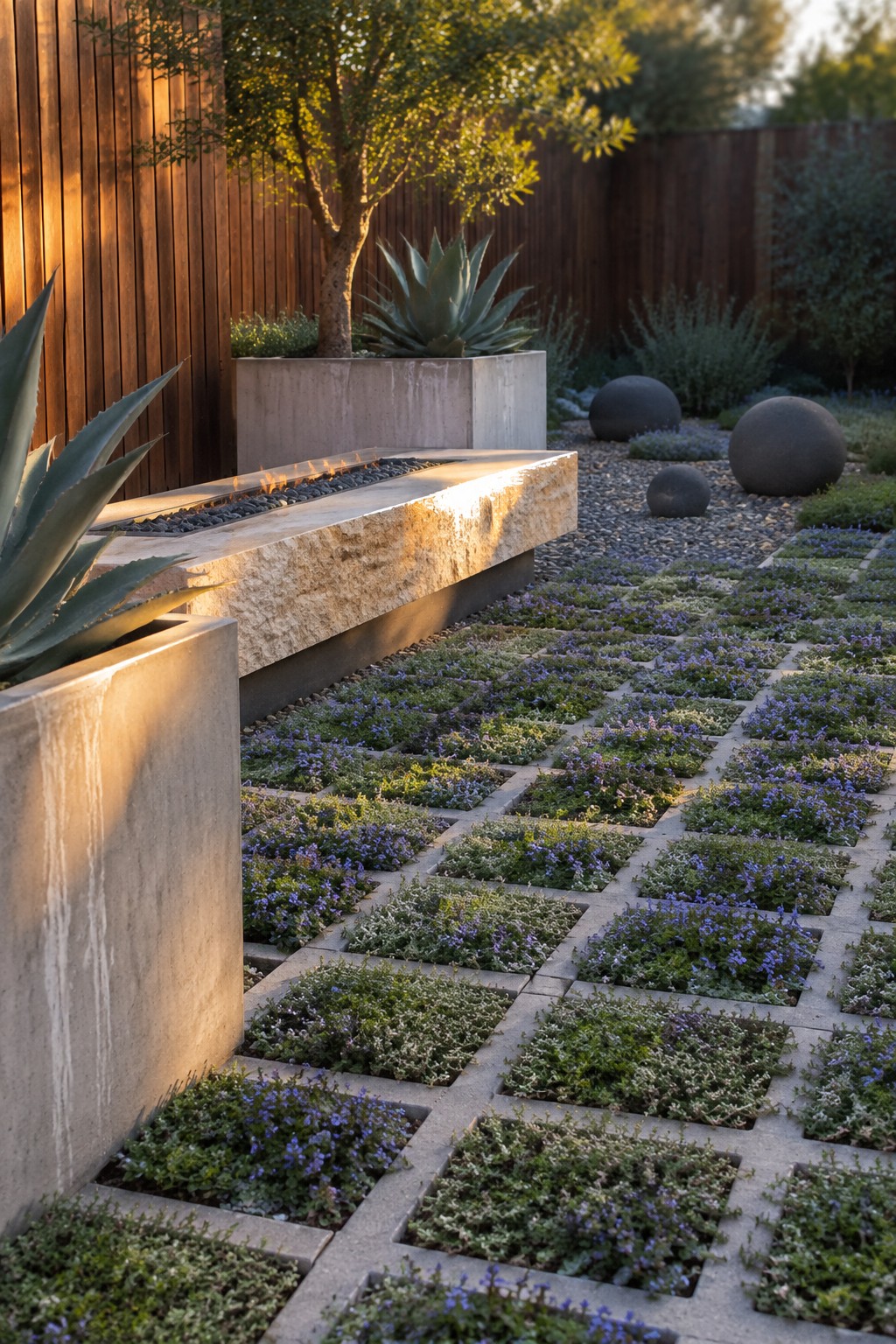
One simple way to cover ground without using much water is to set concrete pavers in a grid and fill the spaces with tough, spreading plants. This keeps the surface walkable while the plants do most of the work. It also reduces the need for large lawns or constant mulch.
The approach works best in sunny yards where drainage matters. Pick ground covers that stay low and need little care once established, and make sure the pavers sit level so the area stays practical for foot traffic.
Red Gravel Mulch For Dry Climate Gardens
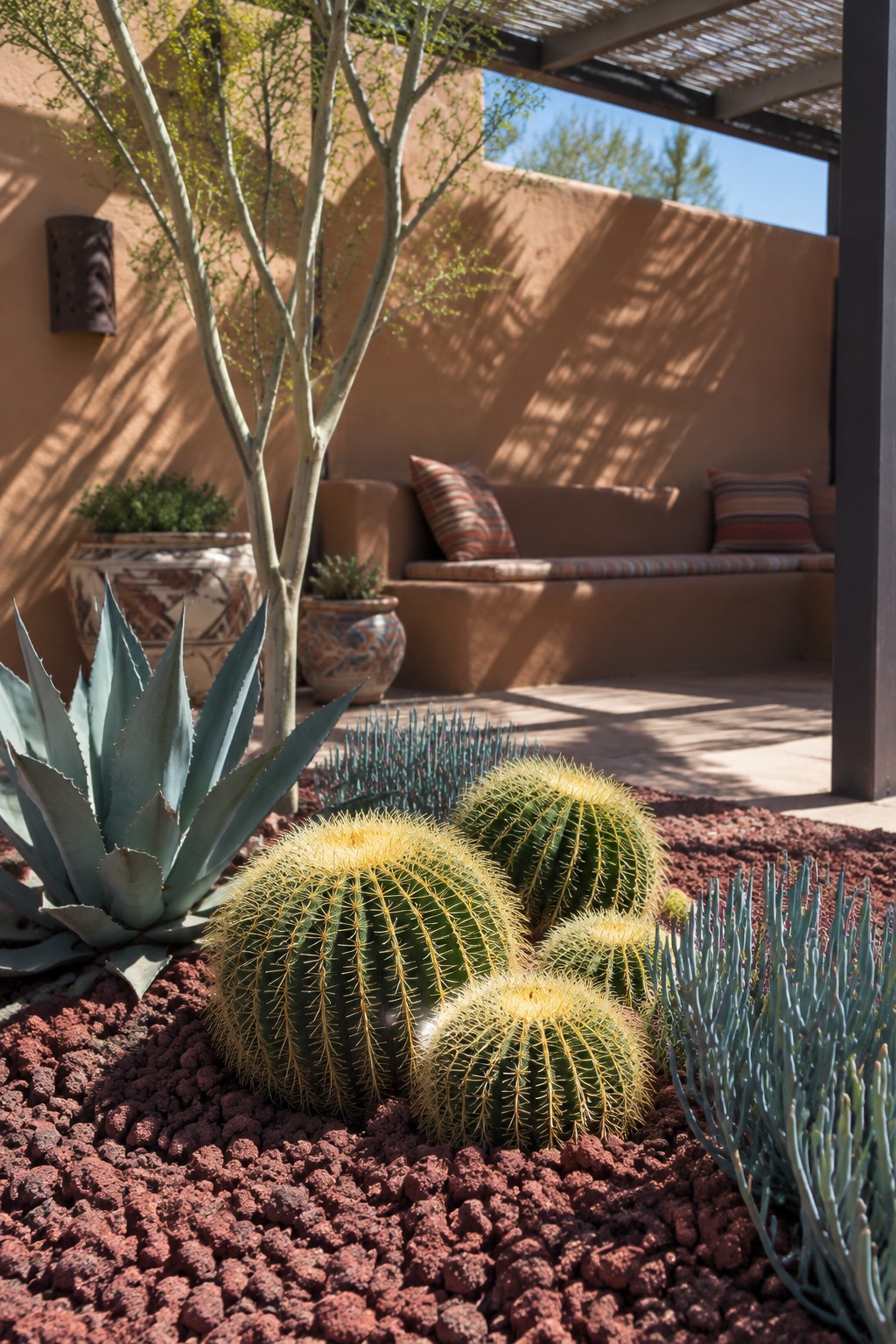
Red gravel mulch stands out because it handles heat and dryness without much fuss. It lets rain reach the roots while cutting down on evaporation, so the plants stay healthy even when water is limited.
This works best in full sun areas where you can group tough plants like barrel cacti and agave together. Spread the gravel about three inches deep and keep the bed slightly mounded so water does not pool.
Layer Grasses With Perennials Along Paths

Mixing tall ornamental grasses with shorter flowering perennials creates a border that stays interesting through the seasons while using little water. The grasses give height and soft movement, and the flowers add color without needing constant care or extra irrigation.
This approach works best in sunny spots with good drainage, like along a gravel path edged in stone. It suits homes in drier areas and keeps the garden looking full even when rainfall is low.
Succulents In Large Containers

Succulents planted in oversized containers give you a simple way to add structure and color without needing much water. They work especially well in front yards where you want some greenery that stays low maintenance through dry seasons.
Place a pair of them near the start of a path or by the entry to help guide the eye and soften hard edges. This idea fits homes with gravel or concrete paving since the containers keep the planting contained and easy to adjust over time. Make sure each one has good drainage holes so the roots stay healthy.
Gravel Mulch Around Trees
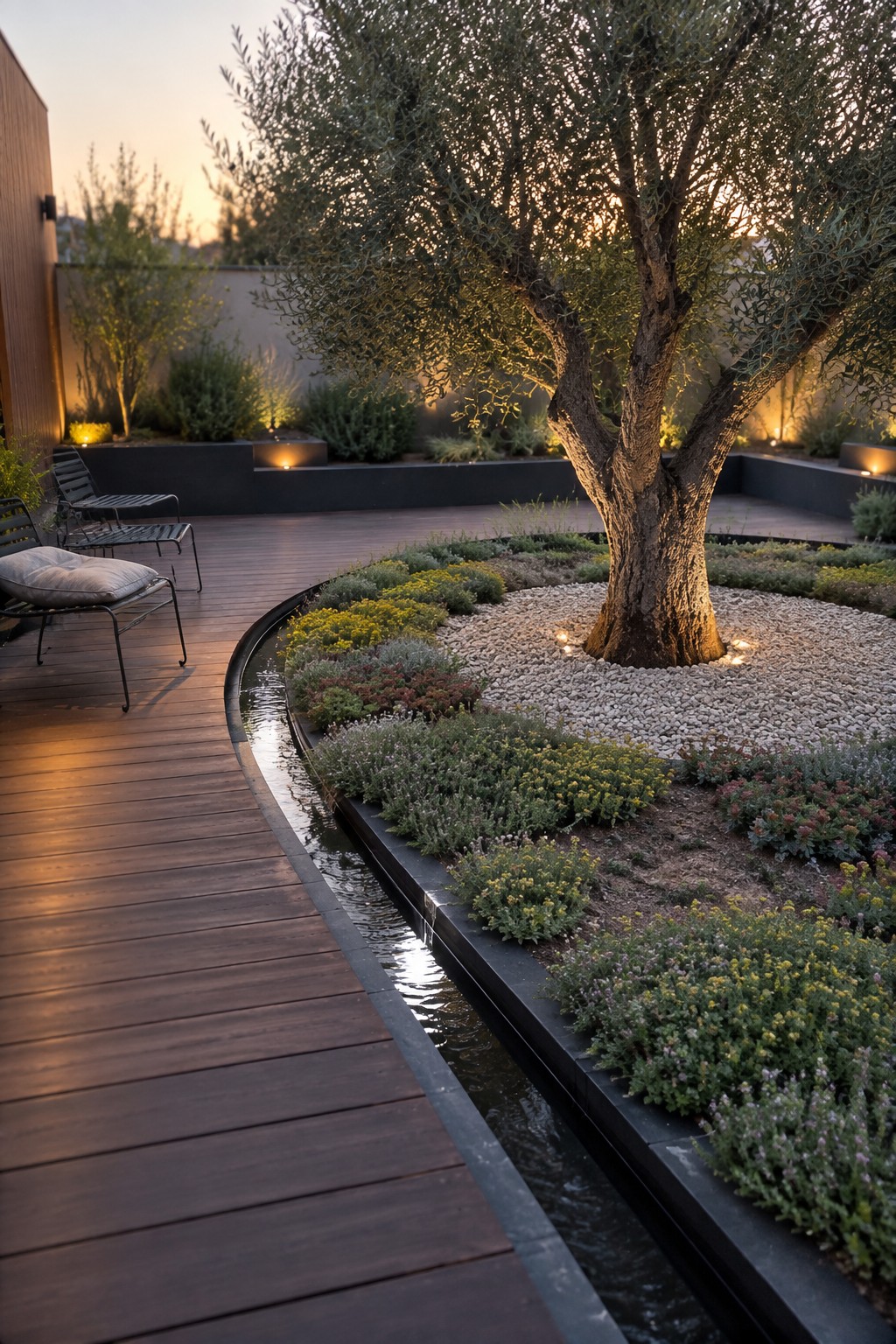
Gravel mulch works well around trees because it keeps soil from drying out too fast and cuts down on weeding. It also gives the bed a clean edge that stays in place even after heavy rain or wind.
This approach suits homes in dry regions where water use needs to stay low. Keep the gravel layer about two inches deep and choose plants that match the tree’s water needs so the whole bed stays healthy without extra irrigation.
Terrace Slopes With Stone Retaining Walls
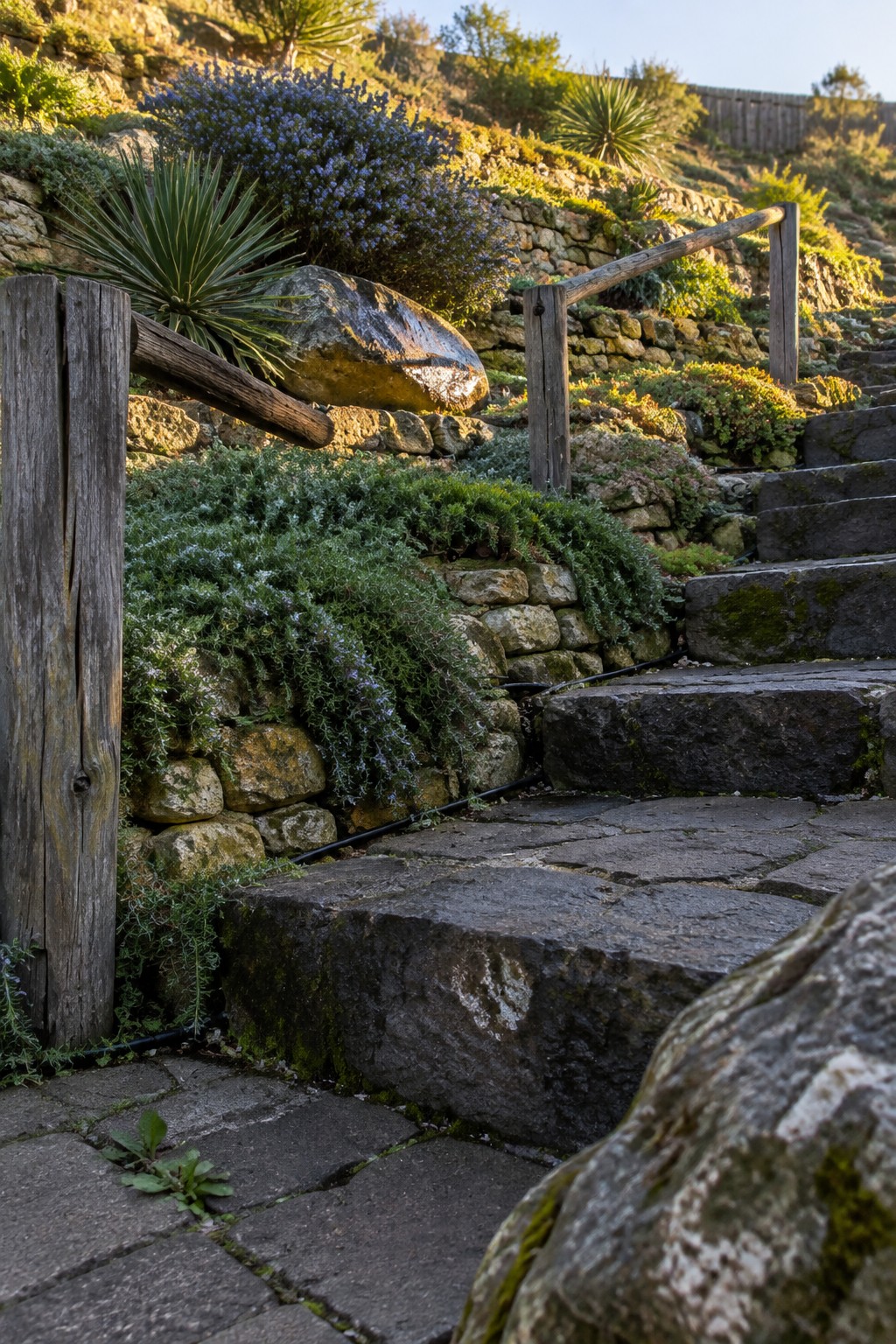
Stone retaining walls turn a steep hillside into usable planting space without needing much water. They hold the soil in place and create pockets where drought-tolerant plants can settle in and spread.
This setup suits homes on uneven lots that get little rain. Mix low-growing shrubs and ground covers along the walls so they fill gaps naturally, and the garden stays green with only occasional deep watering once the plants are established.
Use Large Pots For Succulents

Large concrete pots let you add bold succulents right next to the pool without worrying about extra irrigation. They keep the plants contained, which helps control water use and makes the whole bed feel more organized. The gravel and stepping stones around them also cut down on weeding and runoff.
This setup works well in dry climates or any yard where you want to limit watering. Place the pots where they get full sun, and choose agave or aloe varieties that need almost no extra care once established. The mix of textures from the pots and the surrounding grasses gives the area interest without high maintenance.
Raised Planters With Gravel For Low Water Yards
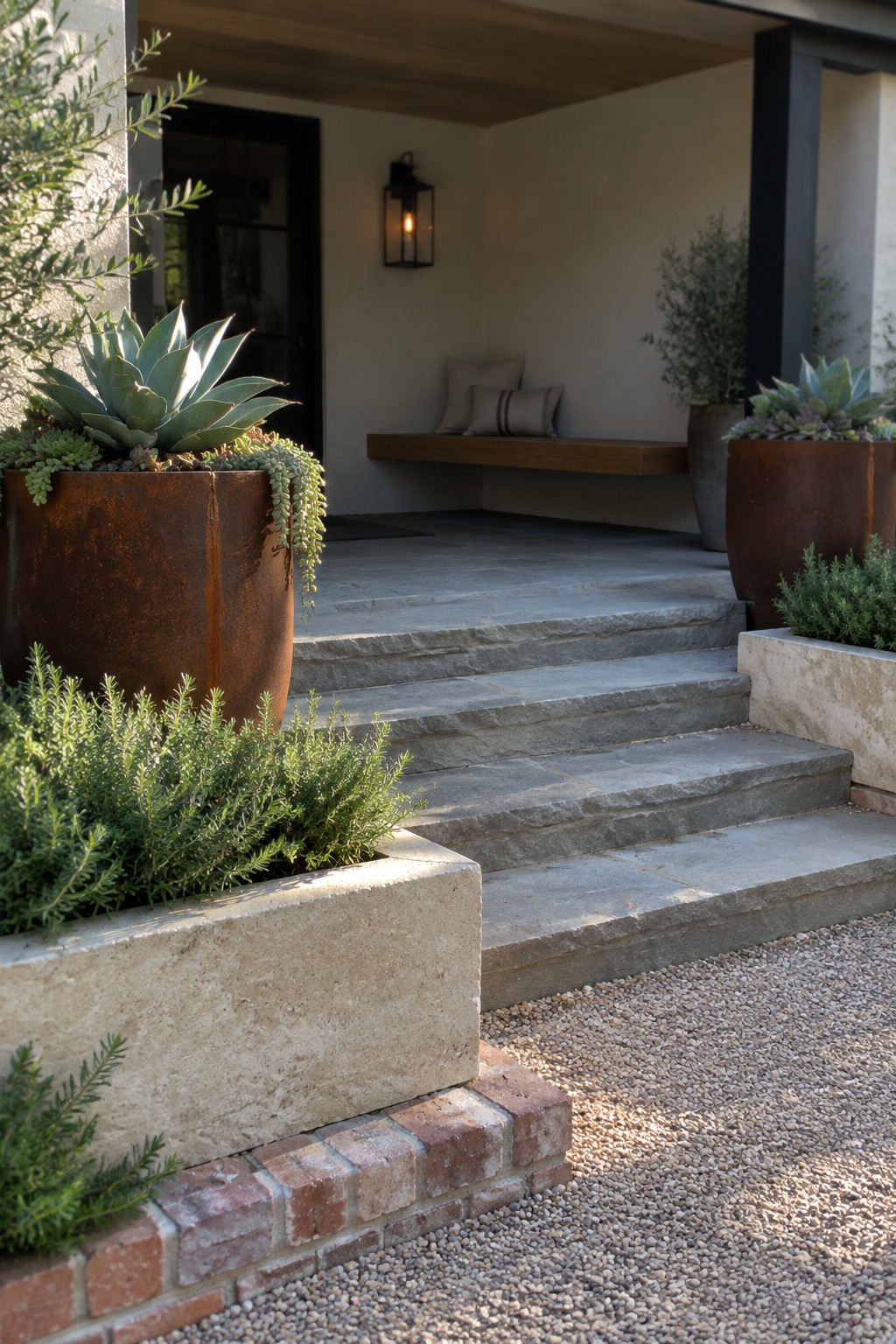
Raised concrete planters give you a simple way to group drought tolerant plants without worrying about poor soil or too much runoff. They work well with succulents and low shrubs because the extra height improves drainage and lets you use a leaner mix that holds less moisture.
Place them along paths or near steps where a regular bed would be hard to keep. Gravel around the base cuts down on weeds and helps the whole area stay drier between rains.
Raised Planters Filled with Succulents
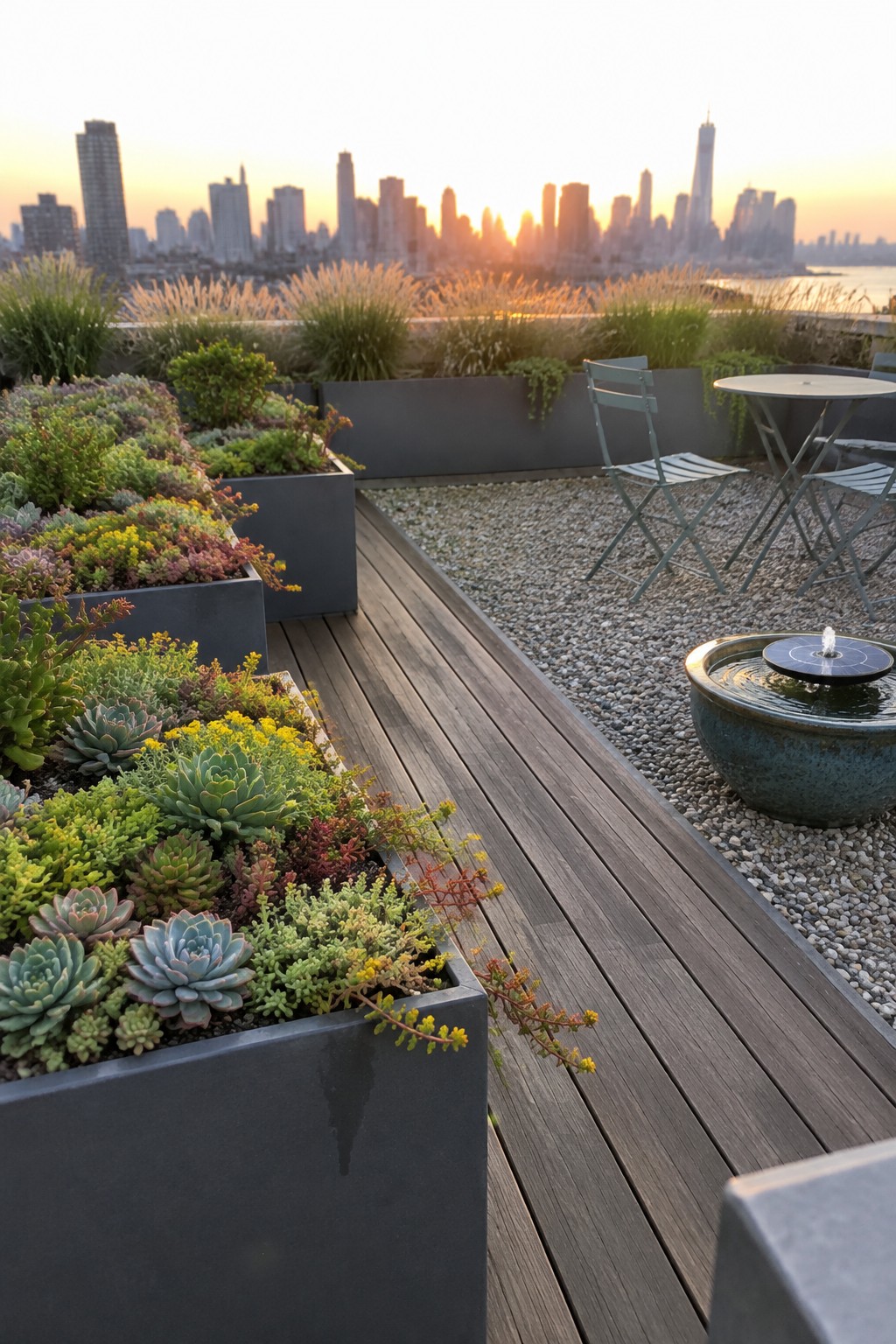
Succulents do well in large raised planters because they store water in their leaves and roots. This setup cuts down on watering needs and still gives plenty of color and shape along a deck or hard surface.
It works best on rooftops or patios where digging into the ground is not an option. Choose planters with drainage holes and group plants that like the same amount of sun and water so nothing gets stressed.
Gravel Paths For Drought Gardens
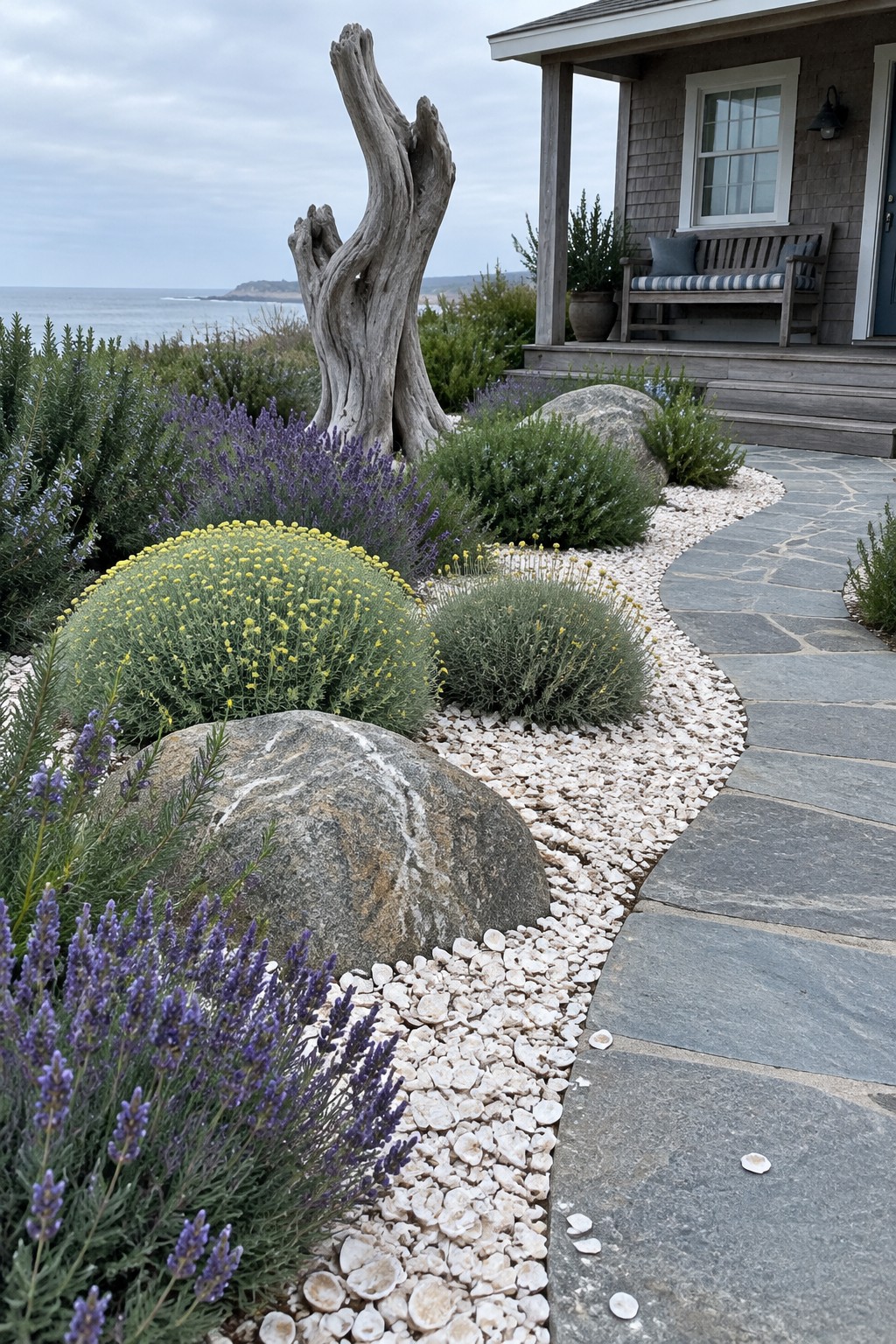
Gravel paths help cut water use by replacing lawn or thirsty ground cover with a surface that stays put and drains well. They also give the garden a clear shape that holds up in dry seasons without constant upkeep.
This works best on homes with sandy soil or coastal exposure. Keep the beds narrow, add a few large rocks for weight, and fill in with hardy plants that need little extra water once established.
Concrete Edges Define Low Water Planting Beds
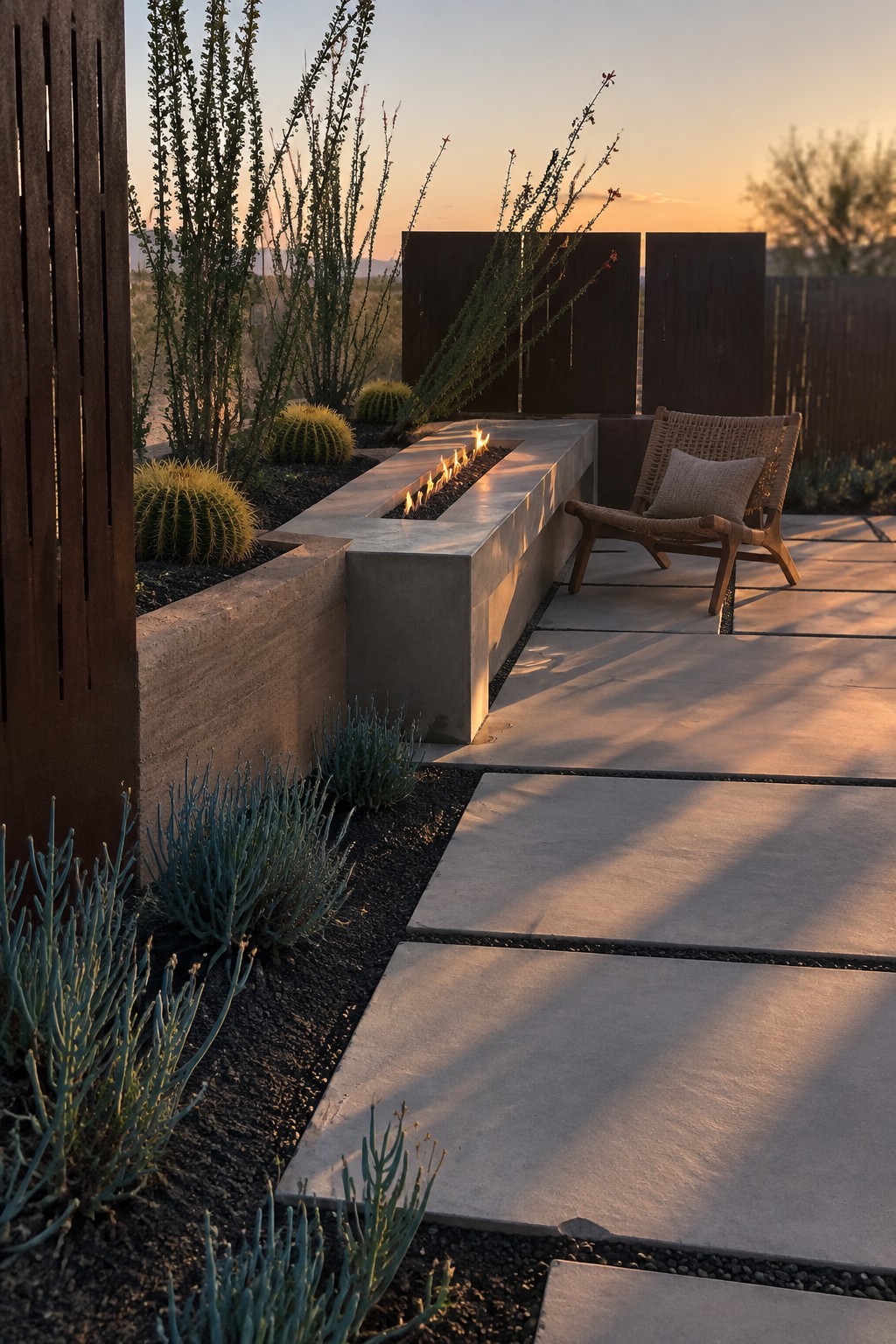
Concrete edges give planting beds a firm shape that holds up over time without much work. They also help keep soil and mulch from spilling onto paths, which matters when you are trying to cut back on water use and maintenance.
This approach fits dry climates and homes with a simple modern style. Place the beds along paved areas, fill them with succulents and other tough plants, and add gravel between the plants to hold moisture in the ground.
Gravel Beds Pair Well With Drought Tolerant Plants

Gravel mulch stands out because it keeps soil from drying out too fast while still letting water reach the roots. It also stops weeds without needing much upkeep, which matters when you want to keep a garden looking neat during long dry spells.
This approach works best along house walls or in narrow side yards where grass would struggle. Stick with plants that handle heat and poor soil, and keep the gravel layer a few inches deep so it stays in place.
Stepping Stones Through Gravel
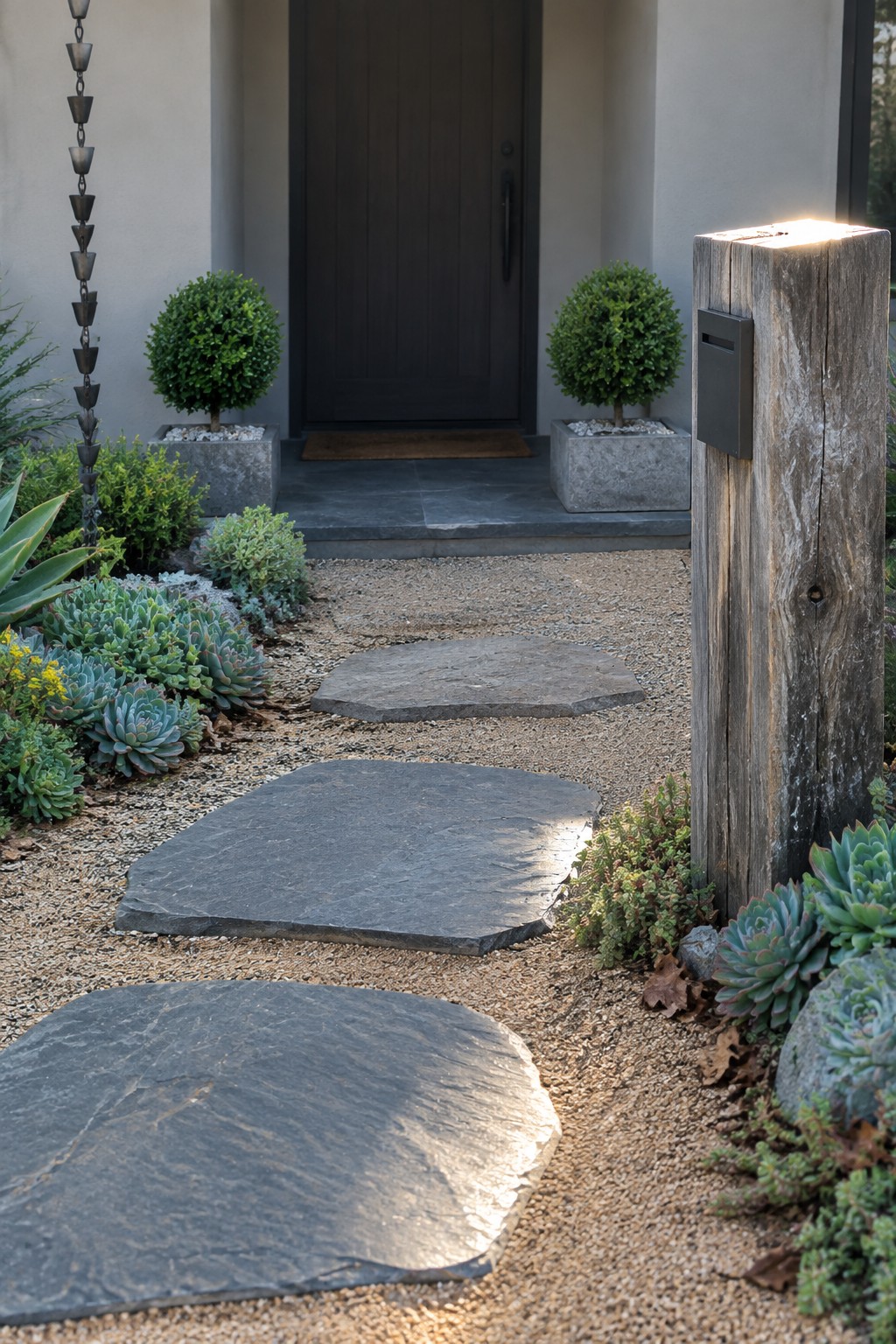
A gravel path with stepping stones keeps things simple and uses almost no water once the plants settle in. The stones create a clear walkway while the gravel handles drainage and suppresses weeds without needing much upkeep.
This layout suits front entries or side yards on homes that get full sun. Pick stones big enough to feel steady and pair them with succulents and low shrubs that stay green with little extra watering.
Frequently Asked Questions
Q: What is the easiest way to cut back on water without ripping out everything?
A: Pick a few spots and swap in some of the tougher plants from the list. Mulch around them thick to hold moisture in the soil. Then let the grass die back naturally in between.
Q: How do I get started if my yard is mostly grass right now?
A: Start small by planting a cluster of low-water choices right in the middle of a sunny patch. Water them well for the first few weeks so roots take hold. The grass around them will need less attention over time.
Q: Will these plantings still need much trimming or mowing?
A: Most stay neat with just a quick shape once a year or so. You might pull a stray weed here and there but that is about it.
