

I often notice that yards start to feel scattered when there is no clear ground layer to tie the different sections together.
Gravel works well for marking paths and beds because it settles quickly and reduces the need for constant weeding or watering.
The plants fill in around it gradually.
I keep coming back to the idea that starting with the ground cover first makes the whole space look more settled without adding a lot of extra features.
That step by step approach has helped my own yard gain some order even when I work on one corner at a time.
Replace A Patchy Lawn With Gravel And Drought-Tolerant Plants

The front yard changed from a tired stretch of grass into a gravel-covered area with defined planting zones. A simple stone path replaced the straight concrete walkway, and the plants now carry the look instead of the lawn.
This idea suits homes in dry regions or anyone tired of constant mowing and watering. Clear the grass first, add a solid base under the gravel, and stick with a few types of tough plants so the space stays easy to care for over time.
Use Gravel And Drought-Tolerant Plants To Define A Side Yard Path

A narrow side yard often gets ignored until the weeds take over and the path turns into cracked concrete. Clearing that overgrowth and laying gravel with stepping stones gives the space a clear purpose without crowding it. The drought-tolerant plants add shape and color while keeping maintenance low.
This approach works best in tight areas between the house and fence where regular mowing is awkward. Start with a solid cleanup, then choose compact plants that handle dry conditions so the gravel stays the main surface. It keeps the walkway practical and stops the yard from feeling like an afterthought.
Use Gravel To Turn A Plain Patio Into A Seating Area

A bare concrete slab often feels cold and unused, especially in a small yard. Replacing most of that hard surface with gravel creates a softer base that feels more inviting and helps define where people should sit. Adding a fire pit in the center and a few chairs around it turns the space into a place meant for evenings outside.
This approach works best in dry regions where you want to cut down on watering. Keep the gravel layer thick enough to stay in place and choose furniture that can handle weather. A few large pots with drought-tolerant plants along the edge add life without needing much care.
Add Gravel Beds To Bring Order To A Sloped Yard

The main improvement here comes from replacing the messy overgrowth with gravel that creates clear, contained planting areas. The slope now looks planned instead of neglected because the gravel gives the beds a firm edge and keeps the plants from looking scattered.
This idea works especially well on hillsides or any spot where grass struggles to take hold. Clear the weeds first, add simple wood borders, then spread gravel and plant a mix of drought-tolerant shrubs and grasses. The gravel cuts down on weeding and watering while still giving the area a finished look.
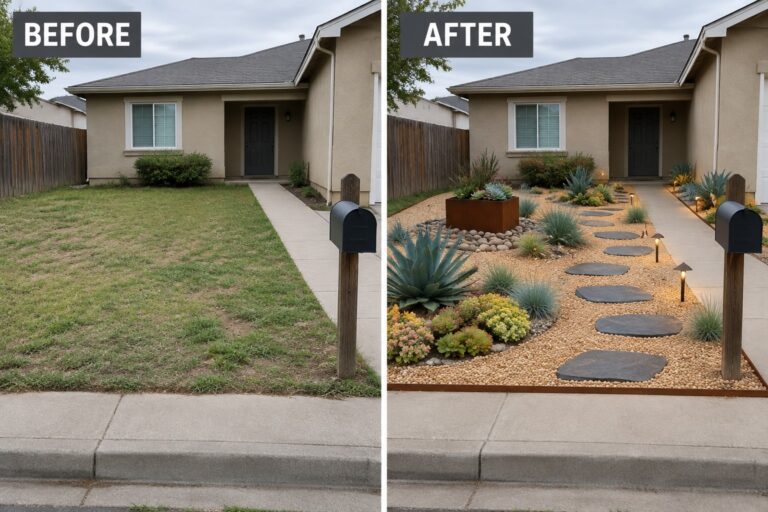
Define A Front Path With Gravel Beds And Drought-Tolerant Plants

One simple way to give a front yard more shape is to swap the grass right next to the walkway for gravel beds filled with tough, low-water plants. The before photo shows a wide, messy lawn that runs straight up to the concrete path with no clear edge. After the change the path sits between neat gravel sections that hold agaves, succulents, small cacti, and a few large rocks.
This idea works best on sunny lots where grass is hard to keep green. Lay down a clear border first, add landscape fabric, then spread gravel and plant things that stay compact and need little water. The result keeps the walkway usable while cutting down on mowing and watering.
Use Gravel To Define A Fire Pit Seating Area
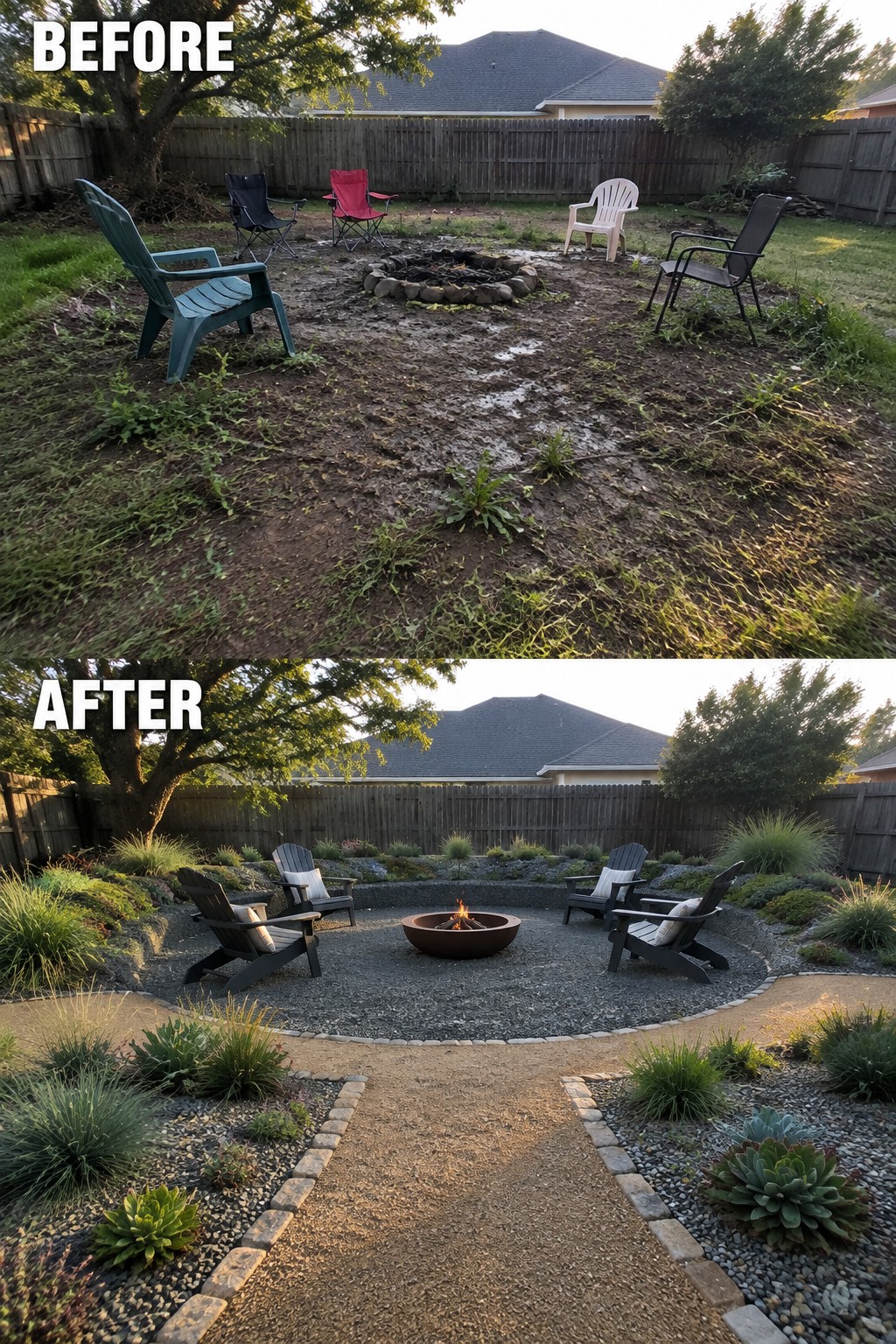
A bare patch of dirt around a fire pit often stays unused because it has no clear edges or comfortable space to sit. Adding a gravel circle gives the area shape and makes it feel like a real destination instead of just open ground. The planting beds around the gravel then keep everything looking neat without needing constant mowing or watering.
This approach works well in any backyard that already has a fire pit but lacks structure. Start by clearing weeds and leveling the center, then lay gravel for the main seating zone. Choose drought-tolerant plants for the borders so the beds stay full with little upkeep. The result is a low-maintenance spot that actually gets used.
Add Structure To An Overgrown Yard With Gravel
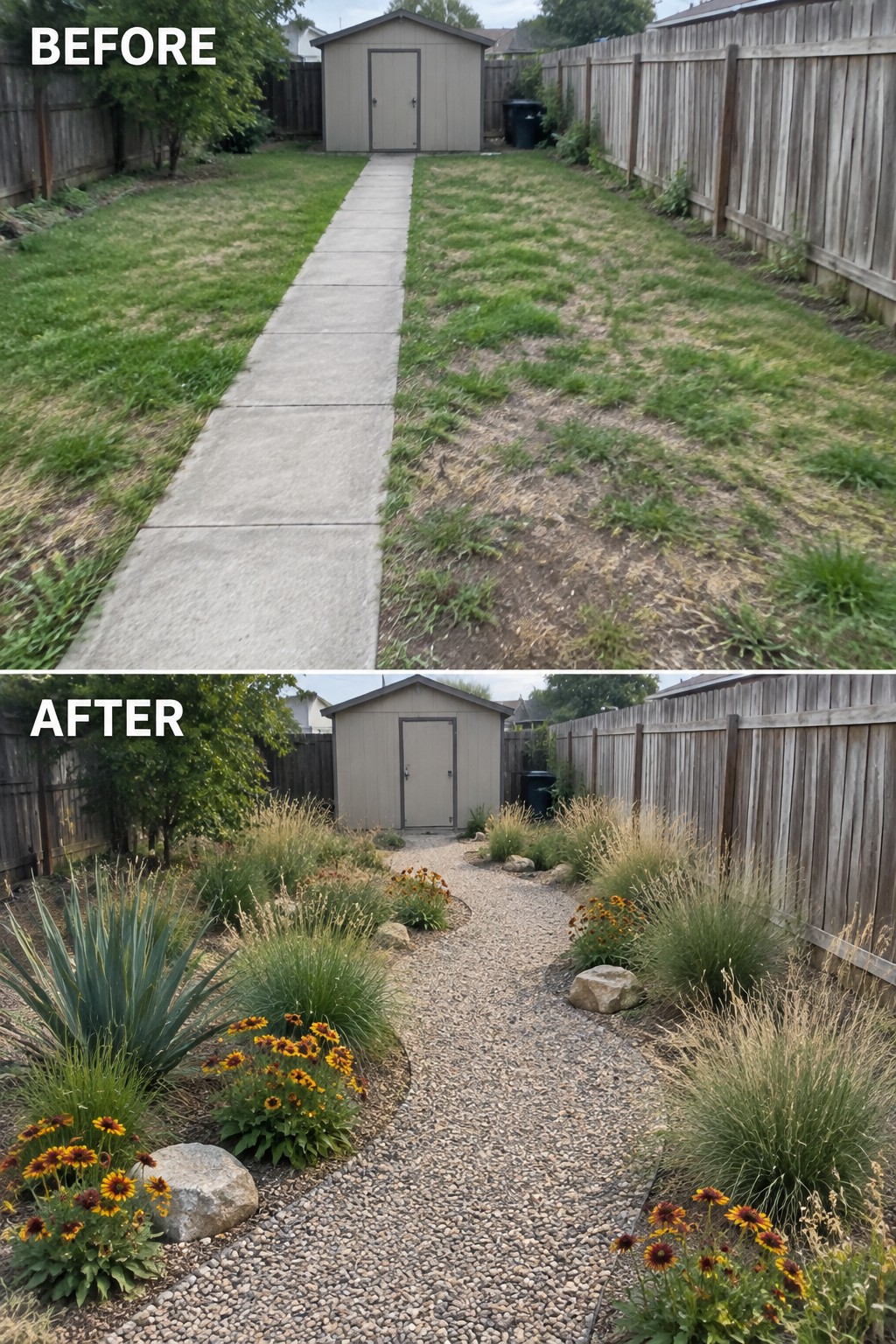
A concrete path next to patchy grass and bare dirt feels unfinished and hard to care for. Switching the open area to gravel creates a clear walkway while giving the sides room for planted borders. The result looks planned instead of neglected.
This idea works best in sunny yards where grass is hard to keep green. Lay down fabric first, then spread gravel for the path and group drought-tolerant plants like grasses and flowering perennials along the edges. It cuts down on mowing and watering while still giving the space shape.
Define A Walkway With Gravel Beds And Tough Plants

A plain concrete path often looks unfinished when grass runs right up to the edges. Replacing those strips with gravel beds and drought-tolerant plants like lavender and succulents gives the walkway clear borders and cuts down on mowing and watering. The change turns a basic route into something that feels more planned without adding a lot of work.
This idea works best along front paths or side yards where you want low maintenance and a tidy look. Use a solid weed barrier under the gravel, keep the beds narrow enough to reach easily, and repeat the same few plants so the whole stretch feels consistent. It suits homes in drier climates or anyone trying to reduce lawn care.
Edge A Driveway With Gravel And Drought-Tolerant Plants

A narrow strip of grass or weeds next to a driveway often looks messy and takes extra work to keep tidy. Replacing it with gravel and a few tough plants turns the same space into a clean border that needs almost no mowing or watering. The change gives the whole front a more finished look while keeping the driveway itself untouched.
This idea works best along straight driveway edges or sidewalk strips in sunny front yards. Use a simple metal or concrete edging to hold the gravel in place, then pick low-water plants like lavender or small shrubs that can handle dry conditions. It keeps the area looking neat even in hot months and reduces the amount of lawn you have to care for.
Use Gravel To Give Raised Beds A Tidy Finish

One of the easiest ways to fix tired raised beds is to replace the old plants with drought-tolerant succulents and spread gravel across the surrounding ground. The before photo shows beds that had become overgrown and messy, with flowers spilling out and dirt scattered on the concrete. After the update the same beds look neat and contained, with clean lines of gravel keeping everything in place.
This idea suits small yards or patios where you want lower water use and less daily upkeep. Clear out the old growth first, choose succulents that match your sun exposure, then add gravel to cover bare soil and define the beds. The result stays looking intentional even when you do not have time to fuss with it every week.
Add Gravel Beds And Drought-Tolerant Plants To Define The Yard

The front yard went from a basic lawn with a straight path to something much more structured. Replacing large sections of grass with gravel created clear planting zones, and adding rocks plus flowering shrubs gave the space shape and interest without needing constant upkeep.
This approach works well on flat yards where the lawn feels too open or hard to maintain. Start by marking out beds along the walkway, lay down gravel to keep weeds down, and choose a few low-water plants that bloom at different times. It keeps the yard looking neat while cutting back on mowing and watering.
Use Gravel To Refresh A Small Front Entry

The front of this house went from patchy dirt and scattered pots to a much cleaner look by laying down gravel across the whole area. Two large matching pots now sit on either side of the steps, and low plants fill in the edges without taking over.
This approach works well for narrow entry spaces or homes that want less lawn to water. Start by clearing the old growth, lay landscape fabric if weeds are an issue, then spread gravel in a consistent layer. Keep the pots simple and repeat the same plant shapes so the space stays easy to maintain.
Replace Cracked Concrete With Gravel By The Pool

The old concrete deck had cracked badly and looked tired next to the water. Switching the surface to gravel gave the whole pool area a softer, cleaner feel while hiding the damage and improving drainage.
This idea works best in sunny yards where you want less concrete and lower upkeep. Remove or cover the damaged slab first, then lay down a solid base before adding the gravel. Keep the planting simple with a few large concrete planters and drought-tolerant plants so the space stays easy to maintain without constant watering or repairs.
Clean Up A Messy Fence Line With Gravel And Drought-Tolerant Plants

A weedy strip along a fence often makes the rest of the yard look worse than it is. Clearing the overgrowth and putting in a gravel bed with a row of sturdy plants gives the border a clear shape and cuts down on the constant trimming and weeding.
This idea works best along side yards or back fences where you want low maintenance but still need some color and structure. Clear the area first, add a simple gravel layer, and pick plants that handle dry spells without much fuss. The result stays neat even when the lawn around it goes dormant.
Use Gravel To Refresh A Plain Concrete Yard
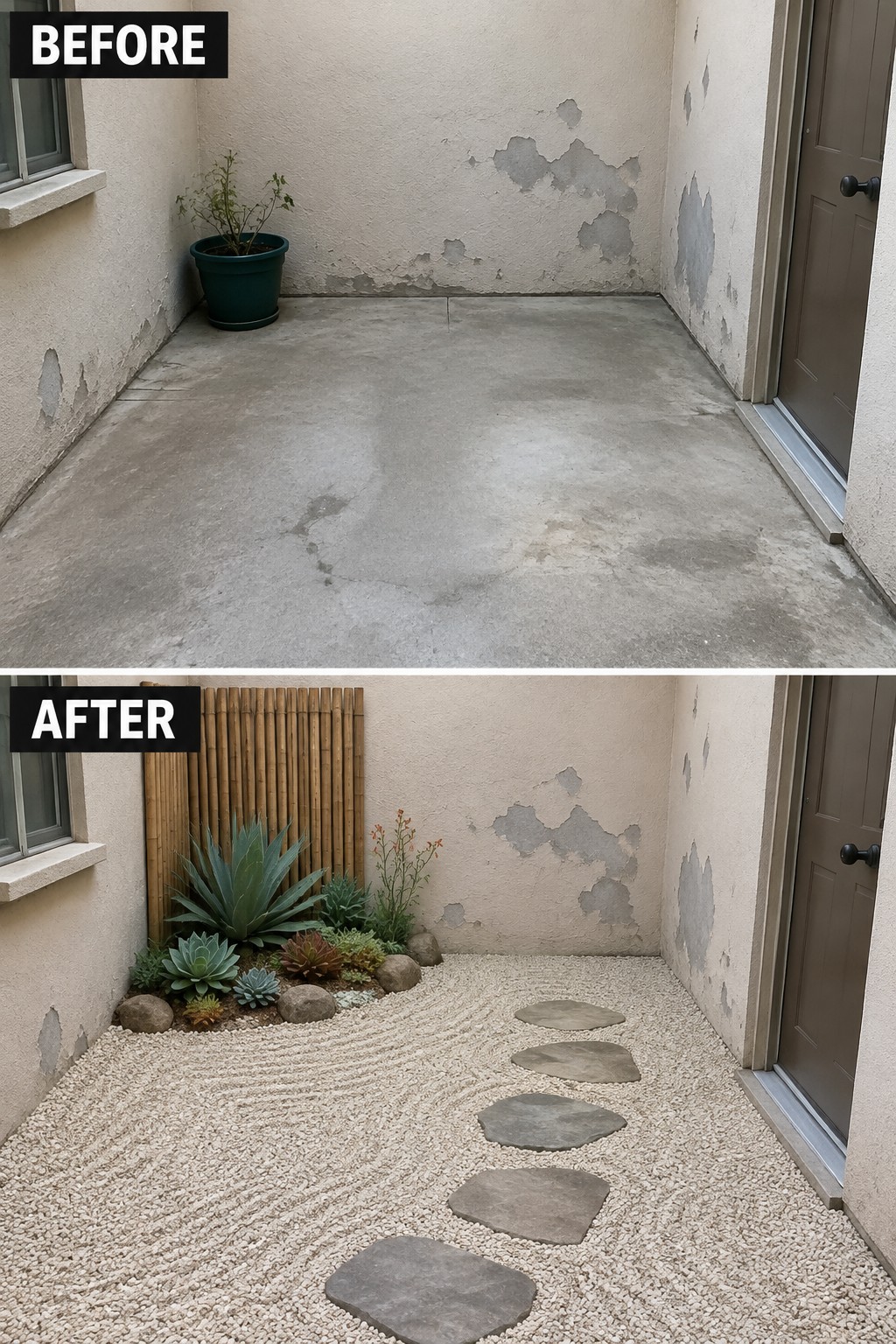
A bare concrete slab can feel like wasted space, especially when the walls already look tired. Laying down gravel and adding a few stepping stones gives the area texture and a clear path, while a small planted bed with succulents and a simple screen softens the corner without much effort.
This approach suits small side yards or entry areas where you want low maintenance and less watering. Clean the concrete first, add landscape fabric, then spread the gravel so the surface stays neat and weeds stay down. It works best in dry climates where a full lawn would be hard to keep up.
Use Gravel And Drought-Tolerant Plants To Refresh A Front Bed

An overgrown flower bed can make the front of a house feel messy even when the house itself is in good shape. Here the old mix of flowers and weeds was cleared out and replaced with a few large agaves set in gravel inside a clean metal border. The change gives the bed a simple shape that stays neat without constant weeding or watering.
This idea works best in sunny spots where you want low maintenance and clear lines. Remove the old plants first, fix or replace any broken edging, then plant a few bold succulents and fill around them with gravel. The result looks planned and holds up through dry months with very little work.
Turn A Cluttered Balcony Into A Gravel Seating Area

A balcony often becomes a catch-all for old pots and leftover turf. Replacing the patchy surface with gravel and grouping plants into fewer, larger containers creates a level spot where a small table and chairs can actually be used. The change makes the space feel open instead of crowded.
This idea works best on rooftops and upper terraces where weight and drainage are concerns. Clear the floor first, add a few inches of gravel for stability, and stick to hardy plants in matching pots so the area stays simple to maintain. Keep the furniture compact so there is still room to walk around.
Terrace A Steep Slope With Retaining Walls

A bare, weedy hillside is difficult to mow and tends to erode over time. Building low stone retaining walls breaks the slope into flat terraces that hold soil in place. Gravel then covers the paths and bed areas, giving the yard a finished look while cutting down on water use.
This idea suits homes built on a grade where the backyard drops away from the house. Focus first on the walls so the planting beds stay level, then fill in with gravel and a few drought-tolerant shrubs or ground covers. Keep the number of plant varieties small so the gravel remains the main surface rather than getting lost under too much growth.
Frequently Asked Questions
Q: How do I keep weeds from taking over the gravel areas? A: Spread landscape fabric first and cover it with at least three inches of gravel. Pull any sprouts that sneak through the edges right away before they root deep. This keeps the surface clean without constant spraying.
Q: What if my yard has spots that stay damp after rain? A: Pick plants like lavender or Russian sage that still like good drainage even in occasional wet spots. Slope the gravel slightly so water runs off instead of pooling. Check those low areas after the first storm and add extra rock if needed.
Q: Can I mix gravel right up against my house foundation? A: Leave a six inch gap and use a metal edging strip to hold the gravel back. This stops moisture from creeping toward the walls while still giving you that clean look around the beds.
