

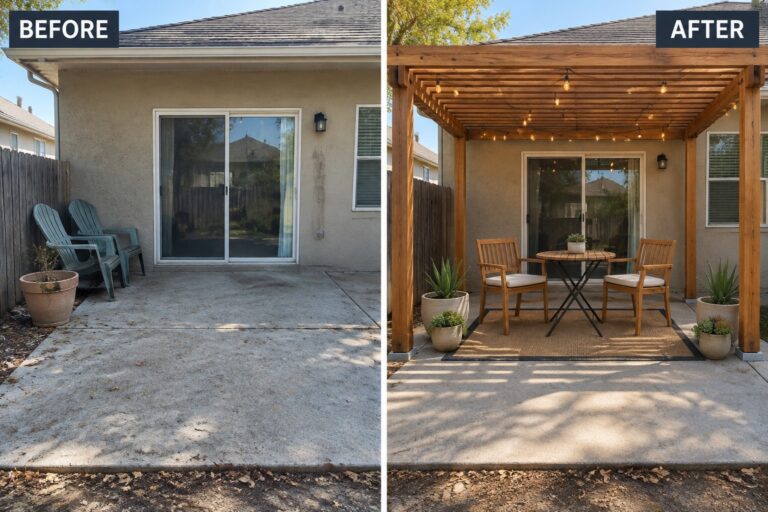
I have noticed that backyards often stay empty because there is no comfortable spot to sit once the sun hits hard in the afternoon.
Adding a pergola or similar shade structure gives the space a clear purpose so people actually want to spend time out there instead of heading back inside.
It makes the difference between a bare patch of grass and a spot that feels ready for daily use.
In my yard I would focus first on how the structure lines up with existing seating rather than trying to add too many extras at once.
Seeing what others have tried helps me sort out which details might hold up once the weather changes.
Add A Pergola To Turn An Empty Patio Into A Real Outdoor Room
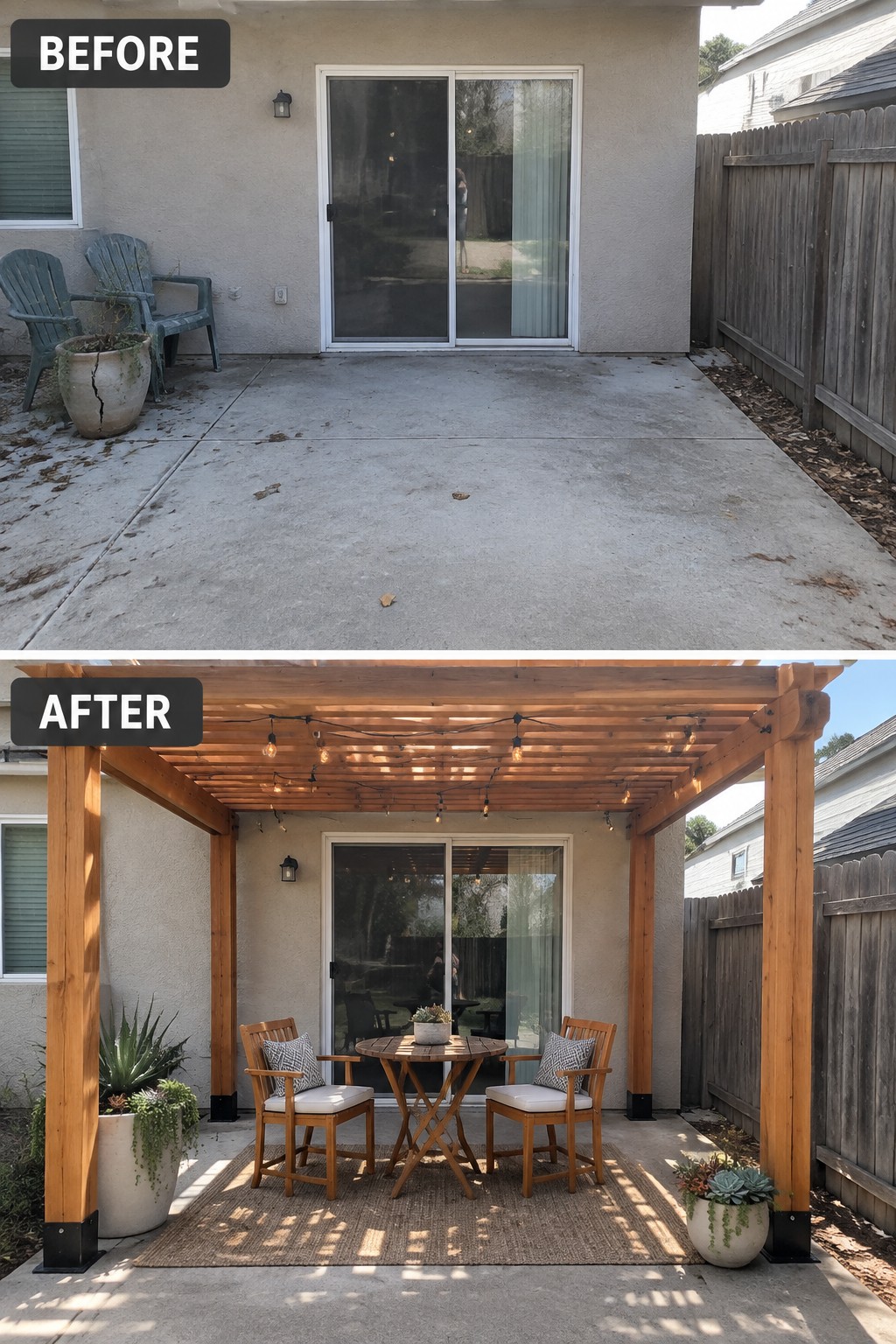
A bare concrete slab usually stays unused because there is no shade and no clear spot to settle in. Putting up a pergola over the main seating area adds overhead structure and creates a defined outdoor room without making the space feel closed off.
This works well on patios that sit right off the house but get too much sun or feel too open. Start with the pergola itself, then keep the furniture modest and add one rug underneath so the zone stays practical and easy to maintain.
Add A Pergola To Create A Defined Outdoor Living Area

An overgrown backyard often stays unused because it lacks any clear structure or level surface. Adding a pergola with a raised deck underneath turns the space into a proper outdoor room that can hold a dining table and stay comfortable after dark once string lights are added along the beams.
This idea works best in backyards that already have decent access from the house but need one strong feature to feel intentional. Keep the pergola size realistic for your lot, use weatherproof materials, and leave open space around the table so people can move easily.
Add A Pergola To Give Your Patio Better Shade
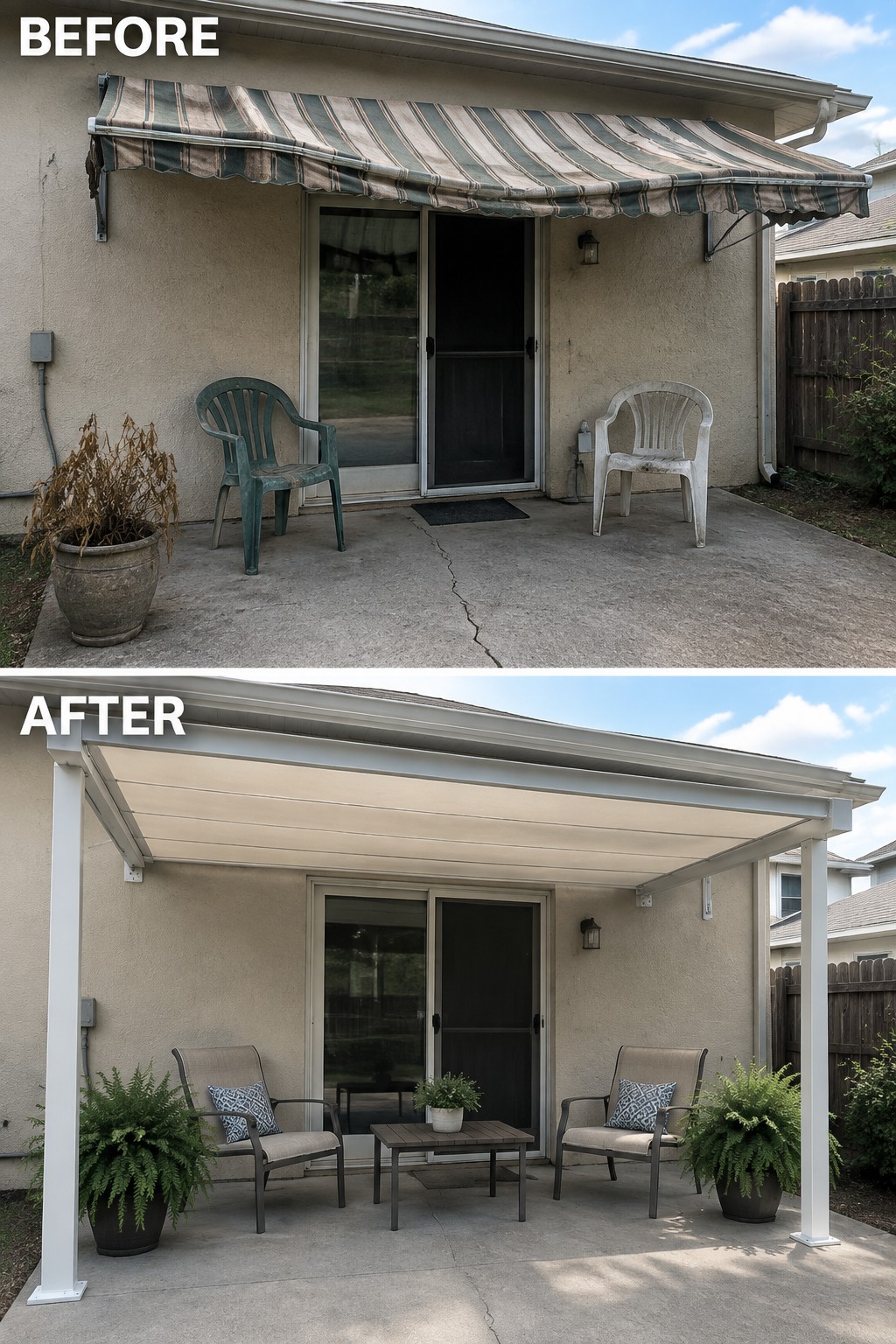
Swapping a basic striped awning for a white pergola structure turns a plain concrete slab into a defined outdoor seating area. The new frame adds height and permanence while the flat shade panels block sun more evenly than the old fabric.
This approach suits homes with existing patios that need shade without a full roof. Measure your space first so the posts clear doors and walkways, then pick a fabric or panel that holds up in your weather. Keep the seating simple and moveable so the area stays practical for daily use.
Add A Shade Sail To Turn A Bare Patio Into A Seating Area
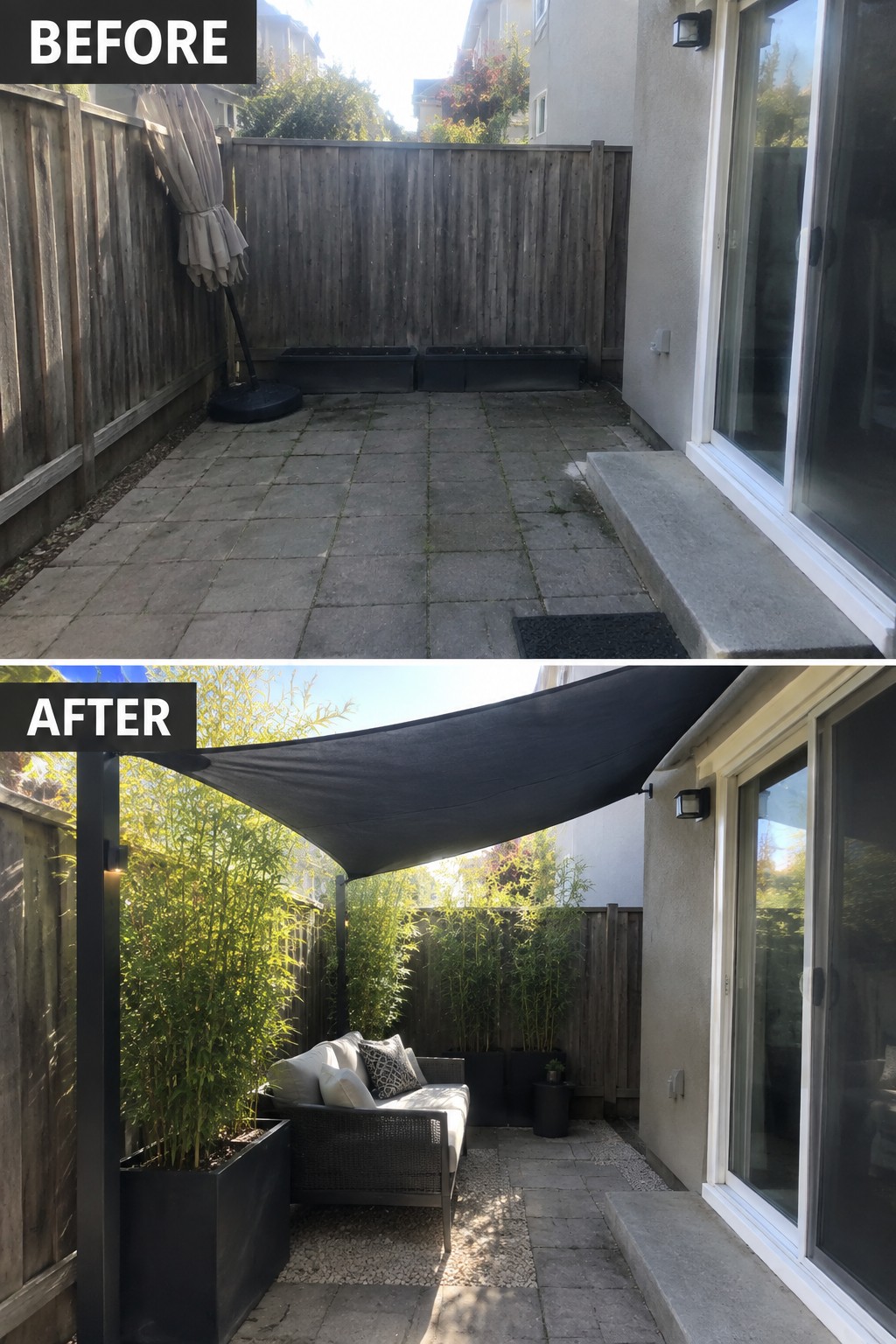
A plain concrete patio often sits unused because there is no shade and nowhere to sit comfortably. Adding a simple shade sail overhead changes that quickly. It creates a defined space that feels protected from the sun while still keeping the open feel of the yard. The black sail in the after photo shows how one overhead element can make the whole area feel like an outdoor room instead of leftover space.
This idea works well on any flat patio or deck that gets too much direct sun. Start with the shade structure first, then add just enough seating and a few large planters to make the area feel purposeful. Keep the furniture scale modest so there is still room to walk around. The same approach works on small urban yards or larger suburban lots where you want a spot to relax without building a full pergola.
Turn A Bare Patio Into A Shaded Seating Area

A pergola gives a bare concrete patio a clear purpose. The open slab next to the pool had little shade or comfort, so adding a wooden pergola with a built-in daybed and a few large planters created a usable outdoor room that stays cooler during the day.
This idea works best on pool decks or backyards that feel too exposed. Keep the pergola simple, match the wood tone to nearby fencing, and leave enough open space around the seating so people can still walk through the area easily.
Turn A Bare Patio Into An Outdoor Kitchen With A Pergola

A flat concrete slab with nothing but an old grill often sits unused because there is no shade or clear purpose. Adding a pergola with a fabric shade cover and placing a simple kitchen setup underneath turned the space into a spot where cooking and sitting actually make sense.
This idea works best on patios that get strong afternoon sun and already have a fairly level surface. Keep the footprint modest so there is still room to move around the stools and counters, and choose weatherproof materials for the seating and cabinet fronts.
Add A Pergola To Turn A Bare Deck Into A Usable Space

A deck with no cover or seating often sits empty because there is nothing to draw people outside. Adding a pergola creates shade and defines the area so it feels more like an outdoor room than an open platform. String lights and a simple table and chairs underneath make the space comfortable for meals or evening use.
This approach works best on decks that already have good structure but lack purpose. Keep the pergola size in scale with your furniture so the space still feels open, and choose vines that will cover the frame without overwhelming it. It suits homes where you want a defined seating zone without building walls or a full roof.
Add A Pergola To Turn An Empty Backyard Into A Usable Space

An empty backyard with nothing but grass and a fence often stays unused because it lacks any clear purpose. Adding a pergola creates that missing structure and gives you a shaded spot to place seating without needing to enclose the whole yard.
This approach works best in smaller or narrow backyards where you want one defined area rather than trying to landscape everything at once. Start with the pergola itself for overhead cover, then keep the ground simple with gravel and a few stepping stones so the space feels intentional and easy to maintain.
Use A Pergola To Turn An Open Patio Into A Dining Area
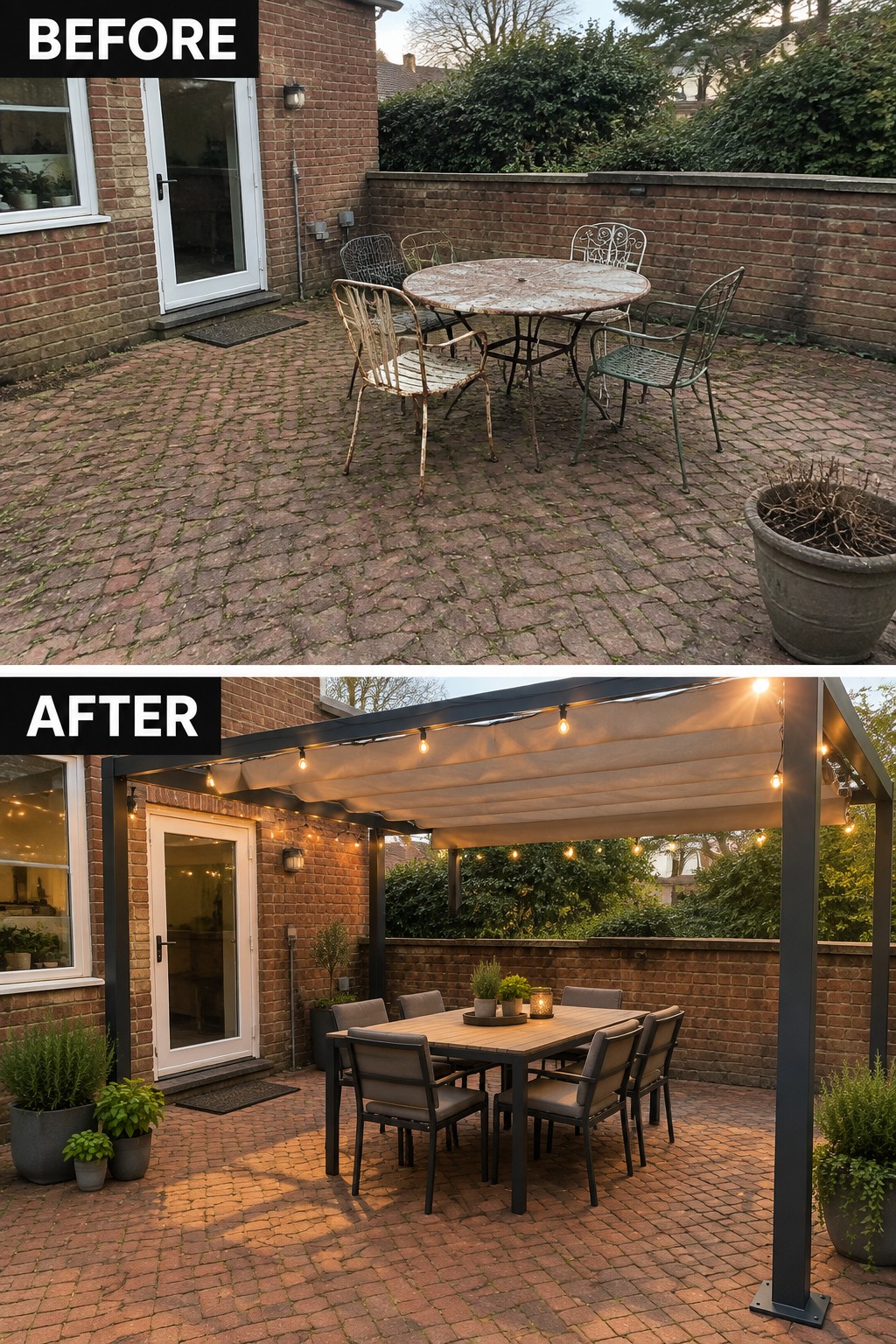
An open patio often stays unused because it lacks shade and a clear sense of place. Adding a pergola with a fabric canopy and string lights gives the space a roof and a focal point, so the table and chairs feel like they belong there instead of sitting in the middle of nowhere.
This approach works best on existing hard surfaces where you want to add comfort without a full renovation. Keep the pergola size close to your dining set, use outdoor-rated lights, and leave enough room around the edges for chairs to pull out easily.
Add A Pergola To Create Shaded Seating Along A Fence
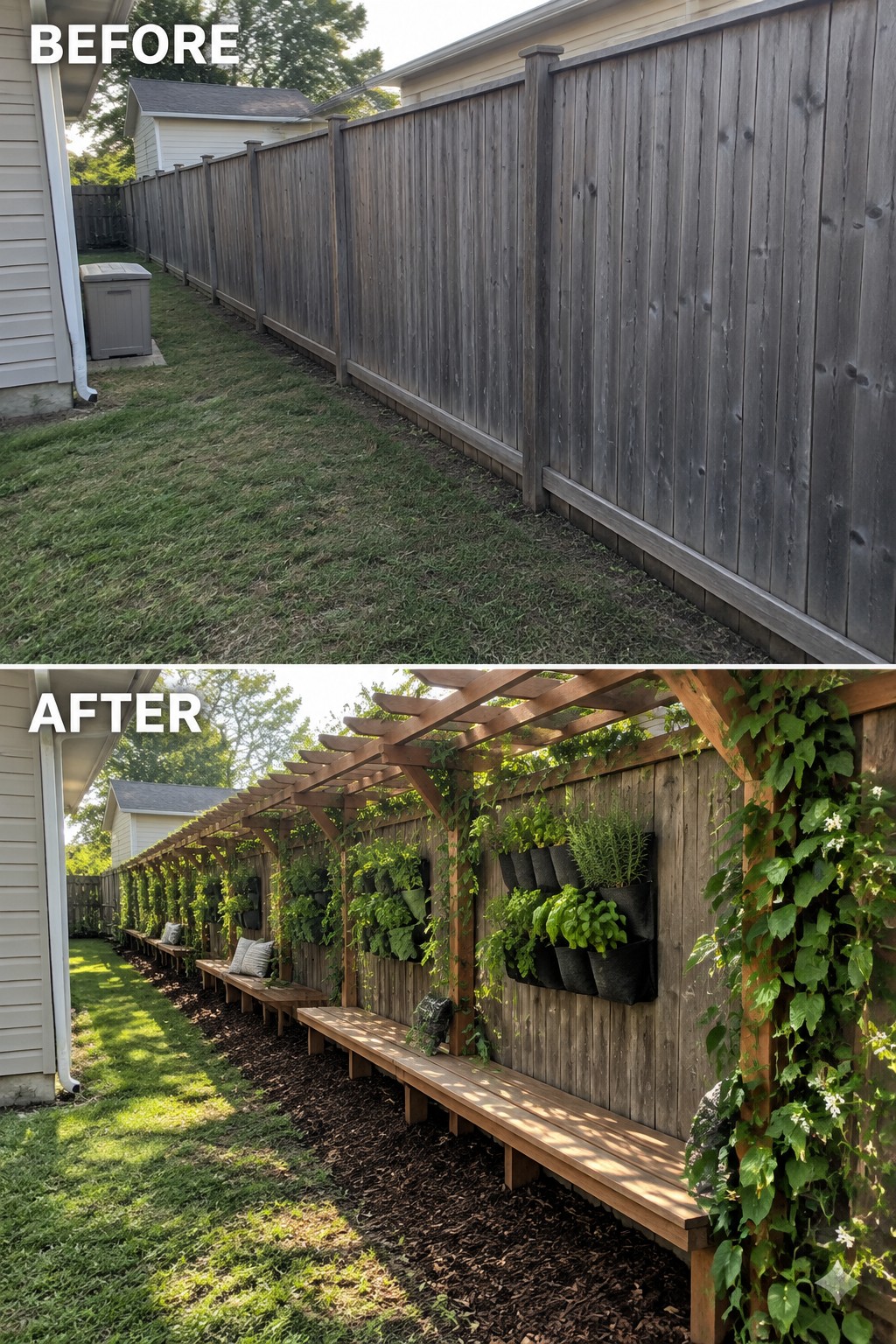
A long blank fence can leave the edge of a yard feeling unfinished and unused. Adding a pergola with built-in benches turns that same stretch into a place where people actually sit. The structure adds shade and gives the fence a clear purpose without needing a full patio or new deck.
This idea works best in narrow side yards or along property lines where you want seating without losing lawn space. Keep the bench simple and the planting light so the area stays open and easy to maintain. Start with the frame and seating first, then add vines or pocket planters once the main bones are in place.
Replace An Old Pergola With A Modern Shade Structure

An old wooden pergola often ends up looking tired after years outside. Replacing it with a solid metal frame and a full roof gives steady shade while opening up options like solar panels on top and simple base lighting.
This approach works best in backyards that already have a concrete pad or deck. Keep the furniture scale modest so the space stays open, and use the lighting mainly around seating areas where people actually gather in the evening.
Add A Shade Sail To Create A Usable Backyard Spot

A shade sail can turn a hot, open backyard into a place that actually gets used. Here the plain lawn gained a clear seating area once the sail was stretched over a simple picnic table and a few planters.
This works best in yards that get strong sun and have no natural cover. Pick a durable fabric, anchor it to posts or the house, and keep the furniture scale small so the space still feels open.
Add A Pergola To Turn A Bare Patio Into An Outdoor Room

An empty paved patio often sits unused because it lacks any sense of enclosure or purpose. Adding a pergola creates a clear boundary overhead and gives you a logical place to arrange seating without the space feeling scattered.
This approach works well on existing hardscaping where you can anchor posts directly into the surface. Focus on weatherproof furniture and simple lighting that lets you use the area in the evening. Keep the layout open enough for easy movement around the main seating zone.
Replace An Old Gazebo With An Open Pergola

An old screened gazebo often starts to feel heavy and closed off once the paint peels and the screens darken. Switching to an open pergola with simple wood framing and white curtains keeps the shade while letting air move through and connecting the space to the rest of the yard.
This idea works best in smaller backyards where you want a defined seating spot without building full walls. Stick with weatherproof furniture, add a rug to mark the floor, and place a few large pots around the posts so the area feels finished but not crowded.
Add A Pergola To Create A Private Outdoor Hot Tub Area

An open deck leaves a hot tub feeling exposed, but adding a pergola with side curtains changes the whole setup. The structure defines the space, the curtains add privacy from neighbors, and the string lights make it comfortable to use in the evening.
This approach works best on decks or patios that already have a main feature like a hot tub or seating area. Keep the pergola scaled to the size of the tub so it feels like a room rather than an oversized cover, and choose outdoor fabric that can handle weather without constant maintenance.
Add A Pergola To Create A Shaded Seating Area

The open concrete around this pool felt empty with only a couple of folding chairs and an umbrella for shade. Adding a pergola with a full sofa and coffee table underneath gives the space a clear purpose and makes it usable during the day.
This idea works best on pool decks or patios that get strong sun. Keep the pergola simple, choose outdoor furniture that can handle weather, and add a rug underneath to mark the seating zone. It suits homes that already have the pool but need a comfortable spot to sit without building a whole new room.
Add A Pergola To Define A Narrow Side Yard

A narrow side yard often ends up as wasted space because it feels too tight and hard to maintain. Adding a pergola gives the area clear structure and overhead shade, while the gravel path replaces weeds with something that actually invites you to walk through. The climbing roses on the posts and beams soften the fence and house wall without crowding the walkway.
This idea works best in long, skinny yards where you need one strong feature to pull everything together. Keep the pergola simple and sized to the width so it does not feel cramped. Focus on vines that will cover the wood over a season or two, and make sure the path stays wide enough for easy movement.
Add A Pergola To Turn Open Concrete Into An Outdoor Room

A pergola gives a bare patio the structure it often lacks. The open slab with a single umbrella and plastic chairs felt exposed and temporary. Adding a simple metal pergola with horizontal slats created shade, defined the space, and made room for a sofa, rug, and side tables that actually invite people to stay.
This approach works best on flat concrete areas that get strong sun or sit right against the house. Keep the frame color simple so it blends with the exterior, then layer in weather-resistant seating and a rug to mark the zone. It suits smaller yards where you want usable space without a full roof or major construction.
Add A Pergola To Turn A Bare Patio Into A Usable Outdoor Room

A plain patio often stays empty when it has no shade or sense of enclosure. Adding a pergola with a solid roof instantly defines the space and makes it comfortable to use during the day. The open slab with one table becomes a covered area that feels like an extension of the house.
This approach works best on existing paver or concrete patios that already have decent ground cover. Keep the structure simple, add ceiling fans for airflow, and place just enough seating to match how you actually use the yard. Make sure there is still open floor space so the area does not feel crowded.
Turn A Bare Rooftop Into A Shaded Outdoor Room
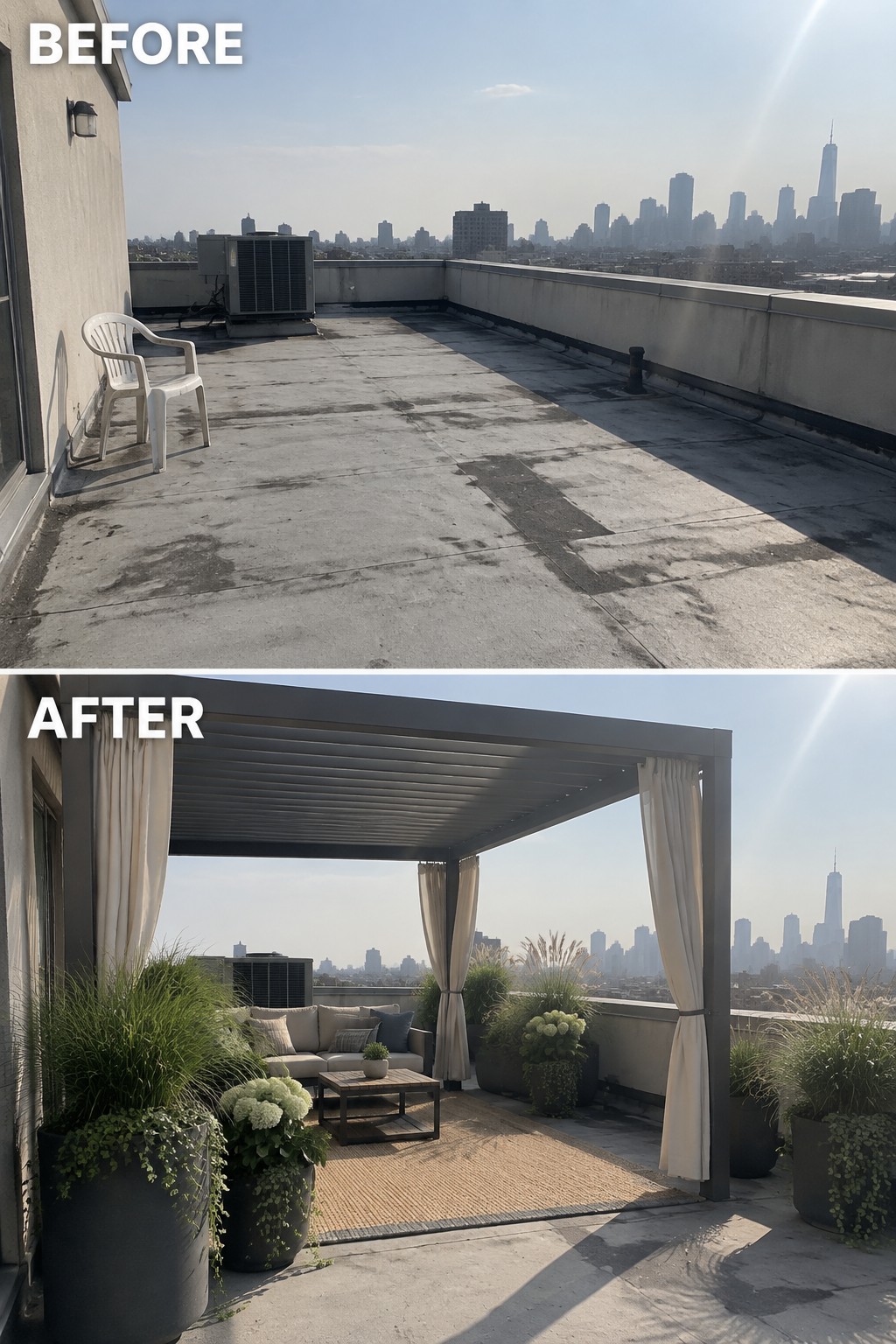
Adding a pergola is one of the simplest ways to make an empty rooftop or terrace feel like a real room. In this case, the open concrete space gained clear boundaries, shade, and a place to sit without needing major construction.
This idea works best on flat outdoor areas that get strong sun or feel too exposed. Keep the pergola size in scale with the space, hang simple curtains for softness, and use a rug to define the seating zone so the layout stays practical rather than overcrowded.
Add Pergolas And Decks To Make A Sloped Yard Usable
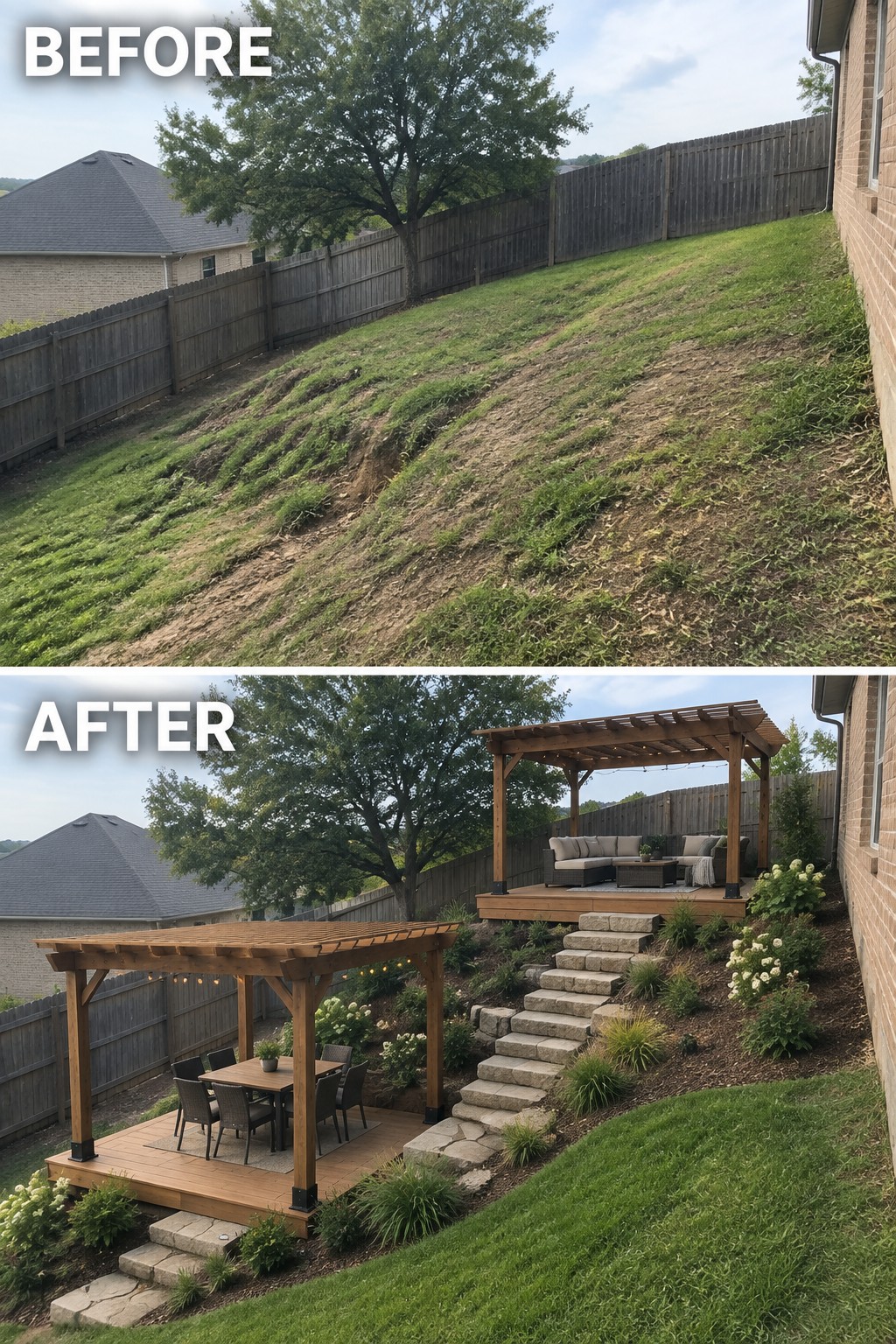
A steep backyard often sits unused because the slope makes it hard to place furniture or create flat seating areas. Here the owners solved that by building two separate wooden decks, each with its own pergola, and connecting them with stone steps that follow the hill. The result is two clear outdoor rooms instead of one awkward slope.
This approach works well on properties where the ground drops away from the house. Keep the decks modest in size so they do not fight the slope, use sturdy posts for the pergolas, and add just enough planting along the edges to soften the look without crowding the space.
Update An Old Pergola To Create A Defined Outdoor Room
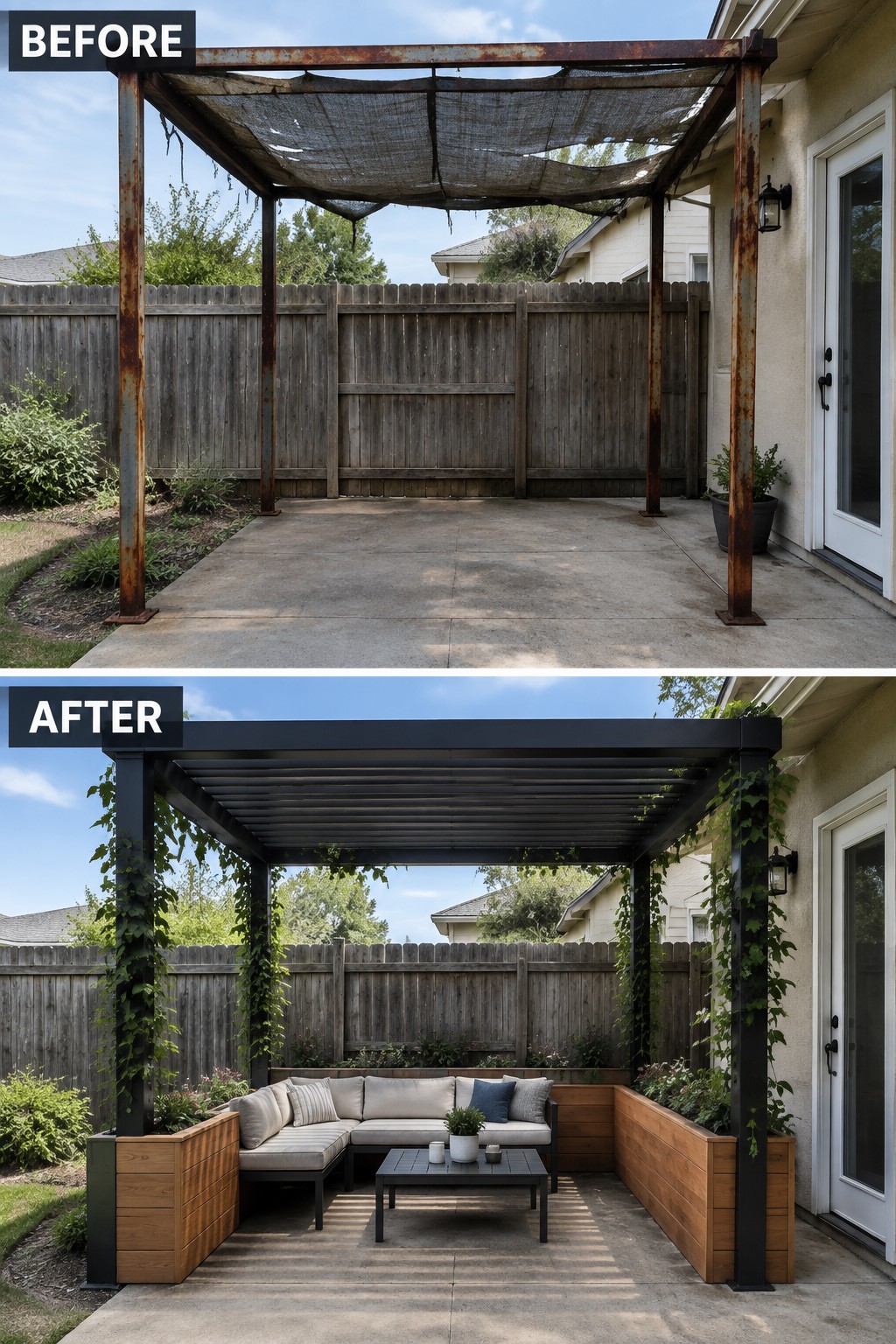
An old pergola with torn shade fabric often leaves a patio feeling unfinished and unused. Replacing it with a sturdier structure that includes built-in planters and seating gives the space clear purpose and makes it comfortable to sit outside. The shift from exposed concrete to a furnished area with wood accents and climbing plants shows how one main structure can pull everything together.
This approach works well on patios that already have a basic frame but need better scale and function. Start by choosing a pergola style that matches your house, then add raised planters along the base to hold seating and soften the edges. Keep the layout simple so there is still room to walk around the furniture.
Add A Pergola To Turn A Bare Yard Into An Outdoor Room
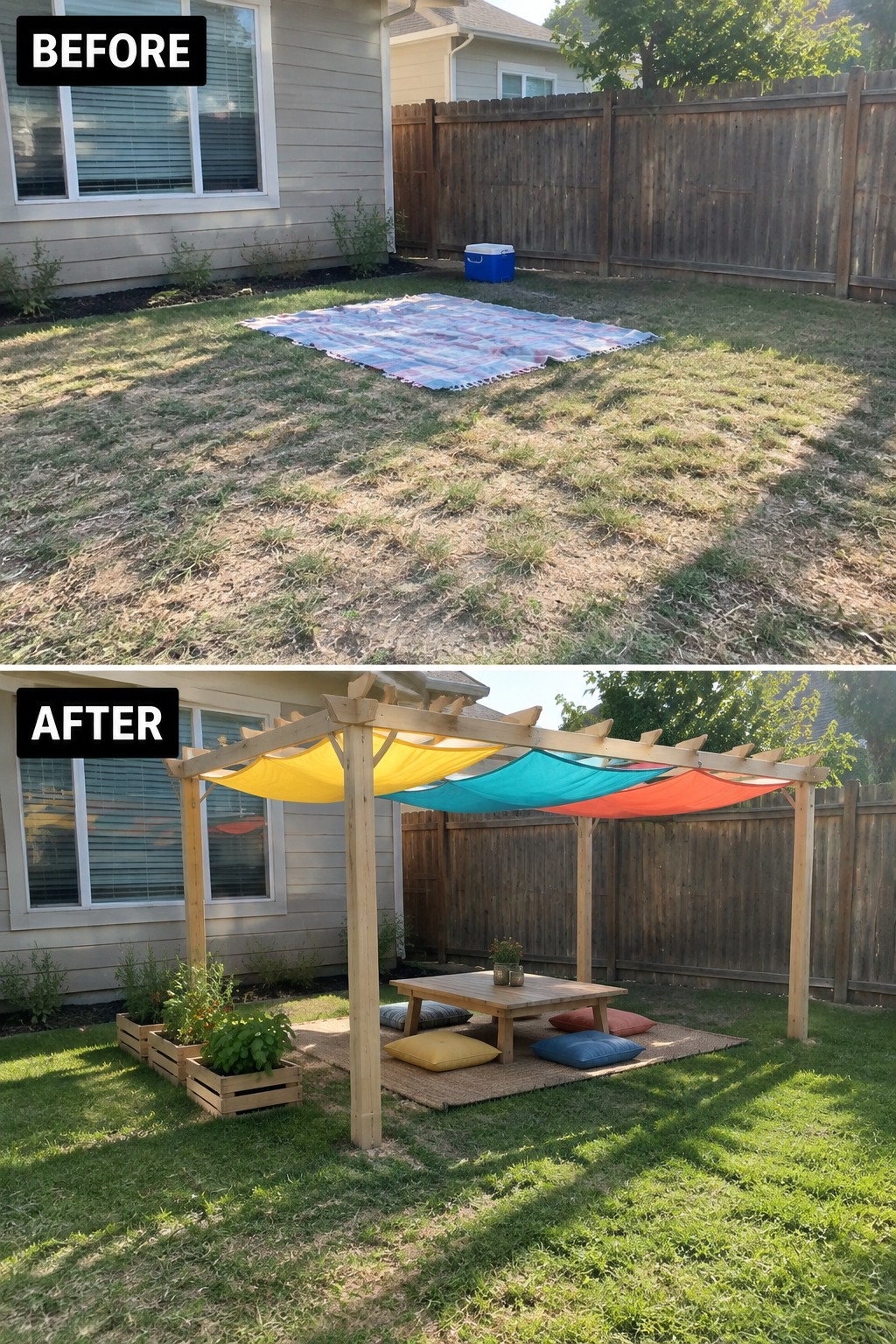
A flat stretch of grass often stays unused because it has no clear purpose. Putting up a pergola with simple fabric shades overhead creates a shaded zone that feels separate from the rest of the yard. The structure and color overhead make the space feel finished and give people a reason to sit down instead of just walking past.
This idea works well in backyards that already have decent grass but lack any focal point. Keep the pergola size in scale with your seating so there is still room to walk around the edges. Choose sturdy outdoor fabric for the shades and add a rug underneath to hold the furniture in place.
Frequently Asked Questions
Q: Can a pergola really help in a small yard without taking over the space?
A: Scale it down to fit one corner or along a fence line. Choose a slim modern design with open sides so the area still feels open. This keeps the focus on usable space instead of crowding everything in.
Q: How do I stop vines from damaging the wood over time?
A: Train them on wires or a separate trellis attached to the structure. Trim them back each season so they do not trap moisture against the posts. That simple step keeps the wood in good shape without extra work.
Q: What happens if the shade fabric starts to sag after a year?
A: Tighten the attachments or add a center support beam right away. Most fabrics hold up better when you check the tension twice a year. Skip cheap materials if you want it to stay flat through wind and rain.
