

I often notice that small outdoor spaces end up feeling bare because there is no real plan for seating or basic planting structure.
Once I added a few simple borders and rearranged the existing pots, the area started to feel like somewhere I might actually sit in the evenings.
Budget friendly ways to define edges and create paths tend to pull the whole space together without much cost.
I usually try one or two plant groupings in a real spot first to see what holds up before going further.
Some changes like these make an empty corner feel less overlooked and more like part of daily life.
Turn A Bare Patio Into A Seating Area
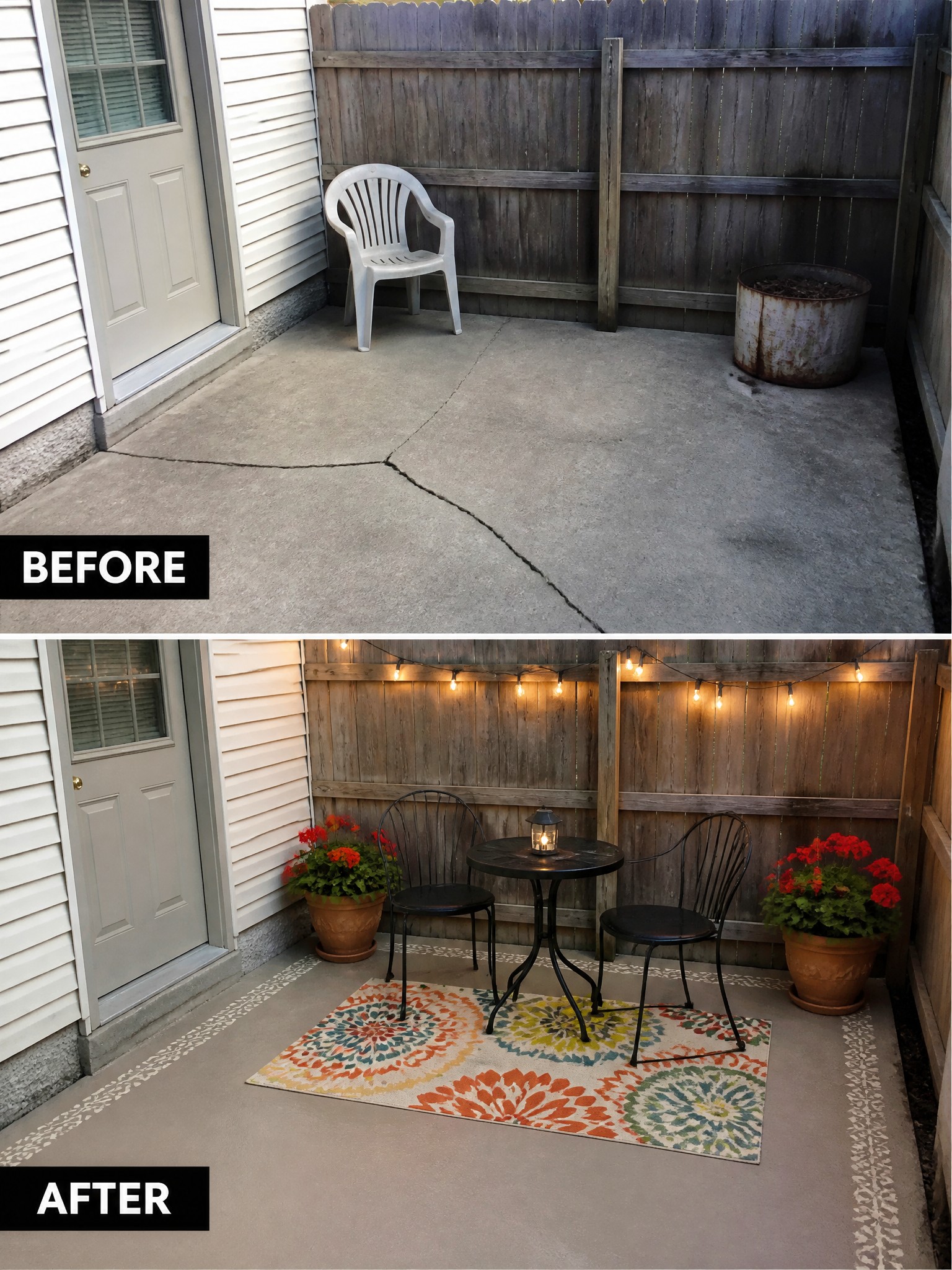
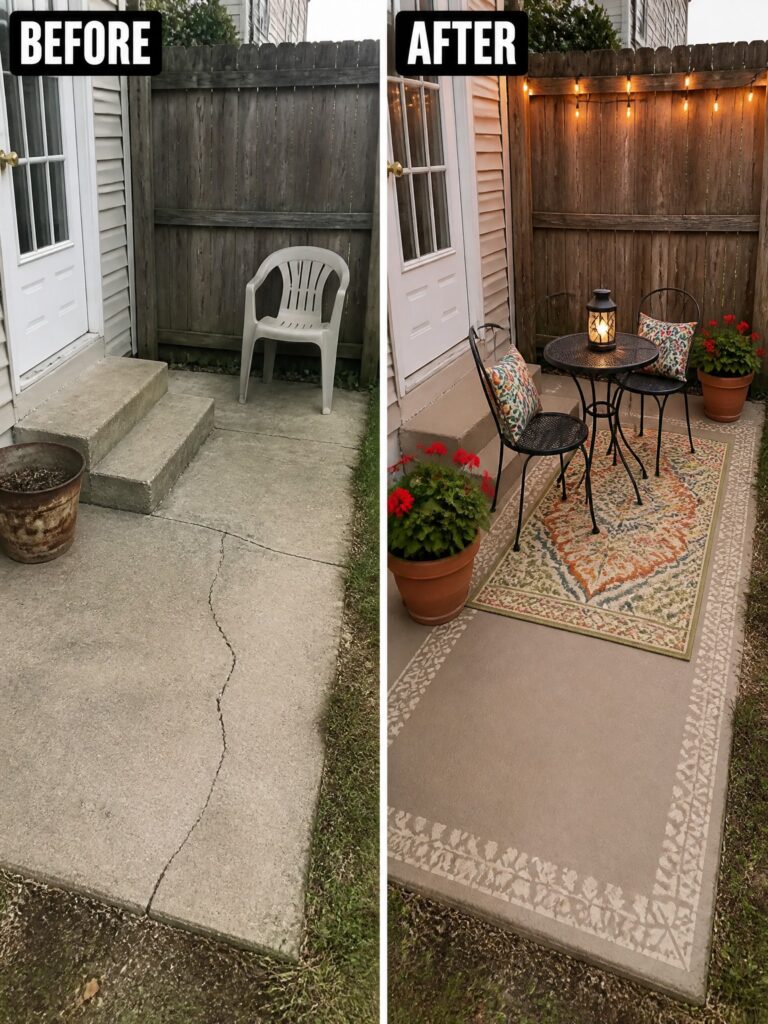
A plain concrete slab often sits unused until it gets a clear purpose. Adding a rug and a small table with chairs turns the space into somewhere people actually sit instead of walking past.
This works best on small patios or side yards where you want to create a zone without building anything new. Keep the furniture light so the area does not feel crowded, and add string lights if you plan to use it in the evening.
Turn A Bare Balcony Into A Simple Seating Spot
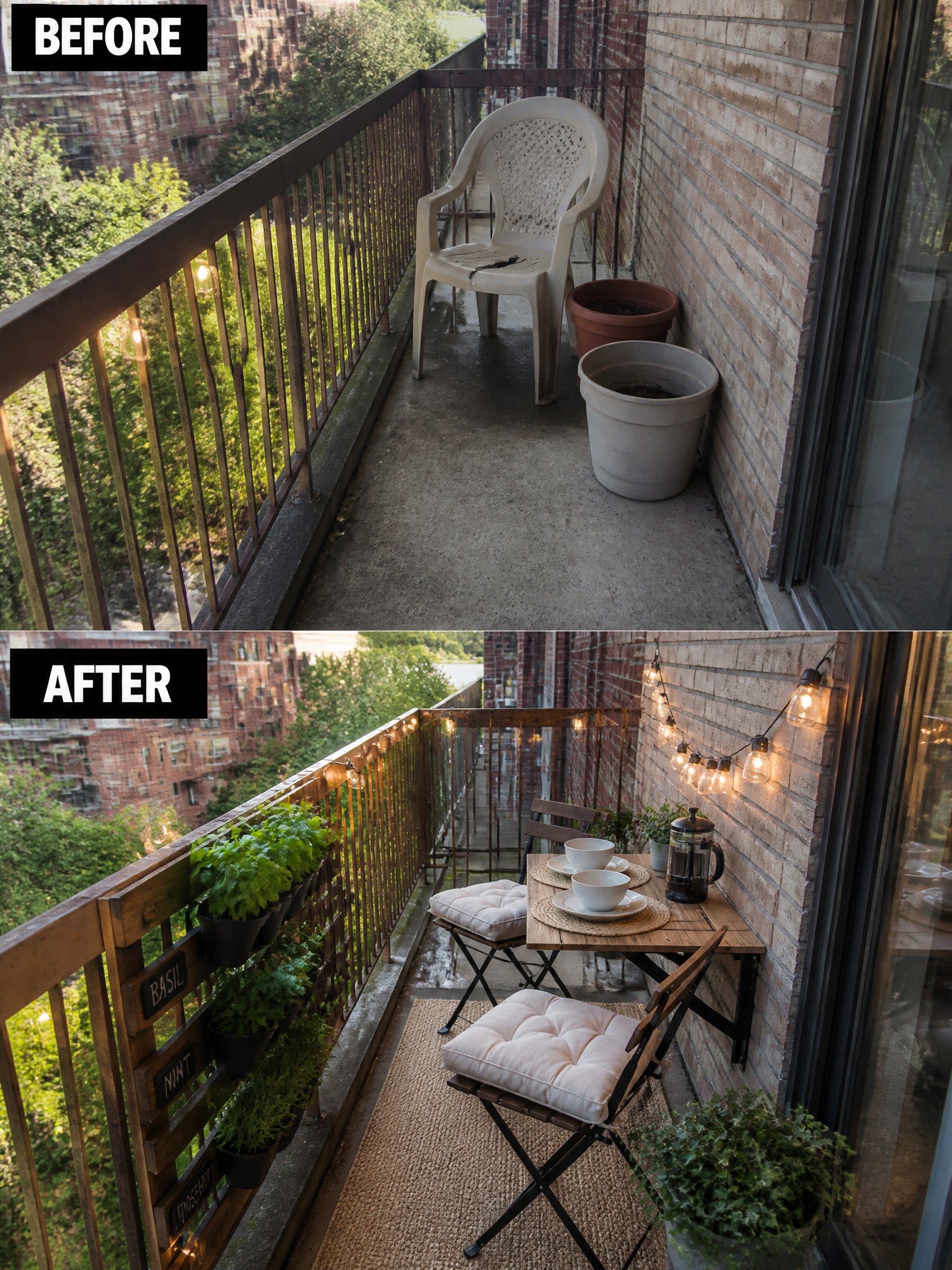
A plain concrete balcony often sits empty because it feels too open and unfinished. Adding a small rug, a compact table with chairs, and a string of lights gives the space a clear purpose and makes it feel like an actual room instead of leftover floor space. The lights help the area feel welcoming once the sun goes down, while the rug softens the concrete and keeps the furniture from sliding around.
This approach works well on small balconies or patios where you do not have much room to work with. Start with one or two pieces of weatherproof furniture and a simple rug to mark the seating zone, then add lights if you want to use the space in the evening. Keep the rest of the floor clear so you can still walk through without bumping into things.
Add A Gravel Path To Define A Narrow Side Yard
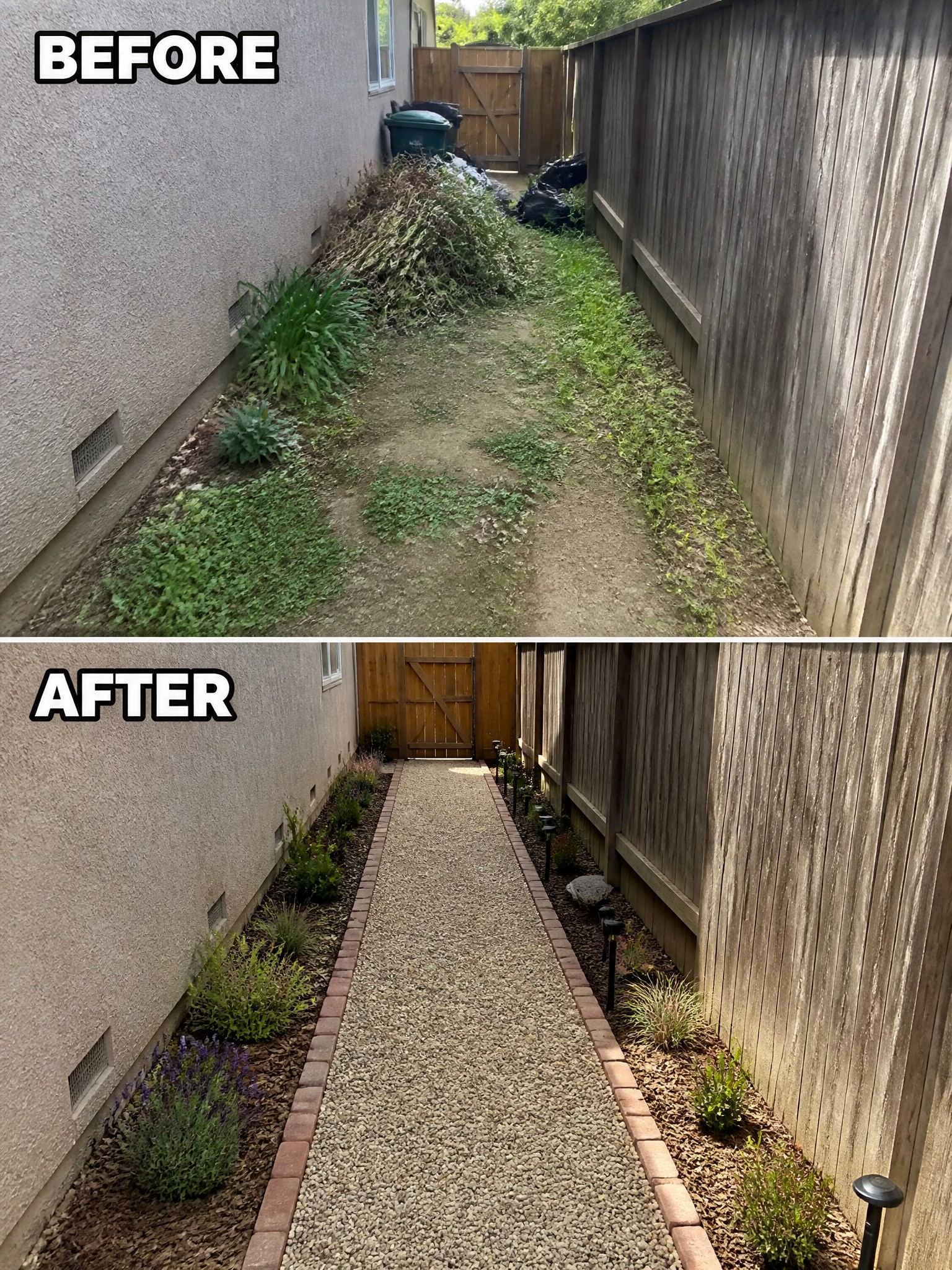
A narrow side yard often ends up as wasted space when it gets overgrown and hard to walk through. Laying a simple gravel path with brick borders and mulched beds on either side gives the area clear structure and makes it feel intentional instead of neglected.
This approach works especially well in tight spaces between a house and fence where grass struggles to grow. Focus first on removing weeds and debris, then keep the planting simple with low-water shrubs and ground cover so the path stays easy to maintain.
Turn An Empty Patio Into A Seating Area
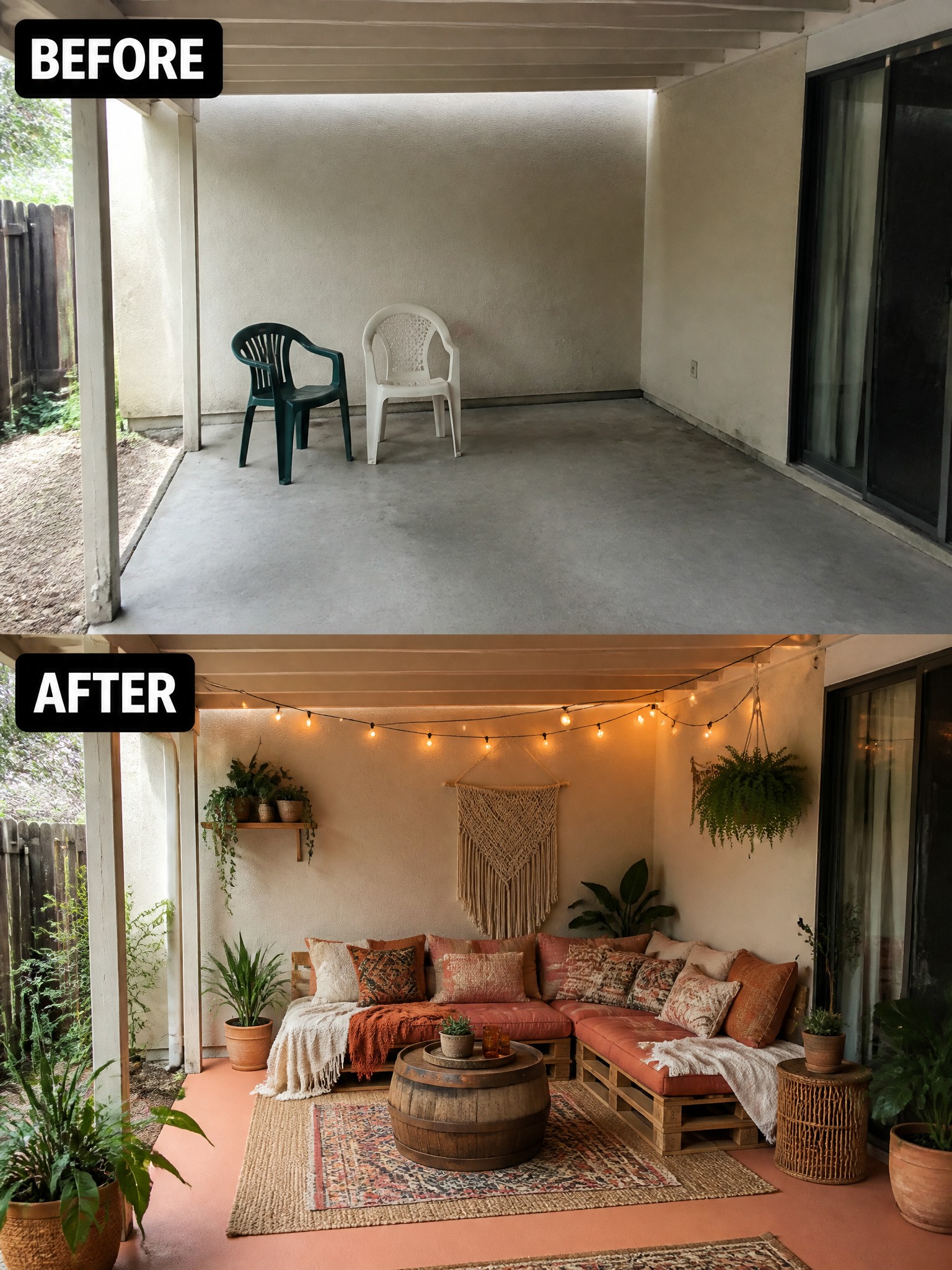
An empty concrete patio often sits unused because it lacks any sense of purpose or comfort. Adding a simple seating setup with string lights overhead and a rug underfoot gives the space clear boundaries and makes it feel like an actual room you can sit in.
This idea suits small covered patios or side yards where you want to create a usable spot without major construction. Keep the furniture low and modular so it fits the scale, then add lighting that highlights the seating zone at night. Start with the main pieces before filling in plants or extras.
Create Structure In A Narrow Side Yard
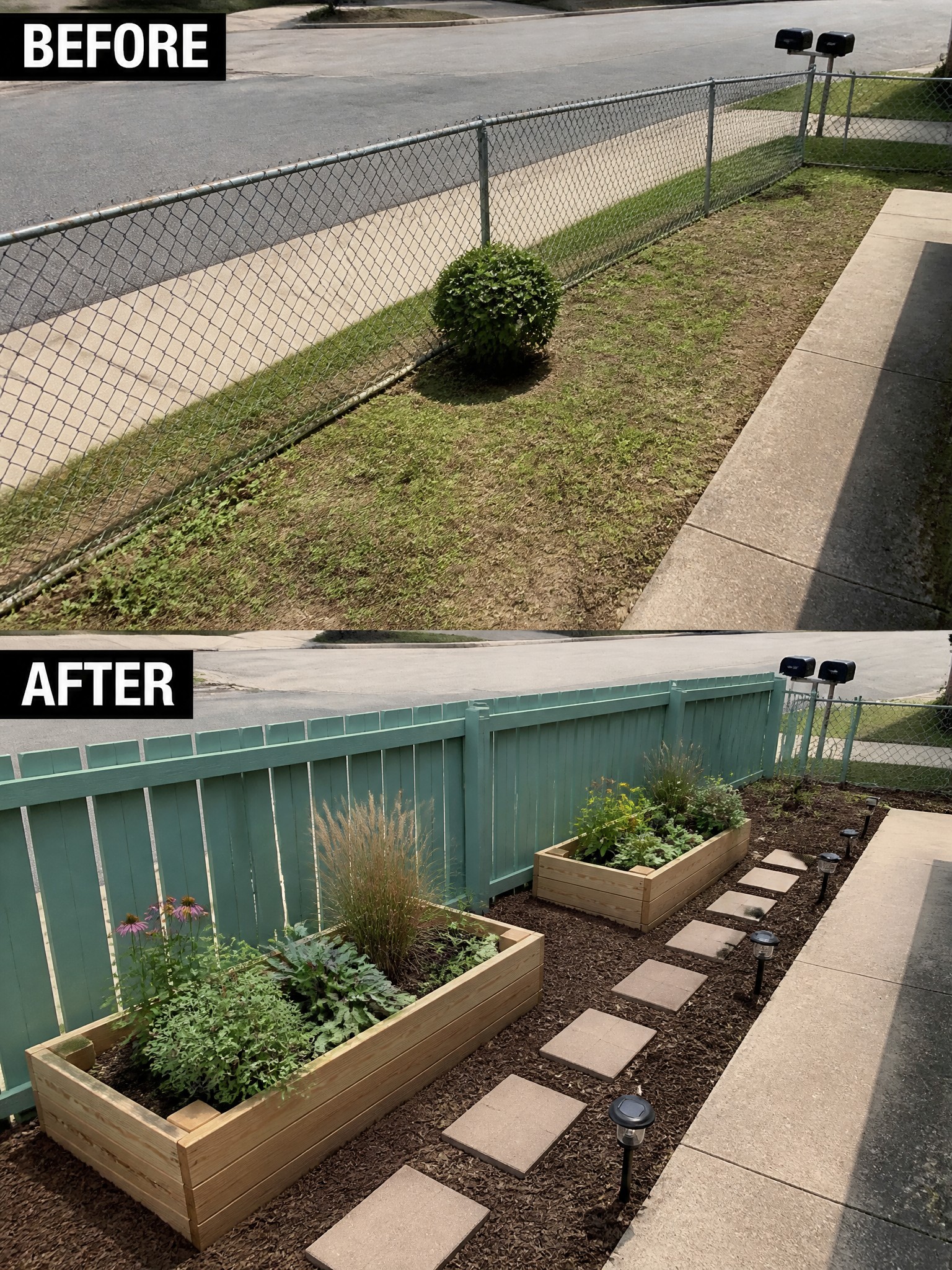
A narrow strip next to the house often ends up as wasted space with weeds and a basic fence. Adding raised beds and a solid fence gives the area clear edges and turns it into actual garden space instead of leftover ground.
This approach works well on small lots where every foot counts. Place the beds along the longest wall, keep the path simple with pavers, and use mulch to hold down weeds. The result feels planned without needing a big budget or fancy plants.
Turn A Bare Backyard Into A Fire Pit Seating Area
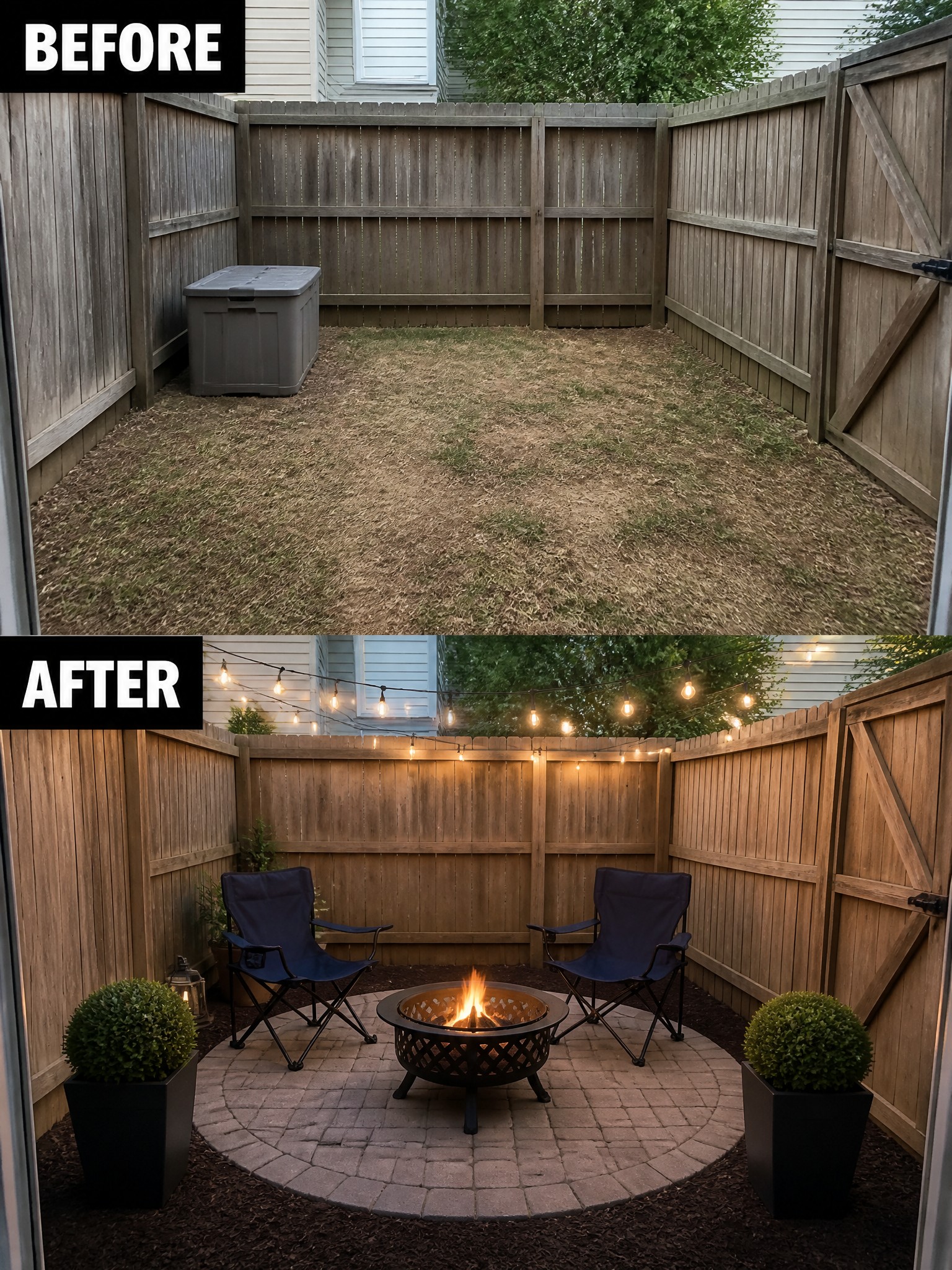
A small yard with nothing but dirt and a storage box can feel like wasted space. Adding a paved circle, a fire pit, and a couple of chairs turns the same area into a spot where people actually want to sit at night. String lights overhead help tie it together and make the space feel intentional instead of empty.
This idea works well in fenced backyards where you want one clear gathering spot without filling the whole area. Keep the paved section modest so there is still room to walk around it, and choose weatherproof furniture that can stay outside. Start with the hard surface and seating first, then add lights if you need them.
Turn A Bare Balcony Into A Seating Area
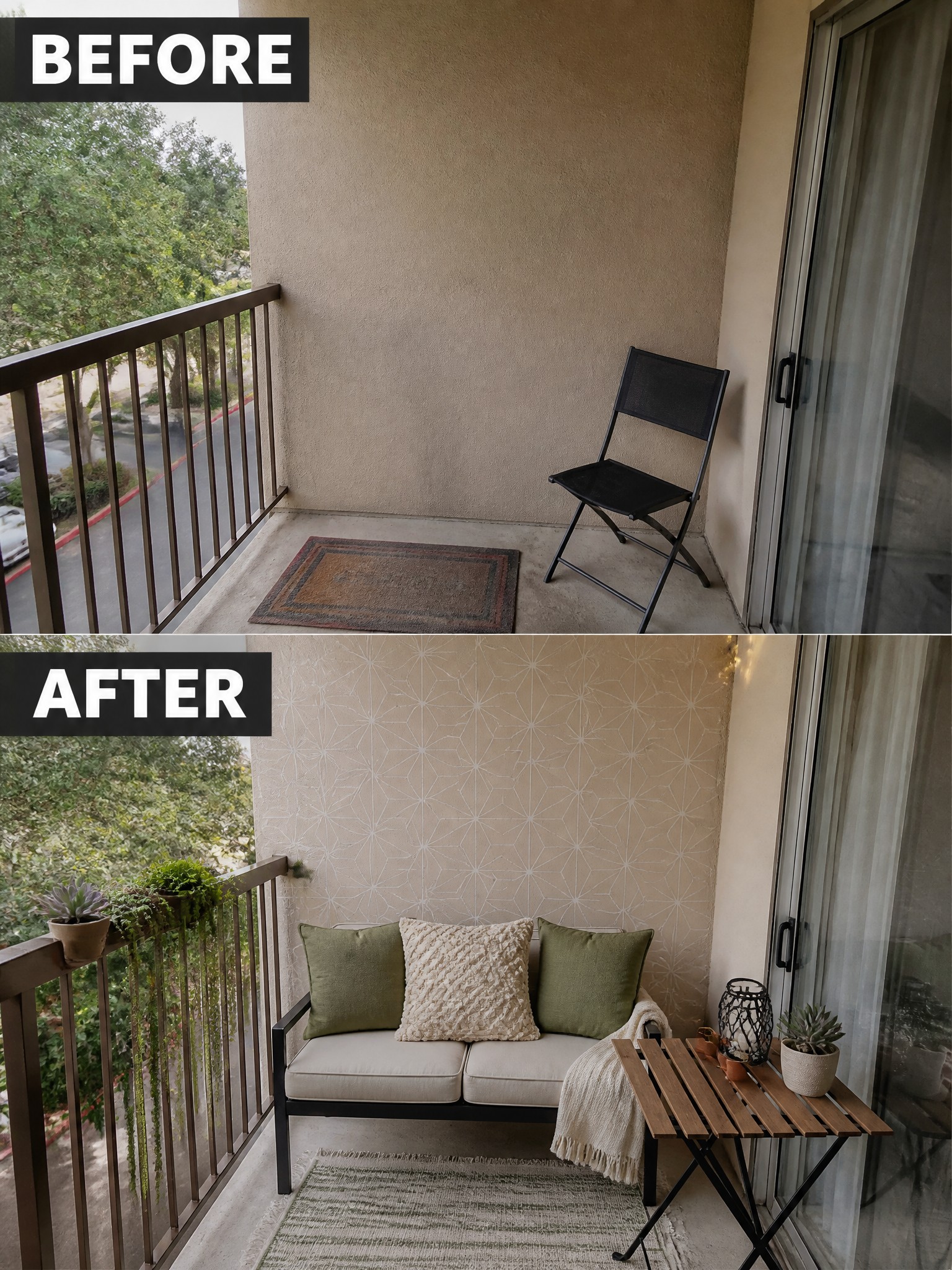
A small balcony often starts as nothing more than concrete and a railing. Adding a compact sofa, a simple rug, and a couple of plants gives the space a clear purpose and makes it feel like an outdoor room instead of leftover space.
This idea works well on tight balconies because the furniture stays low and the layout leaves room to walk around. Focus on weatherproof pieces and keep the scale modest so the area does not feel cramped.
Turn A Cluttered Patio Corner Into A Simple Seating Area
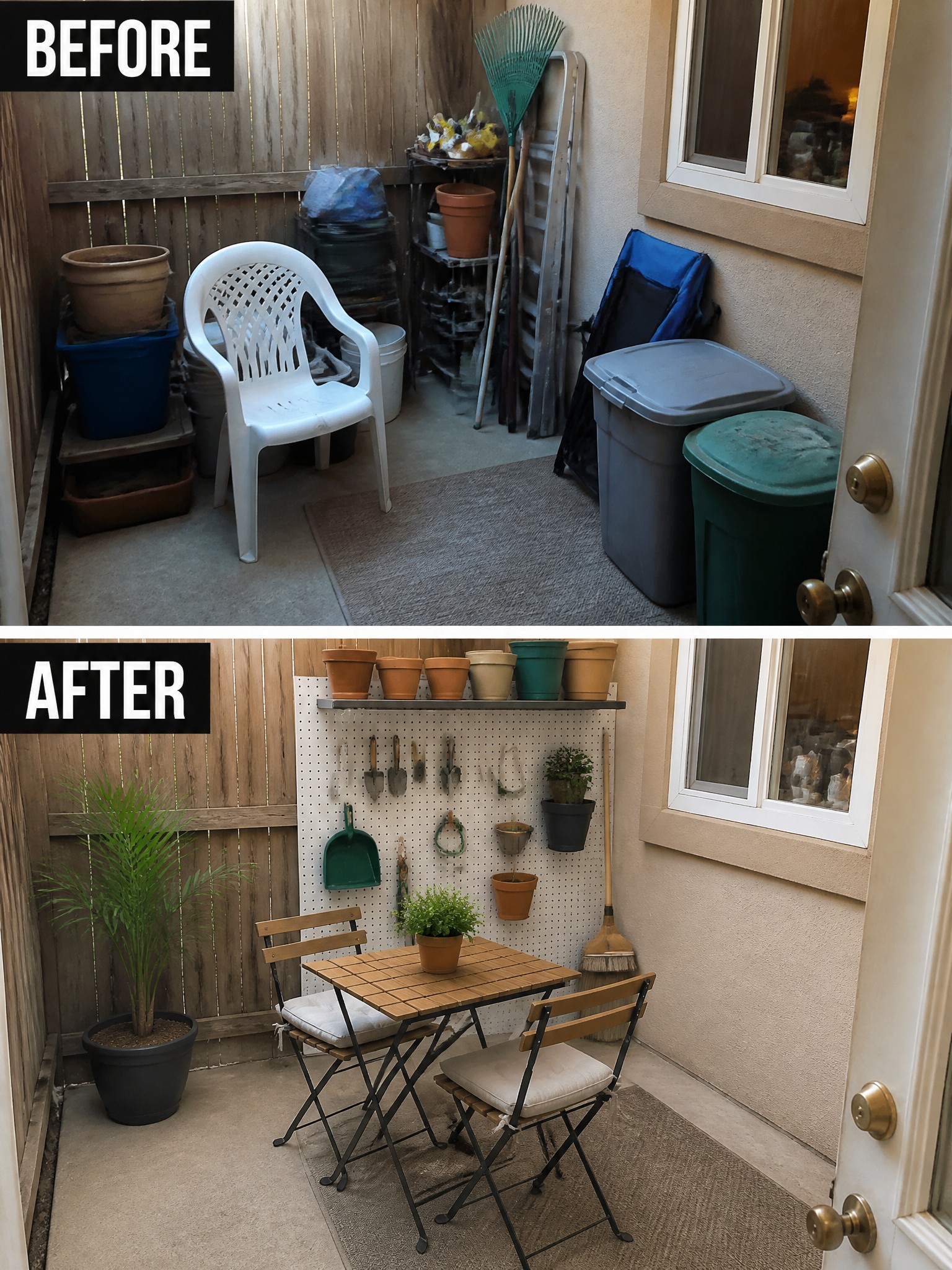
A small concrete spot next to the house often ends up as storage overflow. Once the bins, extra chairs, and loose tools were cleared out, there was suddenly room for a compact table and two chairs. Adding a pegboard on the wall kept the remaining garden tools visible and off the ground without taking up floor space.
This approach works well in tight side yards or back corners where full furniture sets would feel crowded. Start by removing everything that does not belong, then measure the open area before choosing furniture. Keep pieces small and foldable so the space can still be walked through when needed.
Turn A Bare Deck Into A Cozy Outdoor Room
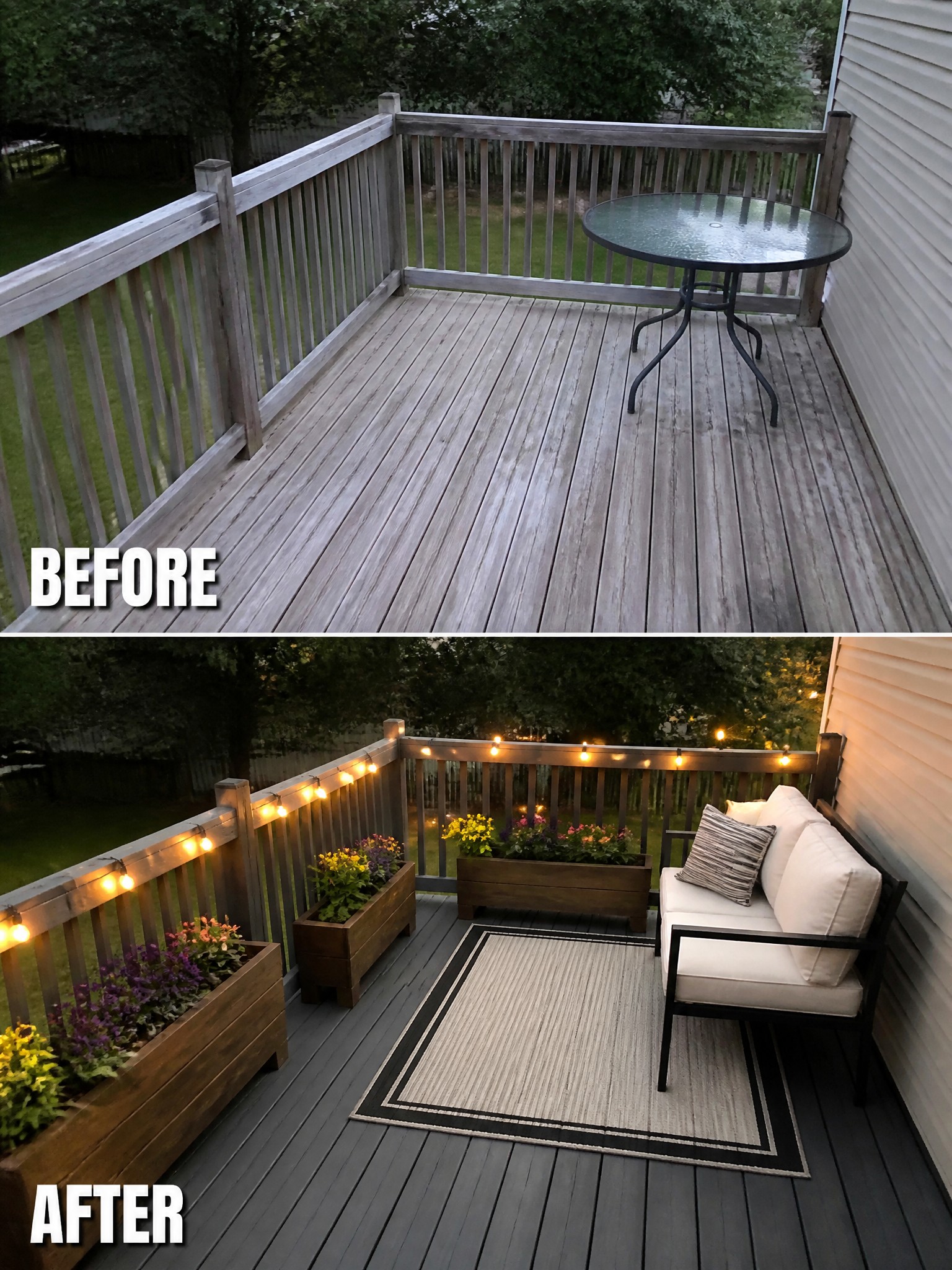
A plain deck often sits unused because it lacks any sense of purpose. Adding string lights along the railing and placing a rug with a small seating group gives the space a clear center, so it starts to feel like a real room instead of just open boards.
This idea works best on small decks where you want to keep movement easy but still create a spot to sit. Choose simple furniture that can stay outside, keep the rug sized to the seating area, and use the lights mainly where people will actually gather at night.
Add Terracing To A Sloped Backyard
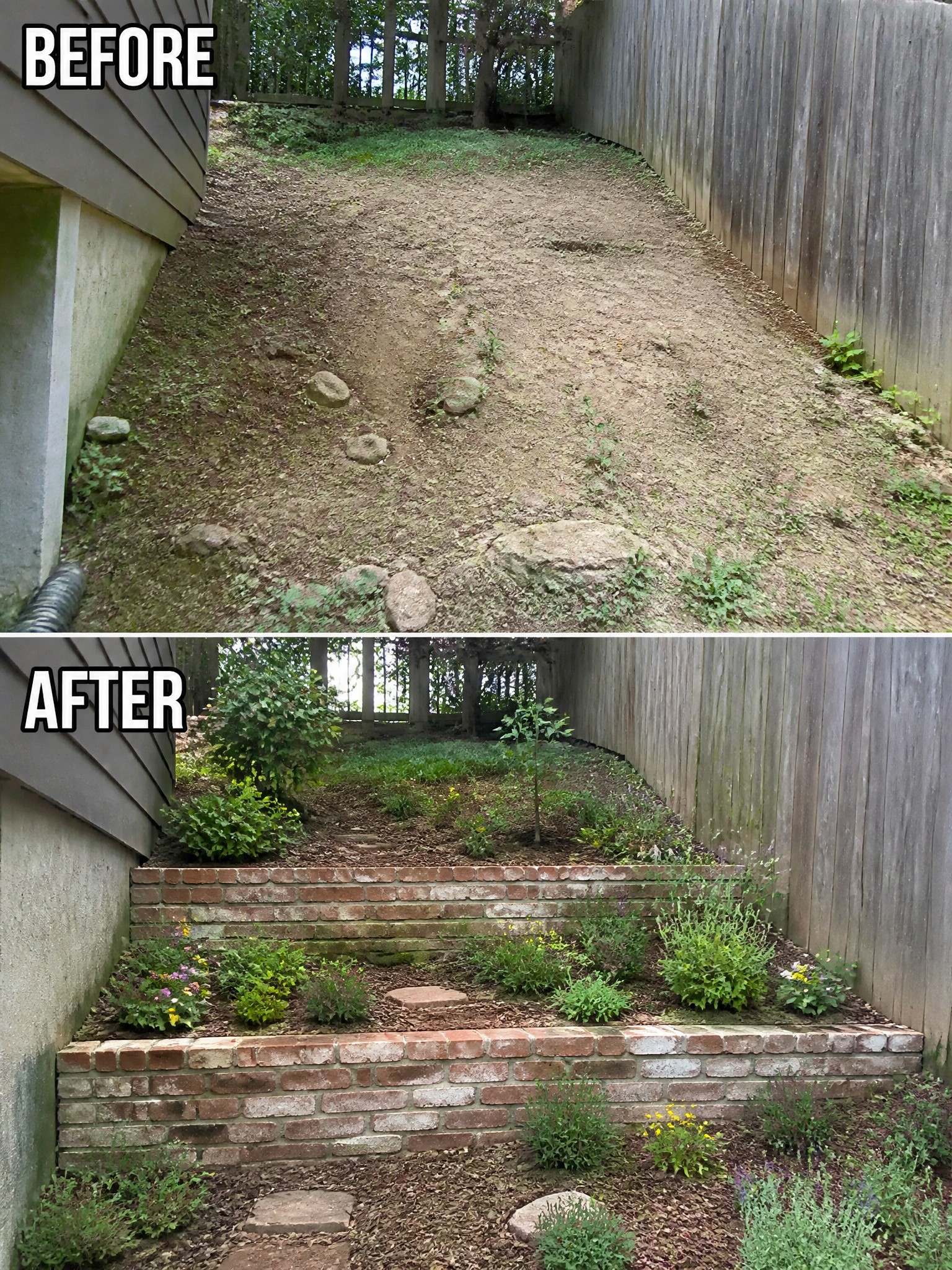
A bare slope like the one in the before photo often ends up as wasted space because nothing stays put and weeds take over fast. Adding low brick retaining walls creates flat planting beds that hold soil and give the area real structure. The result feels more intentional and much easier to maintain.
This approach works well in narrow side yards or small backyards where the ground drops away. Start with simple stacked brick or block walls to form two or three tiers, then fill the beds with mulch and a mix of shrubs and perennials. Leave room for stepping stones so you can reach the plants without compacting the soil.
Use Screening To Make A Small Balcony Feel Private
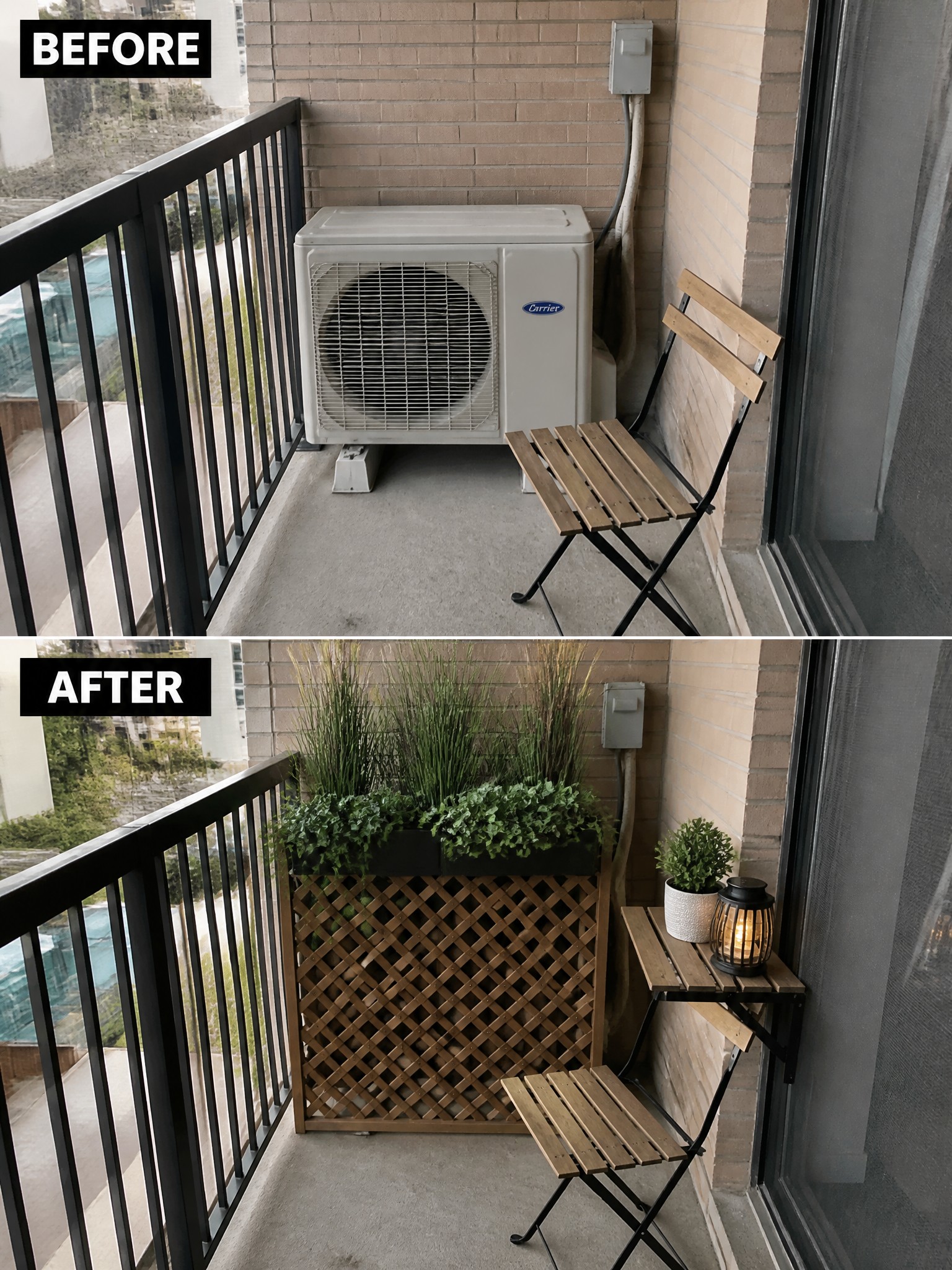
A bare balcony with just an air conditioner and a single chair can feel more like a utility space than somewhere you want to sit. Adding a simple lattice screen with a few planters changes that quickly. The screen hides the equipment, adds a bit of height, and gives the area a clear boundary so the small table and chair actually feel like a spot to use.
This works well on balconies that sit close to neighbors or face a busy view. Keep the screen lightweight and choose plants that can handle wind and sun. One or two larger planters at the base usually look better than filling every gap, and it leaves enough floor space to move around.
Create Defined Garden Beds Along A Narrow Path
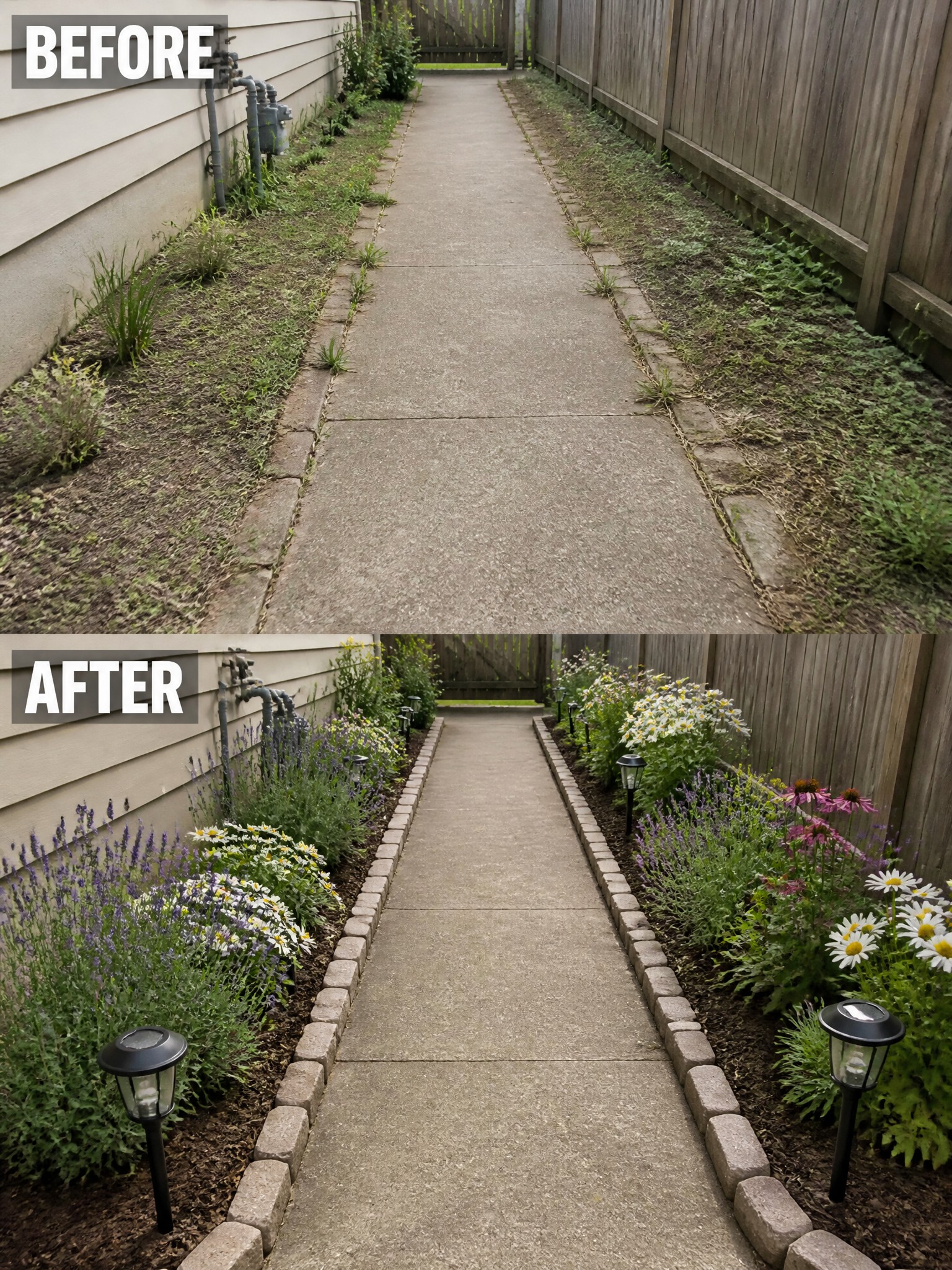
A narrow side path often gets ignored until the weeds take over both edges. Adding a simple brick border and filling the beds with a mix of flowers and greenery turns the space into something intentional rather than neglected.
This works especially well in tight yards where you still need a clear walkway. Start with the edging to give the beds shape, then pick plants that stay contained. A few solar lights along the path help mark the route at night without any extra wiring.
Turn A Bare Patio Into A Seating Area
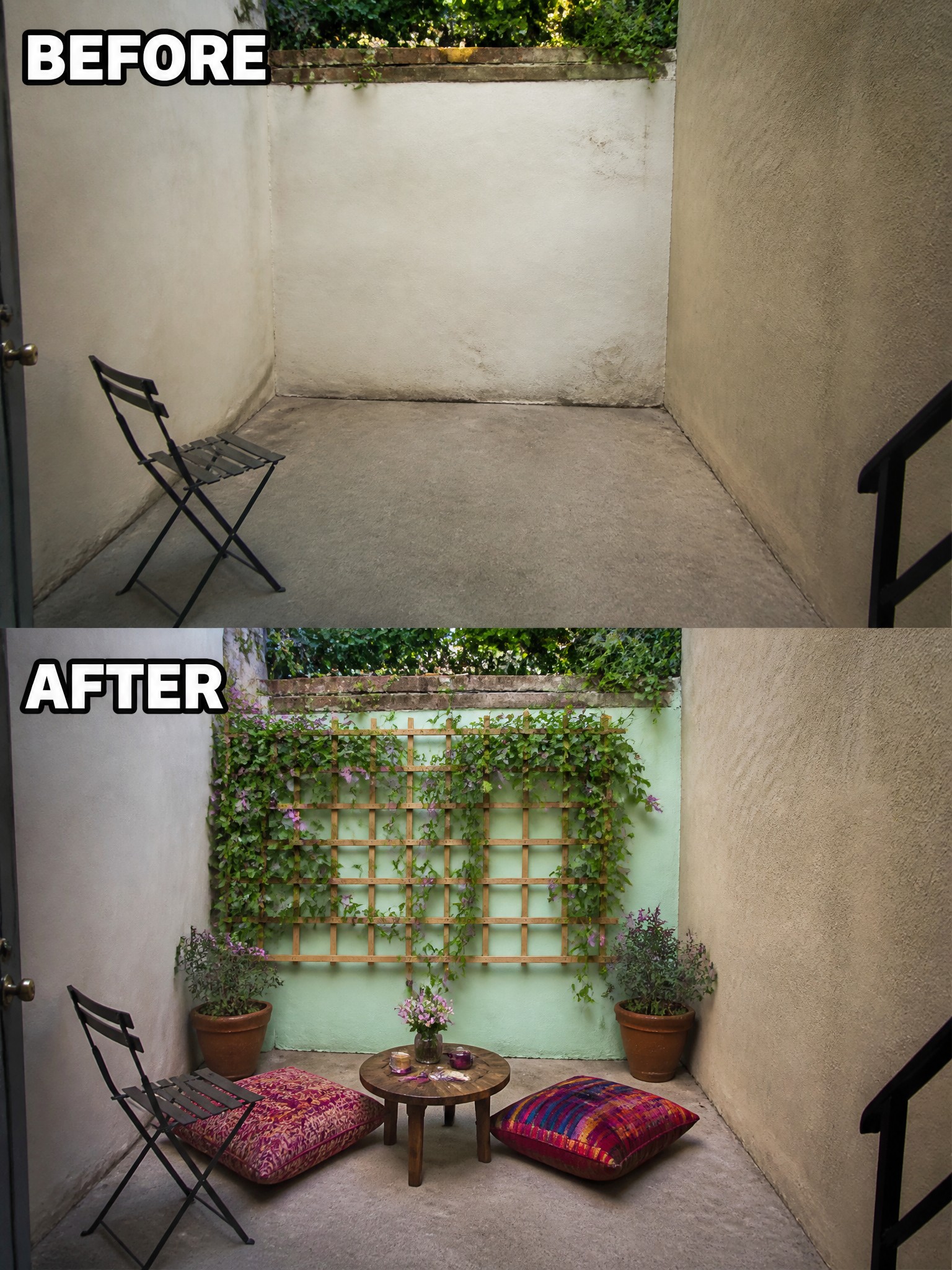
A small concrete patio often stays empty because it feels too plain to use. Adding a low table, a couple of floor cushions, and a few pots of plants gives the space a clear purpose without crowding it. The trellis on the back wall adds height and a bit of green cover that makes the whole area feel more finished.
This idea works best in tight courtyards or side yards where floor space is limited. Keep the furniture low and close to the walls so there is still room to walk through. A simple trellis and climbing plants can soften the walls without needing a big budget or much maintenance.
Add Planters And Lights To A Plain Fence
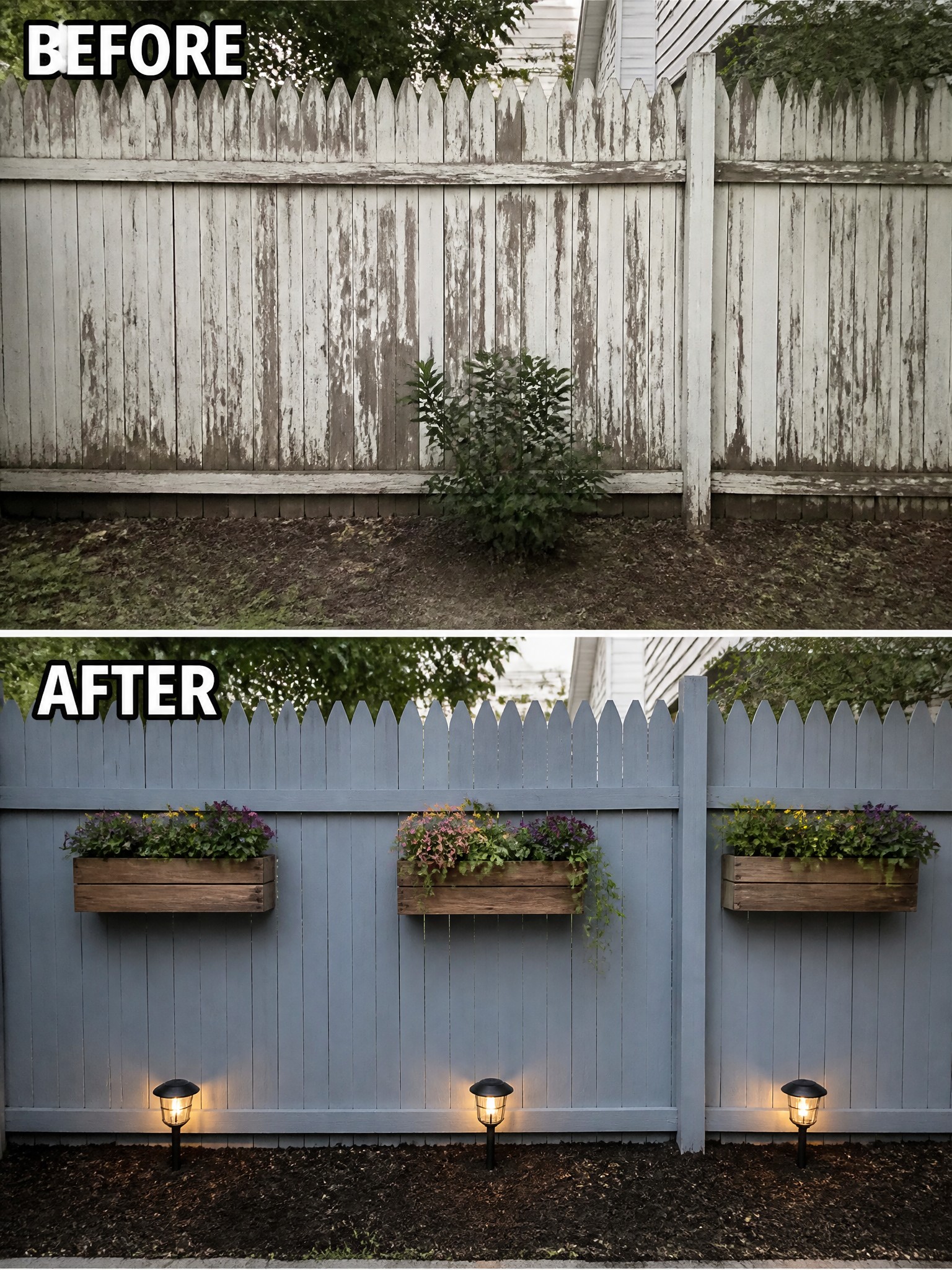
A plain fence often leaves the edge of a yard feeling unfinished. Mounting a few simple planters along the fence and adding low lights at the base gives the area structure and color without needing a lot of ground space. The change from a bare, weathered fence to one with planted boxes and soft lighting makes the whole line feel more intentional.
This idea works best in small yards or along side fences where ground beds are limited. Use weatherproof planters that can be screwed directly into the fence and solar lights that need no wiring. Keep the number of planters modest so the fence does not feel crowded, and choose plants that can handle the amount of sun the spot gets.
Build Raised Beds To Create A Small Productive Garden
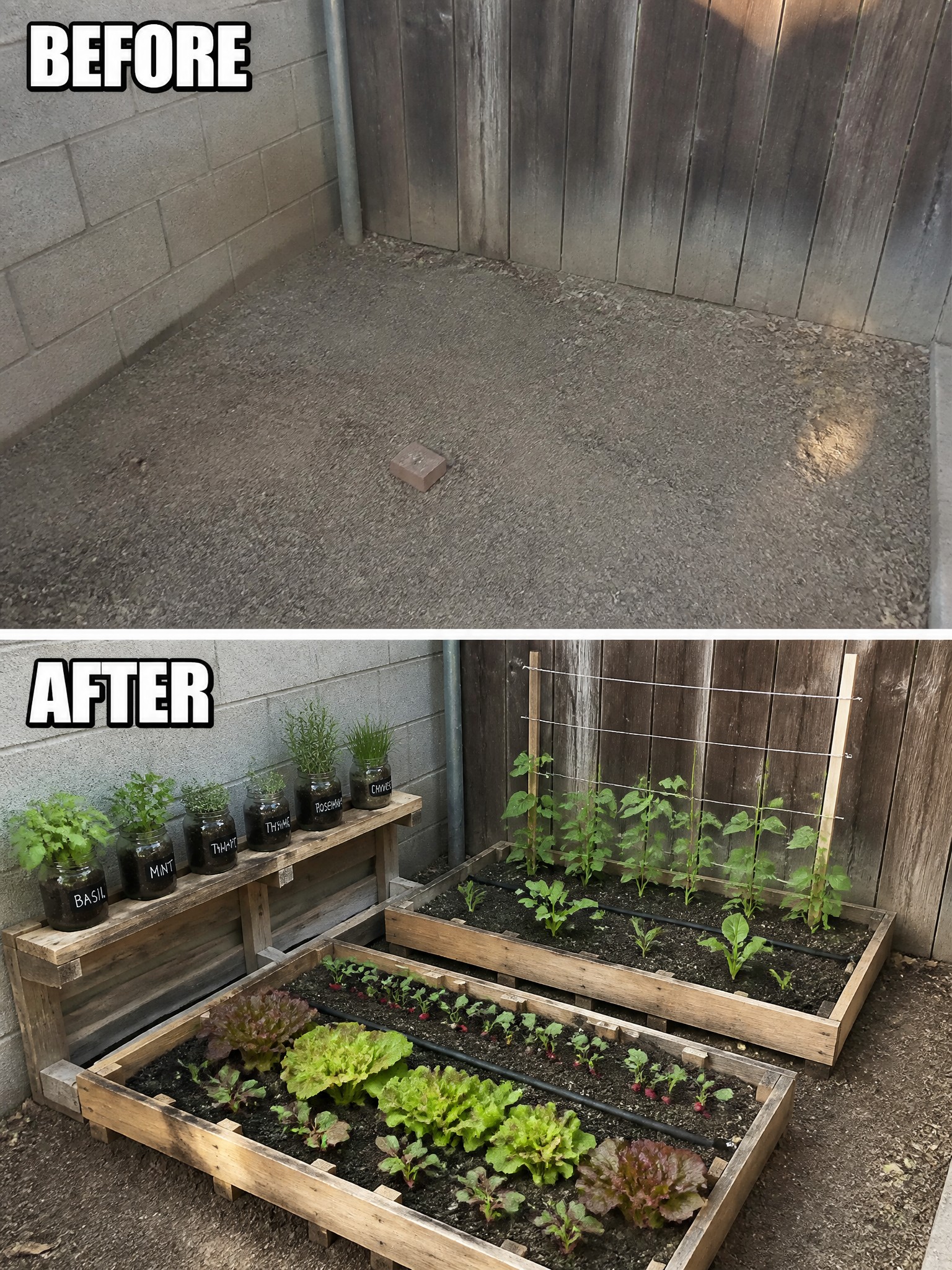
Many small outdoor spaces start out as plain gravel or dirt with no real use. Adding raised beds gives the area clear shape and turns it into a spot where you can grow vegetables and herbs without much extra work.
This approach works best in tight corners or along fences where space is limited. Keep the beds simple, use basic wood, and focus on easy crops first so the garden stays manageable and productive.
Turn An Empty Patio Into A Seating Area
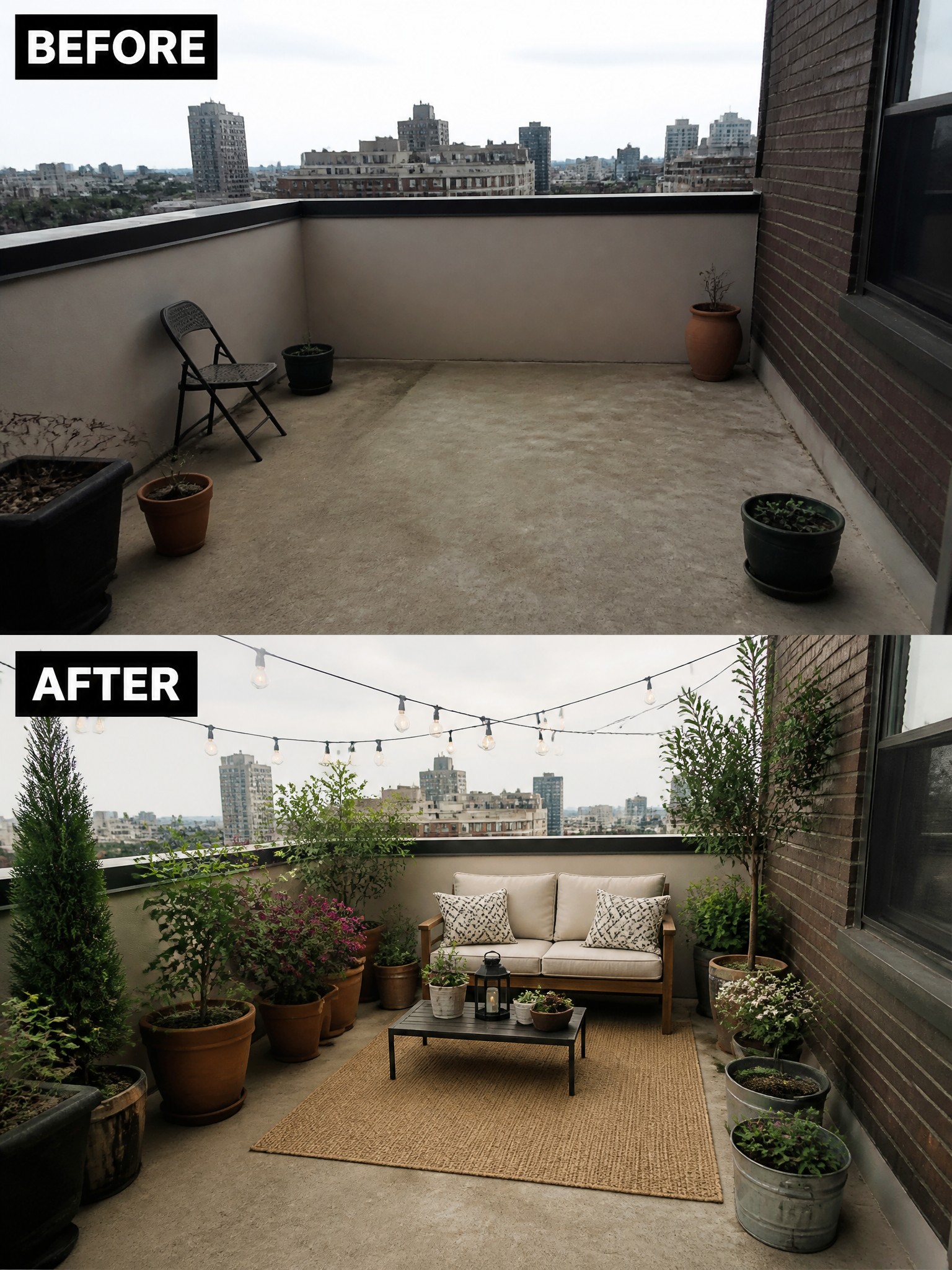
A bare concrete terrace often feels like wasted space until you give it a clear purpose. Placing a rug down first defines the seating zone, then adding a sofa, coffee table, and a few plants turns the area into somewhere you actually want to sit.
This idea suits small balconies and rooftops where furniture needs to stay compact. Keep the pieces weatherproof, leave room to walk around the rug, and add simple overhead lighting so the space works after dark.
Add Shade To Turn A Bare Patio Into A Seating Area
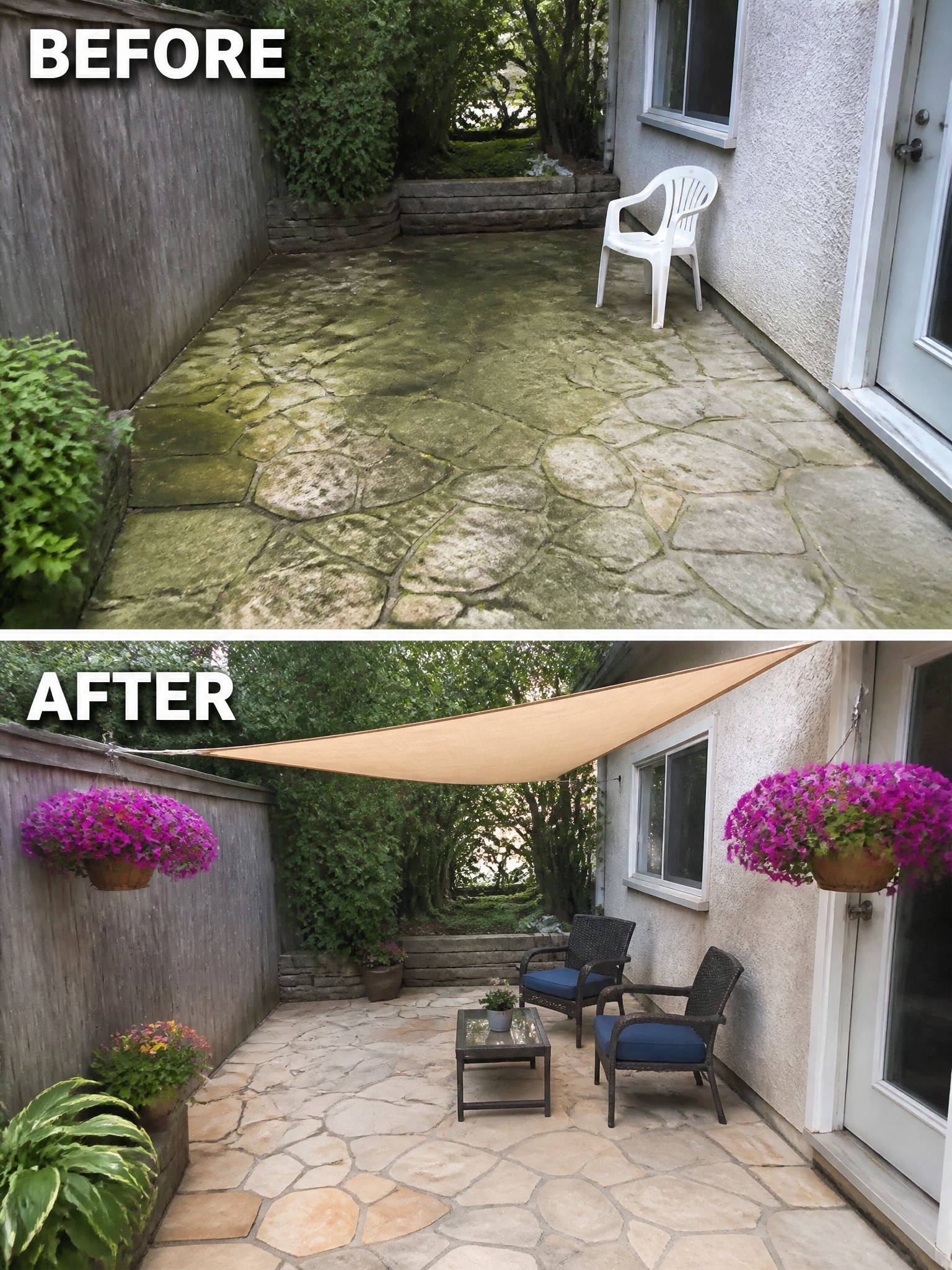
A plain patio with just one chair often stays empty because there is no real reason to sit there. Adding a shade sail overhead and a few pieces of furniture changes the space into somewhere people actually want to spend time.
This idea works well in small yards where you need to create a usable spot without building anything permanent. Keep the furniture simple and weatherproof, and make sure the shade covers the main seating area so the space feels comfortable even on sunny days.
Replace A Patchy Lawn With Gravel And Planting Beds
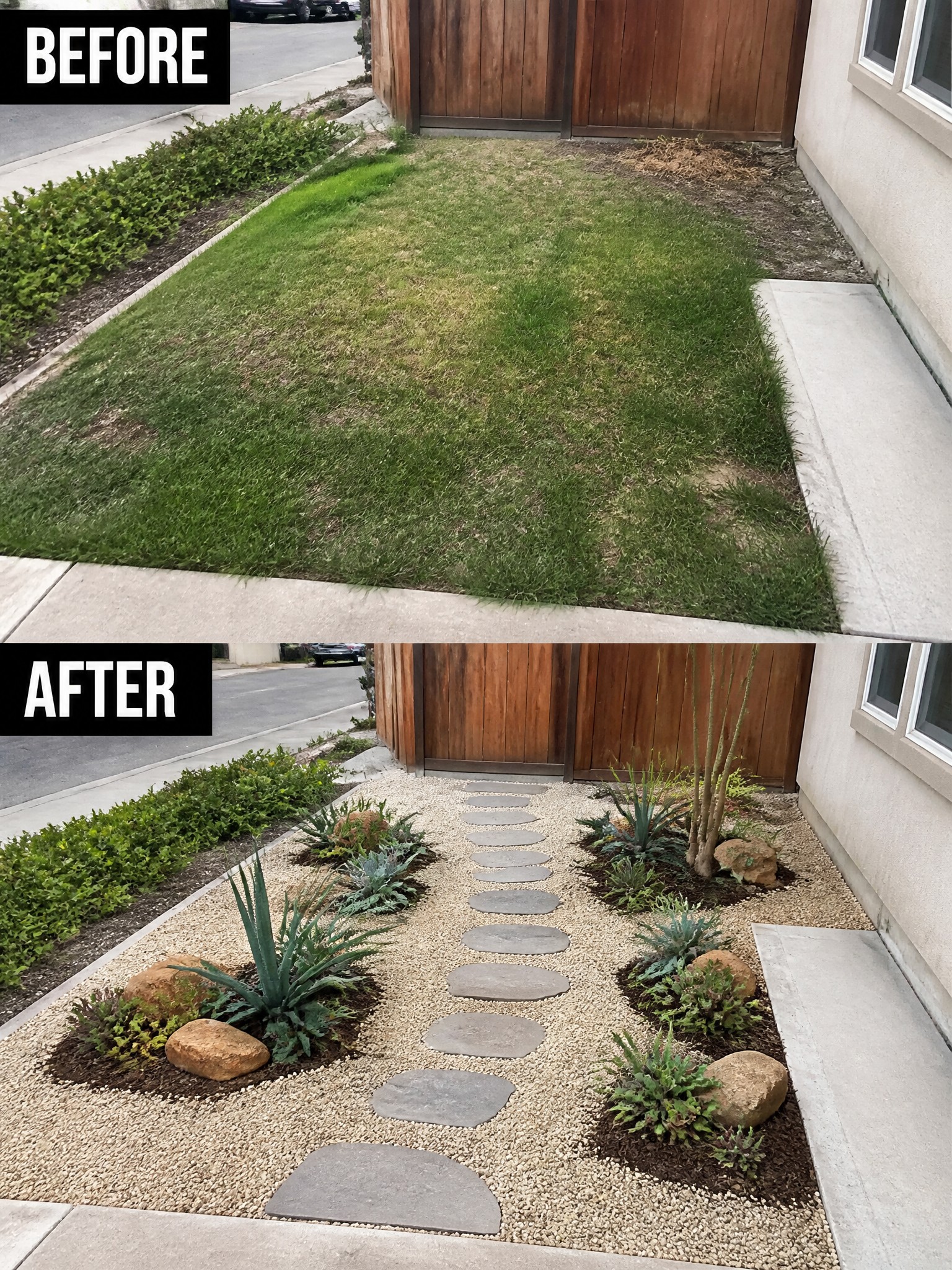
A small side yard with struggling grass often looks messy no matter how often it gets cut. Switching the surface to gravel and adding a few planted pockets removes the need to fight the lawn while giving the space a clear shape and a path that actually works.
This idea suits narrow strips next to the house or driveway where grass tends to thin out. Clear the old turf first, add fabric, then spread gravel and set stepping stones down the middle. Keep the planted areas small and grouped so the beds stay easy to maintain and the path remains open.
Add Lighting And Planting To A Narrow Side Path
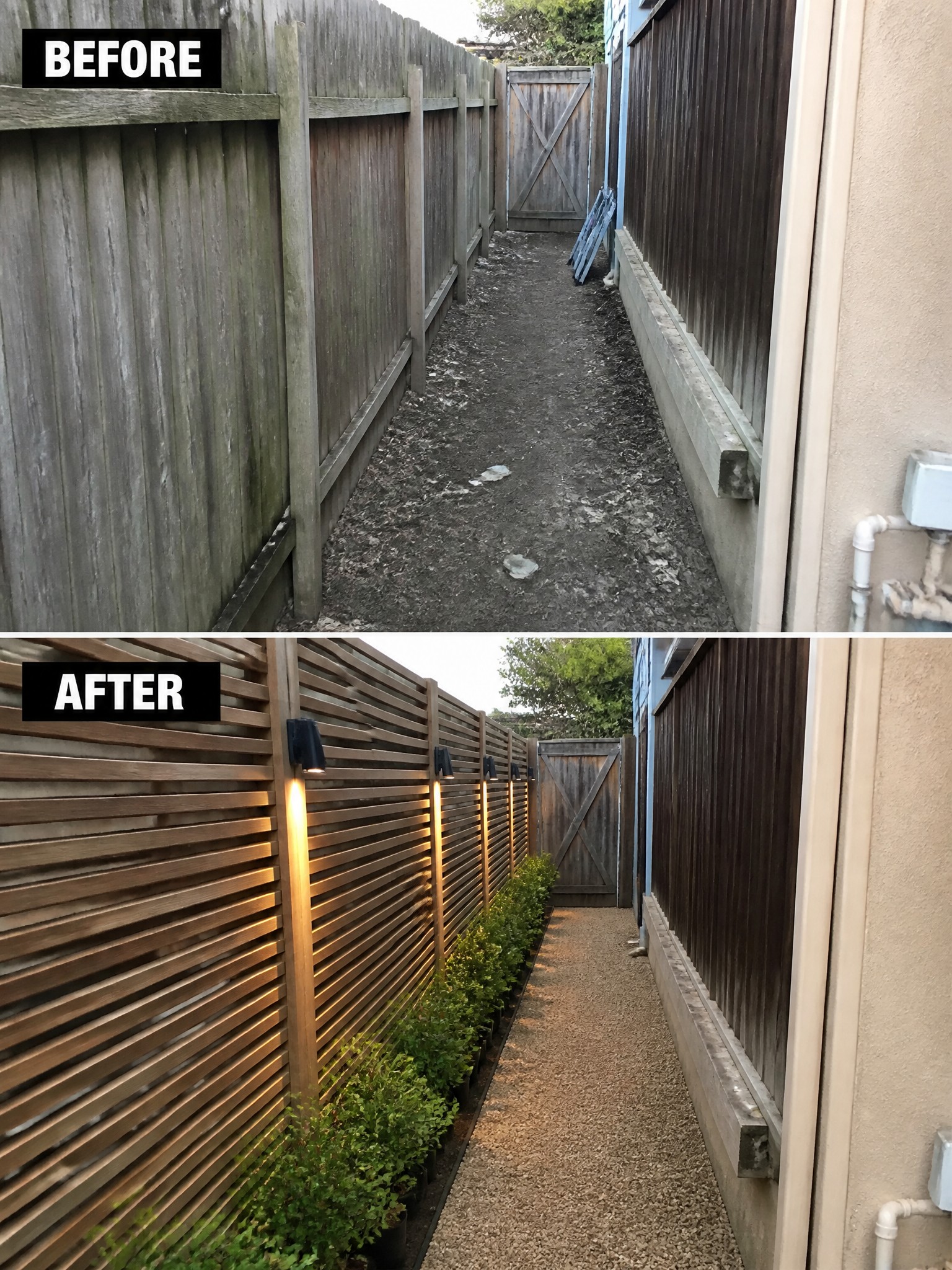
A narrow side passage often gets ignored because it feels like leftover space. In this case the before photo shows bare dirt and an old fence that made the whole area look forgotten. Adding a row of low shrubs along the base and placing lights at regular intervals gave the path a clear edge and made it feel intentional instead of just a gap between buildings.
This approach works well in tight side yards or alleyways where you do not have room for big features. Start with the planting and lighting first, then decide if you want to change the fence style later. Keep the plants low so the path stays easy to walk through, and choose lights that point downward to avoid glare on neighboring windows.
Turn A Bare Patio Into A Simple Seating Area
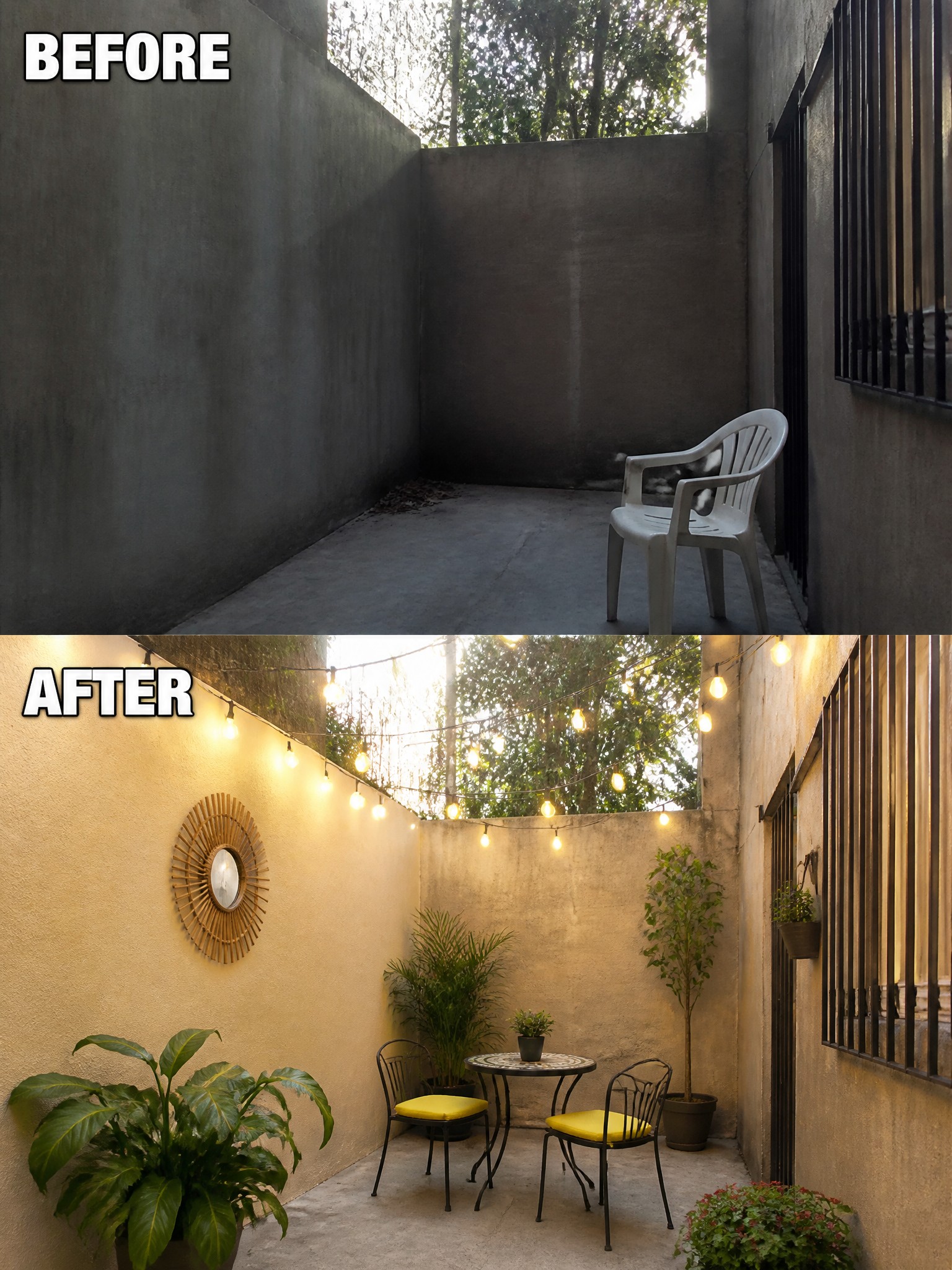
A small concrete space often stays empty because it feels cold and unfinished. String lights overhead and a couple of chairs with a small table change that fast and make the area feel like somewhere you can actually sit.
This works best in tight side yards or urban courtyards where you cannot add big structures. Keep the furniture scale modest so there is still room to move around, and use lights that plug in easily so the whole setup stays budget friendly.
Turn A Bare Balcony Into A Seating Area
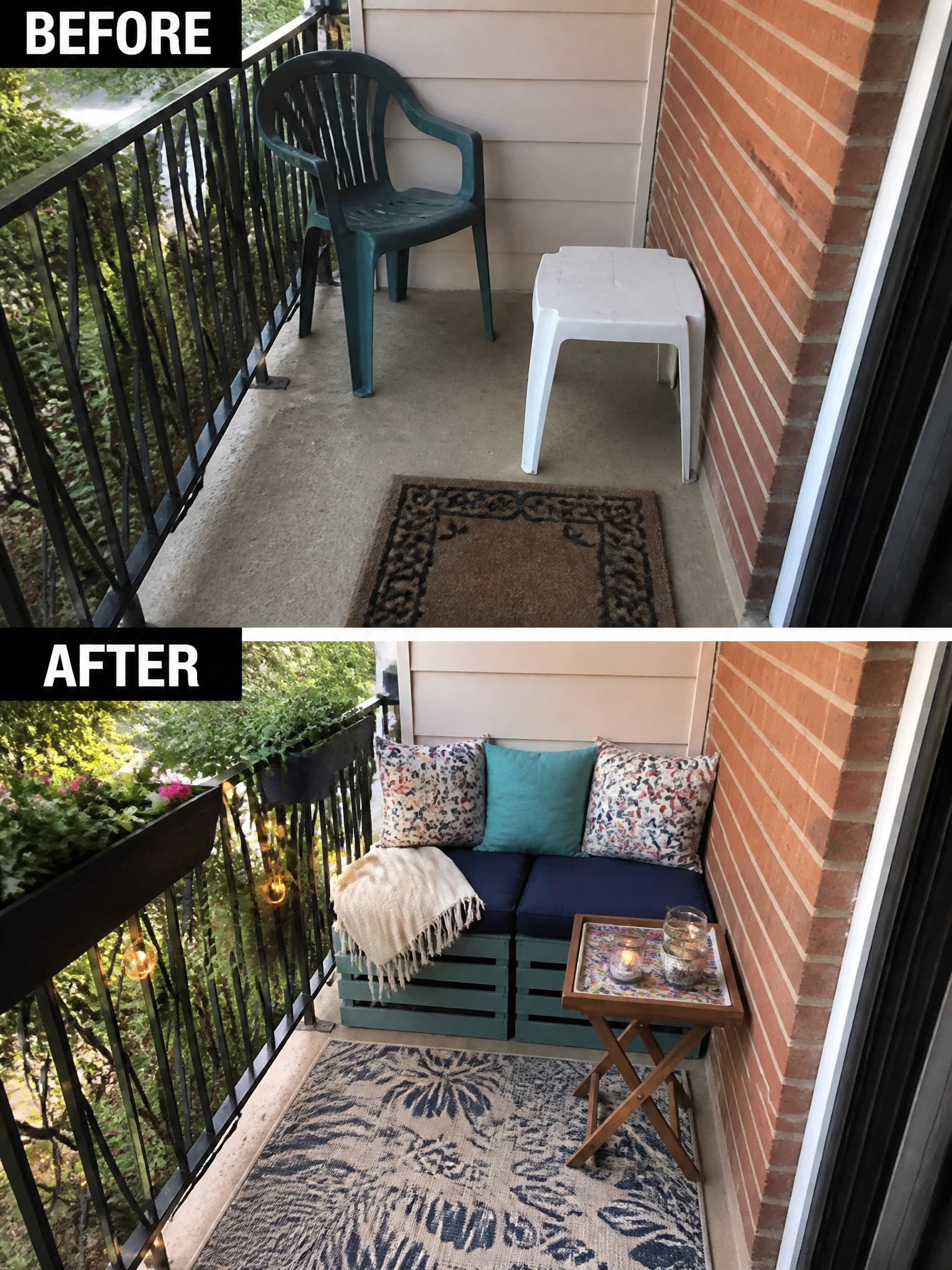
A small balcony often stays empty because it feels too narrow for real furniture. Building a low bench from crates gives you a place to sit without taking up much room, and a simple rug helps mark the space as usable instead of just a walkway.
This idea works on any small outdoor spot that gets light use. Keep the seating low and add only a few pieces like cushions or string lights so there is still room to move around. Focus on weatherproof materials and leave enough floor space open for walking through.
Frequently Asked Questions
Q: Where should I start if my balcony is barely big enough for a chair?
A: Pick one wall and hang a few lightweight shelves or baskets there. Fill them with herbs you actually cook with so the space feels useful right away. Shift things around after a week if the layout feels off.
Q: What if I only have a few dollars to spend this month?
A: Use old jars or buckets you already own and plant seeds from the grocery store. Set them in the sunniest spot and water when the soil dries out. You end up with fresh greens without buying anything new.
Q: How often do these small gardens need work?
A: Check the plants every couple of days and remove dead leaves as you notice them. That quick pass keeps everything healthy when the area stays small. Skip anything that needs daily fuss if your schedule stays busy.
