

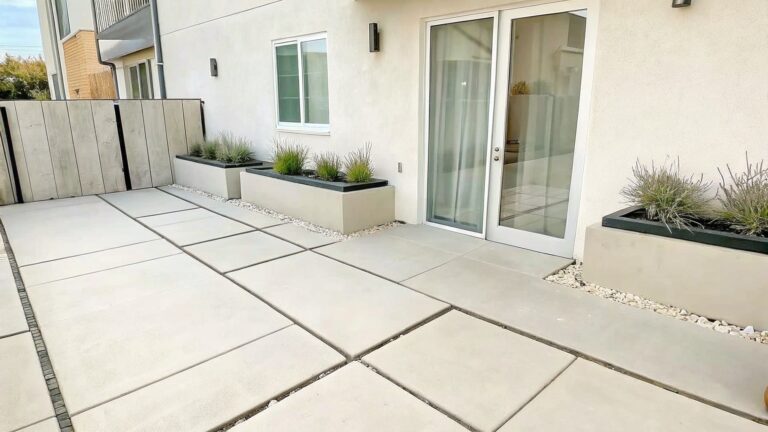
I have watched patios lose their shape after one rough winter because the decor was chosen more for looks than staying power.
Planting beds right next to them face the same exposure yet often get overlooked until the edging warps or the accents fade.
Weather takes its toll fast.
I tend to test items first in the spots that get the most direct sun and rain so I can see what actually lasts before committing to more of them.
Small choices like weighted bases or sealed finishes have made a bigger difference in how often I need to redo these areas than any single style decision.
Concrete Planters Along Paver Paths
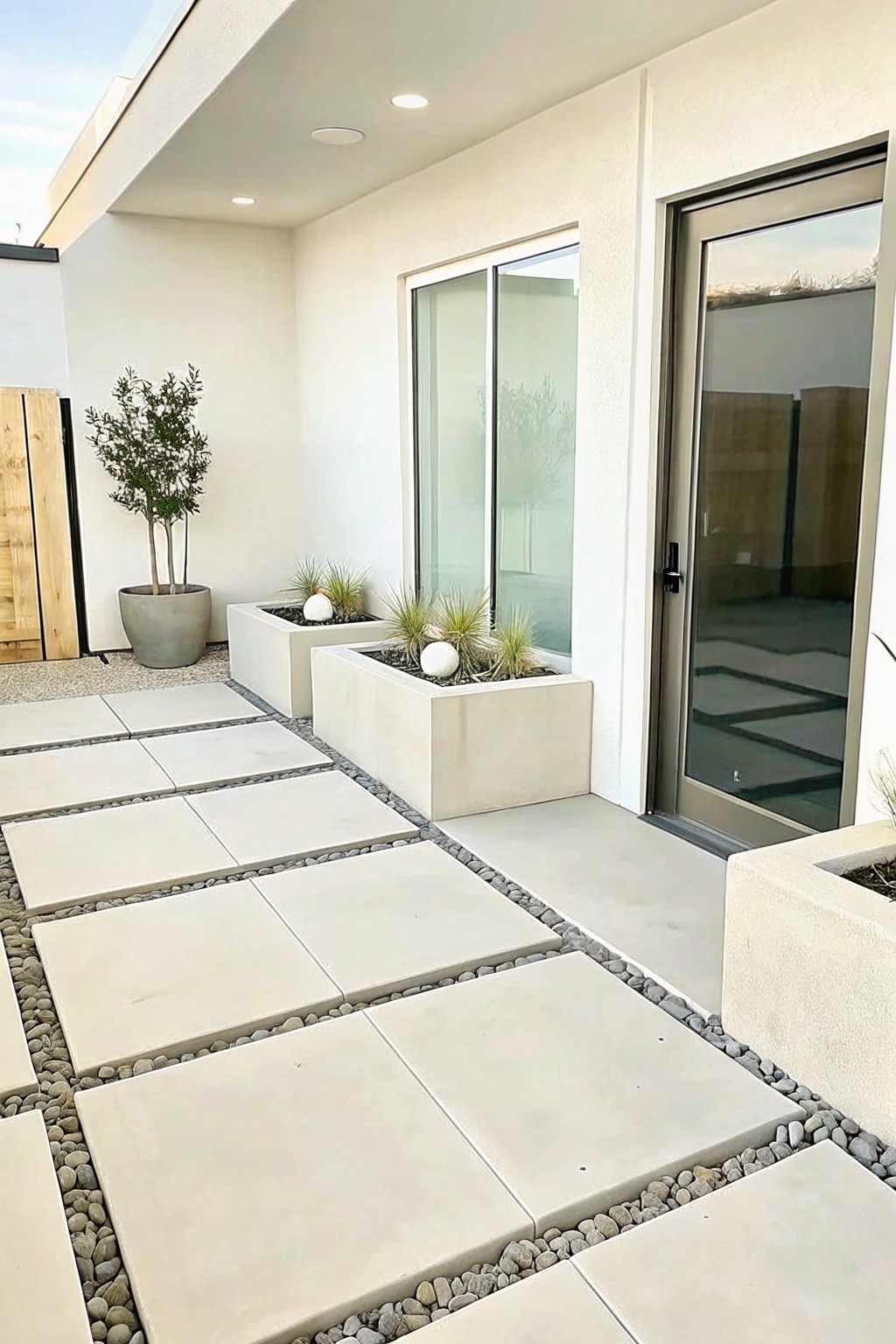
Concrete planters give you a simple way to add planting beds without worrying about rot or constant repairs. They sit right against the path and hold up fine through rain, sun, and temperature swings.
This works well on side yards or small patios where you want low upkeep and clear lines. Place them along a gravel-edged paver walkway and fill them with tough grasses or small shrubs that do not need much water.
Built-In Bench Seating Along Walls
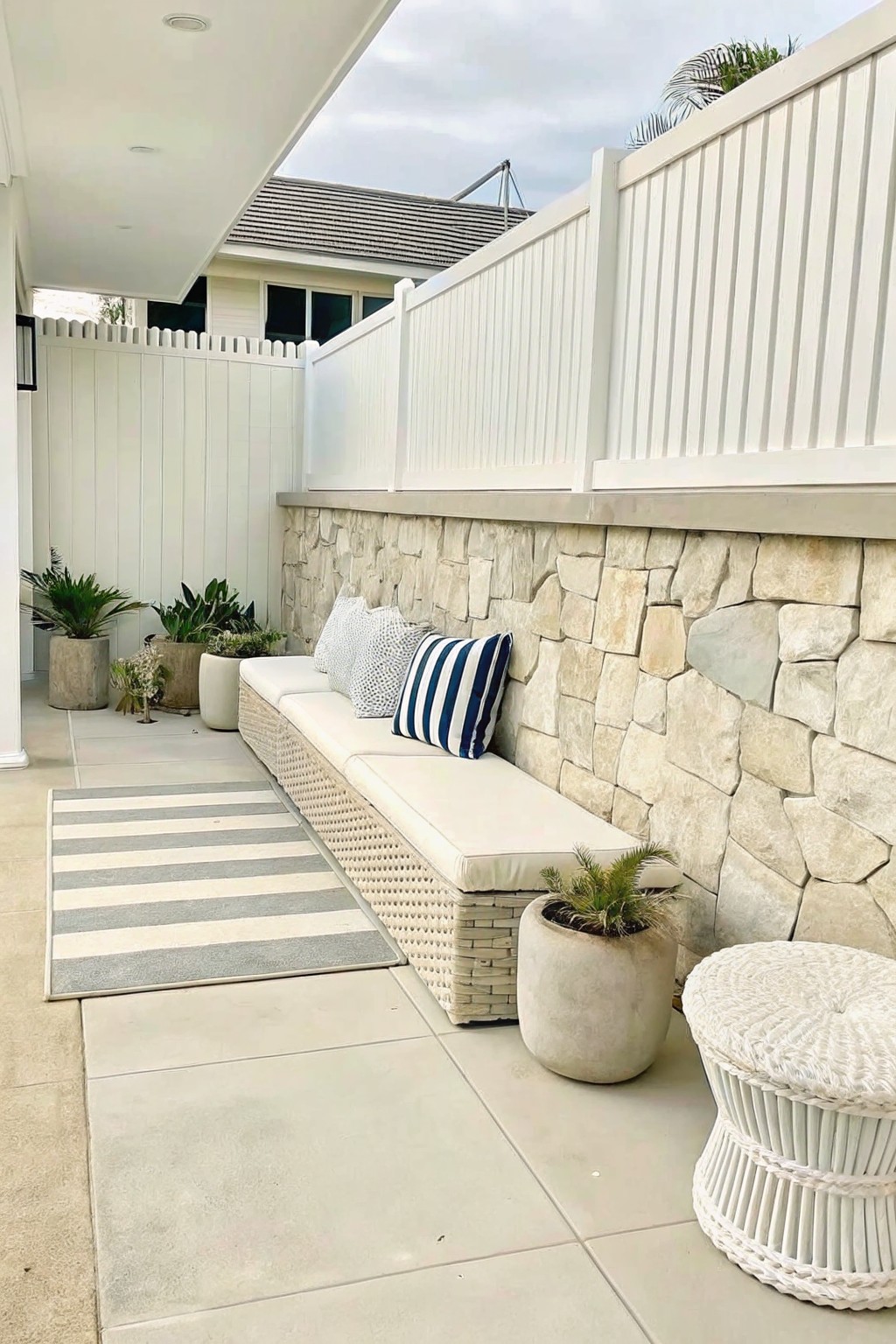
Built-in benches give you a simple way to add seating that stays put through wind, rain, and sun. Because the base is fixed to the structure, it does not shift or tip, and you can choose materials like stone or woven resin that handle moisture without rotting or fading fast.
This setup works best on patios that already have a solid wall or raised edge. Run the bench along the wall, keep cushions loose so they can be brought inside during bad weather, and add a few potted plants nearby for softness without extra furniture to maintain.
Add Overhead Cover to Your Patio Table
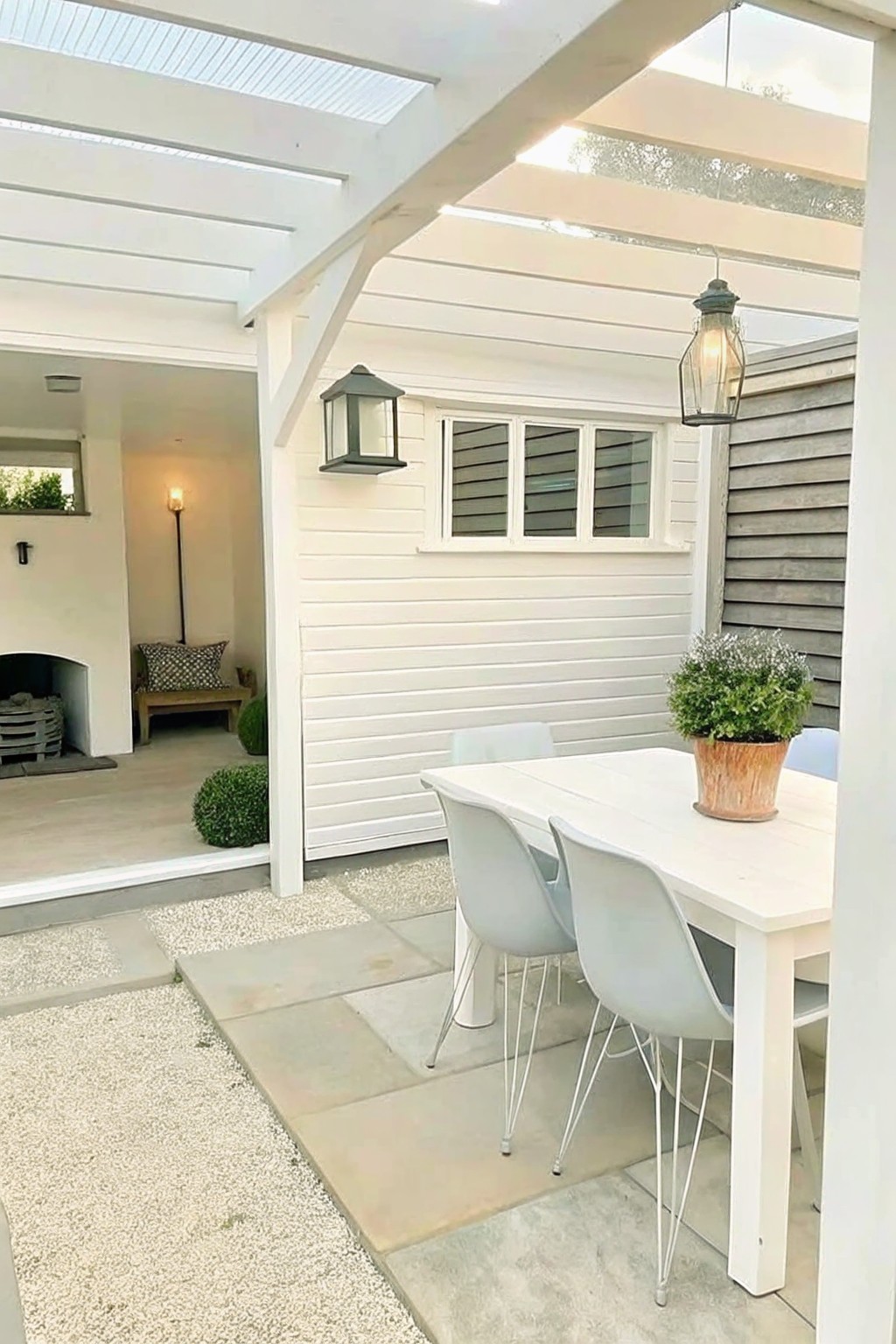
A covered spot over the dining table lets you use the patio more often without moving everything inside at the first sign of rain or strong sun. The simple roof structure keeps the furniture dry and shaded while still feeling open to the garden.
This setup works best on patios right next to the house where you can tie the cover into the existing roofline. Painted wood holds up well if you keep the sides open and choose sturdy chairs that can stay out year round.
Built-In Benches With Raised Planters
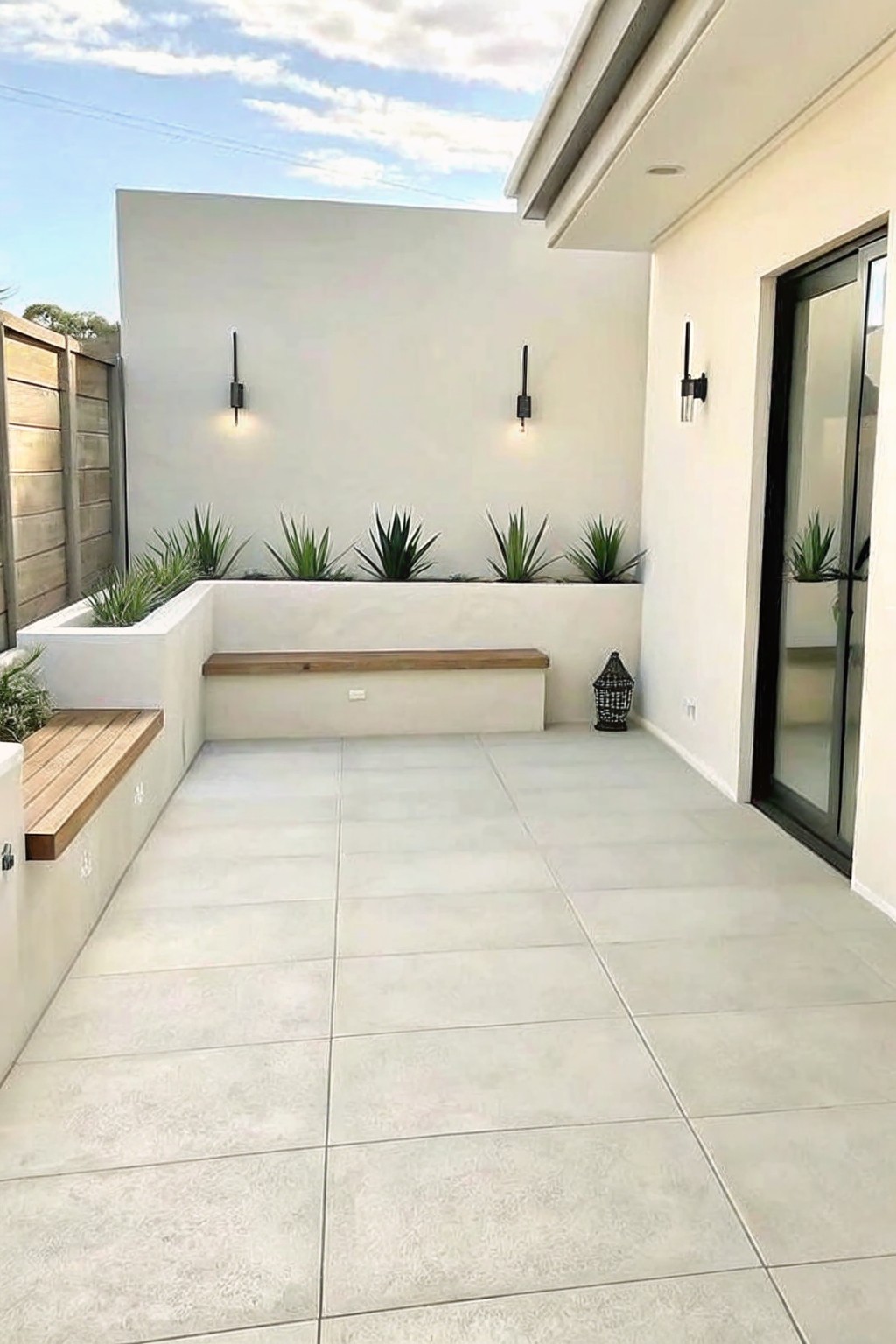
Built-in benches paired with raised planters give patios a simple way to add seating without bringing in separate furniture that can weather badly. The combination keeps everything low and sturdy, so the space stays usable even after rain or strong sun.
This setup works well on homes with flat outdoor areas that get regular use. Use durable materials for the base and pick plants that tolerate exposure, then keep the bench tops in a material that can handle sitting and weather without much upkeep.
Built-In Benches For Weather Exposed Patios
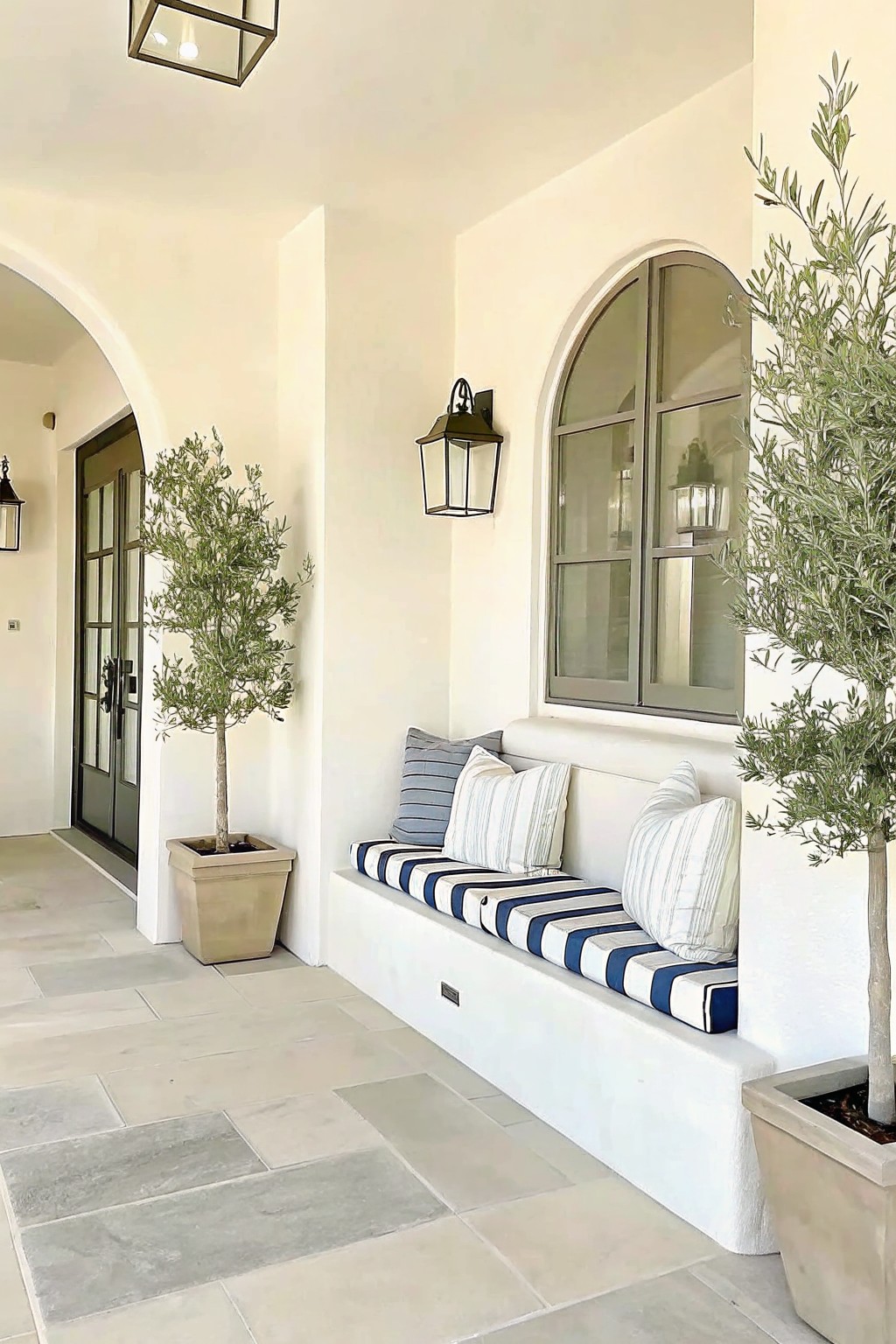
Built-in seating works well on patios because it stays put and avoids the wear that comes with loose furniture. A simple bench along a wall can handle rain and sun better than most freestanding pieces, especially when the cushions are made from sturdy outdoor fabric.
This approach suits homes with covered outdoor areas where you want seating without adding clutter. Keep the cushions in a few basic colors and add a couple of large pots with trees on each end to frame the space and soften the look. Just check that the bench has good drainage so water does not pool.
Large Tiles With Pebble Gaps For Wet Weather Patios
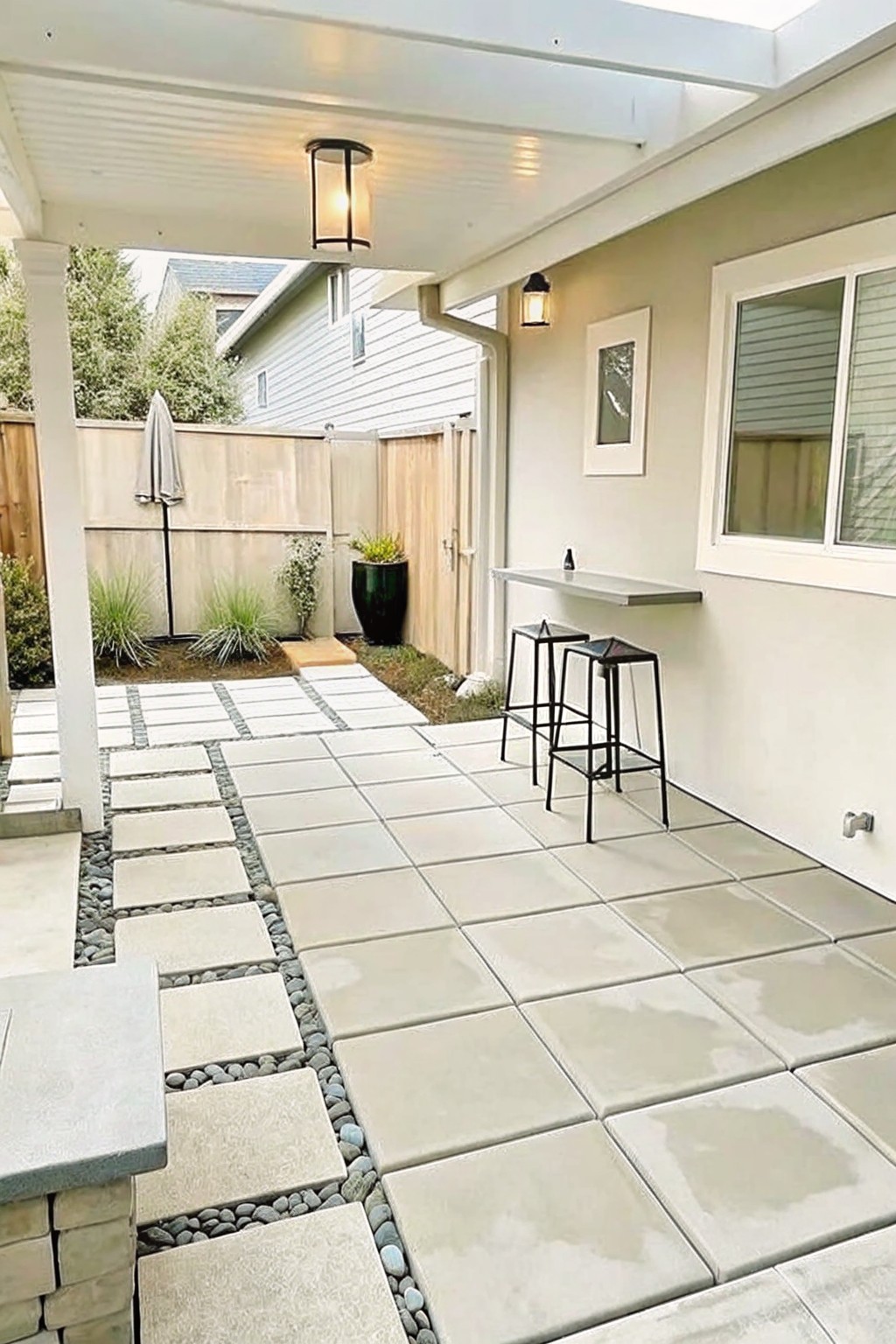
Large square tiles separated by bands of small pebbles give a patio surface that handles rain without turning into a puddle. The gaps let water drain straight through instead of sitting on top, which keeps the tiles cleaner and reduces slipping when things stay damp for days.
This layout works best on uncovered or partly covered patios where you still want solid footing for stools and tables. It pairs well with a simple bar counter along one wall since the hard surface stays easy to sweep and hose off over time.
Stone Paving for Exposed Patios
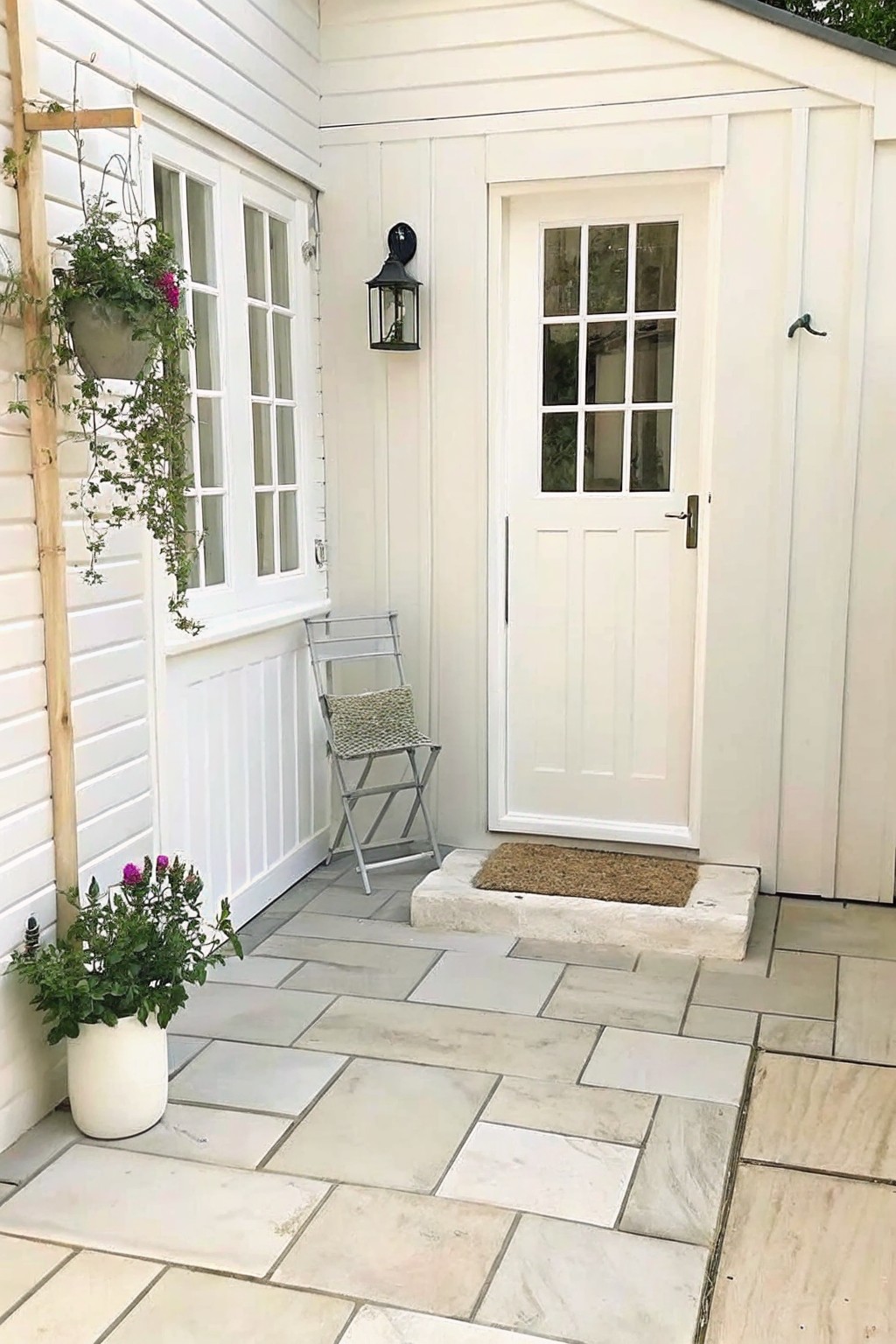
Stone paving holds up well when a patio sits out in all kinds of weather. It resists cracking from freeze and thaw cycles and does not wear down from constant foot traffic the way wood or composite decking often does. Many people choose it because it needs almost no upkeep once it is down.
Large slabs work best in open areas where you want a solid, level surface that still drains. They suit homes with simple garden beds nearby and give you room to add a doormat or a single chair without crowding the space. Just make sure the base is properly prepared so water does not pool underneath.
Wooden Crate Planters for Exposed Patios
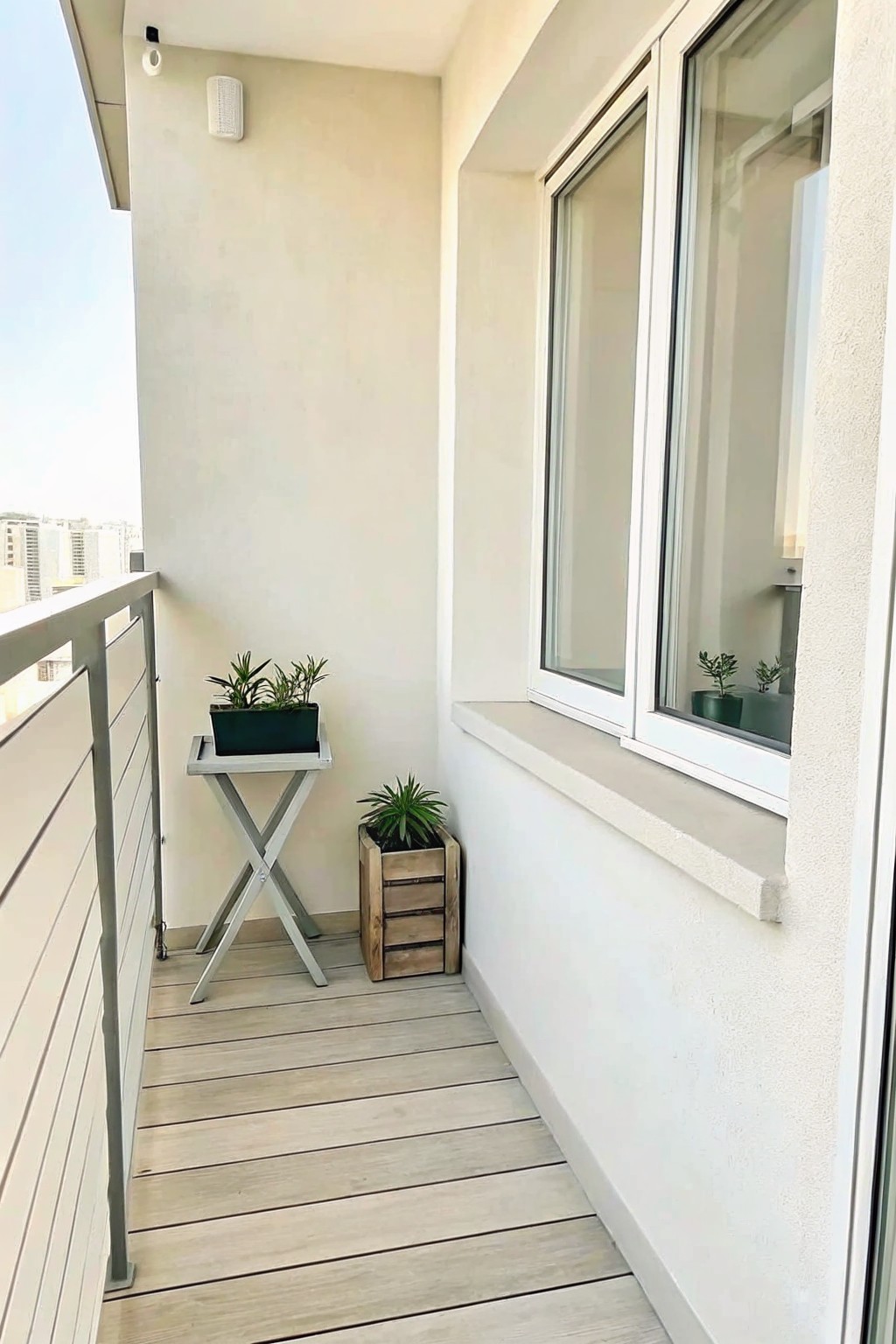
Wooden crate planters give a simple way to add greenery on balconies and patios that get full weather. They hold up better than lightweight pots and keep the plants stable even when wind picks up.
These crates suit small urban outdoor spaces where you need something low maintenance. Place them directly on decking or a basic stand, and they blend in while handling sun and rain without extra protection.
Large Pavers for Low Maintenance Patios
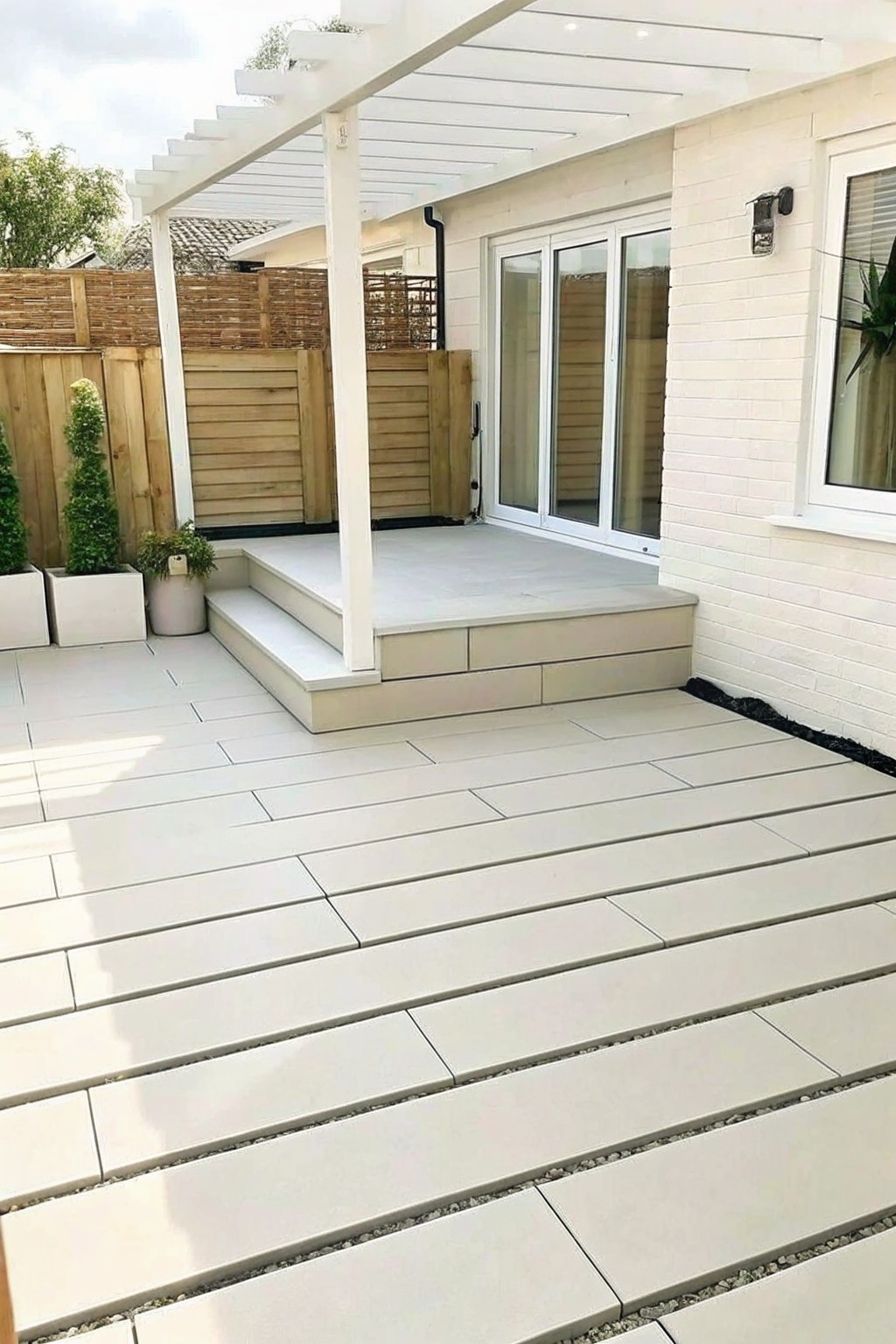
Large pavers stand out on weather-exposed patios because they create a solid surface that resists cracking and needs little upkeep. The light color also reflects heat, which helps keep the area cooler during summer months.
They suit most homes with flat outdoor spaces where drainage matters. Lay them over a stable base and leave small gaps for water to run off so the surface stays even after heavy rain.
Define Patio Zones With a Tile Border
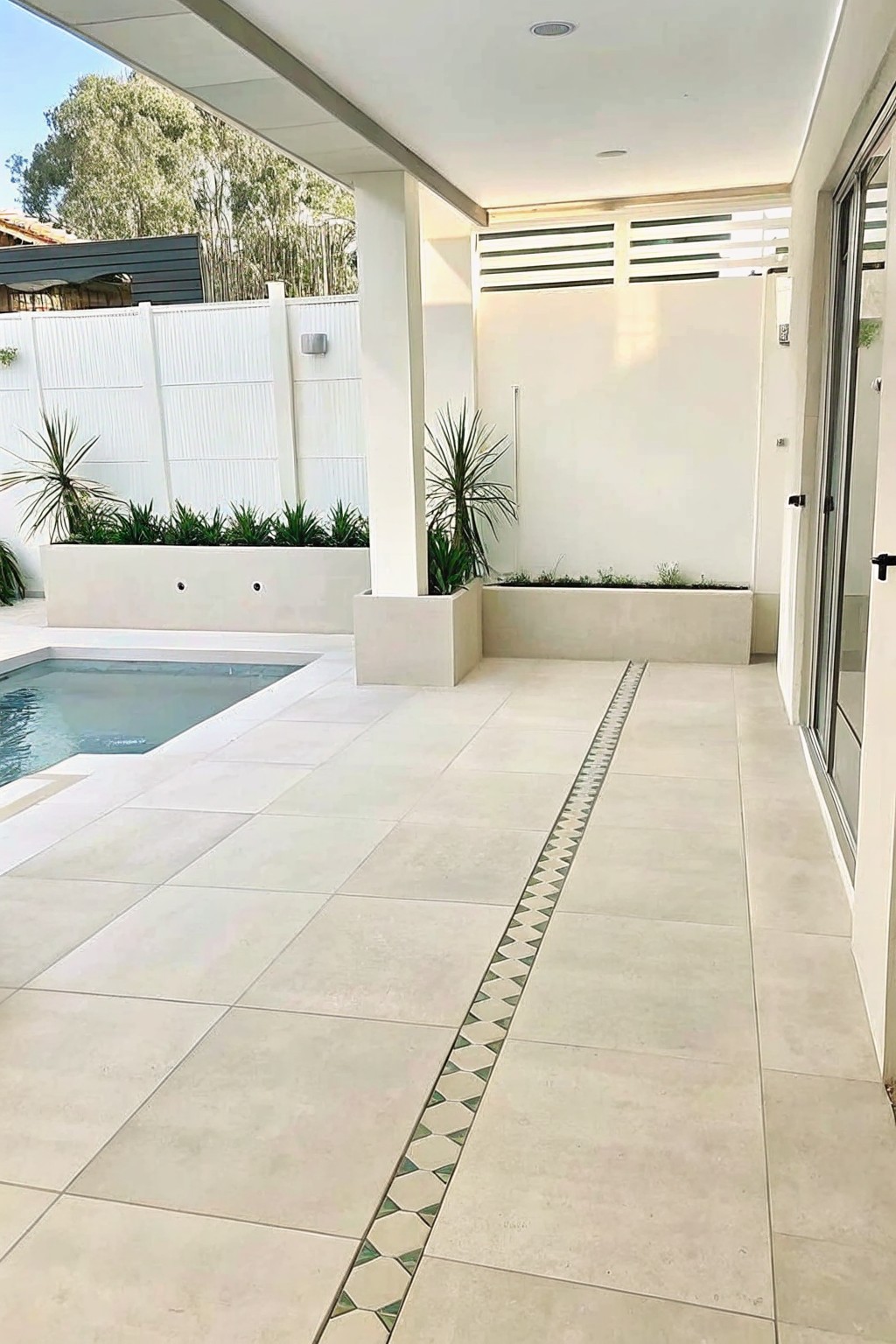
A border of smaller patterned tiles running through the paving gives the whole area a clear line without adding clutter or extra pieces that could move in wind or weather. It breaks up the large flat surface and makes the space feel more intentional around the pool and planters.
This approach works best on open patios that get full sun and rain because everything stays fixed to the ground. It suits homes that want a touch of detail but still need surfaces that are easy to clean and hold up over time.
Raised Concrete Borders For Planting Beds
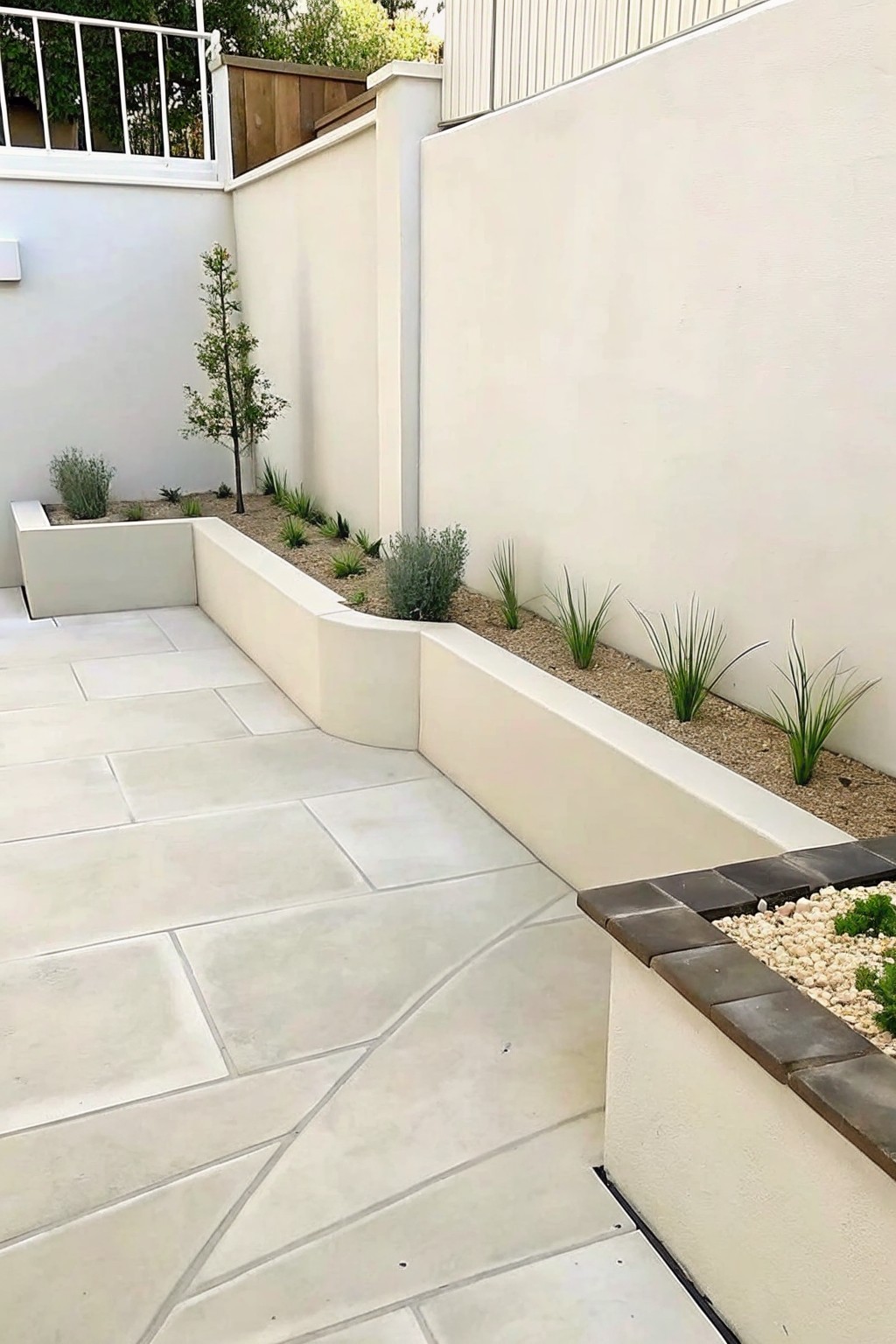
Raised concrete borders give planting beds a solid edge that stands up to rain, wind, and constant sun. They hold everything in place without shifting or crumbling over time, which makes them practical for spots that get full exposure.
You can run them along walls or around paved areas where regular soil beds tend to wash out or look messy. Gravel inside the borders adds drainage and keeps weeds down, so the whole setup stays neat with very little upkeep.
Concrete Raised Beds For Exposed Patios
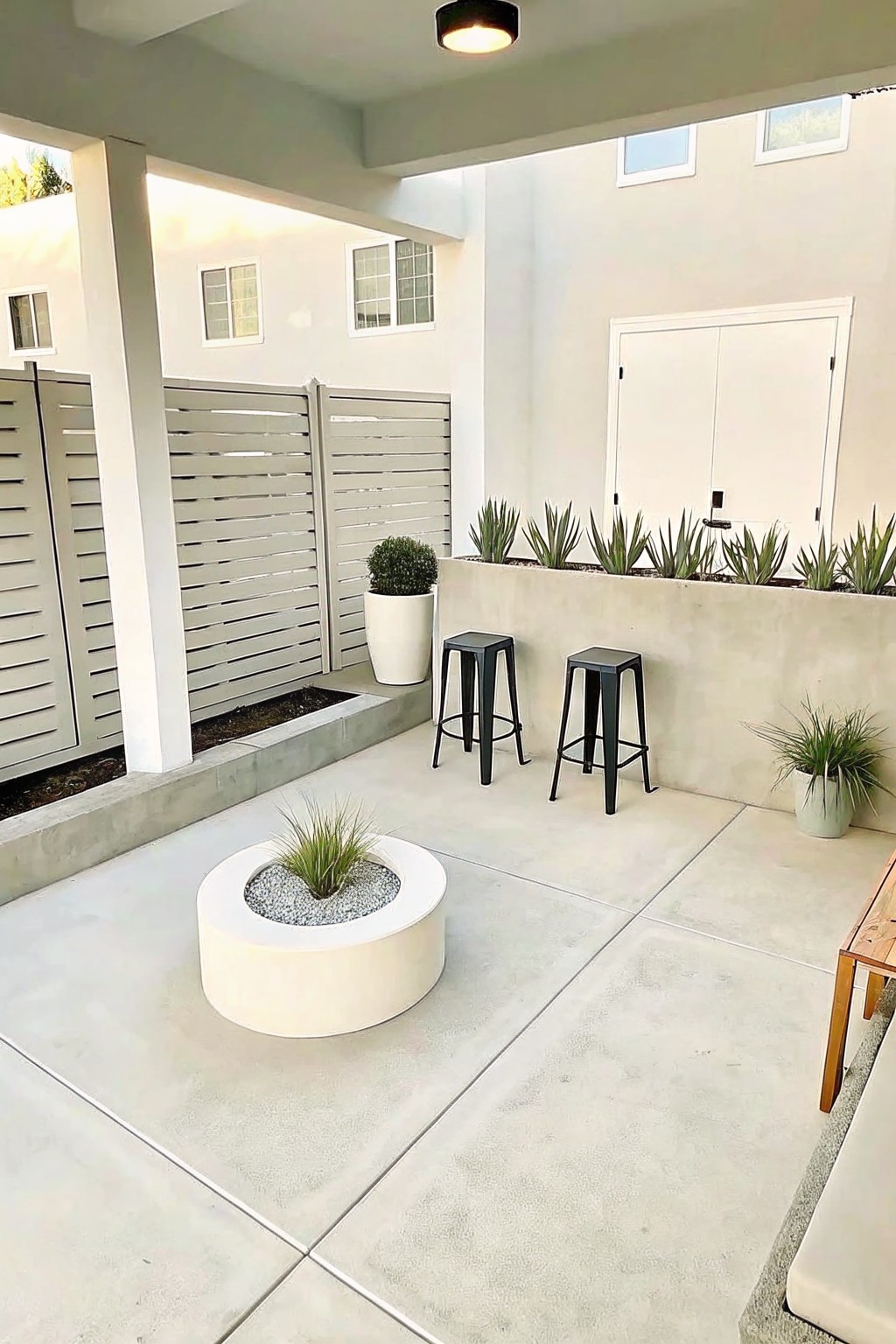
Concrete raised beds work well on patios that stay open to the weather because they do not rot or warp like wood. The material holds up to rain and sun without much upkeep, and it gives a clean edge that keeps soil in place while still looking simple.
These beds suit homes with mostly hard surfaces where you want a bit of planting without adding separate pots that can blow over. Keep the height low so the space still feels open, and choose plants that handle dry spells once they are established.
Raised Planters Along Patio Edges
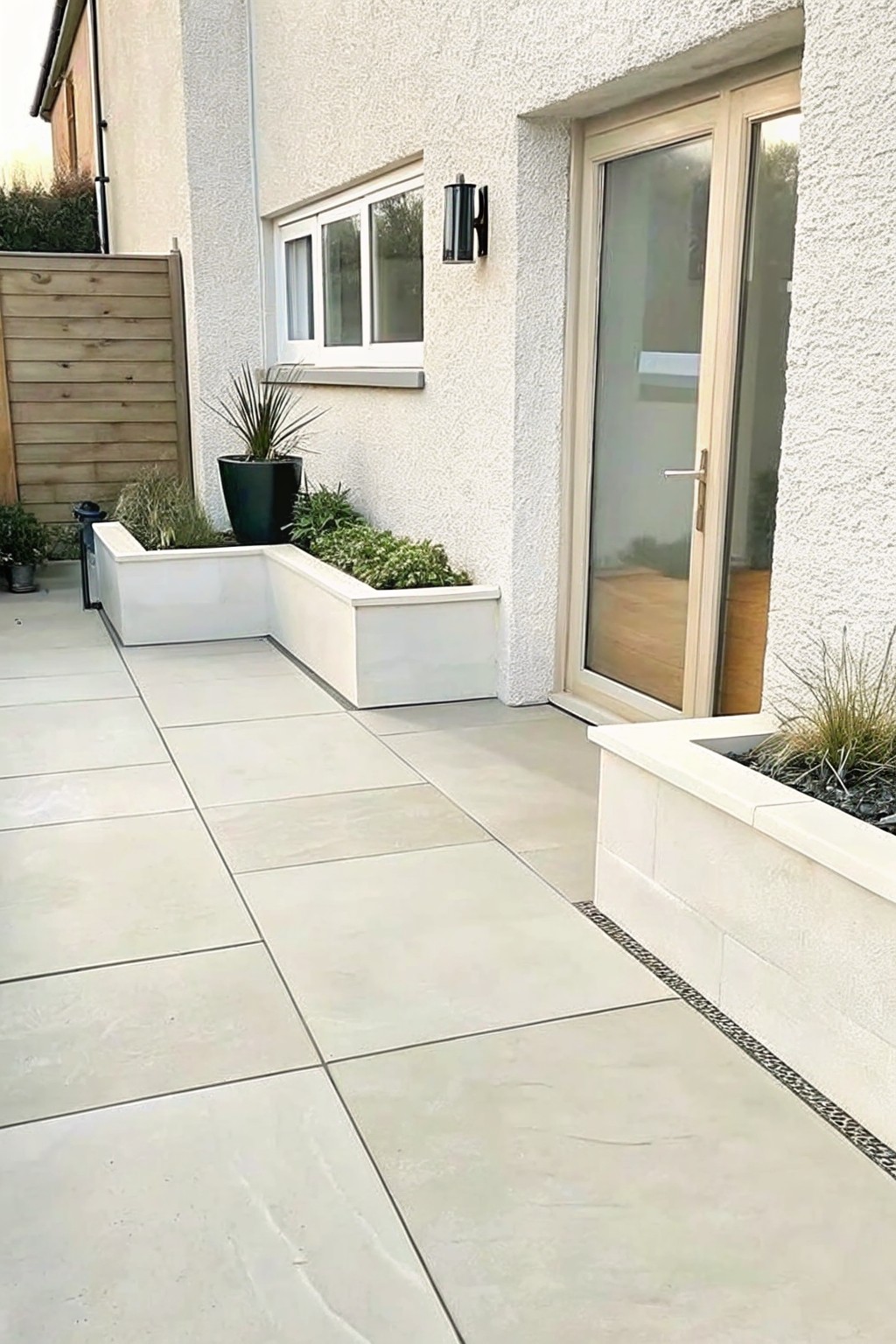
Raised planters built right into the patio surface give planting beds a solid structure that holds up through rain, wind, and changing seasons. They keep soil contained without relying on separate pots that can crack or blow over, and the clean lines help the whole area feel more organized.
This setup works well on paved patios where you want some greenery but still need clear walking space. Use a durable material like concrete or composite that matches your paving, and add a simple drainage strip along the base so water does not pool. It suits homes with smaller yards that need low-maintenance beds rather than loose containers scattered around.
Built-In Counters For Outdoor Cooking
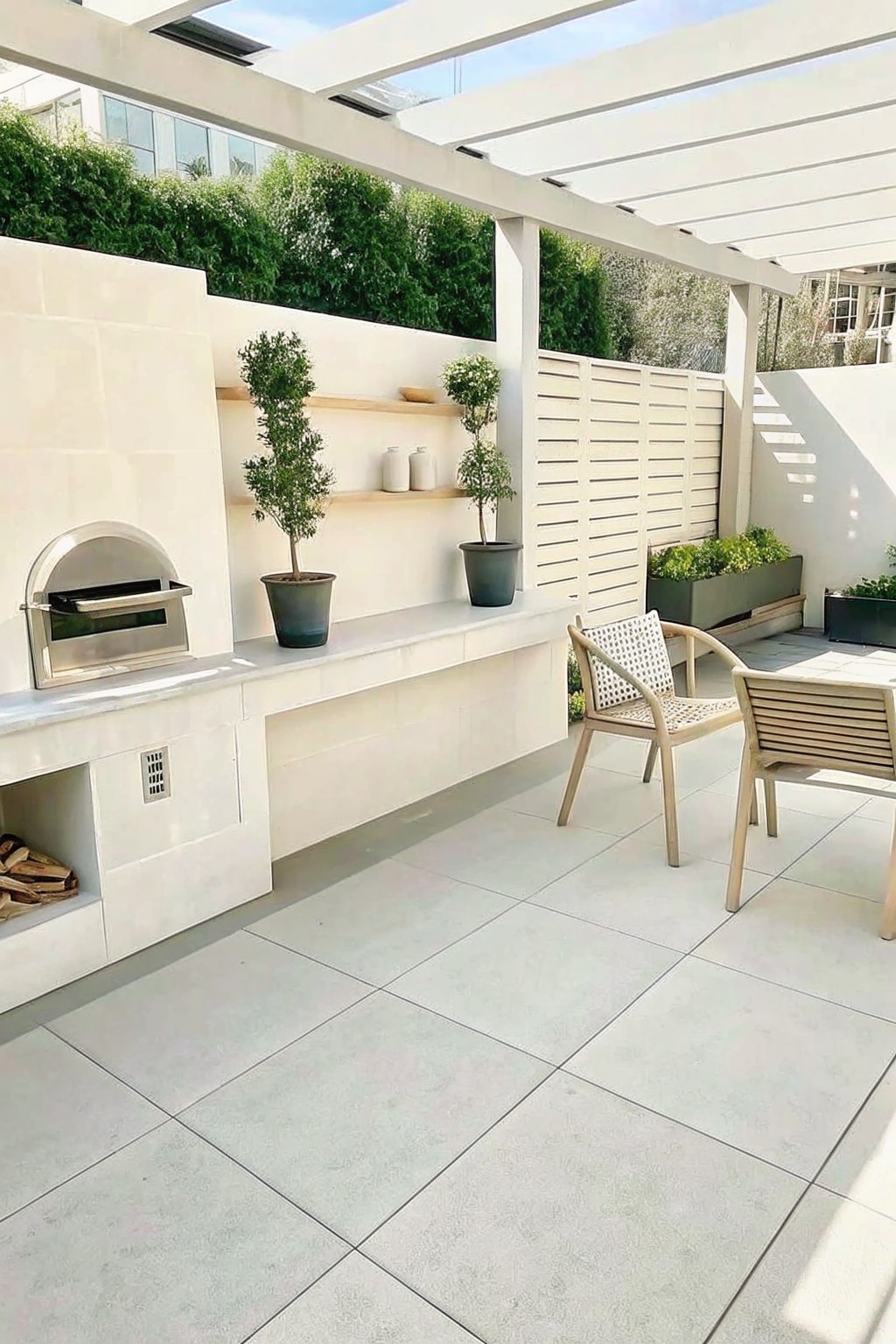
A built-in counter gives a patio a solid work surface that stays useful through all kinds of weather. It keeps the cooking area organized and ties the space together without needing extra furniture that can blow around or wear out.
This setup works best on patios that see regular use for meals or gatherings. Pick materials like tile or stone that resist moisture and sun, and add simple storage below for tools and fuel so the area stays tidy year-round.
Raised Planters for Paved Patios
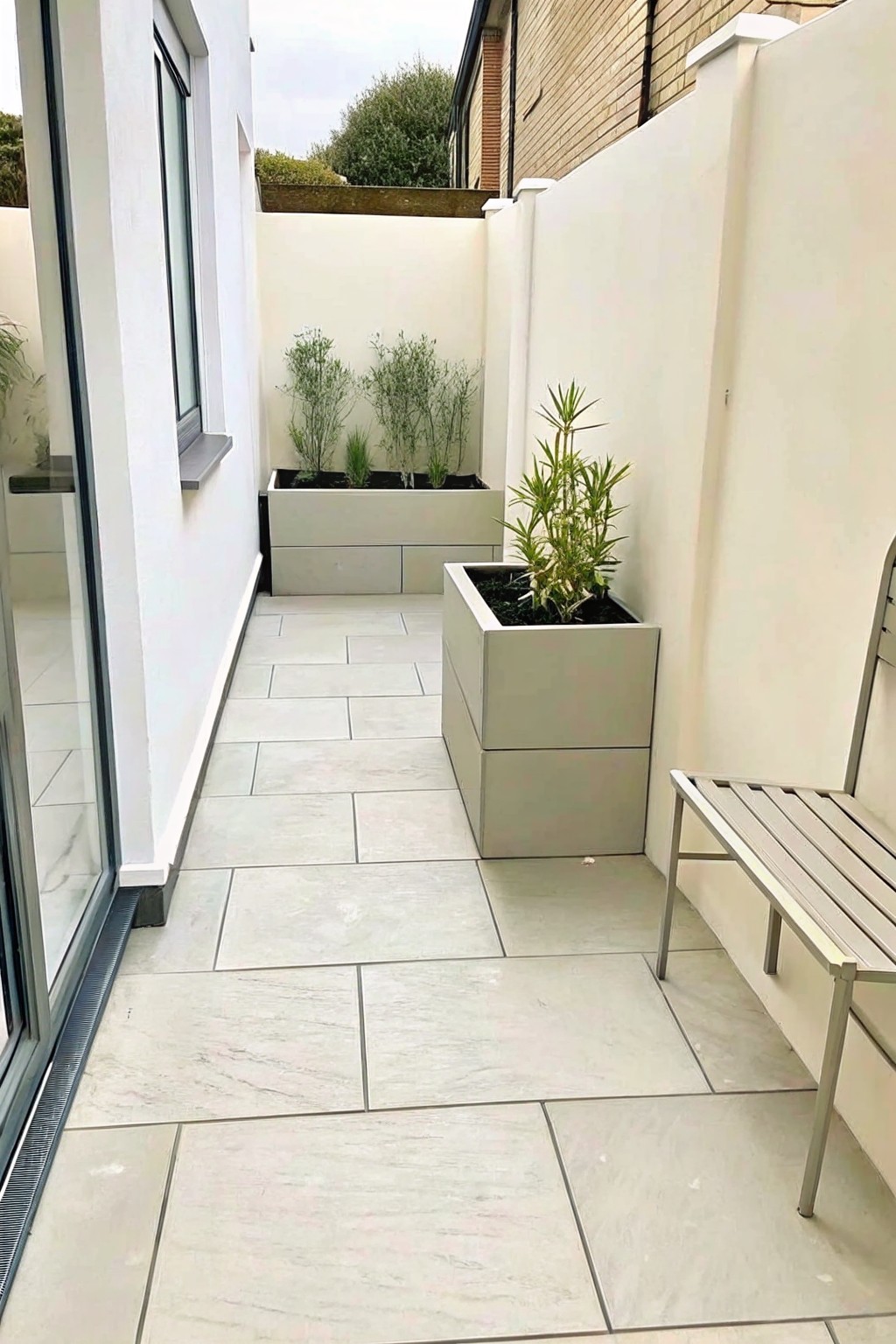
Raised planters give you a simple way to add plants to a patio that has no soil. They sit on the hard surface, keep the roots contained, and stand up to rain and sun without wearing down the way in-ground beds sometimes do.
These work best on small or narrow outdoor spaces where you still want some greenery but need to leave room for walking or seating. Place them along a wall or in a corner so they add height without taking over the floor.
Basket Planters For Bathroom Plants
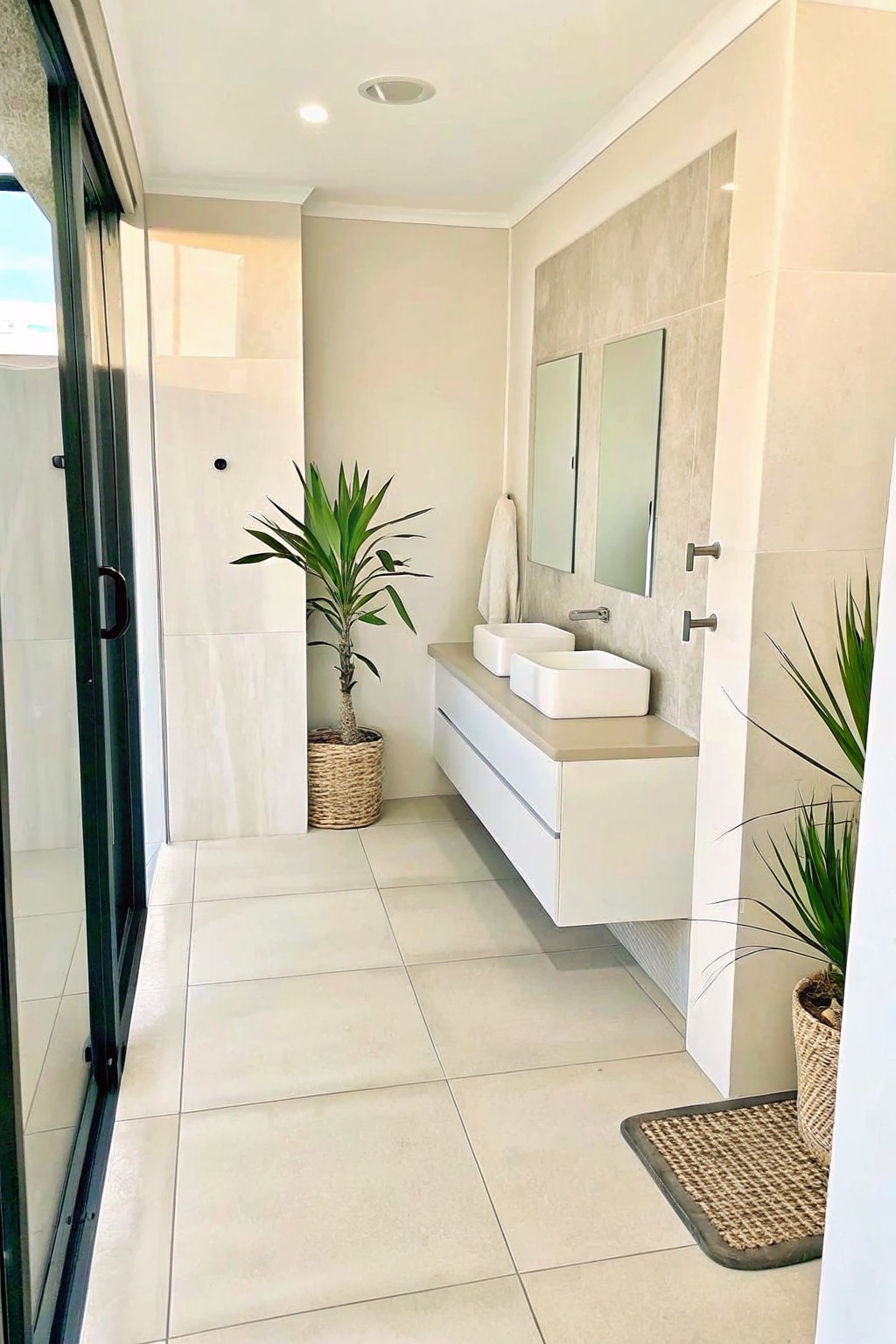
Large woven baskets work well as planters because they add a natural texture that balances out all the hard surfaces in a bathroom. The neutral color keeps things calm while the plant itself brings a bit of life into the space without needing built-in shelves or extra furniture.
They suit tiled bathrooms that already have a clean, simple look. Just make sure the basket sits on a waterproof tray or liner so moisture does not damage the floor underneath.
Concrete Edging for Planting Beds
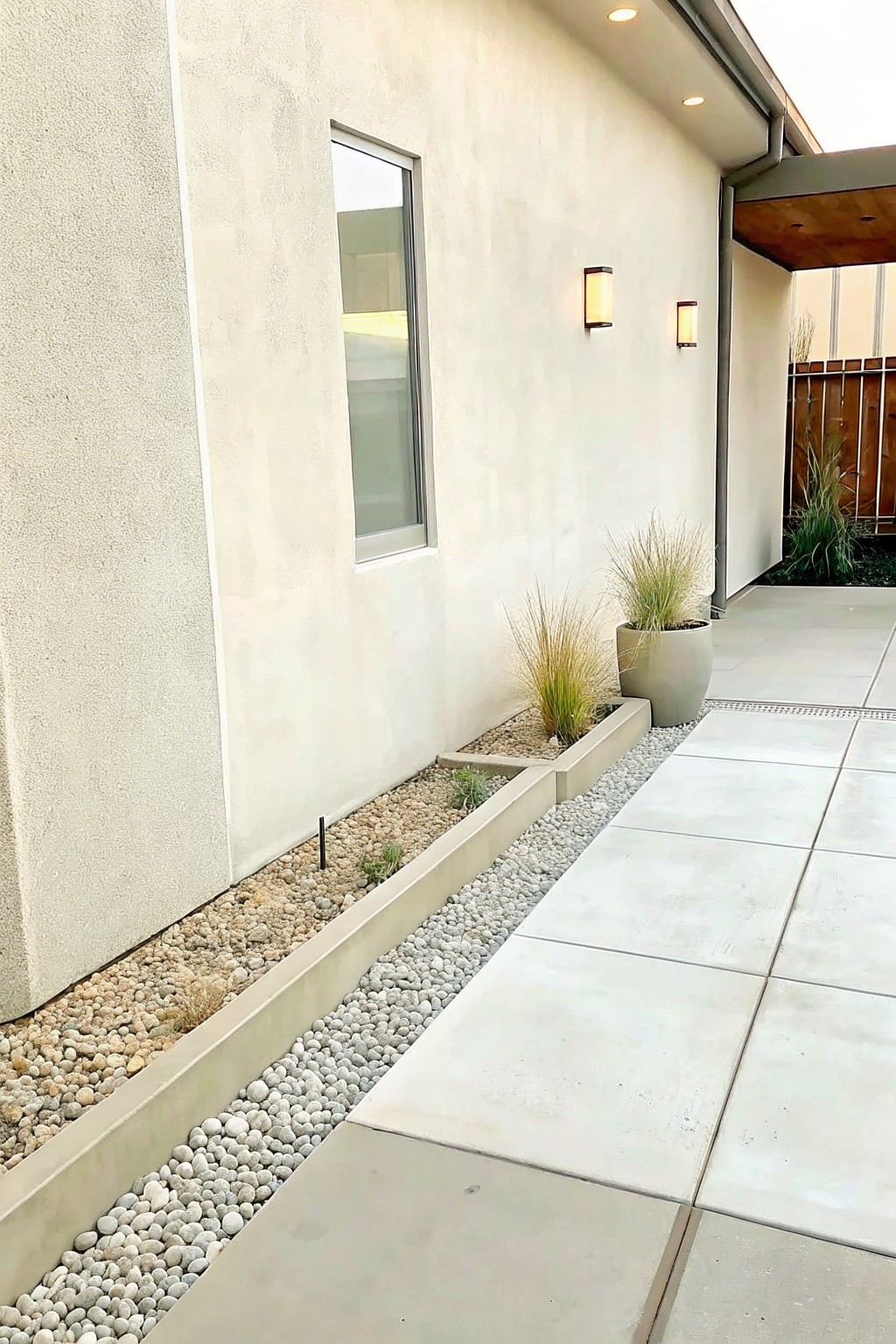
Concrete edging holds up well in areas that get full sun and heavy rain because it does not rot, warp, or need frequent replacement. It creates a firm border that keeps gravel contained and gives the planting bed a simple, finished line next to the patio.
This setup works best on homes with clean modern lines where you want low maintenance along the foundation. Use it where you need a clear division between hardscape and planting without adding wood or metal that can degrade over time.
Weatherproof Sectionals Hold Up on Exposed Patios
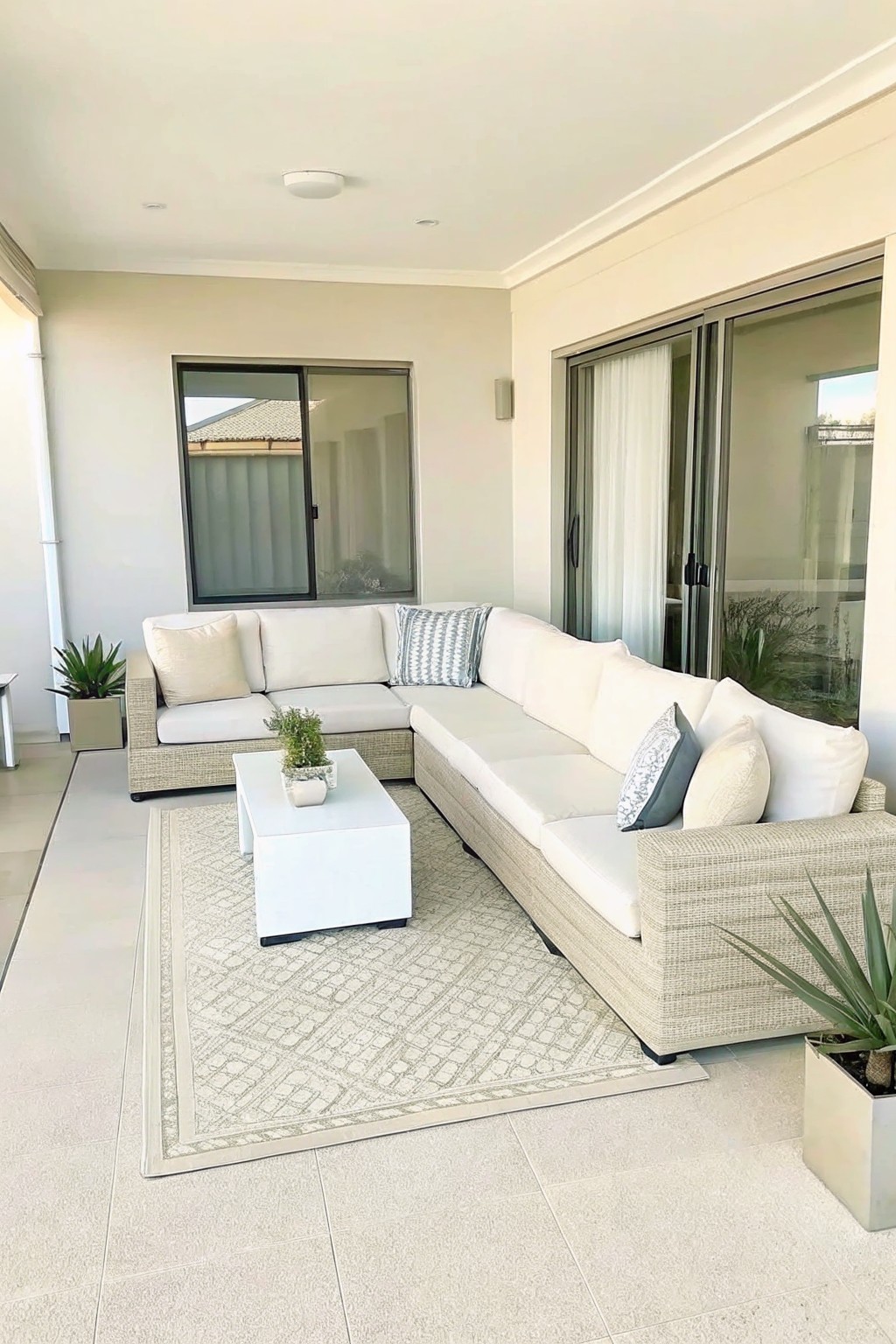
A large sectional gives you plenty of seating on a patio that stays open to the elements. The woven frame and simple cushions hold up better than indoor pieces when they are made for outdoor use, and the layout keeps the space open without crowding the doors.
This works well on tiled patios that get sun and rain, especially if you add a rug to mark the seating zone. Place a few potted plants around the edges to soften the look and keep the area feeling like part of the garden.
Frequently Asked Questions
Q: How do I stop metal pieces from rusting fast on my patio? A: Coat them with a rust-proof spray before you set them out. Wipe them down every few months to catch any early spots and hit them again with the spray.
Q: What works best to keep statues from tipping in strong winds? A: Set them on wide, heavy bases and press the bottom edge into the soil a bit. Add a couple of large rocks around the feet for steady weight without extra hardware.
Q: Can I leave wooden signs out through winter without much fuss? A: Pick cedar or similar wood that handles moisture well. Brush on a fresh coat of outdoor sealer each spring so the grain stays protected.
