

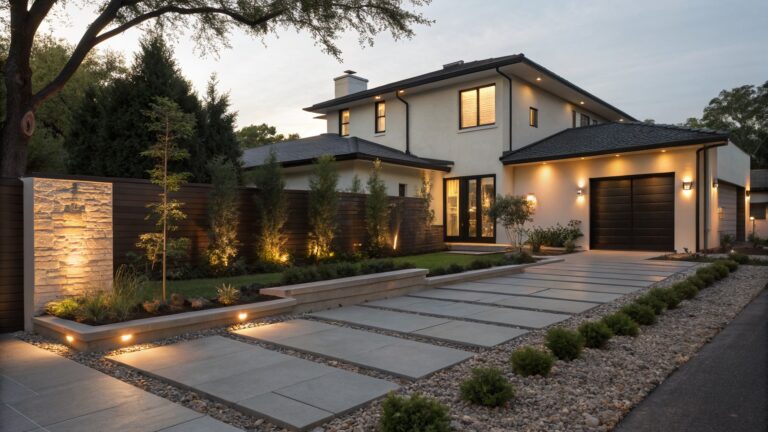
Lighting the front of a house after dark changes how the whole place reads from the road in ways that daylight never shows.
I have found that the best setups draw attention to the entry and the main lines of the facade without making the garden look separate from the structure.
Over time I learned to check how a light sits against the materials like brick or wood before committing to a full install.
Placement beats power every time.
Trying one focused beam on the walkway before adding more has helped me see what actually improves the curb view at night.
Line Your Garden Beds With Low Lights

Low lights tucked along the edges of raised beds give the front garden a soft, steady glow once the sun goes down. They keep the focus on the plants instead of bright fixtures, and they make the whole entry feel more welcoming without needing tall lamps or harsh overheads.
This setup works best on homes where the beds sit next to paths or steps. Space the lights evenly, aim them slightly toward the foliage, and choose warm bulbs so the effect stays calm rather than stark.
Drape String Lights Over Climbing Plants

String lights work well when you weave them through vines and greenery already growing on the house. They give off a gentle, even light that follows the natural shape of the plants instead of creating harsh spots. This approach makes the front garden feel connected to the house at night without needing lots of extra fixtures.
It suits older homes or cottages where vines already cover parts of the walls. Run the lights along the eaves first, then tuck them into the foliage so they stay hidden during the day. Keep the bulbs warm white and space them a bit unevenly so the glow looks natural rather than staged.
Tuck Lights Into The Stone Borders By The Steps
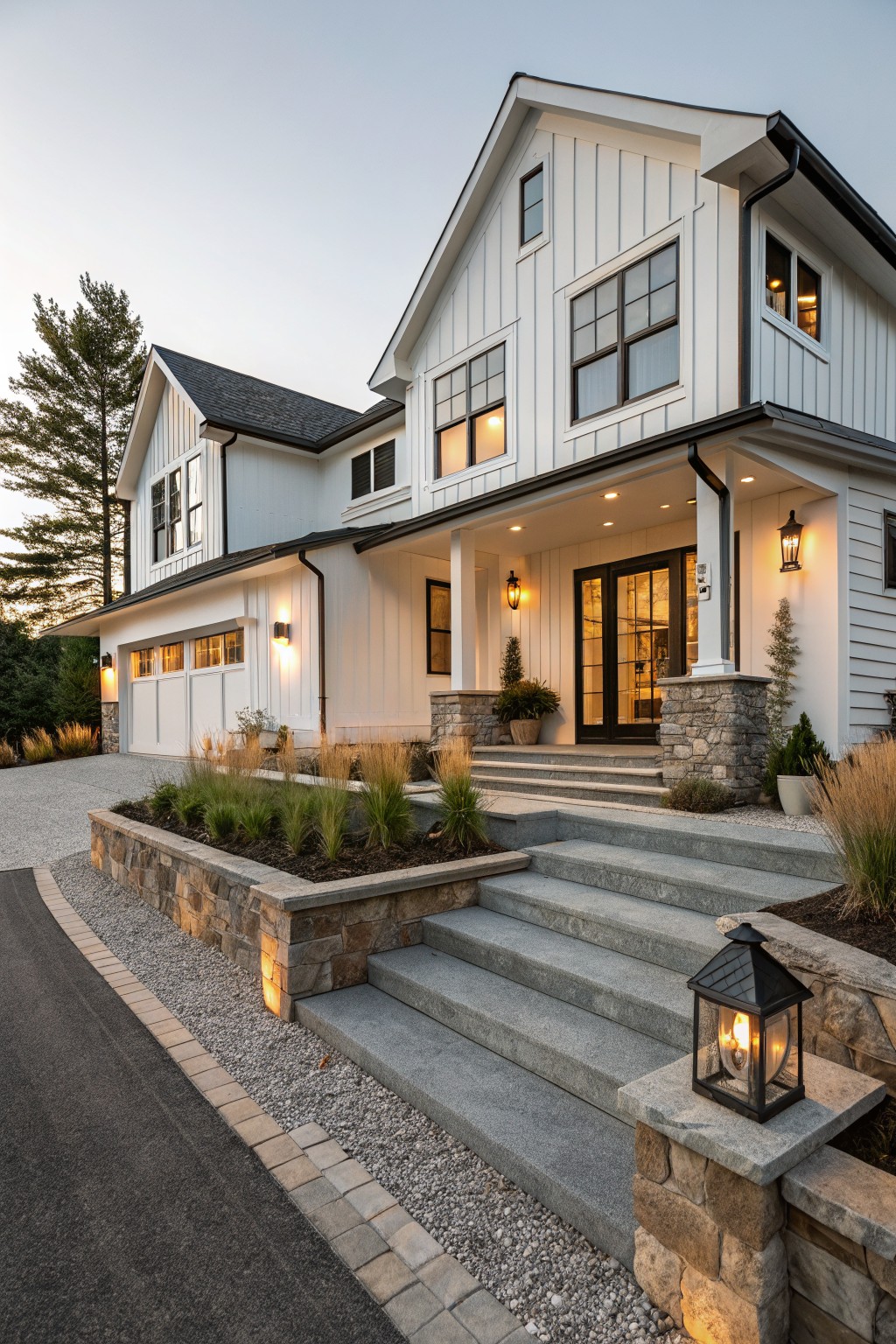
One simple way to light a front entry is to set small fixtures right into the stone edging of the raised beds. The lights stay low and out of the way, so they mark the steps and path without adding extra poles or tall lamps that can crowd the space.
This works best on houses where the front yard slopes up toward the door. Keep the fixtures aimed down toward the ground so they guide feet safely and do not glare into windows or wash out the plants.
Edge Walkways with Low Path Lights

Low lights placed right along the edges of a path make the whole front garden feel more welcoming after dark. They show the way without flooding the area with bright light that can wash out the plants and hardscape.
This approach works best on gravel or mulch paths that already have some kind of border, like the stone edging seen here. Keep the fixtures small and spaced evenly so they guide people toward the house without competing with the landscape.
Edge Your Front Path With Low Lights
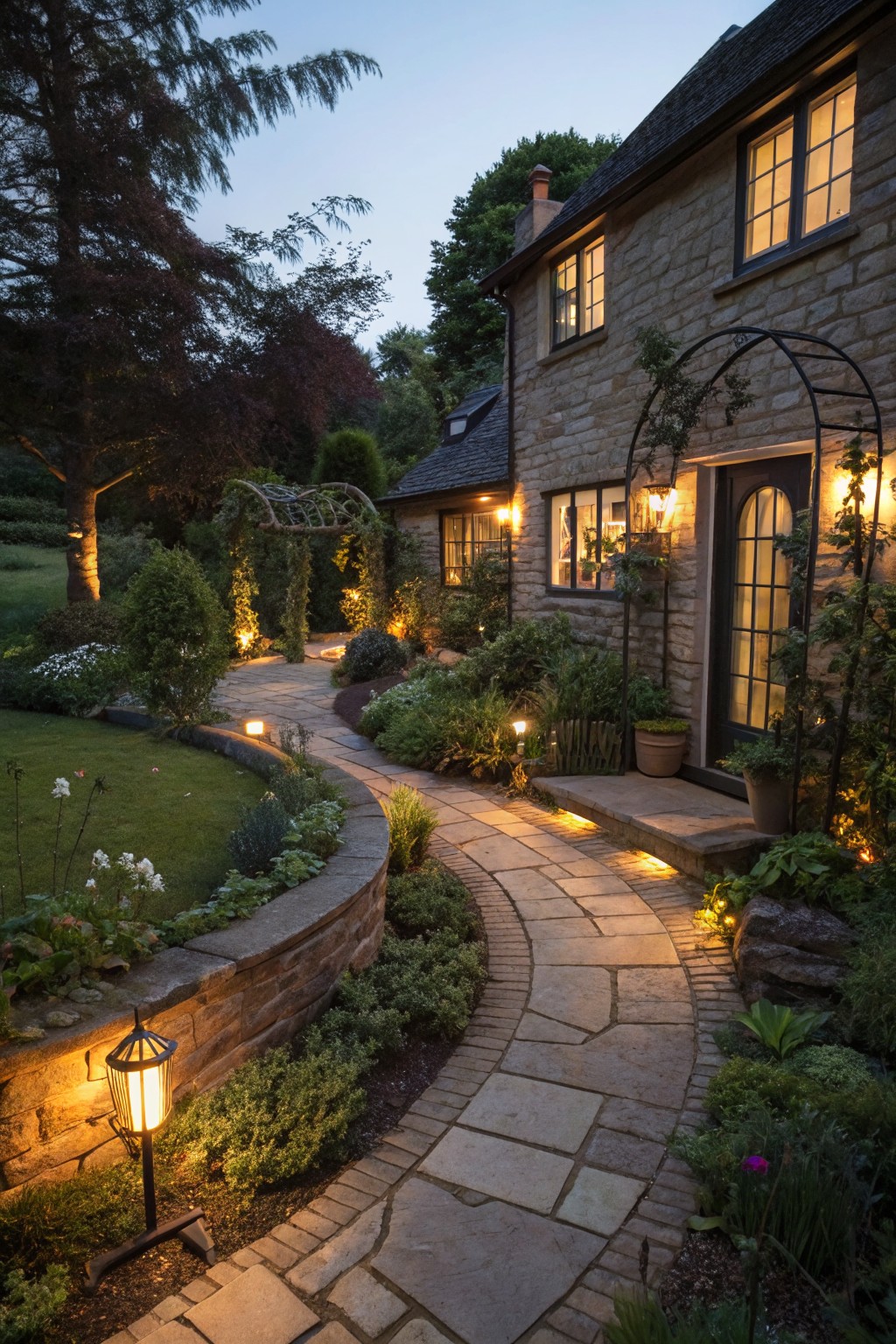
Low path lights work well because they guide people along the walkway without flooding the whole garden with brightness. The light stays close to the ground, so it feels calm and helps define the shape of the path even after the sun goes down.
This idea suits homes with curved stone paths or natural garden layouts. Keep the fixtures small and spaced evenly so the light stays soft and the planting beds still look like the main feature.
Add Low Lights Along the Front Path

Low path lights keep the walkway visible without flooding the whole front yard. They mark the route clearly and give the house a settled look once the sun goes down.
This setup suits homes with straight, simple entries and gravel or paver paths. Set the fixtures in the gravel edges so the light stays low and even, and choose warm bulbs that match any other exterior lights you already use.
Light Steps With Small Built-In Fixtures

Step lights give a front garden a quiet, steady glow after dark without needing tall lamps or bright spots. They mark the path clearly and make the whole entry feel more welcoming once the sun goes down.
This approach works best on homes with stone or brick steps that lead up to the door. Keep the fixtures small and low so they cast just enough light to show the way while the plants and pots stay softly visible around them.
Line Front Paths With Low Landscape Lights

Placing small lights along the edge of a front path inside the planting beds gives a soft glow that marks the way and shows off the grasses at night. It feels more natural than overhead lights and keeps the focus on the garden instead of bright fixtures.
This approach works best on homes with wide beds next to the walkway. Space the lights evenly and use warm bulbs so the light stays gentle and does not glare into the house windows.
Step Lights Along Front Stairs

Step lights built into the risers give a clear path up to the door without flooding the whole yard with light. They keep the focus on the entrance itself and make the stairs feel more welcoming once the sun goes down.
This approach works well on any house with a raised entry or sloped front yard. Place the lights evenly, keep the fixtures low profile, and match the color temperature to any existing lanterns so the whole front feels consistent.
Wall Sconces Along The Front Of The House

Placing sconces directly on the exterior walls gives the entry area a steadier, more even light than path lights alone can manage. The fixtures highlight the gate and the house surface while still casting enough light onto the walkway so people can see where they are going after dark.
Space the sconces at roughly the same height and keep the number modest so the look stays simple. This setup suits older homes with textured walls and works best when the fixtures match the style of the gate or door hardware.
Light Steps and Retaining Walls

Lighting the steps and walls in a front garden makes the whole entry feel safer and more welcoming after dark. Small fixtures tucked into the stonework and along the treads keep the path clear without bright overhead lights or glare.
This works well on sloped lots where the front door sits above street level. Keep the fixtures small, warm, and aimed downward so they wash over the stone and planting beds rather than shine straight out. It suits most home styles as long as the lights stay simple and close to the ground.
Lights Built Into Garden Beds

Placing small lights right inside the garden beds gives a soft glow that shows off the plants without needing tall fixtures. It keeps the focus on the landscaping itself and makes the front of the house feel more welcoming once the sun goes down. The effect works especially well along the edge of a path or walkway where people need just enough light to see where they are going.
This approach suits homes with raised beds or clear borders between planting and paving. Keep the lights low and spaced evenly so nothing looks spotlit. Avoid using too many or they can start to feel busy instead of calm.
Line the Path With Low Lights

Low path lights do a quiet job of making a front garden feel safe and easy to follow once the sun goes down. They keep the light low and focused on the ground so the walkway stays visible without flooding the whole space with brightness.
This approach works especially well on curved gravel paths that lead to the door. Space the lights a few feet apart along the edge so the route stays clear while the surrounding plants stay softly lit. It suits older homes or gardens that already have stone edging and simple planting beds.
Line Your Front Steps With Built-In Lighting

Running a strip of light along the edges of the front stairs gives the entry a clear path after dark without adding extra lamps or poles. The effect is simple but effective, especially on homes where the door sits above street level and people need to see the steps right away.
This works best on straight stair runs with a solid edge to hide the fixture. Warm light keeps the look natural rather than harsh, and the same strip can tie into nearby bed lighting so the whole front feels connected instead of patched together.
Add Step Lights To Your Front Stairs

Step lights make a big difference when the front entrance sits a few feet above the walkway. They guide people safely up at night without needing tall fixtures that can look out of place during the day. The light stays low and focused on the treads, so the house still feels welcoming instead of over lit.
This works well on homes where the door sits above grade and the stairs are part of the main view from the street. Use warm LED strips or small recessed fixtures along the riser or under a lip on each tread. Keep the output soft so the light does not glare into the windows or shine straight into arriving guests eyes.
Line Paths With Low Bollard Lights

Low bollard lights give a garden path a clear, gentle glow after dark without flooding the whole area. They keep the focus on the walkway itself and help visitors find their way while the rest of the garden stays softer.
This approach works best on curved paths made of brick or stone that lead toward the front door. Space the lights evenly and keep them short so they do not block views of the planting beds or water features nearby.
Light Front Steps To Guide Visitors At Night

Adding lights along the steps makes the path to the front door easy to follow after dark. It also highlights the entrance without relying on one big fixture that can feel harsh.
This approach suits homes with a raised entry or sloped front yard. Place the lights low and evenly spaced so they mark the way while keeping the surrounding plants and hardscape looking balanced.
Recess Lights Into Garden Walls

Recessing lights into the edges of retaining walls and raised beds gives the front garden a clean look at night. The light stays low and spreads evenly across plants and paths without needing extra poles or fixtures that can clutter the space. It works especially well when the beds sit against a house or fence because the wall itself becomes the light source.
This approach suits homes with modern or minimalist landscaping where you want the plants to stand out more than the hardware. Keep the lights spaced evenly and use warm bulbs so the glow feels soft rather than harsh. Make sure the fixtures sit flush so they do not collect leaves or water.
Mix Post Lights with Lower Lanterns Along the Path

Placing lights at different heights along a front path gives better coverage than a single style. Taller posts spread light outward while lower lanterns add detail closer to the ground and keep the walkway from feeling dark between fixtures.
This works best on curved paths that lead to the entry. It suits homes with traditional materials like stone and wood, and it avoids the need for overly bright overhead lights that can feel harsh.
Frequently Asked Questions
Q: How do I light a narrow path without it feeling too bright?
A: Place low path lights every few feet along the edge. Aim them downward so they guide feet without flooding the whole area. Test at night and adjust the angle until it feels just right.
Q: What if my soil stays wet most of the year?
A: Pick fixtures rated for wet locations and set them on small raised bases. This keeps connections dry and working longer. Check the seals once a year after heavy rains.
Q: Can I add lights myself if I have never done wiring before?
A: Start with solar or plug-in options that need no digging. They give the same glow without any risk.
Q: How do I keep critters from chewing through the cords?
A: Bury the lines a few inches deep or cover them with rocks. This stops most animals from getting to them.
