

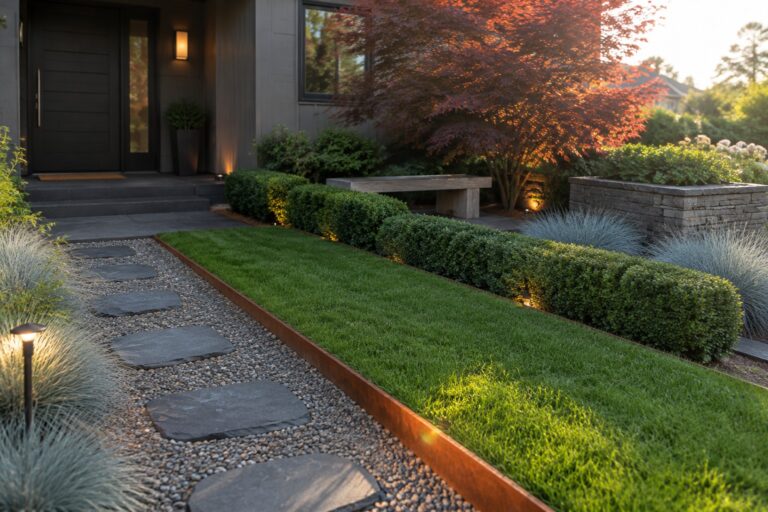
I have always noticed that the lines where grass meets beds or paths set the tone for how orderly the rest of the yard feels once you are standing in it.
When those lines stay crisp through the seasons the whole layout reads as more deliberate even if the plantings themselves stay simple.
Edges matter more than most people expect.
Over time I have found that materials that hold their shape without constant fuss tend to make the biggest difference in how usable the space stays from one year to the next.
In my yard I would likely test the ideas that reuse stones or timber I already have before bringing in anything new.
Metal Edging for Defined Lawn Lines
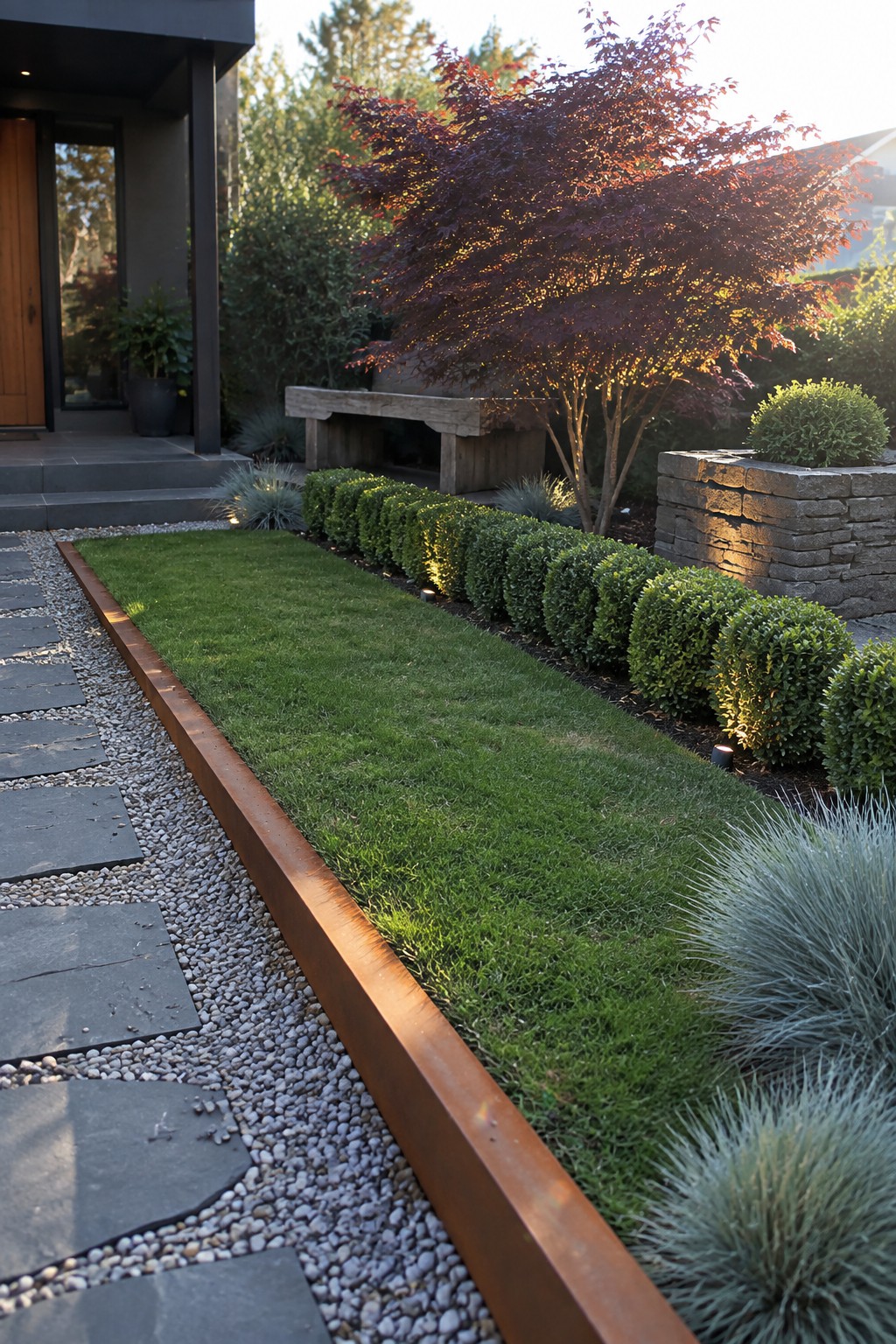
A metal strip along the edge of the lawn gives a clean break that stays in place and keeps grass from creeping into gravel or beds. It works especially well when the lawn sits next to a path, since the edge stays visible and tidy without much extra work.
This approach suits homes that already have straight or gently curved borders. Set the metal so the top sits level with the grass for easy mowing, and choose a finish that weathers naturally if you want it to blend in over time.
Brick Edging for Defined Lawn Borders
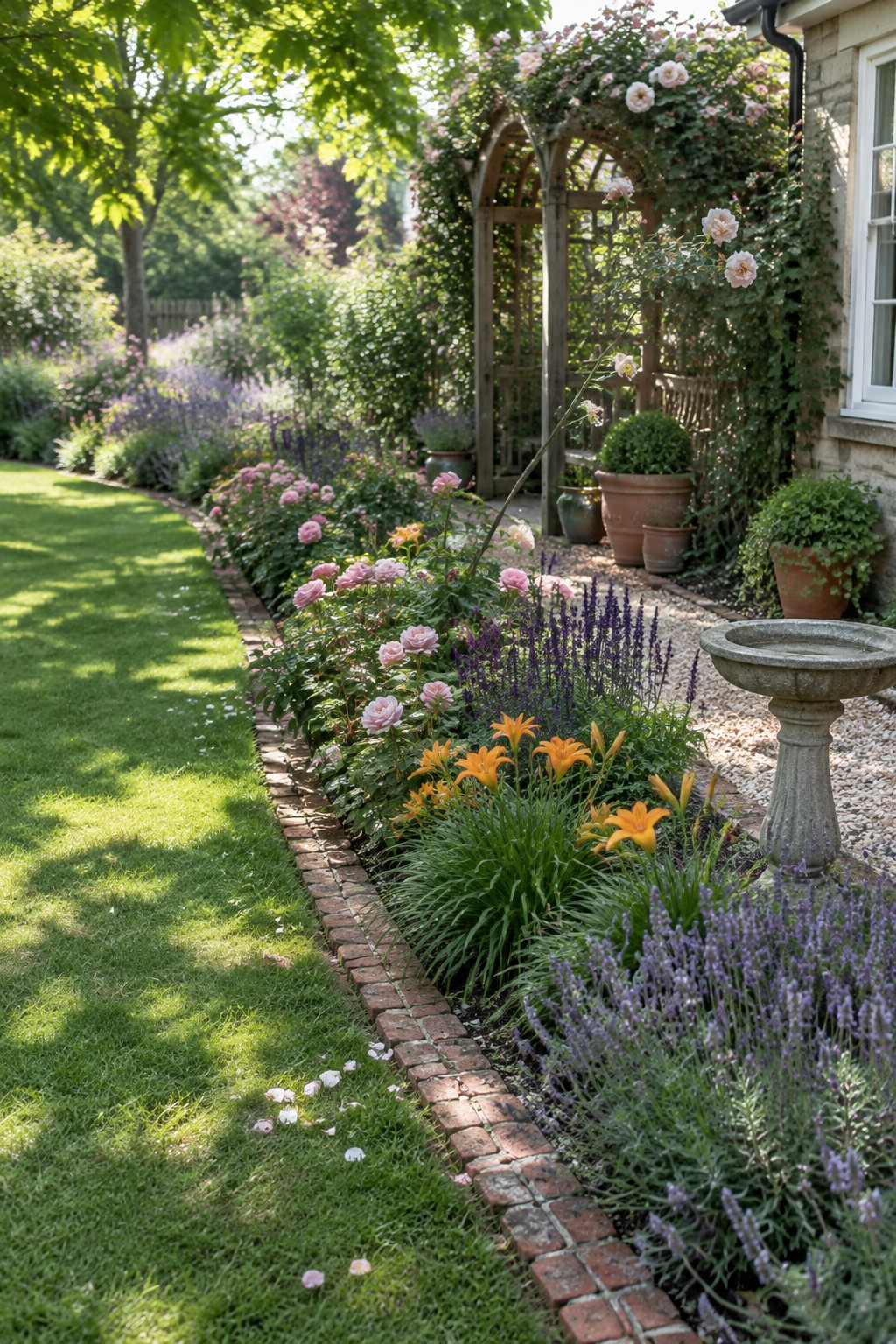
Brick edging gives the lawn a clear stop and keeps the garden beds looking intentional. The straight line also makes mowing easier and stops grass from wandering into the flowers.
This style suits older homes or cottage gardens where you want a simple, lasting edge. Set the bricks flush with the grass so the mower can ride right over them without extra trimming.
Concrete Edging For Clean Lawn Borders
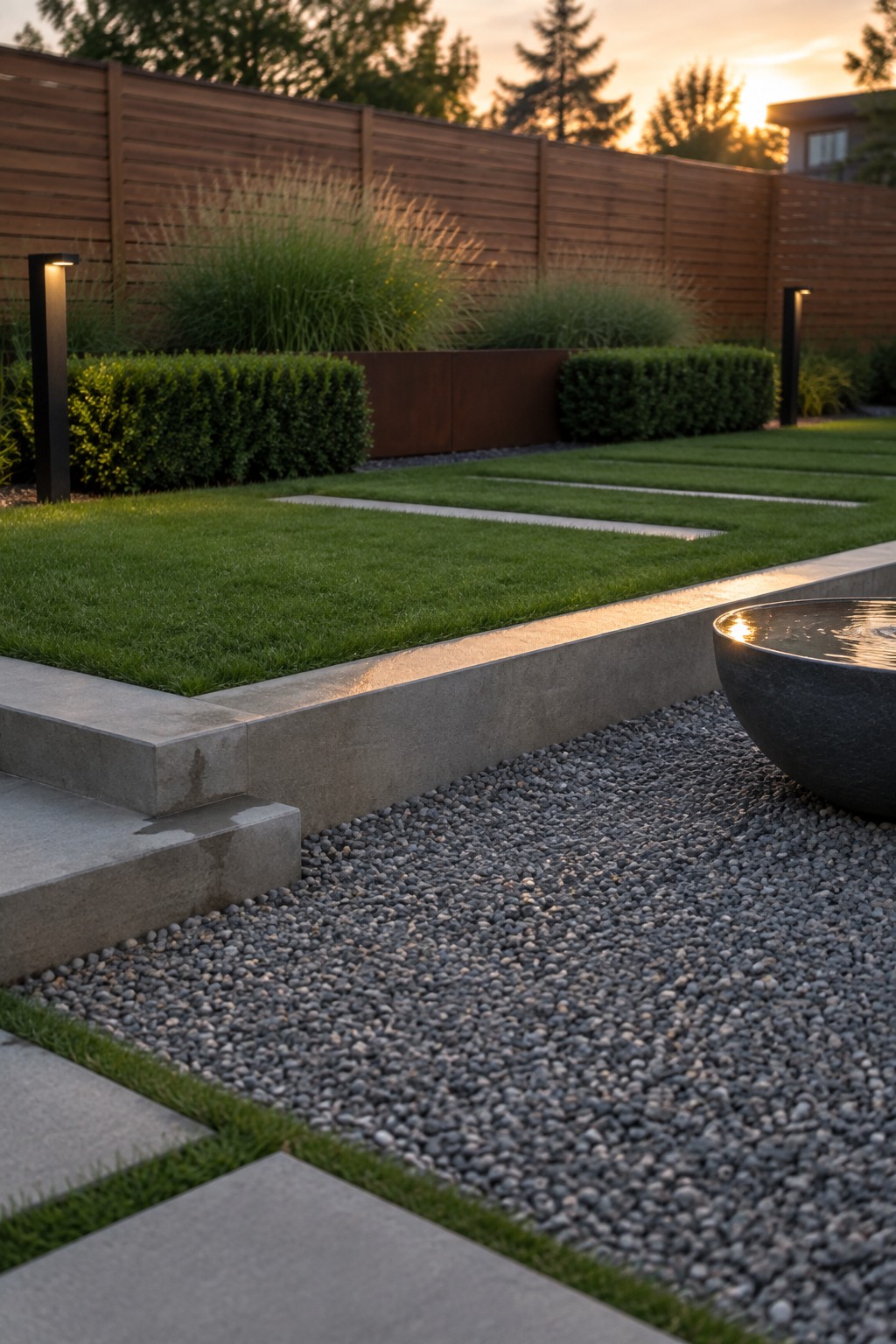
Concrete edging gives a firm, lasting line that keeps grass from creeping into gravel or planting beds. It holds the shape of the lawn without needing constant trimming or reworking.
This approach suits modern yards that want low upkeep and clear separation between surfaces. Keep the top of the edge slightly above the grass so mowing stays simple and the line stays visible over time.
Low Stone Blocks For Clean Lawn Edges
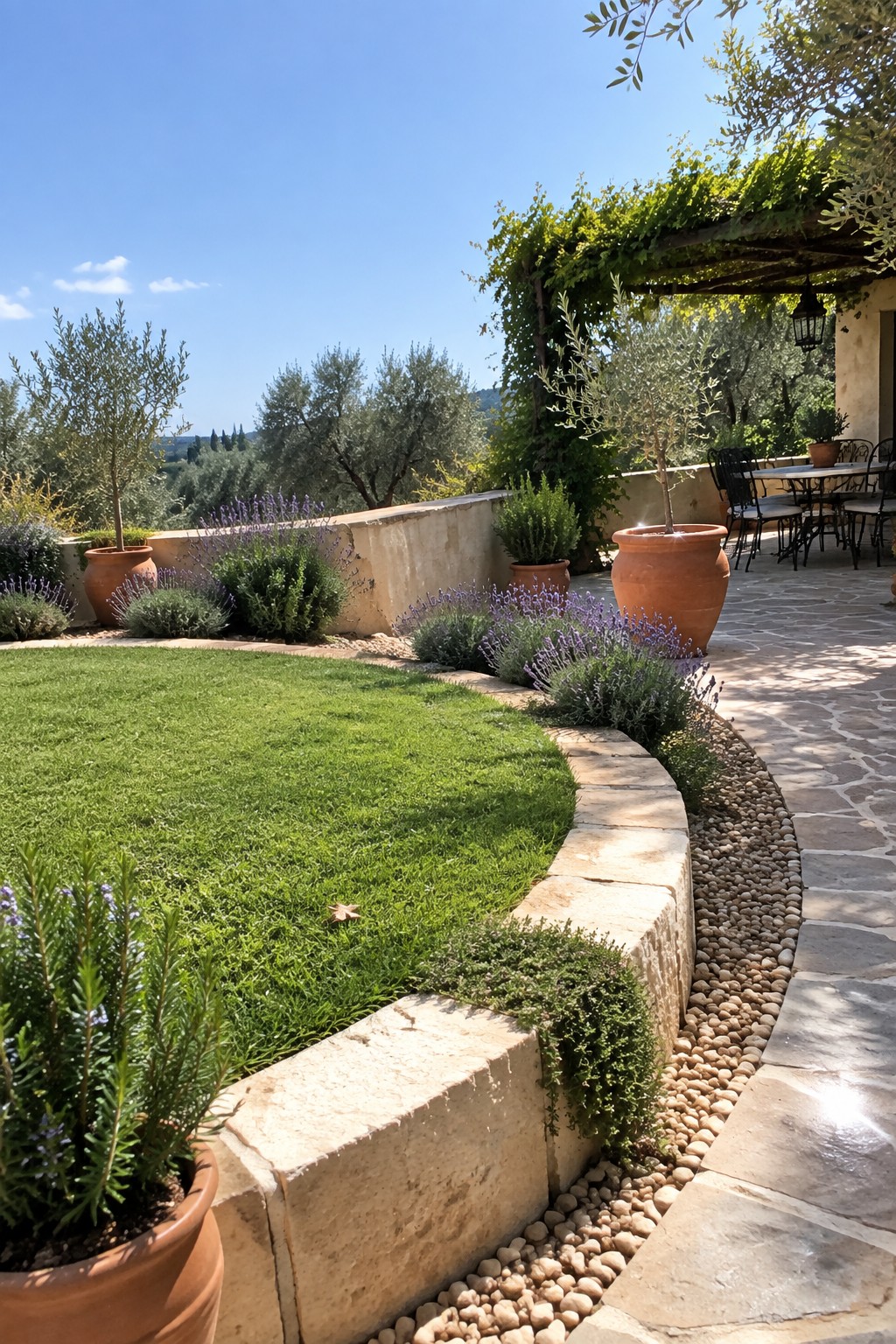
Low stone blocks give a garden a clear boundary that holds up over time. They separate the grass from gravel or planting beds so the lines stay sharp even after rain or foot traffic.
This works best on properties with gentle slopes or curved beds where a flexible material would look messy. Set the blocks slightly above ground level and back them with gravel to help with drainage.
Circular Stone Edging For Clean Garden Lines
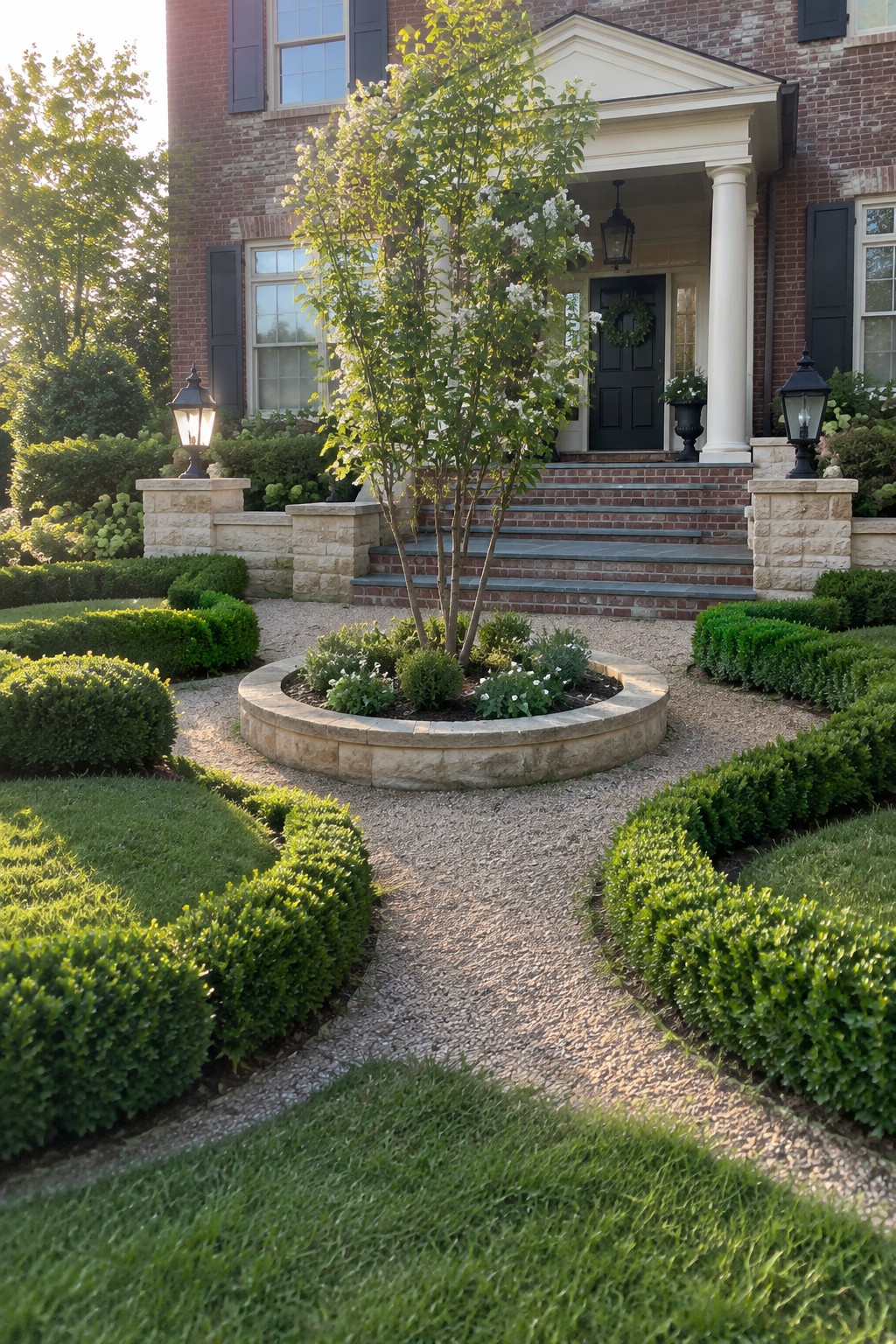
A circular stone edge gives the lawn and paths a clear stopping point. It keeps the gravel from creeping into the grass and makes the beds look intentional instead of scattered.
This layout suits homes with open front yards and gravel walkways. Keep the circle in scale with the space and choose a stone height that is low enough to mow around without extra trimming.
Gravel Paths That Define Lawn Edges
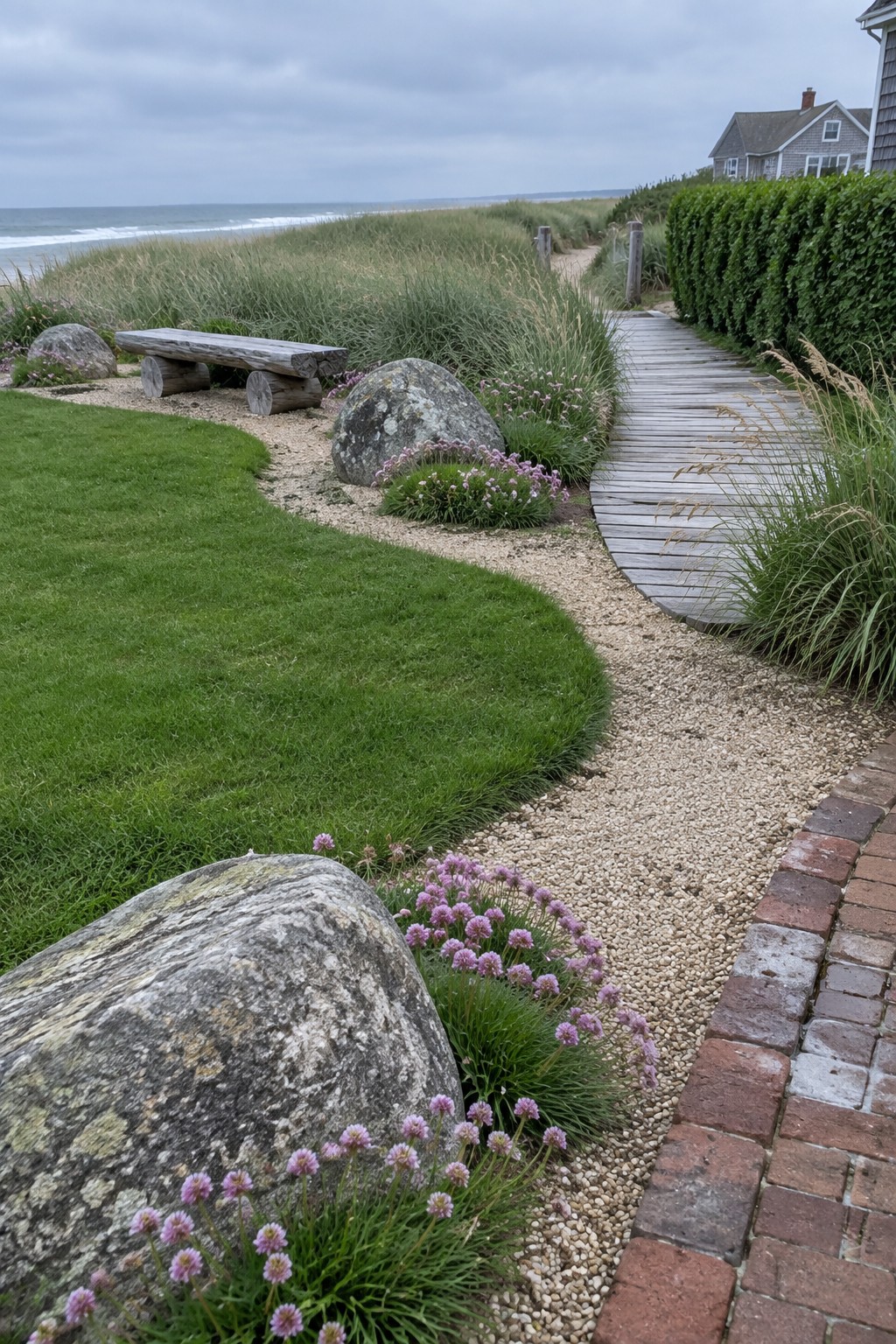
Gravel paths give lawns a clear boundary without needing rigid materials or sharp cuts. The loose texture lets the grass edge curve naturally, and it drains well even in damp areas near the coast.
This works best on homes with informal gardens or sandy soil. Lay a simple border strip along the grass to hold the gravel in place, and keep the path width consistent so it feels intentional rather than scattered.
Metal Edging For Crisp Lawn Borders
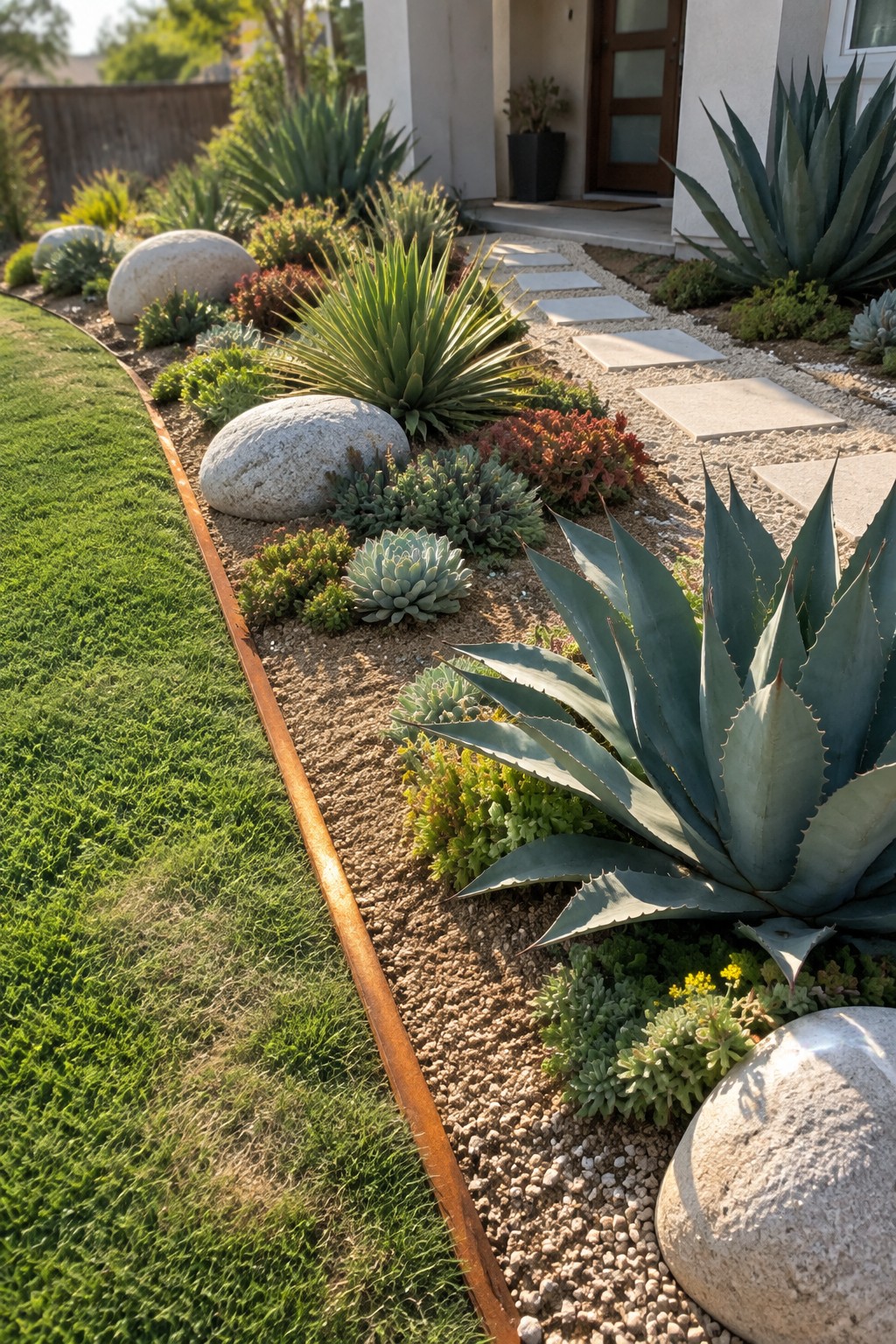
Metal edging gives a garden that sharp stop between lawn and bed without needing constant trimming. It holds up well in sunny spots and pairs nicely with gravel and drought-tolerant plants that need clear separation from grass.
This works best on homes with low-water yards where the lawn stays small and contained. Set the edging so the top sits just above the soil line and curve it gently to follow the bed shape.
Raised Metal Beds Keep Garden Edges Clean

Raised metal beds give you a sharp, lasting line between the lawn and the planted area. The steel holds everything in place so mulch and flowers do not creep onto the grass, and the border stays straight even after a few seasons.
They suit homes with straight or gently curved bed lines and work best where you want low maintenance. Set them level with the lawn so mowing stays simple, and pick a finish that blends with nearby paths or fences.
Stone Edging Keeps Lawn Lines Clean
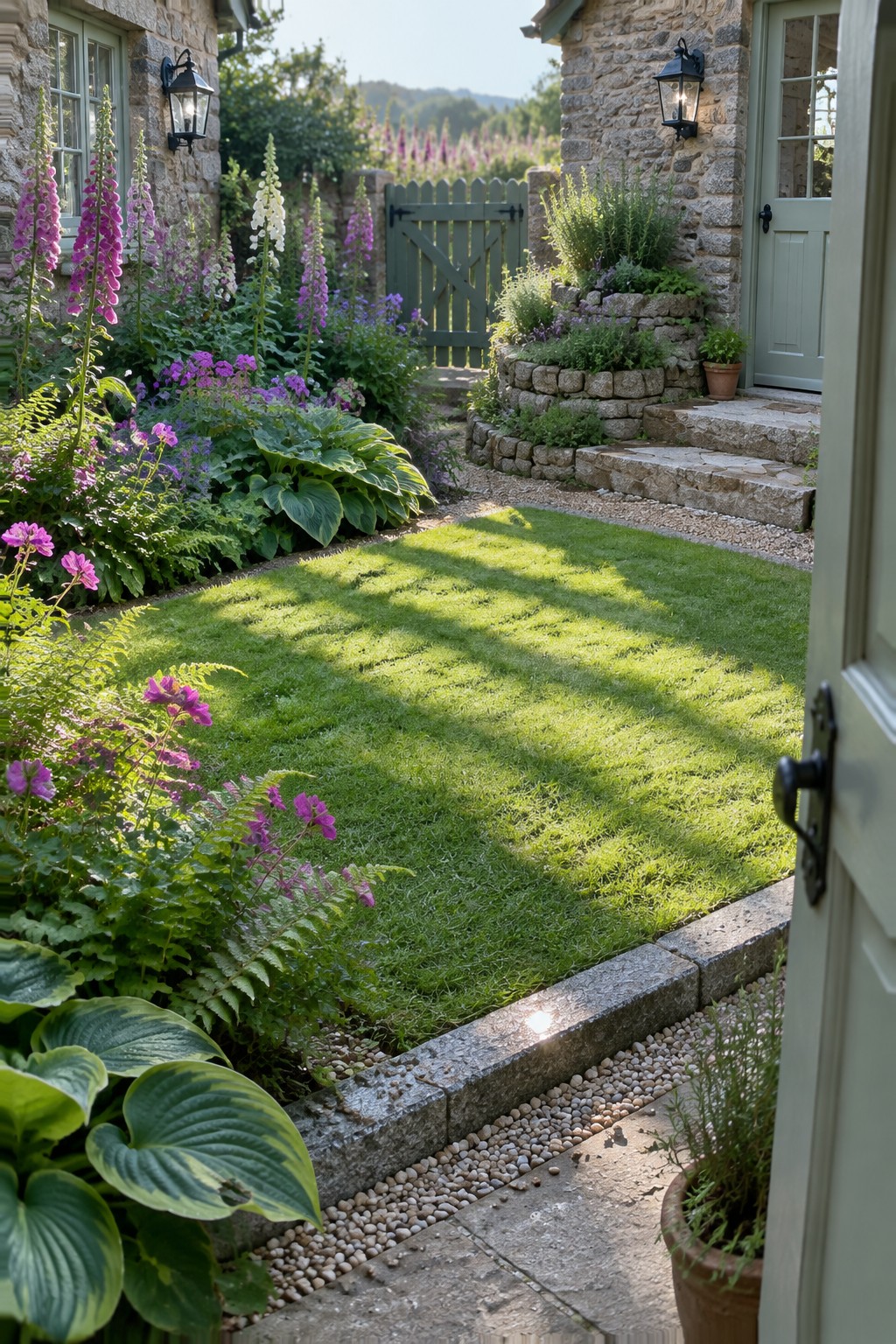
A low stone border gives the lawn a finished edge that stays put through the seasons. It stops grass from creeping into beds or paths and makes mowing easier since you can run the wheels right along the stone.
This works best around older homes or cottage style gardens where the beds already have plenty of plants. Keep the stone low so it does not block water flow, and match the material to any existing walls or steps for a quiet look.
Separate Grass And Paving With A Pebble Border
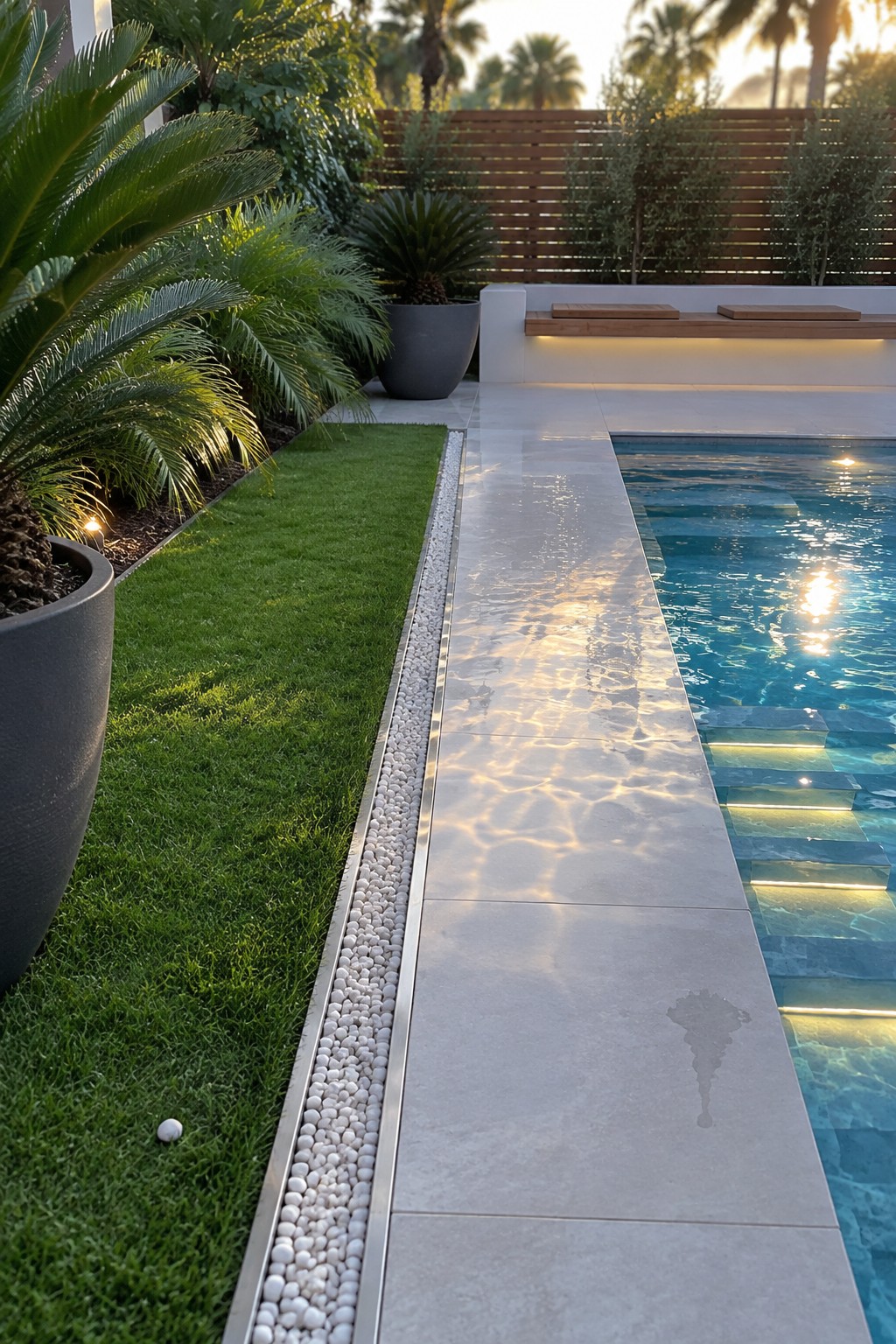
A narrow strip of white pebbles held in place by metal edging gives the lawn a sharp finish without looking fussy. It keeps the grass from creeping onto the hard surface and stops soil from washing across the tiles after rain.
This works well in modern backyards or pool areas where you want a low-maintenance line that still looks intentional. Just make sure the metal strip sits level with the paving so it does not become a trip hazard.
Brick Edging for Defined Lawn Lines
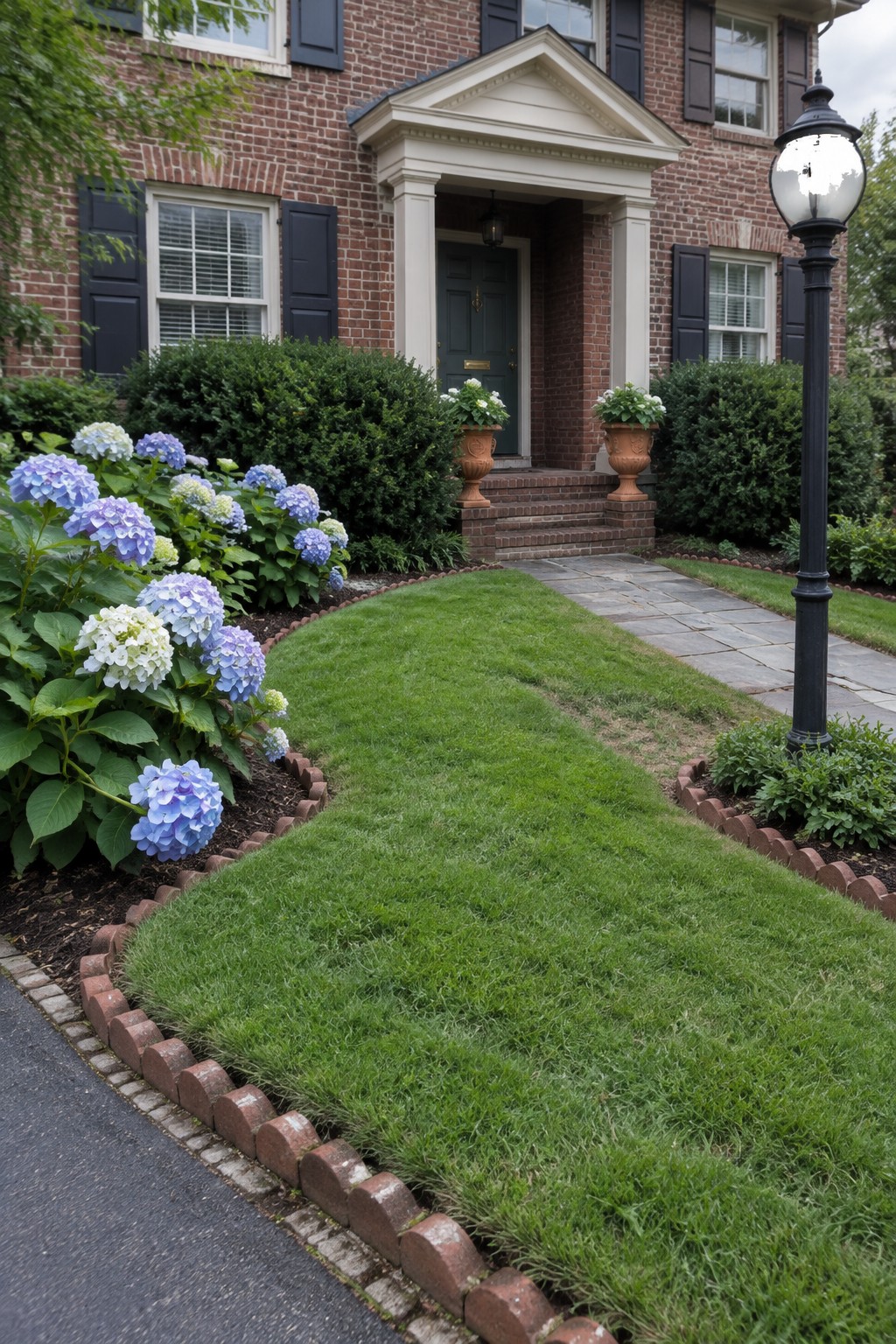
Brick edging gives the lawn a firm border that holds up over time. It stops the grass from creeping into the beds and keeps the shape of the garden clear even after a few seasons of growth.
This approach works best on homes with straight or gently curved beds like the ones shown here. Set the bricks low enough for the mower to ride over the edge, and the whole front yard stays neat with very little extra trimming.
Wood Edging Keeps Garden Surfaces Apart
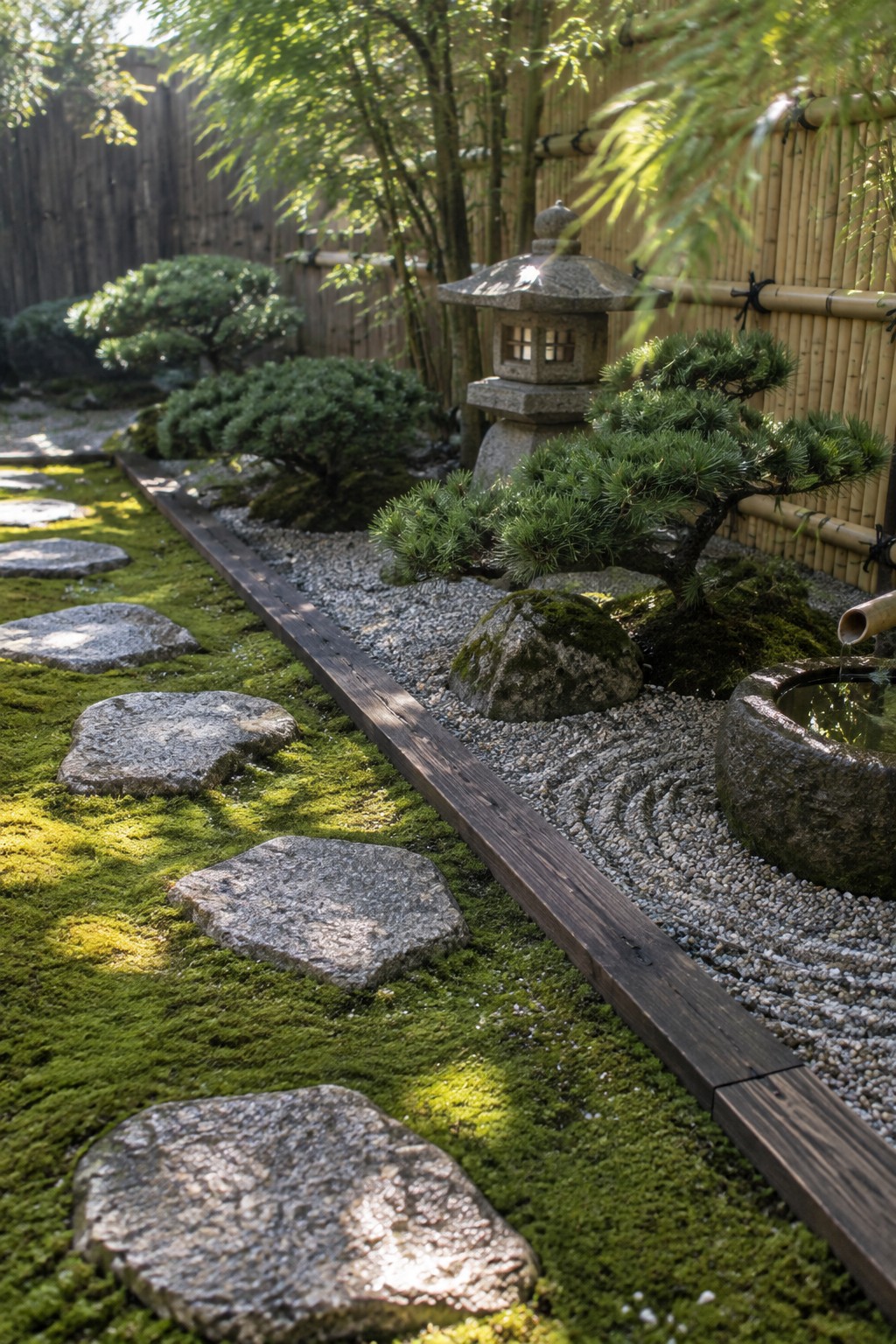
A low wooden divider gives a clean break between moss and gravel without adding height or fuss. It stops the two materials from creeping into each other and keeps the whole area looking intentional even after rain or foot traffic.
This kind of edge works well in narrow side yards or small gardens where you want low maintenance and a simple line. Use pressure-treated wood or a similar rot-resistant material so it lasts through wet seasons.
Stone Edging for Clean Lawn Borders
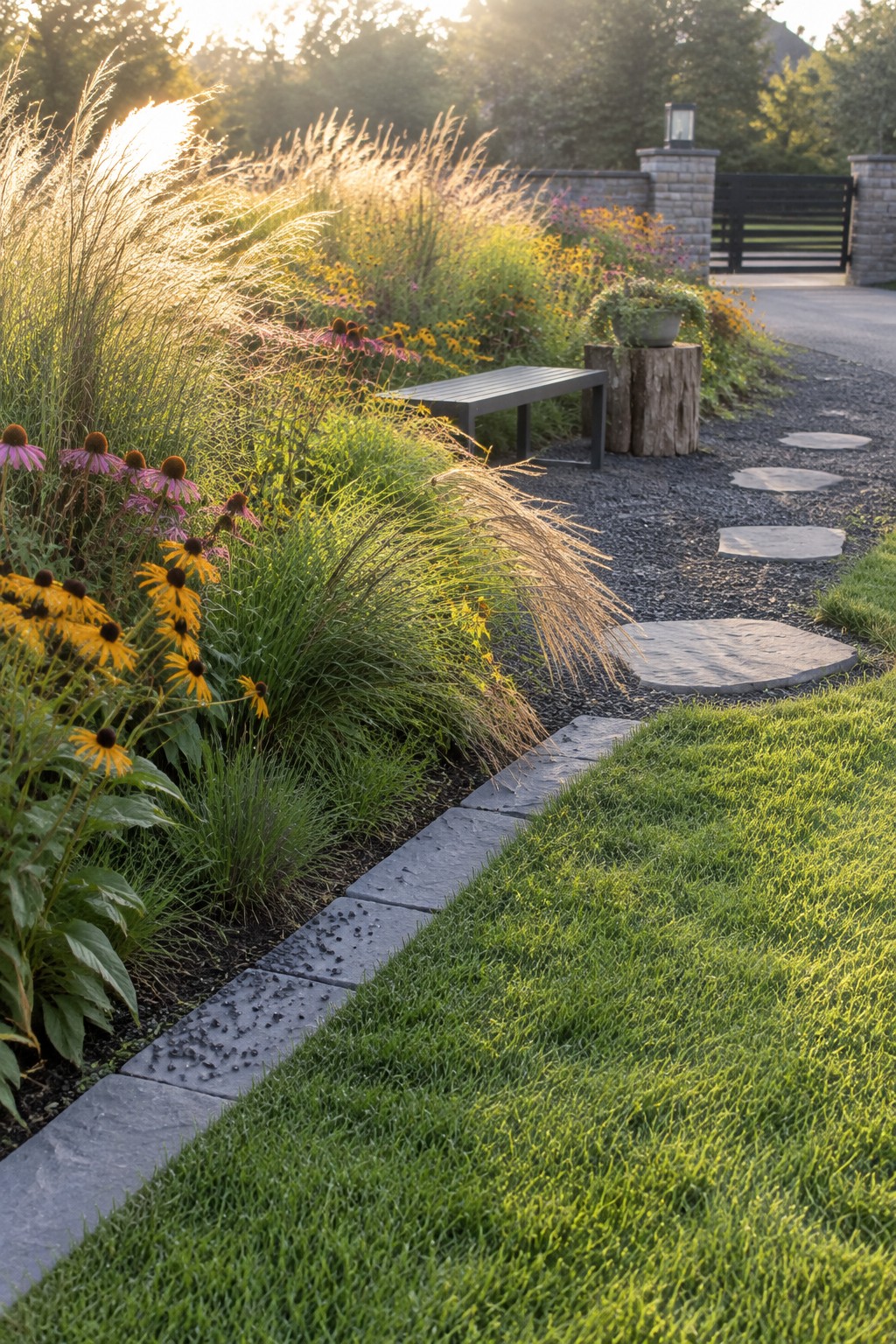
Flat stone edging gives a garden a finished look by holding the lawn in place and keeping mulch or gravel from spilling over. It creates a clear line that makes mowing easier and stops grass from creeping into the beds.
This approach works best along curved or straight borders where you want low maintenance without plastic or metal strips. Lay the stones level with the grass so the mower can pass right over them.
Concrete Edging Keeps Lawn Borders Clean
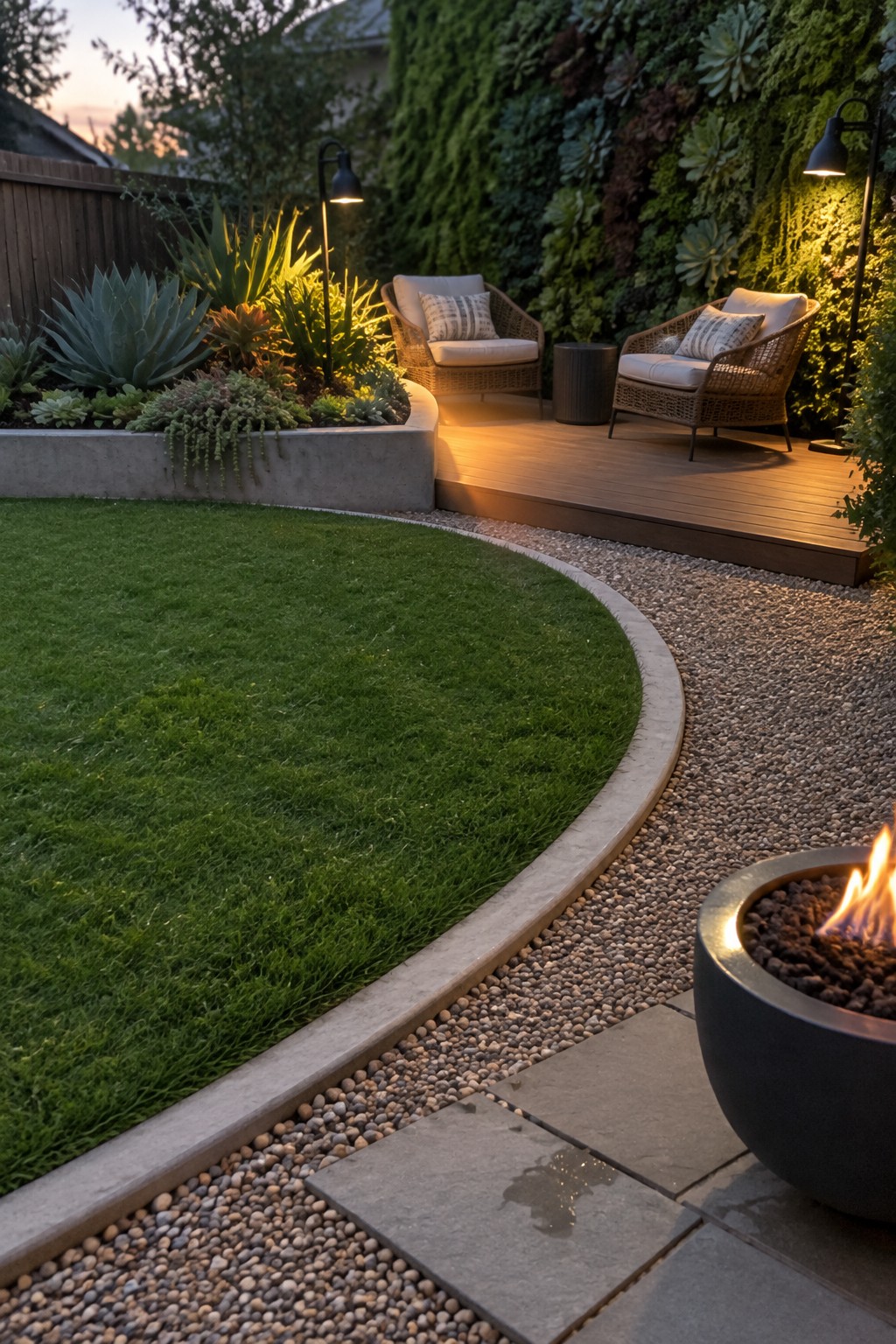
A concrete edge like this one gives the lawn a clear stop without making the whole yard feel stiff. It separates the grass from the gravel and planting beds in a way that looks intentional and stays that way over time.
This approach works best on properties where the lawn meets different surfaces, such as decks or paths. Keep the curve gentle so it follows the natural shape of the beds rather than fighting them.
Metal Planters Give Gardens Clean Edges

Many people turn to long metal planters when they want a simple way to mark the edge between a path and the garden bed. The metal holds the soil in place and gives the border a straight line that stays put without extra edging materials.
This setup works best along a wall or fence where space is narrow. Fill the planters with herbs or low shrubs and they stay neat with very little trimming or weeding.
Stone Coping Defines Lawn Edges Along Pools
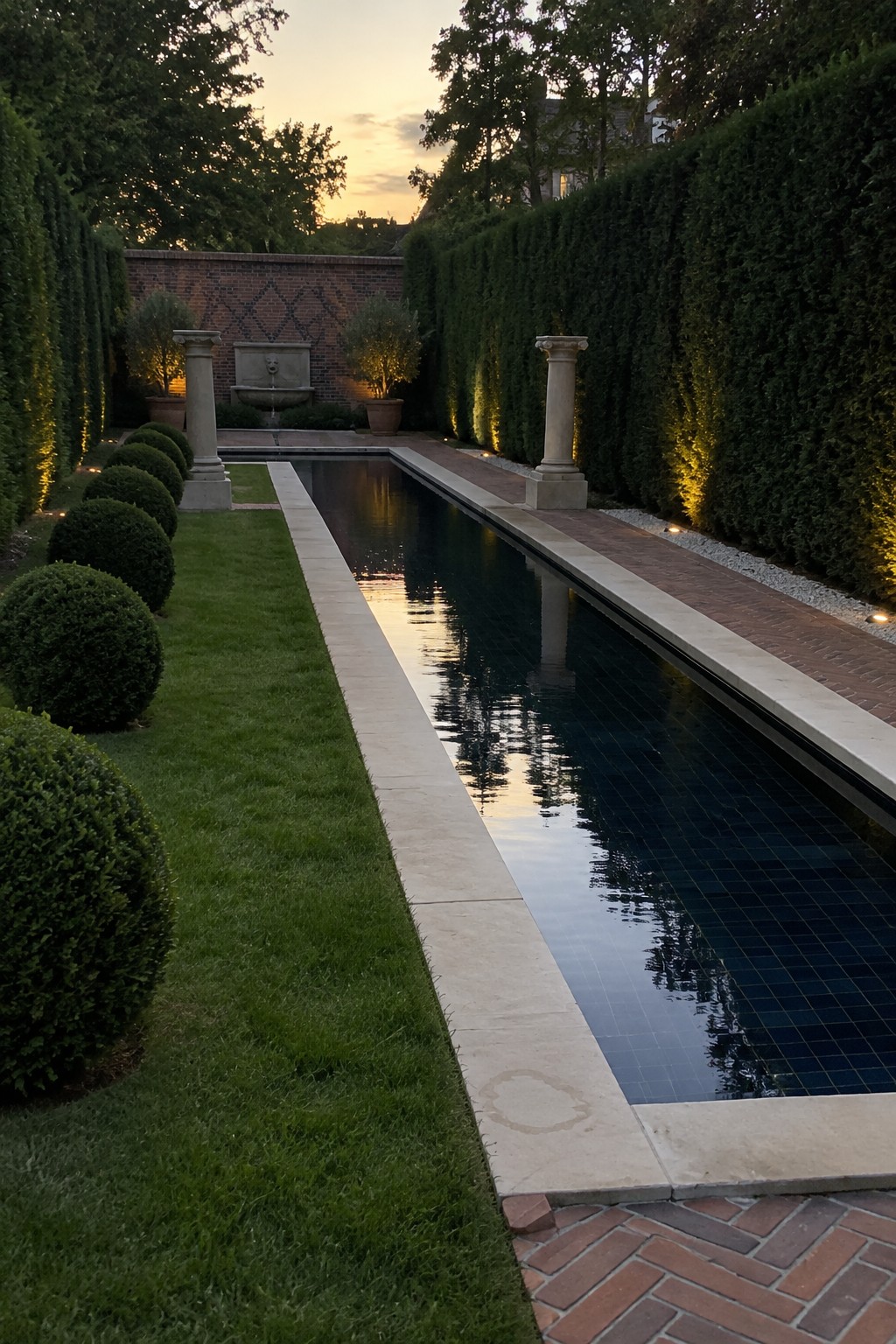
A wide stone coping gives the lawn a clear stop where it meets the pool deck. That simple border keeps the grass from creeping into the hardscape and makes the whole layout feel more intentional without adding much extra work.
This approach works best on formal or traditional properties where you want the lawn to look neatly contained. Match the stone color to your pool surround so the edge reads as part of the same surface rather than a separate feature.
Stepping Stones Set Into The Lawn
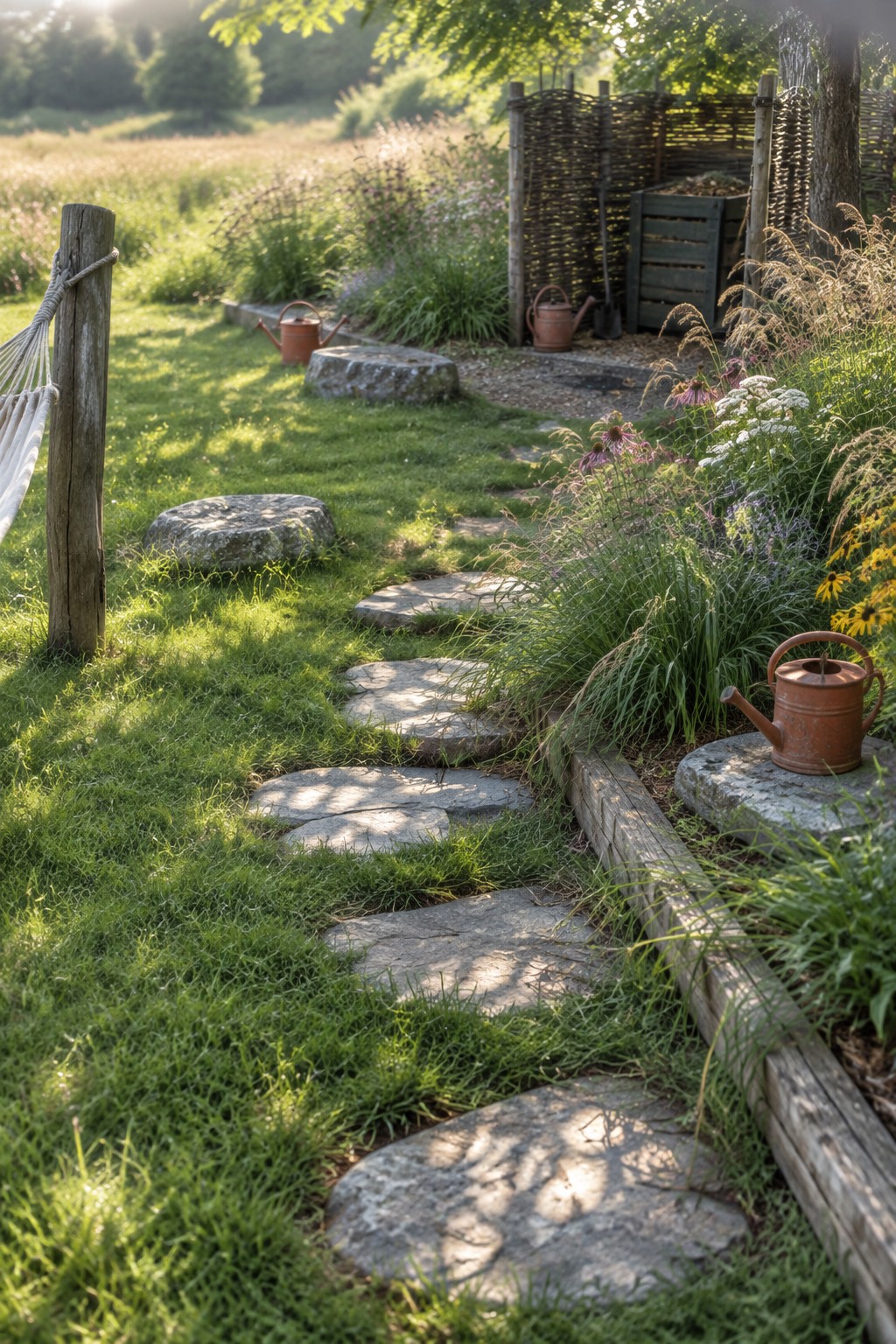
Stepping stones placed right into the grass make a simple path without needing a full hardscape. They keep the lawn looking open while giving you a clear way to walk through the garden without trampling plants or creating muddy lines.
This works well in smaller yards or along the side of a bed where you want light foot traffic. Use flat stones that sit low so the mower can pass over them, and add a simple wood or metal border where the grass meets the planting area to stop the lawn from creeping in.
Raised Metal Planters Keep Garden Edges Looking Sharp
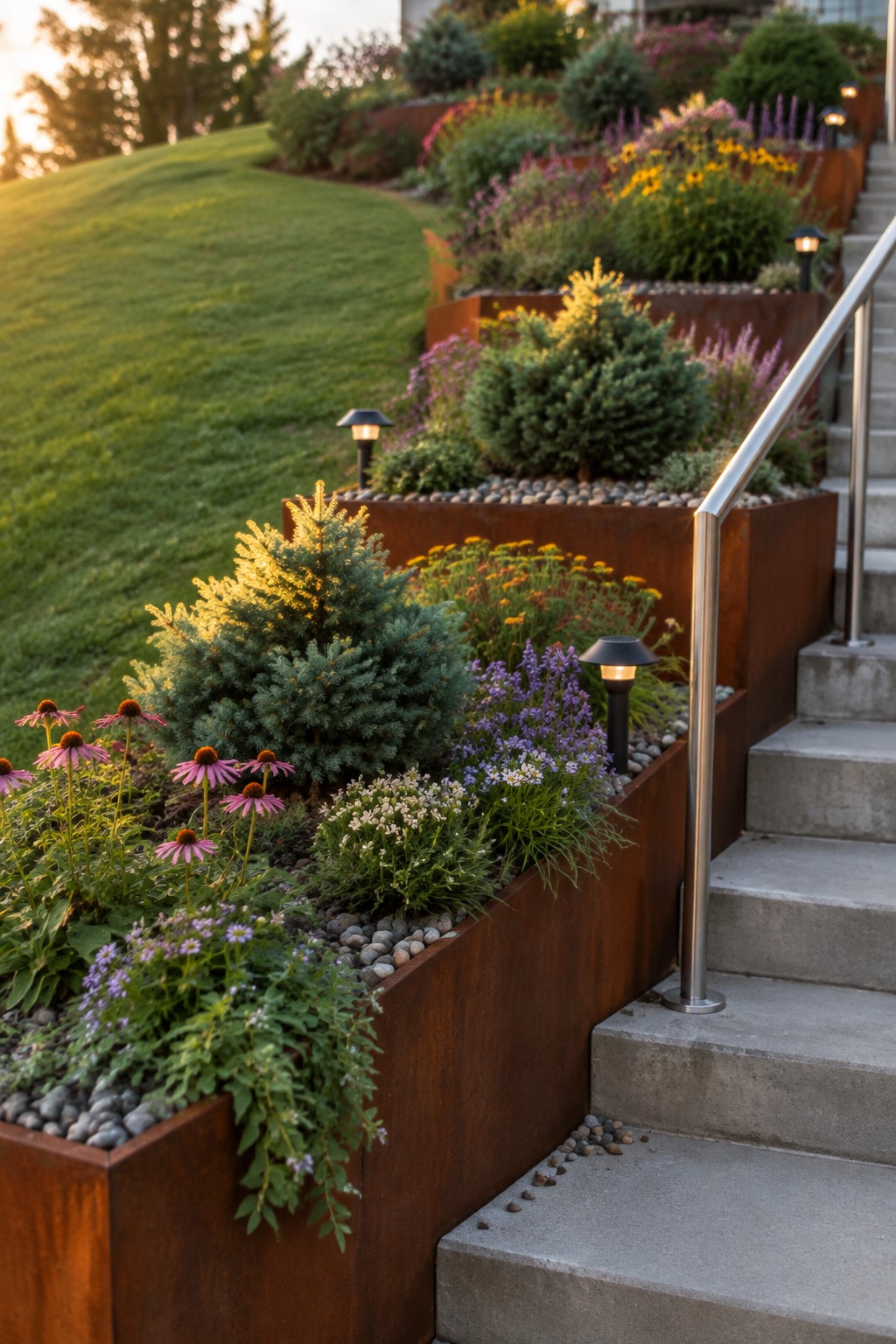
Raised metal planters give garden beds a clean border that holds up well on slopes. They separate planted areas from grass or paths without needing constant upkeep, and the material ages into a warm tone that blends with most outdoor settings.
This works best on hillsides or near stairs where soil might shift. Keep the beds narrow enough to reach across easily, and use gravel mulch inside to help with drainage and to stop weeds from taking over.
Frequently Asked Questions
Q: How do I keep grass from growing into my new garden edges?
A: Lay down a strip of landscape fabric under the edging material. This blocks weeds and grass roots from crossing over. Refresh the fabric every few years if it starts to break down.
Q: What’s the best way to curve the edges around trees or flower beds?
A: Mark the curve with a garden hose first so you can adjust it easily. Then dig along that line and install your chosen border. Flexible materials like plastic or metal strips bend well for smooth turns.
Q: Do I need to dig deep for most of these edging projects?
A: Dig a shallow trench about four inches deep. Pack the soil firmly around the edging to hold it steady.
