

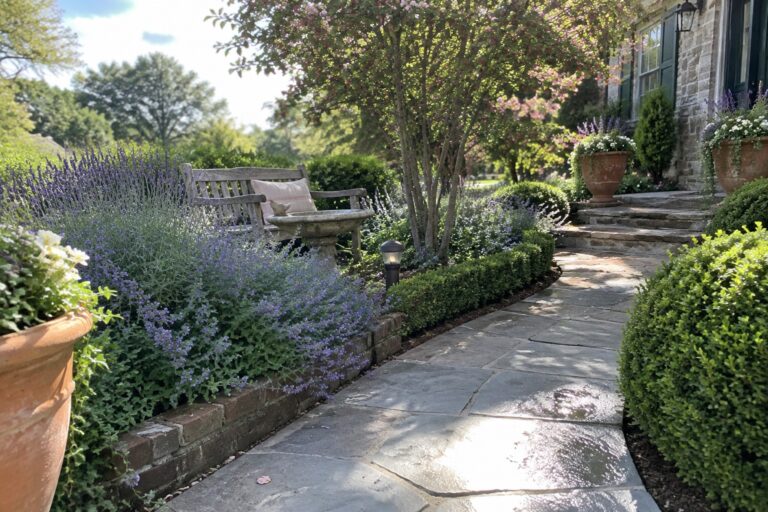
Curved paths tend to shape a garden in ways that straight ones rarely manage by softening edges and letting plants spill over naturally.
I often find that the best layouts come from testing a curve on the ground first rather than trusting a drawing.
Some ideas only prove themselves after a season or two.
Watching how people actually walk through a space usually shows whether a path feels comfortable or forces awkward turns.
Small adjustments to the width or the planting beside it can make the whole area feel more settled without much extra work.
Stepping Stones In Gravel For Gentle Curves
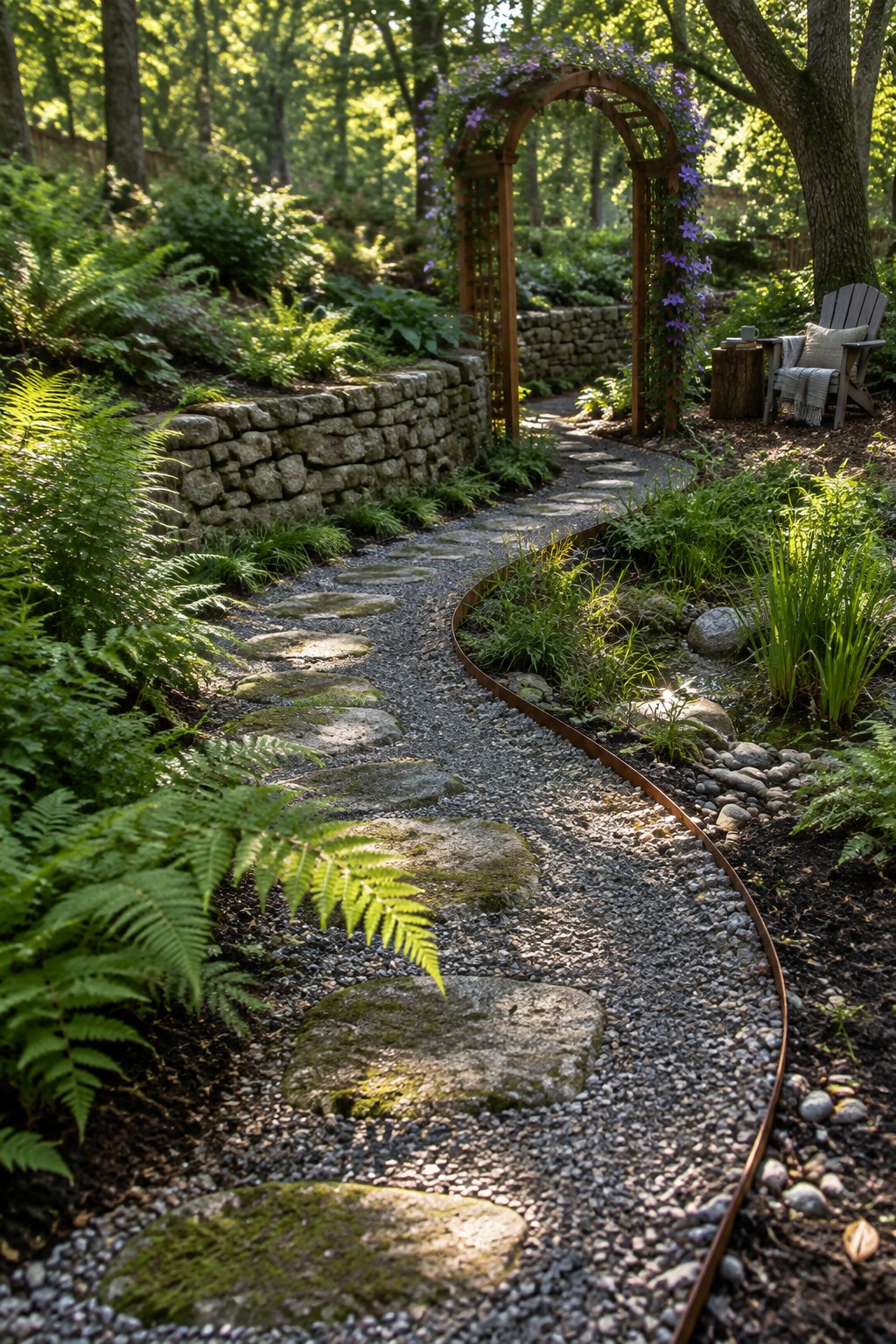
Stepping stones set into gravel let a path curve easily without looking forced. The loose material follows the shape of the beds and trees, so the walk feels like it belongs in the garden instead of cutting through it.
This approach works best on shady lots or slopes where a solid surface would feel too rigid. Use stones big enough for a comfortable step and add a simple metal edge to keep the gravel from spilling into the planting areas.
Curved Concrete Paths
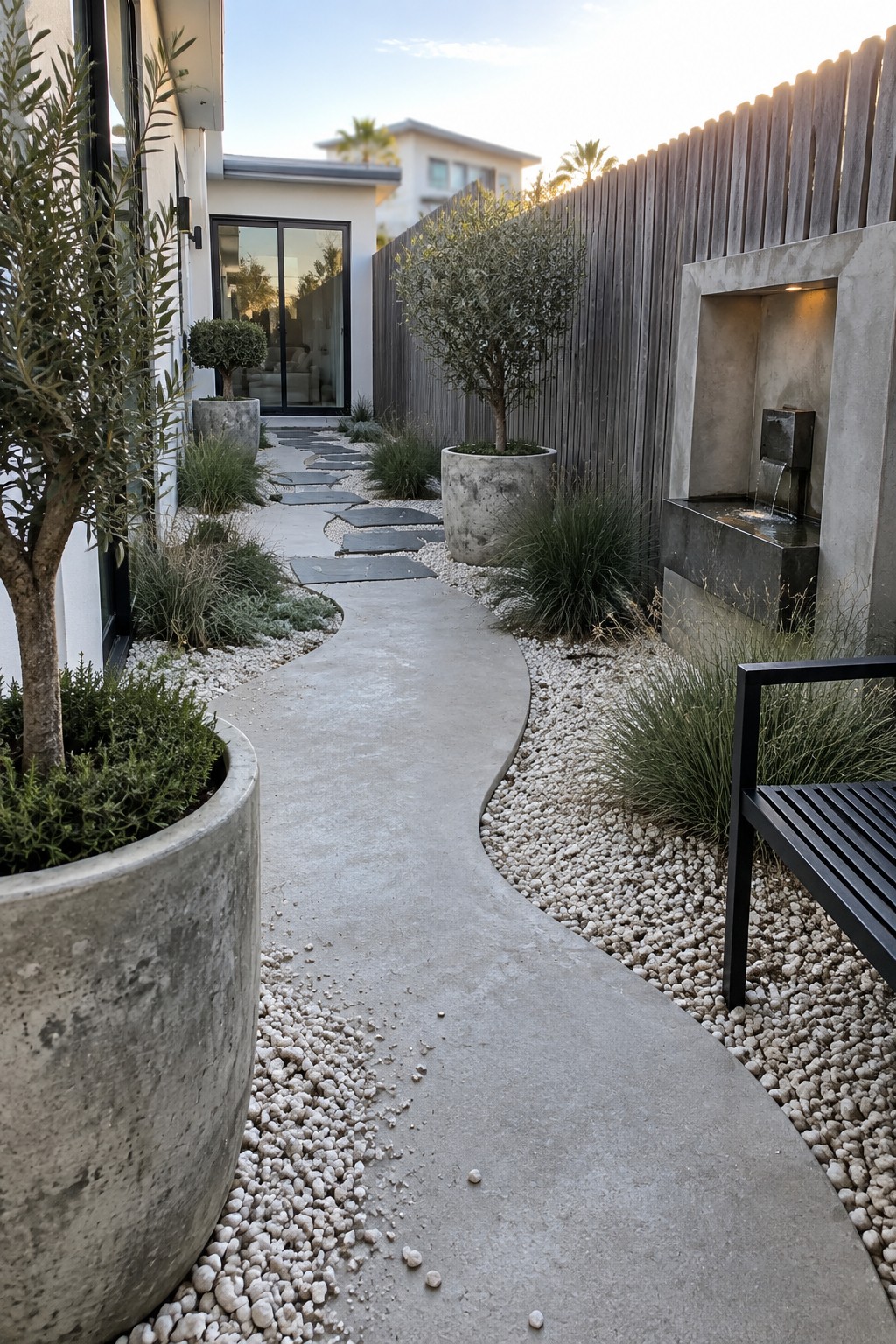
A curved concrete path works well when you want to slow movement through a narrow side yard. The bend keeps the space from feeling like a straight corridor and lets the planting along the edges show up more clearly as you walk.
This layout suits homes with limited space between the house and a fence or property line. Pour the path in one smooth pour so the curve stays clean, then add gravel or low grasses right up to the edges to soften the look without crowding the walkway.
Curved Brick Paths Around Raised Beds
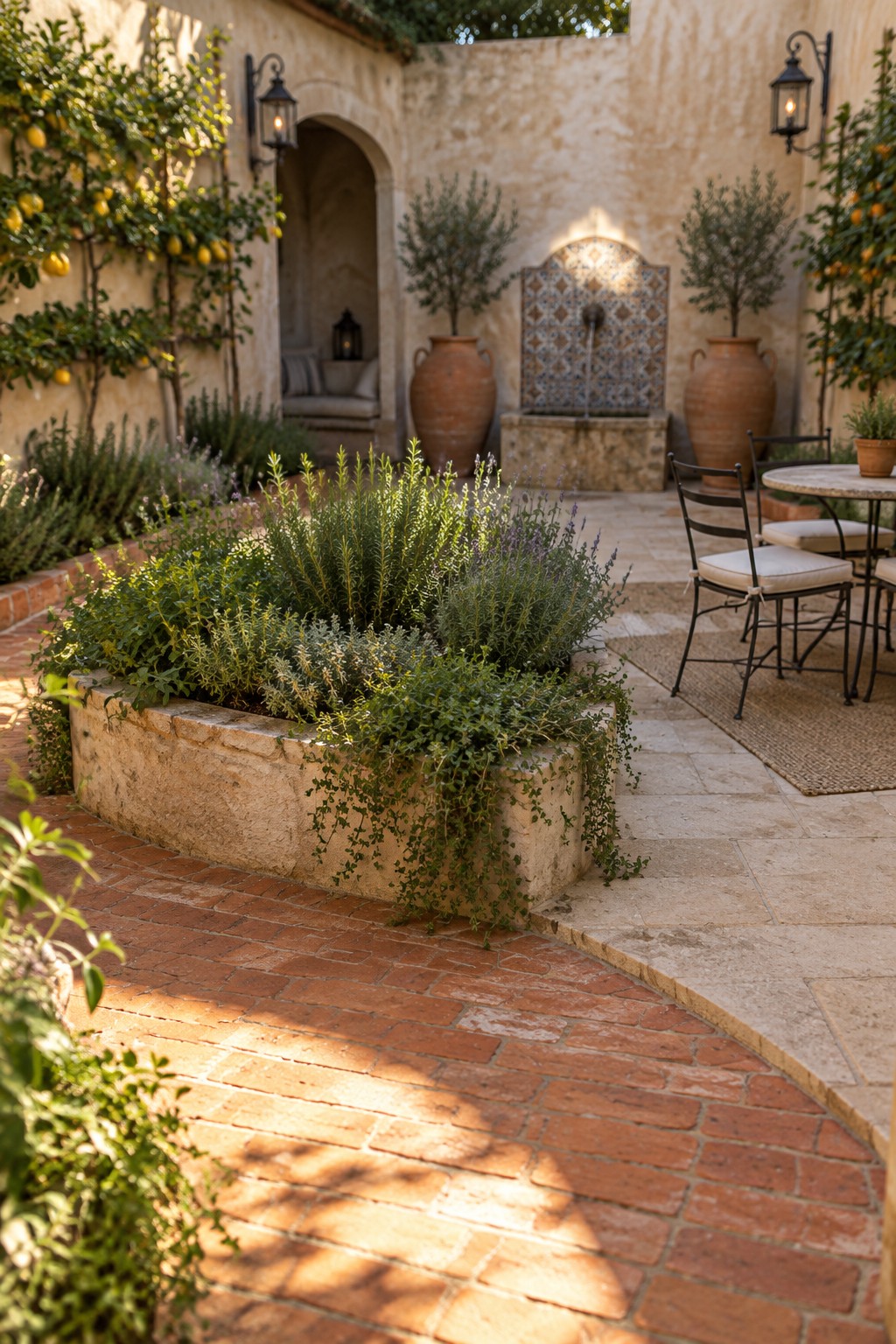
A curved path makes a garden bed feel more settled into the space instead of just sitting beside a straight line. The gentle bend here lets the raised stone planter become part of the walkway instead of an obstacle, and the brick softens the edge while still giving a clear route through the garden.
This approach works best in smaller yards or side gardens where you want the planting to feel generous without blocking movement. Keep the curve wide enough for two people to pass and use the same brick or paver throughout so the path reads as one continuous line rather than a series of patches.
Stepping Stones Make a Simple Curved Path
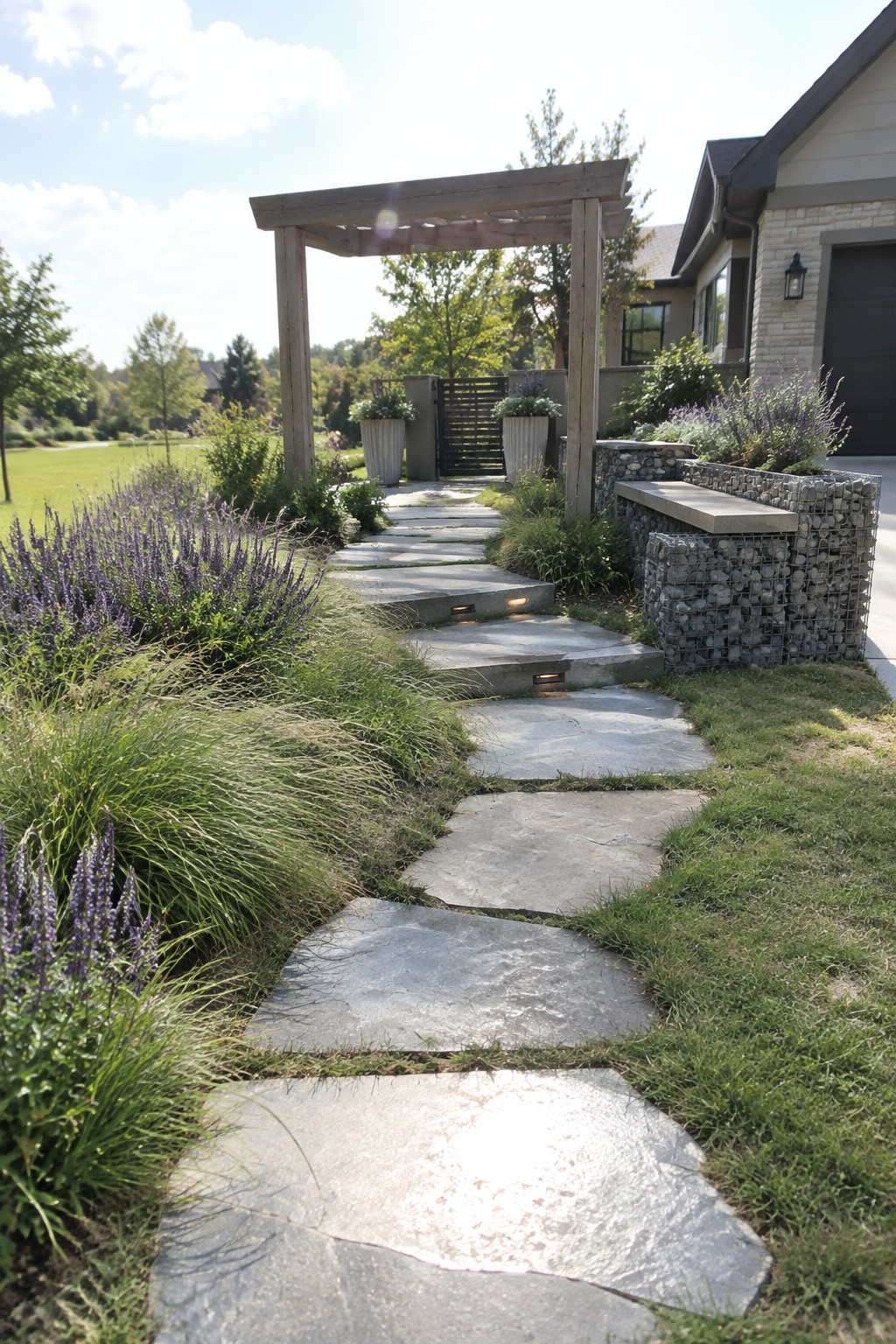
A path made from large flat stones set right into the grass gives a garden an easy, natural flow. The stones can curve gently instead of running in a straight line, which keeps the layout feeling relaxed and less formal. This approach works well when you want to connect different parts of the yard without adding a full paved walkway.
It suits homes with open lawn areas where a hard surface might feel too heavy. Space the stones so they are comfortable to walk on, and let low plants or grass grow around the edges to soften the look. Keep the curve gradual so the path does not feel forced.
Curved Paths In The Garden
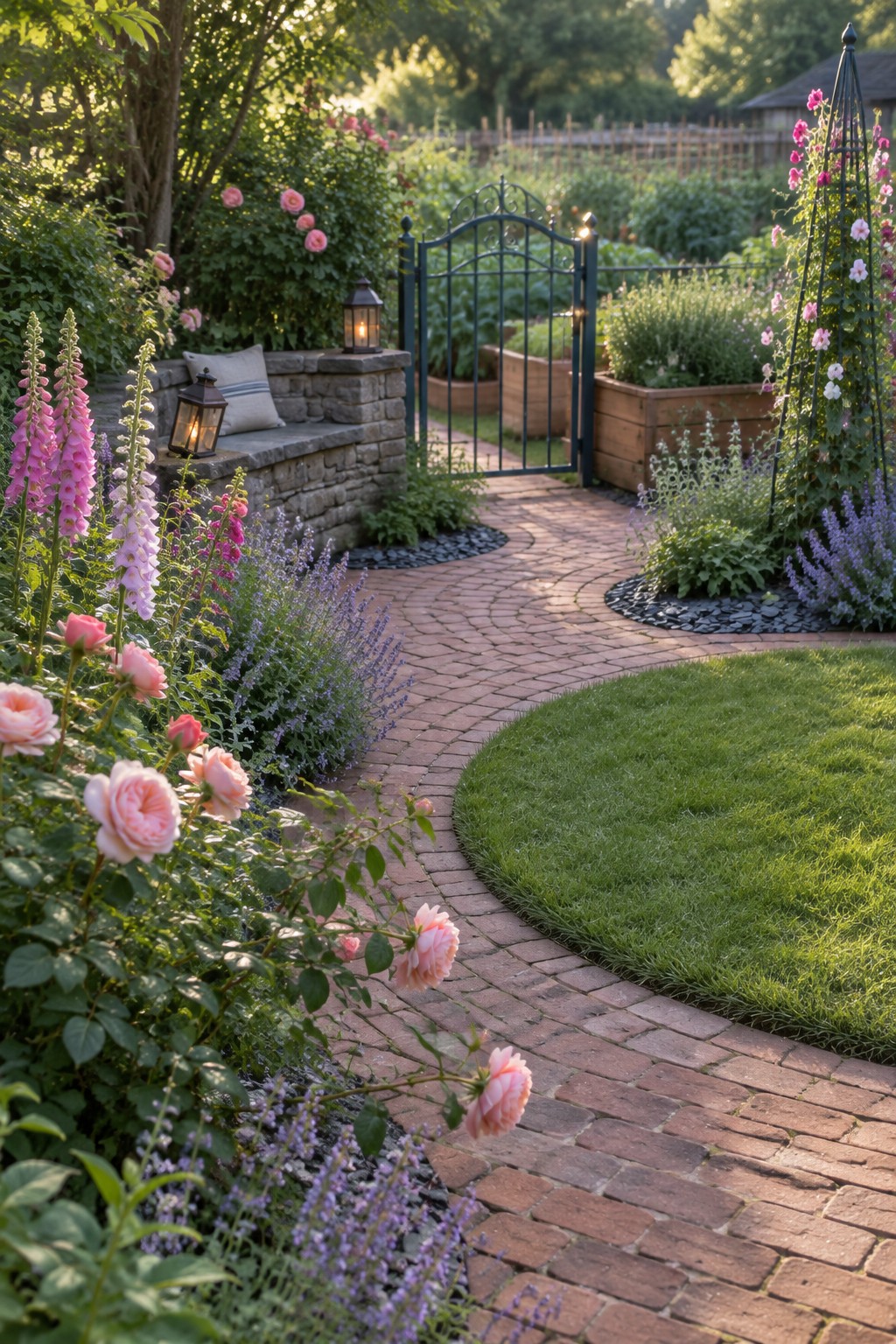
A curved path feels more relaxed than a straight run. It lets the garden unfold slowly and keeps the space from feeling chopped into sections.
Brick holds up well here and gives a soft edge that blends with the planting. Lay it so it bends around flower beds instead of cutting straight across the yard, and keep the curve gentle enough for easy walking.
Curved Paths Guide Movement Through The Yard
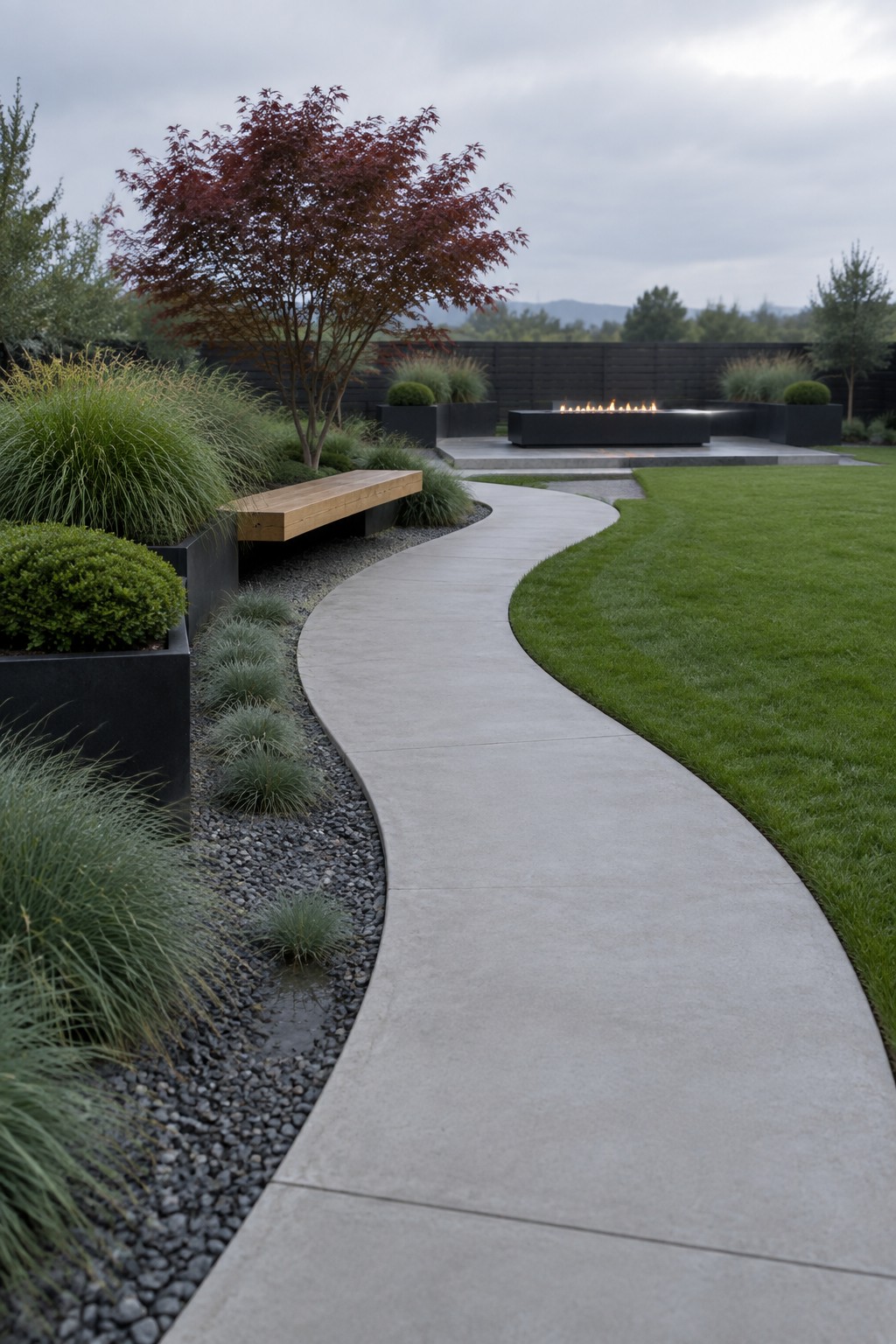
A gentle curve in a garden path keeps the walk interesting without making it feel complicated. It also gives you a chance to shape the lawn edge on one side while tucking plantings and gravel beds along the other.
This layout works best in open yards where you want to slow people down a bit and create small moments along the way. Keep the curve wide and smooth so the path stays easy to follow and practical for everyday use.
Let A Curved Path Shape The Garden Flow
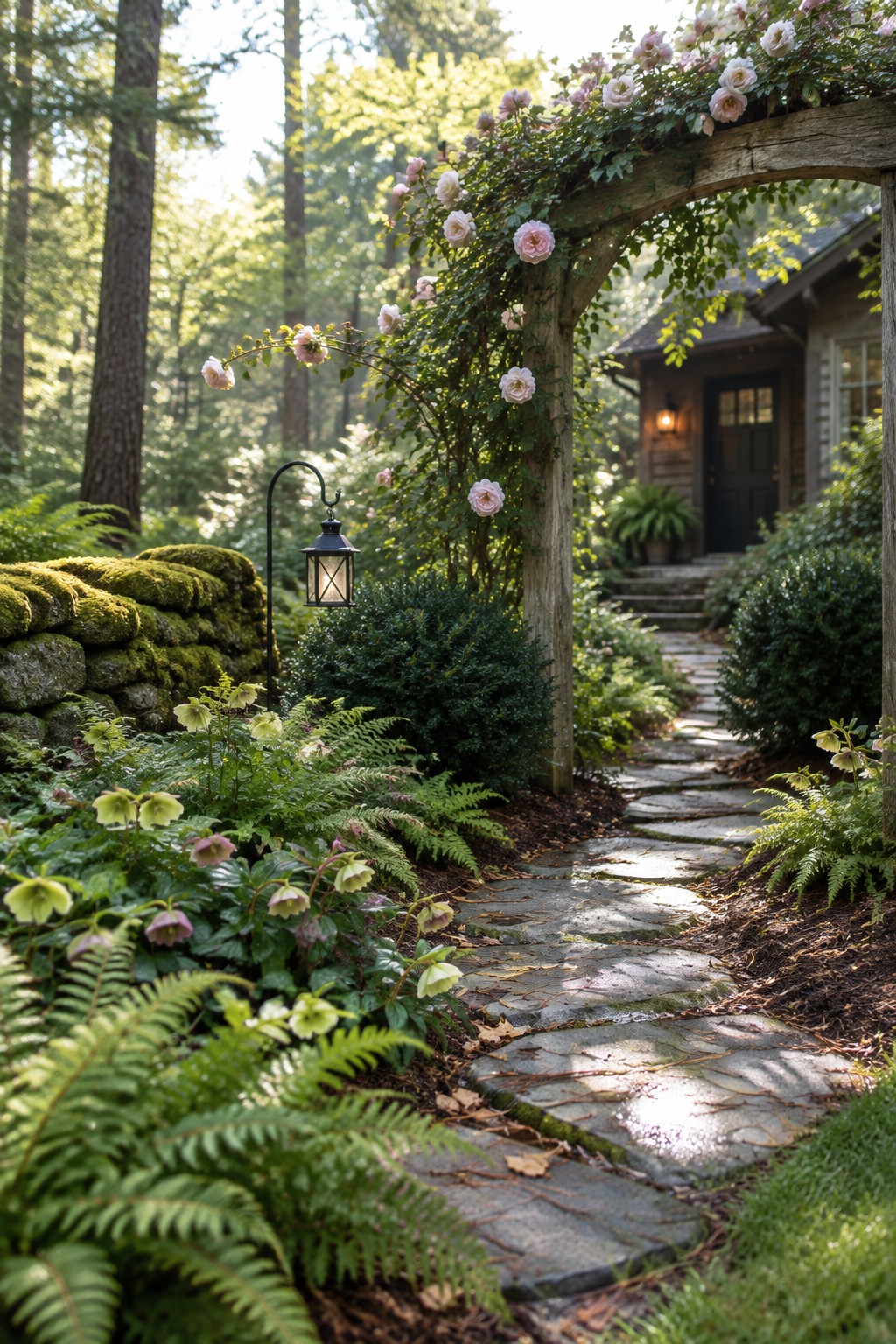
A curved path made of irregular stone slabs gives the garden a relaxed feel that straight lines rarely match. It moves around plantings instead of cutting through them, which makes the space feel larger and more inviting even in a modest yard.
This approach works best where the ground already has some slope or where you want to lead the eye toward a focal point like a doorway or seating area. Keep the edges soft with ferns and low flowers so the path blends into the beds rather than looking like a separate feature.
Curved Paths With Stepping Stones
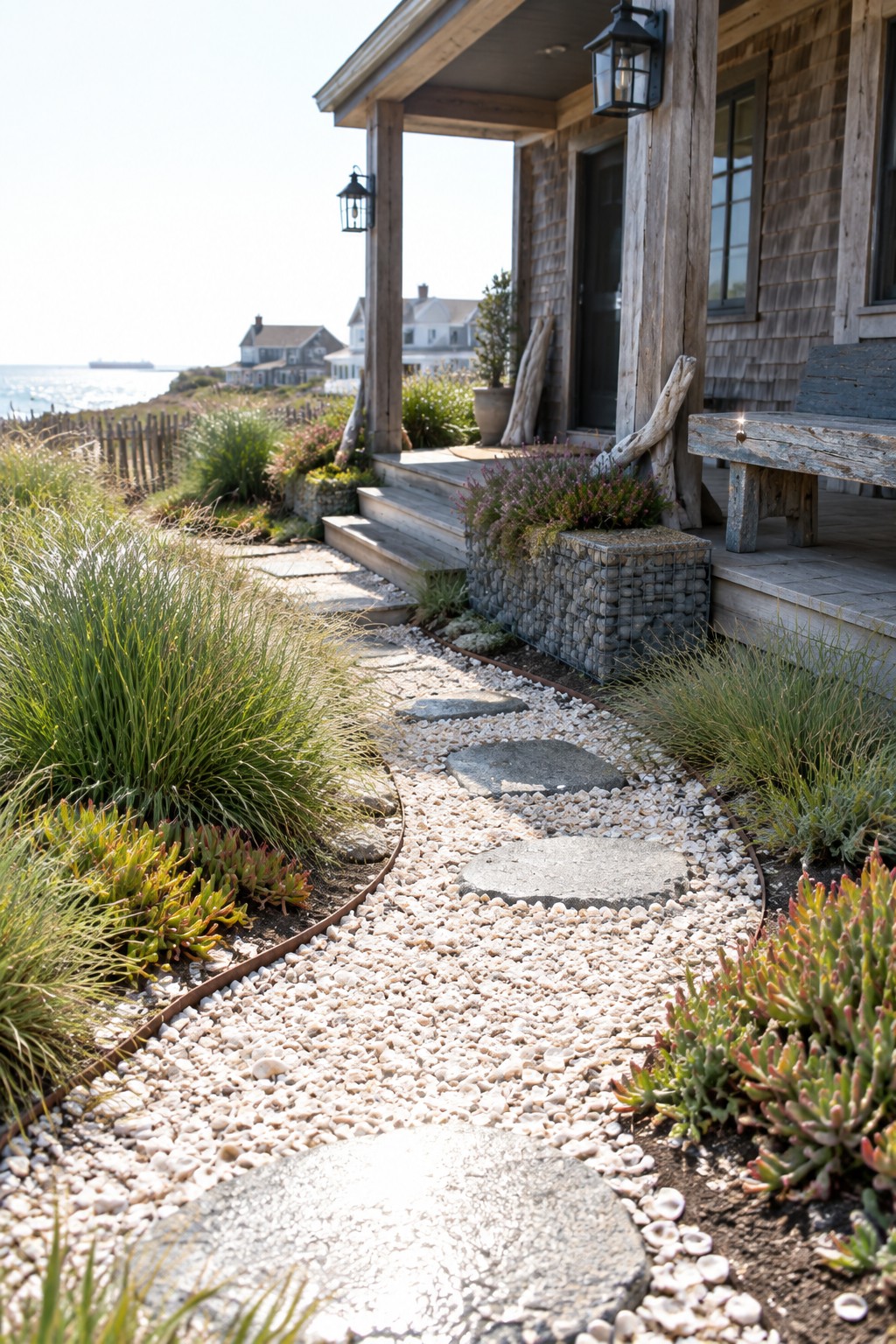
A path that curves instead of running straight gives the garden a more natural flow. The round stones set into gravel let the eye follow the line through the beds without forcing a rigid line, and the low plants along the edges help soften the edges even more.
This kind of path works well beside a house or leading to a porch where you want something practical but not too formal. Use a simple metal strip to hold the gravel in place, and pick stones large enough to step on without feeling unsteady.
Curved Brick Paths With Gravel Edges
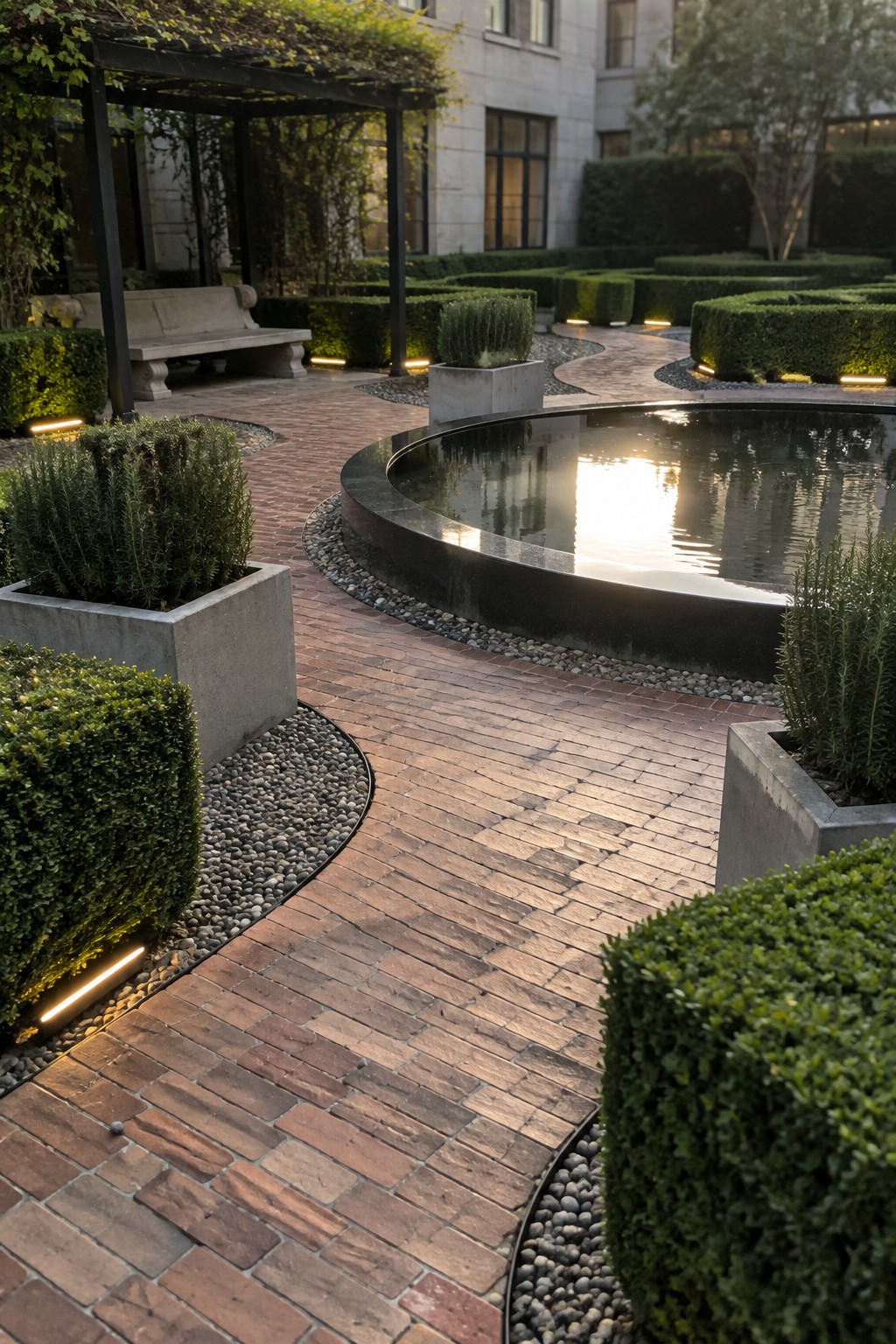
Curved paths give a garden a softer, more natural feel than straight lines. The brick here bends around the beds and the water, which helps the whole space flow without feeling chopped up. It also makes the layout feel a bit larger because your eye follows the curve instead of stopping at a hard angle.
This style works best in gardens that already have some structure, like clipped hedges or raised beds. Keep the curves gentle so the path stays easy to walk on, and use gravel along the edges to hold everything in place and cut down on weeding.
Curved Paths That Shape Garden Beds
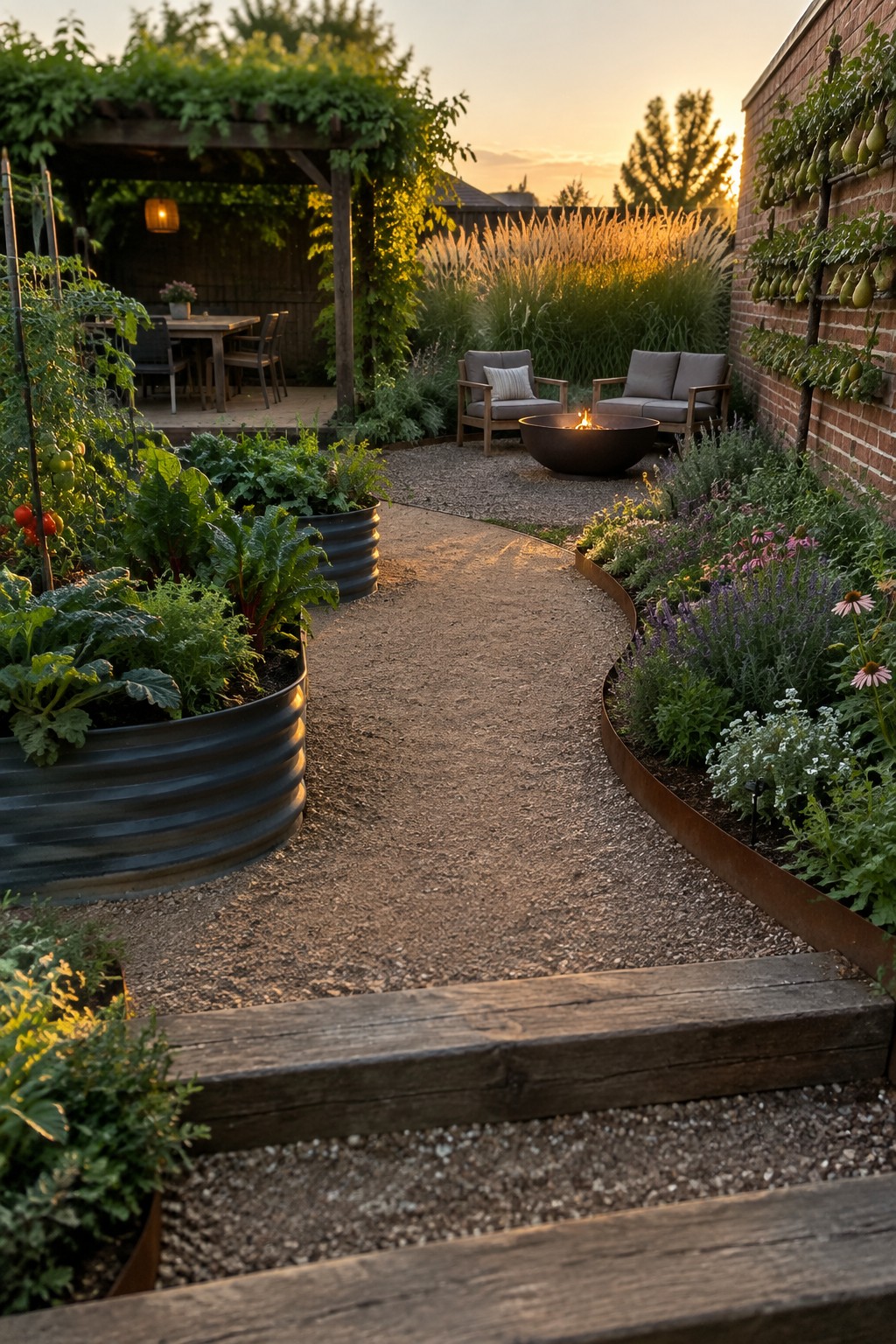
A curved path gives the garden a softer layout that feels easier to walk through. The gentle bend lets the beds on either side follow a more natural line instead of running in stiff rows.
This approach works well in long or narrow yards where a straight path would feel too direct. Gravel stays simple to maintain and the edging helps keep soil in place without adding extra height.
Curved Brick Paths For Small Gardens
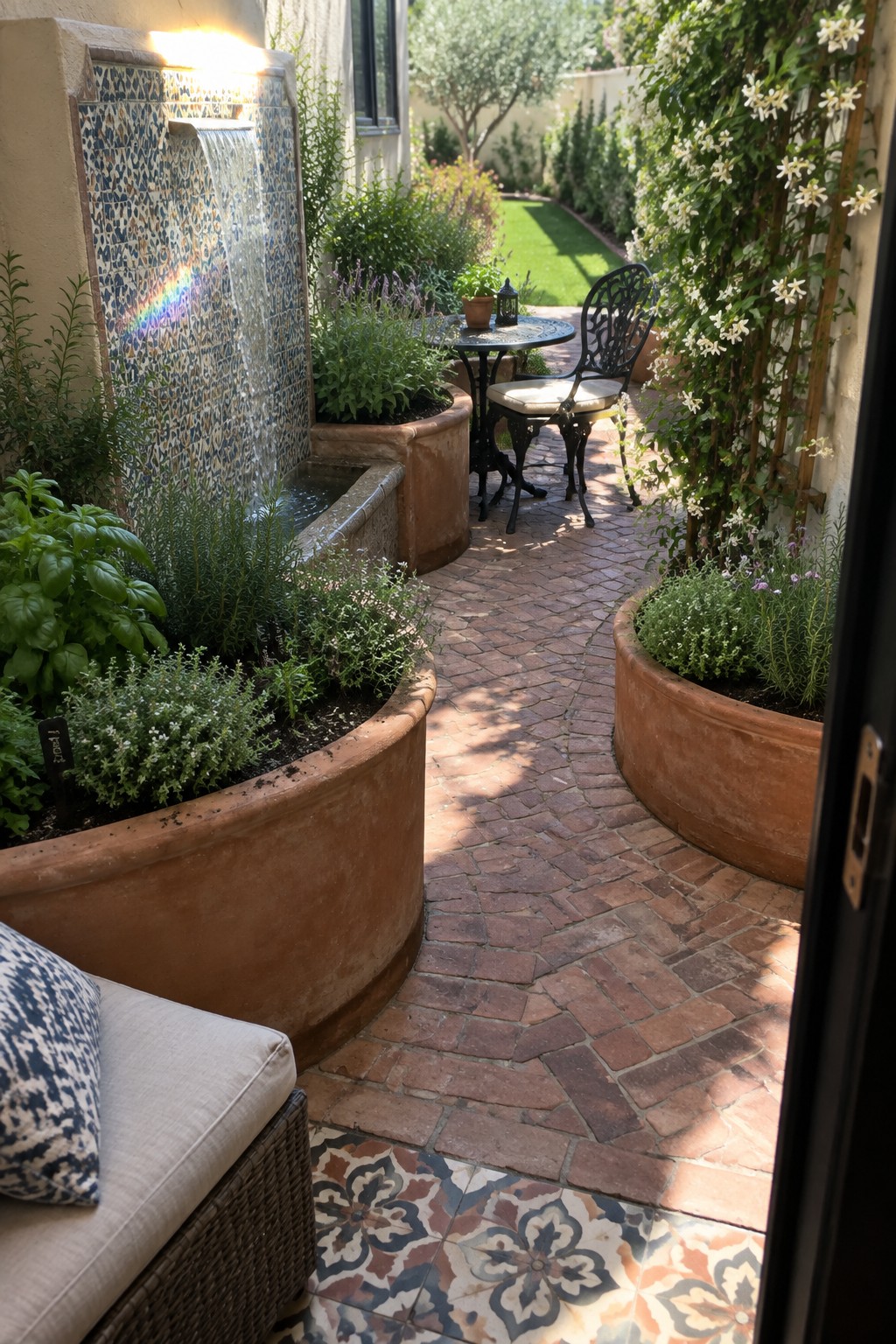
A curved path helps a compact garden feel less boxed in. Instead of running straight from one end to the other, the gentle bend slows the eye and makes the space feel bigger than it really is. Brick works well here because it adds texture without drawing too much attention.
This layout works best in side yards or small courtyards where you already have large planters or beds. Keep the curve simple so the path still feels practical to walk, and let the surrounding greenery soften the edges.
Stepping Stone Paths That Curve
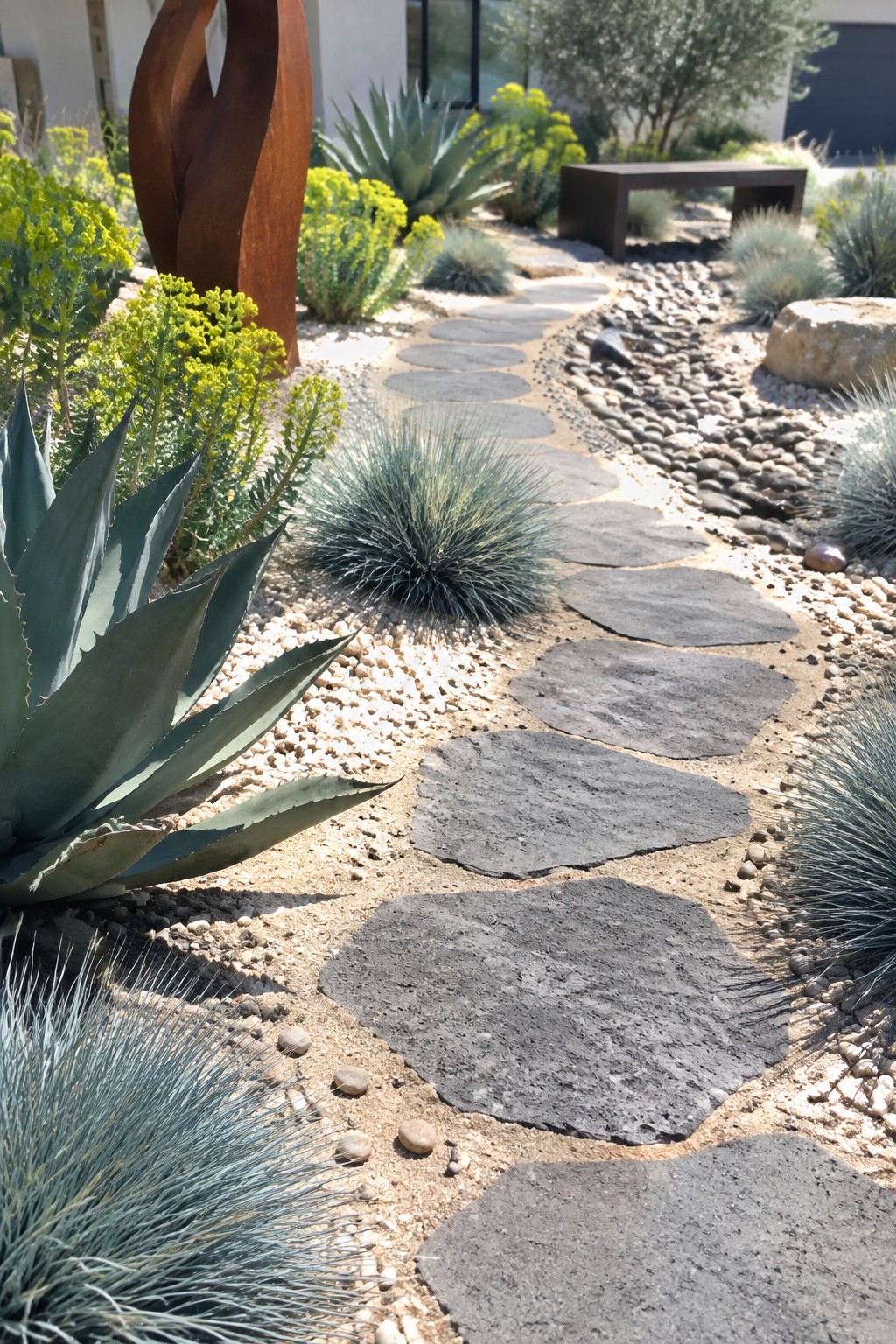
A curved path made from irregular stepping stones gives the garden a relaxed flow without needing a lot of hard edges. The stones sit in a bed of gravel so the whole thing feels light and easy to walk on while the curve softens the straight lines of the house and beds.
This layout works well in dry climates or low-water gardens because the gravel cuts down on weeding and the stones let you step over plants without compacting the soil. It suits homes with modern or Mediterranean styles where you want the path to guide people through the space rather than slice straight across it.
Curved Brick Paths Through The Garden
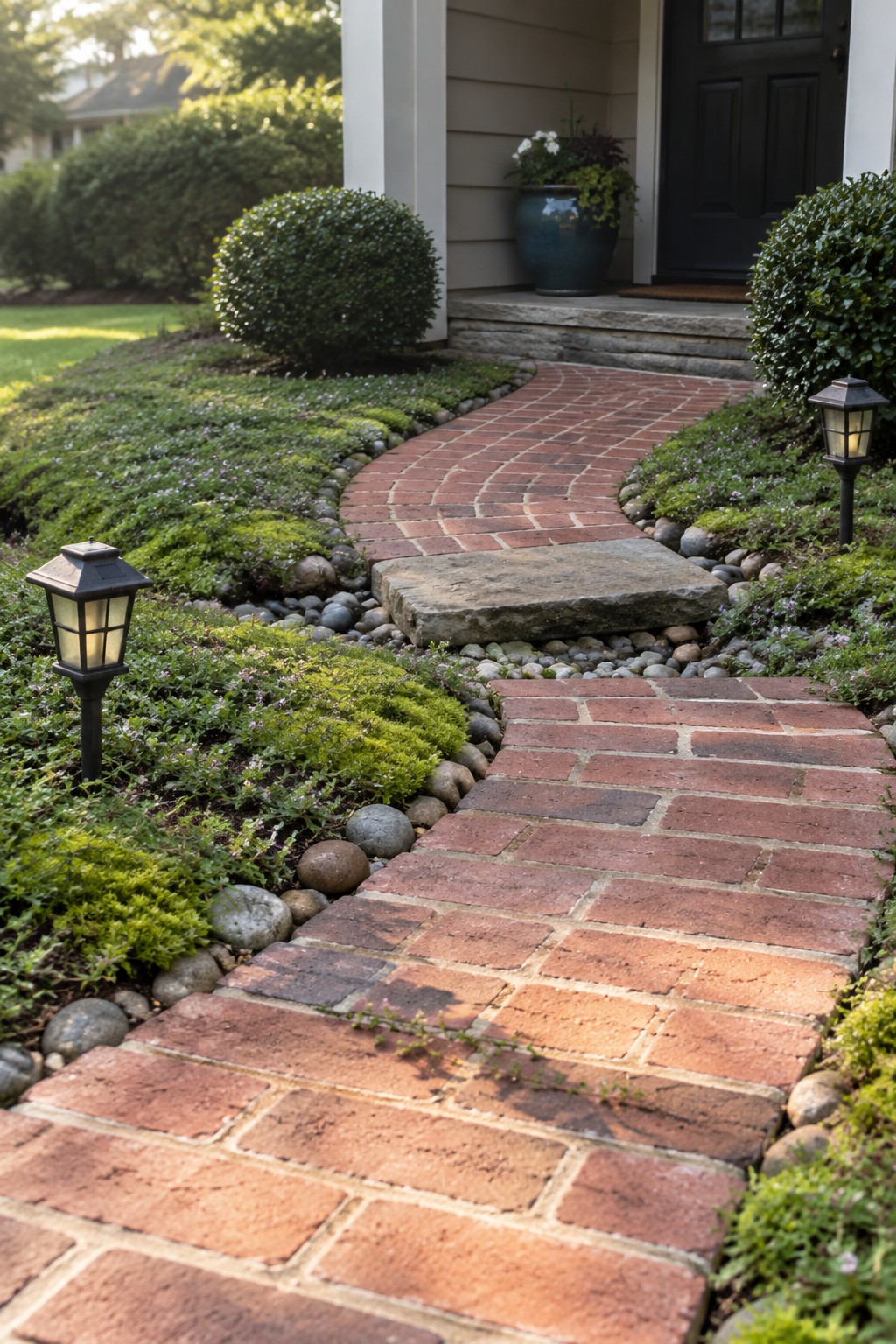
A curved path breaks up straight lines in the yard and makes the space feel more relaxed. Brick works well for this because the material already has a handmade look that pairs easily with plants and gravel edges. The gentle bend also keeps the walk interesting without needing extra features.
This approach suits smaller front yards or side gardens where a straight line would feel too formal. Lay the bricks in a running bond pattern and keep the curve gradual so it stays easy to walk on. Avoid sharp turns that force people to slow down.
Curved Paths Bring Natural Flow To Garden Layouts
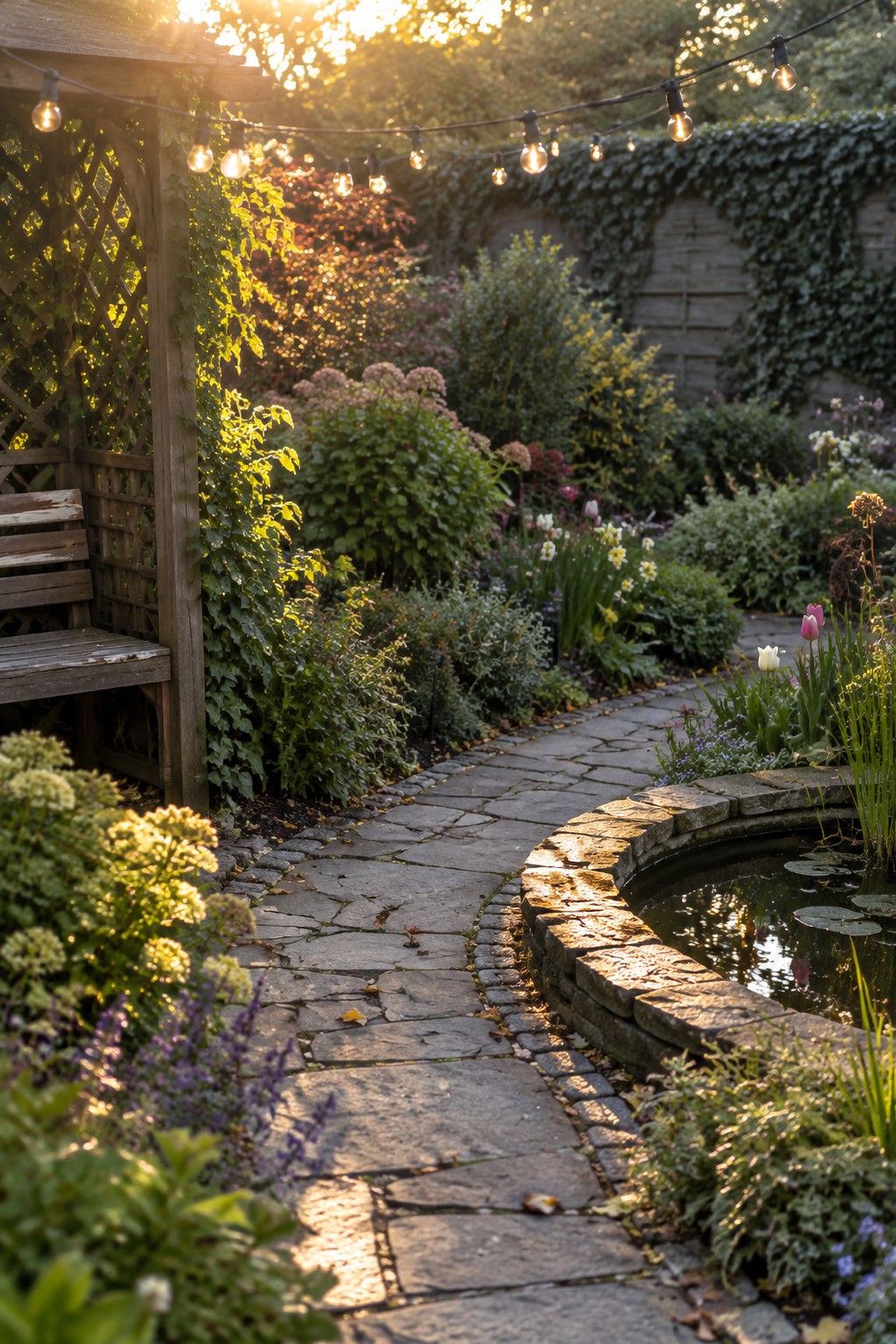
A curved path keeps the eye moving gently instead of rushing straight ahead. In this garden the stone walkway bends around beds and edges a small pond, which makes the space feel larger and more relaxed to walk through.
This layout works best in backyards where you want to link different planting areas without cutting them into stiff sections. Keep the curve gradual and match the width to how people will actually use it so the path stays practical as well as pretty.
Curved Paths Create A Gentler Approach
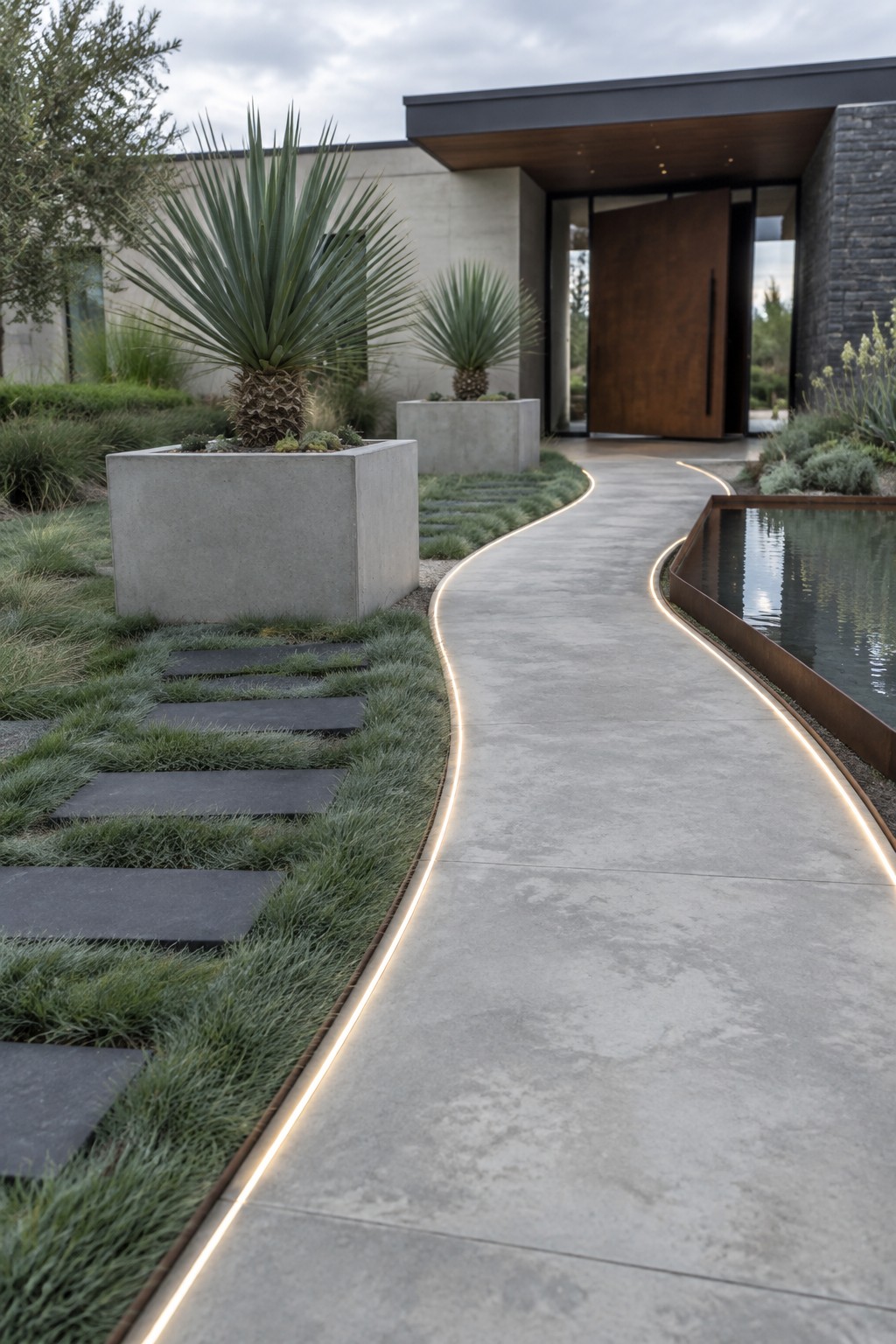
A straight path gets you to the door fast, but a gentle curve slows the walk down in a good way. It feels more relaxed and helps the entry blend with the plants around it. The thin line of light along the edge keeps the path easy to follow at night without extra poles or bright fixtures.
This works best on homes with a bit of front space where the path can bend around a planter or two. Keep the curve mild so it stays practical for daily use. Pair it with low ground cover on the sides to avoid extra trimming.
Let The Path Wind Naturally
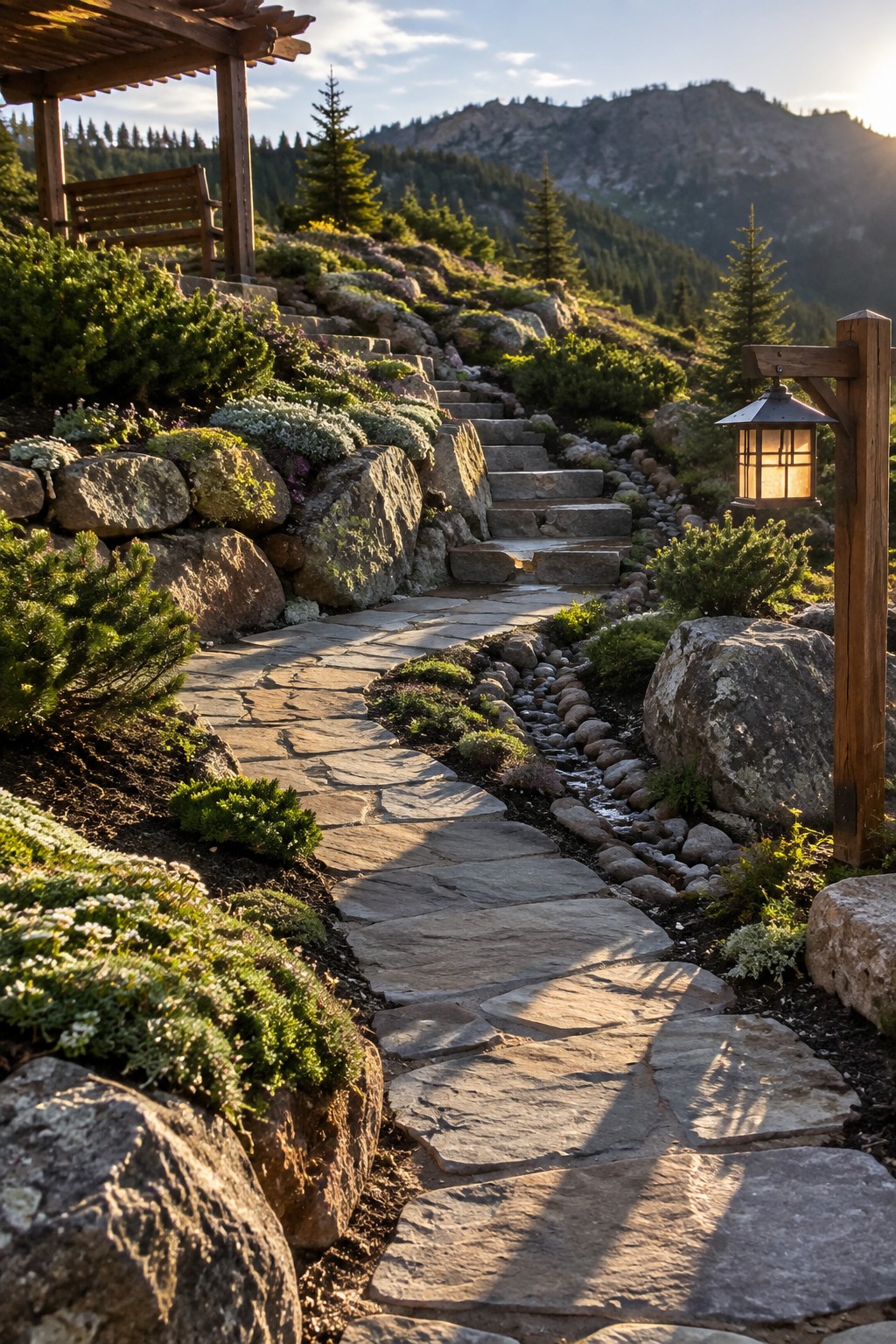
A curved path makes sense on ground that already slopes and turns. Straight lines fight the hill and end up looking forced, while a gentle curve lets the walkway follow the lay of the land and move around rocks and plantings without extra grading.
This works best on homes with uneven yards or hillsides that need steps in places. Use flat stones of different sizes so the path settles into the slope instead of sitting on top of it, and keep the edges soft with low plants so the whole thing feels like it belongs there.
Add a Living Arch to Your Curved Garden Path
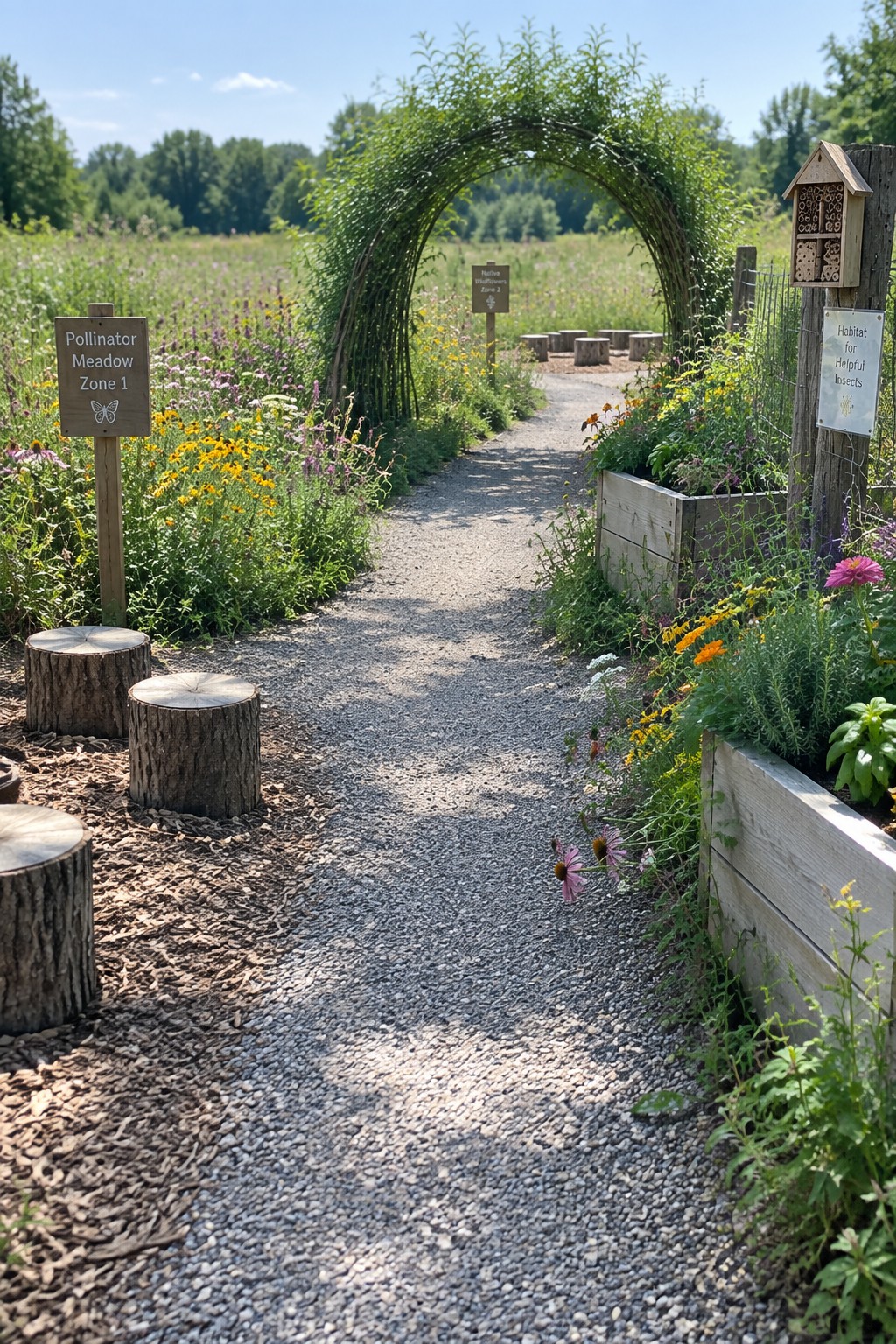
A simple arch built from flexible branches gives a curved path more purpose. It marks the transition between one garden area and the next without needing fancy materials or a big budget.
This approach works best in open or meadow-style yards where the path already bends toward a focal point like seating or another planting zone. Let the branches weather naturally and add a few vines so the arch fills in over time.
Let the Garden Path Curve Gently
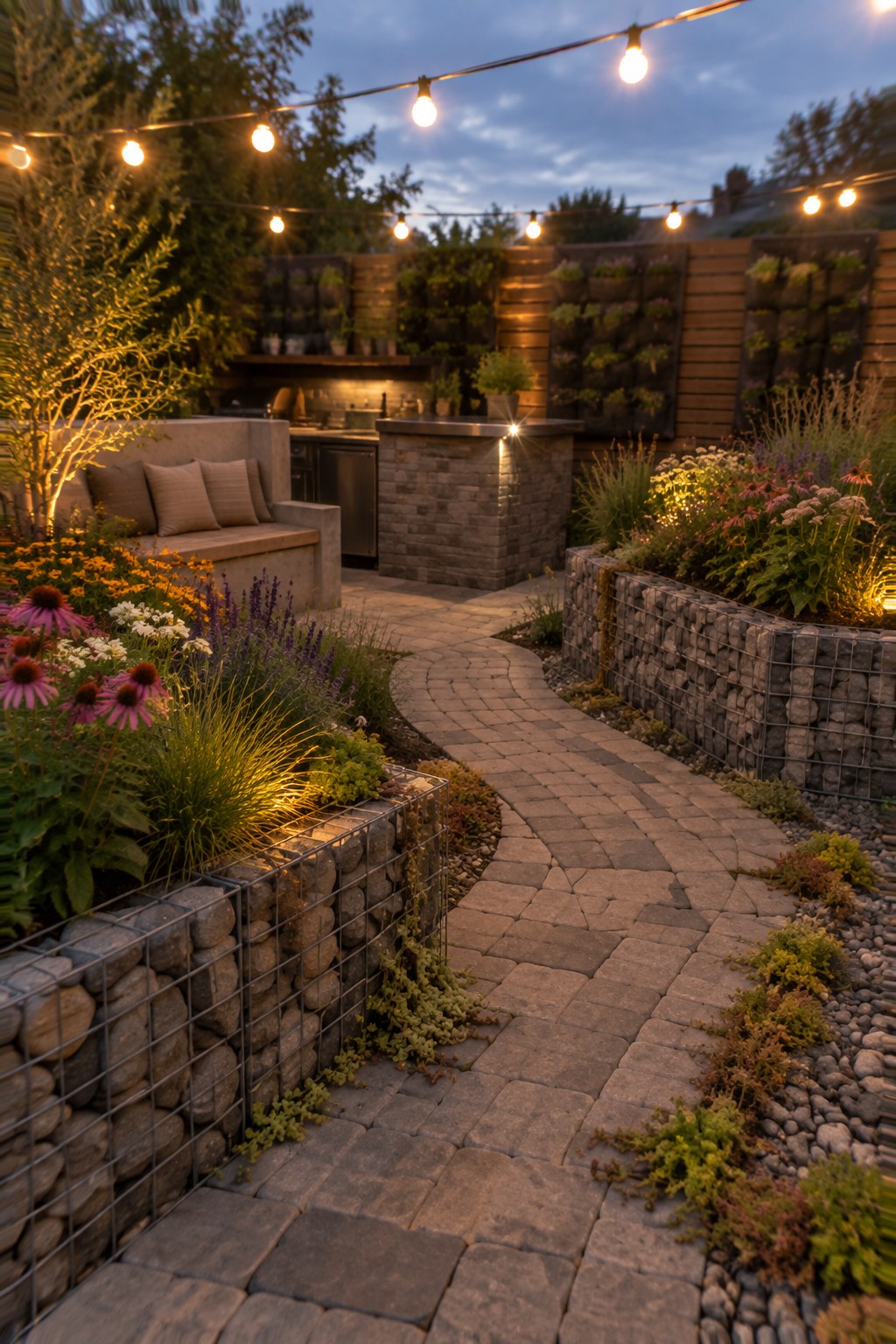
A curved path gives the garden a more relaxed feel than a straight line. It slows the walk and makes the space seem bigger because you cannot see the whole thing at once.
This layout works best in smaller backyards or side gardens where straight lines would feel too formal. Keep the curve wide enough for two people to pass and edge it with lower plants so the path stays easy to follow at night.
Curved Paths Work Well In Tight Spaces
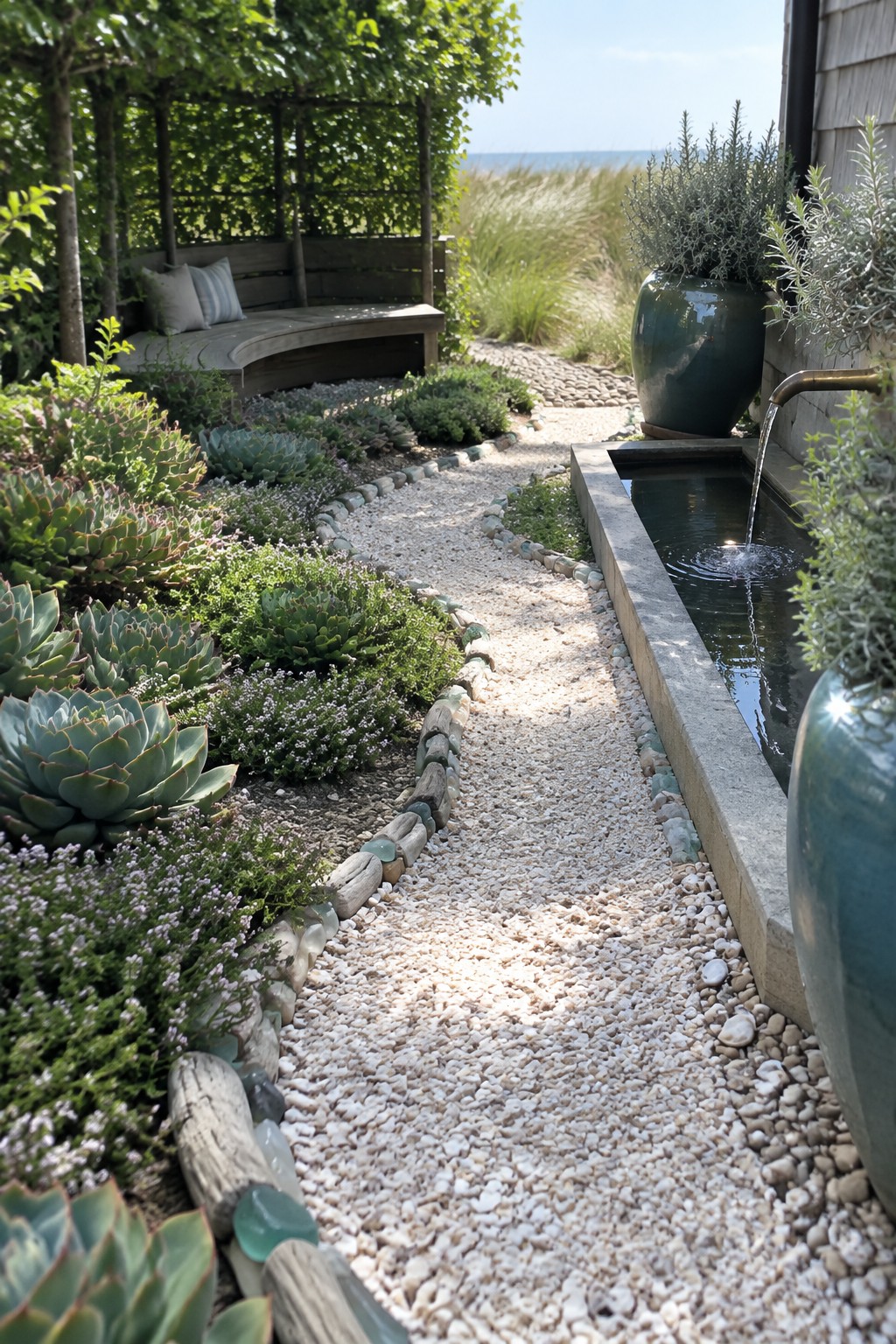
Curved gravel paths help a garden feel more open even when the area is small. The gentle bend keeps the layout from looking boxed in and lets plants spill over the edges without blocking the way.
This approach suits homes with narrow side yards or coastal lots where you want a relaxed look. Keep the edging simple with wood or stone so the path stays easy to maintain and does not compete with the surrounding beds.
Frequently Asked Questions
Q: How do I lay out the curves so they feel natural in my yard?
A: Walk the space first and lay down a garden hose to test the shape. Move it around until the path seems to follow the land. Mark the final line with spray paint before you dig.
Q: Can I use gravel on a curved path without it shifting everywhere?
A: Lay down landscape fabric first and build up a firm base of crushed rock. Then add the gravel in thin layers and tamp it down as you go. This keeps the edges clean and the curve stable over time.
Q: What plants work along the sides without crowding the path?
A: Pick low growers like creeping thyme or dwarf mondo grass that stay under a foot tall. Plant them a few inches back from the edge so roots do not push into the path. Trim once in spring to keep everything tidy.
