

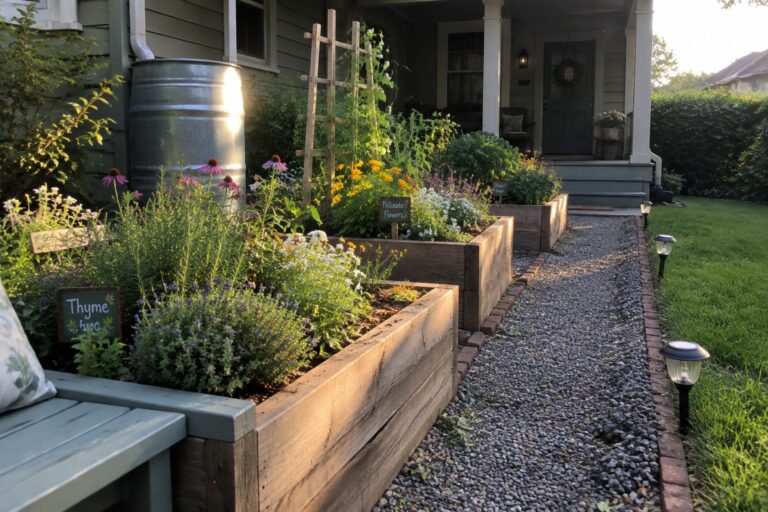
I’ve noticed that raised beds do more than hold plants because they also create edges that help define paths and separate different areas in the yard.
When I first tried them on a tight budget I used whatever lumber I could find and the layout still held up better than I expected after a couple seasons.
The real test comes when you start adding the actual plants and see how the whole space feels as things grow in.
Layout beats fancy materials every time.
I would try the cheaper soil mixes first to see what actually works in my own climate before committing to larger changes.
Raised Beds Along A Gravel Path
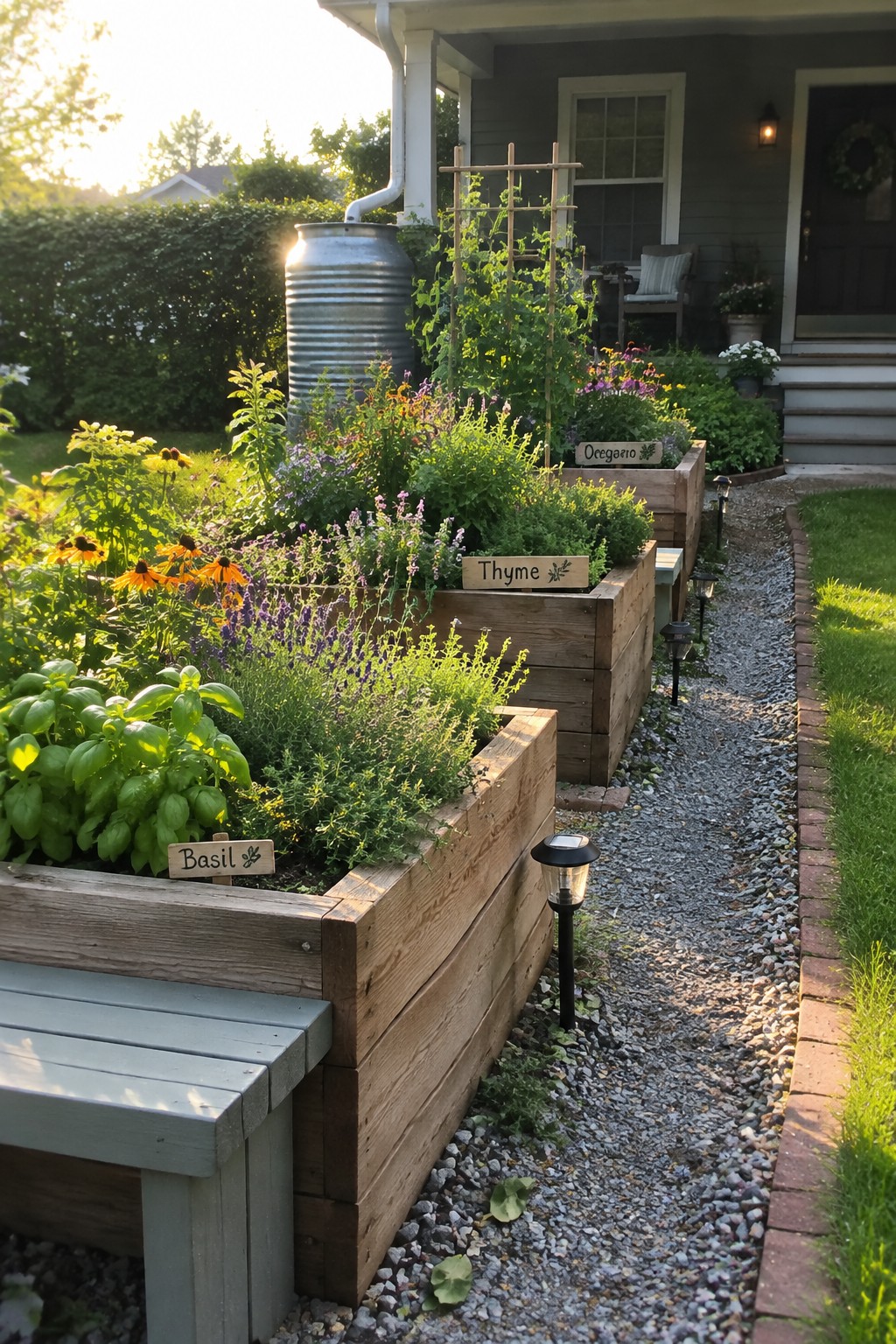
Raised beds set along a gravel path give you a simple way to grow herbs and vegetables in an organized line. The wood frames keep the soil contained and make it easy to reach everything without stepping on plants or dealing with mud.
This layout works well in narrow side yards or along the edge of a house where space is tight. Keep the path wide enough for a wheelbarrow and choose rot-resistant wood so the beds last longer.
Stone Walls That Double As Raised Beds
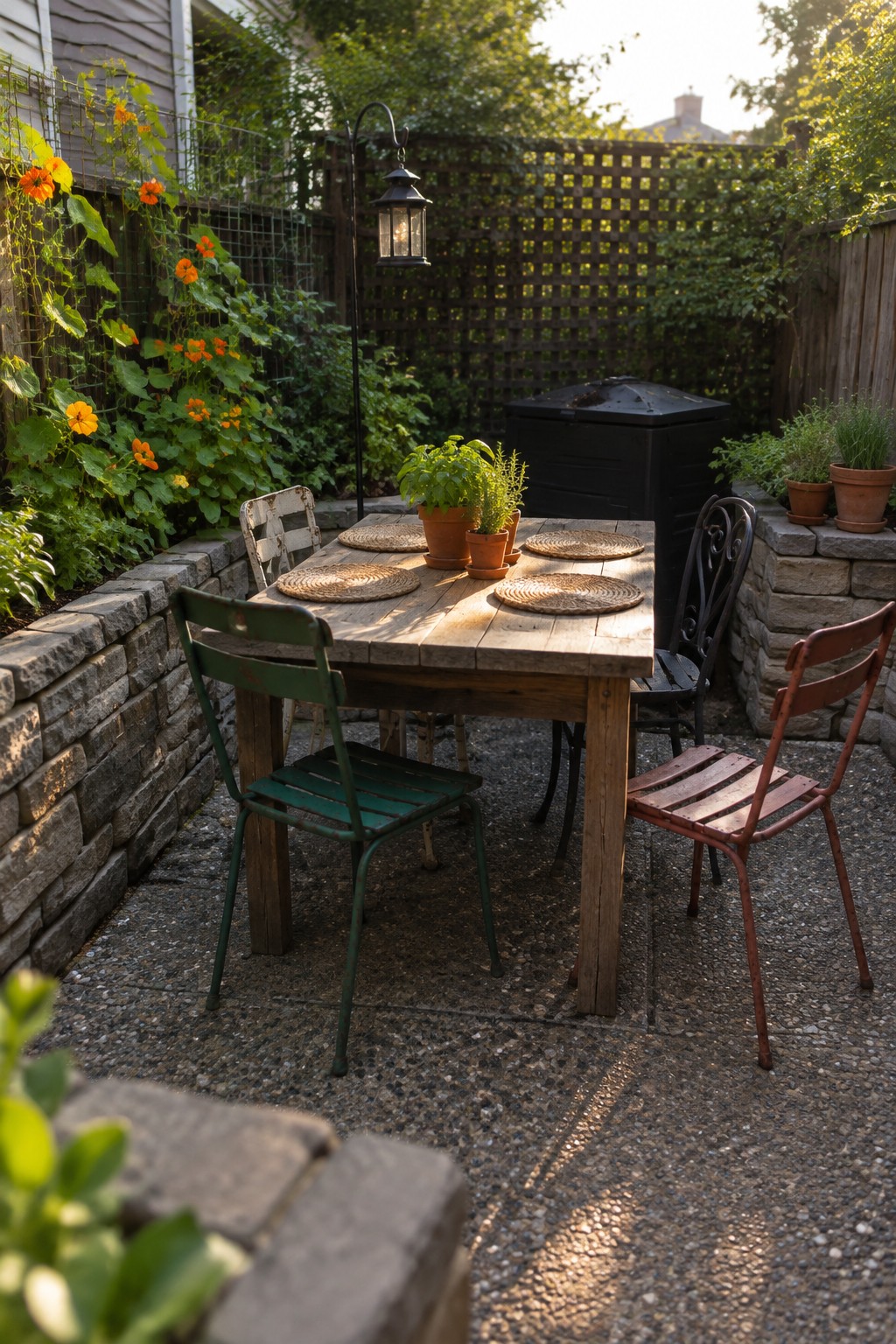
Stone walls around a gravel patio give you built-in planting space without extra cost or work. They hold the soil in place, create a clean edge, and let plants spill over naturally into the seating area.
This approach suits small backyards or older homes where the ground slopes. Stack basic blocks or reuse stone to form the walls, fill them with soil, and add herbs or flowers. Keep the center open for a table and chairs so the beds frame the space instead of crowding it.
Line Paths With Raised Beds
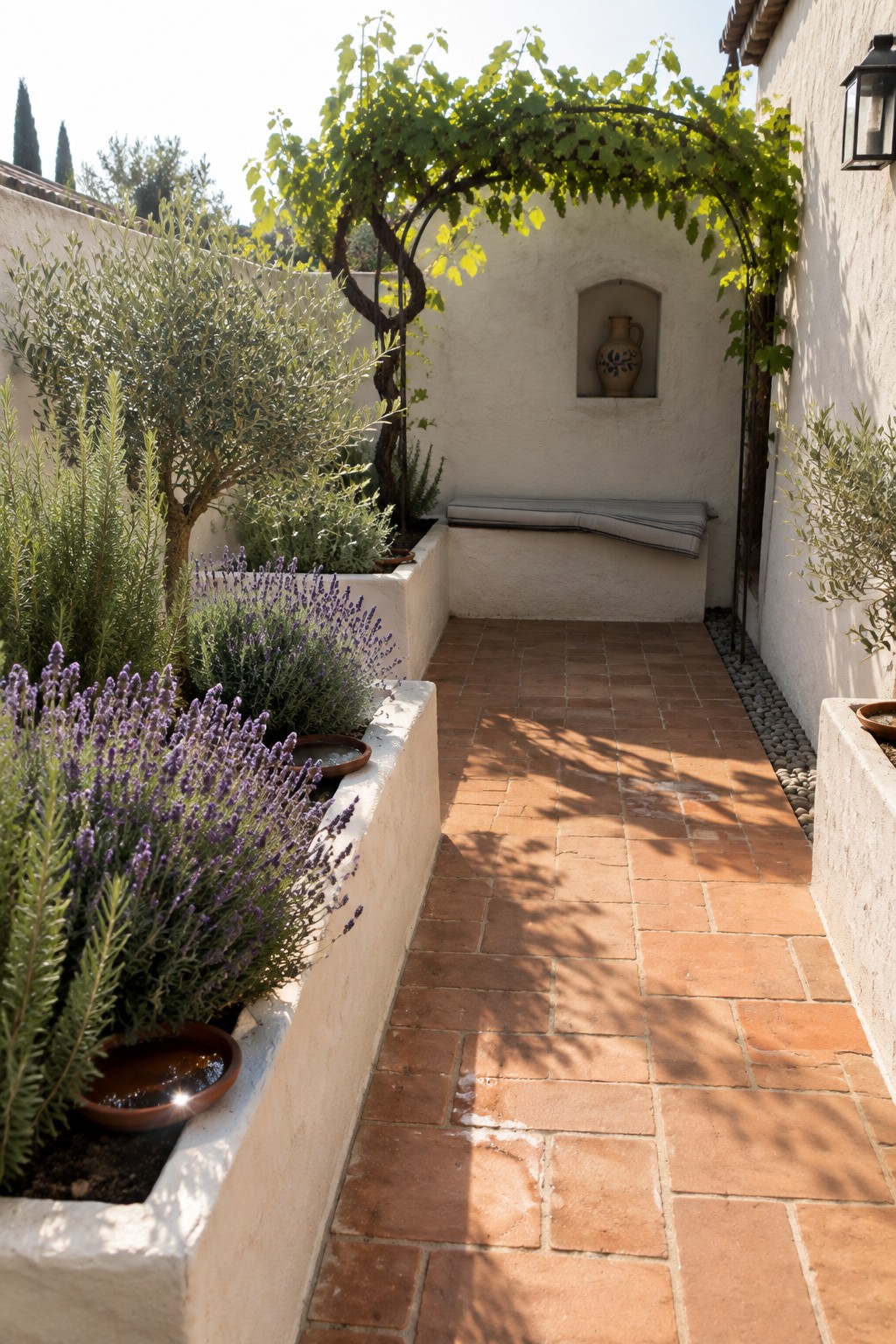
Raised beds give a garden path clear edges and keep plants from spilling onto the walkway. They also make it easier to control soil and water without worrying about the surrounding ground.
This approach works well in narrow side yards or back gardens where you want a straight route but still need room for herbs and flowers. Keep the beds low and wide enough to reach across from the path.
Raised Beds With Wood and Metal
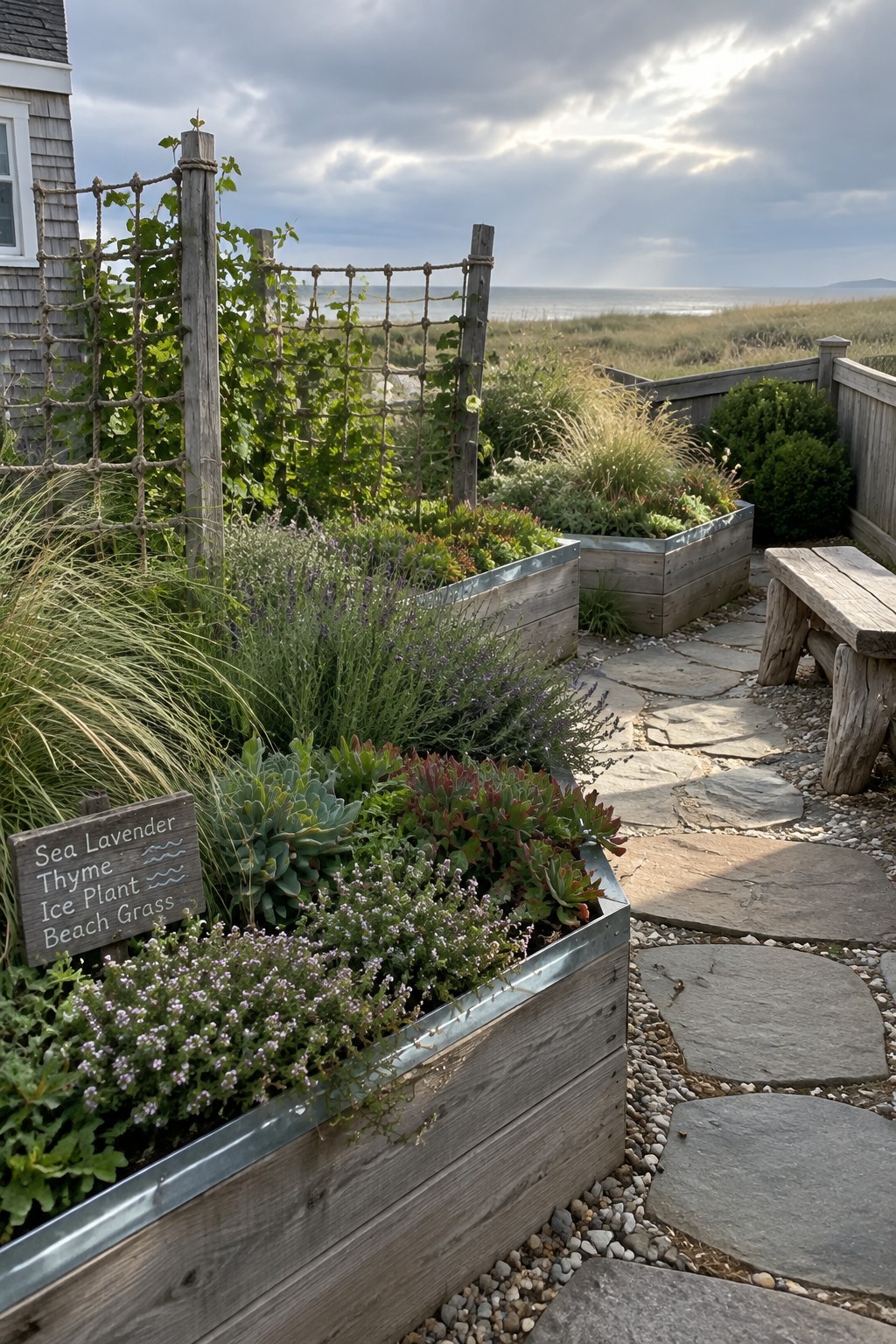
Raised beds made from wood and lined with metal give a garden clear structure without much cost. The mix keeps the wood from rotting quickly and gives the beds a finished look that works with most styles of home.
This setup works well along a path or near a fence where you want plants separated from the rest of the yard. Use pressure-treated lumber for the frame and simple metal flashing for the top edge, then fill with soil suited to the plants you choose.
Concrete Block Raised Beds Handle Slopes Well
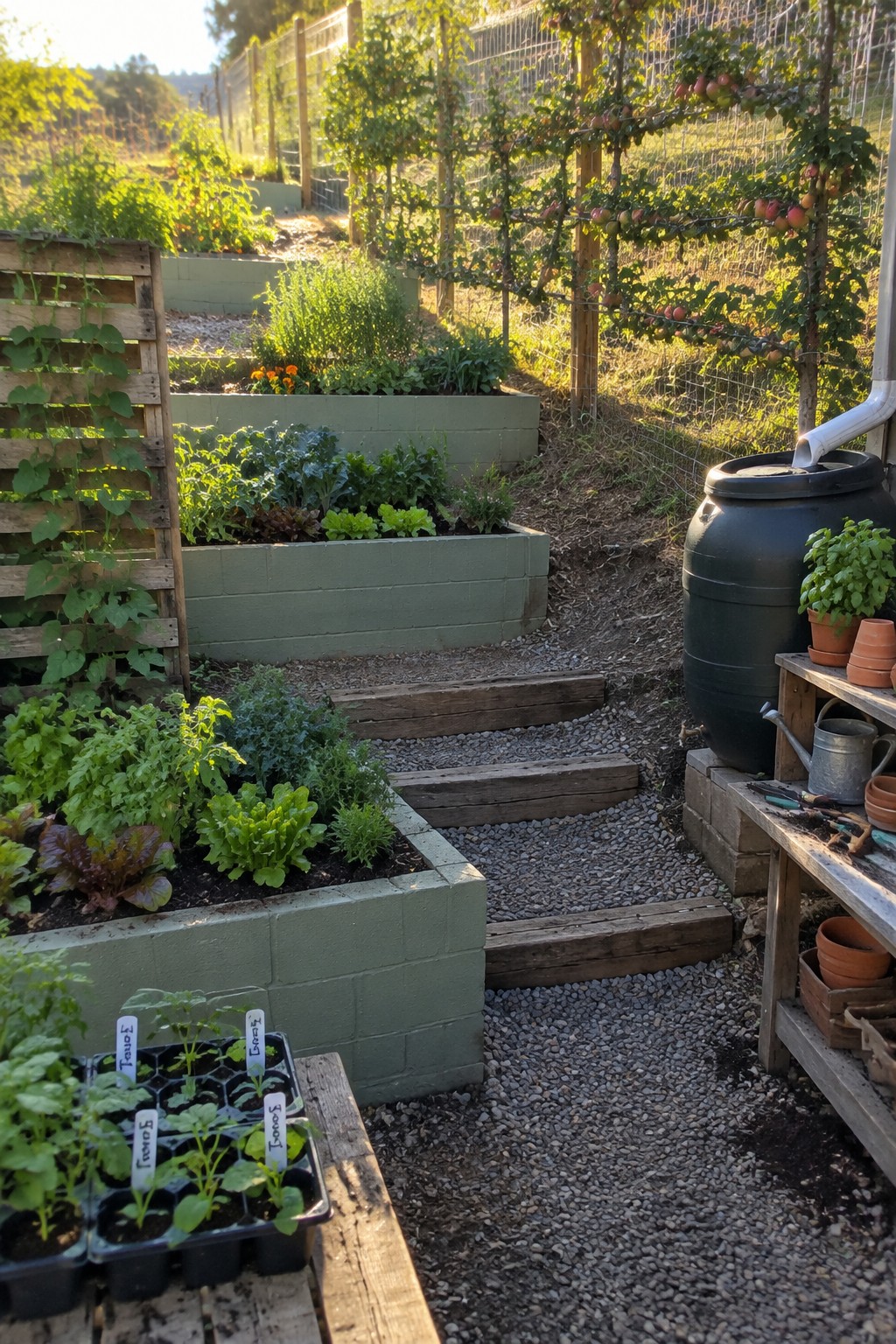
Raised beds made from concrete blocks give you a simple way to garden on a slope without fighting the grade. The blocks stack easily, hold the soil in place, and let you create level planting areas at different heights. A gravel path between them keeps the whole setup low maintenance and easy to walk through.
This approach works best in backyards that drop away from the house or have uneven ground. Paint the blocks if you want a softer look, and keep the beds narrow enough to reach across without stepping inside. The result is a practical garden that stays neat and productive with basic materials.
Raised Beds With A Built-In Compost Area
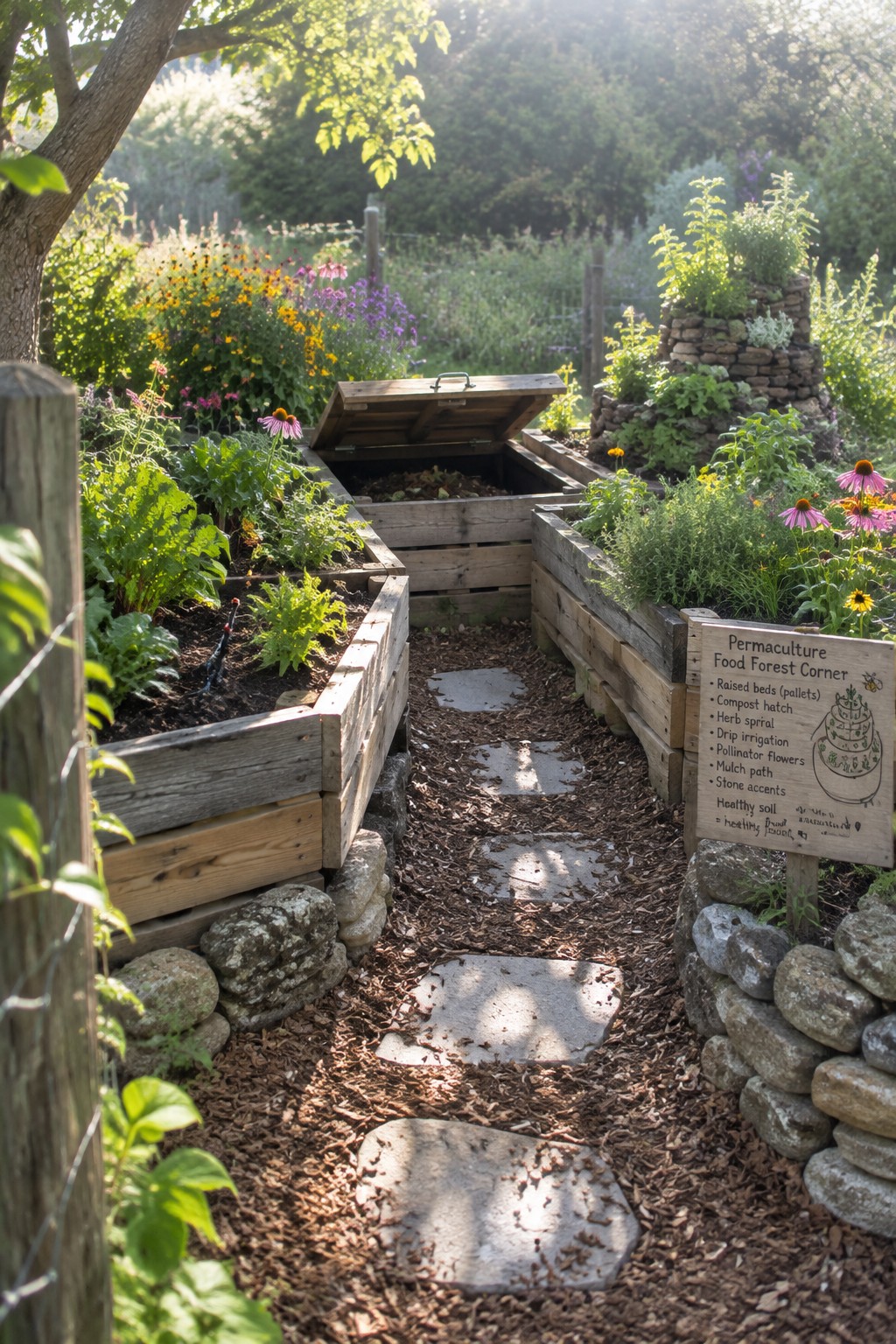
Raised beds work even better when you build a compost spot right into the layout. It keeps the whole system moving without extra trips across the yard, and it turns kitchen scraps and garden waste into soil on the spot. Many people use simple pallet wood for the beds because it is cheap and easy to find.
This setup suits smaller yards or anyone trying to keep costs down while growing food. Place the beds along a mulched path so you can reach everything without compacting the soil, and keep the compost hatch at a comfortable height for turning. Just watch that the bin does not sit too low or it can stay too wet in rainy seasons.
Raised Beds With Gravel Keep Things Simple
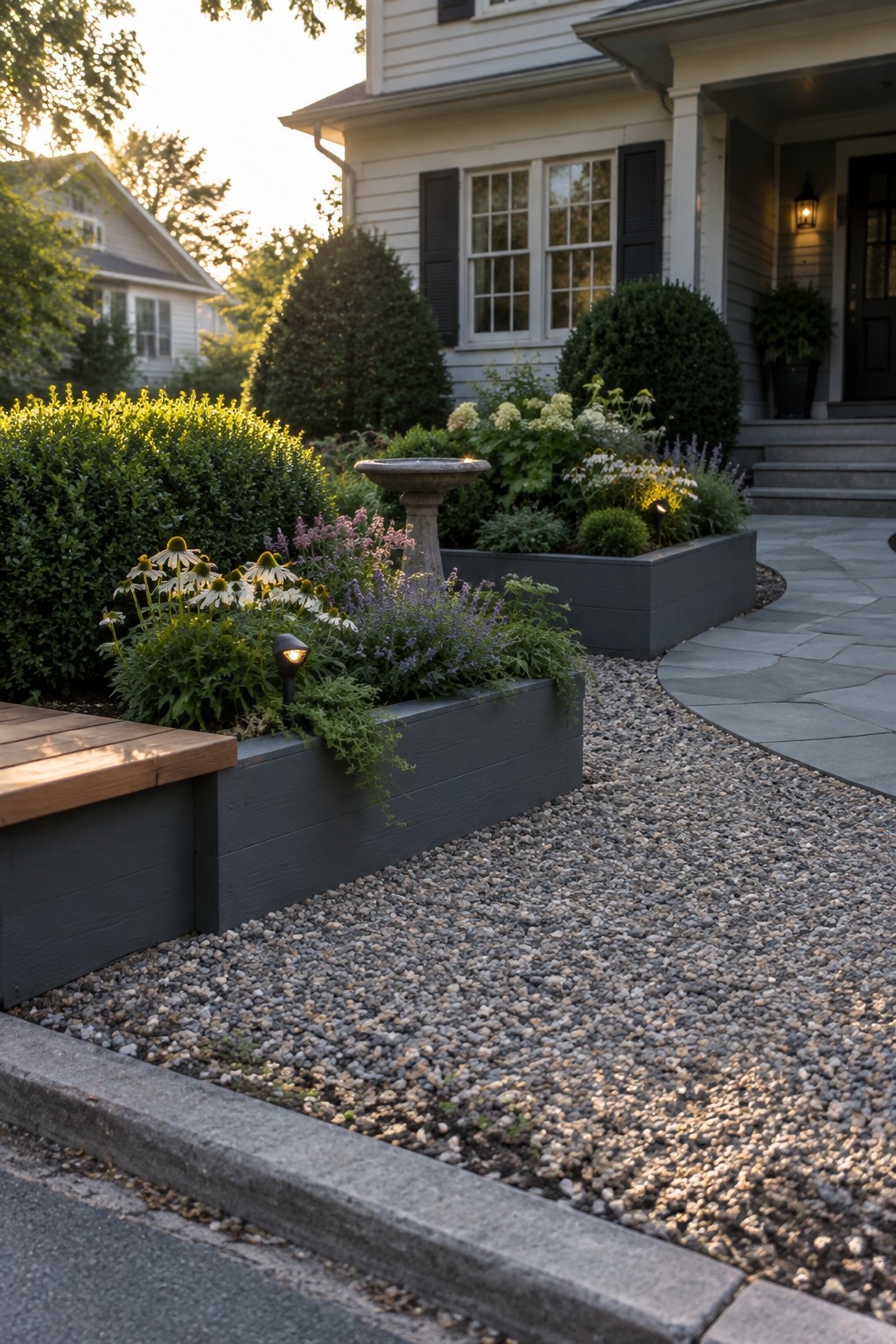
Raised beds give you a clear planting area without needing fancy edging or constant trimming. The gravel around them holds everything in place and cuts down on mud and weeds, which makes the whole garden feel more put together even on a smaller budget.
This works best along the front of a house or beside a walkway where you want structure without a lot of upkeep. Build the beds first, then lay down landscape fabric and gravel so the beds stay the focus and the ground stays easy to walk on.
Raised Beds That Double As Seating
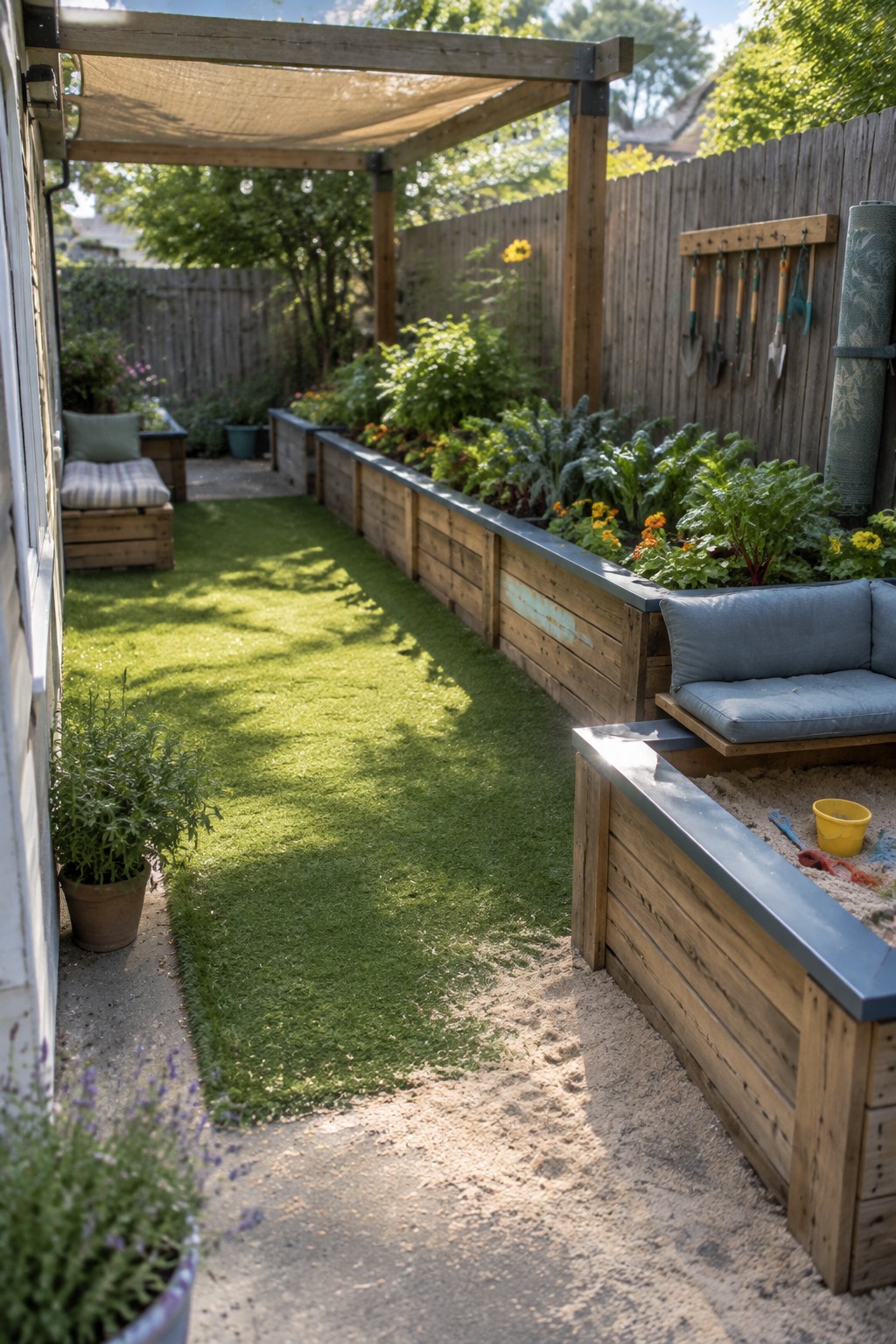
Raised beds work well when they do more than just hold plants. In this setup the beds run along the edge of the yard and one section has cushions added right on top, turning it into a simple bench. That extra use makes the whole garden feel more finished without needing extra furniture.
This idea works best in smaller yards where space is tight. Build the beds at a comfortable sitting height, keep the wood simple and untreated if you want to stay on budget, and place them where people already like to gather. Just make sure the seating area gets good drainage so cushions stay dry.
Raised Metal Beds For Garden Structure
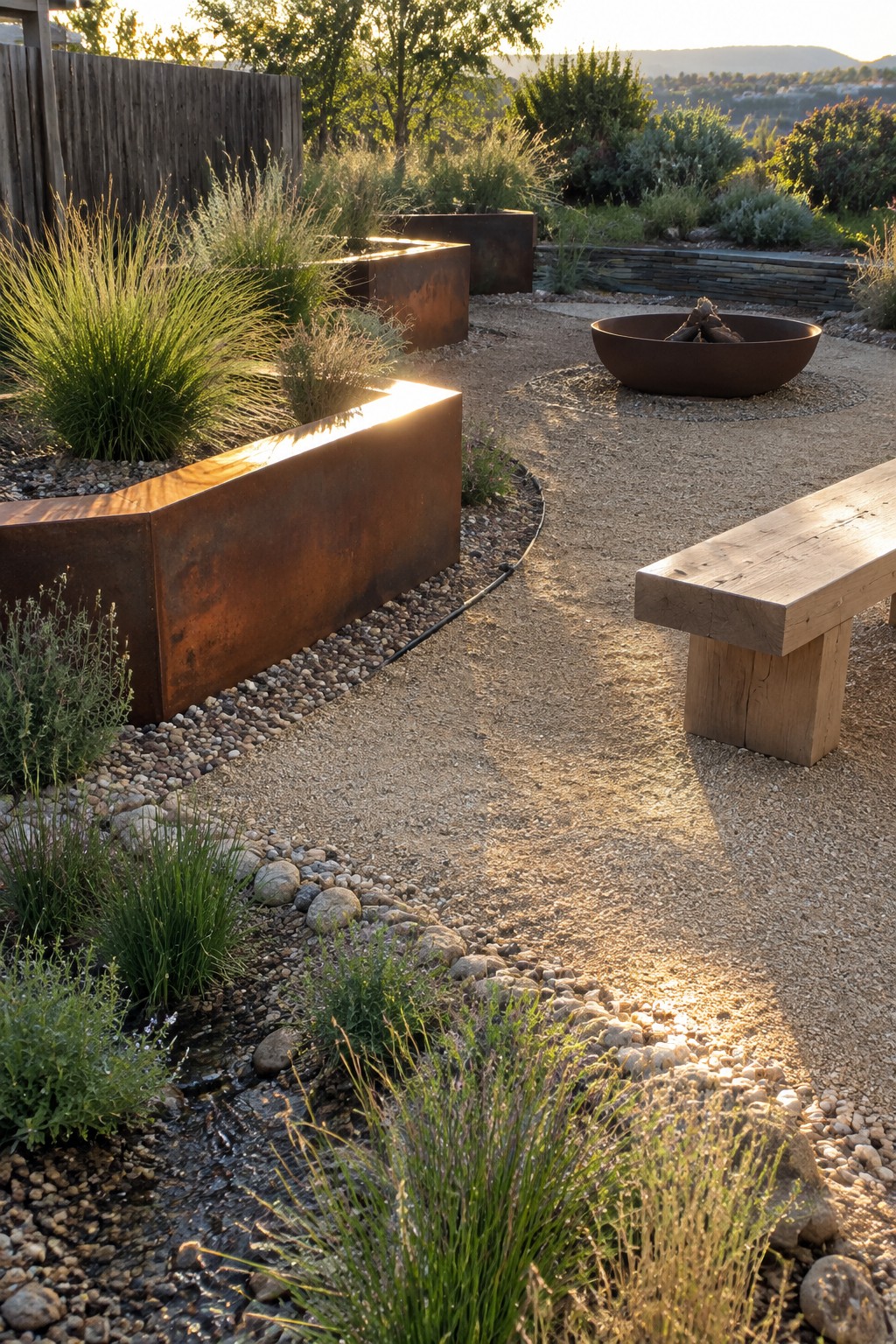
Raised metal beds give you a simple way to organize plants and keep a yard feeling orderly. They create firm edges that work well with gravel and help separate planting areas from paths without needing complex hardscaping.
Place them in straight or angled lines to shape the space around seating or open areas. This approach suits homes with flat yards where you want low upkeep beds that still look intentional year after year.
Raised Beds Built With Concrete Blocks
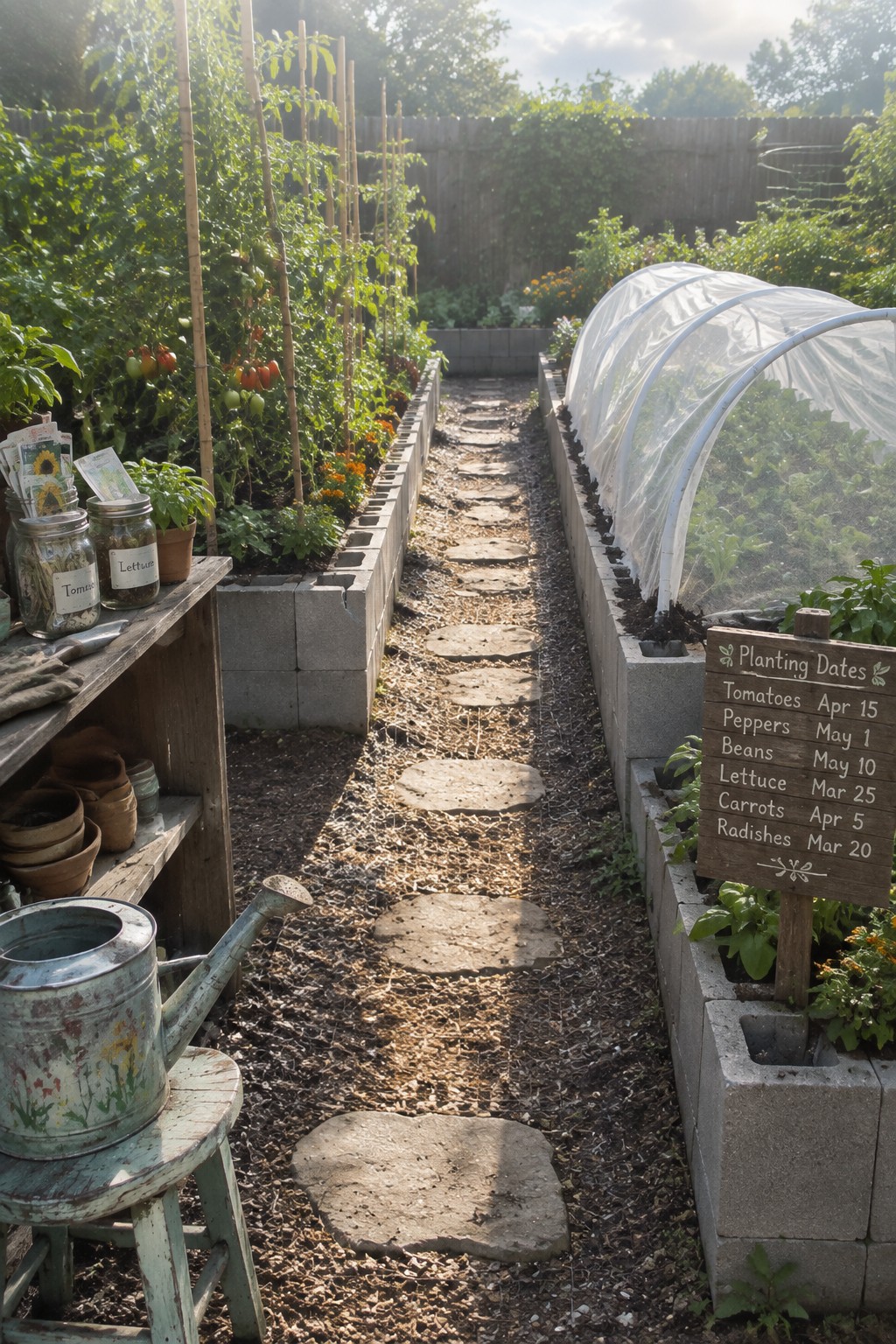
Raised beds made from concrete blocks give a garden clear lines and make planting much simpler. They keep the soil contained, help with drainage, and let you create straight paths without extra materials.
This setup works best in a long backyard where you want an easy walkway between beds. Stack the blocks two high, set them on level ground, and fill them with soil. The result stays low cost and holds up well season after season.
Capped Raised Beds Add Useful Ledges
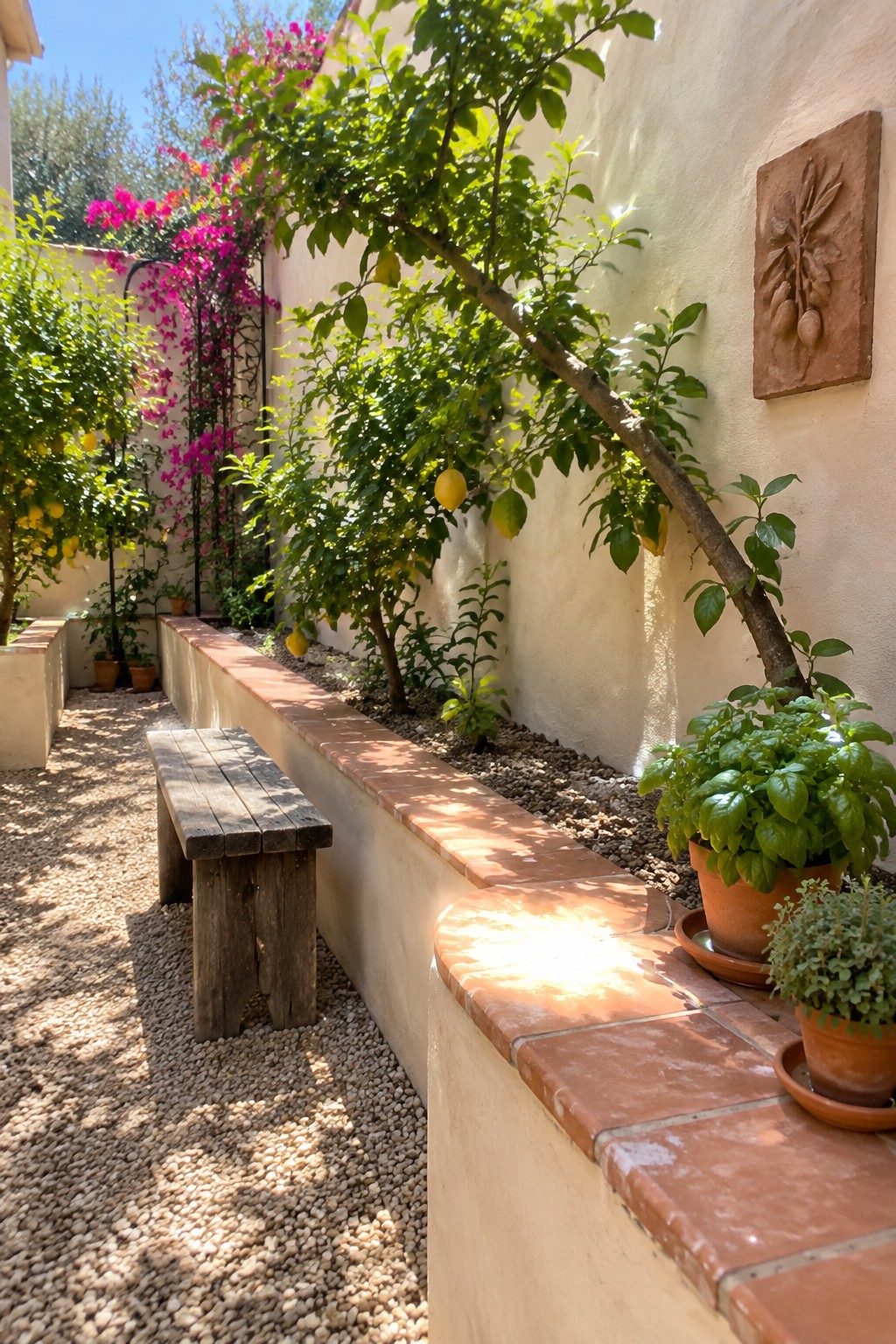
A raised bed with a wide cap on top gives you more than just planting space. The flat tiled surface works as a spot for pots or even a quick place to set tools while you work.
This approach suits narrow side yards or tight spots along a wall where a standard bed might feel cramped. Keep the cap wide enough to be practical but not so high that it blocks access to the plants behind it.
Line Paths With Raised Garden Beds
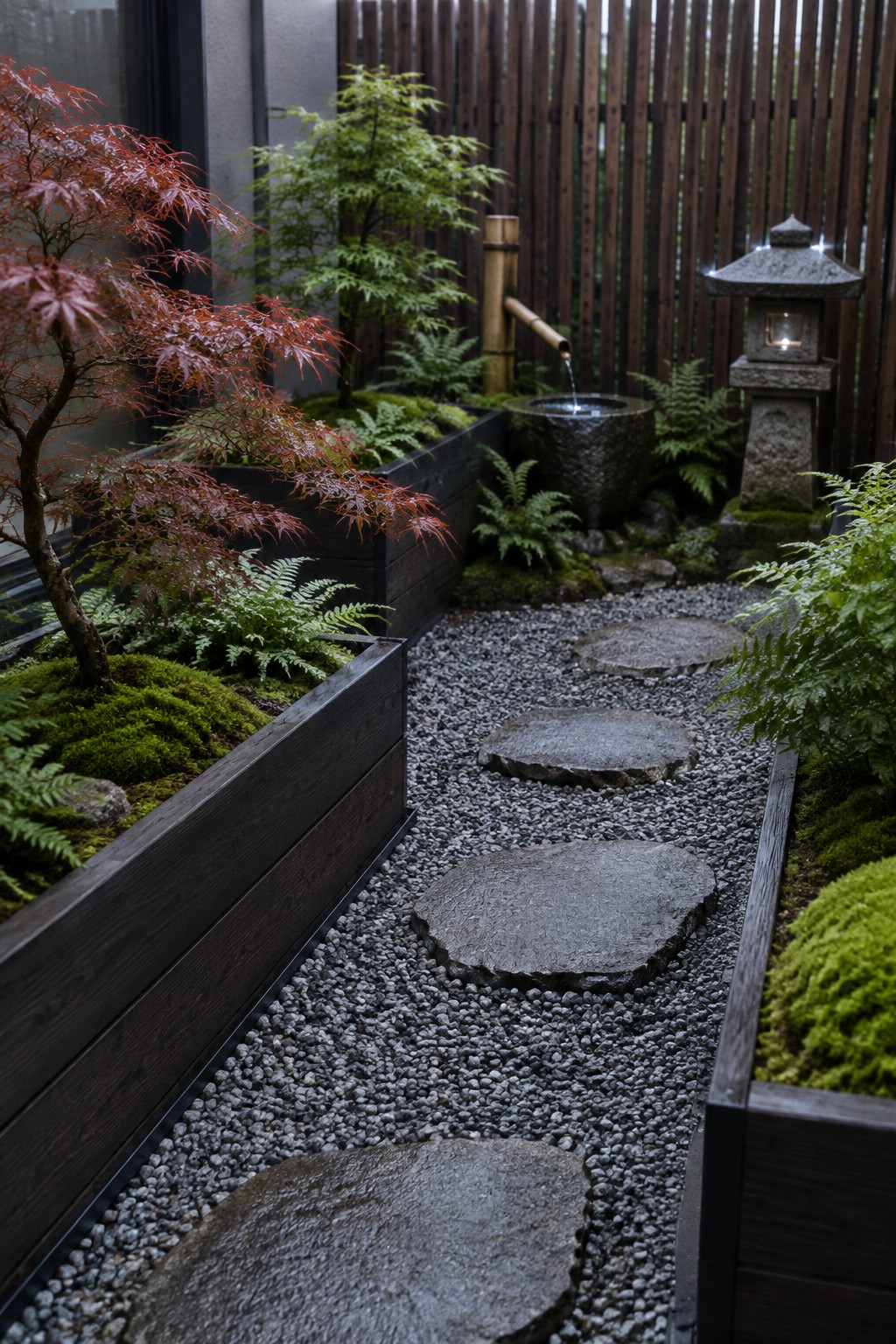
Raised beds give a garden path clear edges and keep plants from spilling into the walkway. This setup works especially well with gravel because it holds everything in place and cuts down on weeding along the sides.
It suits narrow side yards or back gardens where you want a simple route without losing planting space. Keep the beds low and use the same material on both sides so the path feels like part of the overall layout rather than an afterthought.
Brick Raised Beds With Tile Tops
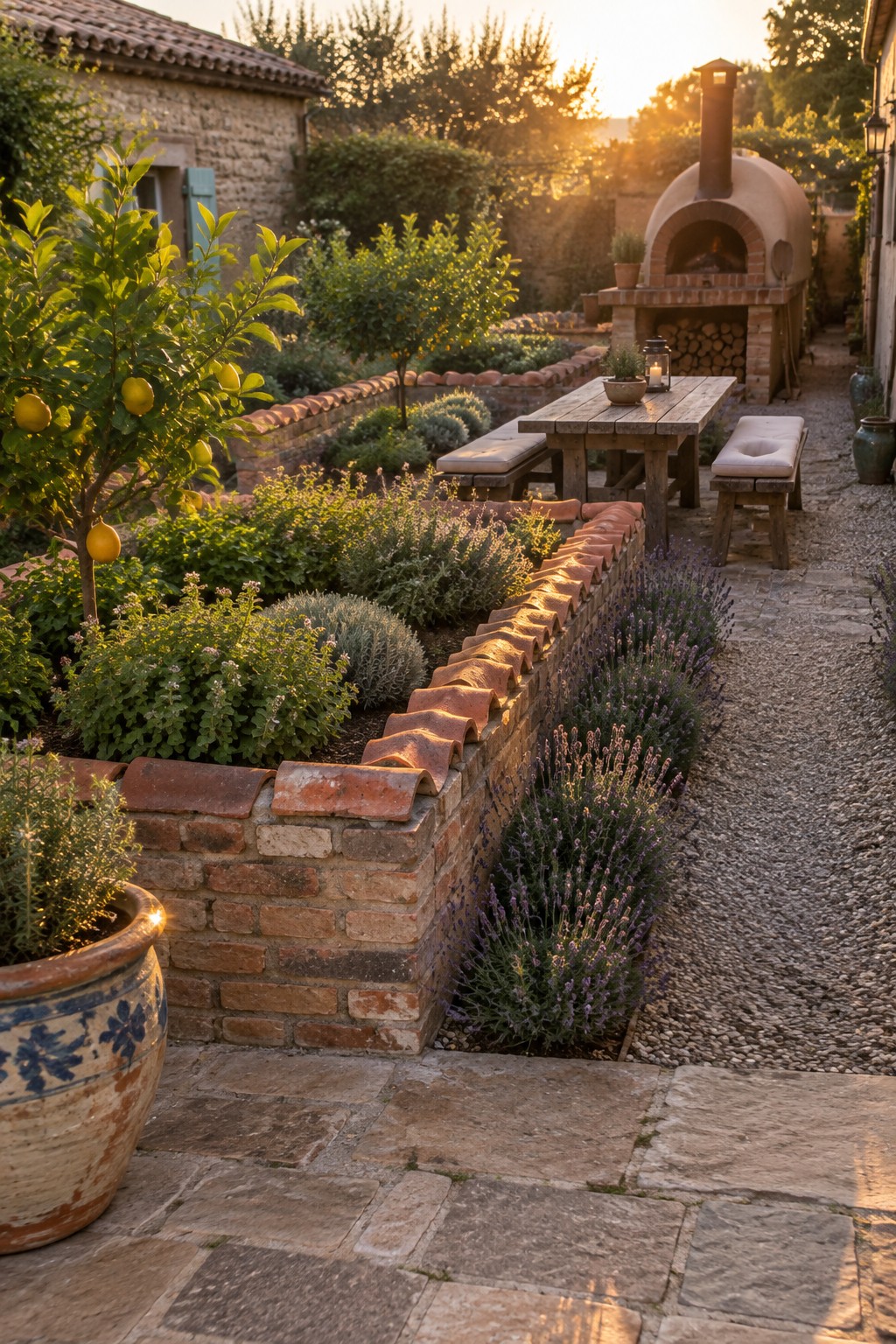
Raised beds made from brick give a garden solid structure that lasts for years. The low walls keep soil contained and make it easier to reach plants without bending over too far.
Add a row of curved tiles along the top edge to finish the look and protect the bricks from wear. This approach works especially well along gravel paths or next to stone paving where you want the beds to feel tied into the rest of the yard.
Gravel Paths Between Raised Beds
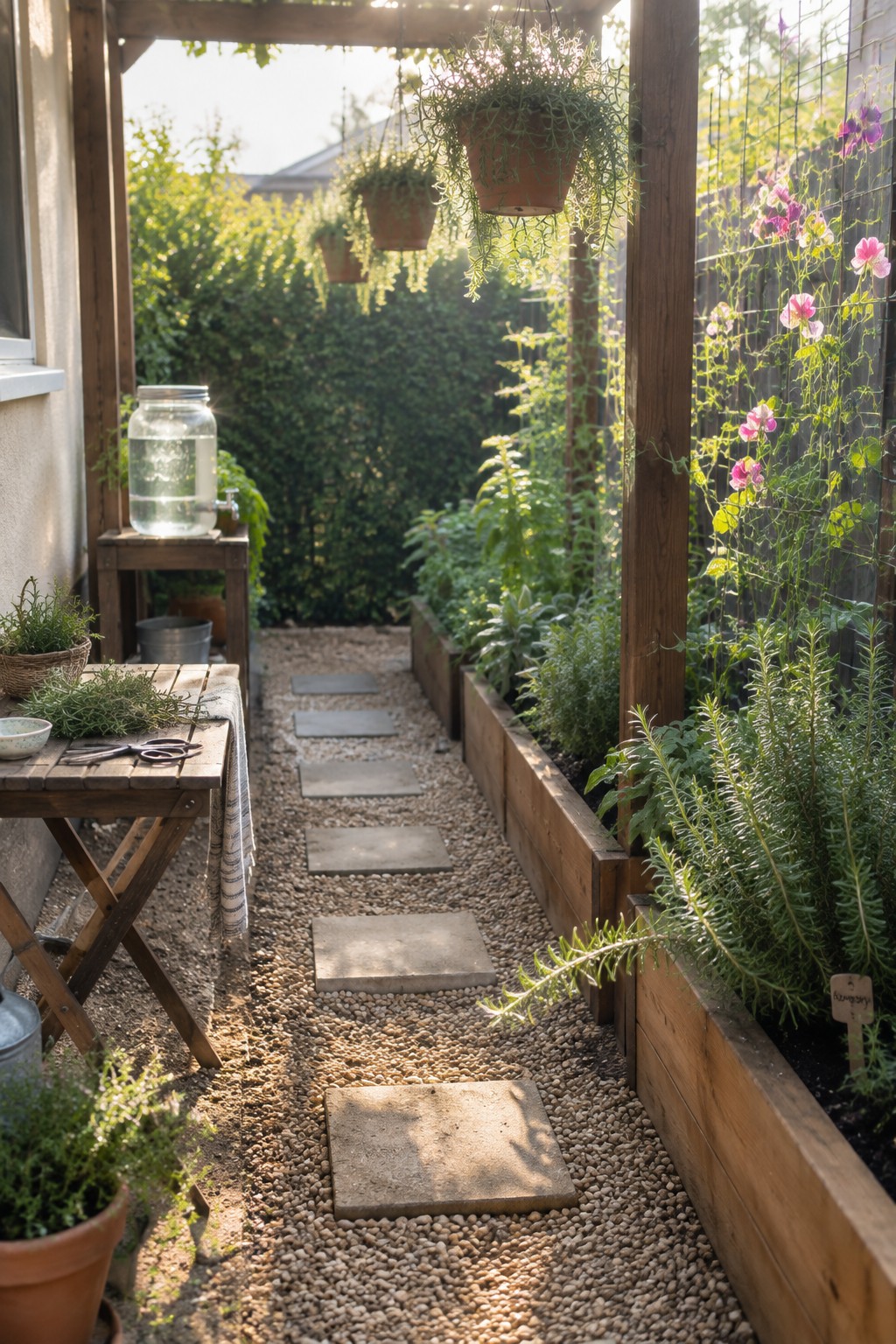
A gravel path with stepping stones makes it simple to reach every part of a raised bed garden without stepping on the soil or plants. The loose gravel drains well and keeps the whole area looking tidy even after rain.
This layout suits narrow side yards or small vegetable gardens where you need regular access. Lay down fabric first to hold back weeds, then add the gravel and a few flat stones so you can walk through comfortably year after year.
Raised Beds Give Shape To A Gravel Patio
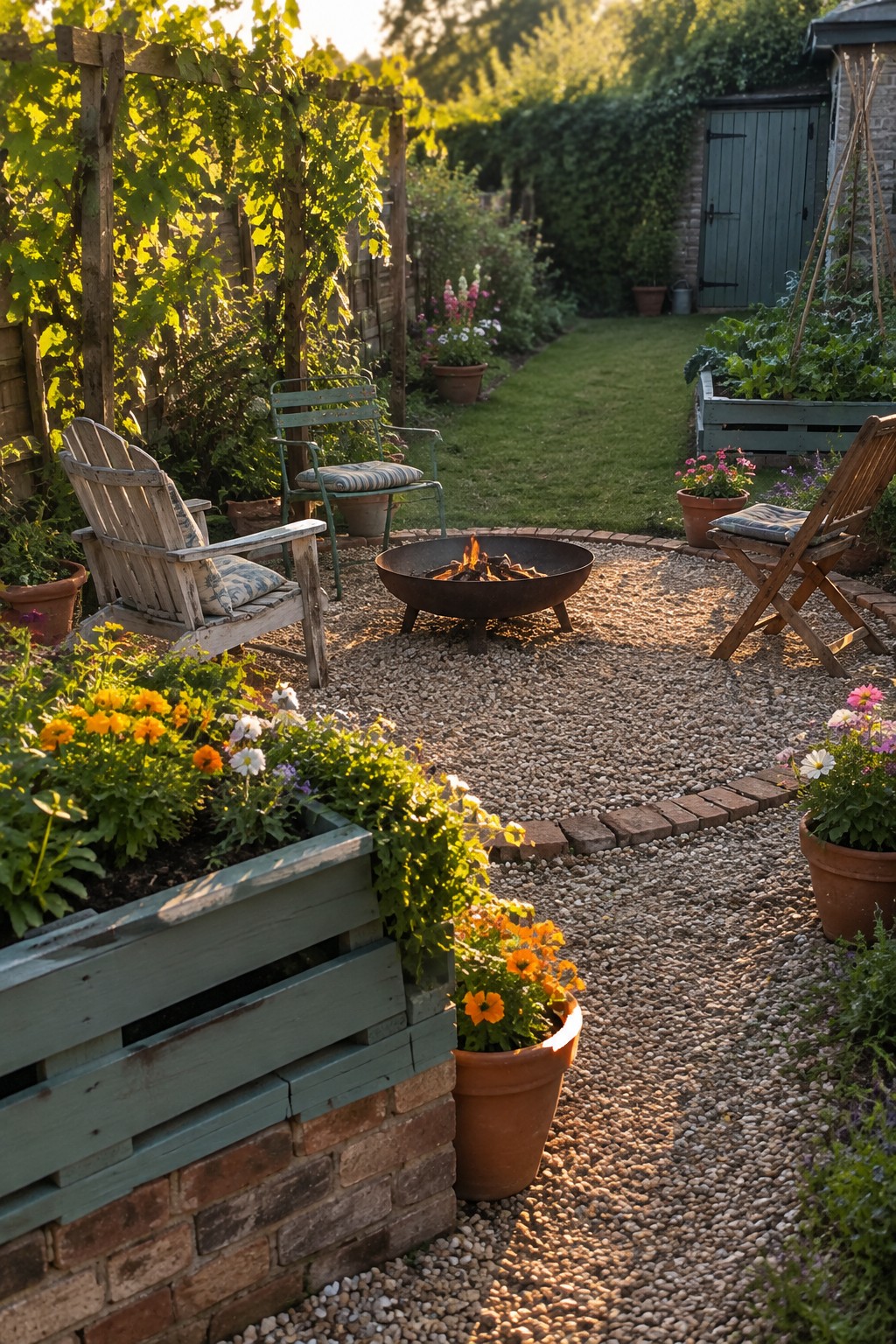
Raised beds work well when you want to add planting to a gravel space without letting it feel scattered. They create clear edges that keep the stones looking intentional and give the whole area a bit more structure.
You can build them from basic lumber or even old pallets if you want to stay on a budget. This idea works best in a backyard where you have room for both a seating spot and some growing space, and it keeps maintenance fairly simple since the beds stay contained.
Galvanized Raised Beds For Simple Structure
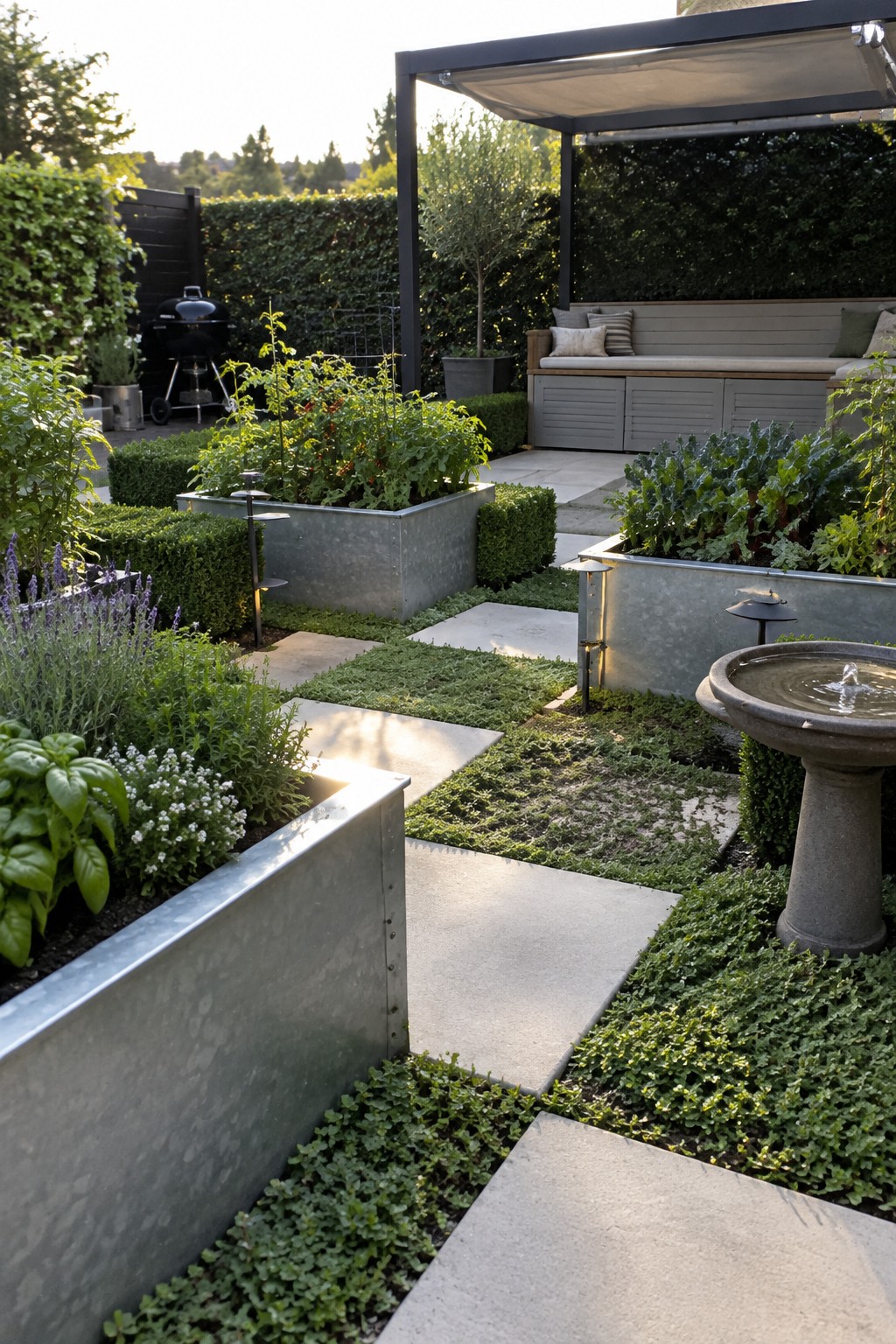
Raised beds made from galvanized metal give a garden clear edges and make planting easier to manage. They sit neatly on grass or gravel, keep soil contained, and hold up well without much upkeep, which makes them a practical choice for smaller yards or mixed planting areas.
Place them along paths or near seating zones so the beds stay accessible for watering and harvesting. They work especially well when you want to separate vegetables from flowers or create a tidy look without pouring concrete borders.
Frequently Asked Questions
Q: What kind of wood should I use if I want the beds to last more than a couple seasons?
A: Go with cedar or redwood if you can find scraps or deals at the lumber yard. These hold up better against rot and bugs than regular pine. Treat the inside with a safe liner to stretch their life even more.
Q: How do I stop weeds from taking over the paths between the beds?
A: Lay down cardboard or newspaper and cover it with mulch or gravel. This blocks light so weeds can’t sprout through. Refresh the cover once a year and you’re set.
Q: Will raised beds work if my soil is mostly clay?
A: Yes, because you control what goes inside the bed. Mix in plenty of compost and sand to improve drainage right from the start. The beds sit on top so the clay below matters less.
