


Over the years I have seen how a poorly placed path can cut a garden into awkward sections that never quite feel connected.
Choosing materials that blend with the soil and plants around them usually keeps the whole area looking natural as things grow in.
Maintenance always sneaks up faster than expected.
I tend to start with ideas that use what I already have on hand before buying anything new for the project.
Watching how people actually walk through the space helps me decide where a path should curve or stay straight.
Stepping Stones In Grass

Stepping stones set into the lawn give a path that feels simple and natural. The stones sit low enough to let the grass grow around them, so the walkway blends right into the yard instead of looking like a separate surface.
This layout suits smaller gardens or side yards where you want a clear route without covering too much ground. Space the stones at a comfortable walking distance and keep the edges neat so the path stays easy to mow around.
Use Wood Rounds For A Simple Path

Wood rounds cut from logs give you an easy way to build a garden path that feels natural and blends into the surroundings. They work especially well on uneven ground or in wooded spots where you want something softer than gravel or pavers.
Place the rounds on a base of sand or compacted soil, then fill the gaps with mulch or leaves to help with drainage and weeds. This approach suits shady yards or informal gardens where a light touch matters more than a perfectly straight line.
Lay Large Pavers In Gravel For Simple Paths
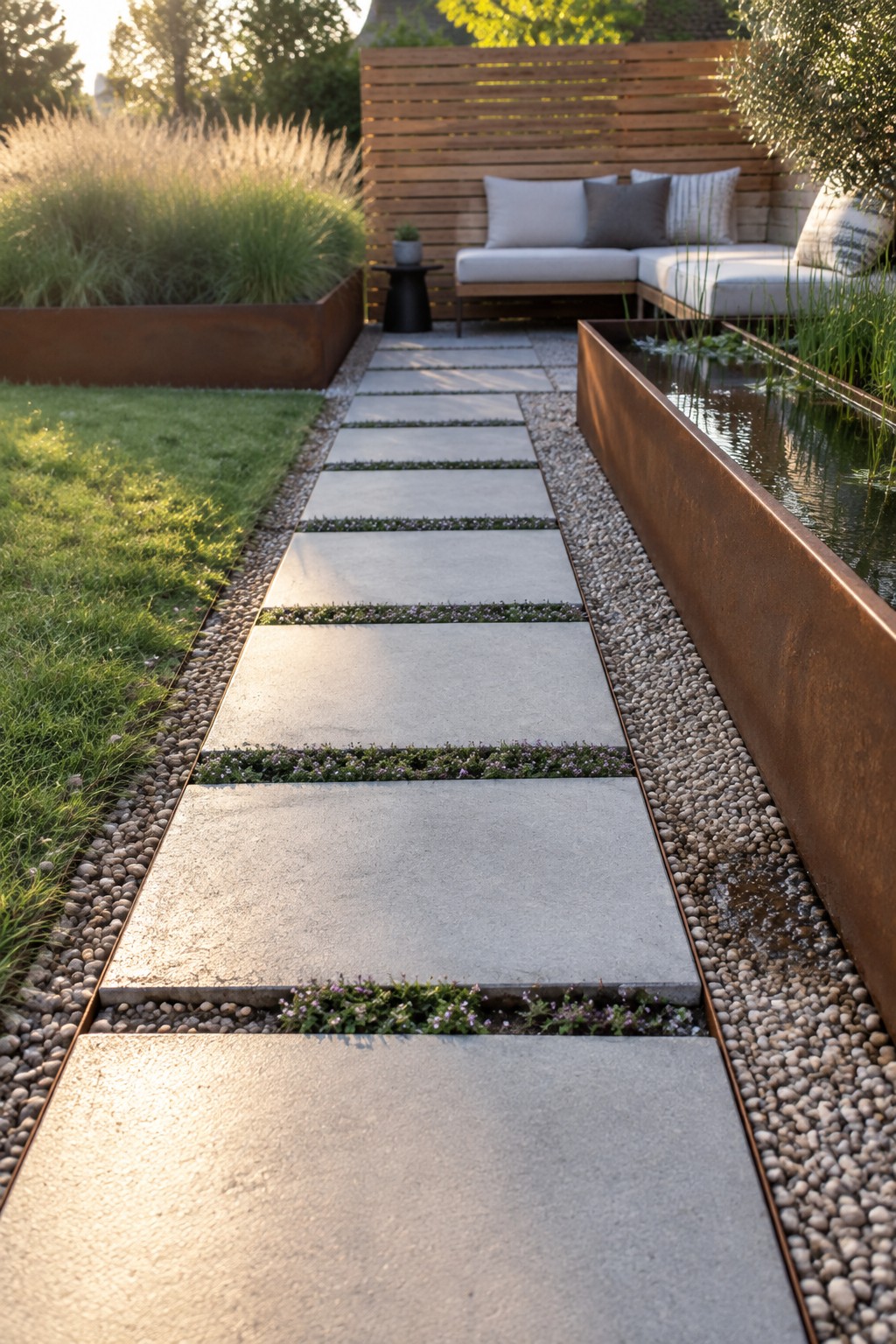
Large concrete pavers set into gravel create a clean path that stays practical and low maintenance. The gaps between the slabs can hold a little ground cover without turning into a full planting bed, and the whole thing avoids the need for heavy edging or mortar work.
This layout suits side yards or narrow garden routes where you want something defined but not overly formal. Level the gravel base well before setting the pavers so they stay steady, and keep the gravel layer thin enough that it does not shift underfoot.
Brick Paths In Herringbone Layouts
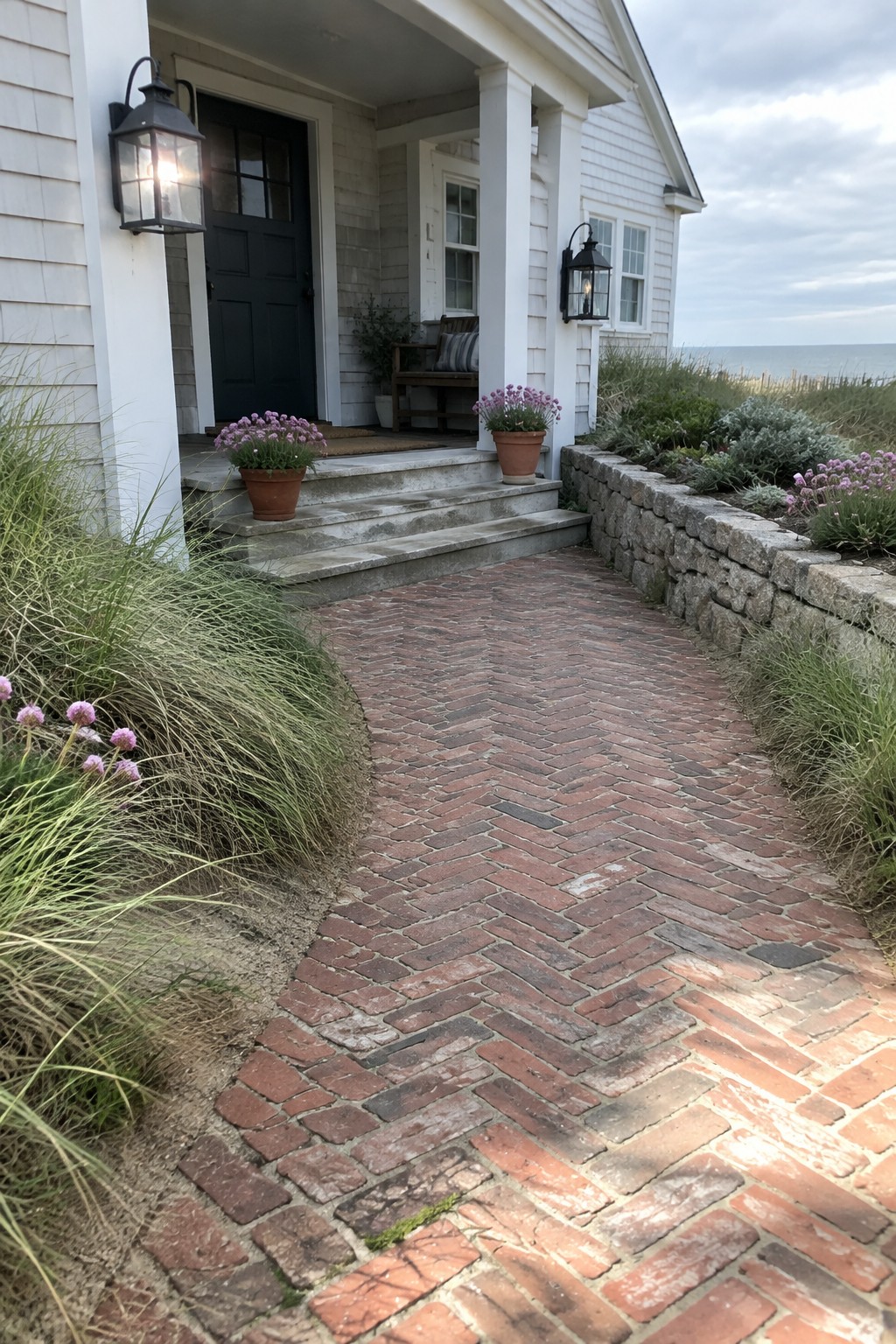
A herringbone brick path adds structure to a garden without looking too formal. The pattern feels steady underfoot and holds up better than loose gravel once it is set on a solid base.
This layout suits front yards or side gardens on older homes where you want something simple that still looks intentional. Keep the edges soft with grasses and low plantings so the path blends into the rest of the yard instead of standing out on its own.
Stepping Stones Create a Simple Garden Path

Stepping stones set into gravel give a garden path a relaxed look that still feels intentional. They work because the stones sit low and let plants spill over the edges without making the walkway look messy or overgrown.
This approach suits small gardens or side yards where you want a path that leads to a bench or seating spot. Level each stone as you set it and leave a little space between them so water drains easily and weeds stay manageable.
Use Flat Stepping Stones For Simple Garden Paths
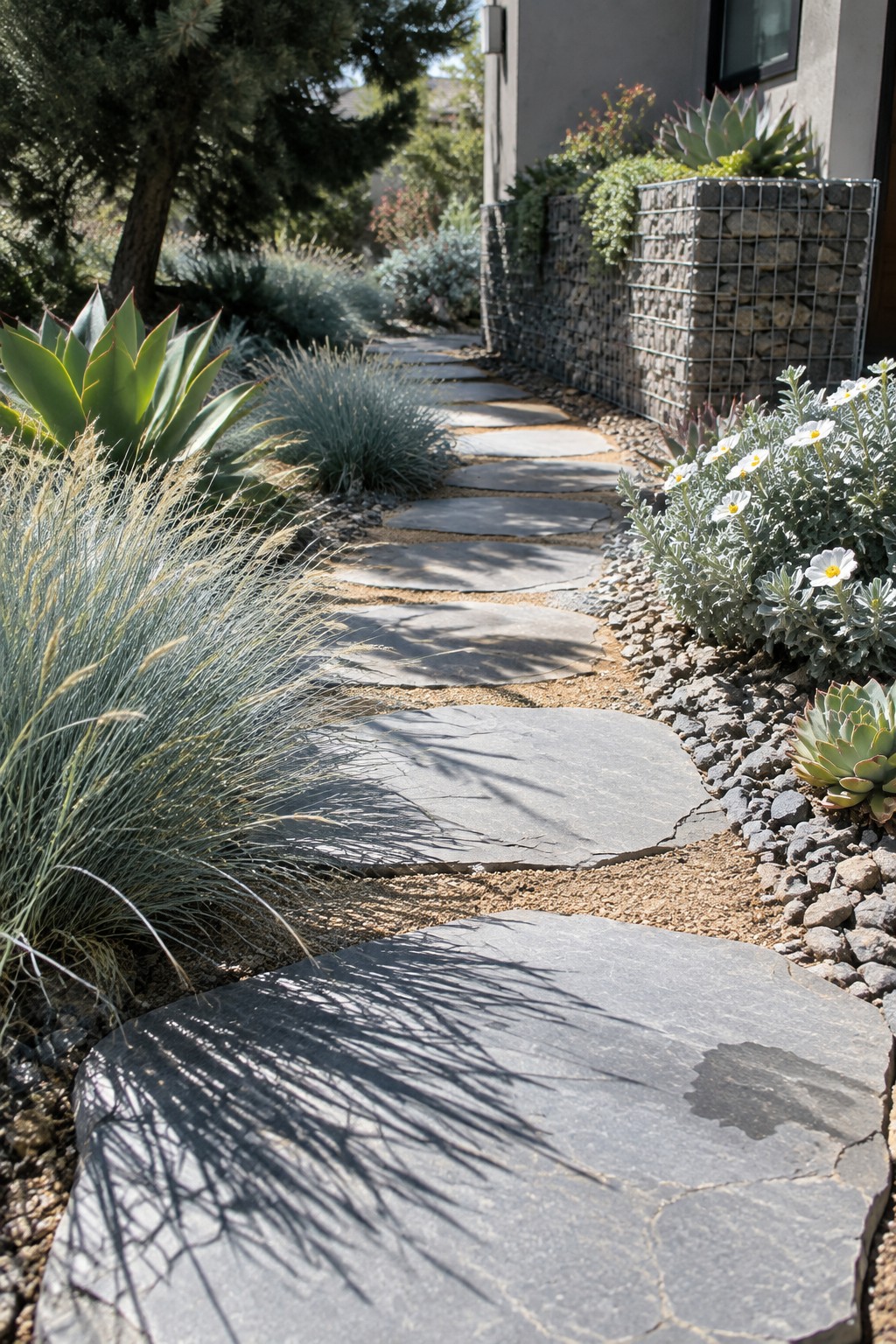
Flat stepping stones make a garden path feel natural and easy to walk on without turning the whole area into a solid surface. They let you keep more planting space on either side while still giving a clear route through the garden.
Set the stones into gravel or decomposed granite so water drains well and the path stays level over time. This works best in side yards or narrow beds where you need access but want the plants to stay the main focus.
Try a Stone Path with a Grass Strip Down the Middle

A path like this keeps things simple while still looking finished. The grass running through the center breaks up the stone and makes the walkway feel softer and more connected to the lawn around it.
This works well on a slight curve or gentle slope where a solid surface might feel too hard. Just make sure the stones sit level and the grass gets enough sun so it does not thin out over time.
Edge Garden Paths With Raised Planters

Raised planters give a path clear shape and keep the edges tidy over time. They turn a basic walkway into something more finished while leaving room for low shrubs or flowers right beside the paving.
This setup works best in smaller gardens or side yards where you want to guide people forward without adding extra structures. Match the border material to the path itself so the whole thing stays simple and easy to maintain.
Stepping Stones Over Gravel
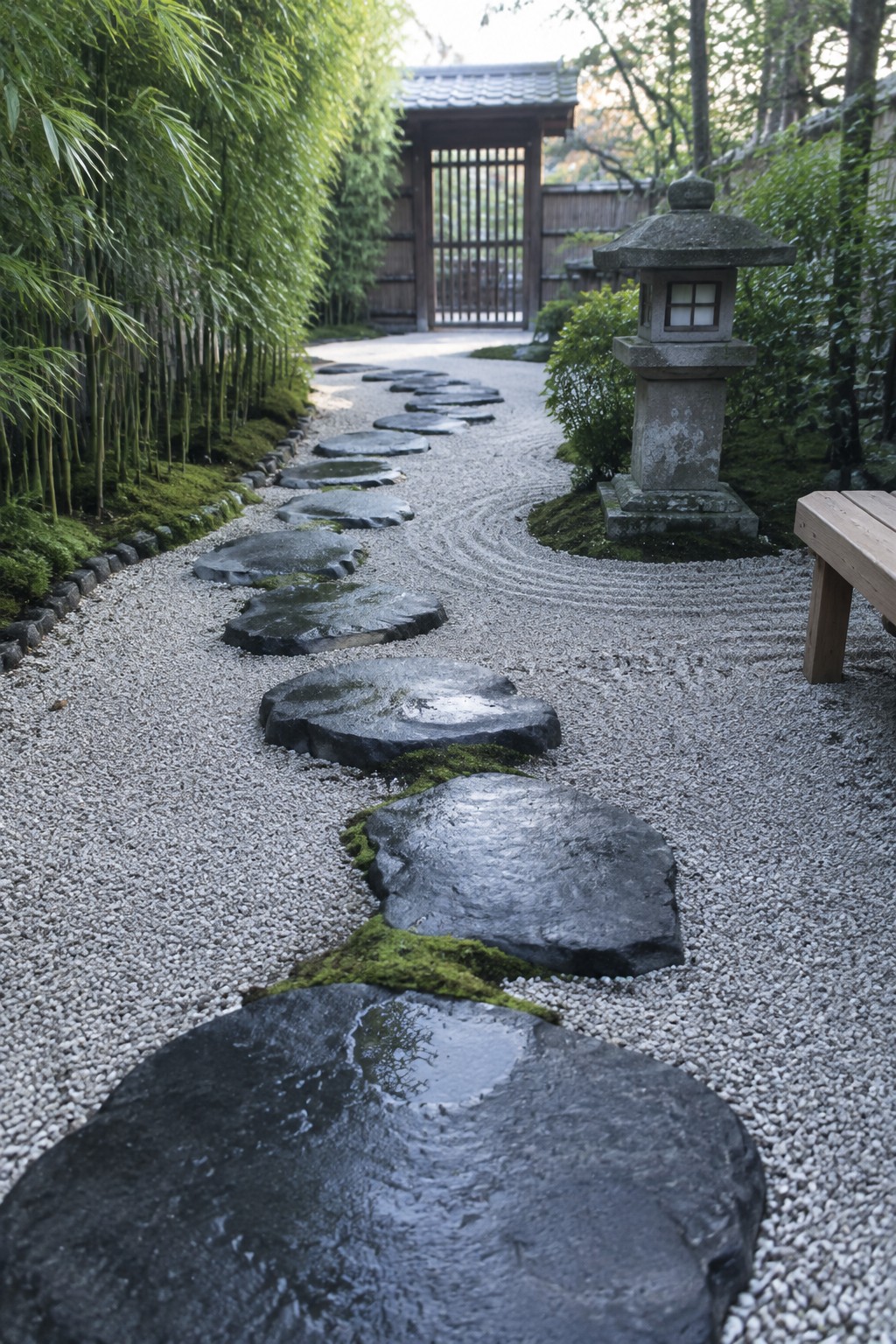
Stepping stones set into gravel make a simple path that feels natural and easy to maintain. The stones give you solid footing while the gravel fills in around them and helps with drainage.
This approach works well in side yards or smaller gardens where a full paved path would feel too heavy. Space the stones so your normal stride lands comfortably on each one, and choose stones that are fairly flat on top.
Stepping Stone Paths Through Grass
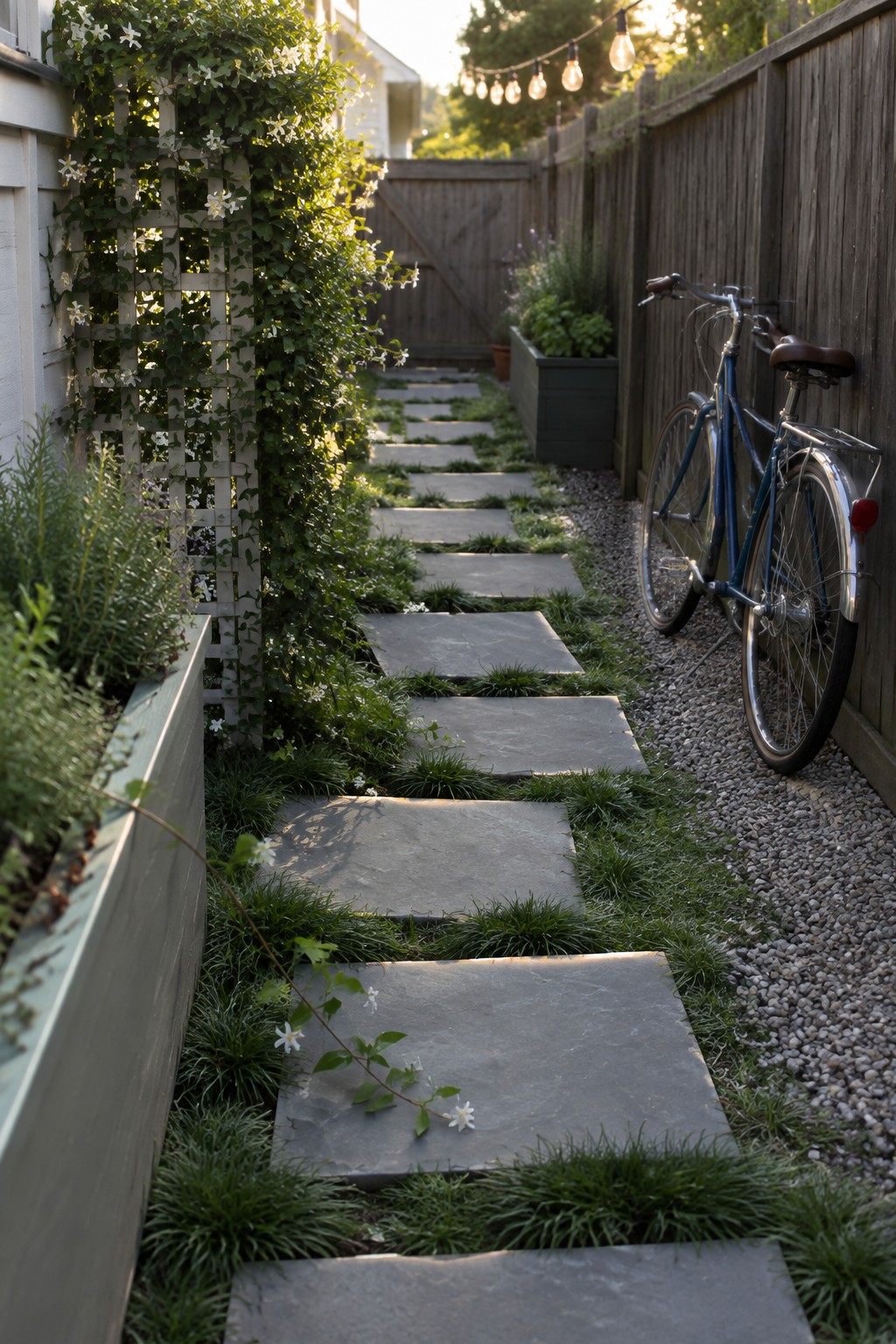
Stepping stones set right into the lawn give you a clear path without turning the whole strip into pavement. The flat stones sit low enough that the mower can pass over most of the grass around them, which keeps maintenance simple.
This layout suits narrow side yards or the space between garden beds where a full walkway would feel too heavy. Space the stones so each one lands underfoot at a normal stride, and let the surrounding grass and low plants soften the edges.
Terracotta Pavers For A Simple Garden Path

Terracotta pavers give a garden path a clean, solid surface that stays practical in most yards. They handle rain and regular use without needing constant fixes, and the color blends easily with green plants on either side.
Lay them over a compacted gravel base with a slight slope for drainage, then keep the edges straight with metal or wood borders. This works best in narrow side yards or back passages where you want a clear walkway without overcomplicating the layout.
Edge Your Path With Stones
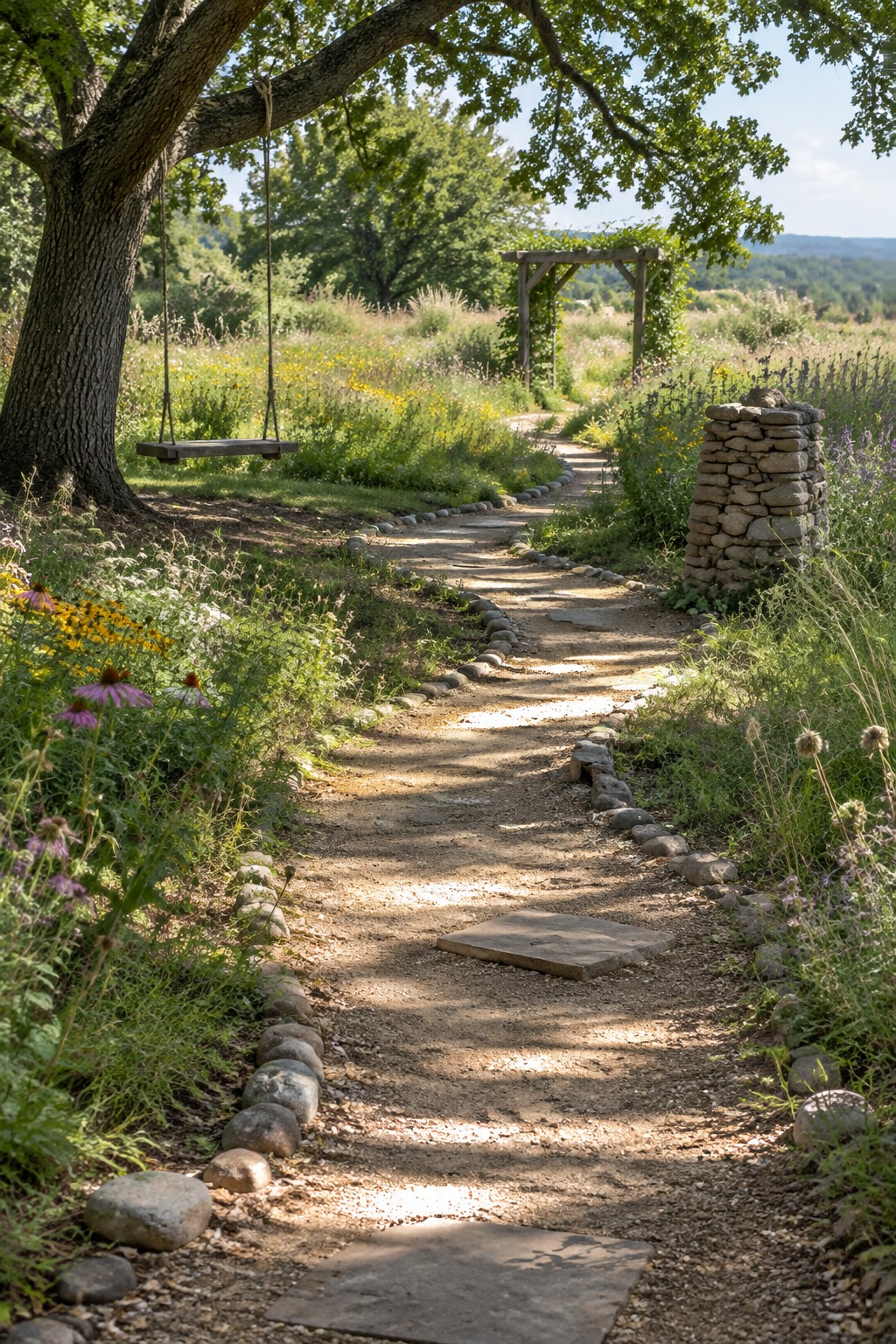
A stone border keeps a garden path looking neat and stops plants from spilling over onto the walkway. It also helps hold the gravel or dirt in place so the path stays clear after rain or heavy use.
This idea works in most backyards and suits a casual or cottage style garden. Gather stones you already have or can find nearby and set them along the edges. Adding a few flat pavers every so often makes walking easier without turning the path too formal.
Set Stone Pavers Into The Grass
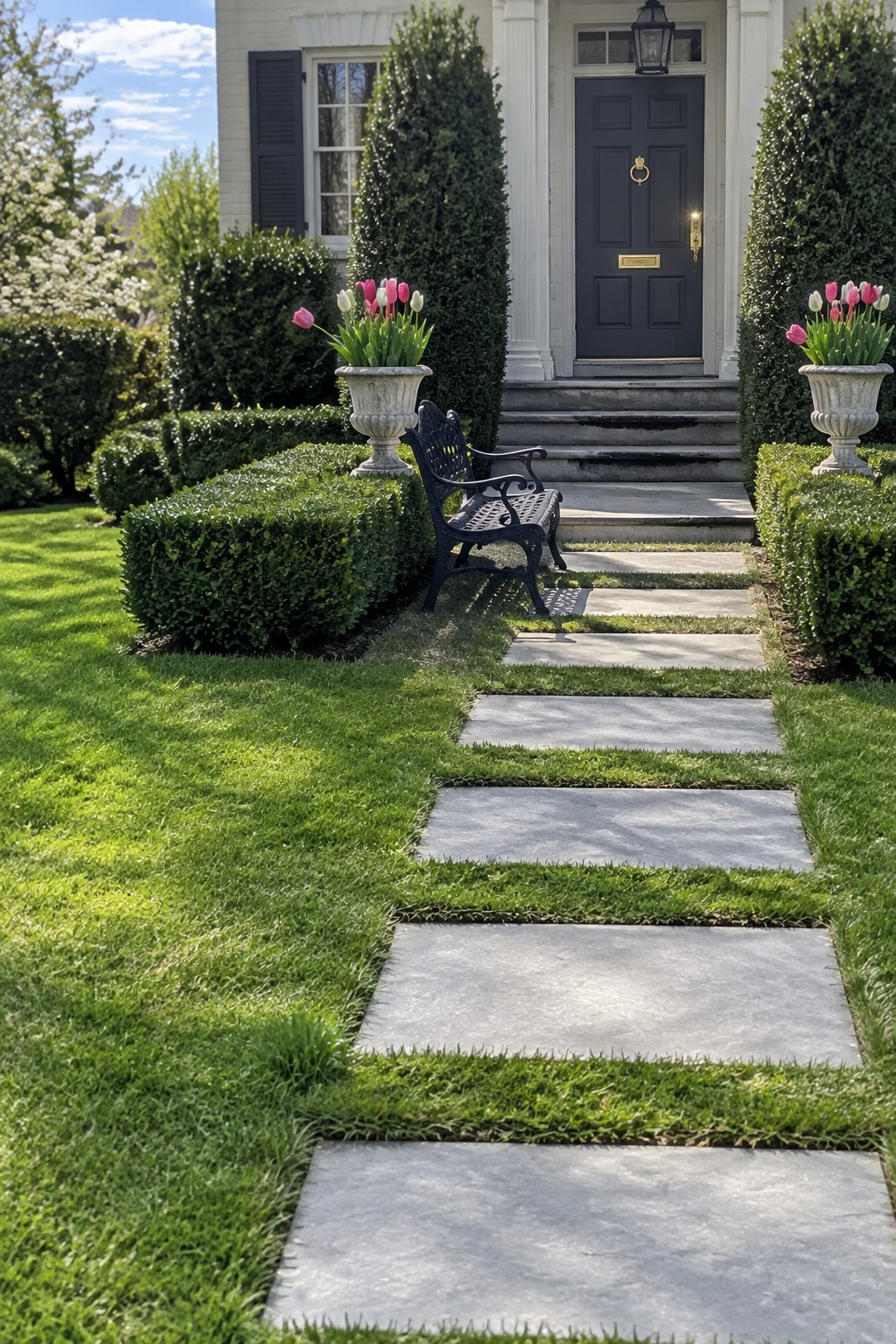
This simple layout uses large rectangular pavers placed directly into the lawn to form a clear walking path. It avoids the need for a full gravel base or formal edging, so the grass stays the main surface and the stones just mark the route.
The style works best in smaller front yards or side gardens where you want an easy way through without covering too much ground. Keep the pavers level with the soil so mowing stays simple and the path does not shift over time.
Wooden Planks Over Gravel For Simple Paths

Wooden planks set into gravel make a practical garden path that feels natural and does not require heavy construction. The boards create steady footing while the gravel keeps things simple and drains well after rain. This approach suits homes where you want a clear route without turning the whole yard into a big paved surface.
It works best along the side of a house or through a smaller garden where the path needs to guide people without looking too formal. Use pressure-treated wood and keep the gravel layer even so the planks stay level over time.
Hang Flowering Vines Over Pathway Walls

A simple path gains a lot of charm when vines are allowed to spill over the edges. The flowers add color without needing extra beds or borders, and the look stays casual rather than formal.
This works well on narrow walkways where space is tight. Plant bougainvillea or similar vines along a low wall so they drape naturally, and keep the paving material plain so the blooms stay the focus.
Lay Stone Slabs Right Into The Grass

This approach keeps things simple and lets the lawn do most of the work. The flat stones sit level with the grass so the path feels like part of the yard instead of something added on top.
It suits smaller gardens or side yards where you just need a clear route to the door. Set the stones on a bed of sand or gravel so they stay steady and do not shift after rain.
Gravel Paths With Stepping Stones

Gravel paths with stepping stones give you an easy way to move through the garden without spending much or dealing with mud. The loose gravel drains well and the flat stones keep your feet steady even after rain.
This style suits smaller yards or informal beds where a rigid walkway would feel out of place. Place the stones first for solid footing then spread the gravel around them so the path stays simple to maintain and can be adjusted later if plants spread.
Frequently Asked Questions
Q: How do I stop the path from getting slippery when it rains? A: Spread a thin layer of coarse sand over the stones after you lay them down. It gives better grip without changing the look much.
Q: My soil stays wet in one spot. Should I avoid putting a path there? A: Pick a different route or add extra drainage rocks underneath. Wet ground will just push the materials out of place later.
Q: What happens if the edges start crumbling after a month or two? A: Press the border stones in a little deeper at the start. That simple step keeps most paths from falling apart.
