

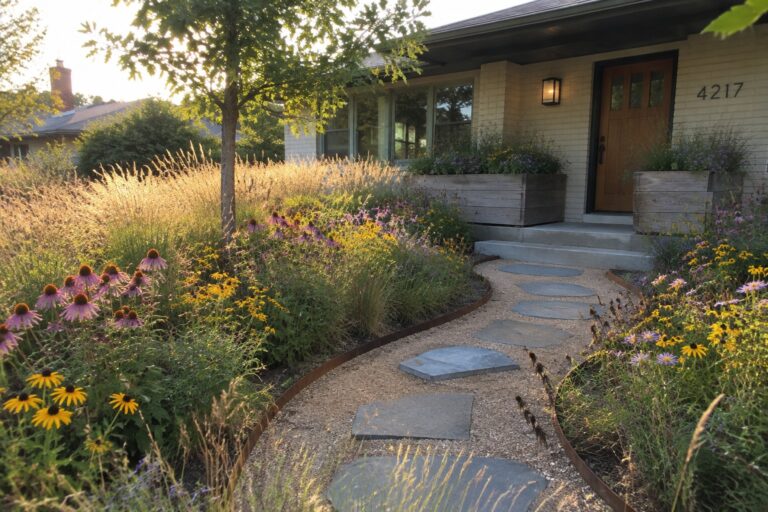
Over the years I have seen how native plants can turn a basic yard into something that feels more settled and connected to its surroundings.
The layout matters a lot because it determines whether the plants will thrive together or end up competing for space and light.
People often notice the overall shape of the beds and the way paths move through them before they even look at individual flowers.
That balance is hard to fake.
In my own yard I would probably start with the ideas that focus on low maintenance borders since those tend to hold up better through the first few years.
A Curved Path Blends With Native Plantings
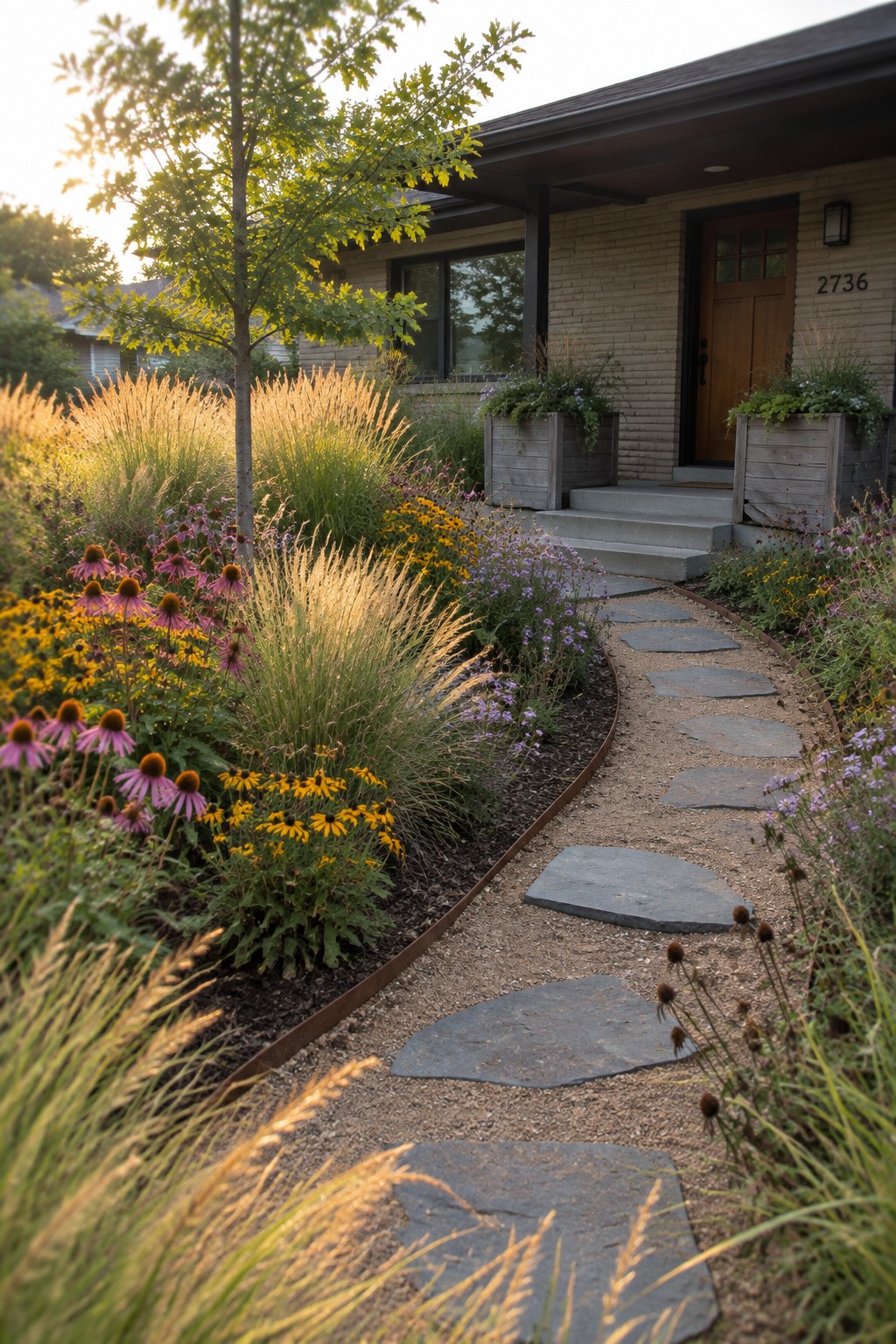
A curved path of stepping stones set into gravel gives a front yard a relaxed flow that works well with native plants. The shape lets the beds of grasses and flowers feel natural instead of boxed in, and it draws people gently toward the door without needing a straight formal walkway.
This layout suits homes with modest front space where you want low-maintenance beds on both sides. Keep the stones large enough for easy steps and let the plants spill a little over the edges so the path feels settled into the garden rather than cut through it.
Creating a Native Plant Rain Garden
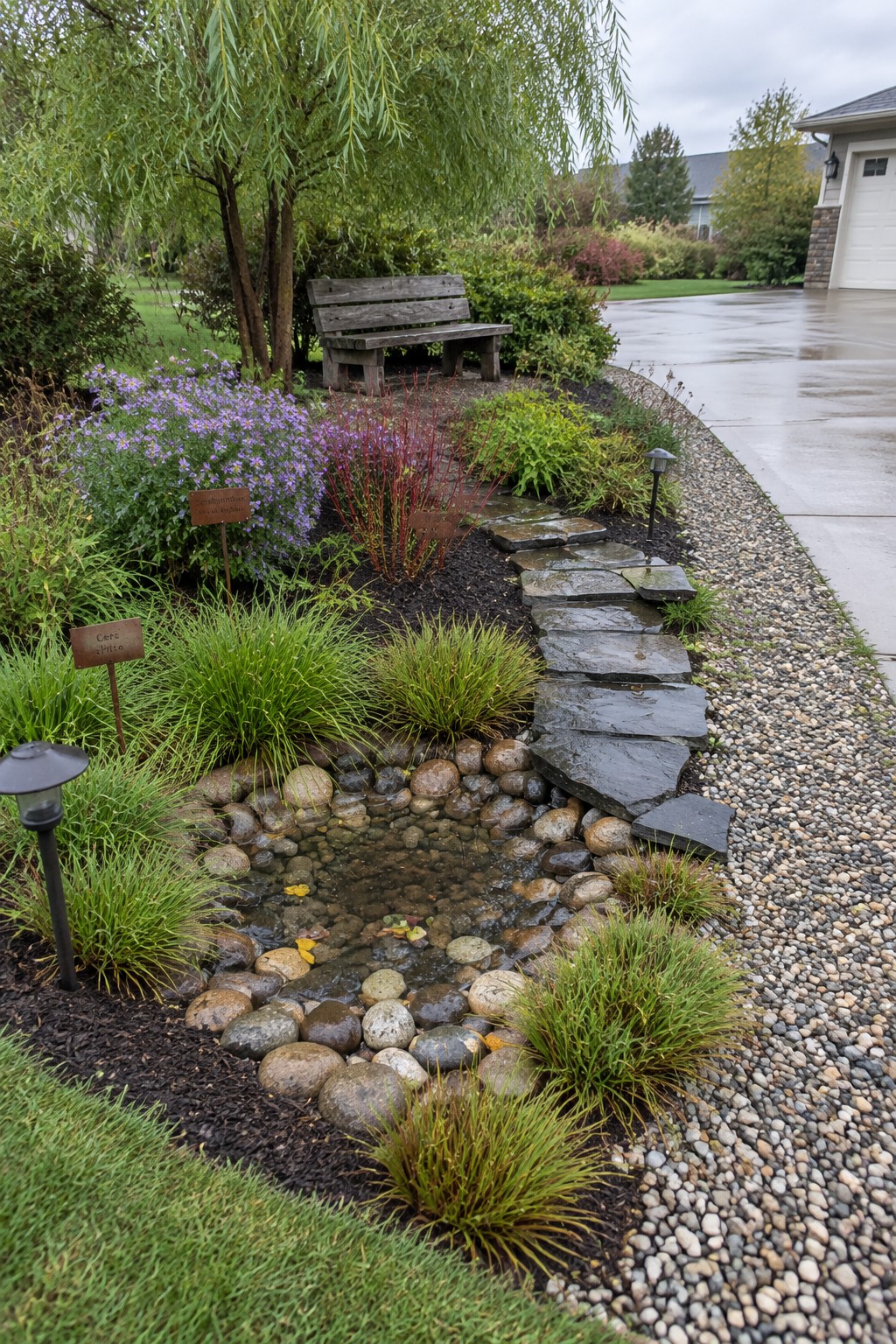
Many people add a small rain garden when they want to handle extra water without installing drains. Native grasses and perennials planted in layers around a rocky basin slow runoff and give wildlife a place to gather.
This setup suits homes with a low spot near the driveway or lawn edge. Choose plants that match your soil moisture, keep the beds mulched, and let the layers fill in over a season or two.
Let Stepping Stones Wind Through The Beds
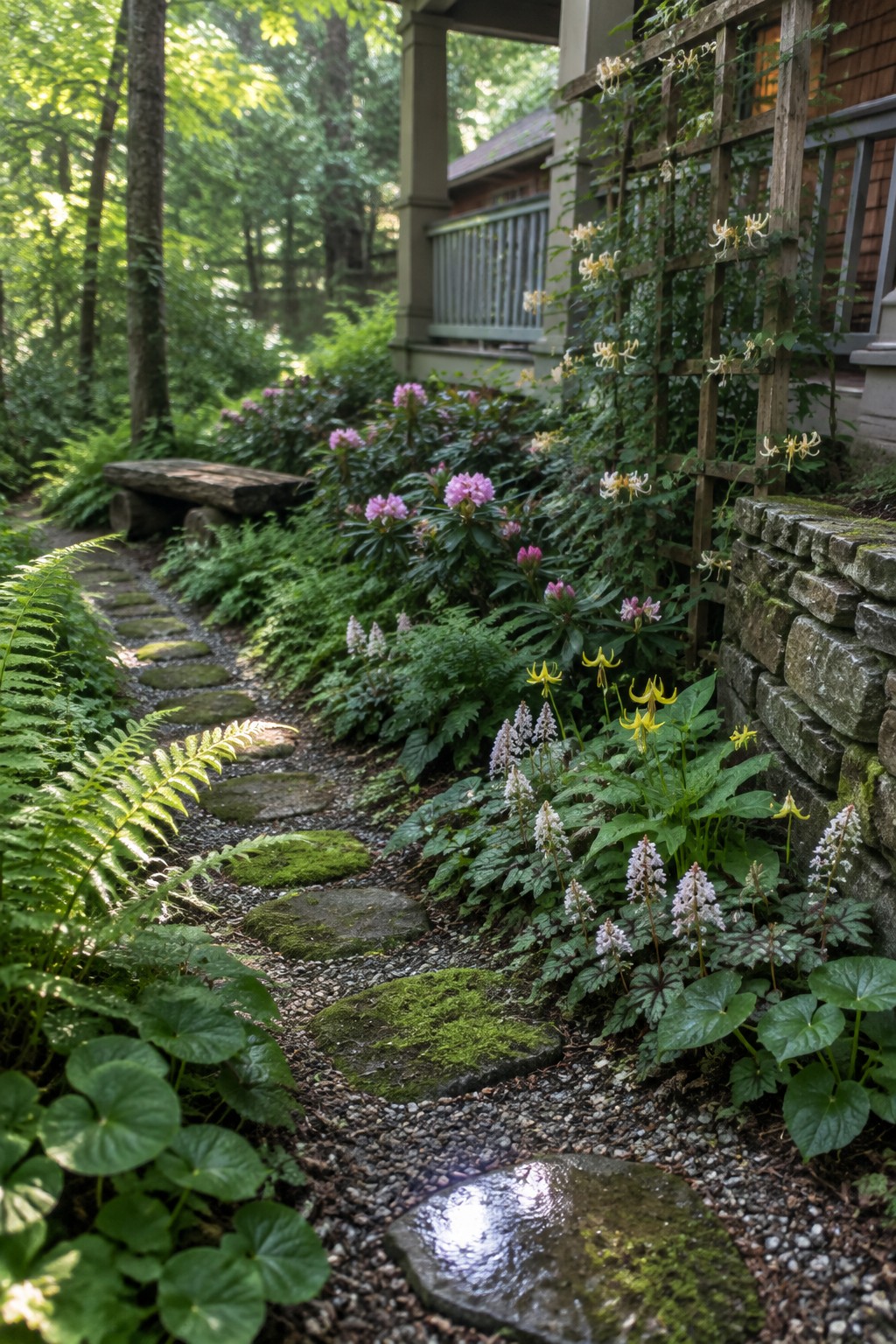
A stepping stone path keeps the garden feeling relaxed because it lets plants spill over the edges instead of creating hard lines. The stones sit low enough for moss and low ground covers to grow between them, which helps the whole thing blend into the surrounding plantings.
This layout works best on shady lots where you already have ferns and woodland perennials. Lay the stones in an irregular pattern and keep the path narrow so it feels like a natural route rather than a walkway you have to maintain.
Layered Native Planting Along Paths
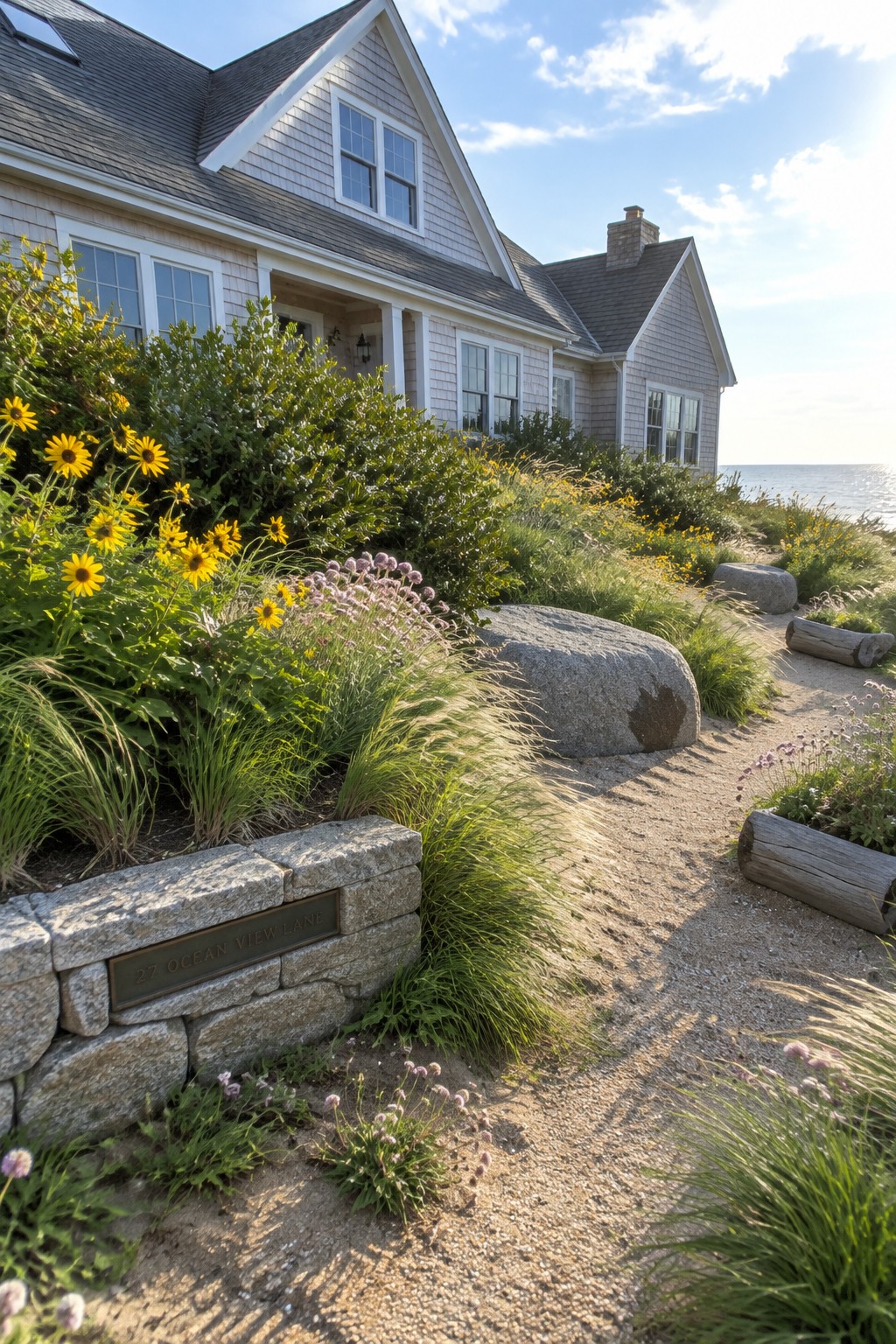
Native plants layered in loose groups can make a path feel like it belongs right where the house meets the yard. The mix of taller grasses, lower flowers, and ground covers creates movement without looking planted in rows, and the stone border keeps everything from spilling onto the walkway while still letting the plants look natural.
This approach works well on sandy or coastal lots where you want lower maintenance and less irrigation. Keep the beds wide enough for plants to spread a bit, choose species already suited to your soil and sun, and let the path curve gently instead of running straight.
Edge a Stone Path With Layered Native Flowers

A stone path lined with dense native plantings gives the front yard a soft, natural feel that still guides visitors straight to the door. The mix of heights and bloom times keeps the beds looking full without much extra work.
This setup suits smaller yards or homes with a straight walk from the street. Stick to plants suited to your region and let them fill in over a season or two so the edges stay neat but not stiff.
Stepping Stones Through Native Plantings
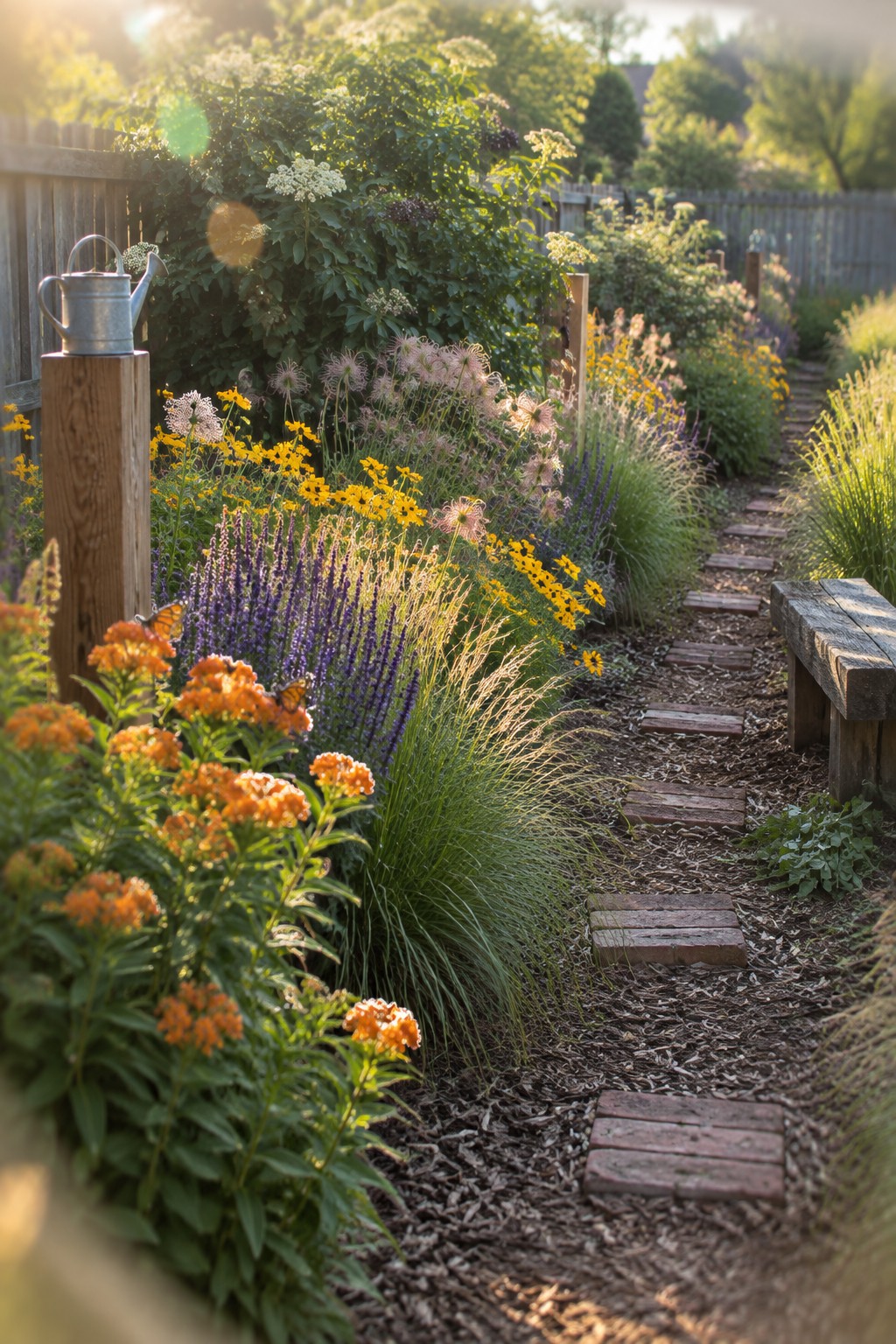
A path made of simple wood planks or bricks lets you walk right into a native garden without stepping on the plants. It turns a dense bed into something you can enjoy from inside the space instead of just looking at it from the edge.
This approach works well in long narrow yards or along a fence line. Keep the beds full on both sides so the path feels like it passes through the planting rather than cutting it apart. Wood or old brick blends in best and needs little upkeep once it settles.
Gravel Between Pavers Suits Native Plant Yards
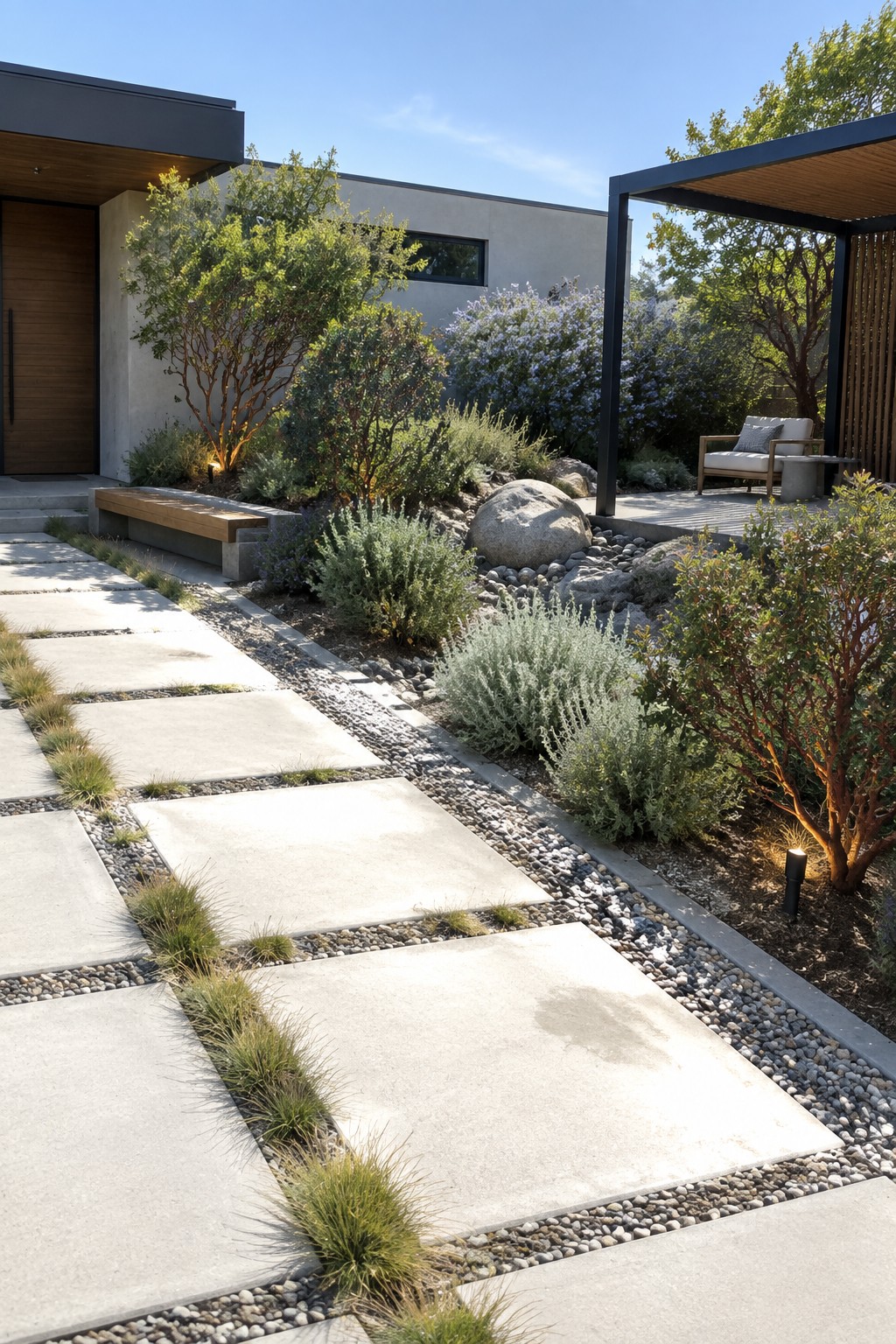
This setup keeps paths practical while letting the plants stay the main focus. The gravel strips between the large pavers drain well and give the surrounding shrubs and grasses a place to soften the edges without looking messy.
It works best on flat or gently sloped yards where you want low water use and minimal upkeep. Space the pavers so the gravel sections stay narrow enough for easy walking, and choose plants that stay fairly contained along the sides.
Layer Native Grasses With Flowering Perennials
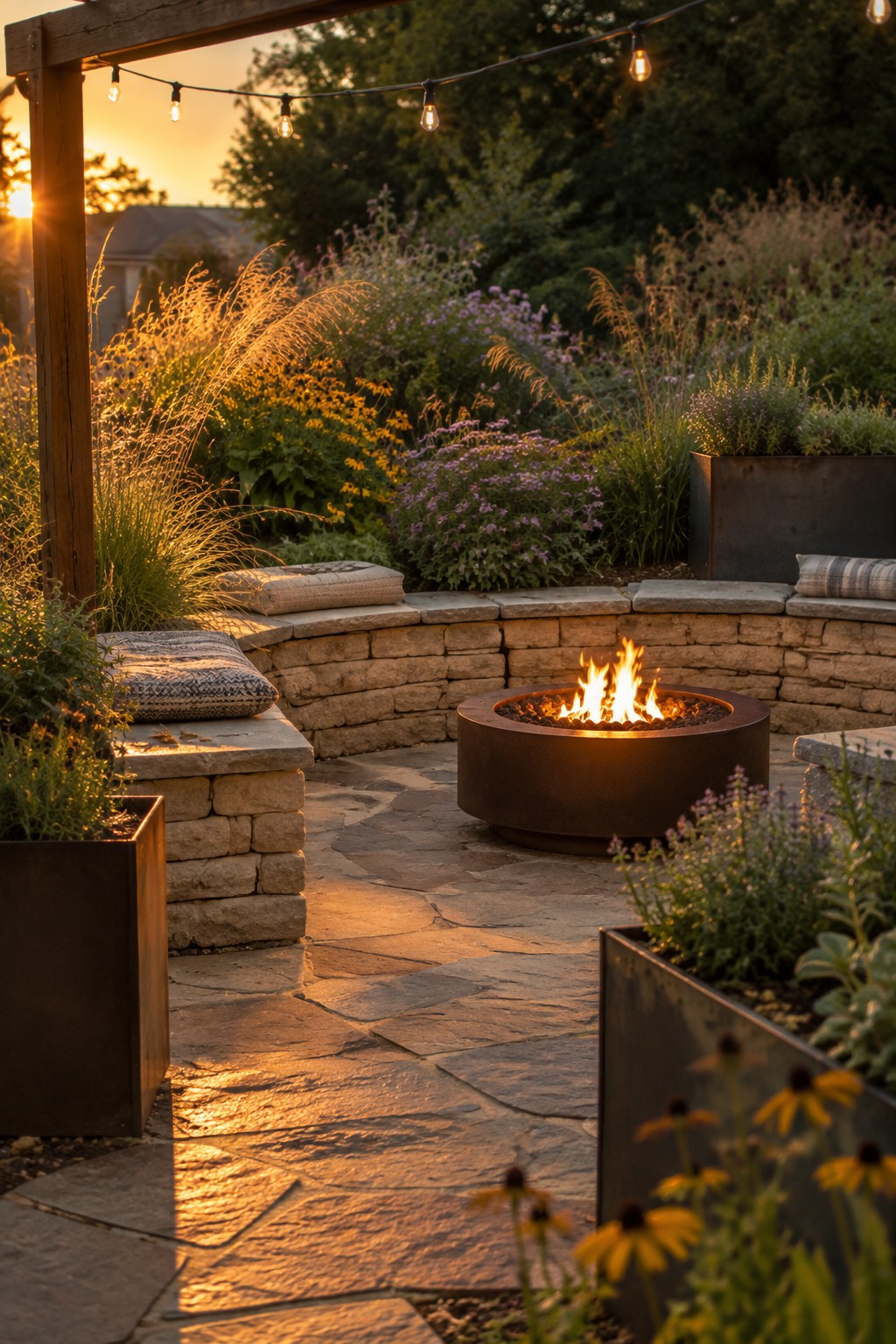
Native grasses bring height and movement that pairs well with lower flowering perennials. The combination softens the edges of stone walls and patios while keeping the planting easy to maintain once established. Many homeowners like how it fills space without looking overly manicured.
This approach works best in yards that already have seating or fire features. Group taller grasses toward the back of beds and let shorter blooms spill forward. Watch soil and sun conditions first so the plants stay healthy through the seasons.
Stepping Stone Paths Through Native Beds

A simple line of stepping stones gives you a clear way to walk through the garden while letting the plants fill in naturally on either side. The flat stones keep foot traffic off the soil and make the whole yard feel more open without needing a solid walkway.
This layout works especially well in smaller front yards where you want to cut back on lawn but still need an easy route from the sidewalk to the door. Keep the stones slightly irregular in size and spacing so the path feels like part of the planting rather than a separate feature.
Surround Your Fire Pit With Native Plants
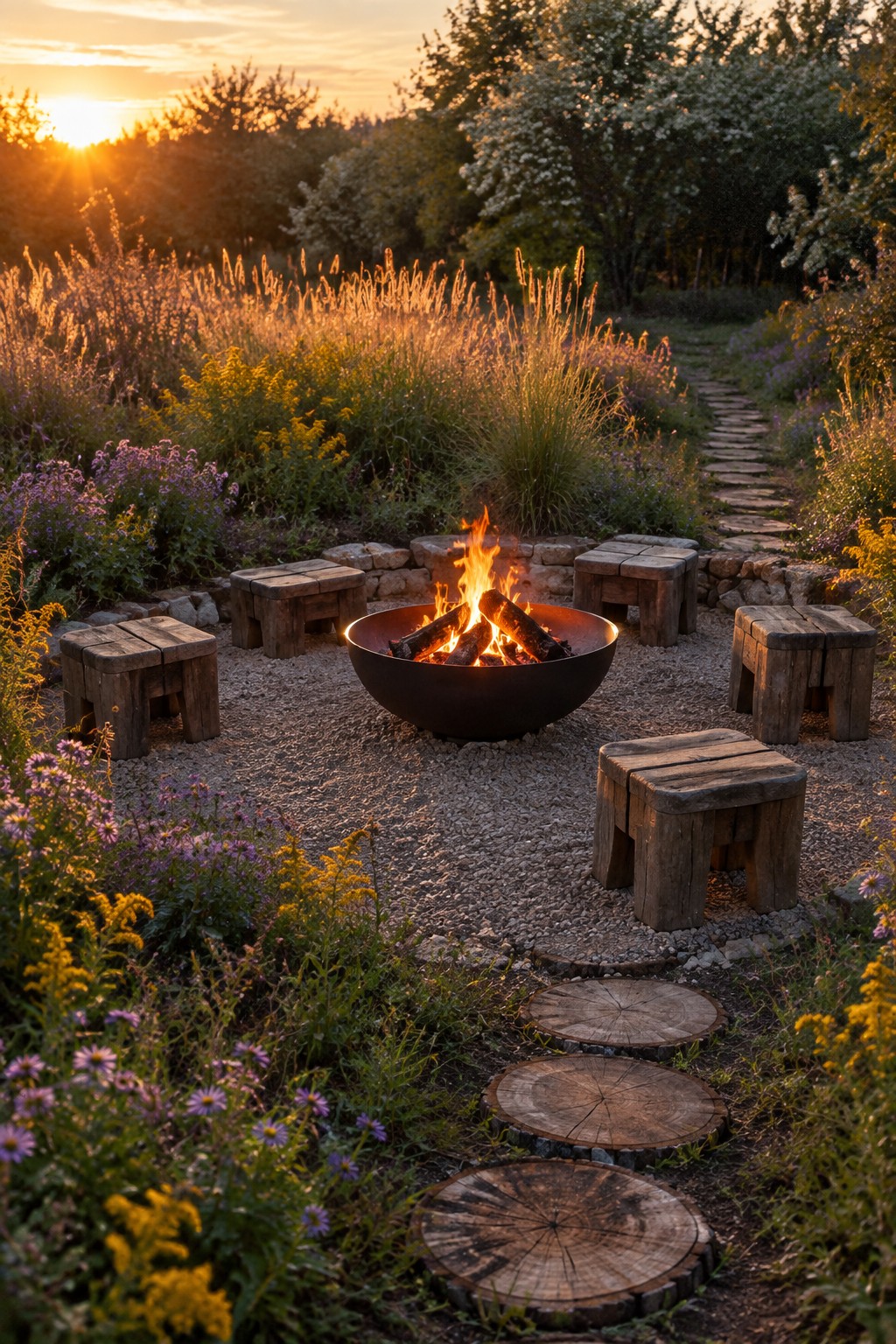
Native plants work well around a fire pit because they handle local conditions without much fuss and help the seating area feel like a natural part of the yard. Grasses and wildflowers can form a soft border that changes with the seasons while still leaving room for gravel and simple seating.
Pick plants that match your soil and sun levels, then mix a few heights so the area feels full but not crowded. This approach suits most residential yards and cuts down on watering once the plants settle in.
Add Brick Edging to a Stone Path

A simple stone path gains a lot of structure when you add low brick edging along the sides. It keeps the plants from spilling onto the walkway while still letting them grow full and natural. In a narrow side yard this small detail makes the space feel more like a real garden instead of just leftover ground.
This works well for homes where the side yard is mostly a walkway between the house and a fence. Stick with shade-tolerant natives that can handle the tight conditions, and the edging helps everything stay neat without a lot of extra trimming.
Label Native Plants for Easier Care

Native plants often need less water and upkeep once established, but it helps to know exactly what is growing in each spot. Small wooden signs placed right in the beds make that simple and keep the garden looking intentional without much extra effort.
This works especially well in yards with raised beds or clear planting zones along a path. Choose durable labels that hold up to weather and group plants by their needs so you can water and prune with less guesswork.
Paver And Gravel Paths For Native Gardens
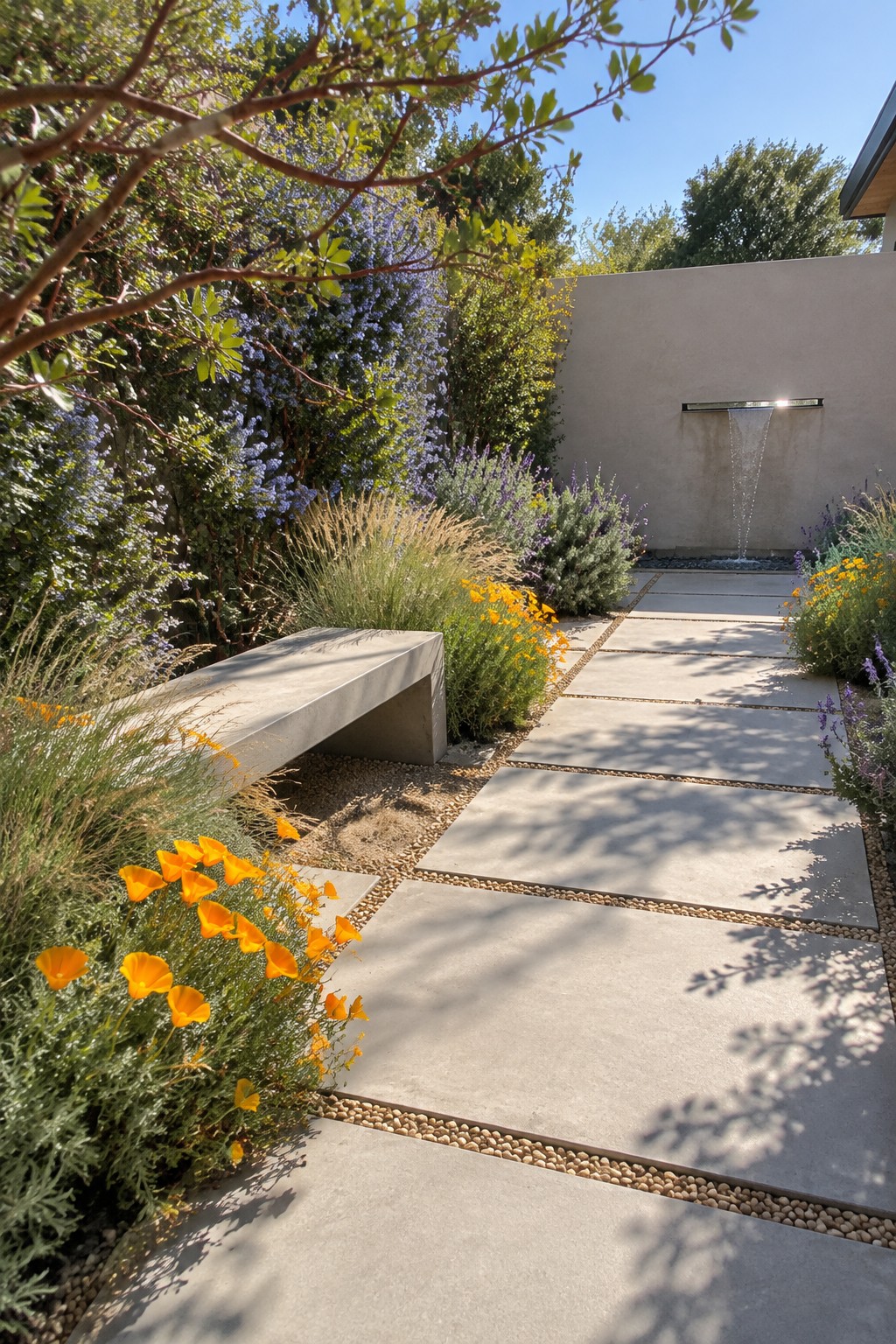
Large pavers set with gravel between them create a simple path that lets native plants edge right up to the walkway without looking messy. The gravel keeps things from feeling too rigid while still giving a firm surface to walk on.
This layout works well in sunny yards with low water use in mind. Keep the beds wide enough for the plants to spread naturally and choose pavers that stay cooler underfoot in hot weather.
Mix Brick And Stone For Natural Paths
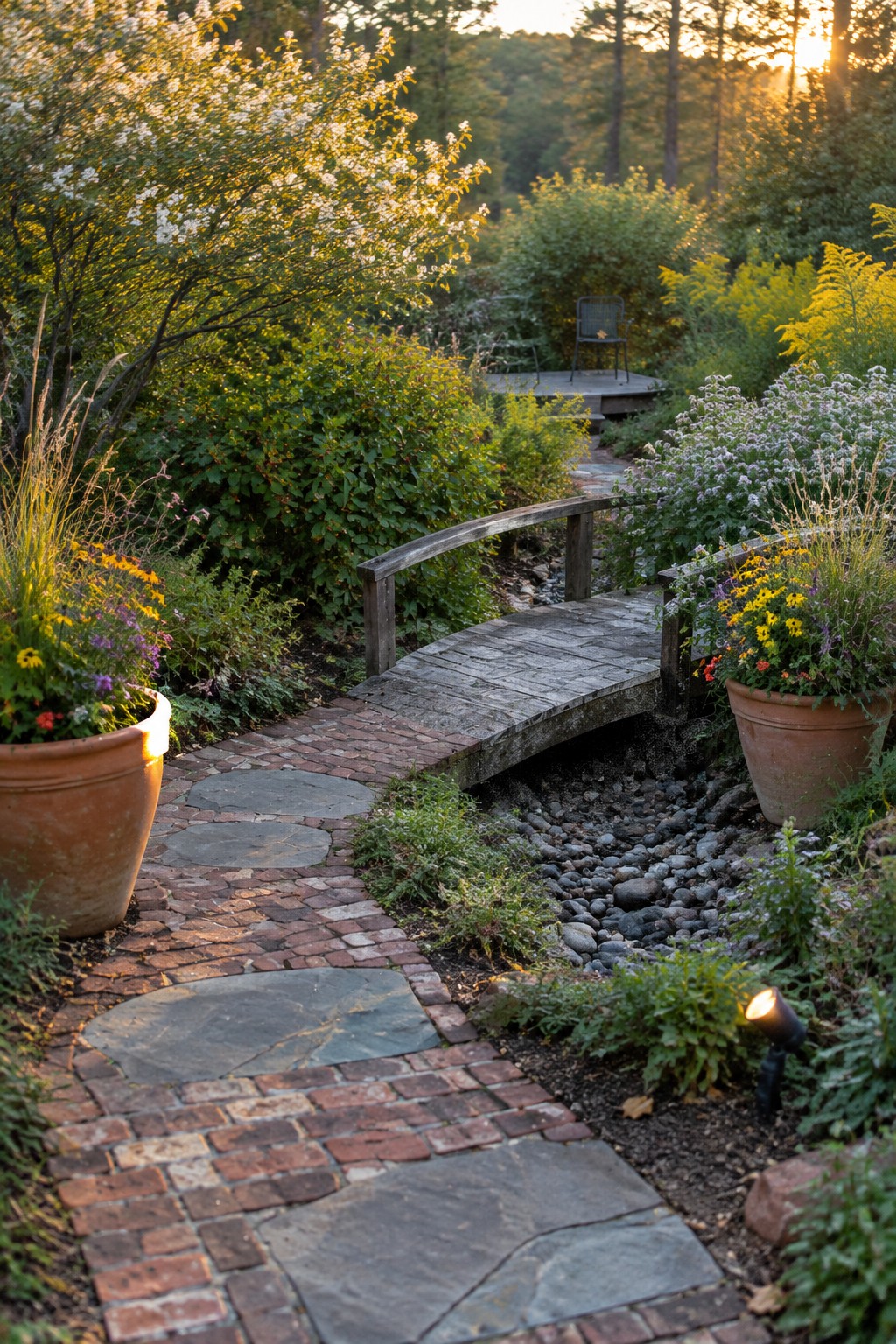
A path built from brick sections and large stone pavers creates an easy flow through a planted yard. The mix keeps the surface practical while letting the surrounding plants feel like the main feature rather than an afterthought.
This works best on lots that already have some grade changes or established beds. Lay the brick in straight runs where foot traffic is heaviest and use the stones to soften the turns so the path follows the natural shape of the garden instead of forcing a straight line.
Layering Native Plants Along Pool Edges

Layering different heights of native plants next to a pool helps soften the hard edge and makes the whole area feel more like part of the garden. Grasses that spill over the stone border paired with taller flowering stalks add movement and keep the space from looking too built up.
This approach works well in most suburban yards where you want lower maintenance and better drainage around the water. Stick with plants suited to your climate, keep the edging low and simple, and let the layers handle the visual interest on their own.
Potted Native Perennials On Front Steps
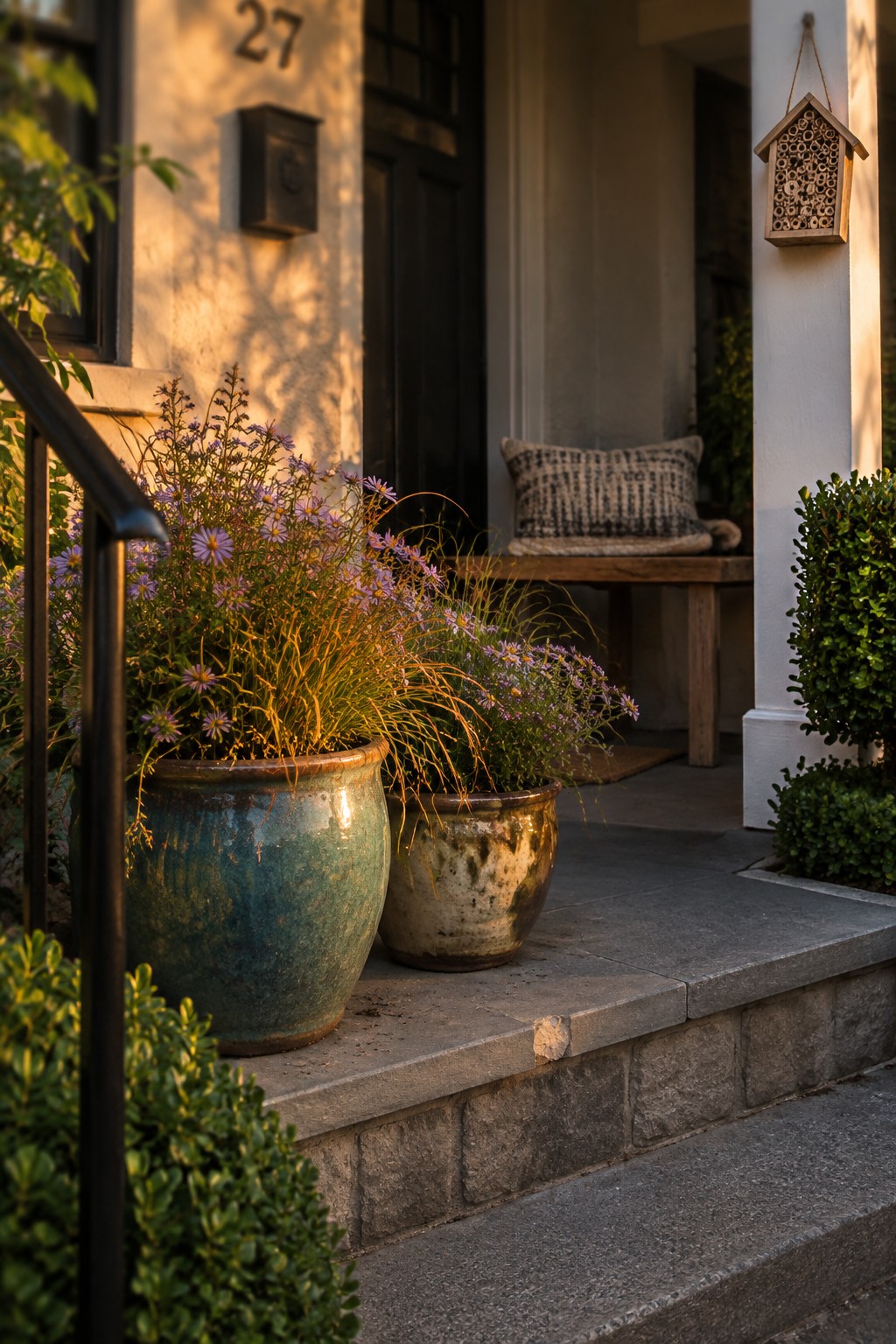
Many people like setting large pots filled with native flowers right on the entry steps. This approach adds color and movement without digging up the yard, and it keeps the plants easy to care for.
It works especially well on older homes with stone or concrete steps. Choose pots in earthy tones and fill them with species that bloom at different times so the display stays interesting through the seasons.
Native Plants Along a Drainage Swale
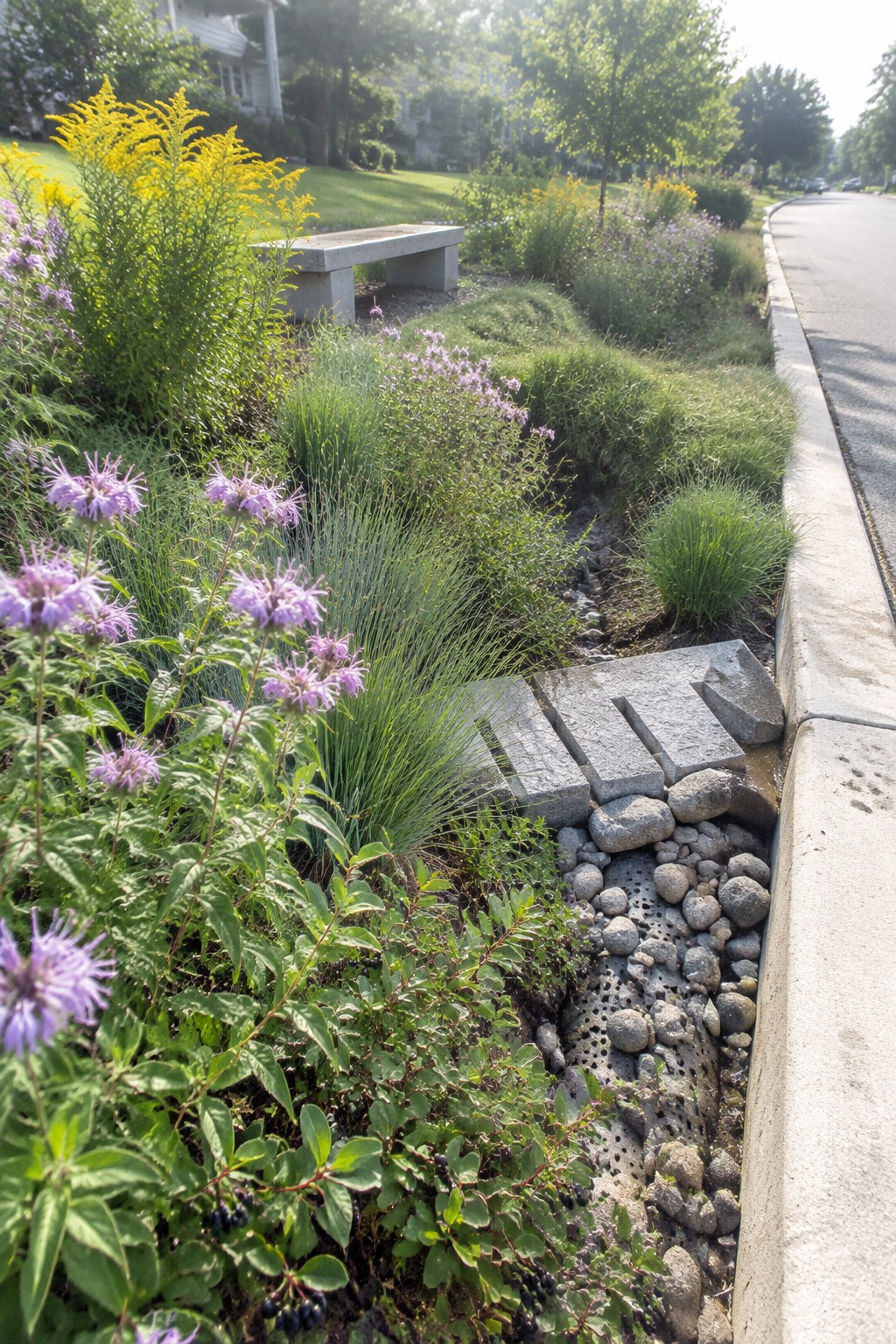
Many homes have that narrow strip between the lawn and the street where water tends to collect after rain. Using native plants here turns the problem spot into something useful and attractive without extra work. The mix of taller flowers and grasses helps slow water flow while the rocky channel underneath carries it away.
This setup works especially well in suburban yards that slope toward the curb. Choose plants that handle both wet and dry periods, and keep the hard edge simple so mowing stays easy. It cuts down on erosion and gives pollinators a steady food source right where people walk by.
Raised Beds With Trellises For Vertical Growth
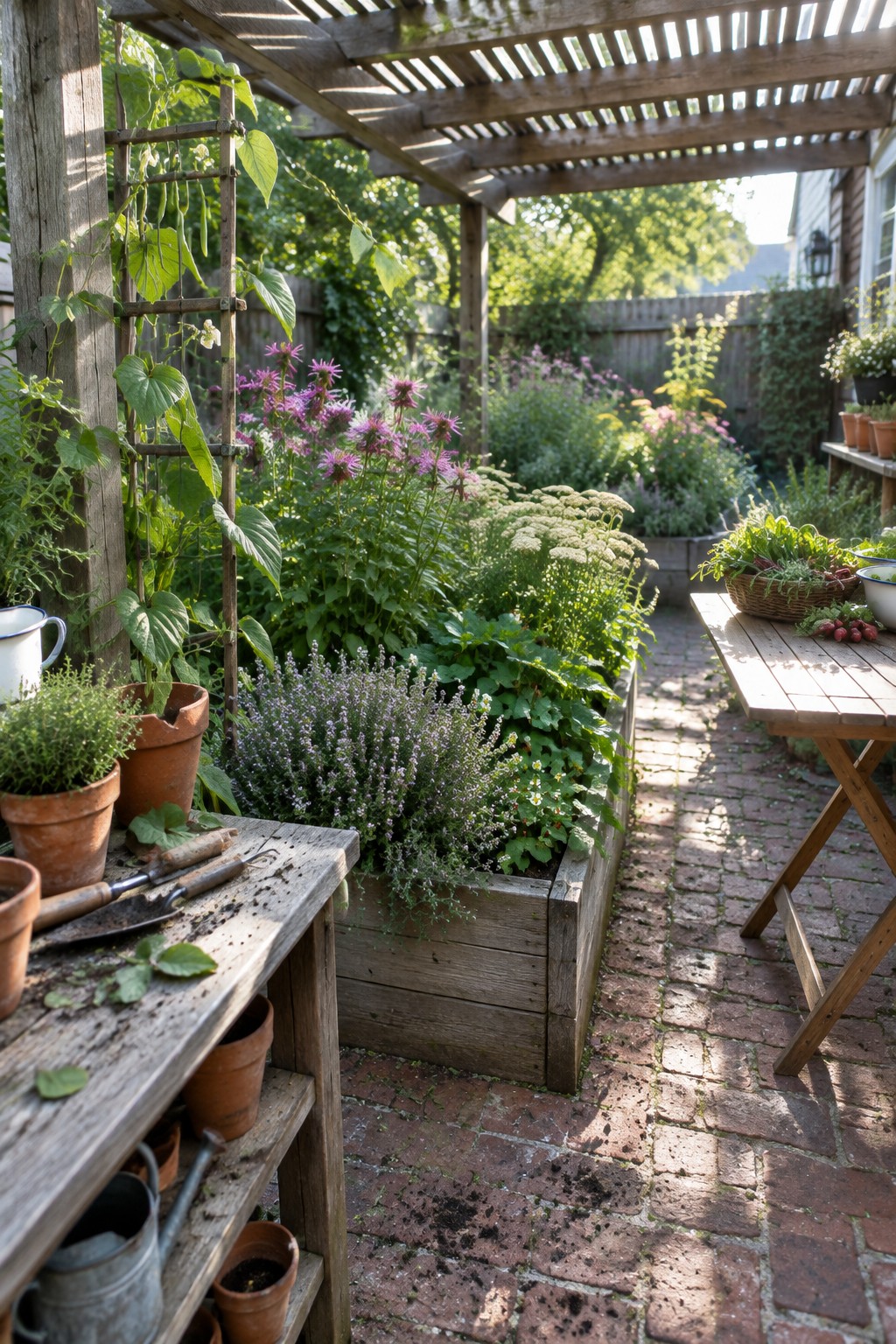
Raised beds paired with simple trellises give structure to a garden while letting plants grow upward instead of sprawling outward. This approach works especially well when mixing native perennials with climbing vines, since the vertical element adds height without crowding the ground level.
It fits best in smaller yards or along walkways where you need clear paths but still want plenty of planting space. Choose untreated wood for the beds and secure the trellis directly to the back edge so the plants can reach it easily as they grow.
Frequently Asked Questions
Q: How do I know which native plants from the list will handle my dry summers without constant fuss?
A: Start by checking your yard’s sun exposure and drainage on a typical day. Pick ones that match those conditions from the ideas that already grow well nearby. They settle in faster that way and need far less extra water after the first year.
Q: What happens if a few of my new plants don’t take hold right away?
A: Replace the weak ones with the same type the next season. Natives often need a bit of time to root deeply before they really show off. Watching the survivors gives you a better sense of what fits your spot.
Q: Will adding these plants pull in too many bees and butterflies near the house?
A: They draw in pollinators mostly during bloom times. Place the showier clusters a bit farther from doors and windows if that feels like too much activity at first. The rest of the yard stays pretty calm.
