


Zinnias and marigolds bring bright color to sunny gardens, but they look best when their height, spacing, and shape work with the rest of the yard.
I like pairing them along paths and borders, where their blooms can soften hard edges without crowding walkways or nearby plants.
A little structure helps these cheerful flowers feel part of the landscape rather than scattered bursts of color.
The ideas ahead show ways to mix them into beds, containers, and garden edges, with room to adjust the layout as plants fill in over the season.
I’d start with the arrangement that fits your sunlight and space, then let the colors guide the smaller choices.
Use A Stone Path To Guide The Garden

A stone path gives a flower bed a clear shape and makes it easier to enjoy without stepping through the plants. Here, irregular paving leads past zinnias and marigolds toward the front steps, so the route feels like part of the garden rather than a strip through it.
Use a gently curving path to link an entry, patio, or gate, and leave enough room between the paving and flowers for easy upkeep. Zinnias and marigolds can line the edges, but keep taller plants from leaning into the walkway.
Use a Pebble Path to Shape a Flower Bed

A narrow pebble path gives a flower bed a clear edge and makes it easier to walk through the garden without stepping on plants. Zinnias and marigolds can line the path in loose clusters, so the route feels colorful without needing a formal planting pattern.
This idea works well along a fence or beside a lawn, especially in a small garden where a wide paved walkway would take up too much room. Set flat stepping stones into the pebbles where you need a steadier surface, and add edging to keep the stones from spreading into the grass.
Use Flower-Filled Planters Along a Patio

Grouping containers near a seating area is an easy way to bring colorful flowers close to where you spend time. Zinnias and marigolds suit this approach well, and pots let you adjust the display as the plants grow.
Place the containers along the edge of a small patio or beside a bench, leaving a clear path through the space. Choose pots with drainage holes, and water them regularly since containers can dry out faster than garden beds.
Use Gravel Paths to Define Flower Beds

A gravel path gives a sunny garden a clear route through the planting, while making the flower beds feel like planned parts of the yard. Here, the path runs between raised wooden beds, keeping the zinnias and marigolds easy to reach.
This layout works well in a narrow side yard or anywhere you want a simple way to tend flowers without stepping into the beds. Use compacted gravel and a firm edge to help keep stones from spreading into the planting area.
Use Boxwood Edging To Shape Flower Beds

Low boxwood hedges give colorful flower beds a clear shape and keep a formal garden from looking scattered. The clipped edges also make a simple layout feel tidy, even when the flowers are planted in bright, mixed colors.
This approach works well around a front walk or near a home with traditional details. Use compact, slow-growing boxwood, and leave enough room between the hedge and flowers to trim it without disturbing the plants.
Use a Curving Flower Bed Along the Path

A planted border beside a simple path is an easy way to bring color into a sunny garden without making the walkway hard to use. Marigolds and zinnias fill the bed with cheerful color, while low succulents can cover the front edge between blooms.
Keep taller flowers toward the back and shorter plants near the path so each layer gets room to grow. This layout suits a narrow side yard, but leave enough walking space and avoid crowding the path with plants that spread.
Let a Mown Path Wind Through the Flower Beds
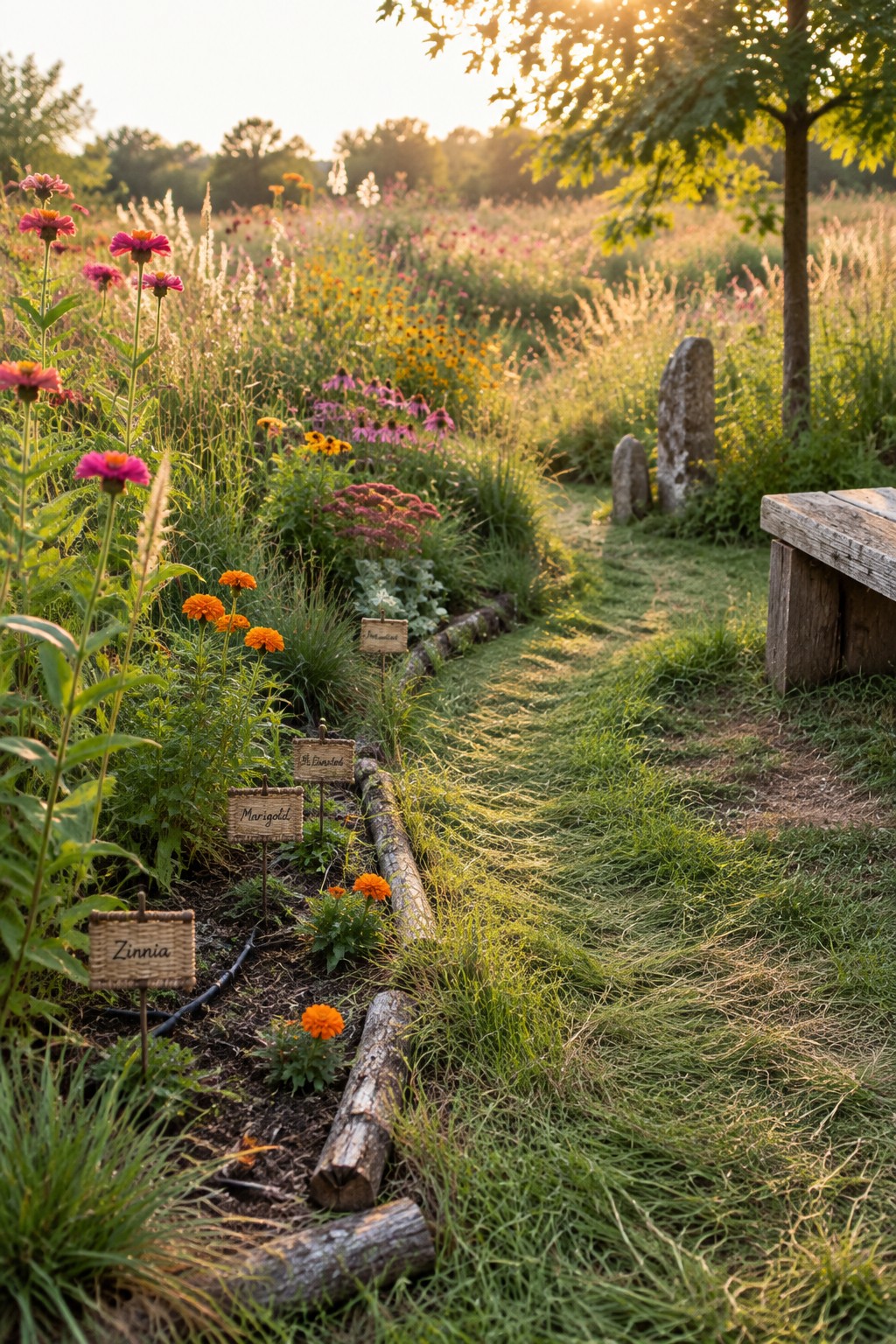
A narrow mown path makes a flower garden easier to walk through and gives the planting a clear shape. It also lets flowers grow in generous, informal beds without making the whole area feel hard to navigate.
Keep the route wide enough for comfortable walking, and mow it regularly so it stays distinct from the surrounding plants. This works especially well in a larger sunny garden where a straight path might feel too formal.
Use Stepping Stones To Set A Garden Path

A stepping-stone path gives a narrow garden a clear route without covering the whole space in paving. Gravel between the concrete slabs keeps the path neat while leaving room for flowers and greenery along the edges.
This approach works well beside a fence or through a small side yard. Leave enough space between stones for a comfortable stride, and choose low plants near the edges so they do not spill onto the walking surface.
Grow Zinnias and Marigolds in Patio Pots

A few large pots can bring a sunny garden right beside the place you sit. Zinnias add height and bright color, while marigolds fill in around the edges. This is an easy way to enjoy plenty of flowers without planting a full border.
Use sturdy containers on a deck or patio where the plants will get plenty of sun. Leave room between pots so you can move around, and choose containers with drainage holes to keep the roots from sitting in water.
Build A Raised Flower Bed Along The Path

A raised bed is a practical way to give a sunny garden a clear edge. The brick border holds the planting neatly beside the path, while taller zinnias and marigolds bring color without spreading across the walkway.
This approach suits a narrow side yard or a path beside a shed or fence. Keep the bed wide enough for layered flowers, but leave room for comfortable steps and easy access to the plants.
Use Brick Edging To Shape a Flower Bed

A low brick edge gives a flower bed a clear, curved outline and keeps it distinct from the lawn. It’s a simple way to make a mixed planting feel planned without needing a formal garden design.
Use the curve to follow a path or soften the edge of a small lawn. Zinnias and marigolds can fill the front of the bed, with taller plants farther back. Keep the brick low so the flowers remain easy to see and the border is easy to mow beside.
Build a Sunny Flower Bed Beside the Pool
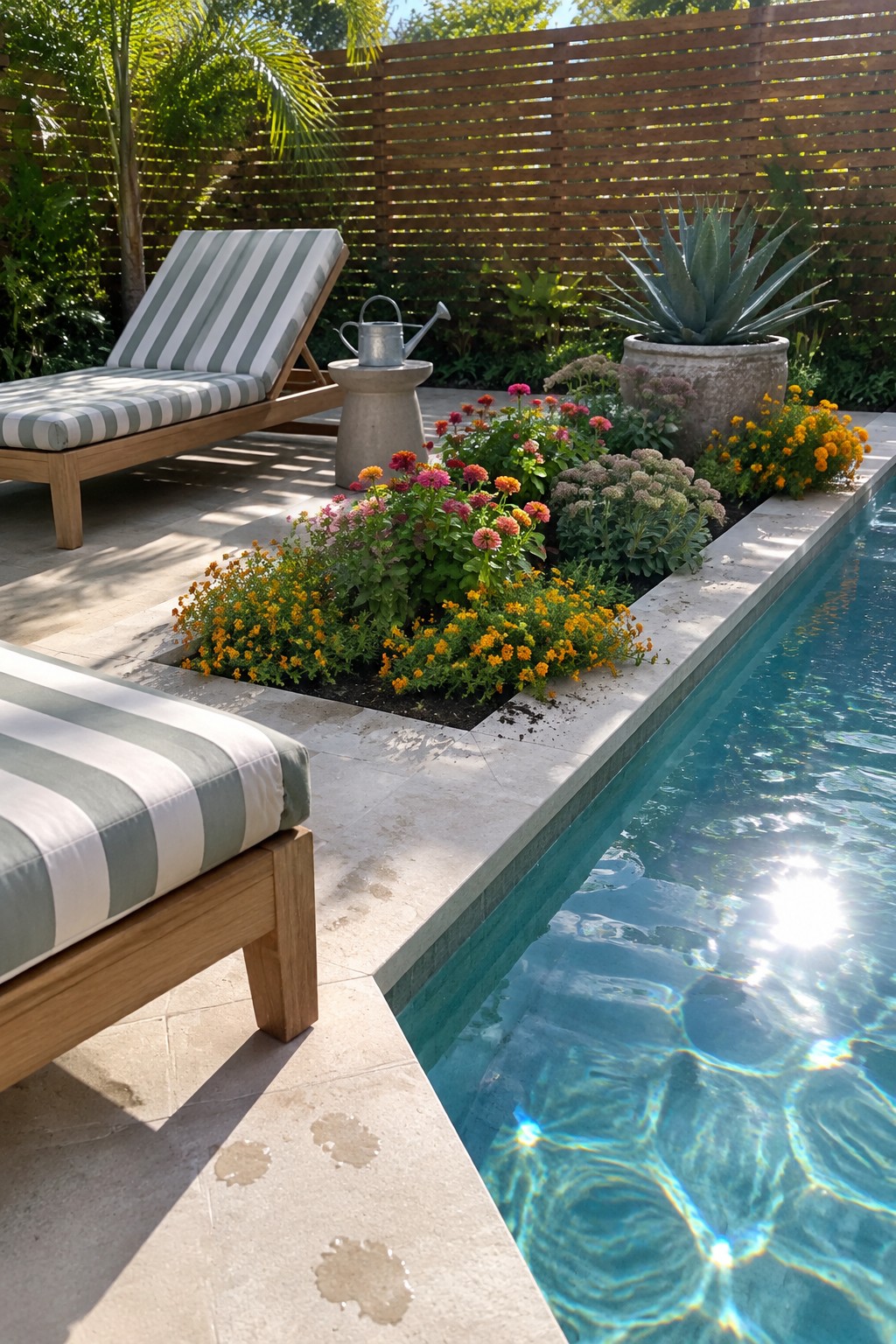
A flower bed set into the edge of a pool patio brings color close to the seating area without taking up space where people walk. Zinnias and marigolds suit this kind of bed well, since their bright blooms make a clear border against pale stone.
Keep the planting area wide enough for mature plants, but leave a comfortable strip of paving along the pool. Group flowers in generous patches rather than mixing every color together, and choose varieties that can handle the sun and occasional splashes.
Plant Flowers Along a Stone Retaining Wall
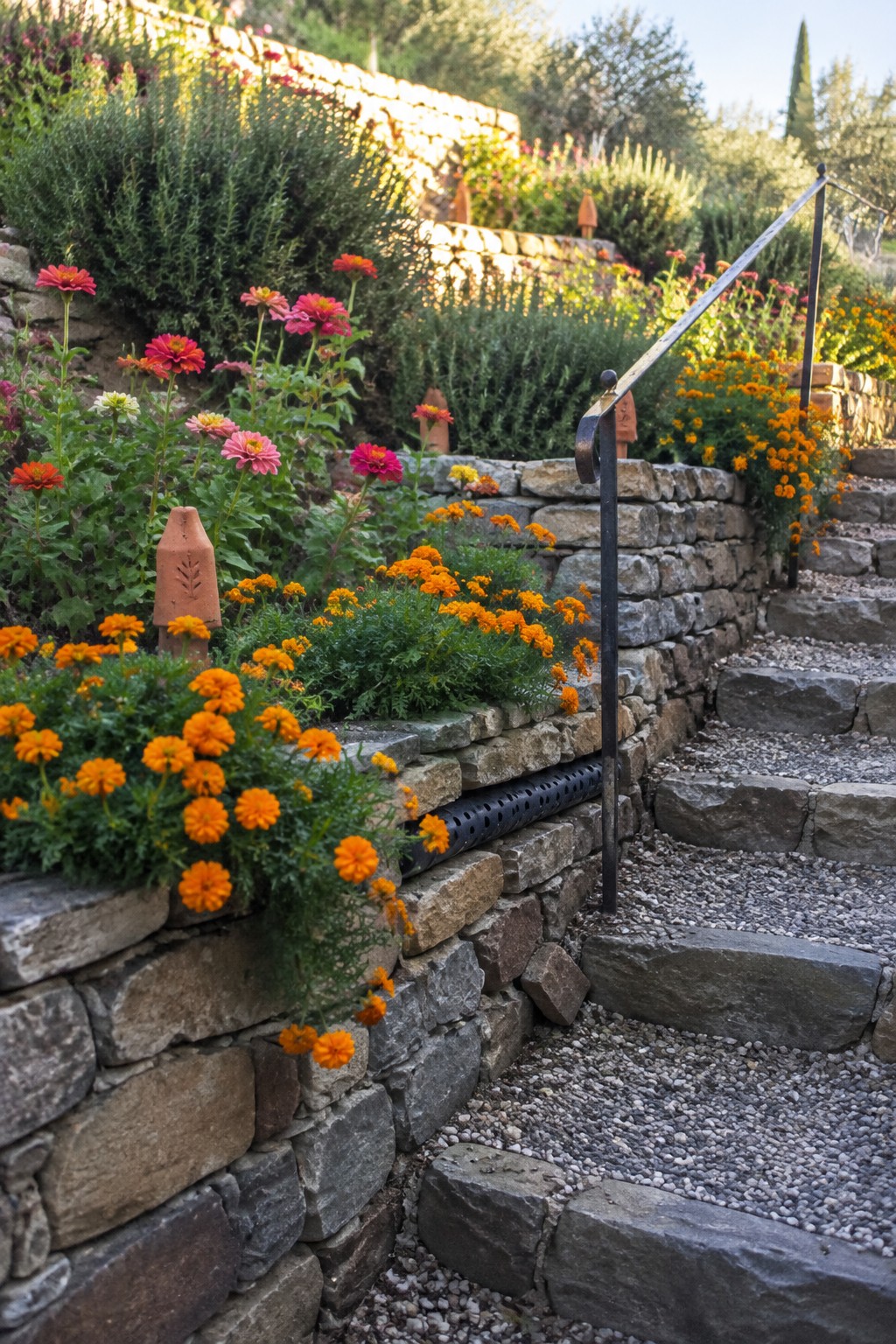
Stone retaining walls can do more than hold a sloped garden in place. A planting bed along the top lets flowers spill near the path, while the wall gives the garden a clear edge.
Use compact marigolds near the stones and taller zinnias farther back so each has room to grow. This works well on sloped yards with steps, but leave enough space for the path and avoid planting where roots could shift the wall.
Make A Garden Fire Pit Part Of The Flower Beds

A fire pit can feel like a natural part of a garden when the surrounding beds come close to the seating area. Flowers and ornamental grasses soften the edge of the gravel, while the open center leaves plenty of room to sit around the fire.
Try this layout in a sunny corner where chairs can sit on a level, nonflammable surface. Keep plants and dry grasses well back from the fire pit, and choose sunny flowers such as zinnias and marigolds for nearby beds.
Grow a Rooftop Flower Garden Beside the Seating

Tall planters can turn a sunny rooftop terrace into a small flower garden without taking up the whole floor. Zinnias and marigolds bring plenty of color, while keeping the planting close to the seating makes the terrace feel connected to the garden.
Use sturdy containers along a railing or wall, and leave a clear path between the planters and chairs. This works well on balconies and compact patios where space is limited. Check that containers drain properly and can handle wind before planting.
Plant Colorful Flowers Along A Brick Garden Path

A brick path can give a flower garden a clear shape and make it easy to enjoy up close. Planting zinnias and marigolds along the edges brings cheerful color right beside the walkway without blocking the route.
This layout works well in a narrow side yard, where a straight path can lead the eye toward a gate. Keep flowers low near the paving and leave enough room for walking, especially as the plants fill out.
Use Stone Edging To Define a Flower Bed

A low stone border gives a flower bed a clear edge and helps keep the planting separate from the path or lawn. Here, the rough stones suit a relaxed garden, while clusters of zinnias and marigolds bring plenty of color.
Use this approach along a garden path or beside a fence, especially where a bed might otherwise spread into the walkway. Set the stones firmly and leave enough room for plants to grow without spilling across the path.
Set Up a Garden Dining Area Beside the Flower Beds

A small outdoor dining area can make a flower garden more useful without taking over the planting space. A simple wooden table and woven chairs sit comfortably beside colorful flowers, so the garden is part of everyday meals rather than just something to look at.
This setup works well in a narrow courtyard or along a garden path. Leave enough room to pull chairs out and walk around the table, and keep taller flowers to the edges so they do not crowd the seating.
Use Colorful Flower Beds Along the Front Walk
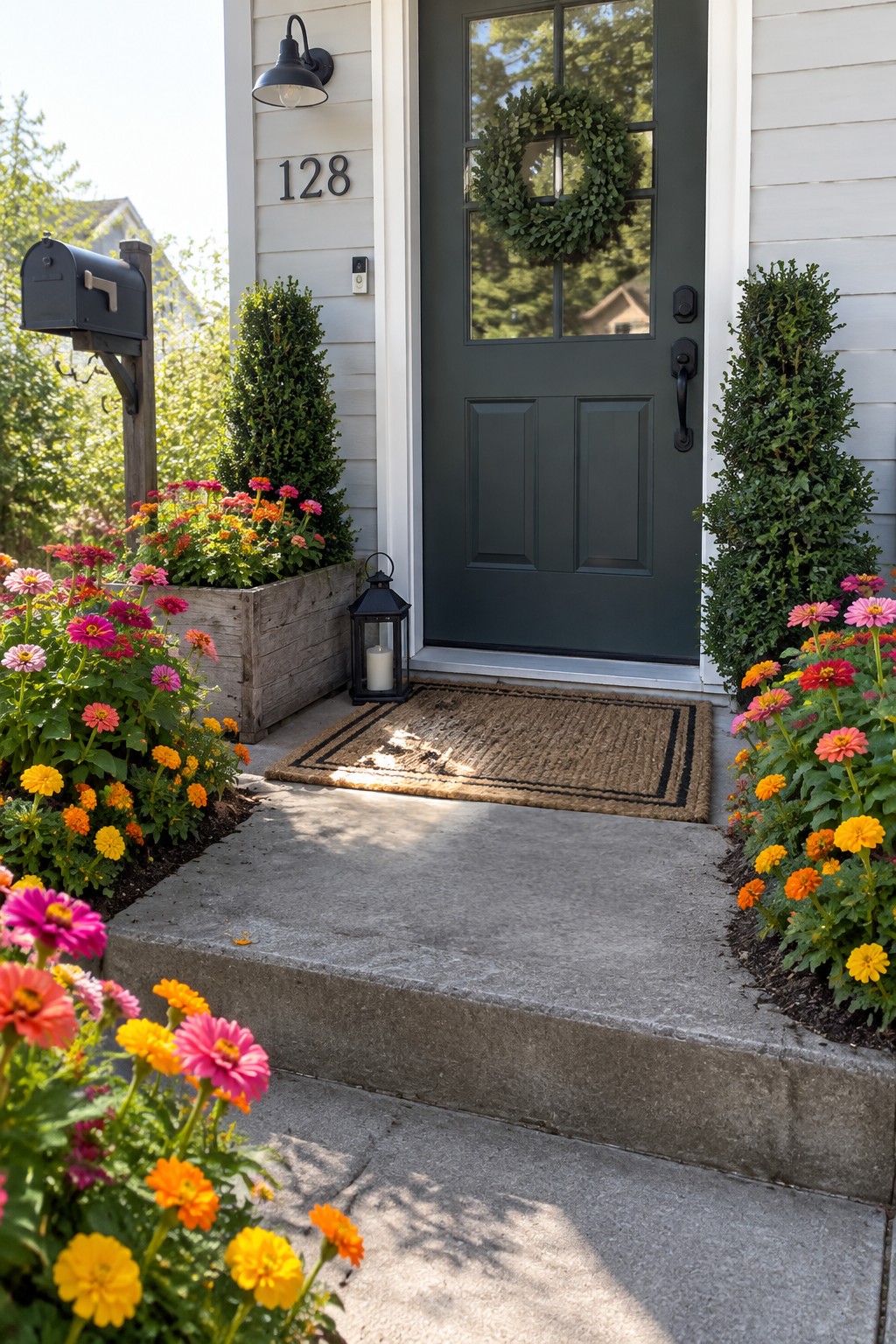
Zinnias and marigolds can make a simple front walk feel cheerful and cared for. Planting them in beds along the path brings color right up to the entrance without needing a complicated garden layout.
Leave enough room for the flowers to spread without crowding the walkway, and group a few colors together for an easy, relaxed look. This works well beside a front entry, especially when the path has a clear edge to keep the planting tidy.
Frequently Asked Questions
Q: Do zinnias and marigolds need full sun?
A: Yes, both bloom best in a spot that gets at least six hours of direct sun. Too much shade can leave plants leggy with fewer flowers.
Q: Can I plant zinnias and marigolds together in the same bed?
A: Absolutely. Give them room for air to move between plants, and check the seed packet for spacing since varieties grow to different sizes.
Q: How often should I water them?
A: Water deeply when the soil starts to dry, rather than giving the bed a little sprinkle every day. Aim the water at the soil to keep the leaves drier.
Q: Will these flowers attract pollinators?
A: Yes, their bright blooms can bring bees and butterflies to a sunny garden. Leave a few flowers on the plants to bloom fully, rather than cutting every stem.
