

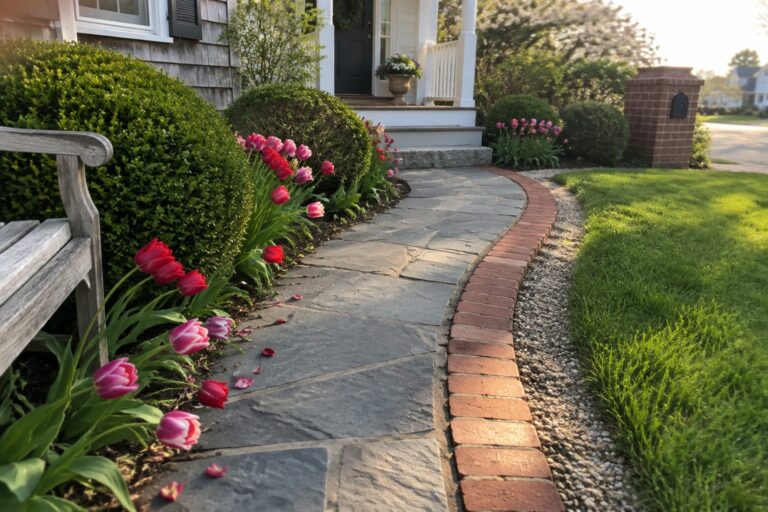
I have always noticed that the edges where grass meets garden beds shape how an entire yard feels when you walk through it.
When those lines are soft or uneven the whole space starts to look unplanned even if the plants are healthy.
Small choices here matter more than most people expect.
I have tried a couple of simple borders in my own yard and found that the ones using brick or stone tend to stay put without much fuss after the first season.
Thinking about pathways and how beds expand over time helps when deciding which of these approaches might actually work in a real garden rather than just on paper.
Brick Edging Along Stone Paths
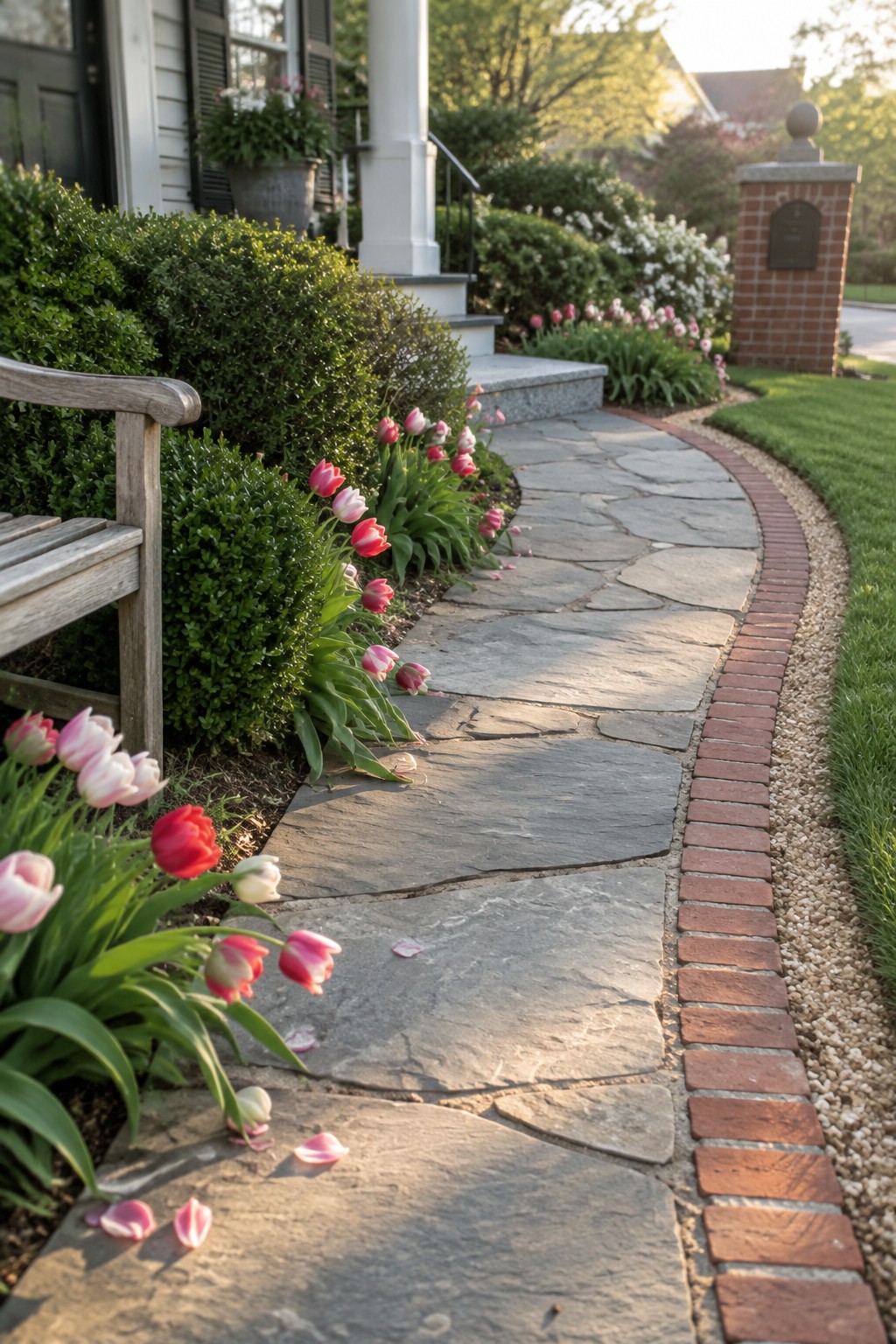
A simple row of bricks makes a strong border next to a stone path. It keeps the edges sharp, stops soil and plants from creeping onto the walkway, and gives the whole garden a finished look without much extra work.
This approach suits front yard paths that curve through beds or along the lawn. Use bricks that sit flush with the stones so the surface stays even underfoot. The contrast between the red brick and gray stone also helps the path stand out while still feeling natural.
Stone Walls For Garden Borders
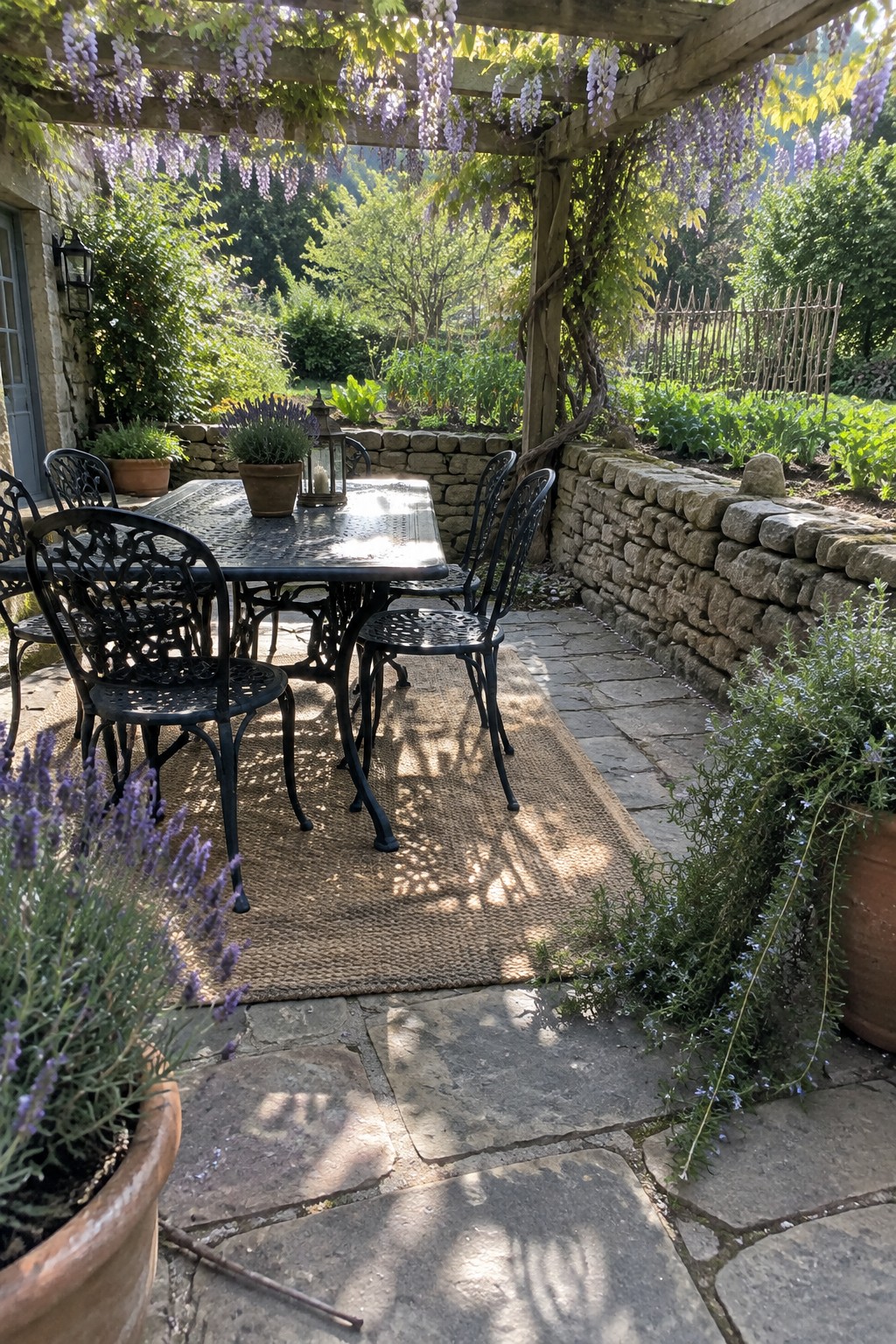
A low stone wall makes a strong edging choice because it holds soil in place while giving the garden a clear boundary. It works especially well next to a patio or path where you need something sturdy that will not shift over time.
This approach suits homes with gentle slopes or beds that sit a bit higher than the walking surface. Build it from local stone so it settles into the landscape, and keep the height low enough that it still feels like edging rather than a full fence.
Brick Edging Along A Concrete Path
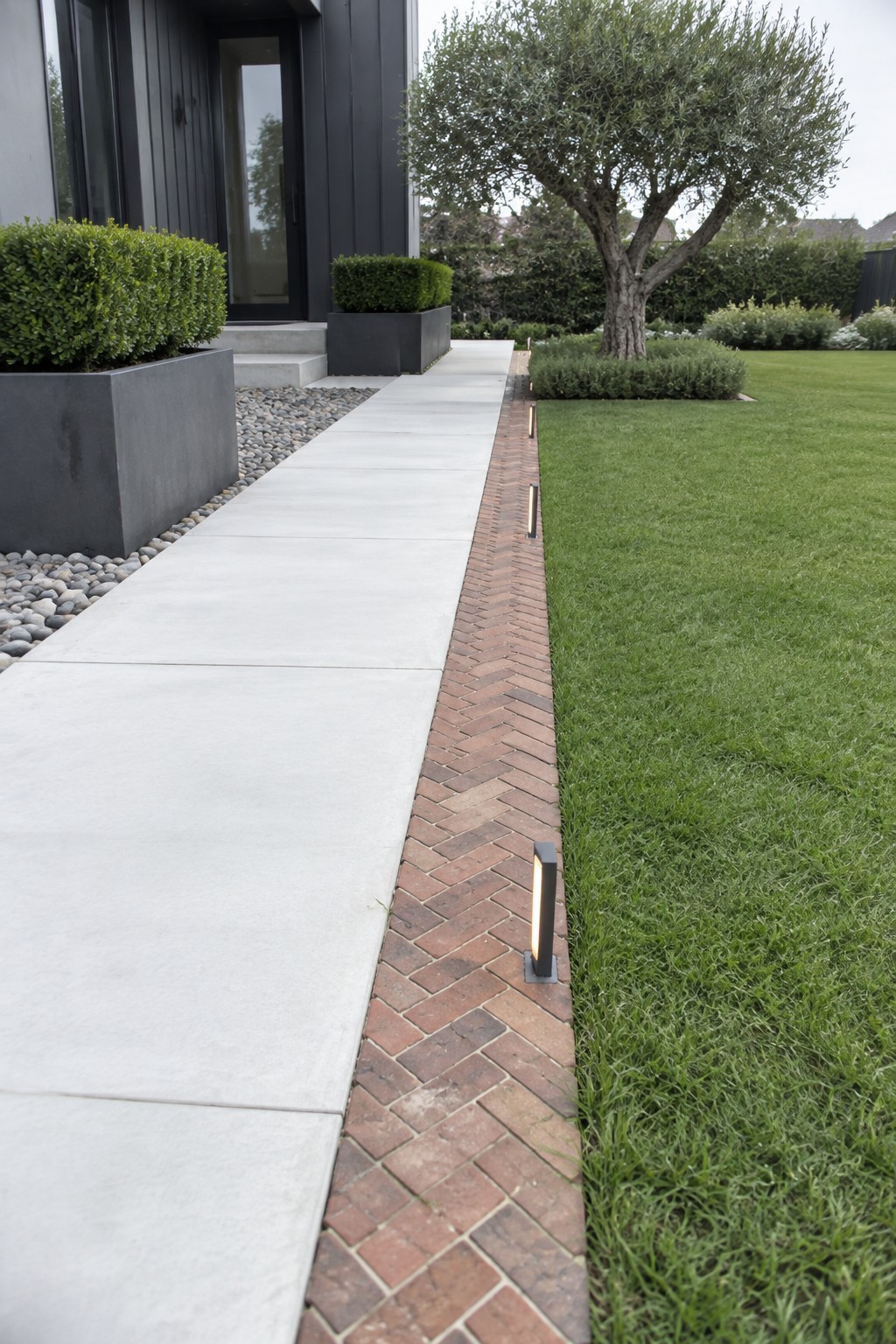
Brick edging next to a concrete walkway gives a clear border that keeps the lawn from spilling over. It also adds a bit of warmth and texture without making the path feel too formal. The low lights built into the edge are a nice touch for evening use.
This style works best on straight or gently curved paths in front yards or side yards. Keep the brick pattern simple and match the scale to the width of the walkway so it does not feel busy.
Stone Edging Along Gravel Paths
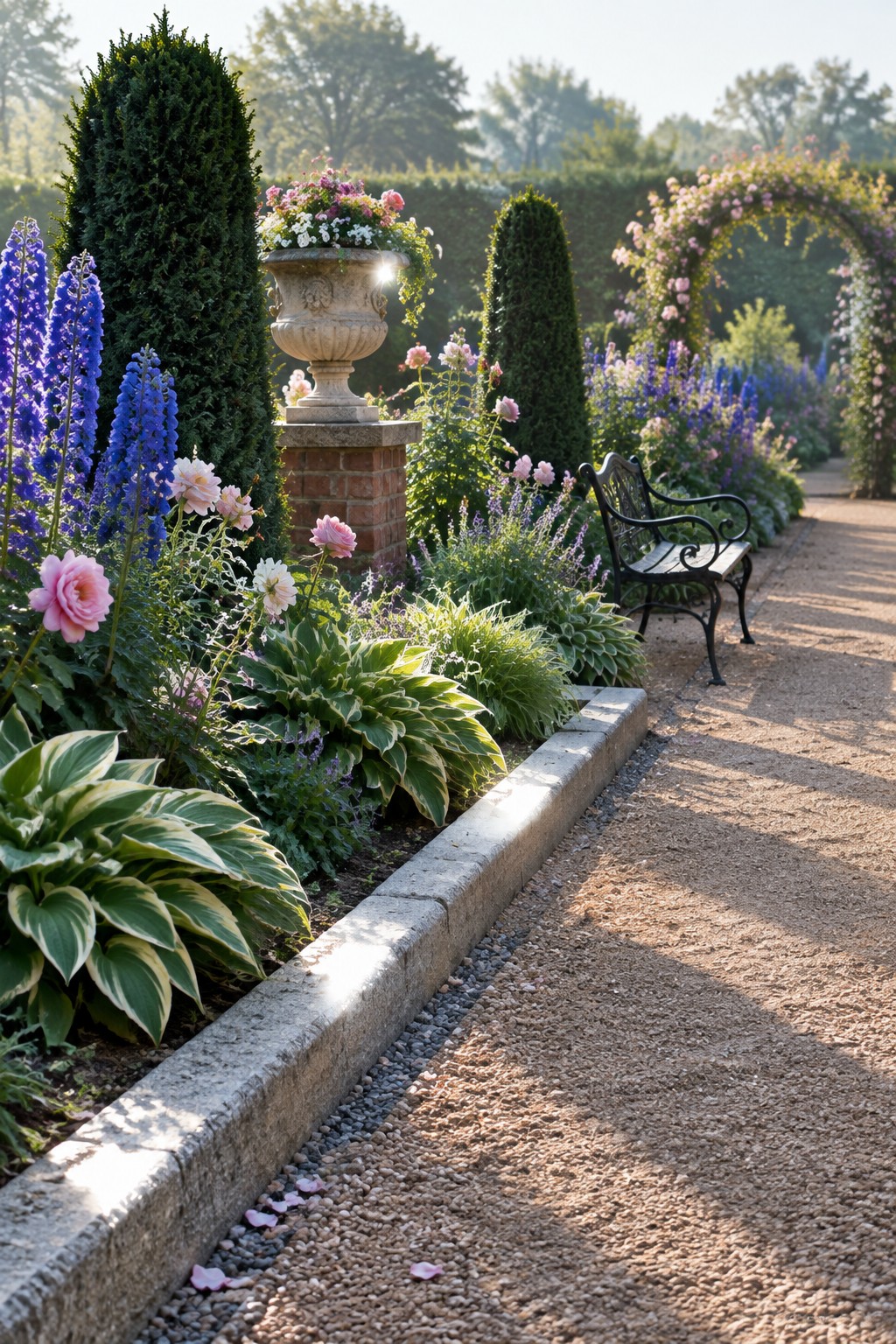
A low stone curb gives a garden bed a clear edge and keeps gravel from spilling into the soil. It creates a simple line that makes the whole path feel more finished without adding much height or fuss.
This works well in both formal gardens and cottage style yards where you want the beds to stay neat over time. Brick can be added at key points for extra support or to anchor larger features like urns or benches. Just make sure the stone sits level and deep enough so it does not shift with frost or foot traffic.
Stone Retaining Walls For Layered Beds
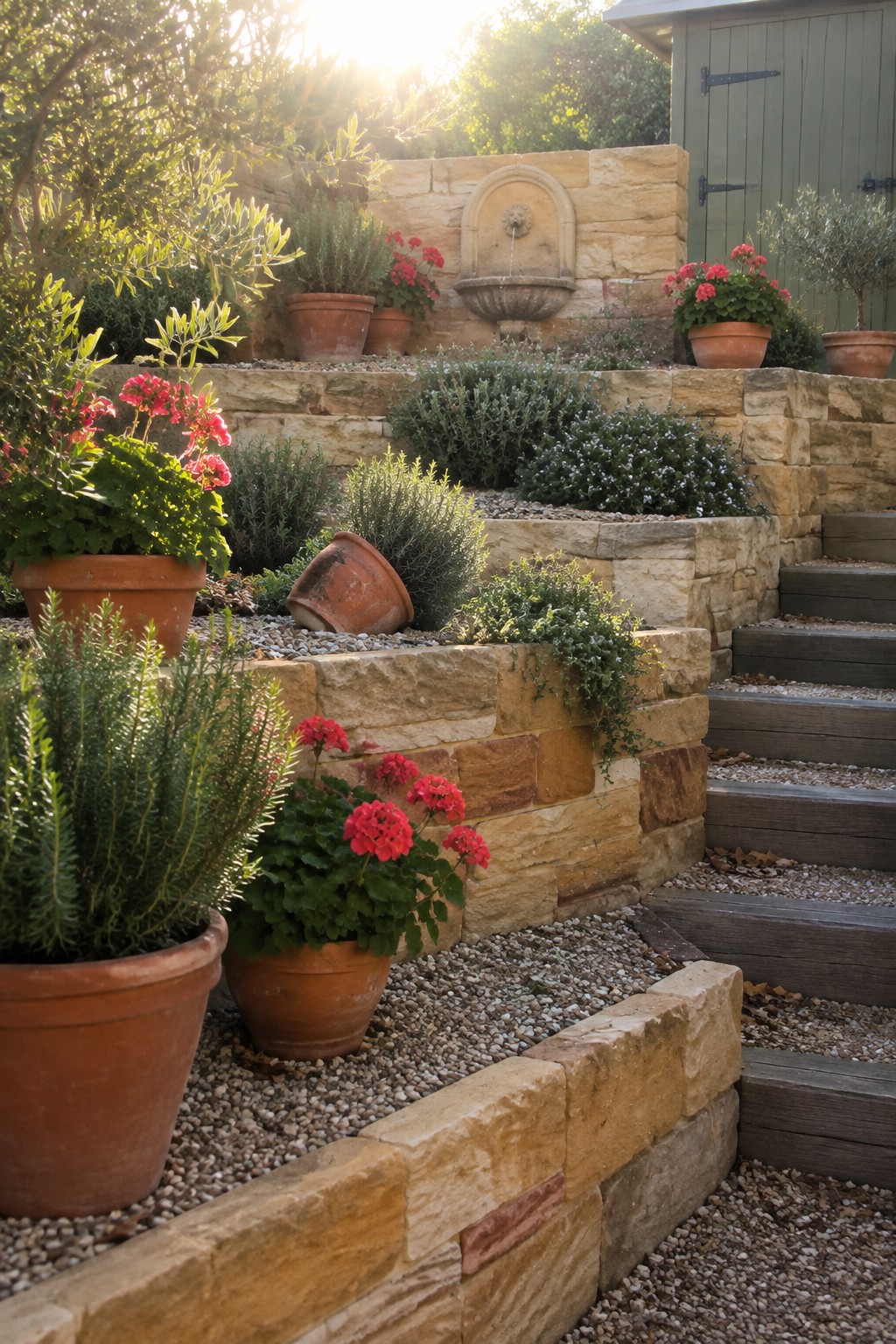
Stone retaining walls give a garden clear shape on a slope. They hold the soil in place while creating flat spots for planting at different heights. The stacked blocks also serve as a built-in edging that needs little extra work.
This setup works best on properties that already have some change in level. Keep the walls low and use the same stone throughout so the whole area feels connected. Gravel between the levels helps with drainage and keeps the look simple.
Stone And Brick Edging For Pool Areas
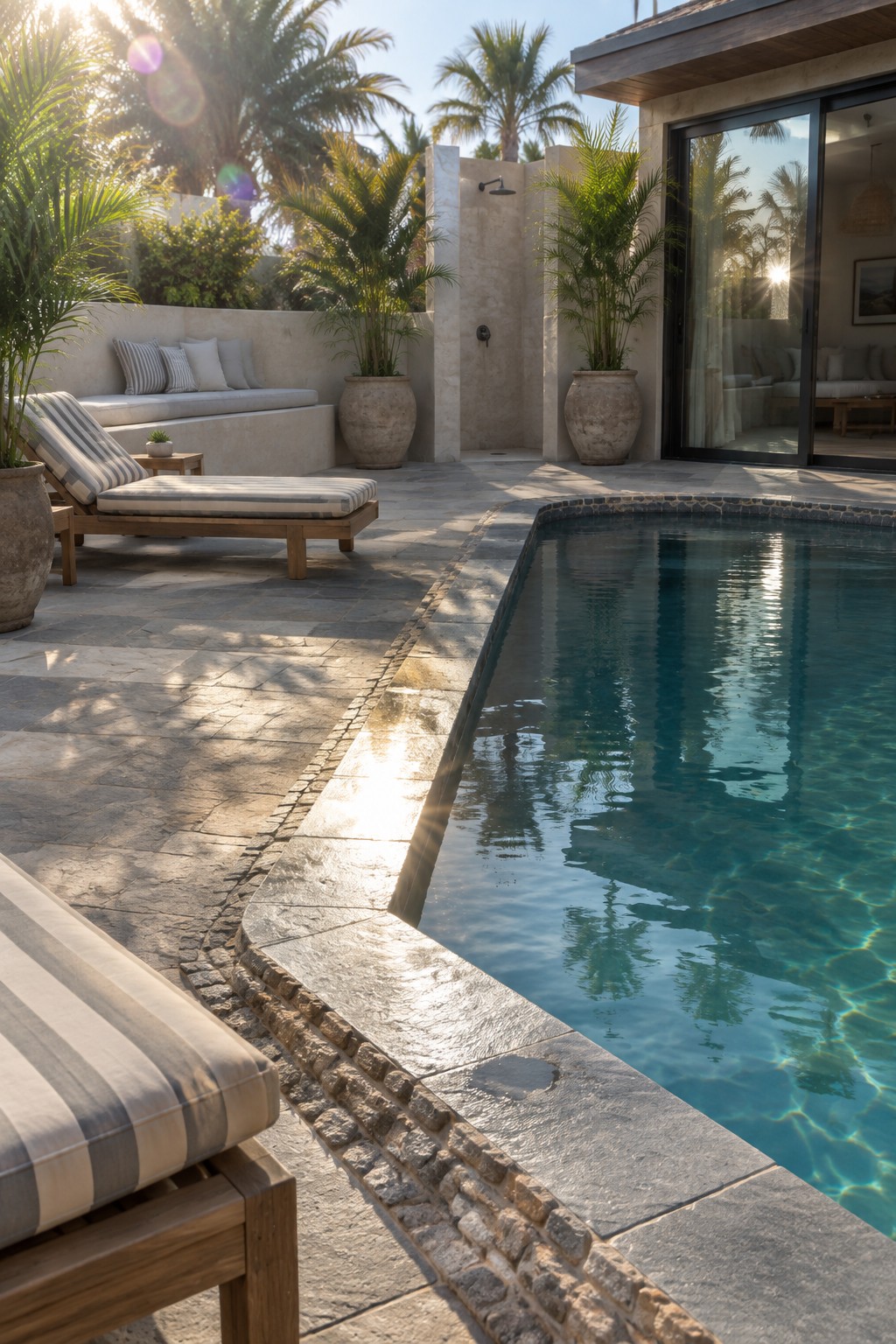
A stone edge paired with a narrow brick or cobble border gives a pool a finished look without feeling too formal. The mix keeps the waterline clear and helps the paving flow into the surrounding patio in a natural way. It also handles water runoff better than a single material.
This approach works well on homes with warm climates and simple outdoor layouts. Use larger stone slabs for the main surface and keep the border narrow so it defines the shape without overpowering the space. It suits both new builds and older yards where you want the pool to sit comfortably with the rest of the garden.
Brick Edging For Raised Beds
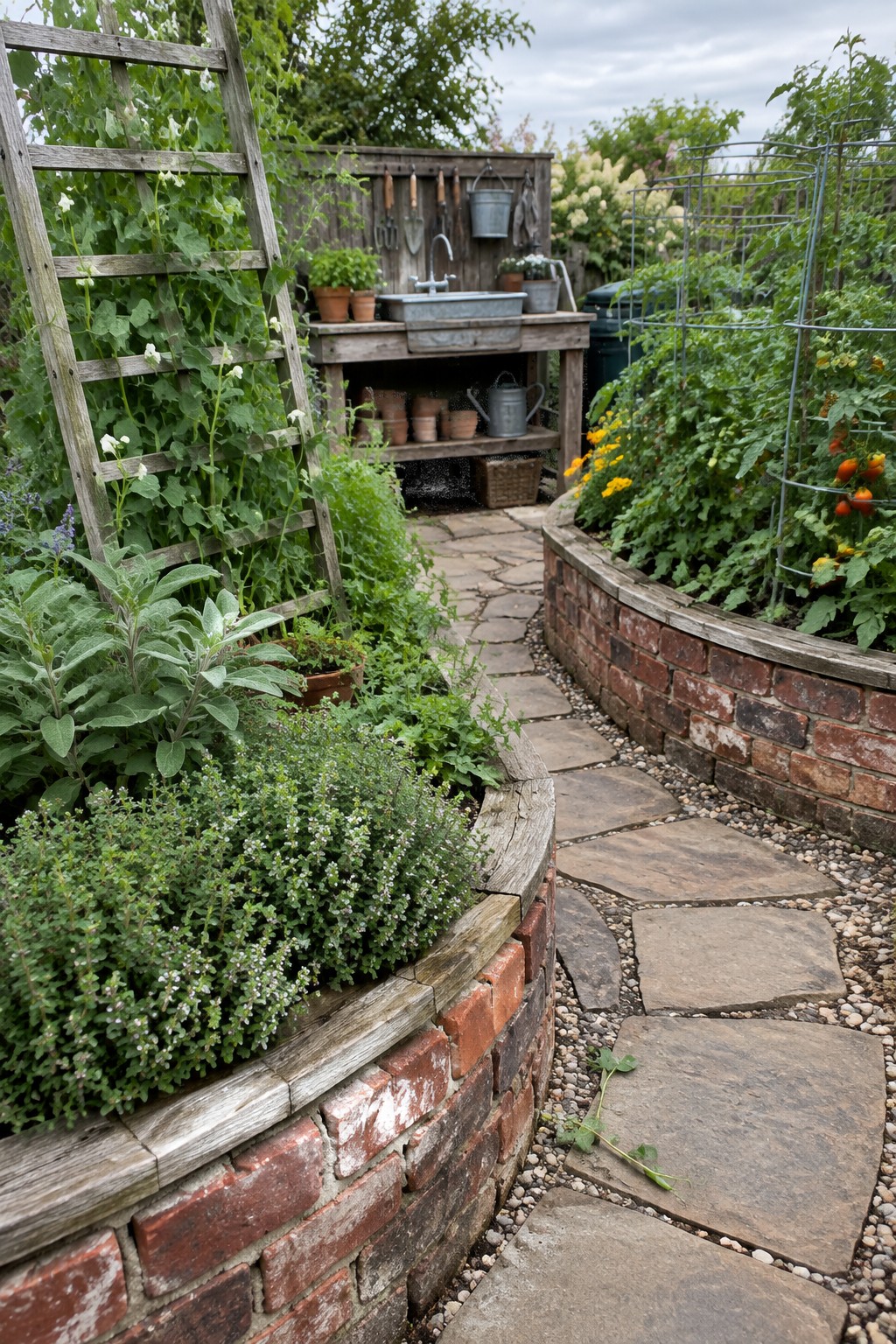
Brick makes a solid choice for holding raised beds in place. It keeps the soil contained, stands up to weather, and gives the garden a clean edge that still feels natural. The low walls also make it easier to reach plants without stepping into the beds.
This style works best in vegetable or herb gardens where you want clear borders and good drainage. Use it along a stone path so the whole area stays easy to walk and maintain. Keep the height modest so the beds do not overwhelm smaller yards.
Stone Block Edging
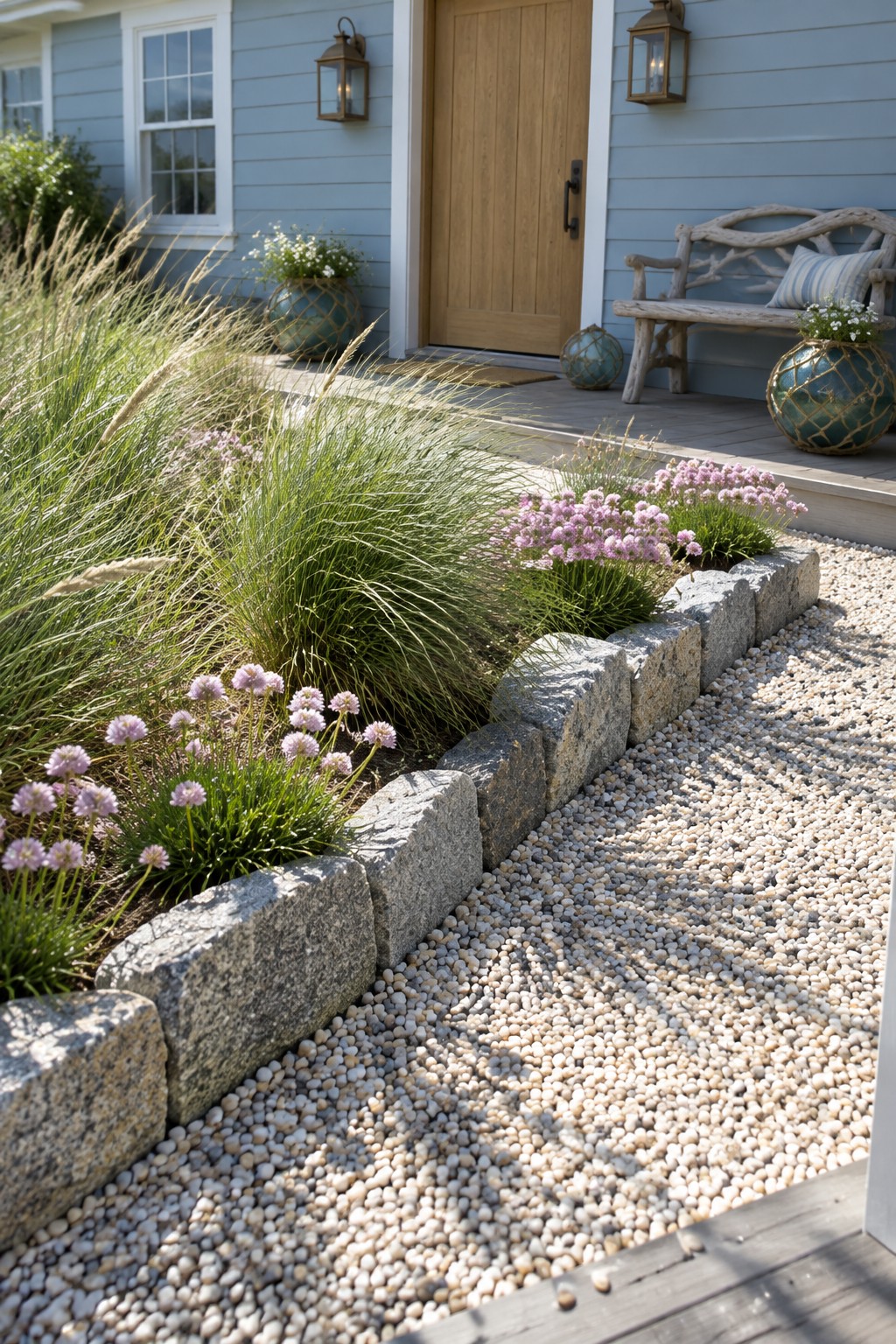
Large stone blocks create a solid border that keeps garden beds separate from gravel areas without any extra framing. They stand out because the weight and size hold everything in place even after rain or foot traffic.
This edging suits homes where the front beds run right up to a walkway or porch. It works best with low plants that stay contained and looks right at home on houses with simple siding and natural tones.
Brick Borders For Planting Beds
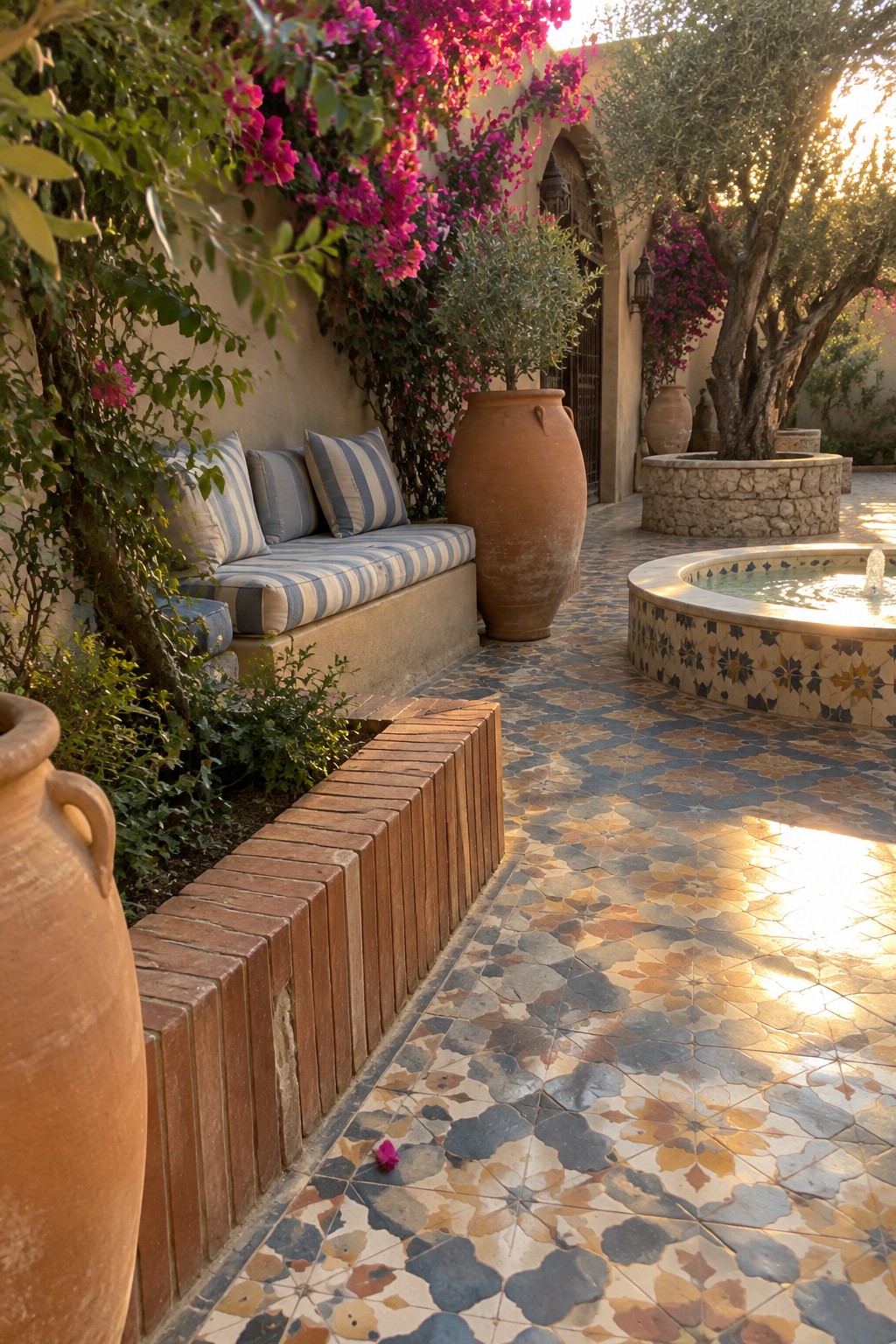
Brick edging gives a clean line between a paved surface and a garden bed without needing a lot of height. It holds soil in place and stops the path from looking like it blends into the planting. Many older homes already use this because the material lasts and matches common courtyard paving.
It works well in sunny spots where you want low maintenance and a simple material change. Lay the bricks on a shallow base so they stay level over time, and keep the top edge just above the soil to make mowing or sweeping easier. This approach suits both small courtyards and larger garden paths.
Stone Edging For Gravel Paths
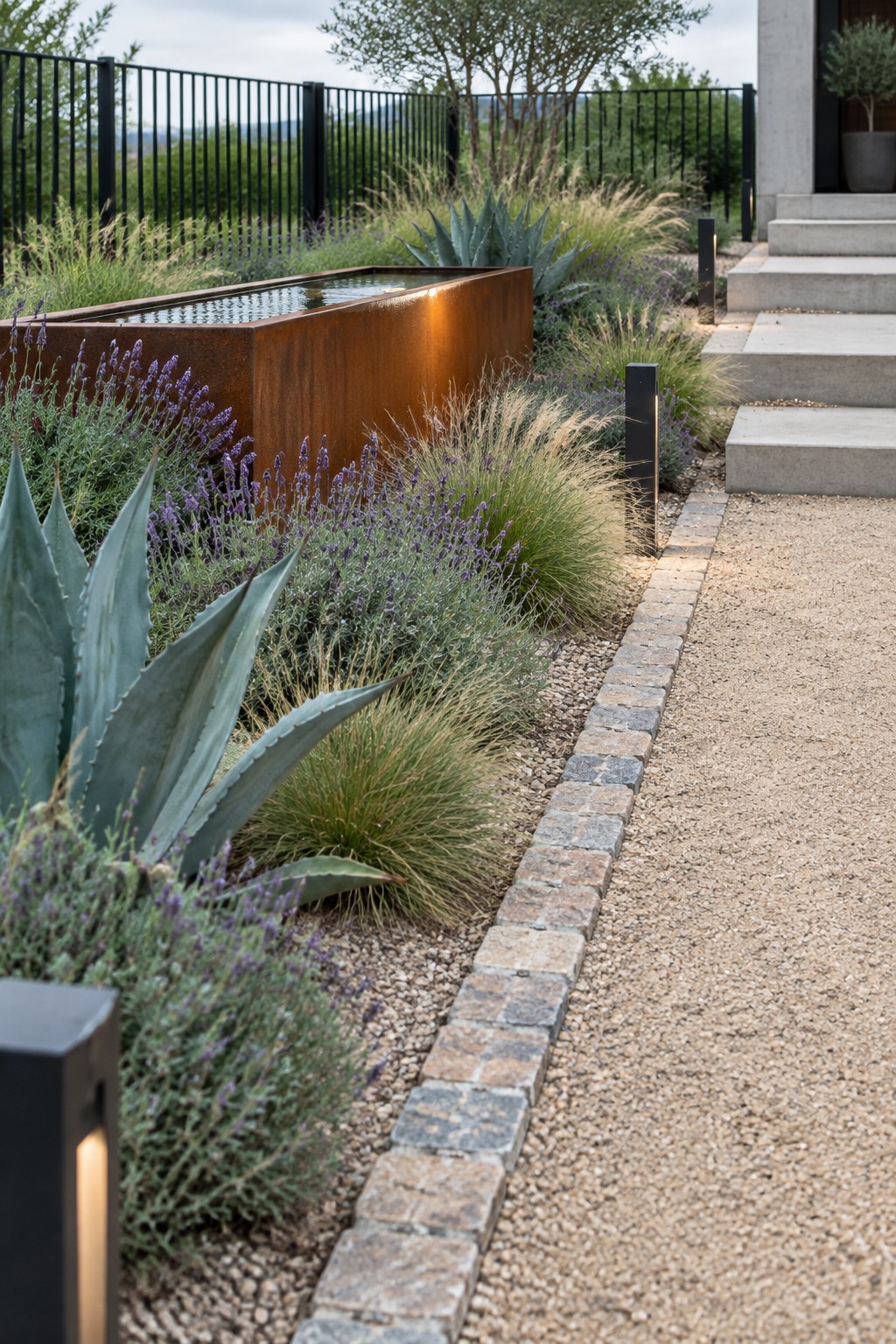
A row of cobblestones makes a simple border that holds gravel in place while giving the garden beds a clean edge. It keeps the path looking intentional instead of letting the stones scatter into the planting areas over time.
This works best on homes with informal gardens where you want a low-maintenance divider that still feels natural. Set the stones level with the gravel so they stay put and do not create a tripping hazard.
Stone Edging Along Paths
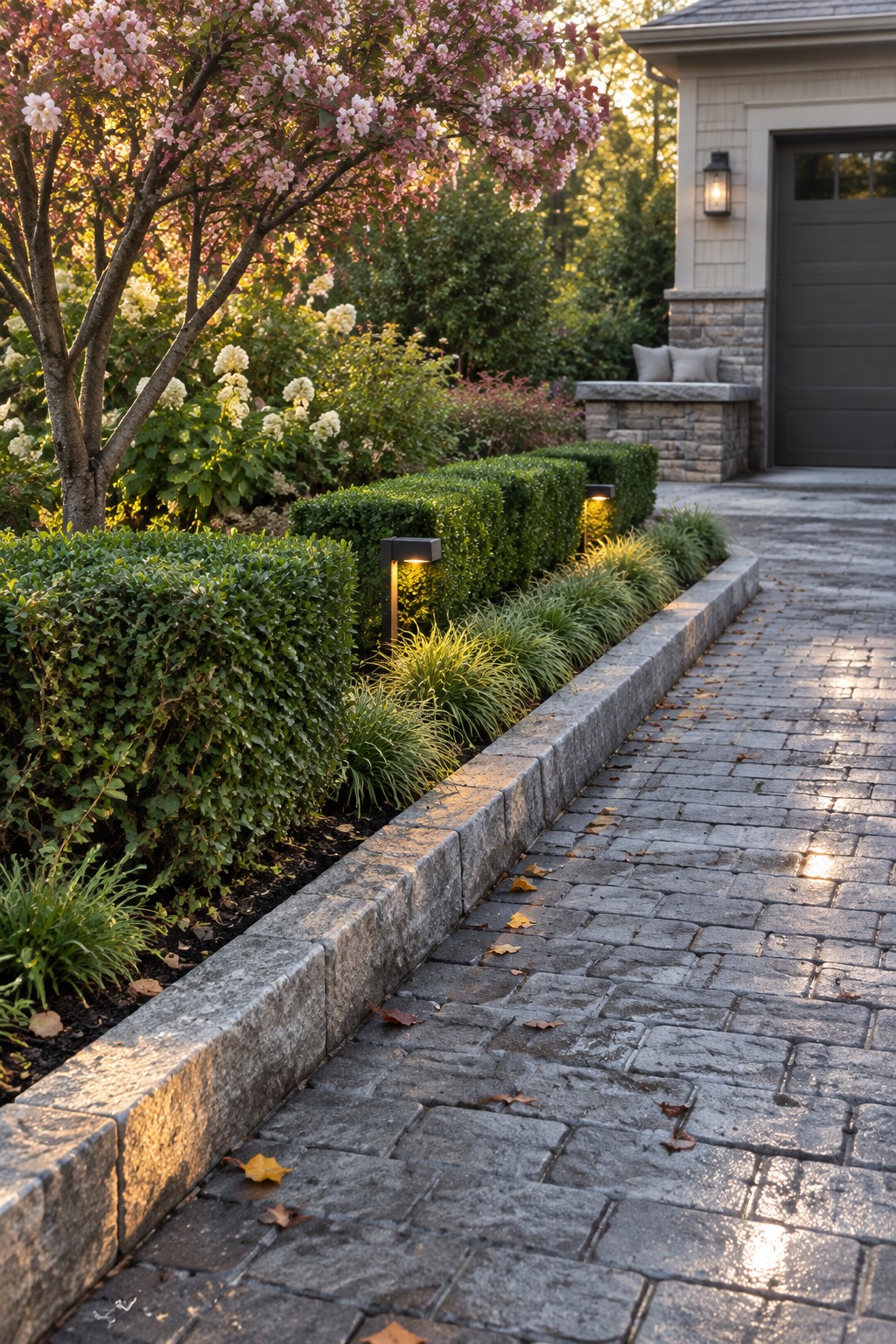
Stone edging keeps planting beds neat and stops soil or mulch from washing onto the walkway. It creates a clear line that holds up through seasons without needing constant repairs or replacements.
This works best in front yards where beds run beside a paved drive or path. Match the stone color to your house foundation so the border feels like part of the overall structure rather than an add-on.
Mosaic Stone Edging Around Garden Beds
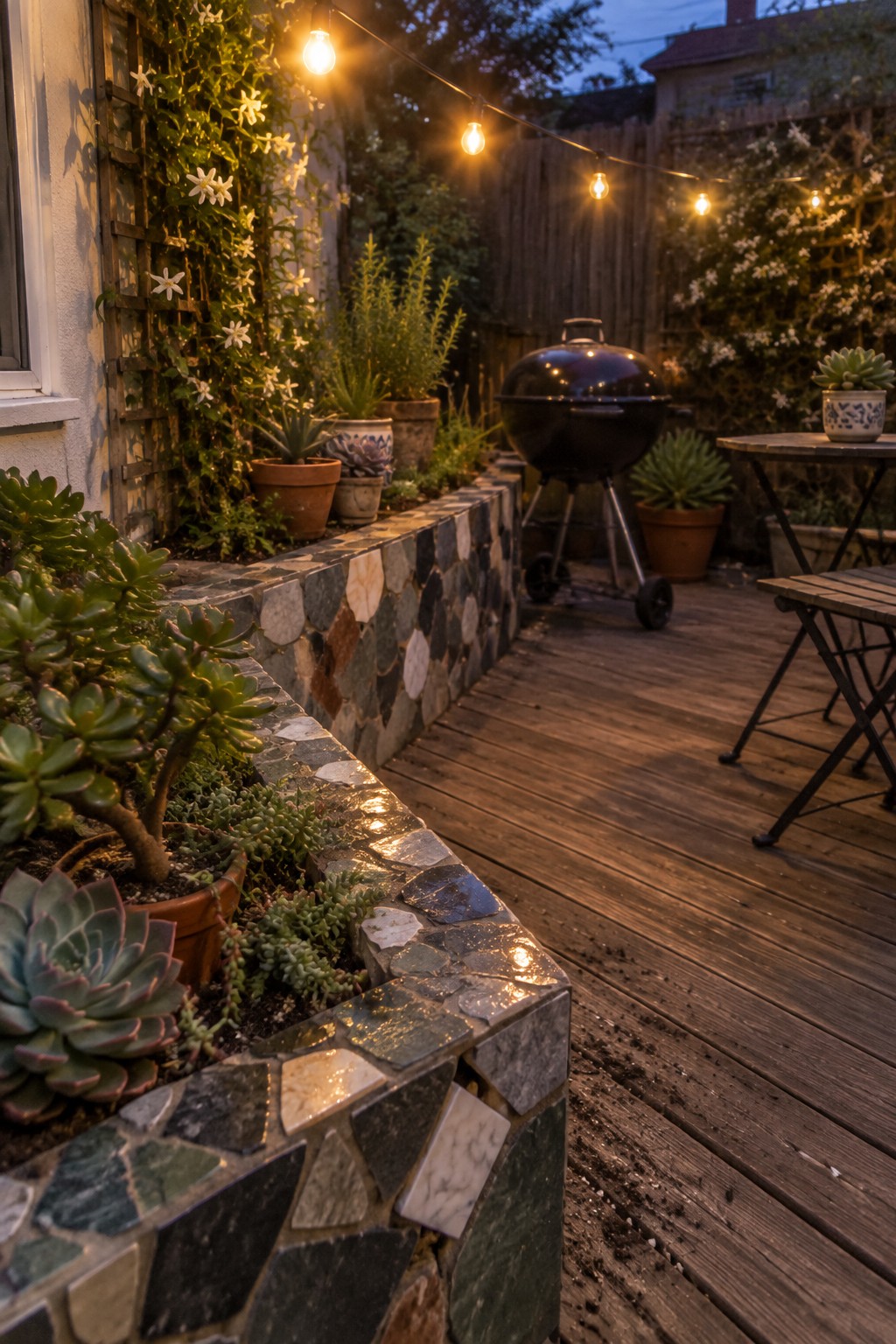
Mixed stone and tile edging gives garden beds a finished border that still feels casual. It works because the varied colors and shapes add interest without needing perfect alignment or expensive materials.
This approach suits homes with decks or patios where the beds sit right next to the wood. Keep the height low so the plants stay the focus and the border just defines the edge.
Large Stones Work Well As Natural Edging
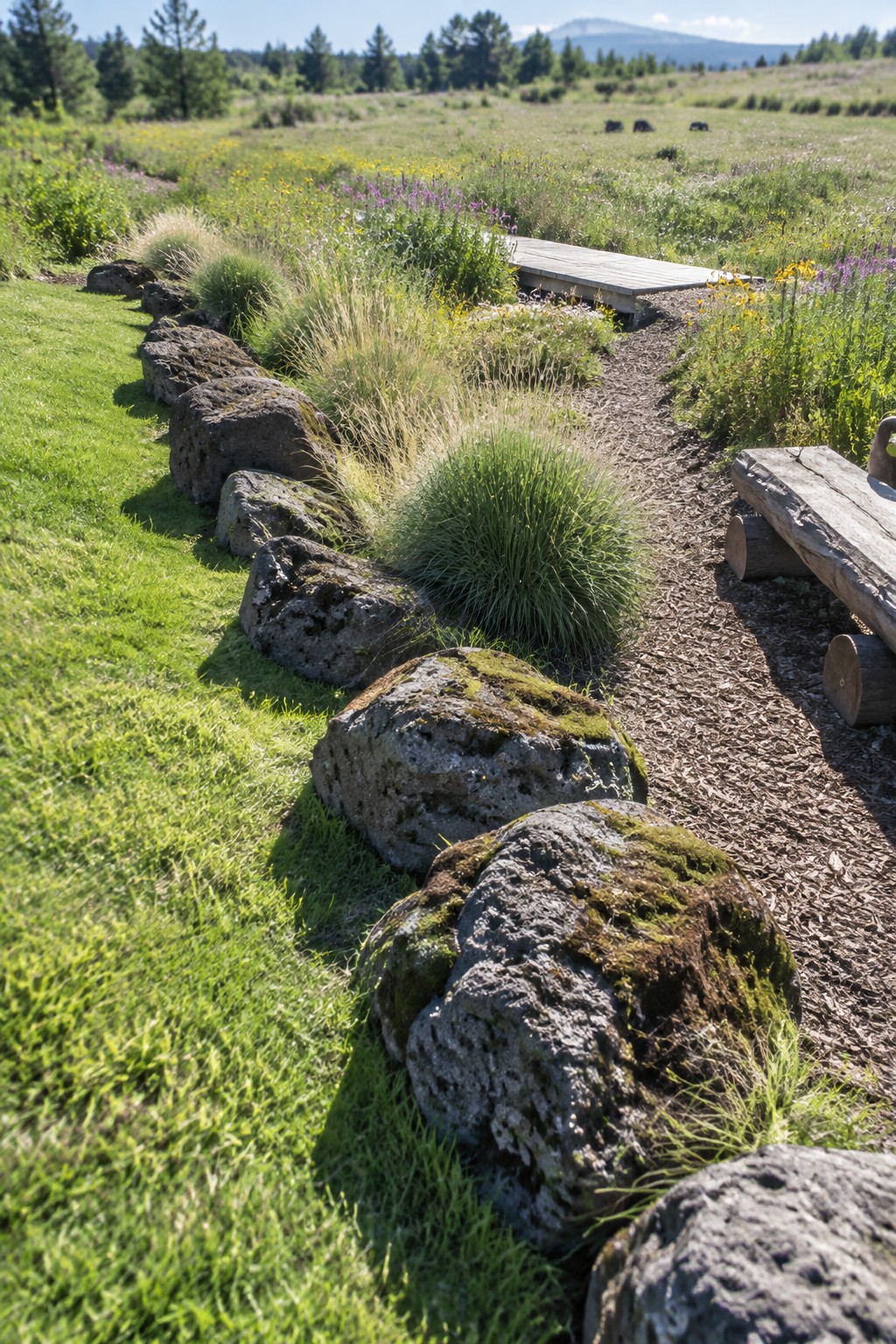
Large stones give a simple way to mark the line between lawn and path without adding any hard edges. They hold their place over time and blend into the surrounding grass and plants.
This edging suits bigger yards or meadow gardens where a loose, natural look matters more than straight lines. Set the stones at slightly different heights and let nearby plants soften the edges as they grow.
Brick Edging Along Stone Paths
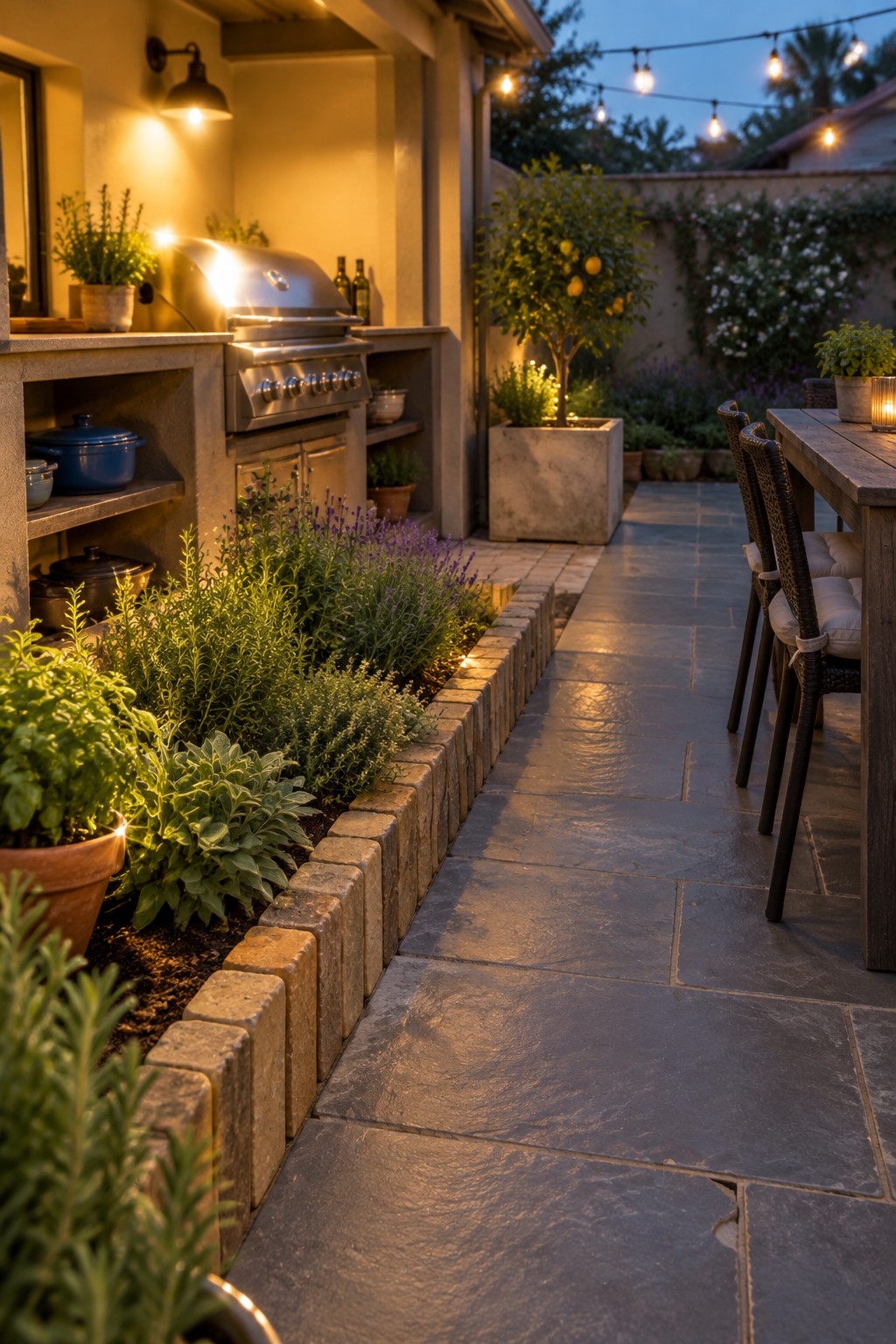
Brick edging keeps garden beds neat and contained next to a stone walkway. The low border stops soil from spilling onto the pavers and gives the plants a clear edge that holds up over time.
This style works best in smaller yards or along patios where you already have stone paving. Lay the bricks on their side for a low profile or stand them upright if you want a bit more height to hold back mulch or soil.
Stone Edging For Gravel Paths
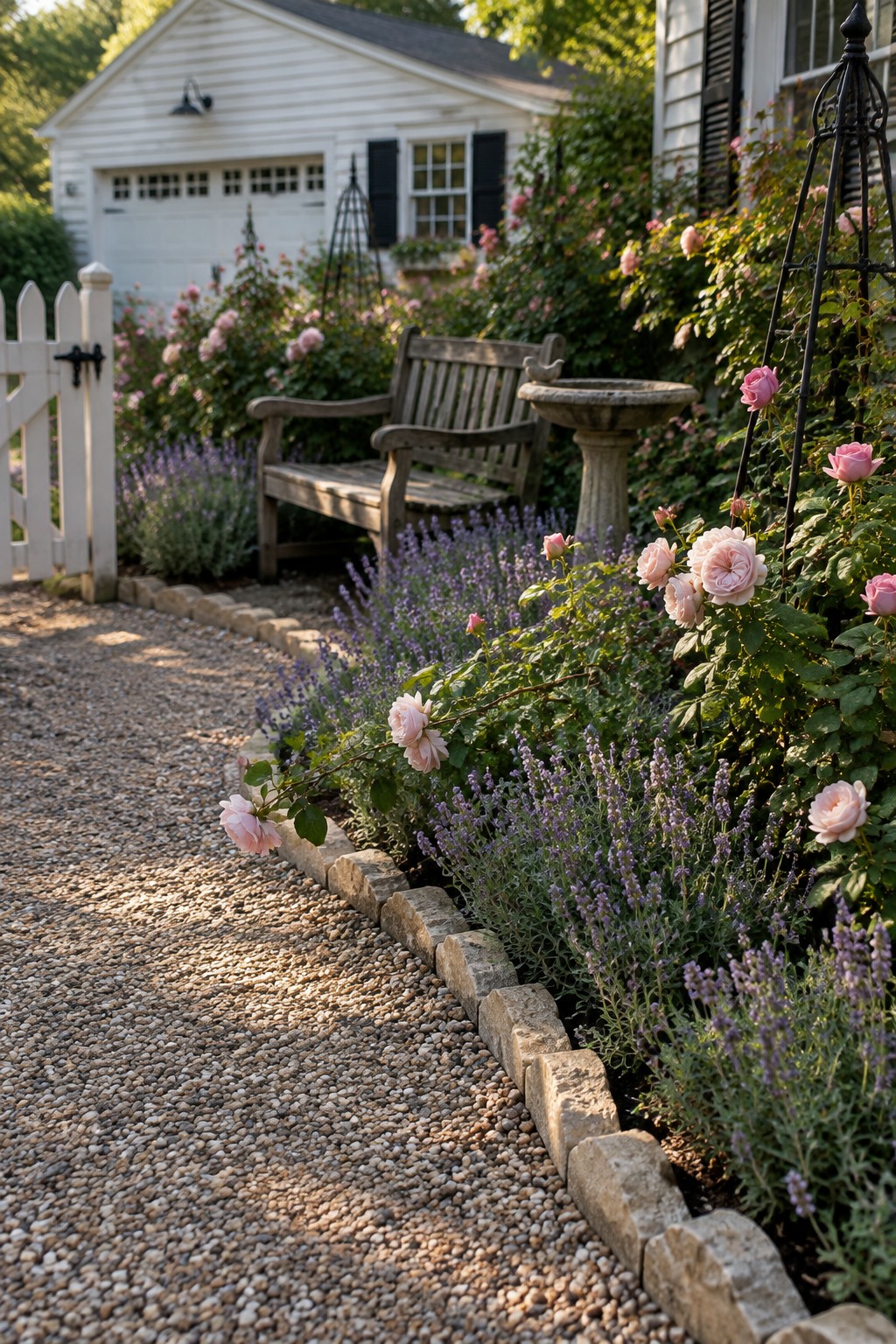
A low stone border does a good job of holding gravel in place while giving the beds a clean edge. It keeps everything looking tidy even when the plants grow a bit loose and full.
This works well on older properties or in cottage gardens where you want something simple and lasting. Set the stones level with the path so water drains properly and the edge stays straight over the years.
Brick Edging Along Gravel Paths
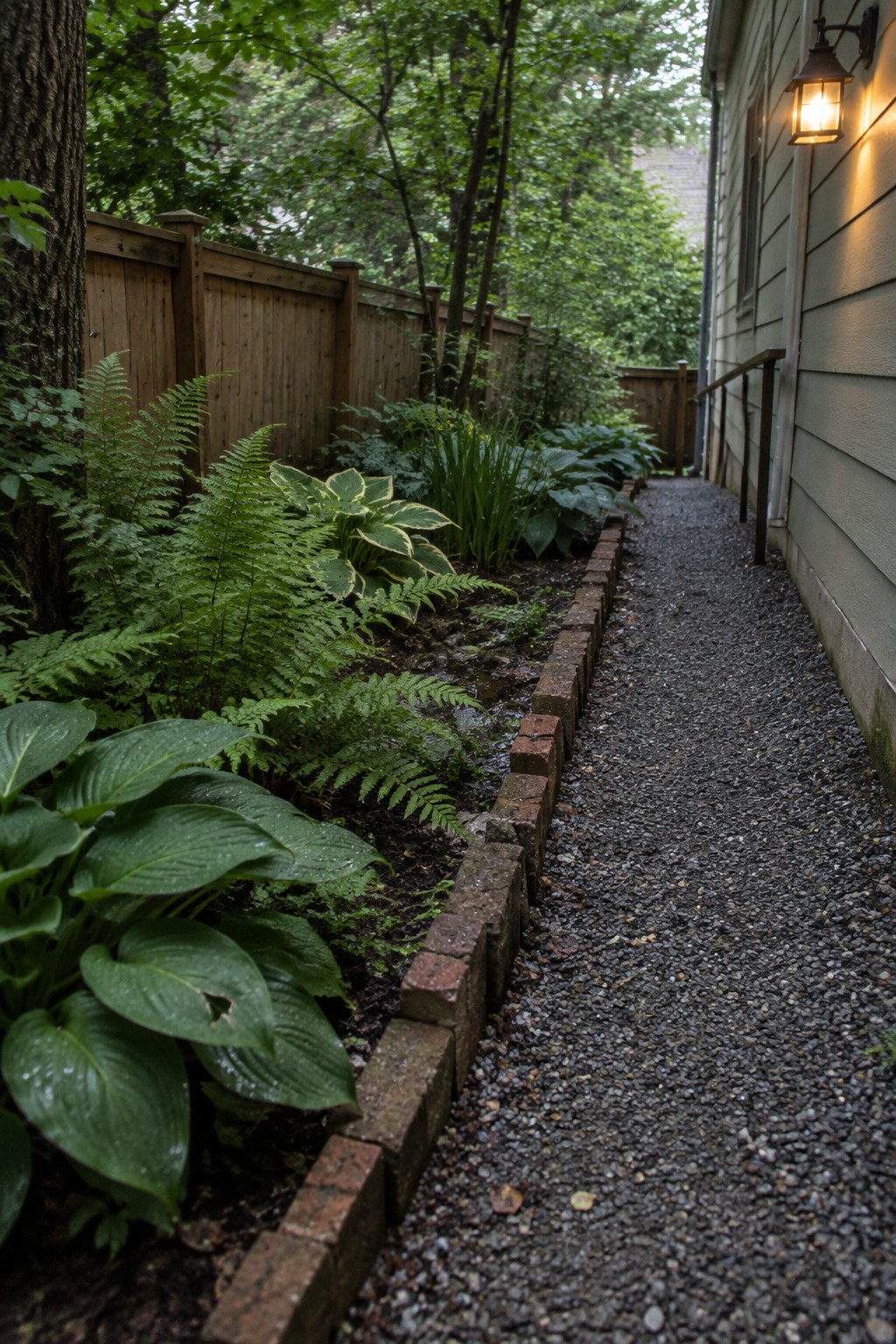
Brick edging gives a garden path a clean boundary that holds soil and mulch in place. It works especially well with gravel because the hard edge keeps loose stones from scattering into the beds while still letting water drain freely.
This style fits narrow side yards or shaded areas where you need simple structure without blocking light. Set the bricks low and level with the path so they do not create a trip hazard, and choose a color that blends with nearby stone or siding.
Brick Edging Along Stone Paths
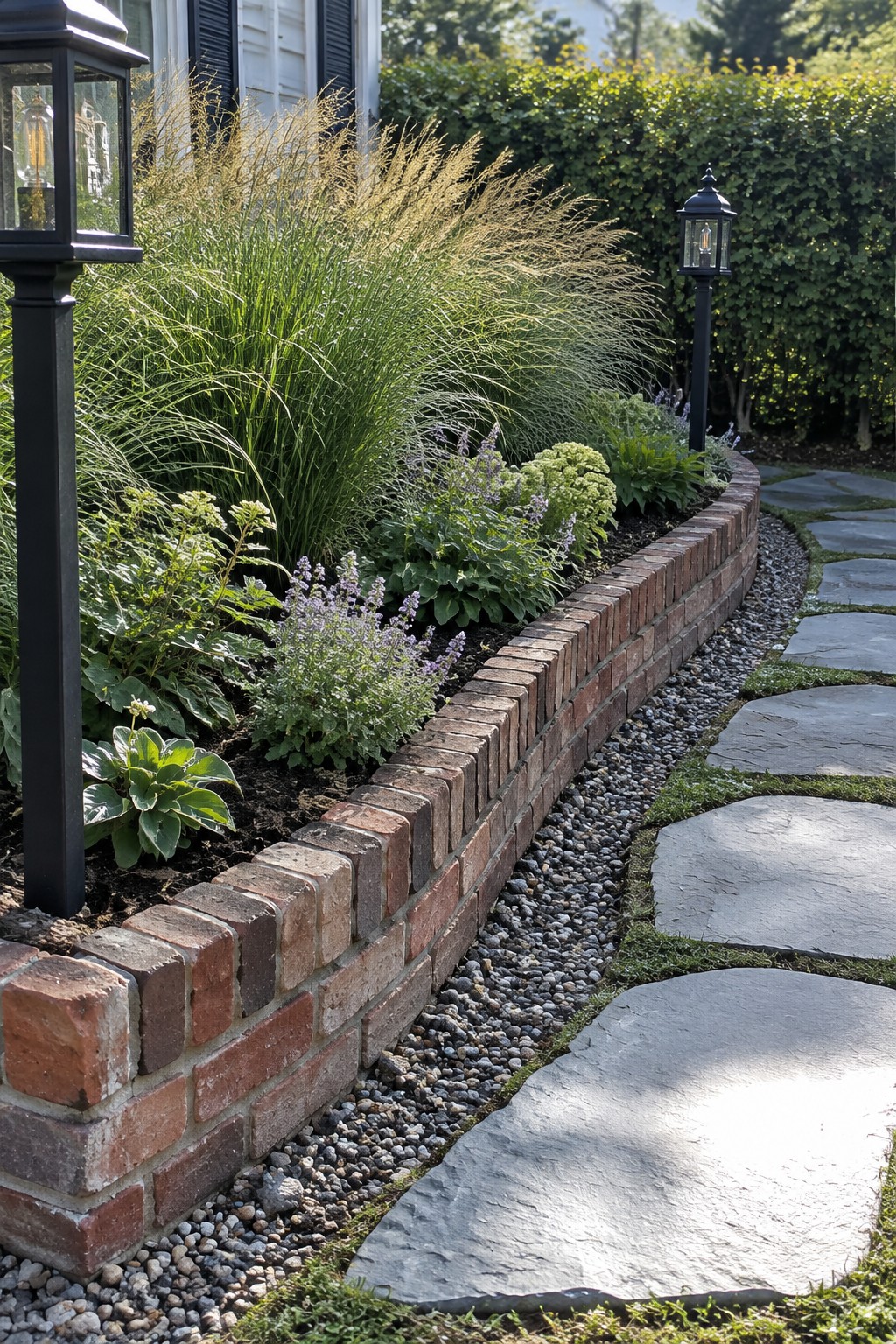
A row of bricks set upright makes a simple, solid edge for a garden bed. It holds the soil back cleanly and gives the whole border a finished look without feeling heavy.
This works well beside gravel or stepping stone paths because the brick adds just enough structure while letting the stones stay the main feature. It suits most homes with straight or gently curving beds and needs very little upkeep once it is in place.
Stone Edging Along Gravel Paths
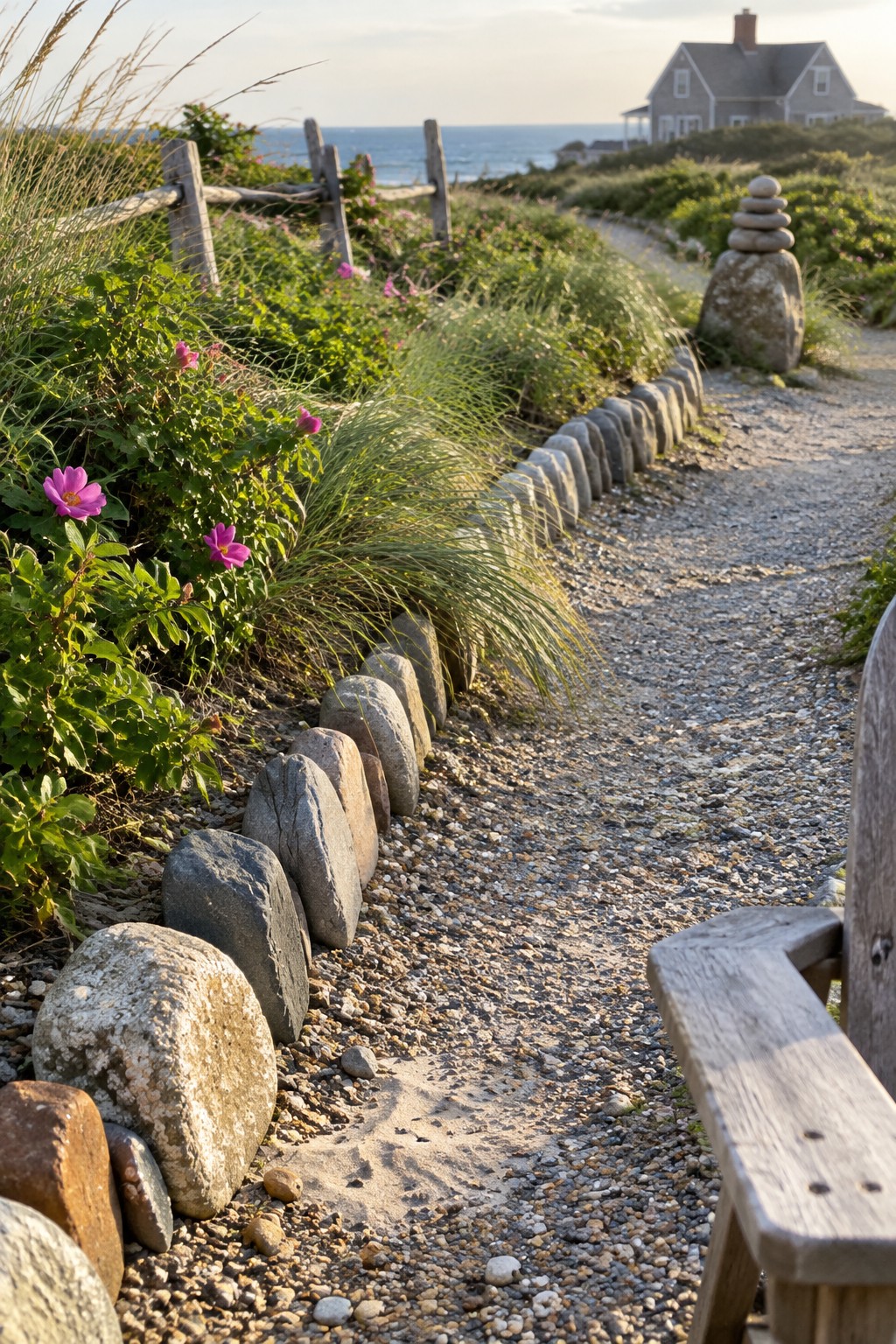
A row of stones makes a simple and sturdy edge for a gravel path. It keeps the gravel from spreading into the beds and gives the planting a clear border without needing fancy materials or straight lines.
This approach works best on sloped or sandy ground where you want something that blends with the landscape. Place the stones close together and vary the sizes a bit so the edge looks natural rather than built. It suits older homes and coastal gardens especially well.
Gravel And Stone For Defined Garden Paths
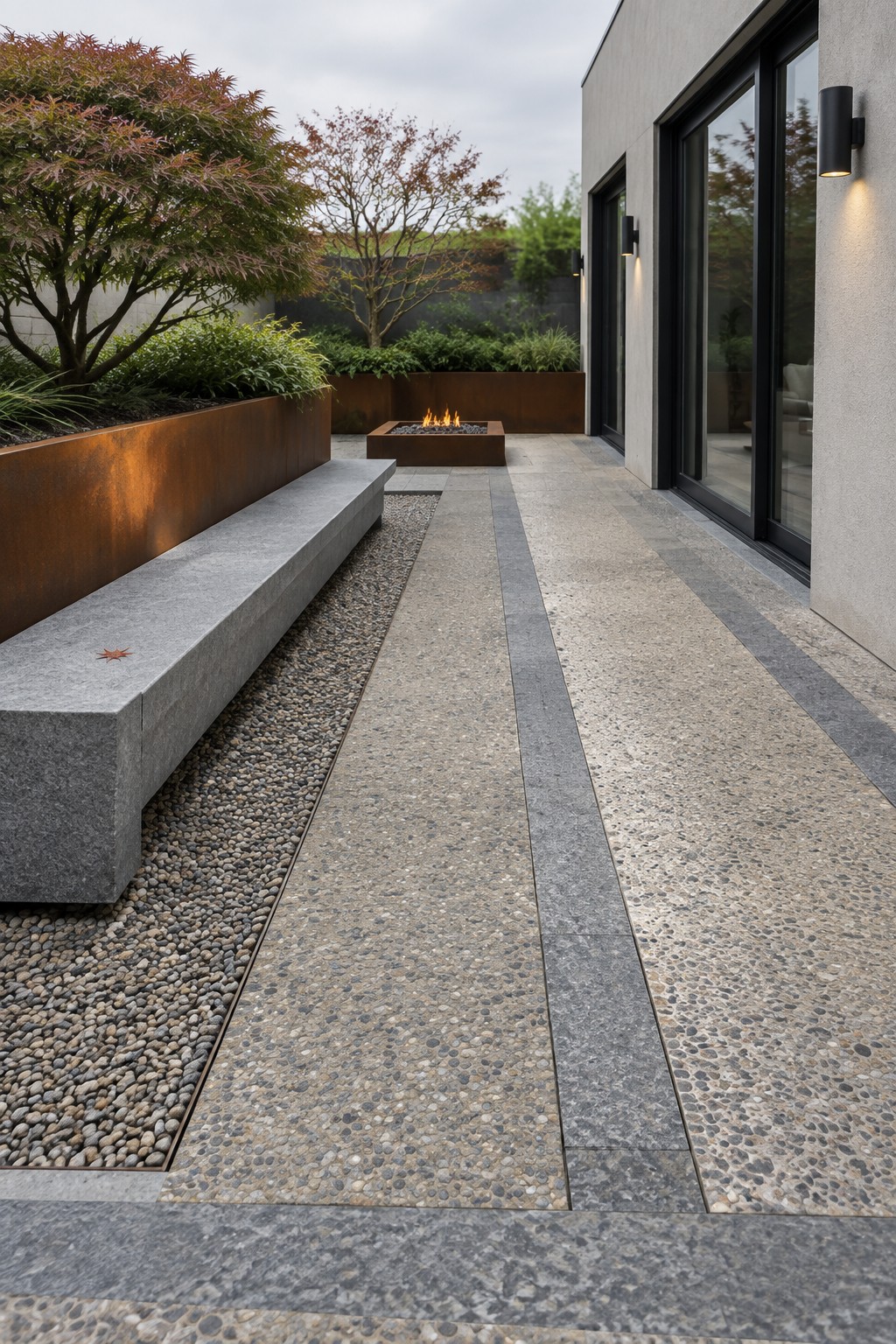
Laying gravel strips between wide stone pavers makes a simple path that stays neat with almost no upkeep. The contrast gives the walkway some texture while keeping the lines straight and easy to follow.
This approach works well in smaller yards or modern homes that already use metal or concrete in the landscape. Keep the gravel low and contained so it does not spill onto the pavers, and run the same material up to the edge of raised beds or seating.
Large Stones For Natural Garden Edging
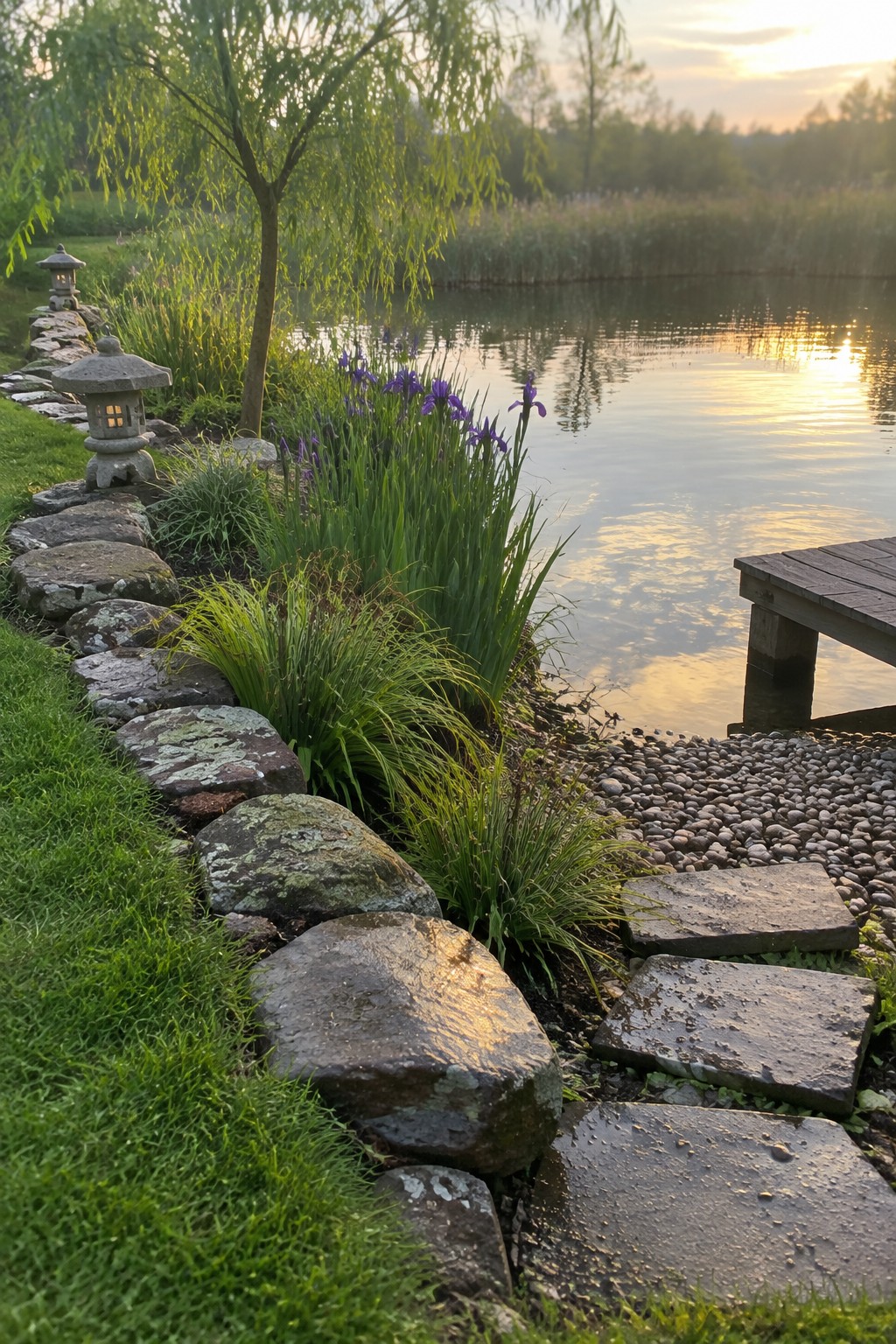
Large stones create a simple border that holds its shape without looking too formal. They work well along curves where the ground meets water or planting beds because they settle naturally and need little extra support.
Try laying them in a single uneven row to separate lawn from taller grasses and flowers. This style fits homes with casual yards and water nearby, though it helps to set the stones slightly into the soil so they stay put over time.
Vertical Stone Edging For Garden Beds
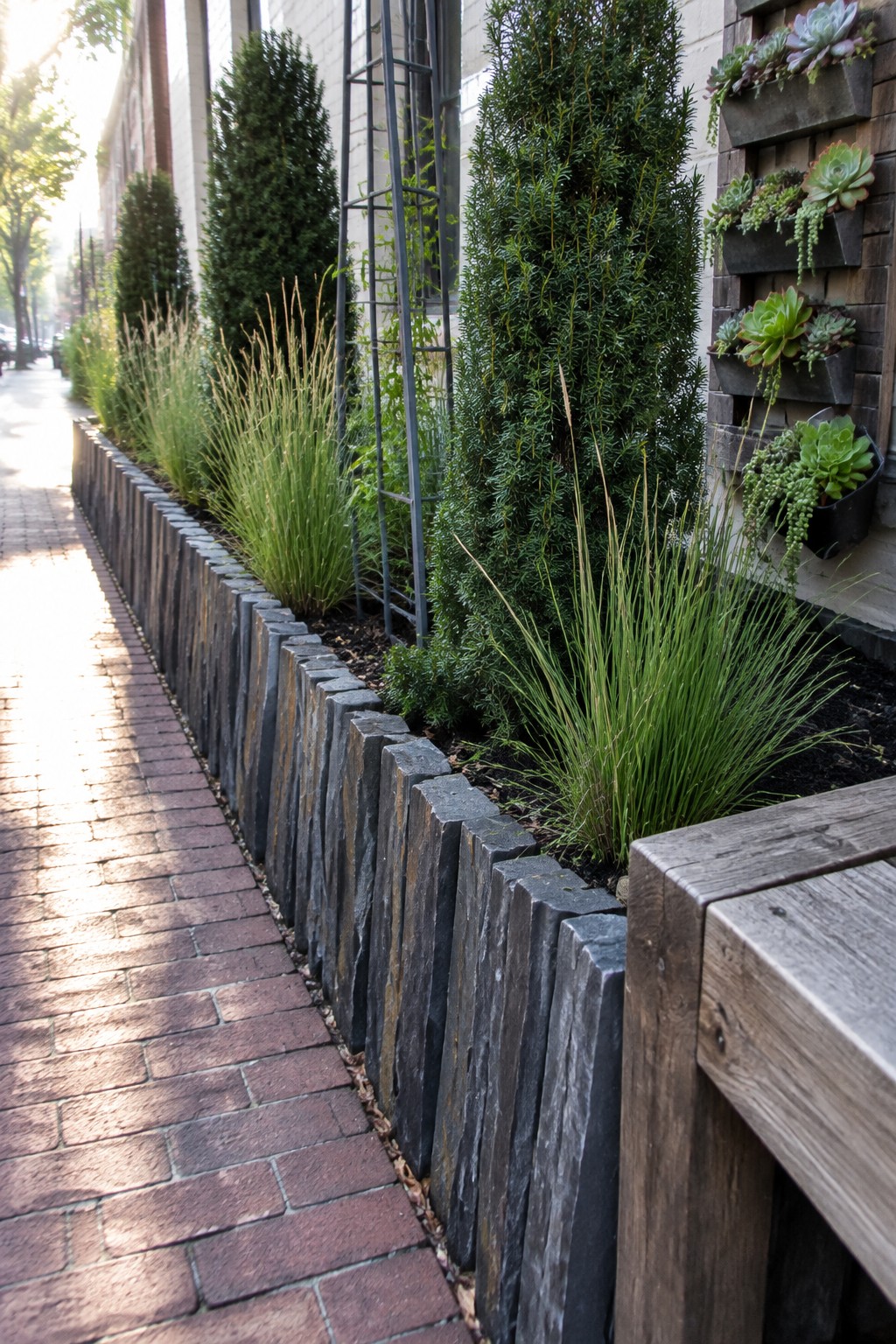
Setting stones upright along the edge of a bed gives a clear divide that holds soil in place and adds texture next to a walkway. The look feels natural and holds up well in spots that see regular foot traffic.
This style works best along straight or gently curving beds where you want something sturdier than thin metal strips. Sink the stones a few inches into the ground so they stay level over the seasons.
Stone Edging Along Brick Paths
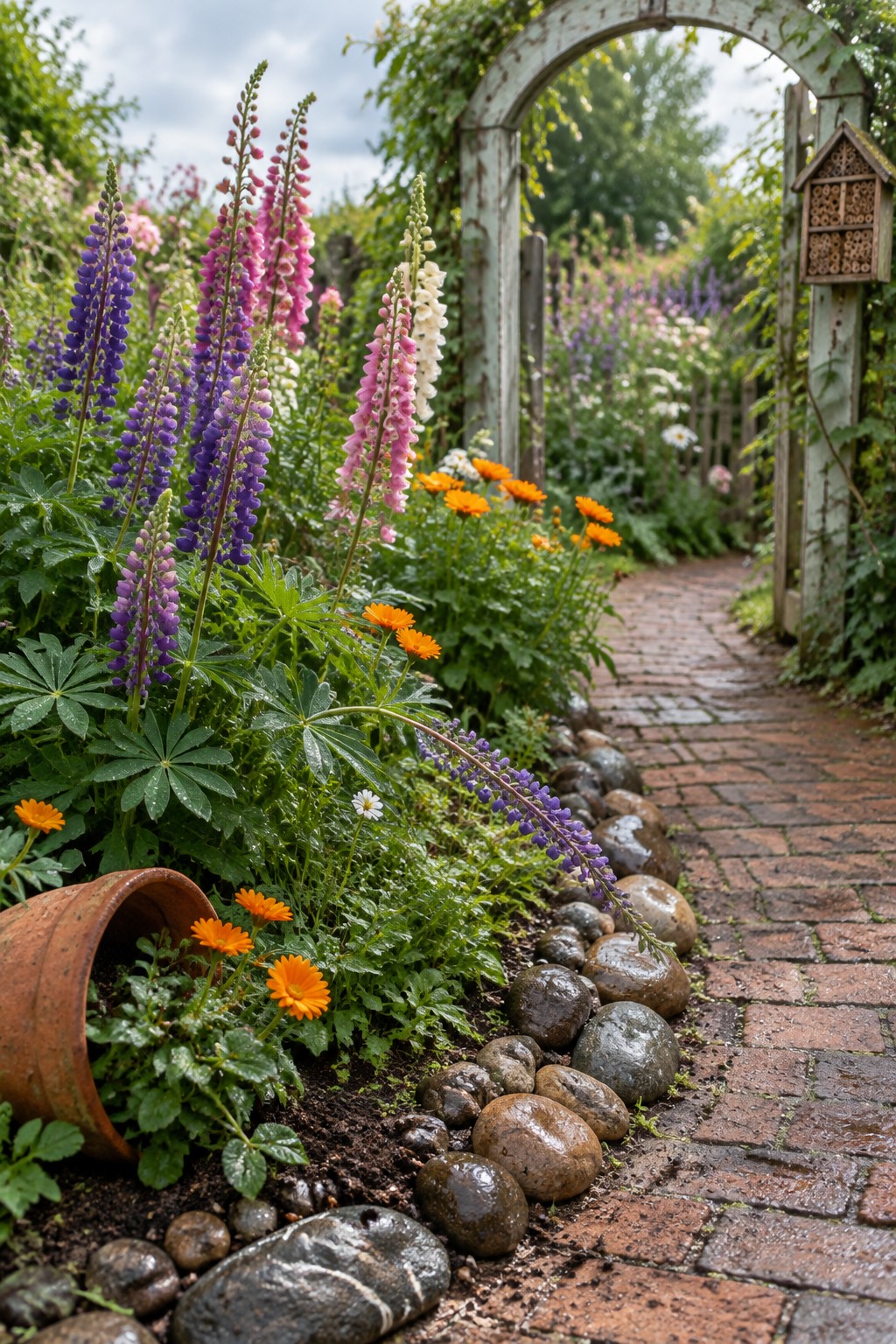
Rounded stones make a simple and sturdy edge where garden beds meet a brick walkway. They hold the soil in place while letting flowers spill over naturally without looking messy. This approach feels practical and keeps the path clear even after rain.
It works well in cottage style gardens or any spot where you want a low maintenance border that still looks intentional. Try matching the size of the stones to the width of your path so the whole thing stays balanced. Avoid very small pebbles if the area gets heavy foot traffic.
Frequently Asked Questions
Q: How do I stop the bricks from sinking over time?
A: Dig down at least six inches and pack a layer of gravel tight before you set the bricks. That base keeps everything stable even after heavy rain. Add some sand on top to lock them in place.
Q: What if my yard has a slope?
A: Step the edging down gradually instead of forcing it straight. You can cut the bricks at angles to follow the hill without big gaps.
Q: Will stone edging need much upkeep compared to brick?
A: Stone usually needs less fiddling once it’s set. Just pull weeds now and then and maybe reset a piece if frost heaves it. Brick can shift more so check it each spring.
