


I often find that a patio stays unused when the surface is just packed dirt or cracked concrete that no one wants to walk on.
Once I laid down a few paving stones in a test corner of my own yard I realized how much more comfortable it felt to sit outside without worrying about mud or weeds.
The right tiles or stones can also help with drainage so water does not pool after rain.
It makes the whole area feel more intentional.
Many of the ideas I have tried start with clearing the space and then testing different layouts before committing to a full pattern.
Lay Paving Stones Over Cracked Concrete
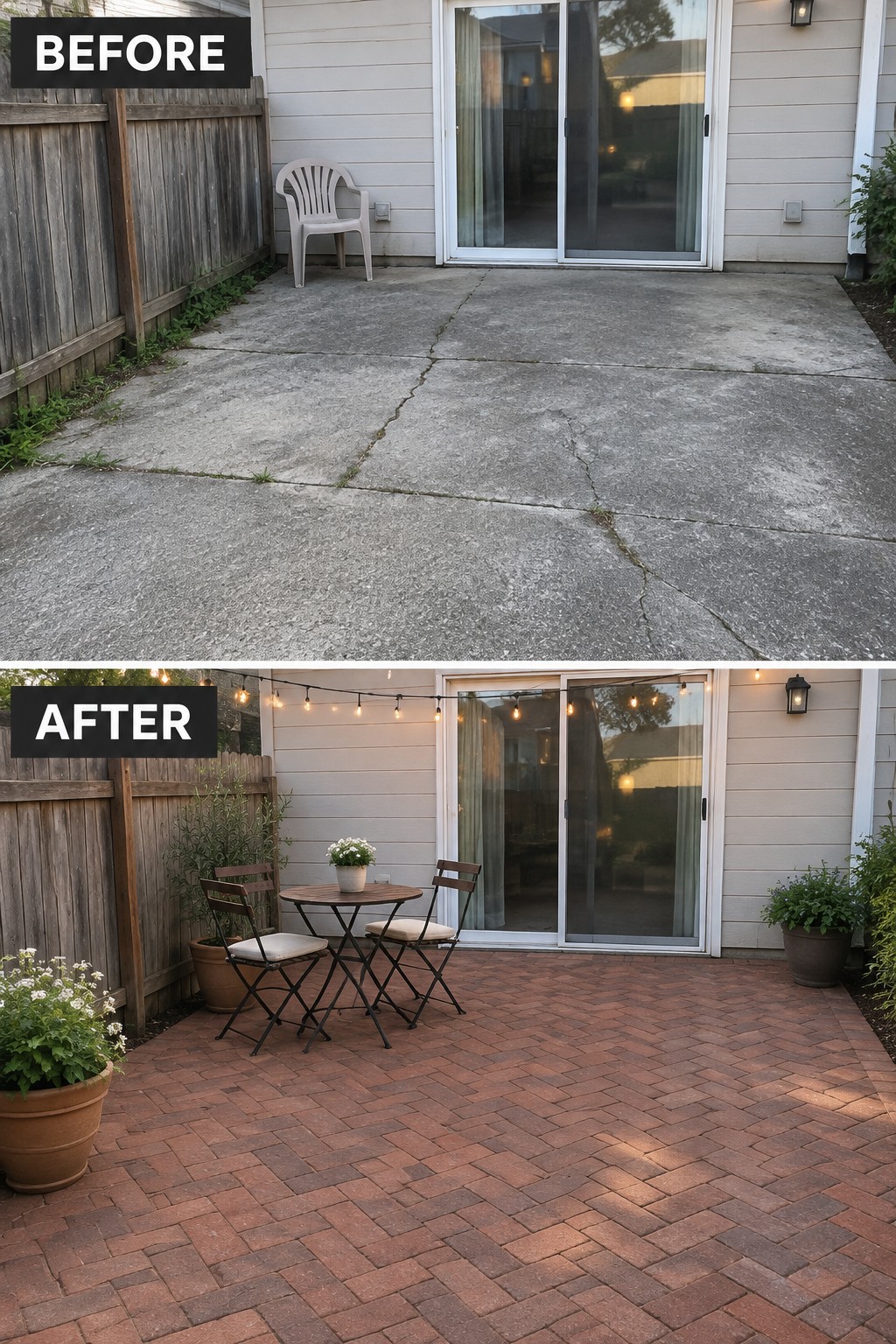
A cracked concrete slab often sits unused because it looks unfinished and feels neglected. Covering it with brick pavers gives the surface a clean, solid look and turns the area into a place where furniture can sit level and stay dry. The simple addition of a small table and two chairs shows how little extra is needed once the ground is properly covered.
This approach works best on patios that still have a stable base. Start by checking drainage and leveling, then choose pavers that match the color of your house or fence. Keep the layout simple, like a straight or herringbone pattern, so the job stays manageable for a weekend. The result is a patio that feels intentional instead of leftover.
Lay Patterned Tiles To Create A Balcony Seating Area

A bare concrete balcony often feels like wasted space because the floor looks unfinished and hard to keep clean. Laying patterned patio tiles over the old surface instantly changes that. The new tiles add color and structure, while a simple bench and a couple of pots turn the area into a spot where you can actually sit.
This approach works well on small balconies or terraces where you want to define the floor without building anything new. Choose tiles rated for outdoor use, make sure the surface underneath is level, and keep the rest of the space light so there is still room to walk around.
Use Paving Stones To Create A Fire Pit Patio
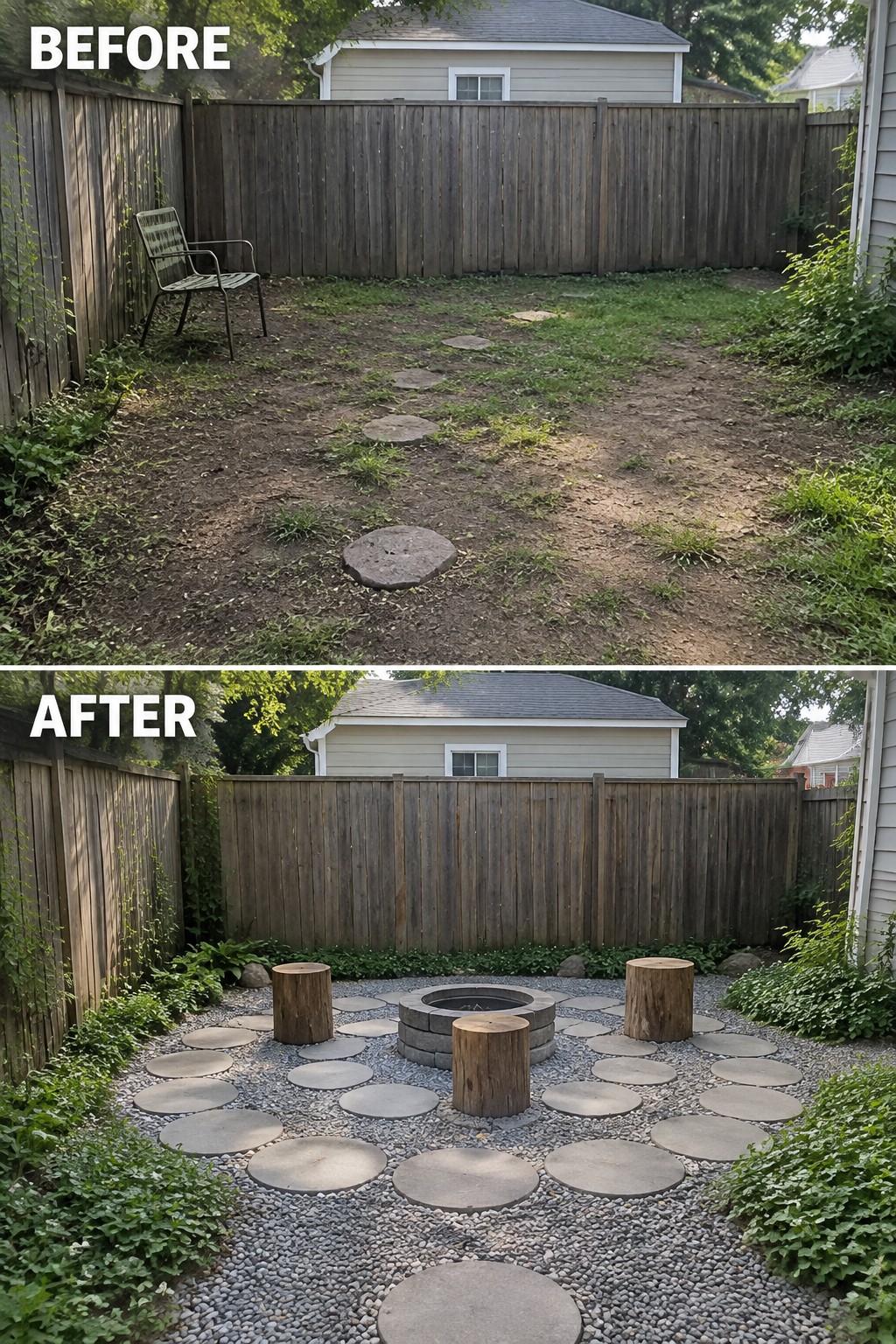
A bare backyard with patchy grass and a few loose stepping stones feels unfinished and hard to use. Adding a ring of concrete pavers around a simple fire pit, then filling the rest with gravel, gives the space clear shape and a solid surface for seating. The change turns an open dirt area into a place where people can actually sit and gather without sinking into mud or weeds.
This idea works well in smaller yards where you want one main spot for outdoor time rather than trying to pave everything. Start with the fire pit as your center point, then lay pavers in a loose circle or path around it. Gravel keeps costs down and still gives good drainage. Just make sure you leave enough open space between the seating and the edges so the area does not feel cramped.
Replace Damaged Pavers To Make Your Patio Usable
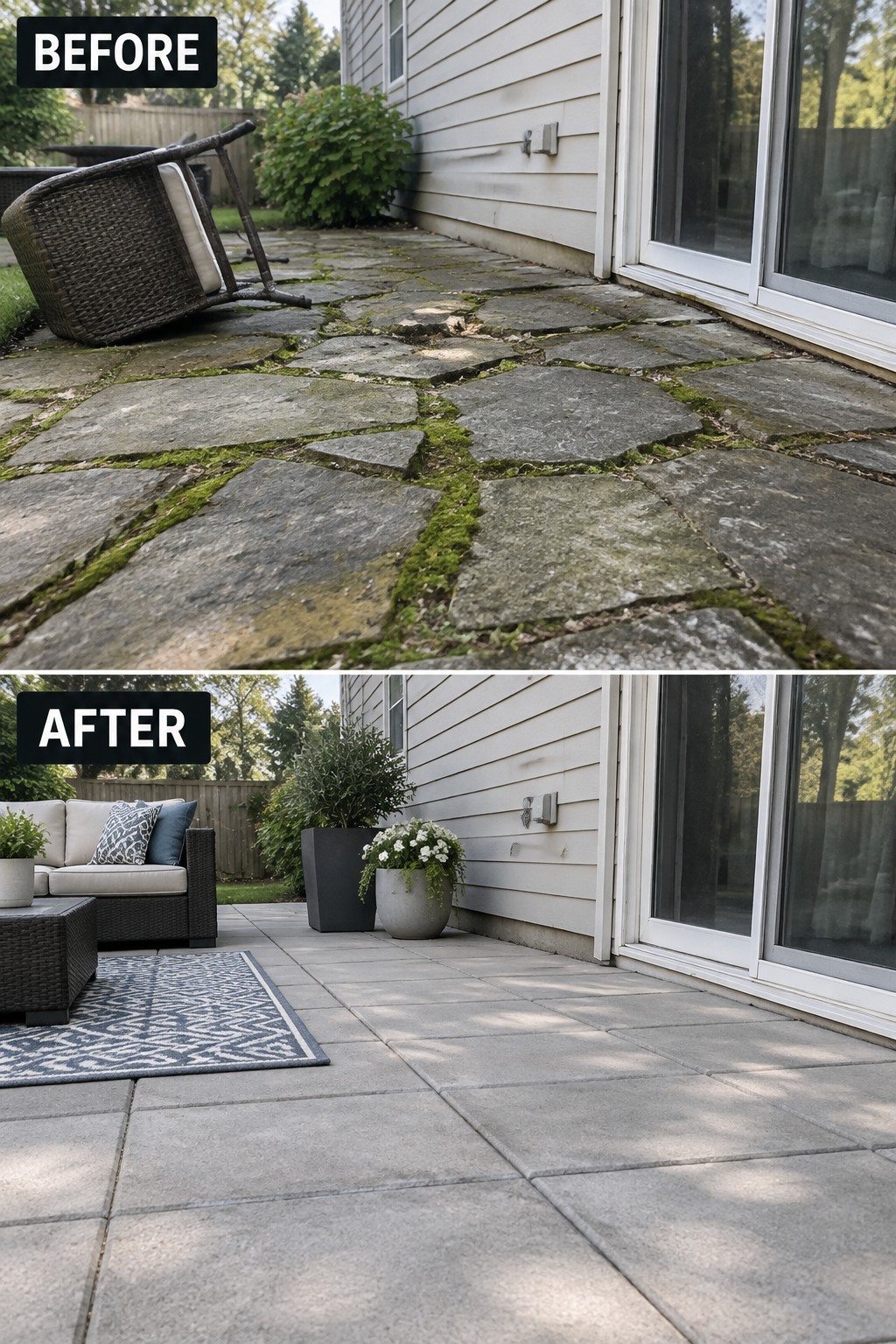
The biggest change here is swapping out the old cracked stones covered in moss for a solid new surface of uniform gray pavers. That single step turns a space that was hard to walk on and impossible to use into a level area that can actually hold furniture and daily traffic.
This approach works well on any patio where the original stones have shifted or grown slick. Focus first on pulling up the broken sections and laying a stable base before setting the new tiles. Once the surface is solid, you can add seating and a couple of planters without worrying about uneven ground or ongoing weeds.
Use Paving Stones To Turn A Plain Patio Into An Outdoor Room
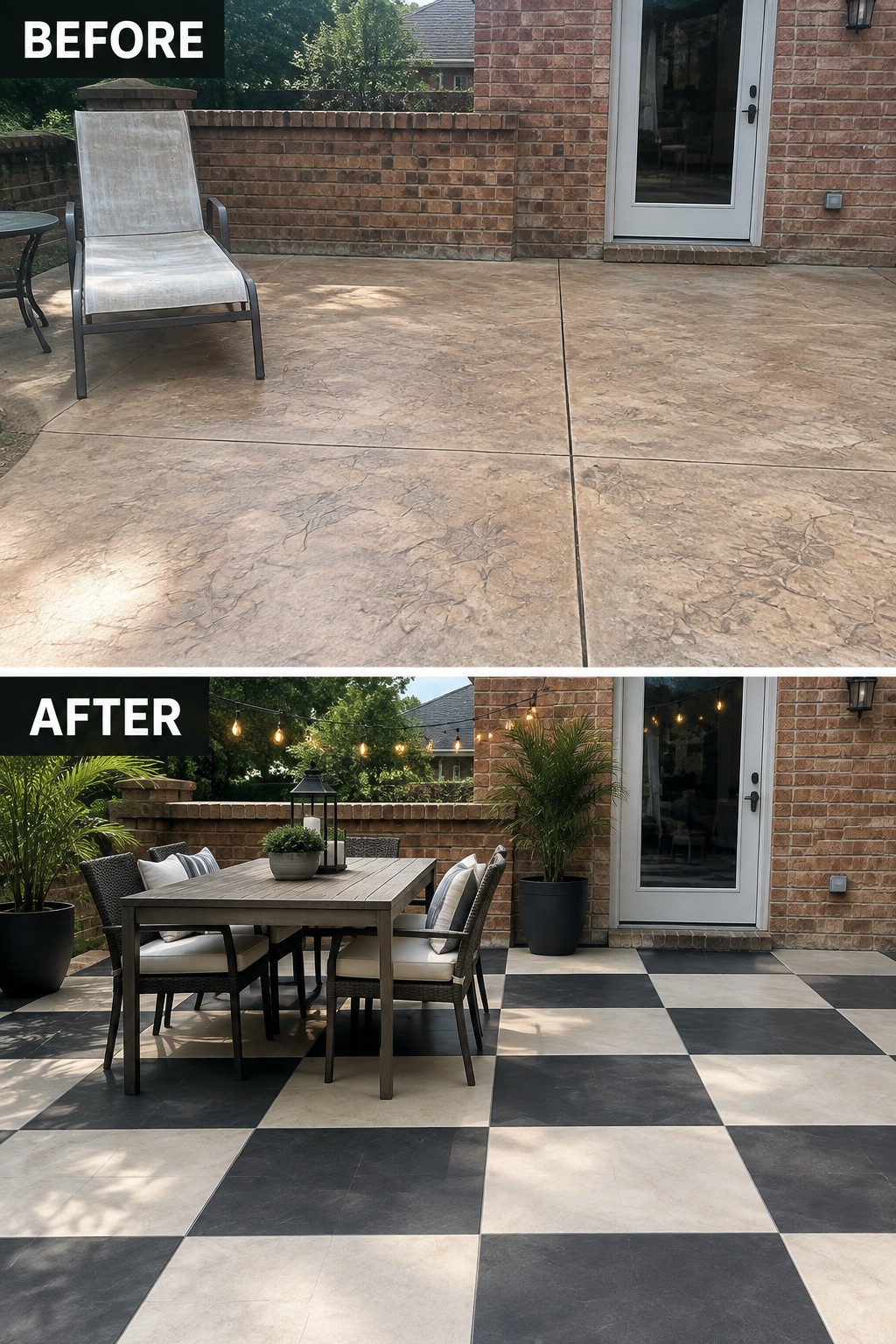
A large empty concrete slab often feels like wasted space. Switching to a checkered pattern of dark and light paving stones instantly gives the area structure and makes it read as a finished room instead of leftover concrete. The new surface also creates a clear boundary that tells you where the seating zone begins.
This approach works best on patios that already have good sun or partial shade and just need definition. Start with the paving stones first, then add a dining table or lounge set sized to fit the new grid. Keep a couple of large planters and simple string lights so the space feels usable at night without crowding the tile pattern.
Use Pavers To Straighten Out A Narrow Side Path
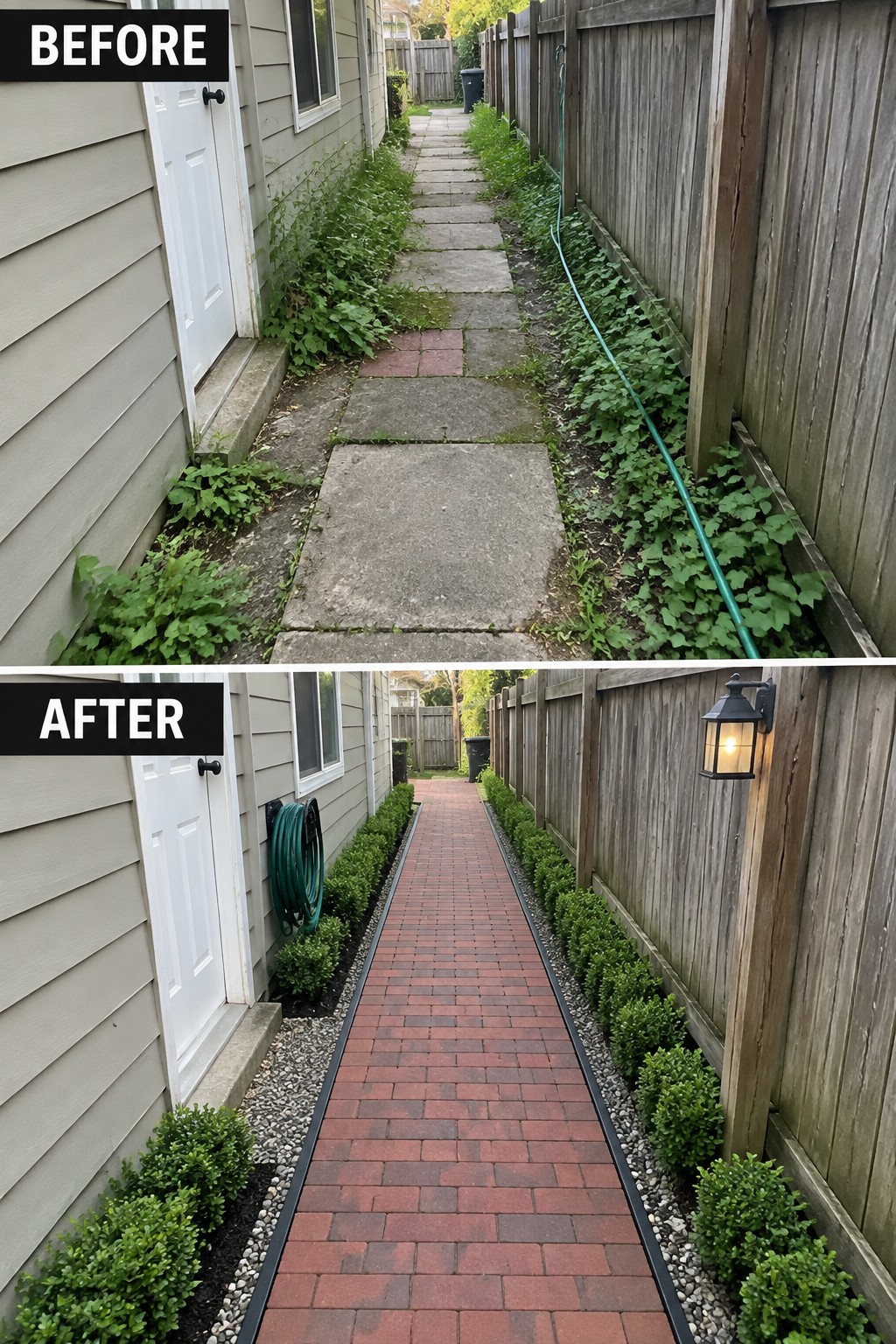
A narrow side yard often ends up as a forgotten strip of weeds and broken concrete. Laying a straight run of brick pavers gives the space a clear purpose and makes it feel wider and intentional. The gravel borders on both sides keep the path contained and stop the plants from creeping back in.
This approach works well on any tight corridor between a house and fence where you need access but do not want lawn or mud. Start with a solid base and keep the planting simple, such as low boxwood or similar shrubs, so the path stays the main feature. Avoid crowding the edges if the space is less than four feet wide.
Repair A Damaged Pool Deck With Paving Stones
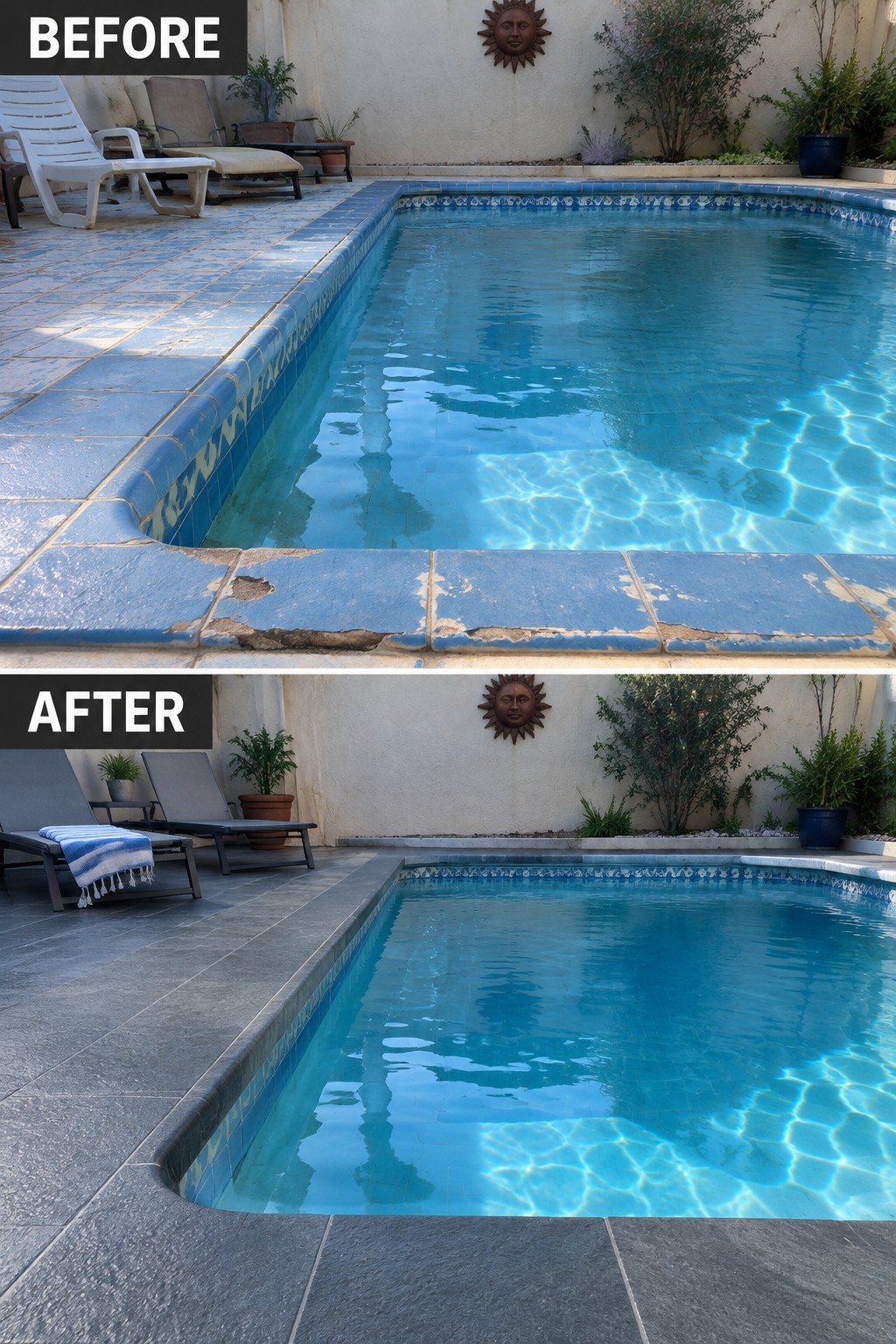
The biggest change here is swapping out the cracked and peeling blue tiles around the pool for solid dark paving stones. That one swap removes the safety hazard and gives the whole area a cleaner, more finished look without needing a full pool renovation.
This approach works well on older concrete or tiled pool decks where the coping has started to break down. Start by removing the loose material, then lay new stones that can handle constant water exposure and foot traffic. It keeps the focus on function while making the space feel updated.
Use Paving Stones To Create A Fire Pit Patio
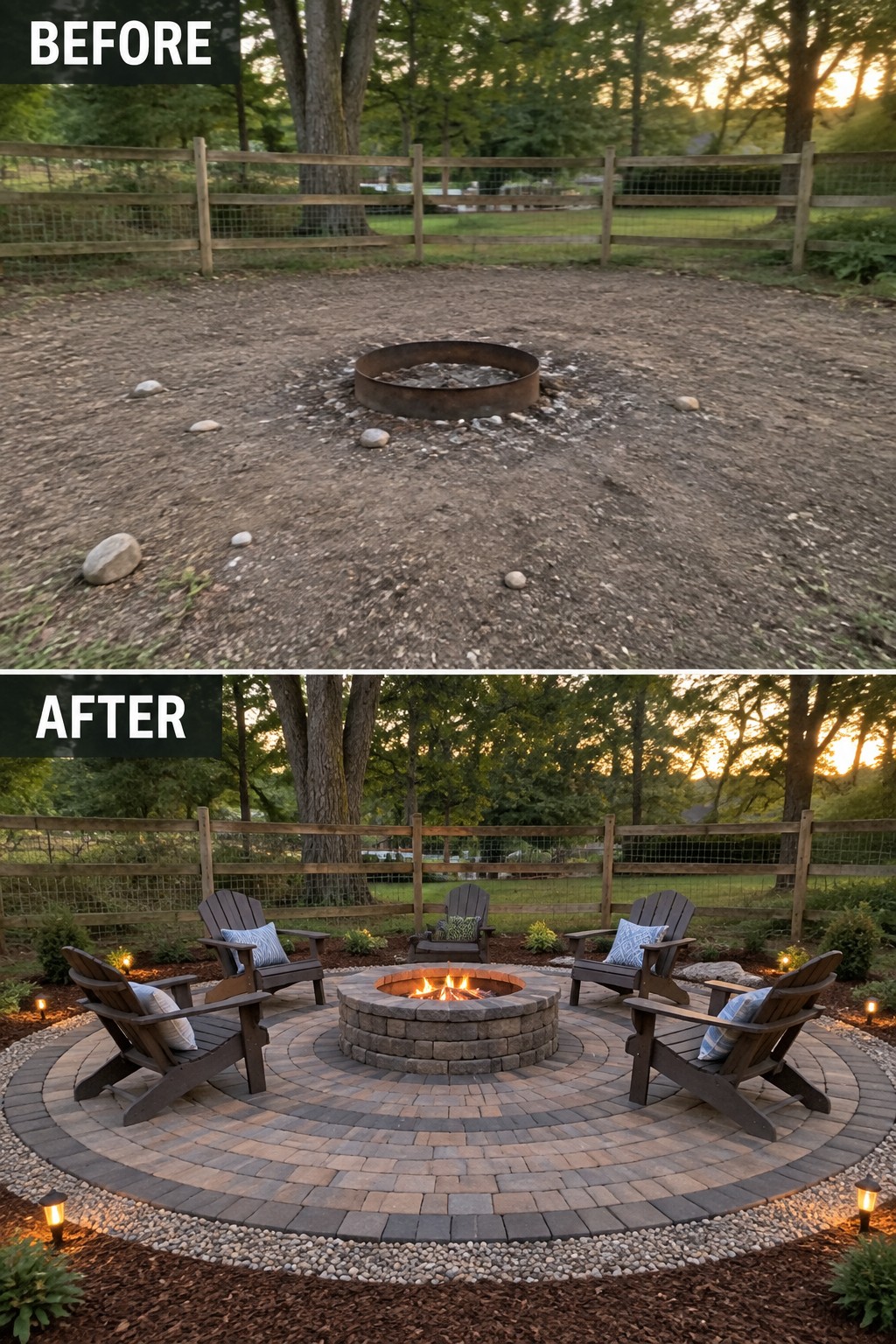
Laying a circle of paving stones turns a bare patch of dirt into a usable outdoor room. The before photo shows just a metal fire ring sitting on open ground, while the after shows a proper stone patio that gives the fire pit a clear center and a place for chairs to sit level.
This idea works best in backyards that already have a fire pit but lack a finished surface. Start with a simple circular layout that leaves enough room for four to six chairs, then add a gravel border if you want to keep the edges tidy without much planting.
Lay Patterned Patio Tiles To Create A Usable Outdoor Room
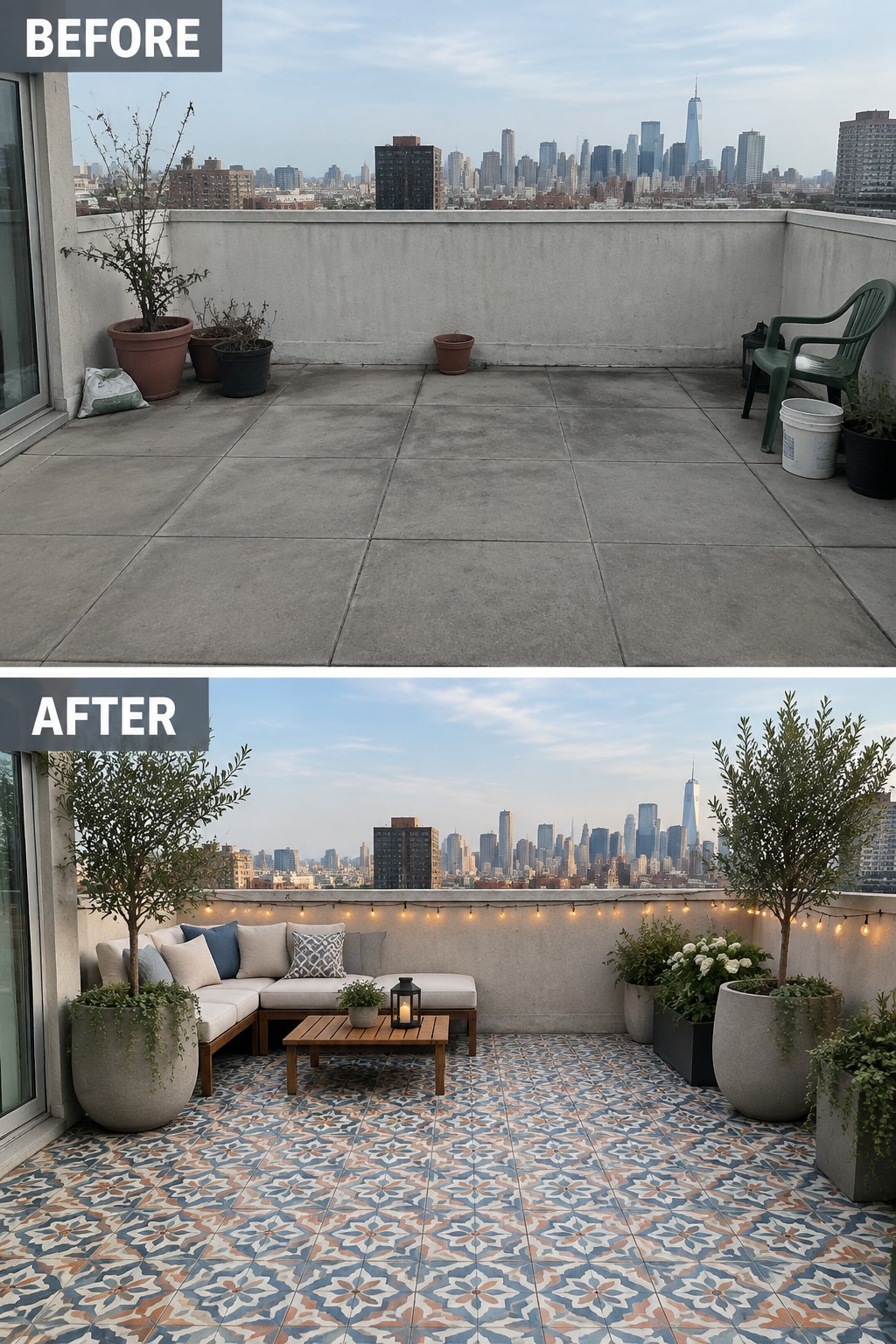
Covering plain concrete with patterned tiles gives an empty patio a clear purpose. The before photo shows a flat gray surface with just a few scattered pots and one plastic chair. Once the tiles went down, the space suddenly felt like an outdoor floor instead of a leftover rooftop slab. A sectional and coffee table fit naturally on the new surface and made the area feel ready for sitting.
This idea suits rooftops, terraces, and any concrete pad that needs more structure. Choose weather-safe tiles with a pattern that can handle sun and rain, then keep the furniture scale modest so the floor does the main work. It is an easy first step before adding lights or plants.
Refresh A Tired Patio With New Patterned Tiles

An old patio with faded, stained tiles often makes the whole space feel neglected. Replacing the surface with fresh geometric paving stones gives the area a clean, updated look and instantly makes it more inviting for seating. The new pattern also helps tie the furniture arrangement together without needing lots of extra pieces.
This idea works best when the existing base is still solid and you want a noticeable change without a full rebuild. Stick with outdoor-rated tiles, keep the pattern simple, and match the scale of the new surface to your seating area so there is still room to move around comfortably.
Use Paving Stones To Create A Clear Patio Zone
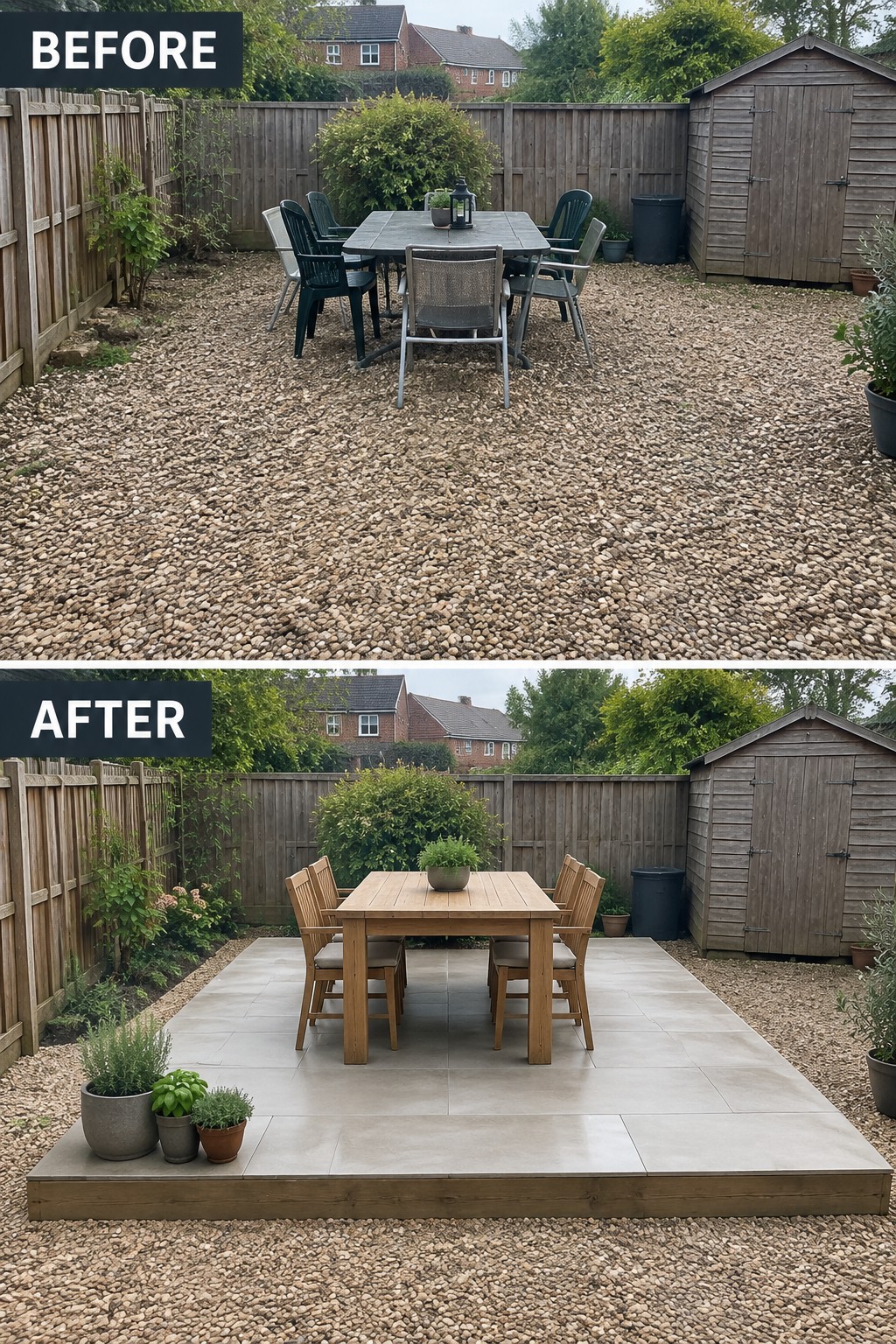
A loose gravel yard often feels unfinished even when you already have a table and chairs out there. Laying down patio tiles or paving stones gives the space a solid floor, which instantly makes it feel like a real room instead of just open ground. The wooden border in the after photo also helps contain the area and keeps the gravel from creeping back in.
This approach works well in backyards where the ground is uneven or mostly covered in gravel. Start by marking out the size you actually need for seating and walking around the furniture. Keep the paved section simple and rectangular so it stays easy to build and maintain over time.
Replace Cracked Tiles To Refresh Your Porch

A cracked and uneven porch surface makes the whole entry feel neglected. Swapping the old damaged tiles for new gray paving stones with a dark border instantly gives the space a solid, finished look. The change turns a worn spot into a clean platform that feels ready for daily use.
This approach works well on any front porch or small patio that gets steady foot traffic. Start by removing the broken tiles completely, then lay new ones with a contrasting border to define the edges. Adding a pair of simple planters on each side helps frame the doorway without crowding the space.
Use Patio Tiles To Define A Seating Area
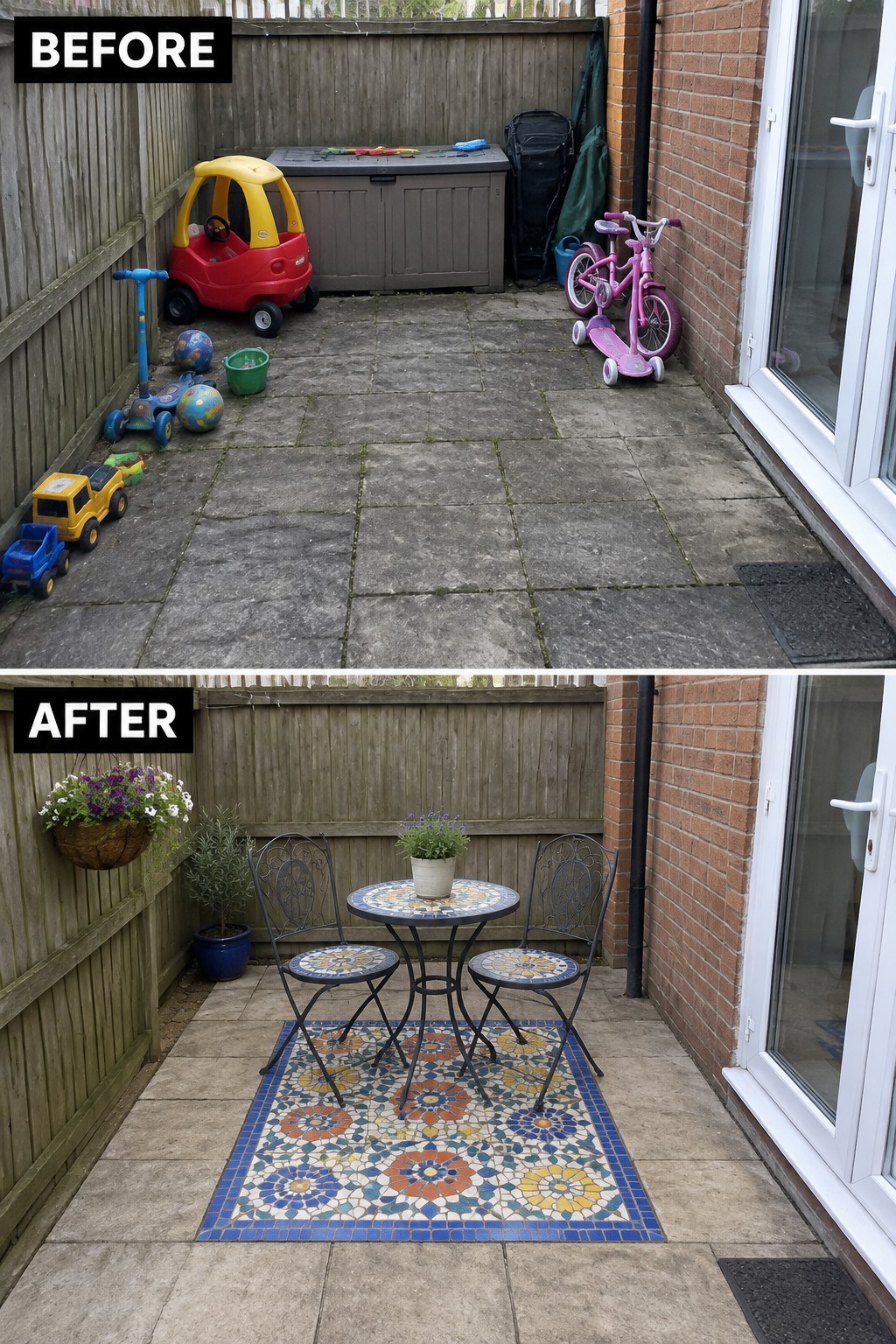
A plain concrete patio can feel like wasted space until you give it a clear spot for sitting. Adding a section of patterned tiles works like an outdoor rug and pulls a small table and chairs into one tidy zone. The change turns an open, scattered surface into a place that actually invites you to stop and stay awhile.
This idea suits small backyards or side patios where a full furniture set would feel too big. Keep the tile square modest in size, choose a simple repeating pattern, and pick outdoor-grade pieces that can stay out year-round. Leave enough walking room around the edges so the seating area feels open instead of crowded.
Refresh A Neglected Patio With New Paving Stones
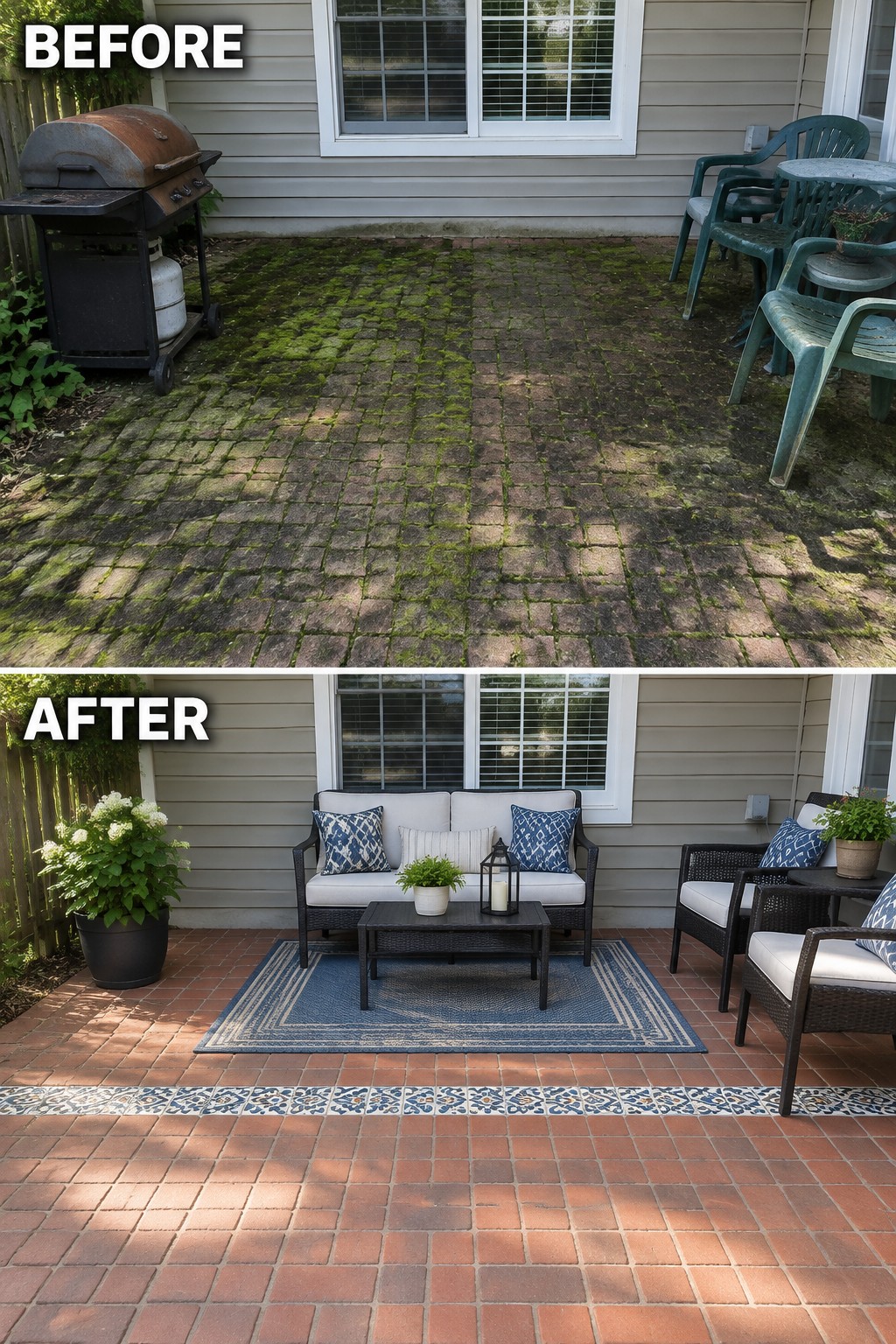
The biggest change here came from replacing the old mossy bricks with a clean red paver surface. Once the ground felt solid and fresh, adding a simple rug and a few pieces of furniture turned the space into an actual place to sit instead of just a walkway.
This approach works well on any patio that has grown dingy over time. Start by fixing the surface first so the area feels intentional, then keep the furniture layout simple with one rug to mark the seating zone. It suits homes where the patio sits right off the back door and gets regular use.
Use Paving Stones To Turn Bare Concrete Into A Seating Area
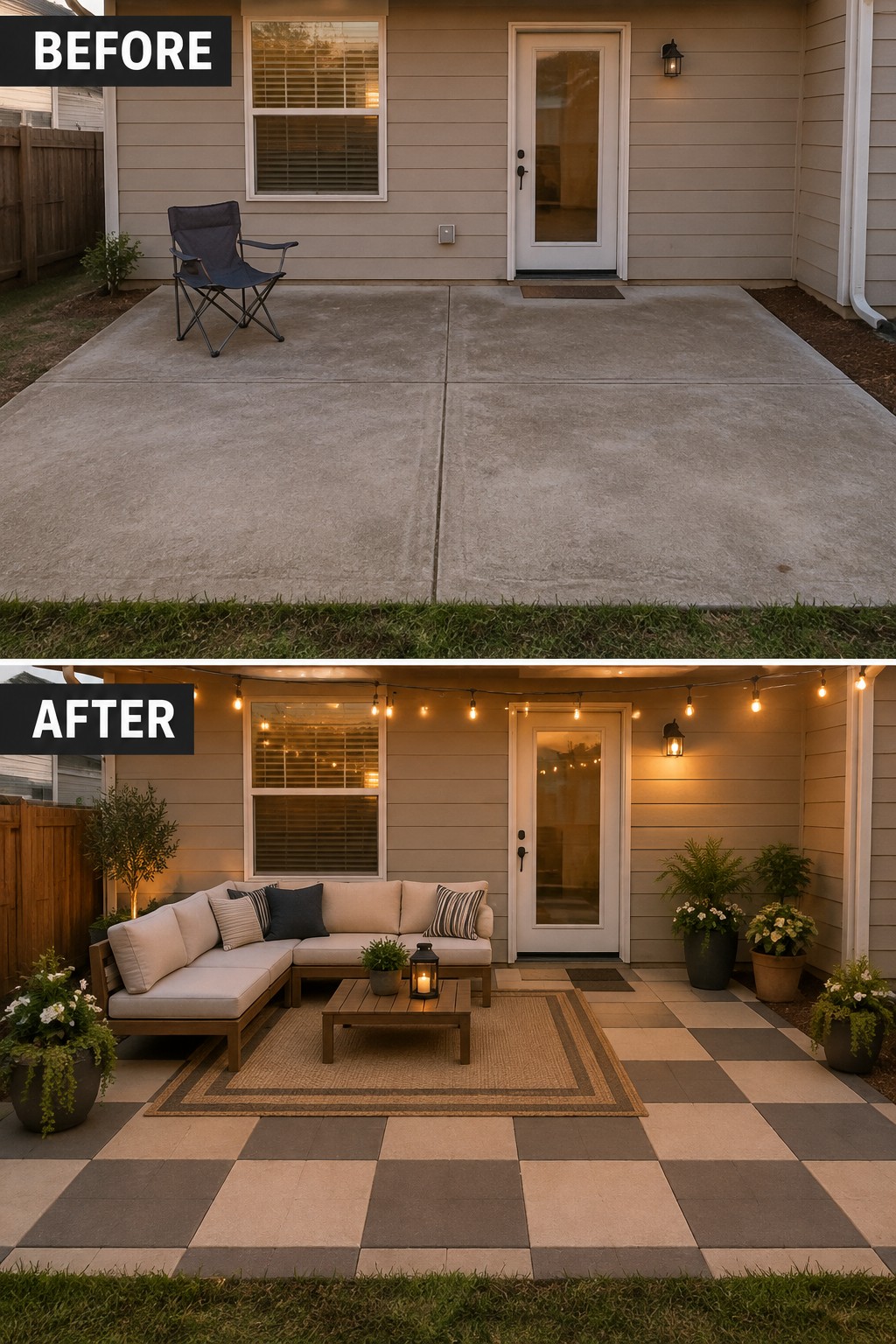
The main improvement comes from replacing the plain slab with a checkerboard pattern of paving stones. That one change gives the space clear boundaries and makes it feel like a real room instead of just an empty pad.
This idea works well on any flat concrete area that sits unused. Pick durable outdoor tiles in two tones, keep the layout simple, and place a rug and seating in one section only. That keeps the rest of the patio open for walking through while still giving you a spot that feels finished.
Lay Uniform Pavers To Refresh An Old Patio Circle
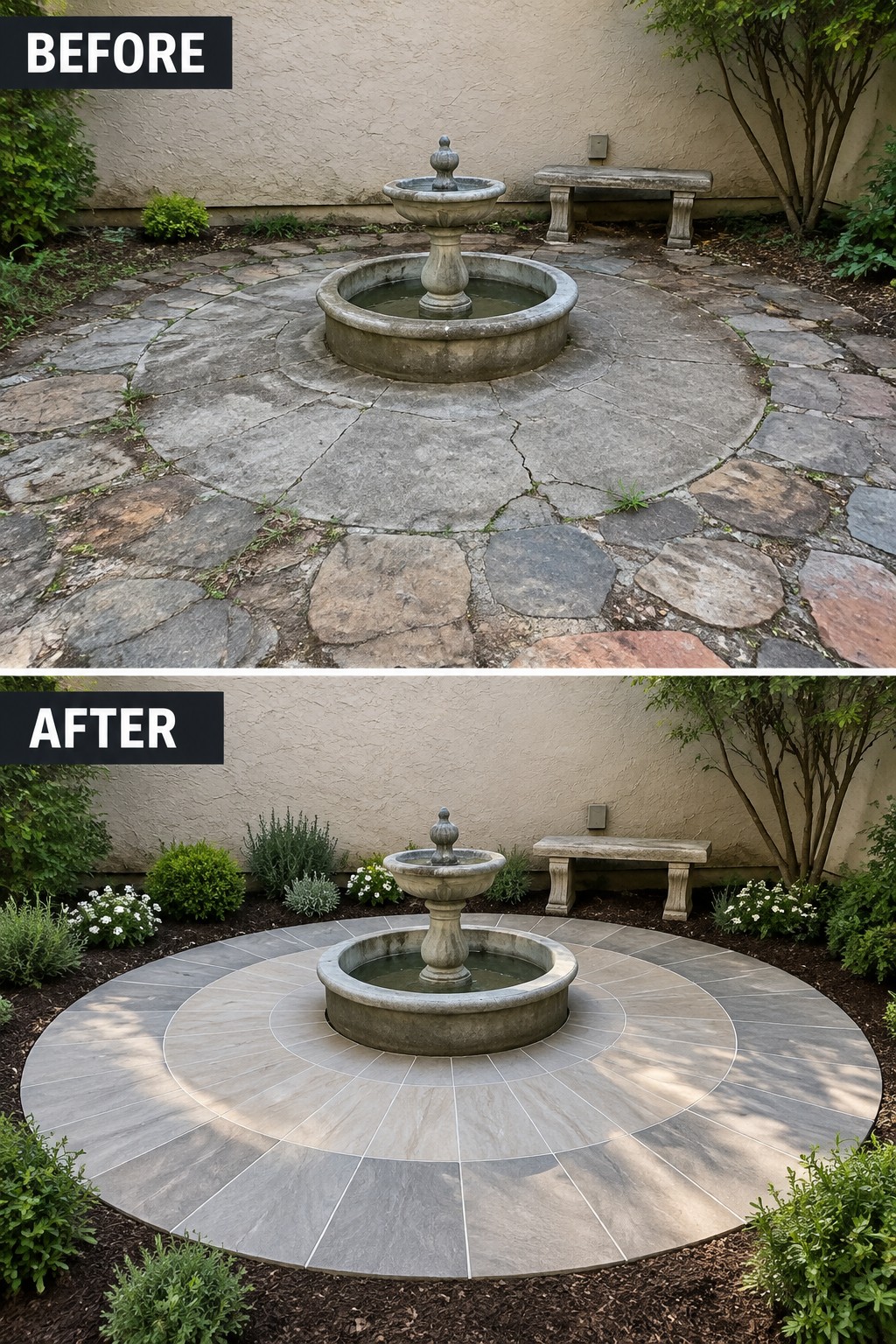
The before photo shows a patio with uneven, cracked stones that had settled over time and lost any clear shape around the fountain. Switching to uniform tiles laid in a radial pattern gives the whole area a tidy, intentional look while keeping the fountain as the center point. The change makes the space feel finished instead of neglected.
This approach works well on any older patio where the original stones have shifted or cracked. Start by removing the damaged surface, then lay new tiles in a simple repeating pattern that follows the shape you already have. It keeps the project manageable and lets the existing fountain or bench stay in place without needing a full redesign.
Define A Narrow Side Yard With Paving Stones

A narrow side yard often ends up as an afterthought with uneven stepping stones sinking into the grass. Switching to a solid paver path gives the space a clear purpose and makes it simple to walk through without tripping or getting wet feet.
This approach works best in tight areas where you need a straight route rather than a full patio. Keep the pavers in a single color and width so the path does not feel cramped, and add low lights along the edges if the area is used after dark.
Replace Old Pavers With Large Patio Tiles
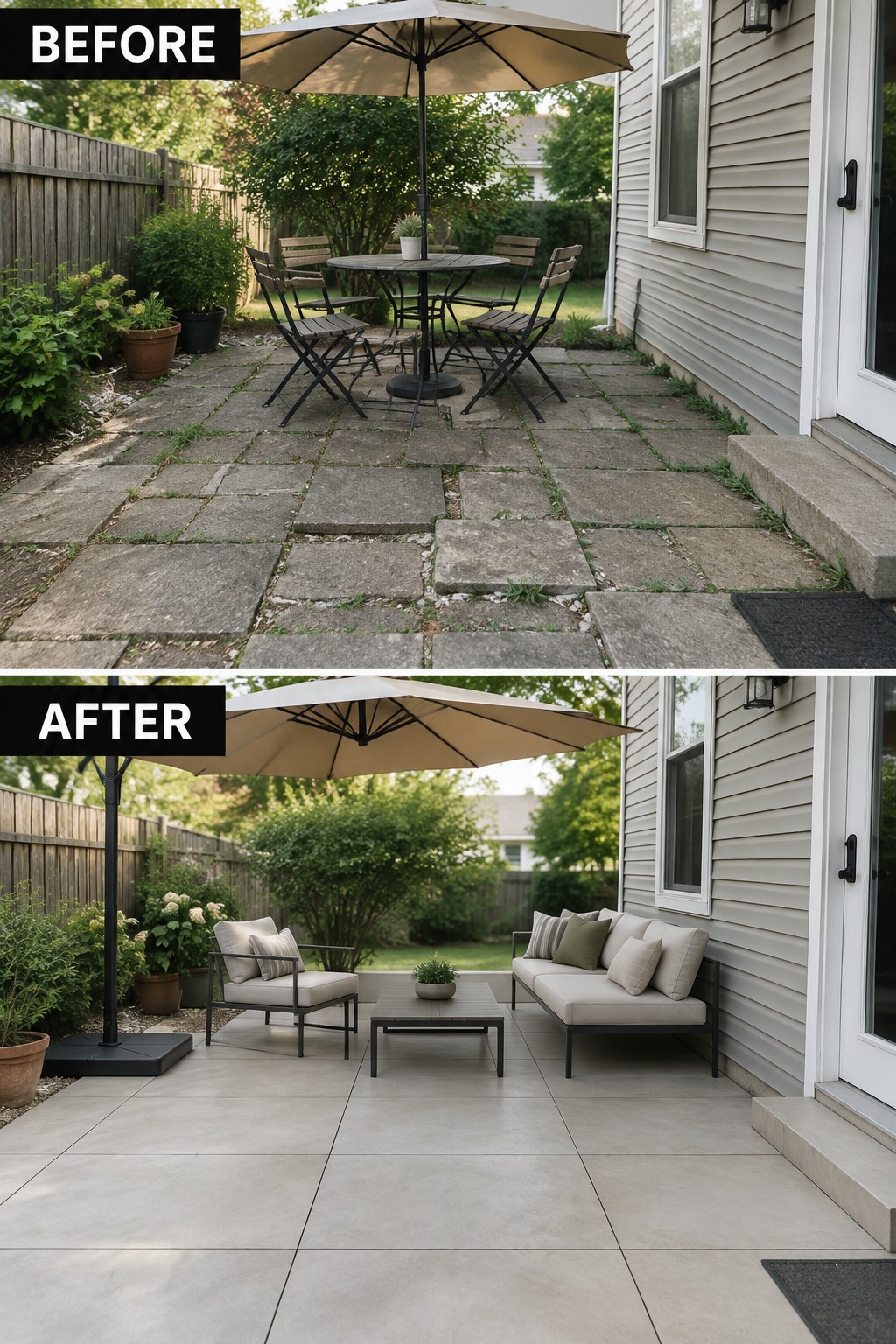
The biggest shift here comes from swapping the old uneven pavers for large, smooth tiles. The new surface feels solid underfoot and gives the whole patio a much cleaner, more finished look without any weeds pushing through the joints.
This approach works well on small to medium patios where you want a simple base before adding furniture. Stick with one tile size and color so the space stays open, and make sure the new surface still leaves enough room around the edges for chairs to pull out easily.
Replace Plain Concrete With Pavers For A Finished Patio
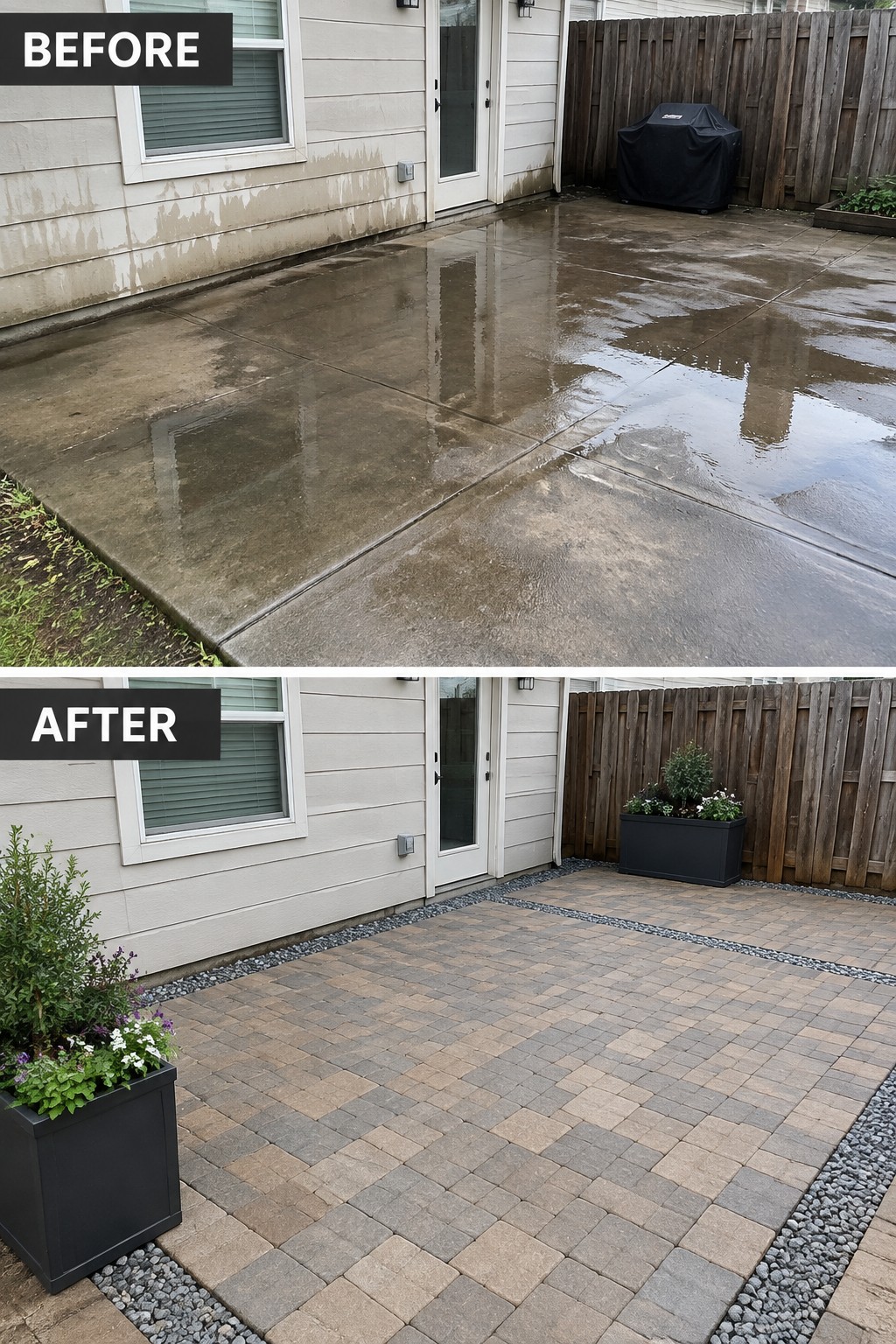
A bare concrete patio often looks flat and unfinished, especially when water sits on the surface and there is nothing to break up the expanse. Laying paving stones over that slab adds texture, color, and clear edges that make the space feel more intentional. The shift from smooth gray concrete to a pattern of brown and gray pavers immediately gives the patio a warmer, more settled appearance.
This idea works best on patios that sit right off the house and see regular use. Check that your concrete is solid and level before you start, then choose pavers that suit the climate and the style of your home. Adding a simple gravel border helps contain the new surface and keeps the whole area looking tidy without much extra work.
Lay Brick Pavers To Create A Defined Seating Area

The old patio had uneven flagstone that felt scattered and hard to use. Switching to brick pavers gave the space a flat, solid surface, while the new bench built along the wall turned the area into a place where people actually want to sit.
This idea works best on patios that already have a low stone wall or foundation. Keep the bench simple and sized to the space so there is still room to walk. Choose pavers that match the house color and add cushions and a few pots rather than filling every corner.
Lay Deck Tiles To Refresh A Balcony Floor
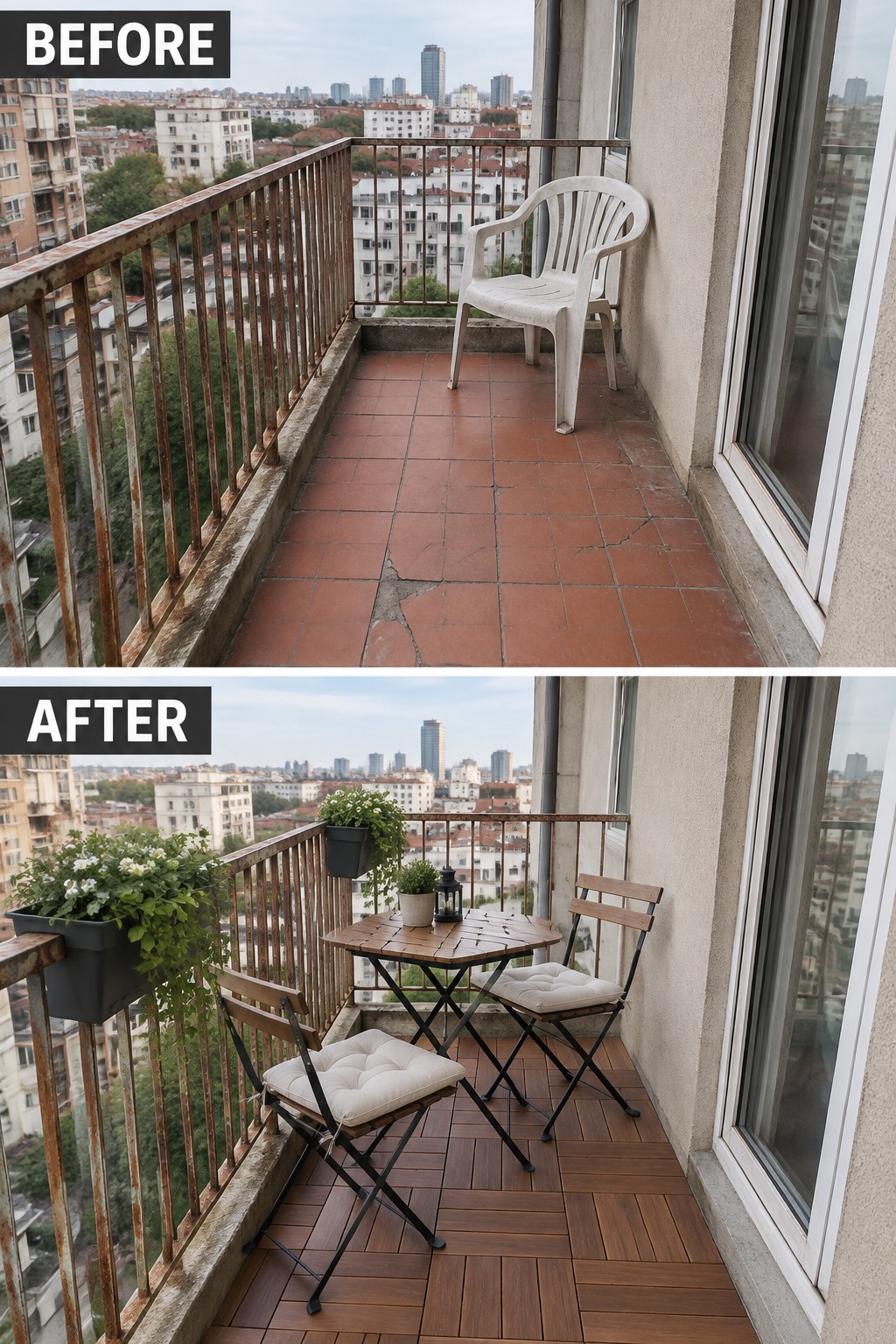
The biggest change here is the floor. The old cracked red tiles made the balcony feel neglected and hard to use. New deck tiles laid over the top gave it a clean, even surface that actually supports furniture without looking temporary.
This approach works well on small balconies where a full tear-out is not practical. Pick tiles that snap together and can stay outdoors year-round. Keep the rest of the space simple so the new floor stays the main feature instead of competing with too many pieces.
Lay Patterned Tiles Over Concrete To Define A Patio

A plain concrete slab can feel unfinished and hard to use. Laying patterned tiles over it adds color and texture right away, and the bench with cushions turns the space into a place where people actually want to sit.
This approach works best on existing patios that are still level and in good shape. Keep the tile pattern simple enough to repeat across the whole area, and choose outdoor-rated pieces so the surface holds up to weather and foot traffic without constant upkeep.
Frequently Asked Questions
Q: Do I need to dig out a base before laying the stones? A: Yes. Remove the top layer of soil and add a few inches of gravel followed by sand. Compact each layer firmly so the surface stays flat once the stones go down.
Q: How do I stop weeds from coming up between the pavers later? A: Sweep polymeric sand into the joints after everything is set. The sand hardens when wet and blocks most growth without needing chemicals.
Q: What if some stones settle unevenly after a season? A: Lift the low ones, add a bit more sand underneath, and tamp them back into place. Check the area each spring and fix small spots before they spread.
