

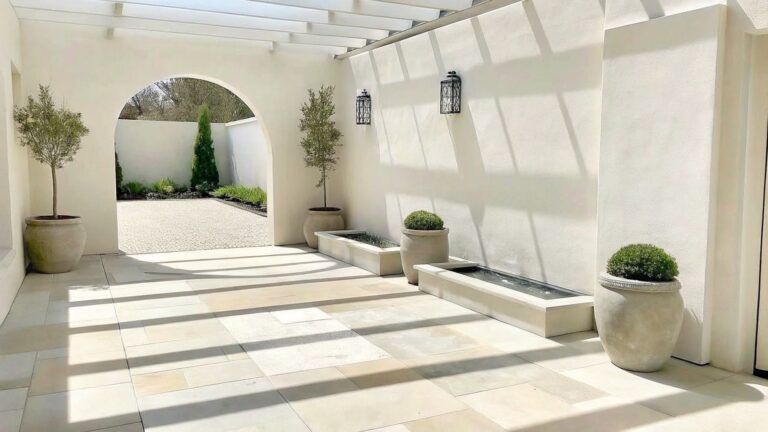
I have noticed that gardens hold together better when stone features give the plantings a clear structure instead of letting beds spread without edges.
Over time the polished planters I have tried outdoors keep their finish longer than I expected and help direct attention toward the plants rather than the containers themselves.
Stone changes how a garden feels underfoot and under the eye.
Many people start with new beds only to find the layout drifts after a season or two once growth fills in.
I usually test one hardscaping idea at a time before deciding whether it suits the rest of the yard.
Stone Planters In A Fountain Basin
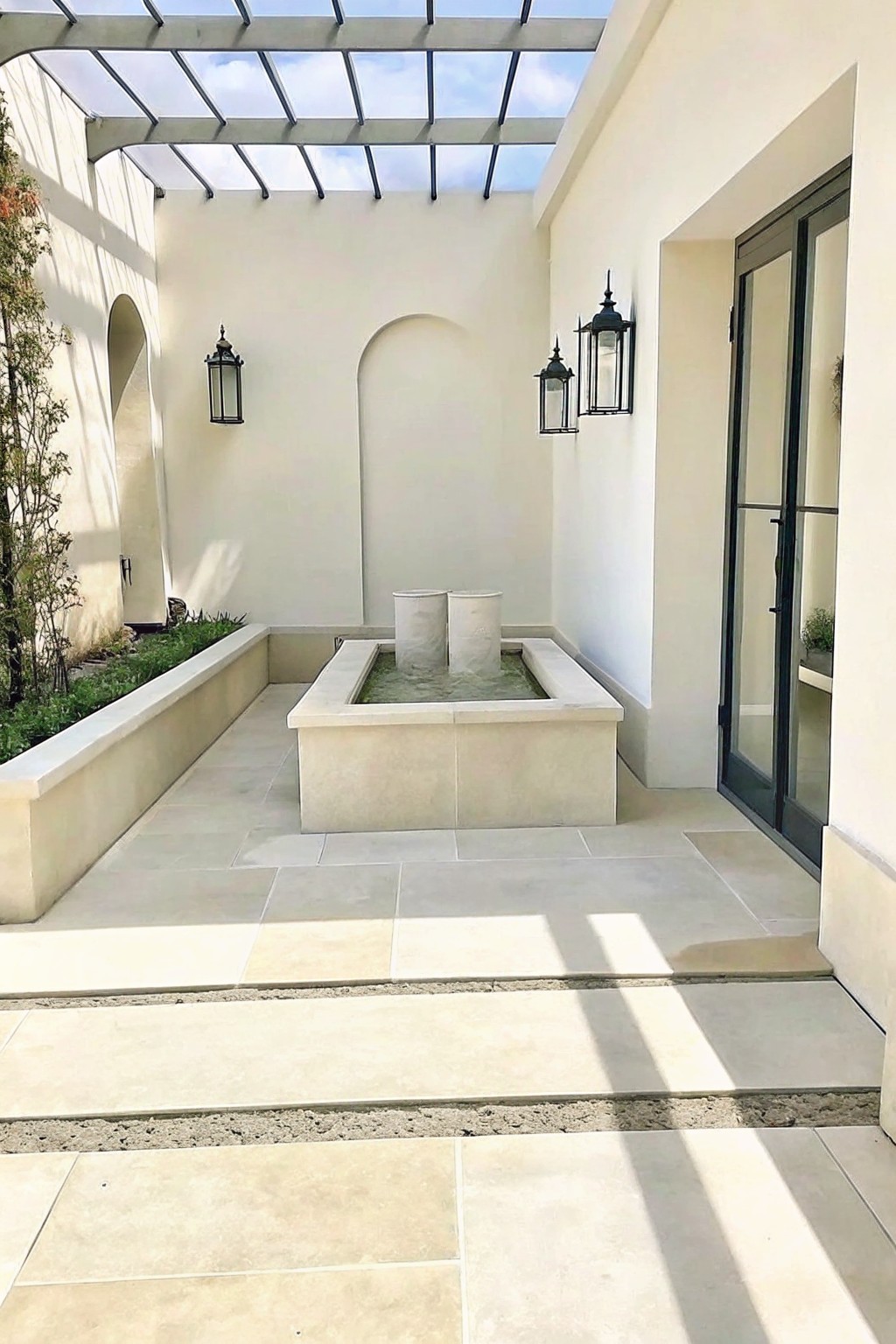
One way to use stone planters outdoors is to set them right into a shallow water basin. The cylinders stay dry enough to avoid constant cleaning while the water adds movement and sound. This keeps the focus on the material itself instead of extra planting.
It works best in a small courtyard or enclosed patio where you want a single focal point. Keep the surrounding paving simple so the stone and water stay the main features. Avoid overcrowding the basin with too many pieces.
Using Long Planters to Frame a Patio Edge
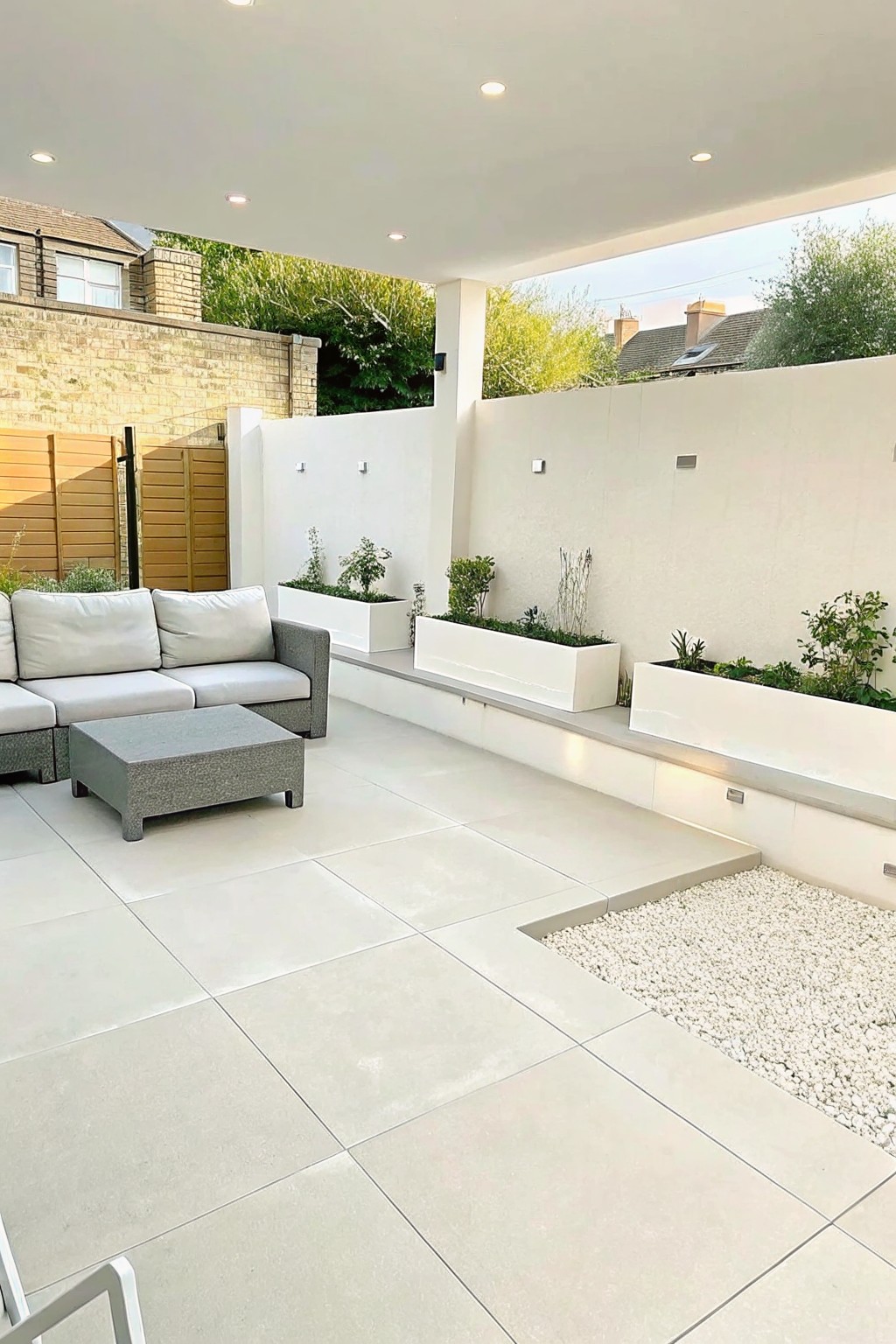
Long rectangular planters work well when you want to add greenery without breaking up the floor space on a patio. They create a simple border that keeps the seating area open while still giving the space some structure.
This approach suits smaller urban yards or modern outdoor rooms where you want low maintenance. Keep the planters in a light neutral tone so they stay in the background and let the furniture and flooring stand out.
Stone Planters Along Narrow Paths
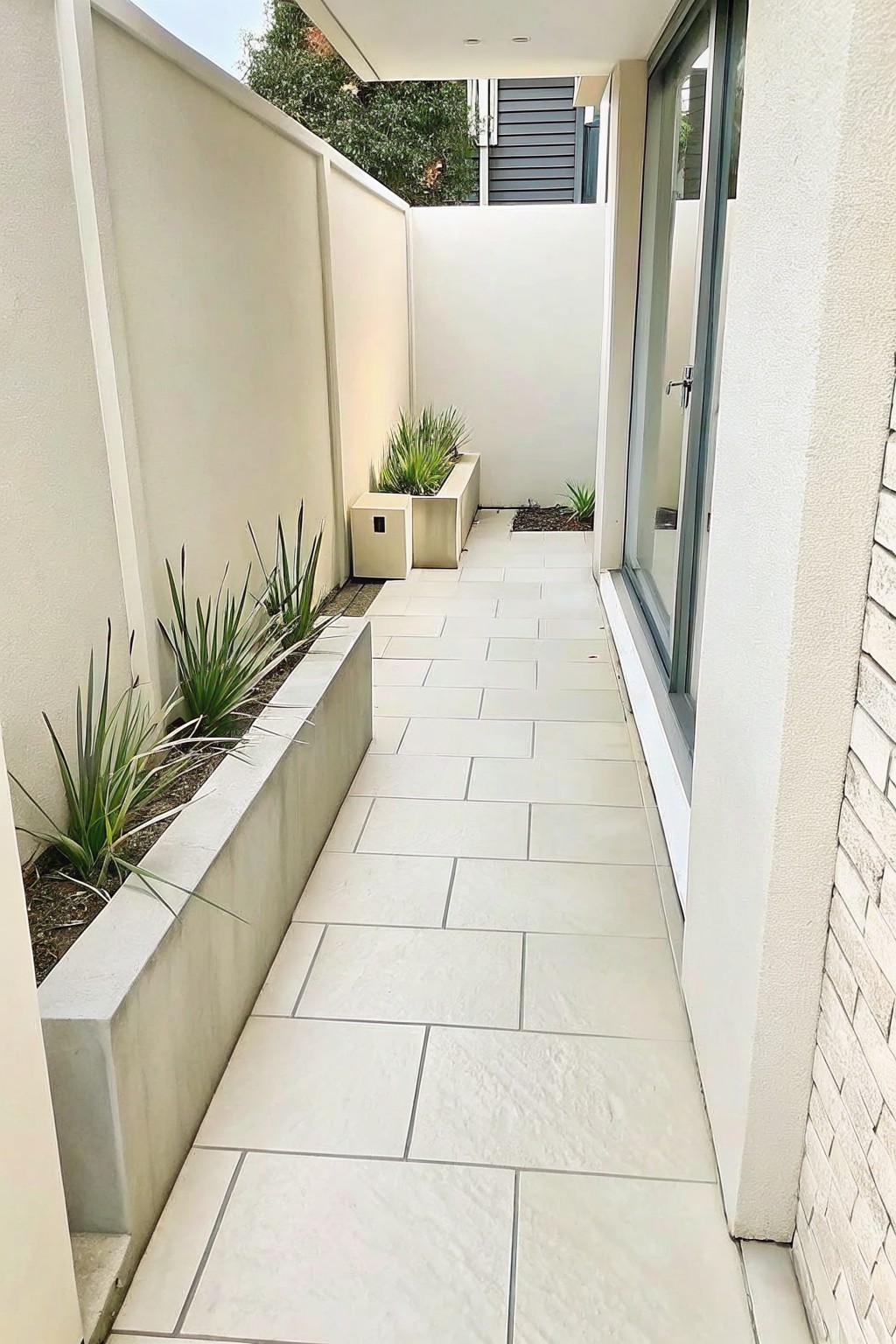
Long rectangular stone planters give a narrow walkway clear edges without crowding the space. They turn a simple side passage into something more structured while still leaving room to walk through easily. The straight lines also keep the whole area looking tidy instead of scattered.
This approach works best on homes with clean modern lines where you want greenery but not a lot of fuss. Match the planter material to nearby walls or paving so everything feels connected, and choose plants that stay upright rather than spilling over the edges.
Use Stone Planters Beside a Trellis
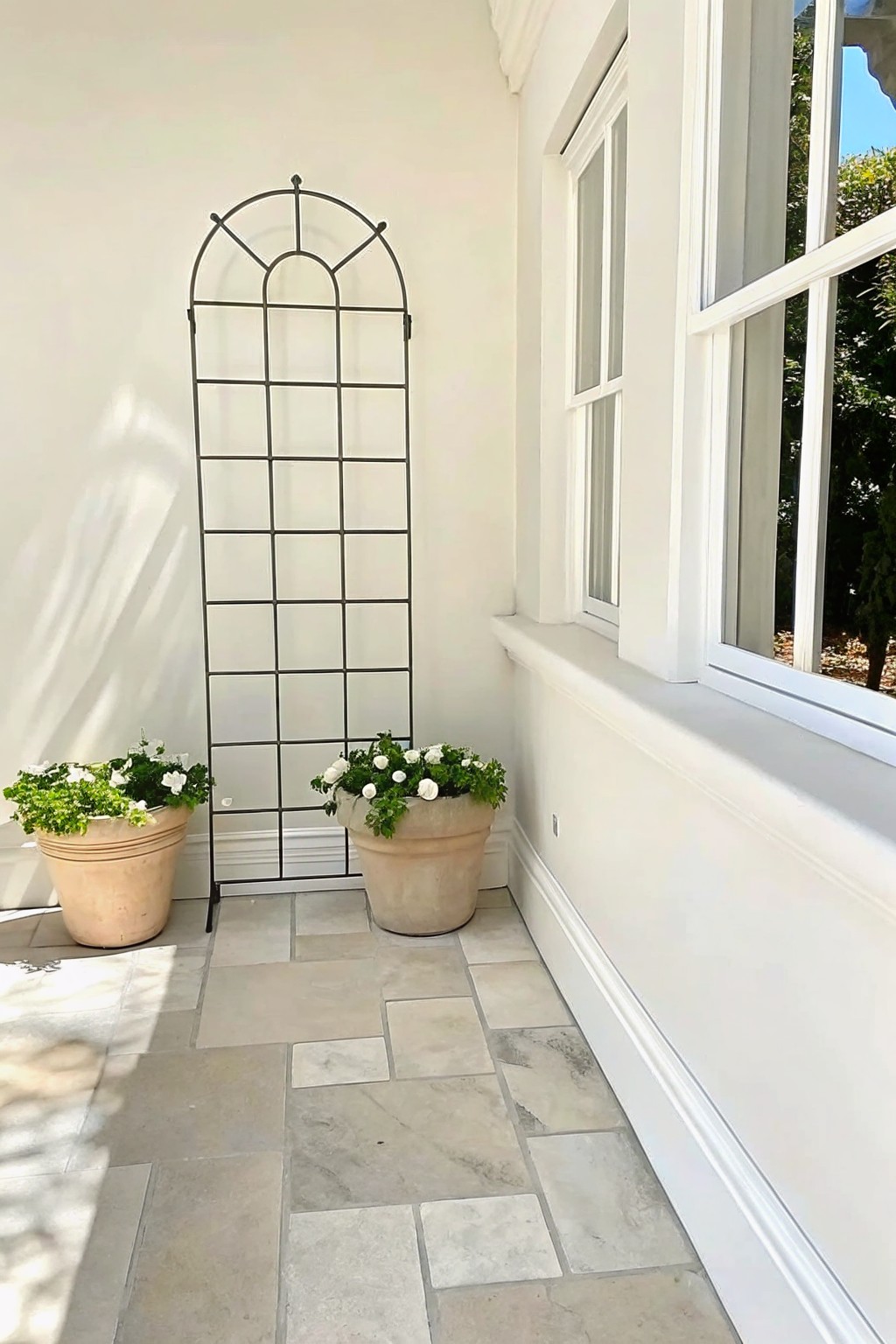
Stone planters can give a simple trellis more presence on a porch or patio. The weight of the material helps the whole setup feel settled instead of temporary, and the plants get a clear spot to grow against the grid.
This works best on a covered outdoor floor where the pots can stay level and protected from heavy rain. Pick two pots in the same finish and keep the spacing even so the trellis stays the main feature instead of getting lost between them.
Stone Planters in Paved Courtyards
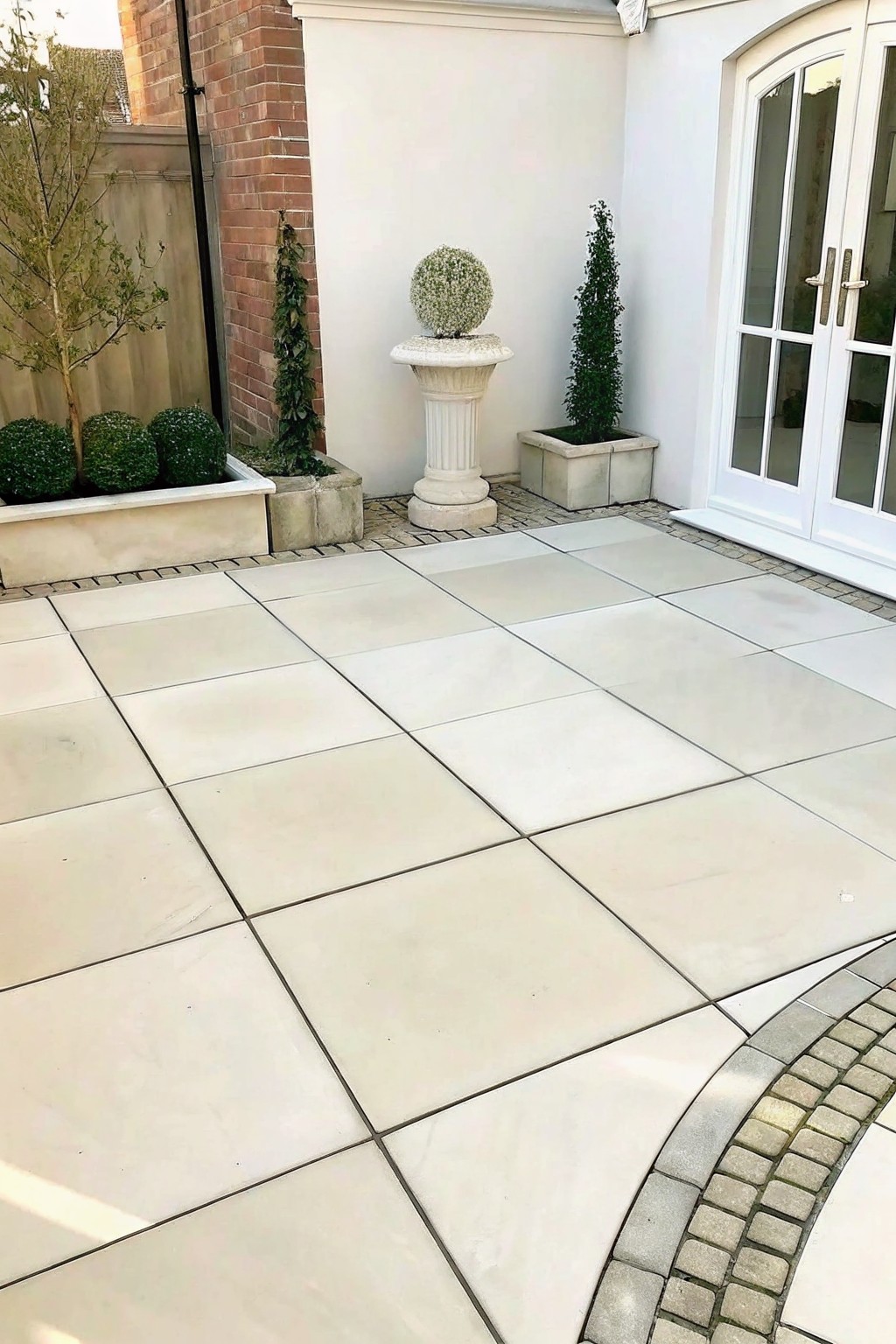
Stone planters work well when you want greenery without digging into the ground. They sit right on the paving and give the space a finished look while keeping everything low maintenance. The light color of the stone also helps the area feel brighter overall.
This setup suits homes that already have a large paved area and need some planting without breaking up the surface. Keep the planters a similar tone to the paving so they blend in rather than stand out too much. Avoid overcrowding the space with too many of them.
Try a Narrow Pebble Bed for Planters
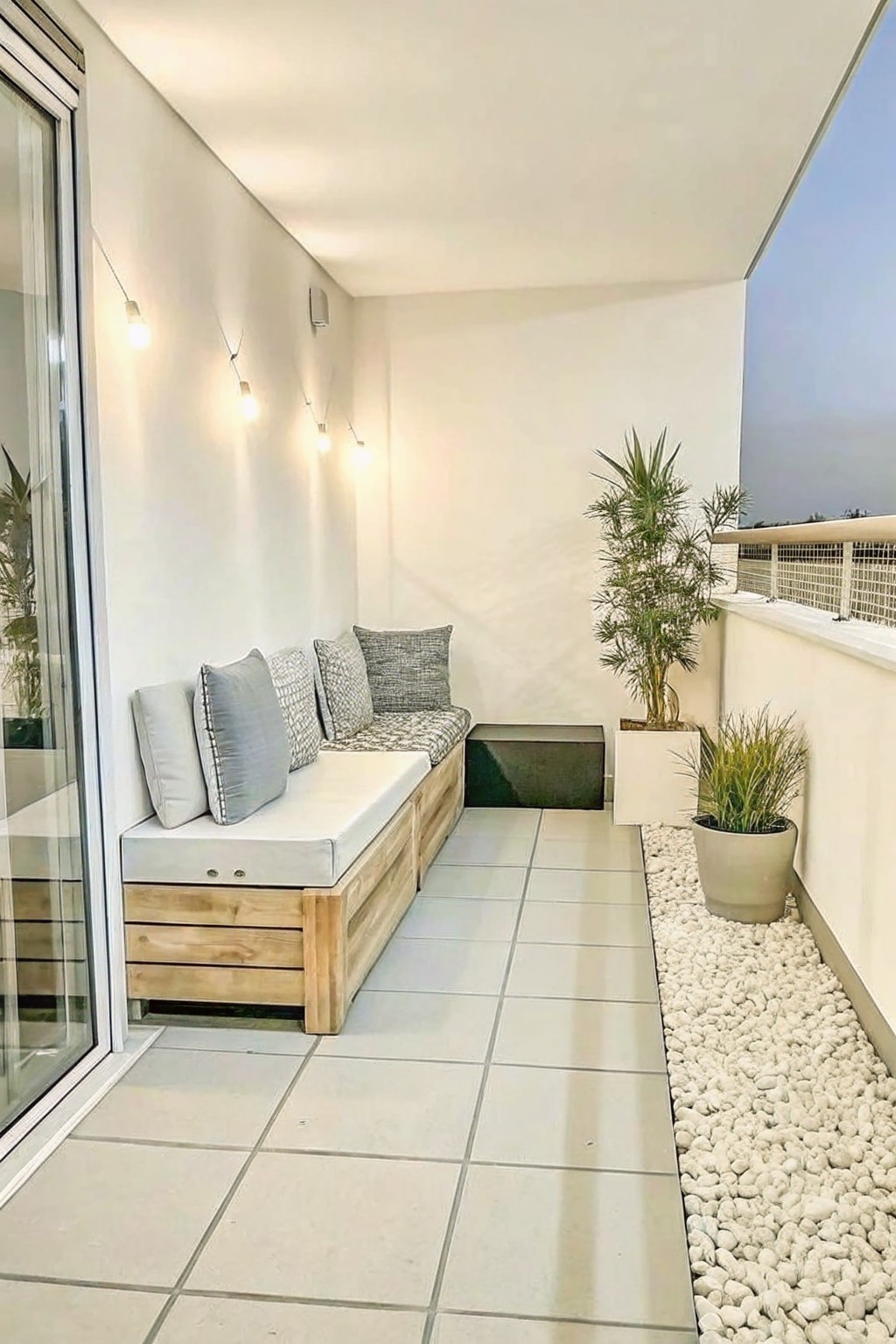
A pebble strip along the edge gives planters their own spot without crowding the main floor. It adds texture, keeps things neat, and works especially well when the rest of the space is tiled or paved.
This setup suits balconies and small patios where you want a bit of greenery but still need room to move around. Use a simple border to hold the stones in place and choose planters that match the stone color so the whole thing stays calm and uncluttered.
Raised Concrete Planters Along Stone Paths
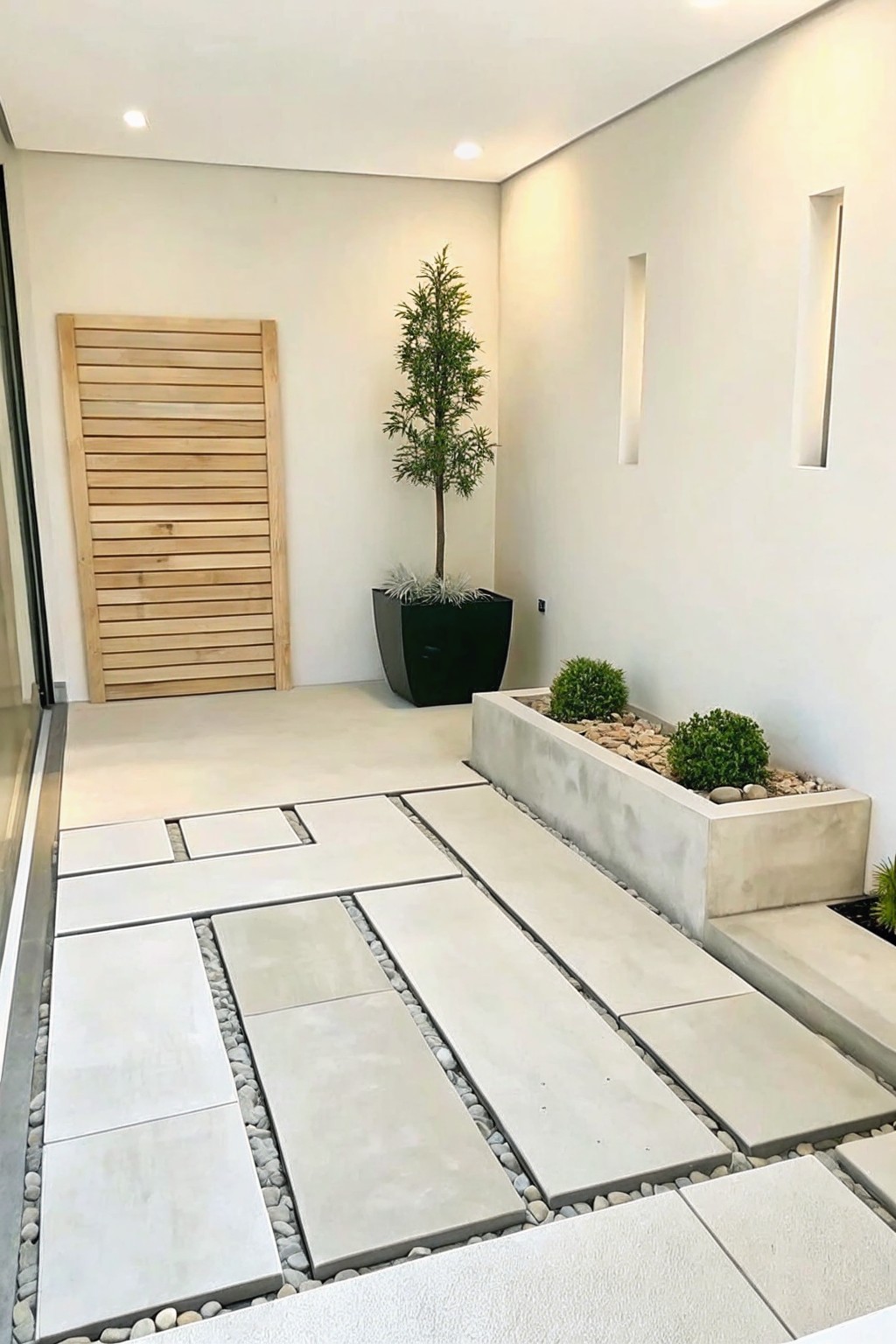
Raised concrete planters work well next to stone paths because they give the garden clear edges and keep the planting contained. The long low planter sits flush with the walkway and holds a few shrubs in gravel, which keeps the look simple and stops plants from creeping onto the stones.
This setup suits modern homes with small courtyards or side entries. It works best when the path uses large pavers with pebble gaps, since the contrast keeps the whole area from feeling too flat or busy.
Linear Planters Along A Wall
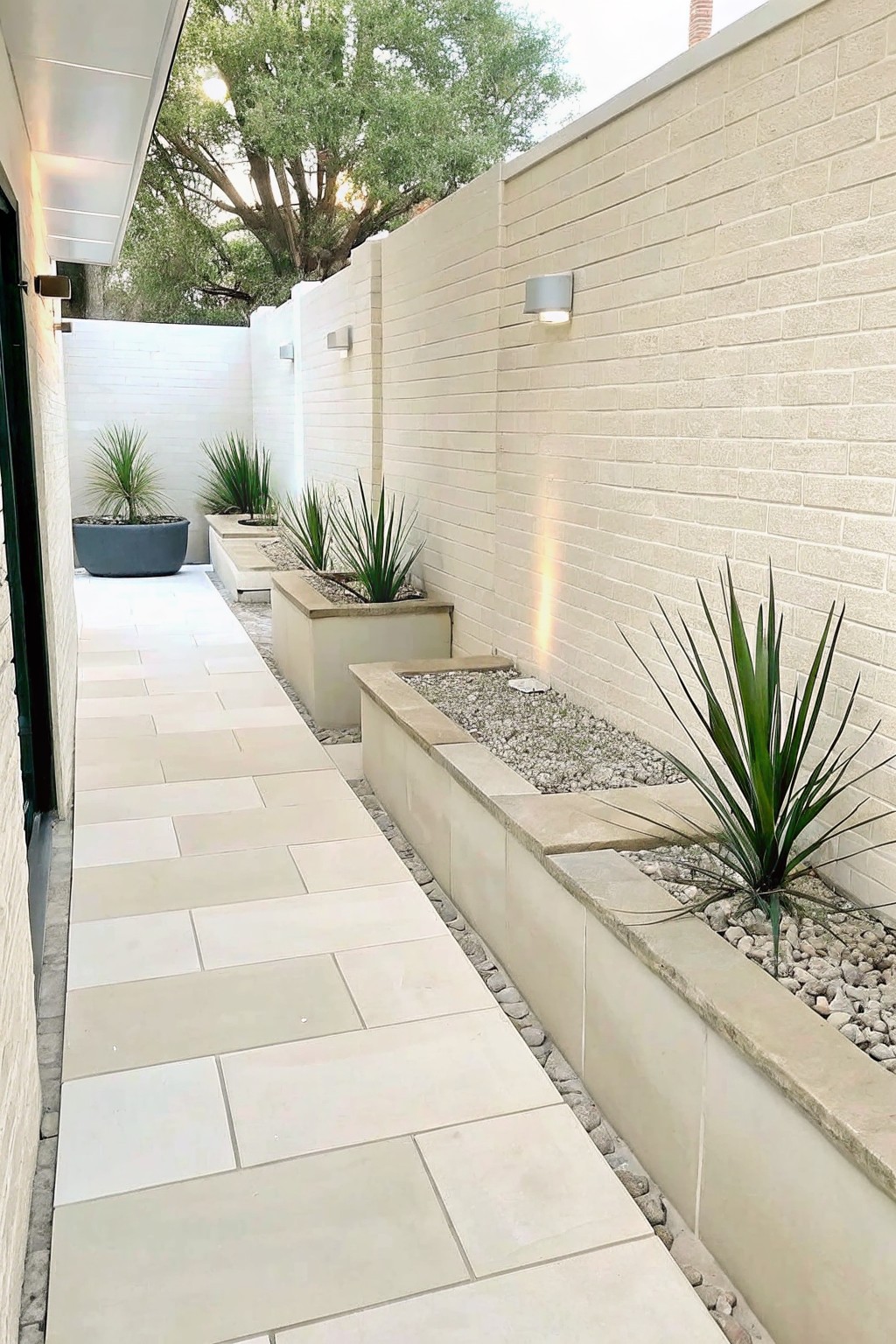
Running a row of built-in planters along one side of a narrow path keeps the space open while adding structure. The low concrete forms sit right against the wall and stay out of the way, which works well when you need to keep a walkway clear but still want some planting.
This setup suits homes with straight walls and simple hardscaping. Fill the planters with gravel and a few tall upright plants so they stay neat with little upkeep. Avoid overcrowding them or using loose soil that will spill onto the path.
Define a Patio Path With Polished Planters
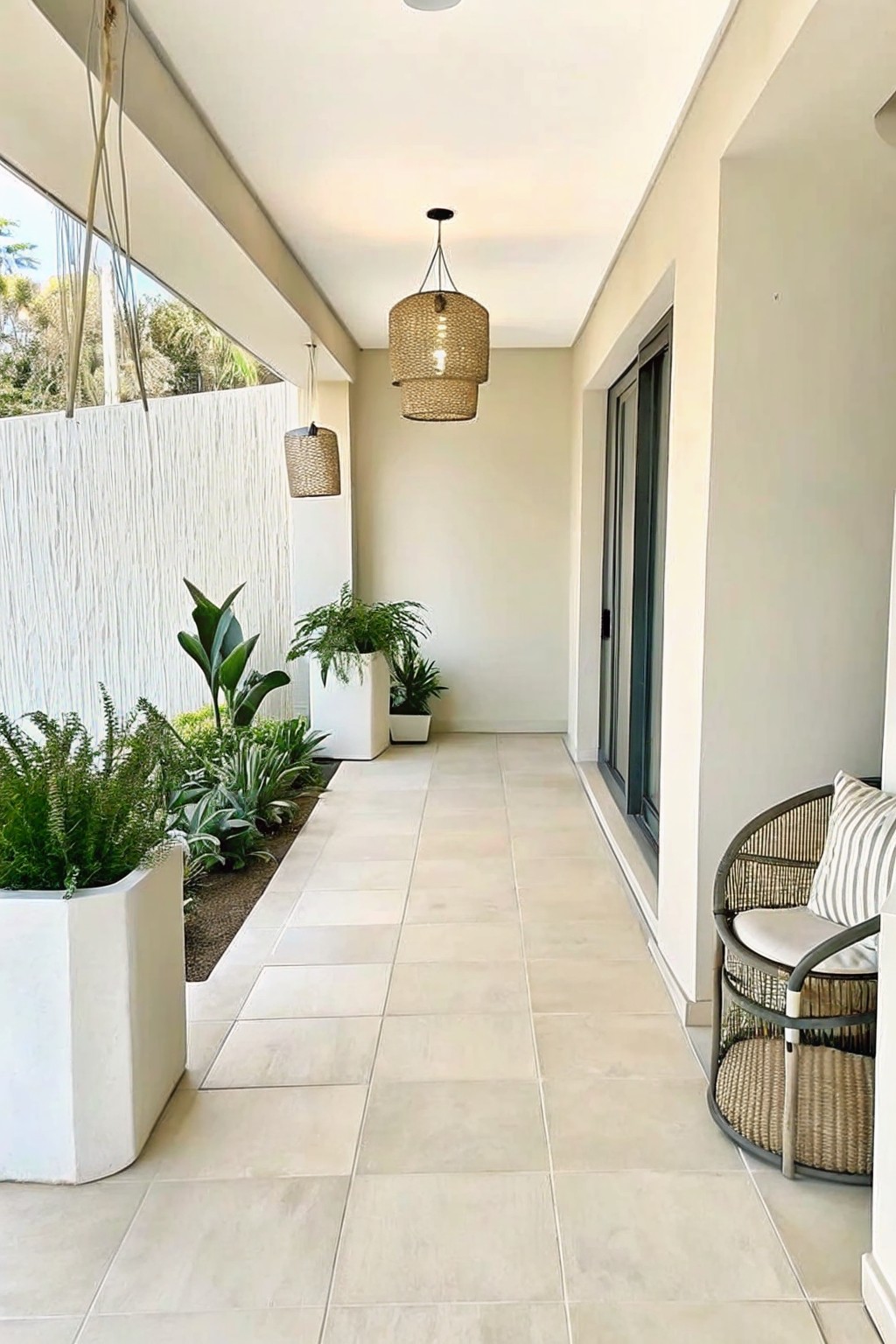
Large polished planters work well when you want to bring structure to a paved outdoor space without crowding the floor. They give the path a clear edge and let you add height with plants that stay contained.
This setup suits covered walkways and side patios on homes with light stone or tile flooring. Keep the planters in one simple finish and repeat the same shape so the look stays calm rather than busy.
Raised Stone Planters Along Walkways
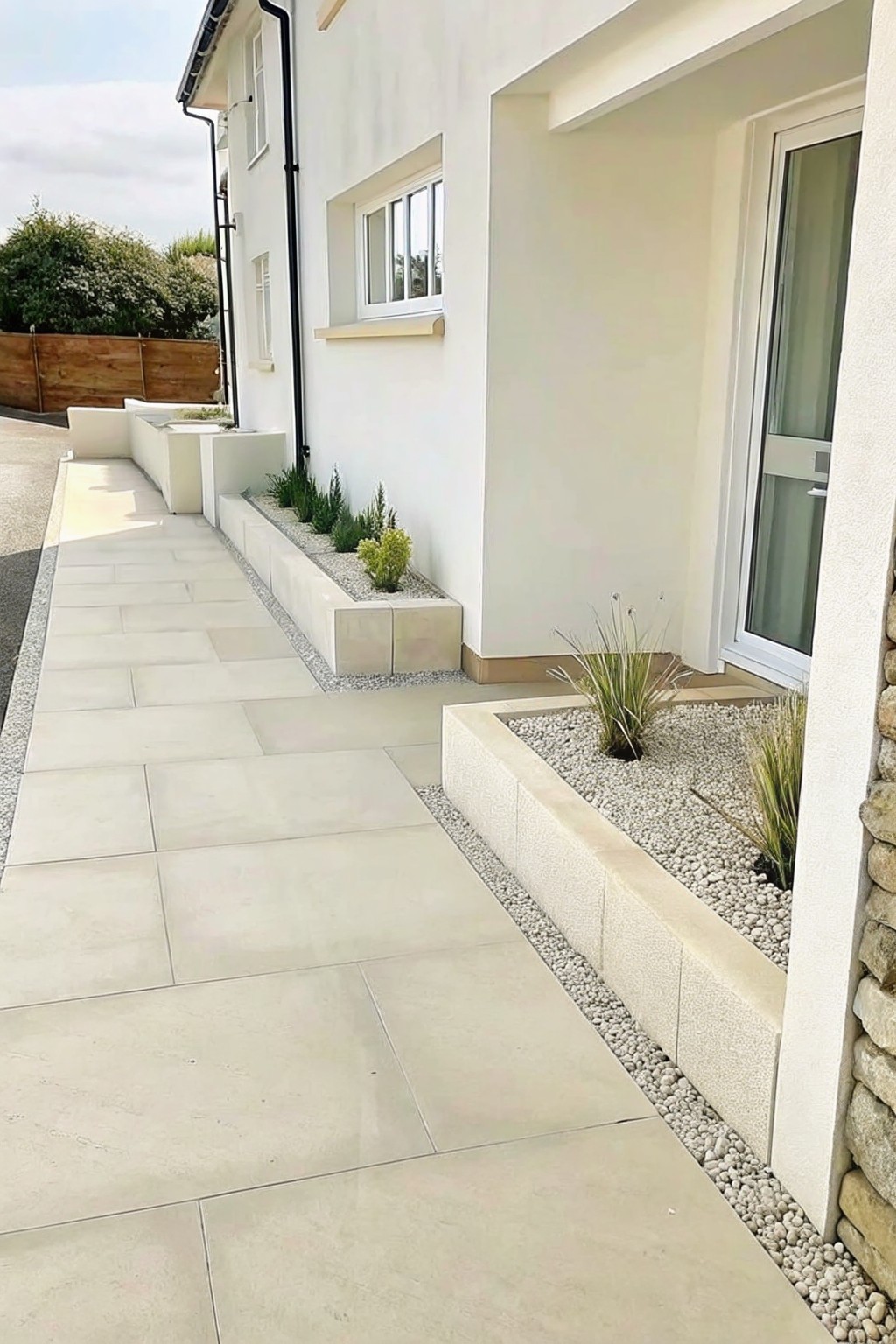
Raised stone planters give a garden a clean edge without making the space feel boxed in. They sit right against the house and path so the planting stays contained and the walkway stays open.
This setup works best on newer homes with straight lines and side entrances. Use the same material for the planters and path border, then fill with gravel and a few low grasses so maintenance stays low.
Built-In Planter Ledges Along Walls
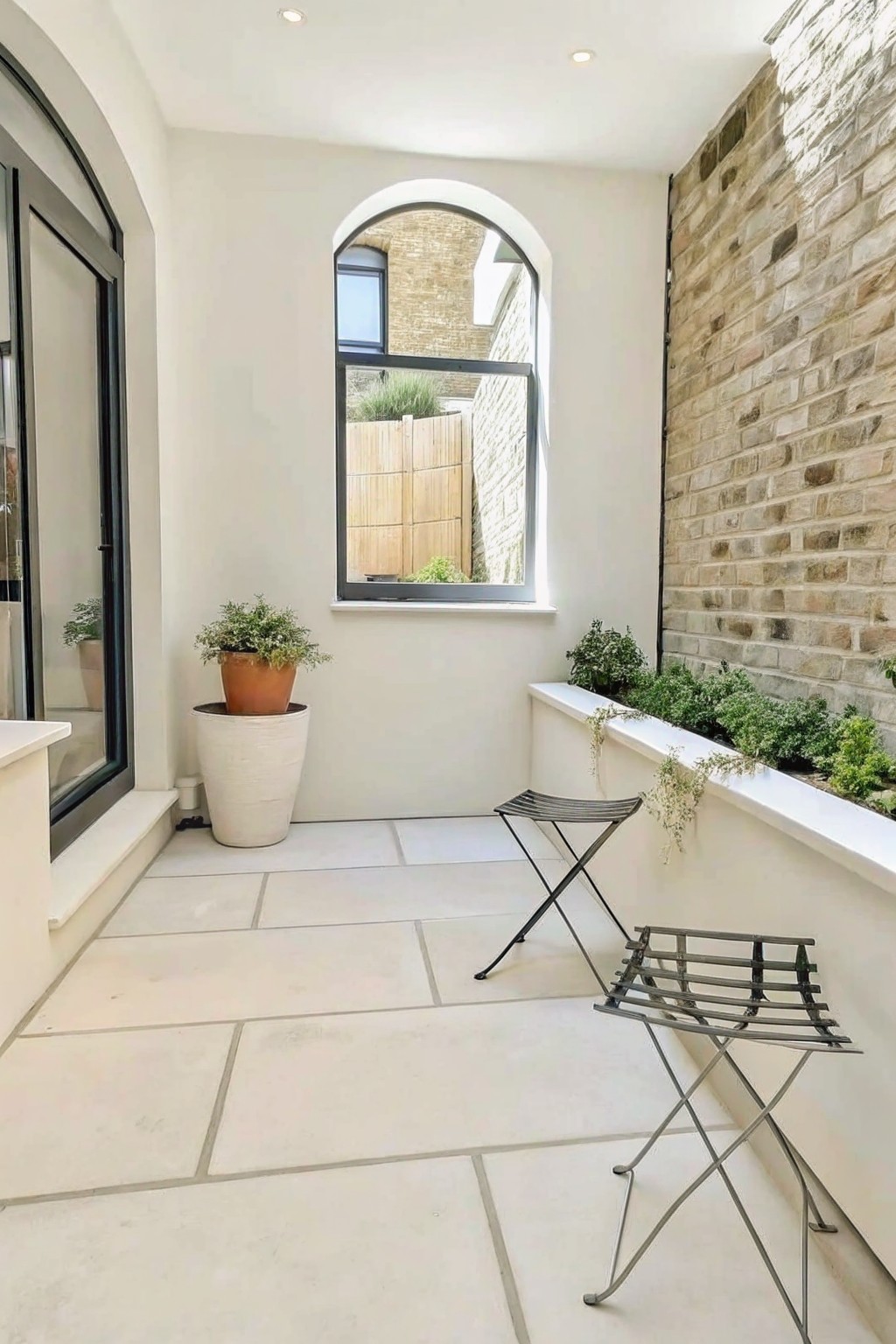
A built-in stone ledge gives you planting space without crowding the floor. In smaller patios it keeps things tidy while still letting you grow a decent amount of greenery along one side.
This works best on homes where the ledge can match the paving or wall color. Set plants directly in the soil or drop pots inside so you can swap them out easily when seasons change.
Stone Paths That Match Your Planters
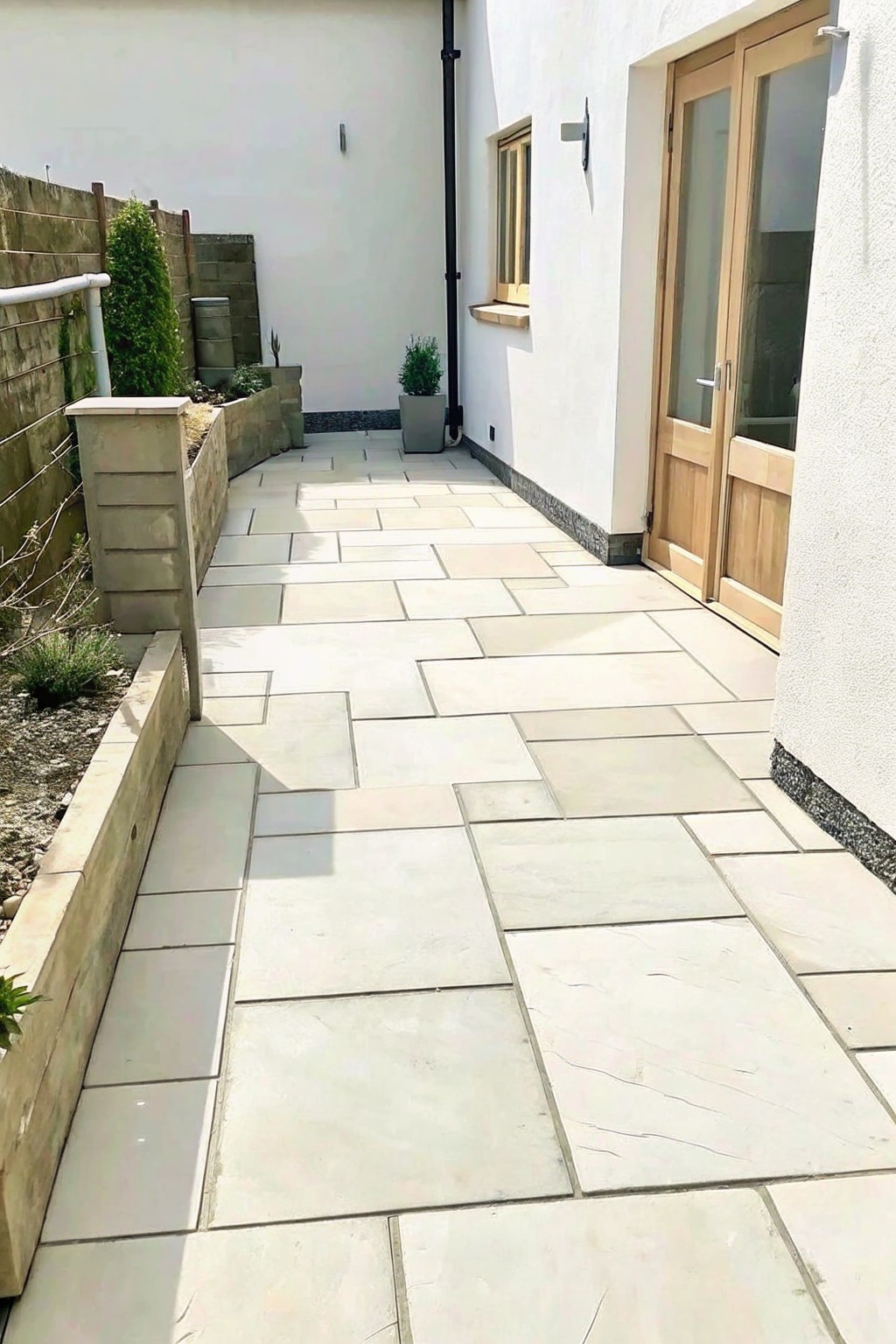
Stone paths made from the same material as your planters pull a garden together without extra effort. The light color and simple shapes keep the space looking neat, especially in narrow side areas where clutter shows up fast.
This approach works best on homes with clean lines and low-maintenance goals. Use one type of stone for both the paving and the raised beds so the path reads as part of the planting structure instead of an afterthought.
Stone Planters Along A Garden Path
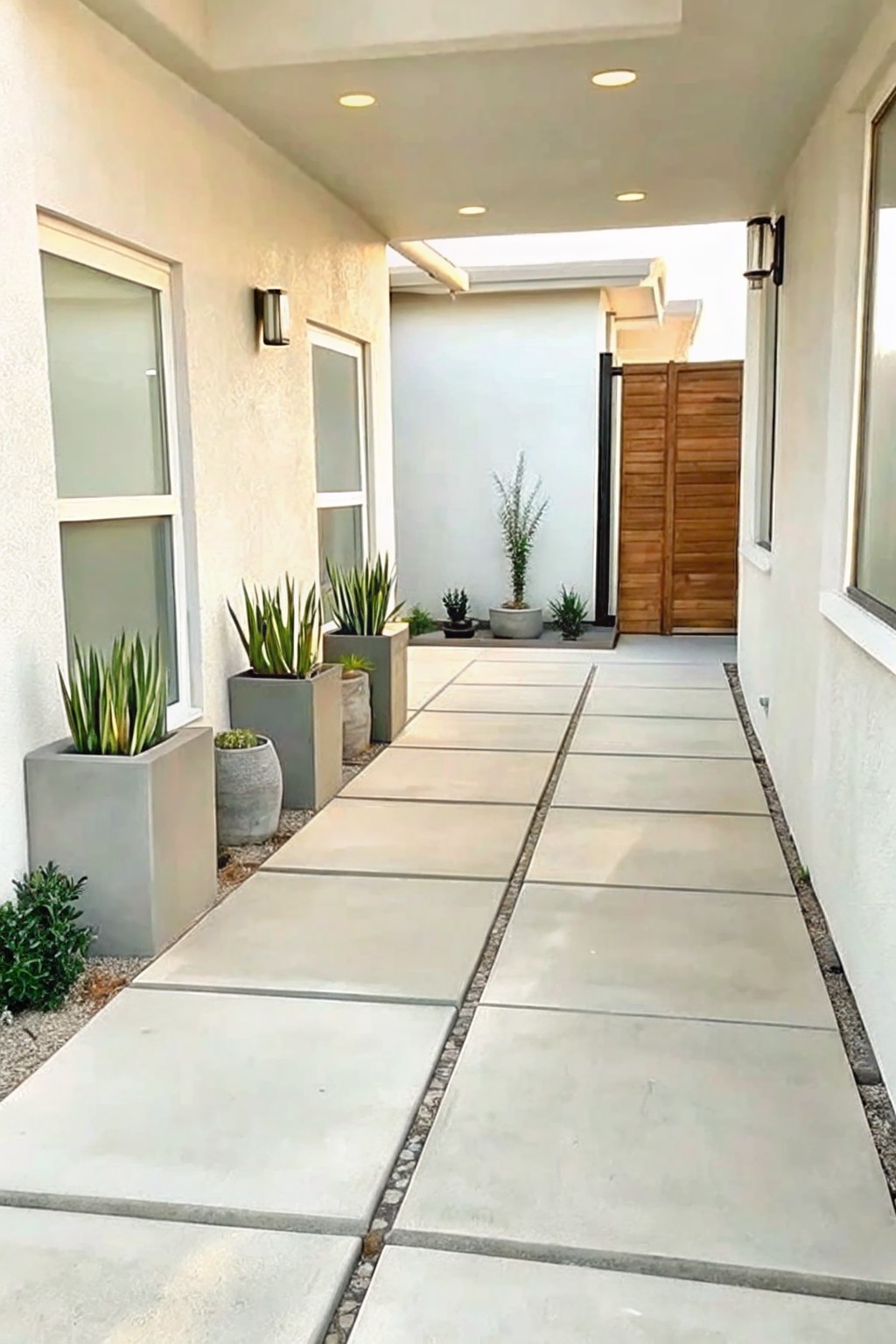
Large stone planters work well when you want to give a walkway some clear edges without adding a lot of small pots or ground cover. They create a steady rhythm along the path and let you use taller plants that stay in place year after year.
This setup suits homes with long side passages or straight entries where the ground is mostly hardscape. Place matching planters on both sides at regular intervals and choose plants that stay roughly the same height so the line stays clean.
Stone Planters At Thresholds
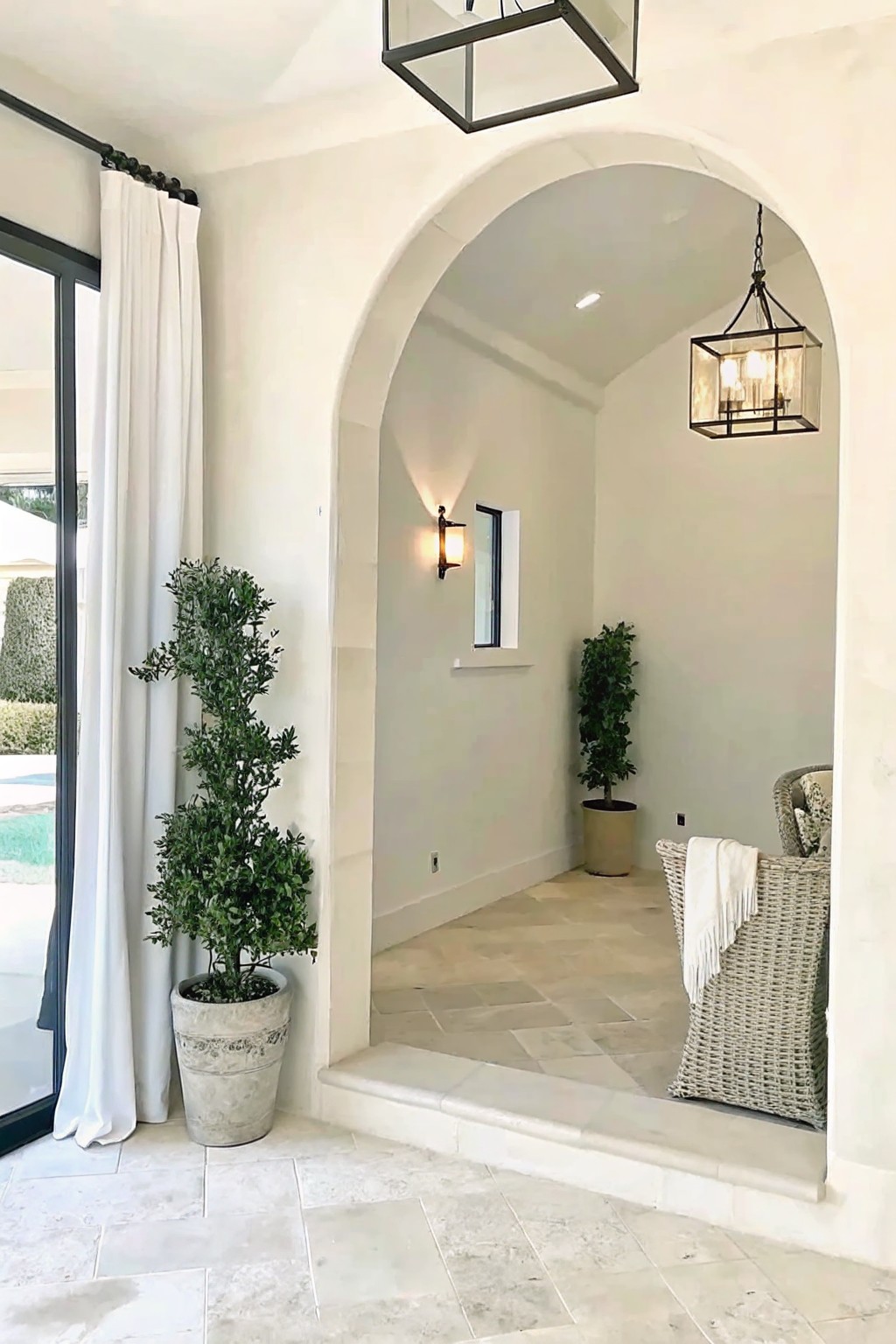
Stone planters work well when you repeat the same style and size right at the point where an indoor space opens to the outside. The matching pots and plants create a simple line that makes the two areas feel connected instead of separate. It is an easy way to bring garden structure into the house without adding much clutter.
This approach suits homes that already have good indoor outdoor flow, such as those with wide arches or glass doors. Keep the planters large enough to hold a tall shrub so the eye follows the planting from inside to out. Just make sure both sides get similar light so the plants stay healthy.
Large Concrete Planters Along a Patio Edge
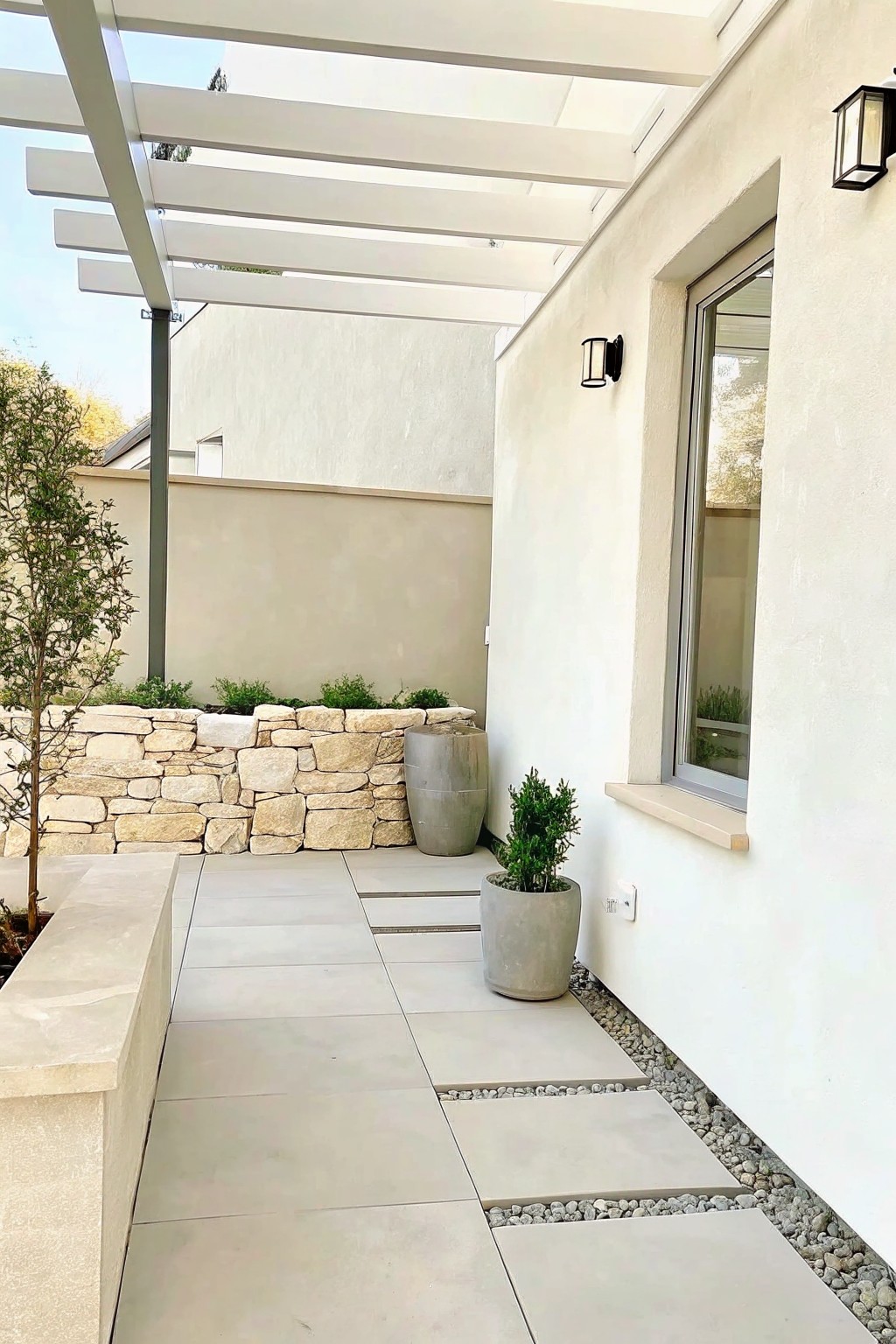
Large concrete planters work well when you want to add some height and shape to a paved outdoor space without crowding it. They stand out against the flat tiles and give the area a more finished look while still leaving room to walk through.
Place them where the paving meets a wall or a gravel strip, and keep the plants simple and green. This approach suits modern homes with clean lines and smaller yards where too many small pots would feel busy.
Large Planters On Stone Patios
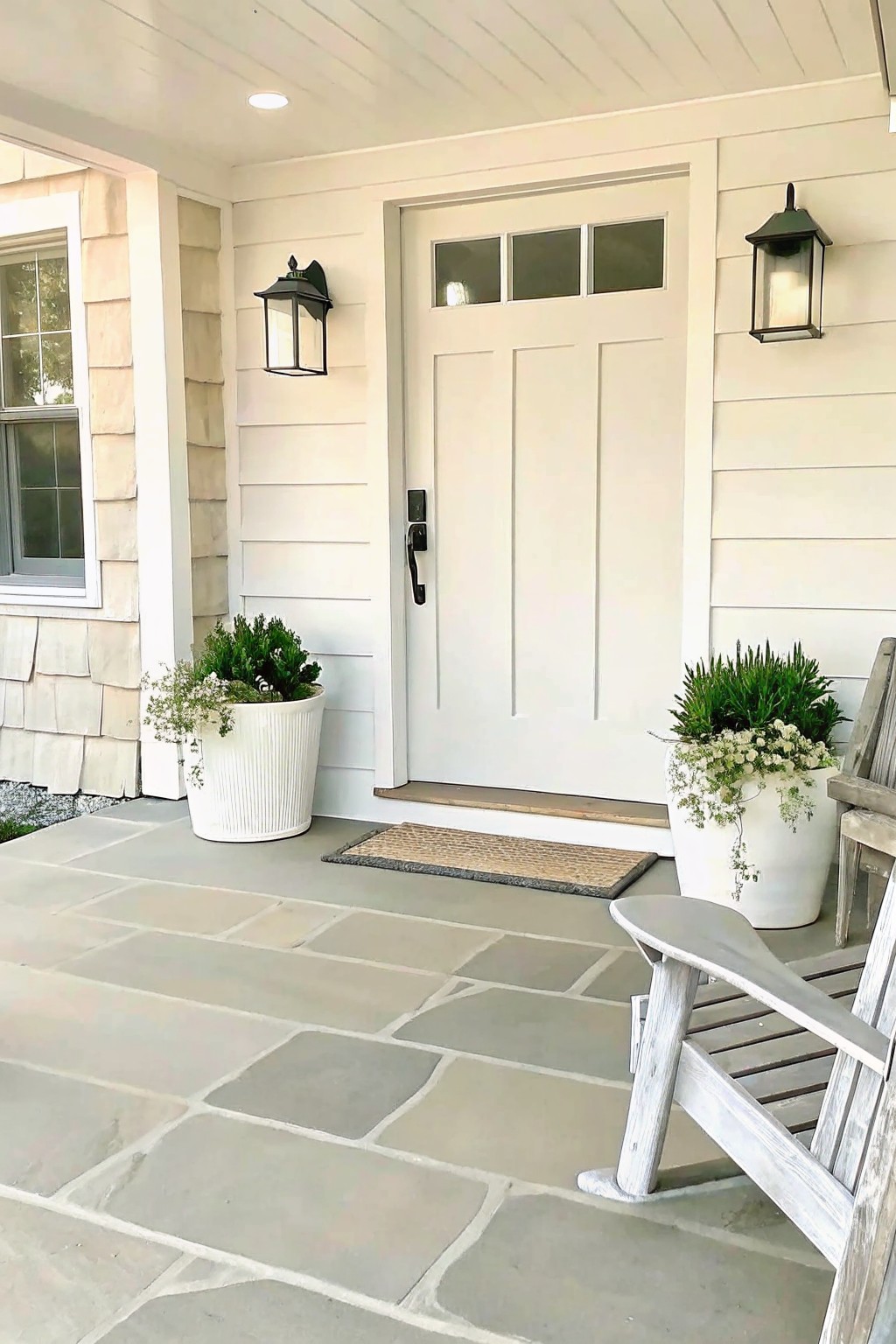
Large planters stand out on stone patios because the smooth surfaces of the pots play off the uneven texture of the stone without competing with it. The result feels balanced and keeps the hard surface from looking too bare or cold.
This setup works best on front porches or side patios of homes with simple siding and clean lines. Use two or three matching planters in the same color as the trim, and keep the plantings fairly full so the containers read as part of the architecture rather than scattered accents.
Raised Planters to Frame a Garden Path
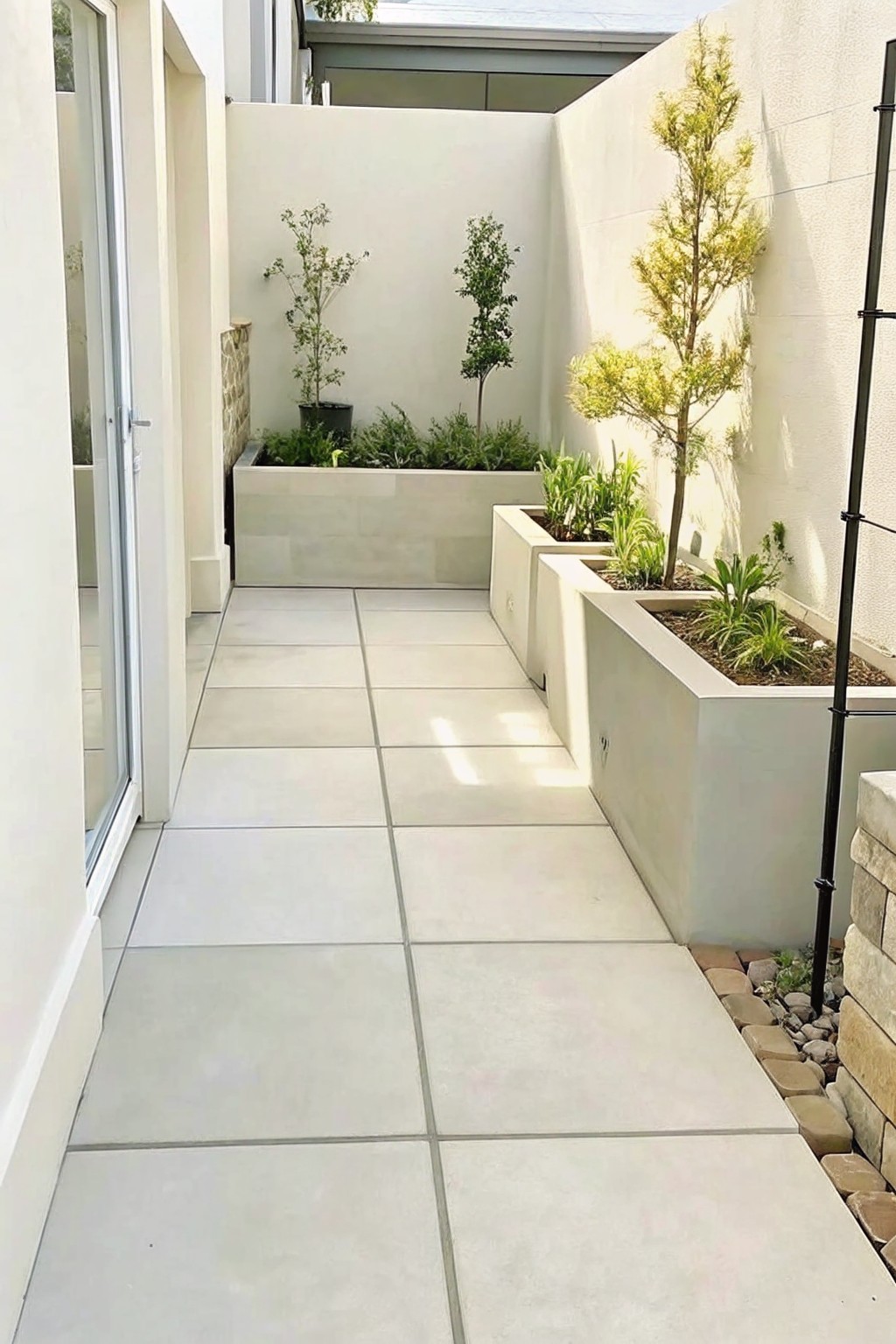
Raised stone planters give a clean edge to a narrow walkway while adding planting space without crowding the ground. They work especially well in tight side yards where you want greenery but still need room to move through.
This layout suits homes with long passages between walls or fences. Keep the stone color close to the paving so the whole area feels connected rather than chopped up. Just make sure the planters sit low enough that the path does not feel closed in.
Edge a Narrow Path With One Long Planter
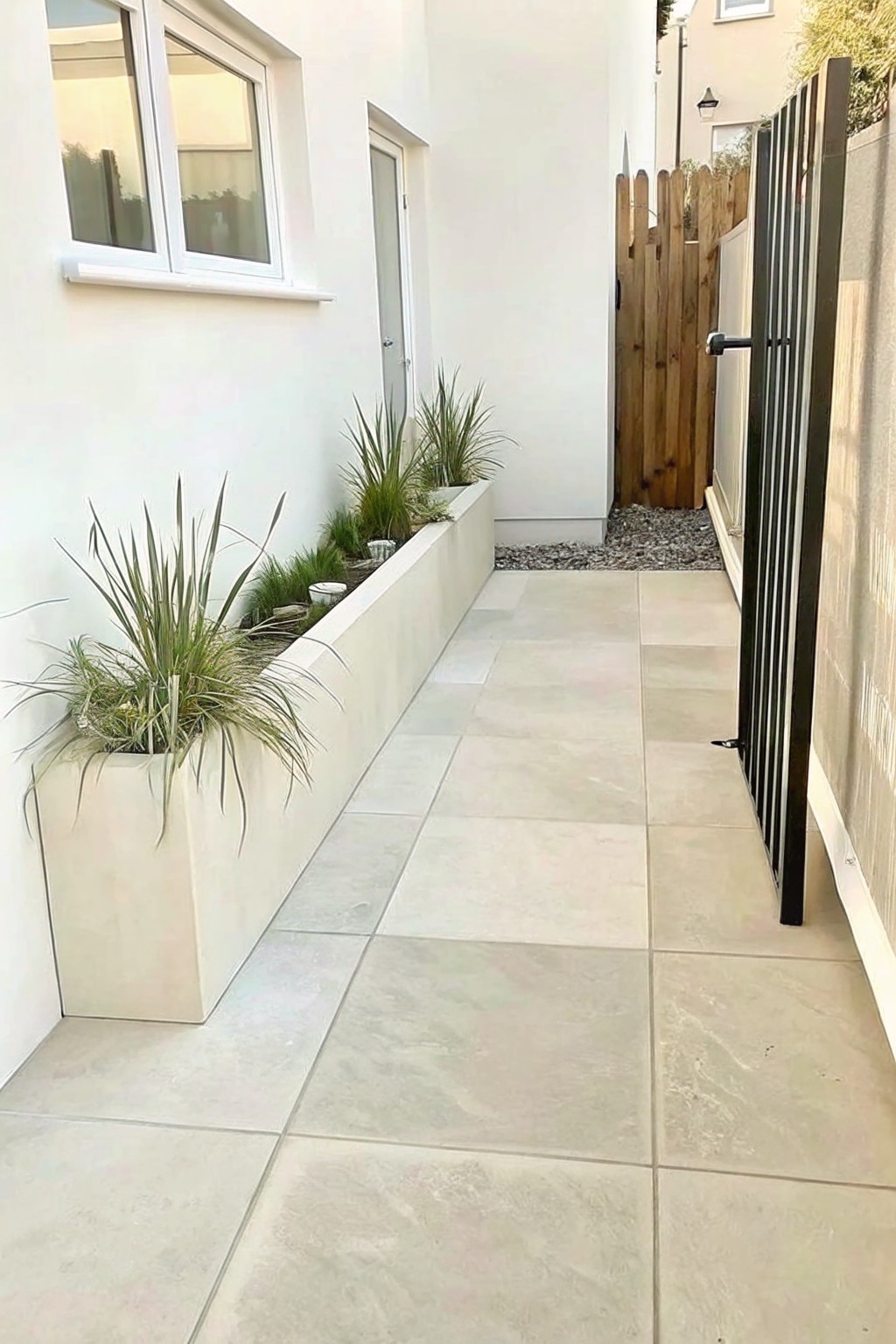
A single long planter running the length of a side path keeps the space feeling open while adding greenery without crowding the walkway. It works well in tight areas between houses where a row of smaller pots would look messy and take up too much room.
This setup suits homes with stone or concrete paving because the clean lines of the planter match the hard surfaces. Just make sure the planter is wide enough for the plants to grow without spilling over the path, and choose low-maintenance varieties that can handle the shade or sun in that spot.
Built-In Benches For Planter Displays
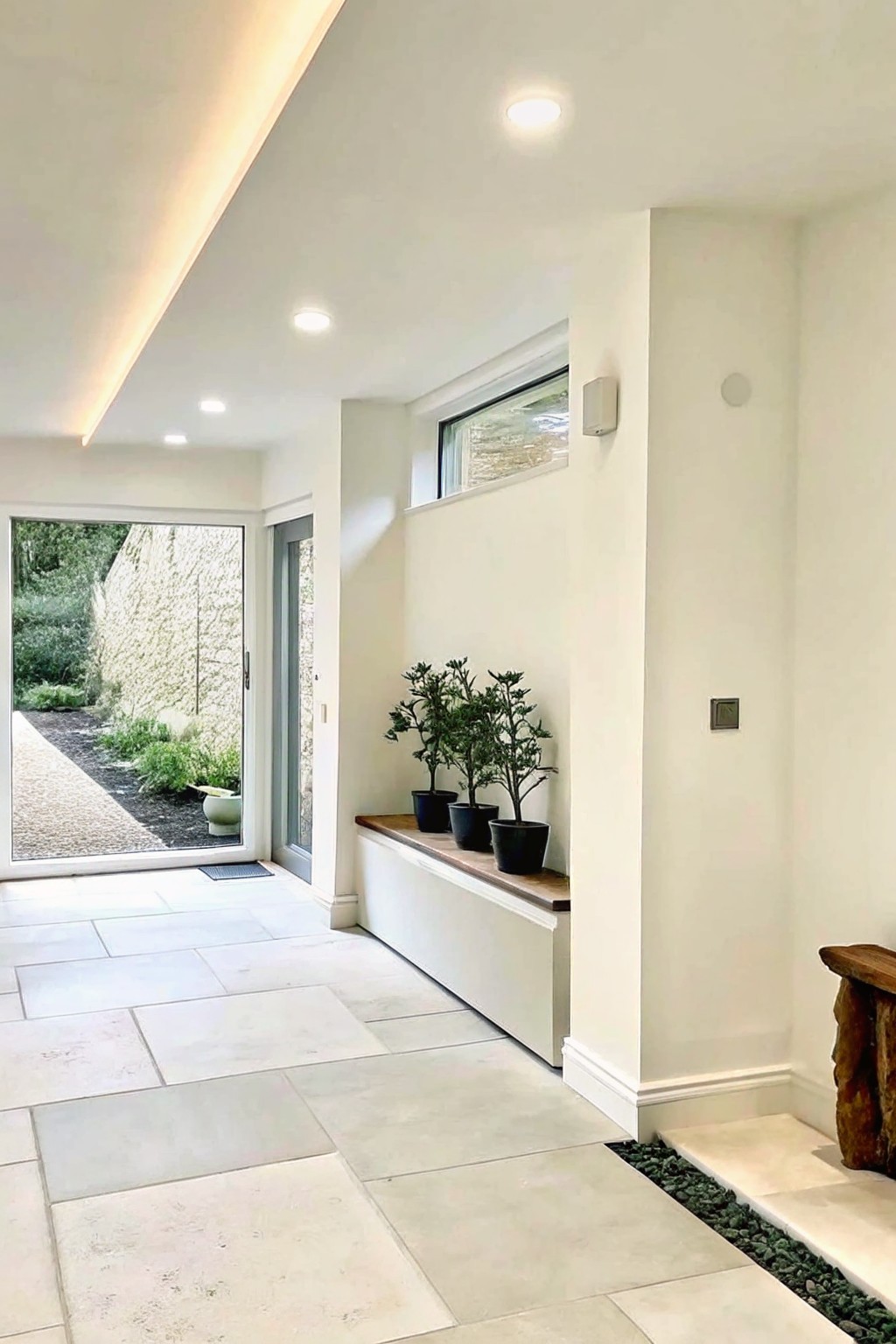
A built-in bench gives you a steady place to line up several planters without crowding the floor. In an entry with stone tiles, this keeps the space open while turning the bench into a quiet display area that links the inside to the garden just beyond the door.
It works best in homes where the flooring already has a natural feel. Keep the bench low and simple so the planters sit at a comfortable height, and choose pots that match the scale of the bench top.
Built In Planters Along Stairs And Walls
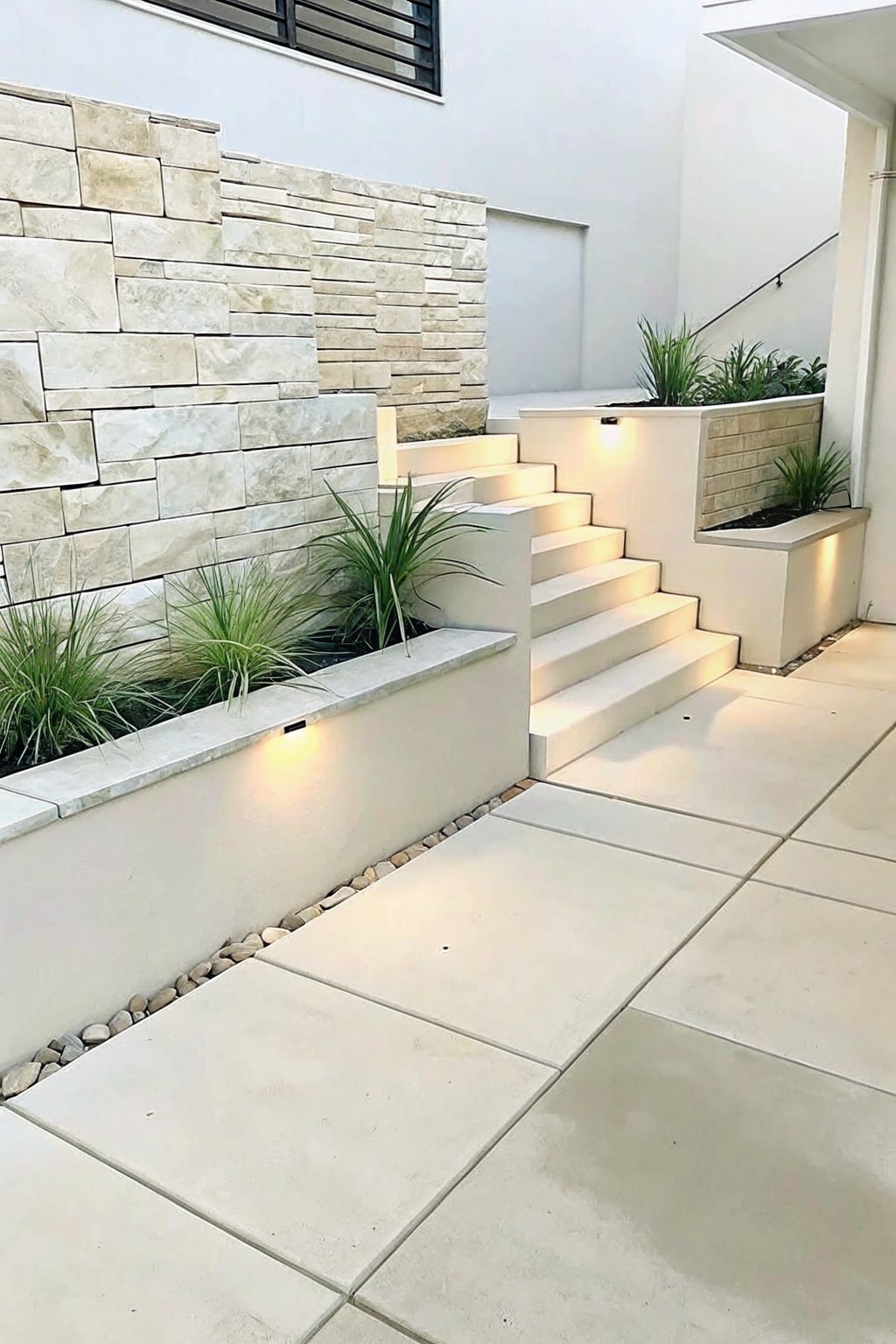
One way to keep an outdoor space feeling organized is to run planters right along the stairs and walls instead of setting them off to the side. This approach turns the hard edges into planting spots without adding extra clutter or separate pots that need moving around.
It works best on homes with clean lines and level changes where you want greenery but still need clear walking paths. Keep the planters low and use the same material as the steps so everything reads as one structure. The pebble border at the base helps with drainage and keeps soil from washing onto the paving.
Frequently Asked Questions
Q: Will my stone planters crack if I leave them outside all winter? A: Stone can handle cold but water inside might freeze and cause damage. Empty them or cover the tops before the first frost hits. This keeps them looking good for years.
Q: What plants look best in polished planters? A: Go for plants with bold leaves or bright blooms that contrast the smooth surface. Ferns and succulents both work well here. They highlight the elegant finish without overwhelming it.
Q: How do I arrange multiple planters in a small garden space? A: Cluster three or four together at different heights. Place the tallest one in the back so everything stays visible. This creates a natural focal point near your seating area.
