

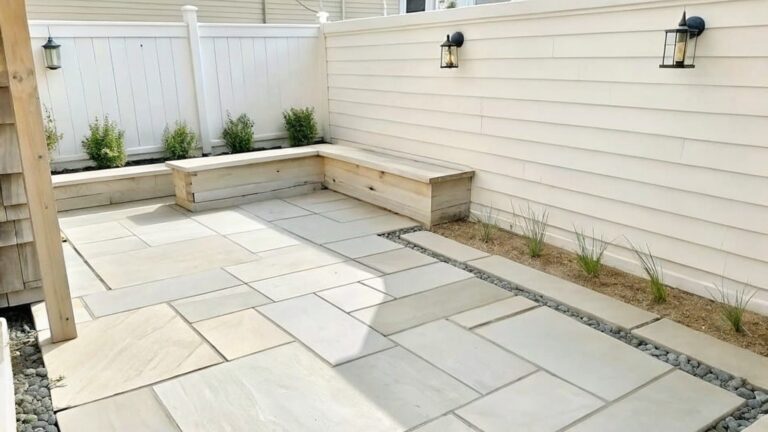
I have always paid attention to how weathered wood settles into a garden path or border without looking forced.
Natural stone adds weight and permanence that helps define areas where plants can grow around them over the seasons.
Balance matters most once the plants fill in.
I would start by trying a simple bench made from reclaimed planks near an existing stone edge to see how it changes the flow.
Over time these choices tend to make the whole yard feel more grounded rather than like separate patches added on.
Wood Benches on Stone Patios
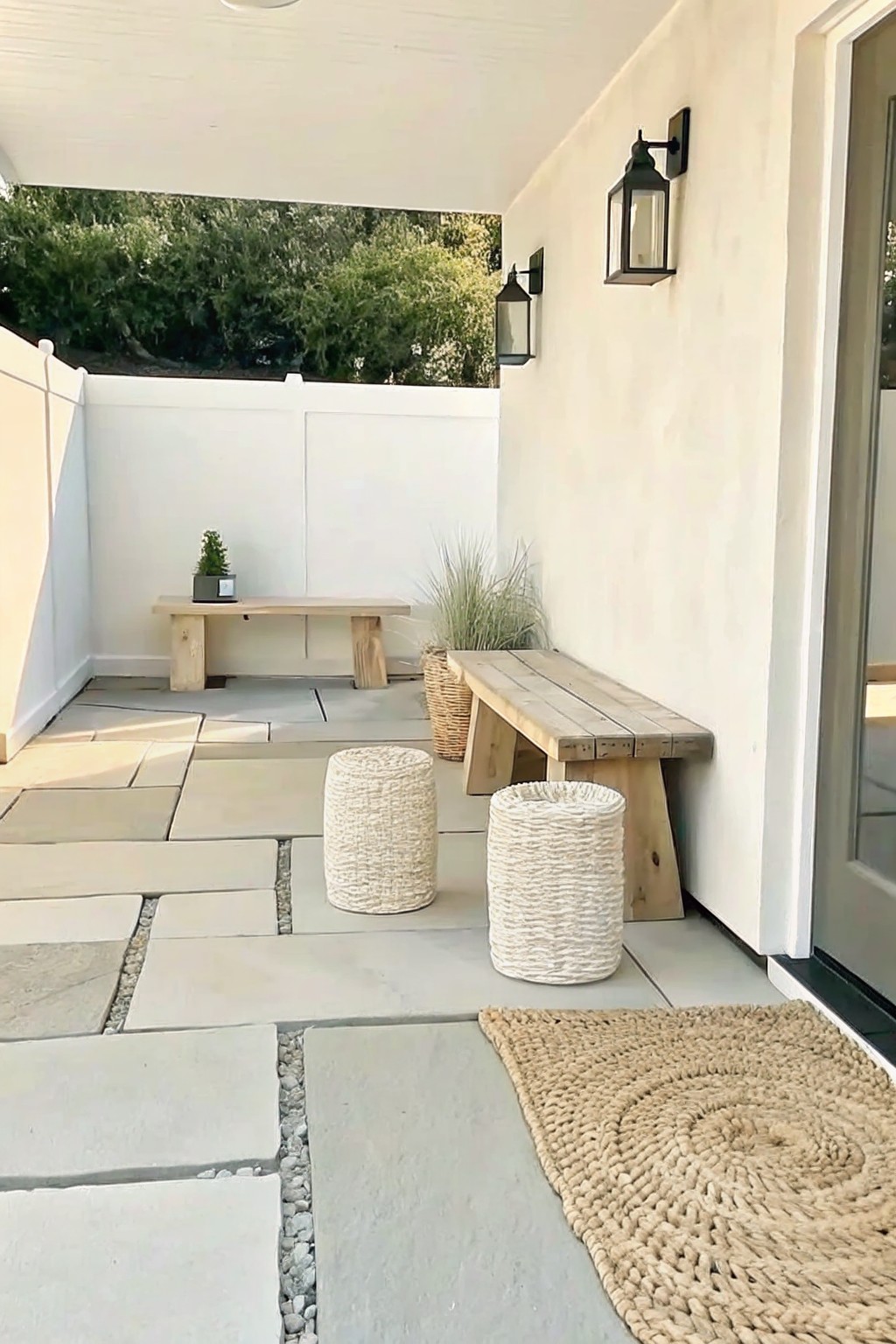
Many people like this approach because it gives you seating that feels sturdy and simple at the same time. The wood ages nicely on its own, and the stone underneath handles rain and foot traffic without extra work.
It suits smaller patios or side yards where you want a couple of spots to sit without filling the area with furniture. Keep the benches plain and let the stone do most of the work.
Natural Stone Flooring Indoors
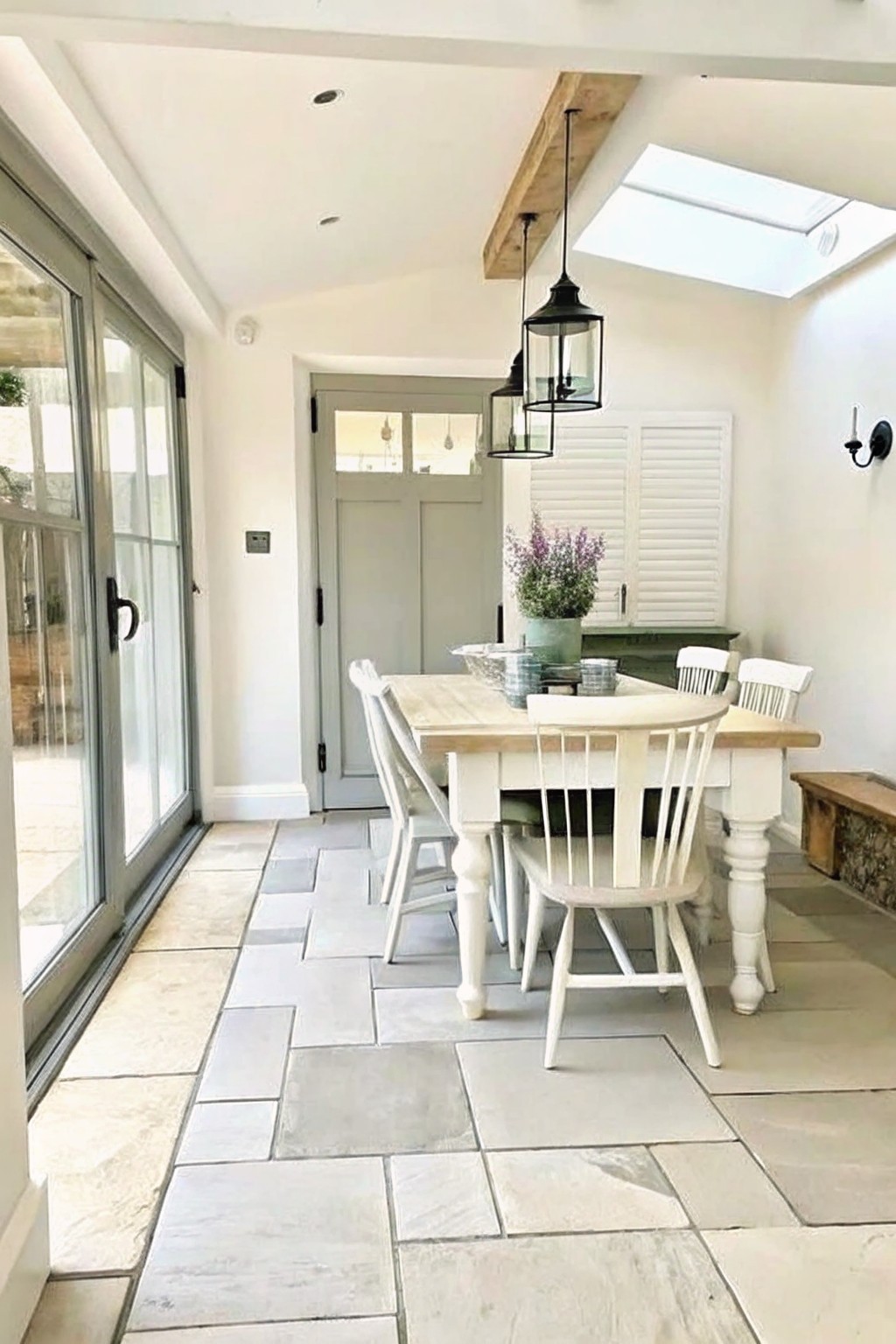
Natural stone flooring brings a grounded, outdoor feel into dining spaces without making them feel cold or heavy. The large irregular tiles add texture and a slight variation in tone that keeps the room looking lived in rather than showroom perfect.
This works best in homes that already lean toward simple, light interiors. It pairs easily with pale walls and wood furniture, though it can feel too cool in very small or north facing rooms where extra warmth from rugs or lighting helps.
Curved Stone Benches Around Fire Pits
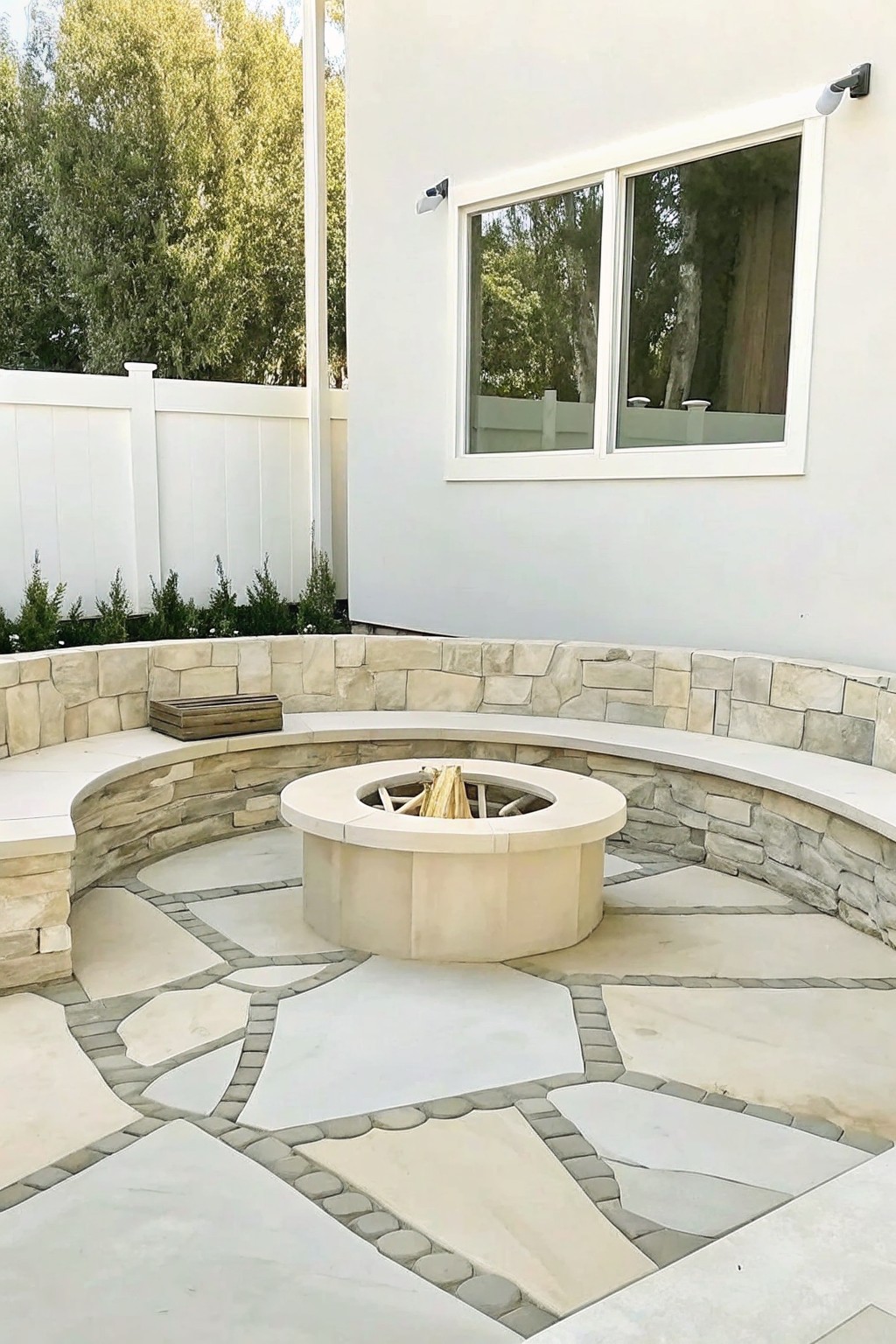
A curved stone bench built right around a fire pit creates a simple seating layout that pulls people together without extra chairs or tables. The solid material holds up well outdoors and gives the area a settled, lasting feel that works with most backyard styles.
This setup suits homes with a decent sized patio or open yard space. Keep the bench height comfortable for sitting and match the stone to any nearby walls or paths so the whole area reads as one piece.
Stone Pavers At The Entry Door

Natural stone pavers give an entry a grounded feel that works well with a simple wood door. The irregular shapes and matte surface keep the look relaxed instead of too neat, which fits the overall rustic style many people want outside.
This works best on homes with some age or a casual exterior. Use stones that are fairly flat so walking feels steady, and keep the layout narrow if the space is tight.
Natural Stone Paths For Narrow Garden Areas

Large stone slabs work well for paths in tight spaces because they feel solid underfoot and need very little upkeep. The irregular shapes and soft gray tones help the path settle into the surroundings instead of standing out.
This approach suits homes with existing stone walls or older garden boundaries. Keep the joints fairly wide so a little gravel or moss can fill in over time and soften the edges.
Natural Stone Pavers For Outdoor Seating Areas

Natural stone pavers work well under outdoor seating because they feel solid and permanent without looking too finished. The irregular shapes and grass growing between them keep the space tied to the garden instead of turning it into a hard surface that stands apart.
This approach suits homes where the patio sits right next to planting beds or lawn. It holds up in most climates and needs little more than occasional weeding between the joints. Just make sure the base is level so the furniture sits steady.
Built-In Wood Benches For Garden Seating

A long bench set into stone and concrete gives you solid outdoor seating without taking up extra floor space. The wood sits low and steady on a simple pedestal base, which keeps the whole thing feeling grounded and easy to maintain over time.
This setup works well along a back wall or the edge of a patio where you want a place to sit without adding loose furniture. It suits homes that already use stone paving or walls, and the main thing to watch is choosing wood that can handle rain and sun without much fuss.
Adding Open Storage to Outdoor Counters
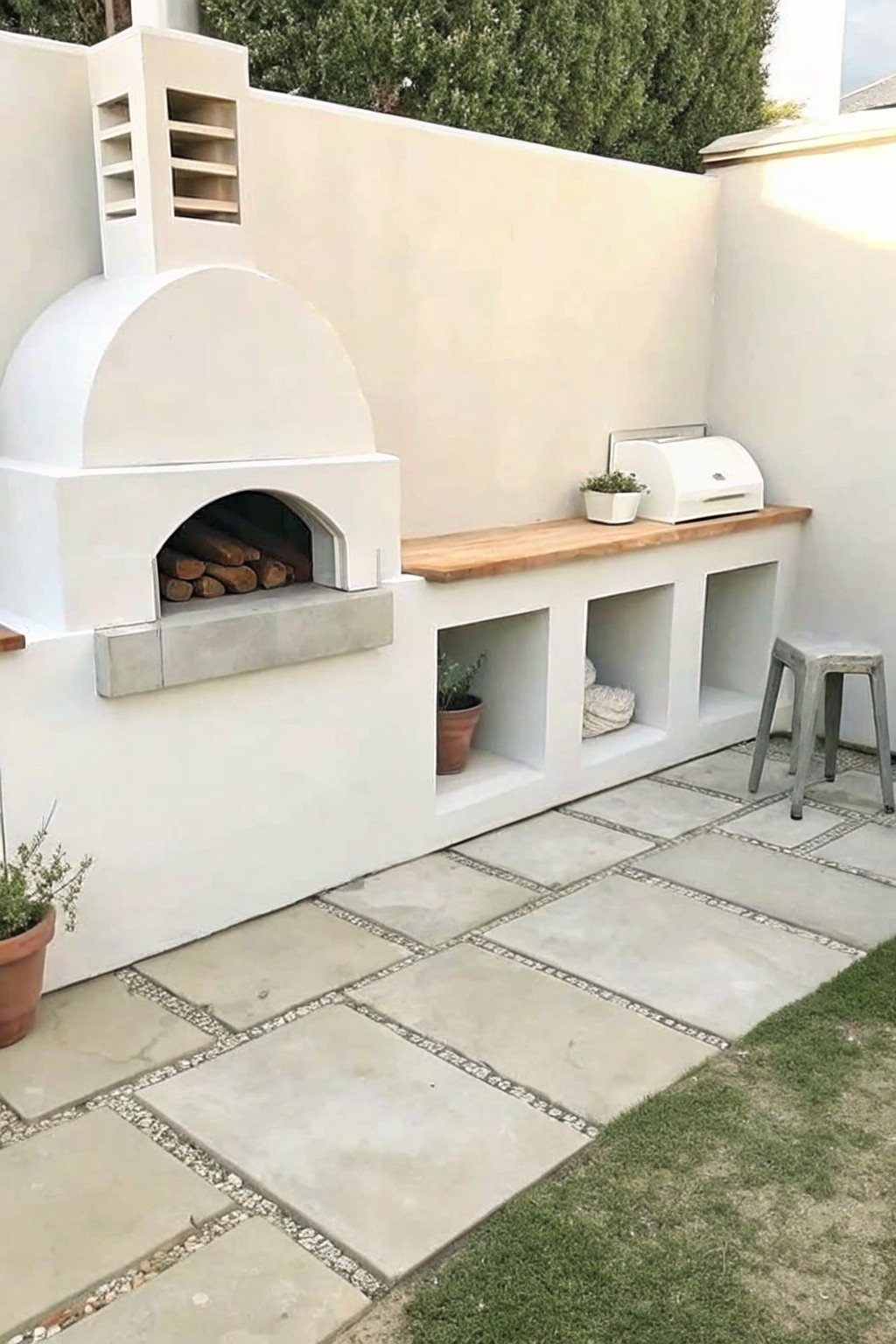
One practical way to handle an outdoor space is to build a long counter with open cubbies right below the work surface. The wood top gives a simple place to prep or serve while the lower sections hold things like pots or folded items without doors that could stick or warp outside.
This works best on patios or garden areas where you need storage close to a cooking spot but do not want a full cabinet setup. Stone pavers underfoot help tie the whole area together and make it easy to keep clean.
Stone Walls That Double As Seating
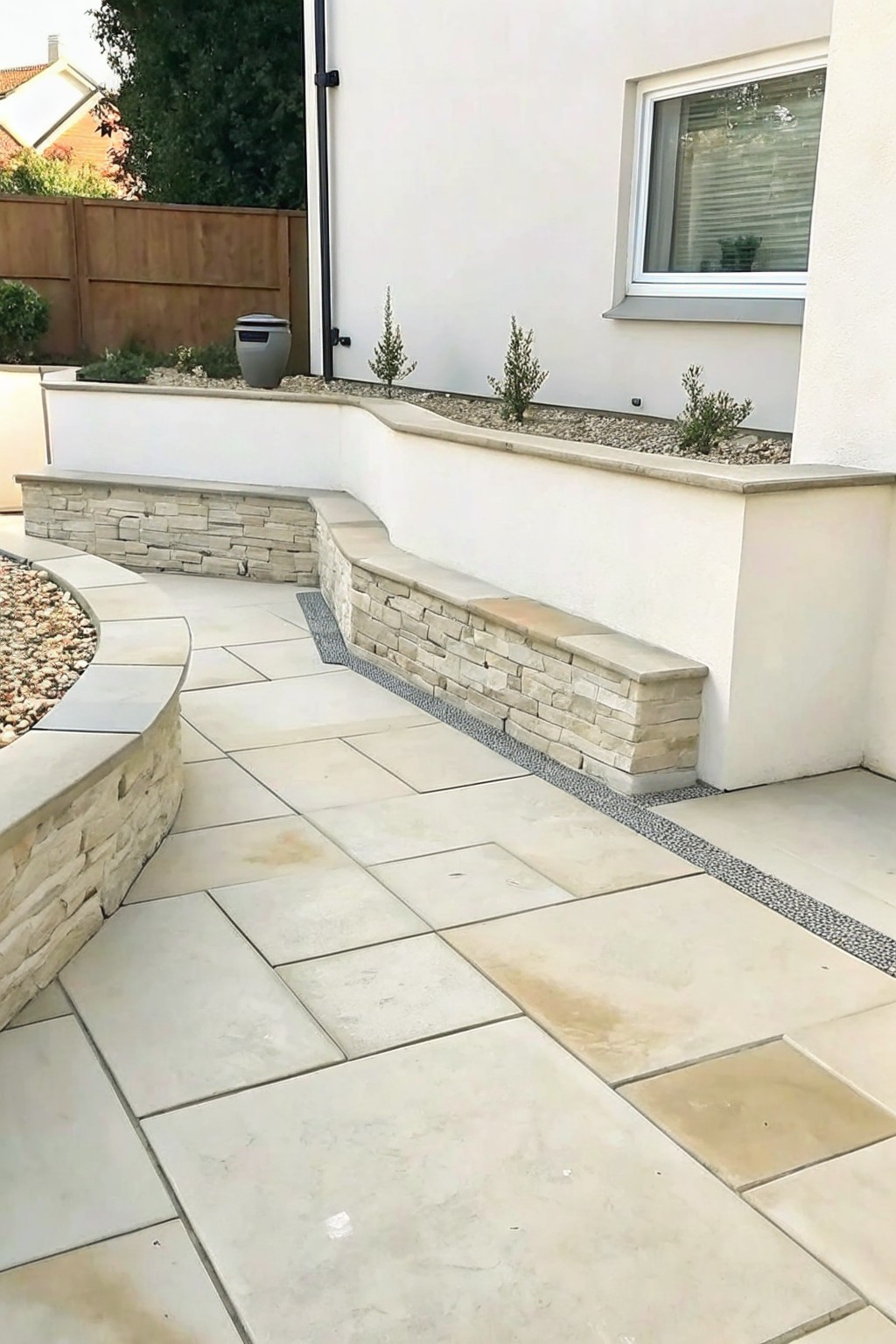
Natural stone walls work well when they do more than just hold back soil. In this setup the flat tops on the low walls create built-in seating right where the patio meets the garden beds, so you get places to sit without adding separate benches or chairs.
This idea suits homes with modest outdoor space or gentle slopes, since the walls keep the planting areas tidy and the gravel mulch cuts down on weeding. It pairs best with light-colored paving so the stone feels like one continuous material rather than separate features.
Stone Pavers With Gravel Joints
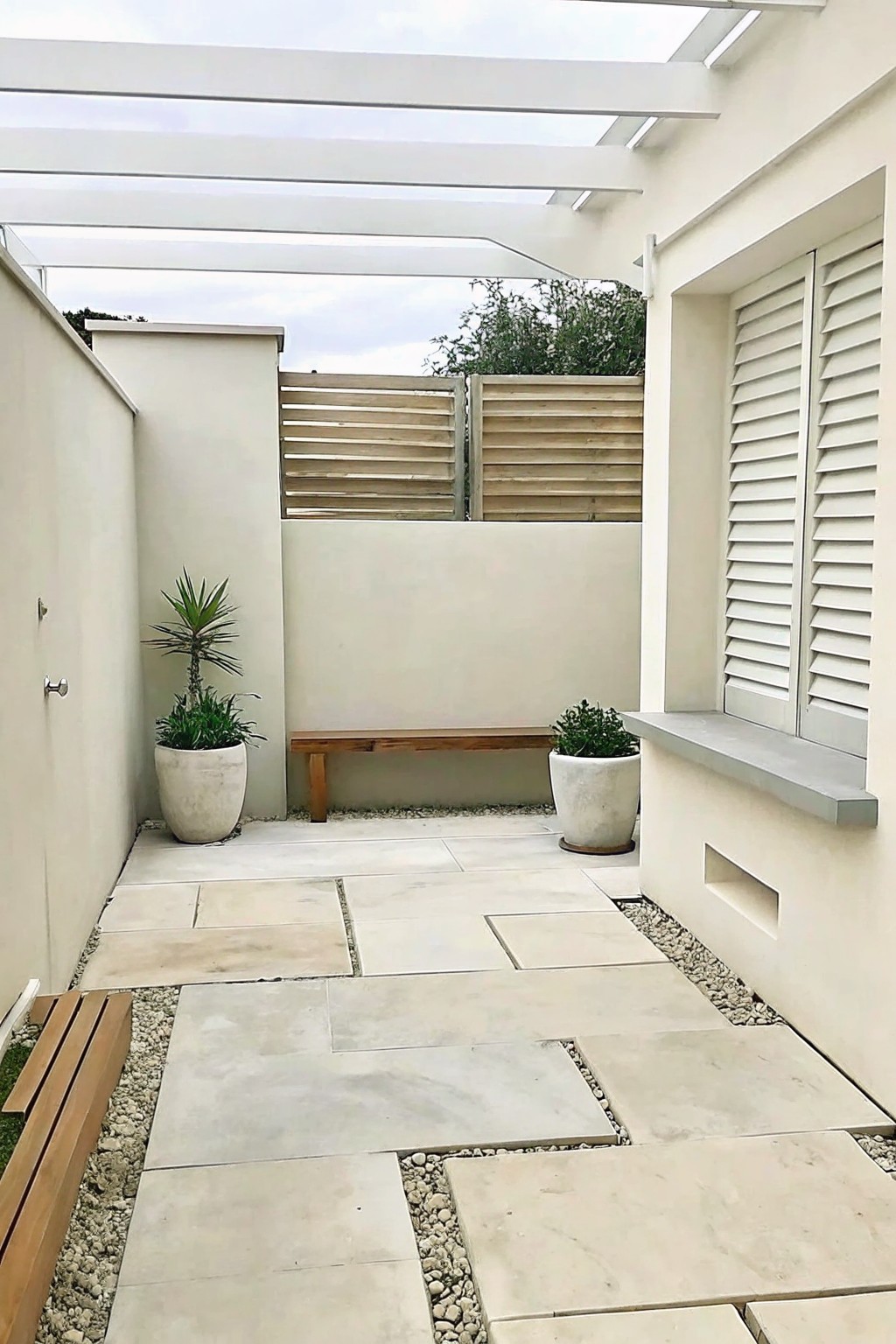
Large stone pavers set with gravel between them give an outdoor space a relaxed, natural surface. The look feels less formal than a solid slab and works especially well in smaller courtyards or side areas where you want something simple underfoot.
This flooring choice pairs easily with basic wooden seating and a few large pots. It suits homes that already lean rustic or Mediterranean, and it stays practical because the gravel helps with drainage and weeds stay easier to manage.
Natural Stone Paths With Gravel Edges
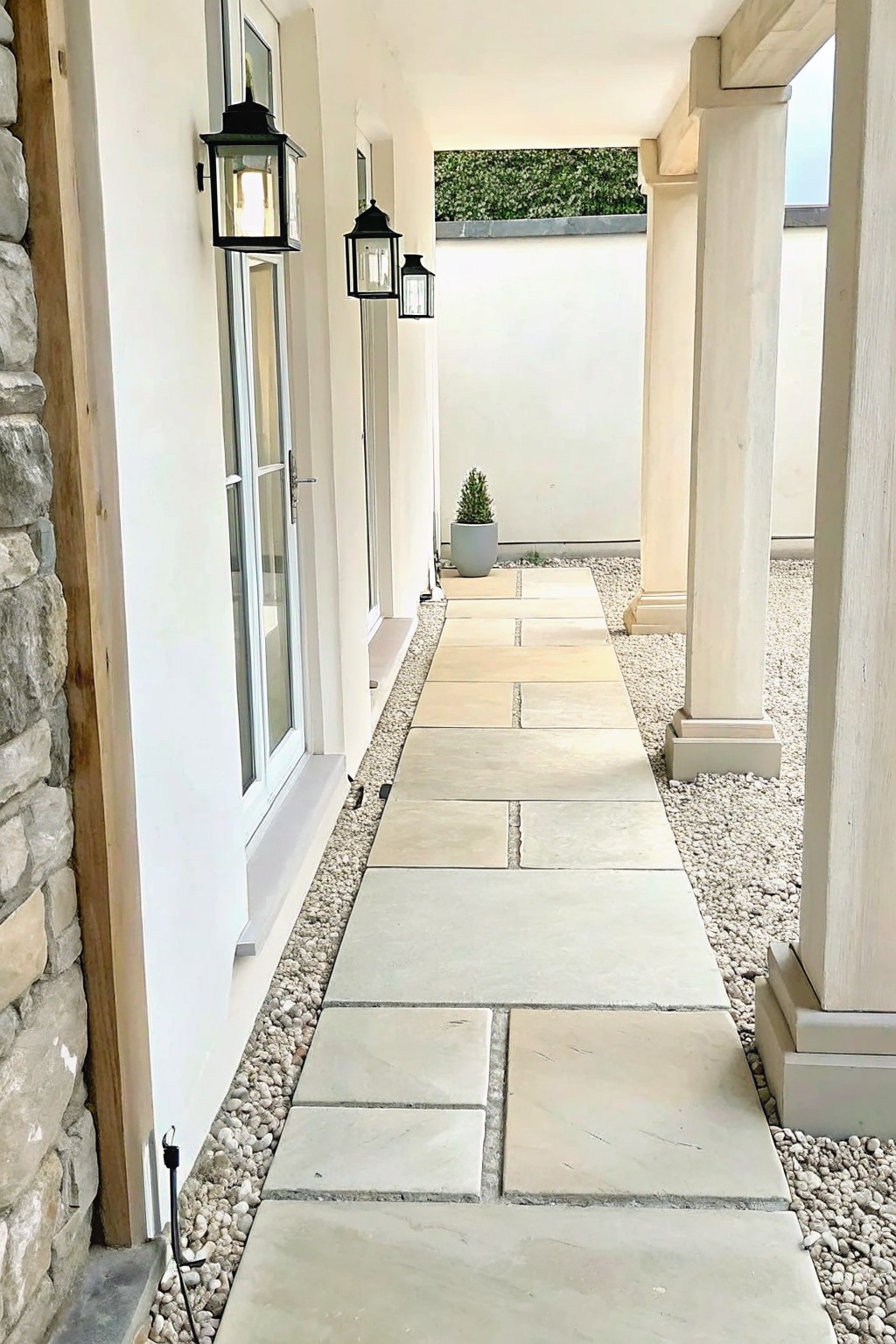
A path made from large stone pavers set into gravel keeps things simple and low maintenance. The combination feels natural and lets the stones stand out without extra borders or edging materials.
This layout works best along the side of a house or through a small courtyard where you want a clear walking route. Keep the gravel light in color and the pavers fairly large so the path stays easy to follow and does not feel fussy.
Natural Stone Benches for Plants
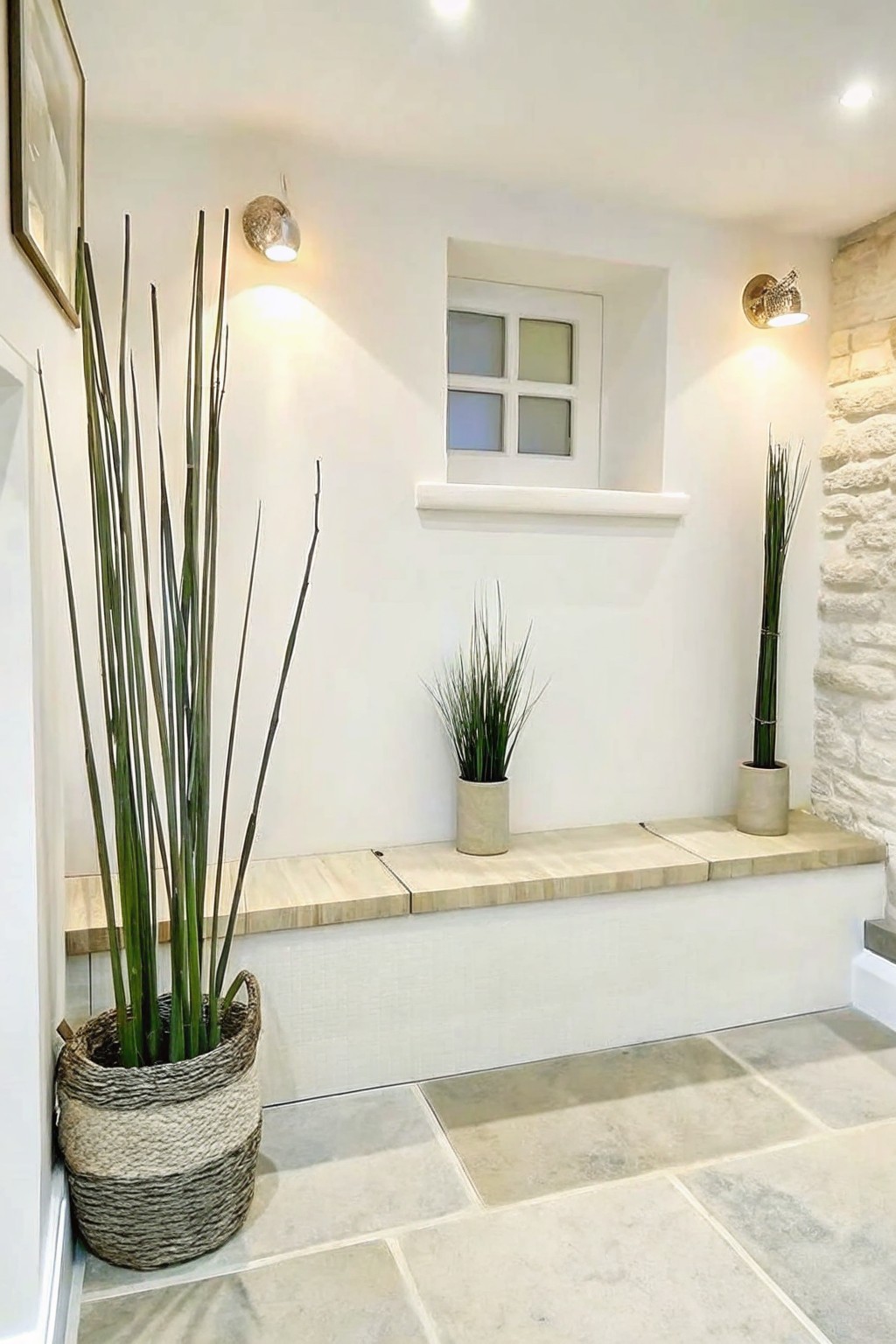
A low stone bench gives you a steady surface for setting plants right along a wall. It keeps the arrangement simple and grounded without adding extra furniture that might crowd the space.
This works best in entry areas or hallways where plants can get some light. Stone handles spills and moisture from watering better than wood, and it pairs easily with baskets or plain pots. Keep the bench height low so the plants feel like part of the room rather than a separate display.
Weathered Wood Swing Over Gravel

A swing built from weathered wood adds a simple seating spot that fits right into a small garden or courtyard. The wood feels at home next to gravel, and the whole setup stays low key while still giving you a place to sit outside.
This kind of swing works well in tight outdoor areas where you want something useful but not fussy. Gravel handles rain easily and cuts down on weeding, so the space stays neat without constant work.
Natural Stone Along Interior Stairs
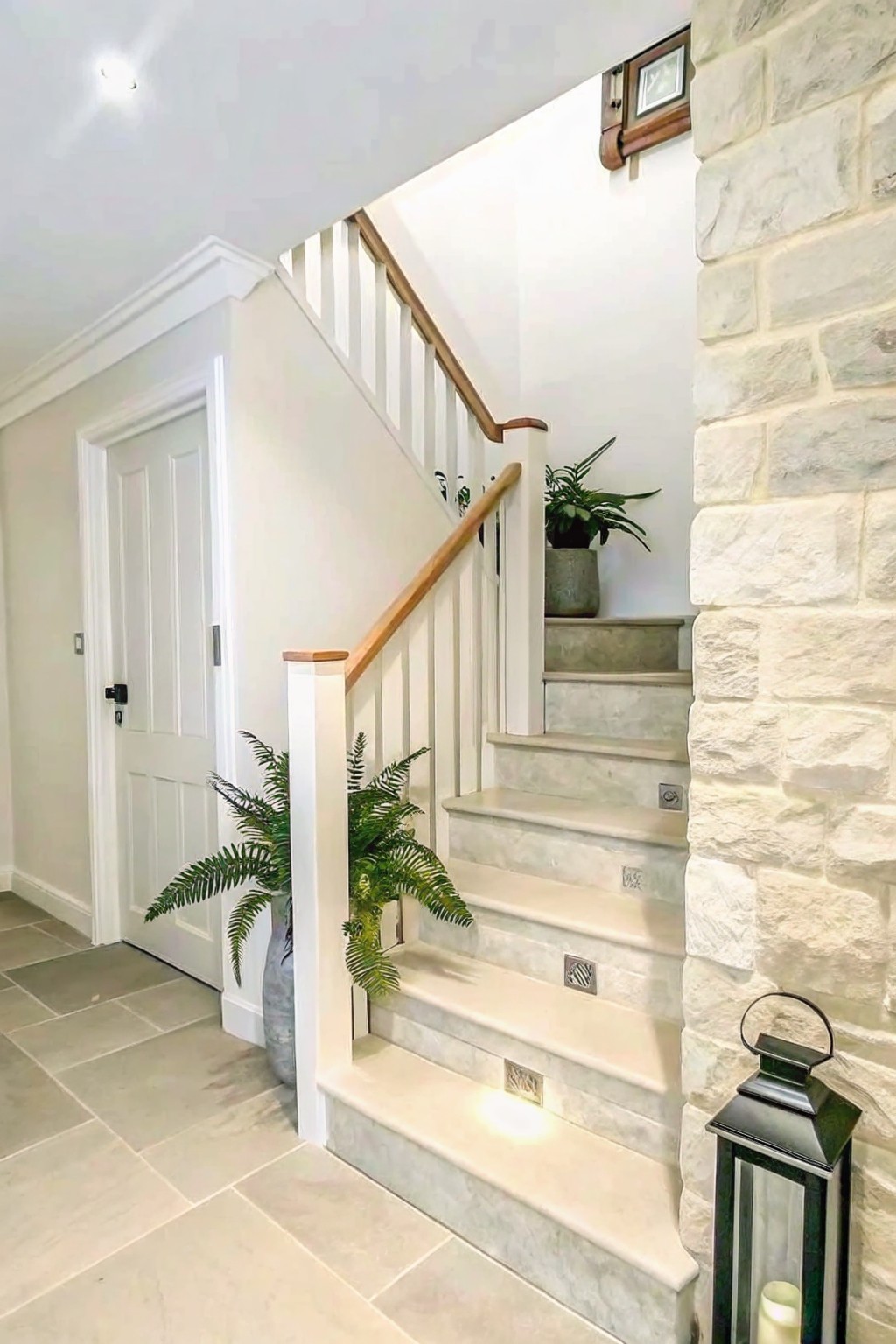
Natural stone brings a solid, grounded look to a stairwell when used as a side wall. It adds texture that feels permanent and pairs well with simple wood railings and painted trim.
This works best in homes that already lean rustic or traditional. Keep the rest of the space light so the stone reads as an accent rather than a heavy feature.
Wood Benches With Stone And Gravel

A low wooden bench set into a bed of pebbles and stone gives an indoor space the feel of a garden bed without taking up much room. The mix of weathered wood and natural stone keeps things simple and grounded while still letting plants stand out along the edge.
This works best in rooms with steady natural light like sunrooms or wide hallways. Place the bench low so it feels like part of the floor rather than furniture and keep the surrounding stone light in color so the space does not feel closed in.
Natural Stone Sinks For Outdoor Use
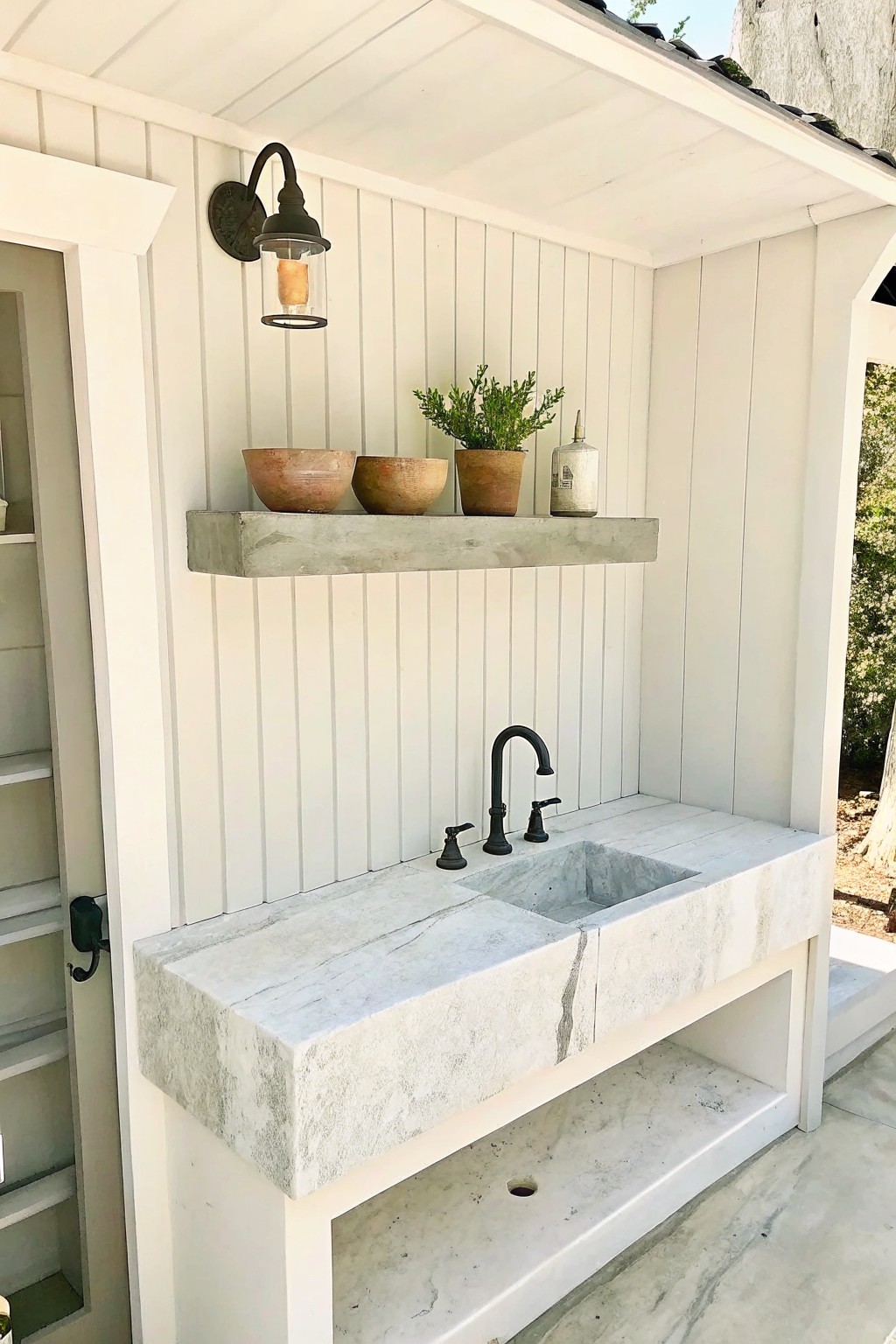
Natural stone holds up well outside and gives an outdoor sink a solid, lasting presence. It handles water, dirt, and daily wear without looking worn down quickly, which makes it a practical choice for garden work areas.
Place one against a wall or under a simple roofed structure where you wash tools or pots. Keep the rest of the space plain with basic wood and minimal extras so the stone stays the main feature.
Natural Stone Flooring for Outdoor Passages

Natural stone flooring holds up well in covered outdoor spots where rain and sun hit regularly. It gives a simple, solid base that feels at home next to garden beds and potted plants without needing much upkeep.
This works best on homes with a rustic or casual style, especially in side entries or walkways that connect the house to the yard. Keep the tones light if you want the space to stay bright, and pair it with a few large pots to soften the edges.
Stone Paths With Gravel Borders
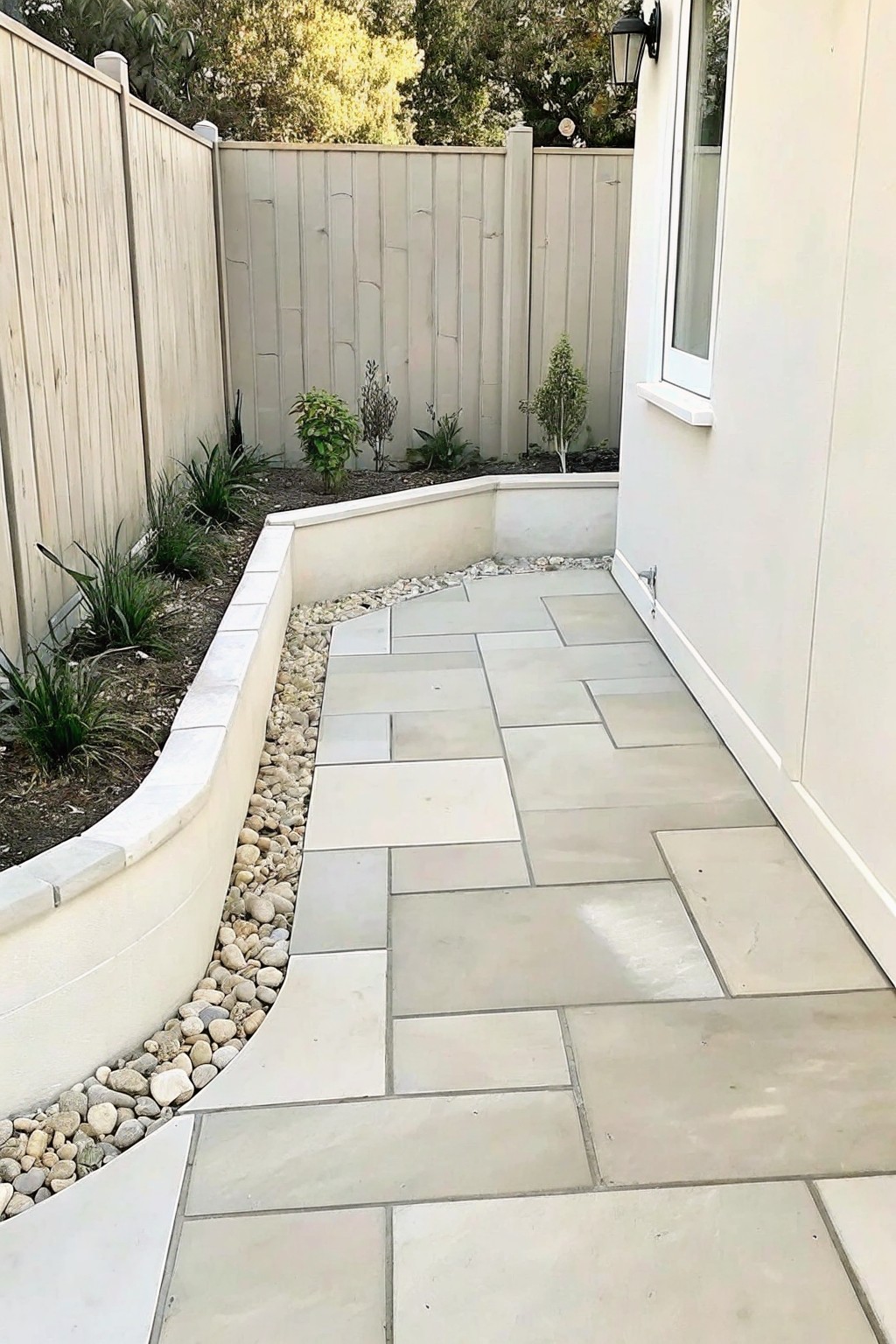
A simple stone path edged with gravel keeps the walkway from feeling too formal while still giving a clear route through the garden. The mix of large pavers and loose stone helps water drain away and cuts down on weeds along the edges.
This approach suits narrow side yards or beds that run beside a fence. Keep the gravel layer thin so it does not spill onto the pavers, and choose a stone color that matches any nearby walls.
Frequently Asked Questions
Q: How do I find good weathered wood without buying new stuff?
A: Drive around rural areas and look for fallen trees or old barns being torn down. Many owners will let you haul it away for free. Sand it lightly to remove splinters but leave the gray color intact.
Q: Will rain wash away the natural look of my stone features?
A: No. Stone holds up well in wet weather. Just rinse off any dirt buildup once a year with a hose.
Q: Should I add plants right next to the wood decor?
A: Yes. Tuck low growing herbs or moss between the wood pieces. They soften the edges and make the whole setup feel more alive.
