


When I step into my garden after dark the boundaries often fade away unless something draws the eye along the fence line.
Adding light in the right spots can shape the whole layout so the space feels intentional rather than accidental.
That shift matters more than it seems at first.
I usually start by checking how the beams hit the ground and whether they cast shadows on the beds I already have.
Over time those choices end up affecting how usable the garden stays once the sun goes down.
String Lights Along The Fence

String lights work well for marking fence lines after dark because they create a soft, continuous edge that feels clear without being harsh. They turn the fence into a visible boundary while keeping the garden feeling open and easy to walk through at night.
This approach suits narrow side yards or back gardens where you want simple definition rather than big fixtures. Hang the lights along the top of the fence boards and keep the bulbs warm so the path stays welcoming instead of overly bright.
Linear Lighting at the Base of Fences
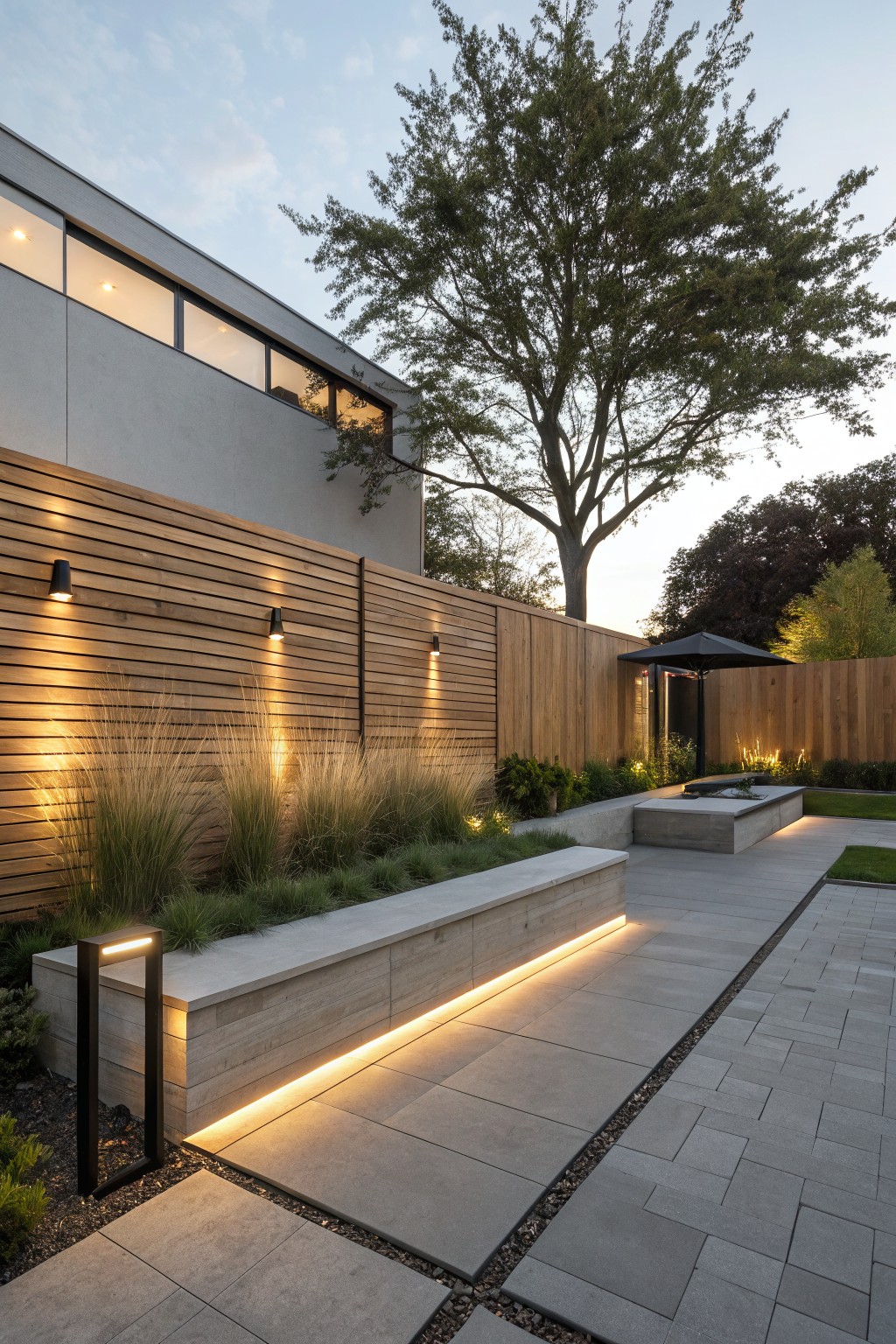
A simple strip of light running along the bottom edge of a fence gives the boundary a clear but soft outline once the sun goes down. It avoids the glare of overhead fixtures and instead creates a low, steady glow that marks where the garden ends without overpowering the space.
This approach works especially well with horizontal wood fencing because the light catches the lines of the boards and adds depth. It suits homes with paved patios or seating areas right next to the fence, though it needs a protected channel so the fixture stays clean and lasts through the seasons.
Wall Lanterns To Light Patio Edges
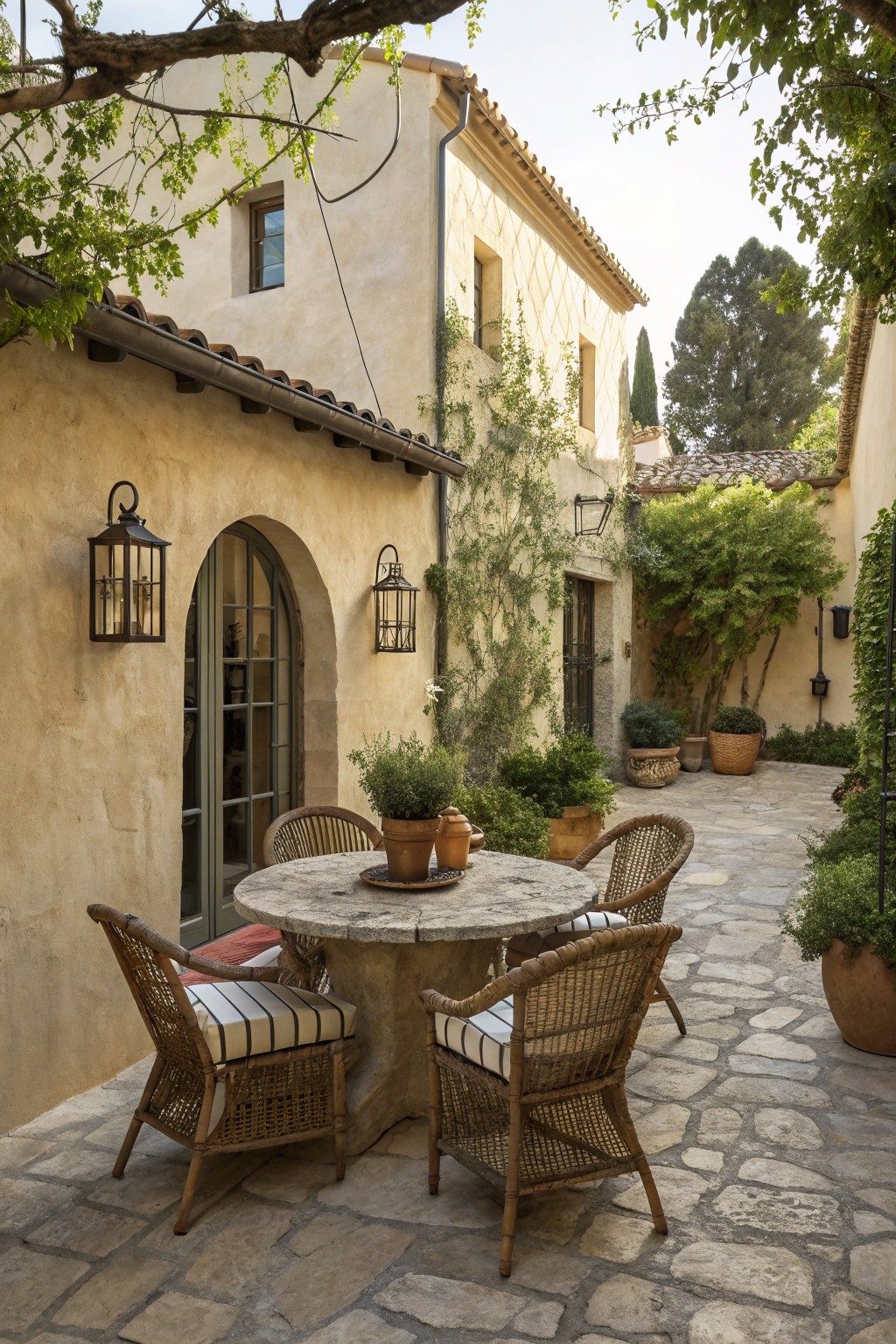
Wall lanterns work well when you want to mark the edge of a patio without adding freestanding poles. They sit right on the house or garden wall and cast a soft downward glow that keeps the seating area visible while leaving the surrounding garden darker. This setup feels natural in older homes where the architecture already has some texture and depth.
Place them at eye level or slightly higher along the main walls that frame the space. They suit stone or stucco surfaces best and work on any patio that sits close to the house. Keep the number low so the light stays calm rather than bright.
Fence Post Lights Along a Garden Path
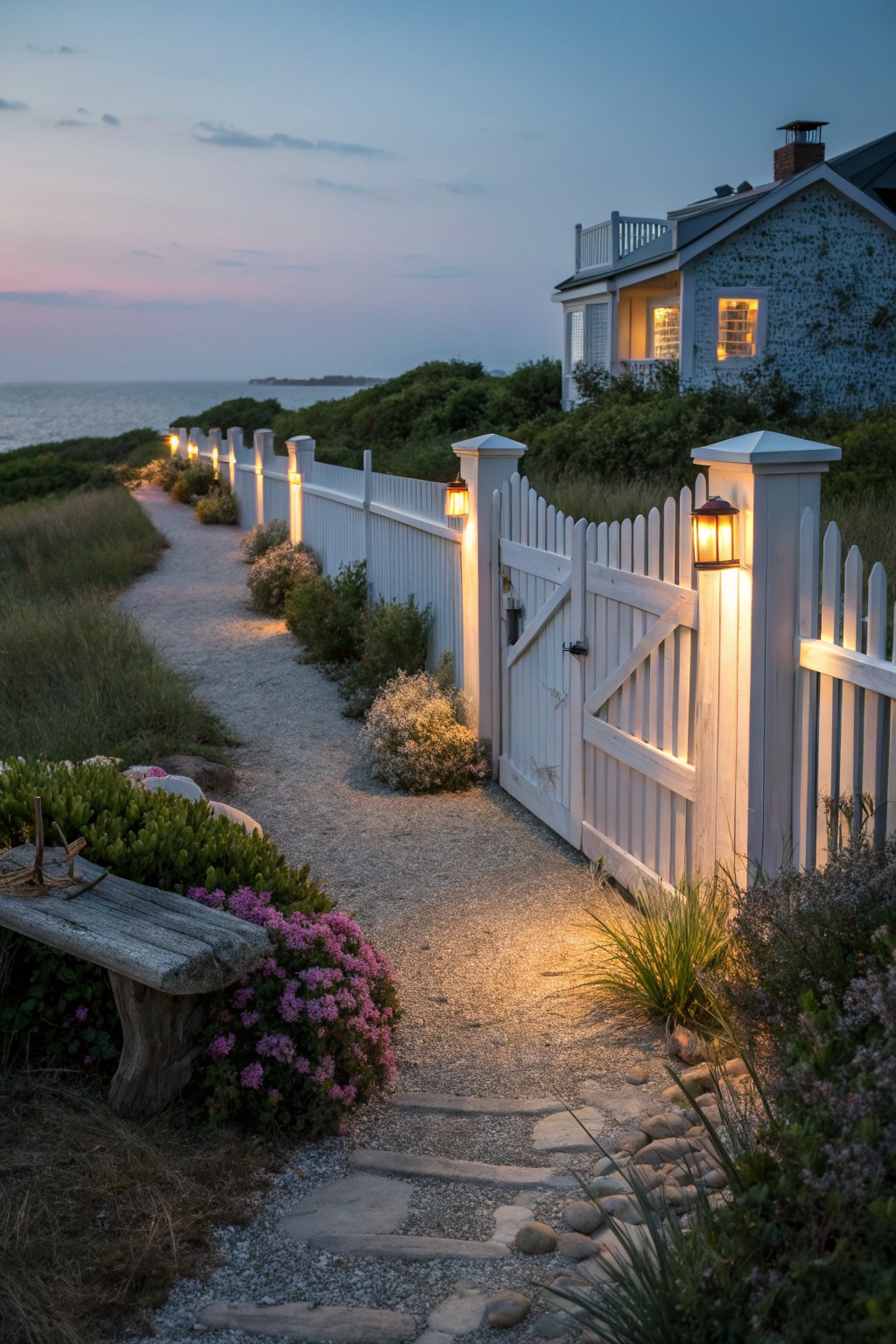
Many people add small lights to the tops of fence posts because the glow helps mark the edge of a path without needing tall fixtures. It keeps the light low and even, which makes it easier to walk through the garden once the sun goes down.
This works best on homes with gravel or stone paths that run along a fence line. Space the lights a few feet apart, use warm bulbs, and keep the fixtures simple so they blend with the fence rather than stand out.
String Lights Along the Fence Line

String lights work well when you want to mark the edge of a yard without adding fixtures directly to the fence. Running them overhead in a gentle line keeps the boundary visible at night while also lighting the seating area below.
This approach suits most backyard patios that sit right against a fence. Keep the strands high enough for headroom and space the bulbs evenly so the light stays soft instead of creating harsh spots.
Line the Fence With Low Ground Lights

Placing small lights right along the base of a fence gives a clear edge to the garden after dark. The glow stays low and shows exactly where the path stops and the beds begin without flooding the whole area with brightness.
This approach suits narrow side yards or any spot where you want the fence to feel like a real boundary rather than just a wall. Keep the fixtures simple and spaced evenly so the line stays steady instead of patchy.
Backlit Panels On The Garden Fence

Placing lights behind fence panels gives a steady wash of light that marks the yard edge without creating harsh spots. The effect feels calm and helps the boundary read clearly once the sun goes down.
This setup works best with horizontal slats on a modern fence. Tuck slim LED strips or small fixtures into the gaps so the light spills forward gently. Keep the fixtures low and aimed away from seating spots to avoid glare.
Lanterns Along the Fence Line

Hanging a few lanterns along a fence gives the boundary a clear shape once the sun goes down. The light stays low and gentle, so it marks the edge without turning the whole yard into a spotlight zone.
This approach suits homes with longer fence runs or garden paths that follow the property line. Space the lanterns every eight to ten feet, and choose styles that match the fence material so the look stays simple rather than busy.
Spacing Lights Evenly Along a Fence

Placing a row of small lights at regular intervals along a fence helps mark the edge of the garden once the sun goes down. The steady line of light makes the boundary easy to see without needing bright overhead fixtures.
This approach suits long, narrow spaces where you want to keep the path feeling safe and defined. Match the spacing to the fence panels and keep the fixtures low so the light stays focused on the fence and ground rather than spilling upward.
Placing Lights Along Wooden Fences

Mounting lights directly on a wooden fence gives the boundary a clear shape once the sun goes down. The glow stays close to the structure instead of spreading out into the garden, so the edge stays visible without extra poles or fixtures in the planting beds.
This approach works well on sloped sites where fences sit above retaining walls. Keep the fixtures small and spaced evenly so the light stays even and does not create hot spots on the wood.
Mark Fence Lines with Ground Lights

Small ground lights tucked into gravel make a fence feel more intentional after dark. They trace the boundary without needing tall fixtures or bright bulbs, and the glow stays low so it does not spill into the street or neighboring yards.
This approach works best on homes with simple metal fencing and low-water landscaping. Keep the lights spaced evenly, choose warm bulbs, and let the gravel and rocks reflect just enough light to show the edge clearly at night.
String Lights Along The Fence
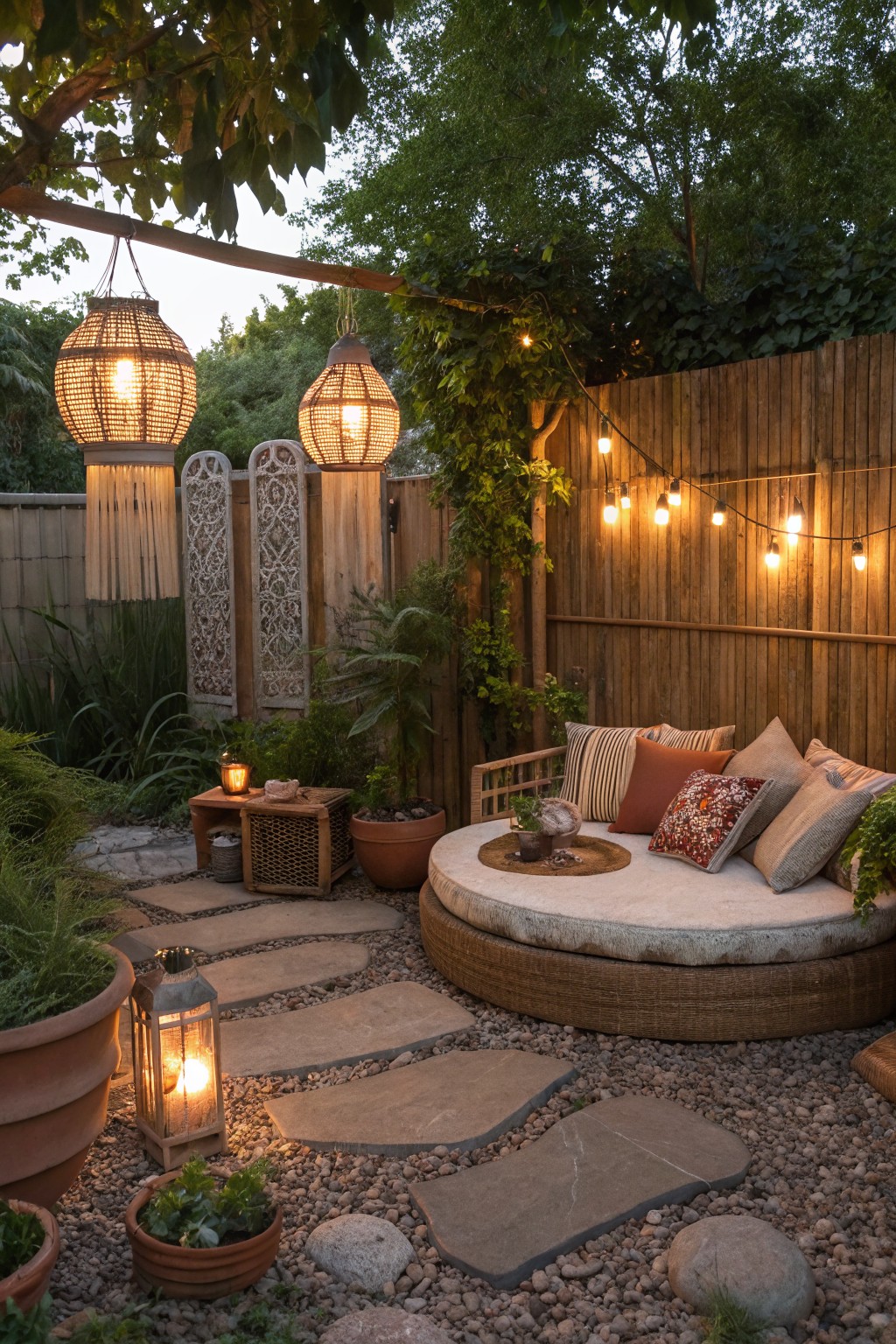
String lights give a clear way to mark the edge of a garden once the sun goes down. Running them along the top of the fence creates a soft line that shows where the space ends without adding extra structures or heavy fixtures.
This approach works best on wooden fences around patios or small yards where you want a gentle boundary. Space the bulbs evenly and keep the strand simple so the light stays warm rather than overwhelming the plants nearby.
Mount Lanterns Along the Fence
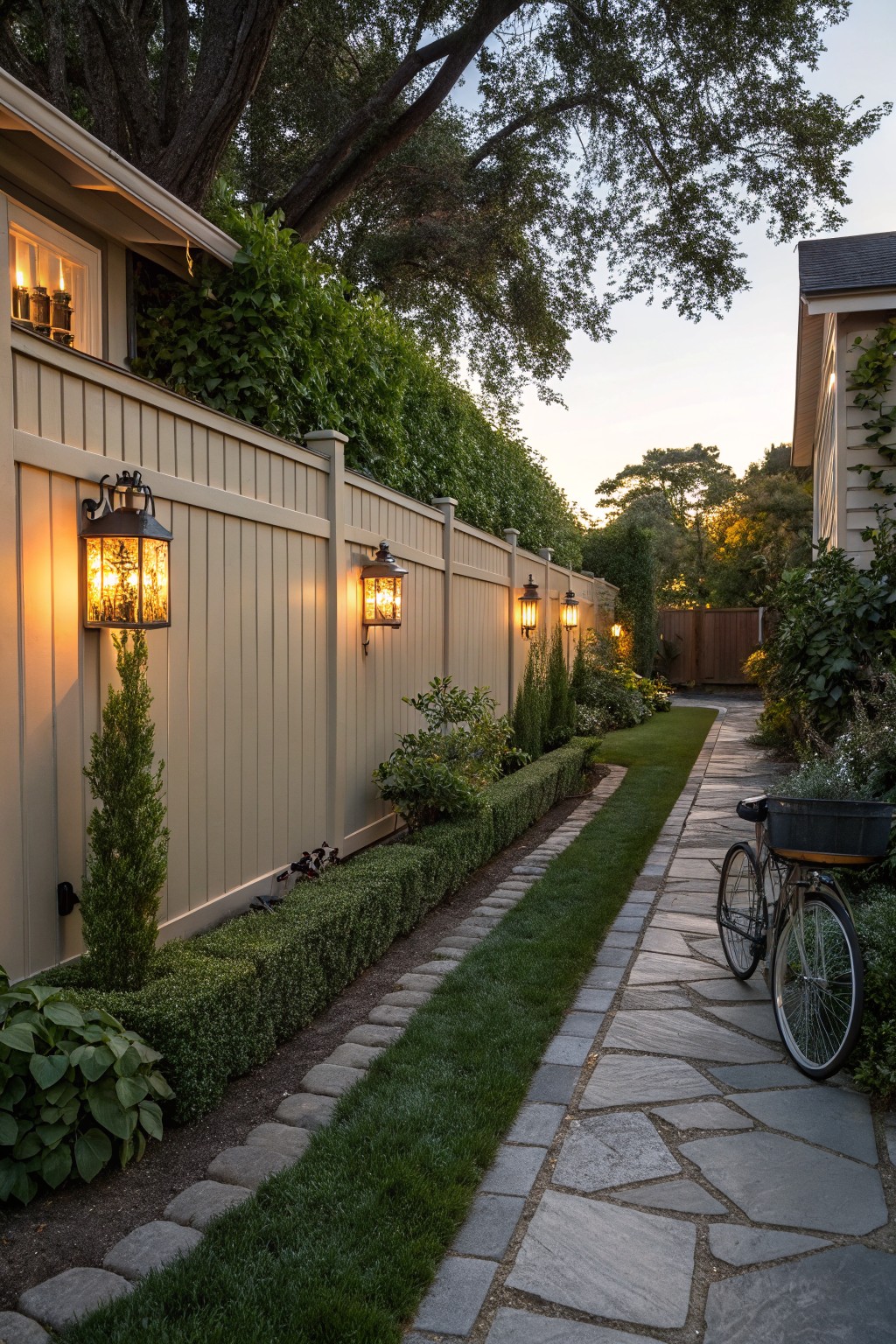
Placing lights straight on the fence gives the path a clear edge once the sun goes down. The fixtures stay out of the way yet still light the ground and the planting bed right beside them.
This setup works best on long straight fences where you want a simple line of light without adding extra posts. It suits side yards or narrow garden paths where the fence already defines the boundary. Keep the spacing even and choose fixtures that match the fence color so they blend in during the day.
Wall Lanterns For Boundary Lighting

Wall lanterns give a simple way to mark where the house meets the garden without needing tall posts or extra poles. In this setup the lights sit at eye level on the stucco, casting a steady glow over the gravel and potted plants so the edge of the space stays clear after sunset.
Place them about eight to ten feet apart along any solid wall or fence that borders a patio or path. They work best on homes with Mediterranean or traditional details, and they keep the light low and warm instead of flooding the whole yard. Just make sure the fixtures are rated for outdoor use and wired on a separate switch so you can turn them on without lighting the whole house.
Hang String Lights Along The Fence
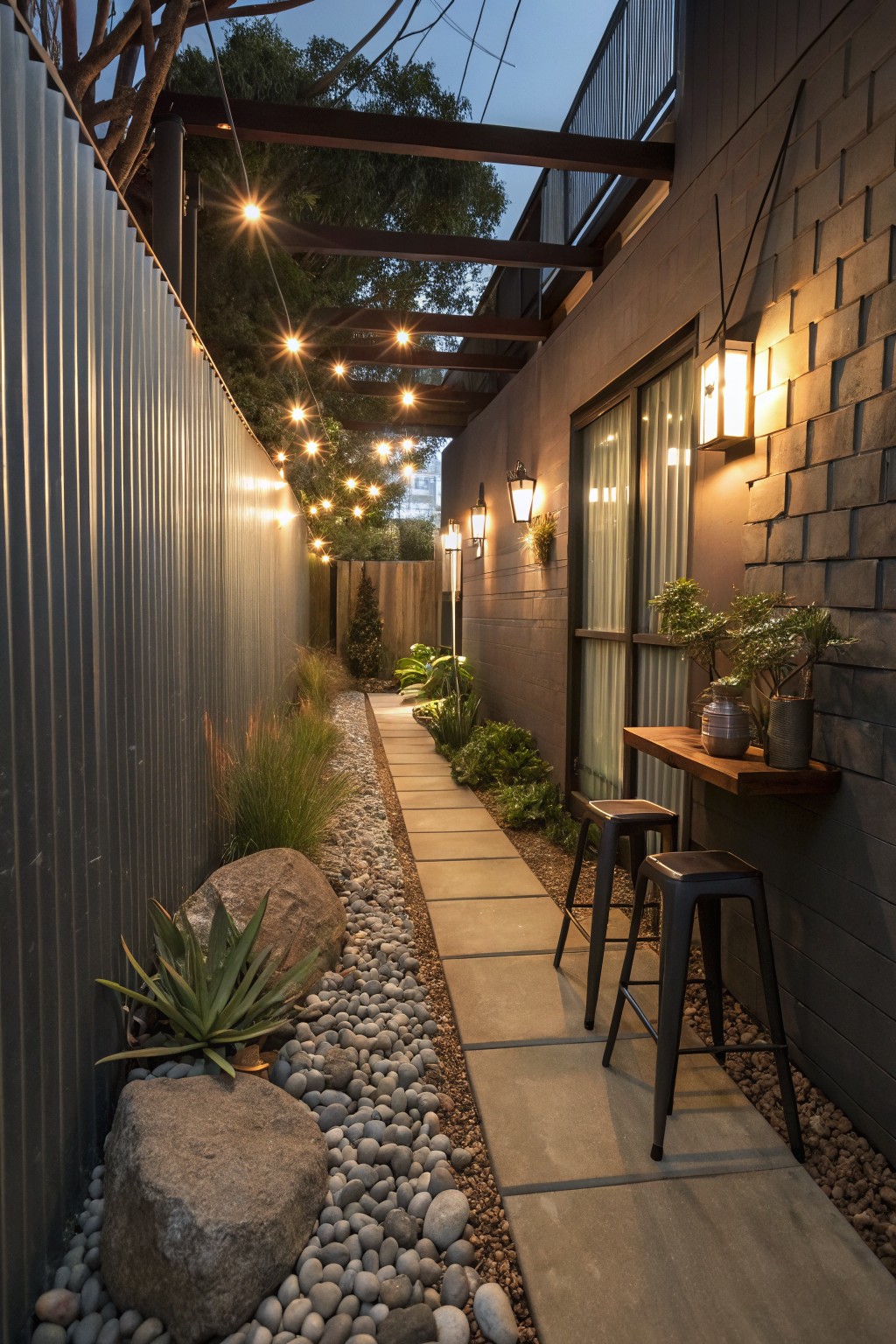
String lights work well for marking a fence line after dark because they spread a soft, even glow without overpowering the space. In a narrow side yard they help show where the boundary sits and make the path feel safer to walk at night.
This approach suits homes with long fences or slim garden edges where you want simple lighting that does not block views. Hang the strings at a steady height, keep bulbs fairly small, and let low plants sit underneath so the fence stays the main feature.
Add Vertical Lights Along the Fence

Vertical lights mounted on a fence give the yard a clear edge once the sun goes down. They mark the boundary without adding extra poles or fixtures that take up space, and the even spacing keeps the look simple and steady.
This works best in yards where seating or a pool sits close to the fence line. Space the lights a few feet apart, keep the bulbs warm, and make sure the fixtures sit low enough to light the fence boards rather than shine into the seating area.
Lantern Posts At The Garden Gate
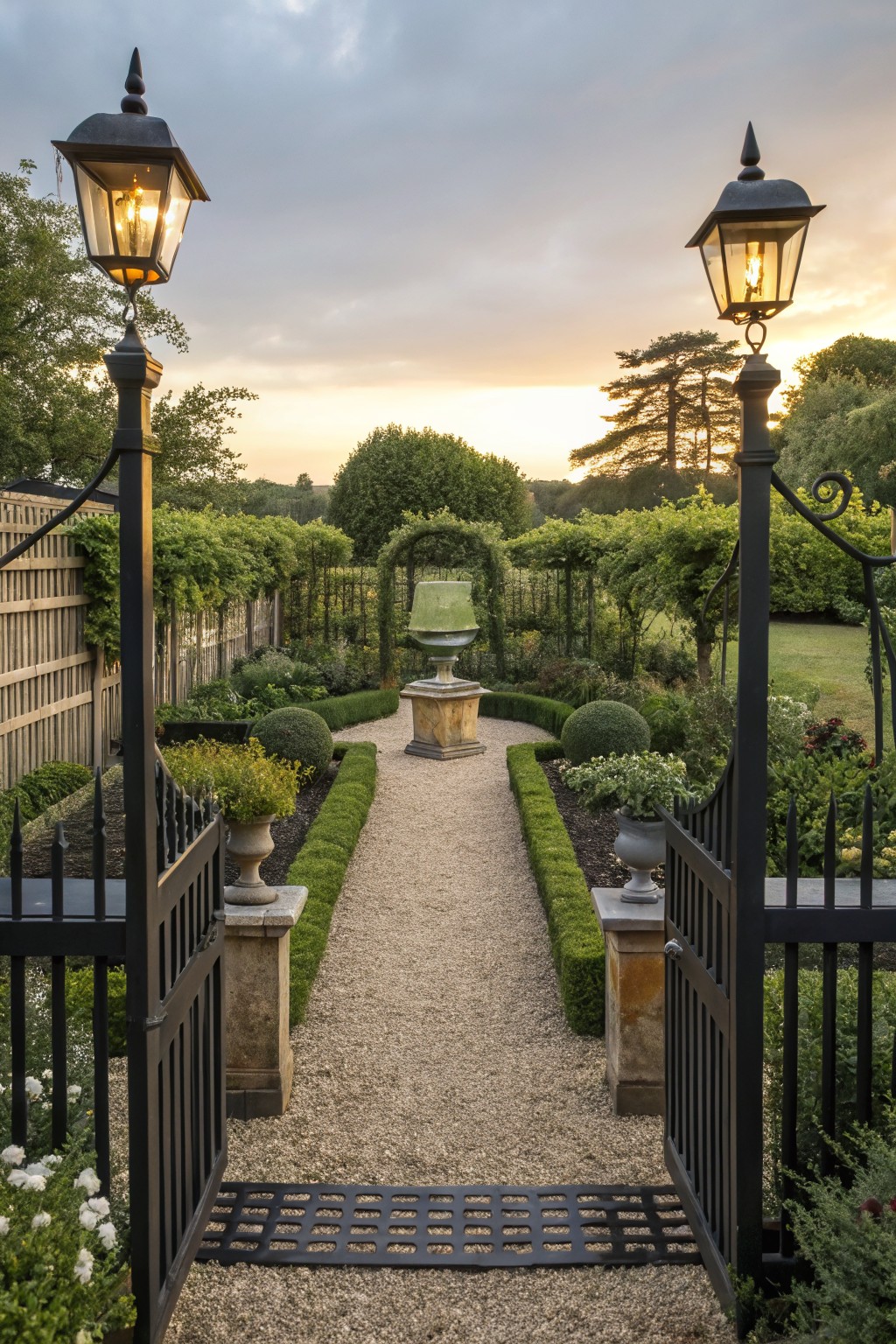
Tall lanterns placed on posts right at the gate give a clear signal where the garden begins and ends. The light stays focused on the entrance and the start of the path, which makes the boundary easy to read after dark without lighting up the whole yard.
This setup works best on properties that already have hedges or fences defining the edge. Match the height of the posts to the gate so the lanterns feel like part of the structure rather than added on later. Keep the fixtures simple and the bulbs warm so the light stays practical instead of overpowering the planting nearby.
String Lights Along Garden Fences

String lights give a clear way to mark where the garden stops once it gets dark. They follow the fence line and keep the boundary visible without adding extra structures or bright fixtures.
This approach suits backyards with play areas or raised beds because the lights stay low and gentle. Space the bulbs evenly along the top rail and use warm bulbs so the glow feels soft instead of harsh.
Mount Lights Along Fences and Walls

Placing lights directly on fences and walls gives the garden a clear shape once the sun goes down. The light follows the line of the boundary instead of scattering across the whole space, so paths stay easy to follow and beds feel more contained.
This approach suits narrow gardens or curved layouts where you need simple guidance without extra posts or fixtures. Space the lights evenly and keep the glow low so it highlights the edge without overpowering the plants nearby.
Backlit Glass Panels Along a Fence

Embedding translucent panels into a wooden fence creates a gentle wash of light that marks the garden edge without needing lots of separate fixtures. The panels glow from behind and turn the boundary into a soft visual guide once the sun goes down, which works especially well along narrow paths or side yards where full darkness can feel abrupt.
This approach suits older homes with existing wood fences and gives a warmer result than string lights or spotlights alone. Keep the panels to one or two sections so the light stays focused and does not overwhelm the rest of the planting.
Lights On Brick Fence Posts

Placing lights directly on brick fence posts gives a garden path clear definition once the sun goes down. The posts act as steady markers that keep the boundary visible without needing extra fixtures along the ground. This setup feels practical for longer walkways where you want simple, even guidance.
It suits older homes or properties with established brick walls that already run beside a path. Keep the lights spaced at regular intervals and use warm bulbs so the glow stays gentle on the surrounding plants.
Add Lights Along A Simple Fence

Running a line of lights along a wooden fence gives the garden a clear edge once daylight fades. The glow stays low and steady, so the path feels safe to follow without flooding the whole yard with brightness.
This approach suits homes with winding garden paths or wooded edges. Keep the fixtures small and spaced evenly, and choose warm bulbs that blend with the plants rather than stand out.
Backlit Screens On Fences

A backlit screen mounted on a fence gives the boundary a soft glow after dark without needing lots of separate fixtures. The light comes through the pattern and spreads gently along the edge, which makes the space feel more defined once the sun goes down.
This works best along the side or back of a yard where you want a focal point but still need privacy. Keep the rest of the fence plain and use low plantings in front so the lit panel stays the main feature at night.
String Lights Along the Fence

String lights hung along the top of a fence give the garden a clear edge once it gets dark. The steady line of bulbs helps the boundary feel intentional instead of just fading into the background.
This setup works best on a simple wooden fence next to raised beds and a path. Keep the spacing even and the bulbs on the smaller side so the light stays soft and does not overpower the plants below.
Frequently Asked Questions
Q: How can I install fence lights myself without running into wiring issues?
A: Start with solar options that clip right onto the fence posts. They charge during the day and turn on automatically at dusk. Test one or two first to see how they sit on your particular fence.
Q: What happens if the lights get wet from rain or sprinklers?
A: Look for ones rated for outdoor use with sealed bulbs. Most modern fence lights handle moisture fine as long as you check the connections now and then. Wipe them down a couple times a year to keep them working smoothly.
Q: How do I keep the glow from bothering my neighbors at night?
A: Angle the lights downward so they highlight the fence line instead of spreading out. Use dimmer settings or lower wattage bulbs where possible.
Q: Do these lights need much upkeep over time?
A: Swap out batteries or bulbs once a season if they start to dim. Clean off any dirt or leaves that build up on the fixtures.
