


I have found that gardens hold their shape best when any added decor stays low and blends with the planting lines already in place.
Over time I noticed how one extra piece can pull attention away from the paths and beds that actually define the space.
Keeping tones soft lets the structure of the yard come through instead of competing with it.
I test a single idea near the entry first to see how it feels with the existing layout.
Some of these choices end up looking better once the plants fill in around them.
Large Pavers With Pebble Joints

Large concrete pavers with narrow pebble lines between them give a garden floor a calm, orderly look without extra decoration. The pattern keeps the space open and makes sweeping or hosing down simple, which suits people who want low upkeep.
This layout works best in small courtyards or narrow side areas where you need clear walking space but still want some planting. Keep the beds raised and the shrubs low so the whole area stays balanced and easy to care for over time.
Raised Planters With Dark Mulch

Raised planters filled with dark mulch give a garden a neat look without extra plants or color. The mulch keeps the beds clean and makes the few plants stand out more.
This setup works well in narrow side yards or along walls where you want low maintenance. It suits homes that already have simple lines and helps avoid the cluttered feel that comes from too many plant varieties.
Concrete Raised Beds Filled With Gravel

A long concrete planter filled with gravel gives a garden bed a finished look without needing lots of plants or color. It works well in small spaces because the light stones keep the area feeling open and calm while still showing the shape of the bed clearly.
This approach suits homes with plain walls or simple paving, where you want the planting to stay low and neat. Use it along a side wall or entry path, and keep the number of plants small so the gravel stays the main surface.
Build a Long Planter Along the Wall

A long, low planter set right against the house gives the garden a steady line without extra layers or bright flowers. It keeps things simple and lets the plants do their job in one straight run, which works especially well when the rest of the space stays paved and open.
This setup fits homes with flat outdoor areas or pool edges where you want some greenery but not a full garden bed. Choose grasses and similar foliage in muted tones so the look stays calm year round and needs little trimming.
Mount Planters on the Wall

Many small balconies end up feeling tighter when every plant sits on the floor. Mounting a pair of planters on the wall adds a bit of green without crowding the space or creating extra clutter to work around.
This works well on apartments or narrow outdoor ledges where floor room is limited. Stick to simple black or neutral pots and plants that stay low and green, and keep the rest of the area clear so the wall detail stays quiet rather than busy.
Vertical Planters Keep Greenery Simple
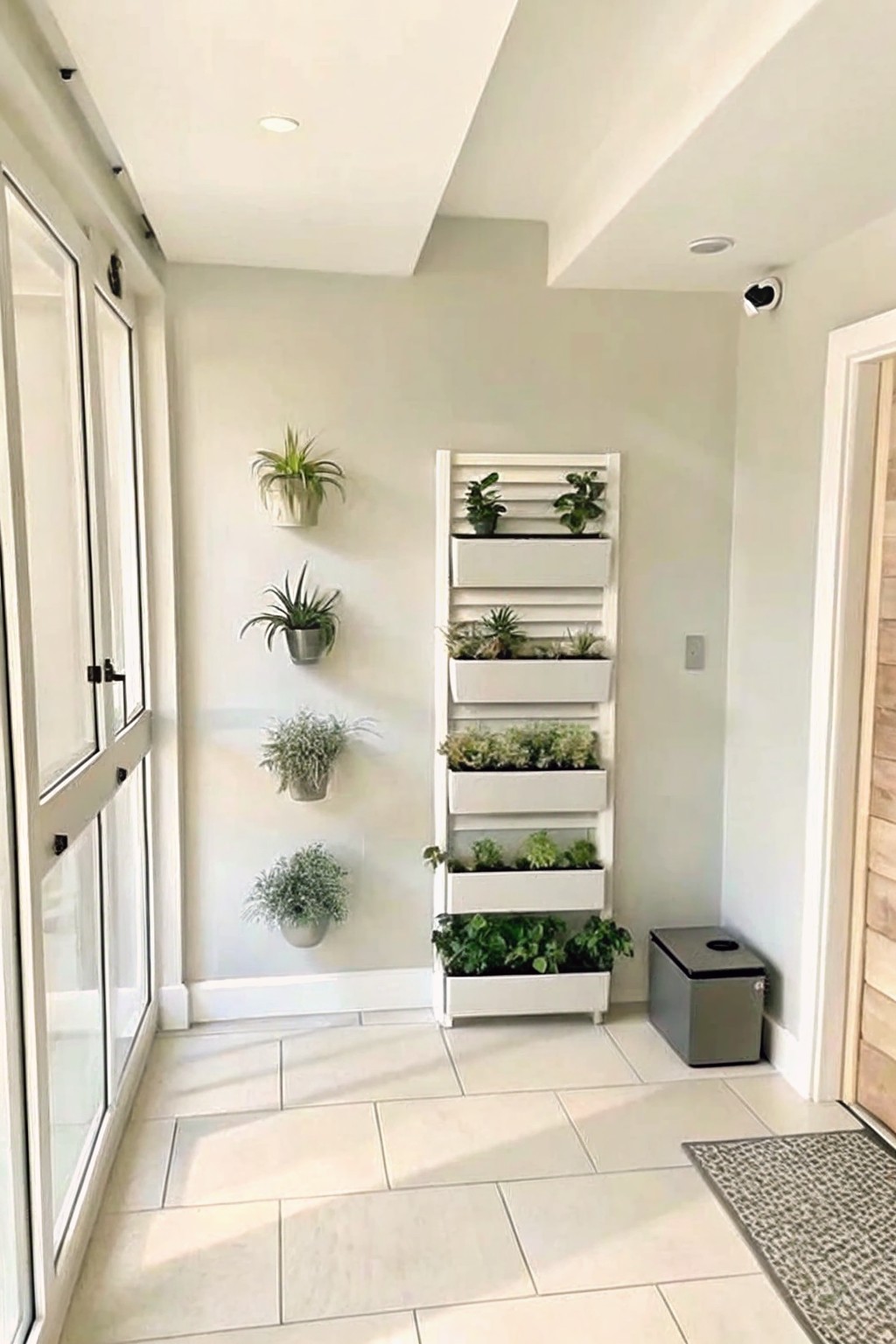
A tall vertical planter gives you room for several plants without spreading things out across the floor or walls. It works especially well when you want some green in a hallway or entry but still keep the space feeling open and calm.
This setup suits homes that already have clean lines and light colors. Place it against a plain wall and choose only green plants in matching white boxes so nothing feels busy or overdone.
Line the Patio With Long Planters

Long rectangular planters can give a patio structure without making it feel crowded. They sit low to the ground and run along the edges, so the open floor stays clear while still adding some greenery in a quiet way. This approach works especially well when everything stays in the same neutral tone.
They suit smaller outdoor spaces or homes that already have clean lines and simple materials. Place them against walls or railings and keep the planting low and similar in height. Skip anything tall or mixed in color so the whole area stays calm.
Line Walkways With Gravel Planting Beds

A gravel strip next to a paved path keeps the whole area feeling open and easy to maintain. It adds some texture and a bit of planting without filling the space with too many different elements or colors.
This works especially well in narrow passages or side entries where you want structure but not fuss. Use just a few low grasses and let the gravel handle the rest of the look.
Edging Paths With Simple Grasses
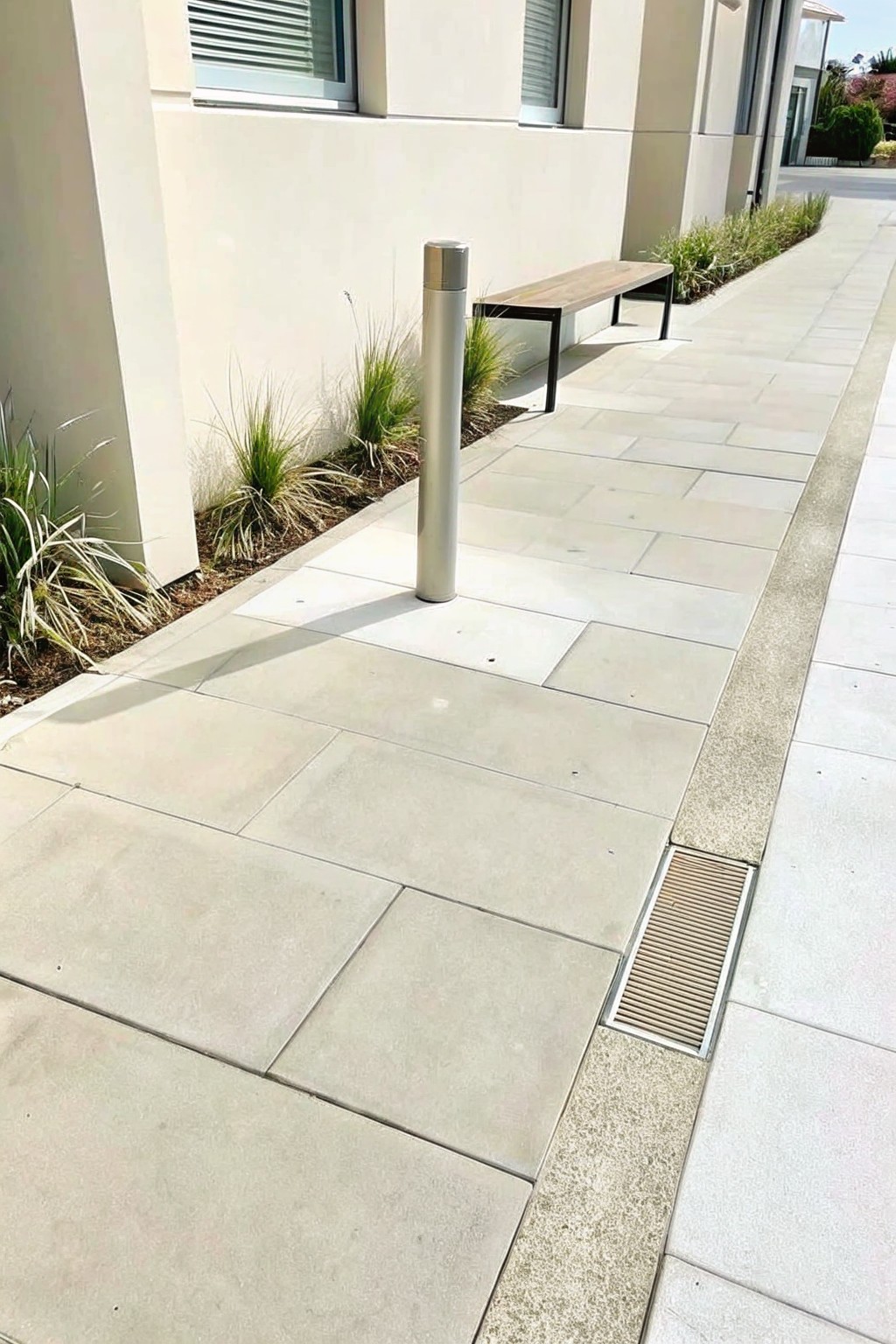
Grasses planted in narrow beds give a path a finished look without adding clutter or color. They soften the hard edge of the paving while staying low and easy to manage over time.
This approach suits long walkways or side yards where you want structure but not a lot of upkeep. Keep the beds slim and stick to one or two grass types so the whole thing stays calm.
Use Matching Planters At The Entry

A pair of matching planters placed on either side of the steps creates a calm, balanced look right at the front door. The dark square shape keeps things simple and lets the greenery stand out without extra color or decoration.
This approach suits homes with clean lines and works best when the plants stay green and fairly low. Avoid mixing different container styles or adding too many accents so the entry stays understated.
Gravel And Pavers For A Quiet Floor

Large pavers paired with gravel give an outdoor space a calm, open feel without extra layers. The mix keeps things simple and cuts down on weeding or sweeping.
This approach suits small courtyards or side yards where you want easy movement and low upkeep. Place a few stepping stones through the gravel if you need a clear path, and keep any planting sparse.
Use Large Pavers In A Simple Grid

A grid of large, light-colored pavers gives a small garden floor a quiet structure that feels finished without extra decoration. The even lines keep the space calm and make the area look bigger than it really is, especially when the pavers run wall to wall.
This layout works best in narrow courtyards or side gardens where you want low maintenance and no fuss. Keep the paver color close to the surrounding walls and leave the planting simple so the grid stays the main feature.
Wood Stumps as Plant Stands

A simple wood stump makes a good stand for a plant because it adds some natural texture without adding much else. It keeps the focus on the plant itself and works in spaces that already feel calm and uncluttered.
These stumps fit best in hallways or corners where you need a small surface but do not want extra furniture. They suit homes with light floors and plain walls, and they hold up well as long as the wood is sealed against moisture.
Line Up Large Neutral Planters

One simple way to add structure to an outdoor space without clutter is to line up several large neutral planters along the edge. The pots share the same tone and rough texture, and the plants stay green and architectural so the whole area feels quiet and settled.
This approach suits a covered patio or porch where you want clear lines but still need room to walk through. Keep the number of pots small, space them evenly, and choose plants that stay compact so the setup stays low maintenance over time.
Gravel Beds Along the Foundation

A narrow gravel bed right against the house keeps the edge looking tidy without much effort. It cuts down on weeds and watering while giving the concrete path a clean border that does not compete with the siding.
This works best on the sides of the house where space is tight and you want low maintenance. Stick to small clumps of grass or similar plants so the bed stays simple and does not need regular trimming.
Built-In Planters Along Garden Paths

A path feels more settled when the planting sits right in it instead of sitting beside it in separate pots. Built-in planters keep the edges clean and remove the need for extra objects that can start to crowd a small space.
This setup works best in narrow side yards or modern homes where you want the garden to look calm rather than busy. Use the same type of grass or foliage in each bed so the whole run stays simple and low maintenance.
Pebble Borders Keep Garden Paths Looking Simple
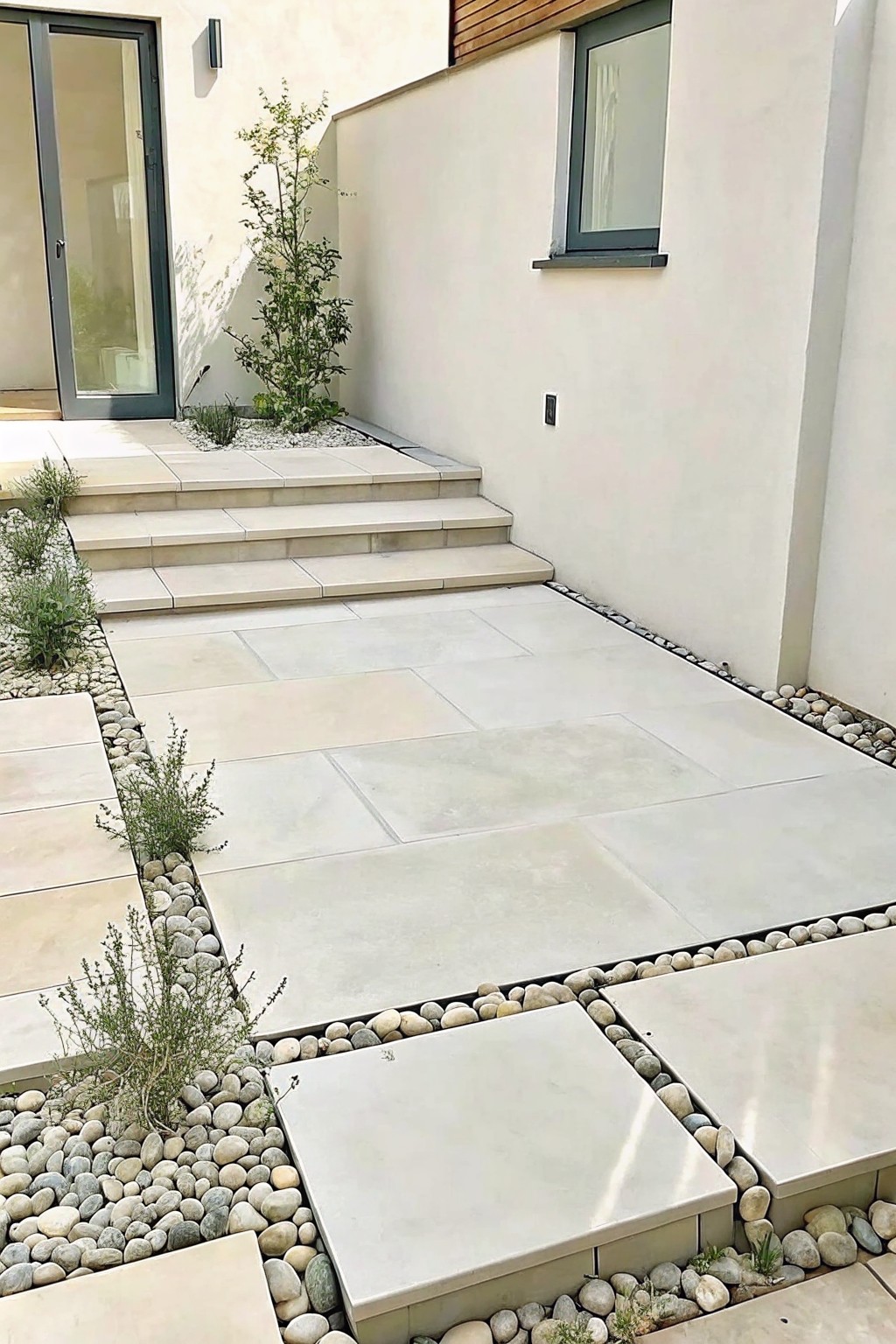
Many people like using pebbles to edge paved paths because it creates a clean line without extra decoration. The neutral tones blend easily and help the whole area feel calm and uncluttered.
This works best in smaller yards or side entrances where you want low maintenance. Stick to just a few small plants along the edges so the paving stays the main feature.
Circular Paver Paths In Gravel

A circular layout of pavers set into gravel gives a small garden a clear shape without adding much at all. The rings create movement and keep the space from feeling empty, while the single material choice holds everything together in a quiet way.
This works best in tight corners or side yards where you need something underfoot but do not want to fuss with plants or furniture. Keep the pavers and gravel in the same light tone so the pattern stays calm rather than busy.
Gravel Strips Along Narrow Paths

A gravel bed next to a concrete walkway gives a side garden a finished look without adding much to maintain. The loose stones create a simple border that keeps the space open and easy to walk through while still allowing a few plants to take hold.
This works best in tight areas between buildings or along the side of a house where full garden beds would feel cramped. Keep the planting light and choose materials that match the path color so the whole area stays calm and uncluttered.
Repeat Tall Trees In Matching Planters

A row of the same tall trees in matching pots gives a garden height and order without extra plants or color. The look stays calm because everything repeats and stays within a narrow range of tones.
This works best along a wall or fence on a small patio or side yard. Use large, simple containers in a neutral shade that blends with the paving or house, and space the trees evenly so the line feels intentional rather than crowded.
Use Simple Gravel Patterns For Quiet Interest

A gravel pattern like this one gives a small garden some shape without adding any extra objects or color. The soft circles keep the space feeling open while still giving the eye something to follow, which works especially well when you want the whole area to stay calm and uncluttered.
This approach suits narrow side yards or small courtyards where you need a bit of structure but do not want raised beds or lots of plants. Keep the circles loose rather than perfect, and pair them with low ground cover and plain concrete edges so the pattern stays in the background instead of becoming the main feature.
Keep Outdoor Seating Low Key And Neutral

A simple bench can make a small outdoor spot feel usable without adding much. The light wood top and concrete base here sit right against the wall and let the space stay open and calm. It works because nothing fights for attention.
This kind of seating suits narrow side yards or small courtyards where you want a place to sit but do not want furniture to take over. Stick to the same few materials already used on the ground and walls so the whole area stays quiet.
Gravel And Stepping Stones For The Patio

Gravel makes a good base for outdoor seating areas because it drains well and stays low key. Adding a few flat pavers gives you solid spots to walk or place chairs without covering the whole surface.
This works best in small yards or modern homes where you want the space to feel open but still usable. Keep the pavers spaced out and stick to the same neutral tone so the area stays calm instead of busy.
Frequently Asked Questions
Q: Where should I start if my garden has too many different textures already? A: Clear out anything that clashes by removing one item at a time. Stick to wood, stone, and metal in similar tones. This lets the space breathe again.
Q: Do I need to replace all my existing decor to follow these ideas? A: Edit down to three or four pieces that feel calm. Group them loosely instead of spreading them out.
Q: How can I make sure the garden still feels welcoming at night? A: Add soft lighting from simple lanterns or string lights in warm white. Keep the fixtures hidden so they do not become focal points. The glow will highlight the clean lines without adding color.
