


Verbena can bring a border to life, but the planting works best when its color and height have room to sit comfortably alongside paths, edging, and neighboring plants.
I find that repeating a few clusters often makes a garden feel more settled than scattering flowers evenly across the whole bed.
Verbena also pairs well with grasses and low-growing foliage, which can soften a hard edge without obscuring the shape of the border.
The ideas ahead show different ways to use it, from loose cottage-style planting to cleaner lines that are easier to maintain.
I’d save the layouts that suit your light and available space, then adapt the spacing to how you want the garden to grow.
Use Verbena To Shape A Garden Border

Verbena works well along a garden border because its clusters of color can fill the edge without hiding the plants behind it. The mix of purple and bright pink flowers here gives the bed a loose, full look.
Plant verbena near a path or low retaining edge where its blooms can be enjoyed up close. Leave space between clumps for air to circulate, and combine it with a few taller or more structured plants so the border stays easy to read.
Layer Verbena Along a Garden Border
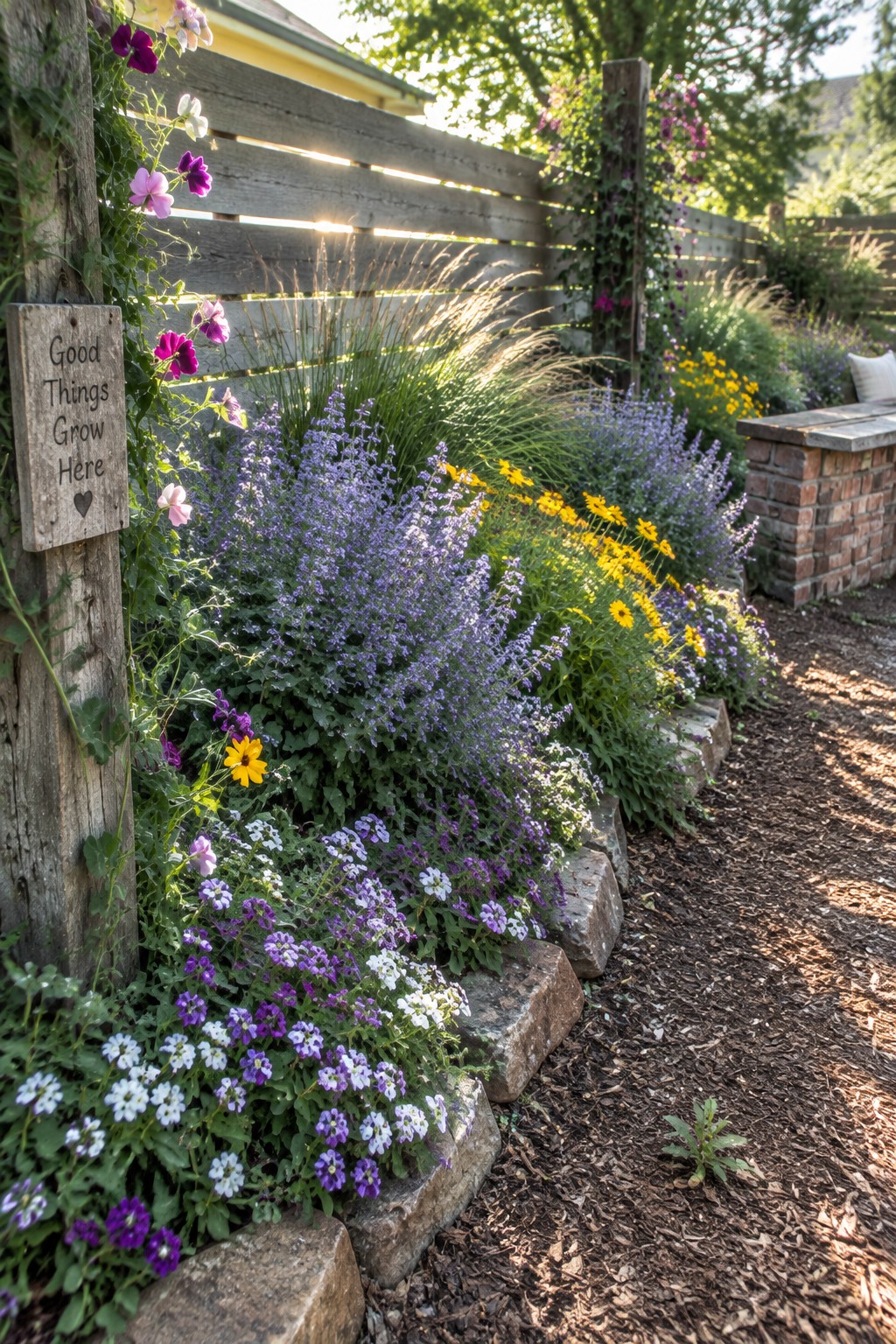
Layering verbena through a mixed flower border gives the planting color at several heights. Low purple and white blooms can edge the bed, while taller verbena and grasses rise behind them. The border feels full without relying on one flower alone.
Use this approach along a fence or beside a garden path, and repeat a few varieties to keep the bed from looking scattered. Leave enough room for plants to spread, especially where verbena shares space with other perennials.
Use Verbena in a Layered Garden Border
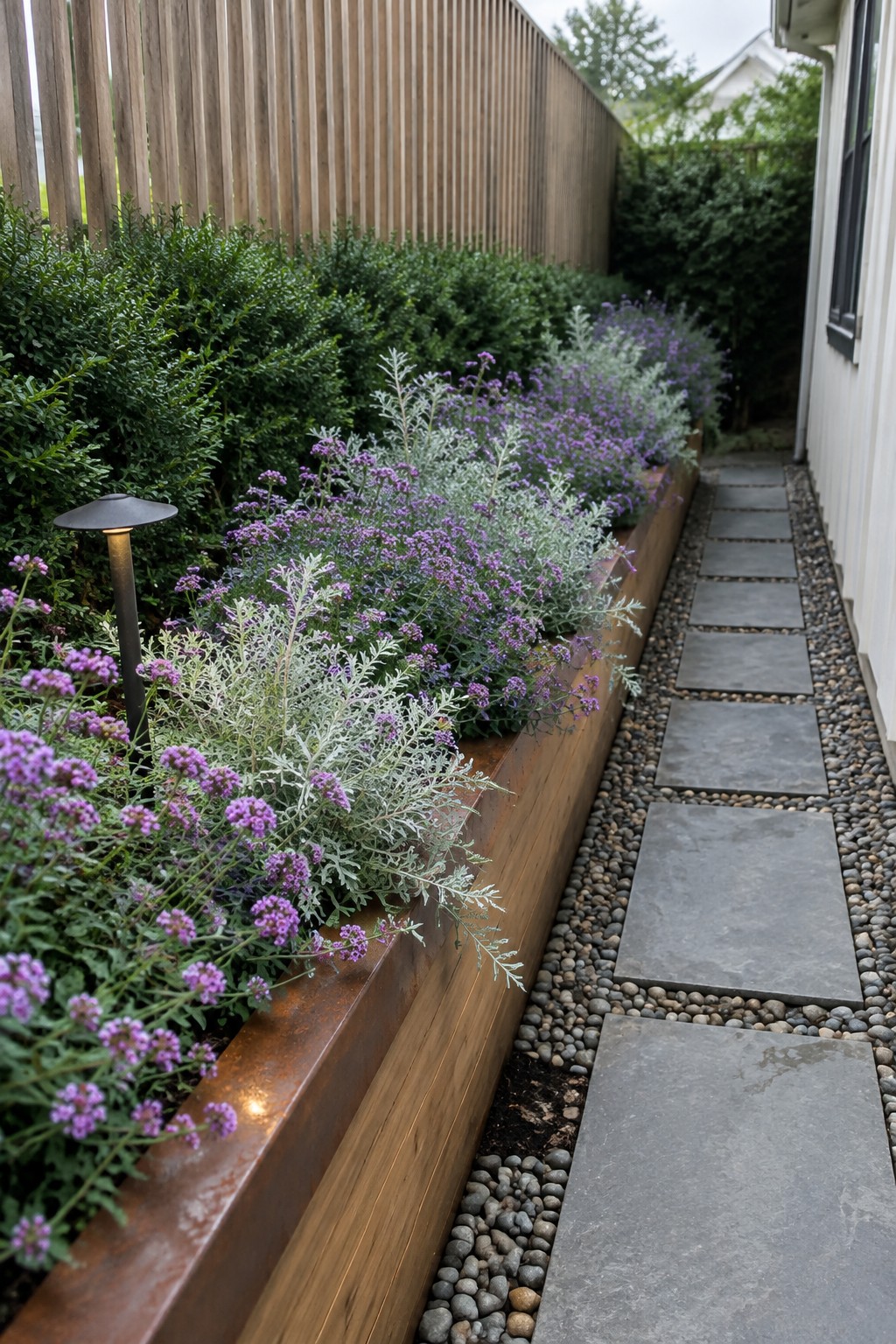
Verbena works well in a border when it spills through lower planting instead of sitting in a single row. Its small purple blooms bring color across the bed, while silvery foliage nearby gives the flowers a clear contrast.
Plant verbena toward the front or middle of a sunny border, leaving enough room for it to spread. A raised bed beside a narrow path is one option, but keep the plants from crowding the walkway as they fill out.
Use Verbena Along a Garden Path

Verbena spilling from large pots is an easy way to bring color right to the edge of a path. Its small purple flowers soften the hard line of the tiled walkway and make a simple route through the garden feel more planted.
Set pots beside a path or patio where the trailing stems have room to grow without getting in the way. Leave space between containers so the plants can spread, and trim them back if they start covering the walking surface.
Add Verbena to a Gravel Garden Border

Verbena brings a touch of color to a gravel garden without making the planting feel crowded. Let it spread along the front edge of a raised bed, where its small flowers can spill slightly over the border.
It works well beside stepping-stone paths and drought-tolerant shrubs. Leave enough room between plants for air to move, and check the variety’s mature size so it does not cover the path.
Mix Verbena Into a Layered Flower Border
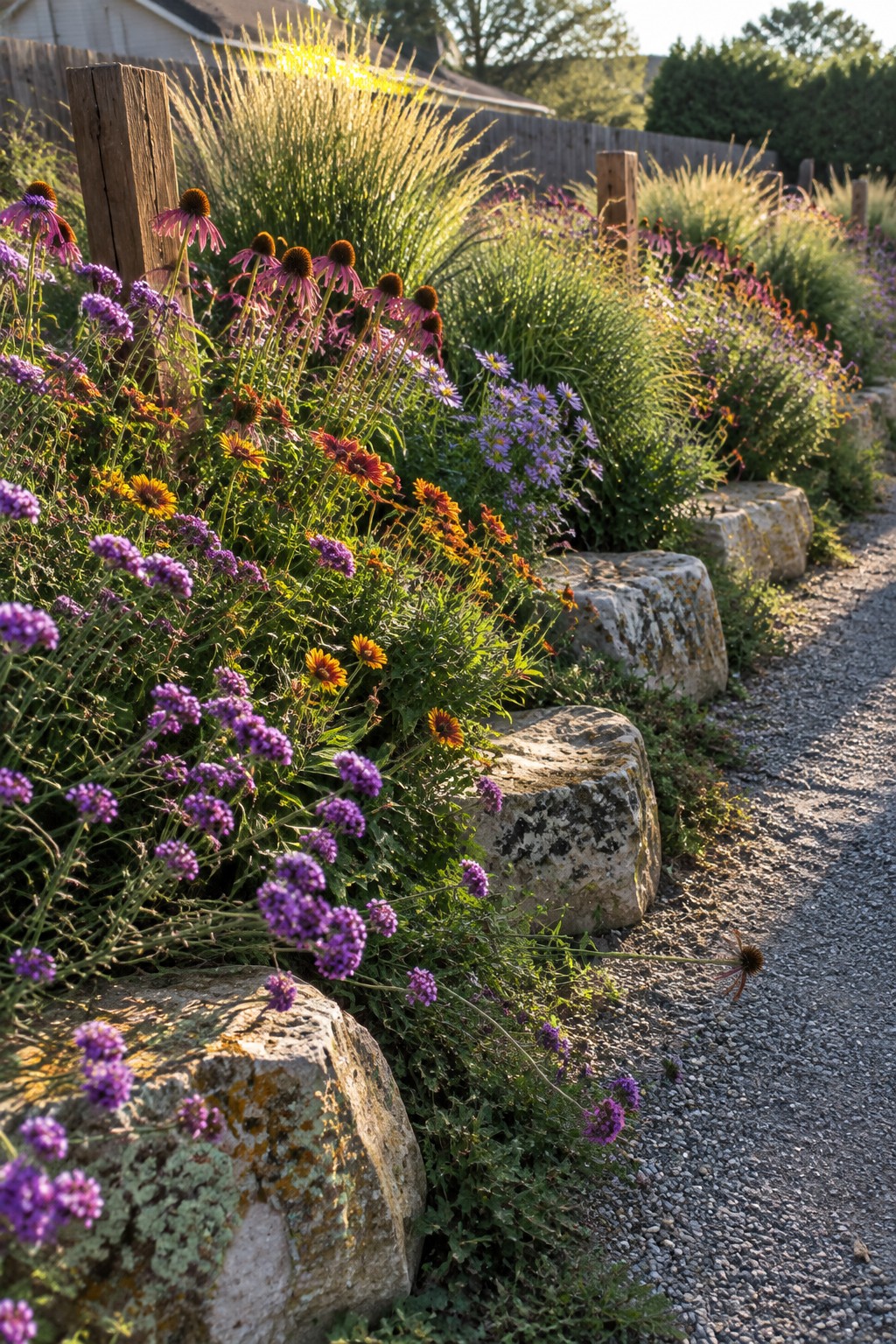
Verbena works well in a layered border because its clusters of small flowers can fill the lower spaces between taller plants. Mixed with upright coneflowers and ornamental grasses, it brings color through the bed without blocking the plants behind it.
Plant verbena near the front edge, where it can spread a little toward a path or stone edging. Leave enough room for air to move between plants, especially in a dense bed, and check the variety’s mature size before planting.
Plant Verbena Along a Brick Garden Edge

A raised brick border is a practical way to keep colorful flowers close to the house without letting the bed spread across the walkway. Verbena can fill the top of the wall with blooms, while trailing varieties spill over the edge and make the border feel less rigid.
Use this approach beside an entry path or along a narrow foundation bed. Leave enough room for the plants to grow without crowding the steps, and choose varieties suited to the amount of sun the spot gets.
Plant Verbena Along A Poolside Border

Verbena can make a pool border feel more like a garden than a strip of paving. Its small clusters of purple flowers bring color right to the edge, while low-growing plants fill out the bed without blocking the view across the pool.
Use it in a sunny, well-drained bed beside a deck or patio, and leave enough space between plants for air to circulate. Pair it with a few upright flowers for height, but keep the planting low near walkways so it does not spill onto the path.
Use Verbena To Fill a Stone-Retained Border

A raised border can give verbena a clear place to spread without letting the garden feel too formal. Here, low purple flowers fill the front of a planting bed held by stacked stone, while taller plants sit farther back.
Use this approach on a sloped yard or beside steps where a low retaining wall can help define the planting area. Leave enough room for verbena to grow outward, and keep taller plants behind it so the flowers stay visible.
Let Verbena Spill Along a Curved Path

Verbena works well at the edge of a garden path, where its small flowers can spill slightly over the border without hiding the route. Here, low purple planting follows a curved brick edge, giving the walkway a softer outline.
Use this approach where a straight path feels a bit rigid, especially in a small courtyard. Keep the verbena low and leave enough clear paving for comfortable walking.
Use Verbena Along a Stone-Edged Border

A low stone edge gives a flower border a clear shape, while verbena adds loose color just above it. The contrast works well: the tidy edge keeps the planting from looking untamed, even when the flowers spill forward.
Try this approach beside a driveway or garden path, where the border can be enjoyed up close. Keep the stones low and avoid packing the plants too tightly so verbena has room to spread.
Plant Verbena Along a Narrow Garden Path

A narrow path can make a long garden bed feel easier to enjoy and tend. Verbena planted along the edge brings color close to the walkway without taking up much room, while its airy flowers let the other plants remain visible.
Use this idea in a side yard or between raised beds, where a clear route matters. Keep verbena trimmed back from the bricks so the path stays easy to walk along.
Use Verbena to Define a Formal Garden Border

Repeating low hedges can give flower beds a clear shape, while verbena adds color inside that structure. The tidy edges keep a mixed planting from looking scattered, even when the flowers grow freely.
Use this approach around a small central feature or along a gravel path, where the bed’s outline stays easy to see. Plant verbena in generous patches rather than single scattered plants, and leave enough room for the hedge to be trimmed without cutting back the flowers.
Let Verbena Edge a Meandering Garden Path

Verbena can make a garden path feel like part of the planting rather than a route cut through the yard. Its loose clusters of flowers suit an informal border, while taller plants behind them add a little height without hiding the path.
Use verbena along curves or uneven stone edges, leaving enough room for plants to spread without crowding the walking surface. It works especially well in a cottage-style garden, where a relaxed edge looks more natural than a perfectly trimmed line.
Use Verbena In A Rooftop Planter Border

A long planter can turn a rooftop edge into a colorful garden border without taking up much floor space. Verbena’s small purple flowers can spill over the sides, while taller grasses behind it add height and keep the planting from looking like a single flat row.
Use a narrow, sturdy planter along a balcony or terrace railing, and leave enough room for a small seating area. Verbena does best with plenty of sun and well-drained soil, so check that the container drains freely.
Use Verbena to Mark a Garden Path

Verbena planted along a path makes the route feel like part of the garden, not just a way through it. Low clusters of purple and white flowers give the edge a clear line while keeping the walkway open.
This works well beside a front walk or a neighborhood path, especially where a narrow planting bed needs color. Set verbena near the edge and leave enough room for it to spread without creeping onto the paving.
Use Verbena Along a Balcony Border

A long planter can turn a narrow balcony edge into a colorful garden border. Verbena’s small purple flower clusters spill over the sides, so the planting feels full without taking up much floor space.
Use it along a railing where the flowers can trail freely, and mix in a few upright plants for contrast. Choose containers with good drainage, and leave enough room to move around the balcony.
Frequently Asked Questions
Q: Will verbena come back every year?
A: Some varieties are perennial in mild climates, while others are grown as annuals. Check the plant label and your local winter conditions, since cold weather can take out varieties that thrive elsewhere.
Q: How much sun does verbena need to flower well?
A: Give it a sunny spot with at least six hours of direct light a day. In too much shade, verbena tends to produce fewer blooms and leggier growth.
Q: Can I plant verbena with other flowers along a border?
A: Yes. Pair its spreading growth with upright flowers such as salvia or snapdragons, and leave enough room for air to move between plants.
Q: How do I keep verbena blooming through summer?
A: Water during long dry spells and trim back stems that look tired. A light midseason trim often encourages fresh growth and another flush of flowers.
