


Zinnias can bring a lot of color to a front yard, but where they sit matters just as much as which shades you choose.
I find they work best when their loose, bright blooms have a clear place in the planting layout, rather than crowding a path or hiding the shape of the entry.
A defined edge, a stepping-stone walkway, or a few taller plants behind them can help the garden feel considered while still looking relaxed.
The first thing people notice from the street is often the overall shape of the yard, so it helps to think about how zinnias will look beside the lawn, foundation, and front steps.
I’d save the ideas that suit your space and sunlight, then adapt the planting details to make the color feel at home.
Guide Zinnias Along a Front Walk

Zinnias planted in long beds beside a front path make a simple route to the door feel more colorful and cared for. Keeping the flowers in defined borders gives the display a clear shape instead of letting it spread across the yard.
Use this approach along a straight or gently curving walk, and leave enough room for people to pass comfortably. A low hedge can help mark the edge, while zinnias bring the changing color through the growing season.
Line Zinnias Along the Front Walk
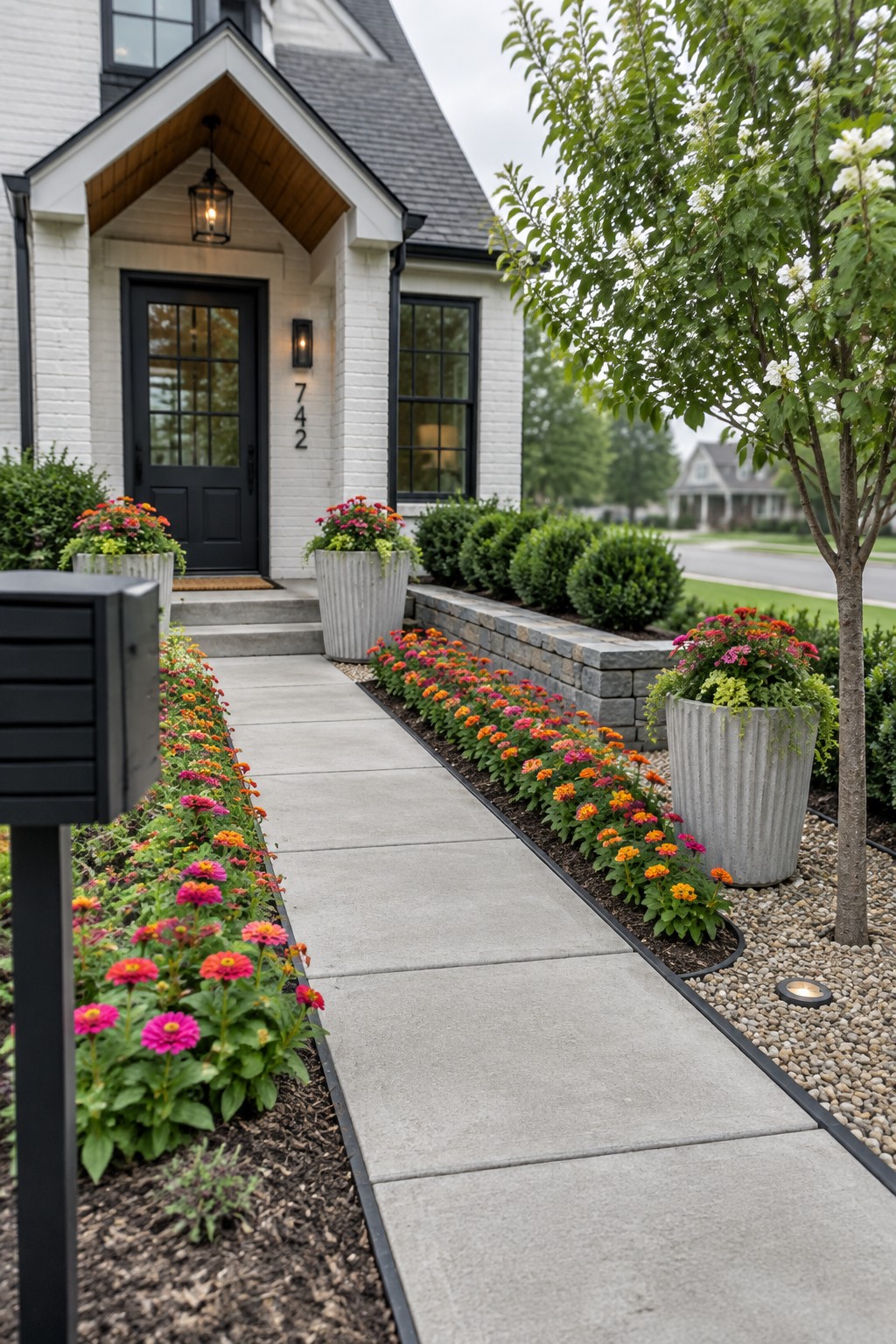
A row of zinnias beside the front walk is an easy way to bring color right up to the entrance. Planting them in a narrow bed gives the flowers a clear edge and lets their bright blooms stand out without taking over the yard.
This works well along a straight path or driveway where there’s enough sun for zinnias to flower. Leave room between the plants for airflow, and keep the bed narrow enough that the flowers don’t spill onto the walkway.
Use Zinnias Along The Front Walk

Zinnias can bring a front walk to life when they grow in a generous bed beside the path. Their bright colors make the route to the porch easy to notice, while the informal planting feels at home with a simple country-style house.
Plant them in a sunny spot, leaving enough room for the flowers to spread without narrowing the walkway. A few taller varieties toward the back and shorter ones near the edge can keep the path clear and the color easy to enjoy.
Plant Zinnias Along a Narrow Front Walk

A narrow front garden can still feel full of color when zinnias grow in generous clusters along the walkway. Their bright blooms make a small entry feel cared for without needing a wide lawn or a complicated garden plan.
Plant taller zinnias toward the back of the bed and leave the path edge clear so flowers do not spill into the walking space. This approach works well beside older row houses and other compact homes, but be ready to water during dry spells so the flowers keep blooming.
Use Zinnias to Edge a Gravel Path

Zinnias planted along a gravel path bring color right to the route leading to the house. Their bright blooms stand out against the stones, while the path gives the planting bed a clear edge.
This works well for a cottage or coastal-style front yard where a loose, informal garden suits the home. Leave enough room for the flowers to spread without crowding the walkway, and choose a path width that stays easy to use.
Use Zinnias to Add Color Along a Curved Garden Bed

Zinnias bring a cheerful band of color to a front yard bed, especially when they follow a curved edge beside the walkway. Their bright blooms stand out against quieter plants like lavender, so the garden feels colorful without every flower competing for attention.
Plant zinnias toward the front of a sunny bed, leaving room for them to branch out as they grow. They work well beside a path or entry, where the flowers are easy to enjoy, but avoid crowding them against the edging.
Layer Zinnias Along a Garden Path

A front path feels more connected to the garden when flowers grow in generous beds along its edges. Zinnias bring cheerful color close to the walkway, while a low stone border helps keep the planting tidy.
Use taller zinnias toward the back of the bed and shorter varieties near the path so the flowers don’t crowd the walking space. This layered approach suits a traditional front yard, but leave enough room for plants to spread.
Use Zinnias to Edge a Garden Path
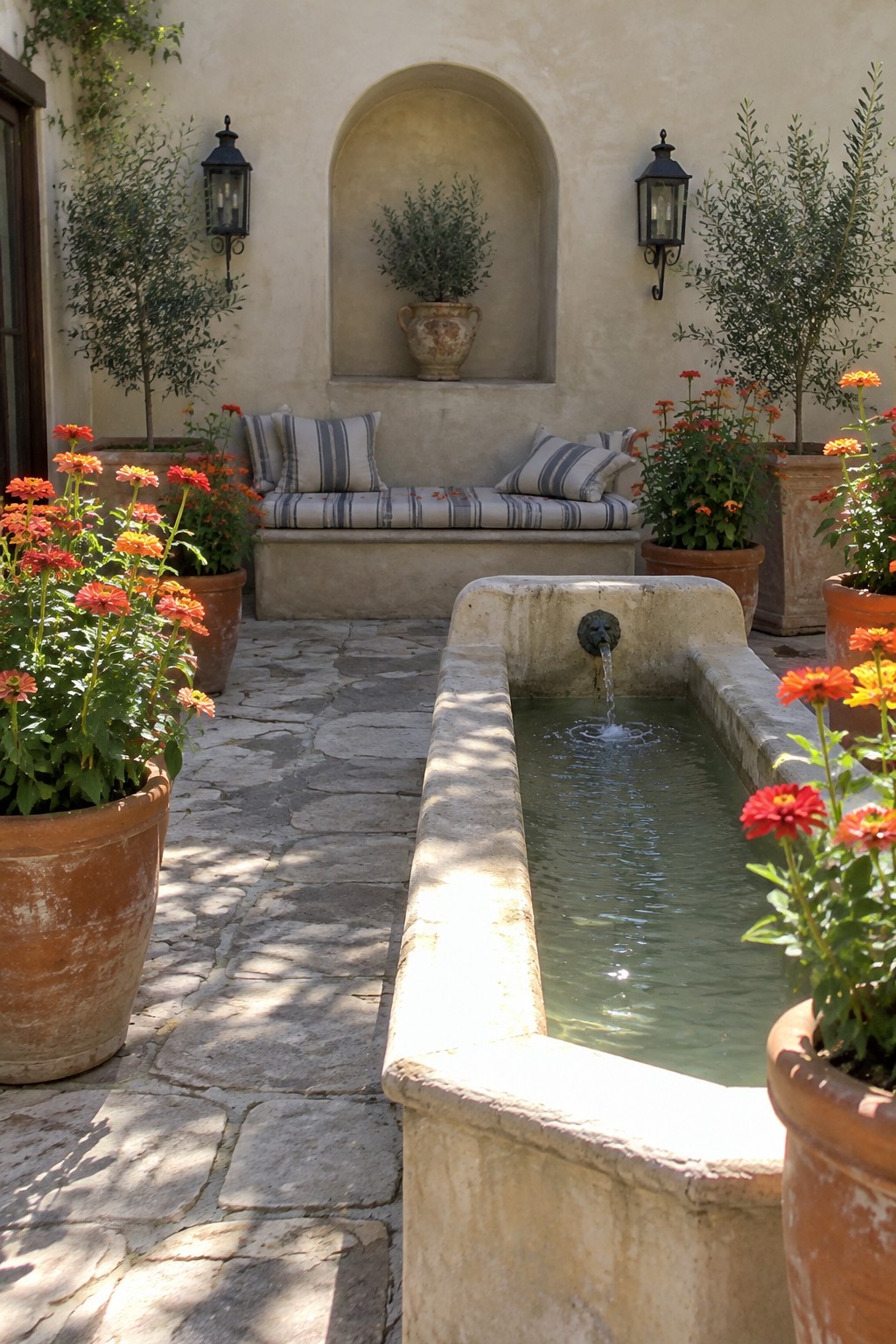
Zinnias can bring a clear band of color along a stone path without taking over the whole garden. In this courtyard, terracotta pots of orange-red blooms sit beside the paving, showing how flowers can mark the path’s edge.
For a front yard, plant zinnias in a narrow bed beside a walk, leaving enough room for people to pass and for the plants to spread. Repeat the same colors along the route for a tidy look, and keep taller varieties farther from the path.
Let Zinnias Fill a Curved Garden Bed

A curved bed gives zinnias room to grow in a loose, colorful row rather than a stiff line. The rounded edge also helps the flowers follow the shape of a front walk and makes a small planting area feel more considered.
Use low brick edging to keep soil in place and give the bed a clear boundary. Plant zinnias in groups, leaving enough space between them for airflow and mature growth.
Plant Zinnias in a Raised Front Bed
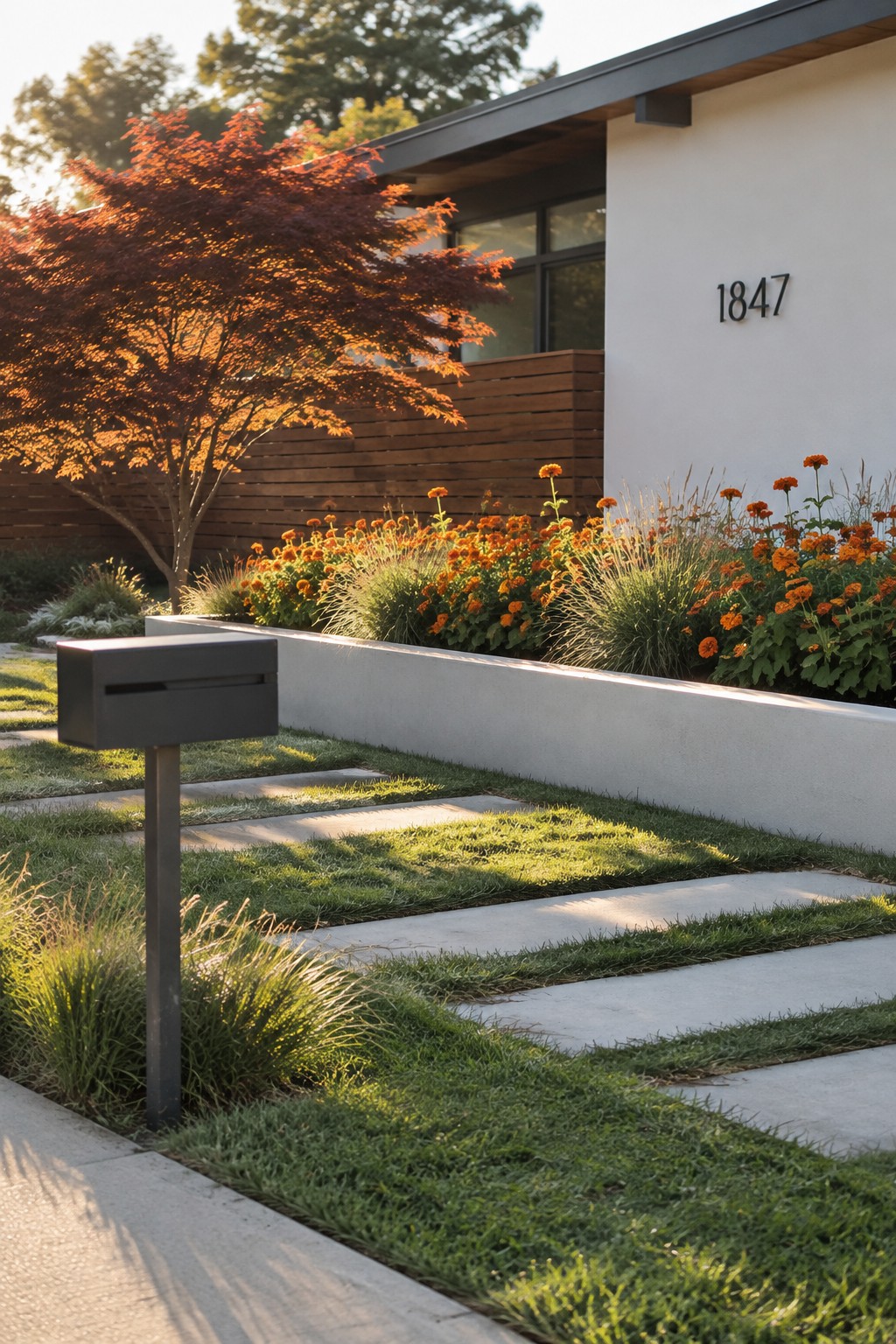
Zinnias can bring a strong band of color to a front yard when they fill a raised bed beside the entry. Mixing them with a few clumps of ornamental grass gives the flowers a more settled look and keeps the planting from feeling like a row of blooms.
This approach works well beside a modern home, where a low wall can give the bed a clear edge. Leave enough room for mature plants, and choose a sunny spot so the zinnias flower well through the season.
Use Zinnias to Brighten a Pollinator Garden Path
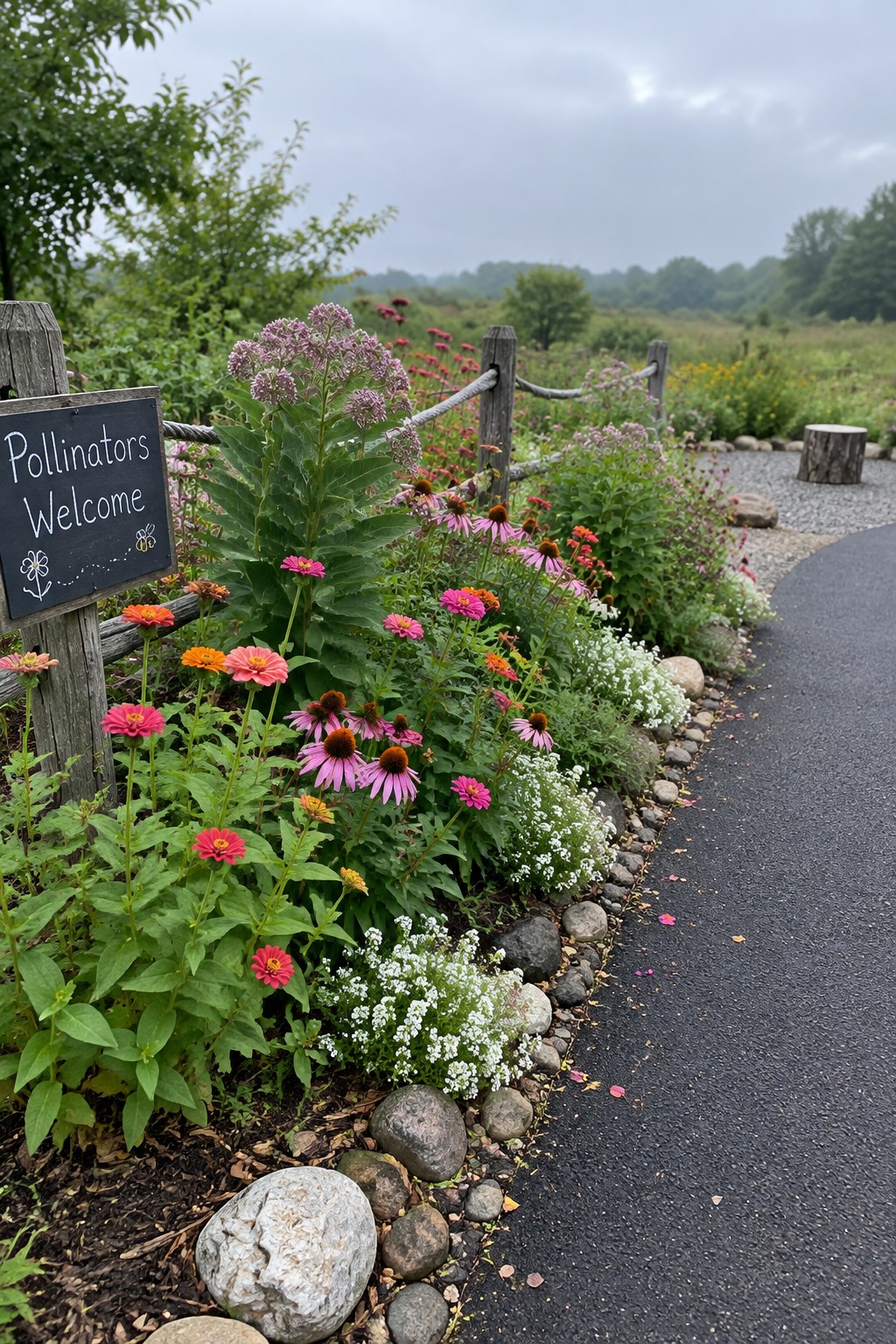
A pollinator garden can still have a clear, easy-to-follow path. Planting zinnias along the bed edge brings cheerful color close to the walkway while leaving room for other flowers that attract bees and butterflies.
This approach works well beside a front walk or a narrow garden path. Mix zinnias with other pollinator-friendly plants, and keep the blooms from spilling onto the walking surface.
Build Zinnias Into Tiered Garden Beds

Tiered beds let zinnias fill a sloped front yard without leaving the planting looking like one crowded patch. The separate levels give each band of color room to show, while sturdy timber edges help hold the soil in place.
Use this approach where the ground rises toward the house, and keep a gravel stairway or path open for easy access. Plant zinnias in generous groups on each level, leaving enough space between them for airflow and maintenance.
Grow Zinnias in Large Front Entry Planters

Large planters let you bring a generous patch of zinnias right up to the front door. The flowers add color near the entrance without needing a traditional garden bed, and the containers make the planting feel tidy.
Choose planters with enough room for zinnias to grow, and place them where they won’t narrow the path or steps. This works especially well beside a porch or entry with limited planting space; just keep the soil watered during hot weather.
Make a Round Zinnia Bed the Patio’s Focal Point

A compact, rounded flower bed can give a paved outdoor area a clear center. Zinnias make a good choice for this shape because their bright blooms fill the space without needing a large garden.
Keep the bed low enough that it does not block views across the patio, and leave a comfortable paved border around it for walking. This approach works especially well in a small courtyard where there is room for one main planting area rather than several separate beds.
Let Zinnias Line a Stone Walk
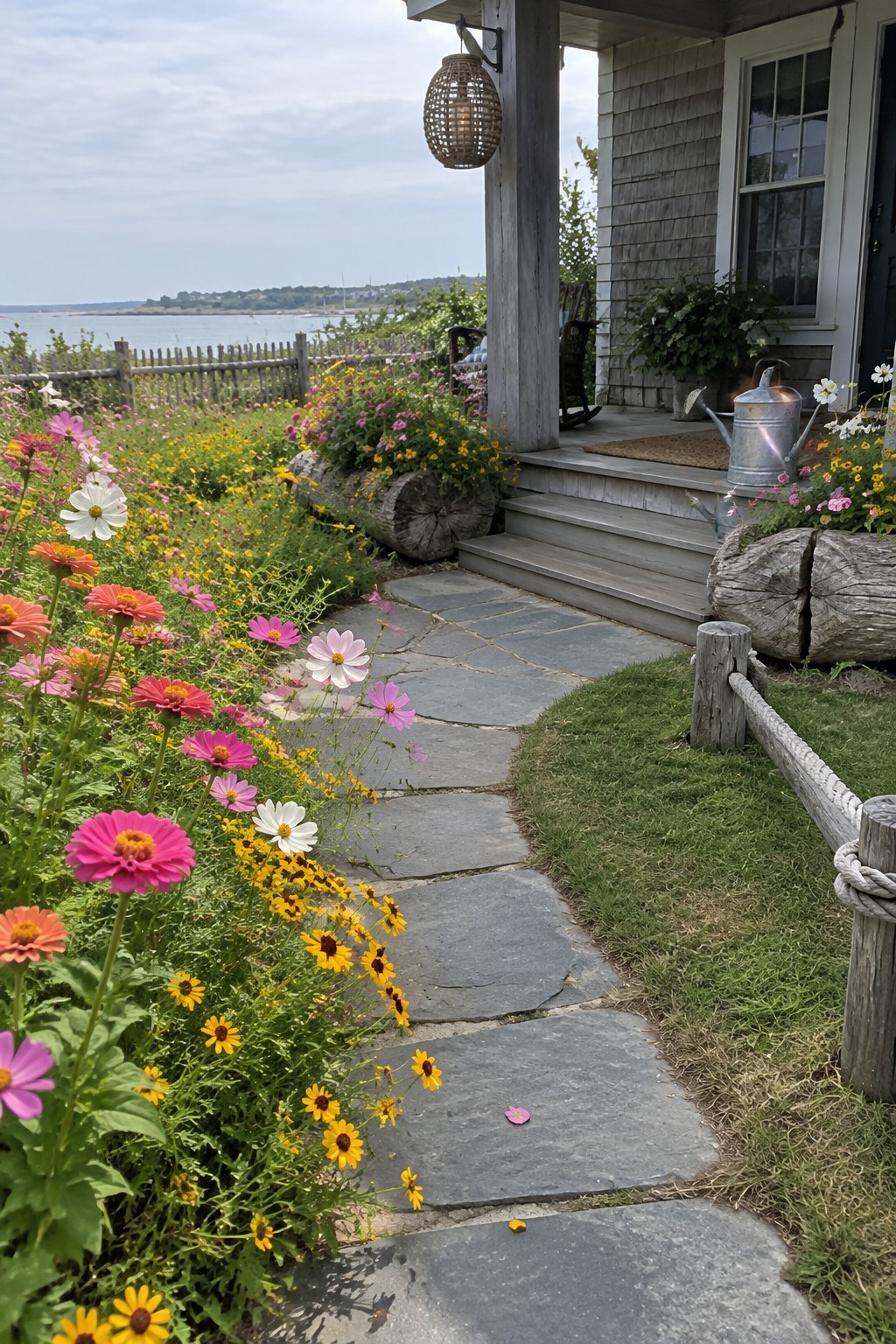
A stone path feels more connected to the garden when flowers grow close along its edge. Zinnias bring color right beside the route to the front steps, while the stepping stones still leave a clear place to walk.
For a similar effect, plant zinnias in a loose border rather than a strict row. Leave enough room for the plants to spread without leaning into the path, and choose a sunny spot where they can bloom well.
Use Zinnias to Define a Garden Entry

A narrow path feels more welcoming when flowers line its edges. Zinnias can bring that same clear, colorful border to a front garden entrance, helping mark the way without taking up much room.
Plant them in a sunny strip beside the path, leaving enough space for visitors to pass comfortably. A low stone edge can keep the planting tidy, while regular deadheading helps zinnias keep flowering through the season.
Use Zinnias to Add Color Along a Raised Bed

A raised front bed gives zinnias a clear place to shine without making the whole yard feel busy. Rounded shrubs and ornamental grass add structure, while the flowers bring color along the bed’s edge.
This approach works well beside a driveway or walkway, especially where a low stone border separates the garden from pavement. Plant zinnias near the front so their blooms are easy to see, and leave enough room between them for airflow and upkeep.
Use Matching Planters to Mark the Front Entry

Large urns filled with zinnias make a front entrance easy to spot and give the planting a clear, tidy shape. Matching planters on either side of the walk also suit a formal entry where a loose flower bed might feel out of place.
Choose sturdy containers that are wide enough for mature zinnias, and keep them close to the entrance without narrowing the path. Orange blooms stand out against pale stone, but you can choose another color that suits your home.
Plant Zinnias in a Raised Entry Bed

A raised flower bed can bring zinnias close to the front door, where their bright blooms are easy to enjoy from the walkway. The dark planter edge also gives a small entry garden a clear boundary.
Use a raised bed beside the steps or porch, and leave enough room for people to pass comfortably. Mix zinnias with a few lower plants so the flowers fill out the bed without crowding the entrance.
Use Zinnias in a Raised Curbside Bed

A raised flower bed can give a front yard planting a clear shape while bringing zinnias close to the sidewalk. Here, colorful flowers fill the center of a low, curved bed, with a shorter groundcover around the edge.
This approach works well beside a front walk or at a street corner where the bed needs a defined border. Keep the taller zinnias toward the middle so they do not spill over the edge, and leave enough room to reach in for watering and deadheading.
Frequently Asked Questions
Q: Will zinnias come back on their own next year?
A: Most zinnias are grown as annuals, so you’ll need to plant new seeds or seedlings each spring. If you leave a few flower heads to dry, they may drop seeds that sprout the following year, though the results can be unpredictable.
Q: Where should I plant zinnias in my front yard?
A: Choose a sunny spot with soil that drains well, such as along a walkway or in front of a porch. Taller varieties look good behind low edging plants, while compact zinnias fit neatly along borders.
Q: How can I keep zinnias blooming through summer?
A: Water at the base of the plants when the soil feels dry, and snip off faded flowers to encourage more blooms. Give them enough space for air to move between plants, which helps keep the foliage healthy.
Q: Can I grow zinnias in pots by my front entrance?
A: Yes, compact varieties grow well in containers with drainage holes. Place the pots where they’ll get plenty of sun, and check the soil often since containers dry out faster than garden beds.
