


When I started thinking about updating my own yard, the choices around stone and gravel quickly became the parts that shaped how the space actually gets used day to day.
Pathways made from gravel can guide movement without making the garden feel boxed in, especially if the edges blend into the plantings.
In my experience the best results come when the stone edges follow the natural contours of the yard rather than forcing straight lines that fight the existing shape.
Details like these add up fast.
It is worth testing a small section first to see how the materials hold up before committing to larger changes across the whole space.
Stone Paths Set In Gravel

A simple path made with large flat stones set right into gravel gives a clean line through the garden without looking too formal. The stones sit low so the gravel stays level and the whole thing feels natural rather than built. It works especially well when the stones are spaced for comfortable steps and the gravel is kept a light neutral tone.
This approach suits homes with modest front yards or side entries where you want a clear route but still need drainage. Keep the beds narrow enough to reach for weeding and choose stones that are wide enough to feel stable underfoot. Metal edging along the sides helps hold the gravel in place over time.
Gravel For Fire Pit Patios

Gravel works well as the main surface in a fire pit area because it drains easily and stays looking neat with almost no effort. The dark color also helps the seating and fire feature stand out without needing extra materials.
This approach suits contemporary homes that want a simple, low-maintenance yard. Keep the gravel layer deep enough and use edging to hold it in place so it does not scatter into planted areas.
Gravel Paths With Stone Borders

Gravel paths give you a clean, low maintenance way to move through a garden without needing constant weeding or mowing. The loose stones also help with drainage and keep the look simple and contemporary.
Use larger pavers as stepping stones and fill the spaces between with gravel for contrast and stability. A low stone wall along one side helps contain the planting bed and keeps the whole path looking tidy in a narrow side yard.
Stone And Gravel Garden Paths

Mixing large irregular stone pavers with gravel creates a simple path that feels natural and holds up well over time. The stones give solid footing while the gravel fills the gaps and keeps the surface from looking too formal or rigid.
This approach works best in contemporary yards where you want a clean look without constant weeding or mowing. It pairs easily with outdoor seating areas and needs little more than occasional raking to stay tidy.
Gravel Paths With Stone Pavers

Gravel combined with large stone pavers makes a clean, low-maintenance path that still feels natural. The stones give you solid footing while the gravel fills in the gaps and helps with drainage, so the walkway stays looking neat without much work.
This approach works well along the side of a house or through a front garden where you want something simple but structured. Keep the pavers spaced evenly and use a low border of shrubs to hold the gravel in place. It suits modern homes best and avoids the need for heavy paving or constant weeding.
Boulders in Gravel Beds

A large boulder placed right in a gravel bed gives the whole area more structure and a grounded feel. It breaks up the flat look that gravel alone can have and adds a natural weight that works well in contemporary yards.
This approach suits homes with clean lines and low-maintenance goals. Set the boulder so part of it sits below the gravel line, then keep surrounding plants simple and low so the stone stays the focus.
Stone Pavers Separated By Gravel
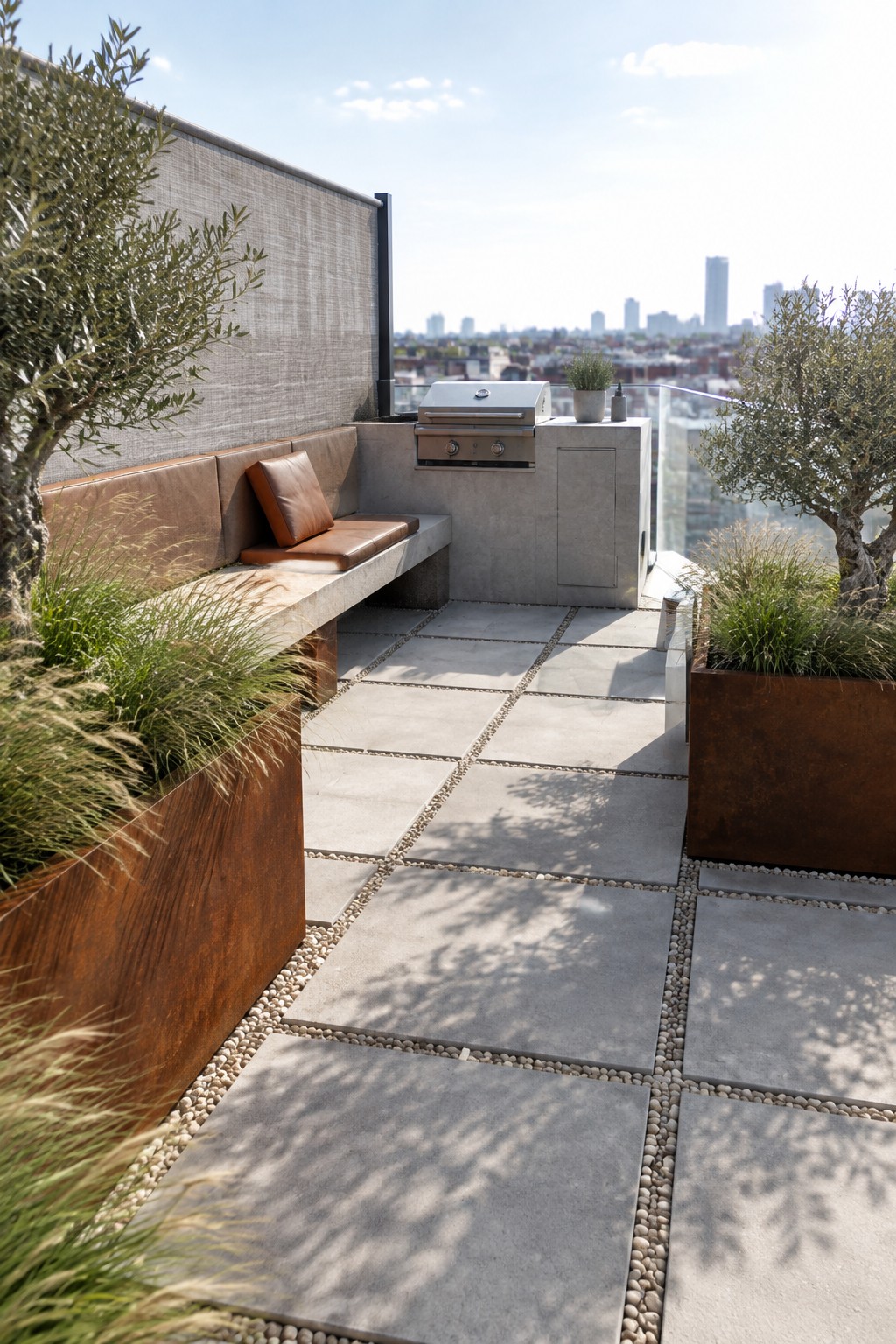
Large stone slabs with gravel filling the gaps between them create a simple, durable surface that feels structured without looking too formal. The gravel helps with drainage and gives the paving a lighter touch, which works well when the area sits right next to planted beds.
This approach suits rooftops and terraces where you want low maintenance and a clean look that still connects to the surrounding plants. Keep the pavers fairly large so the gravel lines stay narrow and do not dominate the space.
Raked Gravel Paths

Raked gravel adds a quiet structure to a path while letting the stones do most of the work. The patterns keep the surface from looking flat and help guide the eye along the route without needing extra edging or plants right up against the stones.
This approach suits narrow side yards or small gardens where you want something low maintenance but still defined. Use larger stepping stones spaced for comfortable walking and rake the gravel lightly every few weeks to keep the lines clean.
Stone Pavers Set In Gravel
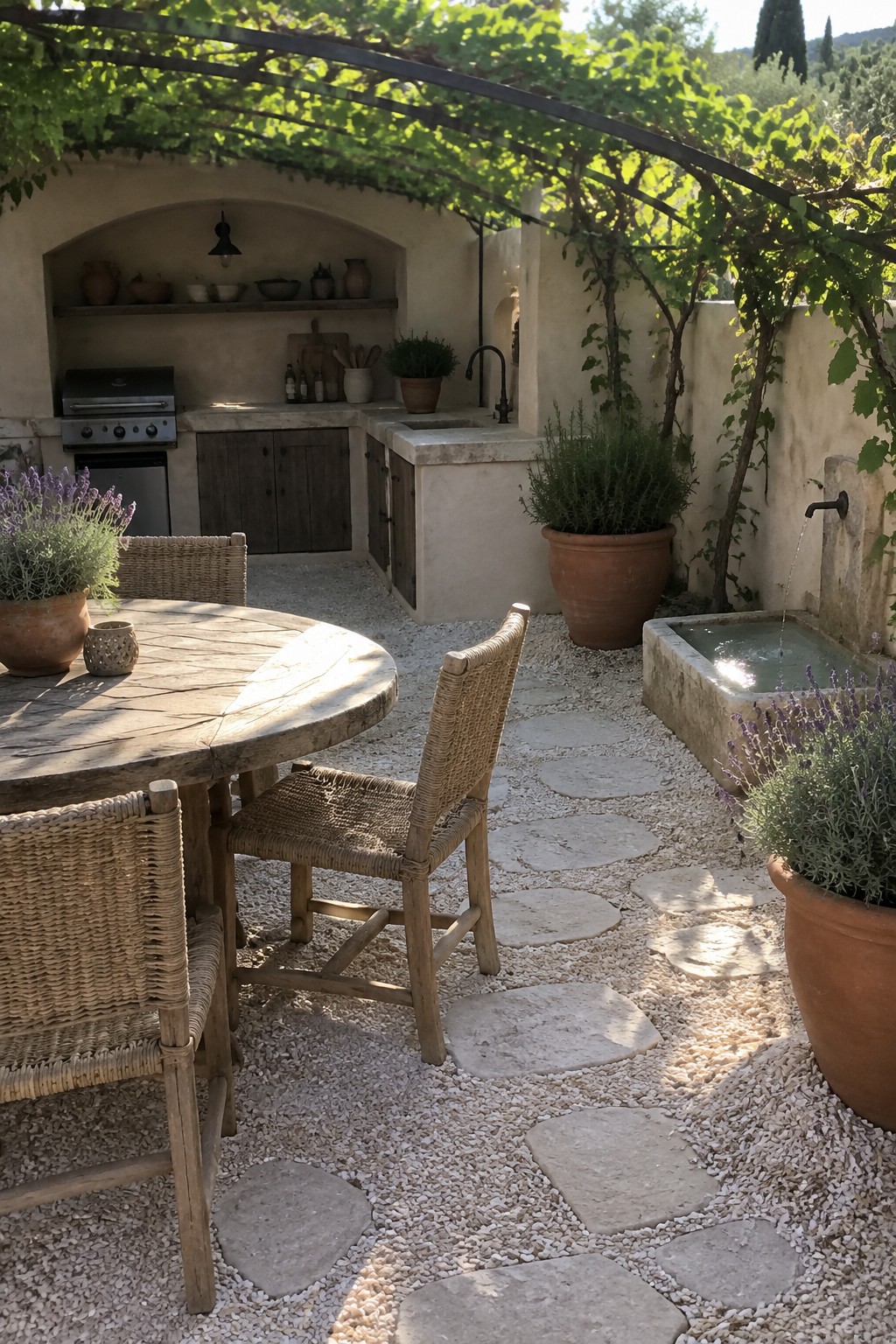
Gravel works well as a base when you want paths that feel relaxed and drain easily after rain. Laying large flat stones at intervals keeps the surface walkable without turning the whole area into solid paving.
This approach suits outdoor kitchens or seating zones where you need firm footing but still want a garden feel. It works best in mild climates and pairs nicely with pots or low plantings along the edges. Just make sure the gravel layer stays thick enough to stay level over time.
Gravel Borders With Stepping Stones
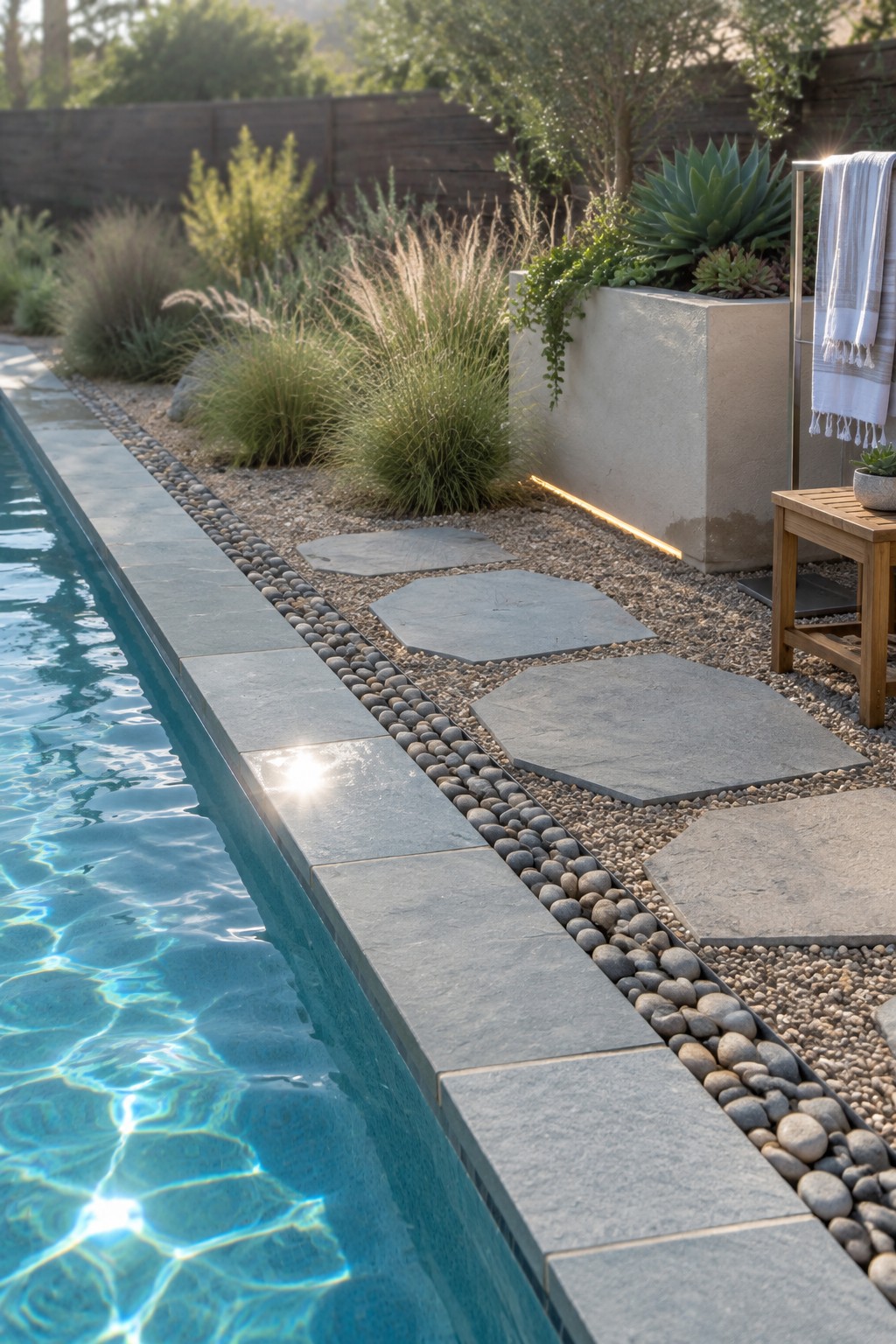
A strip of river rock right next to the pool coping gives a clean break between the water and the rest of the yard. It handles drainage well and keeps the edge looking tidy even when plants grow nearby.
Lay a few flat stepping stones across the gravel farther out if you want a simple path. This setup works best in warm climates where you need low water use and easy maintenance around the pool.
Stepping Stones Set In Gravel For A Simple Path
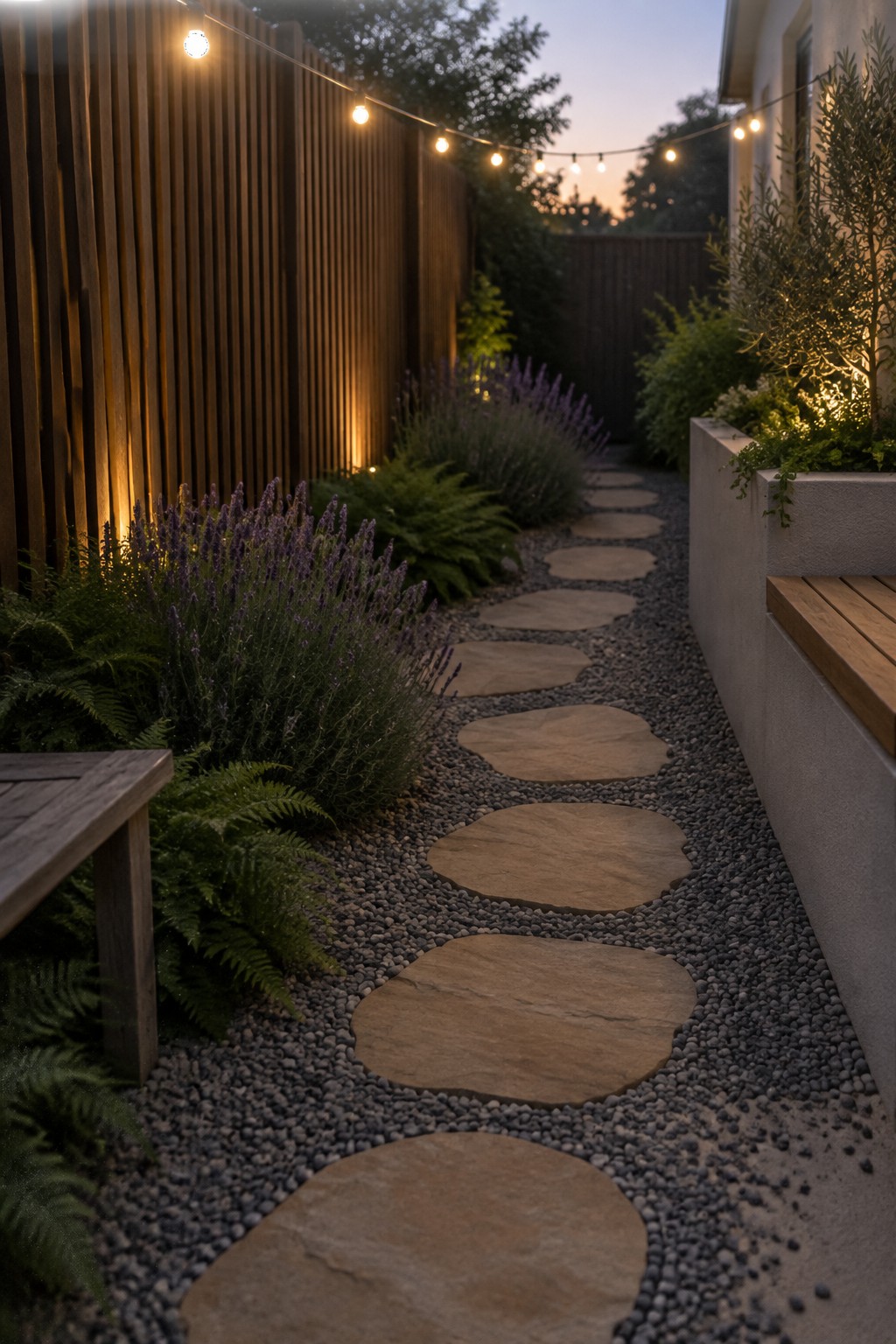
A path made with flat stones set into gravel is one of the easiest ways to create a walkway that feels natural and stays low maintenance. The stones give solid footing while the gravel keeps the surface from looking too formal and helps water drain away.
This kind of path works best along the side of a house or through a narrow garden bed. Space the stones so they feel comfortable to walk on and keep the gravel layer thick enough to stay in place over time.
Stone Slabs Set in Gravel for Walkways

Large rectangular slabs make a strong path because they feel solid underfoot while the gravel around them keeps the look open and natural. This setup works especially well along a front walk where you want something that handles traffic without looking too formal or too fussy.
It suits homes with clean lines and low plantings since the gravel helps with drainage and cuts down on weeding. Keep the slabs fairly wide and space the gravel sections evenly so the path reads as one clear line rather than scattered pieces.
Keep Gravel Contained With a Stone Retaining Wall

A low stone retaining wall gives gravel a firm boundary so it stays where you want it instead of drifting into nearby beds or paths. The curved shape helps the wall follow the land naturally and keeps the whole area from looking too rigid.
This setup works well on lots with a slight slope or where you need a level spot for casual seating. Make sure the wall has a solid base and good drainage so it holds up over time without shifting.
Stone And Gravel Paths

This style of path stands out because the loose gravel lets the stones sit at natural angles without any mortar or perfect alignment. It keeps the whole walkway looking relaxed while still feeling intentional.
It works especially well with modern homes that have sharp lines and dark siding. Use metal edging to hold the gravel in place and keep it from spilling into the planting beds.
Stone Slabs Set In Gravel
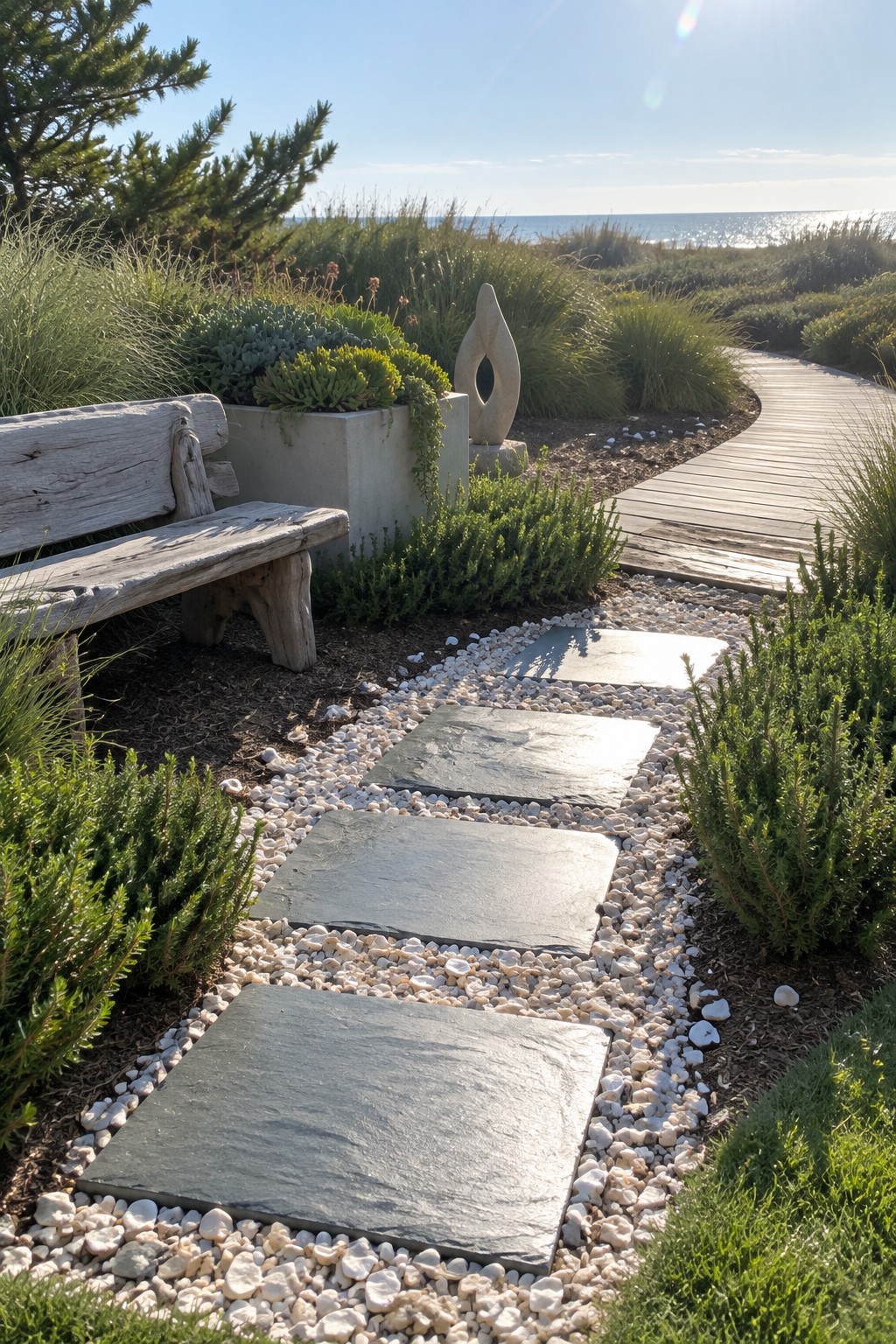
Large flat stones placed in a bed of gravel make a simple path that feels both structured and relaxed. The stones give you solid footing while the gravel fills in the gaps and keeps the whole thing from looking too formal.
This works best in gardens where you want low maintenance and good drainage. Choose stones big enough to step on easily and keep the gravel layer thick so it stays put over time.
Gravel With Large Stone Seats

Gravel pairs well with big pieces of stone when you want seating that feels natural and low maintenance. It fills the spaces between the stones without looking too finished, and it lets rain drain right through instead of pooling up.
This works best on sloped lots or terraced gardens where you need a simple way to connect different levels. Set the stones where you want people to sit, then spread gravel around them and keep plantings along the edges so the whole area stays easy to care for.
Stone Pavers With Gravel for a Simple Path
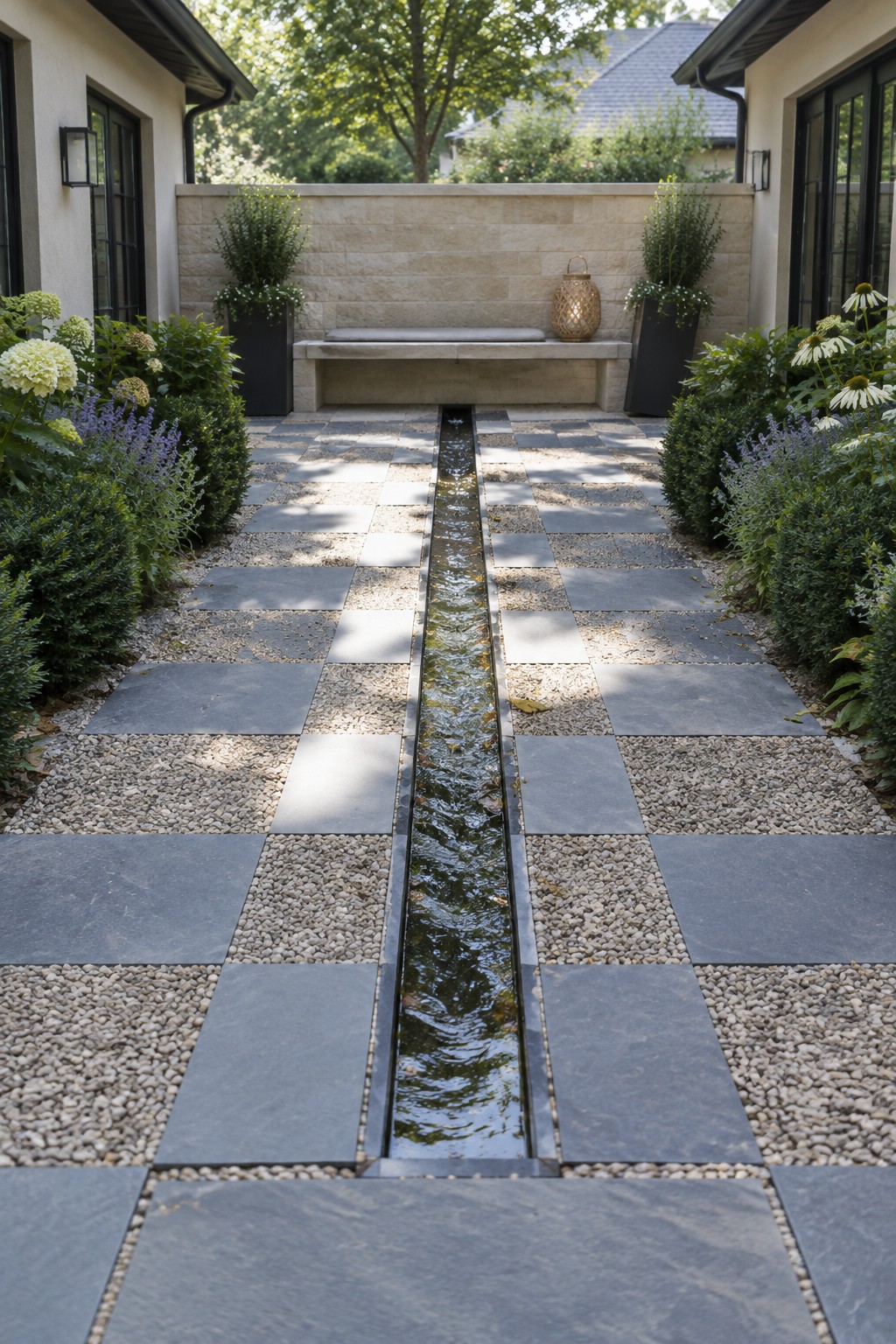
A straight run of large stone slabs set into gravel gives a path a clean, modern look without a lot of fuss. The mix keeps the surface practical for walking while the gravel helps with drainage and softens the overall feel. Adding a narrow water channel down the middle turns the path into something more than just a walkway.
This approach works best in smaller side yards or courtyard spaces where you want structure without blocking the view. Keep the plantings low along the edges so the hardscape stays the main focus. It suits homes with a contemporary style and pairs well with simple, repeated plant shapes.
Circular Gravel Patterns Around A Water Feature

A simple circle pattern in gravel can turn an ordinary spot into something that feels more deliberate. The contrast between light and dark stones draws the eye inward without needing extra ornaments or plants right in the center.
This approach works best in smaller yards or side gardens where you want one clear spot to stand out. Keep the rings fairly even in width and use a solid border like steel edging so the lines stay clean over time. It pairs especially well with a single strong element in the middle, like a stone bowl or a small tree.
Stone Retaining Walls For Sloped Gardens
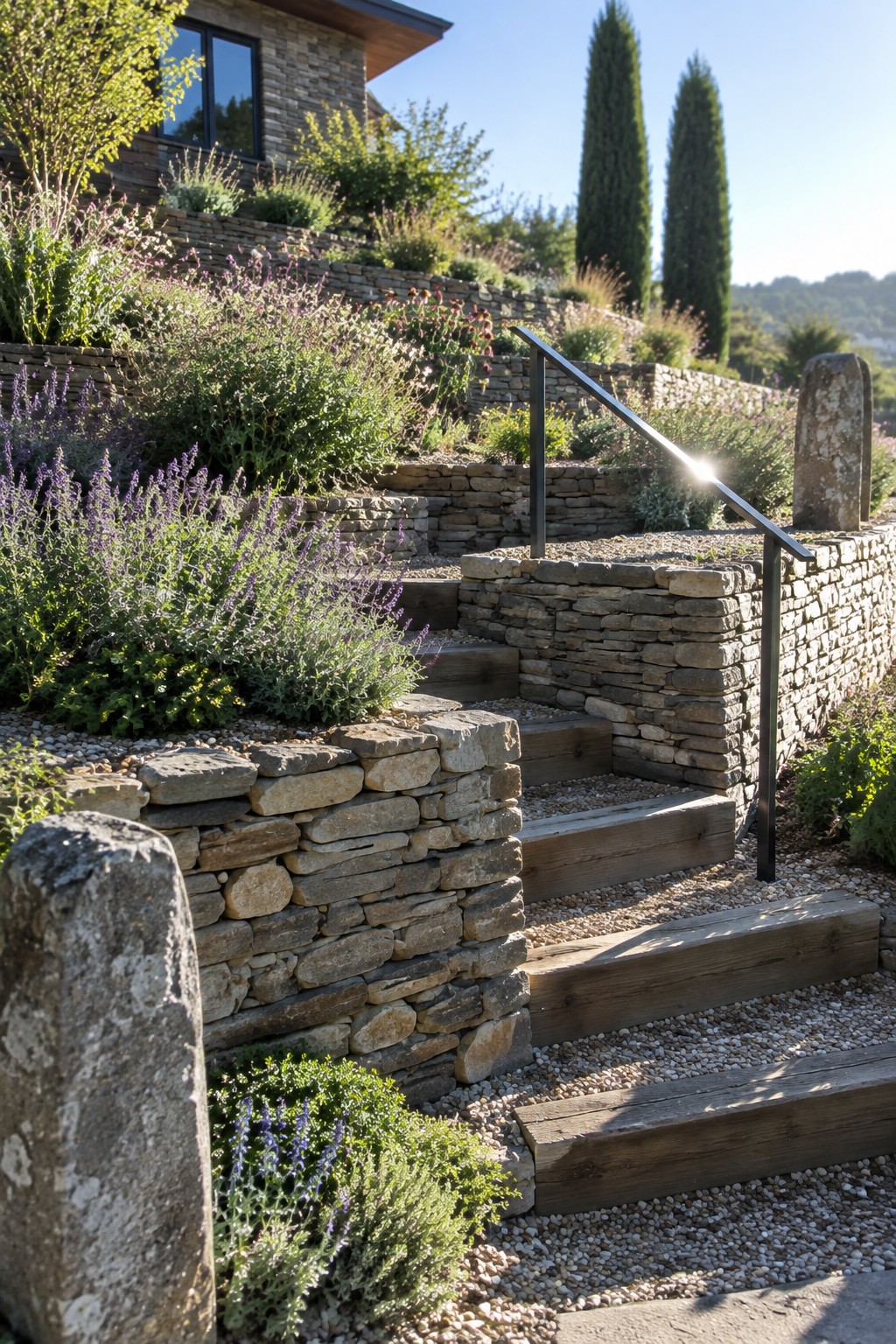
Stone retaining walls help turn a steep slope into usable garden space without losing the natural feel of the site. They break the hill into smaller flat sections that are easier to plant and maintain over time.
Gravel works well between the walls and along the steps because it drains quickly and cuts down on weeding. This setup fits homes on hillsides where you want clear structure but still room for shrubs and flowers at different heights.
Stone Blocks Add Simple Structure To Gravel Gardens
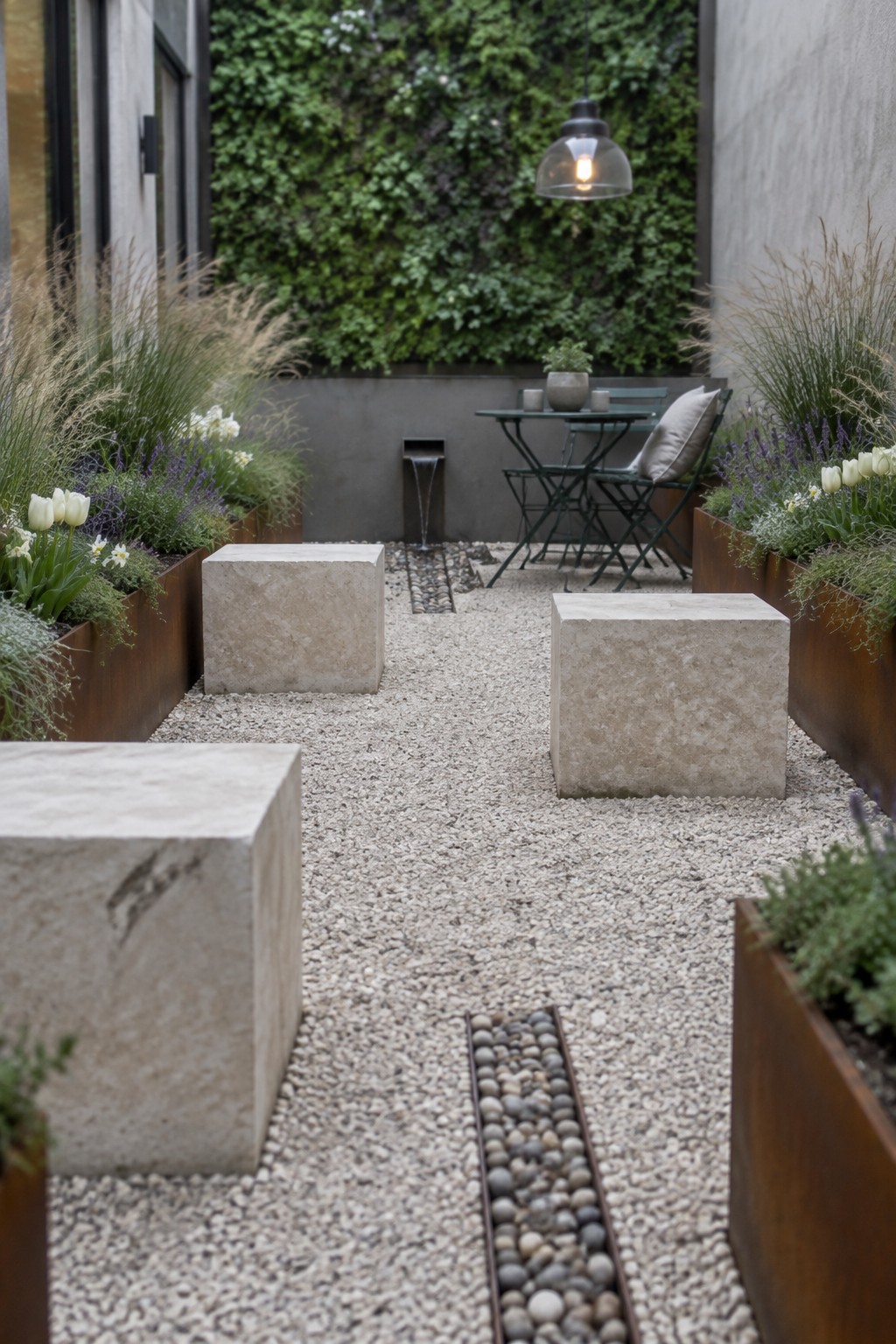
Large stone blocks set into gravel give a garden a solid feel without much fuss. They break up the loose surface, create natural spots to sit, and keep the whole layout looking clean and intentional.
This works especially well in narrow side yards or small modern gardens where you want low maintenance and clear paths. Place the blocks at different distances along the gravel so people can use them as seating or stepping points, and pair them with simple metal planters to hold the planting in place.
Stone Pavers Set In Gravel

Large stone pavers laid into gravel make a simple path that feels solid underfoot and easy to keep up. The gravel handles drainage well and keeps the look clean without needing much upkeep, especially around a pool where water can splash.
This works best in sunny backyards or modern homes that want a low-maintenance surface. Keep the gravel depth even and use edging to hold it in place so it stays neat over time.
Gravel Beds With Mixed Stones
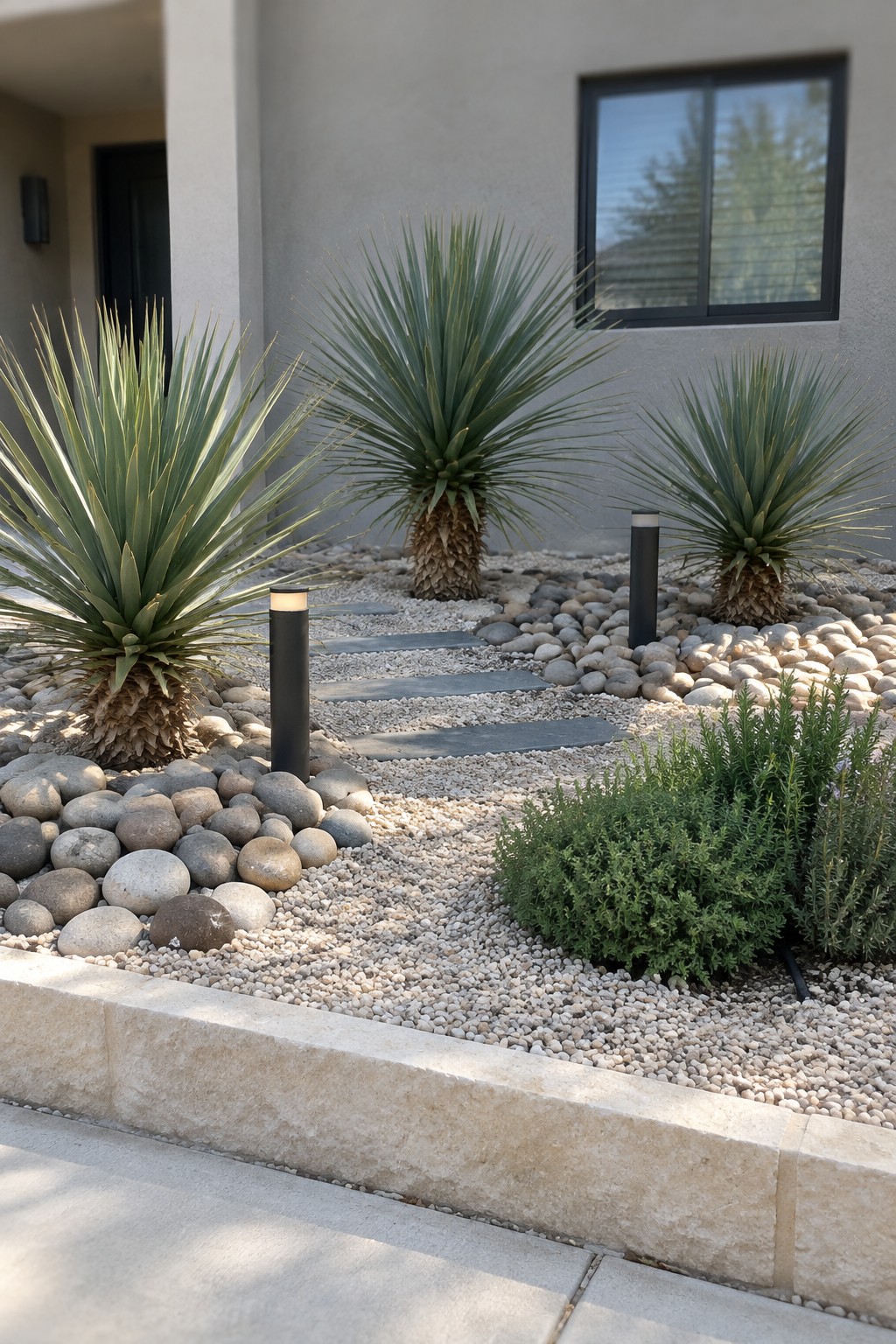
Gravel mixed with larger river rocks makes a practical base for planting beds. It drains well, stays in place better than loose mulch, and gives the area a tidy, finished look without constant upkeep.
This works best around homes that already lean modern or simple in style. Place the bigger stones near the plants to hold everything down and keep the gravel from shifting too much over time.
Frequently Asked Questions
Q: How do I keep weeds from popping up in the gravel areas?
A: Lay down a solid weed barrier fabric before you spread the gravel. Check the edges every few months and pull anything that sneaks through right away. This keeps the surface clean without constant spraying.
Q: Will the stones stay put on a slight slope or do they slide after rain?
A: Mix in some larger rocks along the lower edge to act as a stop. Tamp the gravel down firmly in layers when you install it. Most movement stops once the base settles.
Q: Can I add these stone ideas around existing trees without hurting the roots?
A: Keep the gravel a few inches away from the trunk and use a thinner layer near the roots. Trees need air and water to reach the soil so skip heavy coverage right at the base. This way the landscaping looks finished but the tree stays healthy.
