

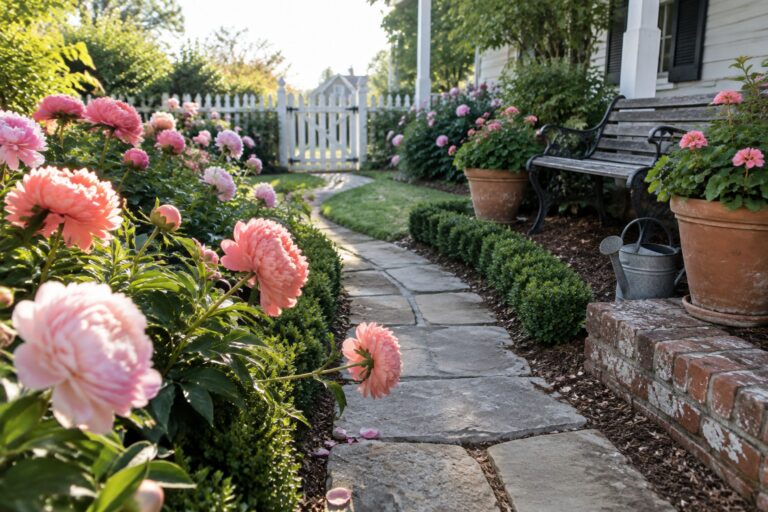
Peonies can make a late-spring garden feel lush, but they need enough room and the right neighbors to look at home.
I find that the planting layout matters as much as the blooms, especially where paths, borders, and taller plants shape the view.
A peony tucked beside a walkway feels different from one anchoring a deep bed, and each placement changes how the garden unfolds over time.
The most useful designs balance those full flowers with foliage and structure that still look good before and after the blooms fade.
I’d save the ideas that suit your garden’s light, space, and everyday paths, then adapt them to fit.
Let a Stone Path Lead Through the Peonies
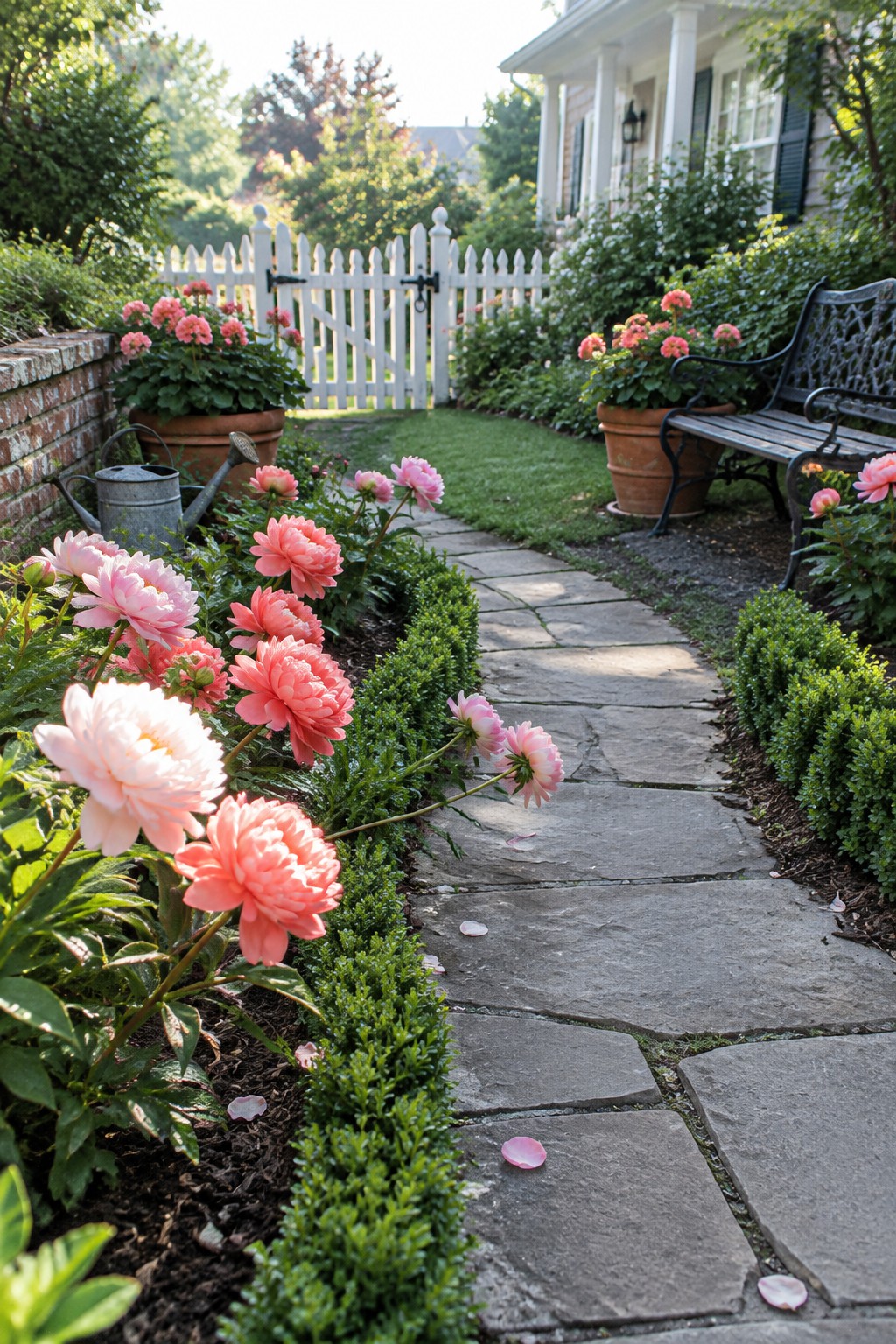
A simple stone path gives a peony garden a clear route without taking space away from the flowers. The irregular slabs feel at home among informal planting, and clipped edging keeps the path from getting swallowed by the beds.
This approach works well in a small side garden or a narrow yard where a direct walkway is more useful than a broad paved area. Leave enough room between the stones for comfortable steps, and keep plants trimmed back along the edges.
Create a Garden Path Through Peony Beds
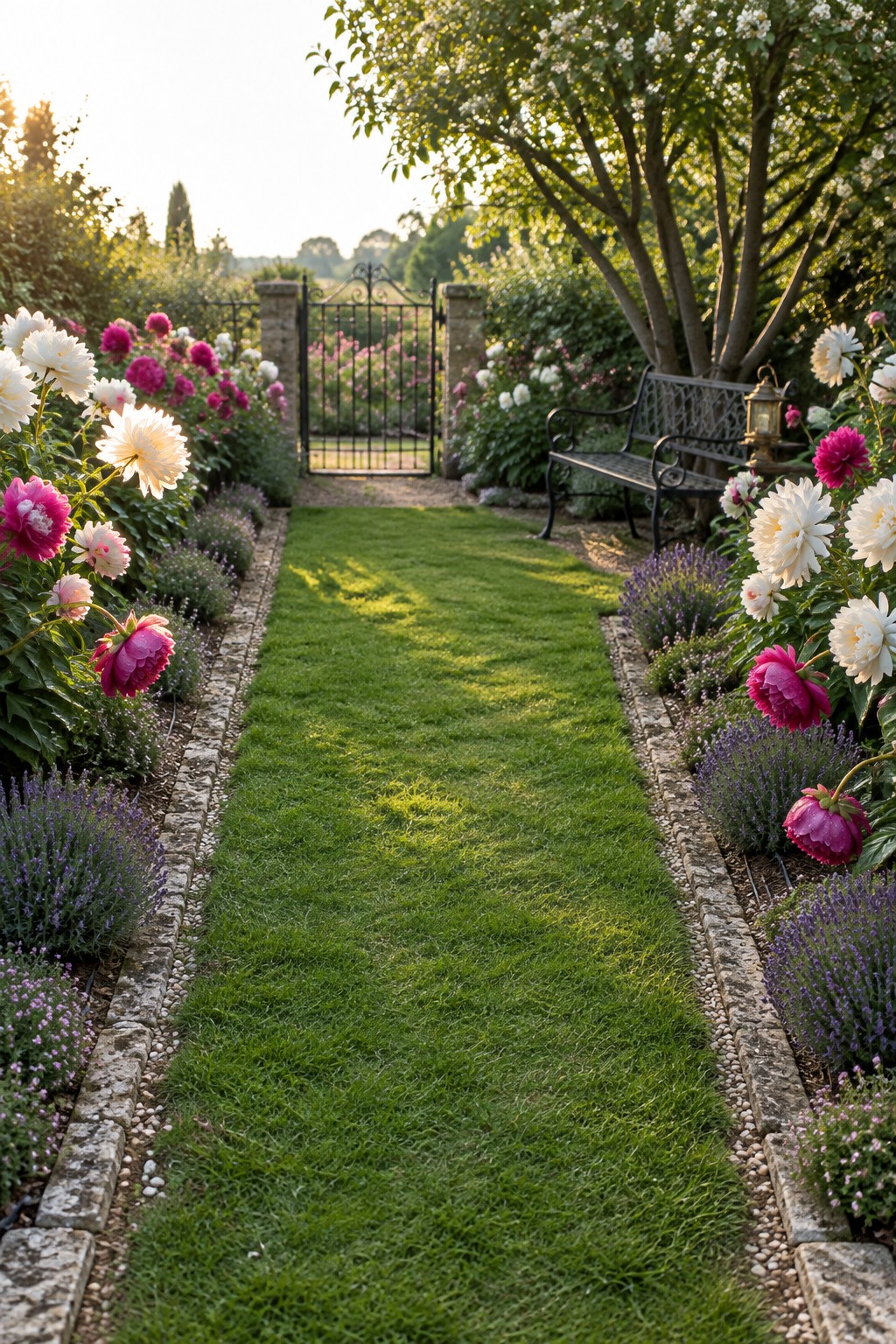
A simple grass path gives a flower garden a clear shape and makes it easier to enjoy the planting from within the yard. Peonies can line the beds on either side, where their large blooms become part of the walk rather than a wall of flowers viewed from one spot.
Use stone edging to keep the lawn from spreading into the beds, and leave enough room for the plants to grow without crowding the path. This layout suits a long, narrow garden especially well, but it also works on a smaller scale with a shorter walkway.
Give Peonies Room Along Garden Paths

A brick path running between raised flower beds makes a small garden feel organized without taking away its cottage-garden character. Peonies stand out near the walkway, where their blooms are easy to enjoy and the beds still feel full.
Leave enough space for the plants to spread, and keep the path wide enough to use comfortably once the flowers are in bloom. This layout works especially well in narrow gardens, where raised beds can make the planting area feel tidy and defined.
Build Peonies Into a Garden Path
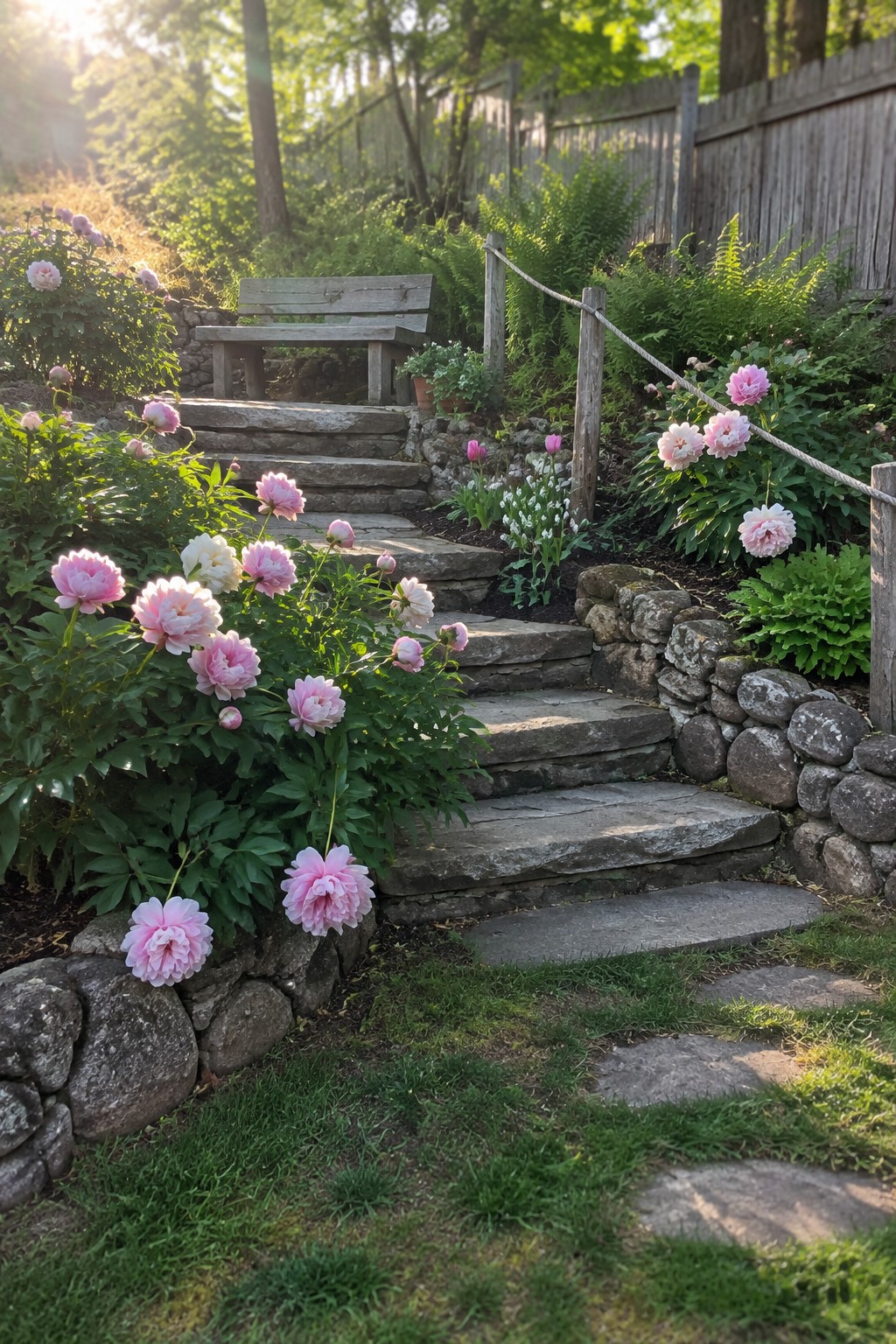
A stone path can make a peony garden feel like part of the yard rather than a bed to look at from a distance. The broad steps here wind through the planting, giving the flowers room to spill along the edges while keeping a clear route through the garden.
This idea works well on a sloped site, where stone steps can follow the natural rise of the ground. Plant peonies along the path in loose groups, and leave enough space for their foliage to spread without narrowing the steps.
Make Peonies Part of a Patio Garden

A curved stone patio can sit right alongside a generous flower bed, so the garden feels close to the seating area rather than tucked away at the edge of the yard. Peonies bring the seasonal color, while lower flowers fill the spaces between larger blooms.
Leave enough room for peonies to spread and for people to move around the patio comfortably. This approach suits a small garden where you want the seating and planting to feel connected without letting flowers crowd the chairs.
Plant Peonies Along a Pond Edge

Peonies can make a pond edge feel like part of the garden rather than a separate feature. Their large pink blooms stand out against the water, while grassy plants nearby help soften the transition between the bed and the shore.
Plant peonies in a sunny spot with soil that drains well, and leave enough room for mature plants to spread. They suit a natural-looking pond garden, but keep them back from the wettest ground since peonies do not like soggy roots.
Plant Peonies in a Curved Raised Bed

A curved raised bed lets peonies form a clear garden shape without blocking the walkway. The stone edging gives the flowers a tidy boundary, while the rounded outline feels less rigid than a straight planting strip.
Use this idea beside a patio or along a path where people can enjoy the blooms up close. Leave enough room for peonies to spread, and keep the bed low enough that it does not crowd the route.
Use Peonies to Soften a Foundation Bed

Peonies can make a foundation bed feel full and welcoming without hiding the house. Their large blooms stand out among lower, rounded shrubs, while the mixed heights keep the planting from looking like a solid hedge.
Leave enough room for peonies to spread, and place them where they get plenty of sun. Near an entry, keep the path and steps clear so the flowers add color without getting in the way.
Plant Peonies Along a Courtyard Seating Area

A courtyard garden can feel more settled when flowering plants line the edge of its seating area. Peonies bring a soft, seasonal border to a patio, while taller purple flowers behind them add a bit of height.
Plant peonies where they get plenty of sun and have room to spread, keeping them just beyond the edge of a path or patio. They suit enclosed courtyards especially well, but leave enough space around a bench or dining area so the plants do not crowd the seating.
Plant Peonies in Raised Garden Beds

Raised beds give peonies a clear place in the garden and make it easier to keep flowering plants separate from a gravel path. A simple concrete edge also keeps soil from spilling into the walkway.
Use this idea where you want a defined flower bed along a path or beside a wall. Give peonies enough room to spread, and make sure the bed drains well, since they do not like sitting in wet soil.
Plant Peonies Along a Gravel Garden Path

A gravel path gives peonies a clear place in the garden while leaving room for their full, leafy growth. Planting them along both sides makes the walk feel lush, but the simple surface keeps the layout easy to follow.
Leave enough space between the path and the plants so peony stems do not spill across the walking area. This approach suits a relaxed cottage garden, especially where a straight or gently curving route leads to a small seating spot.
Mix Peonies With Useful Garden Plants

Planting peonies alongside herbs and other flowers makes a garden bed feel both pretty and practical. The broad peony blooms stand out among smaller plants, while herbs such as rosemary give the planting a useful purpose beyond flowers.
Try this mix in a sunny bed where peonies have room to spread. Keep taller plants from crowding the peonies, and leave enough space to reach herbs for trimming.
Use Stone Edging to Shape Peony Beds
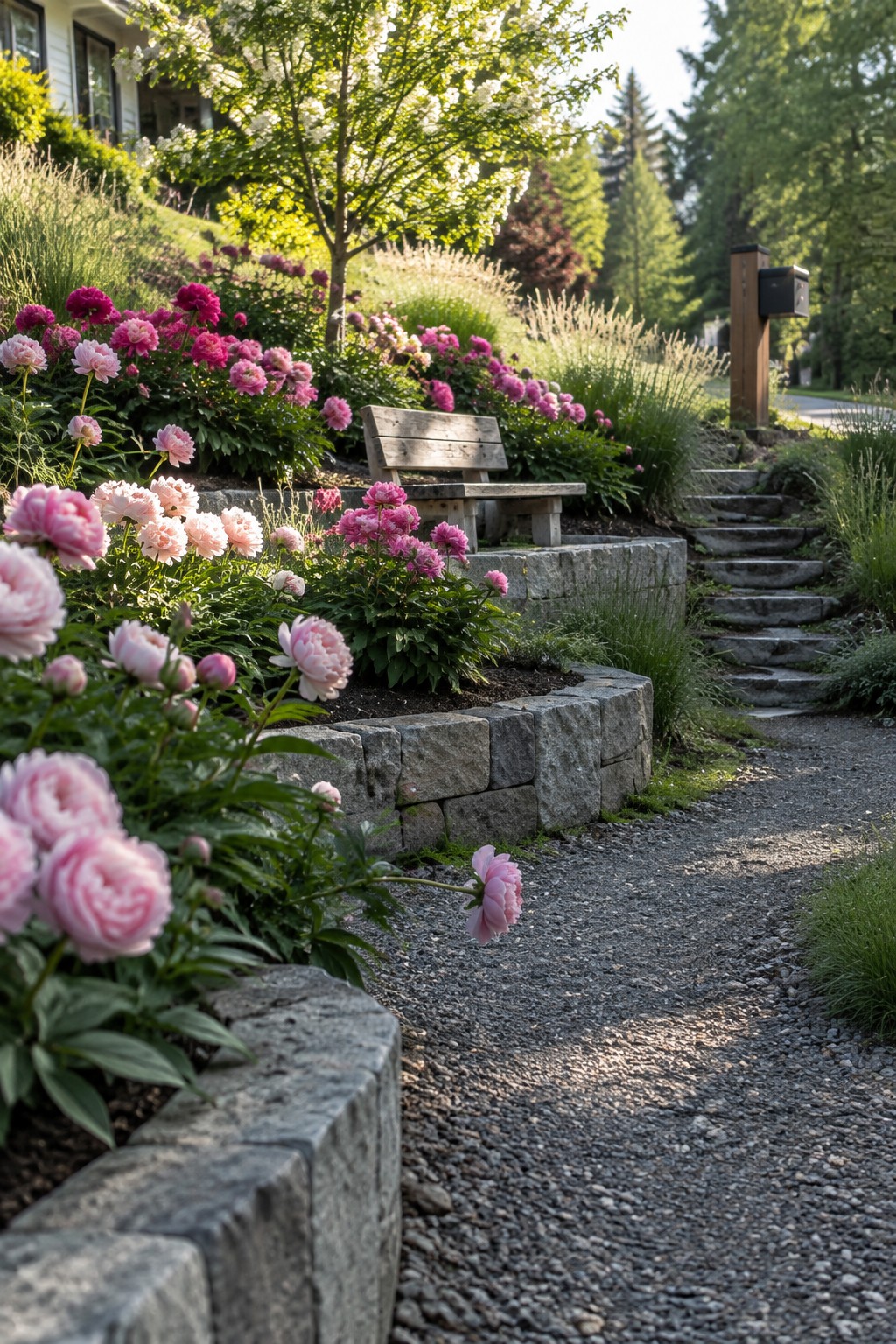
Stone edging gives a peony bed a clear shape and helps keep soil and plants separate from the path. It also works well on a slope, where a low retaining edge can make a planting area easier to manage.
Use sturdy blocks to define the bed, then leave enough room for peonies to grow without crowding the walkway. This approach suits sloped yards and informal garden paths; keep the wall low enough that it does not block access or make the bed difficult to tend.
Grow Peonies Around a Rooftop Seating Area

Peonies can make a rooftop deck feel like a garden without taking away its place to sit. Use them around the edges of the seating area, where their large blooms can brighten the deck while leaving the center clear for everyday use.
Choose sturdy containers with enough room for peony roots, and make sure the deck gets plenty of sun. A trellis or screen nearby can offer some shelter, but avoid crowding the plants against furniture so they have room to grow.
Set Up a Peony Garden for Outdoor Dining

A dining area beside a flower bed lets you enjoy peonies up close without using the planting space for a path or seating. Keep the table close to the flowers, but leave enough room to pull out chairs and move around comfortably.
This setup suits a patio or garden terrace where the beds can sit along one side of the dining area. Peonies can spill color near the table, while a simple string of lights helps the space stay useful into the evening.
Let Peonies Edge a Curving Stone Walk
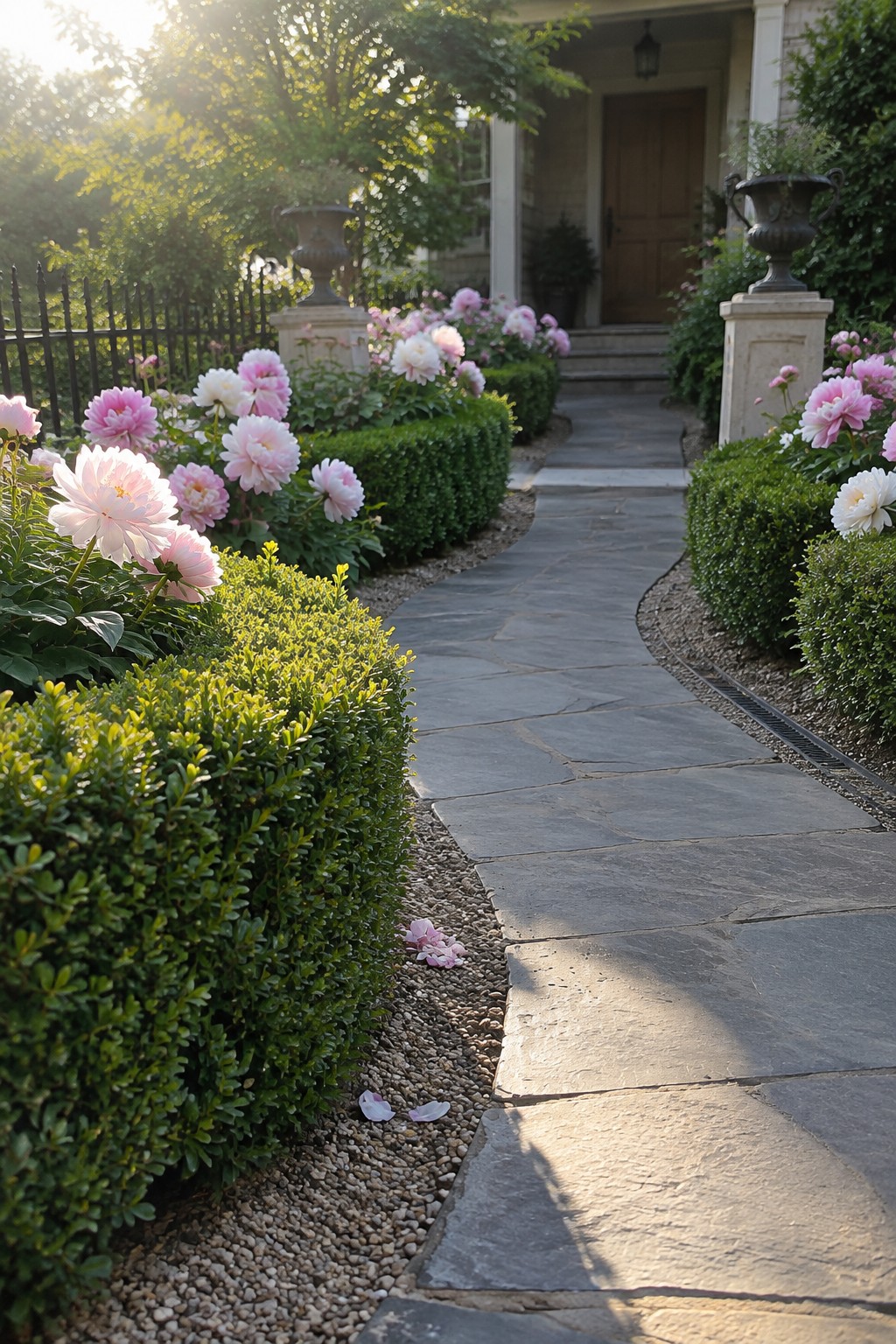
A gently curving stone path gives a peony garden a clear route to follow, while the flowers soften its edges. The bend also lets you enjoy the blooms a little at a time rather than seeing the whole bed at once.
Choose paving with a comfortable walking surface and leave enough room for peonies to grow without leaning into the path. Low hedges can help keep the planting tidy, but avoid making the walkway so narrow that mature flowers crowd it.
Use Peonies to Edge a Brick Garden Path
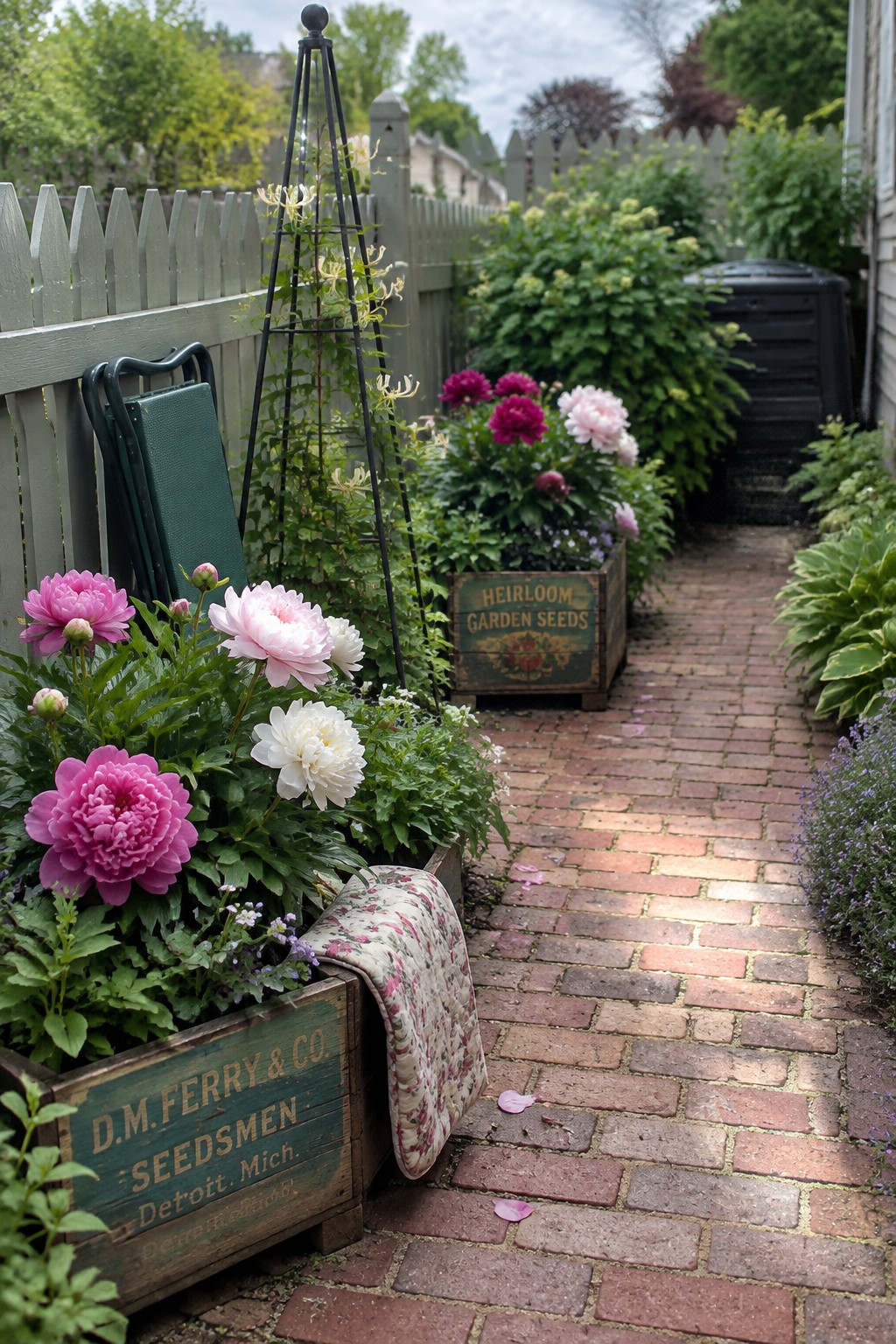
Peonies planted beside a garden path make the walk feel like part of the garden, not just a way through it. Their broad blooms and leafy stems bring plenty of color close to the path, while the brick keeps the route clear.
Leave enough room for mature plants so the flowers do not spill across the walkway. This works especially well along a narrow side garden, where a simple path can guide visitors past the blooms without taking up space for a large lawn.
Give Peonies Space Along a Garden Path
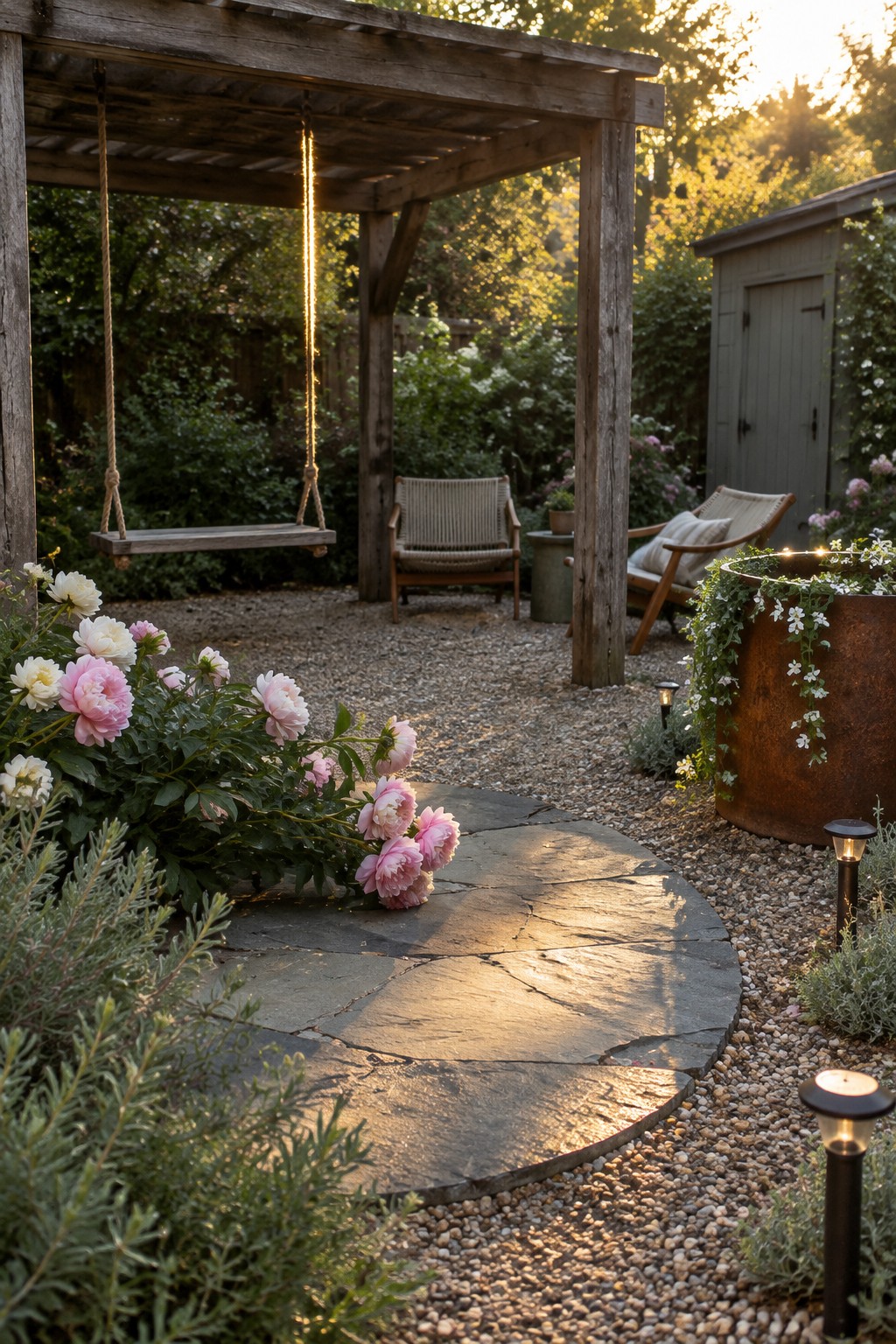
A curved stone path gives peonies room to spill into view without making the garden feel crowded. The generous spacing between the path and the pergola also leaves space to walk and enjoy the blooms.
Use this layout along a gravel path or beside a small seating area, planting peonies in loose groups rather than a tight row. Leave room for mature plants, since their foliage spreads after flowering and can narrow a path if planted too close.
Grow Peonies in Pots Along a Garden Workbench
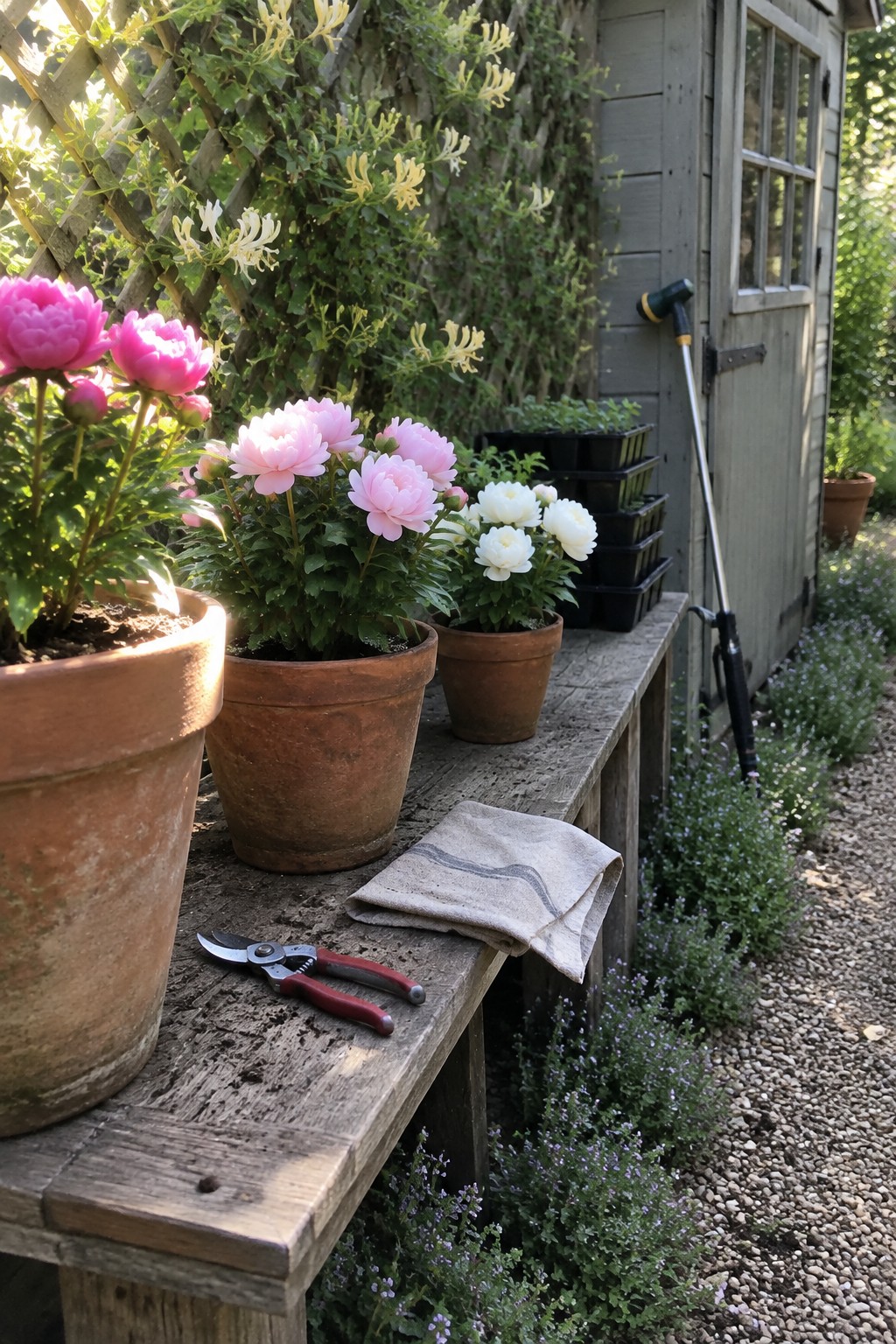
Potted peonies are a handy way to bring flowers to a small garden or give a changing spot of color to a work area. The terracotta pots make it easy to group pink and white blooms together without digging up a permanent bed.
Choose roomy pots with drainage holes, and set them where the plants get plenty of sun. Peonies need space for their roots, so avoid keeping them cramped in small containers; water regularly, especially during dry spells.
Frequently Asked Questions
Q: When should I plant peonies for a late-spring garden?
A: Plant bare-root peonies in fall, giving them time to settle in before spring. If you’re planting a potted peony, spring works too, but keep the soil moist while it gets established.
Q: How deep should I plant a peony so it blooms well?
A: Keep the peony’s eyes, or small pink buds on the roots, about 1 to 2 inches below the soil surface. Planting them too deep is a common reason peonies grow leaves but produce few flowers.
Q: What can I plant beside peonies to keep the garden interesting after they bloom?
A: Try catmint, salvia, or ornamental grasses nearby. They add color and texture later in the season, when peony flowers have faded.
Q: Do peonies need support?
A: Large, double blooms can flop after rain, so add a peony ring or discreet stakes early in spring, before the stems get tall. Single-flowered varieties usually hold themselves upright.
