


Gardenias bring glossy leaves and a rich fragrance, but they need the right place in a garden to thrive and feel at home.
I find they work best when their shape and scent have room to stand out without overwhelming nearby plants or paths.
A garden bed can feel balanced when taller shrubs create structure, lower plantings soften the edges, and walkways leave enough space to enjoy the blooms.
Sunlight, soil, and drainage matter too, so I’d adapt each layout to the conditions in my own yard rather than copy it exactly.
Some of these ideas are worth saving for a front border, a quiet corner, or a spot near the porch where the fragrance can drift by.
Let Gardenias Line a Brick Path

A brick path makes a garden feel settled and gives gardenias a clear place to grow along the way. Their glossy leaves and white blooms bring fragrance close to the route people use most.
Plant gardenias in a slightly widened bed beside the path, where they have room to grow without spilling across the bricks. They do best in warm, sheltered spots with acidic soil and steady moisture, so allow space for airflow and easy watering.
Use Garden Paths to Organize the Planting

A clear path can give a formal garden its shape and make the planting easier to enjoy. Here, a gravel walk runs through clipped hedges toward a central fountain, while gardenias mark the edges with white blooms.
This approach suits a courtyard or a larger garden where you want a defined route through the beds. Keep the path wide enough to walk comfortably, and use a firm edging to keep gravel from spreading into the plants.
Create A Garden Seating Nook

A small seating nook can make a garden feel like a place to spend time, not just a view from the house. Here, two chairs sit among flowering gardenias, so their fragrance is part of the experience as well as their appearance.
For a similar spot, set a pair of weather-resistant chairs beside a garden path and leave enough room to walk around them. Gardenias do best in warm, sheltered areas with suitable soil, so check that the planting conditions work before building the nook around them.
Add A Winding Stone Path
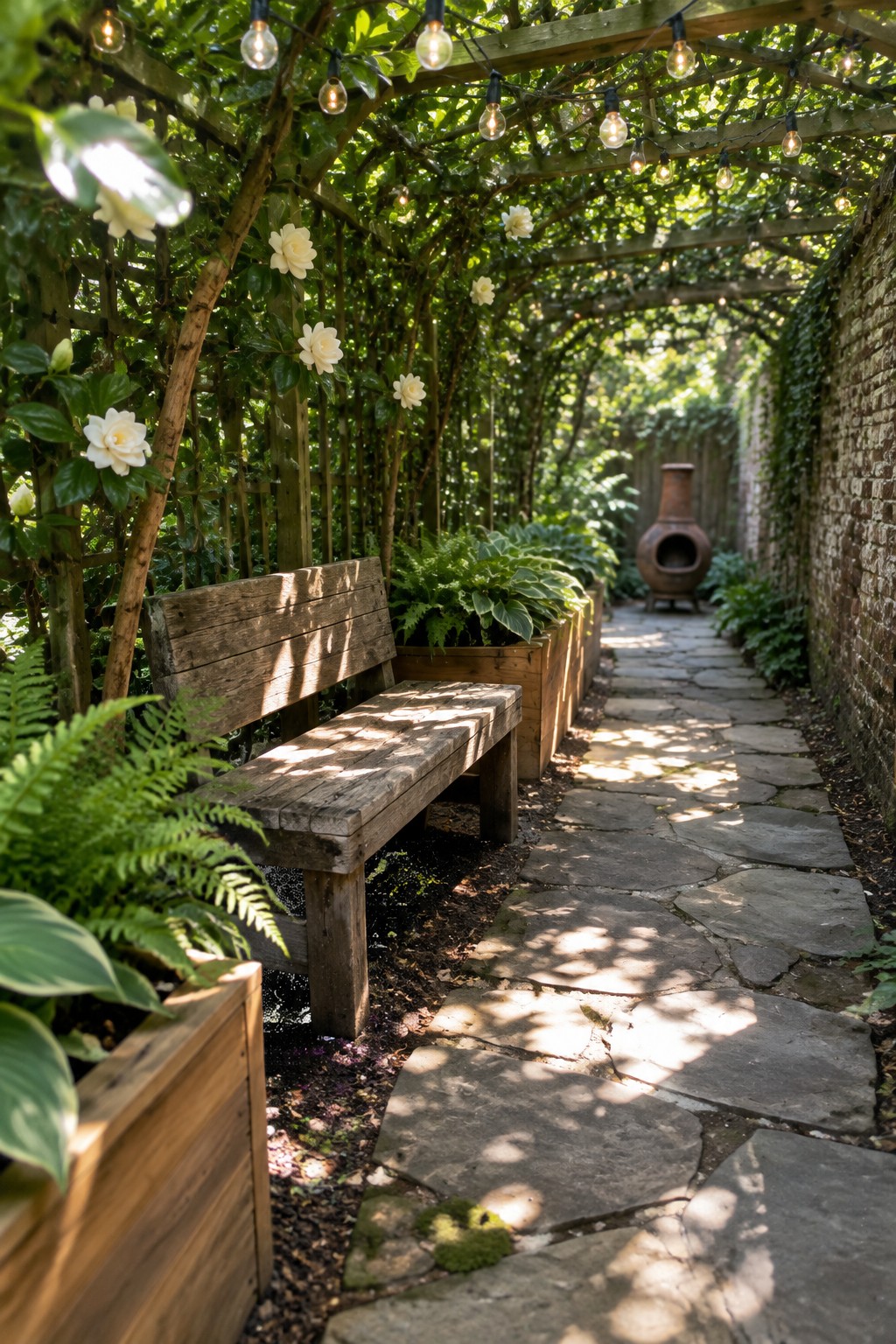
A stone path gives a planted garden a clear route through the greenery without taking up much room. Irregular flagstones feel at home in a cottage-style space, and the small gaps between them can be left for moss or low groundcover.
Use this idea to lead visitors toward a bench or another quiet spot in the garden. Set the stones firmly and keep the path wide enough for comfortable walking, especially if it gets regular use.
Use Gardenias To Soften Pool Edges

Gardenias can make a poolside feel more like part of the garden. Plant them along the outer edge of the paving, where their glossy leaves and fragrant white flowers can be enjoyed without crowding the water.
Leave enough room for plants to grow and for people to walk around the pool. Gardenias do best in well-drained soil and some protection from harsh afternoon sun, so choose a spot that suits your climate and keep fallen petals out of the pool.
Use a Pebble Path to Shape the Garden

A curving gravel path gives a garden a clear route without making it feel too formal. It can guide visitors through the planting beds and make a larger yard feel easier to explore.
Use rounded gravel for a softer look, and add sturdy edging to keep stones from spreading into nearby beds. This approach works well in cottage-style gardens, especially where a winding route can lead toward a porch or another destination.
Use Gardenia Beds to Define the Entry Path

Gardenias planted along a front walk make a simple route to the door feel like part of the garden. Their glossy foliage and fragrant flowers are especially suited to an entry, where people can enjoy the scent as they come and go.
Plant them in a broad bed beside the path, as shown by the flowering shrubs along the brick edging. Leave room for the plants to spread, and choose a spot with suitable light and well-drained, acidic soil.
Make Gardenia Planters Part Of The Outdoor Dining Area

Gardenias in large pots can bring their fragrance right beside an outdoor dining table, where people will notice it as they gather. This is a practical way to enjoy the flowers without needing a garden bed nearby.
Place the pots where they get suitable light and are easy to water, but leave enough room for chairs and foot traffic. The dark glazed pots shown here also give the white blooms a clear backdrop.
Use Gardenias To Mark The Front Entry

Gardenias in matching planters make a front entrance feel considered without needing a large garden bed. Their white flowers stand out against dark evergreen shrubs, and placing them on both sides gives the doorway a clear, balanced look.
For a similar effect, use sturdy pots near the steps or front door, where the fragrance can be enjoyed as people come and go. Choose a variety that suits the light and climate, and leave enough room for mature growth so the plants don’t crowd the entrance.
Use a Pebble Path Through Gardenia Beds

A pale pebble path gives a garden a clear route while letting the planting remain the main feature. Gardenias along the edge bring fragrant flowers close to the walkway, where their scent is easy to enjoy.
This approach works well in a coastal garden or a sunny side yard. Keep the path wide enough for comfortable walking, and choose a firm base so the pebbles stay in place.
Use a Gardenia Screen for Patio Privacy

A flowering gardenia screen can give a small patio a little more privacy without making it feel closed in. The horizontal wood slats support the climbing greenery, while the white blooms bring fragrance close to the seating area.
This works well in a courtyard or along a narrow terrace where there is limited room for a deep border. Choose a sturdy trellis or slatted panel, and leave enough space around the gardenias for airflow and regular pruning.
Use Stepping Stones to Shape a Garden Path

A stepping-stone path gives a garden a clear route without taking over the planting. The gaps between stones leave room for groundcover and flowers, so the path feels like part of the garden rather than a solid walkway.
This approach works well in a shaded bed where a narrow path is enough to guide visitors through the plants. Set the stones firmly and keep their spacing comfortable to walk across. White gardenias along the edges can add fragrance near the path.
Use Raised Beds to Shape the Entry Garden

A raised bed can give an entry garden a clear edge and keep planting separate from the driveway. Here, the metal border holds a row of gardenias in a neat, easy-to-follow line.
This approach works well beside a front walk or gravel drive, especially when you want fragrant plants near the entrance. Leave enough room for gardenias to spread, and make sure the bed drains well so their roots do not sit in soggy soil.
Make a Stone Patio Part of the Garden

A stone-paved patio can make an outdoor seating area feel settled into the garden rather than set apart from it. Here, the broad paving gives people room to gather around the fire pit and fireplace.
For a similar layout, use durable stone across the main seating area and leave planting beds around its edges. Gardenias can add fragrant flowers nearby, but keep enough space between shrubs and seats for easy movement and airflow.
Use Gardenias to Edge a Brick Garden Path
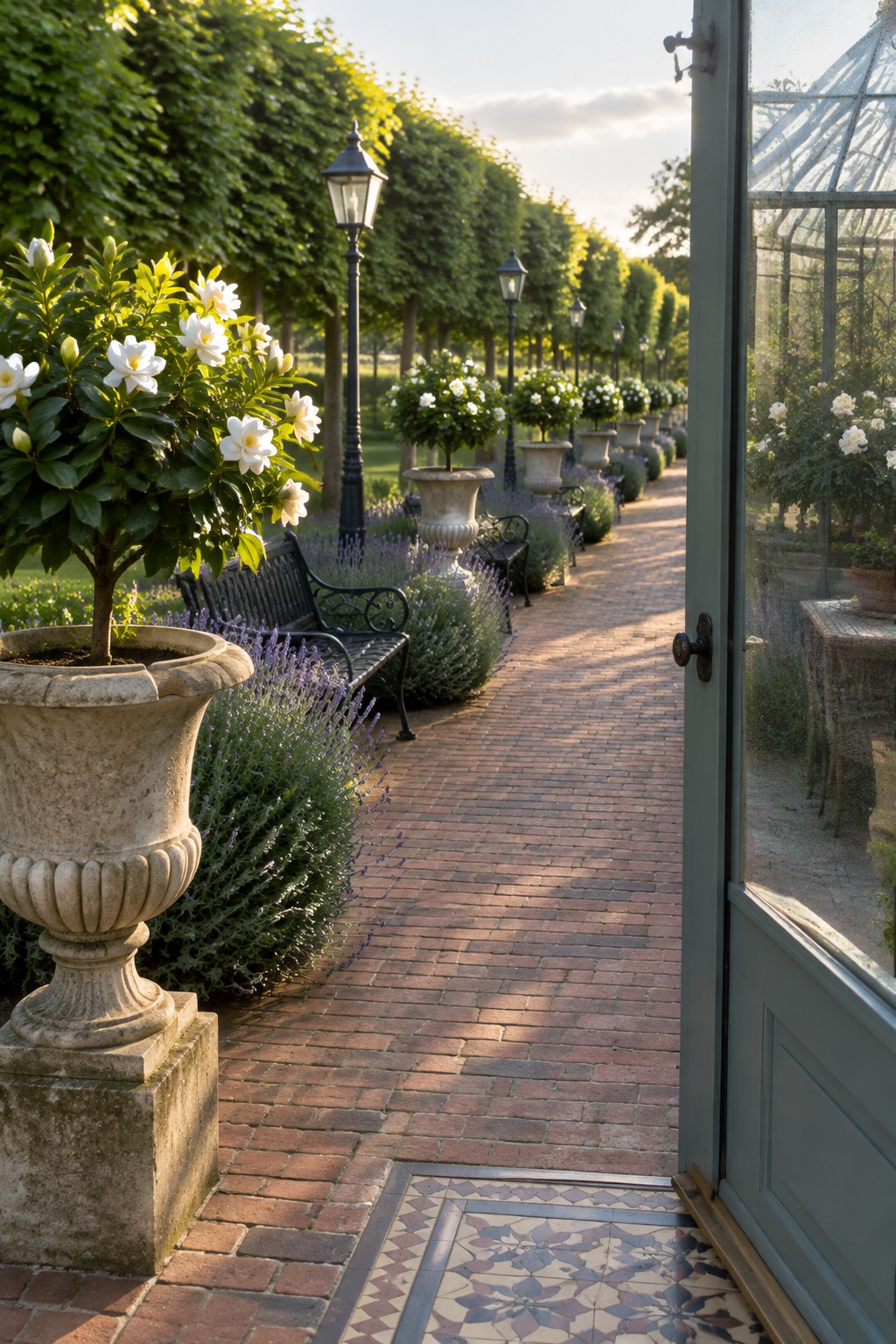
A brick path can give a garden a clear route while keeping the planting close by. Gardenias along the edge bring fragrant blooms right to the walkway, and their glossy foliage makes a neat border.
This approach works well on a garden path near a greenhouse or back door, where people pass often enough to enjoy the scent. Leave room for the shrubs to grow, and keep them trimmed so they do not narrow the walking space.
Make a Garden Fire Pit a Seating Destination

A small fire pit can give a garden seating area a clear purpose, especially when the chairs or stools face inward around it. Here, the low bowl sits at the center of a stone-paved space, leaving room to gather without crowding the surrounding planting.
This setup works well in a tucked-away corner where a full patio would feel too large. Choose outdoor seating that can handle damp conditions, and leave enough space around the fire pit for safe movement.
Let Gardenias Soften a Fence Line

Planting gardenias along a fence is a simple way to make a plain boundary feel like part of the garden. Their glossy leaves and fragrant white blooms bring interest close to the path without taking up much walking space.
Leave room for each shrub to reach its mature size, and keep the bed easy to access for pruning. Gardenias do best where they get morning sun and some protection from harsh afternoon heat.
Use a Brick Path to Connect Garden Beds

A brick path gives a garden a clear route to follow while keeping planting beds easy to reach. It suits a cottage-style garden especially well, and gardenias can line the path for fragrant blooms along the way.
Use reclaimed or weathered brick for a relaxed look, and keep the path wide enough to walk comfortably and carry a garden basket. A simple straight route works well in a narrow side garden like this one.
Use Gardenias to Add Privacy Around a Poolside Patio

Gardenias can make a pool patio feel more tucked away without closing it off. Tall planters along the edges add leafy screening, while the white flowers bring fragrance close to the seating area.
Use this approach where a patio borders a neighboring yard or an exposed pool area. Choose sturdy, well-drained containers and give the plants room to grow, since crowded gardenias can be harder to keep healthy.
Shape a Garden Around a Central Lawn

A small circular lawn can give a formal garden a clear center and make the surrounding planting feel orderly. A curved bed of white gardenias follows the lawn’s edge, so their flowers and fragrance are easy to enjoy without filling the whole space with shrubs.
This layout suits a courtyard or enclosed garden where a simple shape can make the space easier to plan. Keep the path wide enough to walk comfortably, and leave room for gardenias to grow without spilling over the edging.
Frequently Asked Questions
Q: How much sun does a gardenia need to bloom well?
A: Gardenias do best with morning sun and some afternoon shade, especially in hot Southern summers. Too much deep shade can mean fewer flowers.
Q: Can I grow gardenias in a pot on my patio?
A: Yes. Choose a pot with drainage holes and use an acidic potting mix. Keep the soil evenly moist, and move the pot where it gets bright light with a break from the harshest afternoon sun.
Q: Why are my gardenia leaves turning yellow?
A: Yellow leaves often point to soil that stays too wet or soil that is not acidic enough. Check that water drains freely, then consider testing the soil before adding fertilizer.
Q: When should I prune my gardenia?
A: Prune just after the main bloom finishes. Late-season trimming can remove next year’s flower buds.
