

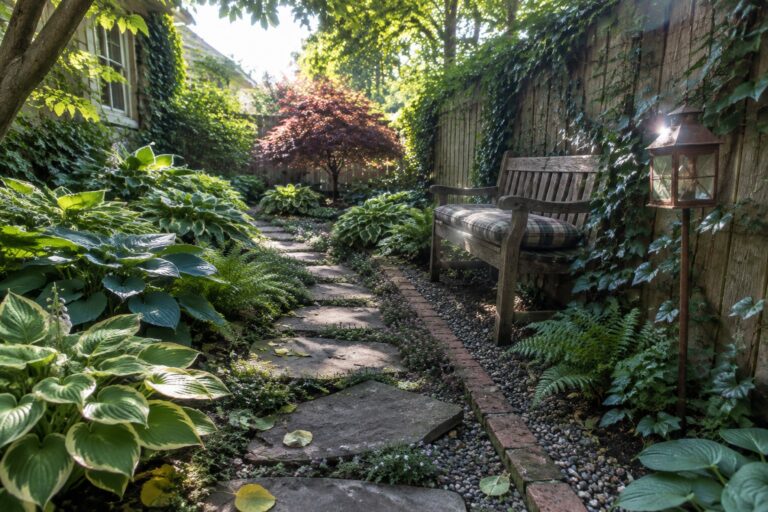
Small shady gardens can feel difficult to shape when the ground stays damp and many flowers struggle to bloom.
I’ve found that hostas work best when their broad leaves have room to show against paths, edging, and smaller plants, rather than filling every open patch.
A mix of leaf sizes and colors can give a garden clear structure from spring through fall, even in a narrow side yard or beneath mature trees.
The details matter: a path that’s easy to walk, tidy borders, and enough space for plants to spread can keep a shady corner from feeling crowded.
I’d save the ideas that suit your garden’s light and layout, then try a few combinations over time.
Let Hostas Guide a Shady Garden Path
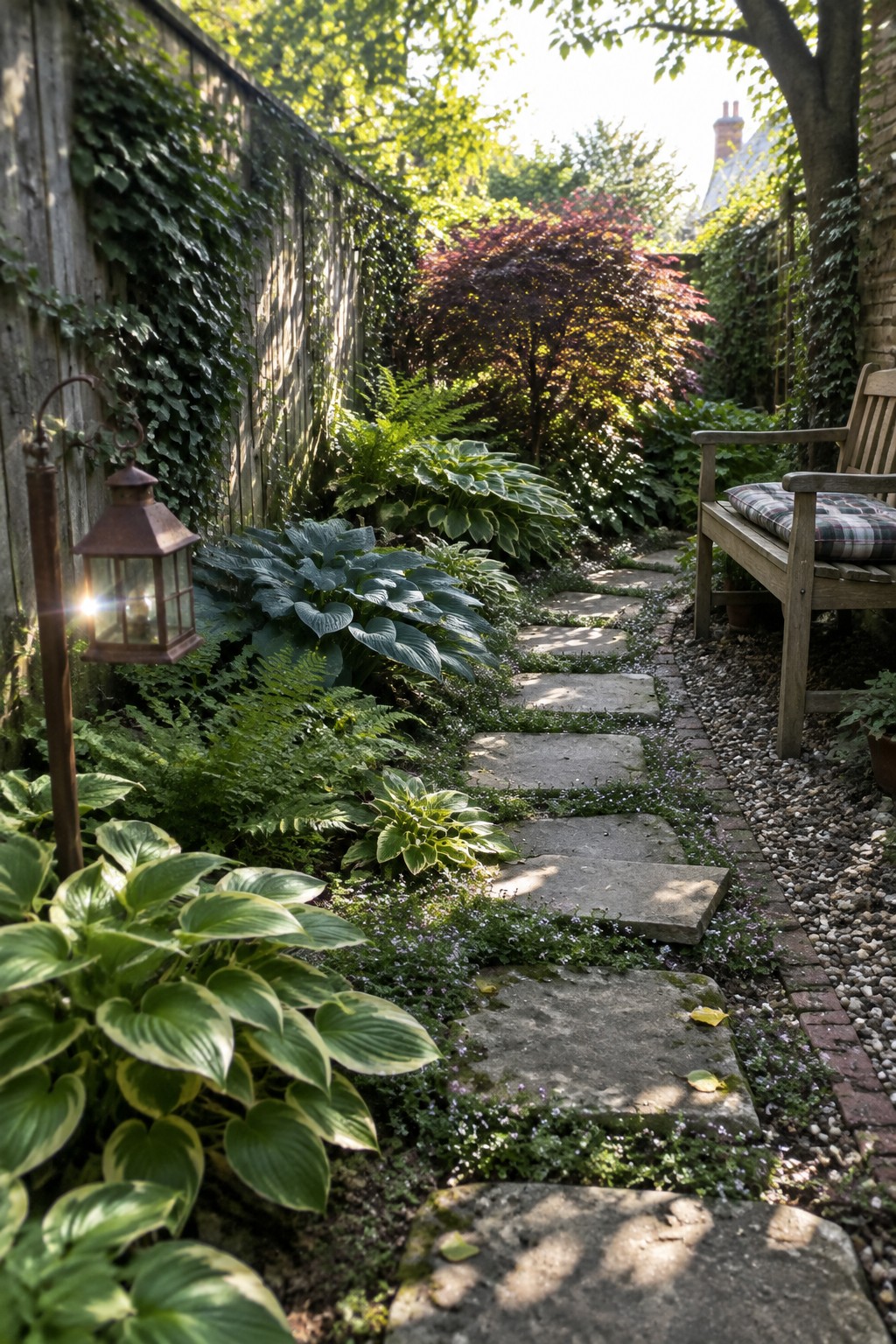
A stepping-stone path is a practical way to move through a small shady garden without giving up much planting space. Hostas along the edges make the route feel settled into the garden, and their broad leaves give the path a soft border.
Use stones spaced comfortably for walking, with hostas planted where they have room to spread. This works especially well beside a fence or in a narrow side yard. Keep plants from spilling over the stones so the path stays easy to use.
Use a Stone Path to Shape a Shady Garden
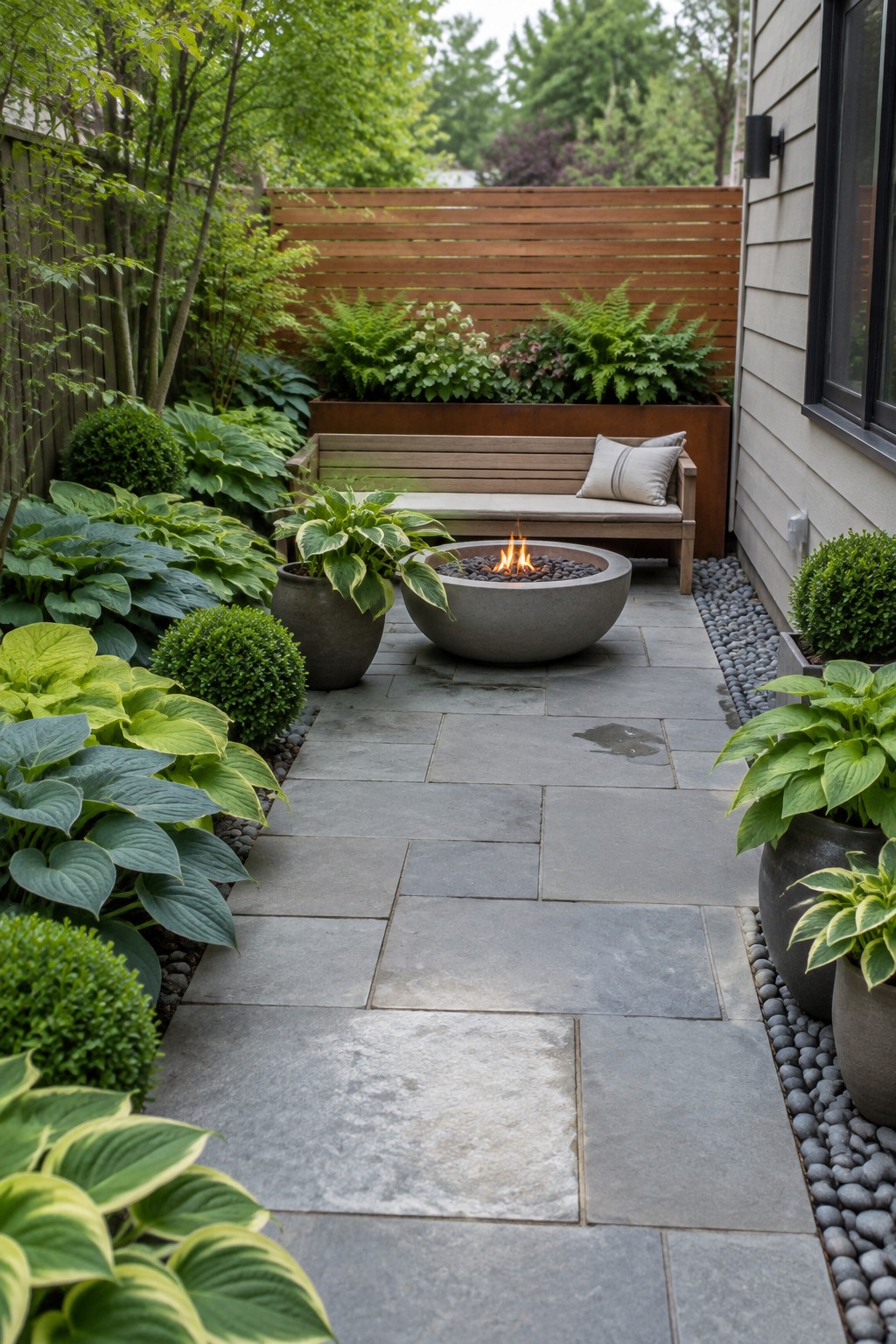
A clear stone path gives a small shady garden a practical route through the planting, while making the beds feel more organized. Large pavers also leave room for hostas to spread along the edges without taking over the walking space.
Set the stones with comfortable gaps for easy steps, then plant hostas in loose groups beside the path. In a narrow garden, keep the paving simple and avoid crowding the edges so the route stays easy to use.
Use Hostas Along a Narrow Garden Path

A narrow path can feel settled and green when hostas fill the planting bed beside it. Their broad leaves make a generous border without needing much room, and the stone edging keeps the plants from spilling onto the walkway.
This approach works well in a shady side yard or along a brick path near the house. Choose hostas that fit the bed as they mature, and leave enough room for the leaves to spread without narrowing the route.
Use Hostas to Edge a Stone Garden Path
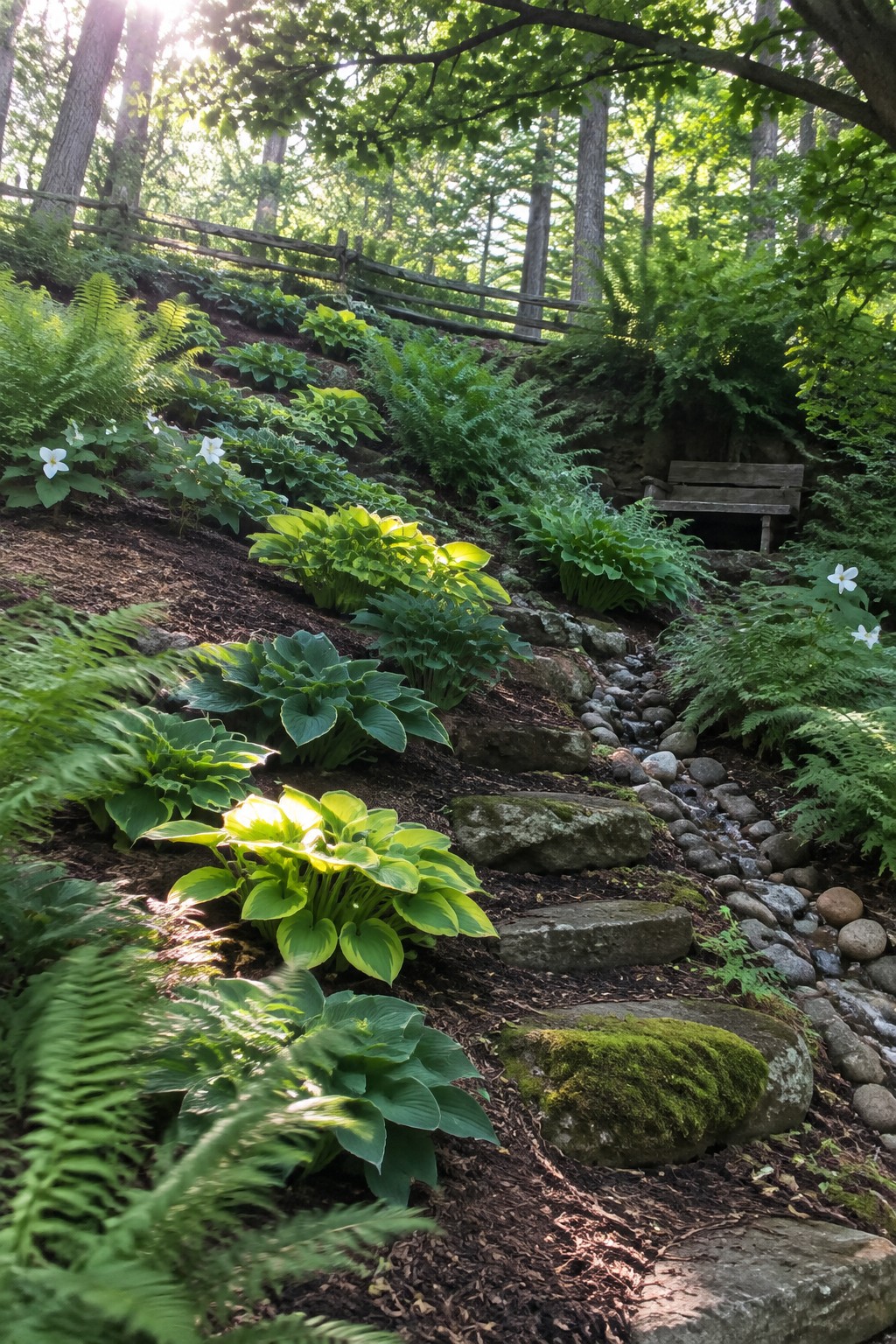
Hostas make a shady path feel settled into the garden rather than simply laid across it. Their broad leaves form a low, leafy edge, while the stones give the planting bed a clear boundary.
Plant hostas in small groups along one or both sides of a path, leaving enough room for the leaves to spread without covering the stones. In a small garden, choose a few varieties and repeat them for a tidy look. Ferns can fill the gaps where extra ground cover is needed.
Use a Gravel Circle as a Garden Resting Spot
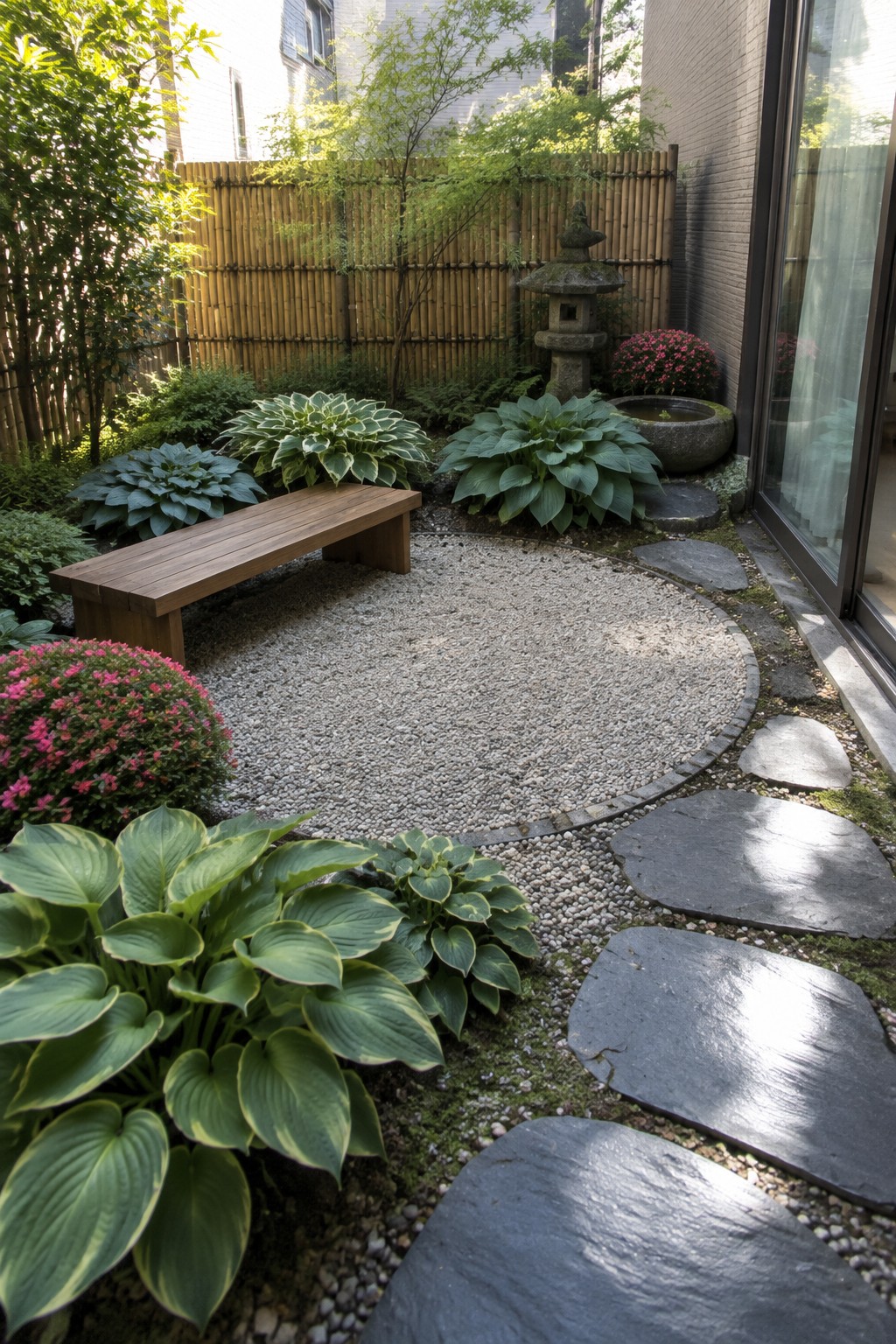
A small gravel clearing can give a shady garden a place to pause without taking up much room. Hostas around its edge help the open area feel connected to the planting, rather than like an unused patch.
Keep the circle modest and use a firm edging to hold the gravel in place. It works well in a tucked-away side yard, where a simple bench makes the space useful without crowding the path.
Use Hostas to Bring Greenery Into a Small Patio
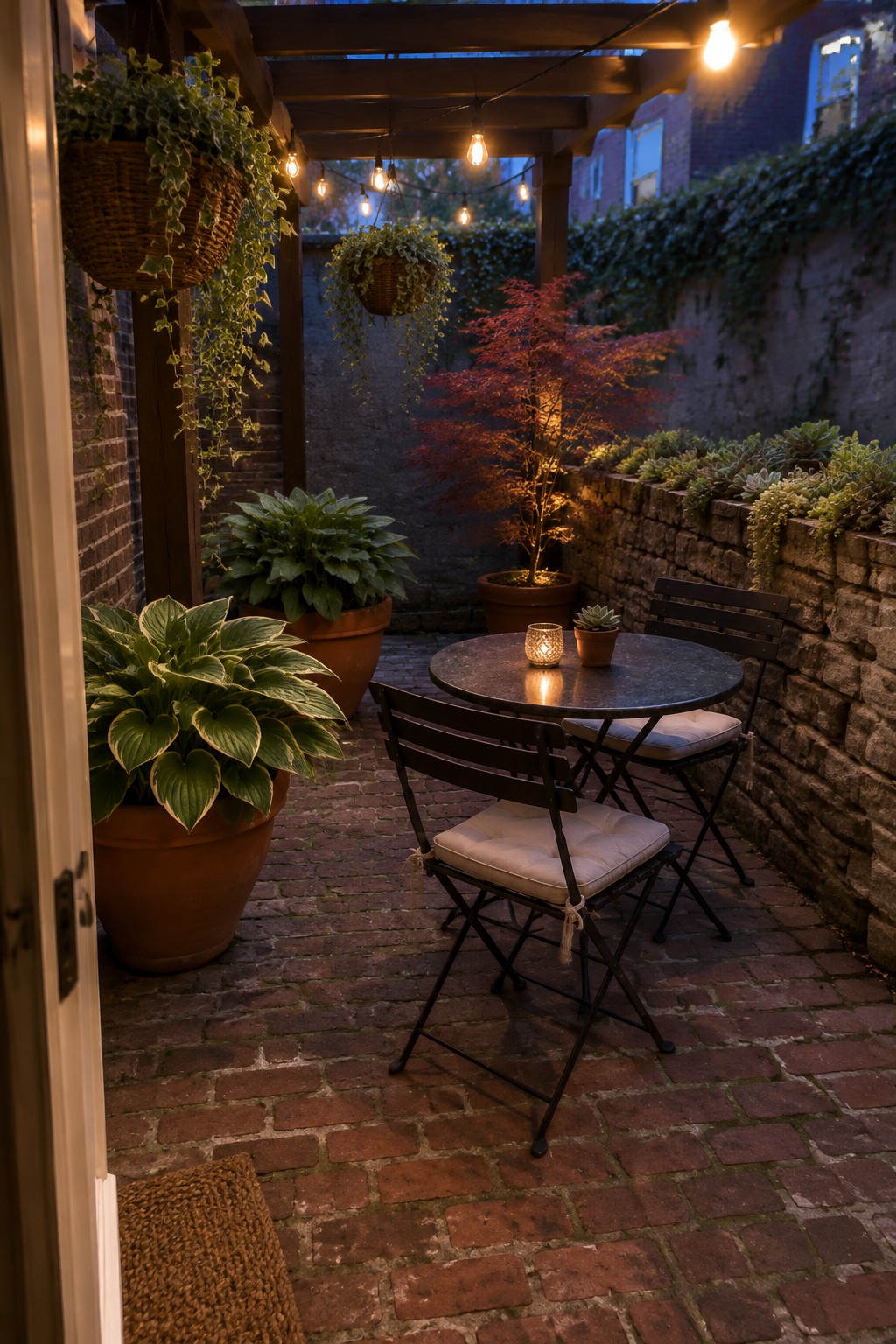
Hostas are a good fit for a shady patio because their broad leaves bring plenty of greenery without needing a large planting bed. Growing them in pots keeps the brick paving open for a small table and chairs.
Place a few containers along the edges of a narrow patio, where they can soften hard walls without blocking the way through. Choose pots sized for the hostas’ mature growth, and leave enough room to water and tend them.
Use Hostas to Fill the Edges of a Narrow Path
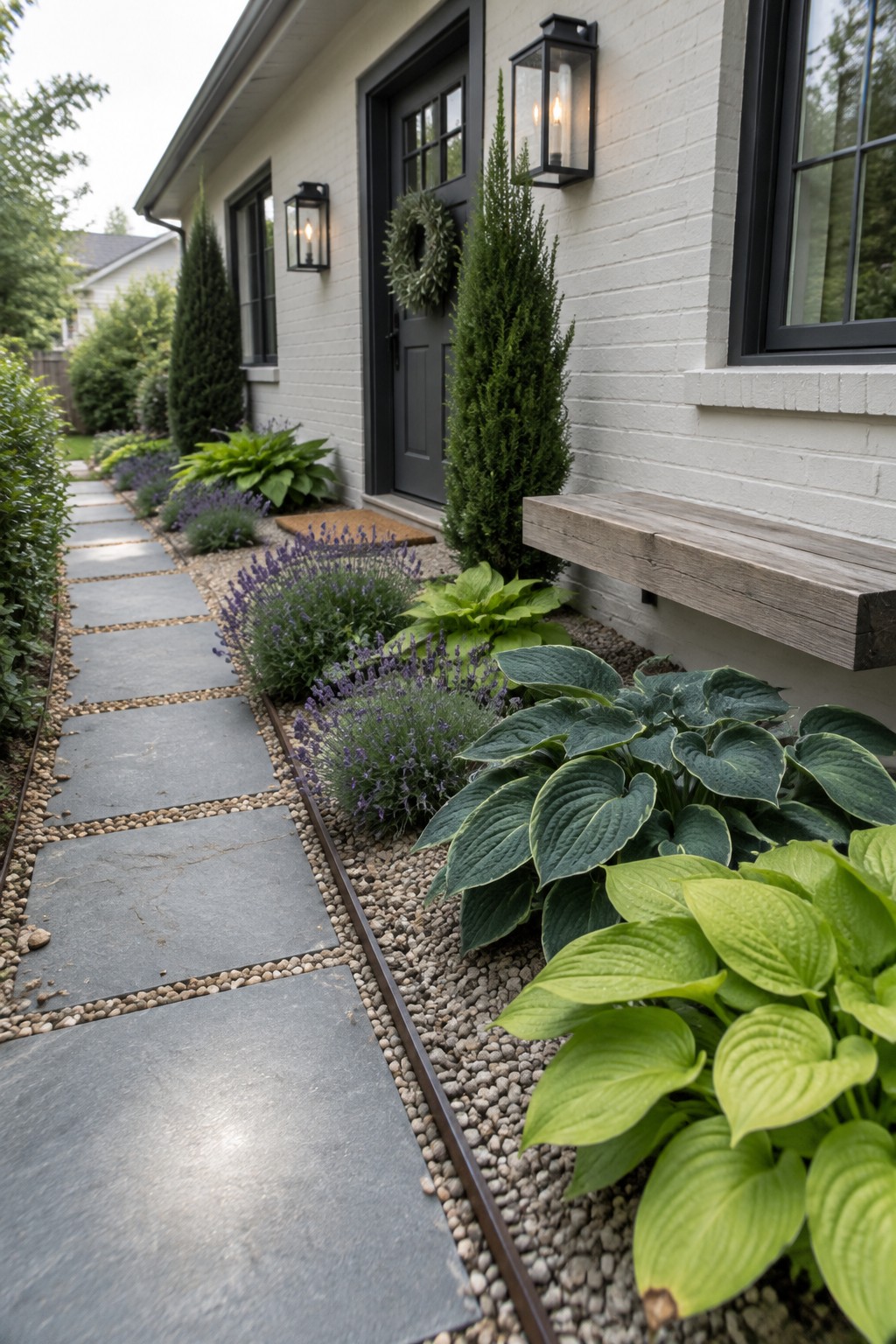
Hostas are a good choice for the edges of a narrow shady path because their broad leaves fill in the planting bed without taking over the walkway. Here, their foliage contrasts with the finer texture of the purple flowers.
Leave enough room for the plants to spread as they mature, especially beside stepping stones. Hostas work well in small side gardens where taller plants would crowd the path.
Make Hostas the Main Layer in a Shady Garden Bed
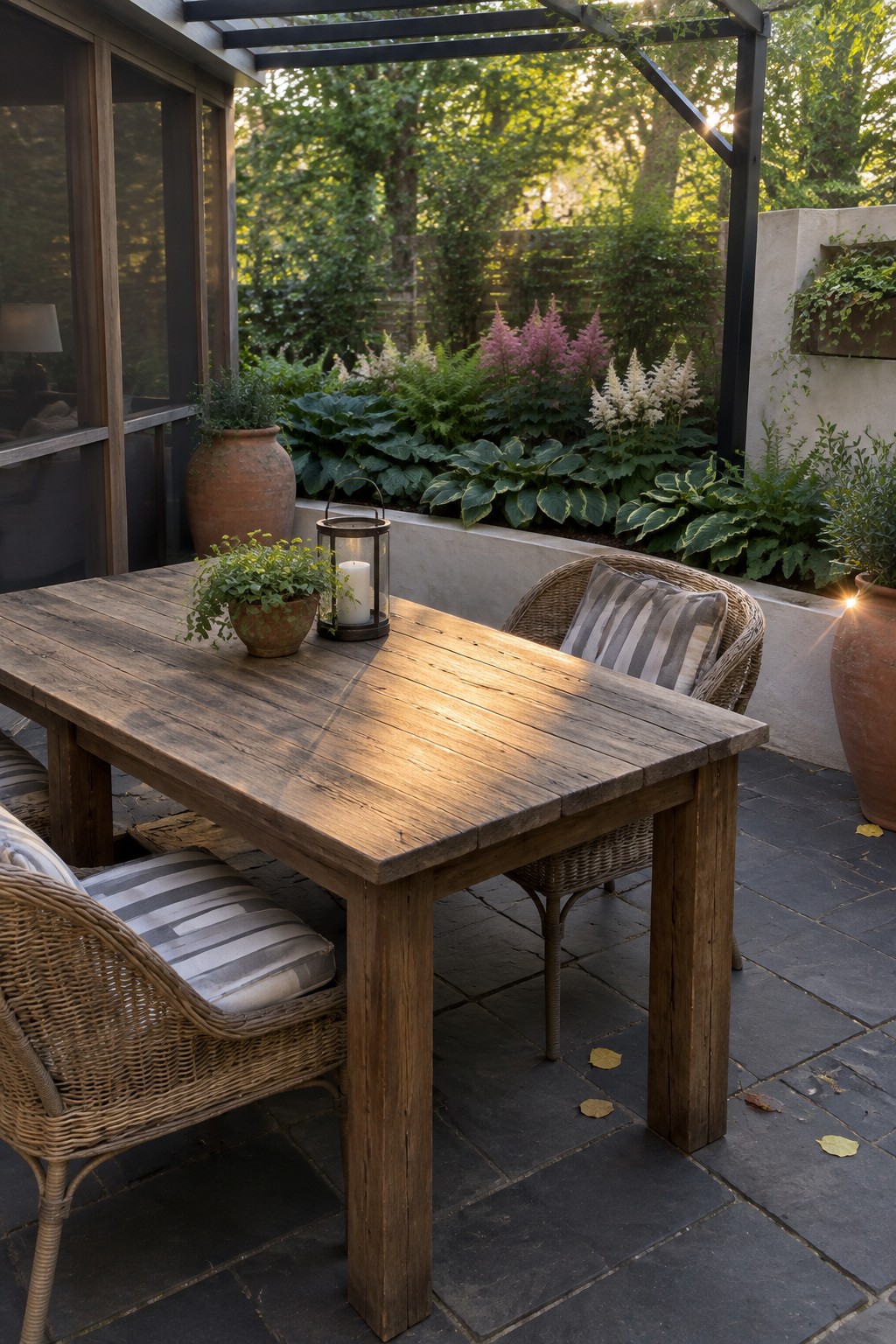
Hostas are useful in a small shady garden because their broad leaves fill space close to the ground, while taller flowers bring a little height behind them. This layered planting feels full without relying on lots of different kinds of plants.
Use hostas along the front of a narrow bed, then tuck taller shade-loving flowers behind them. Leave enough room for each hosta to spread, so the leaves do not crowd the path or neighboring plants as they mature.
Add Wooden Steps to a Sloped Garden Path

Wooden steps can make a sloping garden path easier to use without taking over the planting. Here, the short timber risers lead into a brick path, while hostas fill the beds along the way.
Use this approach where a path changes level, especially in a small shady garden. Keep each step broad and steady underfoot, and make sure the surrounding soil drains well so the wood lasts.
Use Hostas to Line a Pebble Entry Path
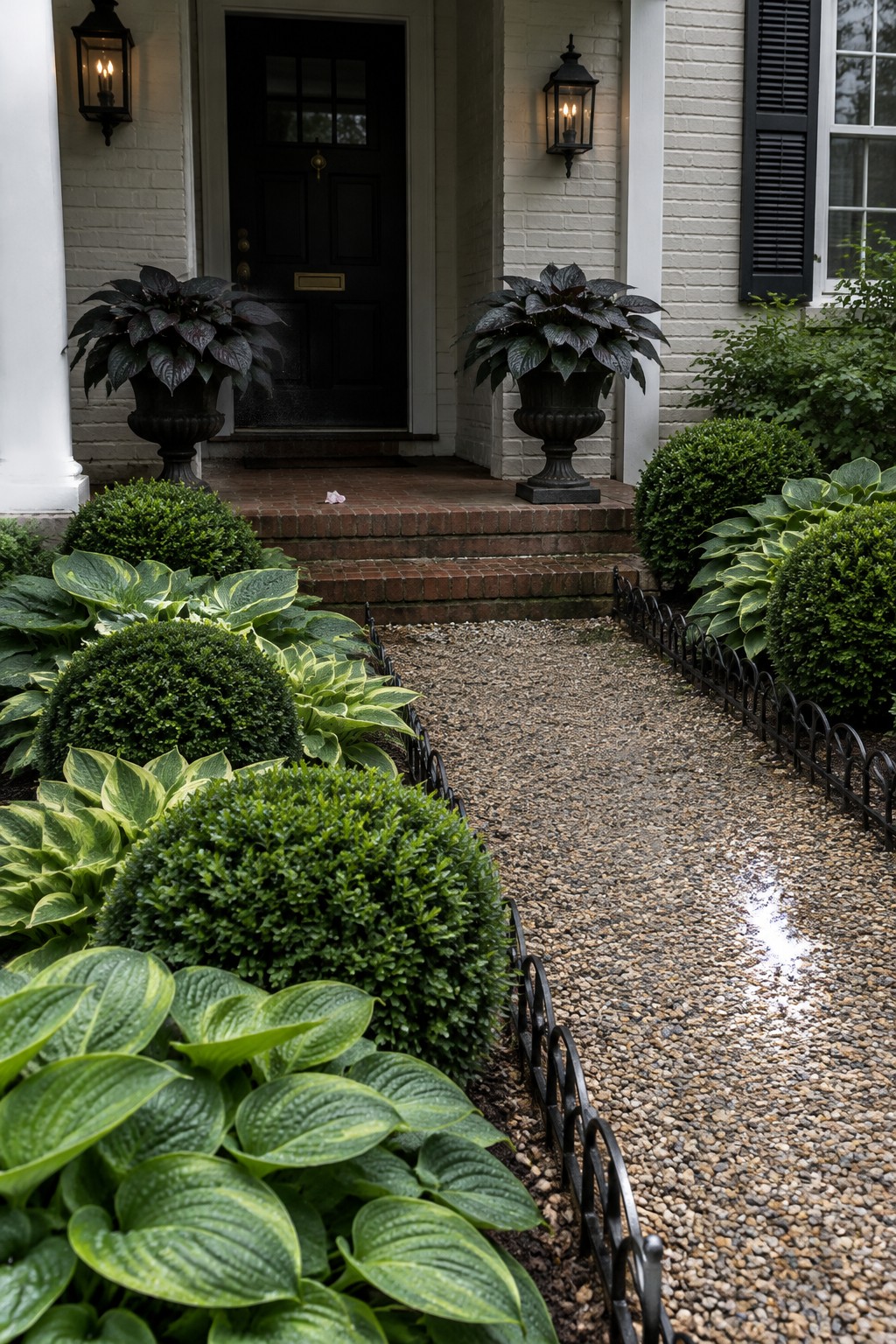
Hostas make a narrow garden path feel like part of the planting rather than a bare route to the door. Their broad leaves form a clear edge beside the pebbles, while rounded shrubs add a little height farther back.
This approach suits a small, shady front garden where space for beds is limited. Plant hostas along the path in loose groups, leaving enough room for the leaves to spread without covering the walking surface.
Grow Hostas in Long Planter Beds
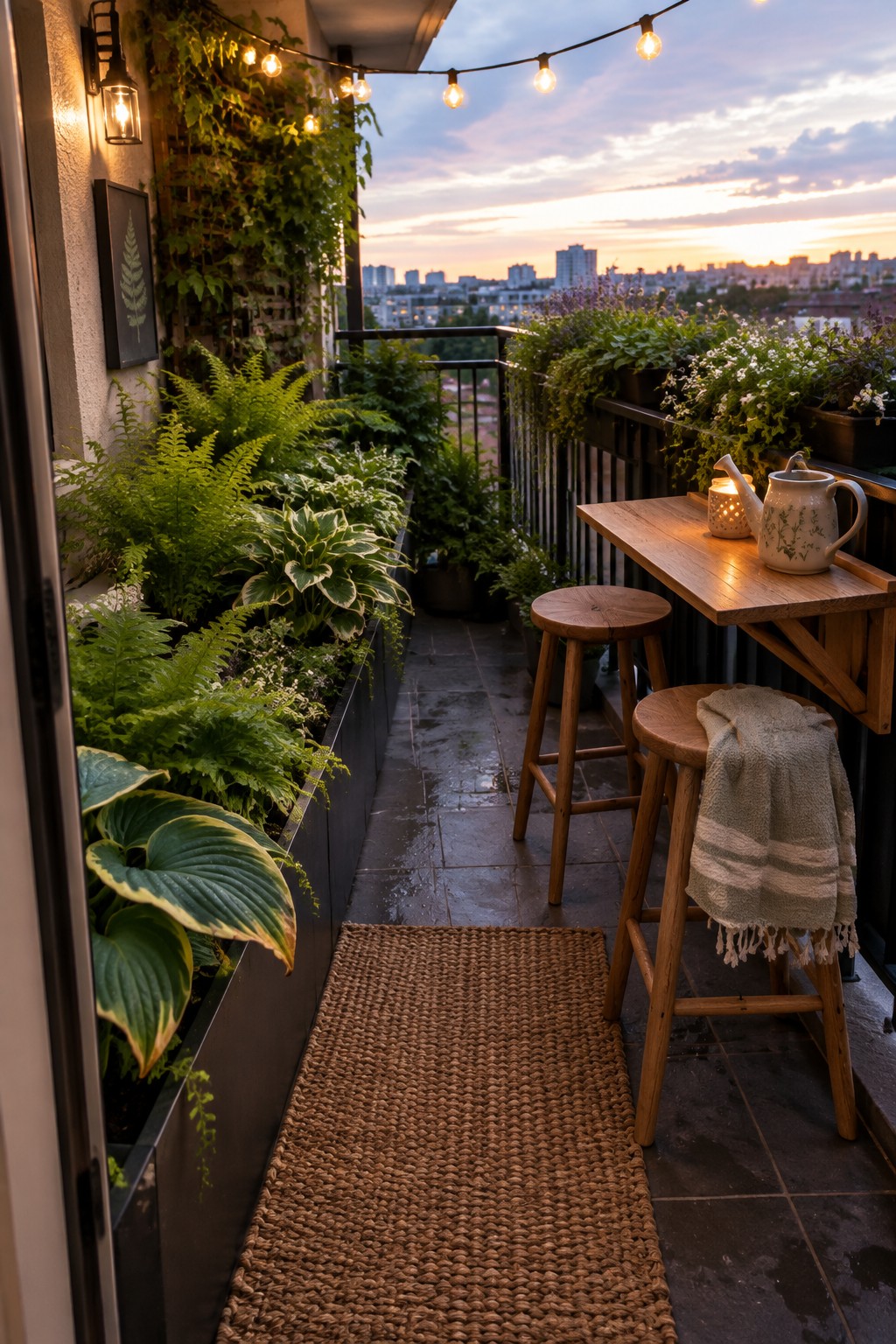
Long raised planters are a useful way to bring hostas into a narrow shady space. Their broad leaves fill the bed neatly, while the raised edges keep the planting contained and easy to care for.
Use this approach along a balcony or beside a shaded walkway where there is little room for a traditional garden bed. Choose hostas suited to the available light, and leave enough space for them to spread without blocking the path.
Use Raised Beds to Organize Shade-Loving Plants
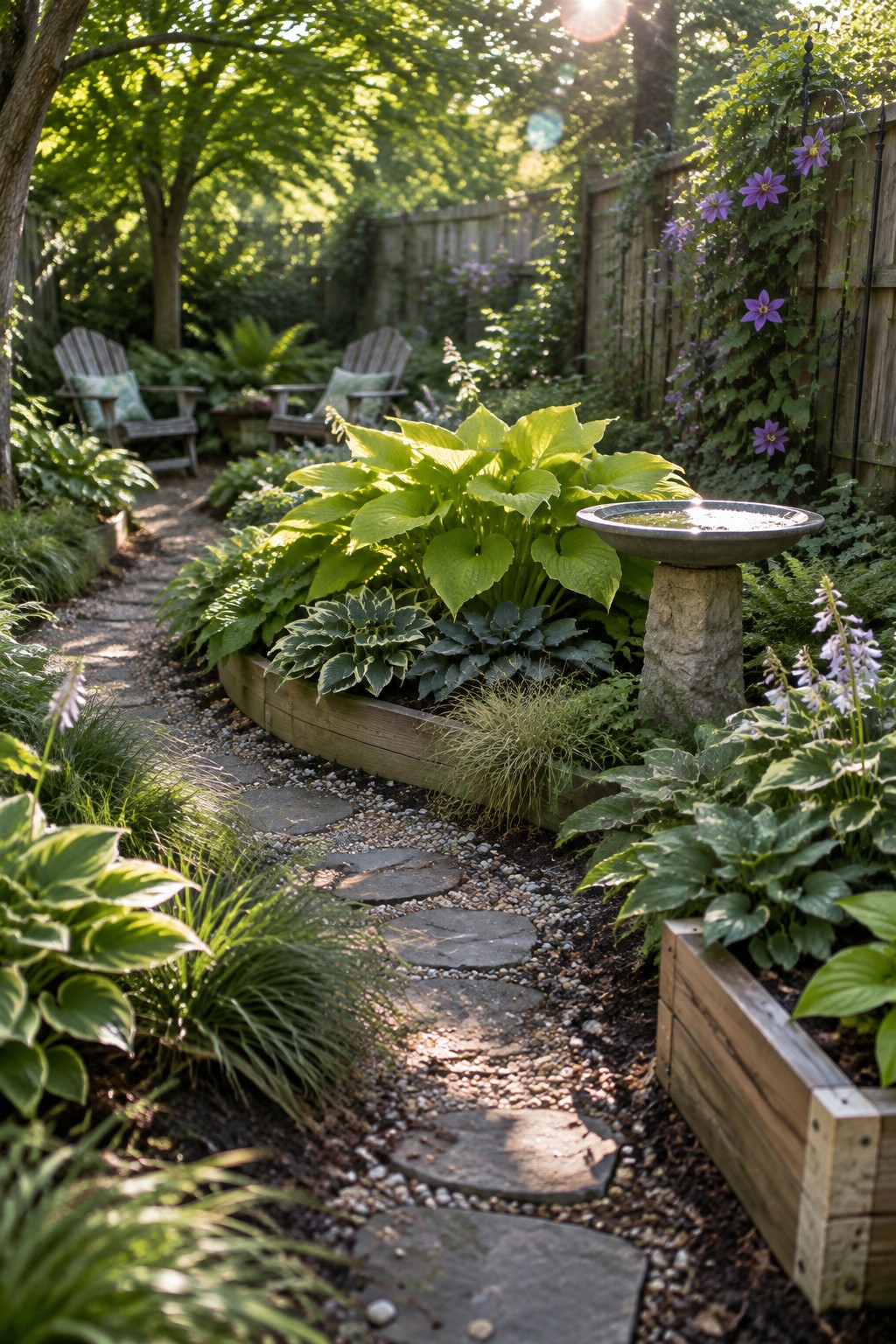
Raised beds give a small shady garden a clear shape and keep lush hostas from spilling across the path. A low timber edge also makes it easier to separate planting areas from gravel and stepping stones.
Use this approach where the ground is uneven or the garden feels crowded. Keep the beds narrow enough to reach into comfortably, and leave a clear route between them so the path stays easy to use.
Use Hostas to Layer a Narrow Shady Garden
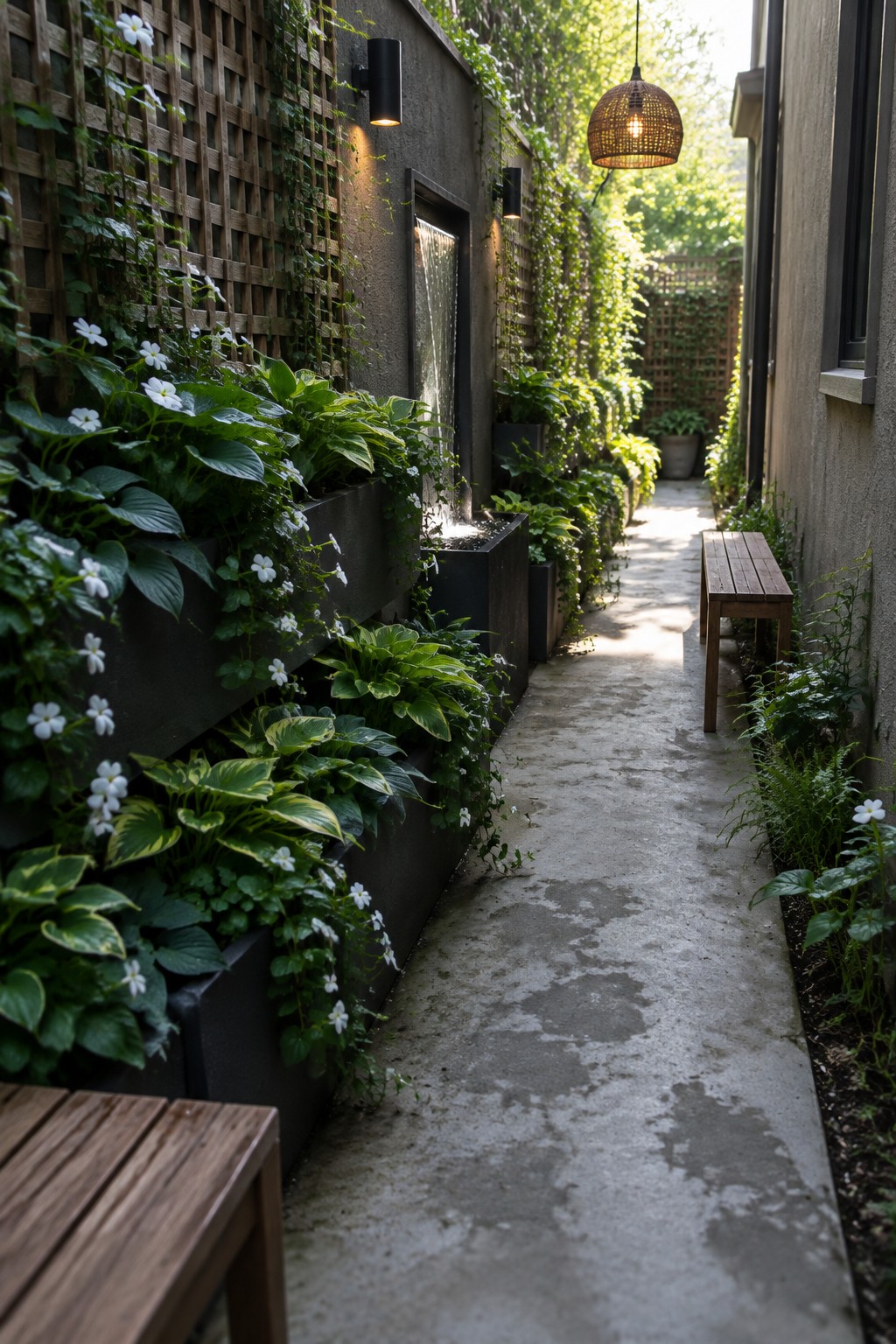
In a narrow garden, layered planting can make better use of the space than a wide, open bed. Hostas bring broad leaves close to the path, while taller plants and vines can grow behind them along a wall or trellis.
Set hostas in groups along one side of the walkway, leaving enough room for people to pass without brushing the leaves. Choose varieties with different leaf sizes, but keep the planting scheme simple so the path stays easy to care for.
Use a Small Patio for Shady Garden Seating
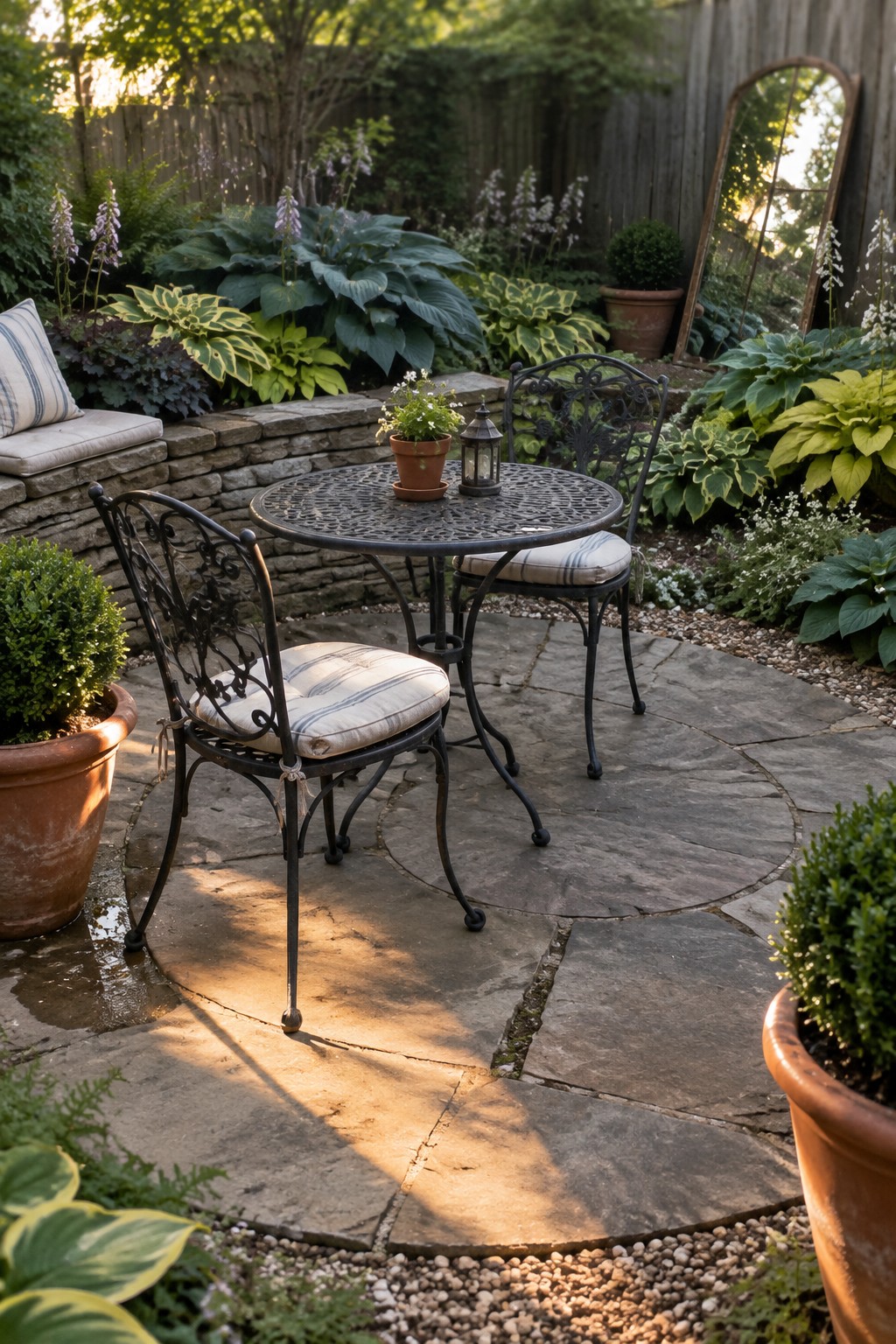
A compact seating area can make a shady garden feel like a place to pause, not just a planting bed. Hostas work well around the edges, where their broad leaves fill in the space beside a stone patio without crowding the chairs.
Keep the seating footprint simple and leave enough room to move around it. A low stone border can separate the hostas from the patio, while smaller varieties suit tighter edges better than plants that spread quickly.
Use Hostas to Bring Greenery to a Small Porch
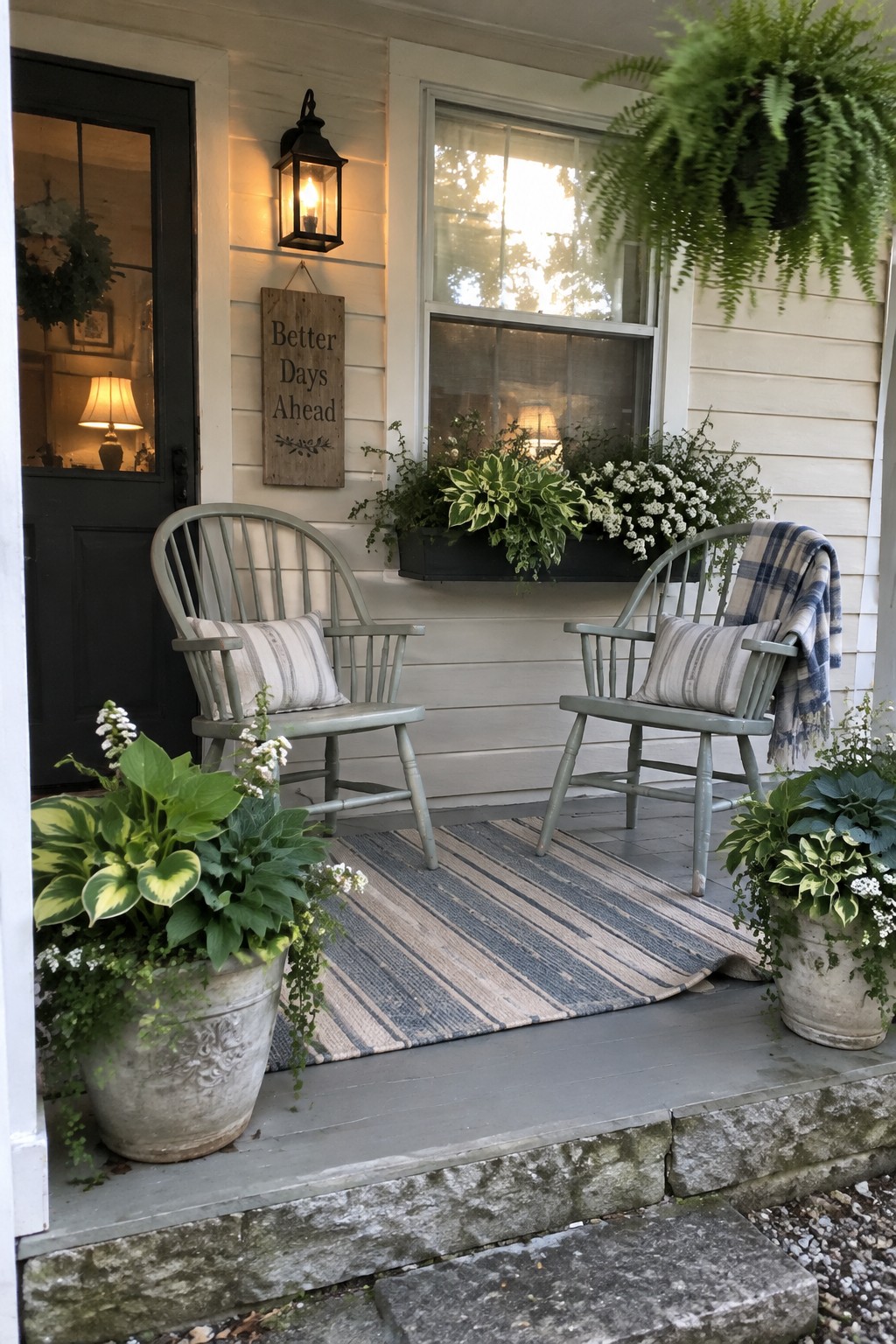
Hostas can make a small porch feel connected to the garden without taking up much floor space. Their broad leaves work well in a container near the steps, where they add a leafy border to the seating area.
Choose a pot that gives the roots room, and place it where the hosta gets shade or gentle morning sun. Variegated leaves can stand out against a darker porch, but leave enough space around the pot for people to walk comfortably.
Use Hostas Beside a Narrow Water Feature
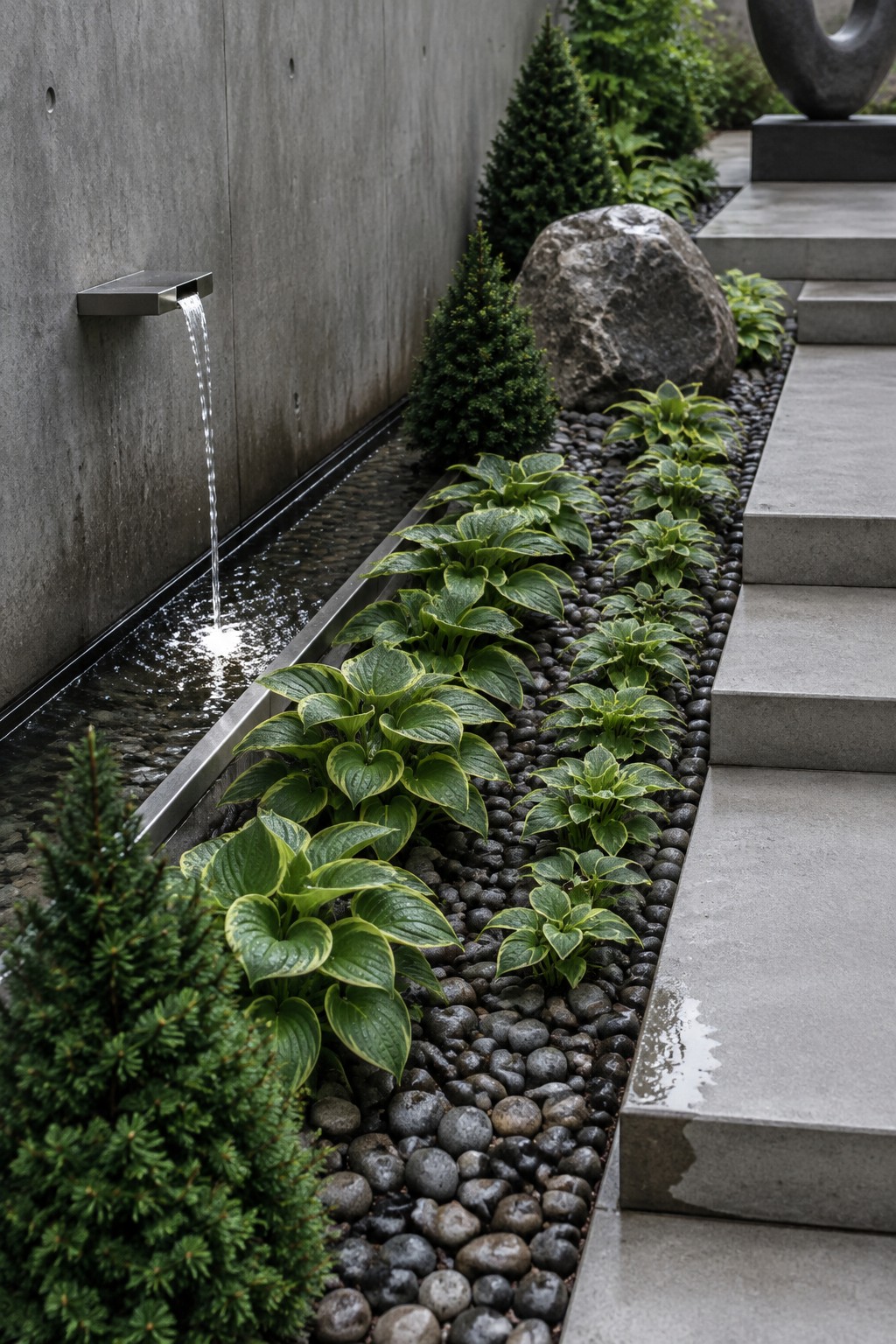
A narrow water channel can give a small shady garden a clear line to follow. Hostas planted alongside it bring broad, leafy texture to the edge, while the sound of moving water adds a pleasant detail without taking up much room.
Keep the planting strip simple and leave enough space for the hostas to spread. A mix of hosta sizes works well beside a straight channel, but avoid crowding the edge so leaves do not spill into the water.
Use Hostas to Make a Shady Patio Feel Green

Hostas can bring leafy color right up to a small patio seating area. Their broad leaves fill the ground around the paving and make a shady corner feel connected to the garden.
Plant them in groups along the patio edge, leaving enough room for leaves to spread without blocking the walkway. They work especially well beside a simple stone surface, where the greenery can soften the hard edges.
Use Hostas to Edge a Narrow Garden Path
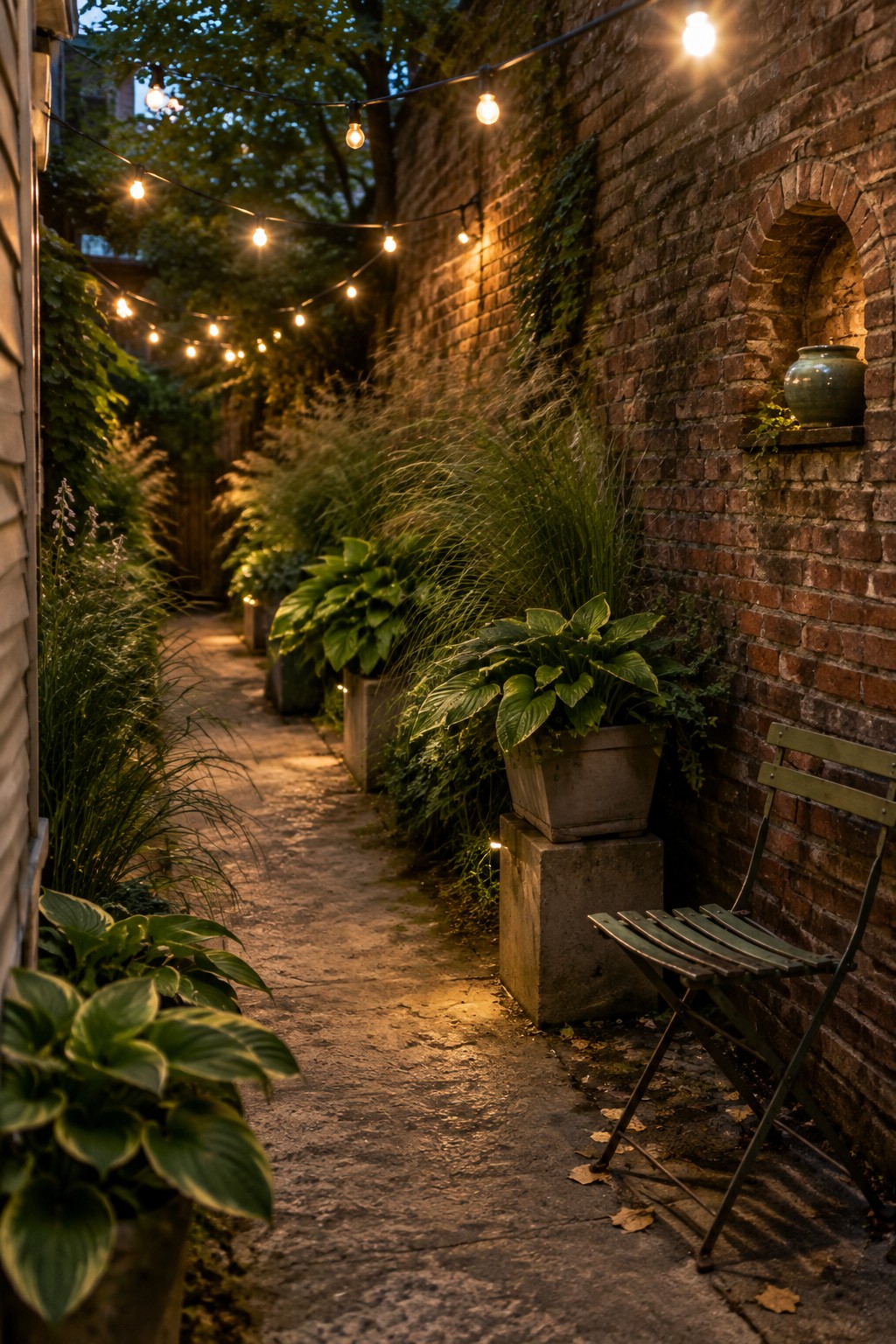
Hostas can make a narrow garden path feel like part of the planting rather than a strip of paving through the yard. Their broad leaves create a clear edge, while taller grasses behind them add height without taking over the walkway.
Plant hostas along one or both sides of a path, leaving enough room for leaves to spread without catching passersby. This approach suits shady side yards and small gardens, where a simple path needs a little greenery to feel connected to the rest of the space.
Frequently Asked Questions
Q: Can hostas grow in a small garden that gets a little afternoon sun?
A: Yes, especially if they get shade during the hottest part of the day and the soil stays moist. Pale or golden-leaved hostas usually handle more sun than blue varieties, which can scorch.
Q: How close can I plant hostas together?
A: Check the mature spread on the plant tag, not just the size of the pot. Small hostas can tuck along a path, while larger ones need room so their leaves don’t crowd nearby plants.
Q: What can I plant with hostas to keep a shady bed from looking flat?
A: Pair their broad leaves with fine-textured ferns or upright flowers such as astilbe. A few different leaf shapes add interest even when nothing is blooming.
Q: How do I stop slugs from chewing holes in hosta leaves?
A: Water in the morning and clear away damp leaf litter where slugs hide. If damage keeps showing up, check beneath the leaves in the evening and remove any slugs you find.
