


Salvia can bring color to a garden without asking for constant attention, but where it grows matters just as much as the variety you choose.
I find it works best when taller stems have room to rise behind lower plants, while paths and borders keep the planting from feeling crowded.
Different salvia varieties can soften a fence, fill a sunny bed, or add a clear edge along a walkway.
The most useful designs also leave space for plants to spread and make routine watering or trimming easy.
I’d save the layouts that fit your light, soil, and garden size, then adapt their combinations to the spots that need color most.
Use a Curving Path to Shape the Garden

A gently curving path gives a planting bed a clear edge while letting the garden unfold gradually as you walk through it. Here, irregular stone slabs sit beside rounded shrubs and purple salvia, a simple layout that makes the path feel like part of the garden rather than a route cut through it.
This approach works well in a small side yard or along a house where a straight path would feel too formal. Use sturdy, slightly spaced pavers and keep the plants along the edge low enough to leave the walking area clear.
Use Salvia to Build a Layered Garden Bed

Salvia works well in a layered planting bed, where its upright flower spikes rise above lower, spreading plants. This gives the bed a fuller look without relying on lots of different plant types.
Place taller salvia toward the back of a border and shorter plants at the front, leaving enough room for air to move between them. This approach suits narrow beds along walls or paths, and choosing varieties suited to your climate can help keep upkeep manageable.
Use Salvia To Add Color Along A Garden Path

Salvia is a good choice for bringing lasting color to a garden path without making the planting feel fussy. Its upright flower spikes give the bed a clear rhythm, while ornamental grasses add a softer layer behind them.
Plant salvia in groups along the path, leaving enough room for each clump to spread. It suits sunny borders and works especially well with a simple brick walkway. Choose varieties suited to your climate, and trim spent flower stems to encourage another flush of blooms.
Layer Salvia Along a Garden Path

Layering salvia along a path is an easy way to give a small garden color and structure without making it feel crowded. Taller flower spikes toward the back and lower plants near the paving let the blooms show while leaving room to walk.
This approach works well in narrow side yards or enclosed gardens. Choose varieties suited to your sunlight and leave enough space between plants for air to circulate and for the path to stay clear.
Use Salvia to Shape a Low-Maintenance Border

A broad garden border lets salvia bring color along a walkway without making the planting feel fussy. Repeated patches of purple and pink blooms give the bed a clear rhythm, while low stone edging keeps the plants separate from the path.
Use this approach beside a front walk or driveway, and leave enough room for plants to spread without leaning into the route. Mix salvia with a few compact shrubs or grasses, and group plants in generous patches to make upkeep simpler.
Use Raised Beds to Organize Salvia Planting

Raised beds give a garden a clear structure and make planting easier to manage. Salvia can fill the beds in generous groups, bringing color along the edges without letting the planting feel scattered.
This approach works well beside a patio or dining area, where neat bed edges help define the space. Choose a sunny spot with well-draining soil, and leave enough room for mature plants so the bed does not become crowded.
Use Salvia to Edge a Stone Garden Path
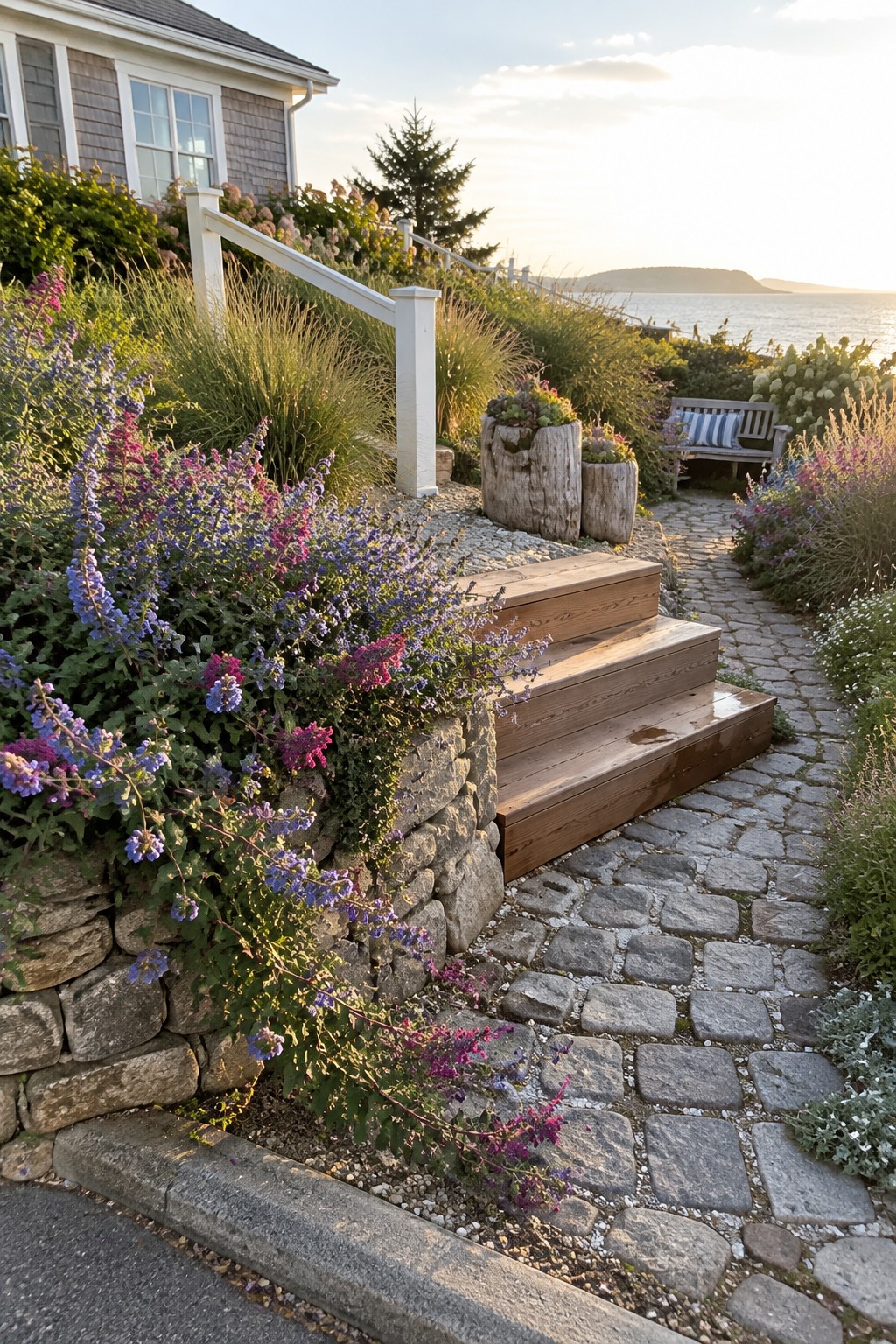
A stone path feels more settled when planting follows its edges. Salvia can spill slightly toward the stones, bringing color close to the walking route without needing a formal border.
Plant it in loose groups beside the path and keep the paving clear enough for easy footing. This approach suits cottage-style gardens and sloped yards, where a simple path can connect different levels.
Plant Salvia in Layers Through the Garden Bed

Layering salvia with taller flowers and airy grasses gives a garden bed a fuller look without relying on a complicated layout. The repeating purple flower spikes also bring color through different parts of the bed.
Use taller plants toward the back and shorter salvia varieties near the front, leaving enough room for each plant to spread. This approach works well along a fence or border, but avoid packing the plants too tightly if you want less trimming and easier care.
Use Salvia to Plant Along a Dry Creek Bed

A stone-lined drainage channel can give a garden bed a clear shape while helping manage runoff. Salvia planted along the edges adds upright color without taking over the channel itself.
Leave the stones open so water can move through, and plant salvia where the soil drains well. This approach suits a sloped yard or a spot that collects rainwater, though the channel should be sized for the flow it needs to handle.
Use Salvia to Define a Gravel Garden Path

Salvia can make a gravel path feel like part of the garden rather than a route between beds. Planting it in raised borders along the path gives the flowers a clear place to grow and keeps the planting from spilling into the walkway.
This approach suits narrow side yards and other spaces where a simple path needs a bit of color. Leave enough room for the salvia to spread, and choose gravel that is easy to rake back into place if it shifts.
Grow Salvia in Containers on a Rooftop
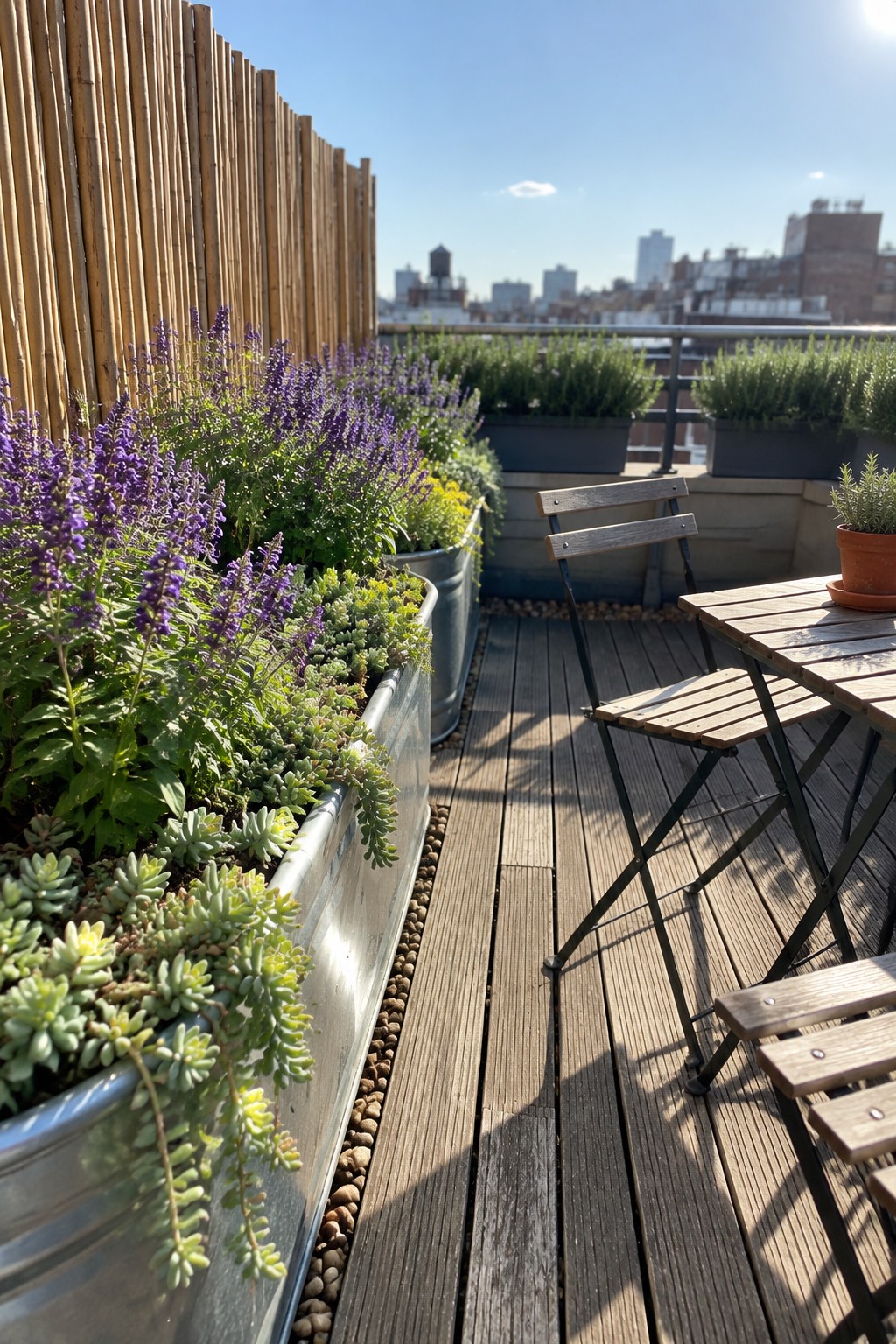
Container planting makes it easier to bring salvia to a small rooftop or balcony. A long planter can hold a generous row of blooms, while keeping the plants contained and simple to tend.
Choose containers with good drainage and enough depth for healthy roots. Salvia grows best in a sunny spot, and pairing it with drought-tolerant plants such as succulents can help reduce watering needs.
Use Salvia to Line a Stepping-Stone Path

A stepping-stone path is an easy way to give a salvia garden a clear route through the planting. The stones make the bed feel organized, while flowers along the edges keep the walk from looking bare.
Leave enough room between the plants and the path so they can grow without spilling over the stones. This works well in a narrow side yard, where a simple path can lead visitors to a gate or garden entrance.
Use Salvia to Brighten the Front Entry

Terracotta pots make it easy to bring salvia color to a front entry without changing the garden beds. The purple flower spikes stand out against the green foliage, and the containers can be moved or refreshed as needed.
Set pots beside the steps or near the doorway where they are easy to water and enjoy. Choose containers with drainage holes, and leave enough room for people to pass comfortably.
Use Salvia to Add Color Along a Garden Path
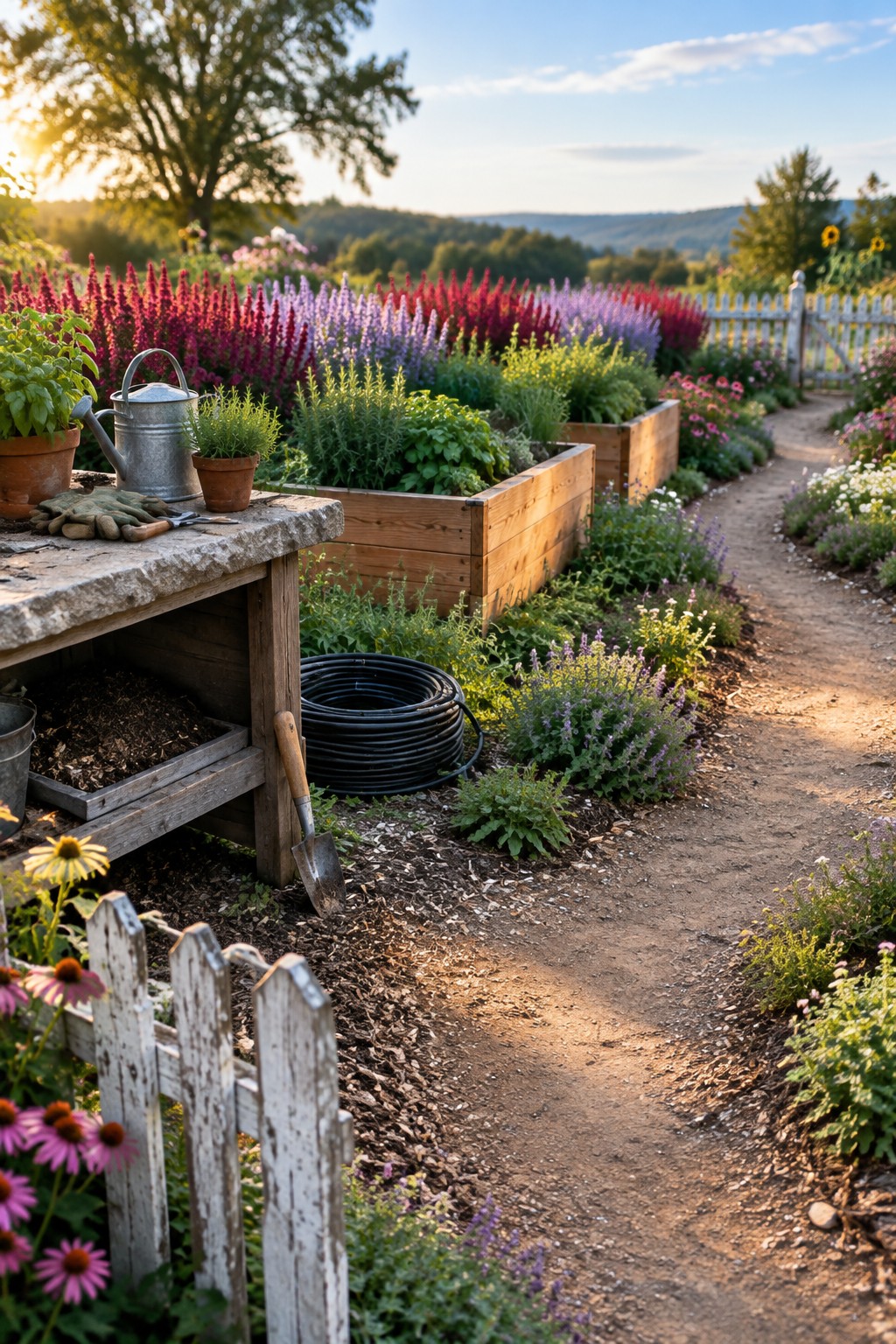
A curving garden path feels more settled when flowering plants run alongside it. Salvia brings upright color to the edges without making the route feel crowded, and its repeat blooms help give a long border a clear rhythm.
Leave enough room for plants to spread so they don’t spill onto the walking surface. This approach suits informal gardens, especially where a simple dirt or gravel path needs a little definition.
Use Salvia to Soften a Gravel Poolside Border

Salvia works well in a gravel border because its upright flowers bring color without needing a lush, high-water planting scheme. Here, blue blooms and coral-red flowers grow among agaves and rocks, giving the bed a loose, layered look.
For a similar effect, plant salvia in small groups along the edge of a path or pool, leaving space for gravel and drought-tolerant plants between them. Choose varieties suited to your climate and trim spent flower stalks to keep the border tidy.
Use Salvia to Fill a Raised Garden Bed

A raised bed gives salvia a clear place to grow and makes a colorful planting easier to manage. The flowers stand out against the simple wooden edge, while gravel mulch helps keep the bed tidy.
Use this approach where you want a defined border beside a path or gravel area. Plant salvia in groups and leave enough room for each clump to spread, since crowded plants can be harder to maintain.
Use Salvia to Bring Color to a Stone Seating Area

Salvia can brighten a stone garden area without requiring a lot of upkeep. Planting it in generous drifts beside a low retaining wall gives the flowers room to show and makes a simple bench feel part of the garden.
This approach works well in sunny spots where the soil drains freely. Leave space between plants for airflow, and trim spent flower stems to encourage another flush of blooms.
Use Salvia to Fill a Narrow Garden Bed

A narrow raised bed is a good place to grow salvia, especially where a path runs beside the house. The flowers add color without taking up the walking space, and planting in a continuous strip makes the bed feel tidy rather than fussy.
Choose salvia varieties suited to your sun and climate, then leave enough room between plants for air to circulate as they grow. A stone edge helps keep soil in place, but avoid letting blooms spill too far over the path.
Frequently Asked Questions
Q: How much sun does salvia need to flower well?
A: Most salvias bloom best with at least six hours of direct sun a day. In hot climates, a little afternoon shade can help keep the leaves from wilting.
Q: How often should I water salvia once it’s established?
A: Water it deeply when the soil has dried out, rather than giving it a little water every day. Many salvias handle dry spells well, but newly planted ones need regular watering until their roots settle in.
Q: Should I cut salvia back after it flowers?
A: Yes, trimming off spent flower spikes can encourage another flush of blooms. Leave some growth in place as the weather cools, then cut the plant back in spring if it needs tidying.
Q: Can I grow salvia in a pot?
A: Absolutely. Choose a pot with drainage holes and use a free-draining potting mix, since soggy roots can cause problems.
